
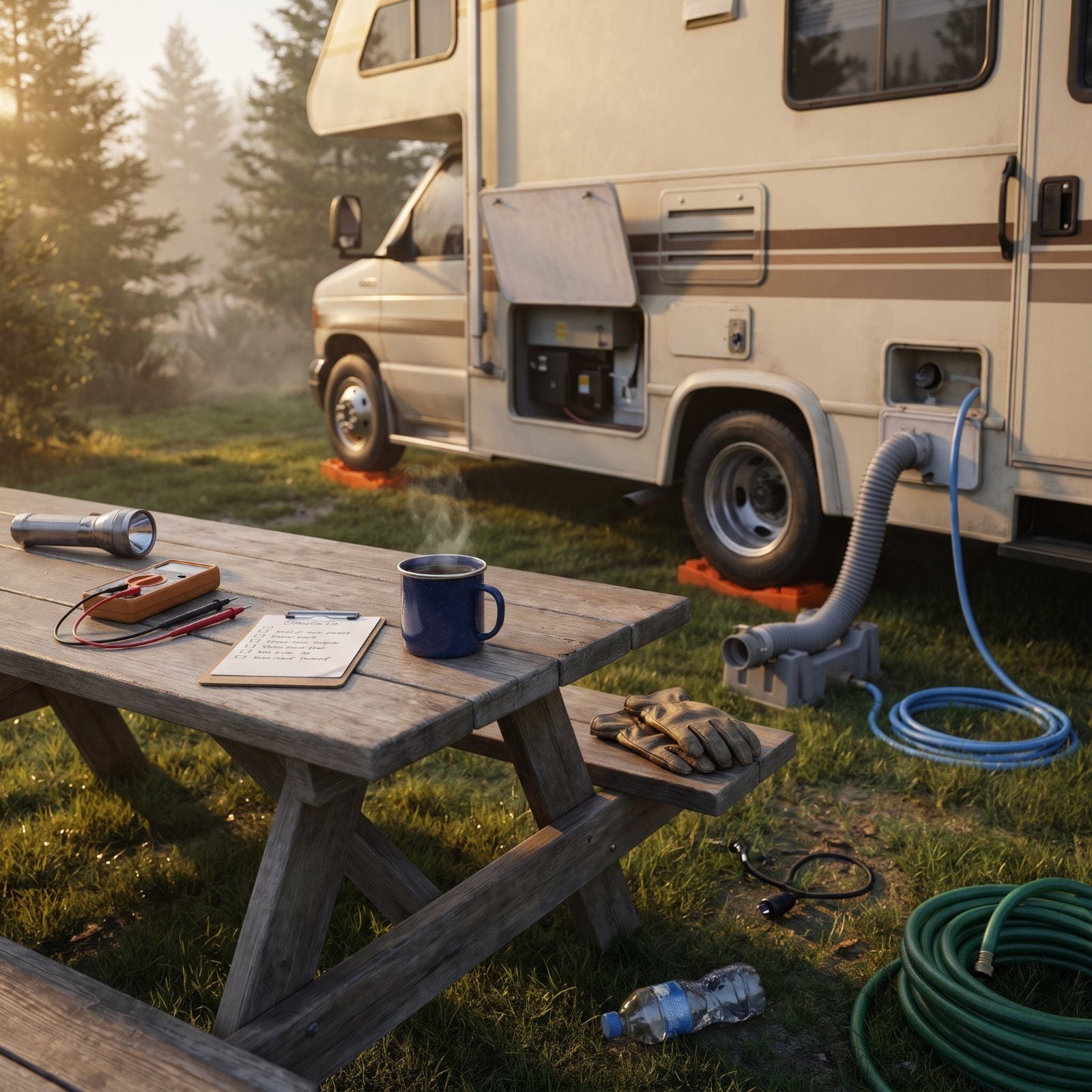
Coffee first. Then the walkaround. That’s the order that keeps a rig running and keeps you off the phone with a mobile tech who can’t get to you until Thursday.
Please note that some of the images in this article were created with the assistance of AI.
Nobody tells you this before you go full-time: the RV talks to you every morning, but only if you learn to listen. A number on a monitor panel. A puddle that wasn’t there last night, or a pump cycling when every tap is shut off. Catch those at dawn and they’re a shrug — miss them and you’re looking at a tow bill, a dead battery bank, or a tank you really don’t want to deal with. Here’s the quiet routine that happens before most people are even awake.
41. Read the Battery State of Charge Before Anything Else
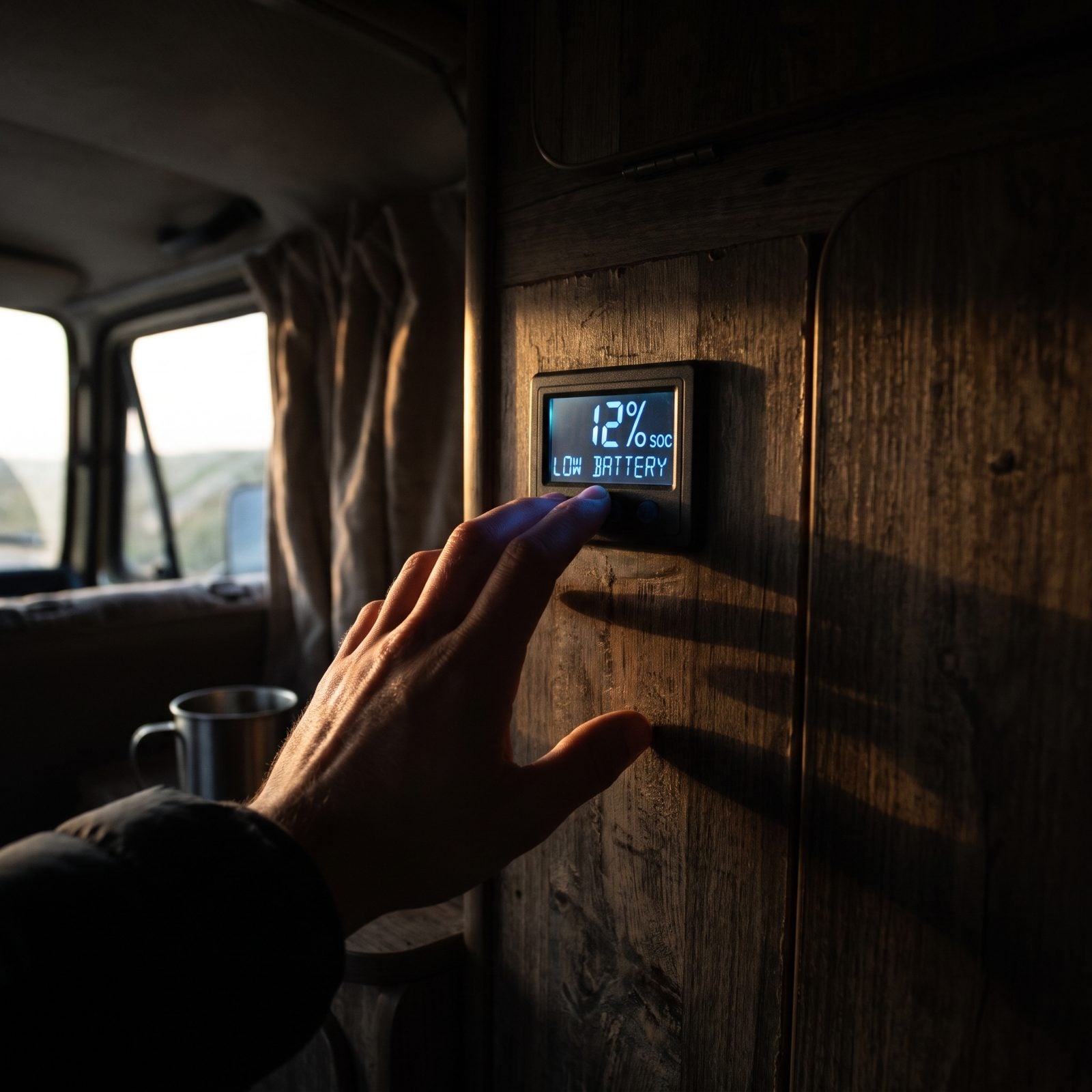
The number that tells you what kind of day you’re about to have. Overnight, the furnace fan, the fridge, the CO detector and your phone chargers all pulled from the house batteries. A healthy lithium bank might show a good chunk left at sunrise. But if you’re on flooded lead-acid and dropped below half overnight, you just shortened their life a little, and you’ll want to run the generator or chase sun before noon.
I ignored this reading for my first month and cooked a battery bank learning the lesson. Now it’s the first thing my eyes find, before the coffee even hits.
40. Look Under the Rig for Puddles That Weren’t There Last Night
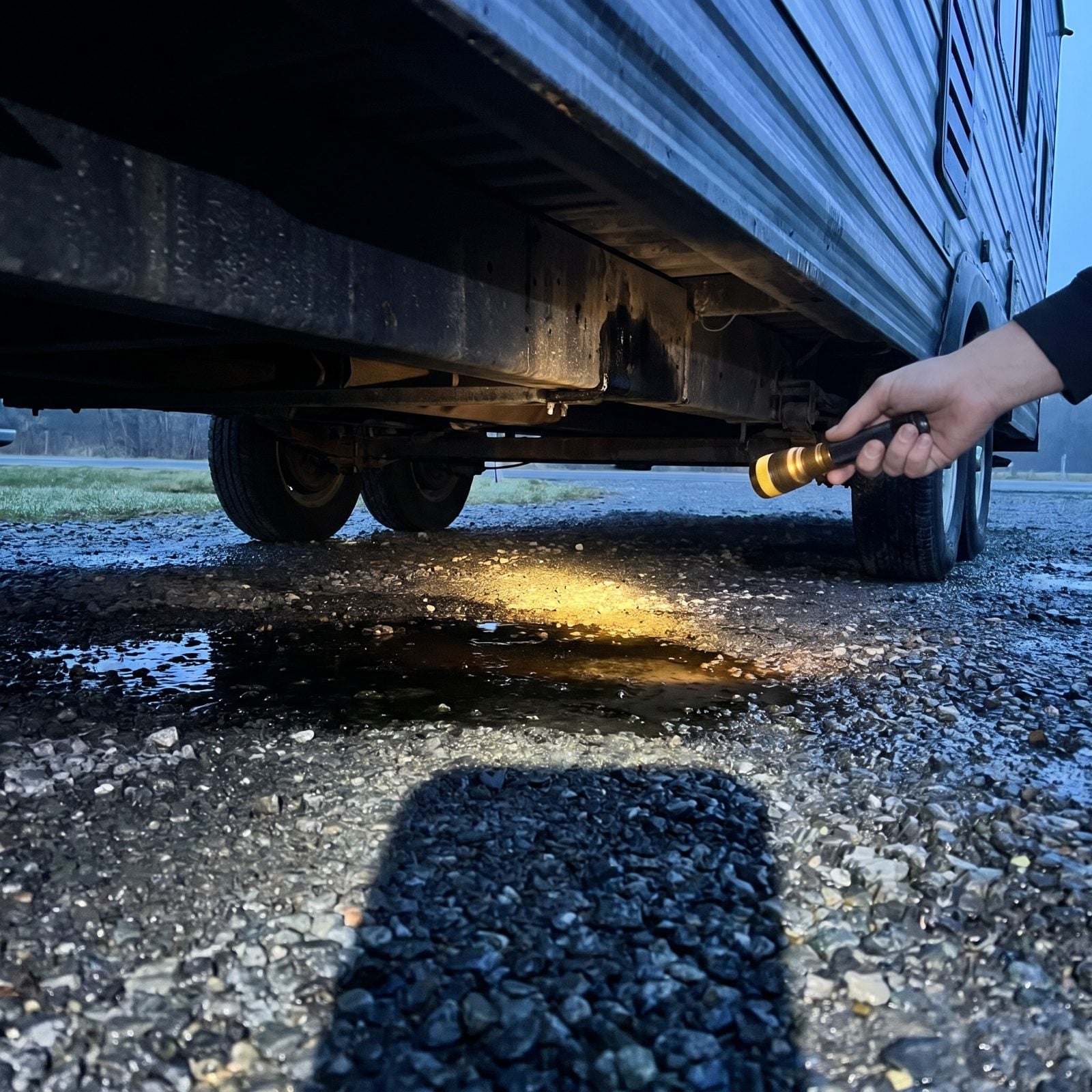
Walk the perimeter and look down. A clear puddle under the water heater or a plumbing bay means a connection worked loose on yesterday’s washboard road. A puddle of something with color is a whole different conversation, and you want to know which one you’re dealing with before you drive off and leave the evidence sitting in the dirt.
Condensation drips from the AC and the water heater relief valve are normal. A spreading stain under the galley is not. Learn the difference once and you’ll never panic over the harmless ones again.
39. Read the Freshwater Tank Gauge So You Don’t Run Dry Mid-Shower
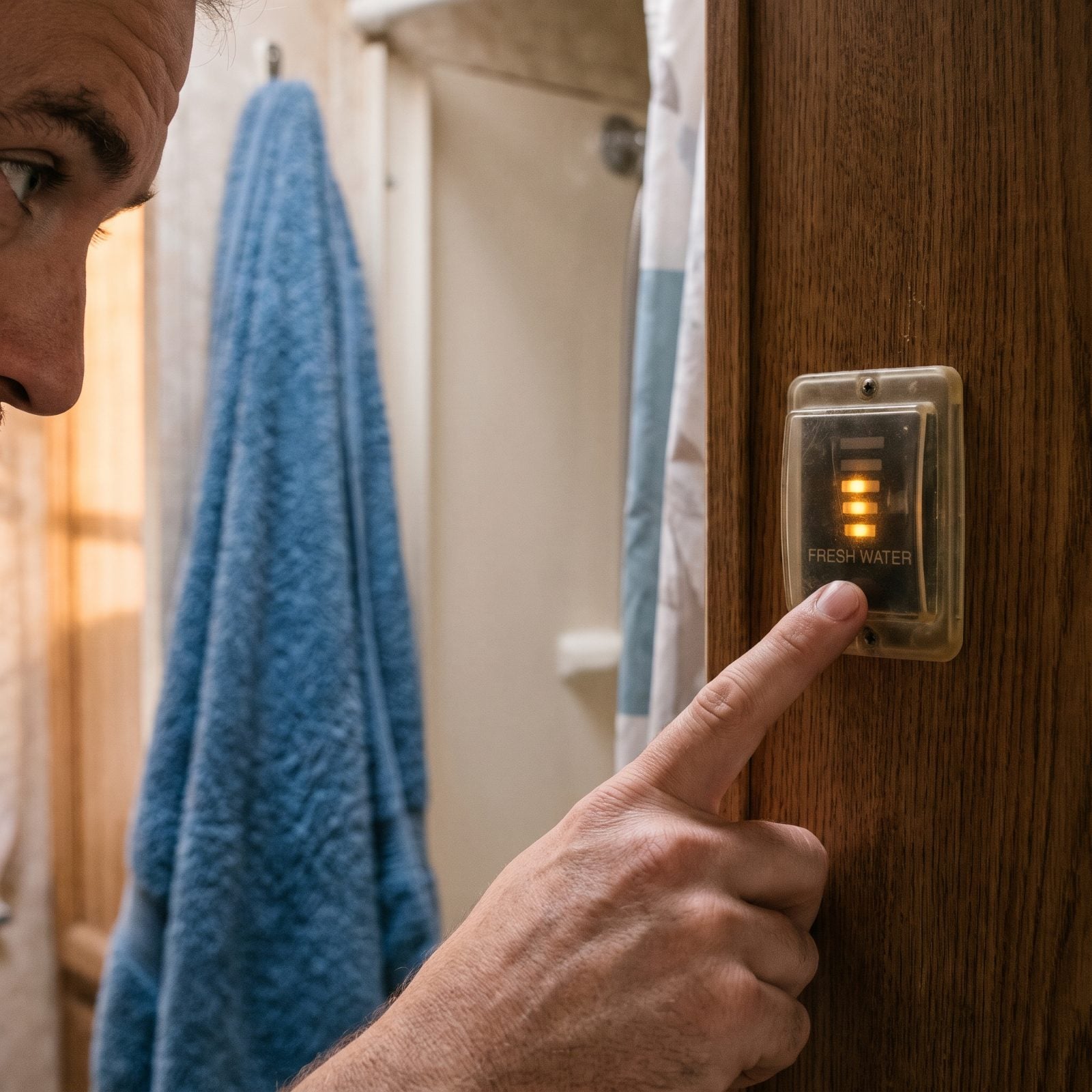
RV tank gauges are famously terrible. Full, two-thirds, one-third, empty, with nothing in between — and a bad habit of lying once gunk builds on the sensors. So treat the number as a rough mood, not gospel.
The real move is knowing your burn rate. A careful boondocking couple might stretch a 40-gallon tank across several days. Start a long shower with the gauge already at a third and you’ll be the one standing soapy under a dead showerhead, which is a specific kind of humbling.
38. Check the Gray and Black Tank Levels Before They Make the Decision For You
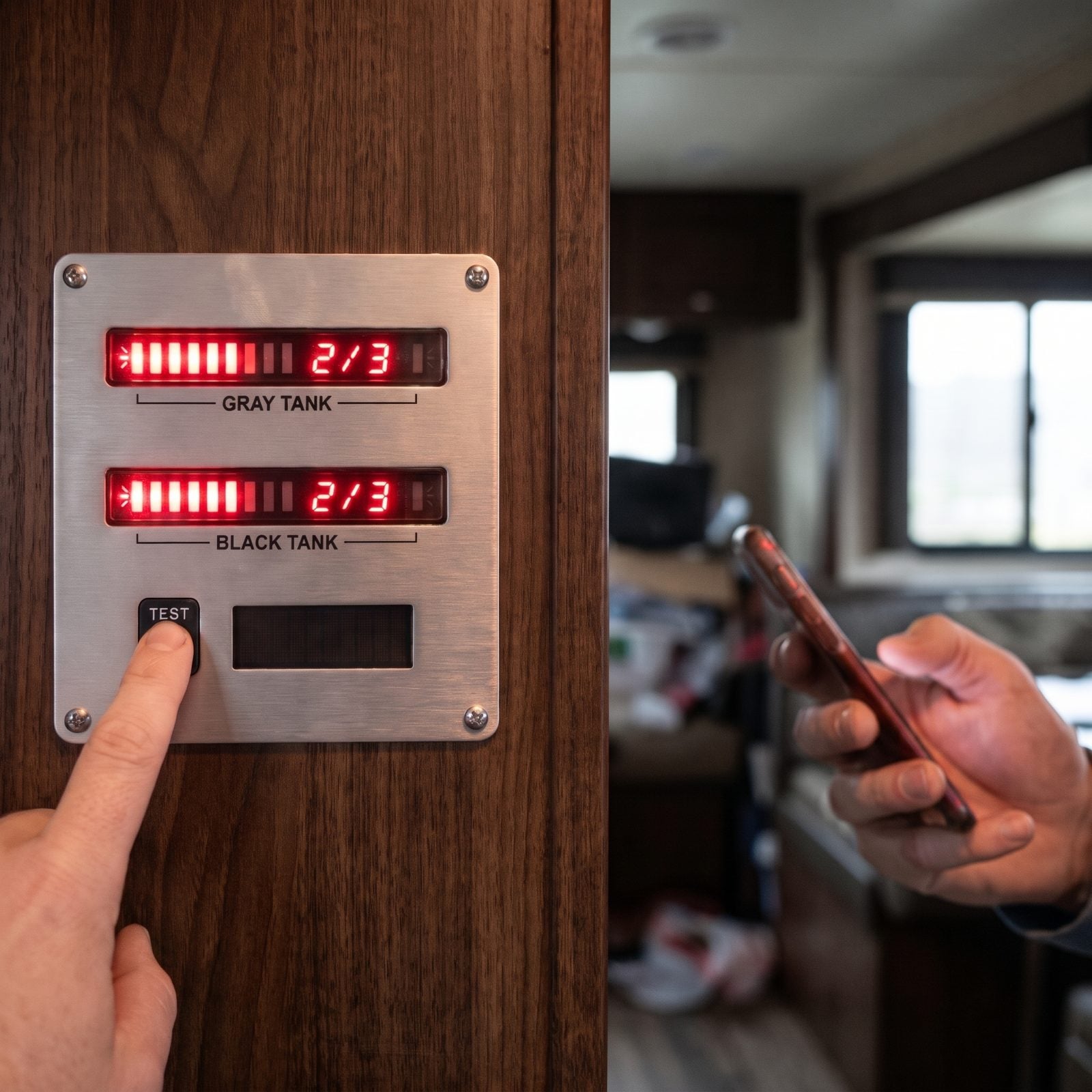
Gray fills faster than you’d ever guess. Dishes, two showers, brushing teeth — and suddenly it’s the tank forcing your travel day, not you. Black can climb right alongside it, and it’s the one you really don’t want to misjudge.
Read both at breakfast and the math gets easy. If either one is creeping toward full, today’s the day you plan a route past a dump station. Better to catch it at breakfast than discover the problem the hard way at bedtime. Nobody warns you how much of full-time life is quietly scheduled around where you’ll empty tanks next.
The freedom of the road, it turns out, has a plumbing schedule.
37. Check the Propane Level So Breakfast and Heat Don’t Quit Together
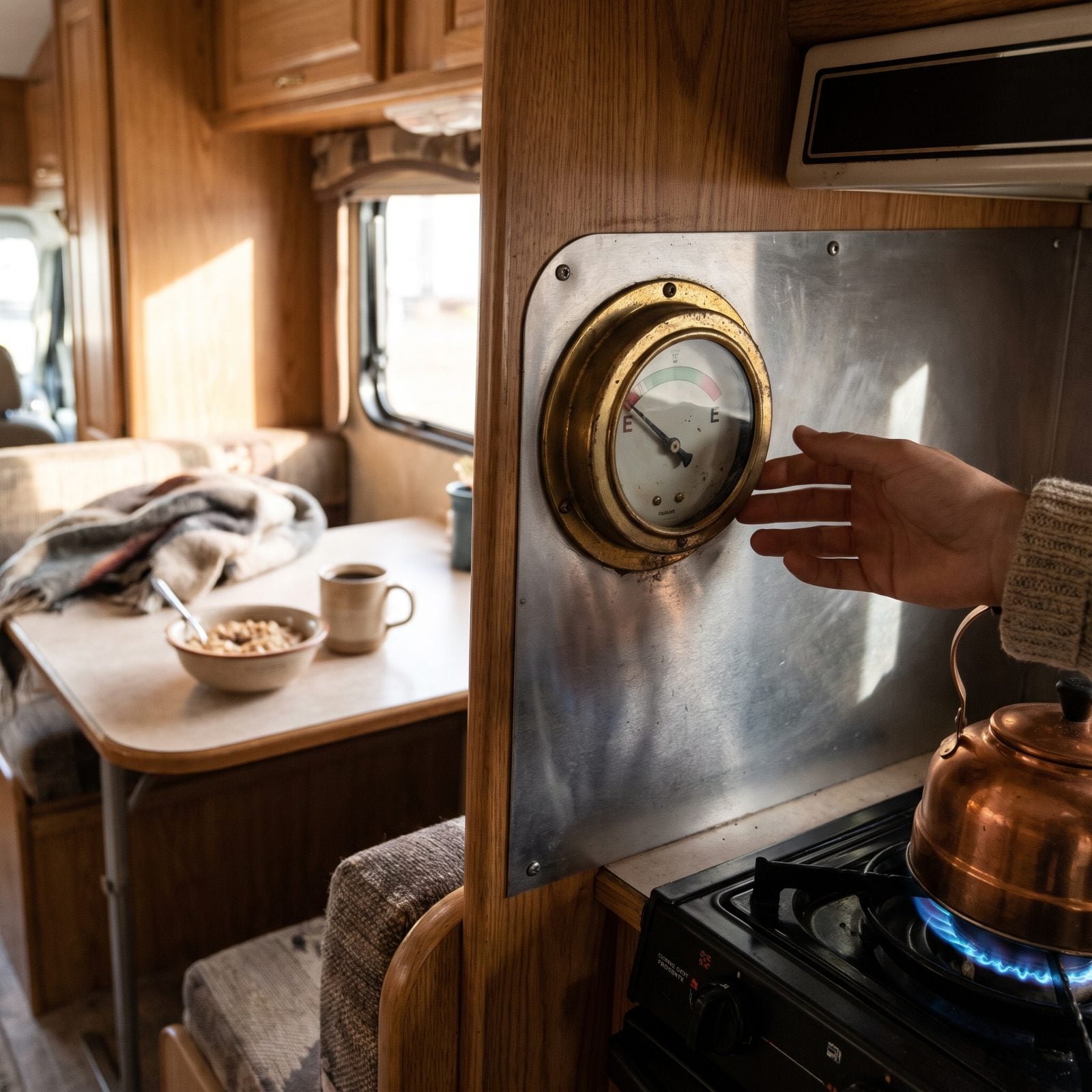
Propane runs the fridge when you’re off-grid, the water heater, the furnace, and the stove. It’s a quiet workhorse right up until the morning it isn’t — usually during a cold snap, after the furnace cycled all night and drained more than you expected.
A twenty-pound tank might last a week in mild weather, or a day or two when the furnace is fighting a hard freeze. Got a level gauge mounted beside the stove? Glance at it before you put the kettle on — if the needle is sliding toward E, plan your refill now. Running dry in a storm, with the heat and breakfast quitting together, is a rookie mistake you only make once.
36. Read the Shore Power Voltage Before It Fries Something Expensive
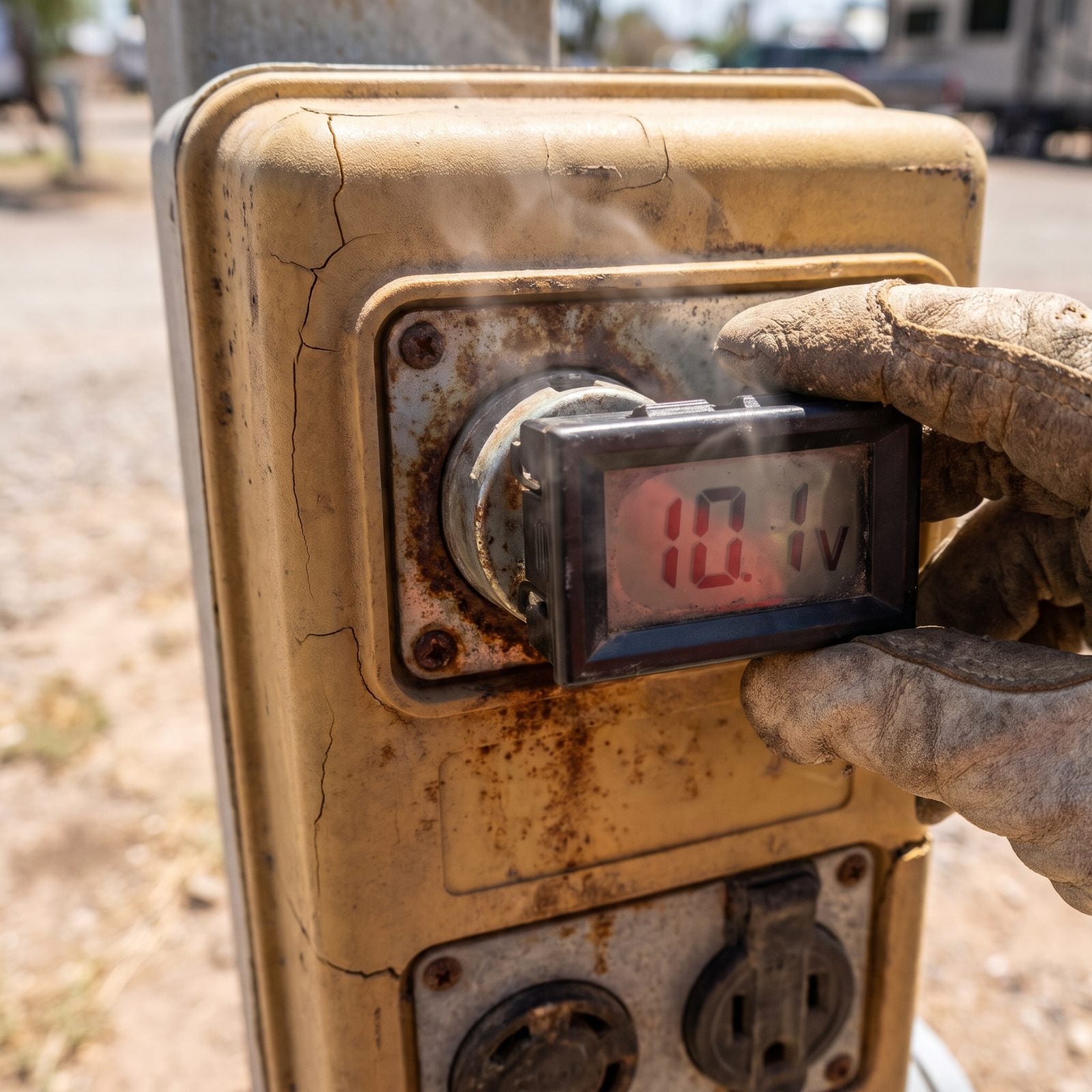
Old parks on a hot afternoon can sag the voltage way down, sometimes well below 110 volts, when every neighbor cranks the AC at once. Here’s the part people get backwards: low voltage is what kills air conditioners and compressors, not high voltage. And by the time the pedestal is smoking, the damage is already done.
Even a bare panel-mount voltmeter held up to the pedestal tells you its real number. See it dip too low and you shut the AC off and wait, or you move. Learned that one watching a neighbor’s compressor give up at a crowded park in July. The hum stopped, and so did their weekend.
35. See How Much the Solar Panels Are Actually Producing
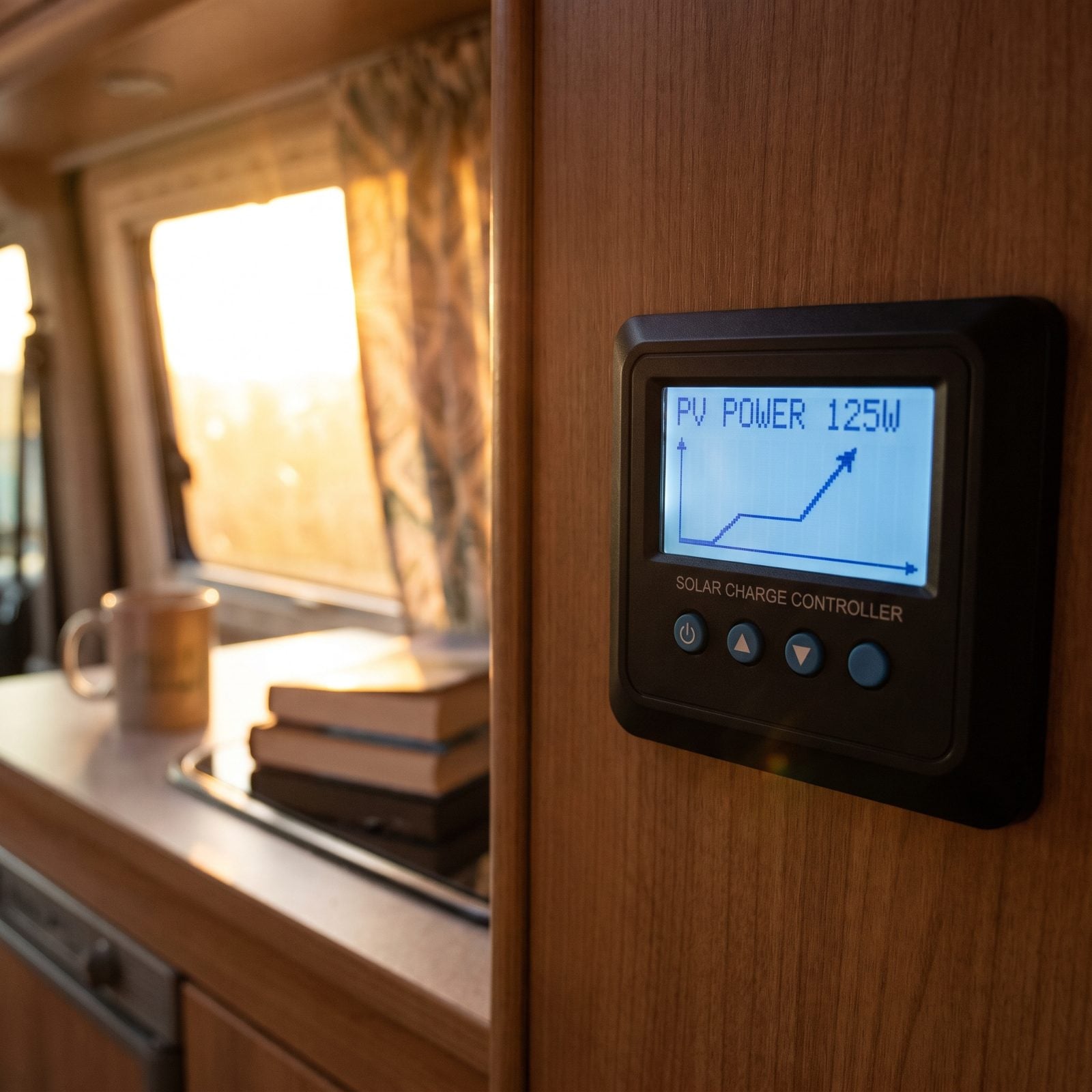
The controller display is your weather forecast for electricity. At sunrise you’ll see a trickle, maybe a handful of watts, climbing as the sun clears the trees. Watch it over your coffee and you learn to read your own site.
A big roof array under a thin tree canopy might never crack half its rating all day. That reading tells you whether to run the microwave now or wait, whether today’s a laundry day or a conserve day. Panels on a spec sheet and panels sitting in dappled pine shade are two completely different numbers — and the controller is the one telling you the truth.
34. Drag the Portable Solar Panels Out of the Morning Shade
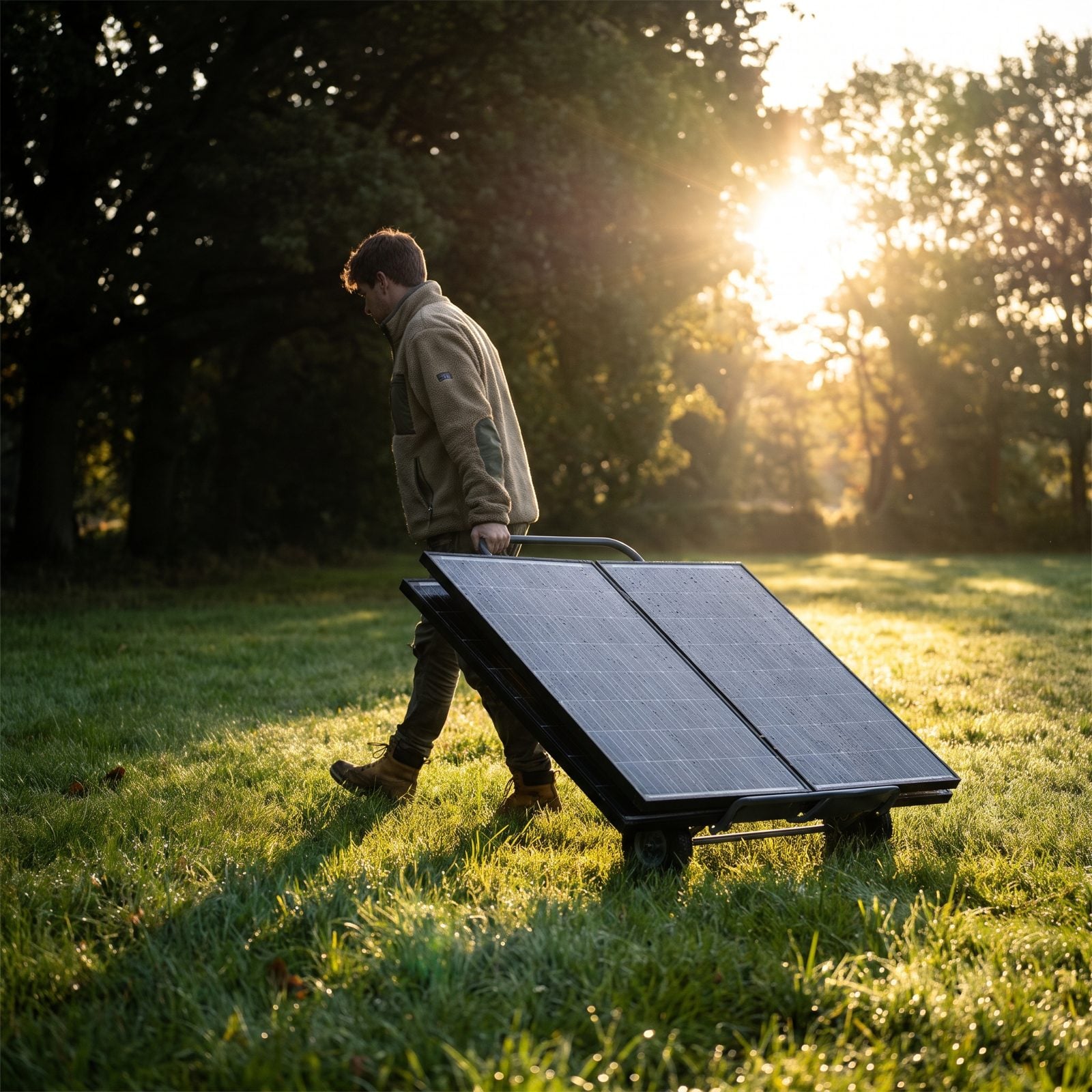
Shade is the enemy of solar. A single branch shadow across one panel can tank the whole string’s output, and the sun moves all day, which means the sunny spot you parked the panels in last evening is probably shade by breakfast.
So the morning ritual becomes a little solar chess game: haul the panels across the site, tilt them at the low sun, chase the gap in the canopy. Feels silly the first few times. Then you watch the controller jump after one good nudge, and you’re hooked. Nobody mentions how much of boondocking is just quietly moving panels around like a sundial.
33. Listen for a Water Pump That Won’t Stop Cycling
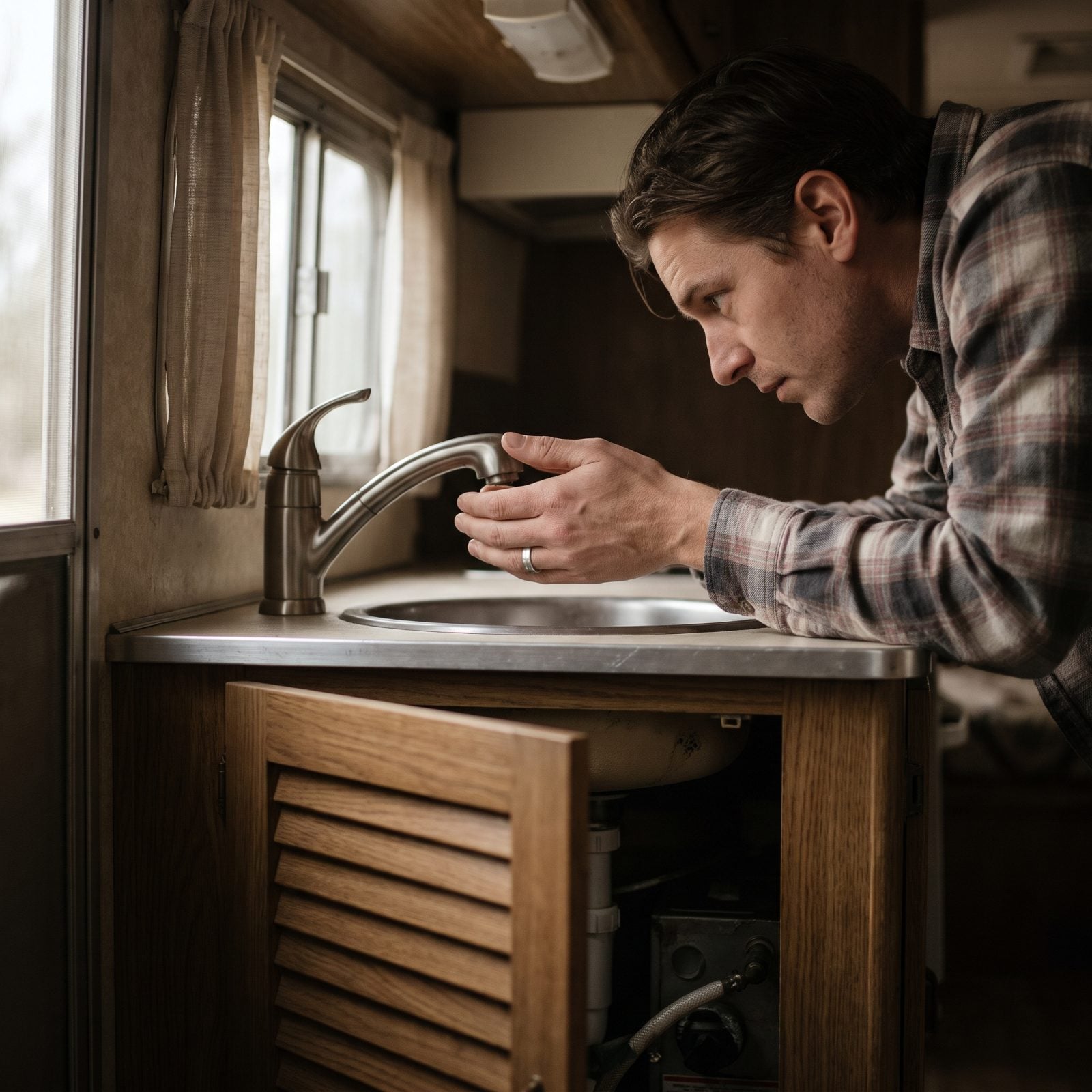
Stand still in the quiet and listen. With every tap closed, the pump should run to pressurize, then click off and stay off. If it keeps kicking on every minute or two by itself, something’s leaking or a fitting’s weeping somewhere you can’t see.
On fresh water that’s wasted gallons. On a dripping line inside a cabinet it’s slow damage building behind your dishes. A pump that short-cycles at dawn is the rig whispering before it has to shout, and the fix is almost always a fitting you can hand-tighten.
32. Feel the City Water Connection for the Leak You Can’t See Yet
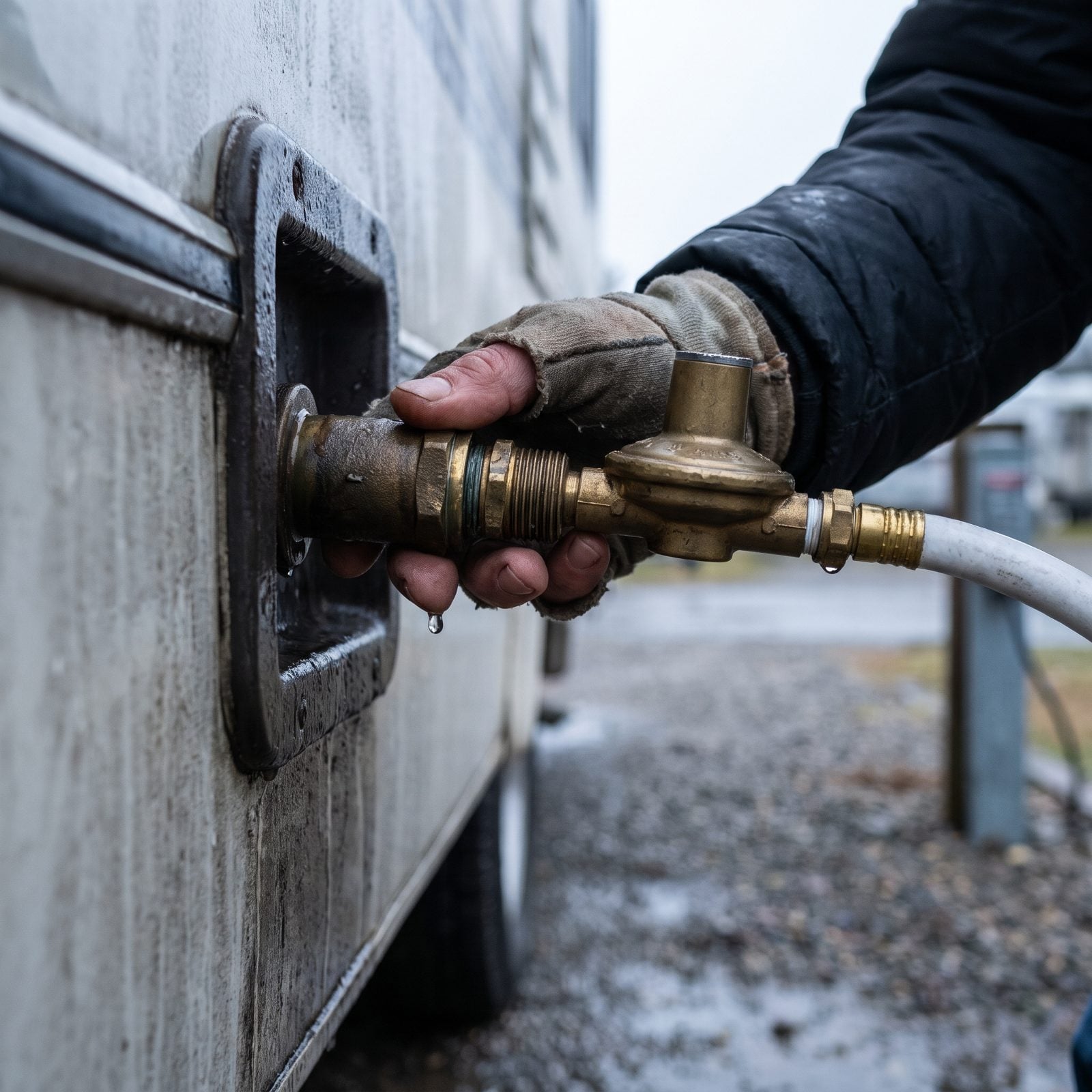
Run your fingers around the city water fitting and the pressure regulator. Damp where it should be dry means a slow leak, and campground pressure can spike high enough overnight to nudge a fitting loose or split a tired washer.
This is the five-second check that saves a hose connection from turning your campsite into a swamp by afternoon. Not running an inline regulator yet? Start today. Some parks push pressure your rig’s plumbing was never built to shrug off. A cheap washer and a modest regulator stand between you and a very wet, very annoying repair.
31. Read the Refrigerator Thermometer Before You Trust It
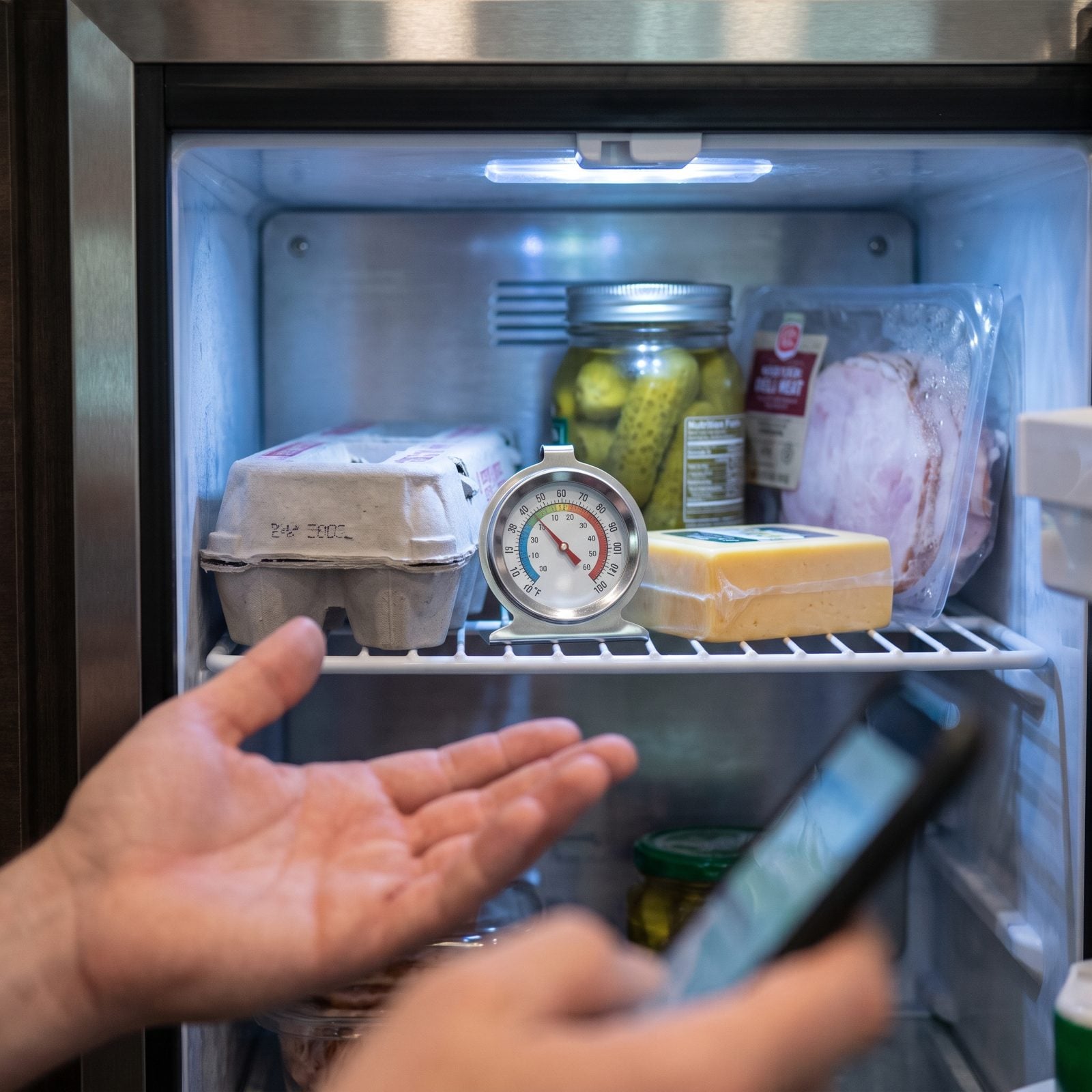
RV fridges lie. Not on purpose, but they run warmer than the dial suggests, and the absorption models in many rigs can swing ten degrees overnight if you parked on a slope or the vents clogged with road dust. A cheap dial thermometer on the middle shelf tells you the truth the fridge won’t.
You want it under 40. Sit above that for a few hours and you’re playing a guessing game with chicken you really don’t want to lose.
30. Confirm the Fridge Didn’t Quietly Switch Power Sources
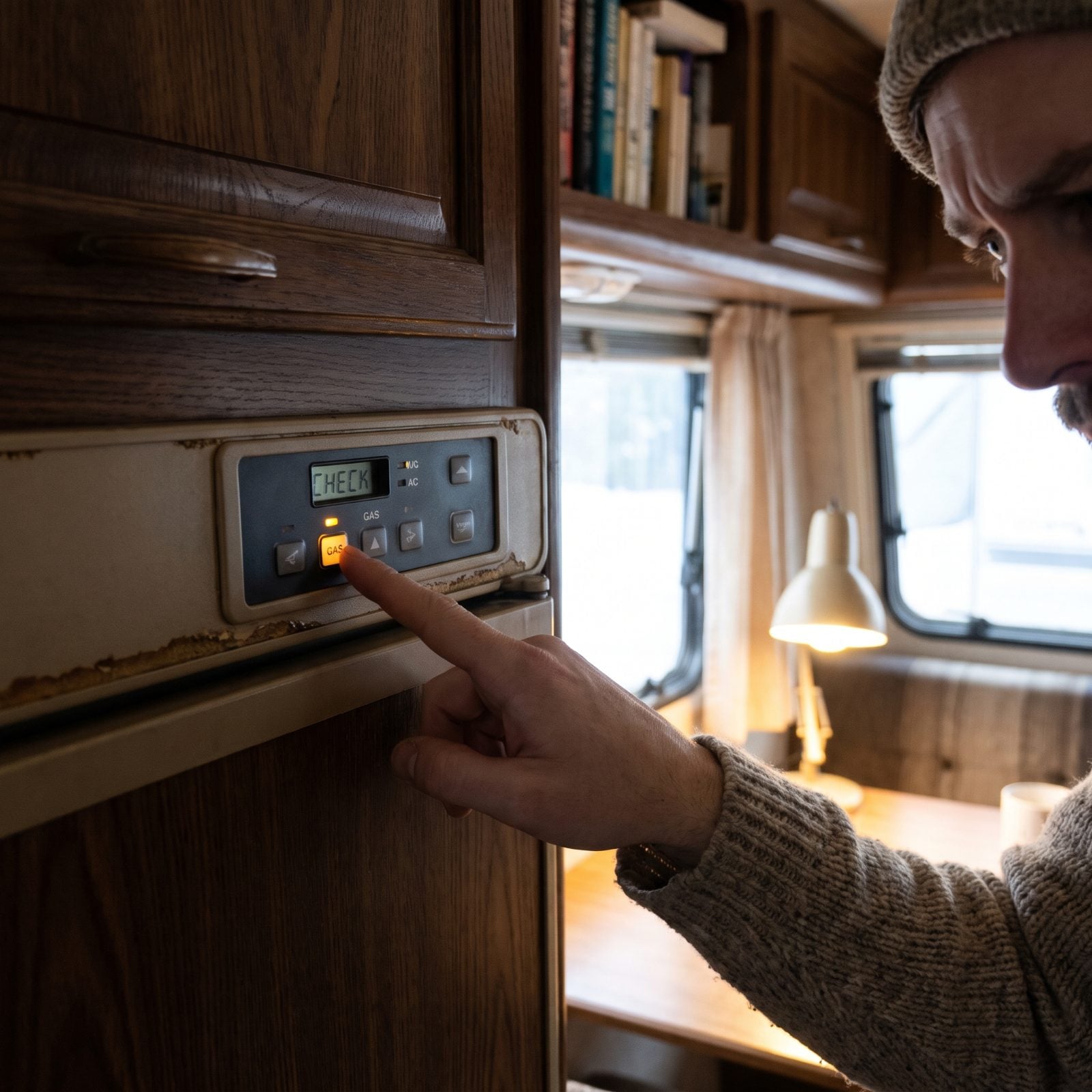
Two-way and three-way fridges can flip from shore power to propane on their own when the pedestal flickers overnight. Great feature. Terrible surprise if you’re boondocking and didn’t notice the thing has been quietly draining your propane tank since 2am.
So glance at the control panel and confirm it’s on the source you actually want. Plugged in at a park? It should be on AC. If it jumped to gas, something cut power while you slept, and that’s worth knowing before you plan the day around electricity you don’t have.
29. Check the Humidity Monitor Like It’s a Weather Report
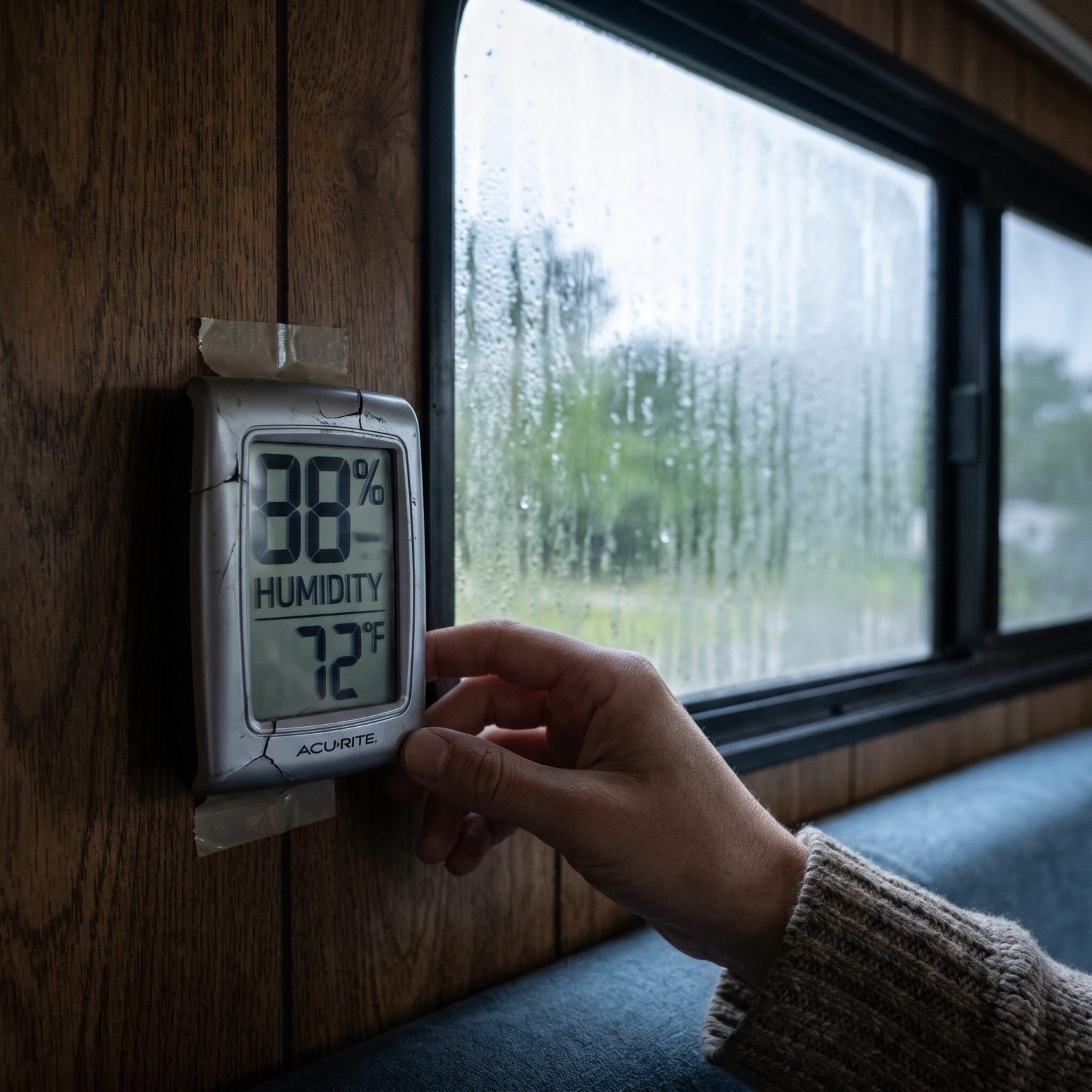
Two people breathing in a sealed box all night produces a surprising amount of water. A ten-dollar hygrometer on the wall turns that invisible problem into a number you can act on.
Let the interior climb past the mid-fifties and you’re heading toward mold on the window frames and that damp, musty smell that never fully leaves soft furnishings. Full-timers watch this reading in winter the way landlocked people watch rain — it decides whether you crack a vent, run the fan, or dig out the little dehumidifier.
28. Wipe the Window Condensation Before It Finds the Frame
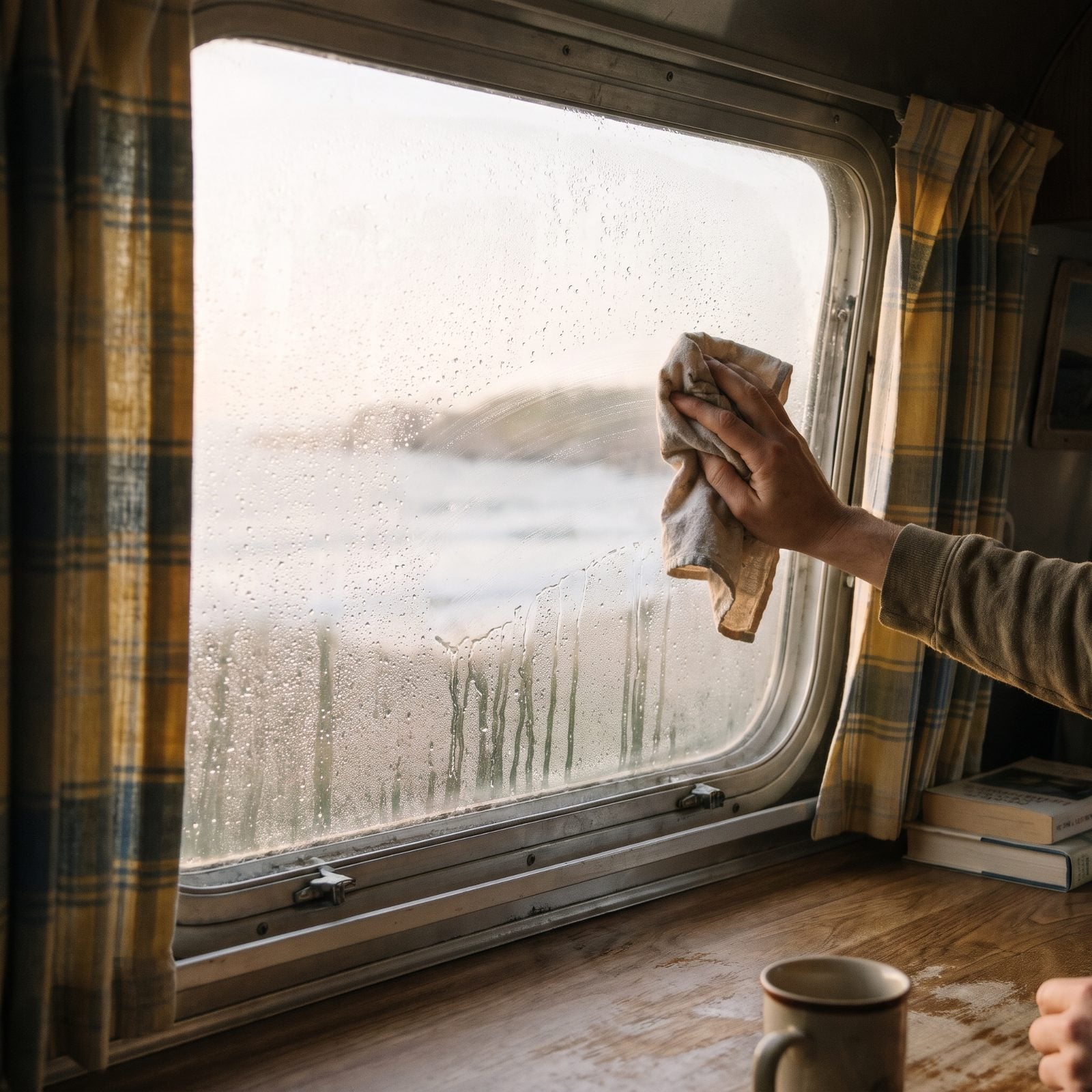
You wake up, the windows are crying, and there’s a little puddle sitting in the aluminum frame at the bottom. Leave it and that water wicks into the wall cavity over weeks, and nobody ever sees the rot start until the panel feels soft.
Thirty seconds with a microfiber cloth. Do the frames especially, not just the glass. I ignored this for an entire first winter and learned exactly what a stained window valance looks like.
27. Open the Roof Vent Before You Step in the Shower
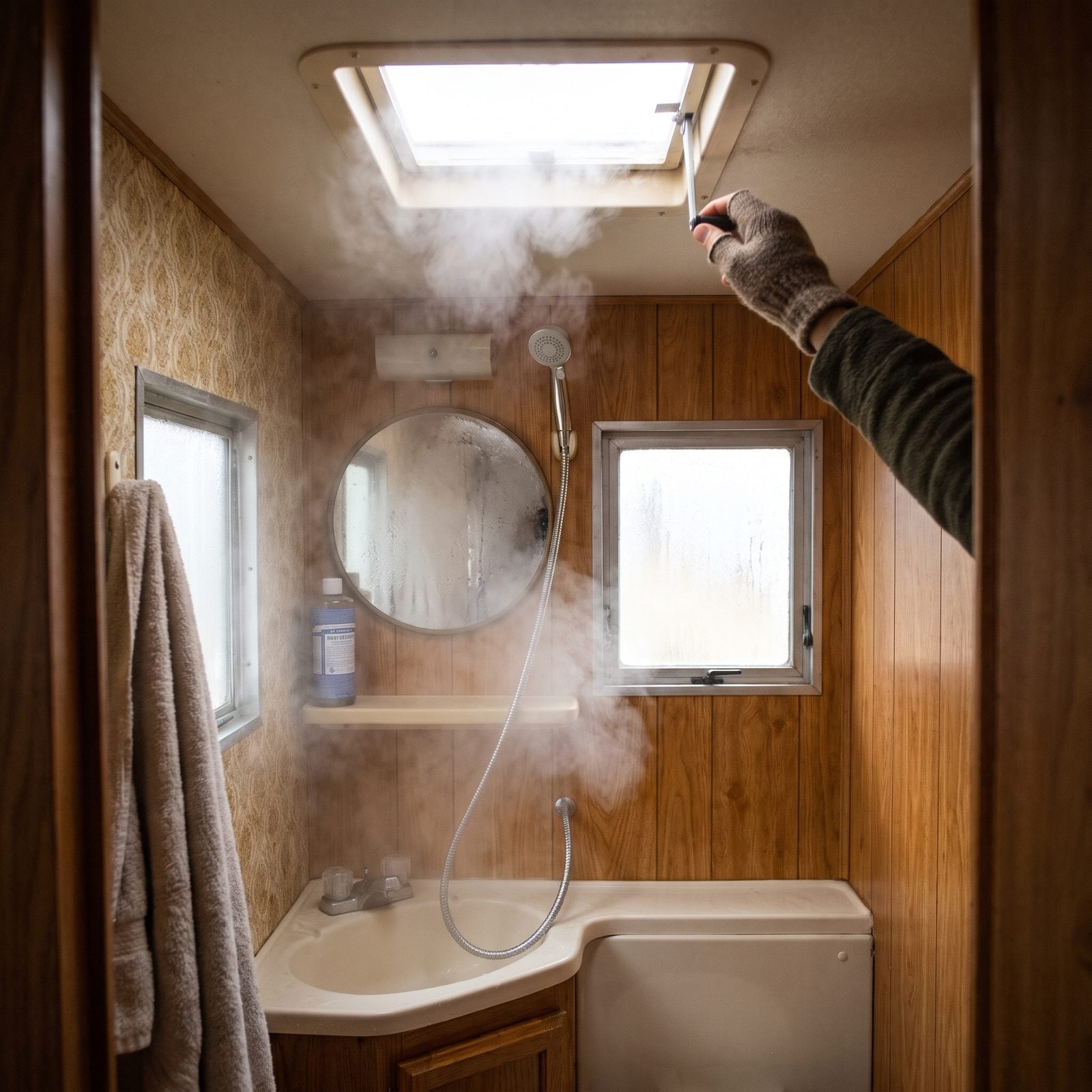
An RV bathroom is roughly the size of a phone booth, and a hot shower fills it with steam in under a minute. That steam has nowhere to go but into your walls and up into the ceiling.
Crack the roof vent and flip the fan on before you turn the water on, not after. Wait until the mirror has fogged solid and steam is already rolling across the ceiling and you’re cranking the vent open too late; the moisture has already settled into everything. Small habit, and it saves you a mildew problem that’s genuinely miserable to fix in a space you can’t walk away from.
26. Run a Hand Along the Ceiling After Overnight Rain
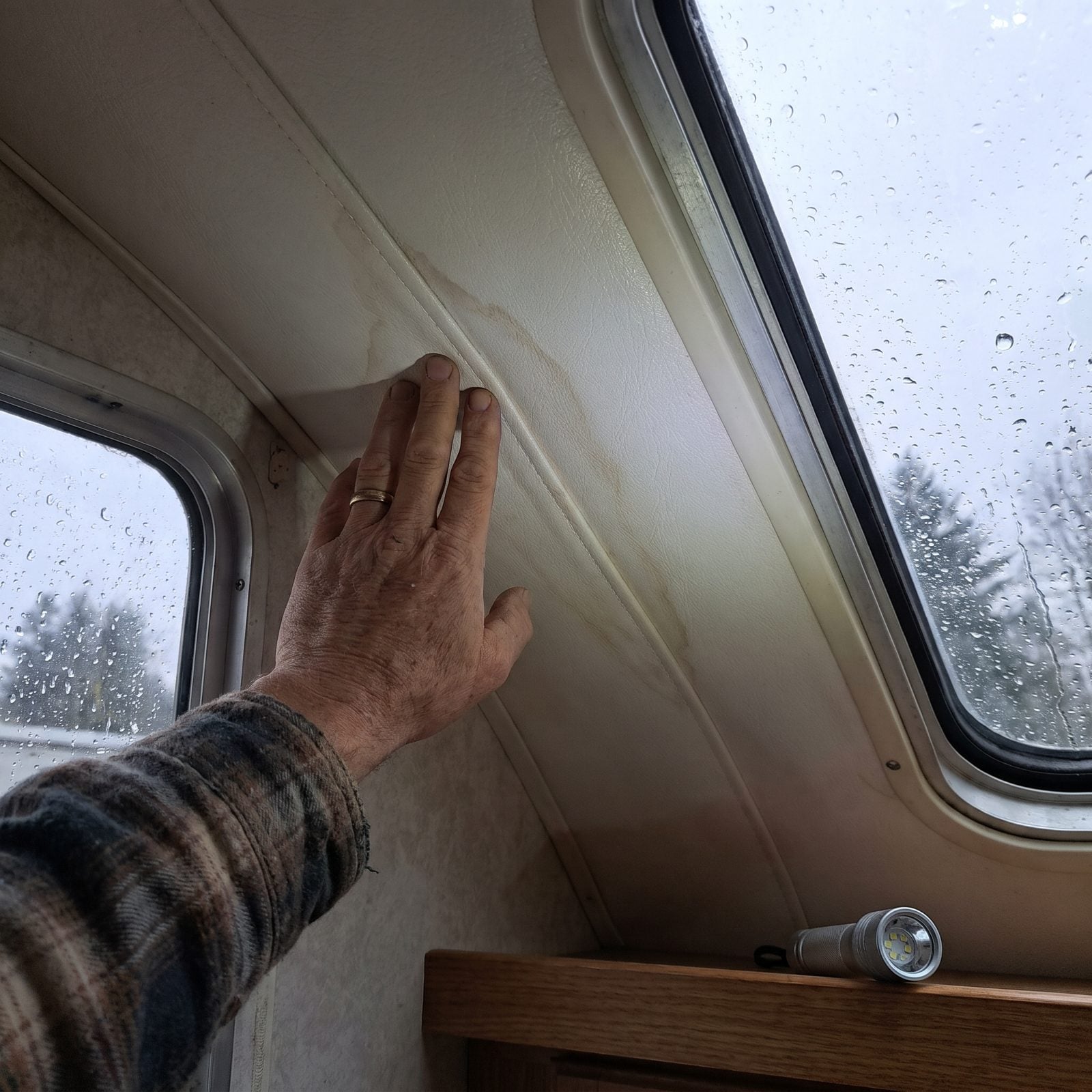
Roof leaks don’t announce themselves. They show up as a faint discoloration near a seam, a slightly soft spot around a vent, or a smell before anything else. The morning after a hard rain is exactly when you’ll catch one, because the water is fresh and the stain is still wet.
Walk the ceiling with your eyes and one hand. Pay attention to the corners, the vent surrounds, and anywhere a previous owner drilled a hole. A leak caught the morning it starts is a tube of sealant. A leak caught in spring is a new roof and a wall rebuild.
25. Read the Forecast for Wind Gusts That Can Flip a Rig
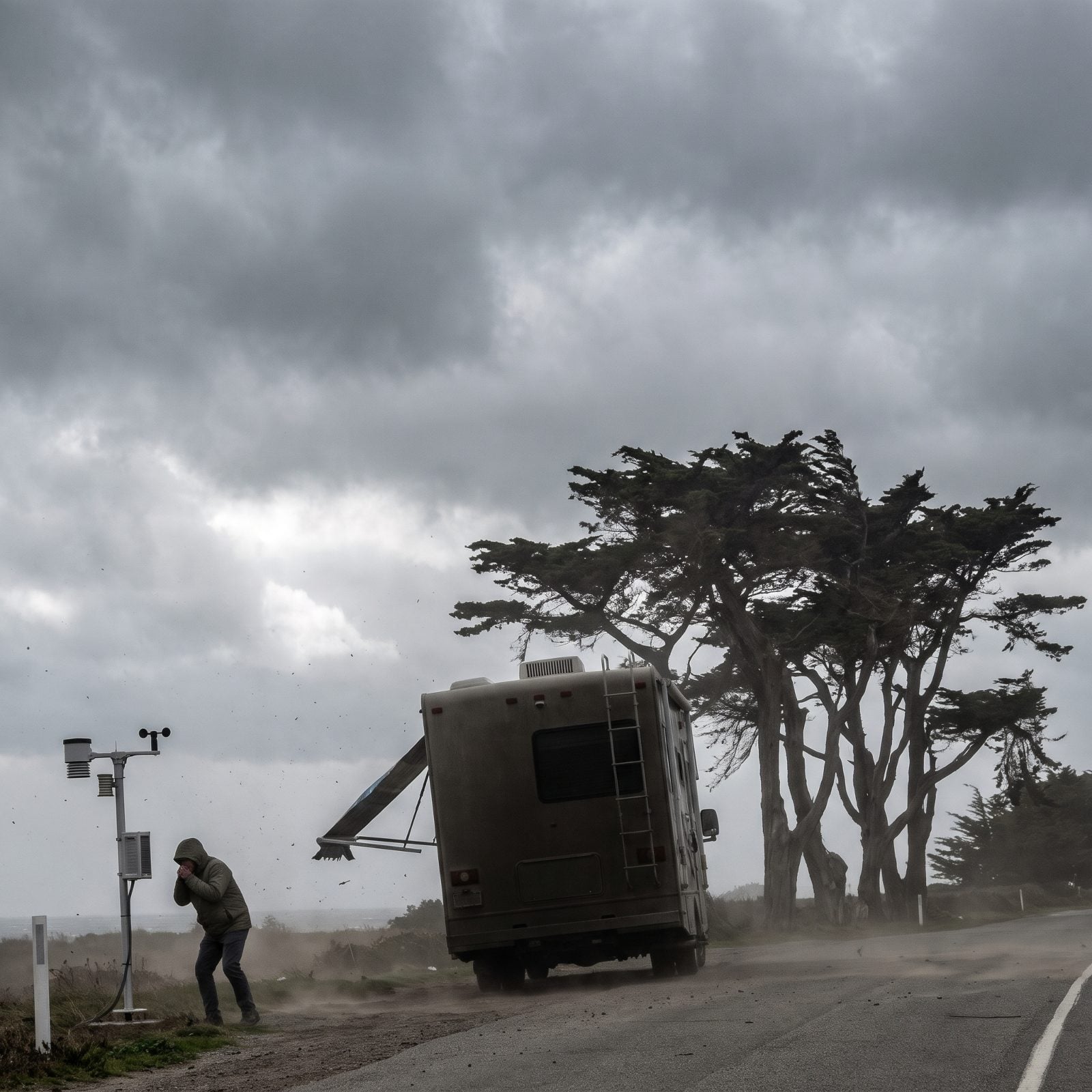
A tall-sided RV is basically a sail on wheels, and strong sustained winds with higher gusts turn a travel day into a white-knuckle fight across three lanes. High-profile vehicle warnings on interstates exist for a reason.
Before you commit to driving, check the gust forecast along your actual route, not just where you’re parked. A crosswind on an open plain or a bridge is a different animal than a number on a screen.
24. Scan for Freeze Warnings Before They Reach Your Pipes
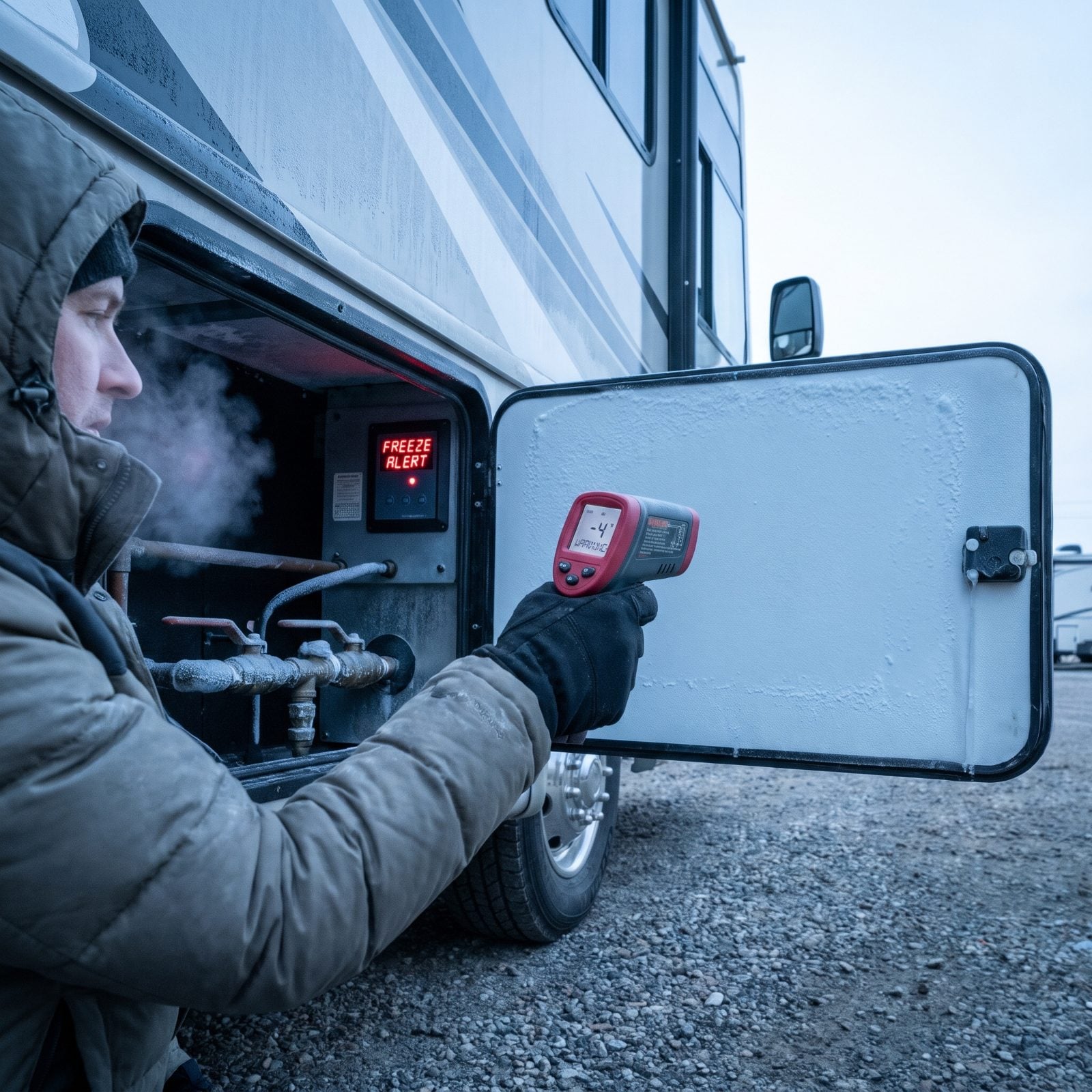
Your RV’s plumbing sits in thin-walled bays that freeze faster than the ground does. One cold night can crack a water line or split a fitting, and you won’t find out until the thaw floods the basement.
Check the overnight low the morning before, not the morning of. If a freeze is coming, you’ve got a short list: disconnect and drain the hose, drop a little antifreeze in the traps, or run a space heater in the wet bay. Catch it at breakfast and you’ve got the whole day to prep. Catch it at bedtime and you’ve got panic.
23. Look Up the Local Air-Quality and Smoke Index
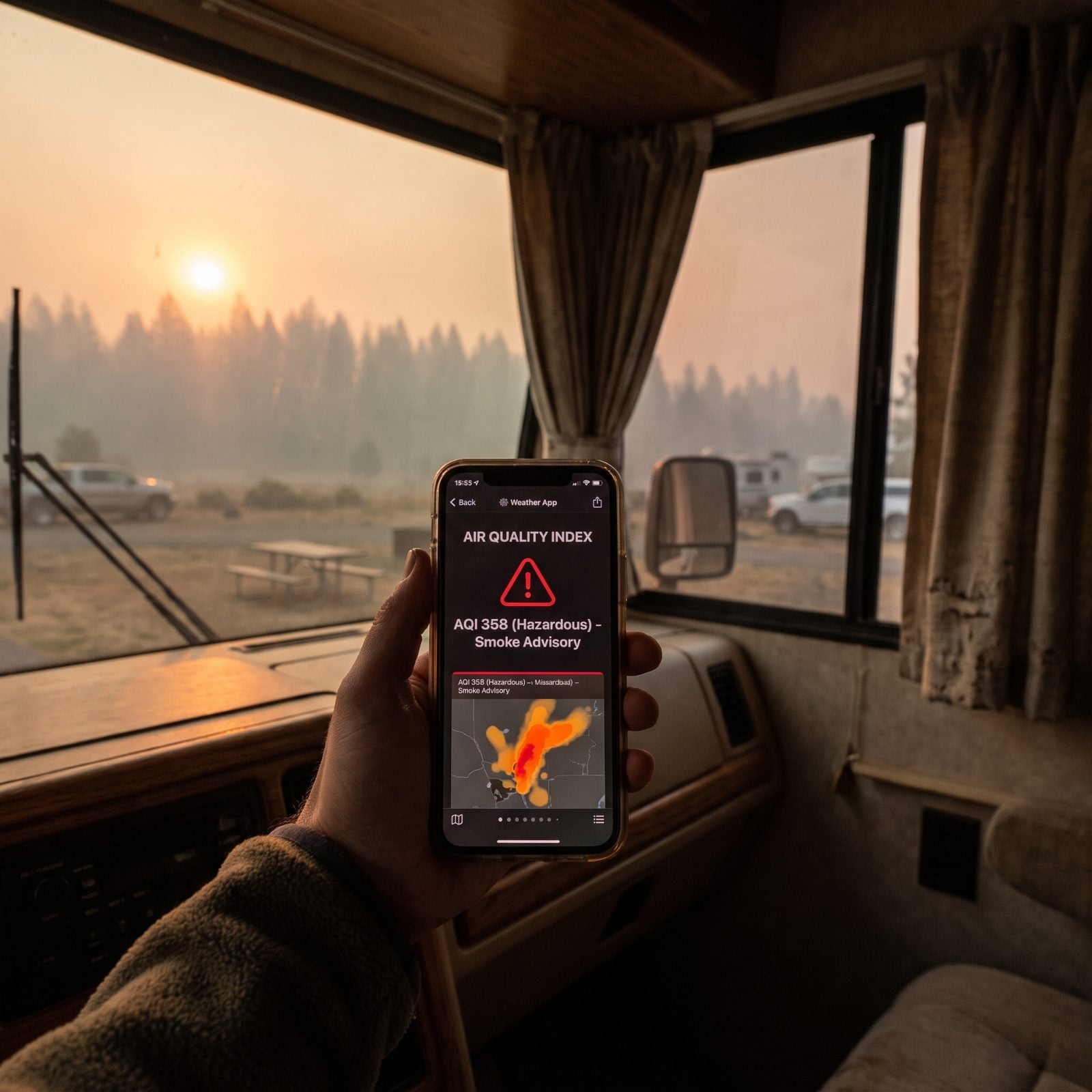
Wildfire smoke travels hundreds of miles, and a sky that looked clear last night can go orange and acrid by sunrise. For anyone with a heart or lung condition — which describes plenty of full-timers past a certain age — the air-quality index is a genuine health decision, not a weather curiosity.
Pull up the AQI for your location. If it’s reading hazardous, you’re closing windows, shutting off the fan’s fresh-air intake, and maybe moving on sooner than planned. A rig has no filtered HVAC worth mentioning, so the only real defense is sealing up and relocating.
22. Check the Awning Before the Afternoon Wind Arrives
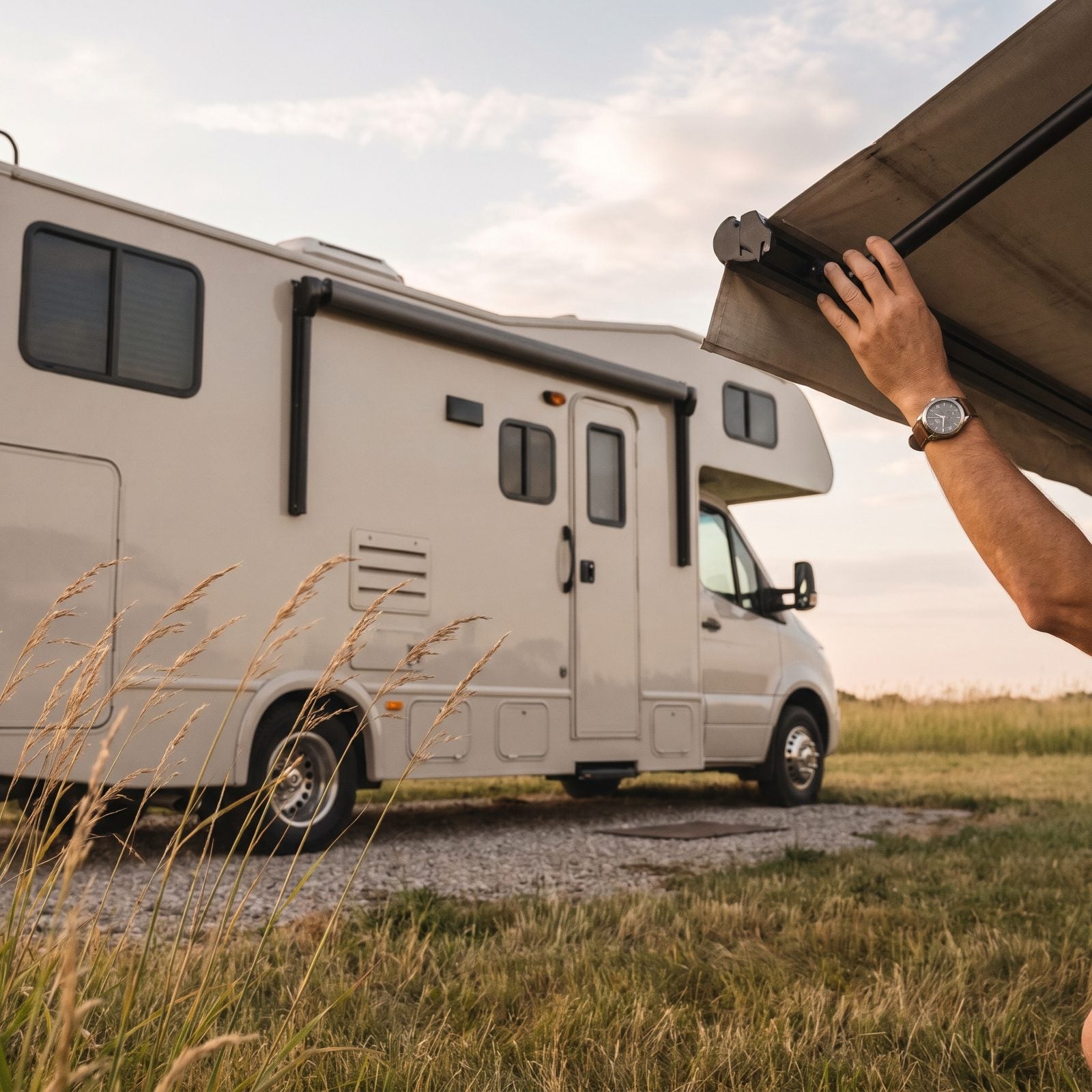
An awning is the single most expensive thing on your rig to replace on a whim, and wind destroys more of them than age ever will. A gust catches the extended fabric, the arm bends, and suddenly you’re looking at a mangled roller and a repair bill that ruins the week.
Morning is calm. Afternoon often isn’t. If the forecast shows wind building, retract it now while the air is still, or at the very least set the tension and check the arms. People leave it out for the shade and walk away, then come back to wreckage. And I promise the shade wasn’t worth it.
21. Look for Debris on the Slide Toppers
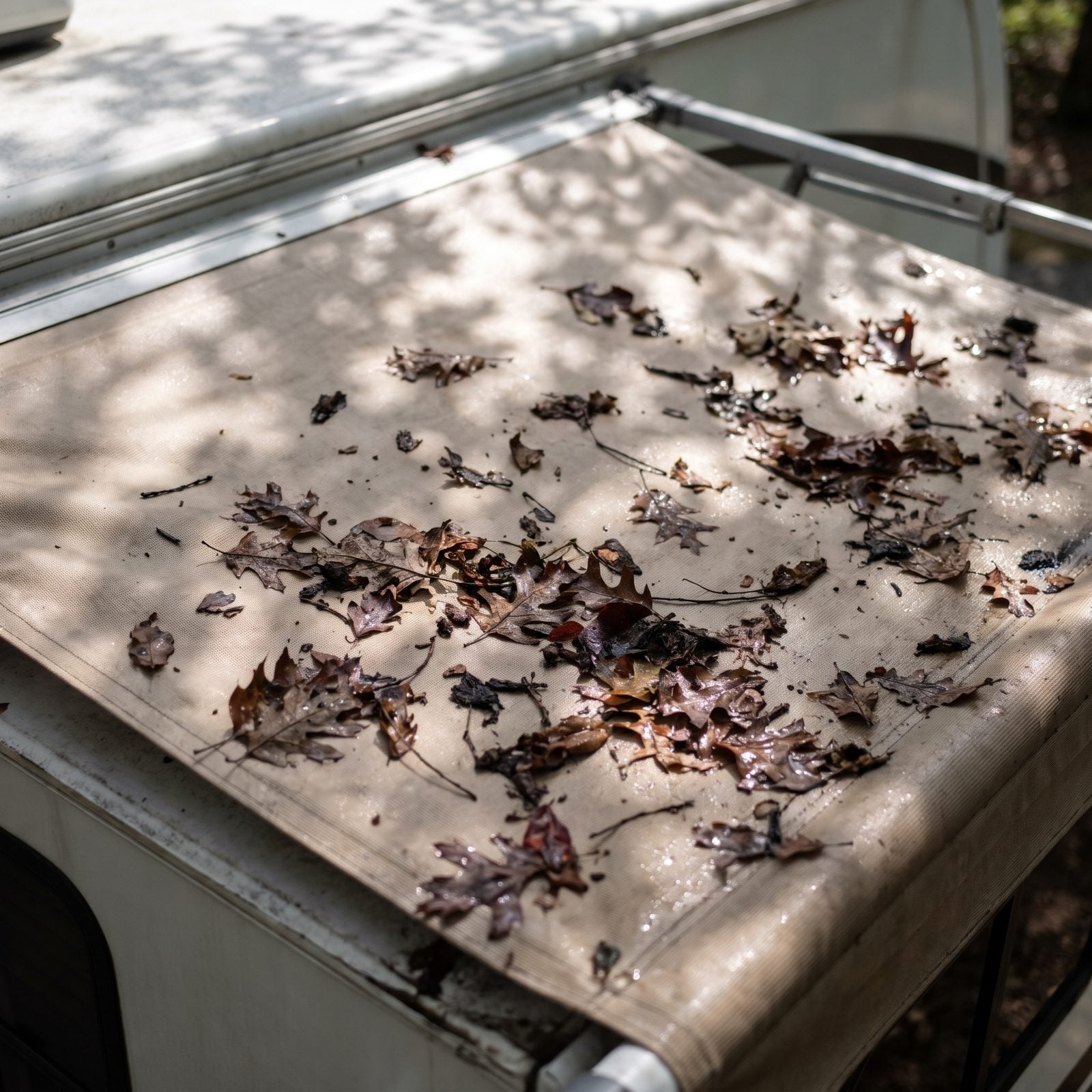
Pull a slide in over a pile of wet oak leaves and you are asking for a torn topper, a streak of black mold, or both. That fabric sheds water and junk off the slide roof, but only if you clear it before retracting.
Check in the morning, before the sun bakes anything on and before you forget. A quick look up, a sweep with a long-handled broom, done. I learned this the hard way after a storm dumped a tree’s worth of debris up there and I pulled the slide in without looking. Dragged half of it right into the seal.
20. Check Whether the Leveling Blocks Shifted Overnight
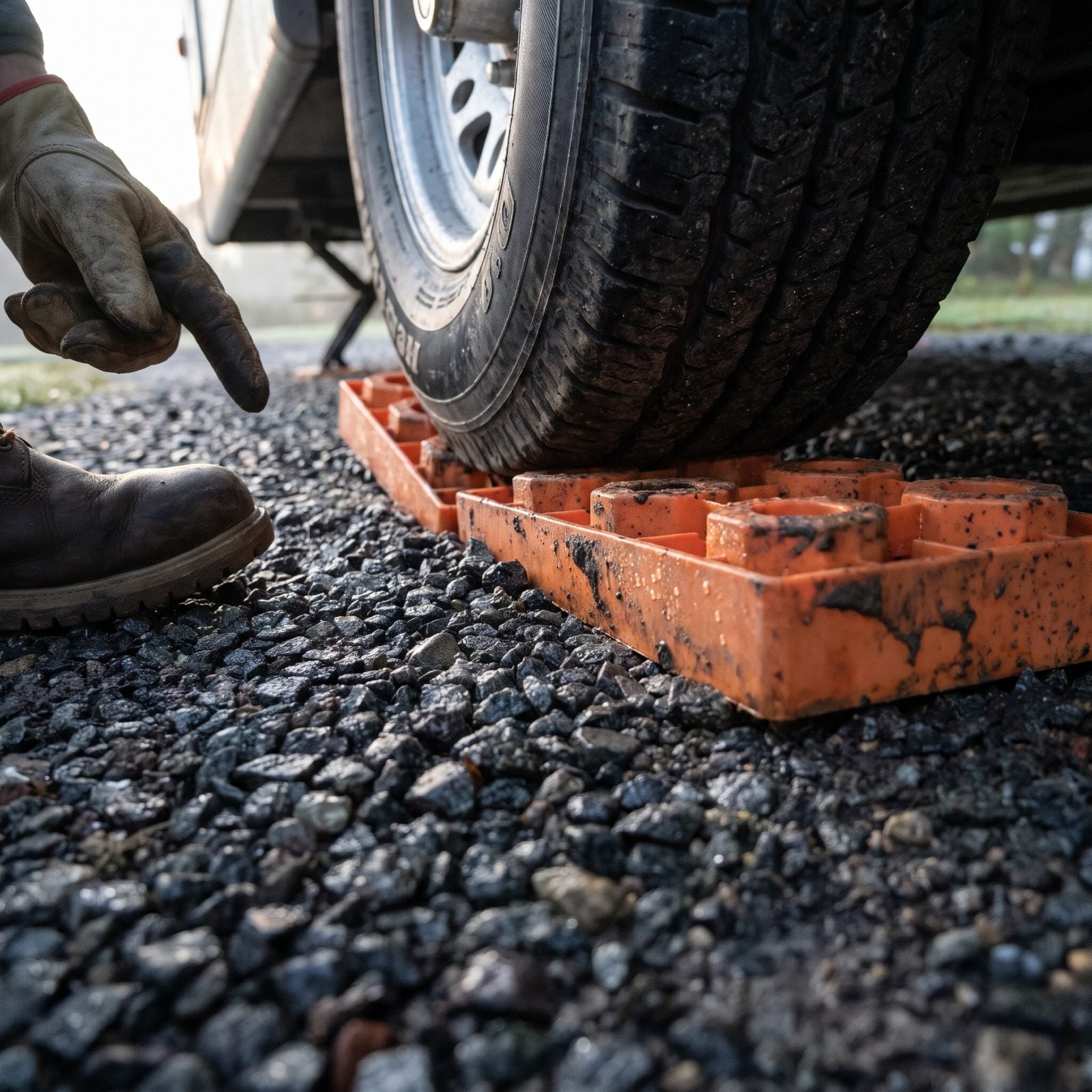
Soft ground is a slow thief. Park on gravel that was damp when you set up, and overnight the blocks sink, the rig drifts a degree off, and suddenly the fridge is complaining and the shower water pools at the wrong end.
Walk the low side first and look at the block stack. If a block has crept out of its interlock or the whole tower has tilted, you caught it early, before a window jams or a door swings open on its own.
19. Confirm the Wheel Chocks Are Still Firmly Seated
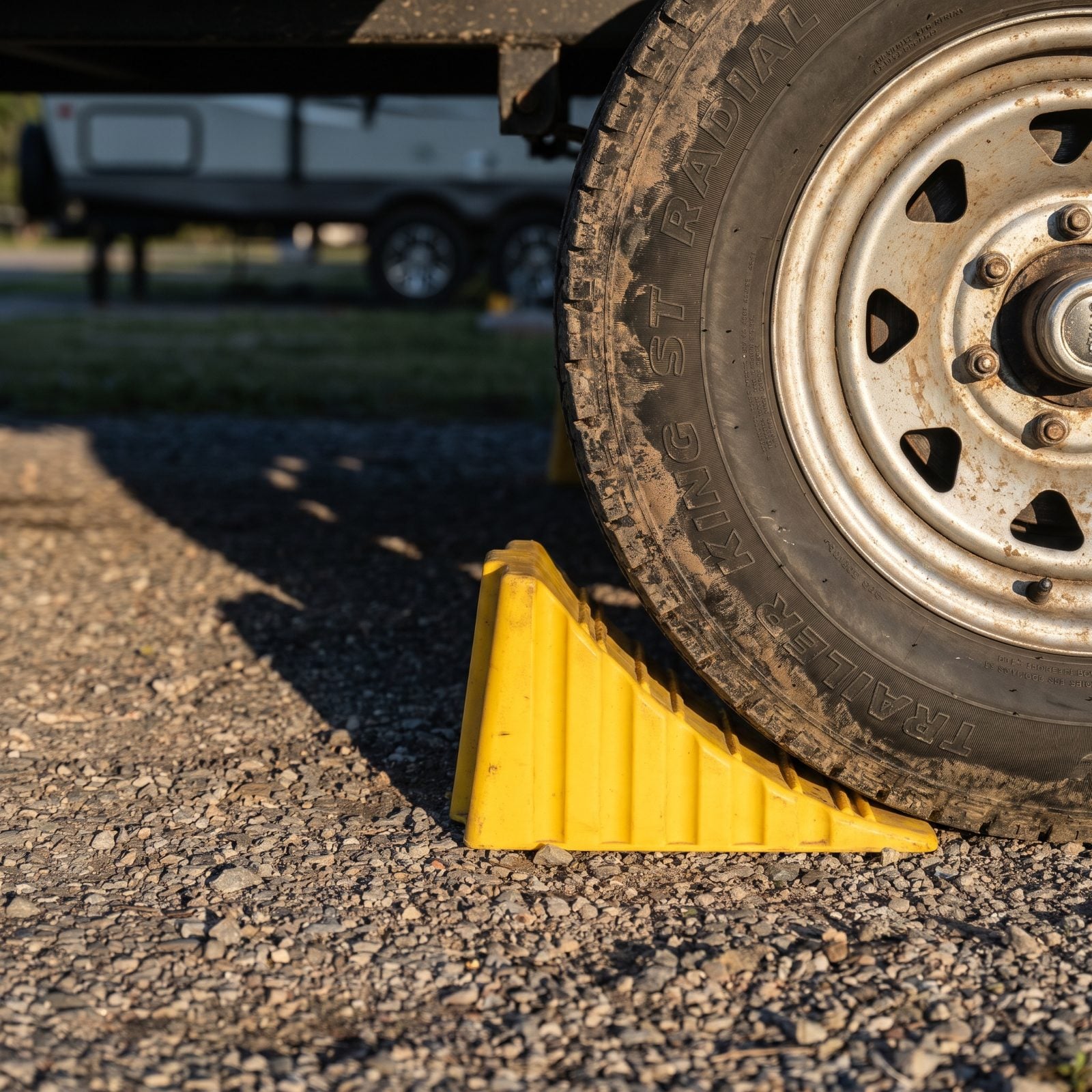
A chock does nothing once it works itself loose, and they do work loose. Temperature swings make tires expand and contract against them all night, so a scissor chock that was snug at bedtime can have a quarter inch of play by sunrise.
Give the handle a twist. Nudge the rubber ones with your boot. You want them pressed against the tread, not sitting pretty an inch off the rubber doing nothing but looking responsible.
18. Inspect Each Tire for Bulges, Cuts, or Low Pressure
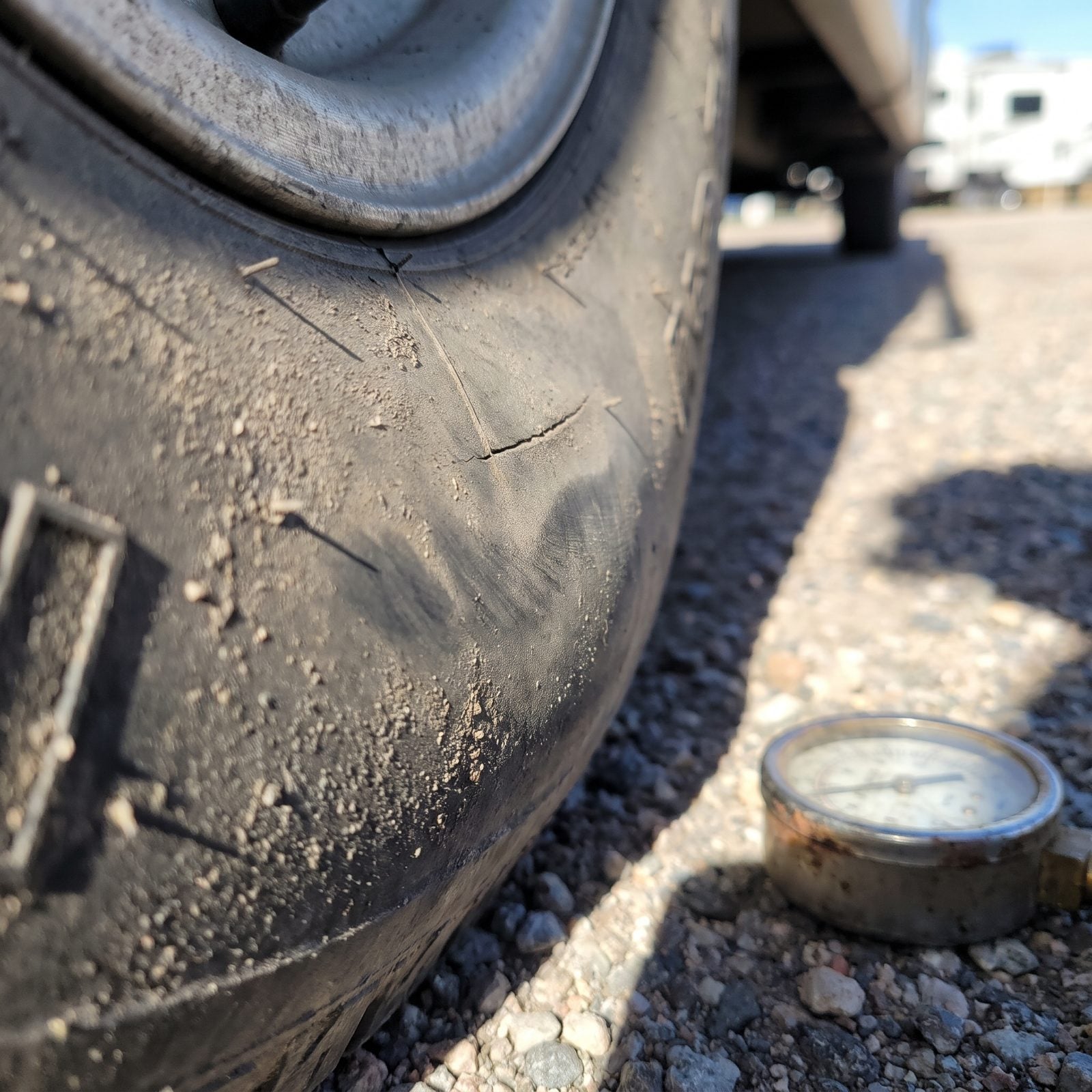
Tires are the single most ignored safety item on an RV, and they’re the one that fails at seventy with a boom and a shredded fender skirt. Full-timers pile serious weight and serious miles onto rubber that spends most of its life parked and sun-baked.
Walk the circle. Look low on each sidewall for a bulge — that means the belt let go inside and the tire is finished. Scan for cuts, cracking, and anything embedded in the tread.
17. Check the Clearance Between the Roof and Nearby Limbs
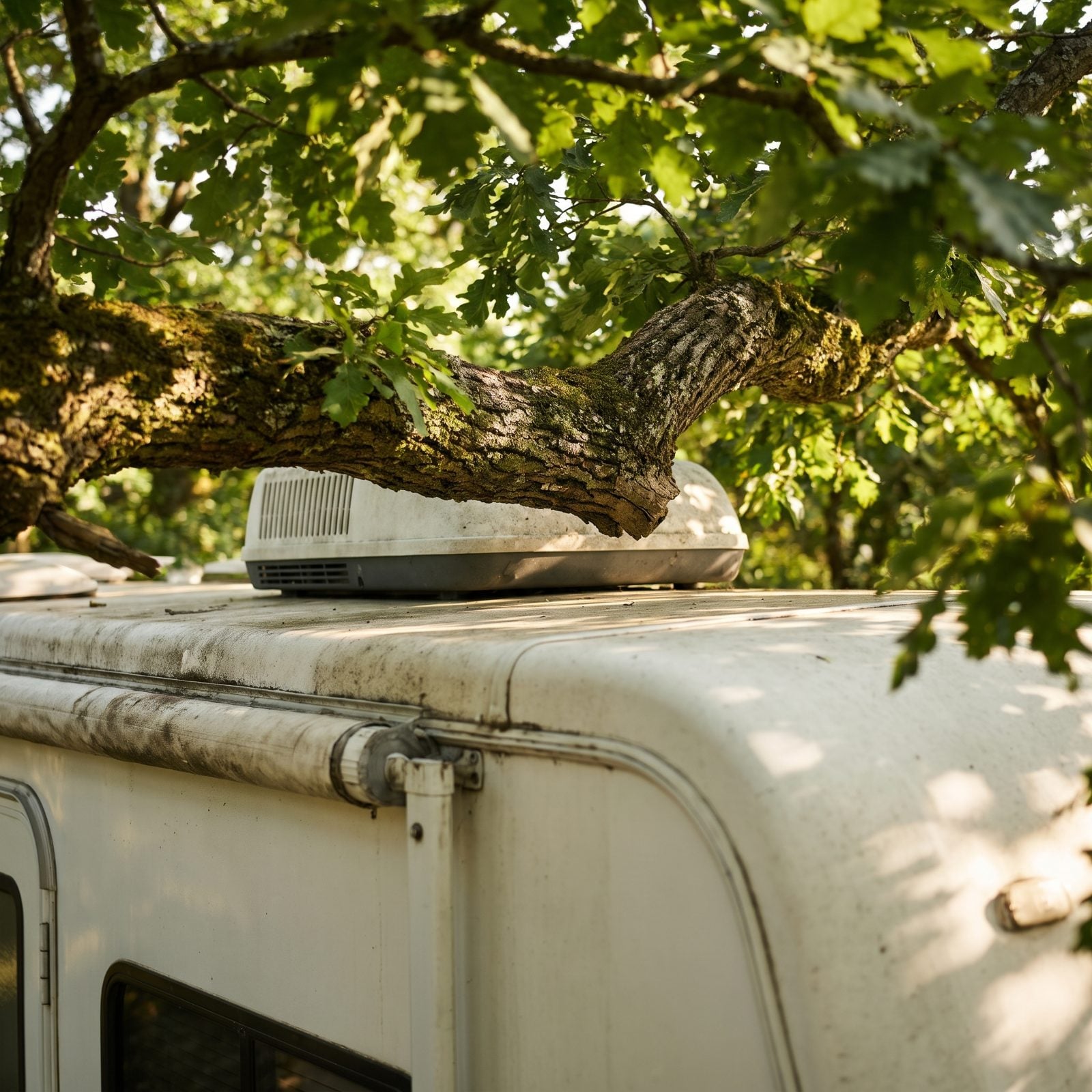
You parked in the shade because shade is a gift in July. That same branch cooling your roof all afternoon becomes a problem the second you pull out, especially if you forgot about the TV antenna or the AC shroud sticking up a foot higher than you think.
Step back and sight the roofline against the canopy. Branches sag overnight with dew weight and after rain. What cleared you yesterday might not today.
16. Look for Ant Trails Around Utility Openings
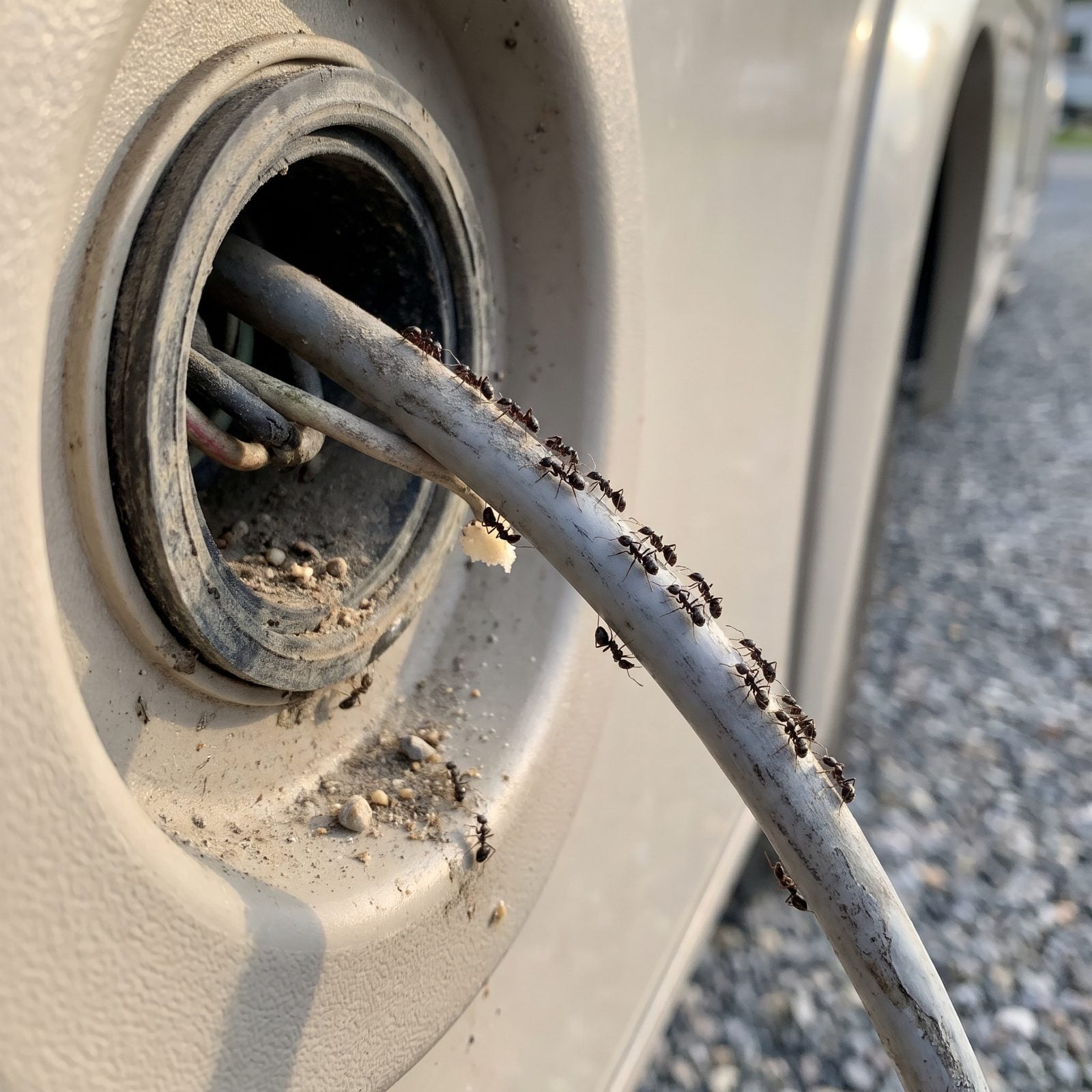
Ants find the gap you never knew existed. Utility openings — where the power cord, water hose, and sewer connections pass through the wall — are their favorite highway inside. One morning you have a tidy campsite and the next you’ve got a column of them running up the shore power cord into the galley.
Catch the trail outside and you solve it outside. Follow the line back to where it enters, hit that seam, and you never meet them at the sugar bowl. Miss it, and you spend a week at war with a cabinet.
15. Check Rodent Traps and Deterrents
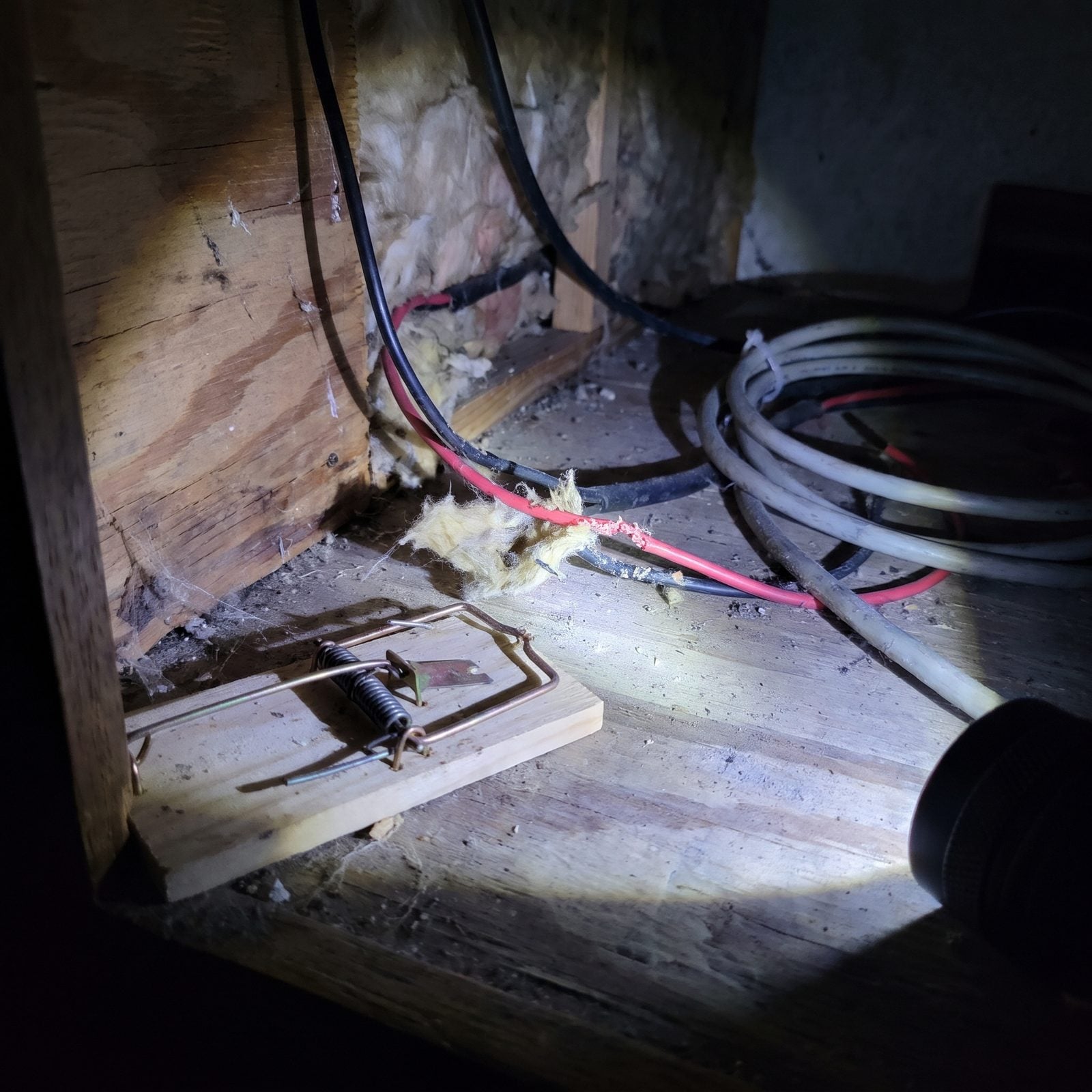
A mouse in an RV is not a cute problem. They chew wiring insulation, nest in the furnace ducting, and leave a smell in your fabric you’ll never fully get out. Campgrounds near fields and forests are prime real estate for them, and a warm engine bay or basement is a five-star hotel.
Check your traps and your plugs at the same time every morning. Steel wool in the gaps, peppermint where you can’t reach, and eyes on anything that got sprung. Anybody who swears RVs don’t get mice simply hasn’t met the right field mouse yet.
14. Hang Damp Towels Where They Can Actually Dry
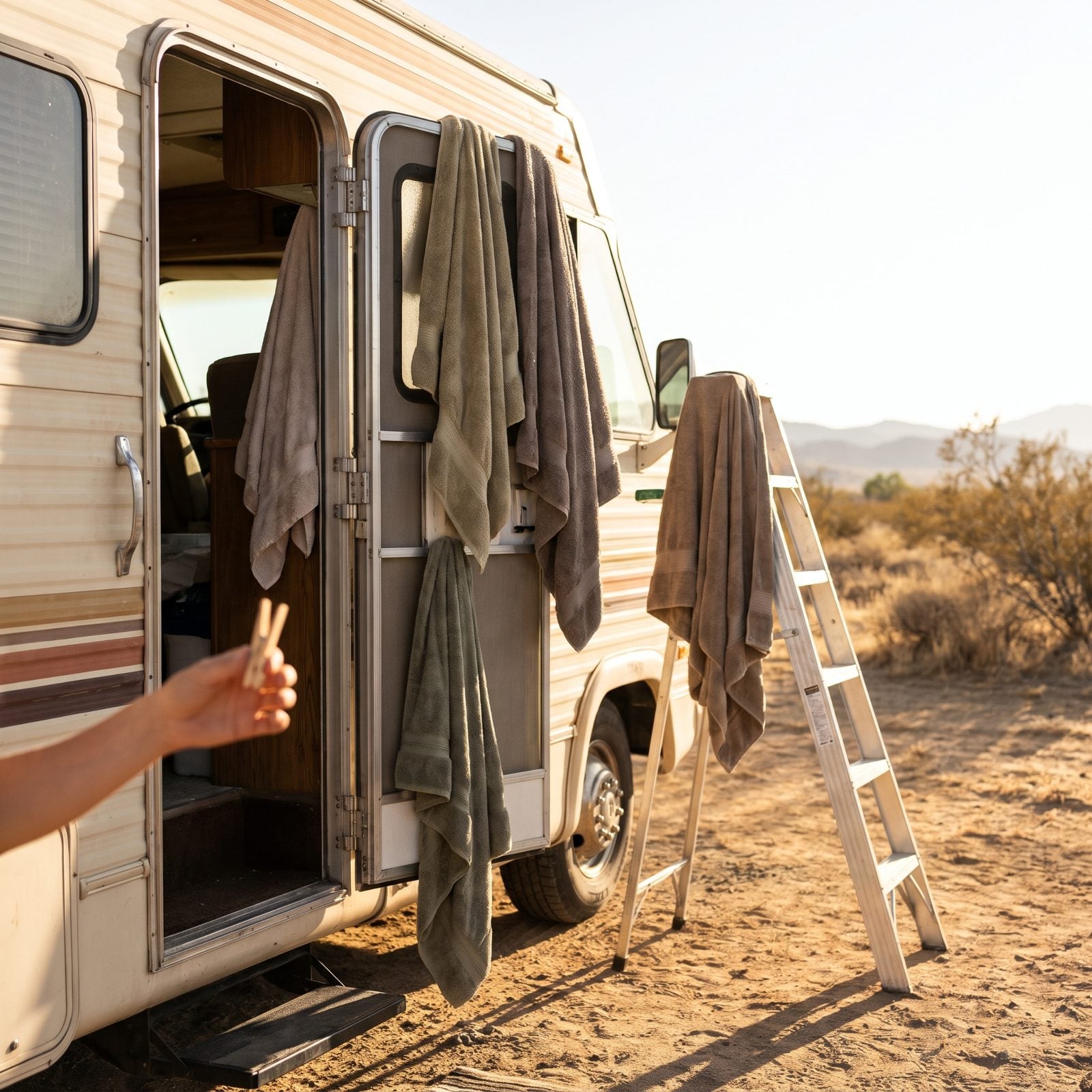
Inside an RV, a wet towel doesn’t dry. It sits. The air can’t move, the humidity climbs, and by afternoon the whole rig smells like a gym bag somebody left in a hot car. In a space this small, one damp towel changes the air everywhere.
Get them outside first thing while the sun is low and the dew is burning off — a line between the awning and a tree, a clip rail on the ladder, a folding rack on the picnic table. Anything with airflow beats the shower bar, which is where good towels go to sour.
13. Convert the Sleeping Area Back Into Daytime Living Space
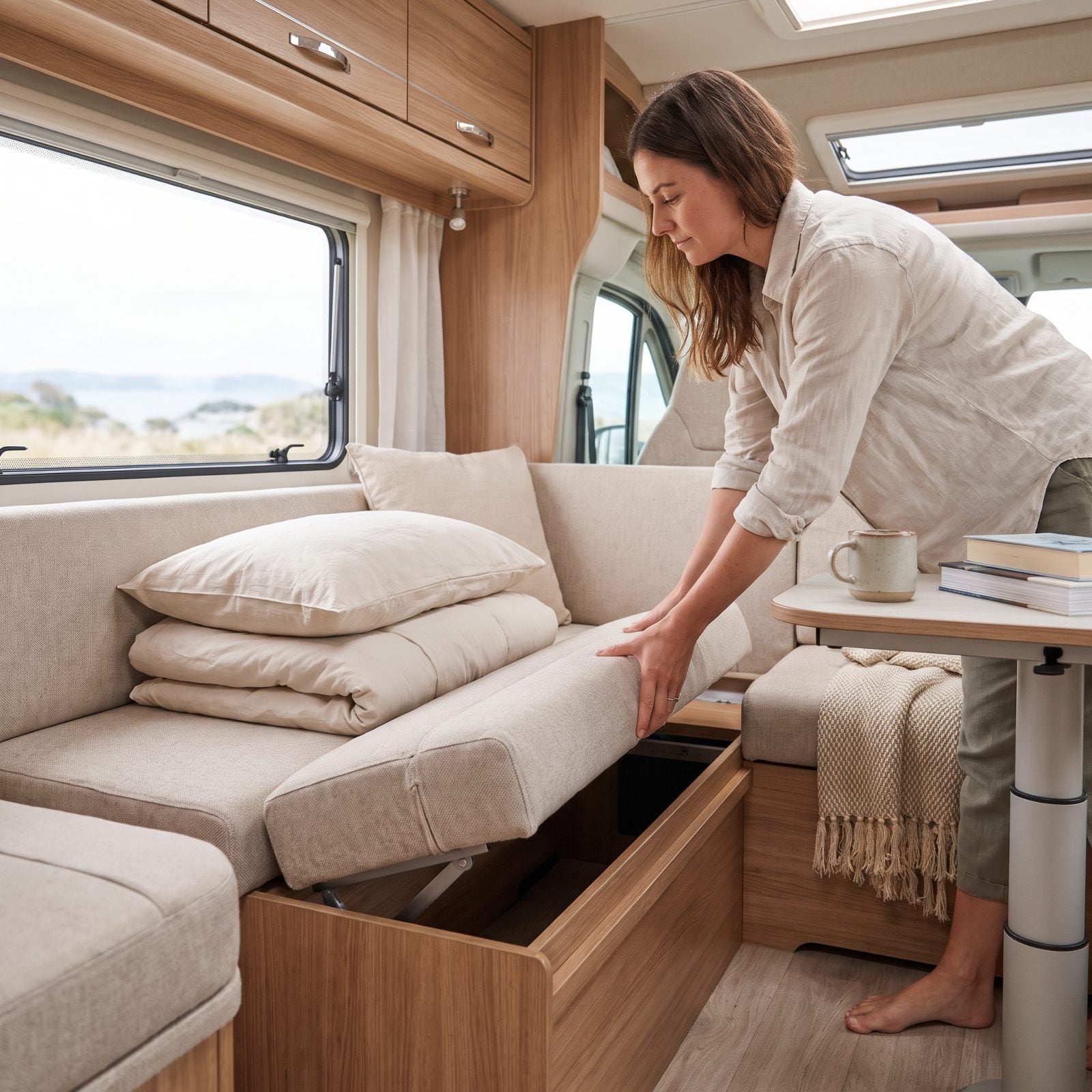
In a lot of rigs the bed is the couch, or the dinette, or the floor you crossed to make coffee. Leave it as a bed and you’ve lost your living room before the day starts — nowhere to sit, nowhere to eat, nowhere to be a person.
The reset takes four minutes and makes the whole day feel bigger. Cushions over, bedding stowed, table up. Skip it once and you’ll spend the morning squeezing past yourself, which gets old fast in two hundred square feet.
The rig doesn’t feel small until you stop resetting it. Then it feels tiny.
12. Wash Breakfast Dishes With Minimal Water
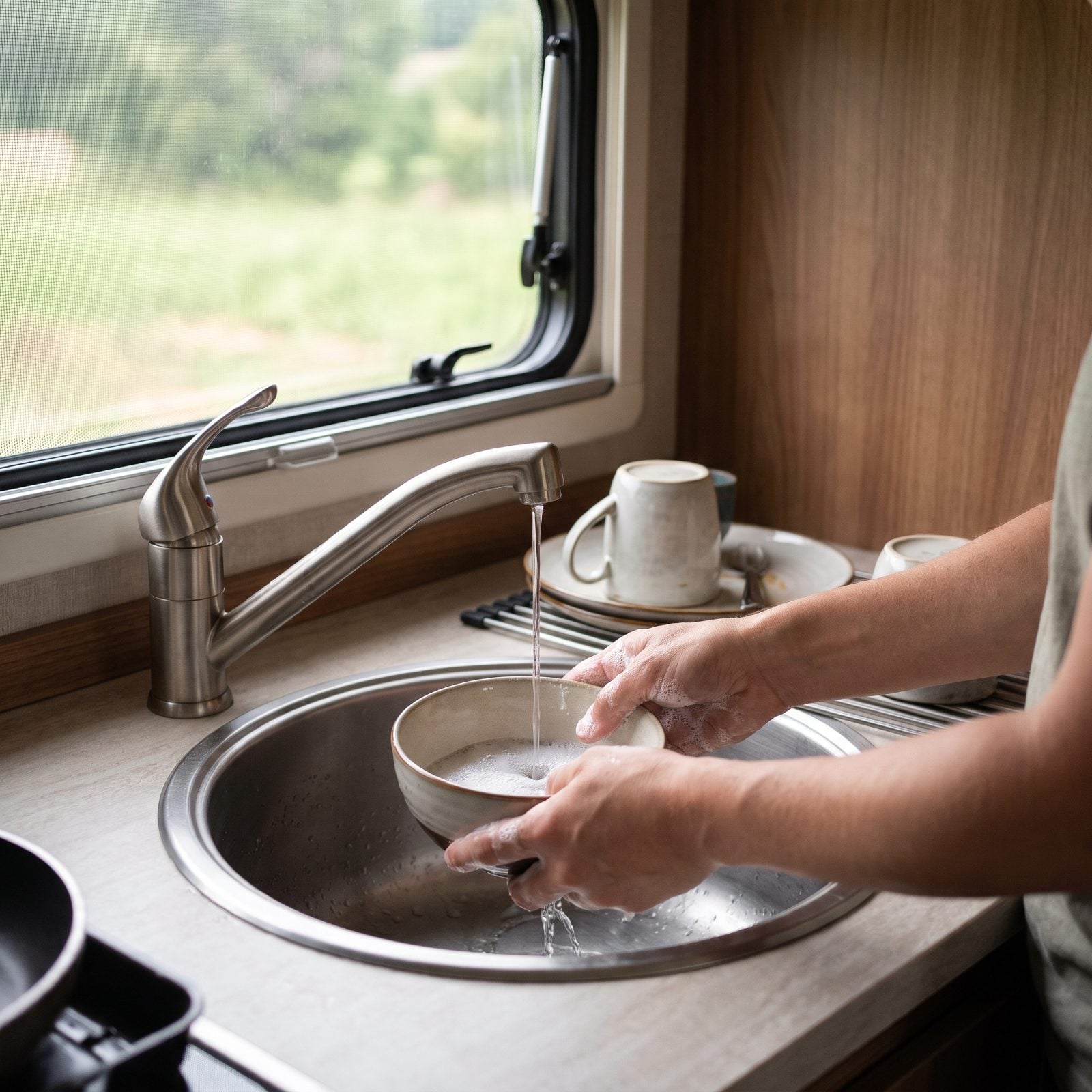
Boondock a few days and you learn exactly how fast a full freshwater tank vanishes down the drain. Dishes are where most of it goes — water you run out of habit, not need.
Wipe the plates with a paper towel or scraper before anything touches the sink. Wash under a thin trickle, not a full-flow tap. Rinse with a spray bottle or a quick trigger on the faucet. Do this for a week and your water use drops way down, and honestly, you’ll never go back to running the tap full blast in a house either.
11. Choose Appliances That Fit the Available Amperage
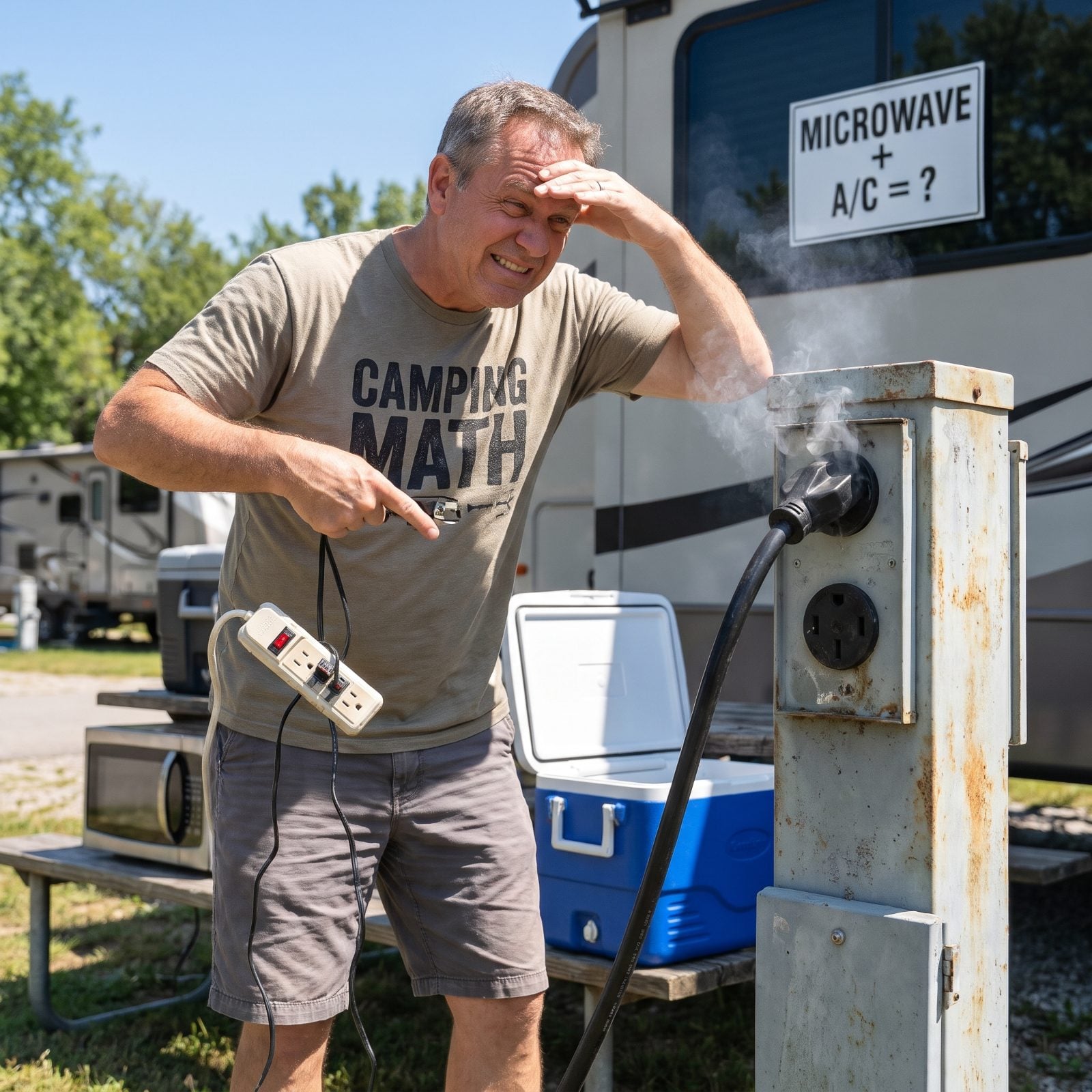
Thirty amps sounds like plenty until you run the microwave and the air conditioner together and the plug at the pedestal starts smoking. That’s the real math of RV power. You don’t get to use everything at once, and the morning is when the greedy appliances stack up — the electric kettle, the toaster, the coffee maker, maybe a space heater if the night went cold.
I learned to think in terms of what runs together, not what I own. Kettle or microwave. Not both. A 30-amp hookup gives you roughly 3,600 watts to spend, and a single hair dryer eats a scary chunk of that.
10. Schedule Device Charging for Peak Solar Hours
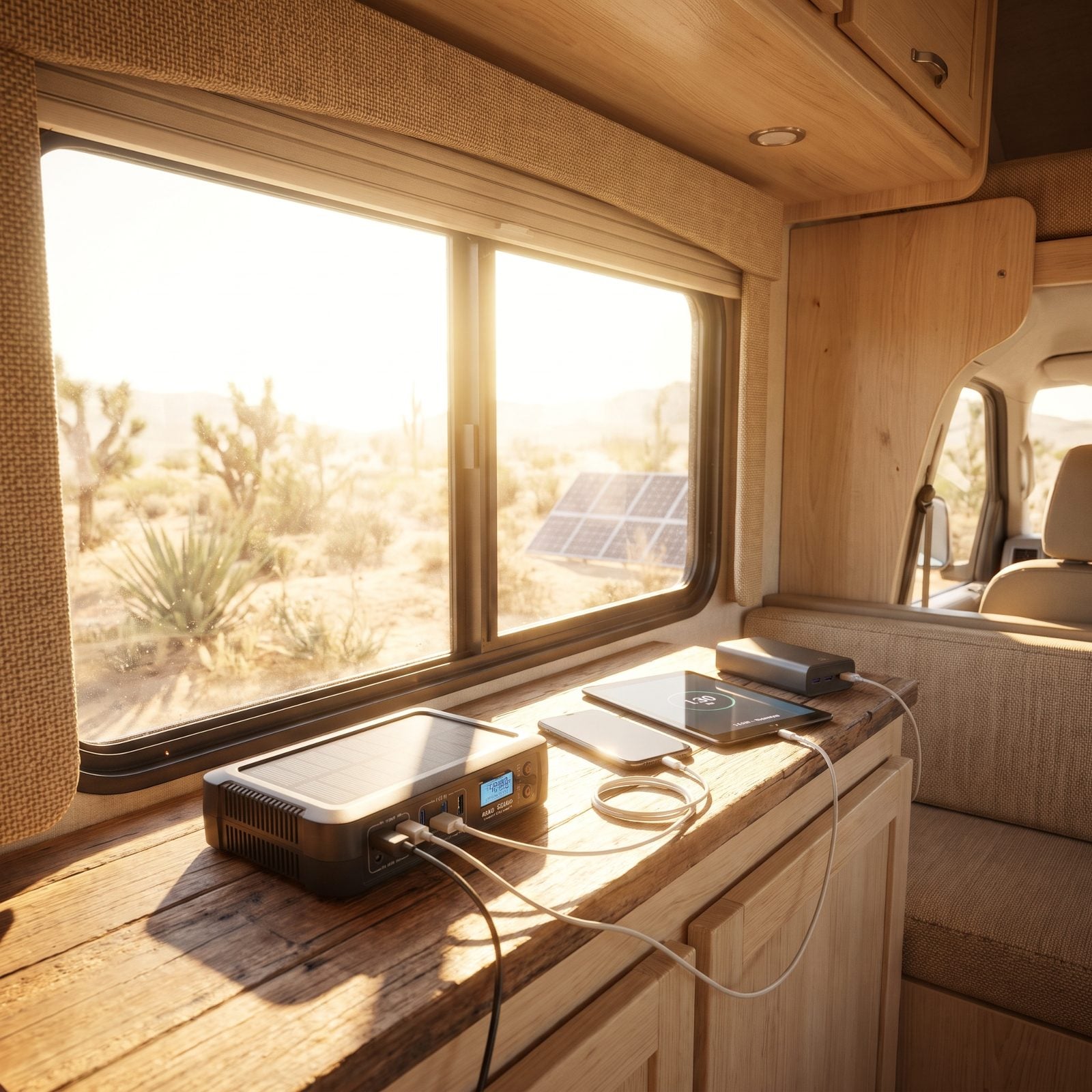
Solar isn’t free energy. It’s energy on a schedule, and the schedule is the sun’s, not yours.
Panels do their best work in the fat middle of the day, mid-morning to mid-afternoon when the light hits them straight on. That’s your window for the heavy stuff — laptop, power bank, drone batteries, the cordless drill you left on the counter. Try to top everything off at six in the evening and you’re just draining the house batteries you spent all day filling. I plug my laptop in around ten and let the roof do the work while I’m on calls.
9. Plan Generator Use Around Campground Rules
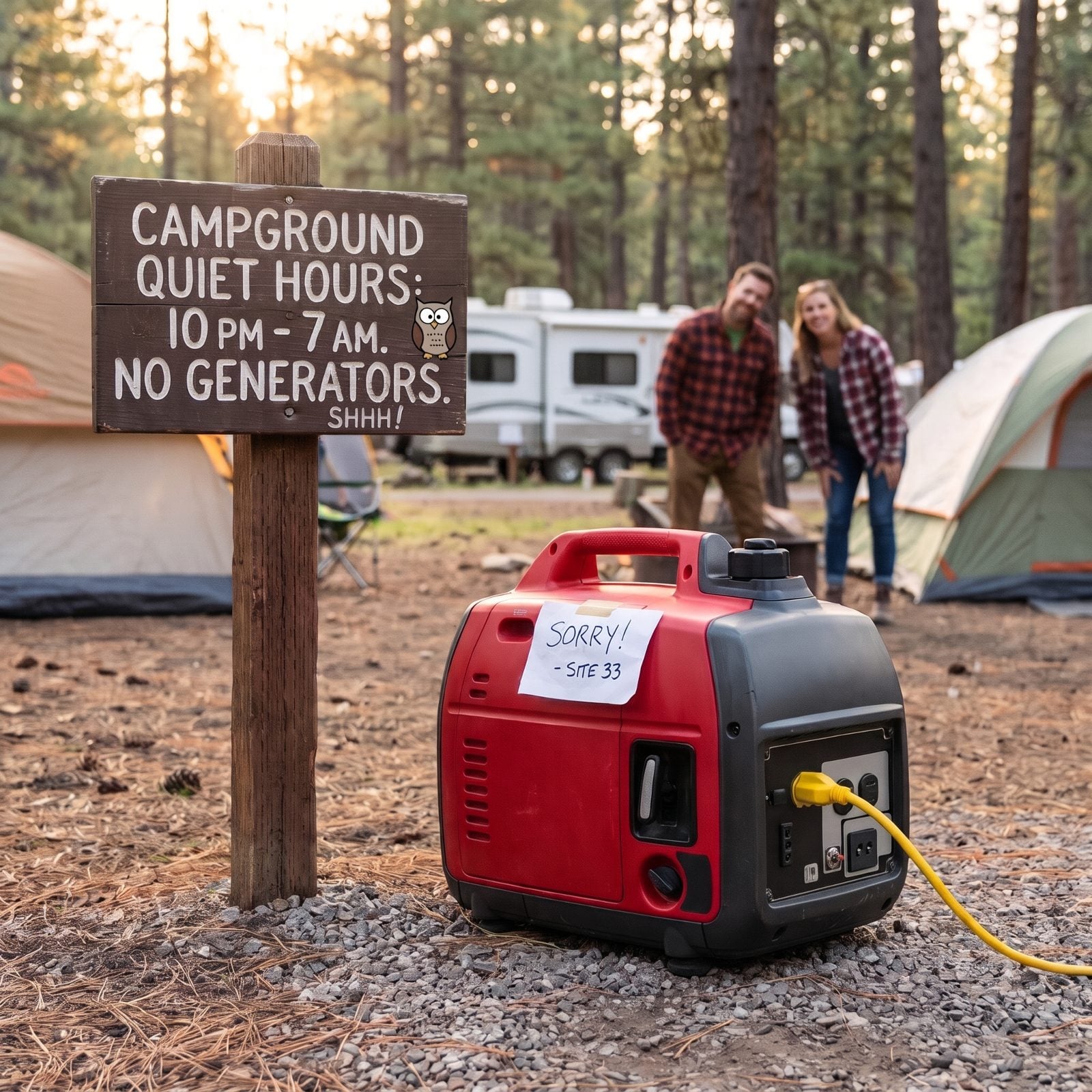
Quiet hours are the one campground rule people break without meaning to. You fire up the generator at seven because you need coffee, and the retiree two sites over has been awake since five enjoying the silence you just wrecked.
Most parks post a window, often eight in the morning to ten at night, sometimes stricter. Some ban portable generators entirely. Read the sign before you pull the cord. And point the exhaust away from your neighbors — a lungful of fumes with their morning coffee is how you become the campsite everyone complains about.
8. Test the Cell Signal Before Starting Remote Work
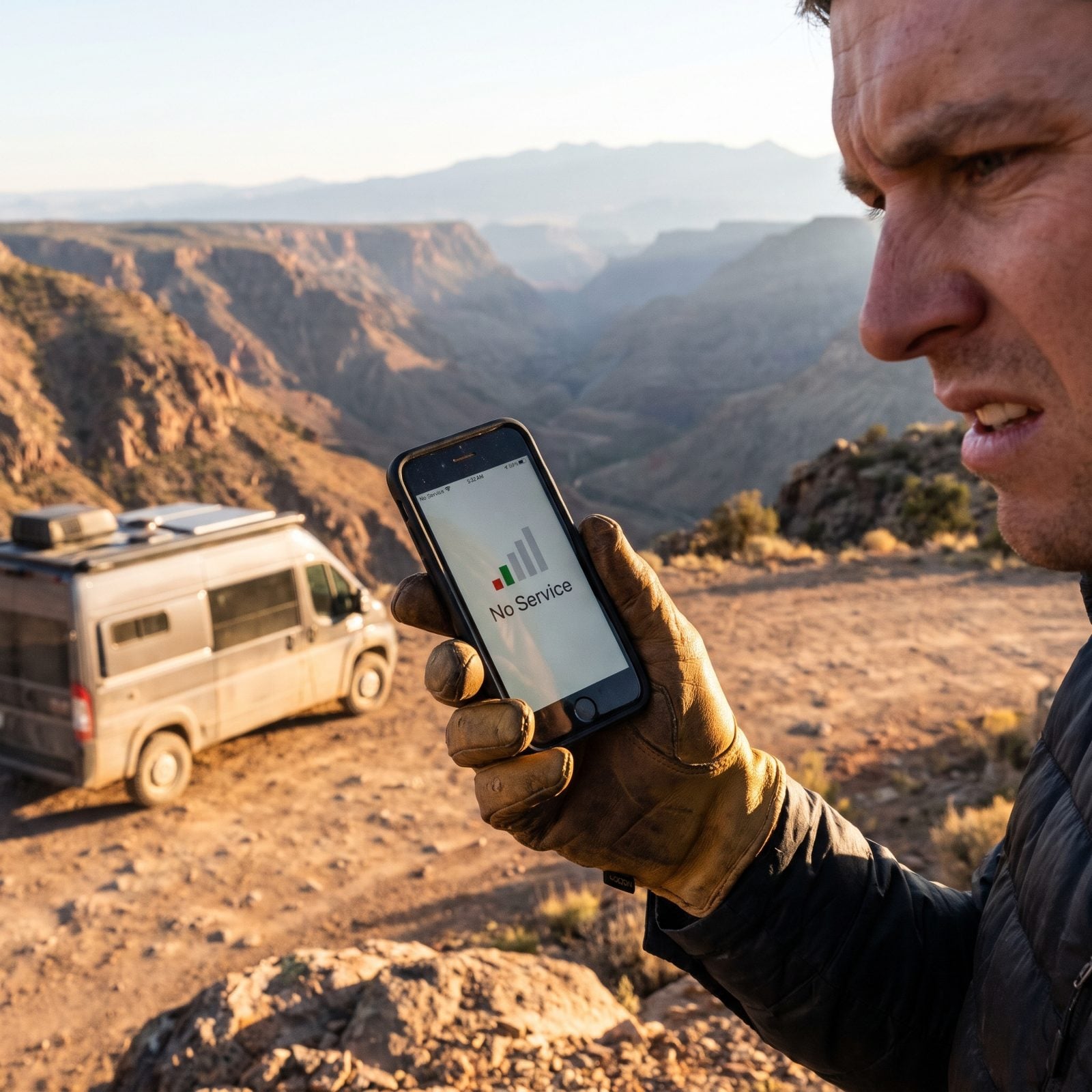
Pulling into a gorgeous boondocking spot means nothing if your first video call drops in the opening thirty seconds. Scenery and signal almost never line up.
Before you commit to a work morning, run a quick speed test. Not a glance at the bars — the bars lie. An actual test that tells you upload speed, because that’s the number carrying your face and voice on a call. Weak upload and you’ll freeze mid-sentence. I’ve relocated the whole rig a quarter mile for a better tower more times than I’d like to admit.
7. Check the Mobile Hotspot’s Remaining Data
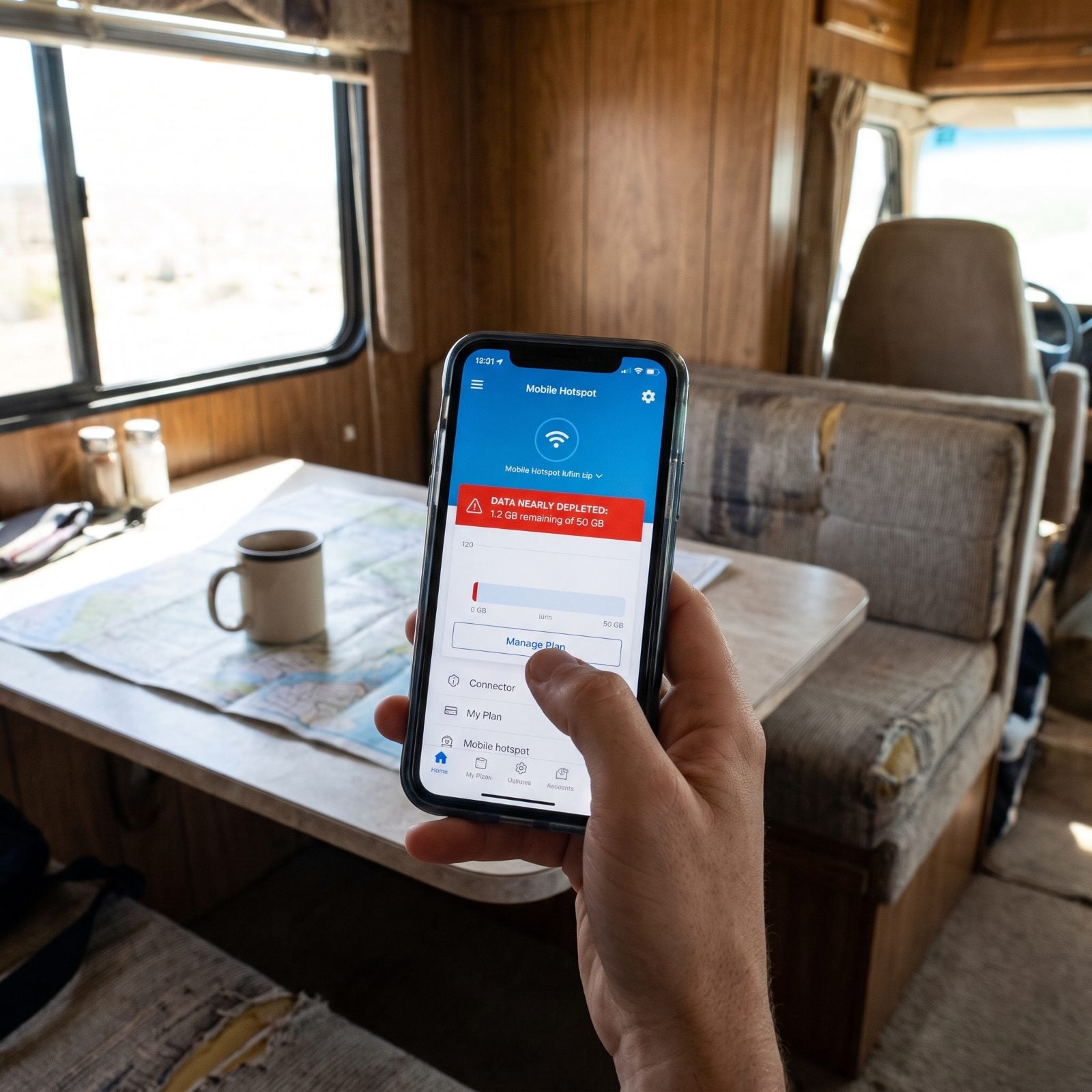
Data runs out at the worst possible moment. That’s just a law of RV life.
The number sits buried in some app, and checking it takes ten seconds in the morning instead of a panic late in the month when a software update quietly swallowed gigs overnight. Full-timers burn through data fast, especially anyone streaming or on video calls. Know where you stand before you lean on it. Nothing ruins a Friday like watching your connection throttle to dial-up right as a deadline lands.
6. Review the Starlink Obstruction Map
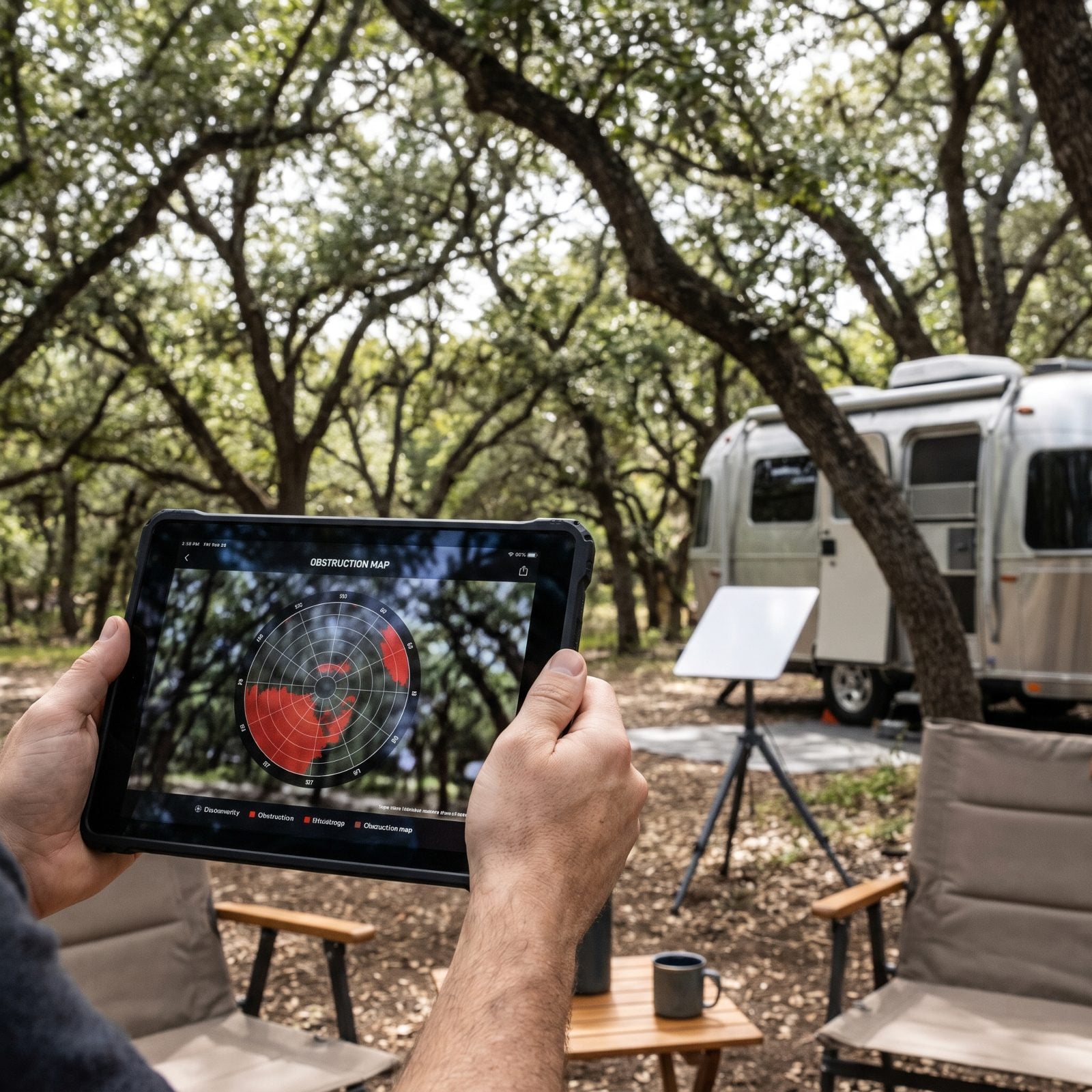
Trees are the enemy of satellite internet. A beautiful shaded campsite is basically a dead zone with a nice view.
The obstruction map shows where the dish is losing the sky, and in the morning it’s worth a look before you count on a stable connection. A branch that cleared fine yesterday might be dropping you every few minutes today, because the satellites moved or the wind shifted the canopy. Sometimes the fix is dragging the dish ten feet to the one patch of open sky in your site. I keep a long cable for exactly that.
5. Count the Nights Remaining Under the Stay Limit
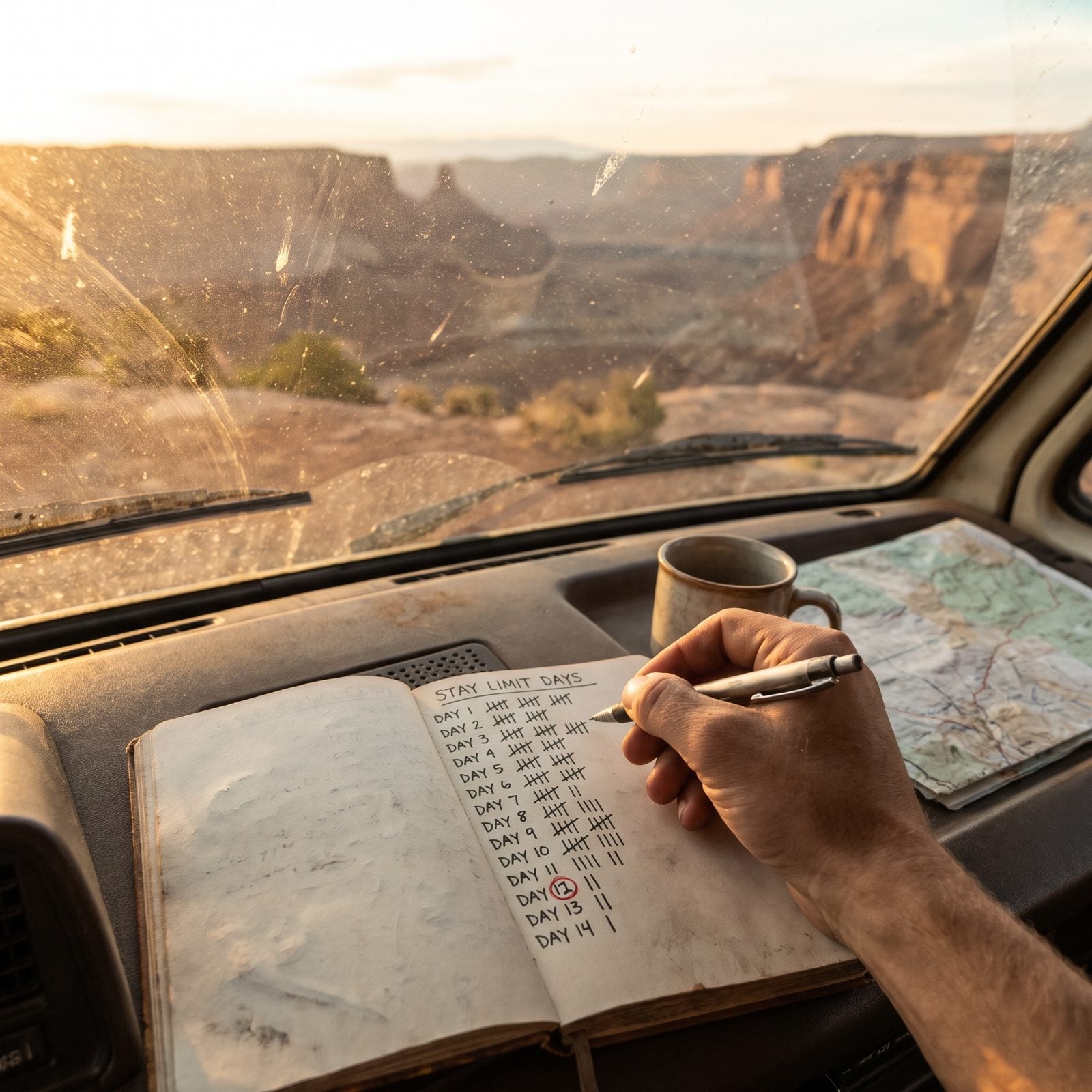
Public land loves you for exactly fourteen days, then it wants you gone.
Most national forest and BLM dispersed sites cap your stay, usually at 14 days in a given period, and a ranger absolutely will note the date you arrived. State parks and campgrounds run their own limits. The morning count keeps you honest: nights left here, where’s the next spot, and do you need to book it today before the weekend fills. Nothing scrambles a calm travel day like realizing your reservation ended yesterday and you’ve been squatting without knowing it.
4. Verify Every Low-Clearance Point on the Route
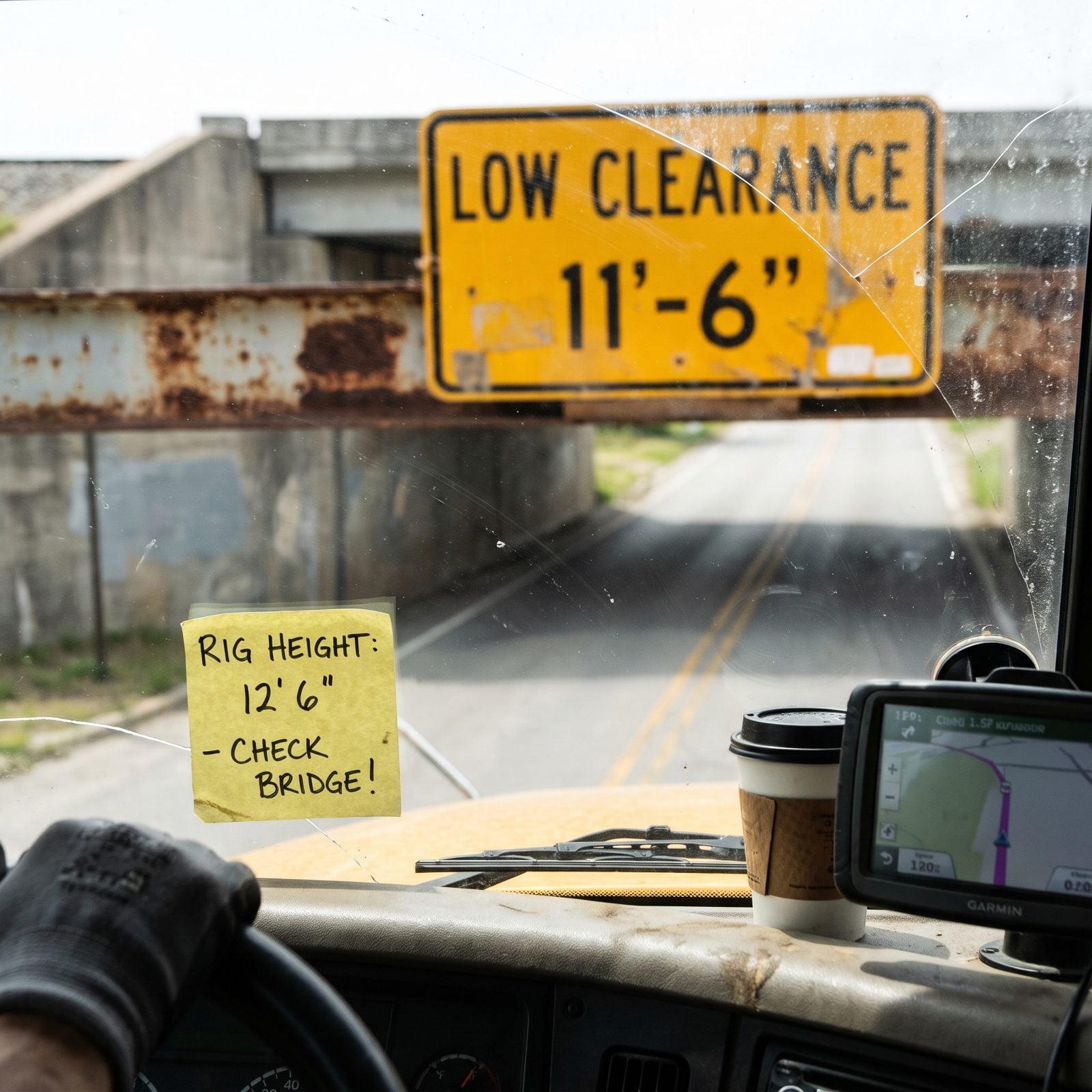
Your rig has a height, and you’d better have it memorized down to the inch. Mine lives on a sticky note on the dash, because the one time I need it, I will not be in any state to do math.
Bridges, overpasses, tunnels, drive-thru awnings, the occasional ancient covered bridge — all of them carry a number, and yours has to come in under it. A regular GPS won’t warn you. An RV-specific routing app will, and it’s worth the few dollars to avoid the sound of your air conditioner shearing off on an underpass that had a sign you drove right past.
3. Review Mountain Grades Before Departure
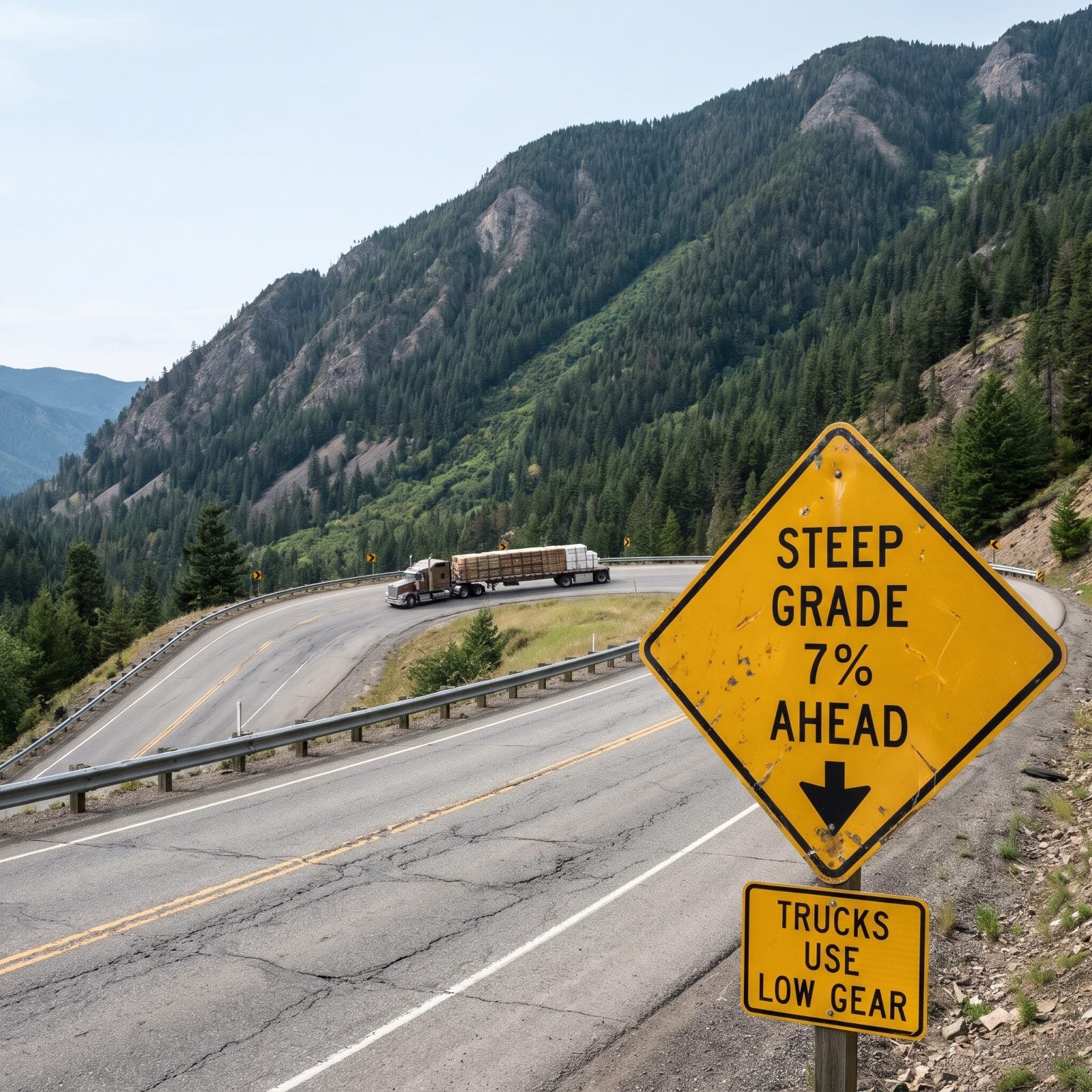
Flatlanders underestimate what a long 7 percent grade does to a loaded rig. I was one of them.
Going up, you learn fast whether your tow vehicle has the heart for it — usually somewhere around the point where you’re doing 25 in the right lane with your hazards blinking. Going down is the part that actually scares me. Ride the brakes the whole way and you can cook them, which is exactly when you don’t want to find out. The morning look at the elevation profile tells you whether to gear down early, take it slow, and rest the brakes on the pull-offs.
2. Locate the Next Potable-Water Fill
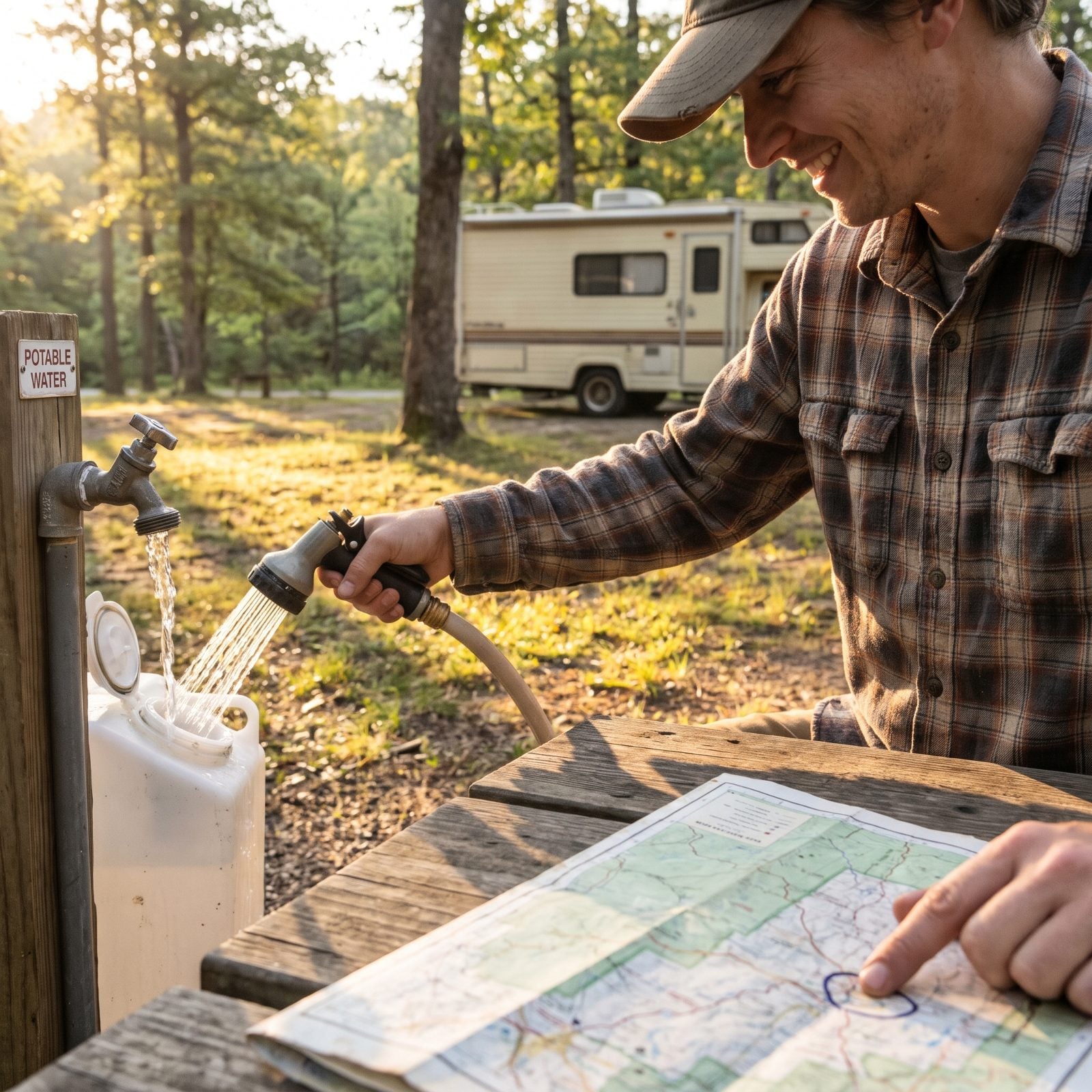
Fresh water is the resource you don’t think about until the tap sputters air.
A full tank buys you a few days of careful living, less if someone takes a real shower. The morning job is simple: check the gauge, and if you’re running low, know where the next reliable potable fill is before you roll out. Not every spigot is drinking-safe, and “non-potable” signs exist for a reason. I top off a white jug straight from a spigot marked potable, with a dedicated hose and spray nozzle along to help, and I never trust a fill I can’t verify.
1. Find a Dump Station Along the Planned Route
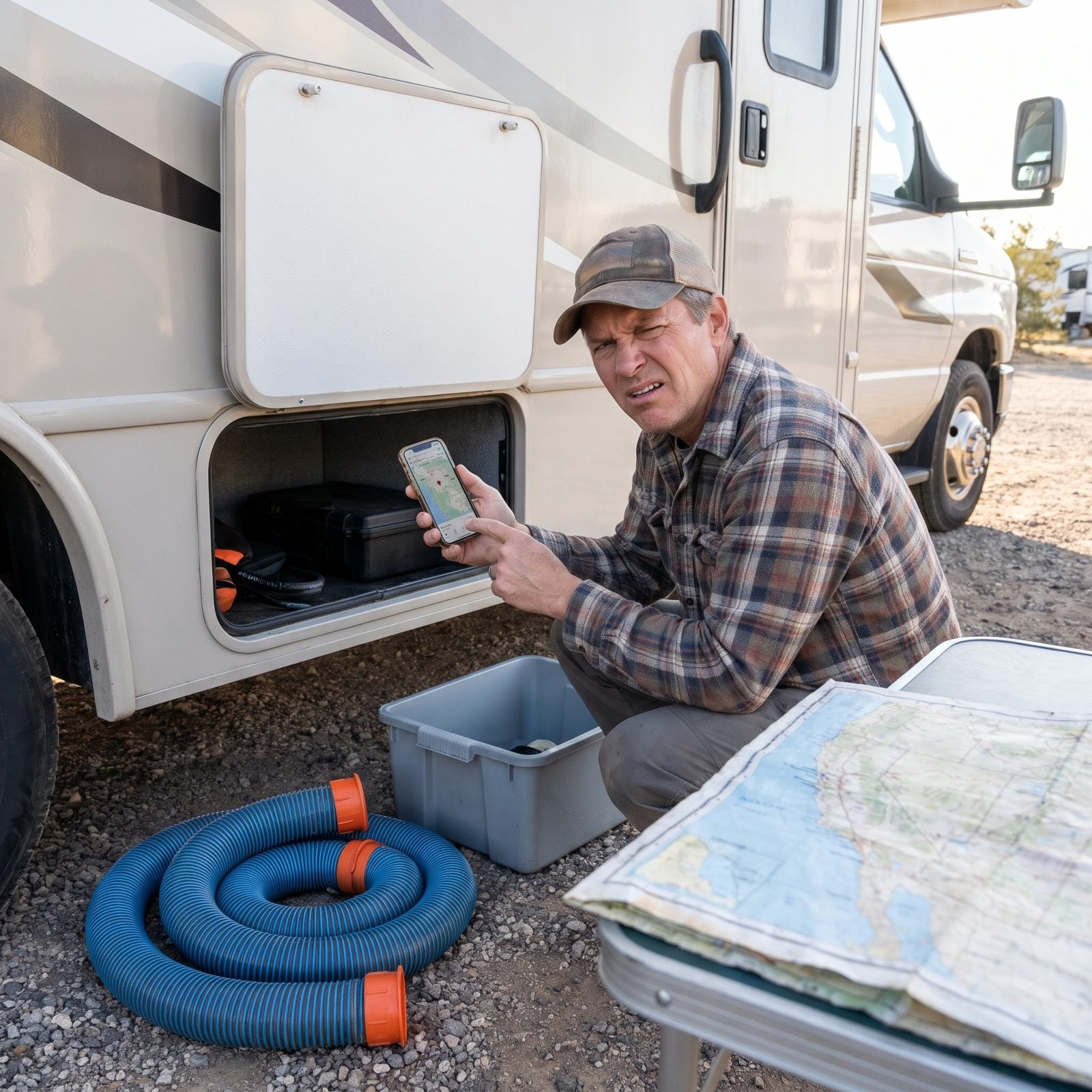
Nobody tells you the dump station is a planning problem before it’s a plumbing one. You don’t want to be squinting at your gray tank gauge at 7 a.m., wondering if it holds another day, only to find the nearest station sitting forty miles the wrong direction.
So build it into the route the night before. Flying J and Pilot locations, state rest areas, county transfer stations, and plenty of campgrounds will let you dump for a few bucks even if you never stayed the night. Apps like Sanidumps and the dump-station layer in Campendium take the guesswork off your plate. And check the hours. A station that’s “open” on the map might be gated shut until nine.
Dump on your way out, while the tanks are full and the pressure does the heavy lifting. Beats limping into a strange town hunting for a hose. I got this wrong exactly once — July, full black tank, locked gate. Learned it for good.