
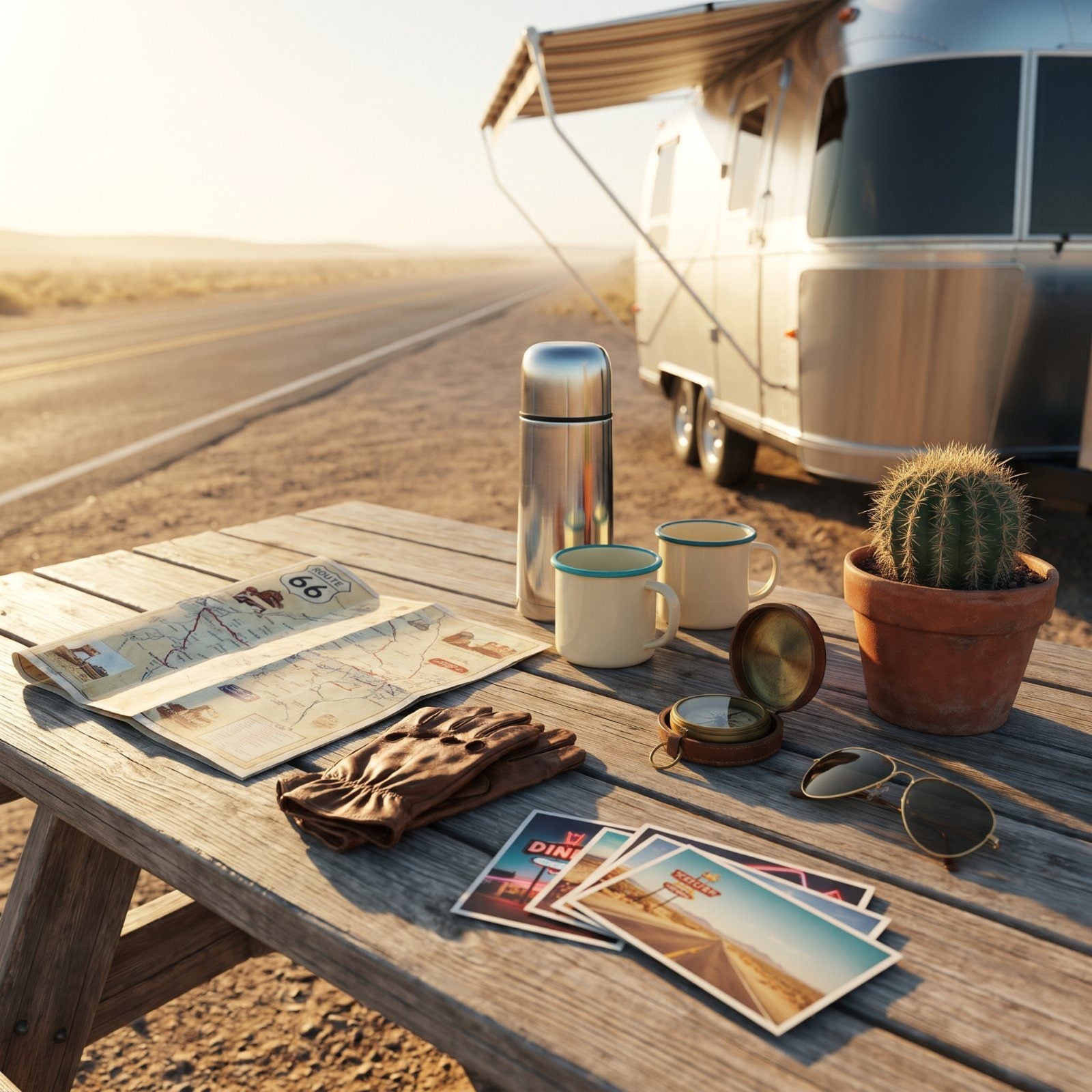
The Mother Road was built for cars that overheated and kids who needed a reason to stop. Most of it is gone now, paved over or bypassed by the interstate that killed it. But a handful of the old stops held on — some because somebody refused to let them die, some because they were just too strange to tear down. These are the ones that still work when you roll up in something thirty feet long towing a car behind you. Real parking. Real hookups when you need them. And enough roadside weirdness to remind you why anyone drove this road in the first place.
Please note that some of the images in this article were created with the assistance of AI.
39. Cadillac Ranch Near Amarillo, Texas
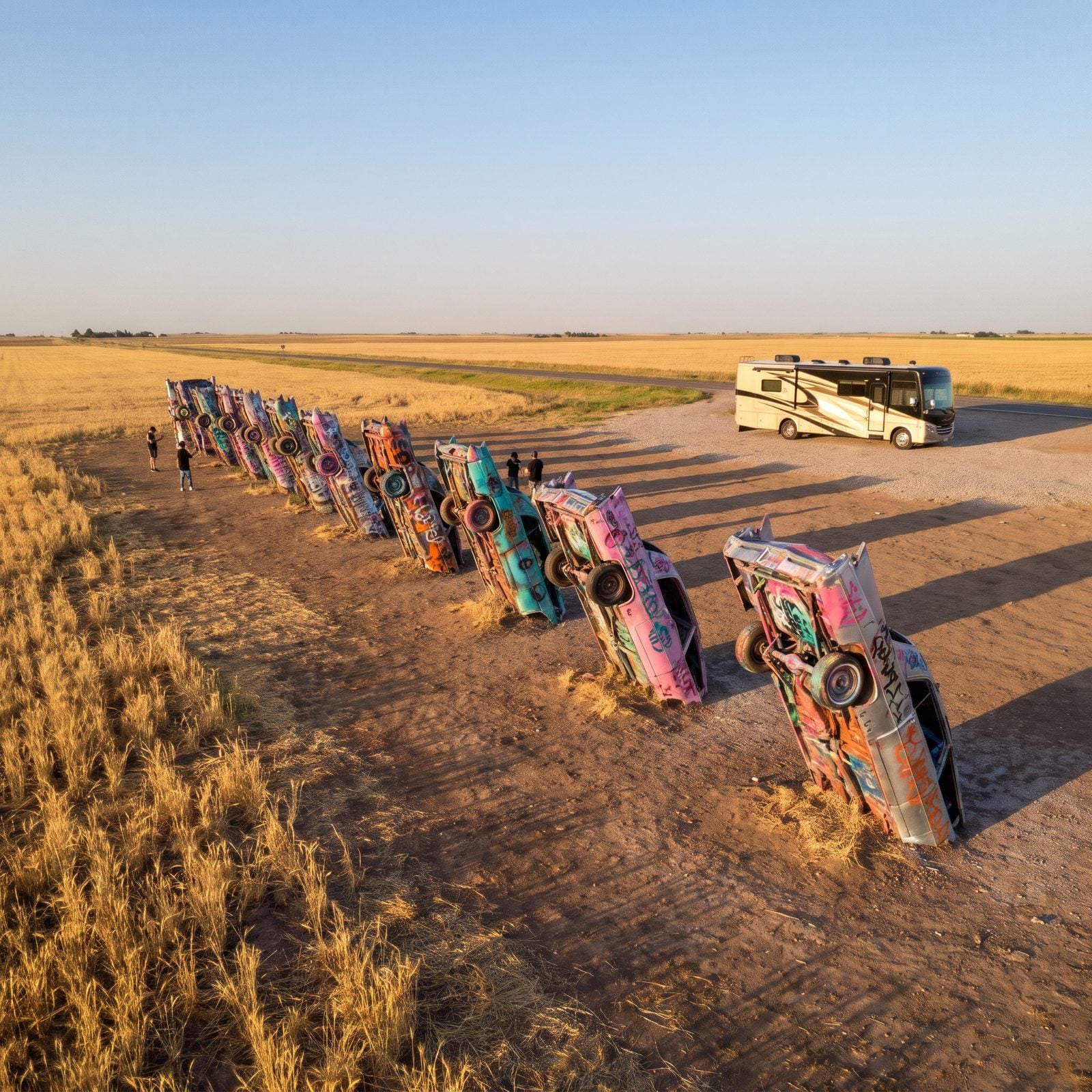
Bring your own spray paint. Nobody tells you that until you’re already standing there, watching everyone else decorate the cars while you feel underprepared. The ten half-buried Cadillacs have been getting repainted by strangers since 1974, so whatever you leave gets covered by lunchtime anyway.
Parking is a gravel pull-off right off the frontage road along I-40 west of Amarillo — free, open all hours, and fine for a big rig as long as you don’t try to squeeze into the car spots up front. Expect mud after rain. The field is dirt, nothing is paved, and you will absolutely track the Texas Panhandle back into your rig.
38. The Gemini Giant in Wilmington, Illinois
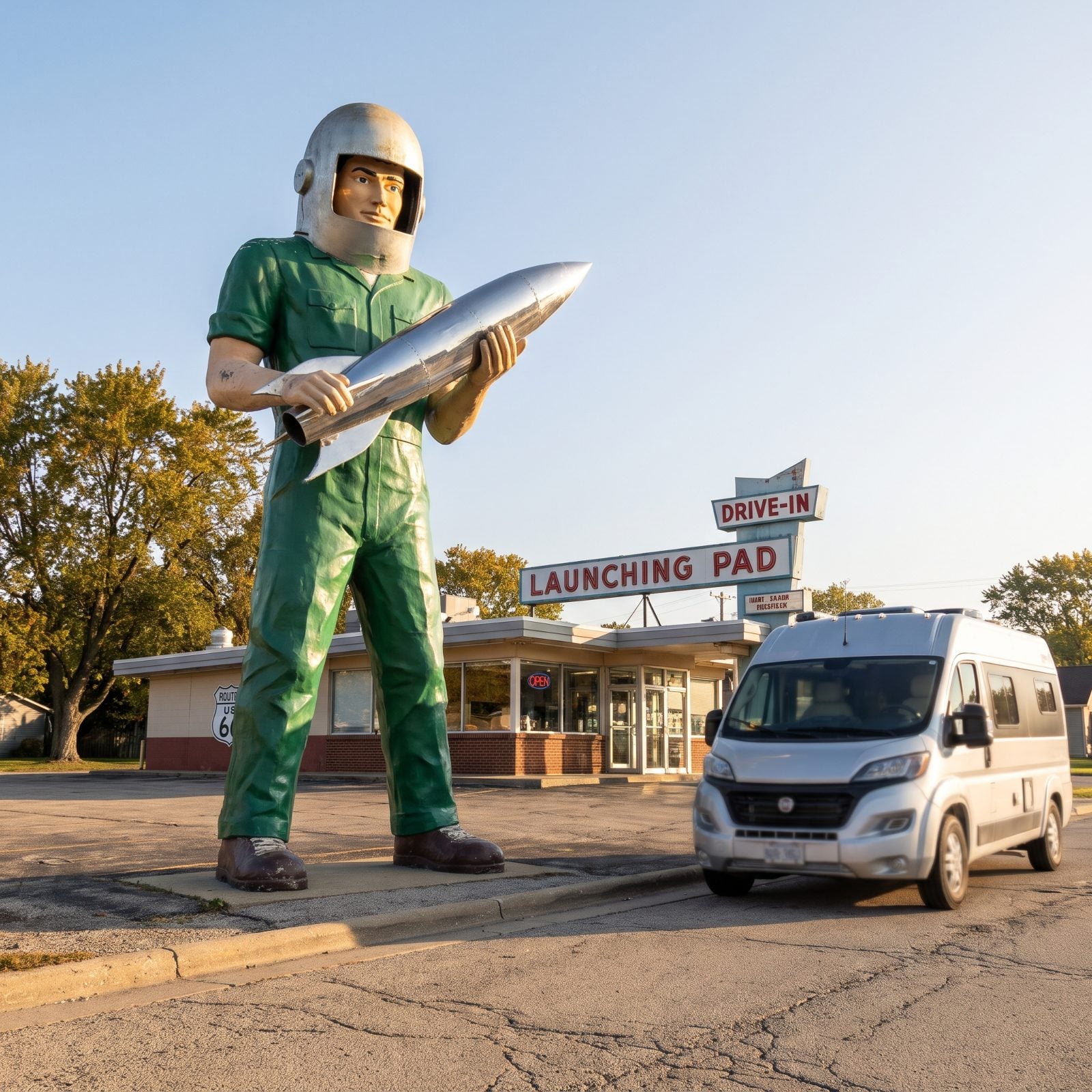
The spaceman almost didn’t make it. When the Launching Pad drive-in behind him closed, the Gemini Giant sat in limbo, and for a while it looked like one of the most photographed Muffler Men on the whole road was headed for auction.
He got saved — new owners, fresh paint, and the restaurant lot alive again. This is a quick stop, not a long one. Pull over, crane your neck at the chrome rocket in his hands, grab a photo, and move on. No hookups here, and the lot is tight, so it’s a street-parking-and-walk kind of visit if you’re hauling anything substantial. Worth the five minutes. He’s the first real giant you hit heading southwest out of Chicago.
37. The Blue Whale of Catoosa, Oklahoma
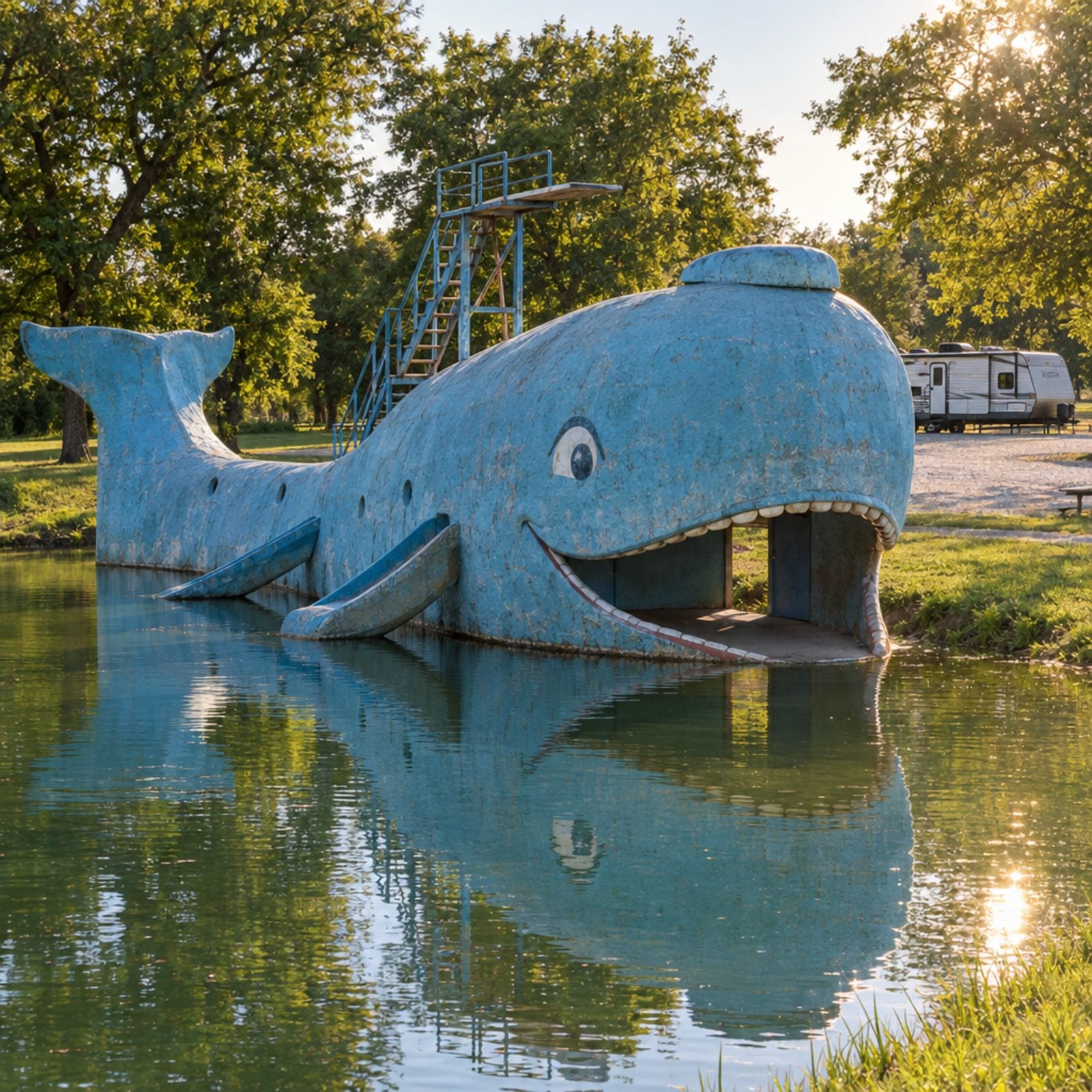
A man built this for his wife. Hugh Davis made the Blue Whale in the early 1970s as an anniversary gift because she collected whale figurines, and the thing turned into a swimming hole for every kid in Catoosa.
You can’t swim anymore, but you can walk inside the smiling concrete mouth and climb up its back. Entry is free, donations keep it standing, and there’s a gravel lot with room to turn a decent-sized rig around if you take it slow. The pond out front still draws turtles. Quiet on weekday mornings, shaded, and honestly one of those stops that makes the whole stretch of old 66 east of Tulsa feel worth it.
36. Meramec Caverns and Its RV Campground in Stanton, Missouri
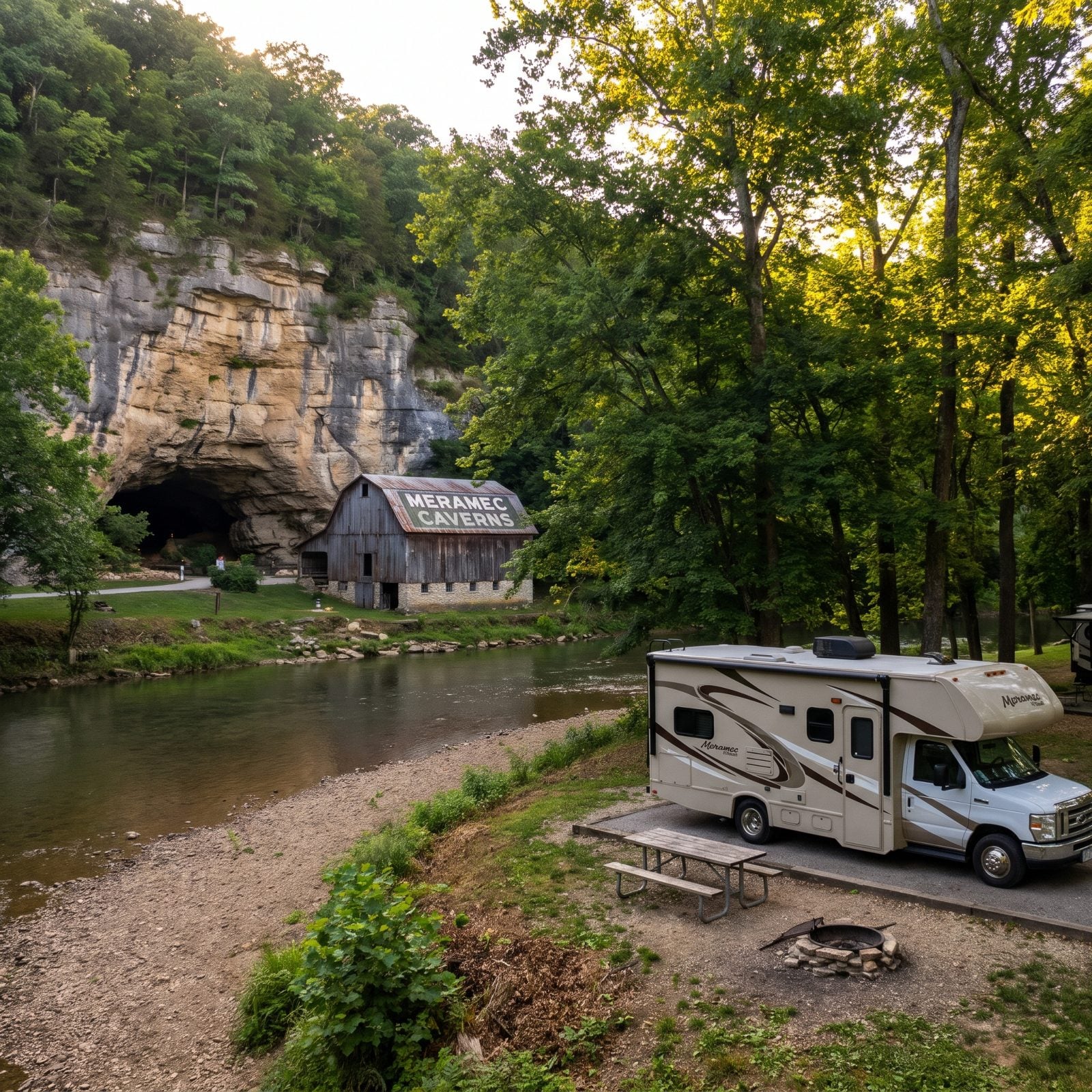
Here’s the rare Route 66 stop where you can actually stay the night without hunting for a Walmart lot. Meramec Caverns runs a riverside campground right on the property, with hookup sites tucked under the trees along the Meramec River.
The caverns themselves are the draw — a long guided walk through lit limestone rooms that holds around 60 degrees no matter how brutal the Missouri summer gets outside. Jesse James supposedly used them as a hideout, which the tour will remind you of. Repeatedly.
Book ahead in summer. The campground fills with float-trip crowds who come for the river as much as the cave, and the riverside sites go first. Access is fine for most rigs, though a few of the older spots are tight on turning room.
35. The U-Drop Inn in Shamrock, Texas
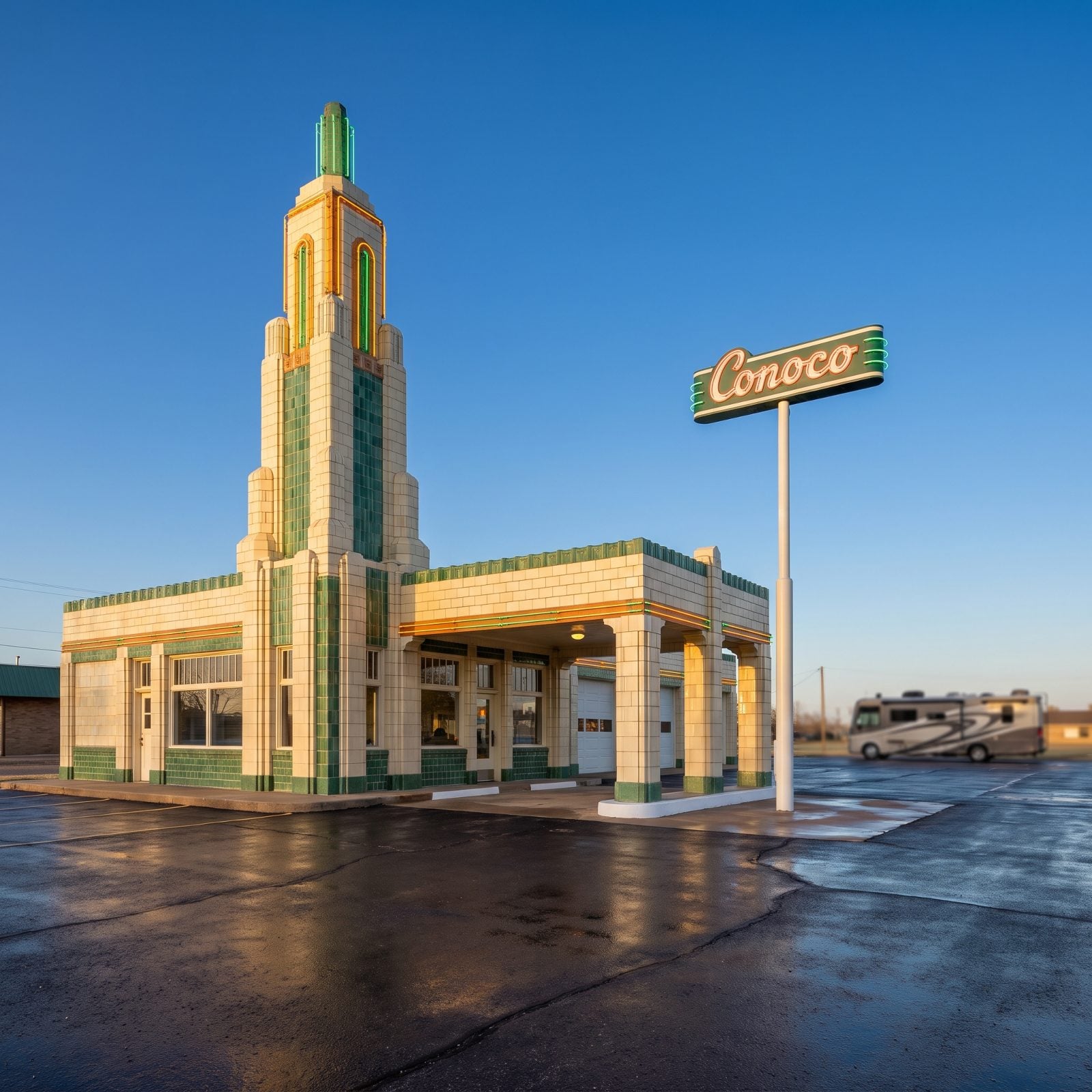
The most beautiful building on the whole road is a gas station. The U-Drop Inn — also called the Tower Conoco — has stood at the corner in Shamrock since 1936, all green and cream glazed terracotta with a neon tower that stops you cold at dusk.
It doesn’t serve food anymore. These days it’s a visitor center and gift shop, and the neon comes on at night. Pixar fans will clock it instantly; it was the model for Ramone’s body shop in Cars.
And there’s room to park something big in the lot, which you can’t say about most 66 landmarks. Stretch your legs, photograph the tower, get back on I-40 toward Amarillo.
34. Standin’ on the Corner Park in Winslow, Arizona
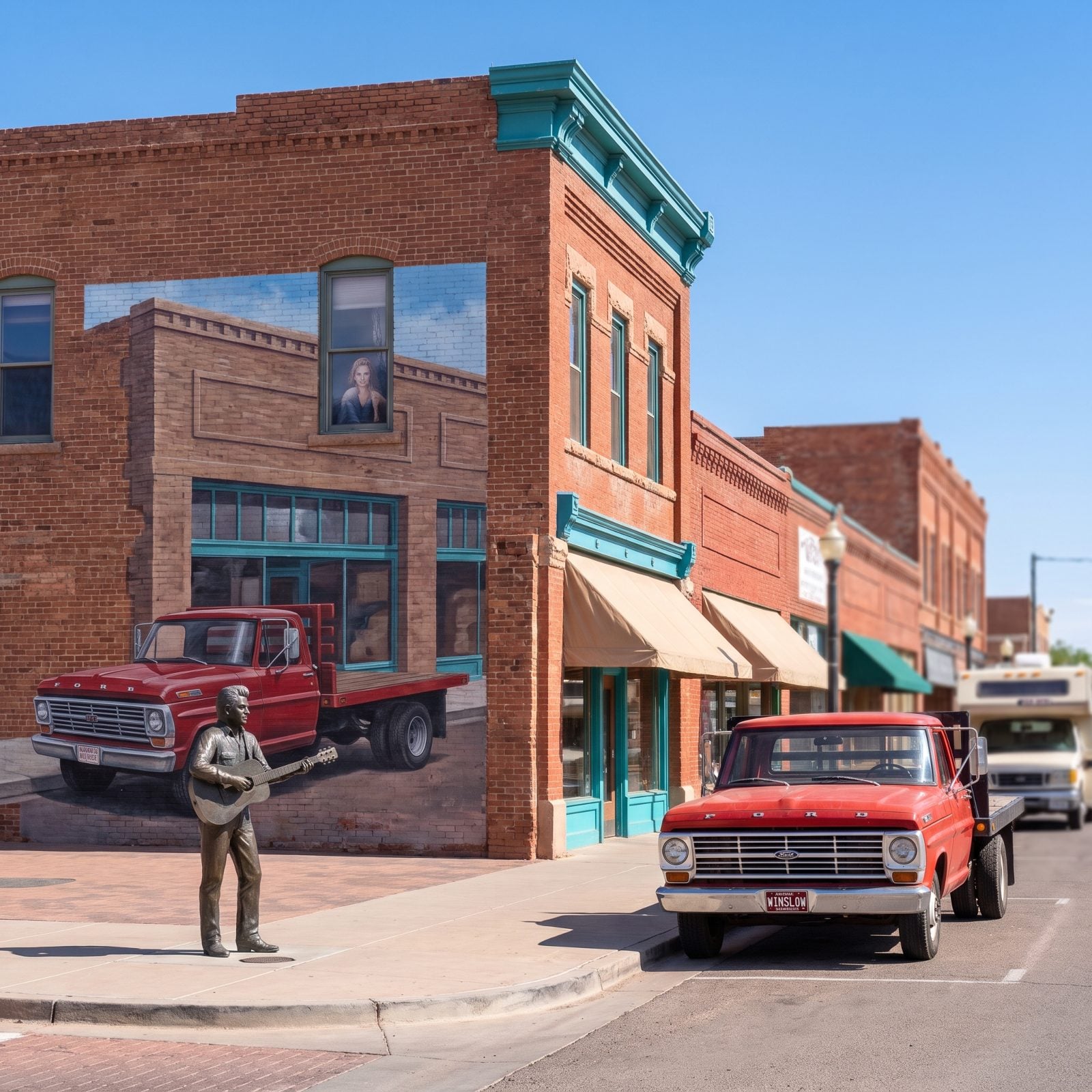
One line of a song keeps an entire town’s downtown alive. The Eagles put Winslow on the map in 1972, and the corner now has a bronze statue, a flatbed Ford parked at the curb, and a wall mural painted so well you’ll do a double-take at the girl in the window.
Free, a short walk around, right in downtown. Don’t try to park a motorhome on the corner itself — those street spots are for cars and they fill up. Find a lot a block or two over, or stay at an RV park nearby and drive in. Give it twenty minutes and a photo, then go get dinner. The town earns the visit on charm alone.
33. The Big Texan Steak Ranch and RV Park in Amarillo, Texas
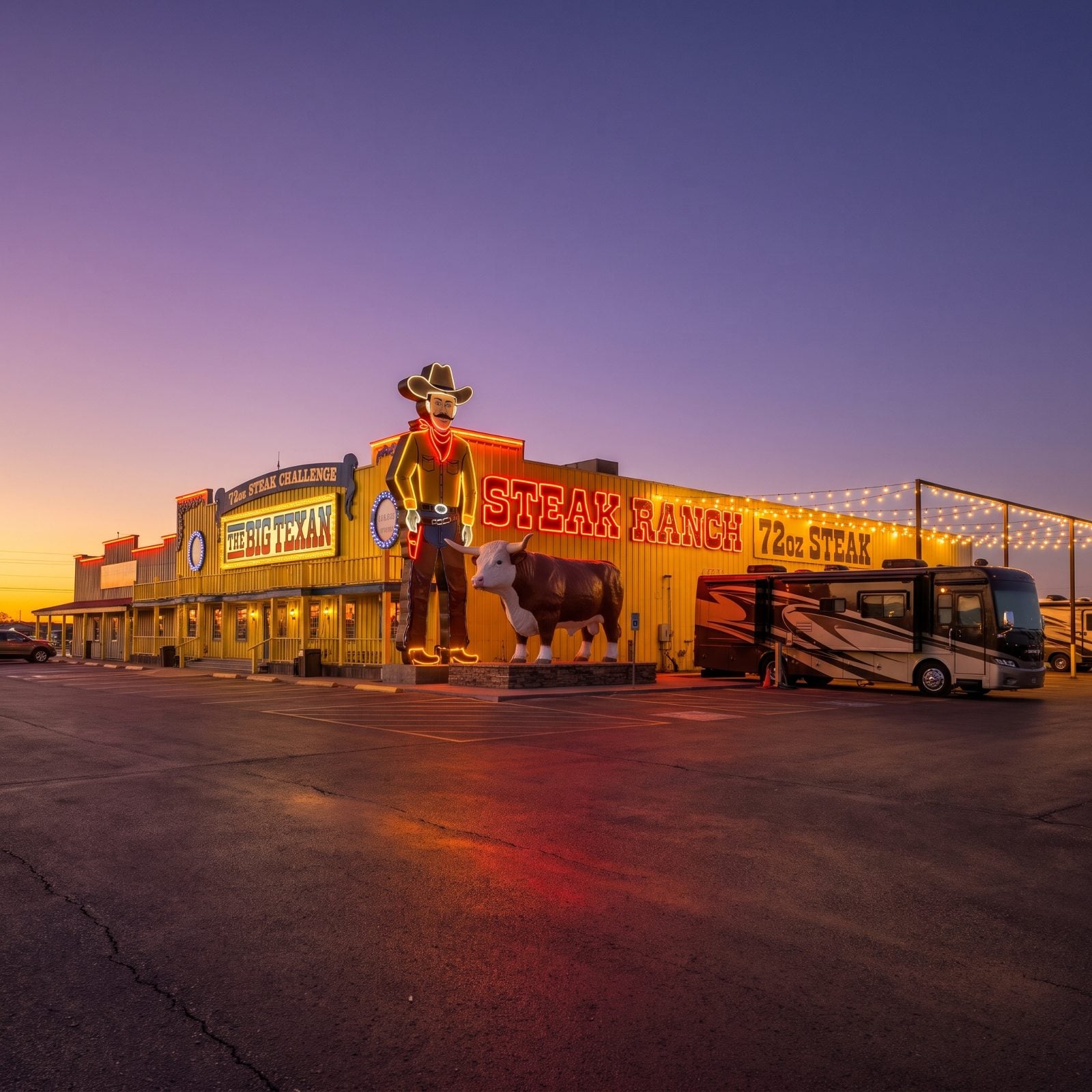
You know the gimmick. The 72-ounce steak is free if you finish it, plus the sides and the shrimp cocktail, in under an hour — while sitting on a raised stage where everyone watches you struggle. Most people fail. The Big Texan has been running that bet since 1960.
Now, the part road-trippers care about: there’s a full-hookup RV park attached. Roll in, plug in, walk to dinner without moving the rig again. Pull-through sites, a pool, and a short shuttle in a horn-decked limo if you don’t feel like walking.
It’s a loud, kitschy, lit-up western barn, and it knows exactly what it is. Book the RV sites ahead in peak summer, because the Amarillo stop is a natural overnight for anyone crossing the Panhandle.
It’s the rare Route 66 landmark where the parking lot is the destination and the hookups come included.
32. Pops 66 Soda Ranch in Arcadia, Oklahoma
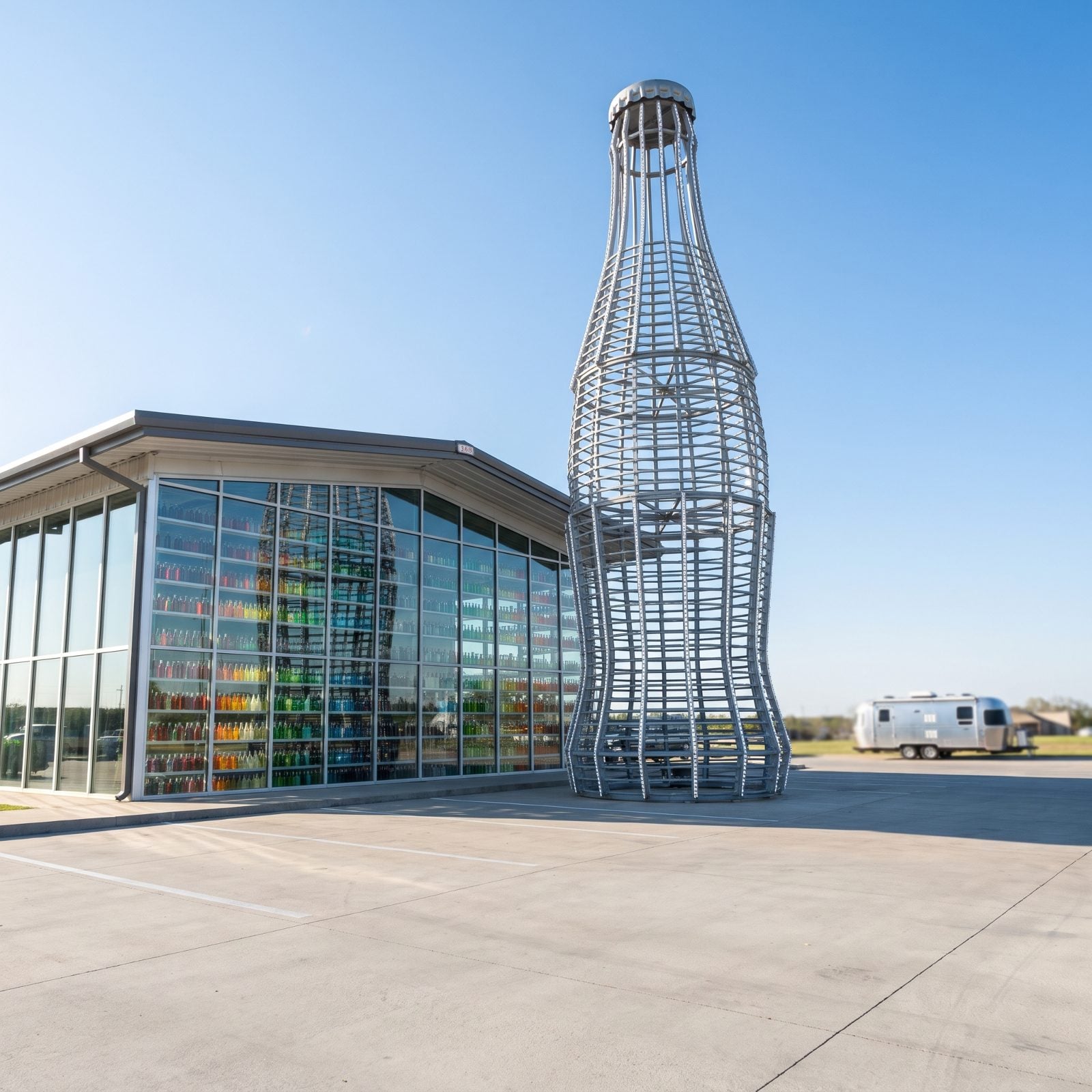
A 66-foot soda bottle. That’s your sight line coming up on Arcadia — a towering LED pop bottle that cycles colors after dark and looks like nothing else on the old road.
Inside, hundreds of varieties of bottled soda line the glass walls, sorted by color so the whole place glows. Buy a few weird flavors for the cooler. And the lot here is modern and generous, easy for a big rig, which is a genuine relief after a day of tight historic pull-offs.
31. Meteor Crater and Its RV Park Near Winslow, Arizona
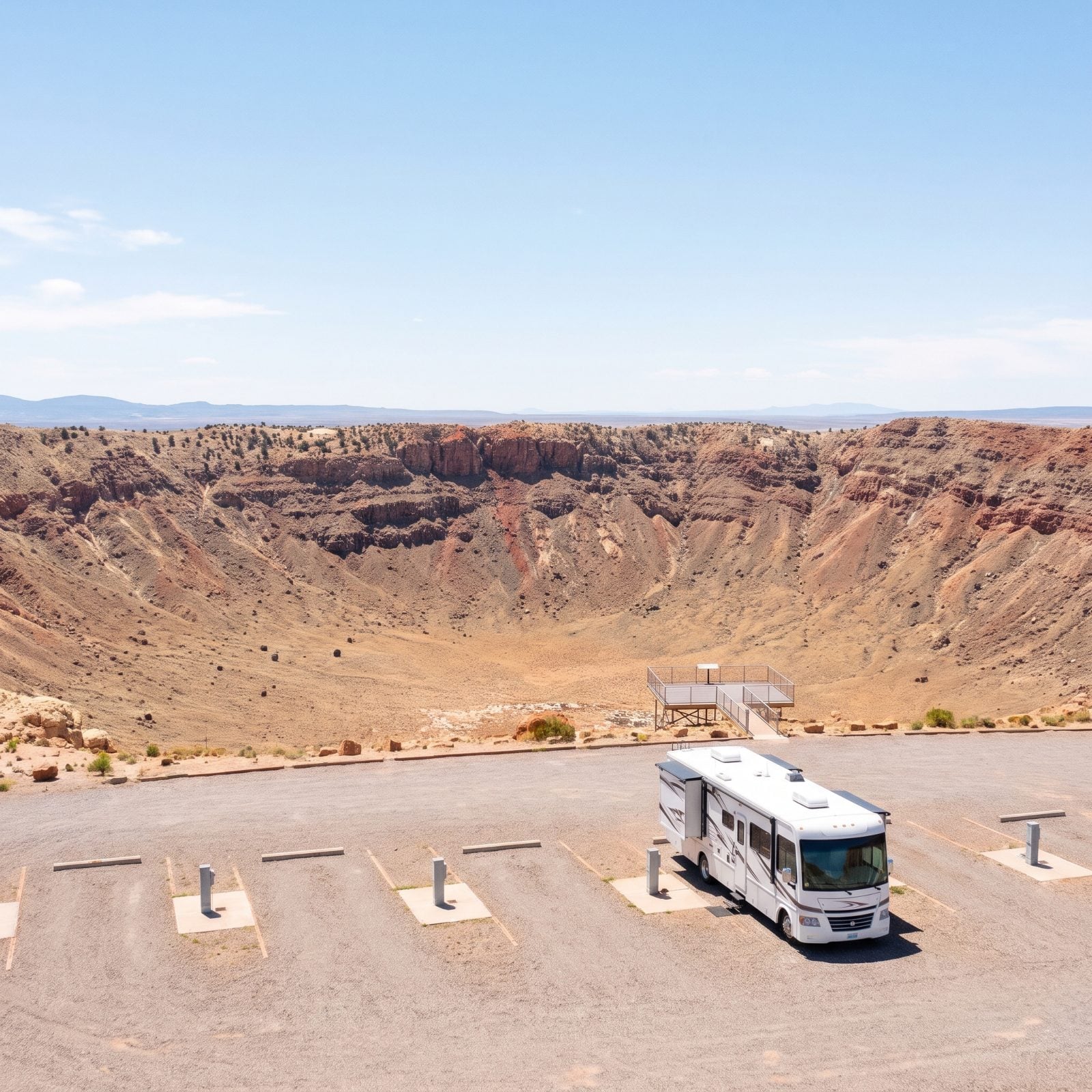
It’s a hole in the ground almost a mile wide, and standing on the rim does something to your sense of scale. A chunk of iron hit the Arizona desert tens of thousands of years ago and left this. NASA trained Apollo astronauts here because it was the closest thing to the moon on Earth.
The RV park sits just off I-40, a few miles north of the crater — gravel sites, hookup posts, and nothing to block the wind, because there’s nothing out here at all. That’s the catch. Exposed, flat, and treeless. Fantastic for stargazing, rough on a windy afternoon.
It makes a clean overnight between Winslow and Flagstaff. Level sites, easy access, and the crater viewing platform is a short drive from your site.
30. Calico Ghost Town and Its Campground Near Barstow, California
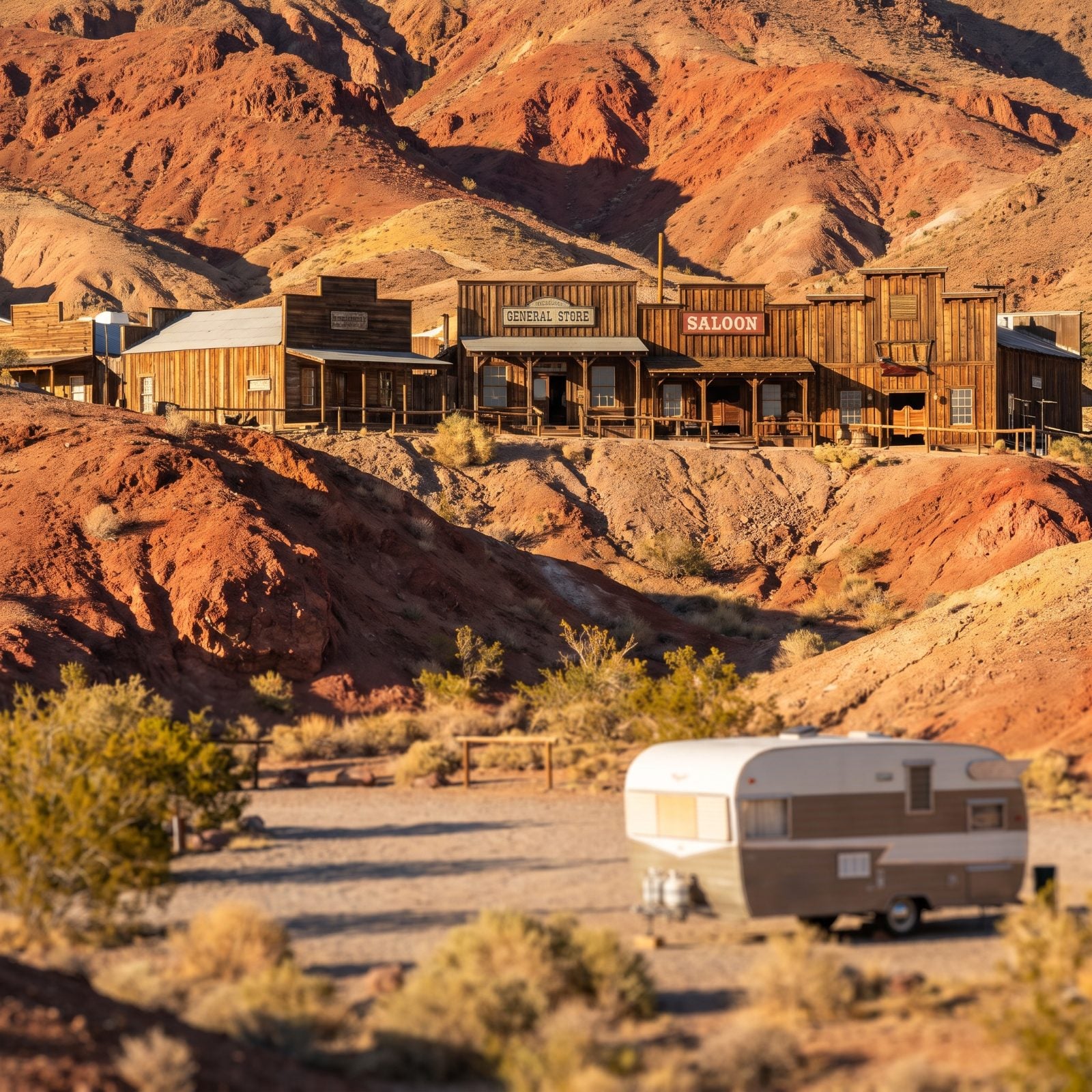
The last stop before you drop into California feels like a movie set, because it half is. Calico was a real 1880s silver-mining town that went bust, then Walter Knott of Knott’s Berry Farm bought it and restored the whole thing into a county park.
There’s a campground on site run by San Bernardino County, with both hookup and dry sites tucked into the red Mojave hills. Reserve ahead for holiday weekends and the Wild West events, which pack the place.
Summer heat out here is no joke. The Mojave in July will cook you, so this is a far better spring or fall stop than a midsummer one. And nights get cold fast once the sun drops behind the hills, which catches a lot of first-timers off guard.
29. Route 66 Association Hall of Fame and Museum, Pontiac, Illinois
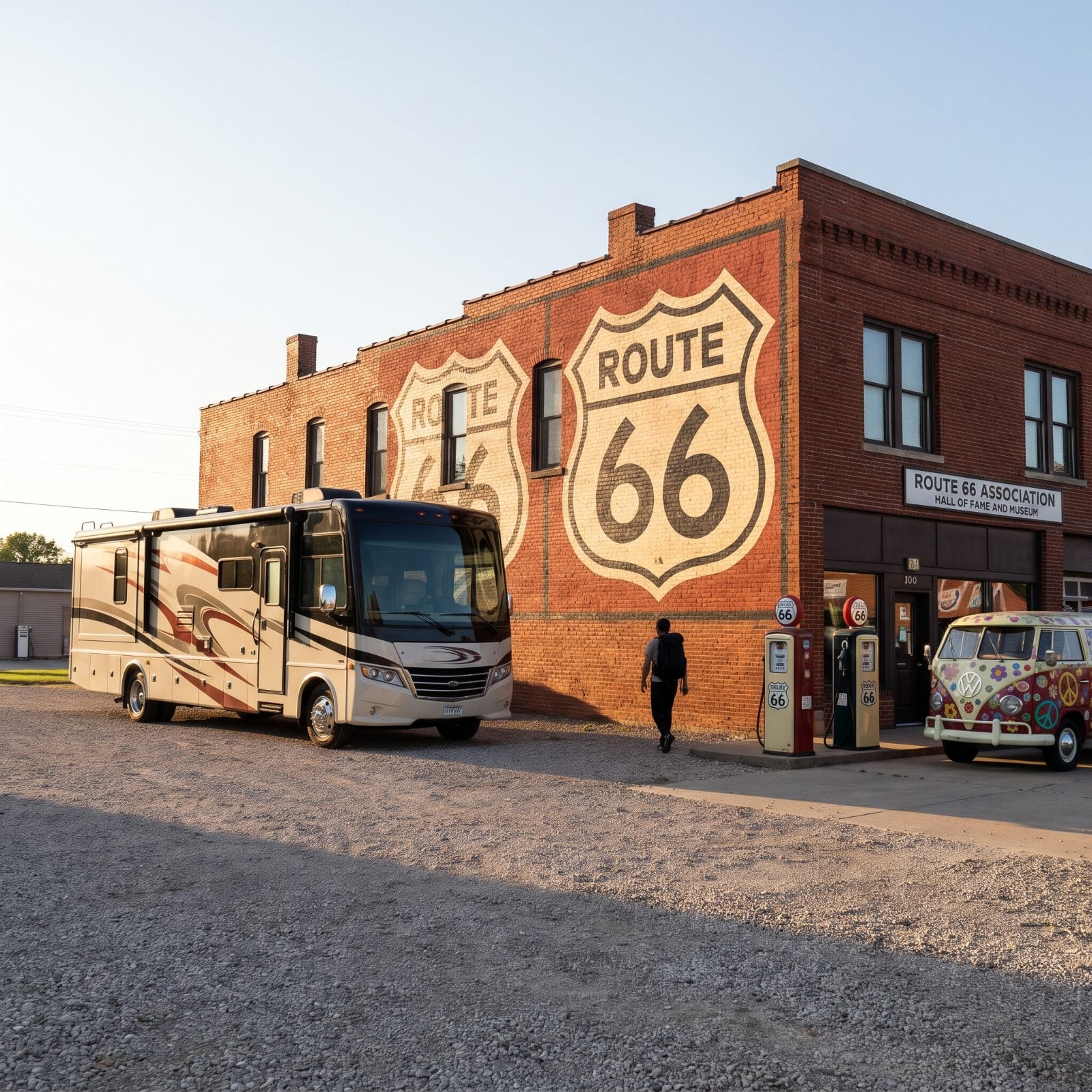
Pontiac packs more murals per block than towns ten times its size, and the Hall of Fame is the reason to pull off I-55. Admission is free, which almost feels like a mistake once you see what’s inside. Out front, a psychedelic peace-sign VW bus sits beside a pair of vintage Route 66 gas pumps by the entrance, like it just rolled in.
For RVers, the lot is roomy and the downtown square sits a block away with angled parking that swallows a dually and trailer without drama. Give yourself two hours. You’ll spend the first one just reading the walls.
28. Roy’s Motel and Café, Amboy, California
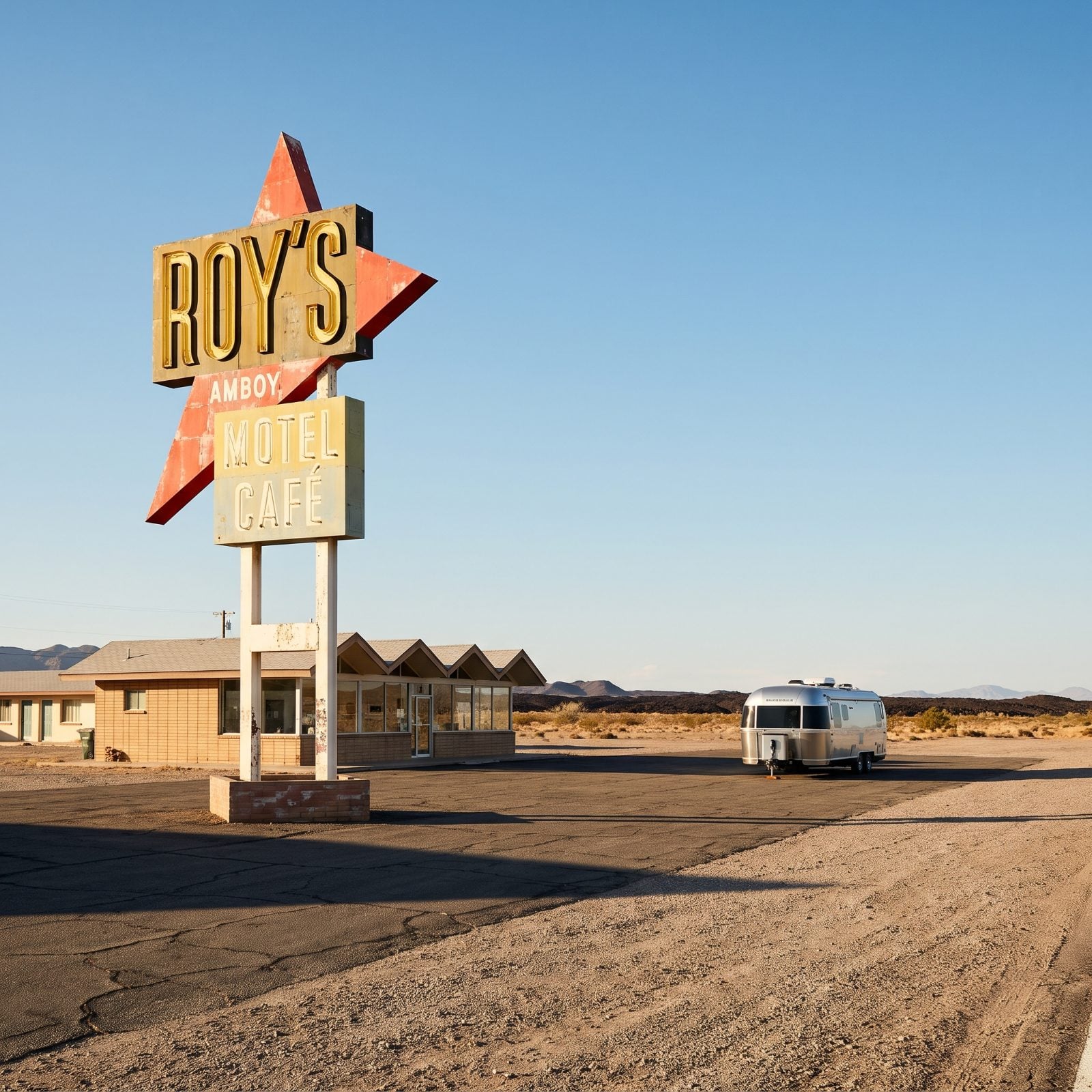
There’s nothing out here. That’s the point.
Roy’s sits alone in the Mojave on a stretch of old 66 that runs dead flat to the horizon, and the big red star sign has been pointing at empty desert since the 1950s. The gas pumps work again and there’s a small gift shop, but you won’t find hookups, groceries, or a second option for miles.
Fuel up before you commit to this leg. Cell signal comes and goes. Come for the photograph, the quiet, and the feeling that you drove off the edge of the map, then keep moving to Needles or Ludlow for the night.
27. Ed Galloway’s Totem Pole Park near Foyil, Oklahoma
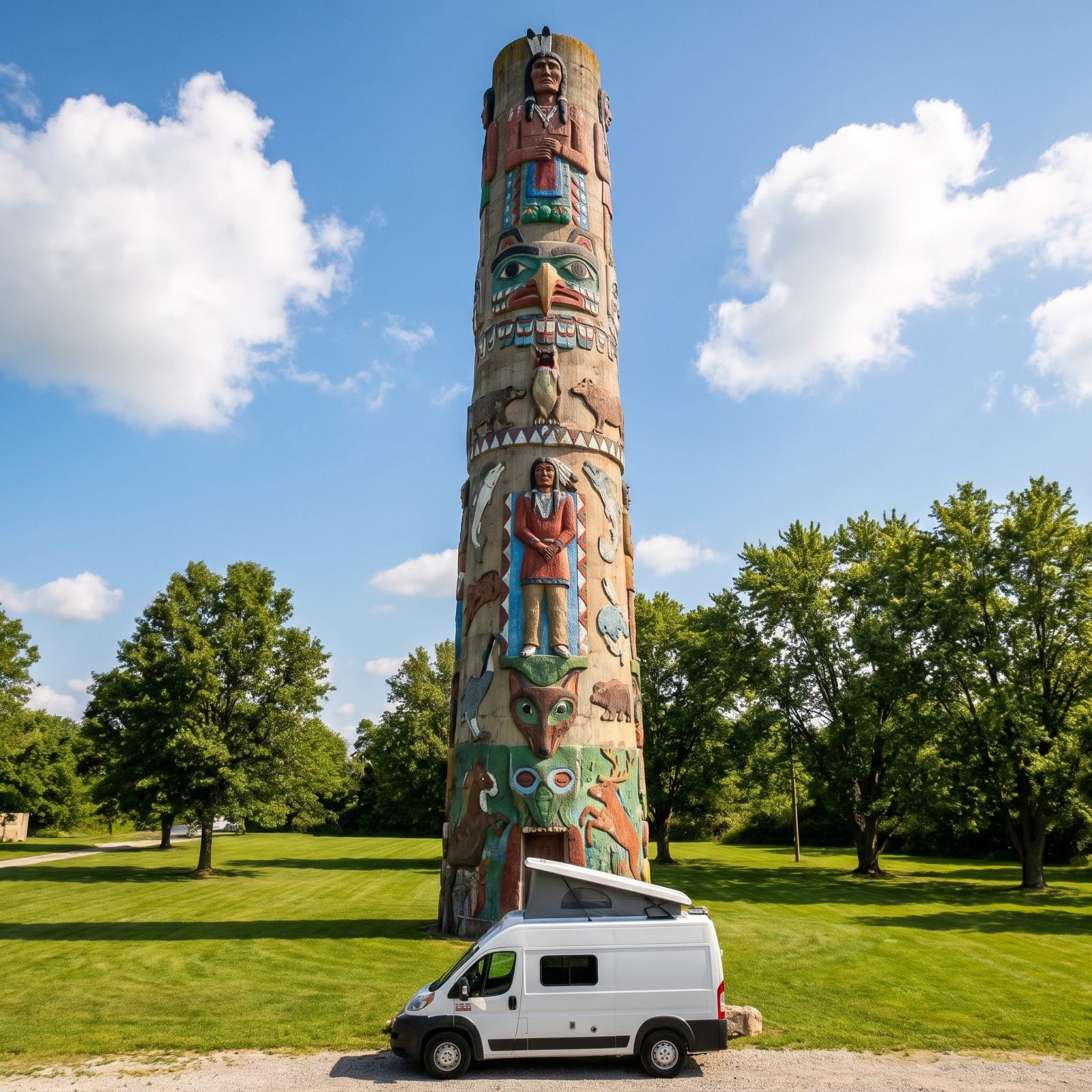
Nathan Edward Galloway spent eleven years mixing concrete by hand to build a ninety-foot totem pole in a field, and the result is the kind of folk-art oddity 66 does better than anyplace else. Every surface is carved and painted — eagles, portraits, geometric panels, a riot of color that just about glows in morning light.
Free to see, open daylight hours. The gravel lot handles a van or smaller rig fine, though a big fifth-wheel will want to scout the turnaround first. Short detour off the highway, and worth every mile of the gravel road in.
26. Hackberry General Store, Hackberry, Arizona
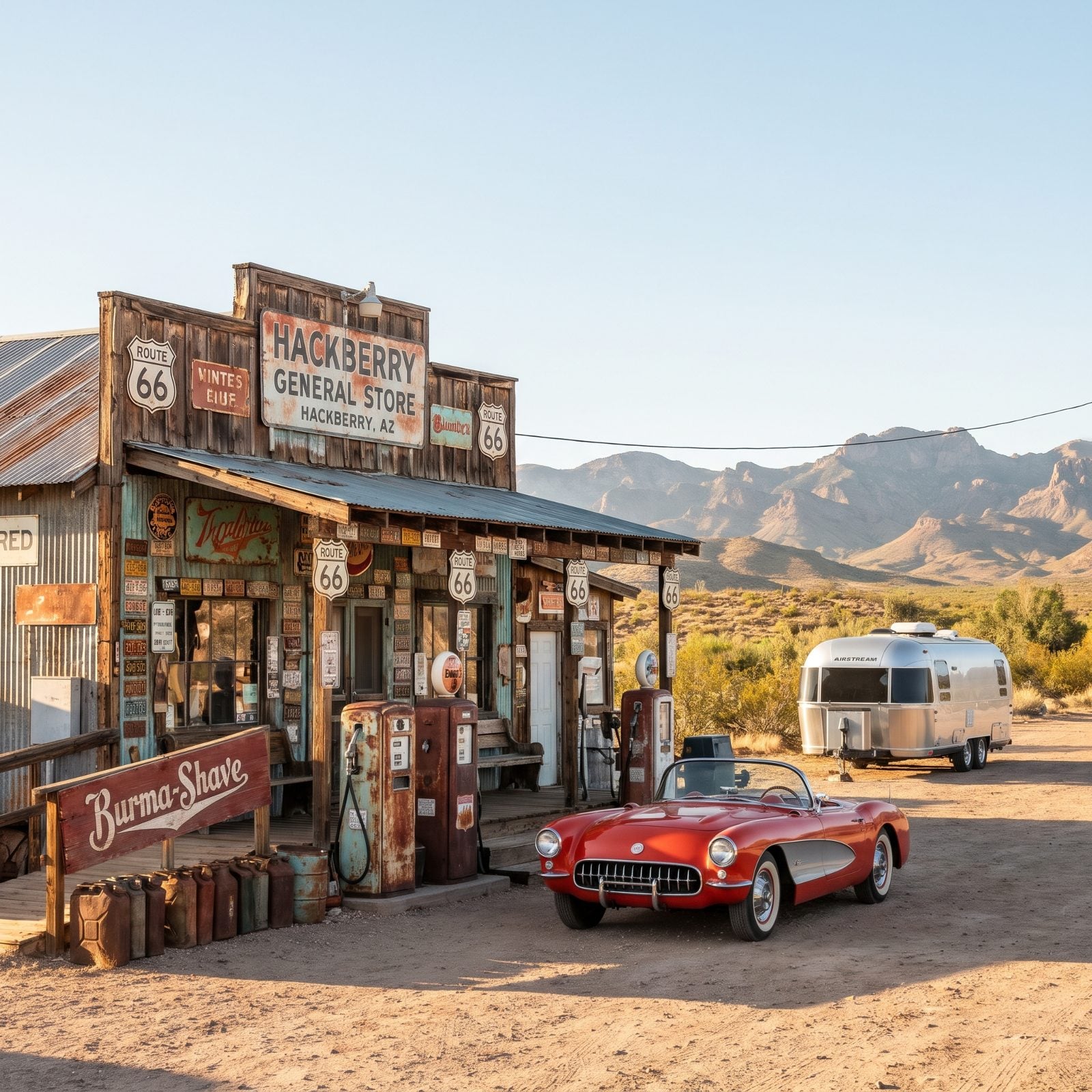
Pull in and the dirt lot is already a museum. Rusted pumps, a cherry-red Corvette, weathered signs nailed to every board, and enough roadside clutter to lose an afternoon in.
Hackberry is a classic cold-soda-and-souvenirs stop between Seligman and Kingman. The parking is dirt and generous, so big rigs can swing in and out without sweating it. No RV camping here, but it’s an easy pull-off on a drivable, well-kept section of old 66.
25. Route 66 Mural City, Cuba, Missouri
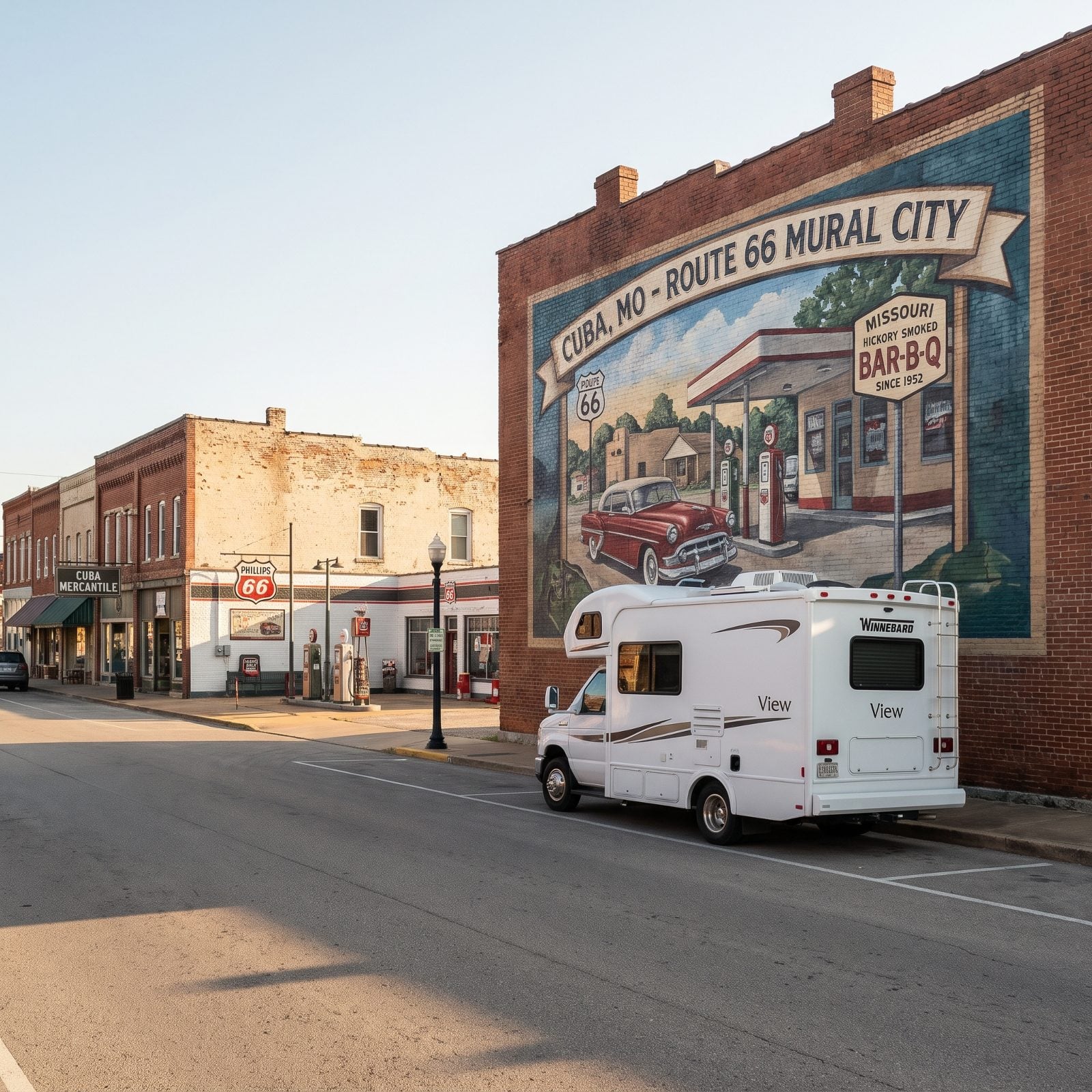
Cuba earned the Mural City nickname the honest way. More than a dozen big wall paintings are spread across downtown, each one telling a slice of local and highway history. This is a walking stop, not a drive-by, so park once and stretch your legs.
The town sits right off I-44 with easy fuel and a famous giant rocking chair just down the road in Fanning. Angled street parking downtown is tight for a towed setup, so drop the trailer at your campground first and come in with the truck.
24. Grand Canyon Railway RV Park, Williams, Arizona
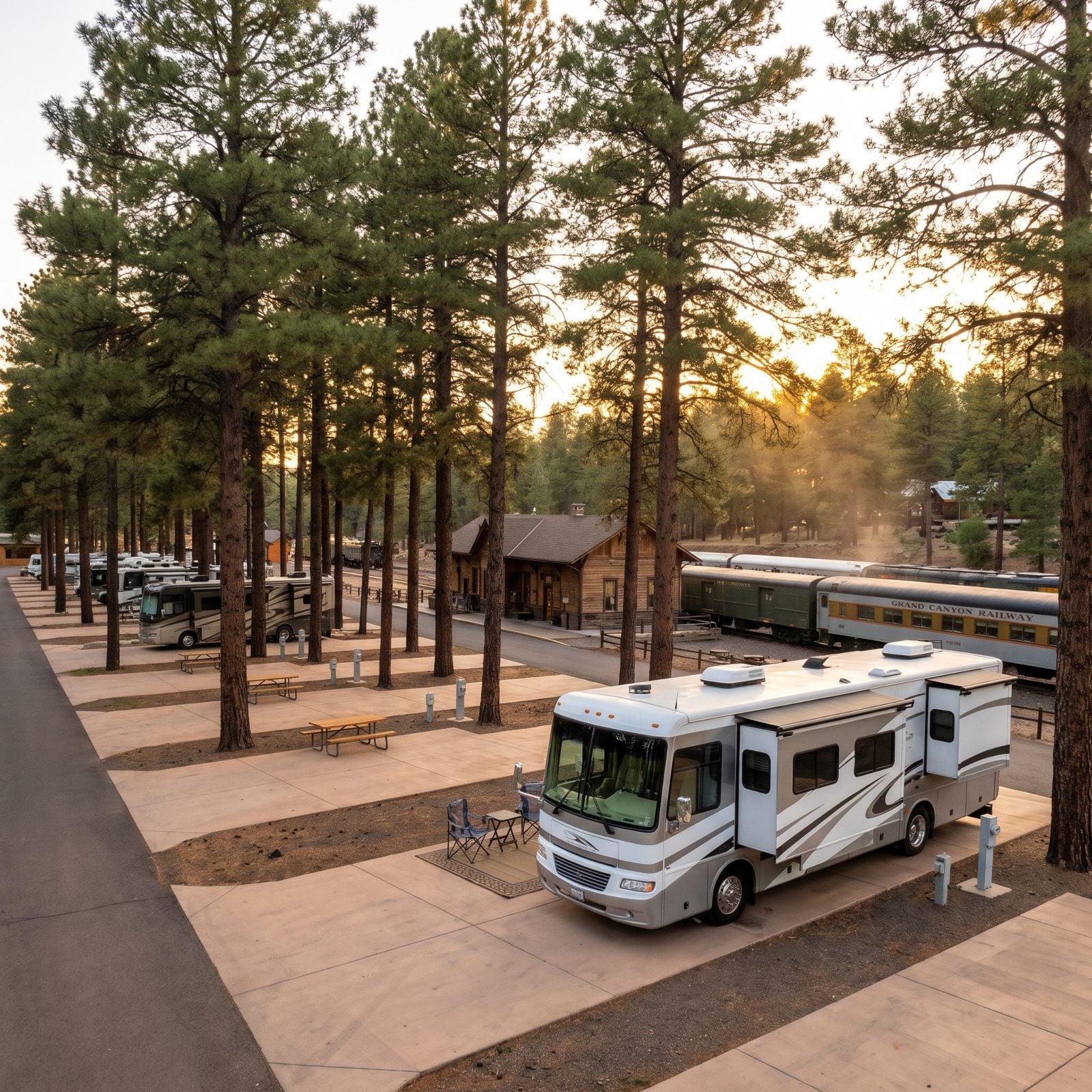
Finally, a place to actually sleep. The Grand Canyon Railway RV Park in Williams is a proper full-hookup park with level paved pull-throughs, generous spacing, and big-rig access that doesn’t require a three-point turn.
Williams calls itself the last town on Route 66 bypassed by the interstate, and it leans into that charm hard. But the real draw is location. Leave the rig plugged in and take the historic train to the South Rim for the day — no wrestling with Grand Canyon parking.
Book the summer and fall weekends well ahead. This one fills, and the train schedule drives demand.
23. Midpoint Café, Adrian, Texas
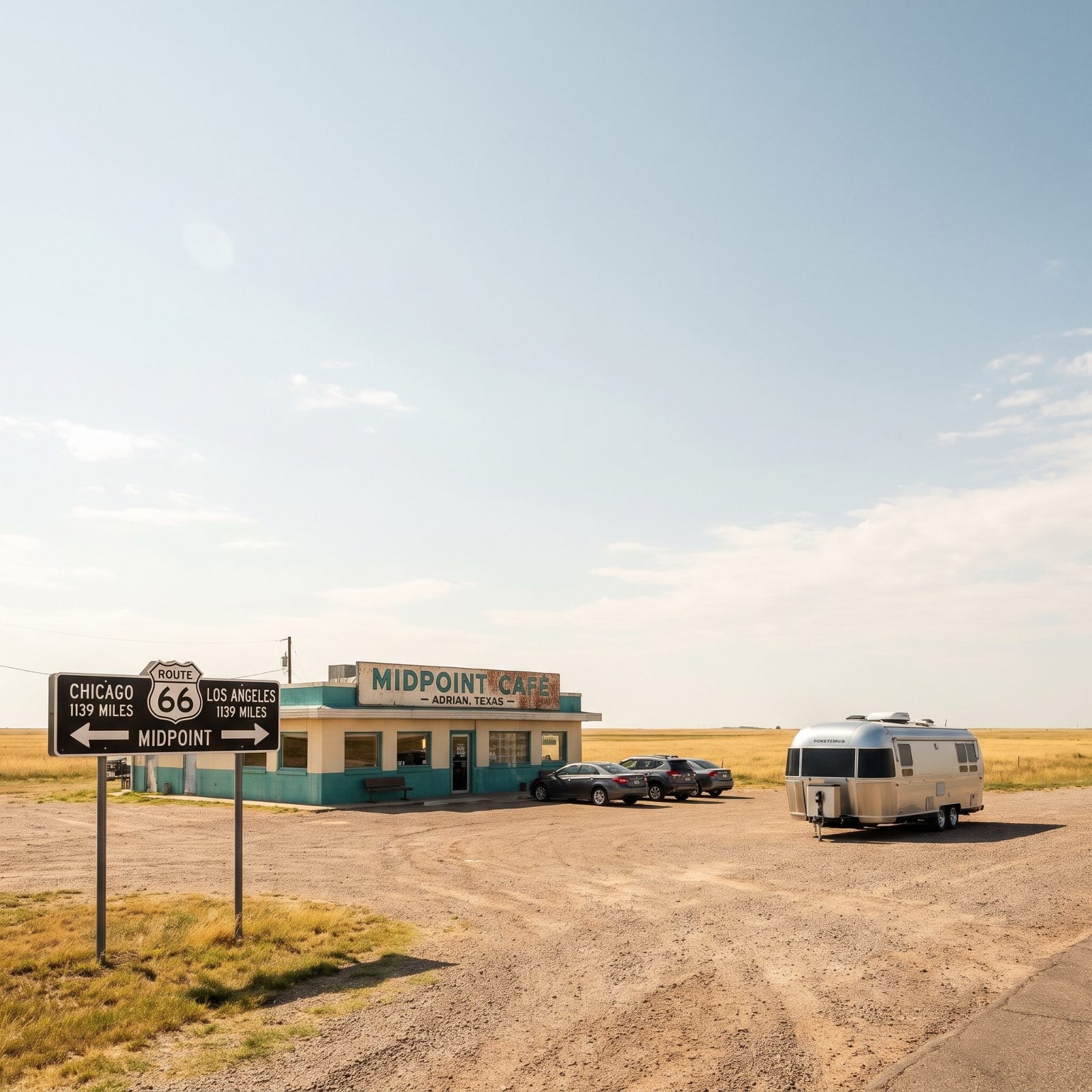
Equal miles to Chicago in one direction, Los Angeles in the other. You’re standing dead center on Route 66, and the Midpoint Café has the painted sign to prove it.
Order the “ugly crust” pie — tastes a lot better than it sounds — and take the obligatory photo straddling the halfway mark on the old pavement. The gravel shoulder out front is wide and flat, true Texas panhandle, so there’s no tight maneuvering for a big rig.
Check the hours before you go. Out here, a café that’s closed means the next hot meal is a long way down the road.
22. Ambler’s Texaco Gas Station, Dwight, Illinois
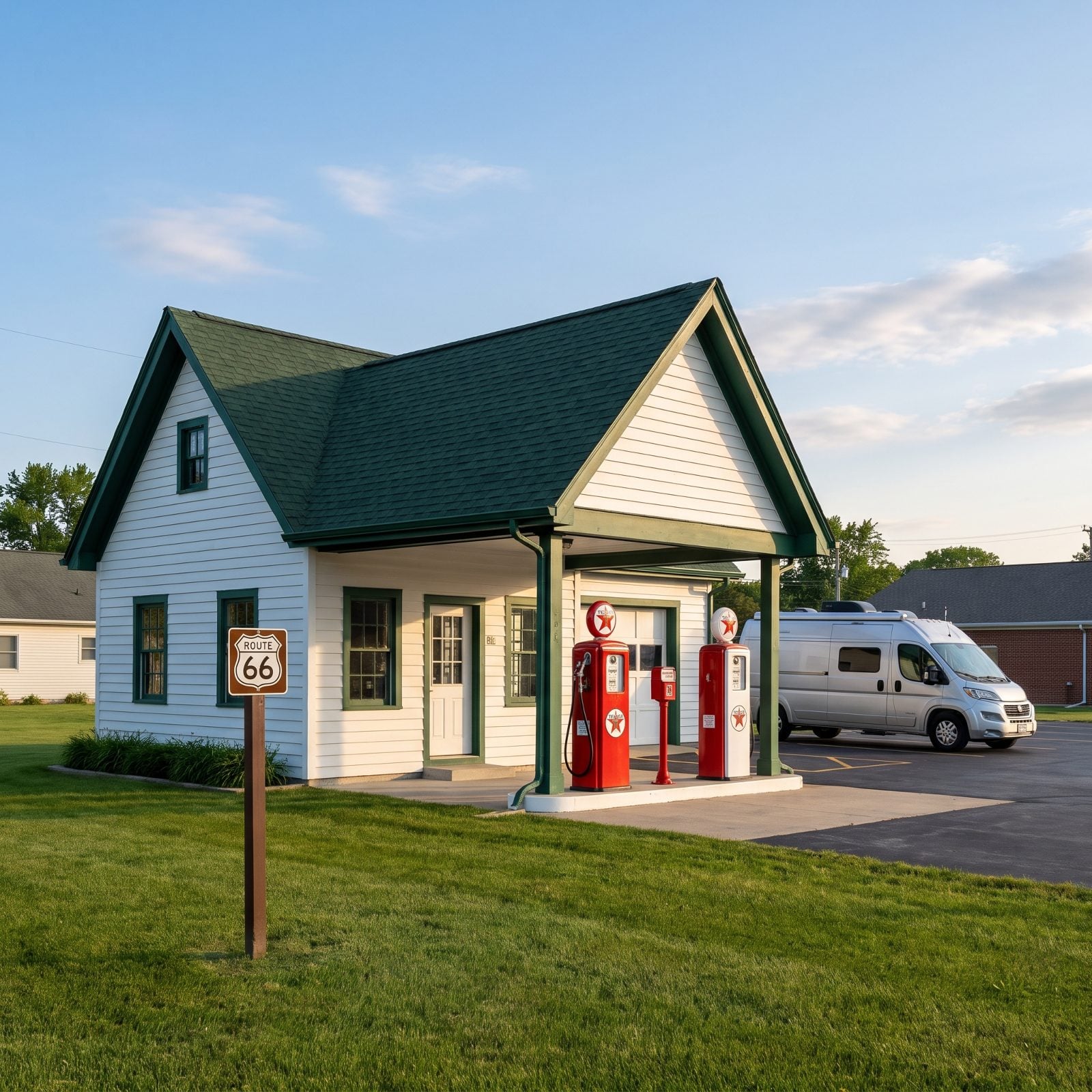
Built in 1933 and pumping gas clear into 1999, Ambler’s is one of the longest-operating stations on the whole route, now restored to its cottage-style best. The green-gabled roof and twin red Texaco pumps look like they were lifted straight off a model-train layout.
Free, quick, and doubling as a visitor center for the Dwight area. The small paved lot works for a van or a solo motorhome. Ten-minute stop at the Illinois end of 66 — a clean photo and a leg stretch before the next town.
21. Cool Springs Station near Kingman, Arizona
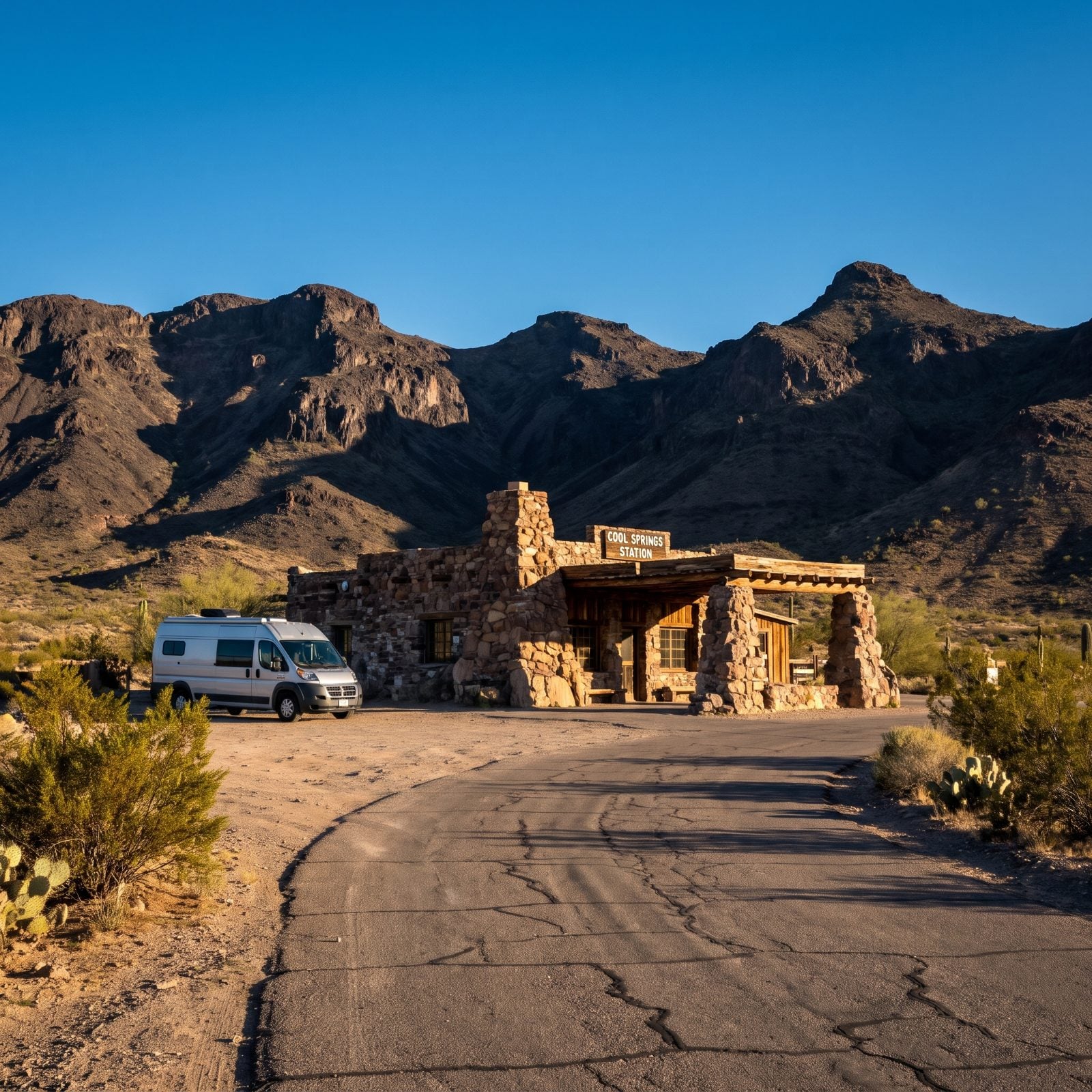
The stone pillars of Cool Springs stand against the Black Mountains like they’ve been there forever, though the building you see is a careful rebuild of the 1920s original. It’s a gift shop and small museum now, perched on one of the most scenic drives left on the whole highway.
Heads up on the road. The climb over Sitgreaves Pass toward Oatman beyond this point gets steep, narrow, and switchbacked. Cool Springs itself is an easy pull-off, but that mountain section is no place for a long rig.
20. Oklahoma Route 66 Museum, Clinton, Oklahoma
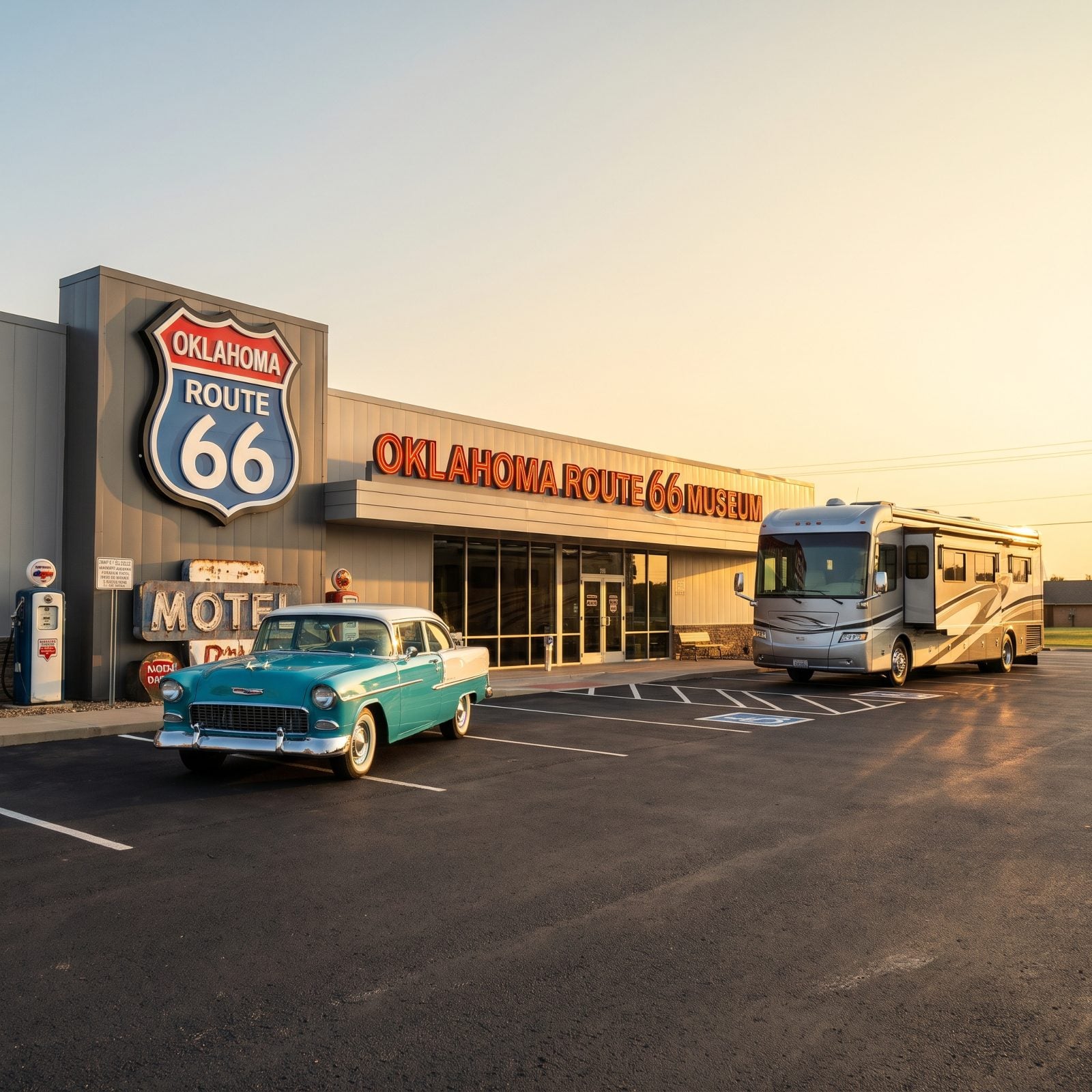
If you only have time for one Route 66 museum, make it this one. Clinton’s walk-through takes you decade by decade, from the Dust Bowl exodus to tail-fin road-trip glory, with a 1950s diner booth and vintage cars staged along the way.
Admission runs a few dollars, well worth it, and the parking lot is big and flat with no-stress access for a motorhome or a truck-and-trailer. Run by the Oklahoma Historical Society, so the exhibits are polished without losing the roadside heart. Budget ninety minutes. You’ll want them.
19. Goffs Schoolhouse and Cultural Center, California
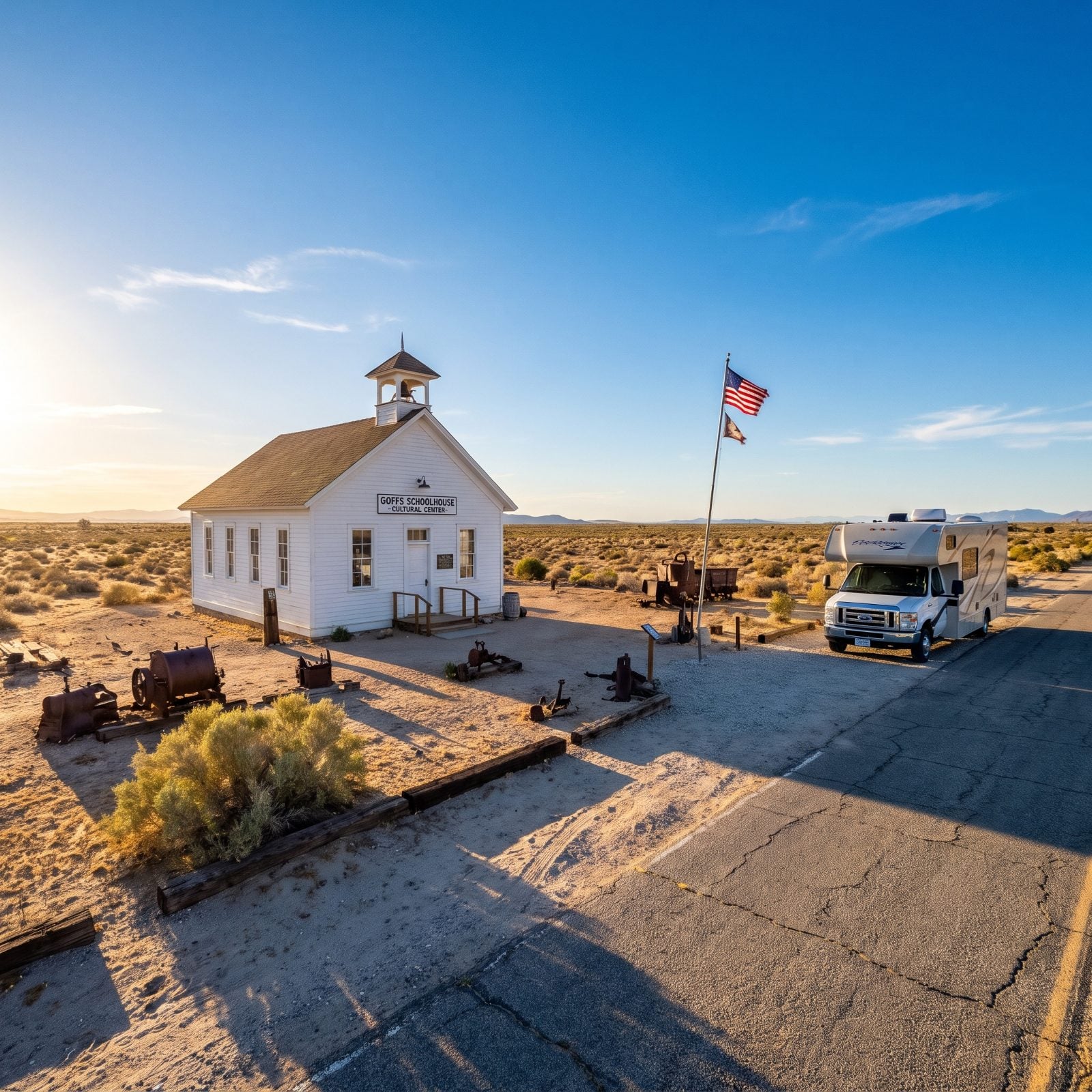
Out past Needles, where the Mojave gets serious and cell signal gets shy, a white schoolhouse from 1914 stands restored to the day it closed. Volunteers run Goffs alongside the Mojave Desert Heritage and Cultural Association, and the hours lean toward weekends, so call ahead rather than roll the dice.
The gravel lot is roomy, flat, and big-rig friendly — rarer than you’d think out here. No hookups. But it makes a fine daytime stop to stretch your legs, read the mining exhibits, and remember that this was a real desert alignment long before the interstate smoothed everything out.
18. Tee Pee Curios, Tucumcari, New Mexico
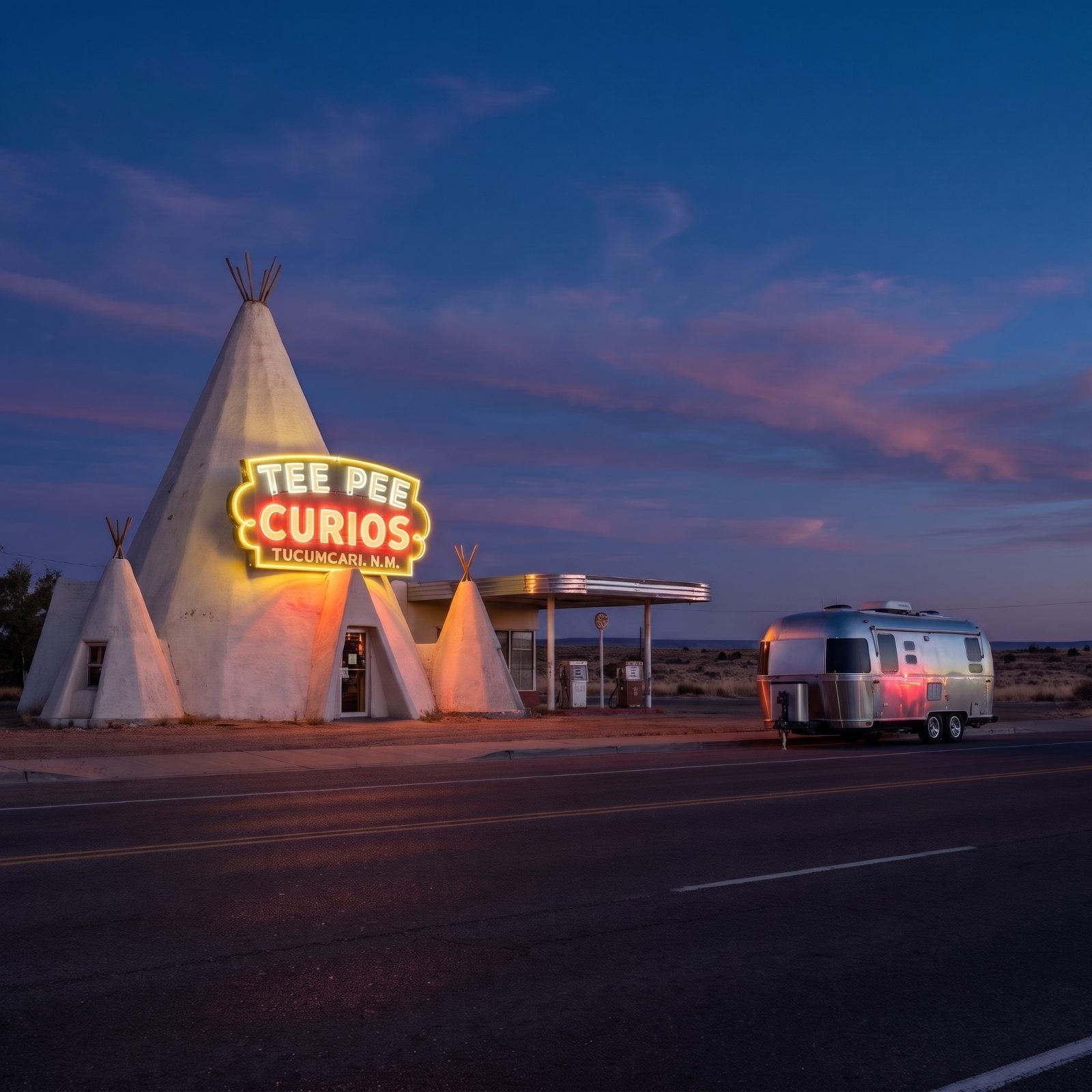
This whitewashed teepee-shaped shop on the old highway is where neon still earns its keep, and the glowing “Tee Pee Curios” sign in yellow and red is the piece everybody photographs.
Come for the white stucco teepees, the old gas pumps and the open scrubland beyond, sure. But the real reason to stop is the light at dusk — that warm neon glow against white walls and a deep blue sky is worth the wait, and you’ll find yourself lingering past the shot you came for. Tucumcari itself makes a solid overnight town for RVs, with several parks offering full hookups and pull-through sites, so you can sleep nearby and come back to soak up more of that roadside neon magic the next evening.
17. Seaba Station Motorcycle Museum, Warwick, Oklahoma
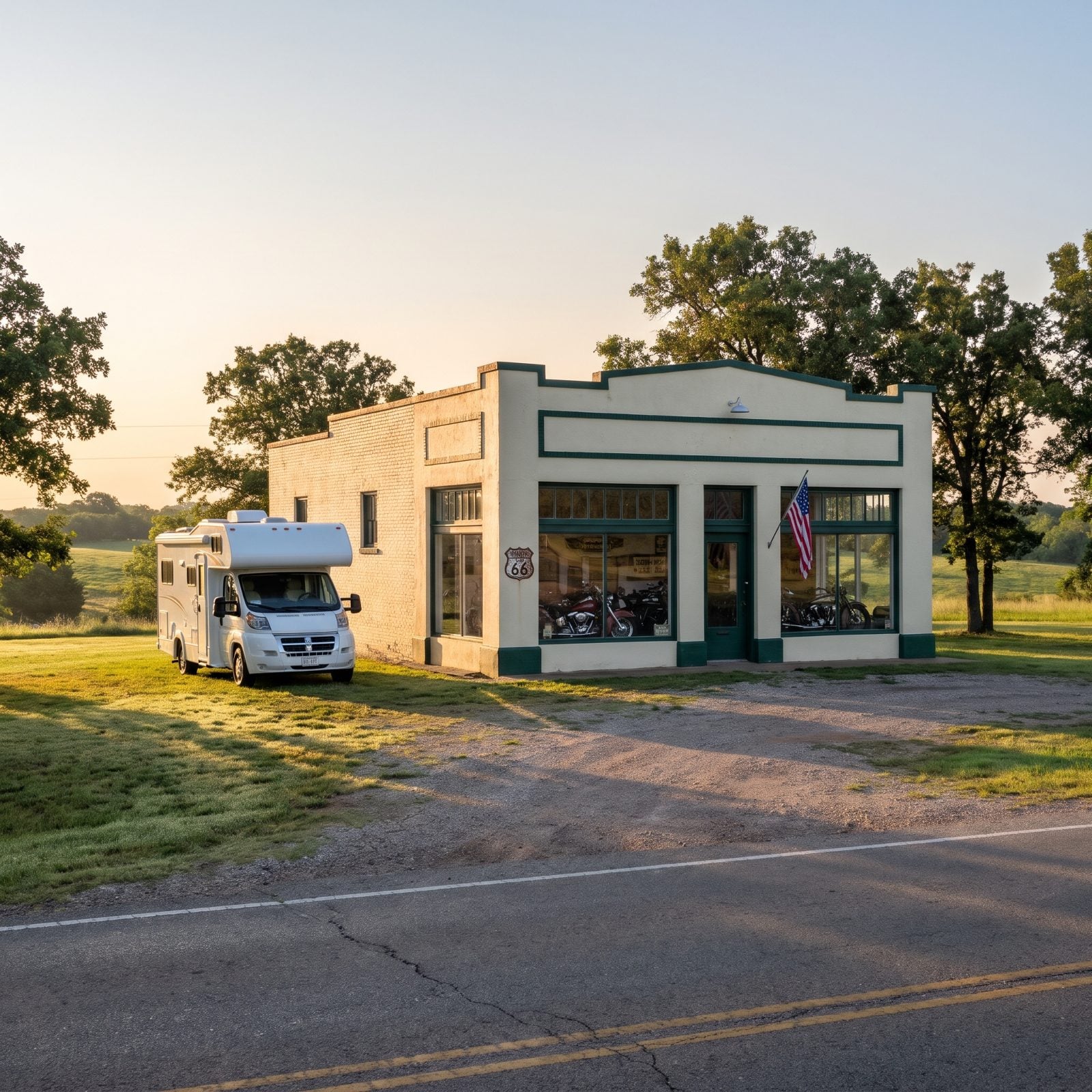
A gas station that quit pumping and started collecting.
Built around 1921, Seaba Station served fuel and engine work for decades before becoming a motorcycle museum packed with bikes from the brass era forward. The collection changes, the volunteers are chatty, and it’s free to walk in — though a donation is the decent thing to do.
Parking is grass and gravel. Workable for vans and smaller rigs, tighter for a 40-footer. It’s a short, easy pull-off between Chandler and Wellston, the kind of stop that takes twenty minutes and sticks with you longer than that.
16. Route 66 Motorheads Bar, Grill and Museum, Springfield, Illinois
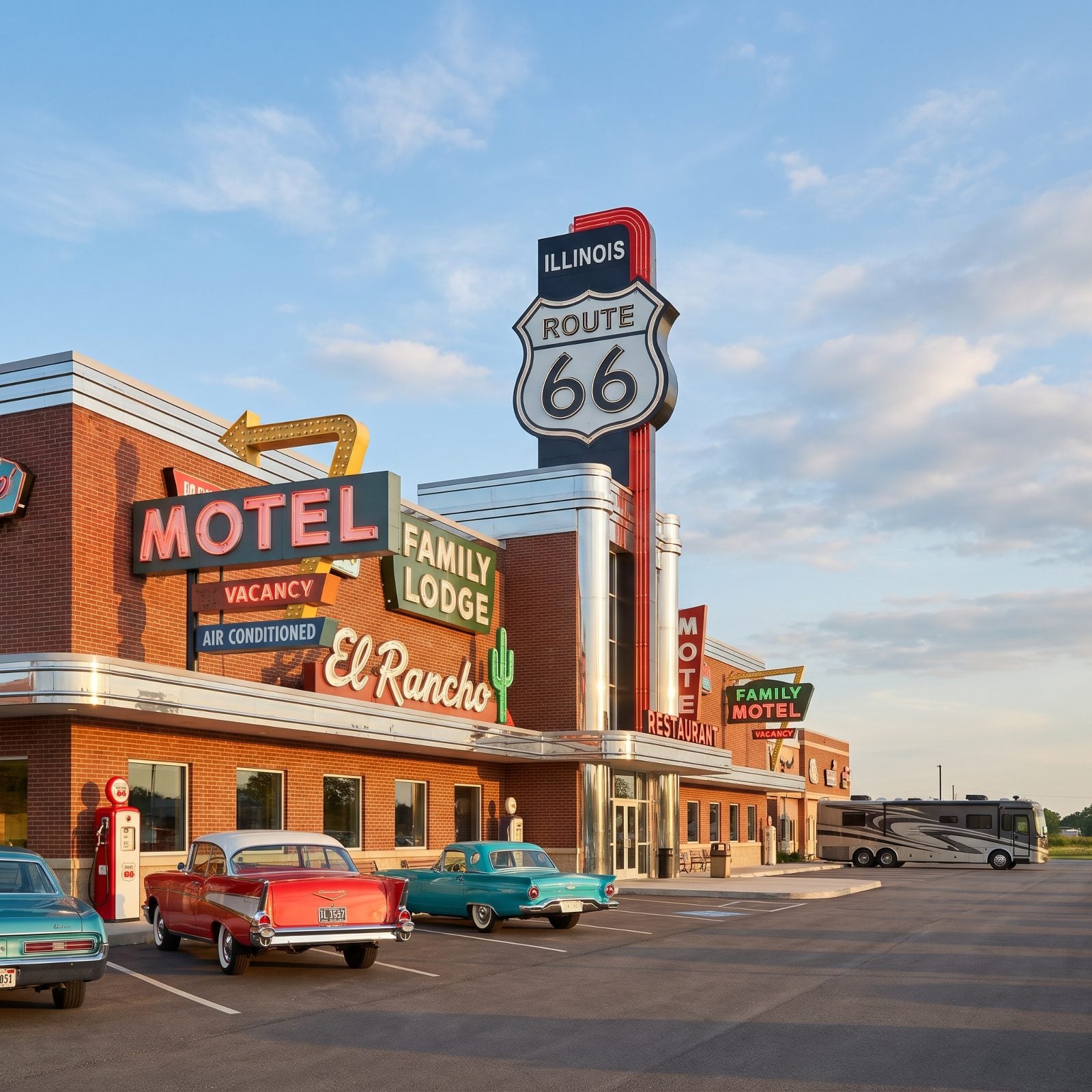
This one is newer than most stops on the road, and that’s the point. Motorheads opened in 2017, gathering up rescued neon that would’ve otherwise ended up in a scrapyard and bolting it to a modern brick-and-glass building trimmed in chrome, with a towering sign out front.
The lot is paved and generous — one of the few places on this list where a big rig parks without a second thought. Food is diner-honest, the beer is cold, and all that salvaged signage lights up after dark. For a comfort stop that won’t stress your turning radius, it’s hard to beat.
15. Russell’s Travel Center and Car Museum, Endee, New Mexico
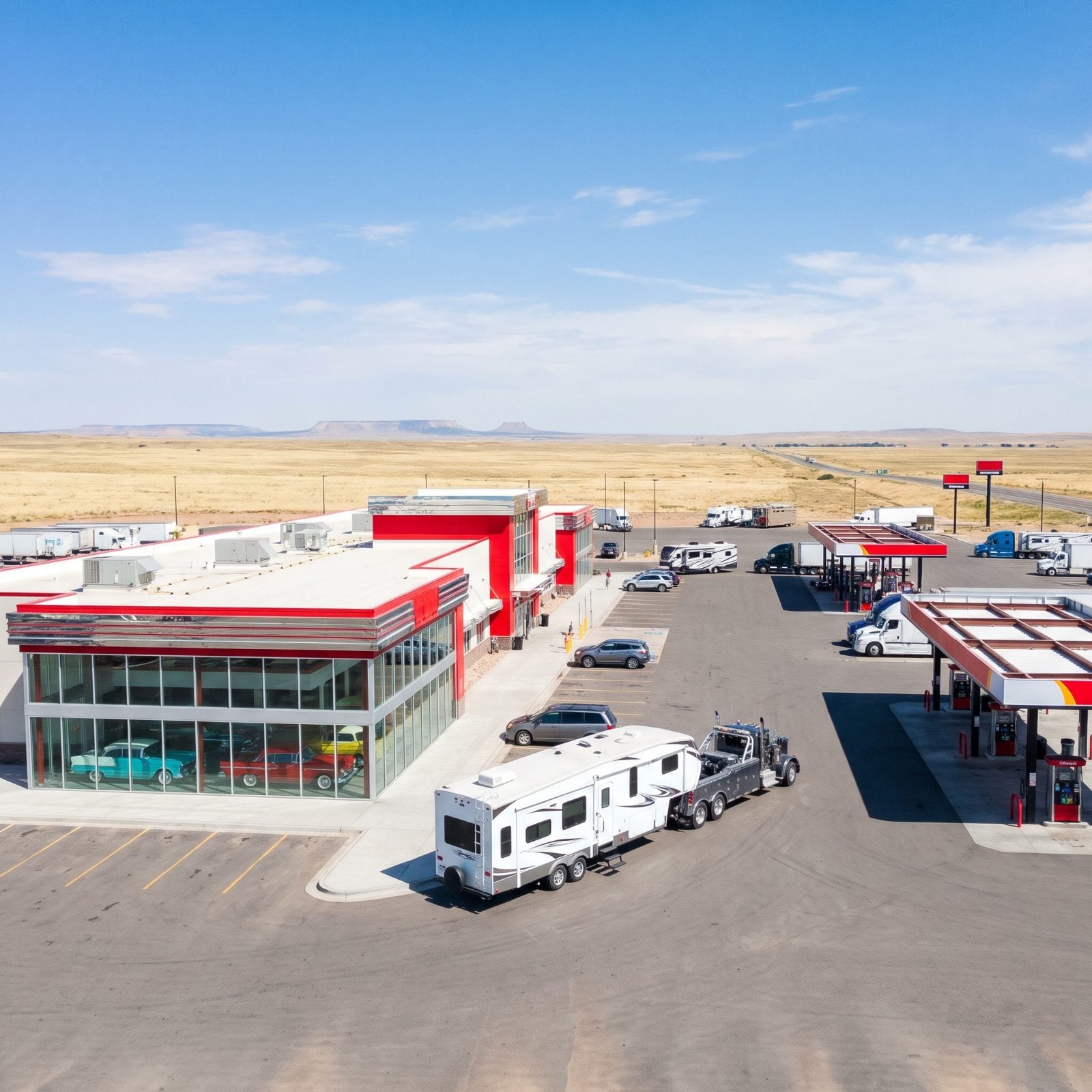
Here’s a rarity: a museum you can visit in flip-flops after fueling up, and it’s free. Russell’s sits right off I-40 near the Texas line, a full-service travel center with a classic car collection tucked inside — polished Corvettes and chrome bumpers gleaming under the lights.
Because it’s a working truck stop, there’s diesel, dump, showers, and acres of pavement. You won’t white-knuckle the parking. This is the best kind of break on a long western haul, where the dog gets a walk, the tanks get topped, and you wander through a museum you didn’t plan on.
14. Gary’s Gay Parita, Ash Grove, Missouri
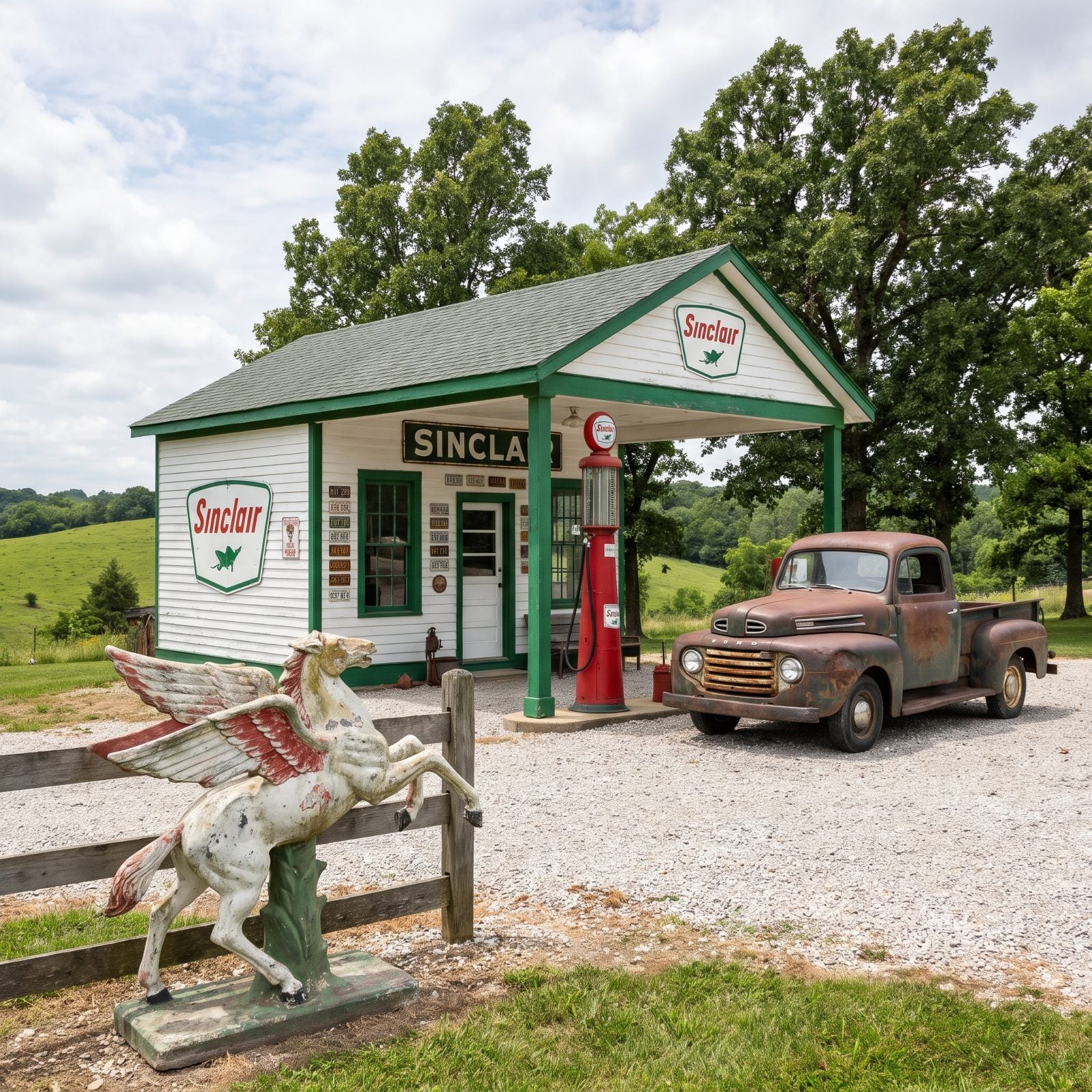
Gary Turner built this recreated 1930s Sinclair station with his own hands and ran it like a front porch, waving down travelers and handing out stories by the hour. He passed in 2015. Family kept it open, and the place still runs on that same welcome.
It’s a photo stop, pure and simple — old pumps, plastered-on license plates, a Pegasus sign, the works. Shoulder parking suits smaller rigs and vans. Park a big fifth-wheel somewhere sensible nearby and walk back. Bring a few dollars for the donation jar, because people like this are why the road still feels alive.
13. Cars on the Route, Galena, Kansas
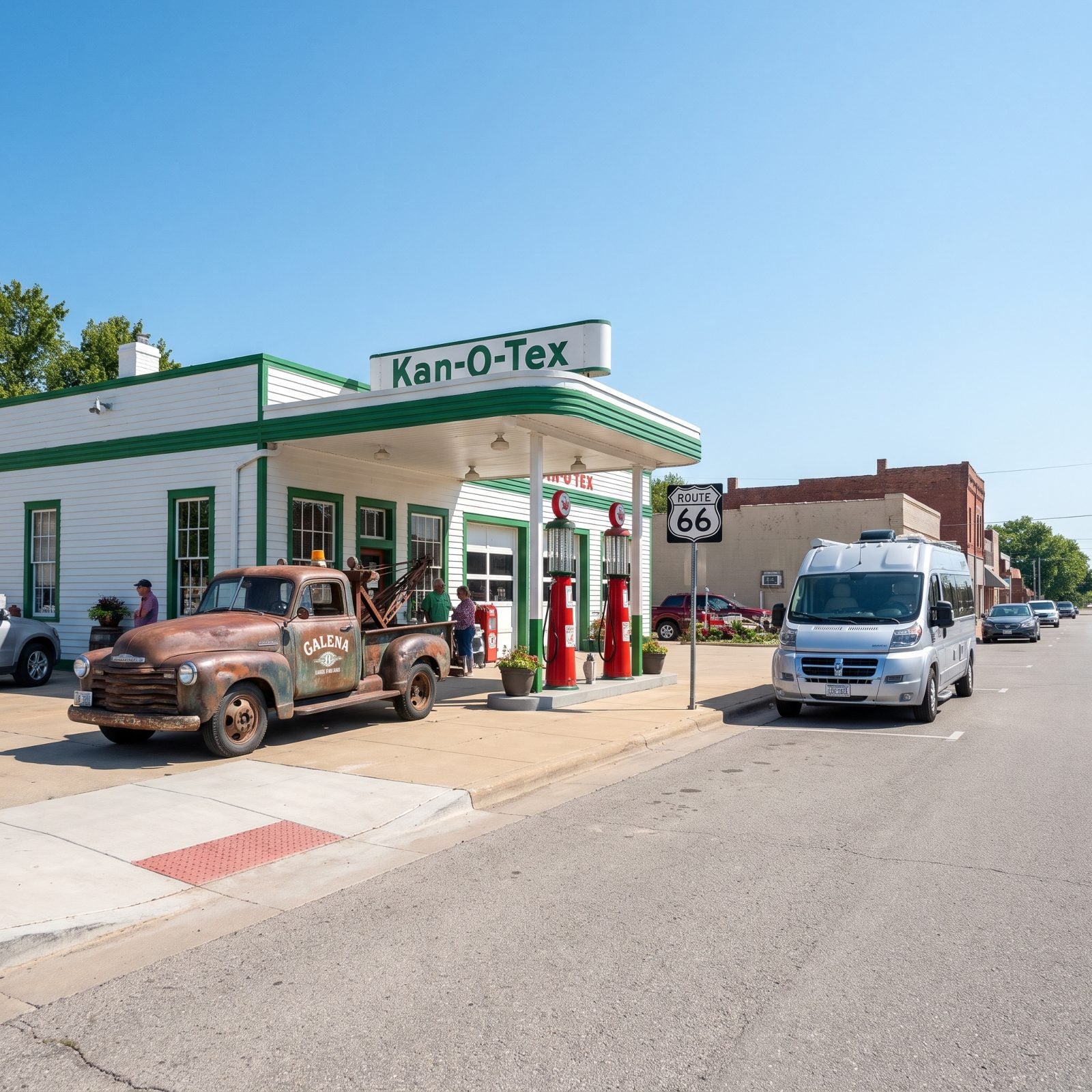
The Kansas stretch of Route 66 runs barely thirteen miles, and Galena makes those miles count. Cars on the Route lives in a 1930s Kan-O-Tex station, and the rusted tow truck out front is famously the inspiration behind a certain cartoon character — which means the kids and grandkids will actually want to climb out of the RV.
Grab a sandwich, a cold drink, a few souvenirs. It’s a curbside stop best suited to vans and mid-size rigs; longer rigs can find room a block over. Quick, cheerful, and a nice excuse to say you’ve done Kansas.
12. Old Riverton Store, Riverton, Kansas
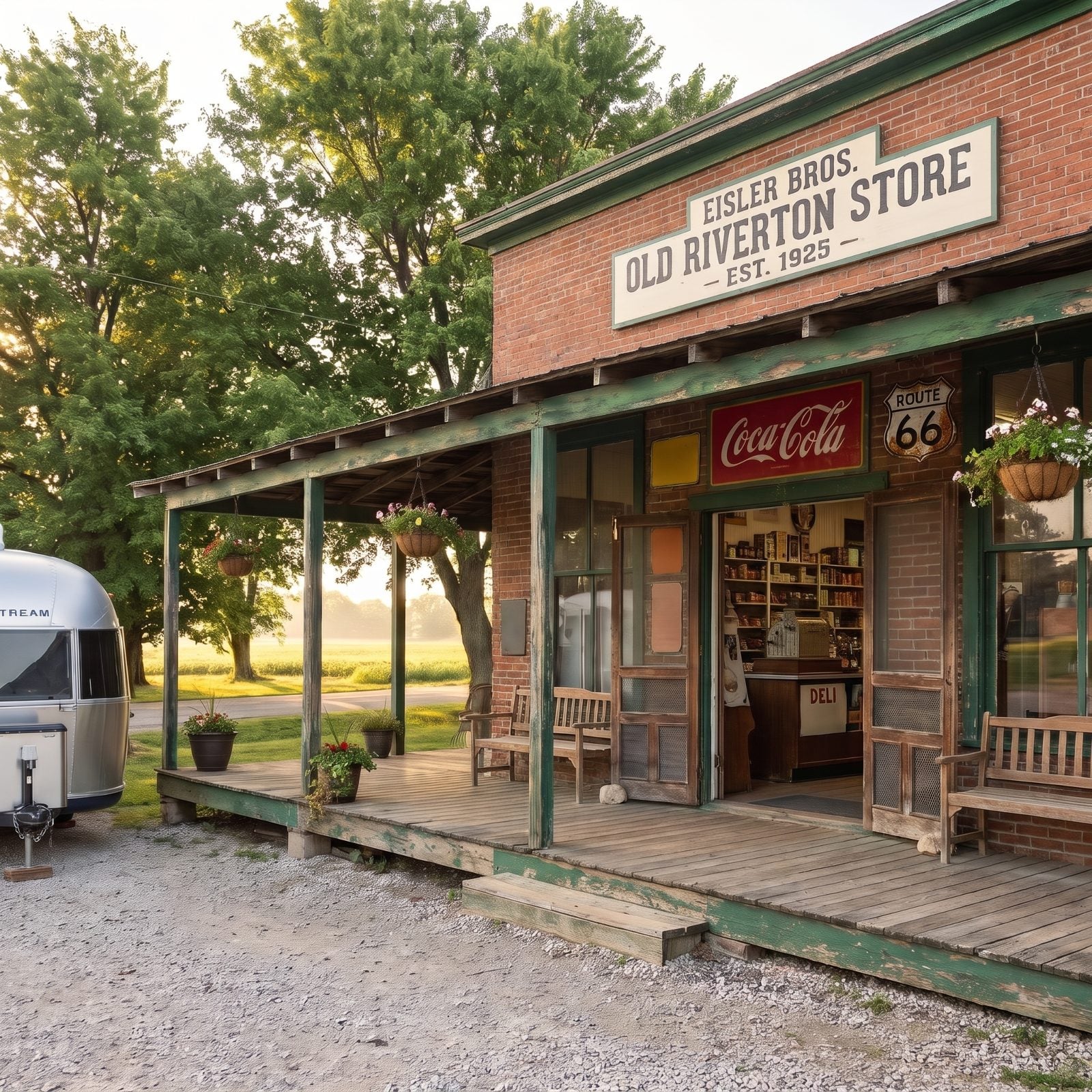
Open since 1925 and still selling groceries, Eisler Brothers’ Old Riverton Store is the real thing, not a museum pretending. There’s a deli counter in back, so you can build a sandwich, fill a cooler, and keep moving without hunting down a chain.
The porch invites you to sit a minute. Parking is gravel and reasonable for most rigs. And here’s the quiet miracle of the place: it’s been a working business, continuously, for a full century — one of a mere handful of stops on the whole route that can say that.
11. Coleman Theatre, Miami, Oklahoma
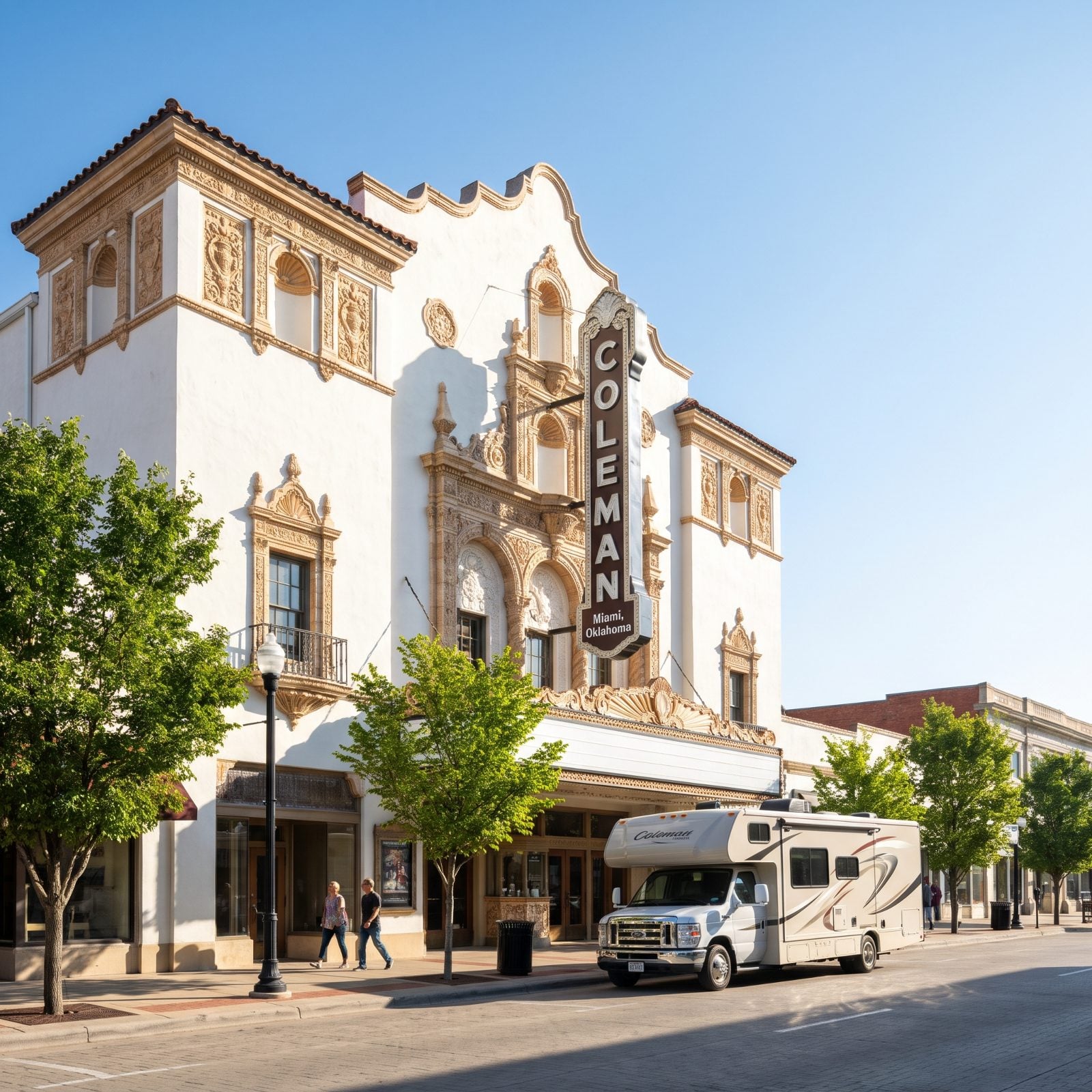
Not everything on Route 66 is neon and rusted pumps. The Coleman Theatre opened in 1929 as a vaudeville and movie palace — all carved stone, gold leaf, and a restored Mighty Wurlitzer organ inside. Tours are free, and volunteers will fire up the organ if you catch the right day.
Downtown Miami has wide streets with room to park a larger rig along the curb, though you’ll want to scout a block for length. A cool, quiet break from the sun. And a reminder that the old road once ran through towns with serious money and serious pride.
10. Route 66 State Park, Eureka, Missouri
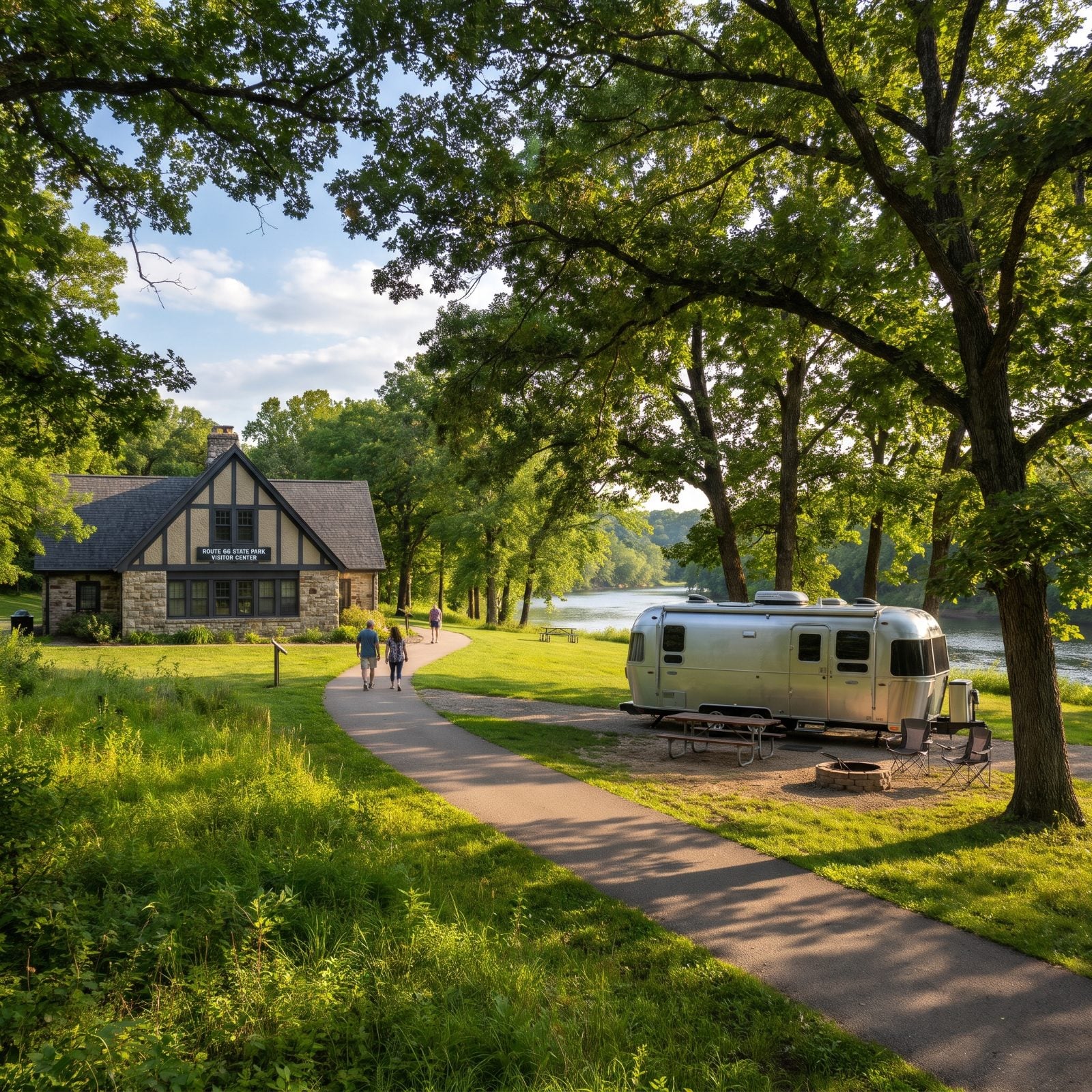
After days of neon and diners, you’ll want a place to actually stop and breathe. Route 66 State Park outside Eureka sits along the Meramec River with trails, a riverside setting, and a Tudor-style, half-timbered stone building serving as the visitor center and museum. The land here has a complicated past — worth reading about on the exhibits inside, and genuinely sobering once you do.
It makes an easy day stop near St. Louis, with shady riverside picnic spots just a short walk from the visitor center. Walk the trails. Let the engine cool. Remember that the road is supposed to be the point, not the mileage.
9. The Bunyon Giant Holding a Hot Dog in Atlanta, Illinois
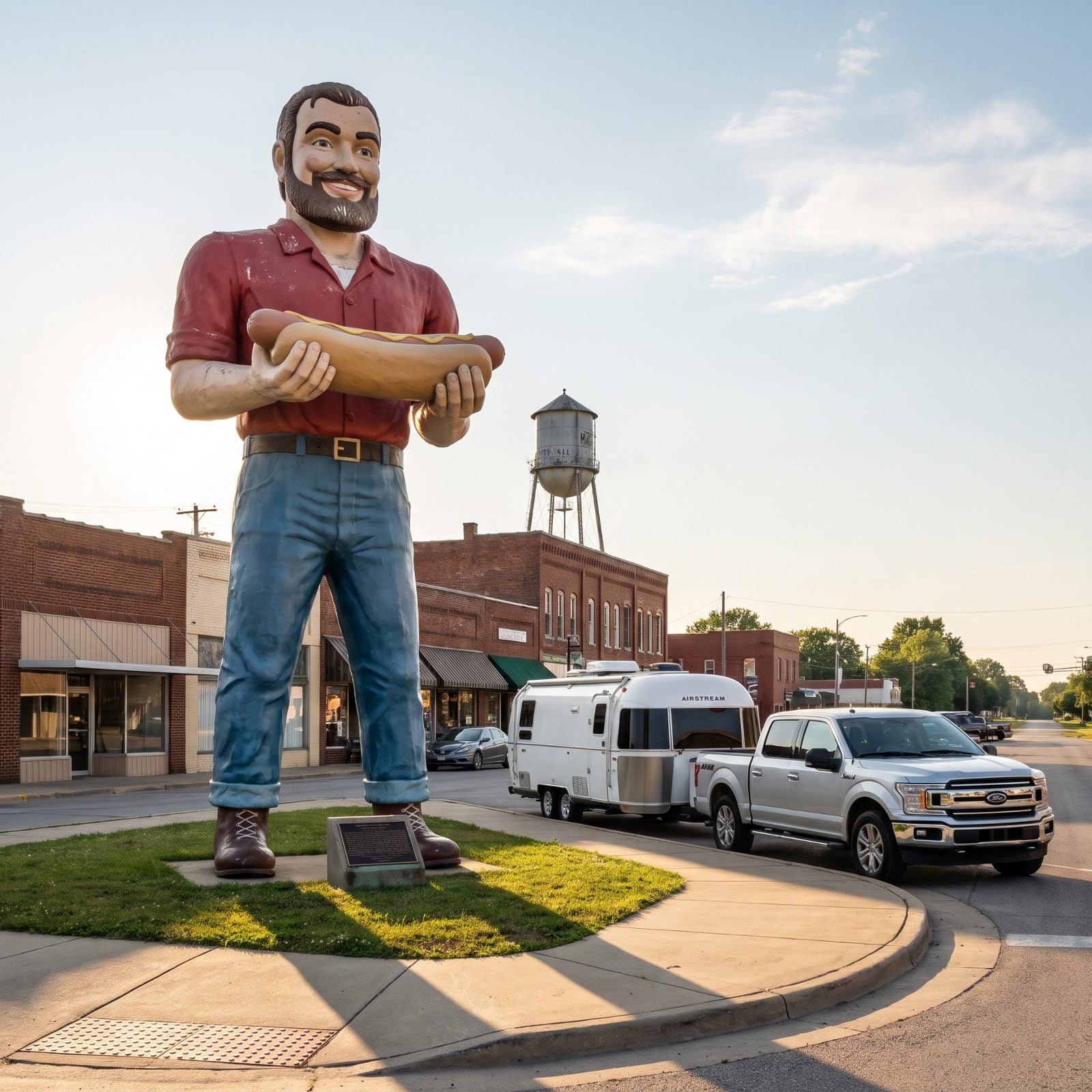
You pull off, crane your neck, get the photo, and you’re back on the road in fifteen minutes. That’s the whole deal with the Bunyon Giant, and it’s a good one. He started life outside a hot dog stand in Cicero before the town of Atlanta rescued him and stood him up on their main drag.
Parking is the easy part. Small-town Illinois means wide curbs and quiet streets, so a travel trailer or van fits without drama — no fee, no gate, no line, just a twenty-foot lumberjack clutching a hot dog like it owes him money.
8. The Devil’s Rope Museum in McLean, Texas
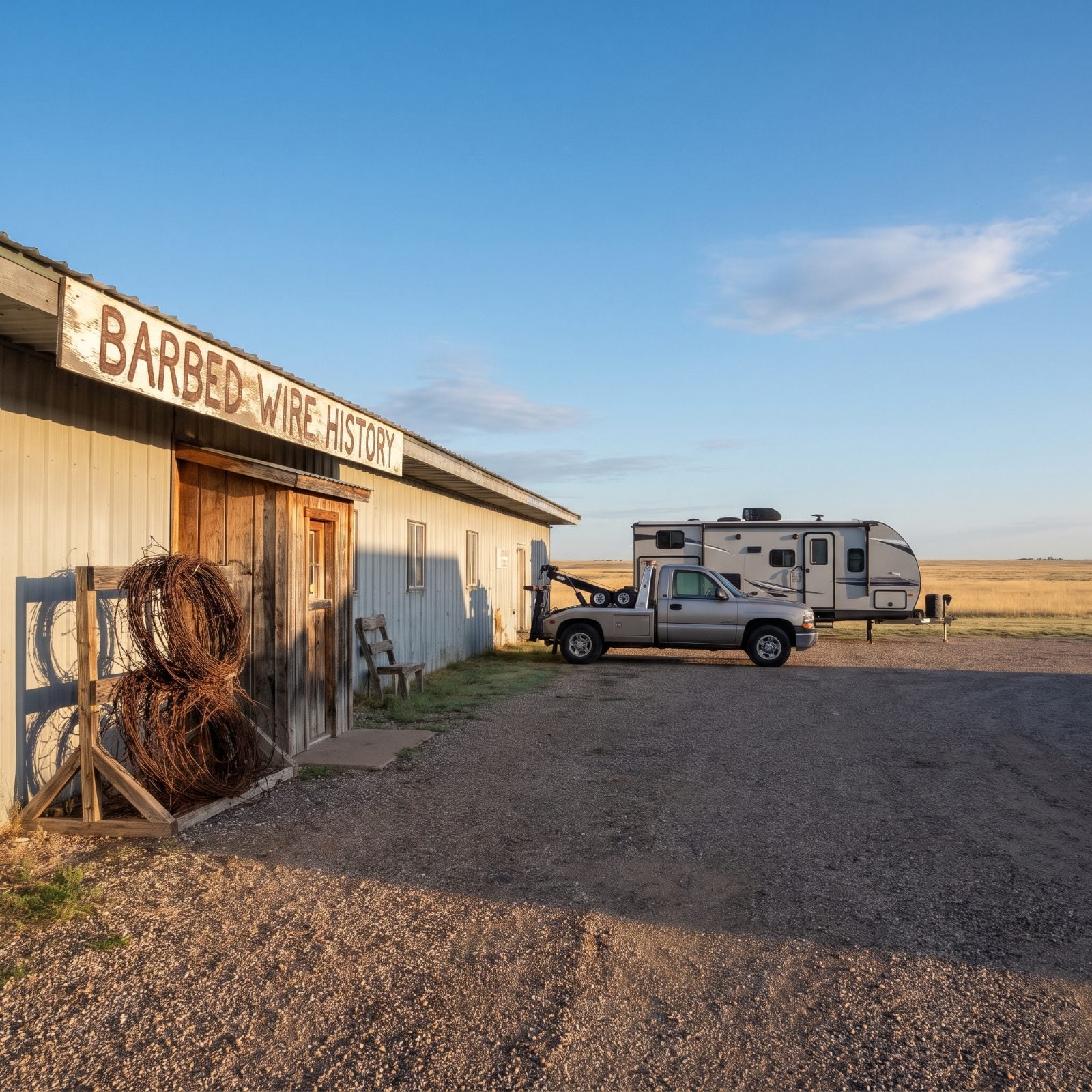
A museum about barbed wire sounds like a punchline until you walk in. Then you realize fencing is the story of the West, and this place has hundreds of varieties mounted on boards like butterflies, each one patented by someone sure they’d invented the better snag.
The building shares space with a Route 66 exhibit, so you get two for one. Admission is free, donations welcome. That gravel lot out front swallows a decent-sized rig without trouble, which matters in a town this small where options are thin. Give it an hour. You’ll leave knowing more about wire than you ever planned to, and oddly glad about it.
7. Enchanted Trails RV Park and Trading Post in Albuquerque, New Mexico
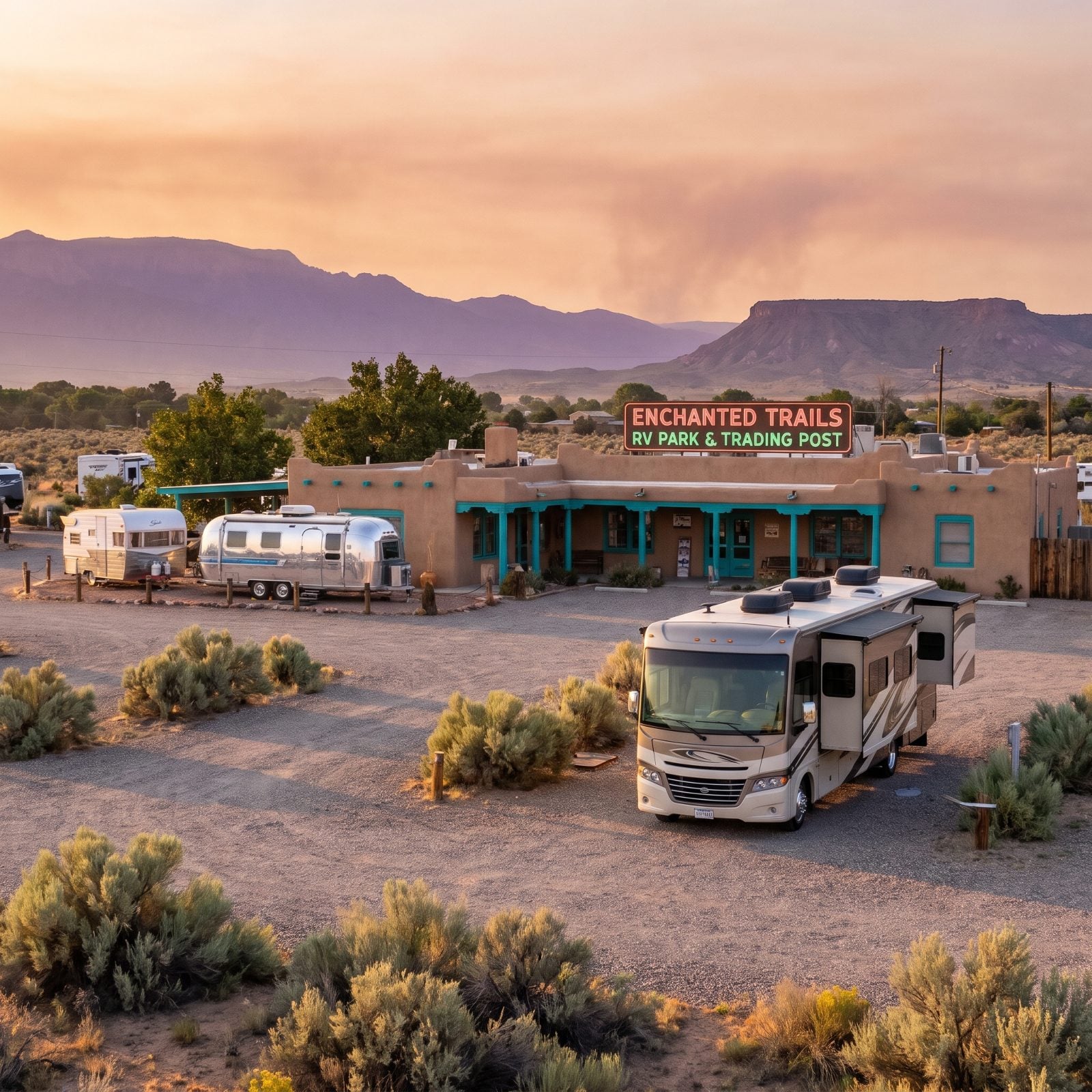
Some Route 66 stops are worth a photo. This one you sleep at. Enchanted Trails sits on the old alignment west of Albuquerque, a former trading post turned full-hookup park with pull-throughs long enough for big rigs and a couple of restored vintage trailers parked out front like mascots.
Book ahead in spring and fall. Balloon Fiesta season fills the whole city, and this park goes fast. The staff know the road history cold and will point you to the next stretch of oddities. Rates run reasonable for a city-adjacent park with real hookups.
6. Red Rock Park and Campground in Gallup, New Mexico
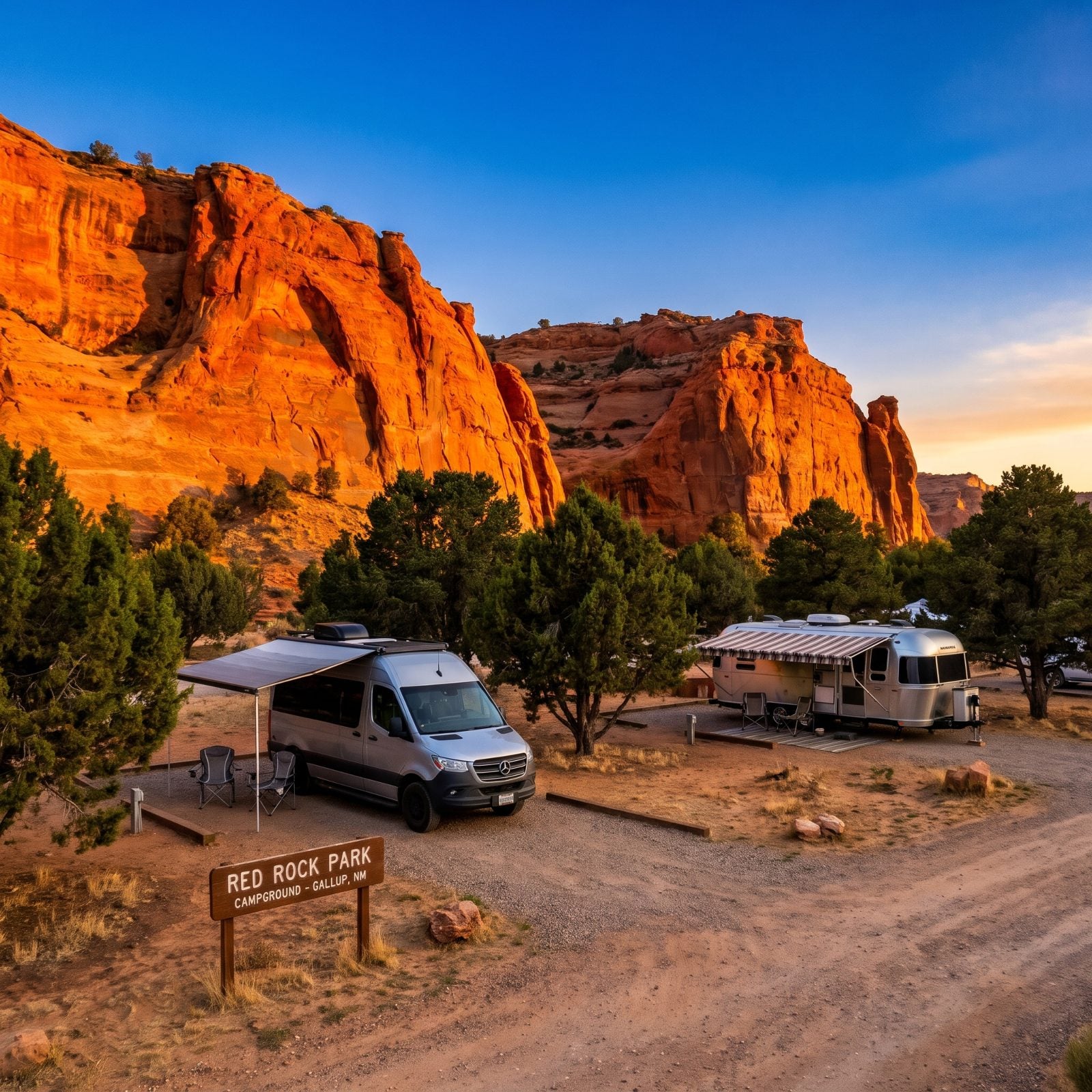
The cliffs here do the heavy lifting. Red Rock Park sits a few miles off the old road outside Gallup, and the sandstone walls turn the color of a struck match when the sun drops. It’s city-run, so prices stay honest and the sites are generous.
Electric and water hookups are available at many sites, though not all, so check when you reserve. Big rigs fit, but a few sites favor smaller setups, and the gravel can get soft after rain. The park hosts a balloon rally and intertribal events through the year — either a draw or a reason to time your visit, depending on how much quiet you’re after.
5. The Jack Rabbit Trading Post Near Joseph City, Arizona
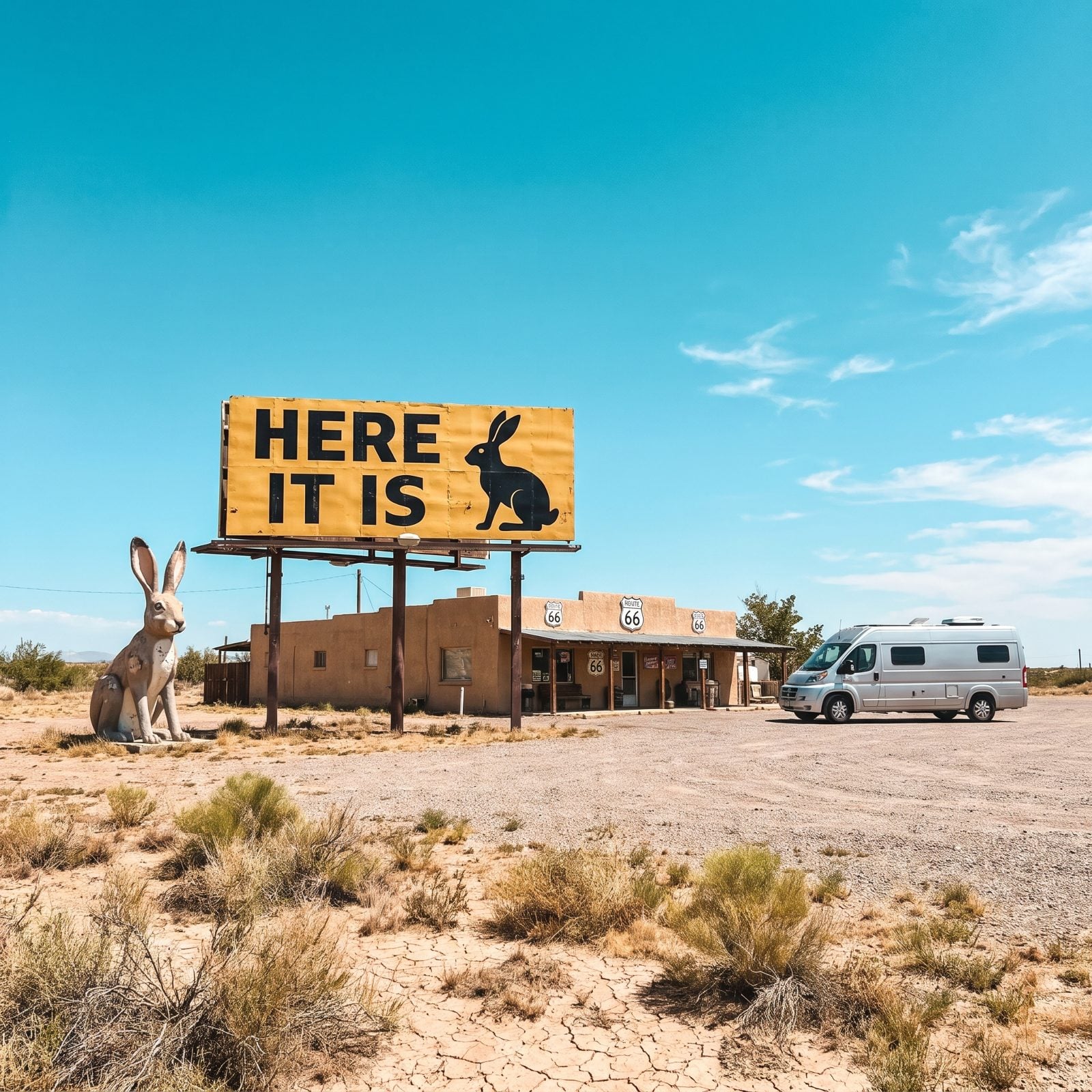
“HERE IT IS.” Two words and a black rabbit on a yellow billboard, and somehow it’s one of the most photographed signs on the whole route. The Jack Rabbit Trading Post has been selling cold drinks and jackalope postcards since 1949, and the giant fiberglass rabbit out front exists purely so you’ll climb on and grin.
Quick stop, free to visit, with a wide gravel lot that handles a van or trailer fine. Buy something small while you’re there. These places survive on cheap t-shirts and travelers who understand that keeping the lights on is what matters.
4. Grand Canyon Caverns RV Park Near Peach Springs, Arizona
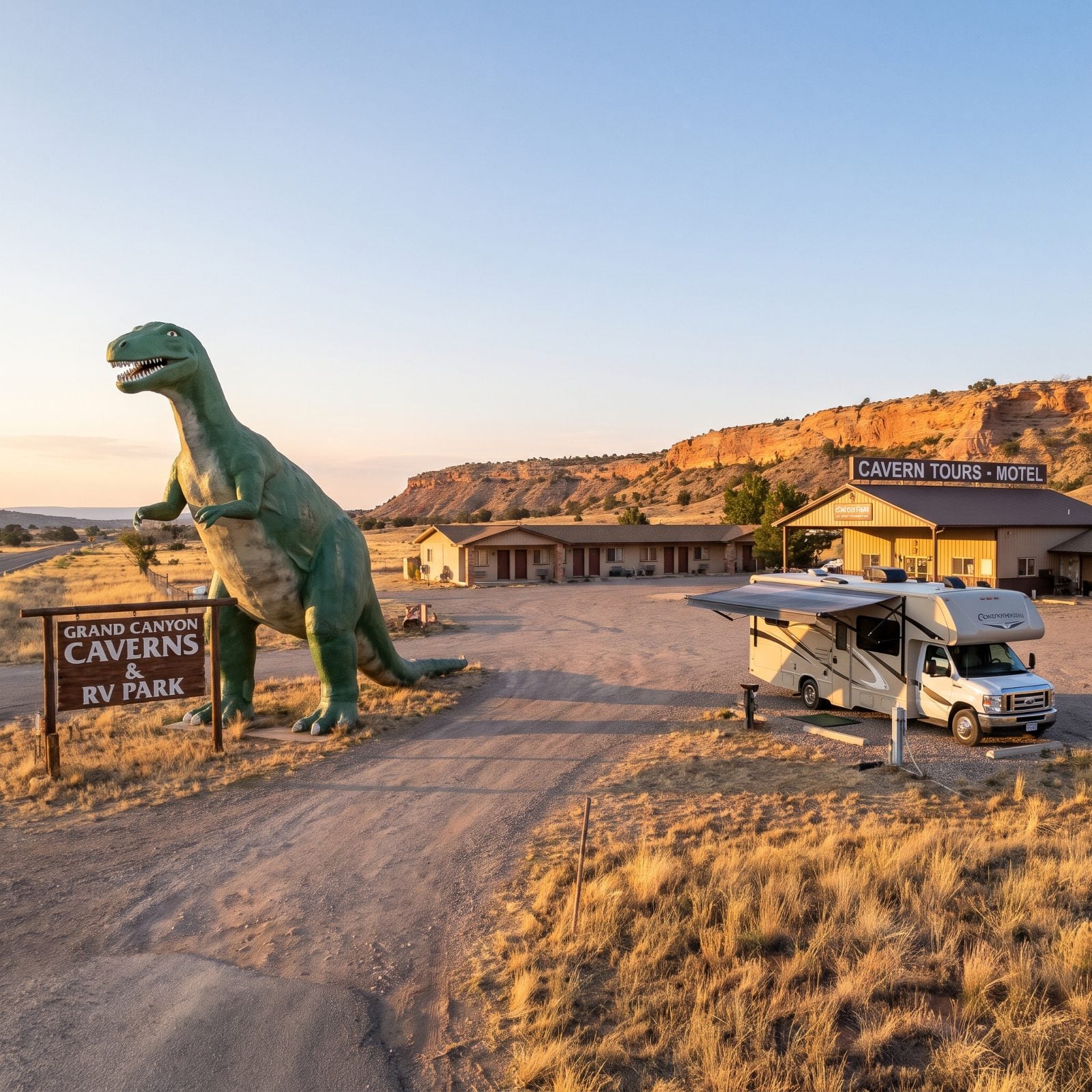
This is where the empty part of Route 66 pays off. Grand Canyon Caverns sits on the longest unbroken stretch of the old road still drivable, way out past Seligman, with a big green dinosaur guarding the lot and the largest dry cavern in the country underneath it.
The RV park offers hookups, and the sites are flat and roomy — which the surrounding nothing makes very welcome. Cell service is thin to none out here, so download your maps first. The cavern tour runs year-round and holds a steady 56 degrees down below, a gift in an Arizona July.
3. The Arizona Route 66 Museum in Kingman, Arizona
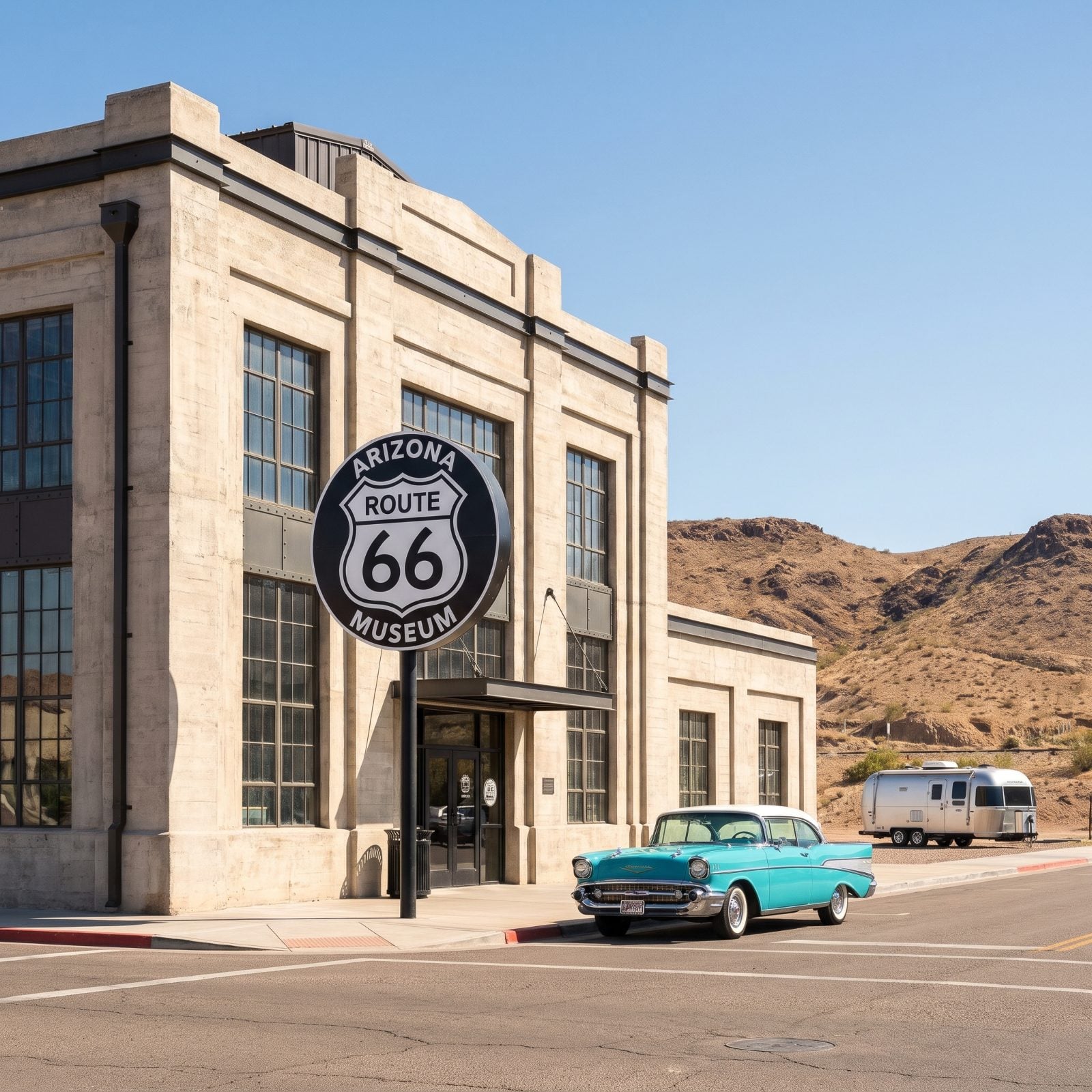
Housed in Kingman’s old powerhouse, this museum actually tells the road’s full arc — wagon ruts, the Dust Bowl migration, the neon heyday, and the slow death by interstate. The dioramas and restored vehicles are well done, and the whole thing takes maybe ninety minutes.
Kingman makes a solid overnight. Downtown has RV-friendly parking nearby and several full-hookup parks on the edges of town. Admission is modest and covers the adjacent visitor center too. And if you’ve been chasing muffler men and giant rabbits across three states? This is where it all clicks into a timeline.
2. Petrified Forest National Park and the Painted Desert, Arizona
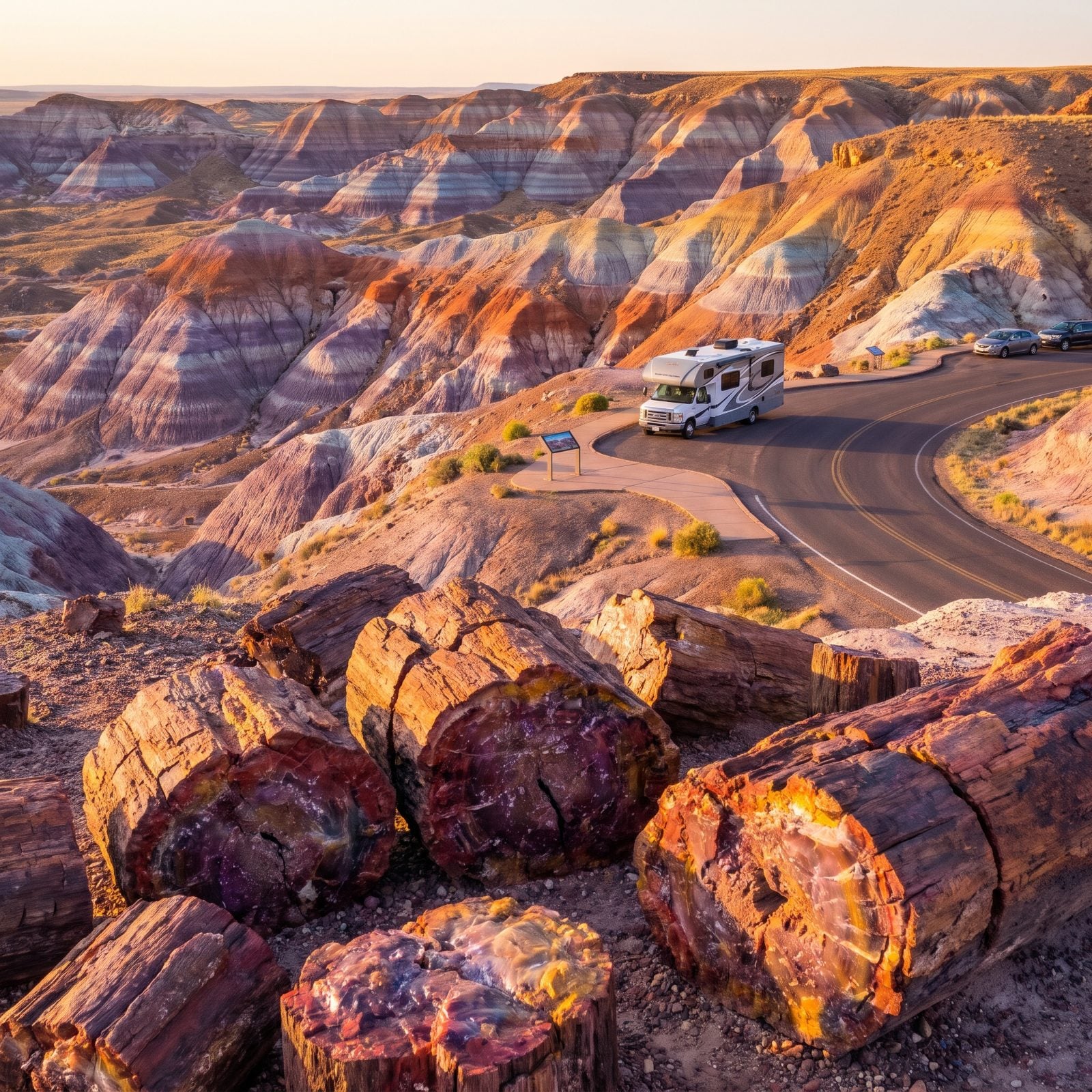
The only national park the old route runs straight through. A 28-mile paved road connects the Painted Desert overlooks in the north to the petrified logs in the south, and it’s an easy drive for any rig at a relaxed pace.
Here’s what trips people up: there’s no overnight RV camping inside the park. You pass through, you gawk, you exit, and you sleep in Holbrook or Winslow. Backcountry tent permits exist, but that’s a different trip entirely. Do the drive in late light. The badlands go the color of a bruise that’s healing, lavender and rust and gold, and the petrified wood glitters like someone spilled a jewelry box across the desert.
1. Peggy Sue’s 50’s Diner in Yermo, California
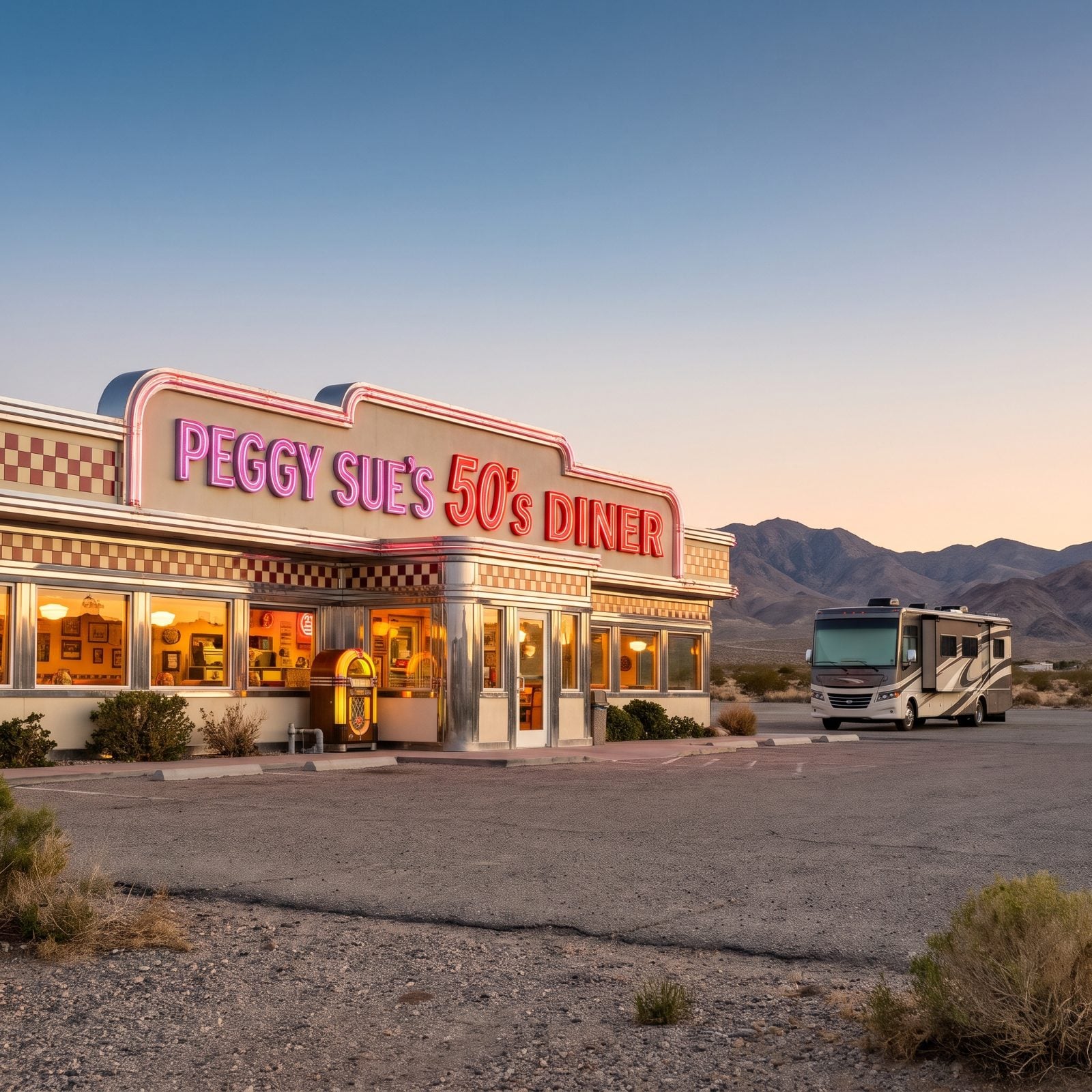
Near the California end, out in the Mojave where the heat shimmers off the asphalt, Peggy Sue’s leans all the way into the chrome-and-jukebox fantasy. There’s a diner, a gift shop, a dinosaur-dotted pond out back called the Diner-Saur park, and enough neon to guide you in from a mile off.
It’s a favorite stop for one practical reason: the lot is big. Really big. You can swing a Class A in without a three-point turn, which is rare this close to Vegas-bound traffic. Food is roadside American, portions are large, and the air conditioning alone earns the stop in summer.