
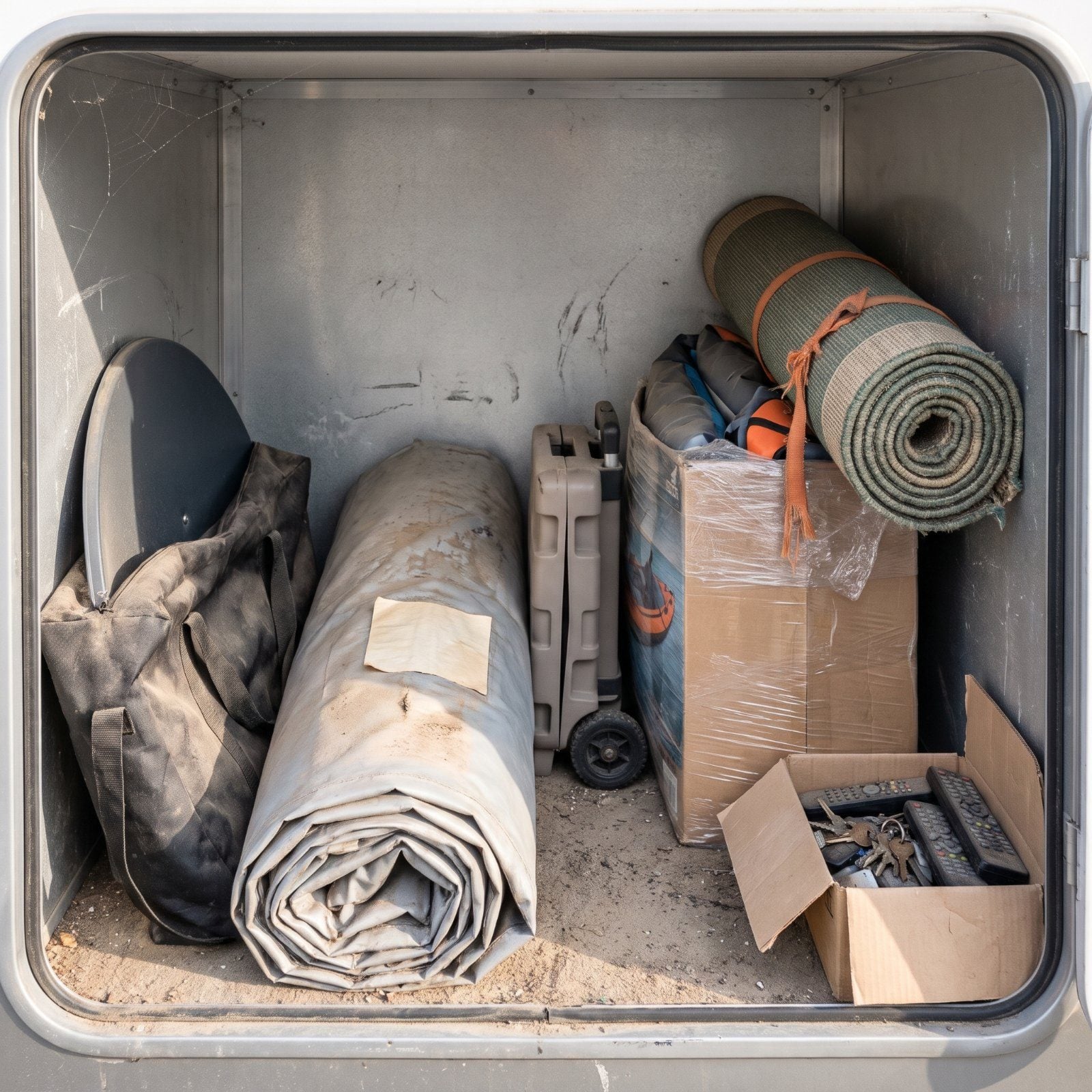
Open the pass-through bay on most rigs and something falls out that hasn’t been touched since the dealership lot. Not junk, exactly. Good gear. Expensive gear, bought with real intentions on a hopeful afternoon. The problem is intentions don’t weigh anything, and the gear does. Every pound you haul to a campsite and back burns fuel and eats cargo capacity you could spend on something you’ll actually use. We’ve all got a few of these ghosts riding along. Here are the usual suspects, and how to tell which ones have earned their eviction notice.
Please note that some of the images in this article were created with the assistance of AI.
35. The Expensive RV Cover Still in Its Original Box

Two hundred dollars of breathable fabric, bought to protect the roof from UV, still creased in its factory folds.
Here’s what nobody tells you: installing a full cover on a 30-foot trailer is a two-person job involving a ladder, wind you can’t control, and a lot of saying words you wouldn’t say in front of your grandkids. If your rig lives under a carport or you camp year-round, the cover protects nothing but the inside of its box.
Keep it only if you store outdoors in harsh sun or snow and you’ll actually wrestle it on. Otherwise it’s insurance on a policy you never file.
In the words of a lifelong RV camper who has owned several rigs, “On a tall travel trailer, fifth wheel, or motorhome, it’s usually a two-person, two-ladder job, though it gets easier with practice.”
34. The Screen-Room Enclosure That Never Gets Attached
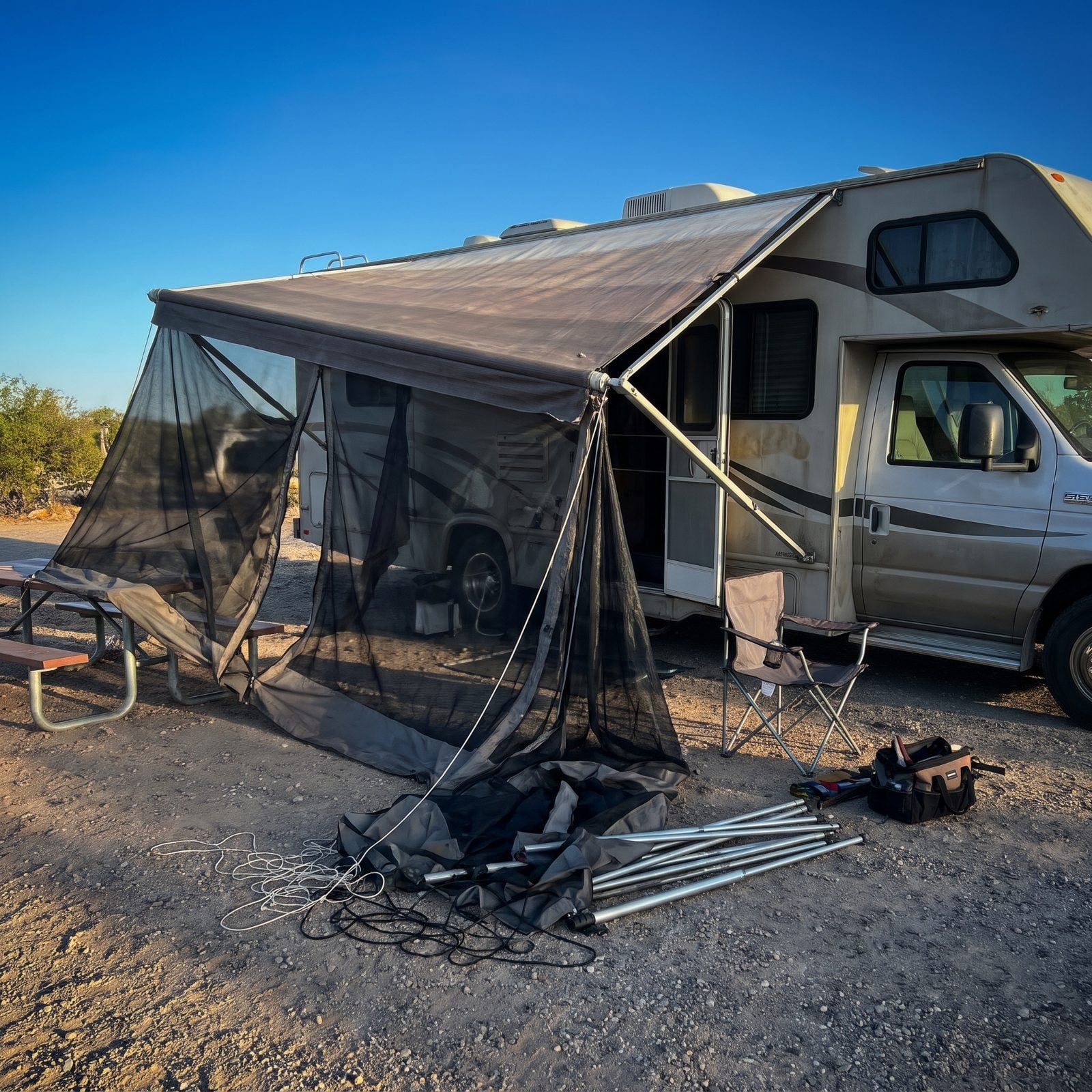
It promised bug-free evenings under the awning. The reality is forty minutes of threading tracks, zipping panels, and staking corners before you can sit down with a drink, by which point you’ve been bitten six times and lost the mood entirely.
Screen rooms earn their space on long stationary stays at buggy lakeside sites where you’re parked a week. For weekend hops, you’ll never set it up. A couple of clip-on tabletop bug fans and a good repellent handle most of what this does, at a fraction of the bay space.
33. The Portable Waste Tote That Has Never Made a Dump Run
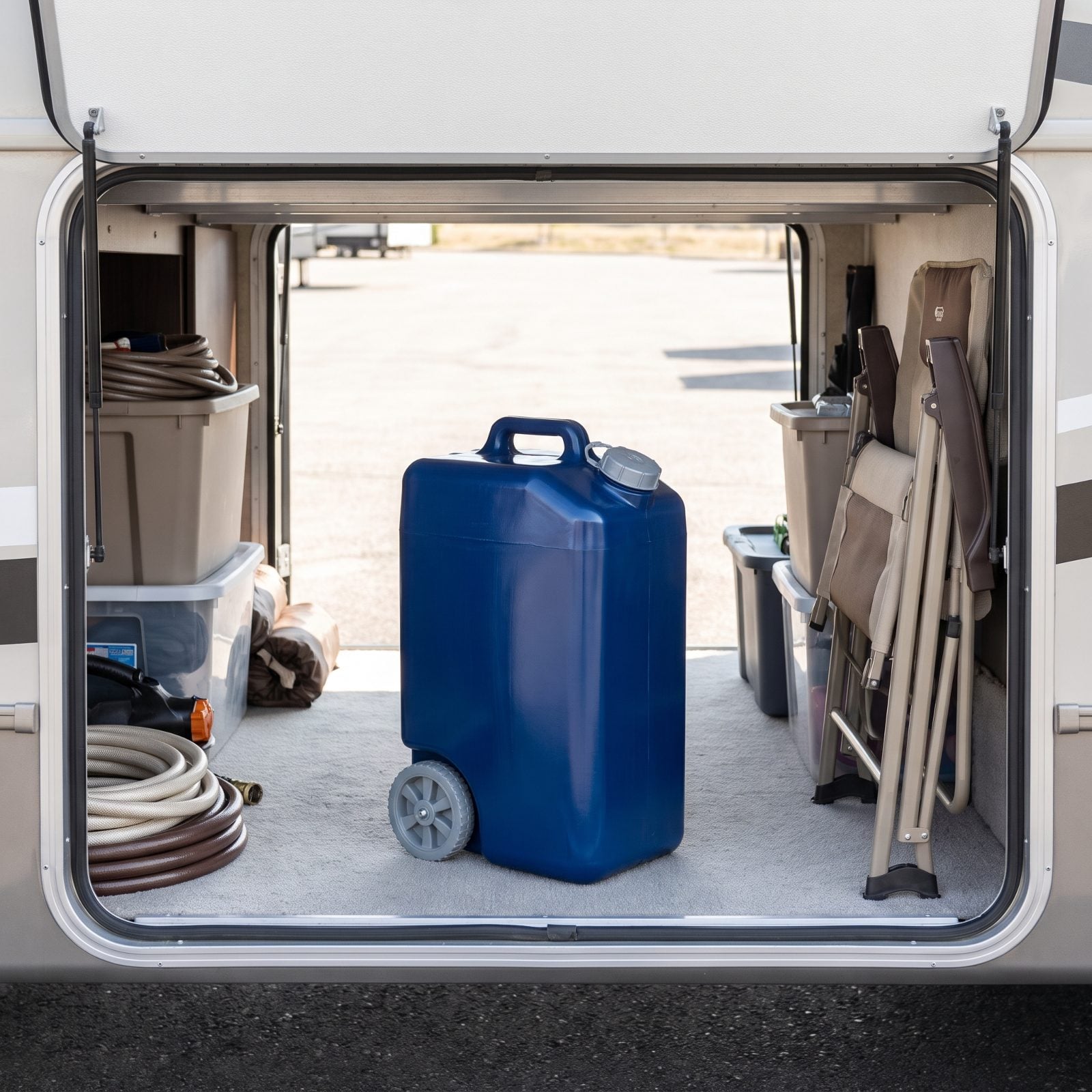
A blue boy tote only earns its keep if you boondock or stay long enough at a hookup-free site that your tanks fill before you move. Camp with full hookups, or never go more than a few nights between dump stations, and it’s a wheeled reminder of trips you imagined taking.
As one longtime RV camper who has lived in both motorhomes and travel trailers puts it, “If you’re a weekend warrior, you probably don’t need an RV tote tank”
32. The Heavy Outdoor Rug That Is Too Much Trouble
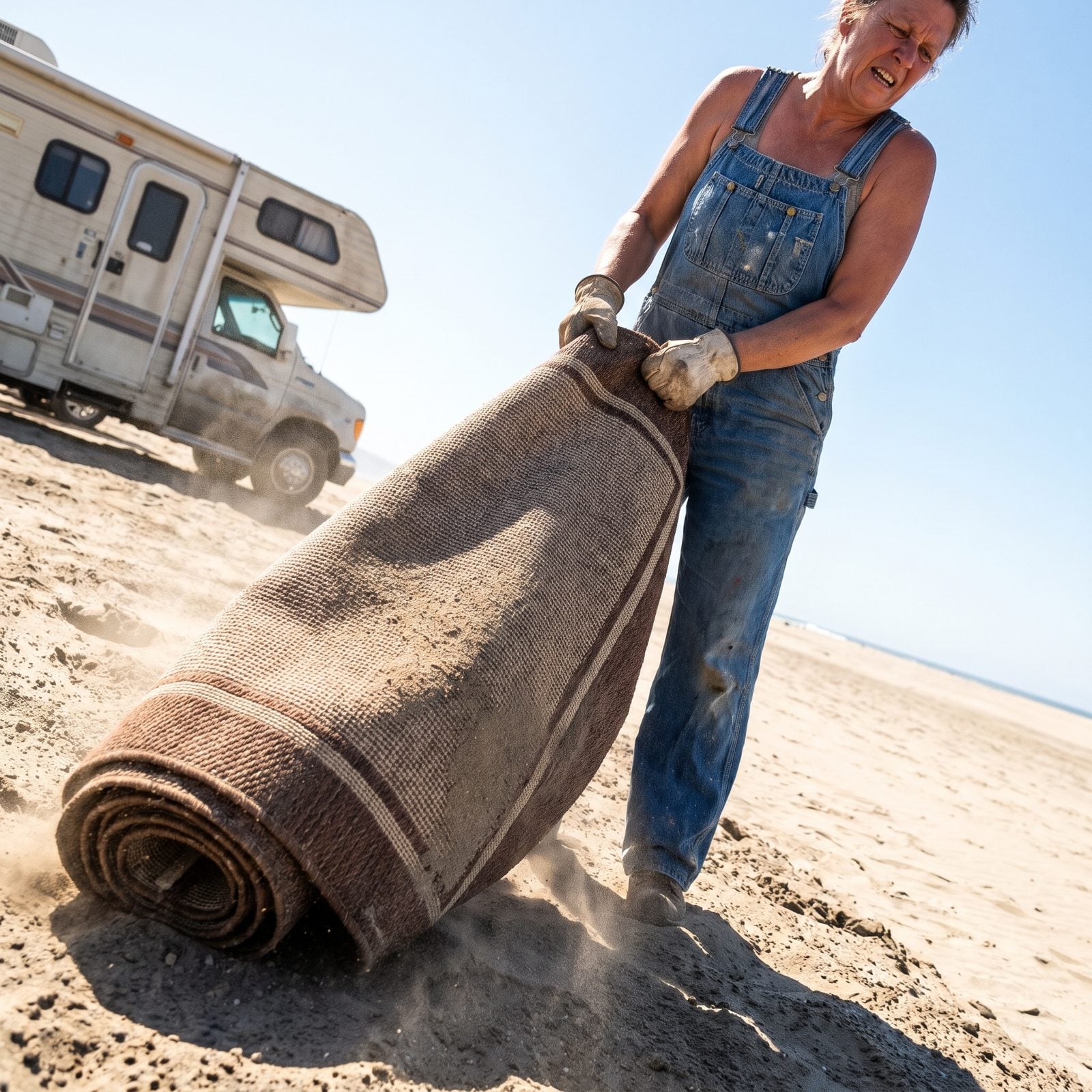
Looks great unrolled. The trouble is the roll weighs a ton, drags in sand, and comes home every time coated in whatever the last site threw at it, so you leave it packed.
Plenty of owners do this for two full seasons before swapping to a lighter interlocking mat that shakes clean in seconds. If your big woven rug has become a chore you skip, that’s not laziness. That’s the rug being wrong for how you camp. A smaller foldable mat you’ll actually put down beats a grand one that lives in the bay.
31. The Box of Mystery Keys and Remotes From Previous RVs
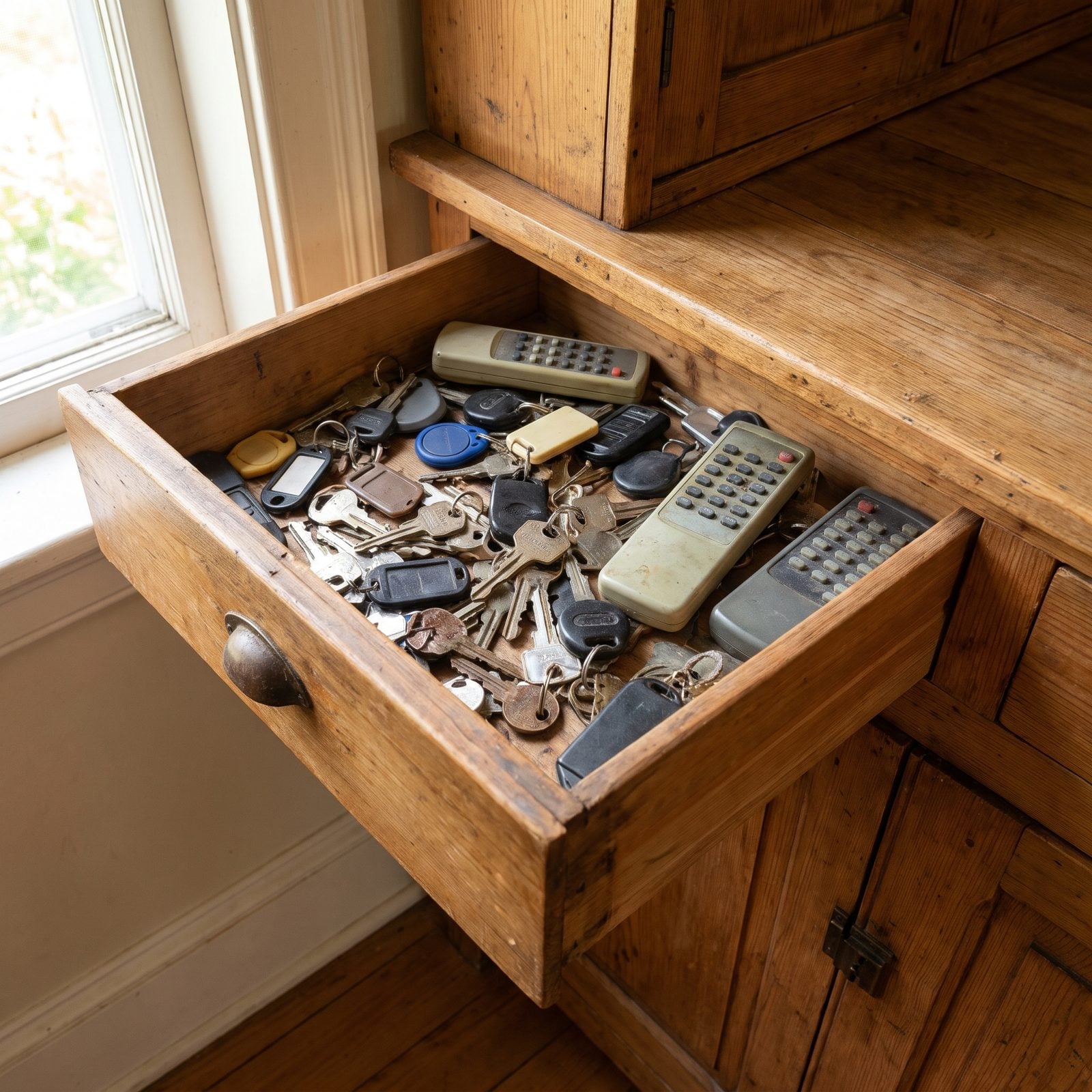
Every RVer has this drawer. Keys to hitch locks you sold, fobs for a slide awning two rigs back, a remote whose device left your life years ago.
You keep them because throwing away a key feels reckless, like it’ll be the one you needed. It won’t.
Spend ten minutes with your current locks and devices. Match every key and remote to something you still own. The orphans go in the trash, not back in the drawer. Nobody has ever regretted tossing a remote they couldn’t identify.
30. The Inflatable Kayak That Has Never Seen Water
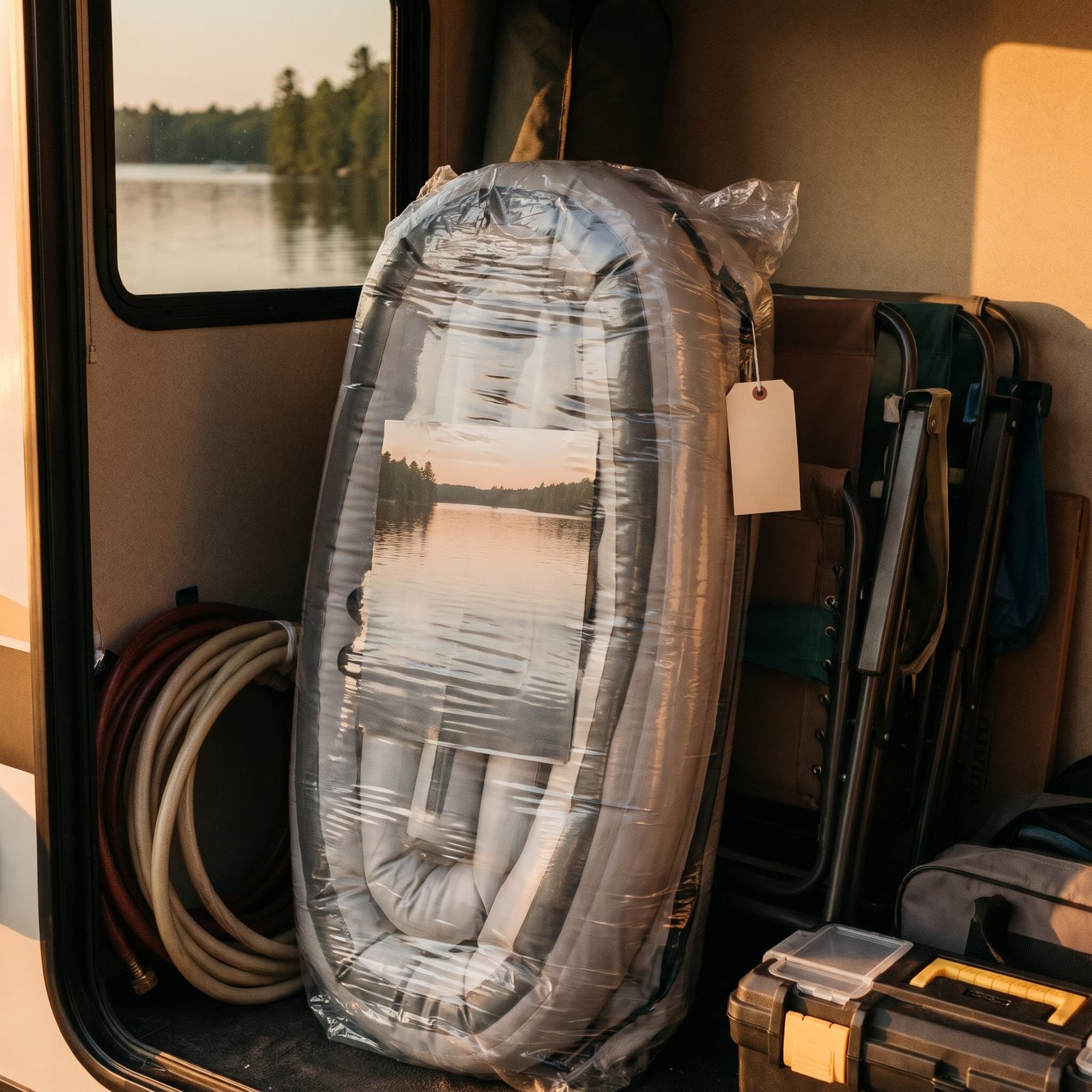
Bought in the glow of a lakeside dream, still shrink-wrapped and leaning against the wall because launching, drying, and repacking it turned out to be an afternoon’s commitment you keep not having.
Inflatable kayaks are wonderful if you camp on water and launch often. For most of us they become a shrink-wrapped promise taking up space in the lakeside garage, slowly souring into guilt.
29. The Outdoor Projector and Movie Screen
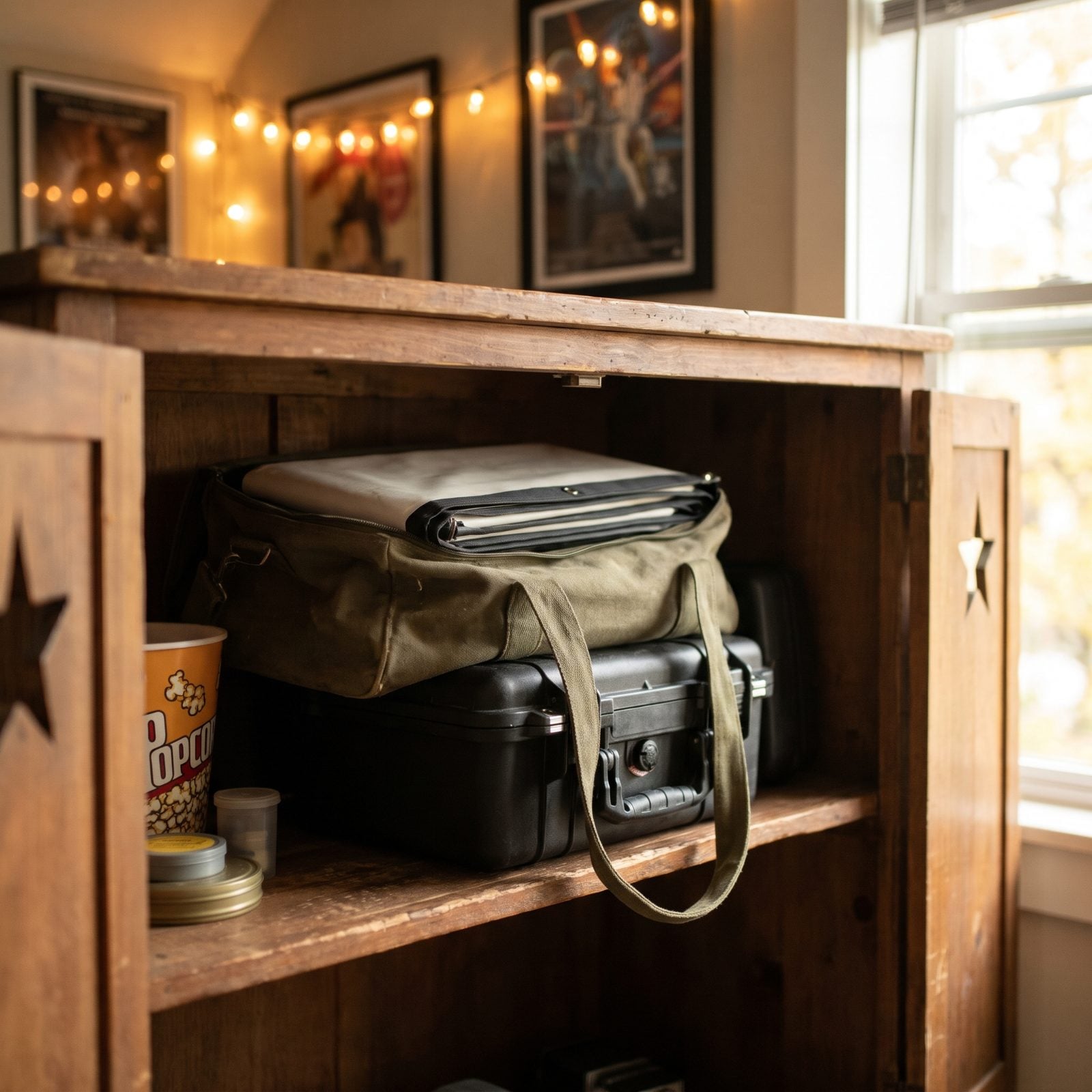
Movie night under the stars sounds perfect until you factor in the screen, the projector, the power, the ambient light that washes everything out until full dark, and the neighbors fifteen feet away at a packed campground.
It works beautifully at a private site with blackout dark and a pile of grandkids. Everywhere else, it gathers dust.
Be honest about the kind of camping you actually do. If you’re mostly at busy state parks with 9pm quiet hours, this setup will never get its night.
28. The Guest Tent That Has Never Hosted a Guest
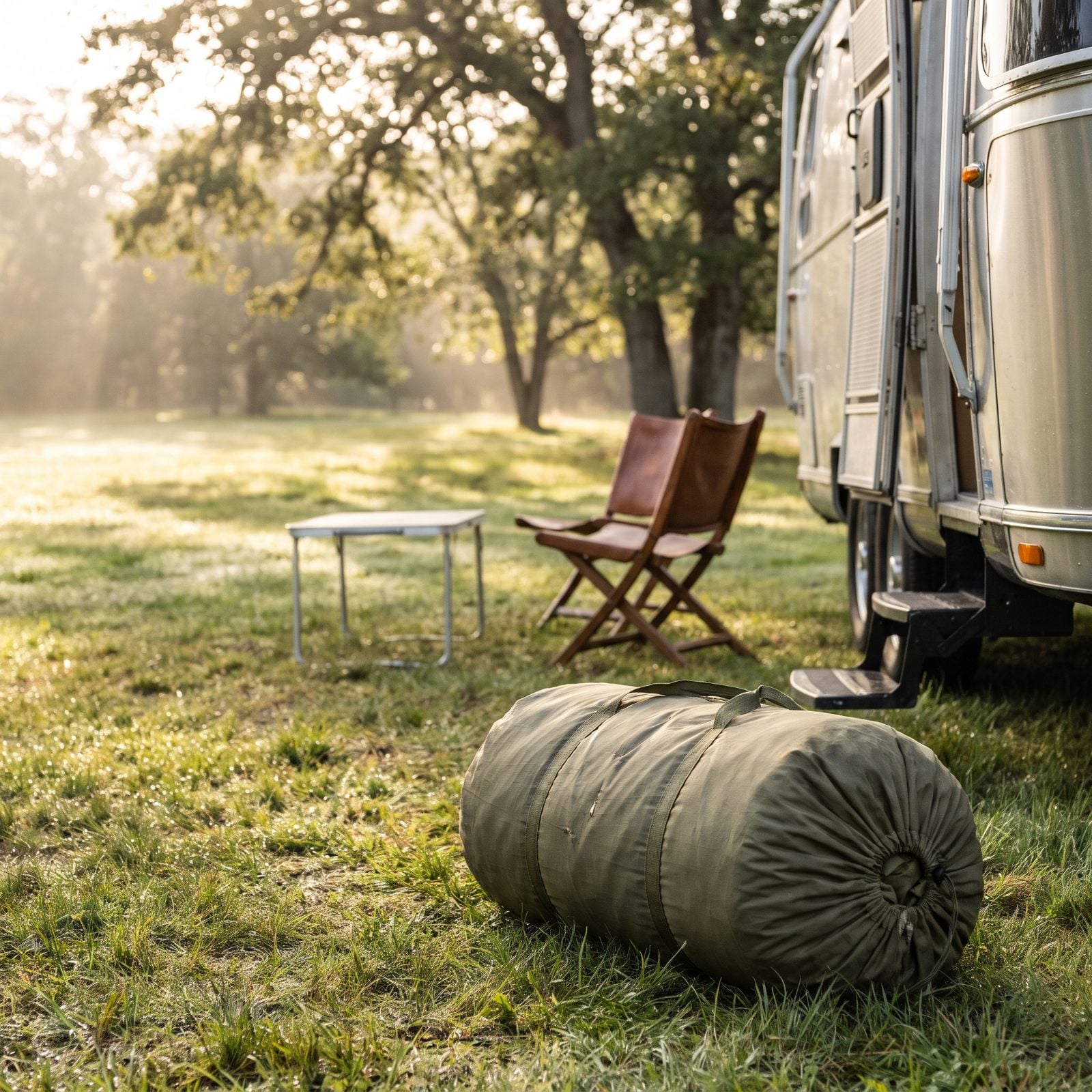
You pictured the grandkids bunking next door, friends joining the trip, a little overflow sleeping quarters. Then everyone who visits either books their own site or sleeps on the dinette, and the tent stays sacked.
Nothing wrong with keeping it if guests are a real part of your plans. But a tent that’s never left its bag through multiple seasons is telling you something about how you actually travel.
If your trips are just the two of you and always will be, let it go to a family starting out.
27. Extra Camp Chairs Saved for Visitors Who Never Come
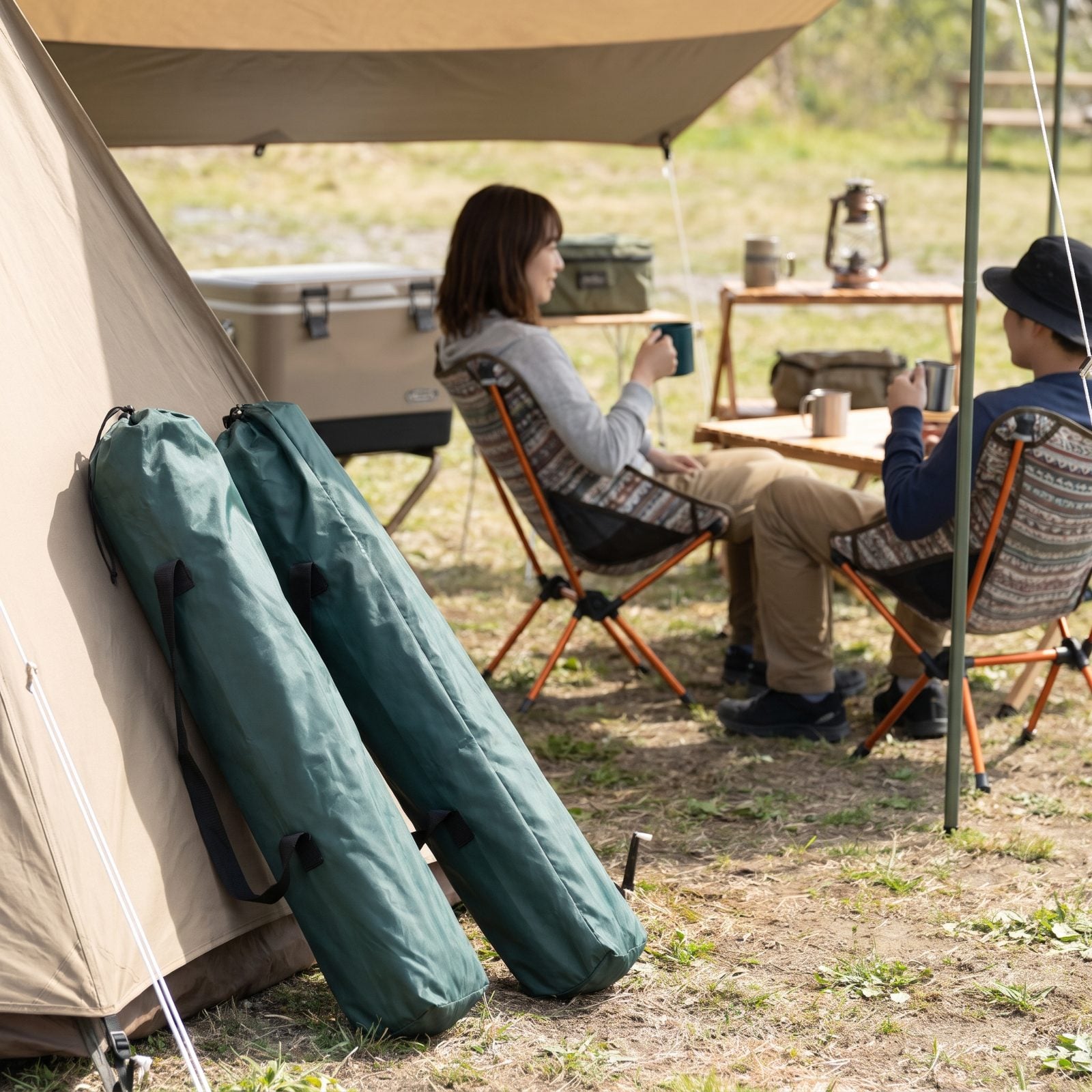
You bought the fourth and fifth chair for the friends who talk about joining you and never do, and they stay bagged, riding in the bay year after year, hogging the exact space you now wish you had for firewood.
Two chairs is the real number for most couples. Keep a third for the occasional guest and let the rest go to a consignment lot or a neighbor’s teenager. Camp chairs are cheap and everywhere, so if company actually shows up, a camp store sells one for twenty bucks.
26. The Pop-Up Canopy That Is Too Hard to Deploy
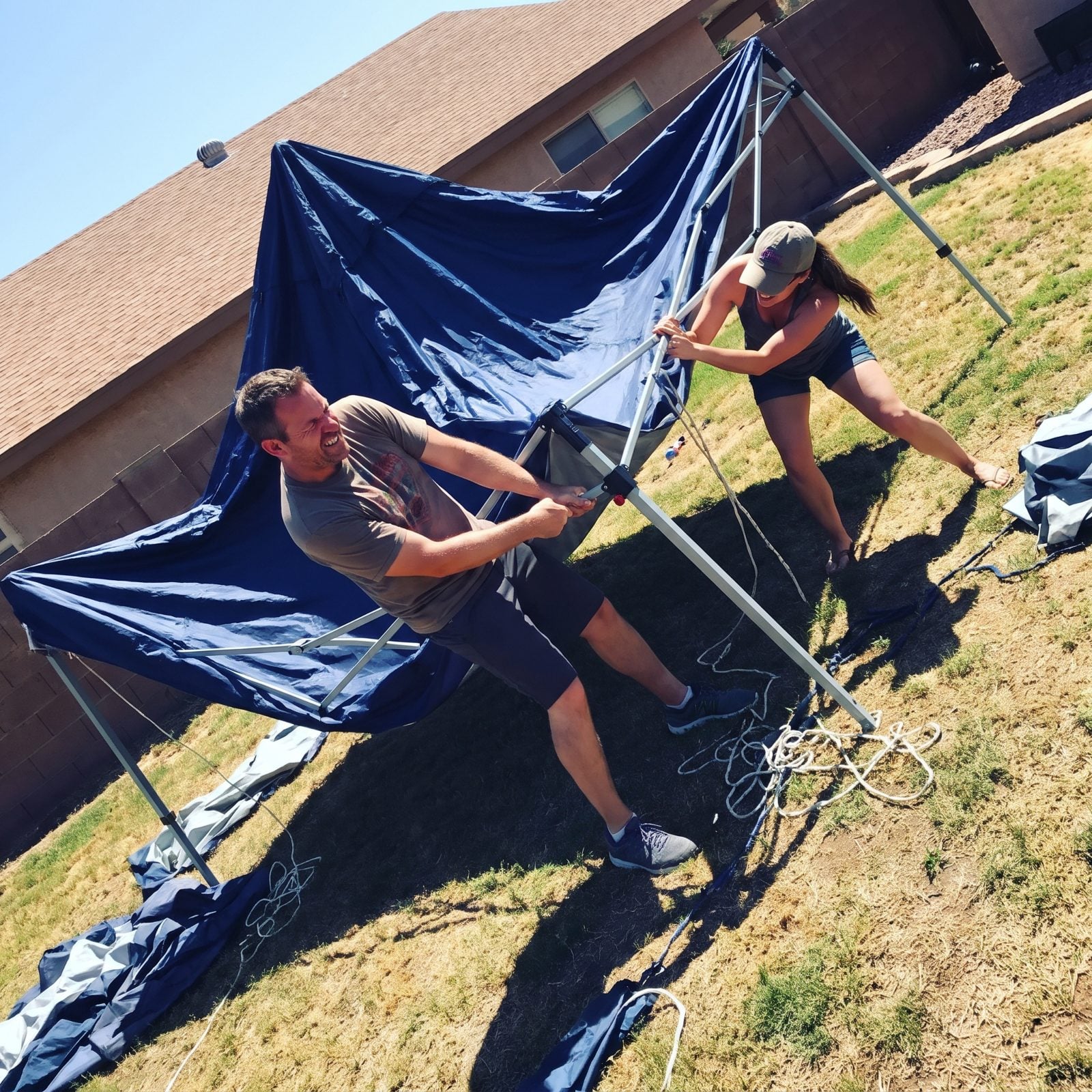
Forty pounds. Two people to raise it. That’s the whole problem. A canopy that takes a wrestling match to put up is a canopy you leave in the bag, and you talk yourself out of shade every single time.
If your rig already has an awning, the pop-up is redundant dead weight, so sell it. If you genuinely camp in open, awningless sites, keep it only if you’ll actually fight it up. Otherwise it’s a forty-pound promise you keep breaking.
25. A Folding Picnic Table When Every Campsite Already Has One
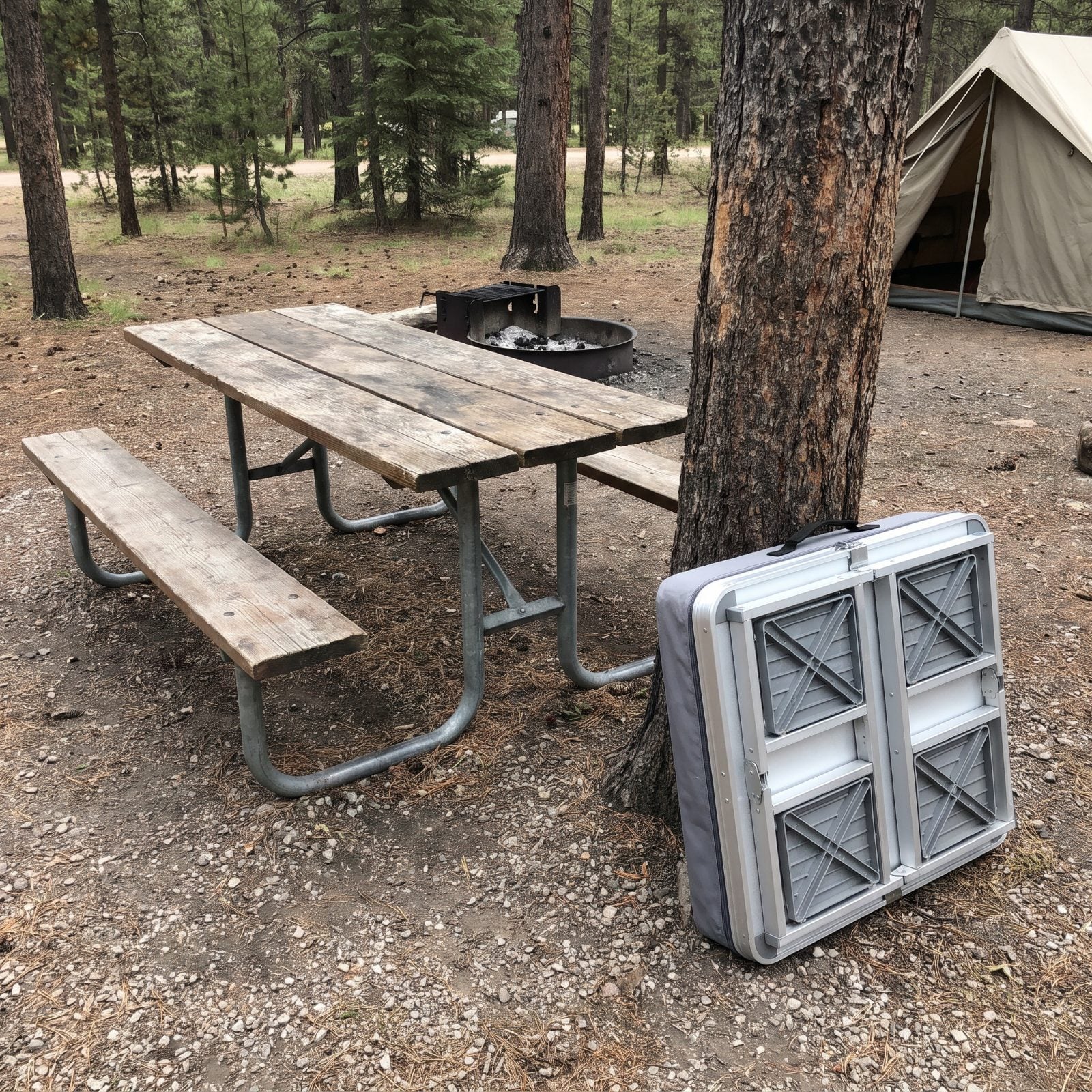
Nearly every developed site, state park, and KOA comes with a concrete or wood picnic table bolted right there, which is the detail nobody mentions when you buy the folding one at the camping show.
The folding table earns its keep in two spots only: boondocking on raw dirt, and parking-lot overnights. Book hookup sites most of the time? It’s redundant. Pull it, store it in the garage at home, and reclaim the bay for something you actually touch every trip.
24. The Freestanding Hammock Frame That Dominates a Storage Bay
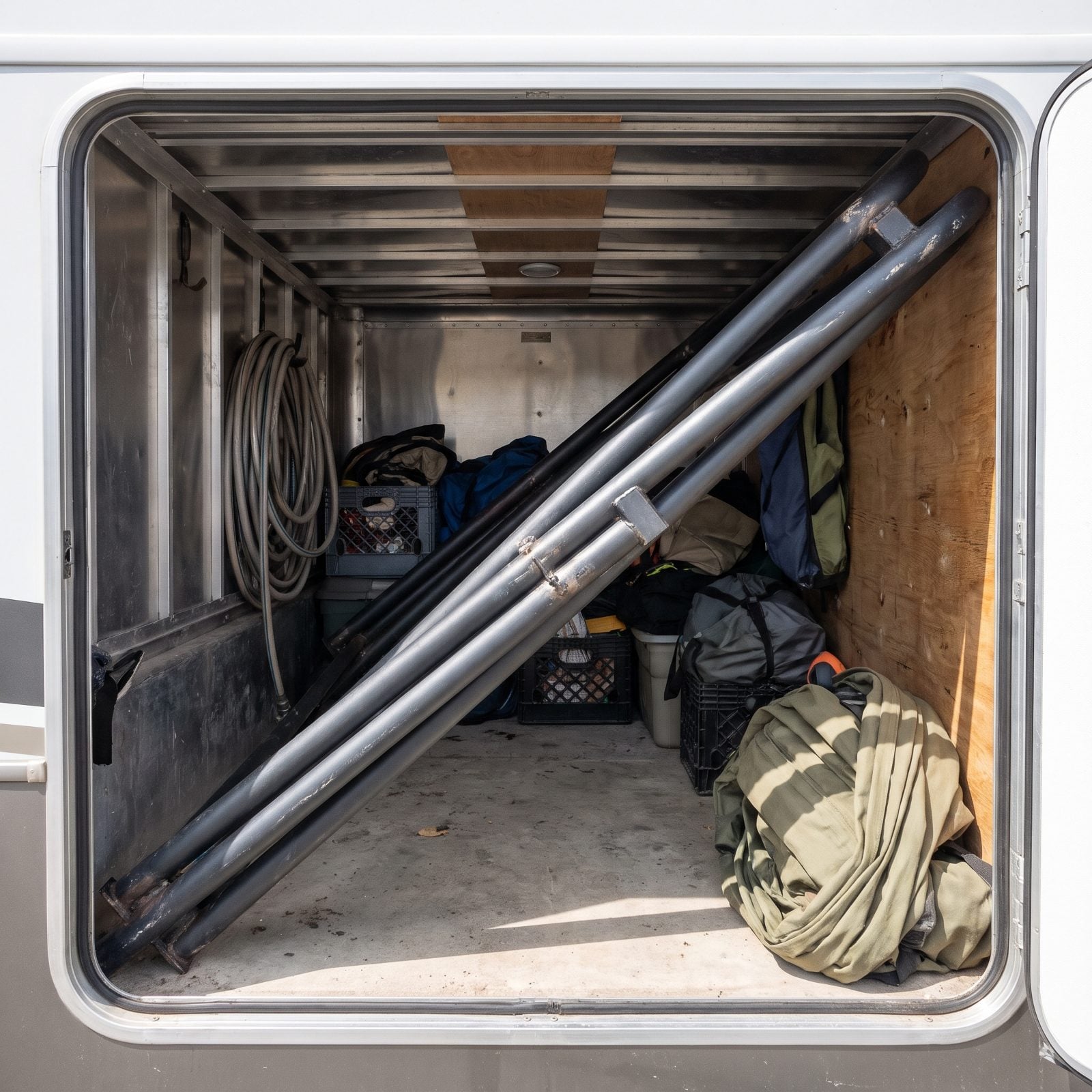
This thing is a space hog, plain and simple. This bundle of long, separate steel pipes leans corner to corner and swallows half your bay because the pieces run nearly its full width, and their flat tab brackets never nest with anything else you carry.
Here’s the honest math. A tree-strap hammock weighs two pounds and packs down to a loaf of bread. If your sites have trees, the frame is pure dead weight. If they don’t, you’re not relaxing in a hammock in a gravel lot anyway.
23. Full-Size Cornhole Boards That Rarely Get Unloaded
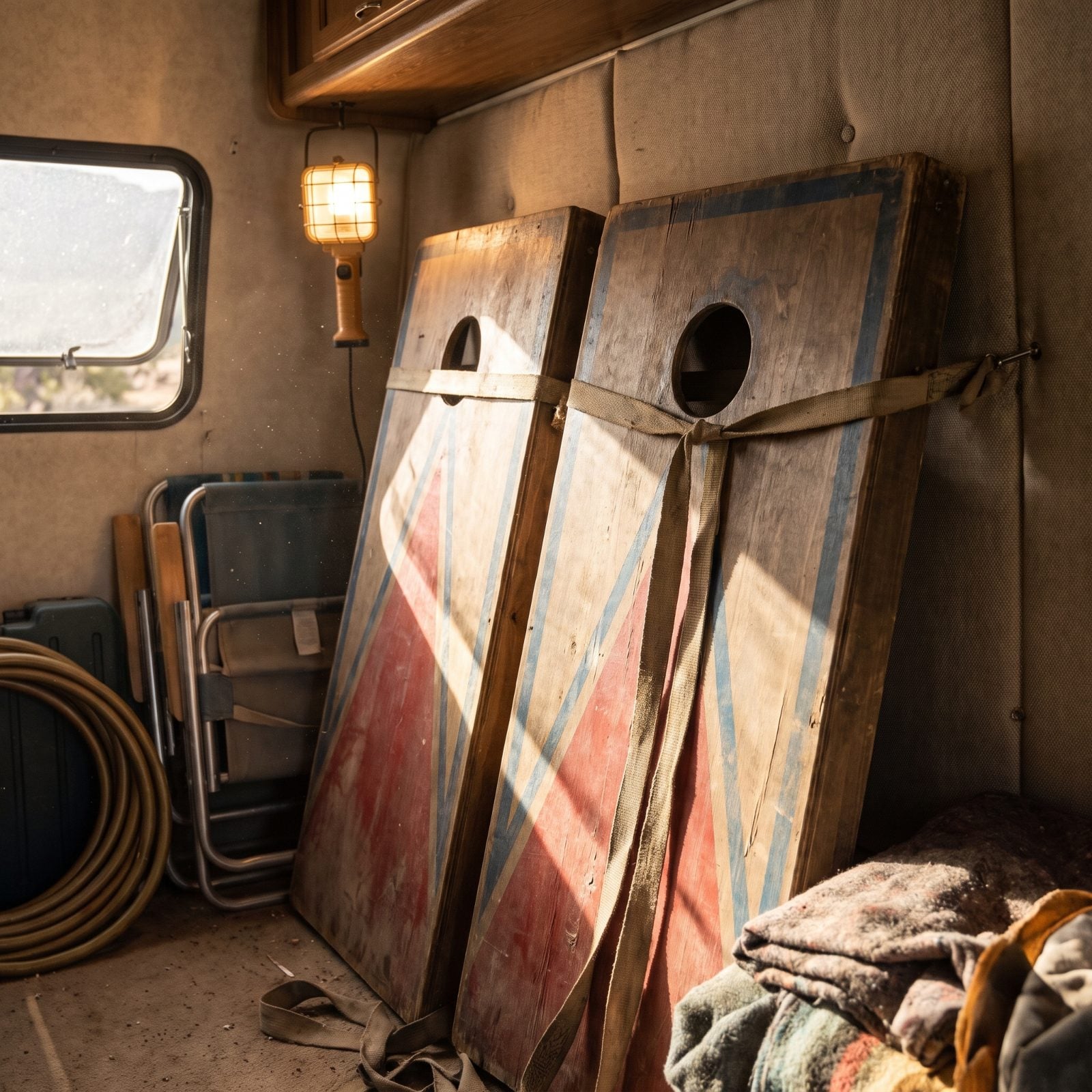
Cornhole is a blast at a tailgate. At a campsite where it’s just the two of you, the boards stay strapped down and you toss nothing.
They’re bulky and heavy, and they only make sense if you roll with a group or caravan with other RVers. For solo couples, a travel-size set or a simple ladder-toss PVC rig takes a fraction of the space and still gives you something to play. Unload the full boards at the next yard sale.
22. Fishing Gear Bought for One Camping Trip
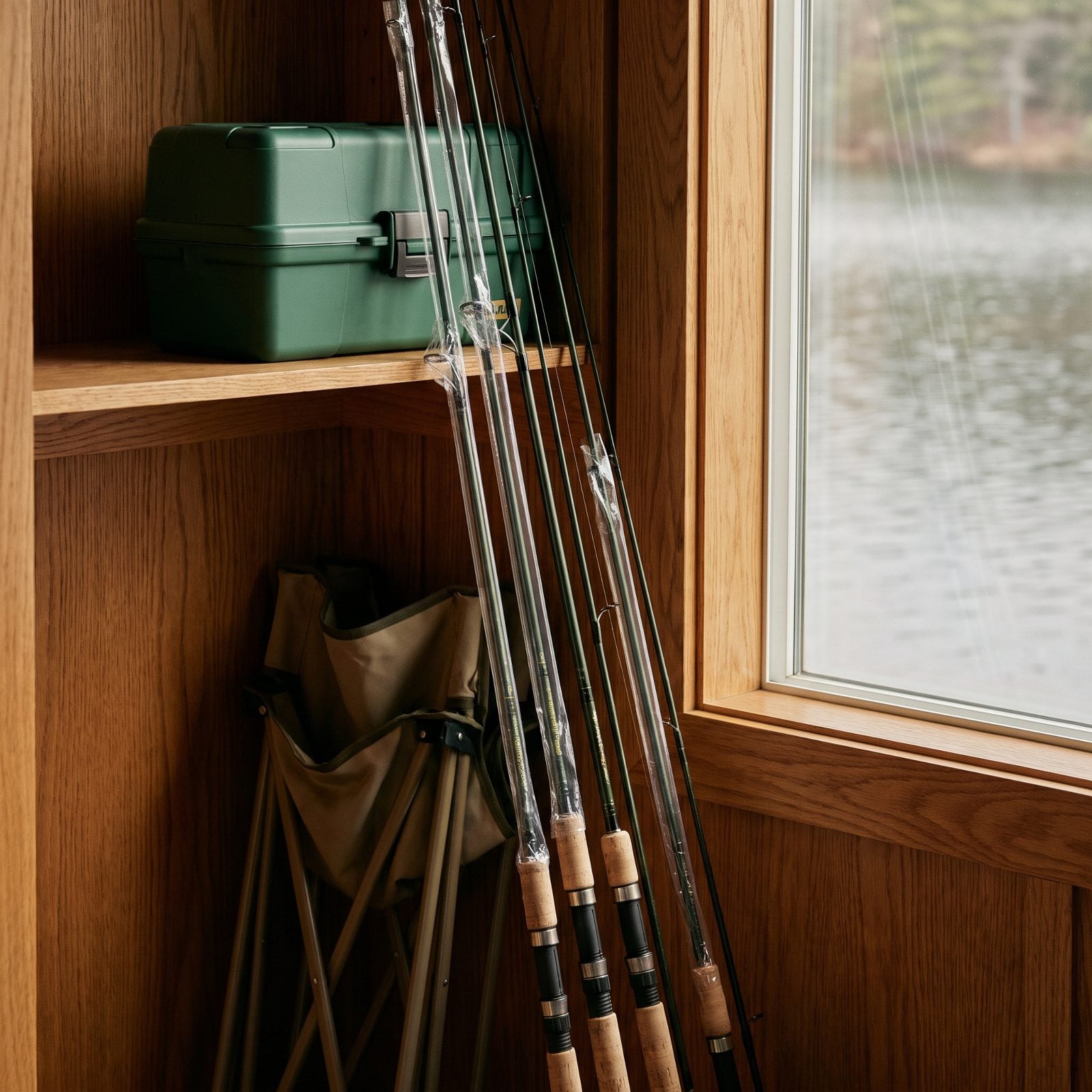
One lake, one afternoon, a sudden conviction that you’re an angler now. Then the rods ride in the closet for three seasons while you never touch the water again.
No shame in it. Fishing gear sounds like freedom, and then real life — campsite setup, cocktails at five — wins instead. If you haven’t cast a line in two camping seasons, you’re not a fisherman. You’re a storage unit for fishing gear. Sell the rods or gift them to someone who’ll actually use them. A license and a rental rod wait at most lake towns if the itch ever comes back.
21. Golf Clubs Hauled Past Dozens of Unplayed Courses
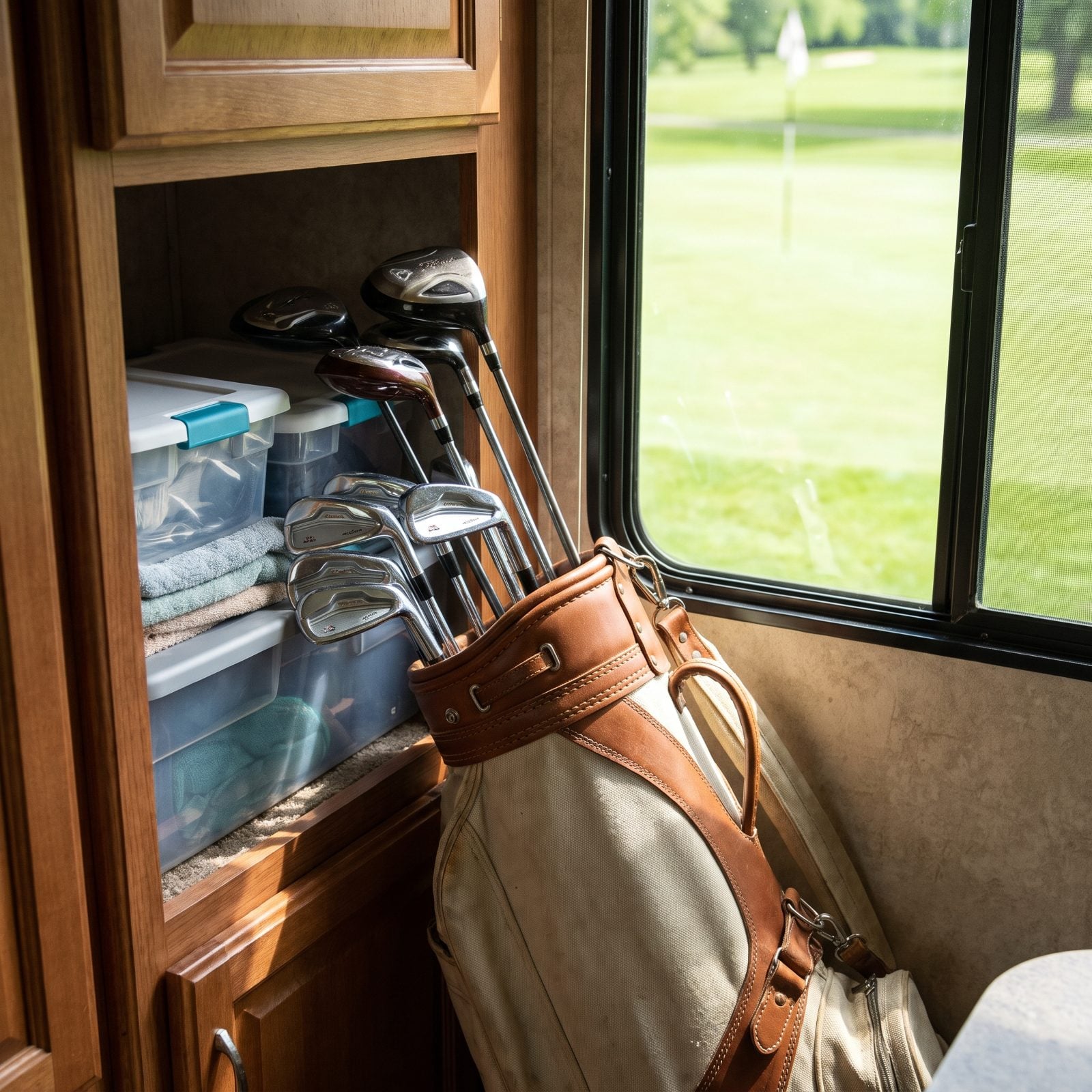
The clubs ride along like a resolution you keep renewing. You pass course after course, swear you’ll play the next one, and the bag stays buried behind the cooler the whole trip.
Golf clubs are long, heavy, and awkward — about the worst shape for RV storage there is. So be honest about how you actually spend camp days. If golf is a real part of your travel, keep them up front where you’ll grab them. If it’s an intention rather than a habit, courses near destinations rent decent sets for the rare round.
20. The Guest Air Mattress and Sleeping Bags That Never Leave Storage
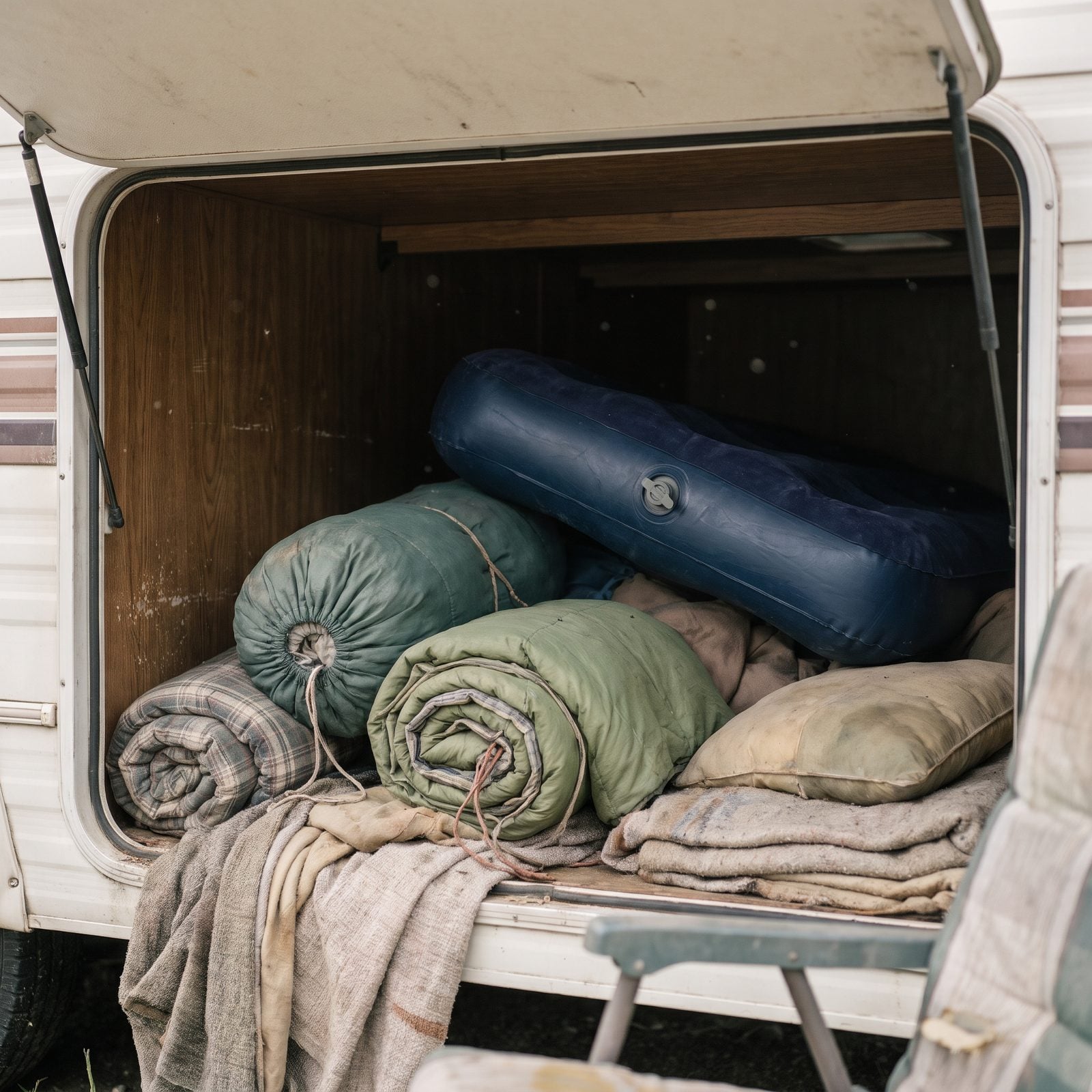
Bought for the grandkids who stayed over once, or the friends who were going to caravan with you. The air mattress has sat there in its bag ever since, hogging space and never slept on.
An RV sleeps who it sleeps. If guests show up once a year, you don’t need a permanent bed kit riding along in every direction. Keep one compact sleeping bag for emergencies and stash the rest at home. The air mattress (deflated), the pump, the second and third bags — all of it can wait in a closet that doesn’t move at highway speed.
19. The Cast-Iron Dutch Oven That Is Too Heavy to Haul
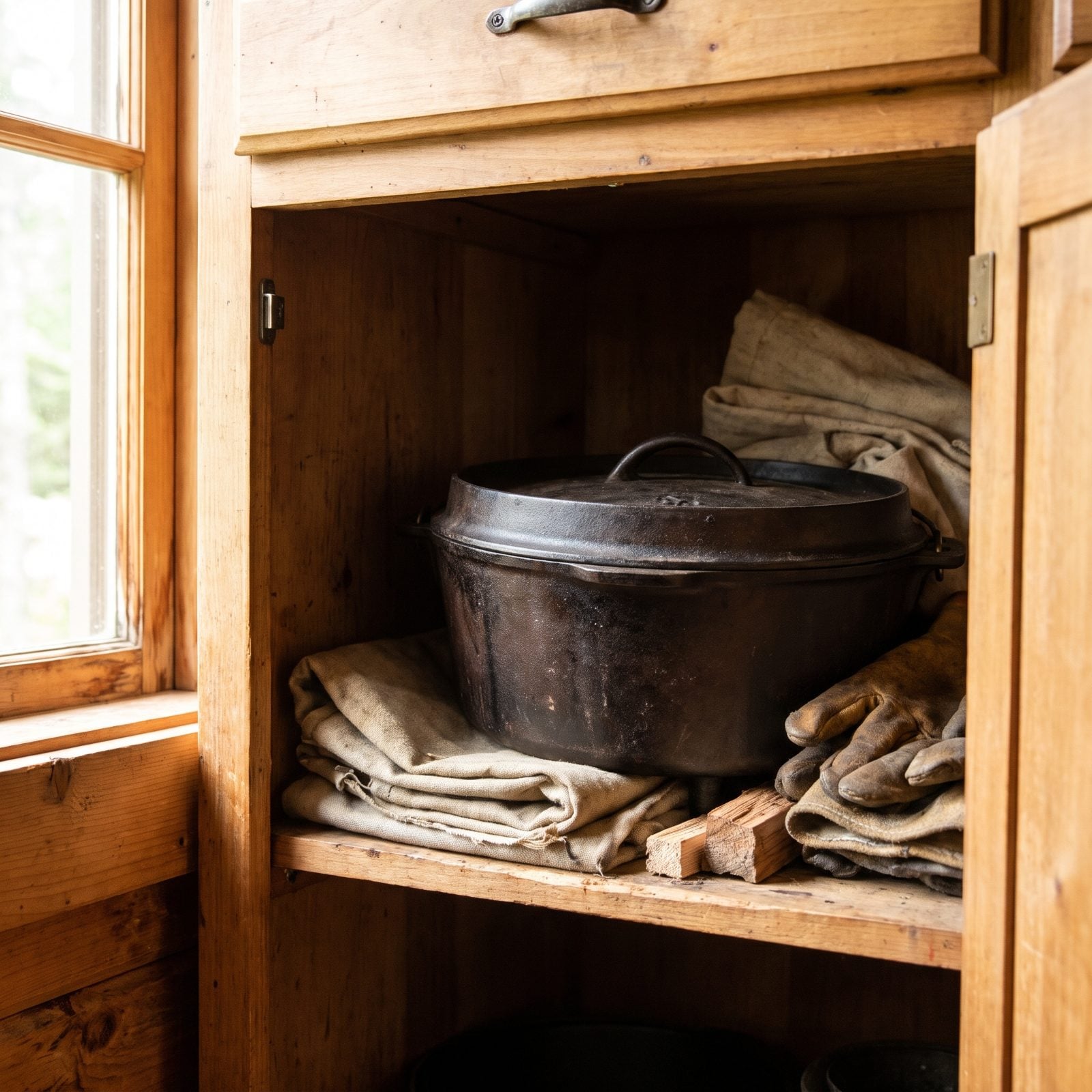
The dream is a bubbling campfire stew. The reality is twelve pounds of iron buried in a bottom cabinet, dragged out maybe once, plus a nagging worry about where all that weight sits relative to your axles.
Cast iron is glorious and genuinely heavy. In an RV, weight is money and tire wear, and a big Dutch oven you use twice a year is a lousy trade. Love the cook? Keep a smaller skillet you’ll actually reach for. And if the oven’s been a museum piece, let it anchor someone’s home kitchen instead.
18. A Bread Maker That Consumes Precious Counter Space
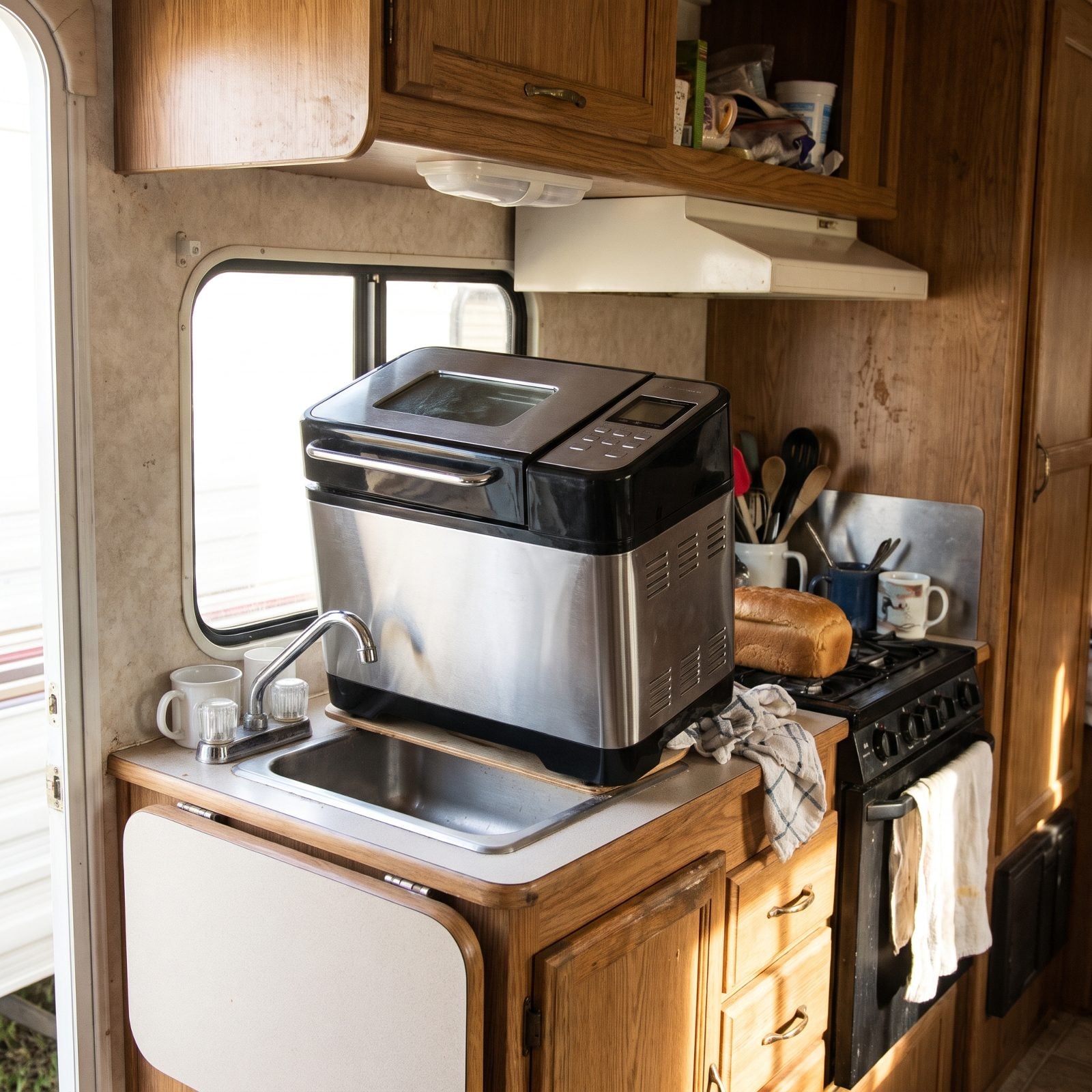
You bought it picturing fresh loaves at the campsite, the smell drifting out the door while the coffee perked. A romantic idea. Then you learned a bread maker runs for hours, draws real power, and claims a chunk of counter you don’t have to spare.
In a rig, counter space is currency, and a bread maker spends it badly. It squats on your only flat surface, and you shuffle around it every single day for the one morning a season you actually fire it up.
Been a whole trip since the paddle last turned? It can go home. Or go, period.
17. The Waffle Maker Used Once on the First Trip
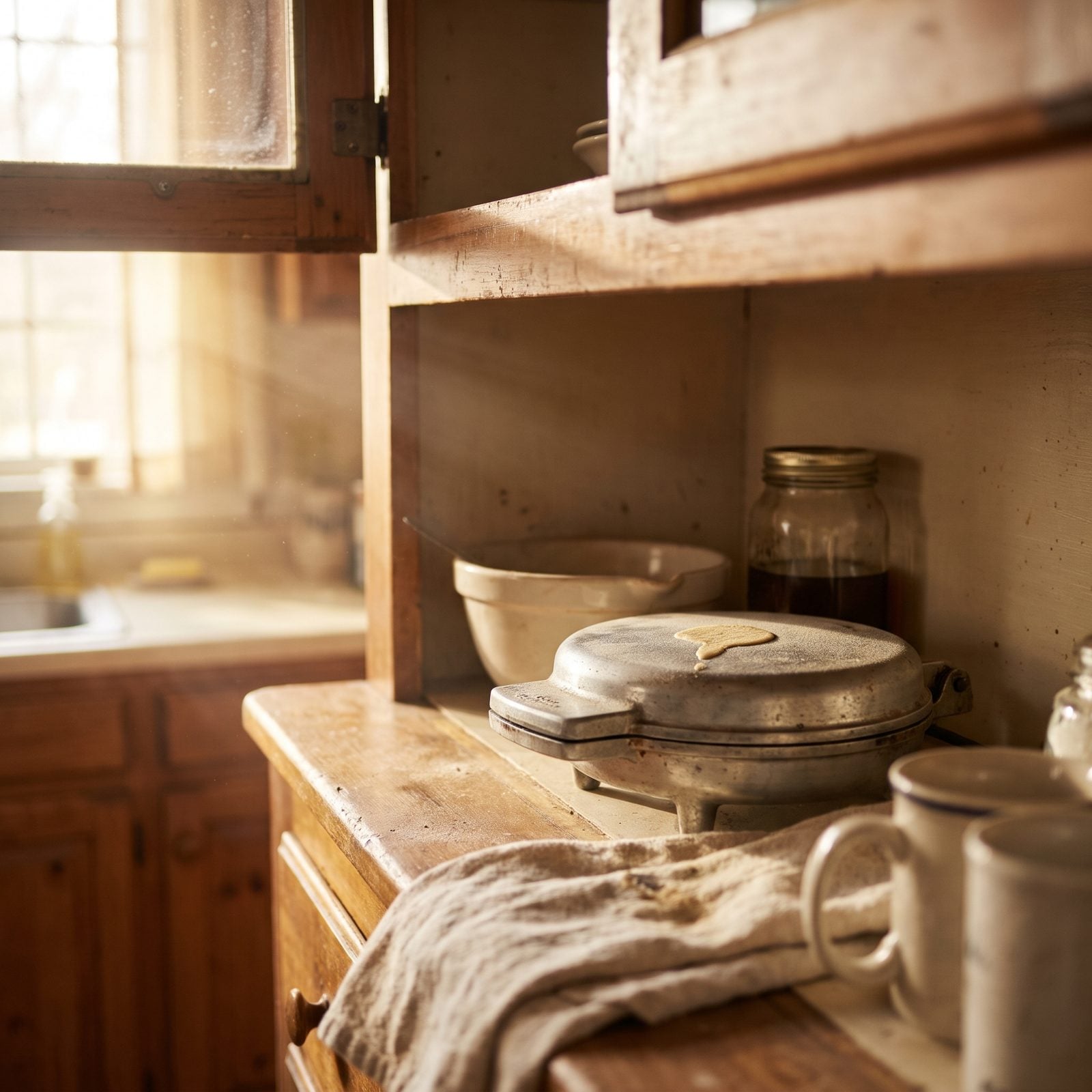
Waffle Sunday happened exactly once. The inaugural trip, everyone was charmed, the batter spattered everywhere, and crumbs landed all over the counter. That waffle, fresh off the grids, turned out to be the last one it ever made.
Nobody warns you about the cleanup. Scrubbing one of these in a tiny sink with limited fresh water is miserable — the grids trap batter, you’re going at it by hand, and your gray tank fills faster than you’d like. The novelty died in the washing-up, not the eating.
Plenty of owners hold onto one for three seasons out of pure guilt. One season of camping tells you everything. If it saw daylight once and never again, that’s your answer.
16. A Full-Size Blender Saved for Vacation Smoothies
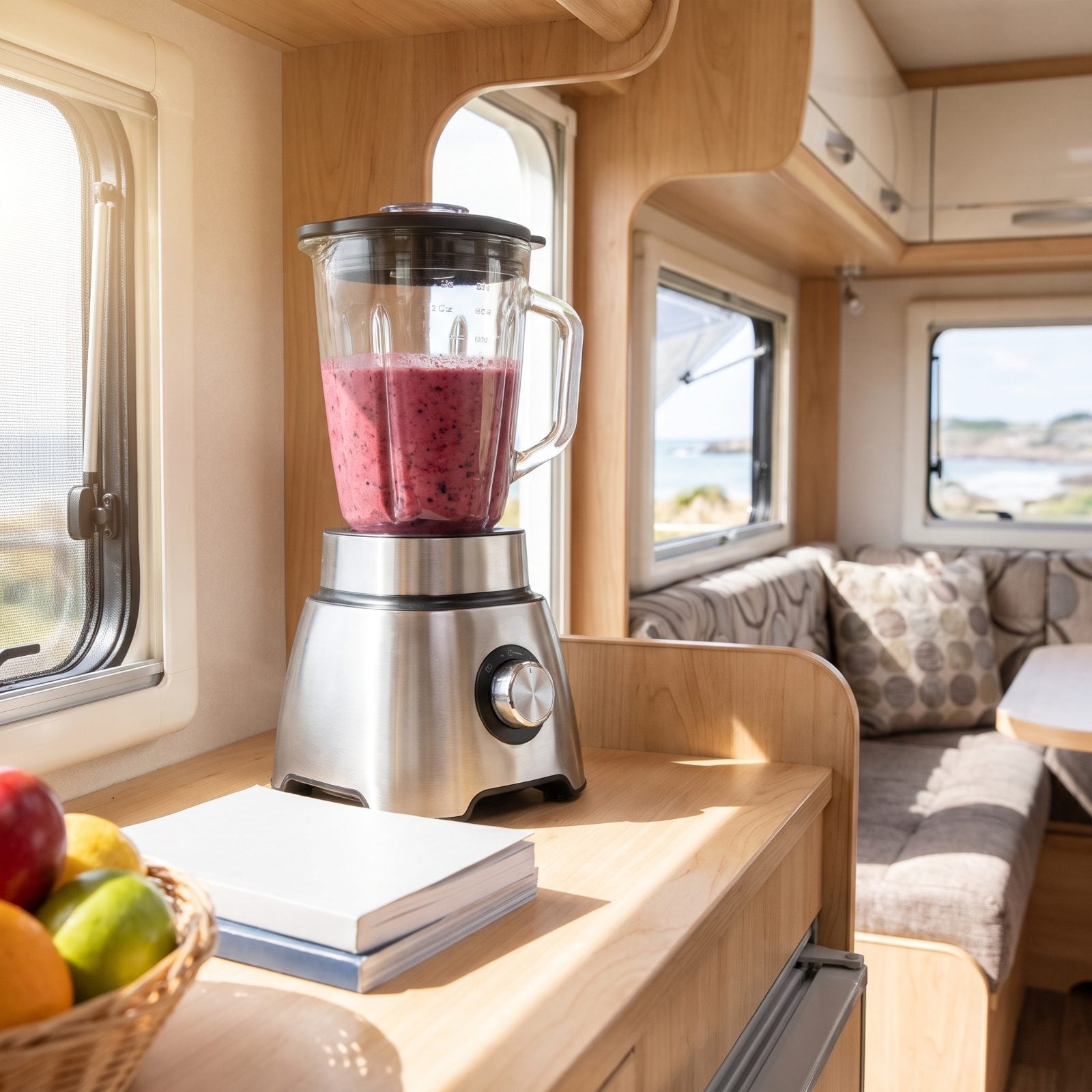
The vacation smoothie fantasy runs strong. Frozen berries, a scoop of protein, the whole family starting the day bright-eyed at the picnic table.
Reality’s less photogenic. A full-size blender is loud enough to wake every neighbor in a packed campground loop, it hogs fridge space with bags of frozen fruit, and that glass jar rattles like a bowling alley every mile you drive.
The big one stays home. It was always a kitchen appliance pretending to be a travel companion.
15. A Toaster Oven That Trips the RV’s Breaker
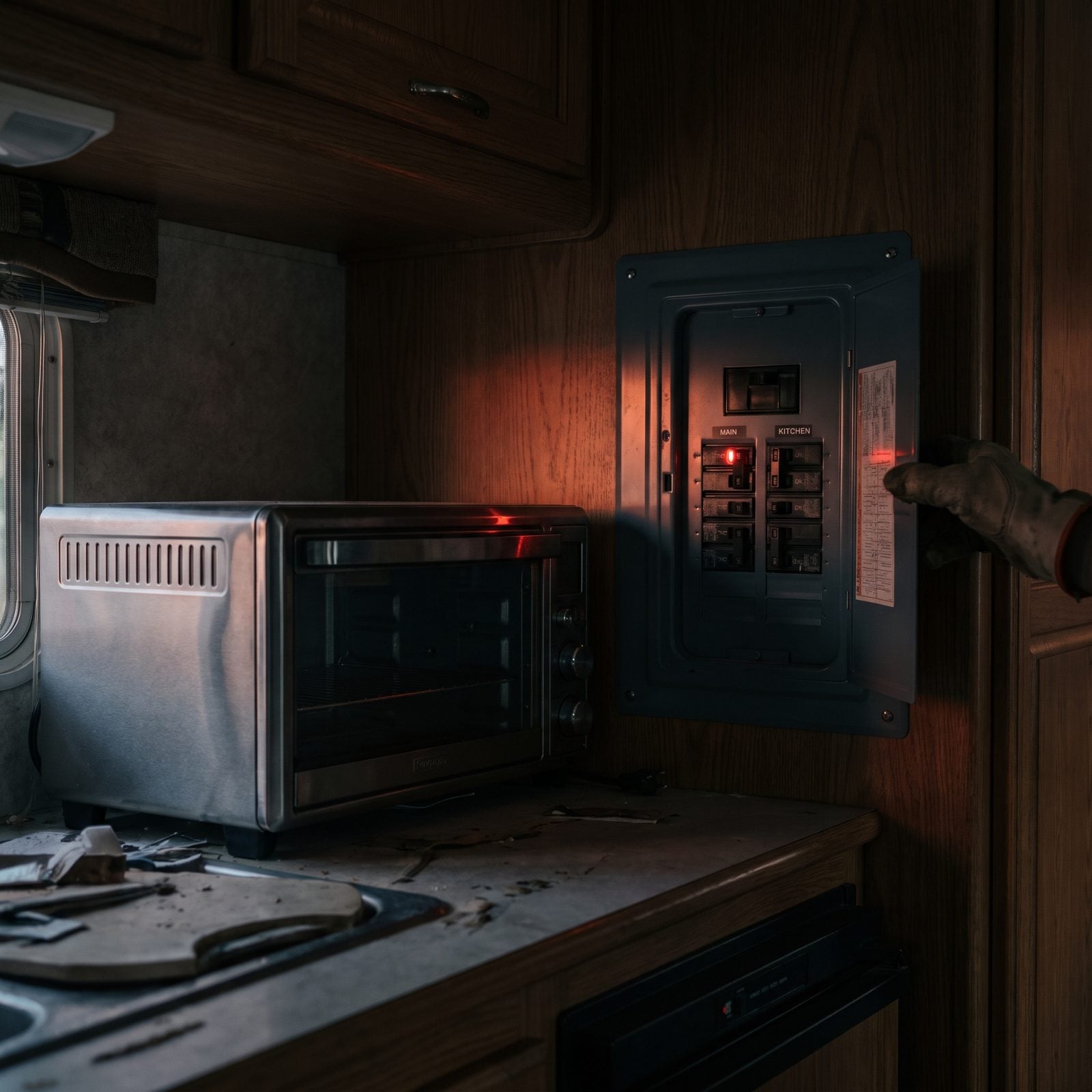
A toaster oven pulls a serious load. Add the air conditioner, the microwave, maybe a space heater, and you’re past what a 30-amp hookup wants to give you. Flip the toaster on and the breaker pops. Dinner stalls while you hike out to reset the pedestal.
This is the appliance that taught you RV electrical math the hard way. Works fine at 50-amp parks. Fights you everywhere else.
You can’t really trust it, so you reach for the microwave instead, and the toaster oven becomes a crumb-filled box you haul from state to state for nothing. Stopped plugging it in? Stop carrying it.
According to a longtime RV educator who has spent decades teaching owners how their electrical systems work, “In a typical RV with a 30-amp electrical service, power-hungry appliances and portable devices include: the air conditioner, electric water heater, microwave, coffee maker, electric skillet, a hair dryer, space heaters, and a toaster.”
14. A Countertop Ice Maker That Is Never Plugged In
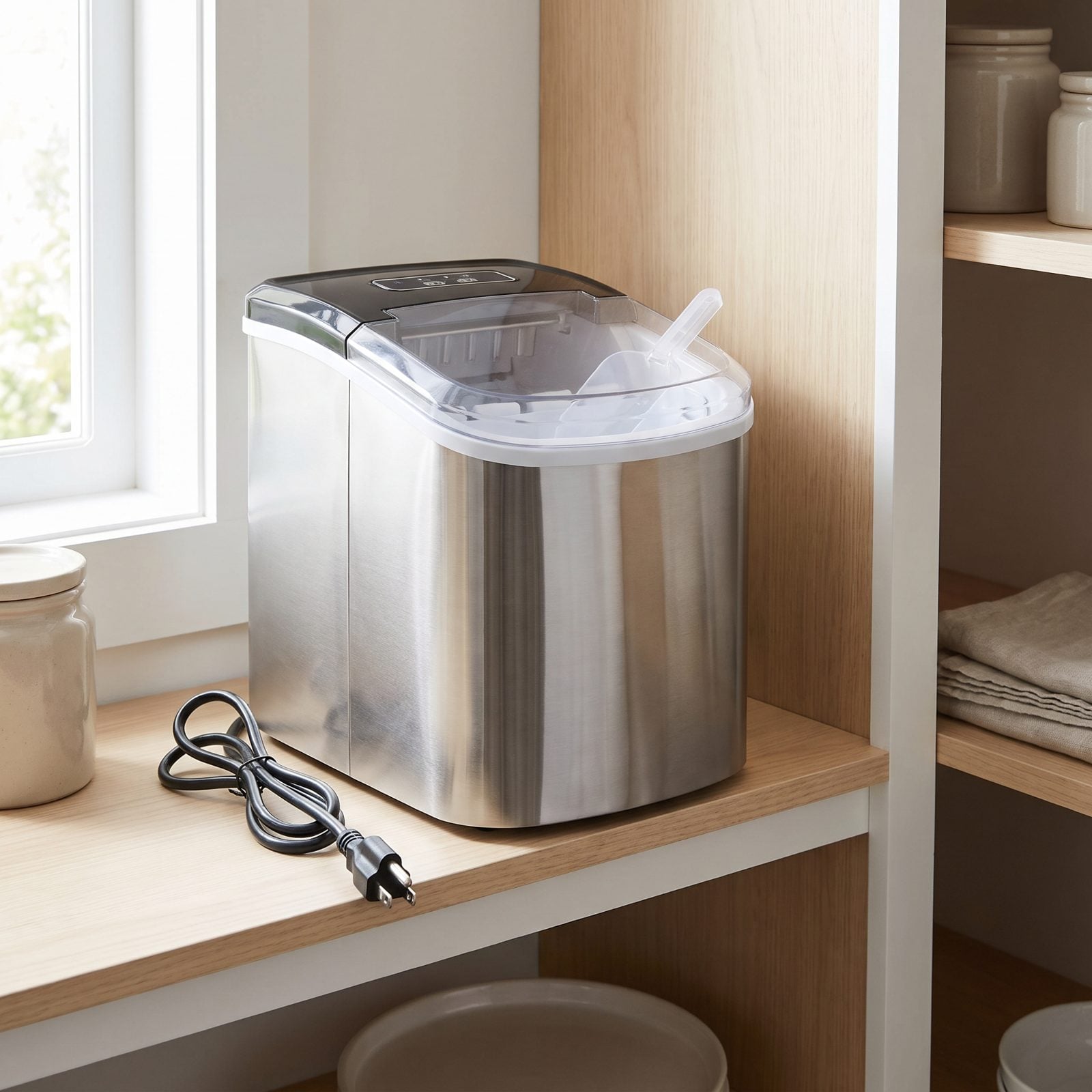
Sounded genius at the dealership — fresh ice without hauling bags from the camp store.
Then you remembered the fine print. A countertop ice maker needs a flat surface, a steady fill of fresh water, and a 120-volt outlet it can hum on for an hour. In a dry camp or a boondocking spot, you’ve got none of those to spare. The thing migrated to a storage bay and never came back out.
A good cooler with block ice holds longer anyway. The ice maker is weight you’re towing for a convenience you never actually use.
13. Breakable Wine Glasses Nobody Dares Use

Real wine glasses in an RV are a lovely idea and a terrible one. You wrap them in bubble wrap before every drive, wedge towels between them, and then you’re too nervous to actually drink from them — because one bad washboard road and you’re sweeping crystal off the floor.
So they ride along, swaddled, untouched, taking up a padded cabinet you could use for something that earns its keep.
Wine tastes the same out of a glass you’re not terrified of.
12. A Complete Dinnerware Set for Eight
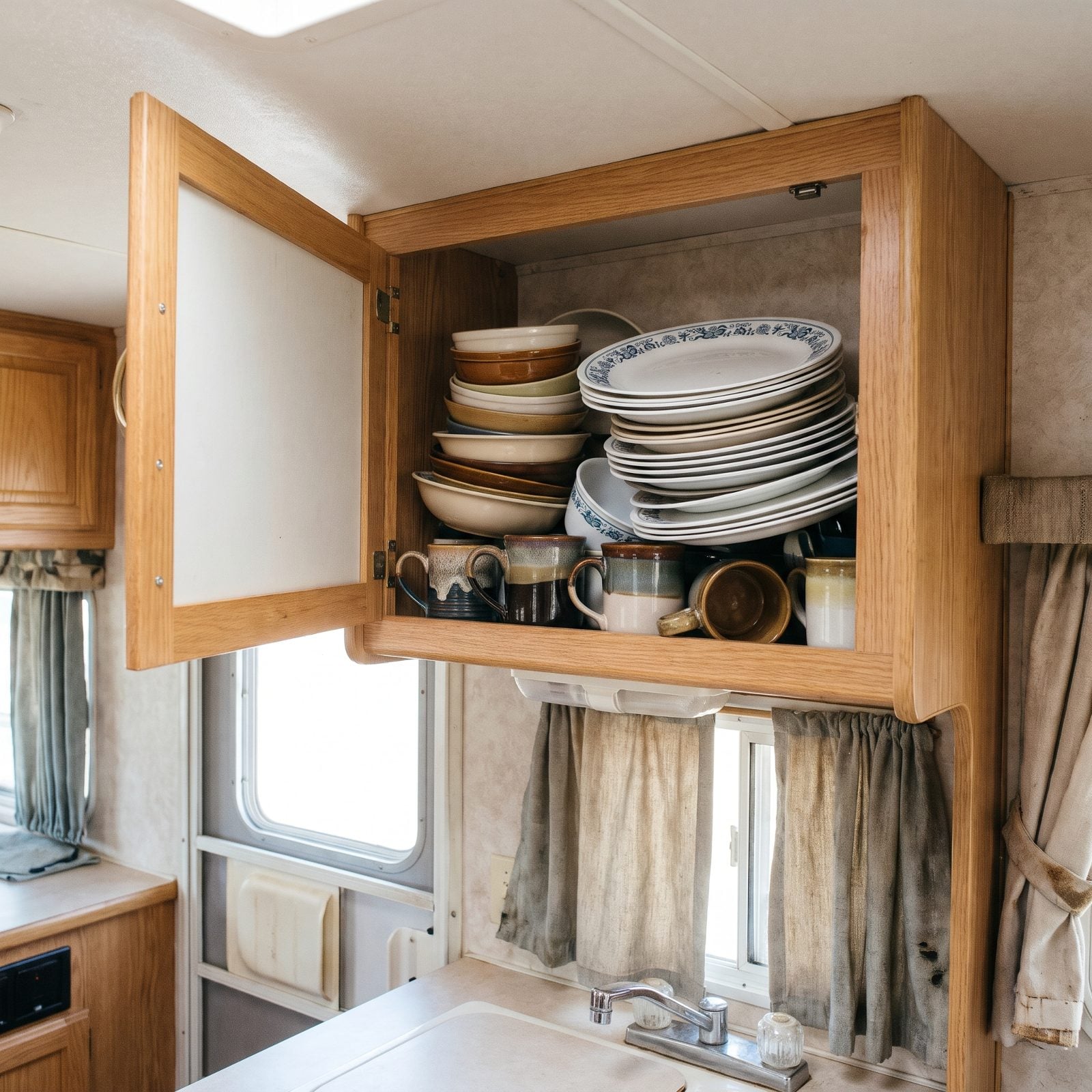
Service for eight in a rig that sleeps four. The logic was holiday dinners and guests, the big family gathering that happens maybe once a year if that.
Ceramic dinnerware is heavy, it clatters on every drive, and half the set never leaves the bottom of the cabinet. You eat off the same two plates on repeat while six others collect dust and add pounds to your cargo weight.
I’d keep service for four at most — melamine or enamel — and pull the extras only if you’re actually hosting. For the rare big meal, paper plates exist, and nobody at a campsite potluck has ever judged them.
11. The Oversized Roasting Pan That Will Not Fit the RV Oven
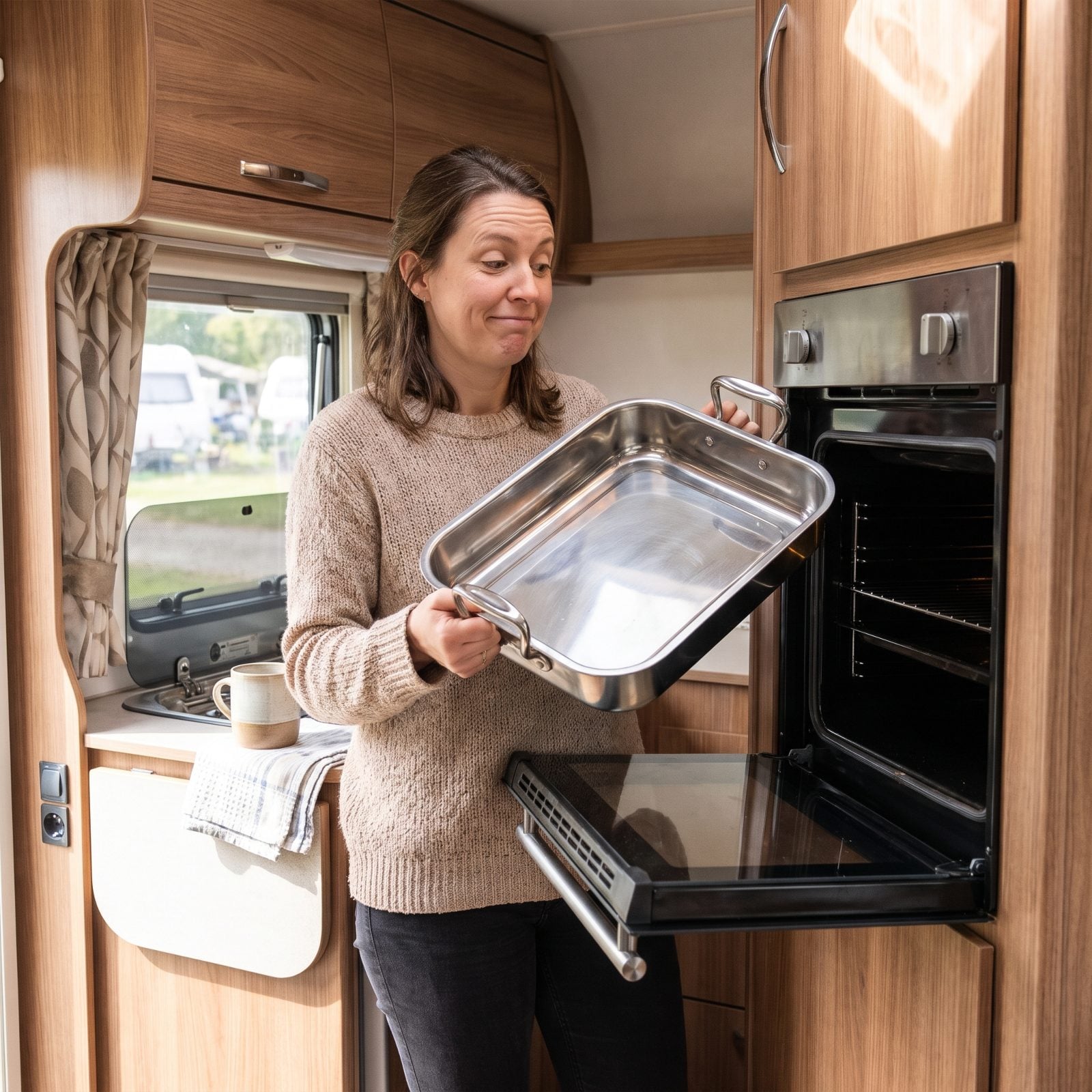
Someone packed it for the Thanksgiving turkey dream. Then you opened the RV oven for the first time and the truth landed: it may look like a full-size wall oven, but the roasting pan is far wider than the opening, overhanging it by inches on both sides.
Even a roomy RV oven leaves little clearance and bakes unevenly on top of it. A roaster that overhangs the door frame on both sides was never going to fit in there, not with prayer or patience.
So the pan lives on top of the oven, or in a bay — a big awkward shape that eats storage and does nothing. A small quarter-sheet pan and a skillet handle everything an RV cook actually needs. The roaster belongs in a house.
10. Decorative Throw Pillows Moved at Every Stop
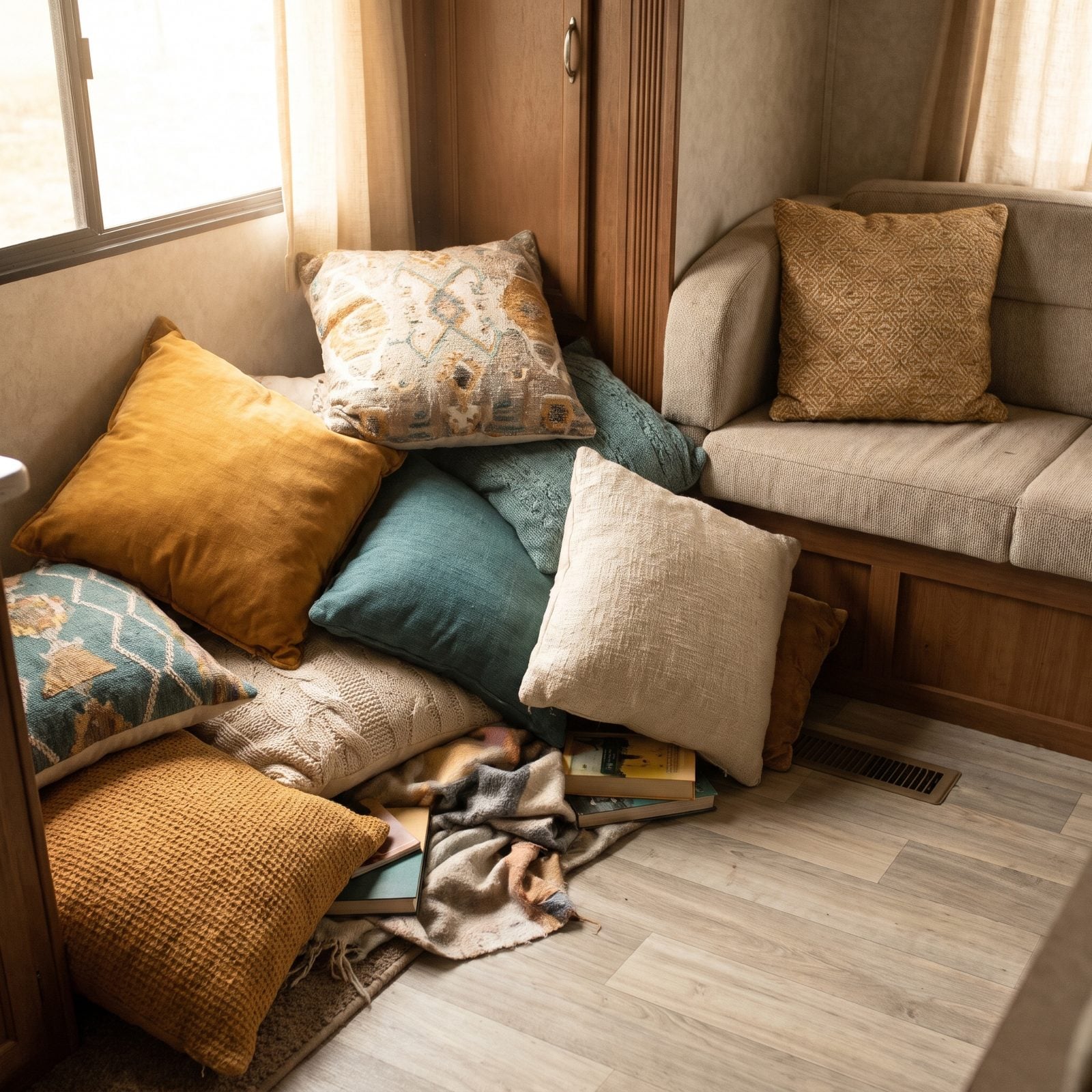
They make the sofa look like a catalog. For about ten minutes.
Then you want to actually sit down, or lie down, or drop the dinette into travel mode, and the pillows have nowhere to go. They end up on the bed, then back on the bench, then in a heap on the floor — relocated at every single stop like furniture that refuses to commit.
A throw pillow that doesn’t double as something — a lumbar support, a real sleeping pillow — is pure volume with no job. In a space this tight, every soft thing should earn its spot. Keep one or two you’ll actually lean on. The rest are just extra laundry waiting to happen.
9. Bins of Holiday Decorations That Never Get Displayed
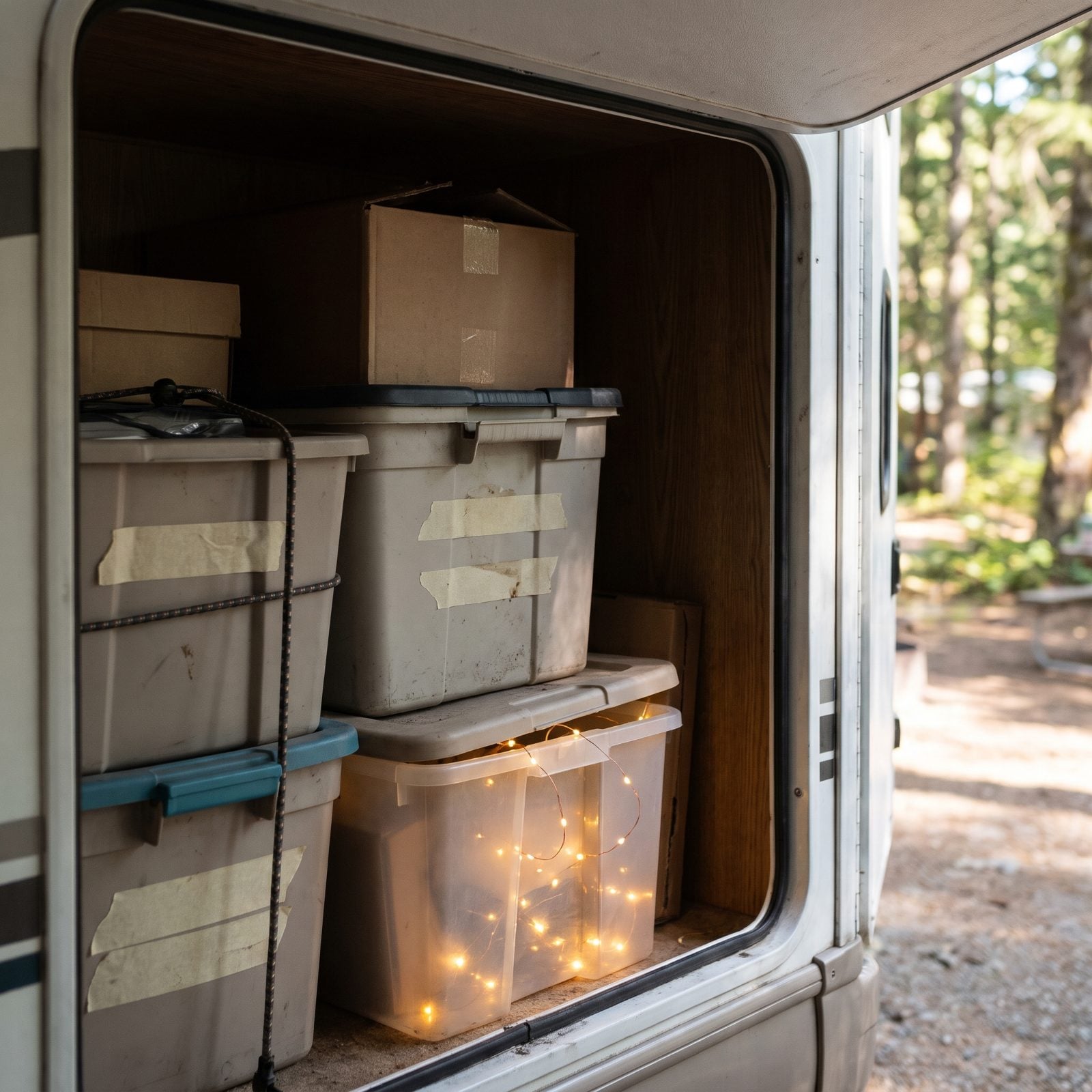
Nobody runs the math on this. You set up the tiny tree maybe twice in five years, both times at a park with a holiday weekend theme, and the rest of the year those four bins eat an entire closet. Prime storage paying rent for one string of lights you’ll untangle and curse at next December anyway.
Keep a single strand of warm-white lights and a handful of unbreakable ornaments in a gallon bag. The rest can go to someone with a house and a mantel that stays put.
8. A Sewing Machine Packed for Repairs That Never Happen
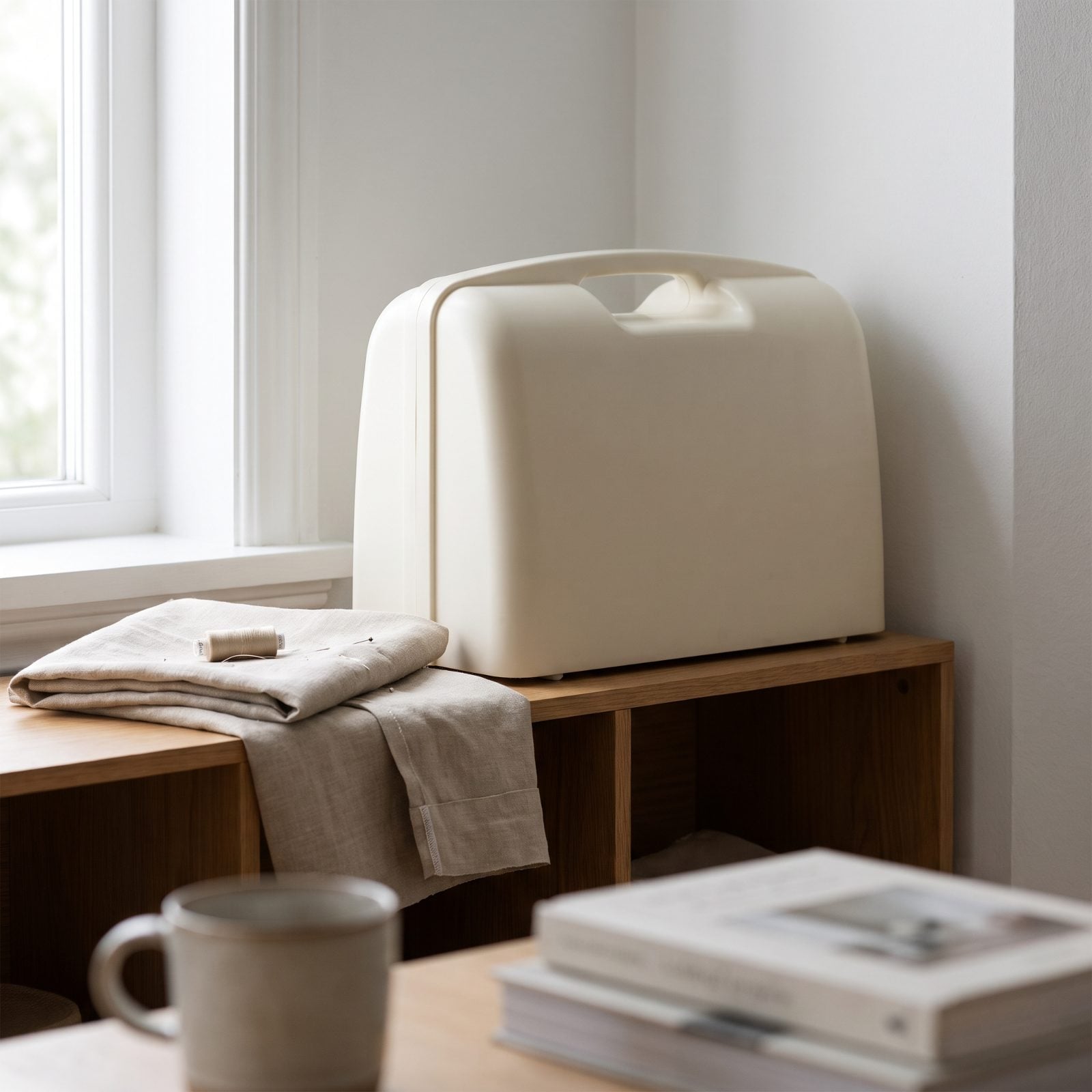
The plan was good. Hem the new curtains, patch the awning, take in the camp chair covers — and the machine came along for all of it. Then it just sat in the bay through two seasons and a few hundred miles of washboard road, which is exactly the kind of vibration no sewing machine wants.
If you haven’t threaded it since the last oil change, you’re not going to. A travel-size mending kit and a roll of tenacious tape handle most of what actually breaks out here. That machine belongs at a home base, not jostling in the dark.
7. Dumbbells That Add Weight but Get No Workouts
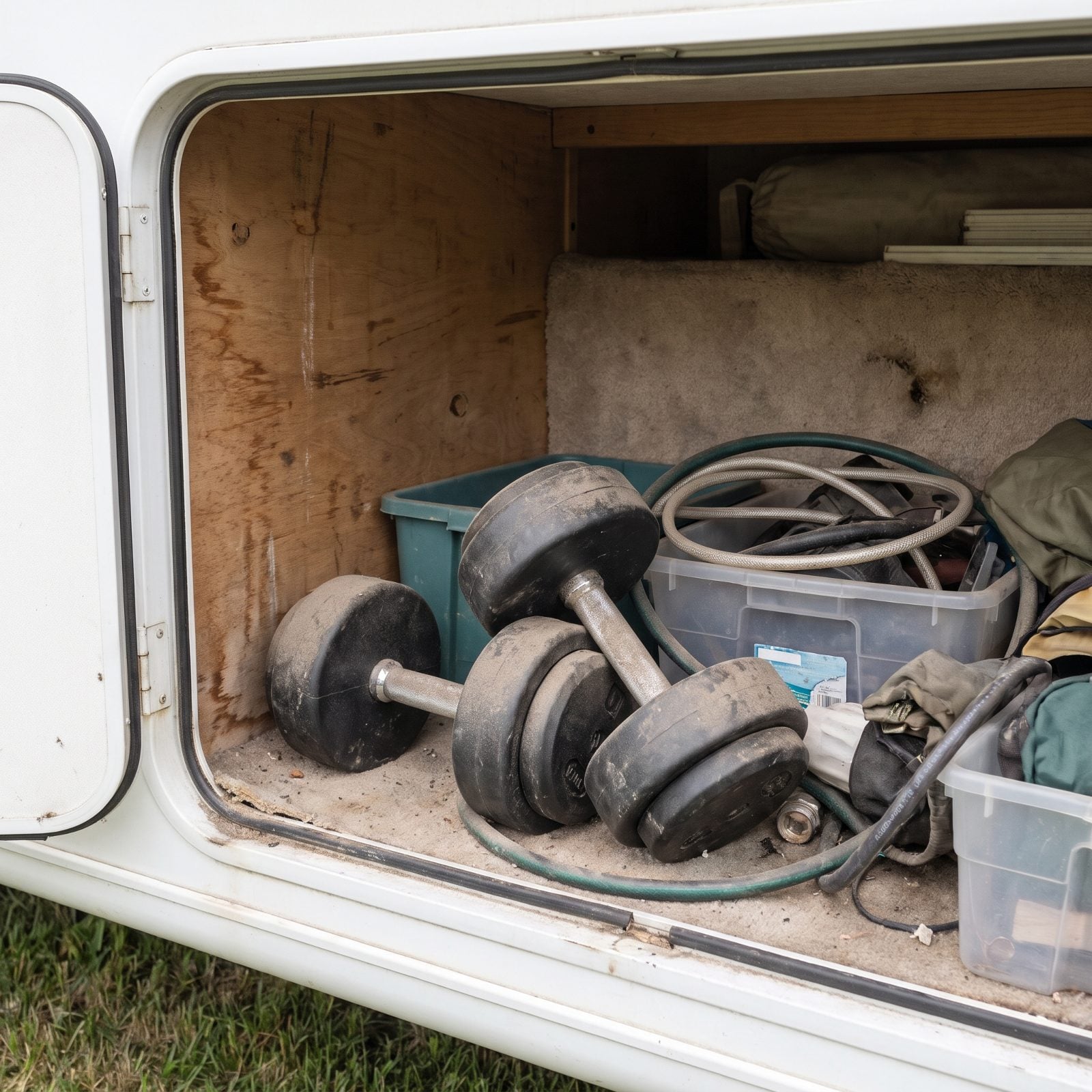
Thirty pounds of good intentions, and they never once left the compartment except the night you grabbed them to weigh down something in the wind. Cruel joke, that. The dumbbells are earning their keep as ballast, not fitness.
Plenty of owners haul a kettlebell for a full year before admitting the hills around the campground are the actual workout. A loop of resistance bands weighs nothing, tucks in a drawer, and gives you the same excuse-free routine without the rolling-around-the-bay clatter at every stop.
6. The Bulky Camera Kit Replaced by a Phone
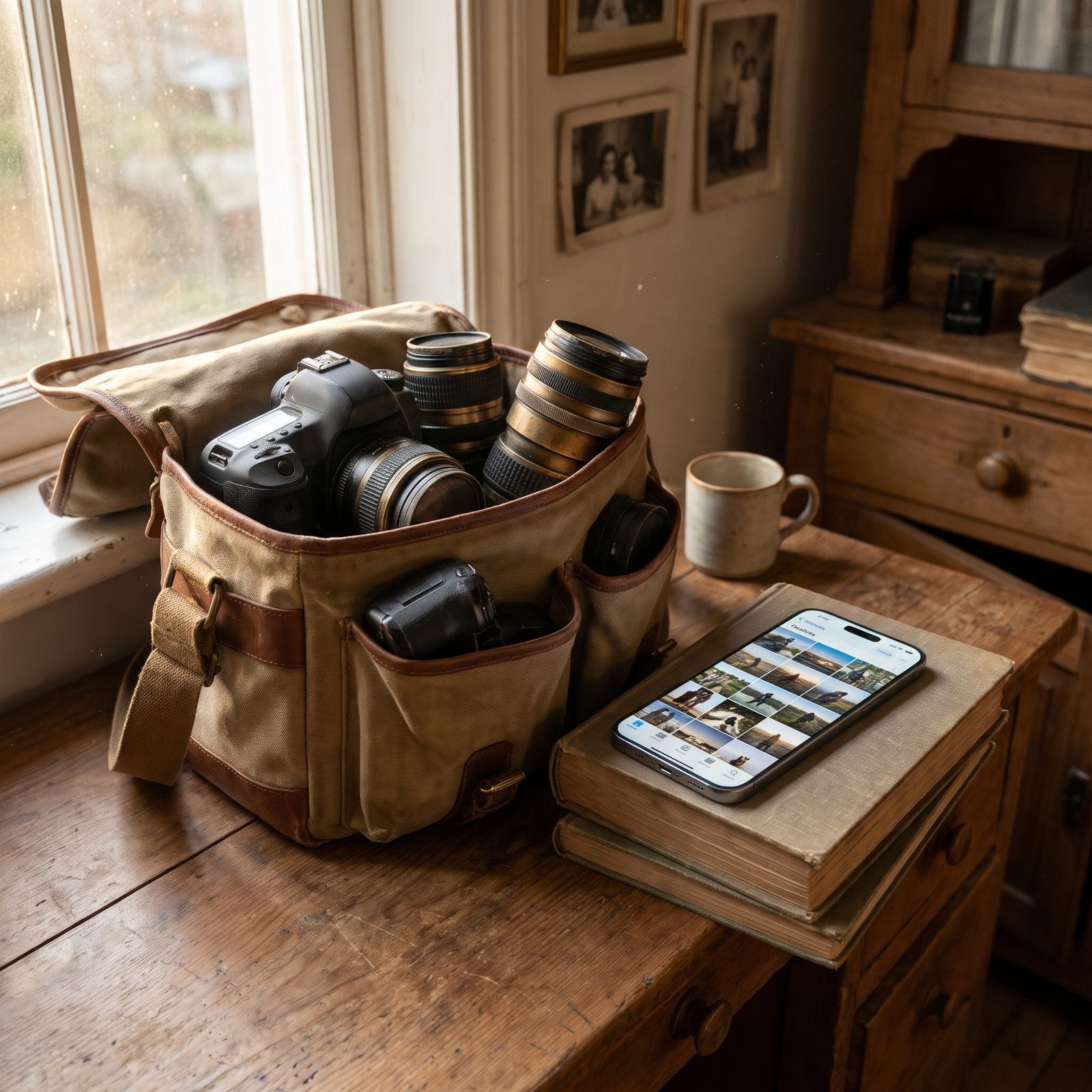
You bought the full kit for the trip of a lifetime. Two bodies, a handful of lenses, the canvas bag that cost as much as a weekend site. And somewhere around the second sunset you realized the phone in your pocket had already shot the thing you’d post, before the big camera even cleared its case.
The gear isn’t bad. Your habits just changed. Keep one body and one lens if you genuinely shoot wildlife or night sky. Otherwise that bag is a five-pound museum of the photographer you meant to become.
5. A CB Radio That Has Never Left Its Box
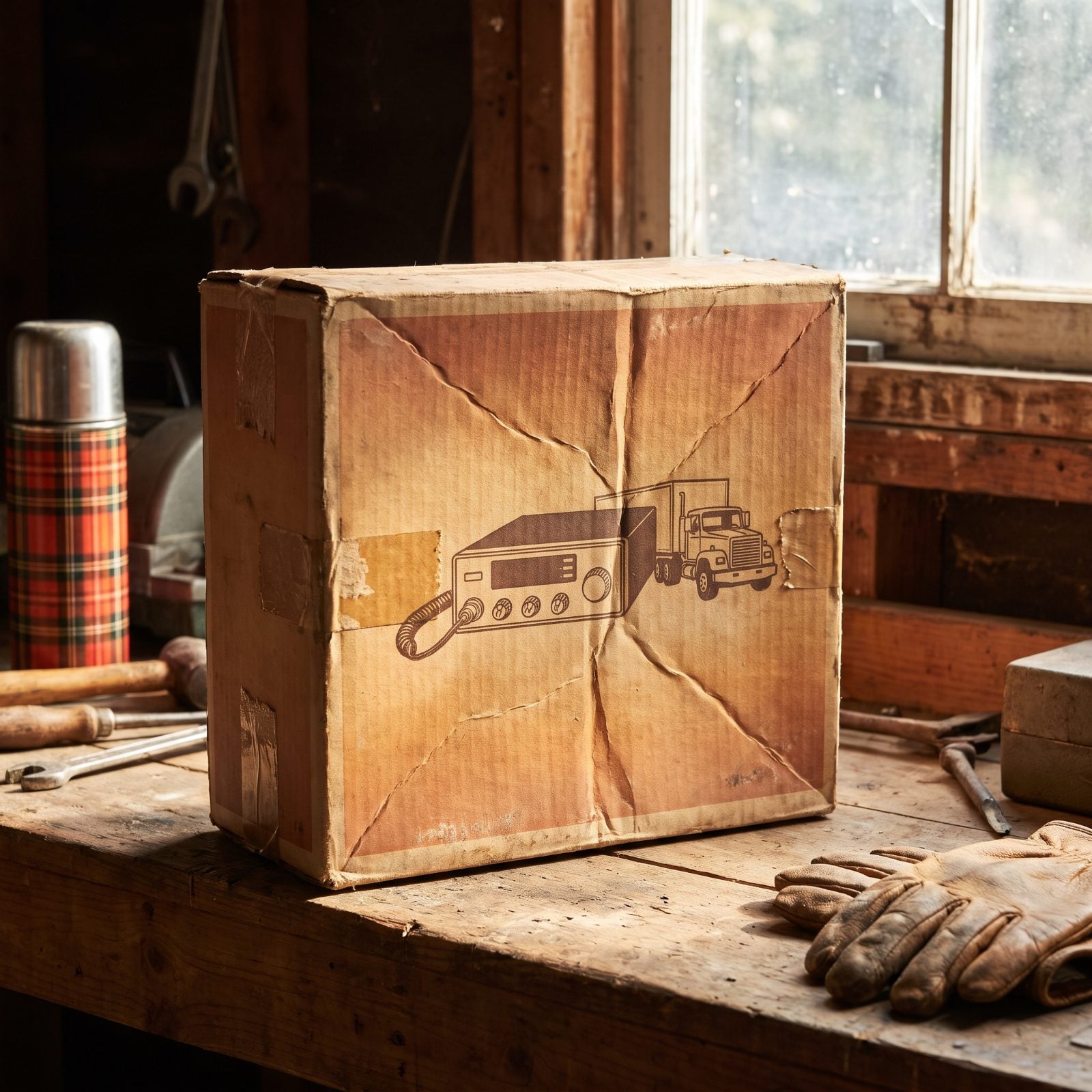
Channel 19 was going to be your lifeline. Weather, traffic, the trucker ahead warning you about the smokey. The box made it into three different rigs and never once got wired up, because every time you reached for information you reached for your phone instead.
CB still has its fans, especially where cell service drops to nothing. If that’s your route, install it this month or let it go. An unopened box riding shotgun for years isn’t a backup plan — it’s a decision you keep refusing to make.
4. Obsolete Phone Chargers and Device Cables
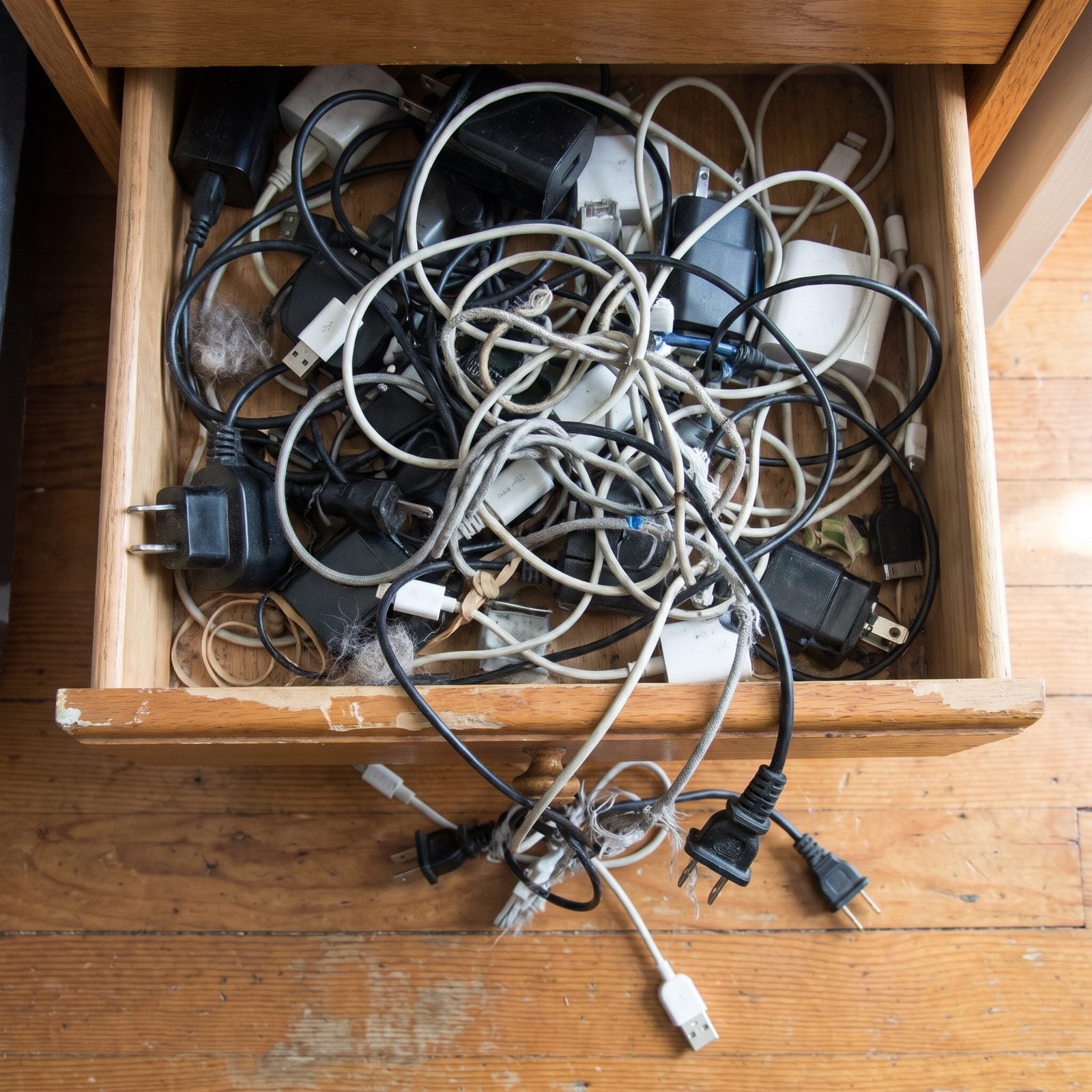
Every rig has this drawer. The one that won’t close because it’s packed with cables for devices you no longer own and chargers for a phone you replaced two models ago. Mini-USB, the old 30-pin, a barrel plug for a camera that died years back.
Quick test: if you can’t name the exact thing a cable charges, it goes. Keep two of your current connector, one car adapter, one wall brick. Everything else is dead weight pretending to be a spare.
3. Outdated Road Atlases From Trips Long Ago

The dog-ears tell the story. You can see exactly which pages mattered on the big loop back in the day, the creases worn soft from a passenger’s thumb. It’s sentimental, genuinely, and I won’t pretend otherwise.
But the roads changed. Exits got renumbered, that bypass opened, and the campground on page 44 is a storage lot now. One current atlas still earns its spot as a dead-zone backup when the GPS gives up in the mountains. The retired ones belong in a memory box at home, not sun-bleaching in the door pocket.
2. Old Campground Directories Taking Up Shelf Space
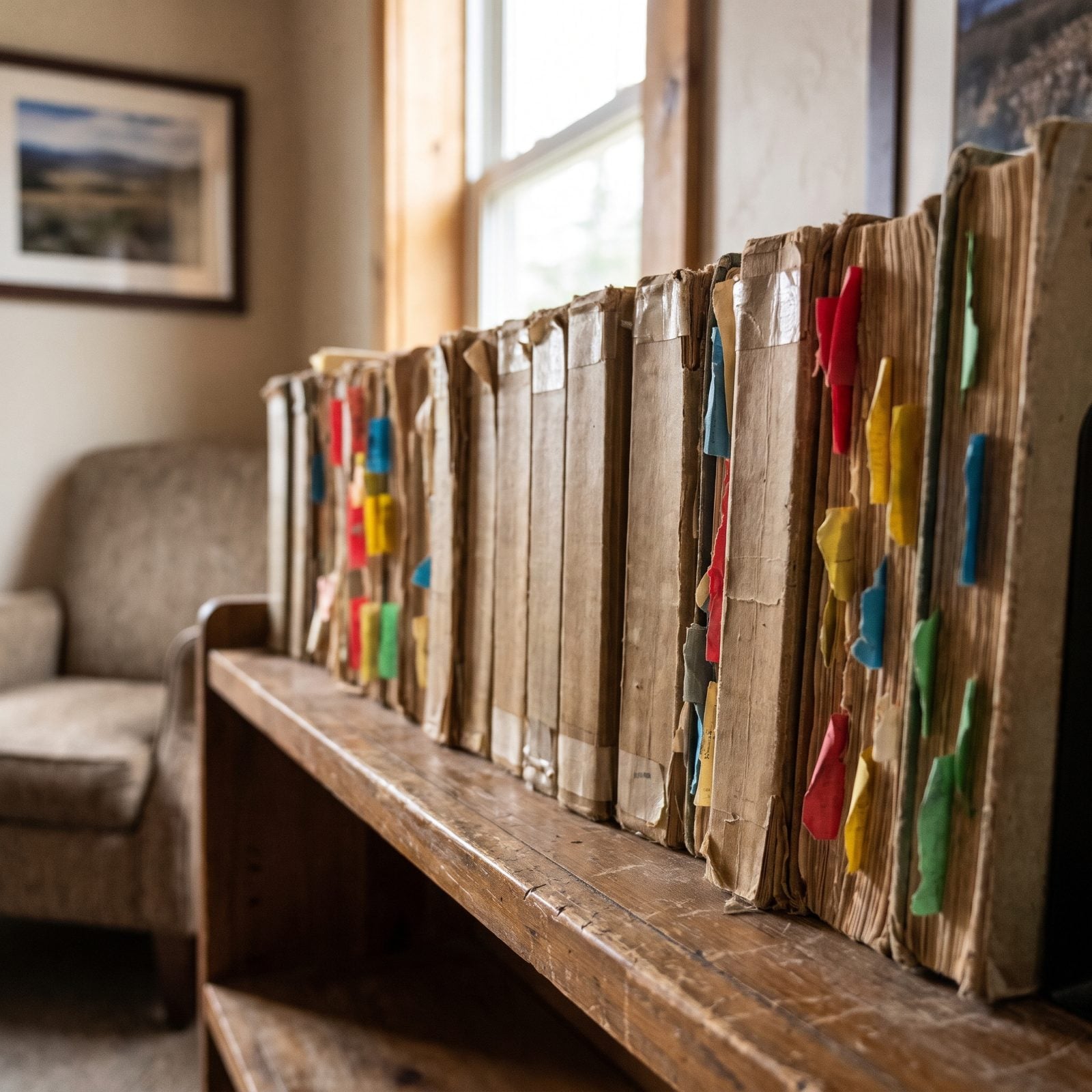
The sticky tabs were a system. Pink for full-hookups, yellow for pet-friendly, a fold in the corner for the ones with good reviews. All of it is three price hikes and two ownership changes out of date.
Those directories were gold before everybody carried a phone and a rating app. Now the rates are wrong, half the listed parks have new names, and some of the memberships they pushed may not even exist anymore. Pull your handwritten notes from the margins, photograph the pages you marked, and recycle the brick.
1. The Bag of Tourist Brochures and Local Maps

Every welcome center hands you a stack. Every trailhead kiosk, every pancake-house lobby, every state line. The bag swells with a hundred places you meant to go and one actual trail map you’ll never need again, because you already hiked it.
Snap a photo of anything with hours or a phone number, keep the single map for a spot you’ll genuinely return to, and compost the rest. A grocery bag of paper from a trip two states and six months back isn’t a scrapbook. It’s clutter that followed you home.