
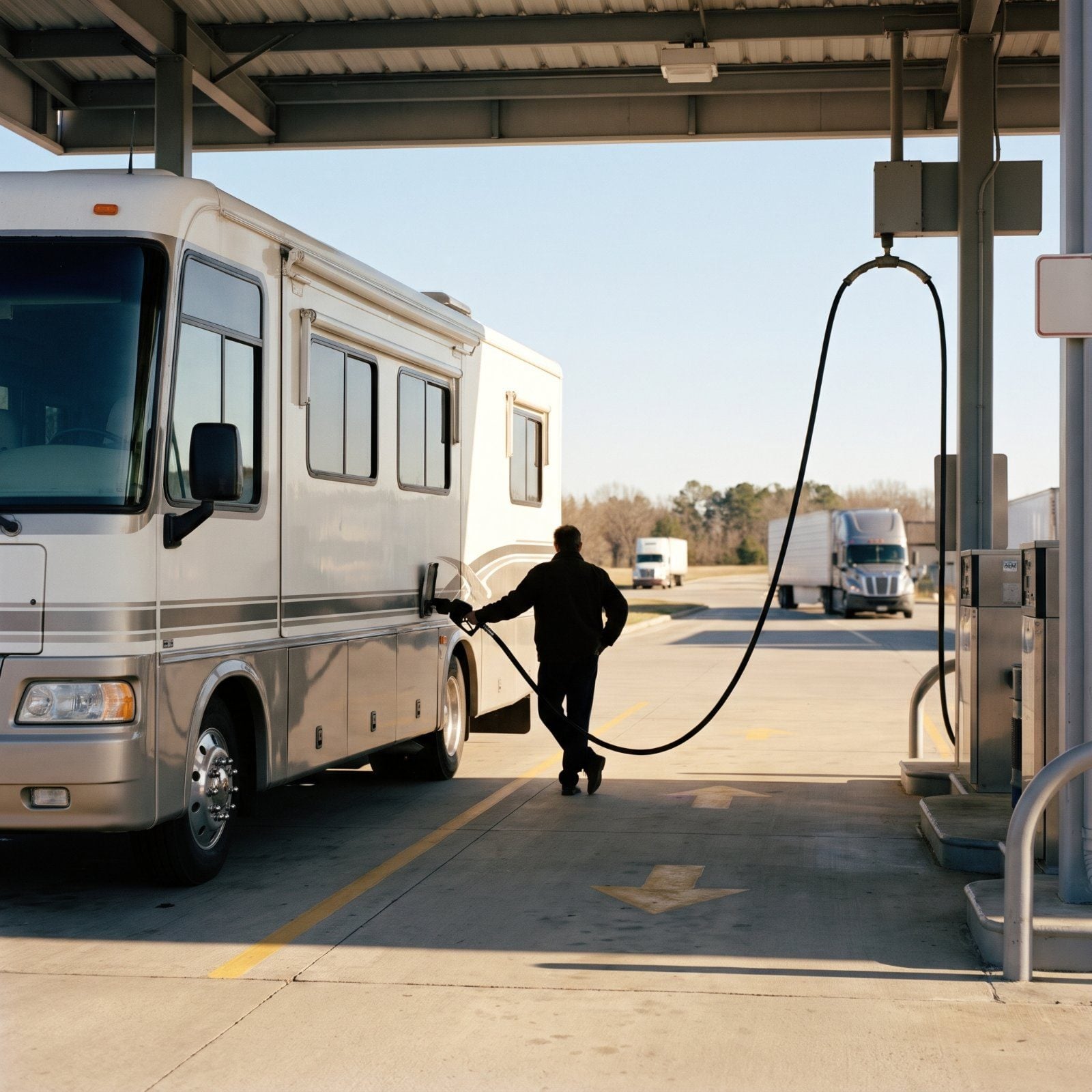
The first time you pull a 38-foot rig into a truck-stop fuel island, your pulse does something it doesn’t do on the open road. The lanes feel tight, a loaded semi idles behind you, and the guy at the pump ahead needs three feet you weren’t planning to give him. Fueling a big RV isn’t hard. It just rewards drivers who think two moves ahead and punishes the ones who wing it. Get the approach, the pump choice, and the exit right and the whole thing takes four minutes. Get it wrong and you’ll block a lane you can’t back out of, with an audience. Here’s how to stay smooth.
Please note that some of the images in this article were created with the assistance of AI.
23. Never Assume Every Truck Stop Can Fit Your Rig
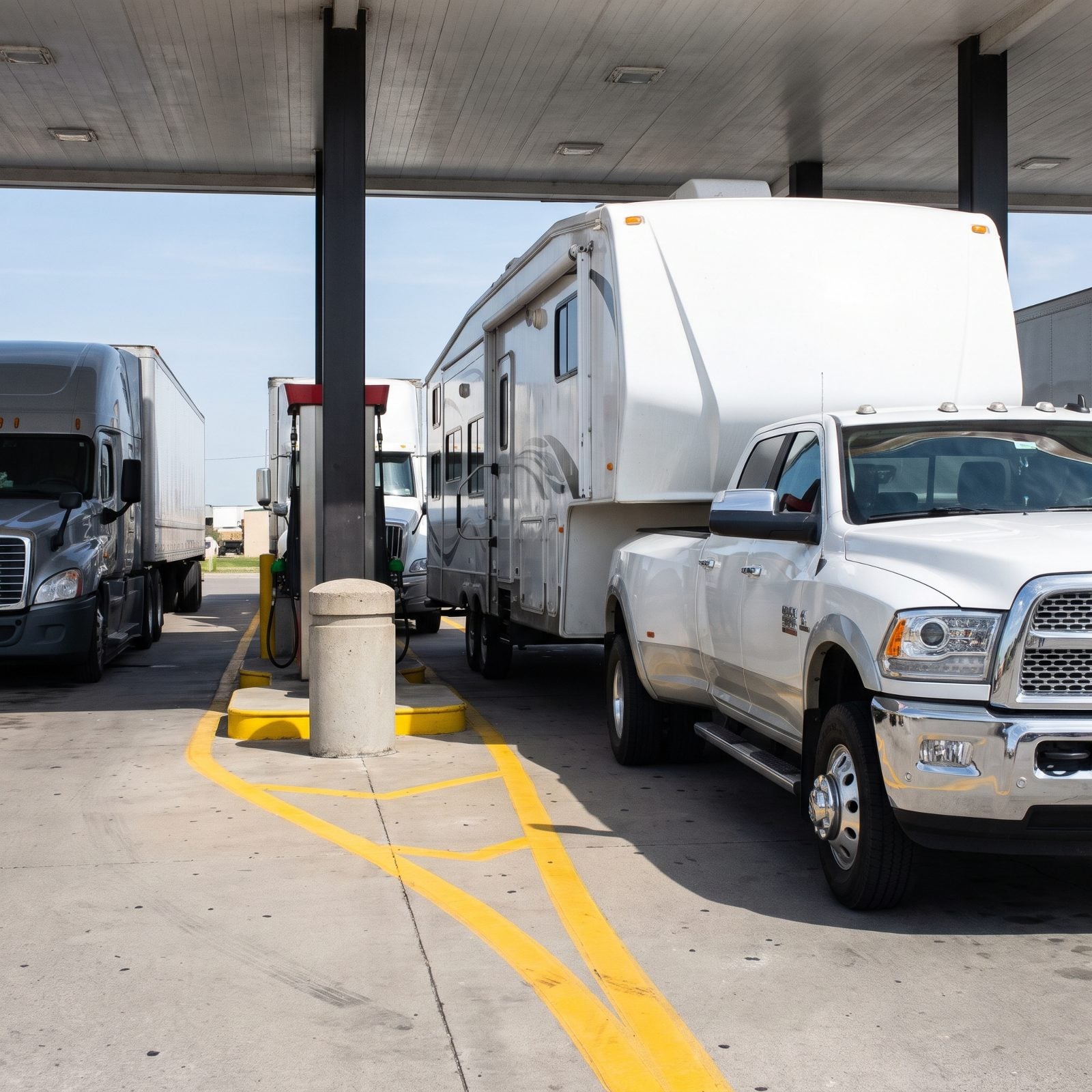
Not every stop off the interstate was built for a 60-foot combination of truck and trailer. Some of the older stations have tight islands, low canopies, and turnaround room that works for a sedan and nobody else. I once watched a nice fifth-wheel get stuck mid-island because the driver trusted the big sign out front and never scouted the pumps.
Trucker route apps and RV fuel-finder tools show lane layouts and clearances before you commit. Thirty seconds of checking beats a ten-minute backup dance.
22. Know Which Side Your Fuel Fill Sits On
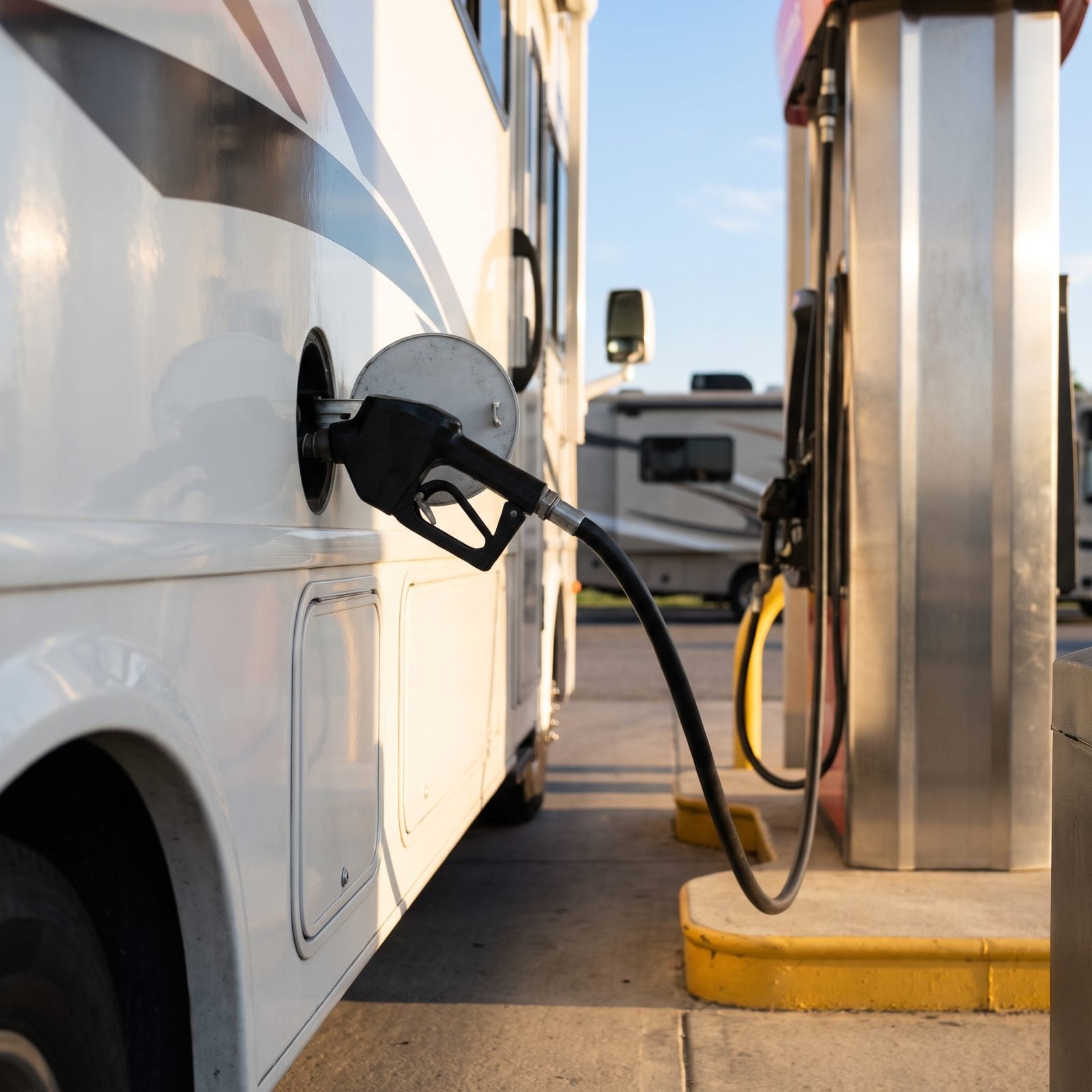
Sounds obvious. Then you’re committed to a lane with the pump on your wrong side and a diesel hose that won’t stretch across the rig. Big-rig hoses are long, but they aren’t infinite, and dragging one over or under a coach is a good way to kink it or drip fuel across your paint.
Know your fill side cold — driver’s side, passenger side, or a crossover spot you can reach from either. Then pick the lane that puts the pump on the correct side the first time.
21. Plan Your Exit Before You Pick a Lane
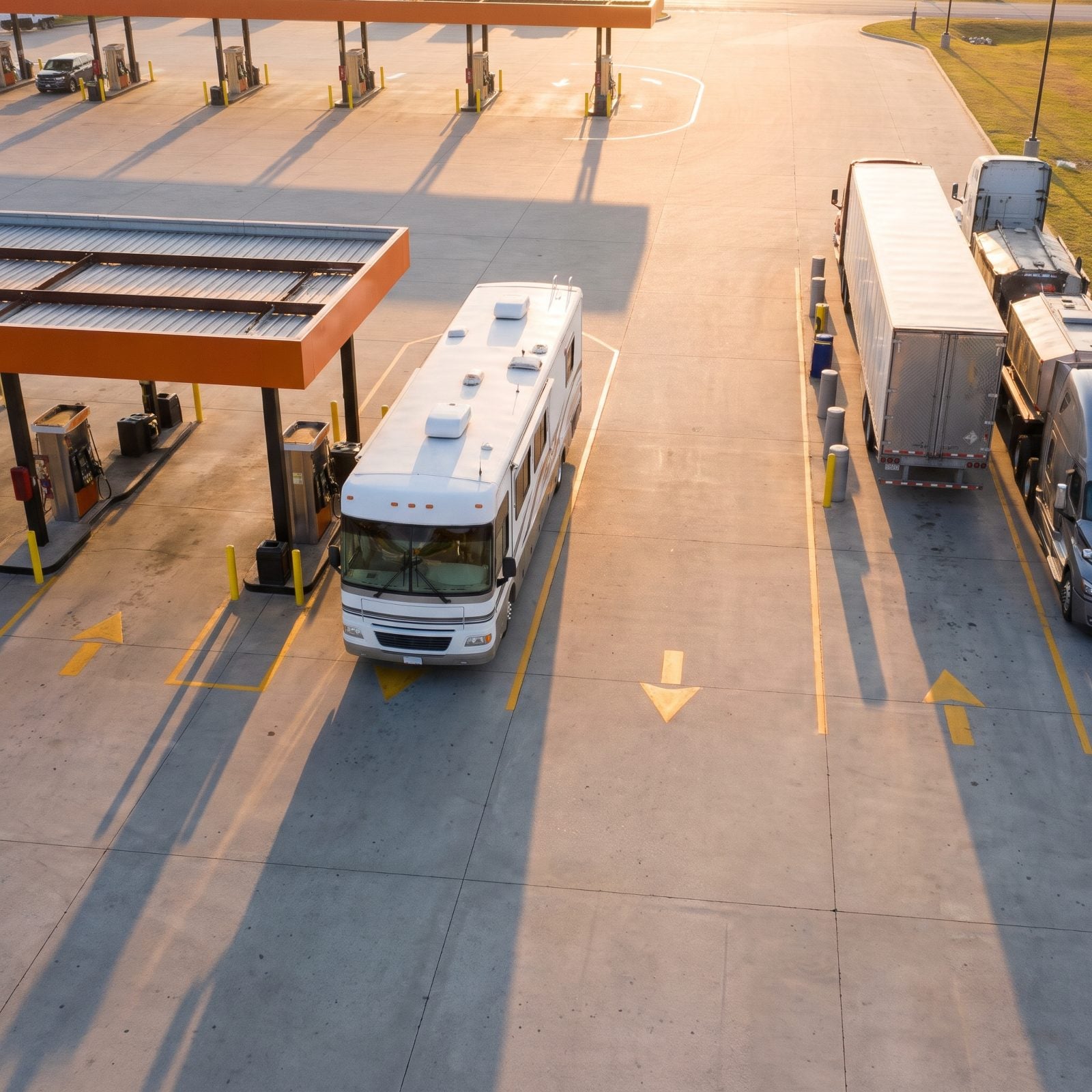
Everyone thinks about getting to the pump. The drivers who look like they know what they’re doing are already thinking about getting out.
Before you commit, trace the whole path. Where do you go once the tank is full? Is there a pull-through, or will you need to swing left into oncoming lane traffic? An outer lane with a clear run ahead beats a tight inner lane, even if it means waiting an extra minute for one to open.
20. Use the RV Island When Your Rig Actually Fits It
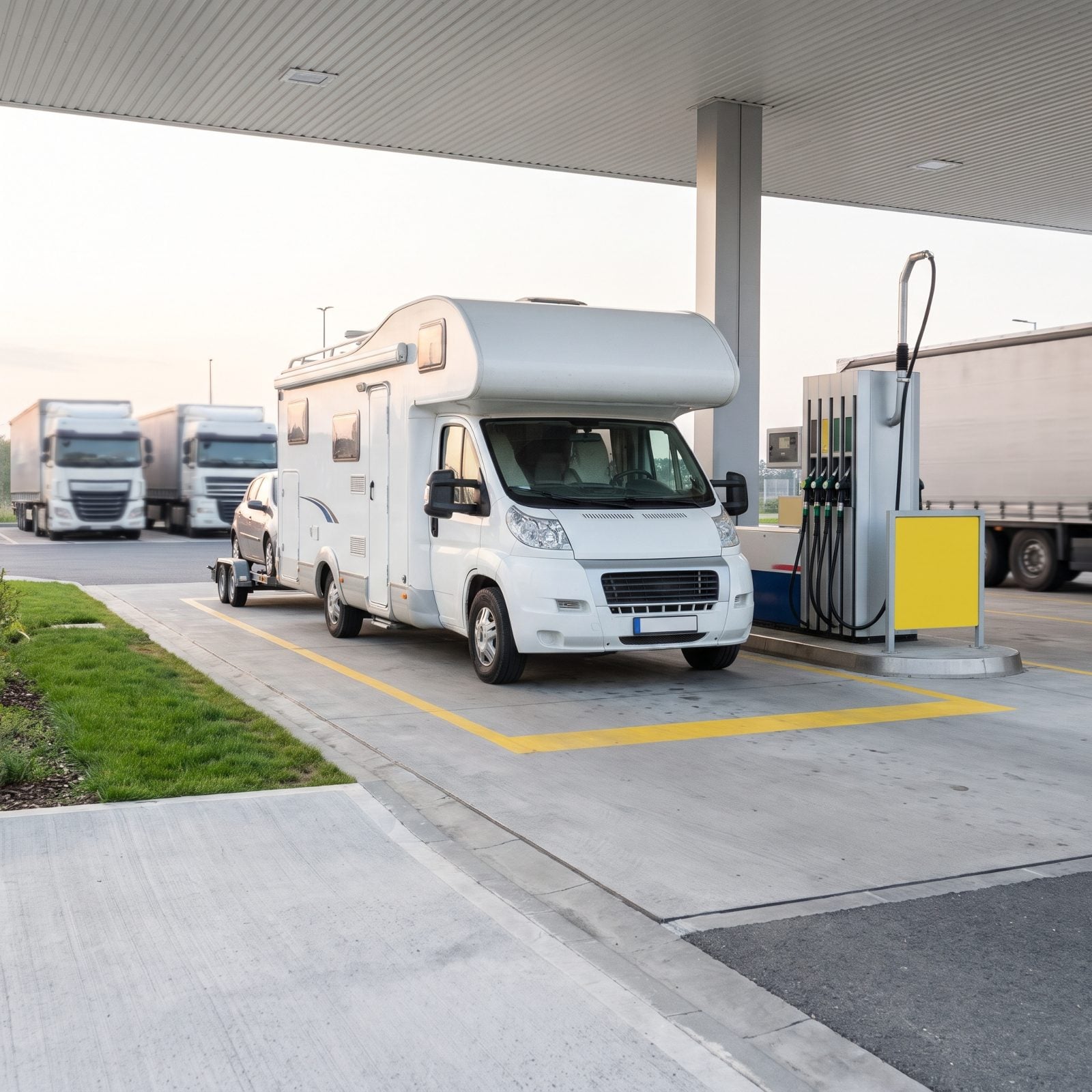
More stops now have islands marked specifically for RVs. They’re wider, the approach angles are gentler, and the pumps run slower, so they won’t foam up and spit back at you the way a high-volume truck pump can.
Use them when they fit your setup. But read the lane first. If the RV island is tucked where a towed car makes the turn impossible, don’t force it. The right island is the one you can enter and leave without a three-point struggle.
As a longtime full-time RVer puts it, “Use an RV lane or the car-side pumps whenever your rig safely fits. If your rig requires a commercial diesel lane, fuel efficiently and clear it promptly.”
19. Stick to Lanes Open to Noncommercial Customers
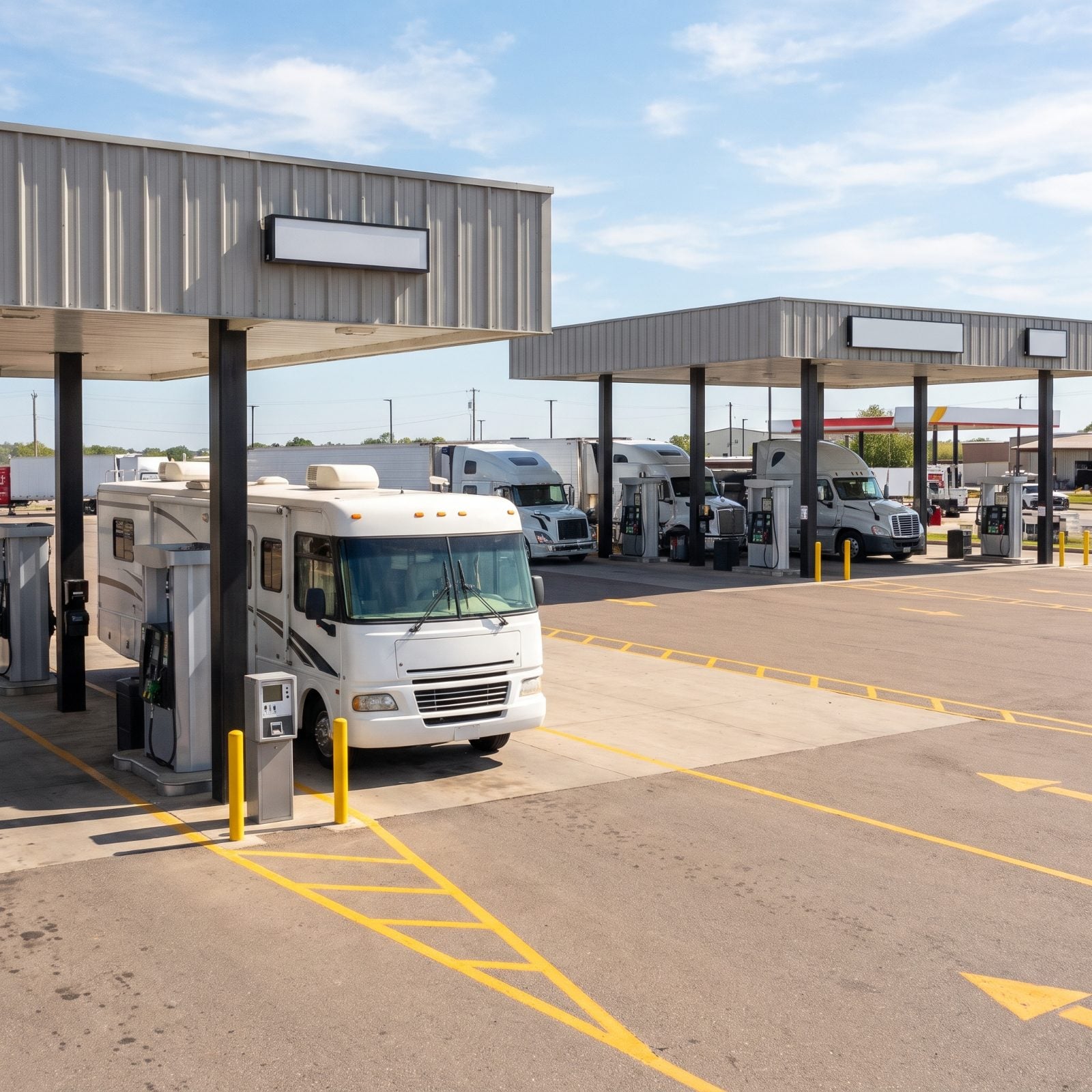
Some diesel lanes are set up for commercial trucking accounts: dedicated card readers, high-flow nozzles, drivers moving fast and expecting the lane to keep moving. Pull an RV into that line and you can slow a working trucker’s whole day.
Look for lanes marked for general or retail customers, or ask inside if you’re unsure. Costs you nothing. Keeps you out of a space where a parked RV reads as a parked problem.
18. Never Enter a Lane Against the Arrows
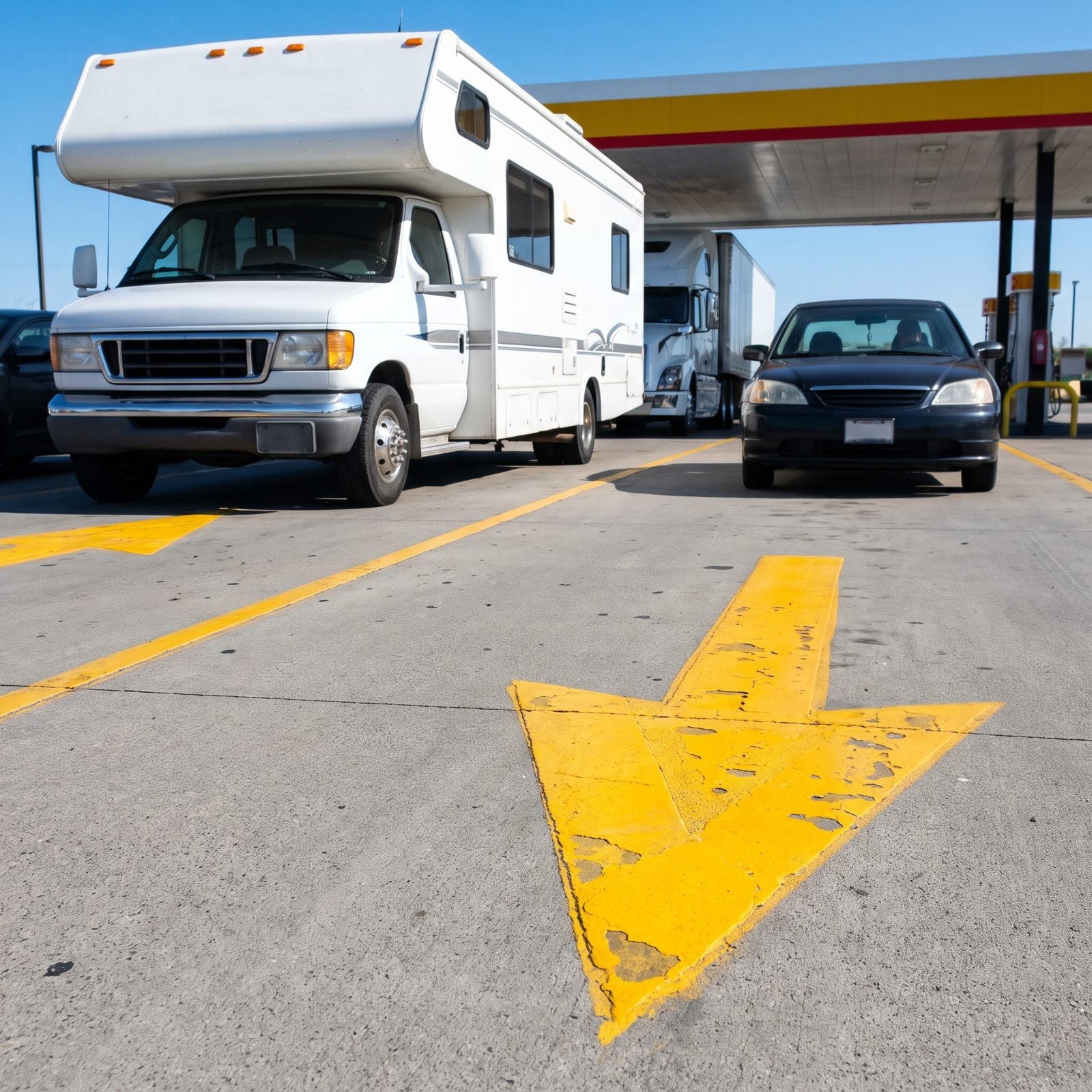
Fuel lanes flow one way for a reason. Enter against the arrows and you’ll end up nose to nose with a truck that has nowhere to go — and neither do you, with 40 feet behind you.
Follow the painted direction even when a closer pump tempts you to cut in. The shortcut that saves thirty feet can cost you twenty minutes of untangling a jam you built yourself.
17. Queue Straight Behind a Single Pump
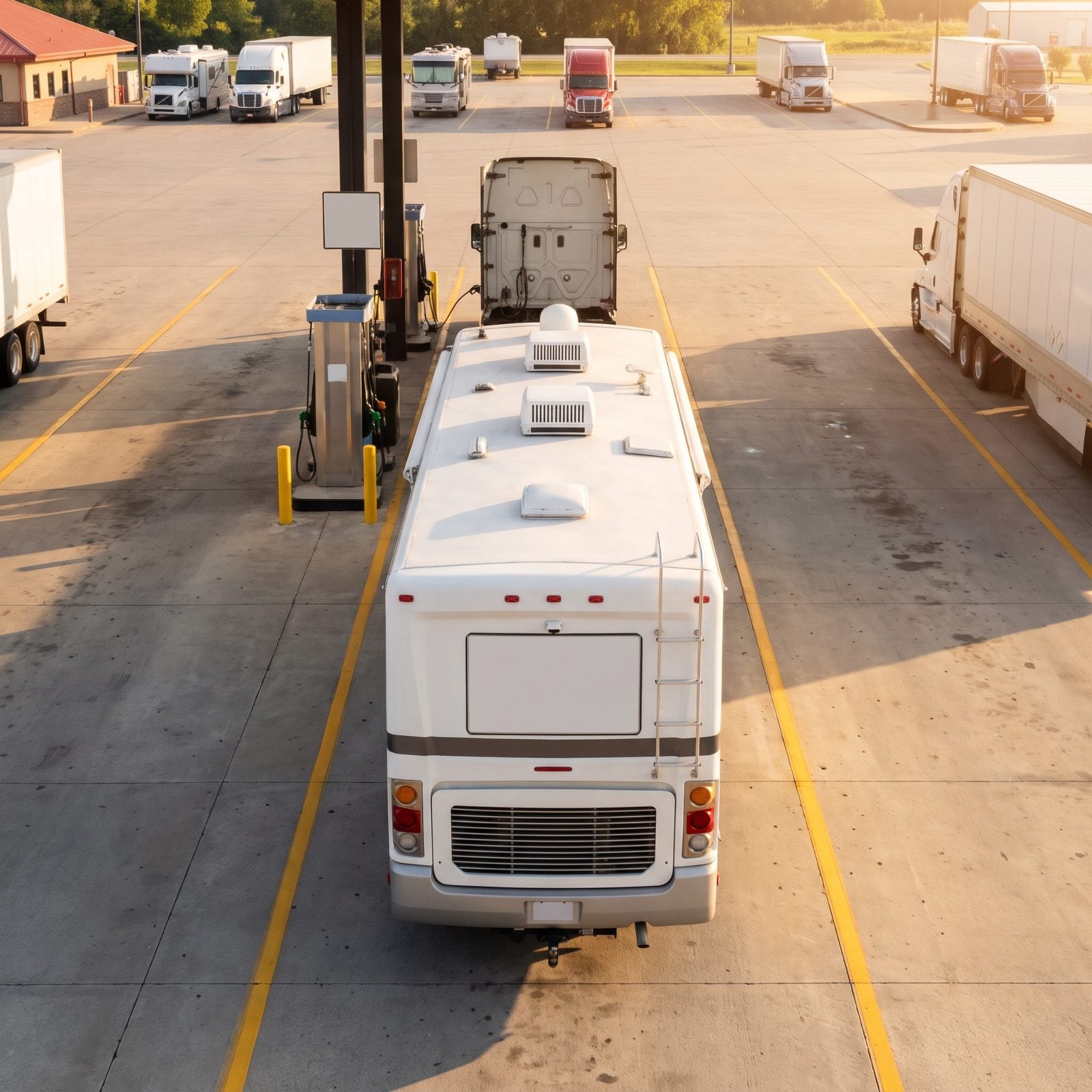
Pick one pump, line up straight behind it, and stay in your lane. Angling across two positions to “save time” blocks the pump next to you and confuses everyone trying to read the queue.
A big rig takes up the whole lane anyway, so make that work for you. Square, patient, single file reads as a driver who’s done this before. Diagonal reads as a driver about to cause a scene.
16. Leave the Rig Ahead Room to Pull Away
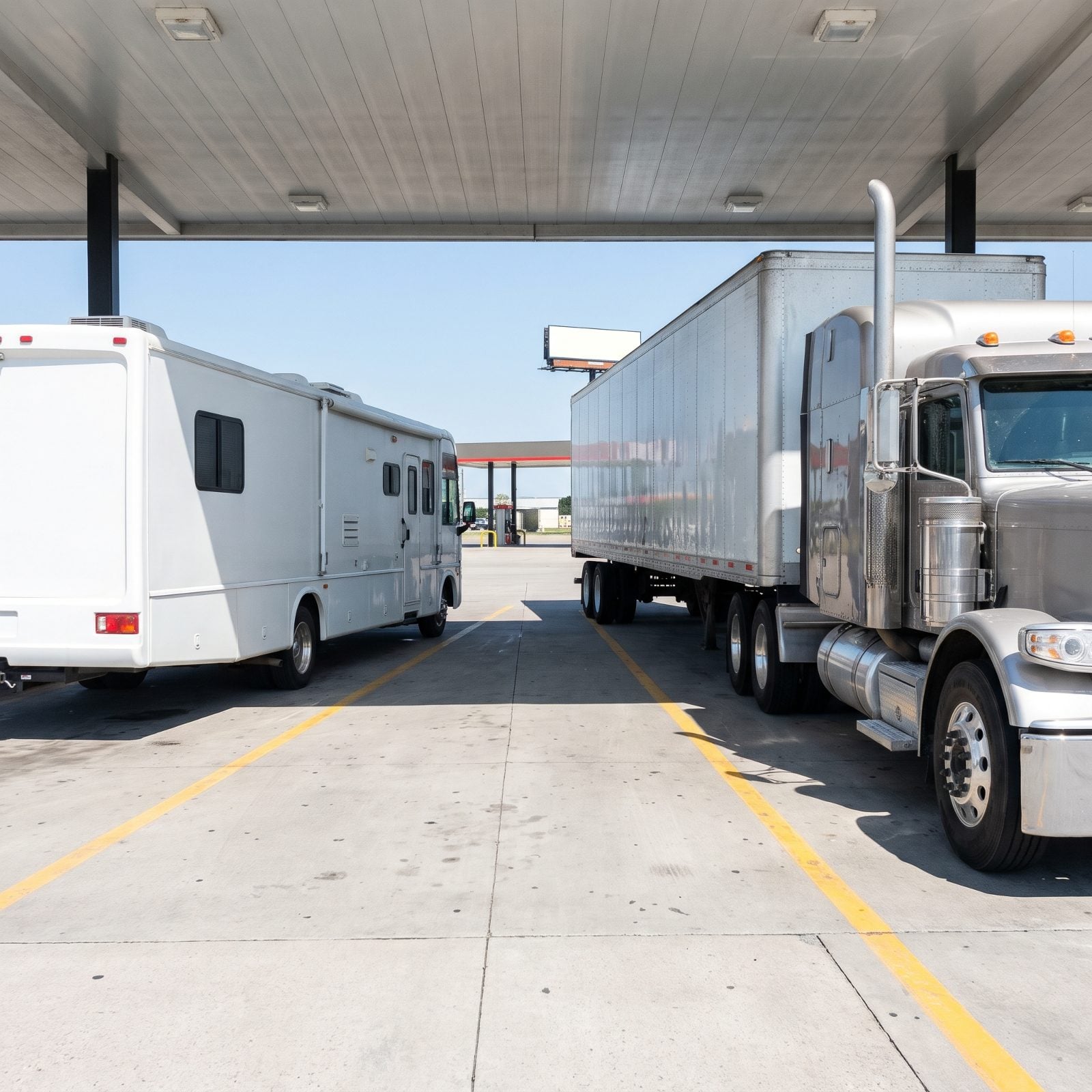
Park tight beside a truck at the next pump, or stop across its path, and you steal the swing room it needs to pull out. A loaded semi can’t go straight forward off a pump. It has to arc, and that arc needs the space you just took.
Keep the lane in front of the rig’s nose clear until it pulls away. Patience here is cheaper than the standoff that happens when nobody can move.
15. Give a Turning RV Room for Tail Swing
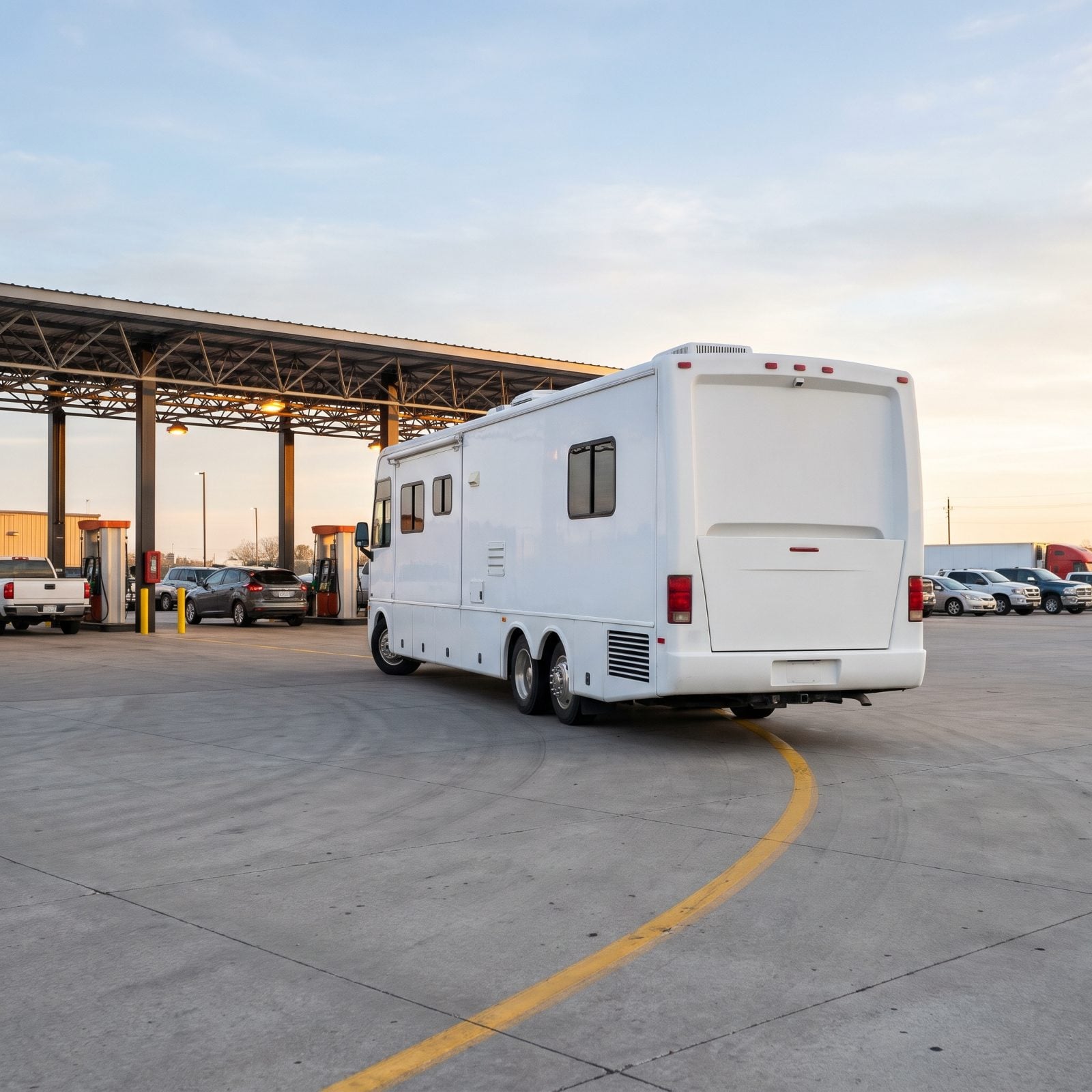
This is the one that bites people who grew up driving cars. The back end of a long rig swings wide, opposite the turn, and when a motorhome starts arcing out of a lane its tail sweeps across space you might be sitting in.
So give a turning RV a wide berth and don’t pull up beside its rear. If you’re the one turning? Go slow, watch your mirrors, and remember that your tail is writing checks your front wheels can’t see. Scout it, swing it, get back on the road.
14. Use a Spotter and Agree on Hand Signals First
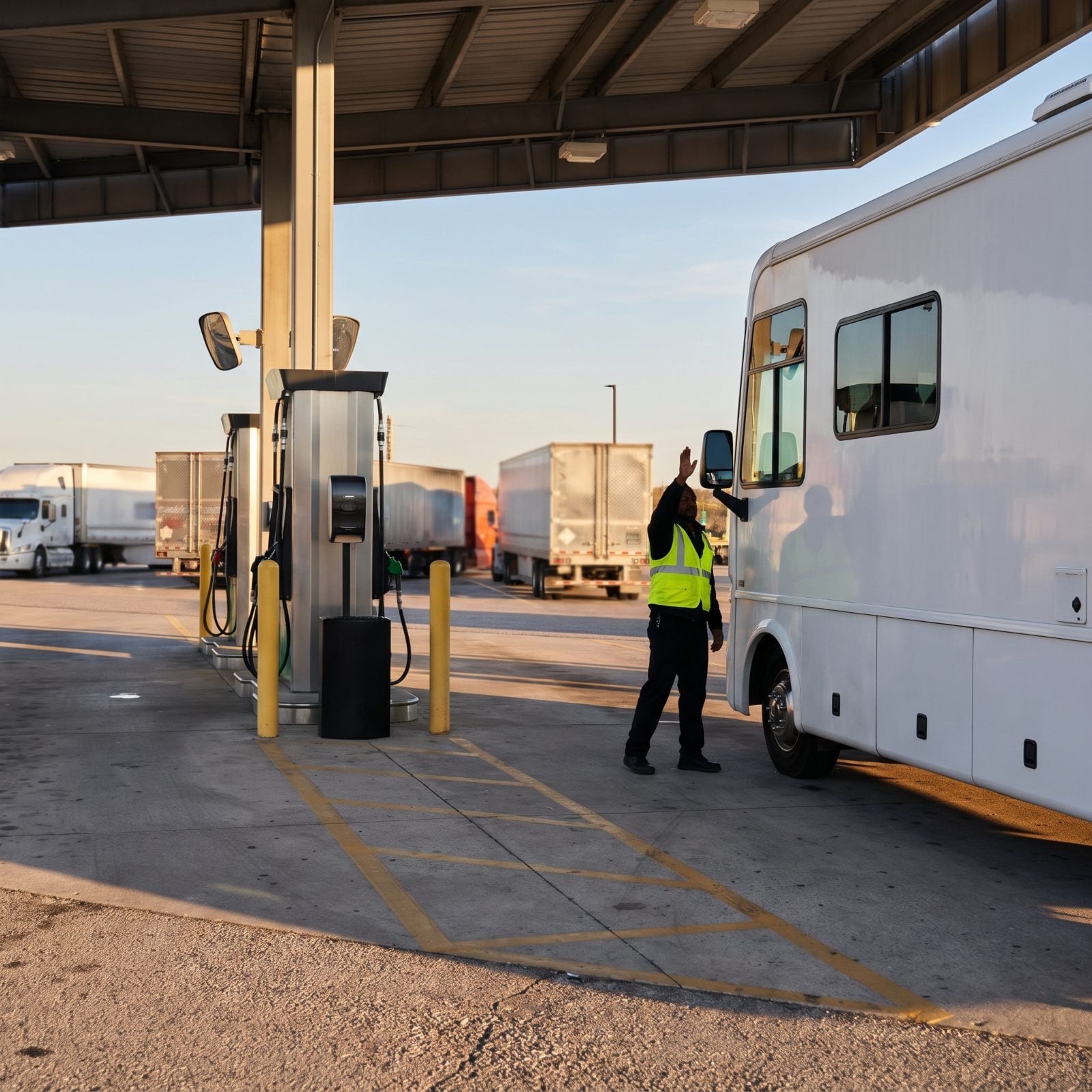
The number one cause of RV damage at fuel islands isn’t the pump. It’s the corner you couldn’t see. A 40-foot coach has blind spots big enough to hide a motorcycle, and the mirrors lie about distance every single time.
Pick one person to spot. One. Two people waving conflicting signals is worse than nobody at all, so settle on three signals before you move an inch — stop, come, and how much room is left. A flat palm means stop right now, no debate.
13. Set the Parking Brake Every Single Time
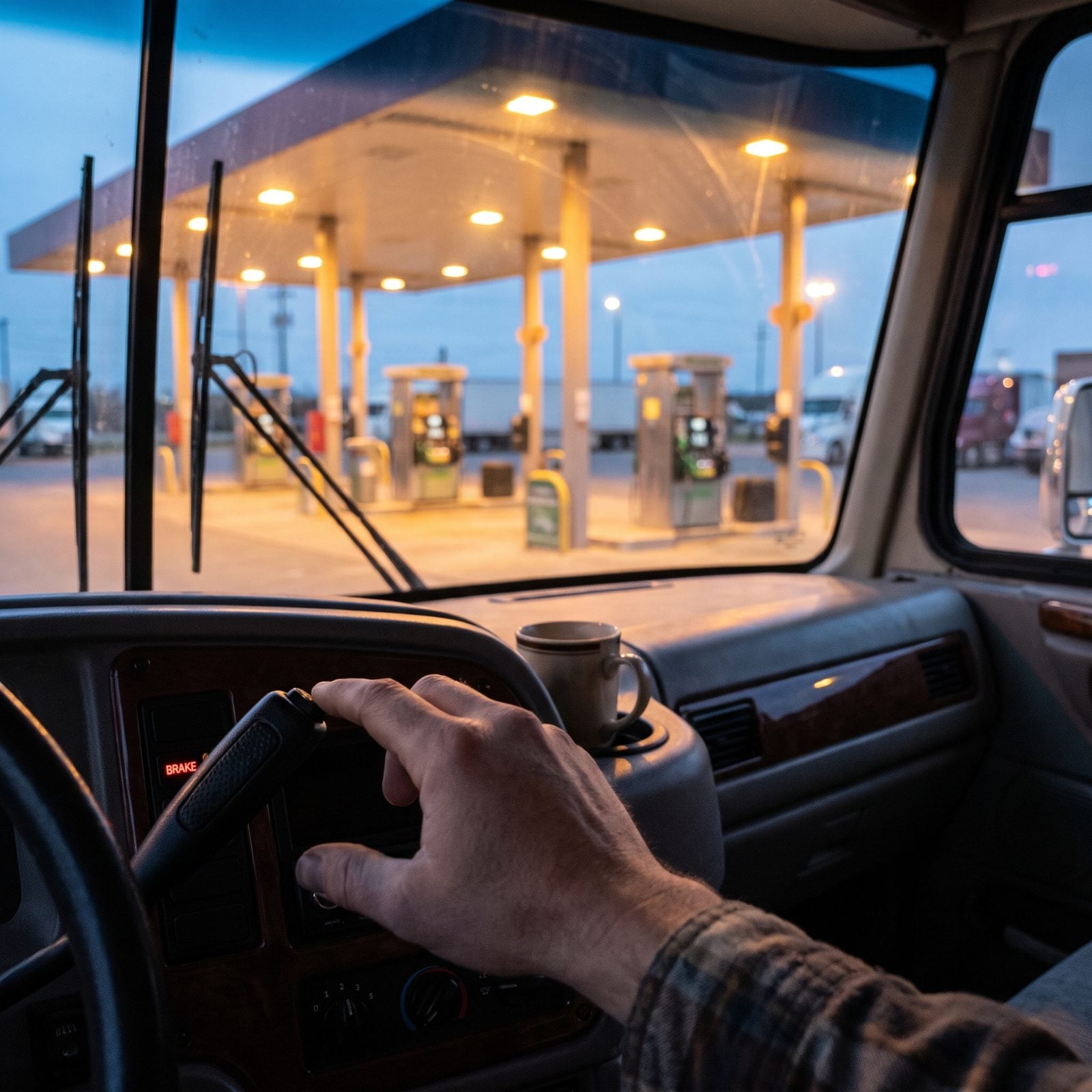
Pavement at a fuel island is almost never dead flat. It’s pitched slightly for drainage, and a rig that drifts an inch while you’re fueling can pinch a hose or roll toward the dispenser.
Set the brake every time, even on ground that looks level. Transmission in park is not enough on a loaded coach. The habit matters more than any single stop — do it automatically and you’ll never be the one chasing a rolling motorhome across a lot in your socks.
12. Shut Down the Engine Before You Touch the Nozzle
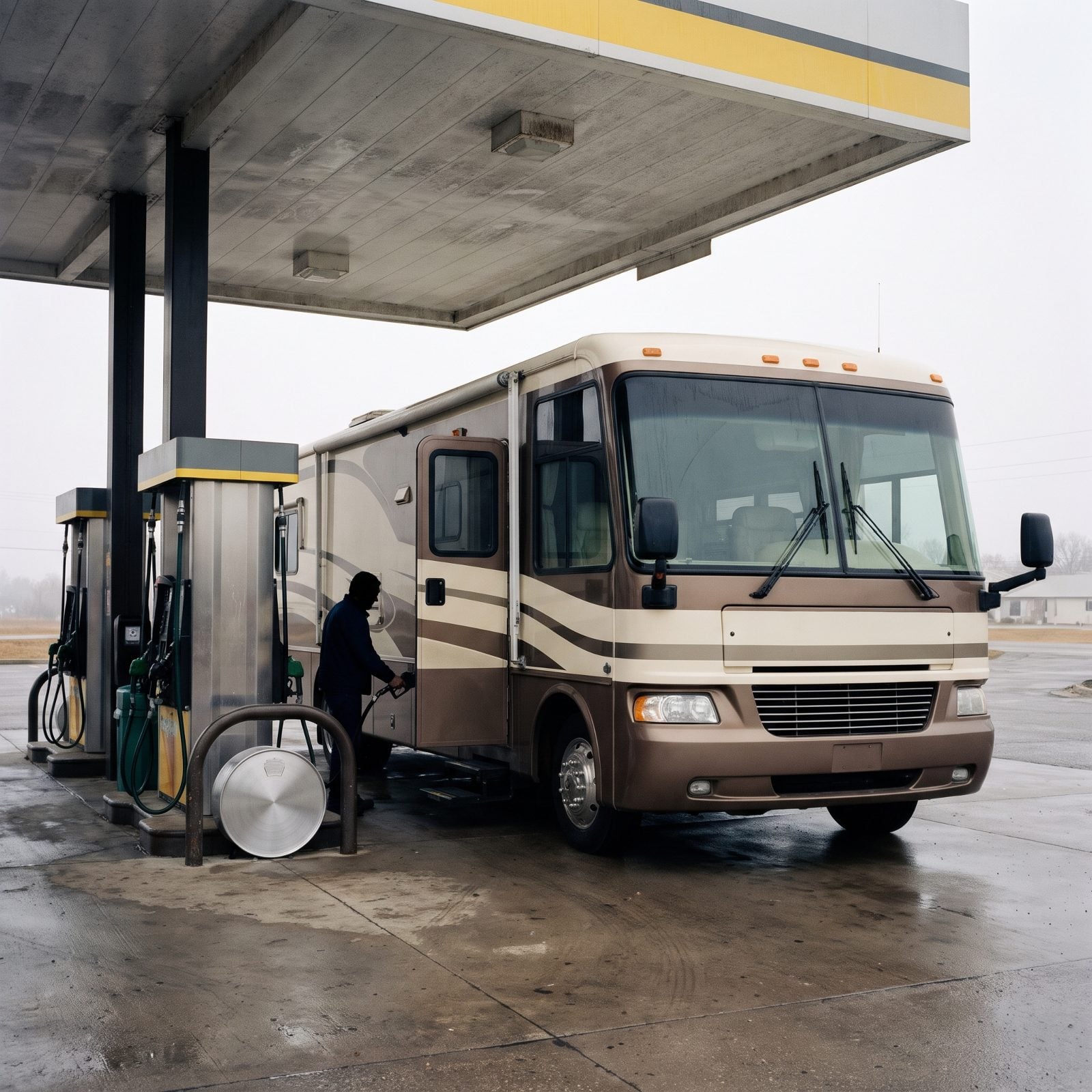
A running engine at the pump is a static spark looking for a reason. Fuel vapor is heavier than air and pools low, exactly where you don’t want an ignition source humming along.
Key off before you unbuckle. Yes, it means the dash cameras and the climate stop. That’s fine. The engine stays dead until the nozzle is back in its holster and the cap is tight. Nobody debates this one, which is exactly why some people get lazy about it after a few hundred uneventful stops. Don’t be that person.
11. Shut Down the Generator Before You Get Near the Pumps
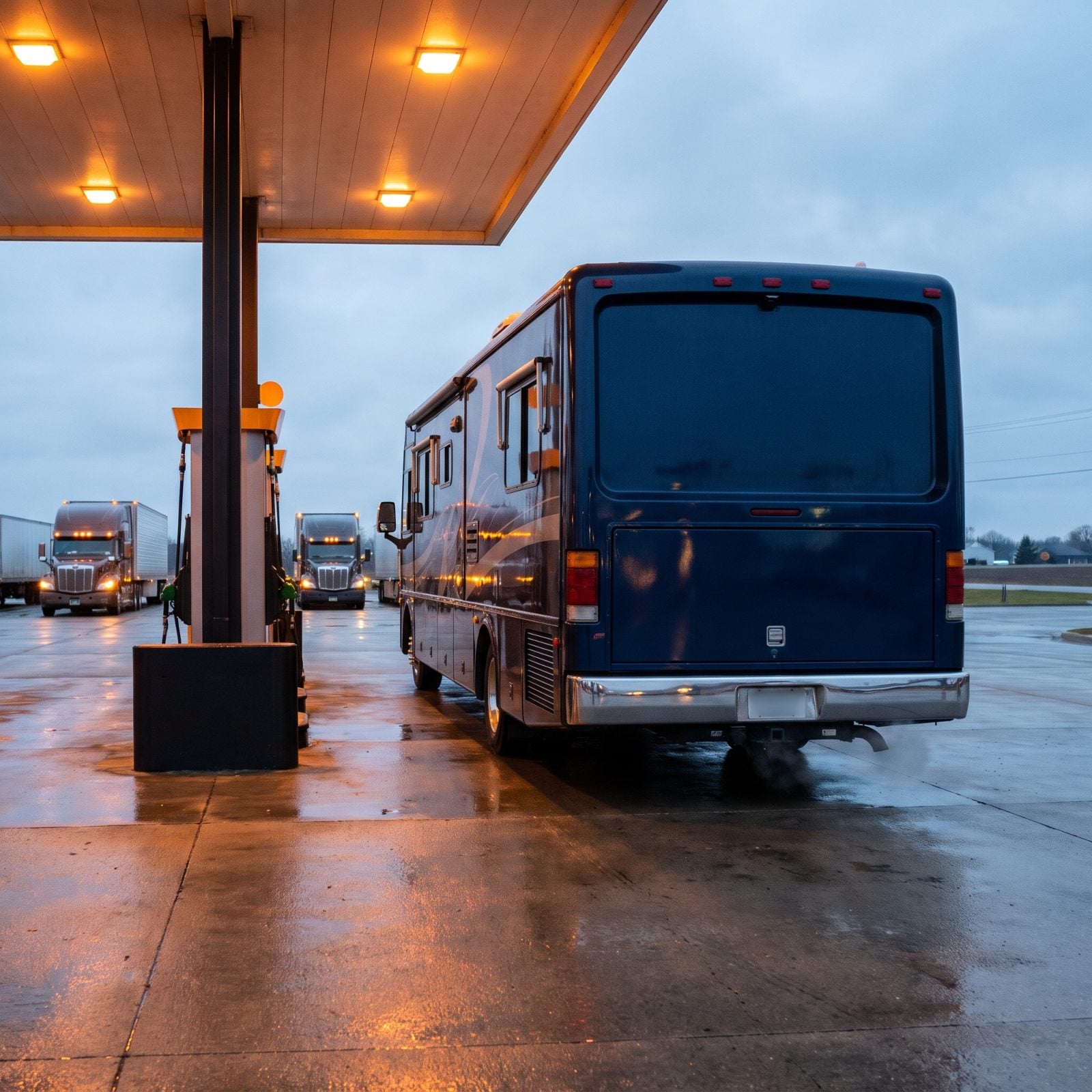
The onboard generator runs on the same fuel you’re about to pump, and its exhaust and electrical arc belong nowhere near a vapor-rich island. It’s easy to forget because it hums along quietly in its own compartment.
Shut it off before you turn into the lane, not after you’ve parked. Running the AC or charging while you drive? Flip the gen off a mile out so you remember. A hot generator plus diesel fumes is exactly the scenario those posted “no smoking” signs are really about.
10. Have Your Payment Method Ready Before You Pull In
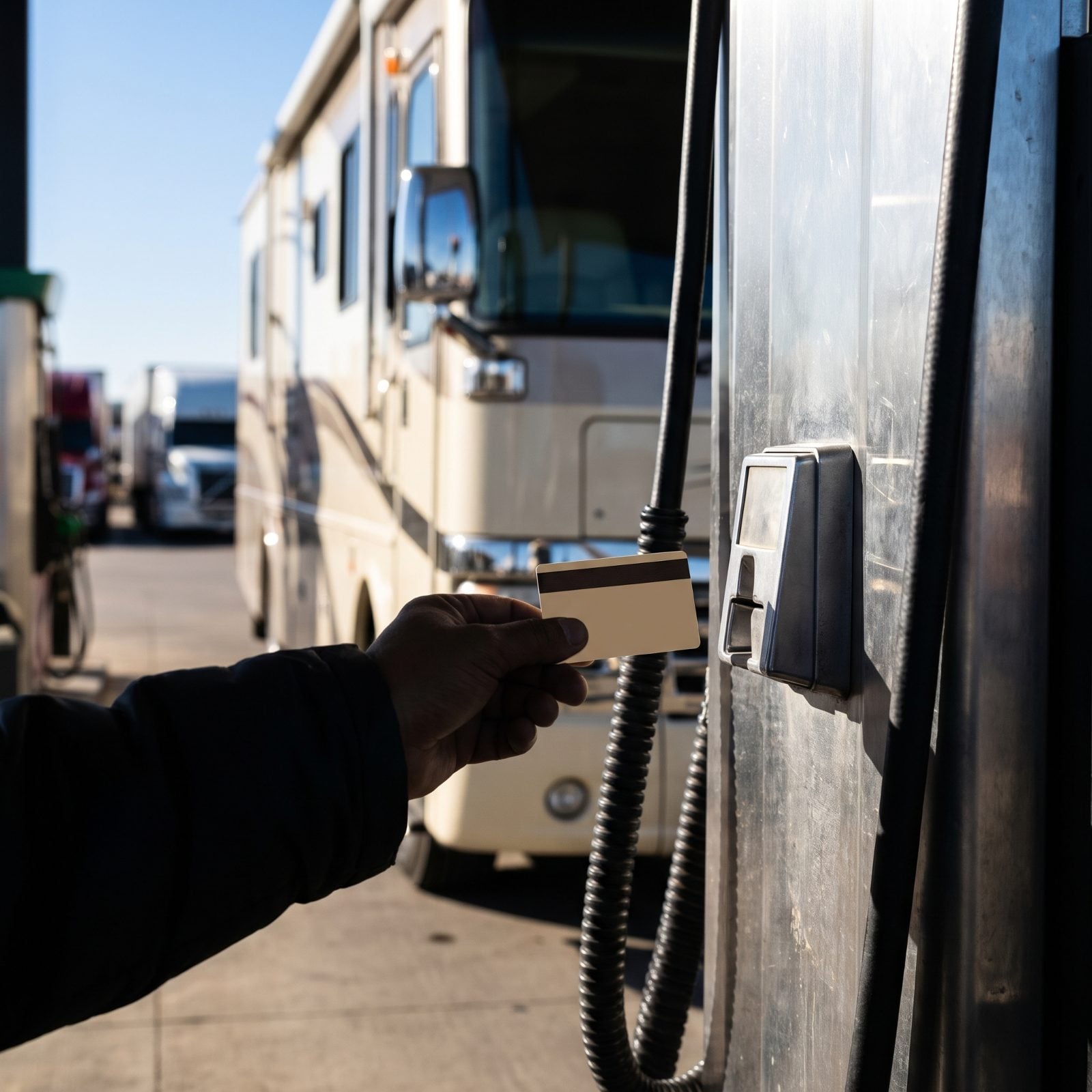
Fumbling for a card while a line of trucks idles behind you is the fastest way to earn a horn salute. These lanes are a shared resource with real throughput, and a big rig parked at a pump digging through the center console is a bottleneck.
Card in hand, PIN remembered, loyalty number known before you stop. If your card runs on a rewards app, open it before you kill the engine so you’re not standing at the pump waiting for cell signal.
9. Start a High-Flow Truck Nozzle at Its Slowest Setting
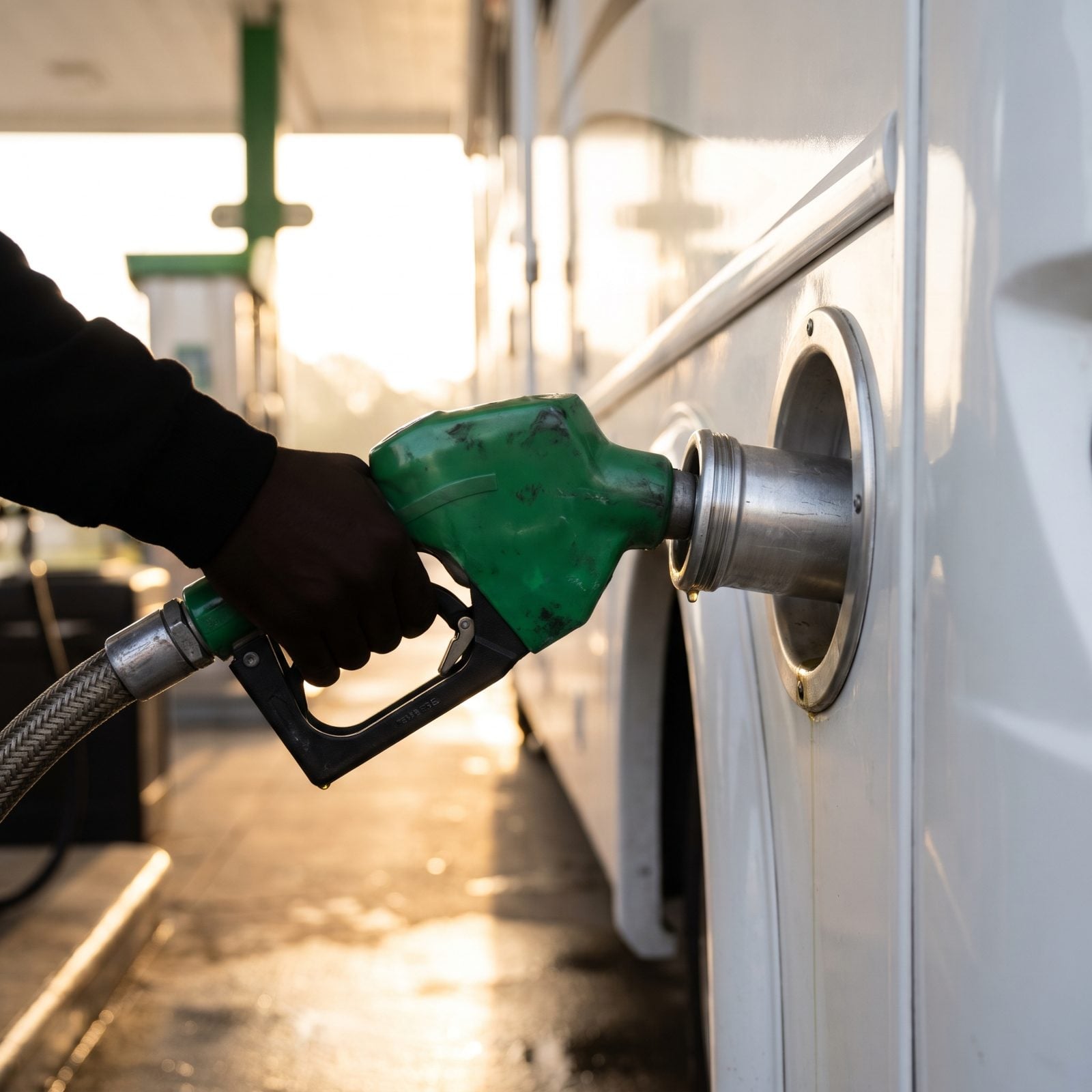
Truck pumps move fuel fast — far faster than a car pump — and a full-squeeze start into an RV fill neck will blow diesel back in your face and onto the ground. The neck on most coaches just isn’t built for that volume at full tilt.
Crack the lever gently and let it find a steady flow. Listen to the gurgle. If it sputters or burps back, you’re going too fast for the vent to keep up. Ease off. A slow start costs you thirty seconds and saves you a change of clothes and a cleanup.
8. Never Force a Nozzle Into a Poorly Fitting Fill Neck
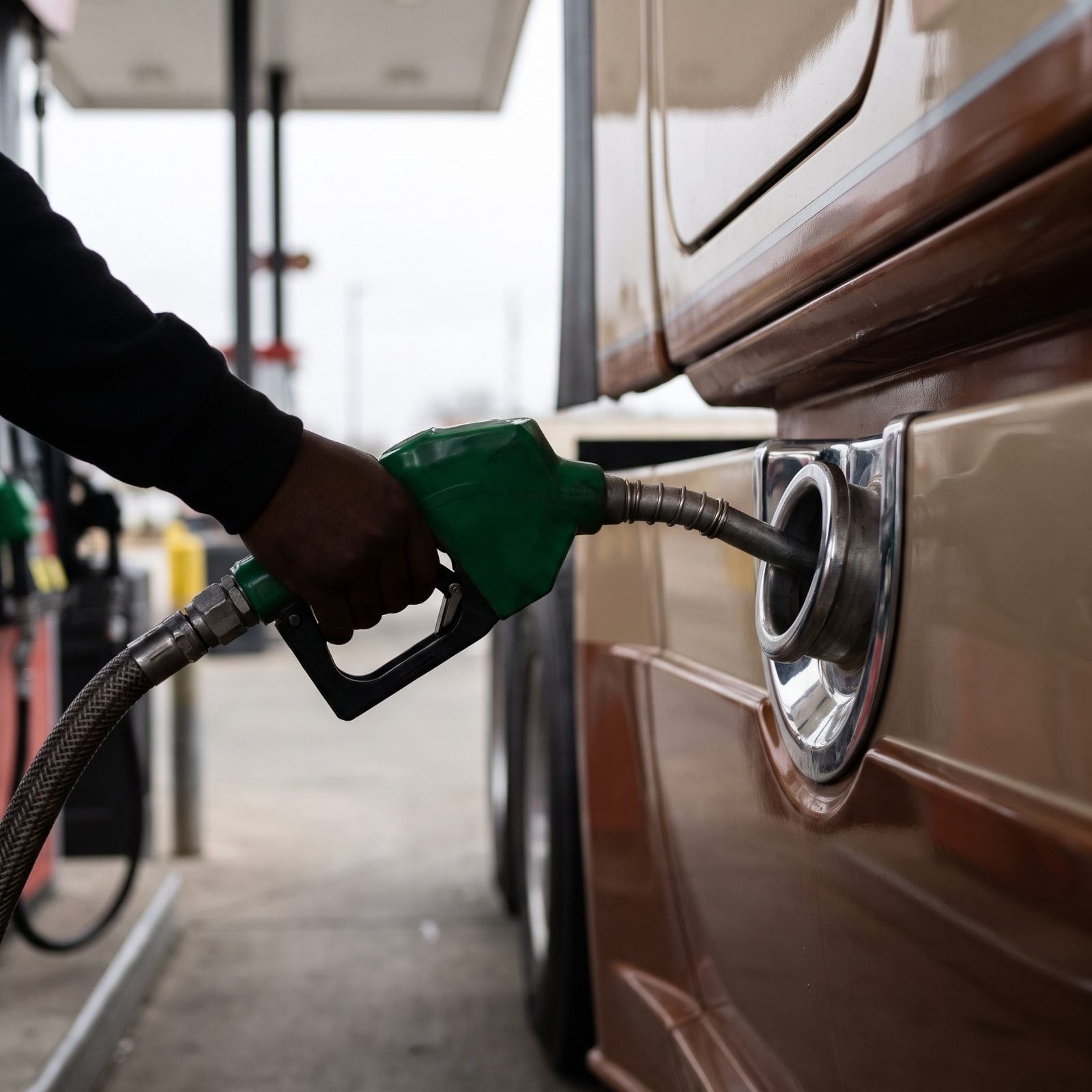
If the big truck nozzle won’t seat cleanly in your fill neck, that’s information, not an obstacle to muscle through. Forcing it damages the neck, breaks the seal, and sets you up for a spill the second you squeeze.
Hold it at an angle that seats naturally, or walk over to a standard-size dispenser if the truck lane’s spout is too fat for your neck. Plenty of RVs do better at the car side anyway. And if you do leak a little, mop it up and tell the attendant. Leaving diesel on the ground for the next person is the one courtesy failure I’ll actually judge you for.
7. Stay Beside the Nozzle While Fueling
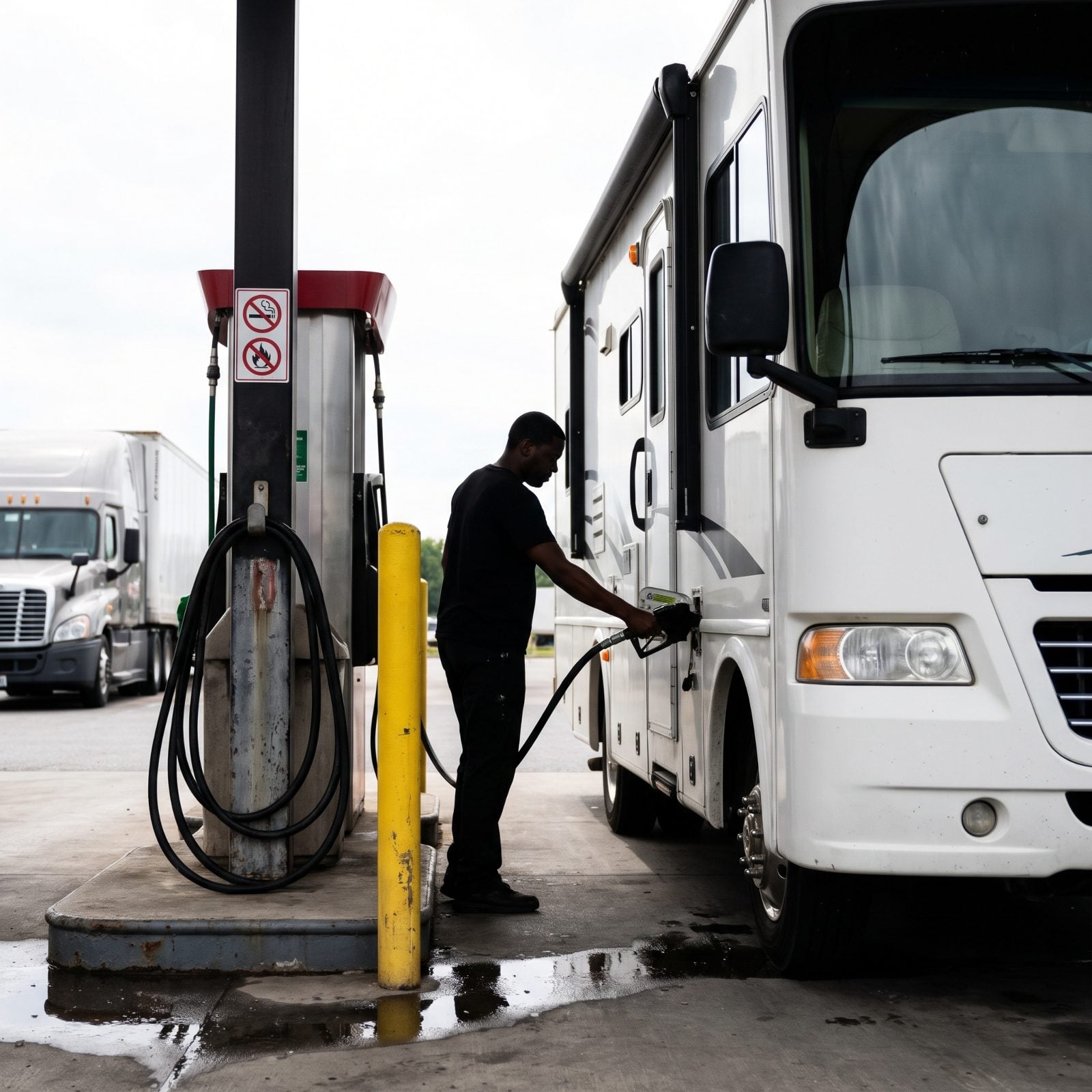
Walk away from a running diesel nozzle and you’re gambling with a spill you won’t catch until it’s a sheet of fuel under your tires. Stay put. Hand on or beside the handle, eyes on the fill.
Big rigs take a while, and the pull to wander off and check the fridge is real. Don’t. Modern auto-shutoffs fail sometimes, and diesel foams and climbs in a way gasoline never does, so you want to be standing right there when it clicks.
6. Never Top Off the Tank After the Pump Clicks Off
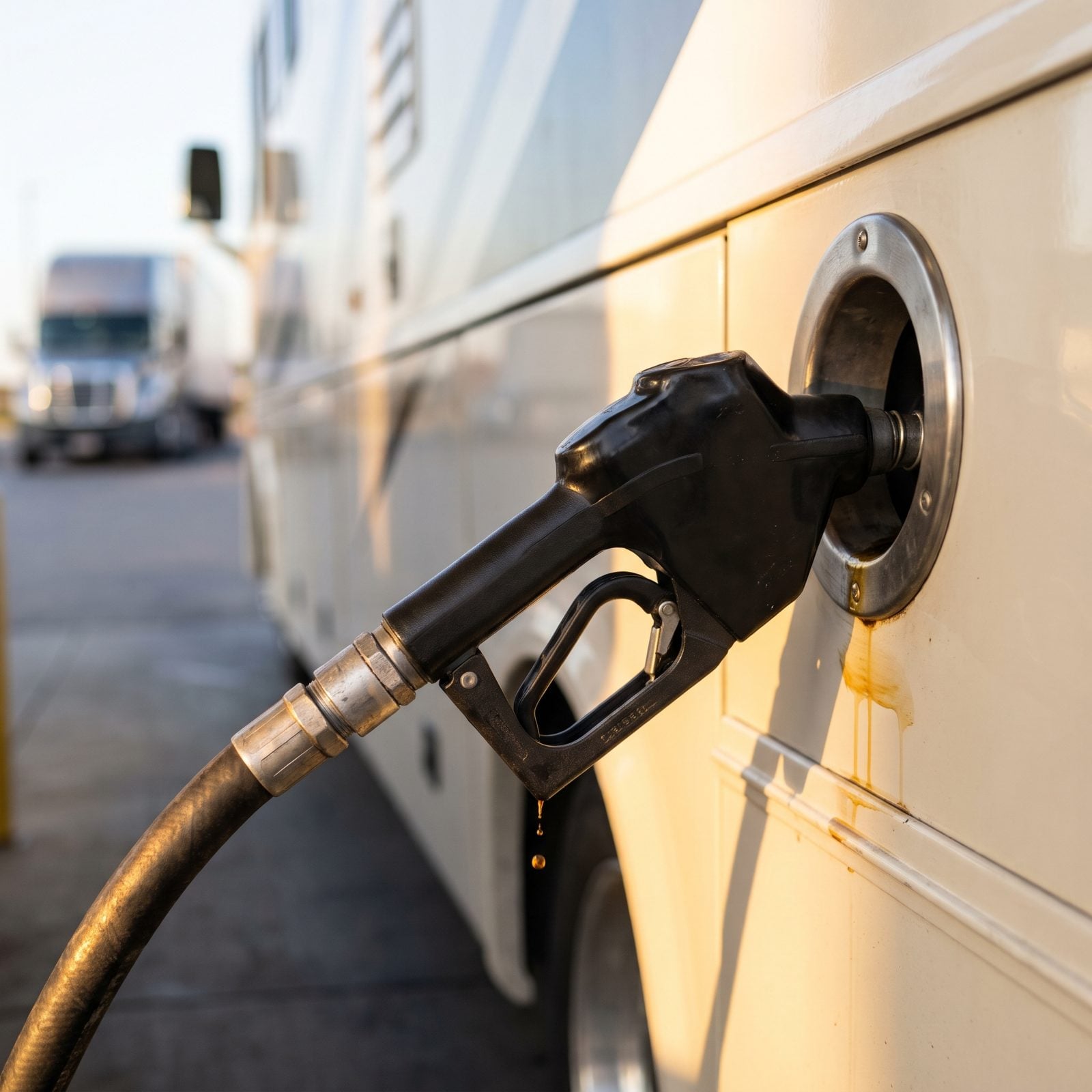
The pump clicks off because the tank is full. Squeezing in another few splashes is how you get diesel running down your paint and onto the concrete.
Fuel expands with heat. Top off a cold tank in the morning, park in the sun by noon, and you’ve got overflow weeping out the vent — it stains, it stinks, and on a motorhome it can seep into places you’ll be scrubbing for a week. When it clicks, you’re done.
Writing about fueling his diesel coach with big truck-stop nozzles, a retired fire chief warns that “if I let the pump run until the nozzle clicks off when full, it overflows about a quart of fuel down the side of my rig as the nozzle clicks off.”
5. Use the Correct DEF Nozzle and Fill the Right Tank
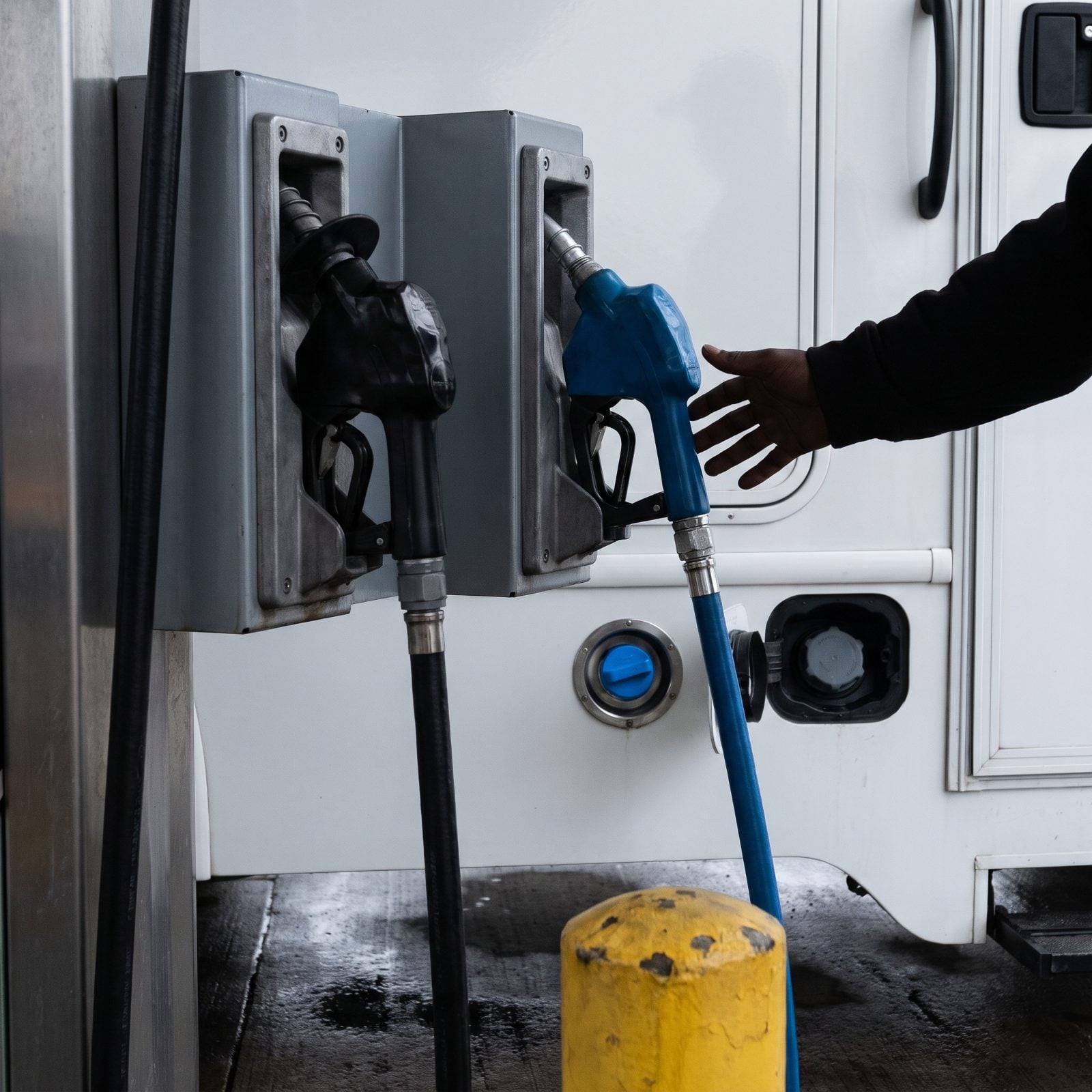
DEF is diesel exhaust fluid, not diesel, and it lives in its own tank behind a blue cap. The DEF port is deliberately narrower so a diesel nozzle can’t fit into it — a safety feature, not an inconvenience.
Put DEF in your fuel tank and you’ve bought yourself a very expensive tow and a flush. Pour diesel into your DEF tank and you’ll trash the system that keeps your emissions legal. So read the caps. Blue is DEF. Match the nozzle to the port before you pull the trigger.
4. Replace Every Fuel and DEF Cap Securely Before Rolling
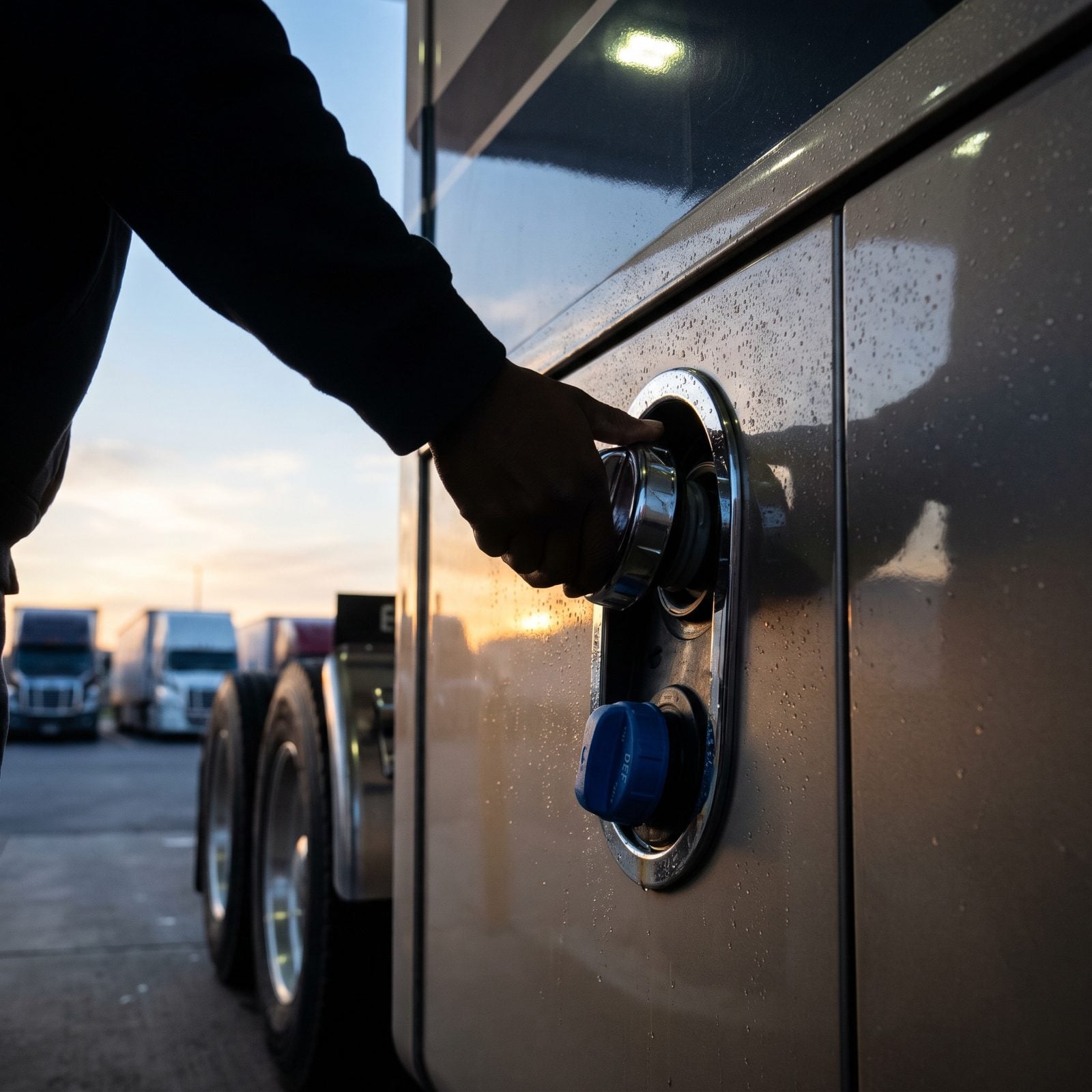
A missing fuel cap is an easy thing to forget and a miserable thing to discover sixty miles down the interstate. You’ll smell it before you figure out what happened.
Give each cap a firm twist until it clicks, then a tug to confirm. DEF caps especially walk off — left balanced on the pump, or on the running board. Tow a loose cap into the wind and it’s gone. Keep a cheap spare in the bay. One last look at the fill area before you climb in.
3. Report Damaged Pumps or Significant Spills Right Away
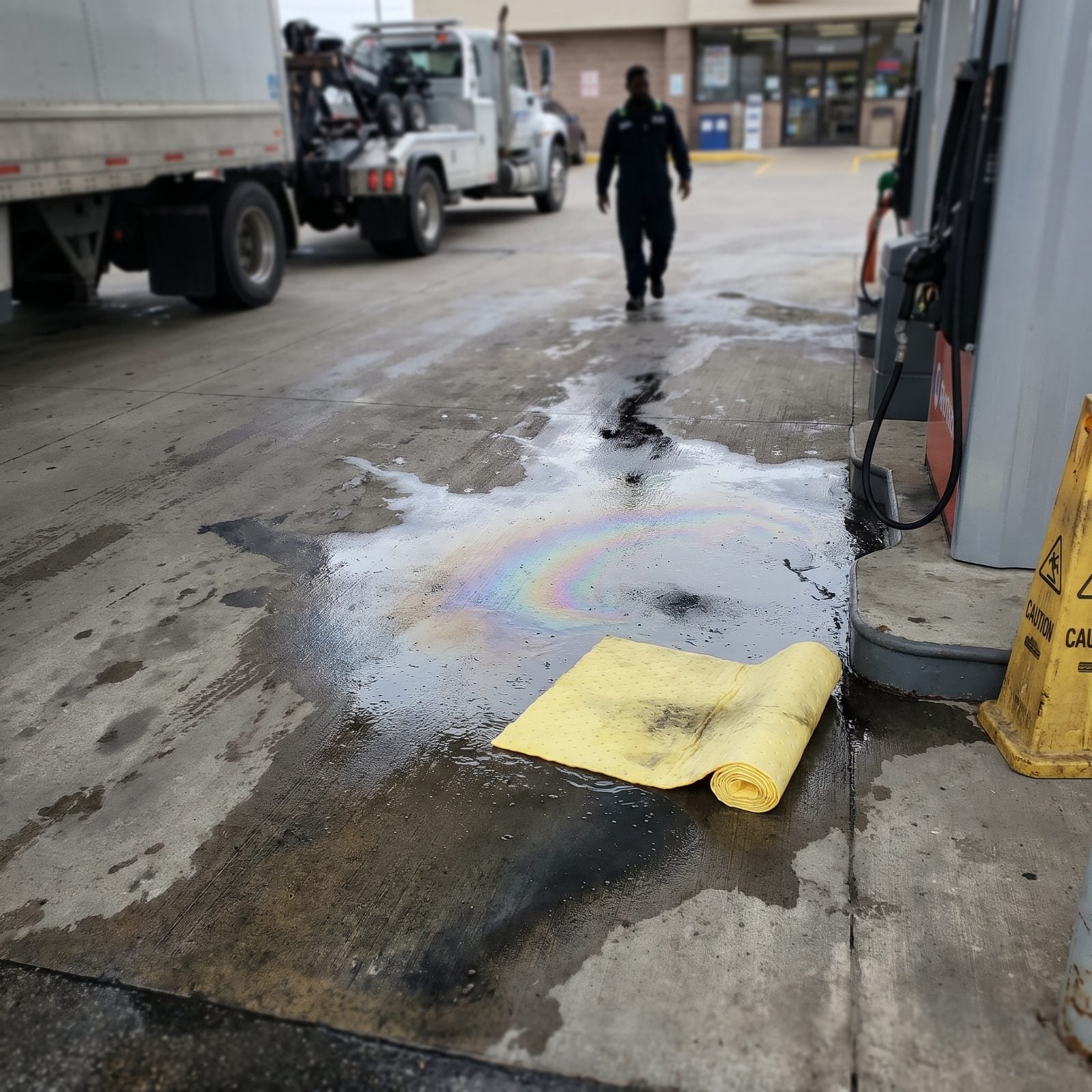
Say you find a pump leaking, a hose split, or you dump more than a cup of fuel on the ground. Tell the cashier. Now, not after you eat.
Spills bigger than a small puddle are a slip hazard, a fire hazard, and sometimes a reportable environmental mess the station is legally on the hook for. They keep absorbent and the right cleanup gear behind the counter. Walk off pretending you didn’t notice, and the next driver slides through what you left. That’s not who you want to be at a fuel island.
2. Move to a Parking Space Before You Buy Food
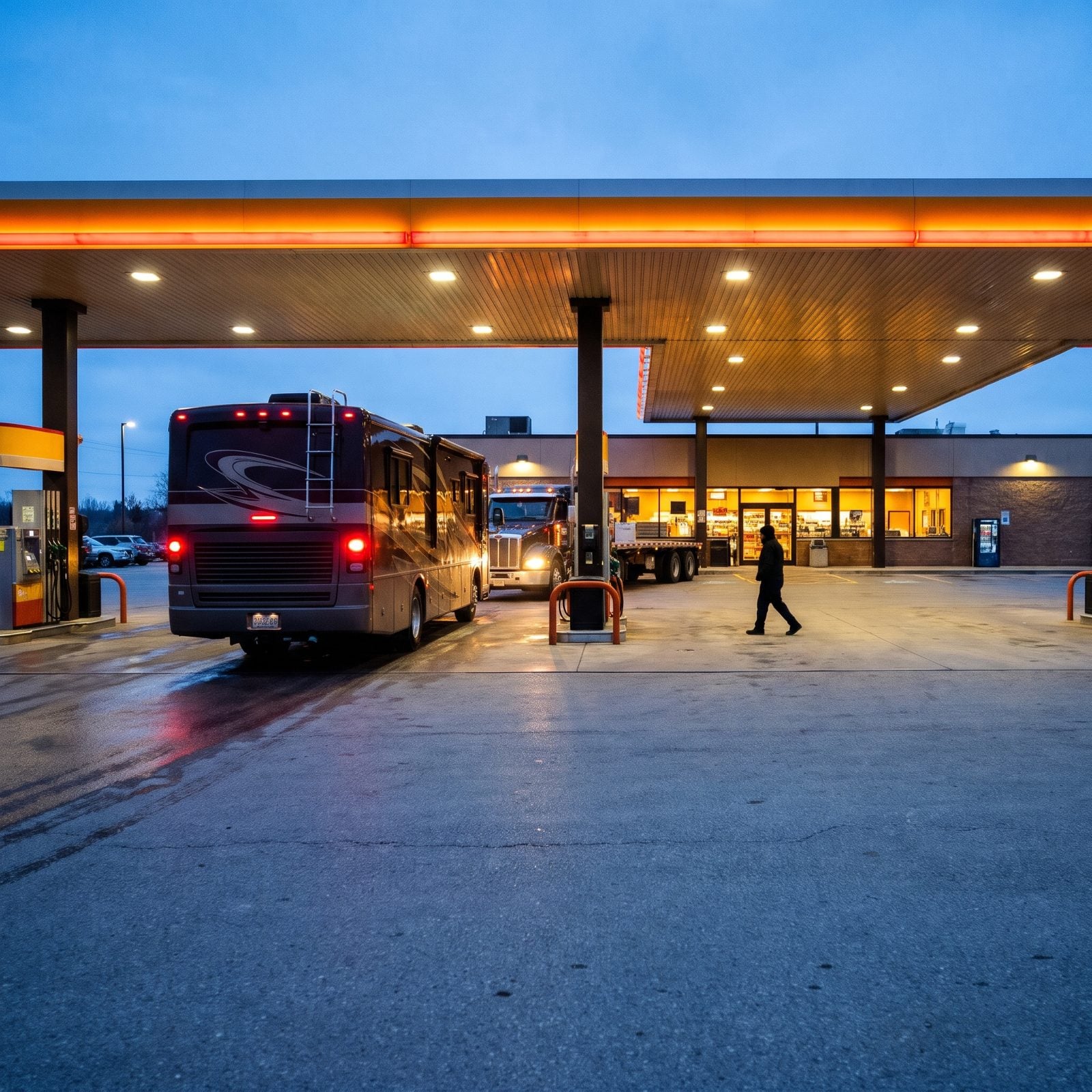
Fueling and then going inside for a sandwich while your rig blocks the pump is about the rudest thing you can pull in a fuel lane. People talk about it. Don’t be the story.
Finish fueling, pull into a parking space, then go buy your snacks and use the restroom. A pump you’re parked at is a pump nobody else can use, and at a busy stop that line can stretch clear out onto the ramp. Thirty seconds of moving saves ten minutes of someone else’s day.
Writing about fuel-island manners for professional drivers, a trucking company blogger puts it simply: “The golden rule? Pull in, fuel up, pay, and move on. If you’ve got shopping to do, park in the designated area first.”
1. Respect That Commercial Drivers Are Working, Not Vacationing
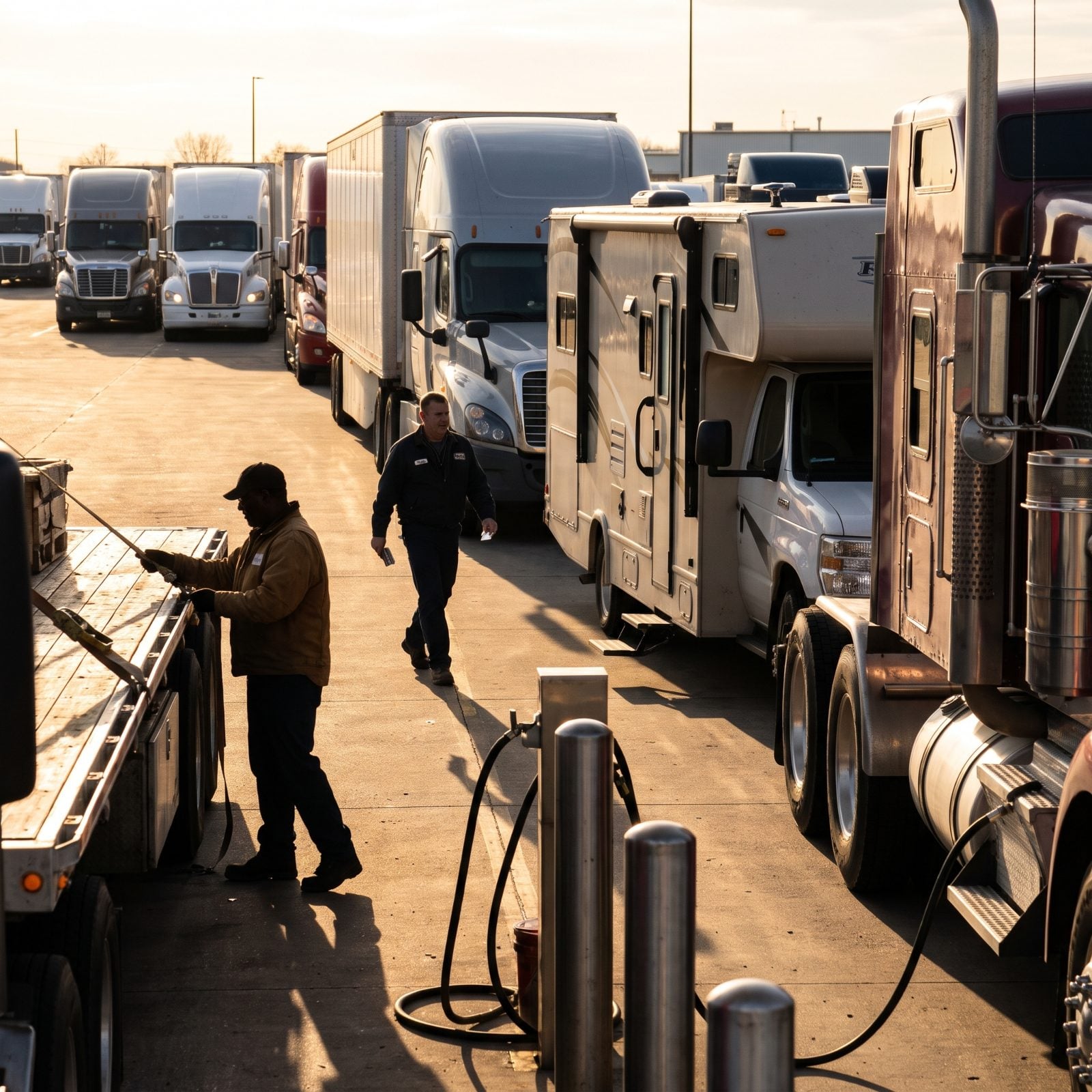
That trucker behind you is on a clock, logging hours, racing a delivery window. You’re headed to a lake. The difference matters when you’re deciding how long to dawdle at the pump.
Fuel efficiently, keep your lane moving, and don’t park the family picnic between the pumps. Working drivers need room to maneuver rigs that are longer and far less forgiving than yours. A little awareness buys you a lot of goodwill — and truckers are the people who’ll wave you into a tight merge later.