
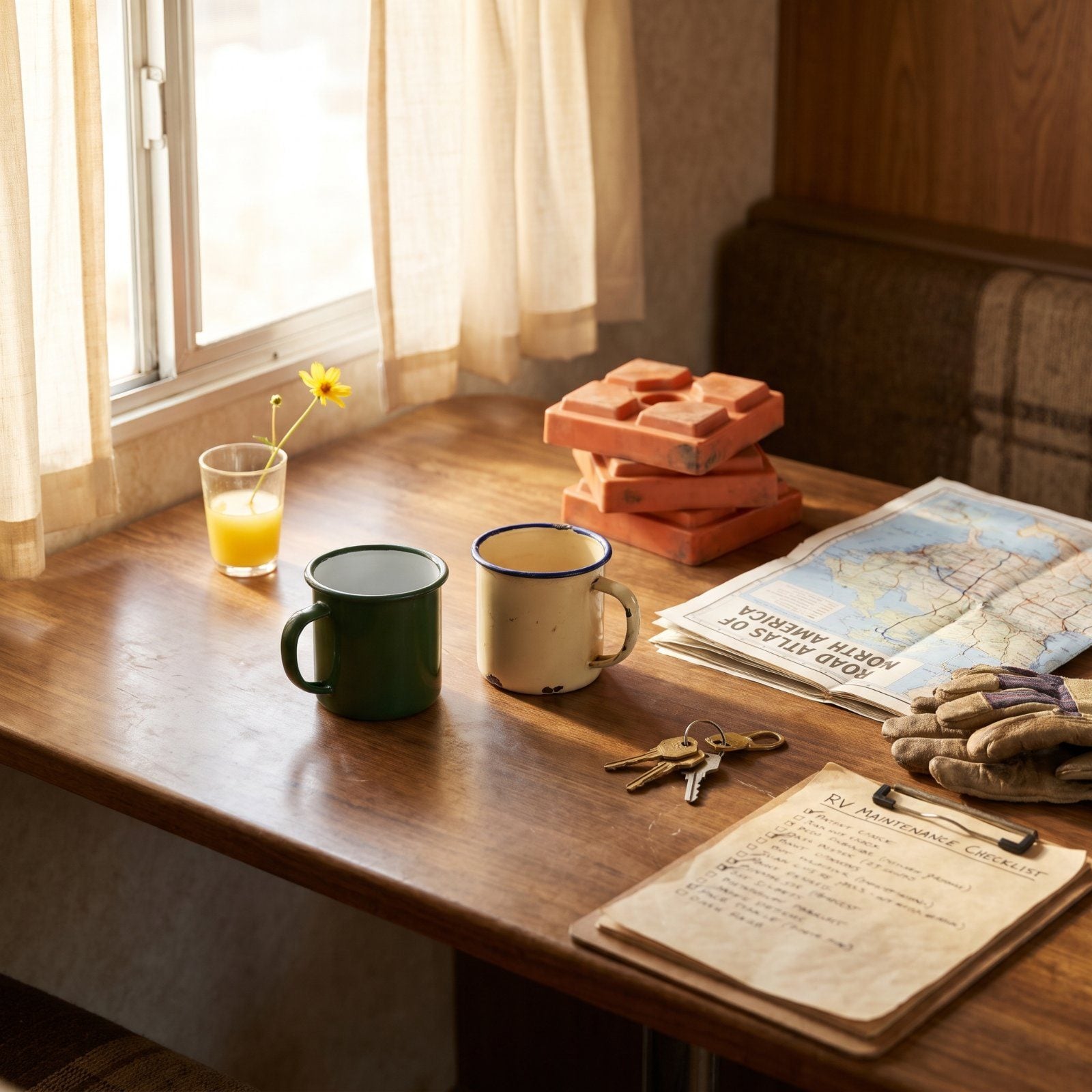
Nobody tells you the water pump will fail at 11 p.m. on the same night you discover your partner leaves the tank valve half-open. You bought the rig for the sunsets. You stayed for the problem-solving. Living in 300 square feet with another person is less a vacation and more a crash course in who you both actually are, and the parallels to those shaky, sweet early years of a marriage are almost too on the nose. The dream phase. The first hard week. The chore nobody wants. Then the arguments that aren’t really about the argument at all. What follows is the honest overlap between settling into a motorhome and settling into a life together, plus the quiet psychology running underneath both.
Please note that some of the images in this article were created with the assistance of AI.
20. You Start With a Honeymoon Loop of Dream Campgrounds
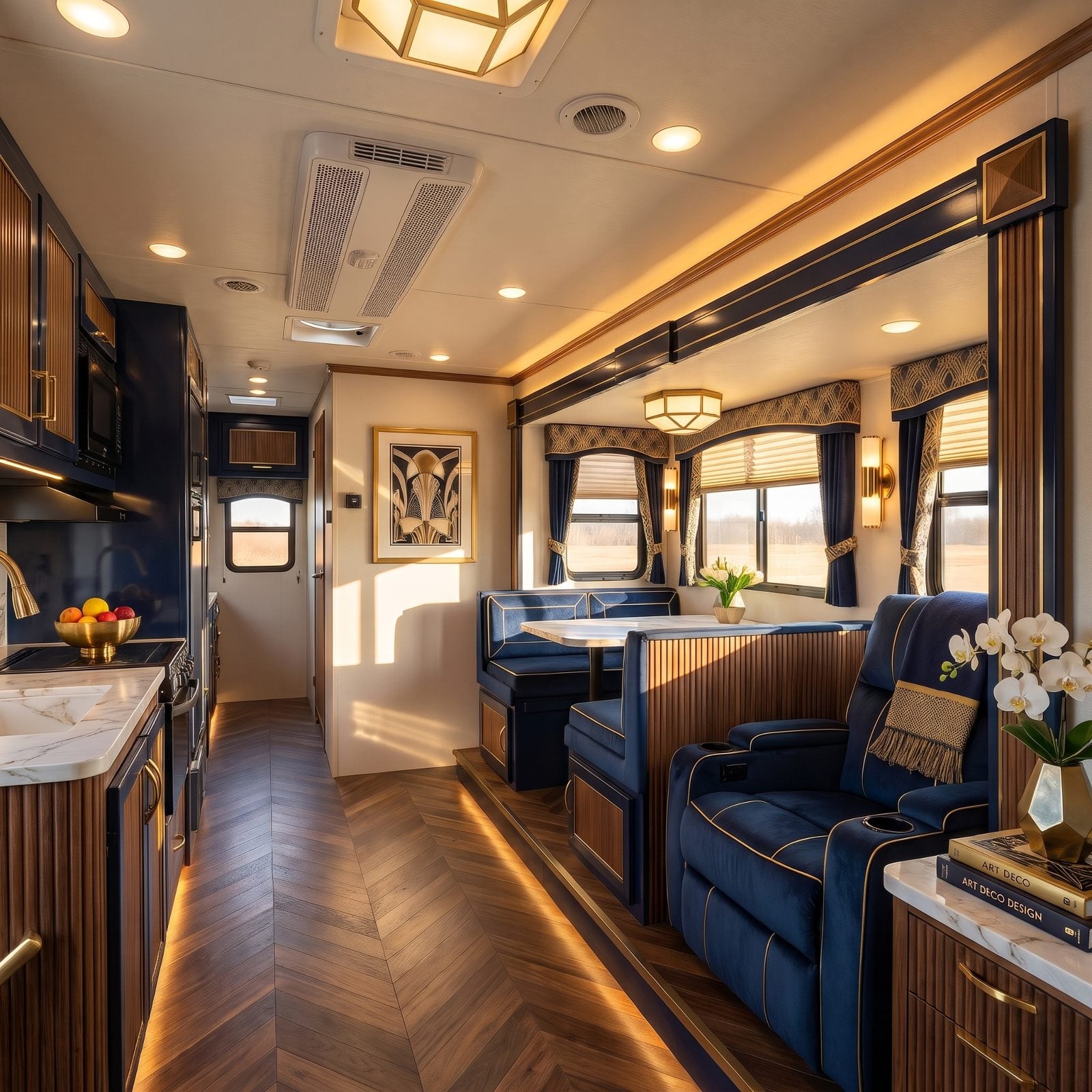
The first month, you only book the postcard sites. Oceanfront. The one with the waterfall hike. The famous KOA everybody tags. You chase the five-star reviews and the Instagram pins, and every evening ends with wine and a sunset you earned by driving a few hundred miles.
It’s the exact energy of a new marriage, where every weekend is a reservation and every dinner is a little occasion. Peak everything, all the time.
Then hedonic adaptation shows up right on schedule, because the brain is a terrible saver of pleasure. The tenth jaw-dropping view lands softer than the first, since we calibrate to whatever becomes normal. None of that is a flaw in you or the rig or the marriage. It’s just how the wiring works. The honeymoon loop was never going to stay a honeymoon, and here’s the good news hiding in that: the quiet Tuesday nights, the ones with leftovers and a crossword, end up being the ones you actually remember.
19. The First Rainy Week Reveals What Brochures Didn’t
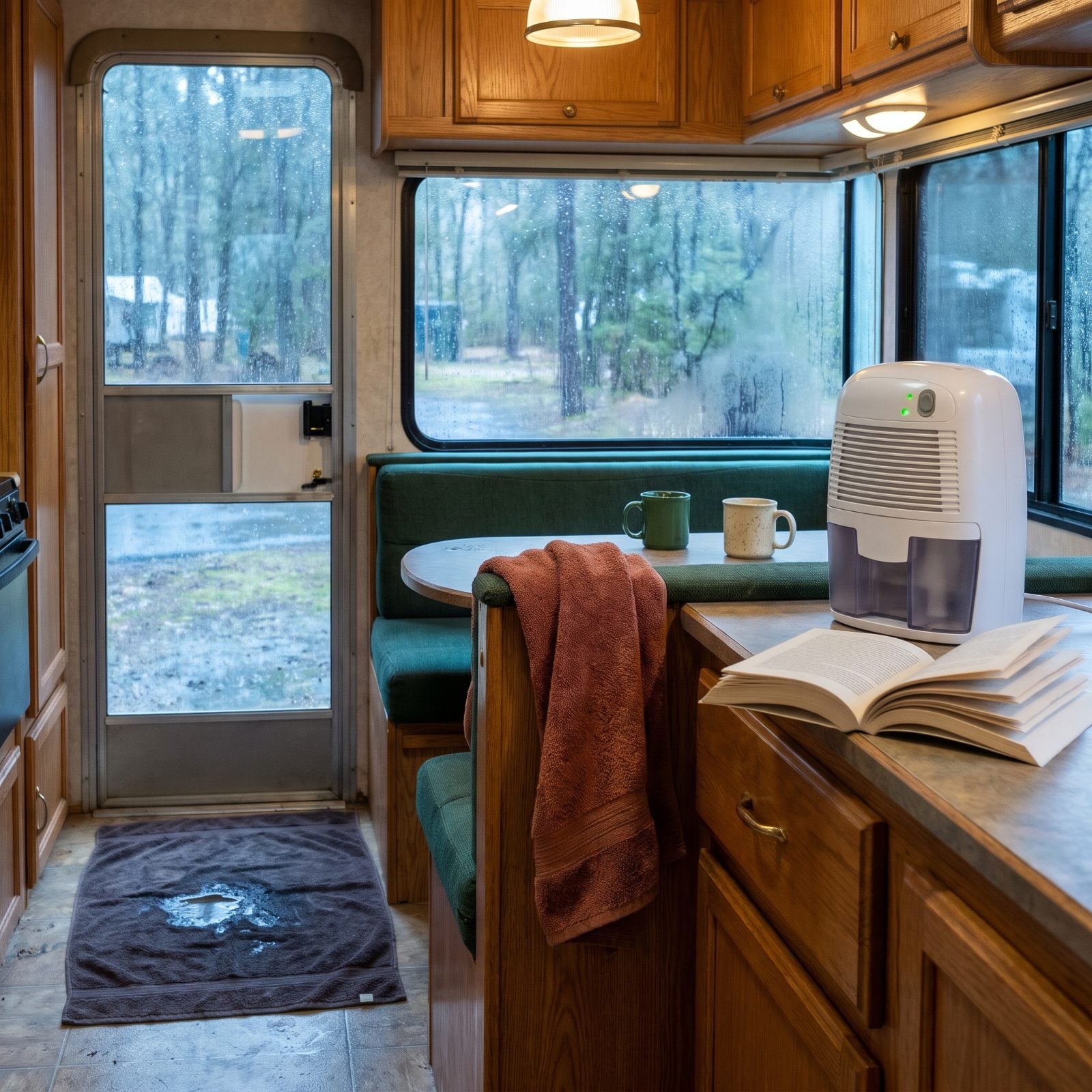
Everything is fine until it rains for six days straight.
Suddenly you learn the dinette fogs up, the gray tank gurgles, and there’s nowhere to hang a wet jacket that isn’t already on top of another wet jacket. And you two are now sharing a space the size of a walk-in closet with nothing to do but notice each other breathing.
This is the first bad week every couple hits after the wedding, when the logistics the celebration was hiding finally come due. Confirmation bias ran the whole courtship. You saw the sunsets and skipped the fine print, because you wanted the dream and your mind politely filtered out anything that disagreed with it.
The rainy week is not some truth arriving late. It was always part of the deal. The rig that handles a soggy stretch without drama, and the partner who makes you laugh while the dehumidifier hums, those are the keepers.
18. Every Cabinet Forces a Talk About What Stays
Every inch of storage is a vote. The spice rack or the extra cast iron. His toolbox or her sewing kit. There’s no attic to lose the argument in, so the whole thing plays out right there on the counter, both of you holding opposite opinions and one measly shelf.
Merging households does the same thing, just slower. You find out fast that two people’s idea of “essential” barely overlaps.
Blame the endowment effect. We value our own stuff more than it’s worth simply because it’s ours. His battered pancake griddle is sacred; your identical one is clutter. Both of you are certain, and both of you are a little bit wrong. An RV makes the disagreement physical, because square footage does not negotiate. Letting go of something you own feels like a small loss every time, which is exactly why the cabinet talk gets so heated over, of all things, a garlic press.
17. The One-Room Floorplan Exposes Every Tiny Habit
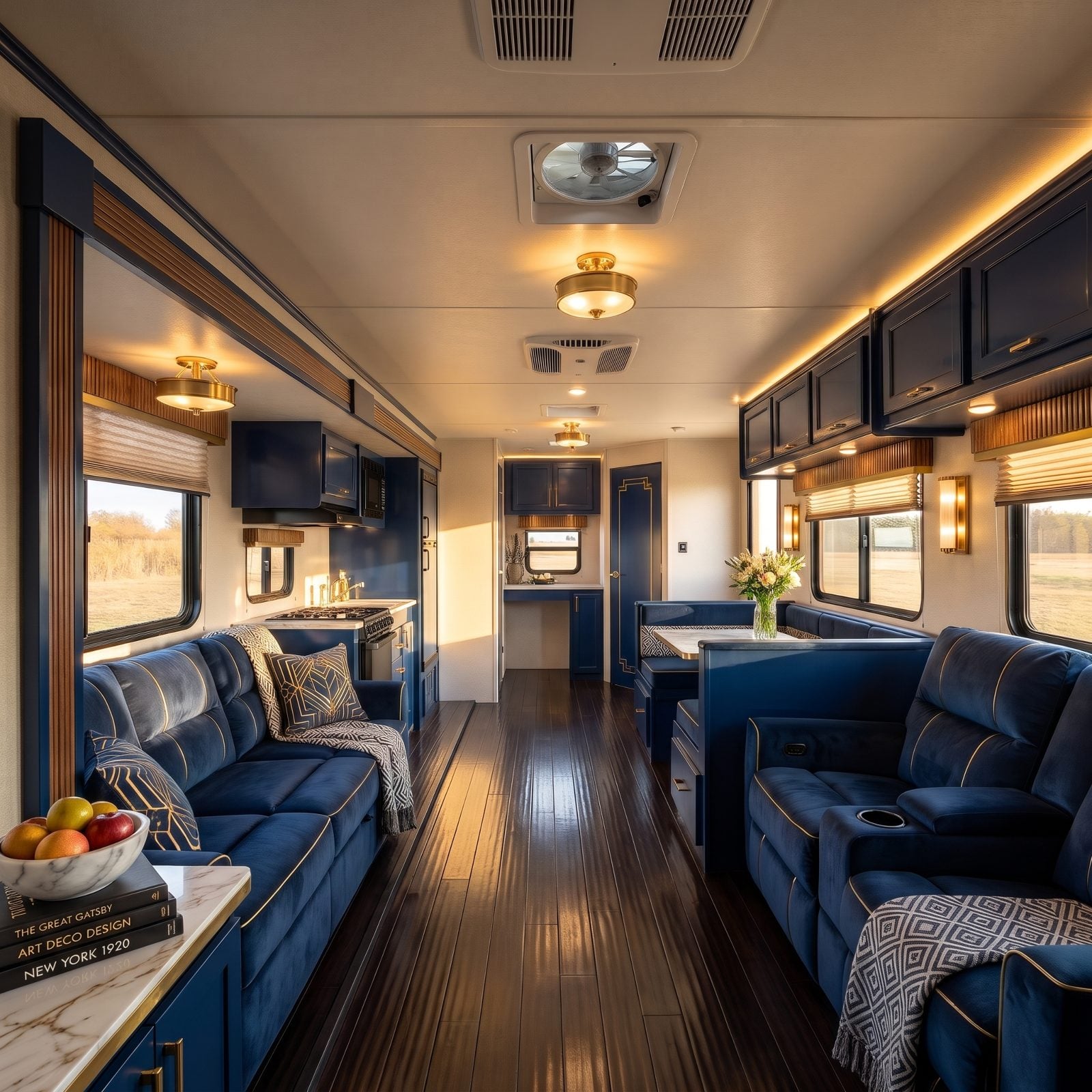
In a house, you can close a door on the way one of you leaves every cabinet gaping open. In an RV? No door. Barely a wall.
Whistling. Loud chewing. The specific way socks migrate to the exact spot you need to stand. Every small habit you used to not notice becomes a daily weather report.
This is the early-marriage shock of full-time proximity, the moment the haze lifts and you see the person in high resolution. There’s a real mechanism called the mere-exposure effect, and most of the time it works in your favor, making the familiar feel safer and dearer. Crank the exposure high enough with no escape valve, though, and little things get loud. The couples who thrive in a single room aren’t the ones with no annoying habits. They’re the ones who learned to shrug, give each other ten quiet minutes, and let the sock live where it lands.
16. The Bed Layout Becomes a Surprising Compatibility Test
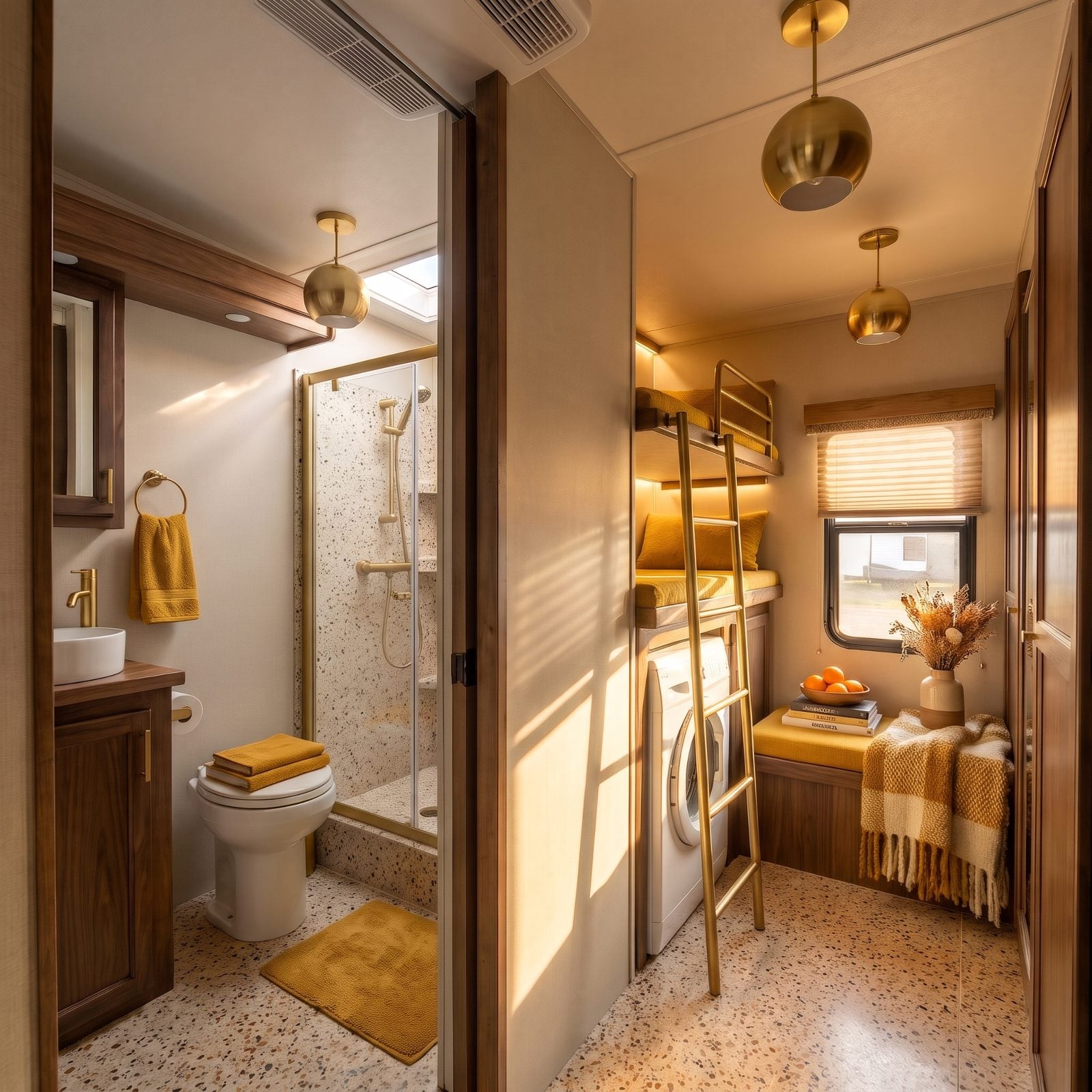
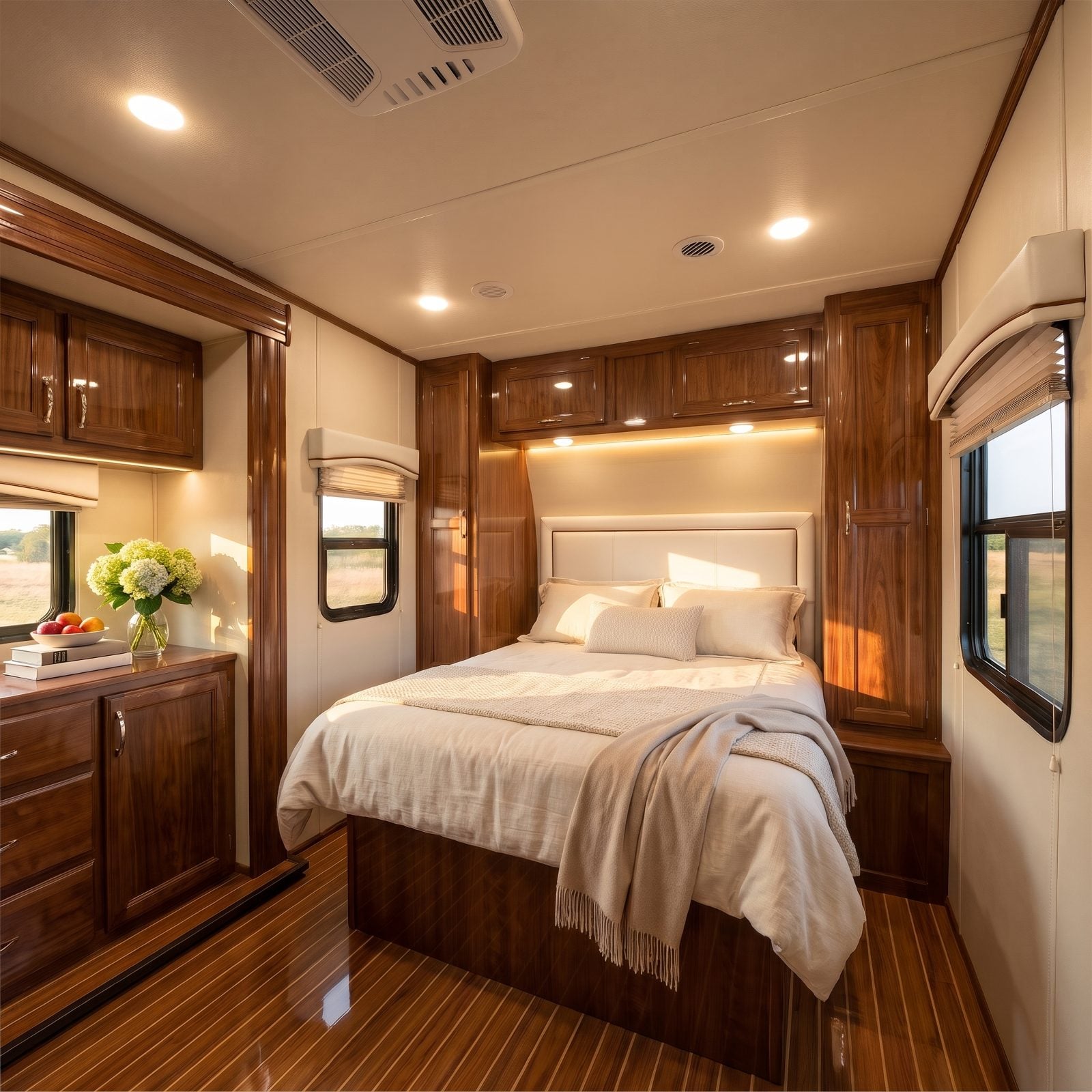
Two narrow bunks are not a bed for two. You learn this the first night, when one of you climbs up to the top bunk and the other claims the bottom one by the window. Who gets the lower bunk. Who runs cold. Who is a furnace. Who needs the fan on and who swears it’s a wind tunnel.
Sleep is where couples quietly make or break their peace, and the RV compresses all of it into two stacked bunks and a nightly negotiation. In a big house, a restless sleeper can drift to the guest room and nobody takes it personally. There’s no guest room here. There is only here.
Reciprocity keeps it kind. I run hot, so I take the bottom bunk; you climb quietly, so you take the top. Small fair trades, made over and over, are what turn cramped bunks into a shared room. Couples who sleep well together aren’t more compatible by luck. They negotiated it, one chilly night at a time.
15. Black-Tank Duty Becomes a Serious Chore Negotiation
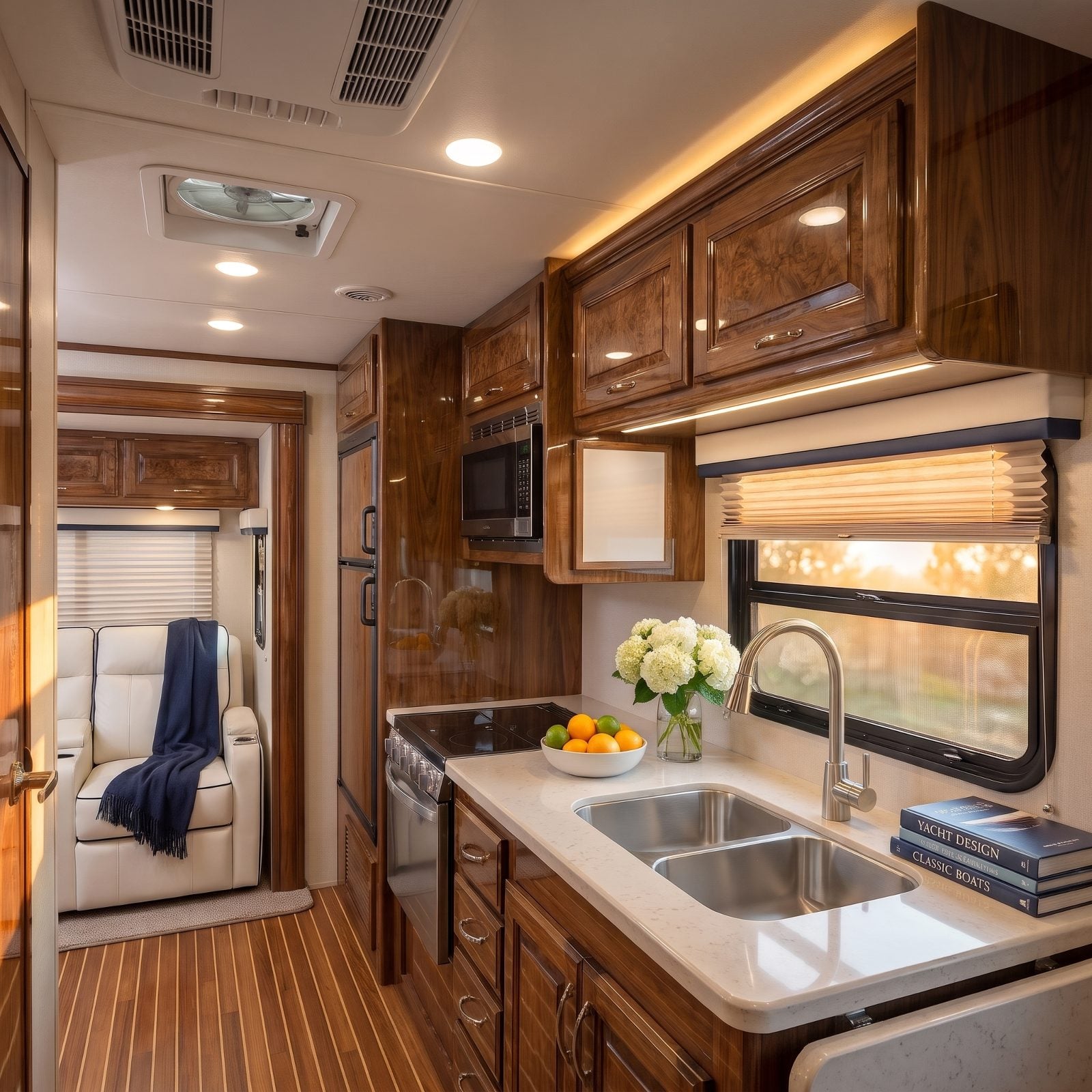
Somebody has to handle the black tank. No app for it, no avoiding it, and absolutely nobody volunteers.
So the real negotiation begins. I do the tank if you do the laundry. You handle it this week, I’ll do dishes all month. Dirty jobs get traded like currency, because they are currency.
Here’s the uncomfortable truth every couple runs into: the least glamorous tasks are the ones that actually test a partnership. What holds it together is equity, not a perfect even split. It never divides clean down the middle, and the couples who last are the ones who stop keeping a precise ledger and start trusting the long average. Black-tank duty is the marriage stress test with a hose attached, and it tells you more about how you two share a load than any candlelit dinner ever could.
14. The Dinette Reveals Who Carries the Invisible Workload

One of you booked the next three campgrounds, checked which ones have 30-amp, tracked the propane level, remembered the oil change was due, and noticed the pass closes in October. The other one is deeply grateful and has no idea any of it happened.
Welcome to the invisible workload, the planning and remembering and anticipating that keeps a traveling household from running aground. It has a name now, mental load, and it’s the exact thing that quietly lopsides so many early marriages.
Work that leaves no visible trace is work that goes unthanked. Nobody claps when a reservation gets made two weeks early. That spotless dinette, with nothing on it but a fruit bowl and a vase of fresh flowers, is what the labor looks like when it’s done well: no notes, no lists, no trace of the thinking behind it. The fix isn’t doing more. It’s spotting it, naming it, and splitting the thinking, not just the doing.
13. One Scenic Detour Can Trigger a Fuel-Budget Summit
The sign says scenic byway, dozens of extra miles, and you can already feel the fuel gauge judging you. One of you wants the view. The other is quietly doing single-digit mileage math.
And just like that, a gorgeous afternoon turns into a budget summit at 55 miles an hour.
Money fights in a marriage are almost never about the money. They’re about two different relationships with security. One partner sees the detour as the whole reason you bought the rig; the other watches the gas money disappear and feels the floor get a little less solid. Loss aversion pulls hard on the saver, who feels the cost of that fuel more sharply than the pleasure of the overlook. Neither of you is wrong. You just weigh the same handful of miles differently, and learning to say that out loud beats winning the detour every time.
12. The GPS Argument Is Never Really About the Exit

“You said left.” “I said the left lane, not the left exit.” And now you’ve missed it, you’ve got 40 feet of RV to turn around somewhere, and the car behind you is making its feelings loudly known.
Every full-timing couple has had this exact fight. Loud, pointless, and never once actually about the exit.
What it’s about is control, trust, and feeling blamed. Psychologists call the slide the demand-withdraw pattern, where one person presses and the other shuts down, and a missed turn is just the spark. The driver feels second-guessed. The navigator feels unheard. Both go straight to defense. Couples who figure this out stop assigning fault at the interchange and treat the miss as a team problem to solve, not a verdict to deliver. Has anyone ever truly won a GPS argument? You just agree to find the next exit together and let the dead one go.
11. You Build Rituals Around Coffee, Leveling, and Departure
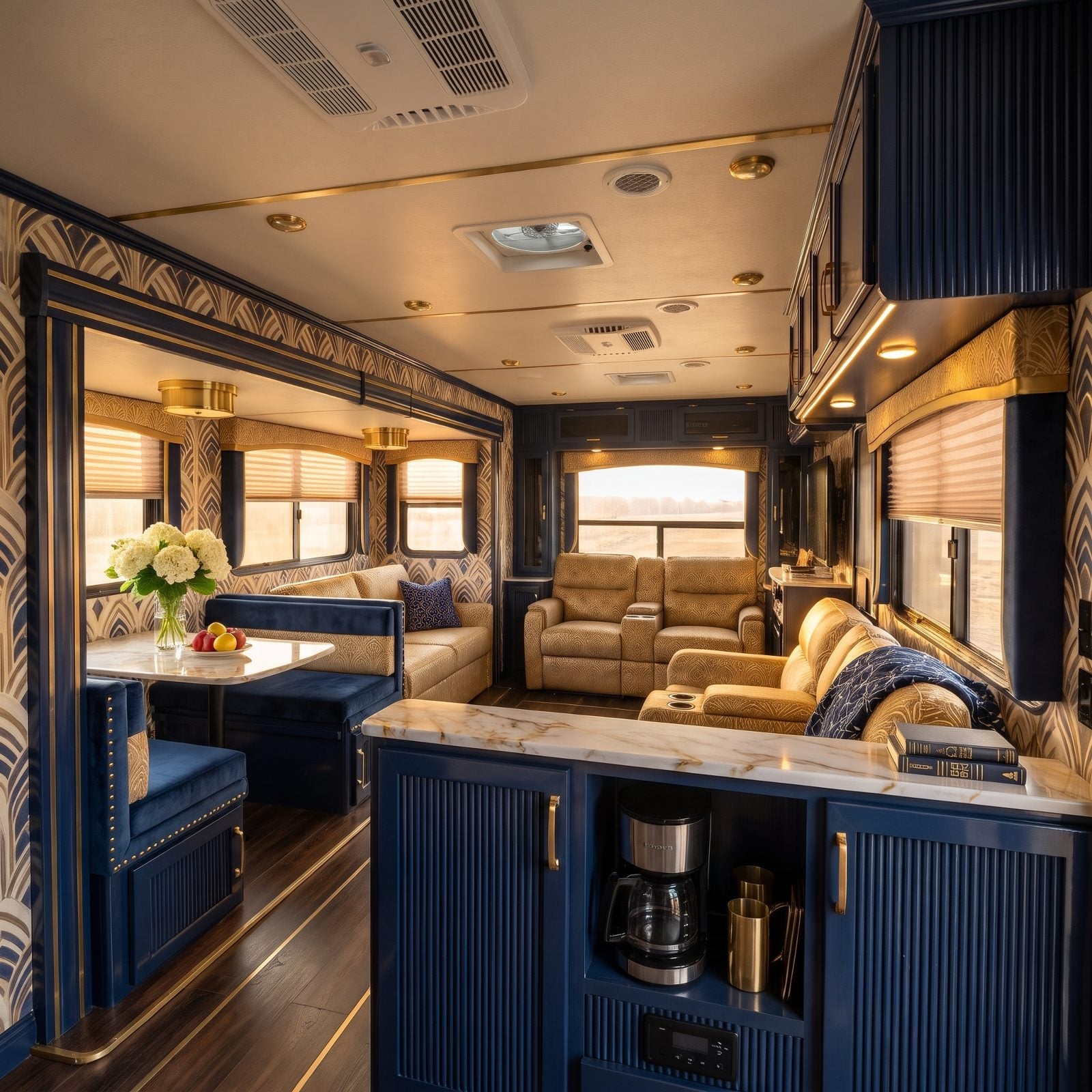
After a while, you stop thinking about it. The coffee goes on before the eyes fully open, one of you pulls the chocks while the other checks the hitch, and leveling happens in a wordless shorthand of hand signals and nods. Departure morning runs like a dance you never rehearsed and somehow both know by heart.
This is the part they leave out of the brochure, and it’s the best part.
Shared rituals are the quiet glue of a long partnership. They lower the daily friction, they signal that you’re a team, and they turn a hundred small tasks into something that feels like belonging. The early chaos, the rainy weeks, the black-tank trades and the shouting matches over exits, all of it was sanding you both down toward this. The couples who make it, in a marriage or a motorhome, aren’t the ones who skipped the hard early stretch. They stayed in it long enough to build the rhythm. Pour the coffee. Pull the chocks. You two have got this.
10. A Bad Campsite Feels Better When You Chose It Together
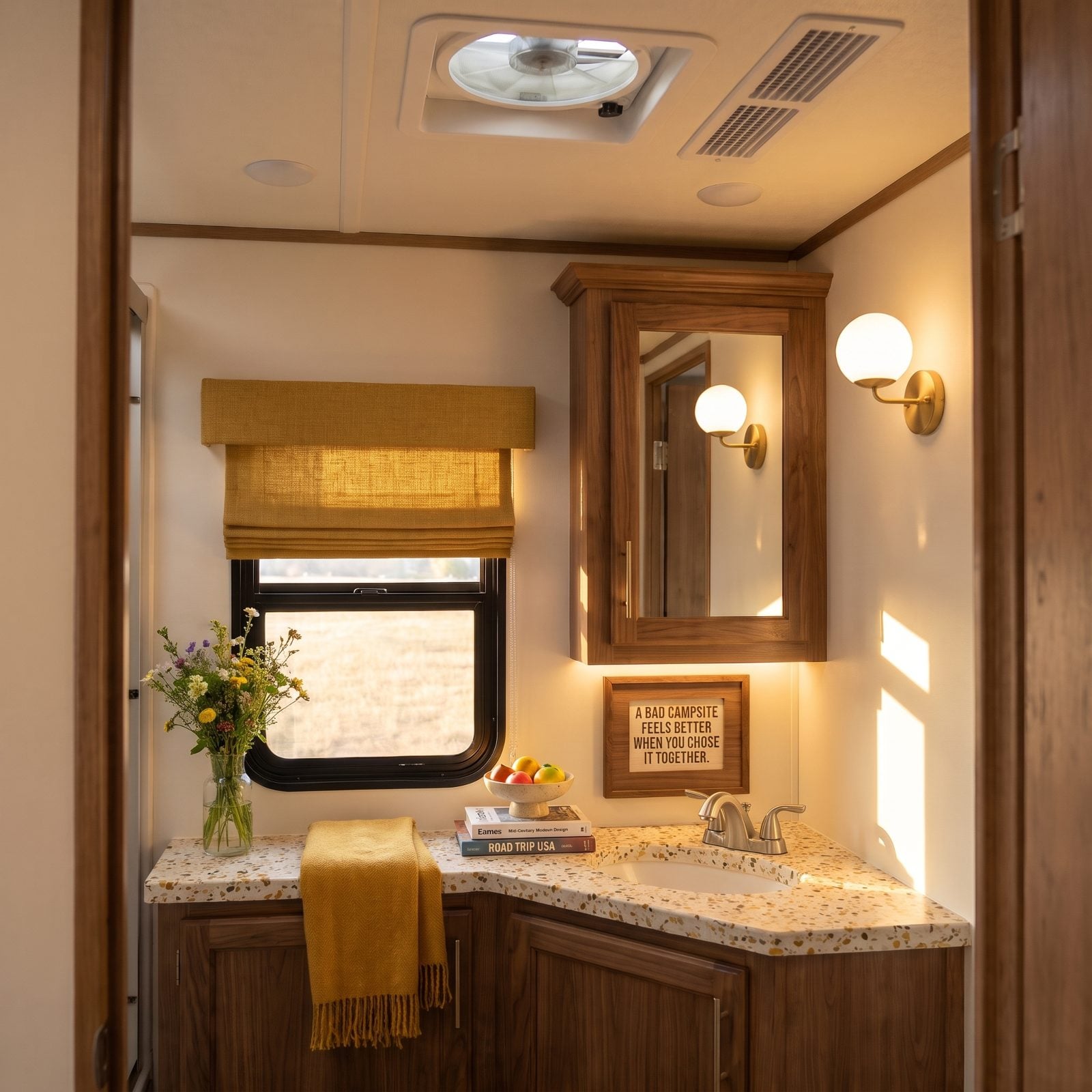
You pull into a site that photographed well and reveals itself as a gravel rectangle wedged near the bathhouse, downhill from a dumpster, with one flickering lamp that stays on all night. Objectively, it’s a bad site. And yet by the second evening you’ve got the chairs out, the cards on the table, and you’re both weirdly fond of the place.
Early marriage runs the same trick. The first apartment with the loud radiator and the neighbor who vacuums at midnight becomes a place you defend later, almost tenderly. It wasn’t great. It was yours.
Psychologists call this the IKEA effect, where we value things more when we had a hand in choosing or building them. A site you picked together, haggled over, and committed to stops being a listing and starts being a decision. The flaws fold into the story instead of ruining it.
9. Repairs Test Commitment More Than Sunset Photos Do
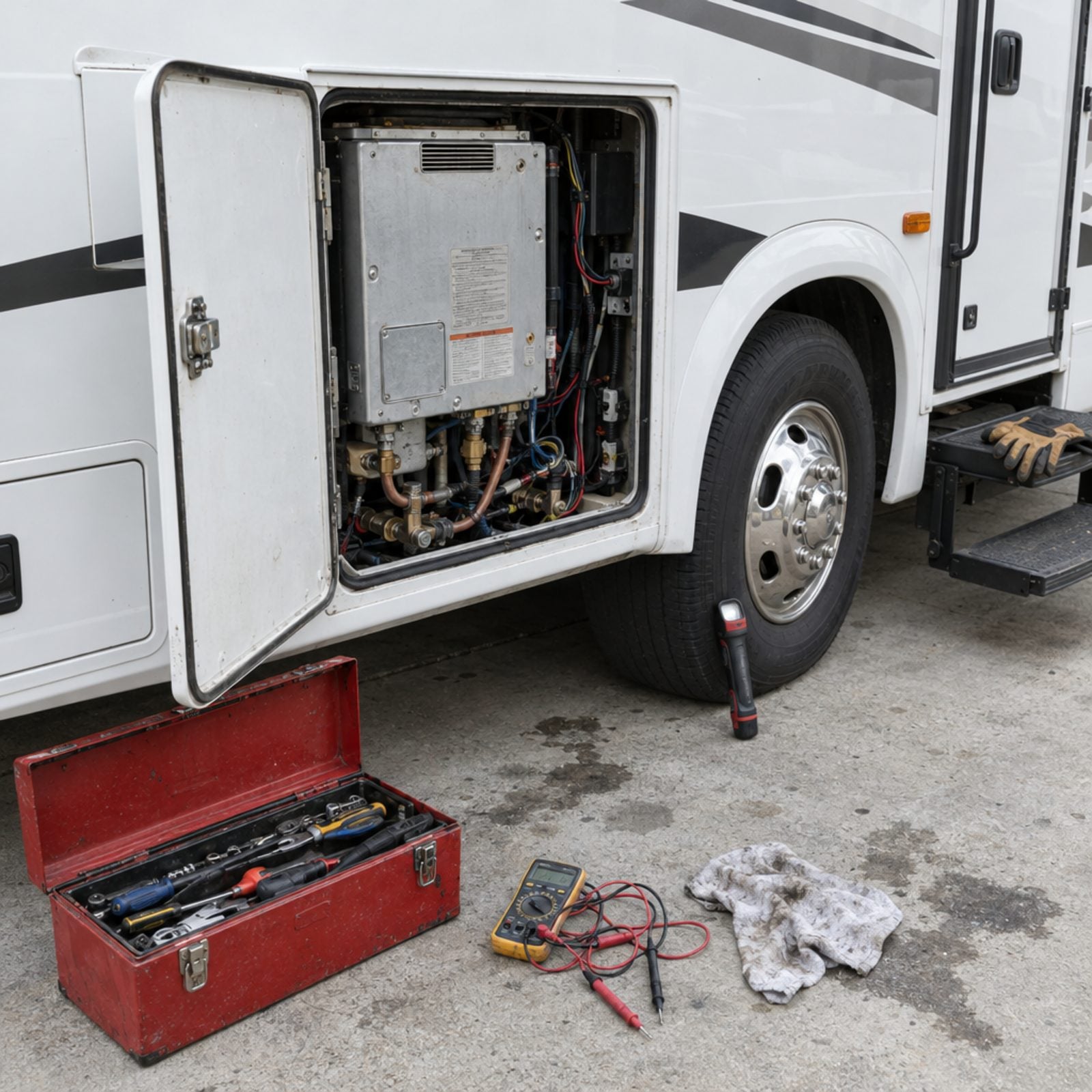
Anybody can love the RV when it’s parked by a lake. The real measure comes at 7pm when the water heater quits and you’re both lying on cold concrete passing a flashlight back and forth, one of you reading the manual out loud while the other says “that can’t be right” for the fourth time.
Those nights decide things. Sunset photos are the easy part of any partnership. It’s the breakdown, the unglamorous shared problem with no quick fix, that tells you whether you’re a team or two people who happen to own the same vehicle.
There’s good research behind this. Couples bond harder over jointly beating a mild hardship than over pleasant shared leisure, because the struggle creates a story of “we handled it.” A sunset asks nothing of you. A dead fridge asks everything, and the asking is where the glue lives.
8. You Miss Your Old Driveway at Awkward Moments
It hits at the strangest times. You’ll be somewhere beautiful, genuinely somewhere you dreamed about, and suddenly you’d trade it for your old driveway. The one with the basketball hoop and the crack you always meant to fix. You don’t even want the house back. You want the ease of knowing exactly where the light switch is.
Newlyweds feel this too, the sideways pang for the single apartment, the solo Saturday, the routine that didn’t require consulting anyone. It doesn’t mean you chose wrong. It means you traded something real for something else real, and grief for the old life can sit right beside love for the new one.
7. Separate Hobbies Matter More in 300 Square Feet
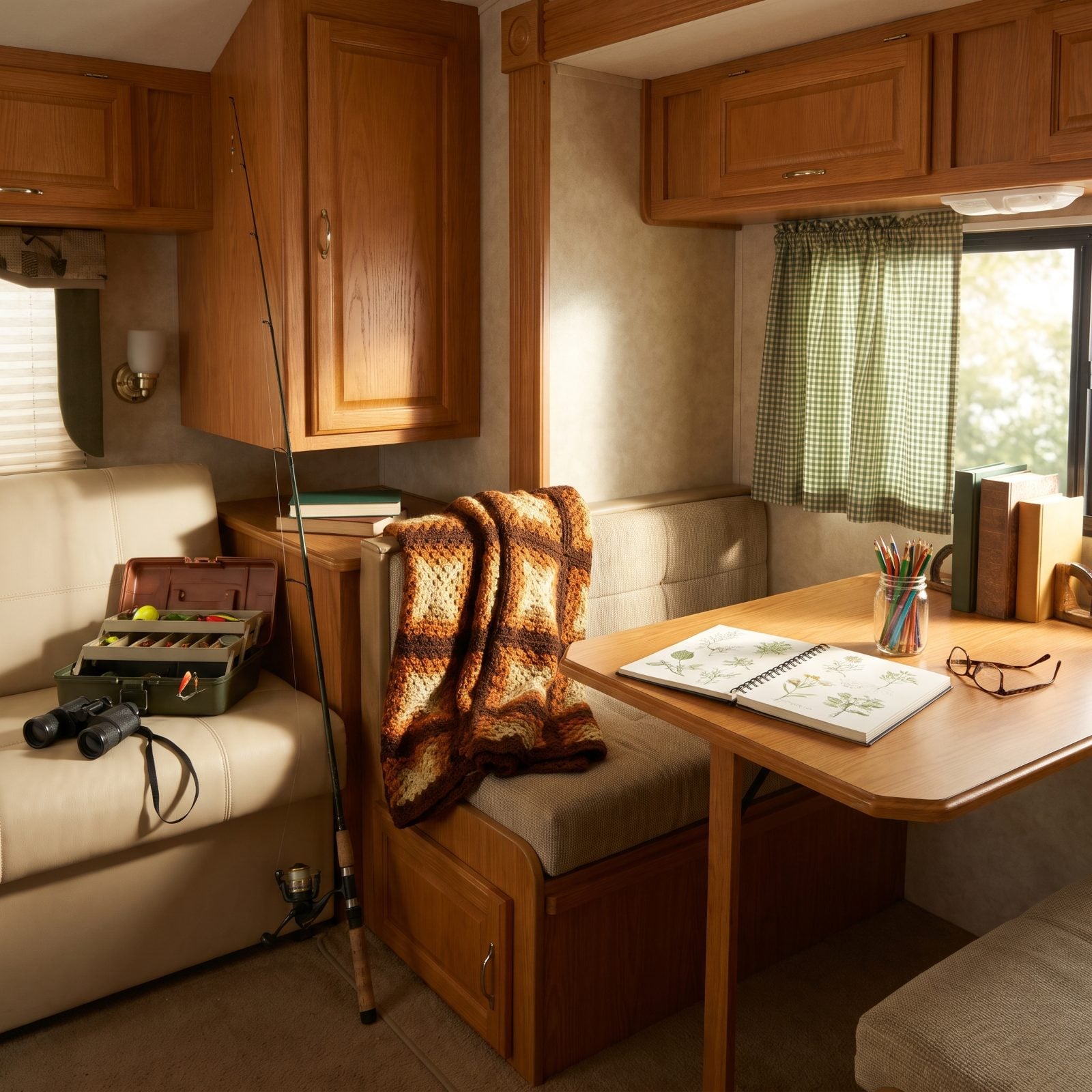
Give two people a four-bedroom house and nobody notices they never do anything apart. Shrink that down to a galley, a dinette, and a bed, and the lack of separate interests becomes a daily problem around hour fourteen. In tight quarters, having your own thing isn’t a luxury. It’s maintenance.
One of you needs the fishing rod and the slow morning at the water. The other needs the sketchbook and an hour where nobody talks. Those small pockets of alone-together keep the walls from closing in.
Young marriages learn this the hard way. Togetherness without any individual oxygen curdles fast, and space to be yourself is what makes the shared space bearable. The couples who thrive in a camper aren’t the ones who do everything together. They’re the ones who know when to leave each other alone.
6. Overnight Guests Turn the Tiny Sofa Into a Boundary Test

A guest wants to visit the rig. Lovely. Then you remember the guest bed is your sofa, which sits eighteen inches from the bedroom door, which means for two nights there is no part of your home that is just yours. Suddenly you and your partner are whispering strategy in the bathroom like teenagers.
How long is too long? Who hosts whom? When does a visit become an occupation? These questions are old as marriage itself, the in-laws who stay a week, the friend who never reads the room. A camper just removes all the walls that used to hide the tension.
In a house you can escape a guest by going to another room. In an RV, the only other room is outside.
The couples who survive hosting have usually agreed on the rules before anyone arrives. The ones who wing it find out, mid-visit, that they never actually talked about it.
5. Your Travel Pace Has to Suit Both Nervous Systems
One of you wants to knock out 400 miles and arrive by three. The other wants to stop at the roadside stand, the weird museum, the overlook with no sign. Neither is wrong. But a travel day built entirely around one person’s nervous system will slowly break the other one.
Early marriage runs the same math across everything: money, bedtime, how fast to spend a Saturday. Two people arrive with two internal clocks and have to build one shared rhythm neither fully loves, and that compromise rhythm is the real marriage, more than any vow.
Get the pace right and the road feels like a shared song. Get it wrong and every mile marker is an argument.
4. You Learn to Apologize Before Backing Into the Pedestal
Backing a thirty-foot rig into a tight site is a two-person sport, and it has ended more peaceful afternoons than any other camper task. One person drives blind. One person stands behind waving hand signals that the driver cannot interpret and will not admit it. Voices rise. The pedestal gets close.
The experienced couples figured out a secret: apologize early, assume good faith, and never treat a bad backup as a character flaw. You learn to say “my fault, let’s reset” before anyone’s even wrong, because the alternative is a grudge parked next to the sewer connection.
Young marriages learn the same reflex. The couples who last aren’t the ones who never fight. They’re the ones who repair fast, who get back to neutral before the small thing hardens into something permanent. Researchers who study marriage say the speed of repair predicts lasting better than how often a couple fights. The backup teaches it in real time, with hand signals.
3. The RV Slowly Fills With Inside Jokes and Souvenirs
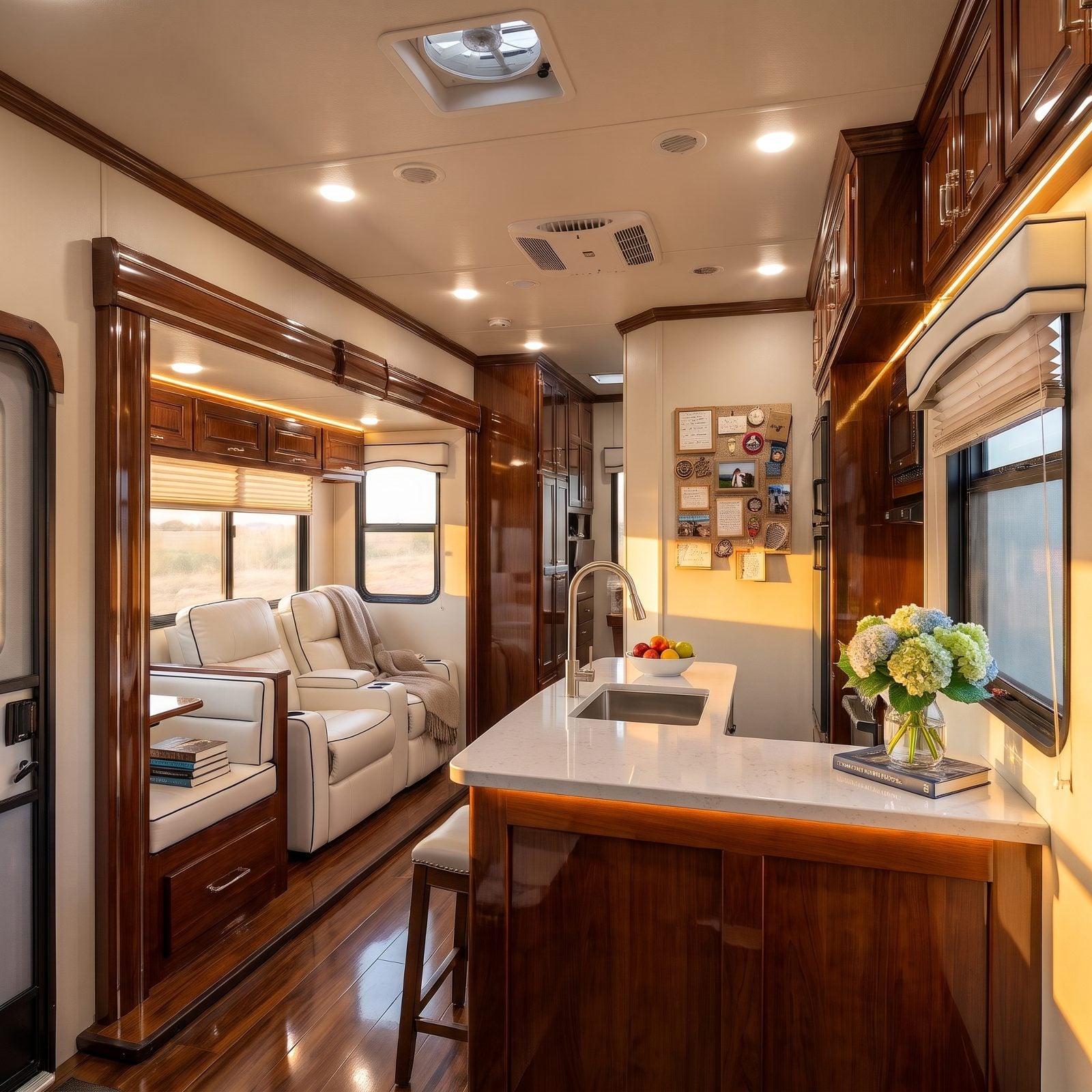
Watch a camper fill up over a year. The fridge grows a crust of magnets. The windowsill collects river stones nobody can throw out. There’s a mug from the gas station in the middle of nowhere that is now, inexplicably, the only acceptable coffee mug. And there’s a phrase one of you said wrong in Montana that you’ve both repeated a hundred times since.
This is how a shared life becomes a private language. The souvenirs aren’t valuable, and the jokes aren’t funny to anyone else. They’re the fingerprints of a history only you two share.
2. Weather, Work, and Wi-Fi Keep Rewriting Your Plans
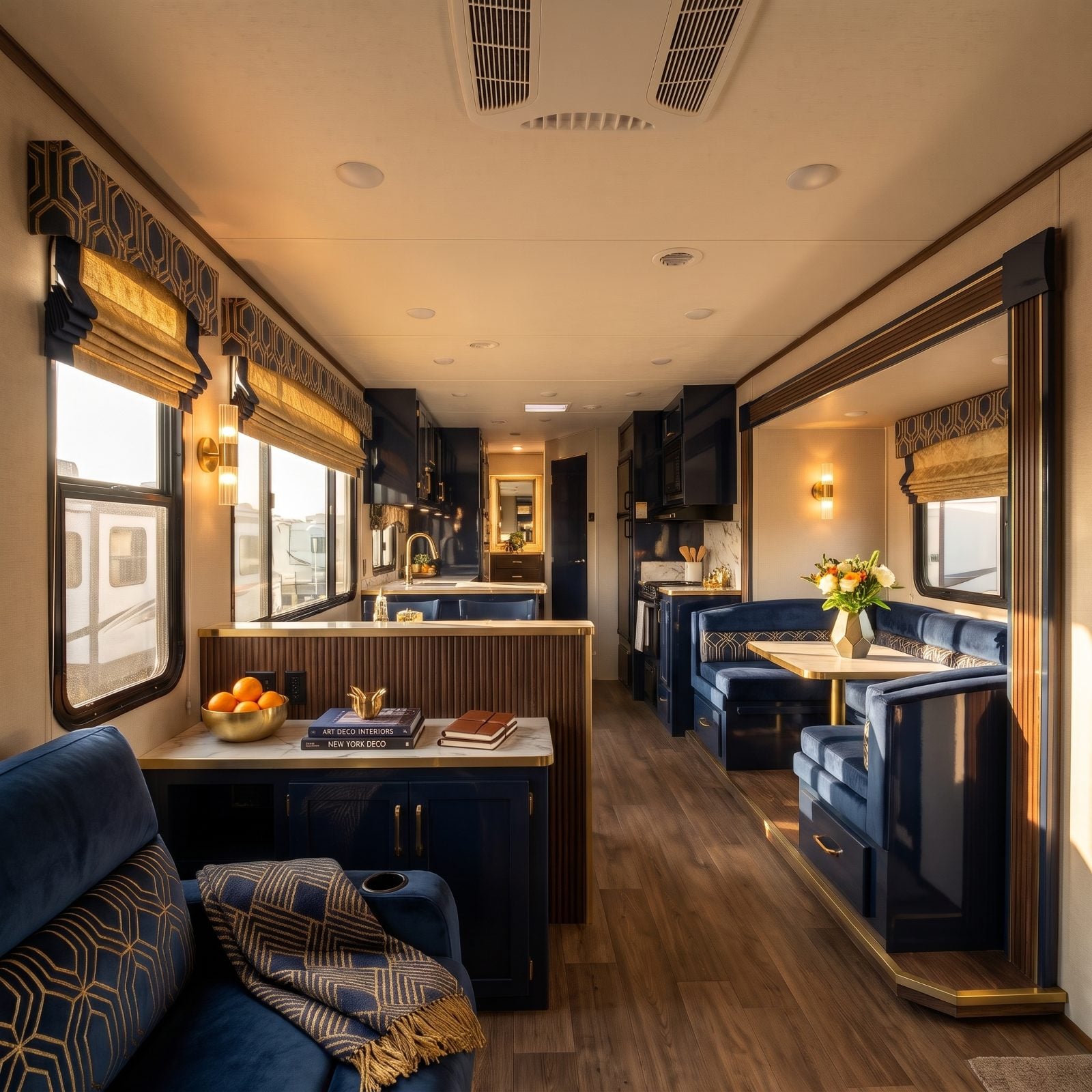
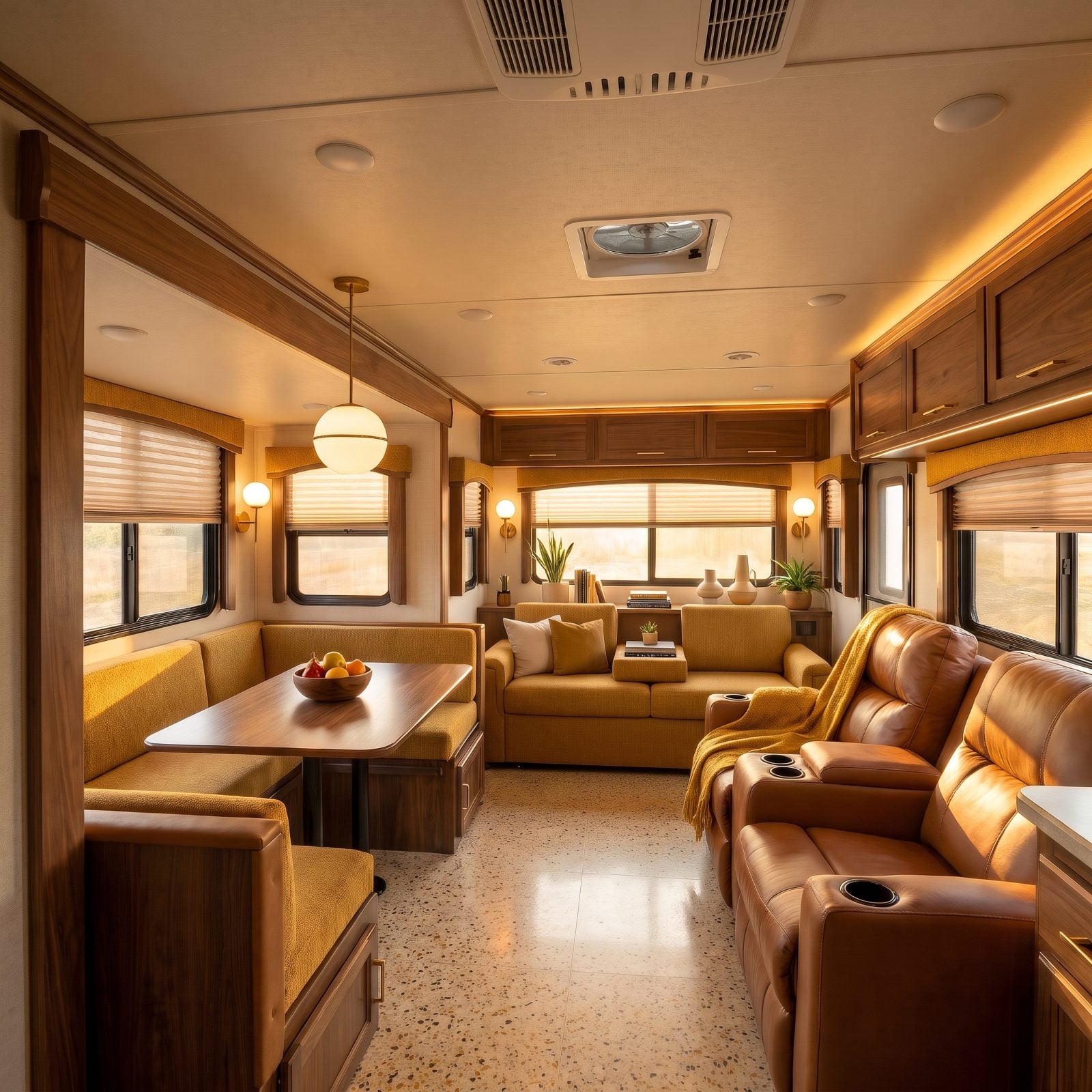
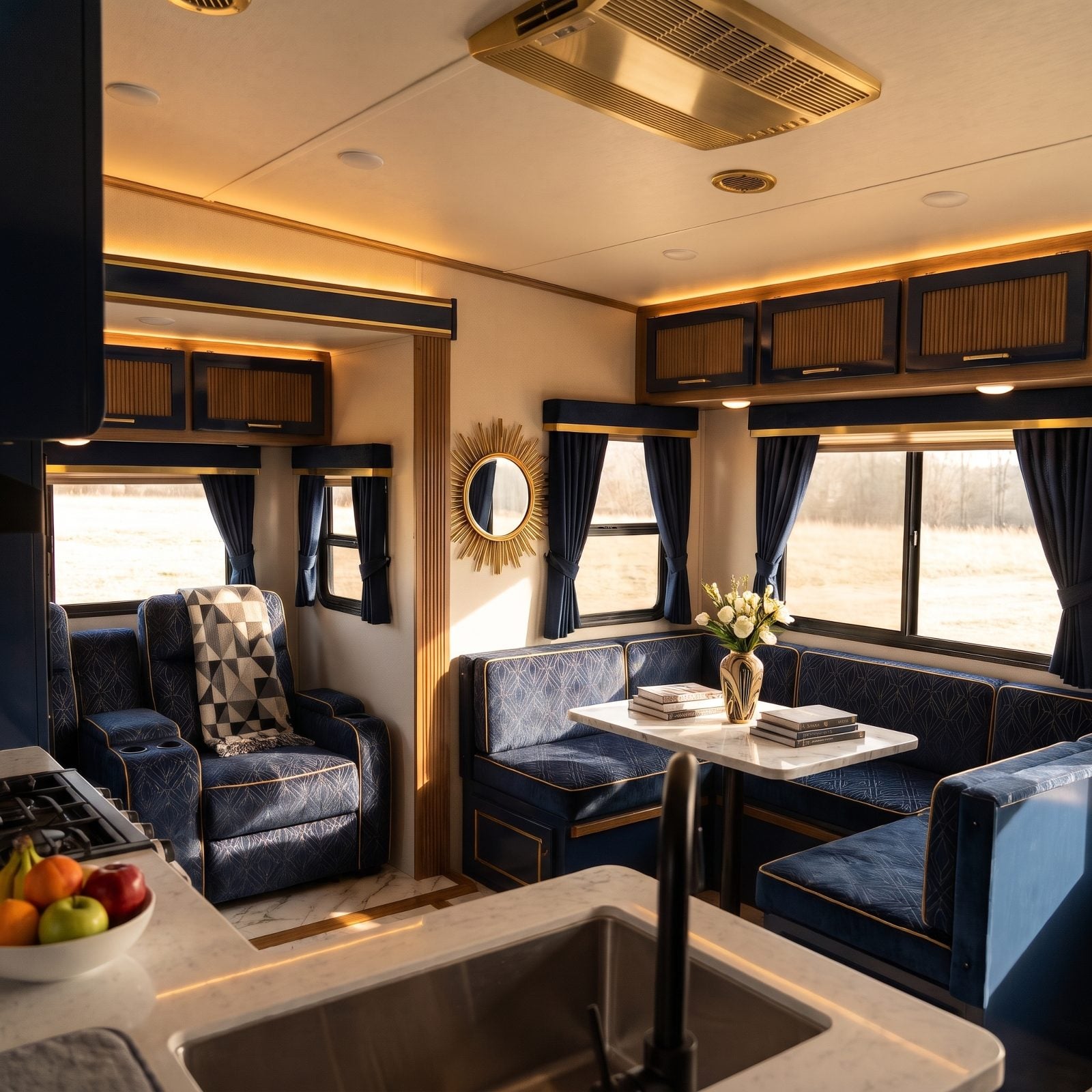
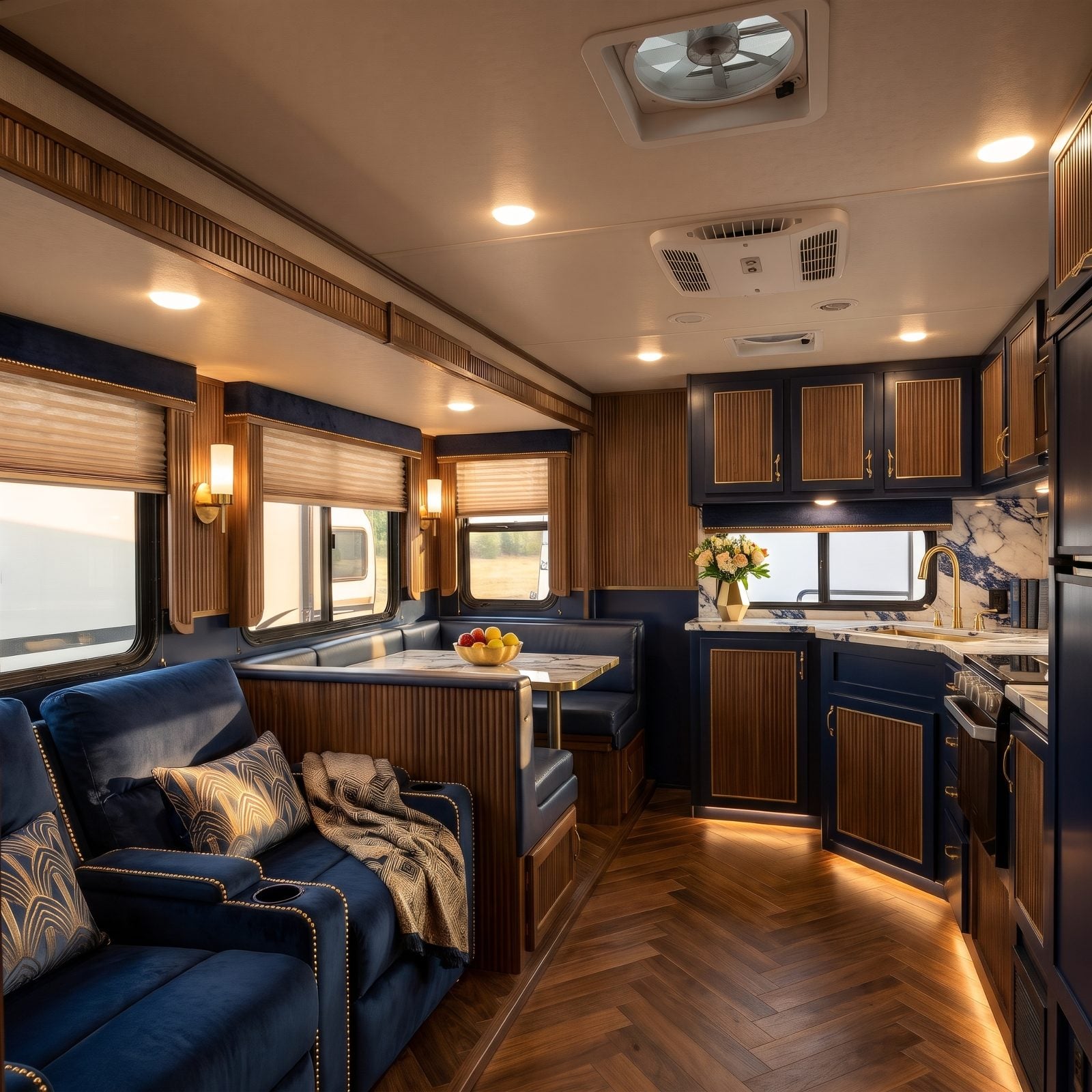
You had a plan. A good one, with reservations and a route. Then a storm parks over your next stop, a work call gets moved, and the campground with the great reviews has Wi-Fi that can’t load a single email. By late afternoon the plan is scrapped, and the sun slants across an empty navy booth, a bowl of fruit and a stack of unread books while the week quietly rewrites itself.
The flexible partnership survives this. The rigid one does not. Full-time RV life is a constant lesson in holding plans loosely, which is exactly the muscle a new marriage has to build when a job changes, a parent gets sick, or the baby arrives three weeks early.
The couples who do well don’t make better plans. They make peace faster with the plans falling apart. They’ve learned that the itinerary was always a suggestion, and the relationship is the thing that actually travels. Adapt together and a ruined schedule becomes just another Tuesday. Dig in, and every forecast feels like betrayal.
1. Home Becomes Something You Define Together on Wheels
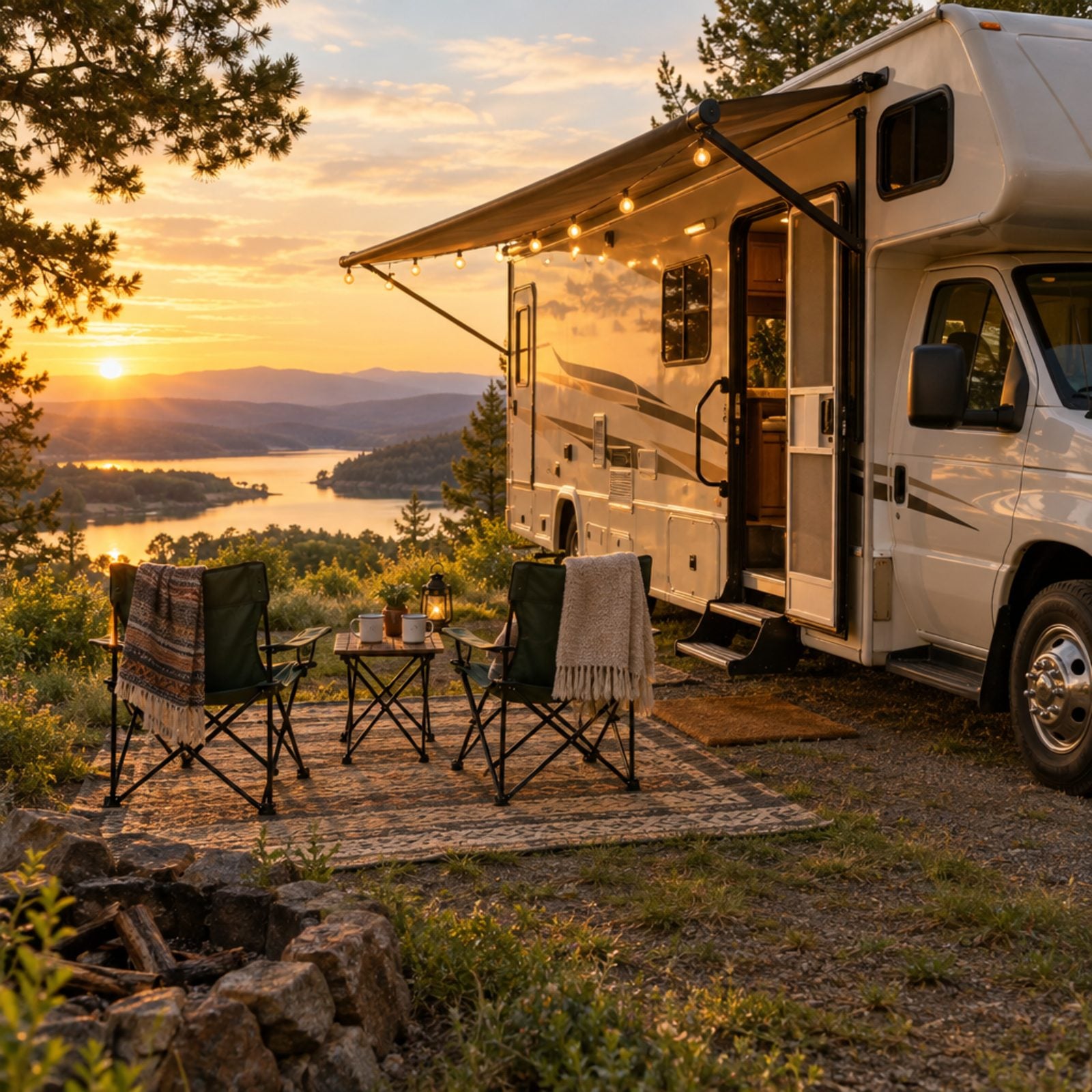
Nobody tells you this at the dealership. After enough months, the RV stops being a vehicle you live in and becomes simply home. Not because of the square footage. Because of who’s in it and the thousand small agreements you’ve made about how to share it.
Home was never the building. It was never the driveway you missed back at the start. Home turned out to be a set of rituals and inside jokes and a person who knows how you take your coffee, and all of that fits on wheels just fine.
The early years of marriage end up teaching the identical lesson. You spend the first stretch thinking home is a place you’ll eventually buy or build. Then one ordinary evening you realize you’re already in it. You made it out of the adjustments, the repairs, the compromises on pace, and the hand signals during a bad backup. You built it together, which is the only way it was ever going to hold. Light the string lights. Pour two cups. You’re home.