
The salesman doesn’t sell you the chassis. He opens the door, flips a switch, and a fake fireplace glows against a gloss-painted wall while cold air hums from a vent you didn’t know was there. Something in your chest goes soft, you stop reading spec sheets, and you start imagining mornings. That moment is where sensible people hand over fifty grand for a floorplan they’d never choose if the lights were fluorescent and the paint was flat white. We’ve all stood in that showroom aisle and felt it. The same wiring that makes a first date go sideways makes a motorhome purchase go sideways too. Below are the mental shortcuts doing the damage, named plainly, so next time the fireplace glows you’ll know exactly what it’s trying to pull.
Please note that some of the images in this article were created with the assistance of AI.
17. You Trust the Drivetrain Because the Full-Body Paint Sparkles
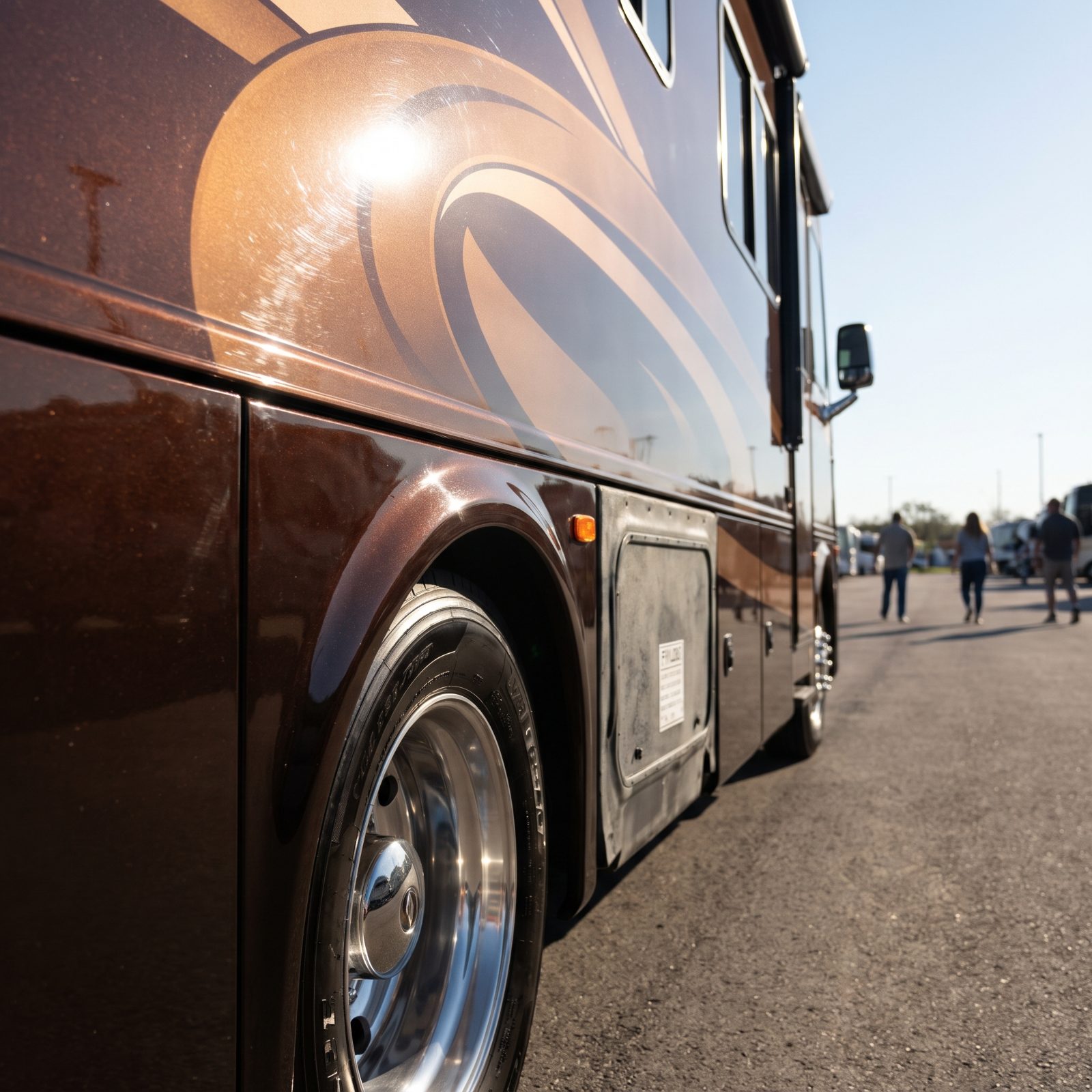
A gleaming paint job tells you nothing about the transmission, the brakes, or how many miles the previous owner put on the chassis idling in traffic. And yet the shinier the rig, the more competent we assume it is under the skin. That’s the halo effect at work: one strong positive impression spills over onto every other trait we can’t actually see.
We do this with people constantly. The well-dressed stranger seems smarter, kinder, more honest. Same brain, same shortcut, bigger price tag. A flawless clearcoat reads as proof of a cared-for machine, when a shop detail job can hide a hard life.
Plenty of buyers have been burned this way, assuming a rig that looked showroom-fresh had been babied. The paint was fresh. The water pump was not.
16. The Fireplace Wins Before You Measure the Bed
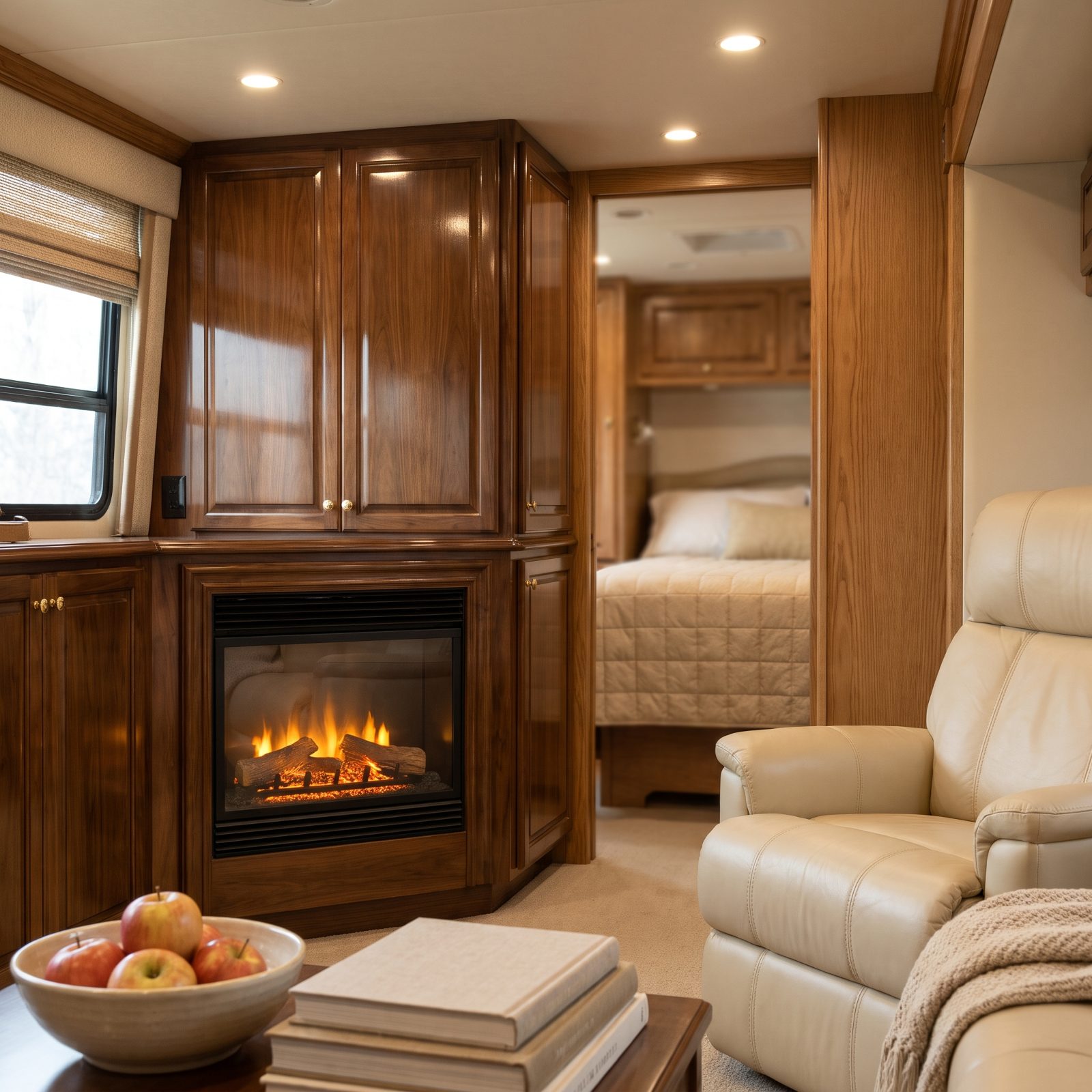
You walk in, the fireplace is lit, and your whole nervous system relaxes. You never check whether the bed is a true queen or an RV queen that’s four inches shorter and shoved against a wall you’ll climb over at 2 a.m. The feature that photographs well beat the feature you’ll use every single night.
This is the affect heuristic. When something makes us feel good, we rate it as better across the board and stop scrutinizing the parts that matter. A warm glow becomes a stand-in for a home.
It’s the same reason a charming first impression can carry a relationship for months before anyone asks the practical questions. Charm front-loads, reality back-loads, and you’ll sleep in that bed three hundred nights a year while you watch the fake fire maybe twelve.
15. That New-RV Smell Somehow Counts as Chemistry
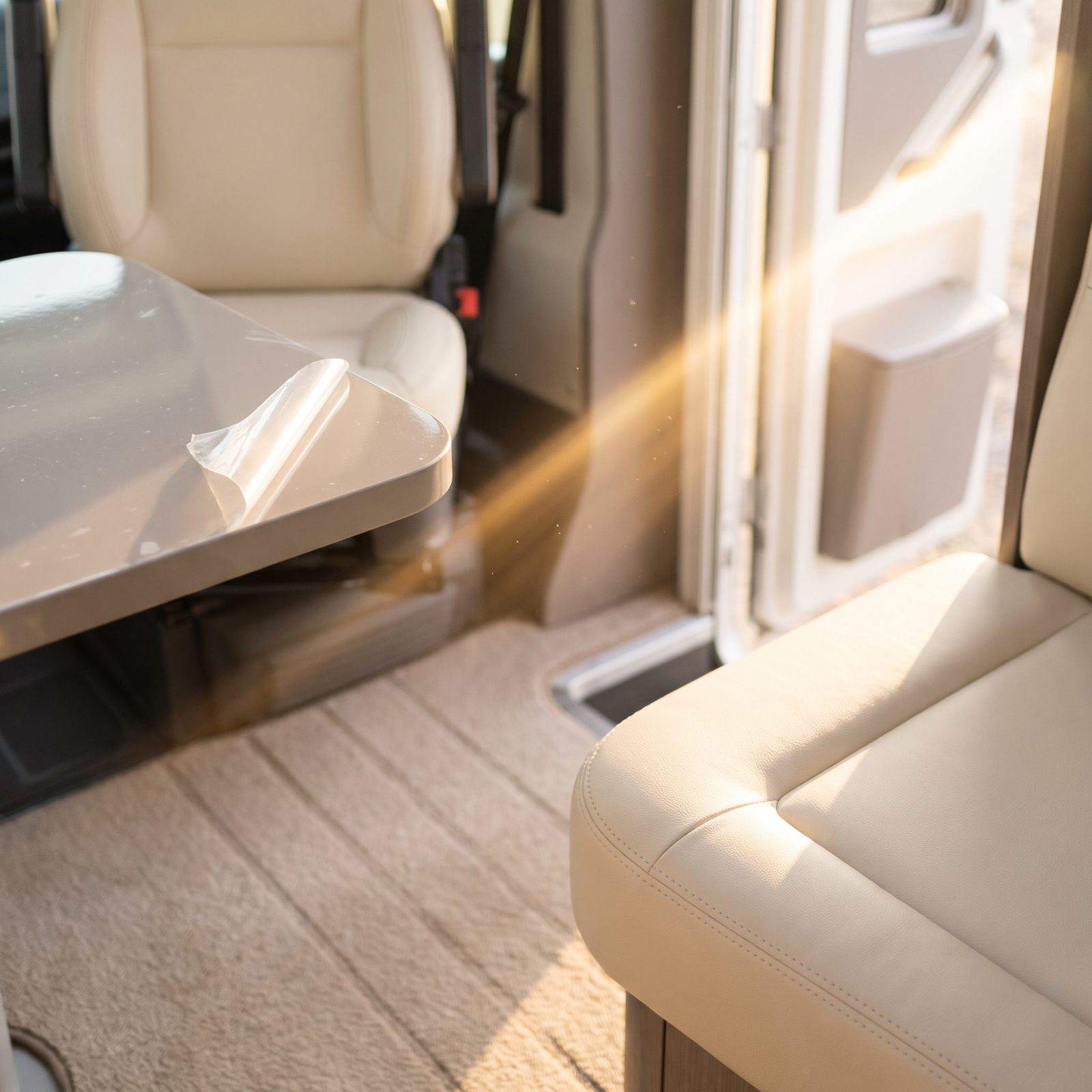
There’s a reason dealers love a never-slept-in rig. That new smell, part fresh vinyl, part off-gassing adhesive, hits something primal and reads as promise. Untouched. Yours. No one else’s story baked into the cushions.
We confuse novelty for value all the time. A new partner, a new car, a new town all feel electric because our brains reward the unfamiliar with a little dopamine hit. Call it the novelty bias. The catch? That same smell is literally just chemicals, and six months in it’s gone and you’re left with the floorplan.
14. You Picture Desert Sunsets, Not Tuesday at the Dump Station
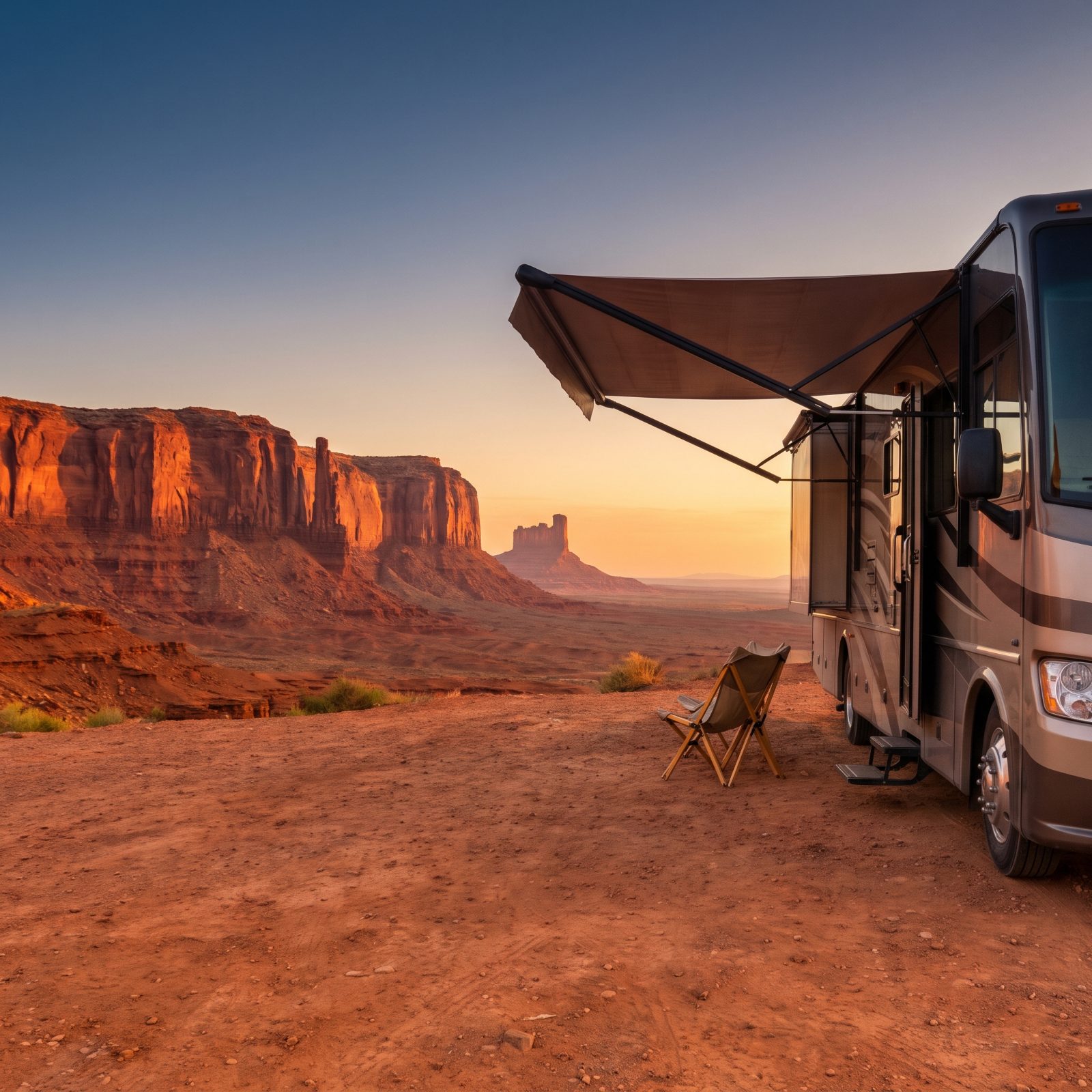
When you imagine owning the rig, you see the overlook. Golden light, a camp chair, coffee, silence. What you don’t see is yourself in rubber gloves at a crowded dump station on a Tuesday, waiting behind two rigs while the hose does what hoses do.
This is the planning fallacy mixed with a heavy dose of rosy forecasting. We picture the best-case highlight reel and quietly delete the maintenance, the setup, the tank sensors that lie, the slide that won’t retract in the rain.
Honeymoons do this to people too. You plan the wedding and forget someone has to do the dishes forever. RV life is wonderful. It’s also chores on wheels. Buy the rig that makes the Tuesdays bearable, not just the sunsets photogenic.
13. People Pay the Beauty Premium and Call It Resale Value

Here’s the quiet lie we tell ourselves at the top of the budget: the prettier rig will hold its value, so the premium isn’t really spending, it’s investing. Sometimes that’s partly true. Mostly it’s a story we build to justify falling for the gloss.
Economists call this motivated reasoning. You’ve already decided you want the beautiful one, so your brain goes hunting for respectable, grown-up reasons to sign. Resale is the favorite, because it sounds responsible.
Full-body paint and designer interiors do command more. They also depreciate from a higher number, and a rig bought for its looks was never going to survive the five-year cost math. We’ve all watched a friend defend an expensive choice with reasons they clearly reverse-engineered after the fact.
12. One Crowded Show Coach Suddenly Looks Like the One

Walk into a show coach with ten other people shuffling through it and that rig starts to glow with a value it didn’t have on an empty lot. If everyone wants it, it must be good. You find yourself hurrying, touching the counters, mentally claiming it.
That’s social proof, the oldest shortcut in the book. We use other people’s behavior as a cheat sheet for our own decisions, especially when we’re uncertain and the purchase is big. A crowd feels like evidence.
It’s the restaurant with the line out front you assume is better, the jacket that sells out so you suddenly must have it. The crowd in that coach isn’t judging the chassis. They’re following each other, same as you.
11. Last One Available Makes the Floorplan Feel Irresistible
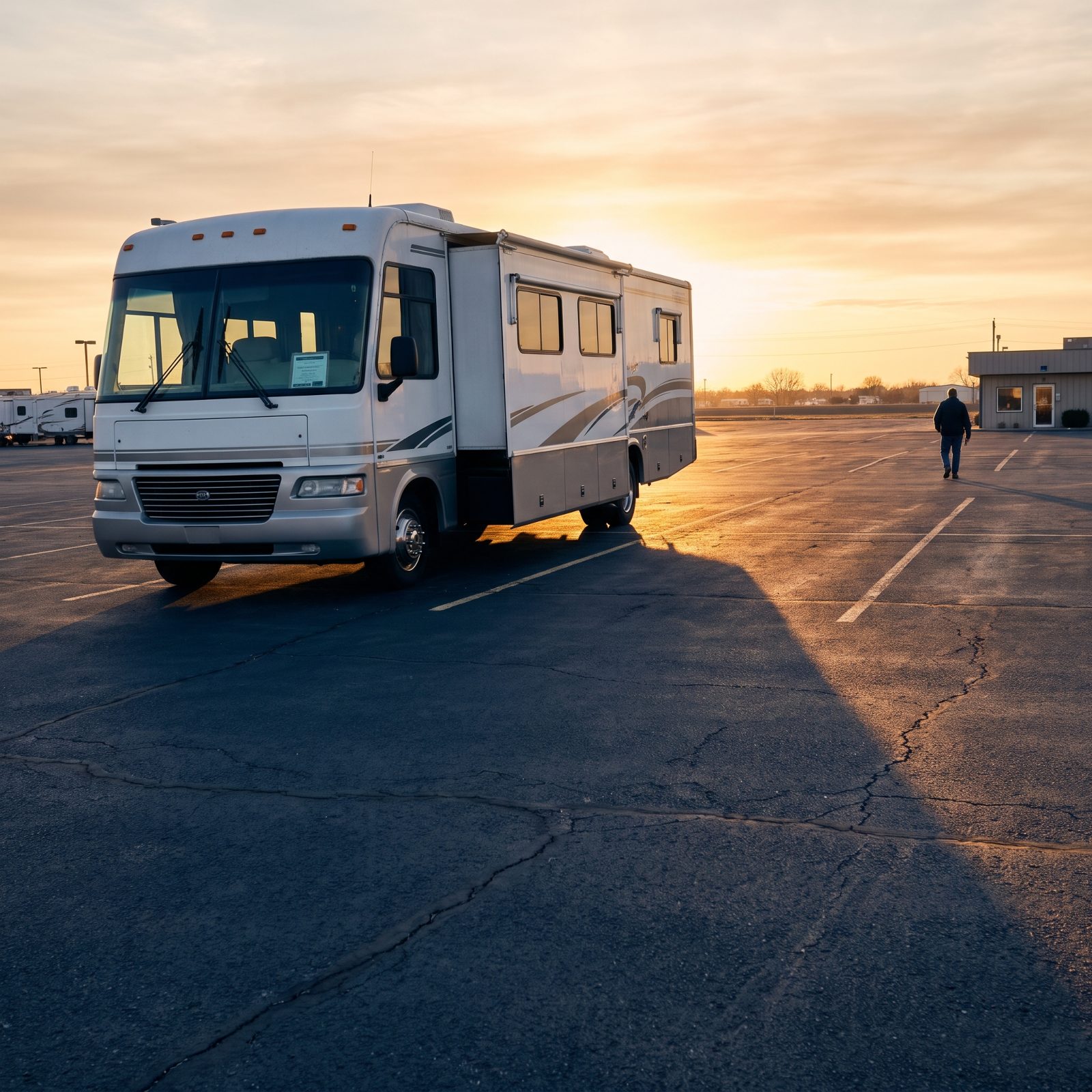
“It’s the last one at this price, and I’ve got someone coming to look at four.” Suddenly a floorplan you had real doubts about an hour ago feels like something you cannot let slip away. Your heart rate ticks up and you start negotiating with yourself.
This is scarcity and loss aversion holding hands. We feel the pain of missing out far more sharply than the pleasure of a good deal, so the threat of losing it overrides the quieter question of whether you even wanted it in the first place.
Dating apps run on this exact fuel. The person who might slip away feels more precious than the one who’s patiently available. Scarcity is the oldest trick on any lot, and it works on smart people especially, because smart people hate feeling like they missed the smart move.
The fear of losing it is not the same thing as wanting it. Learn the difference and you’ll save a fortune.
10. You Keep Finding Reasons the Tiny Shower Will Work
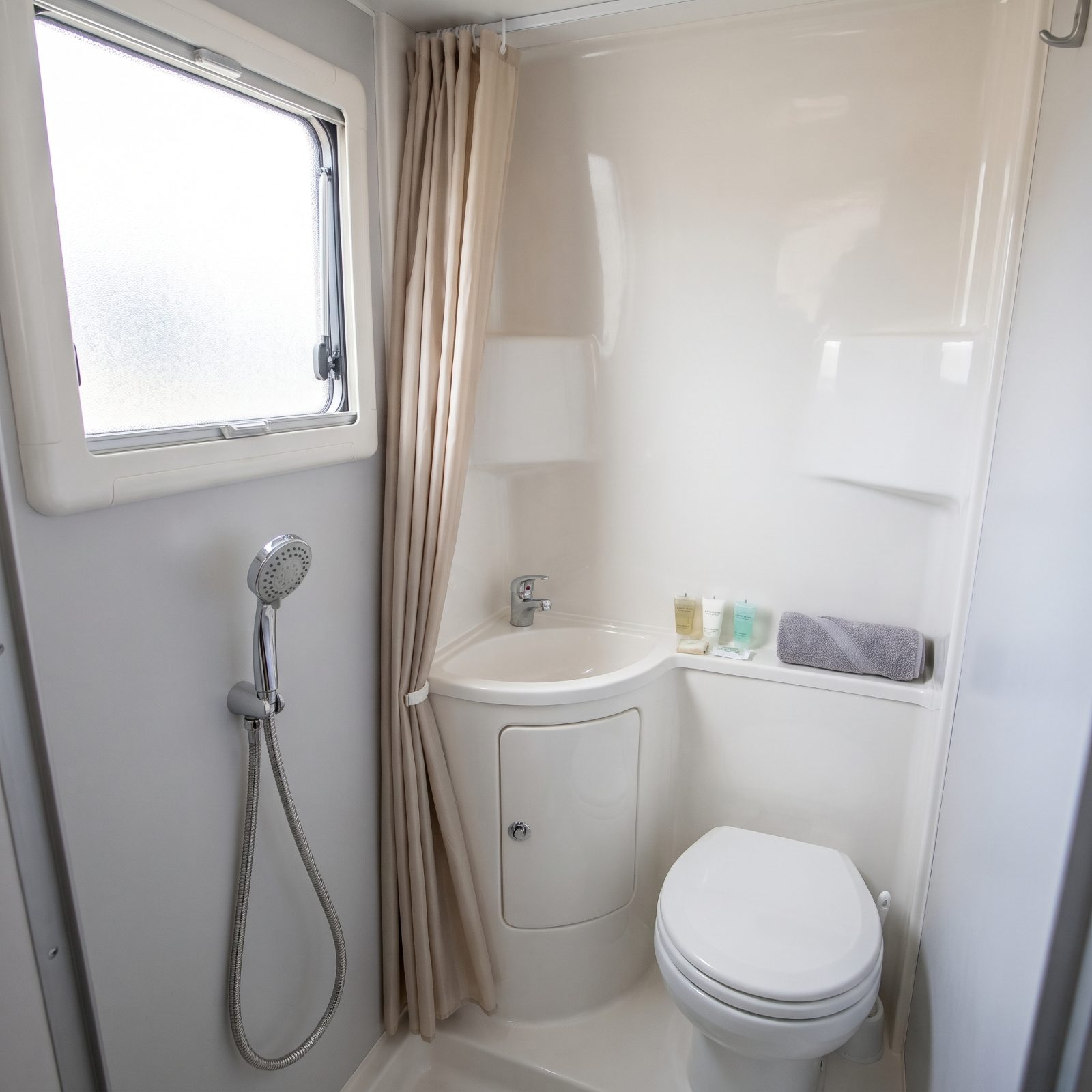
You step into the shower, your shoulders touch both walls, and instead of walking away you start building the case. You’ll shower at the campground facilities mostly. You don’t need much room. It’s cozy. You’ll get used to it.
That’s confirmation bias in full swing. Once you’ve emotionally decided you want the rig, every flaw gets re-cast as a non-issue and you only collect the evidence that keeps the dream alive. The brain is a brilliant defense attorney for whatever you already want.
We’ve done this. Talked ourselves into a galley so narrow two people couldn’t pass, insisting we’d “take turns.” We did not enjoy taking turns.
9. After Three Beige Rigs, Blue Cabinets Feel Like Fate
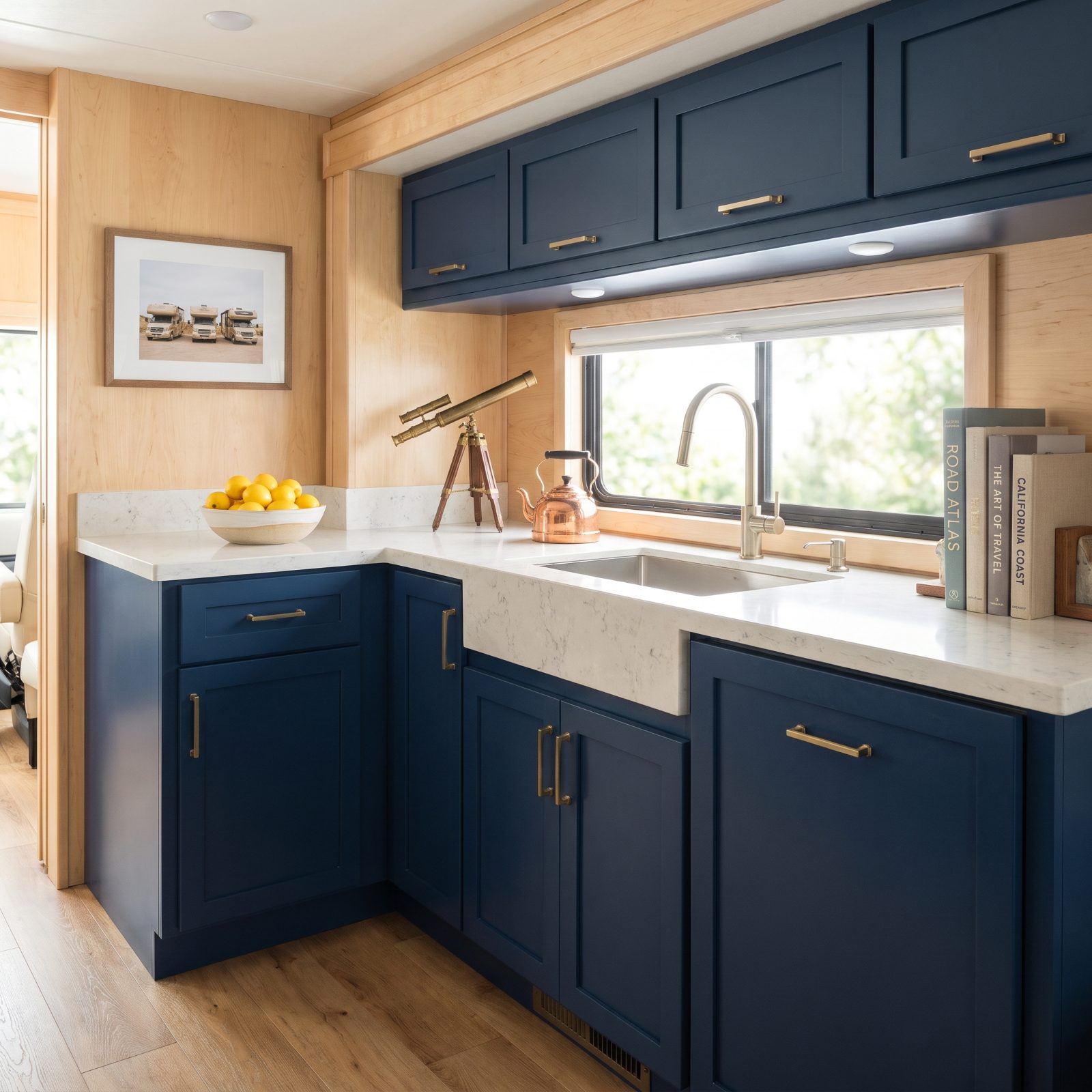
You’ve toured three rigs in a row, all the same beige-on-greige interior that RV builders apparently agreed on in a dark room somewhere. Then you open a door and there are blue cabinets. Suddenly this rig feels destined, like it was waiting for you specifically.
It wasn’t fate. It was contrast. After enough sameness, any difference reads as special, and your brain rewards the break in the pattern far out of proportion to its actual worth. The color didn’t earn the feeling. The three boring rigs did.
We fall for people this way after a run of forgettable dates. The merely interesting one looks magnetic by comparison. Blue cabinets are lovely. They are not a reason to overlook a water heater you can’t reach without pulling a panel.
8. The Familiar Brand Badge Feels Safer Than the Inspection

A badge you recognize does something sneaky. It makes you feel like the hard work of judging is already done. You skim the inspection, nod at the service history, and let the name carry the weight that a cold mechanical look should have carried instead.
This is brand trust standing in for due diligence. A familiar name lowers our guard because recognition feels like safety, even when this specific unit came off the line on a bad Friday with a leak nobody caught.
People do the same with a familiar face. The person you kind of know feels more trustworthy than a stranger, on no real evidence at all. A good brand is a good starting point. It is not a substitute for crawling underneath with a flashlight and an honest third-party inspector.
7. You Sit on the Sofa and Start Calling It Yours
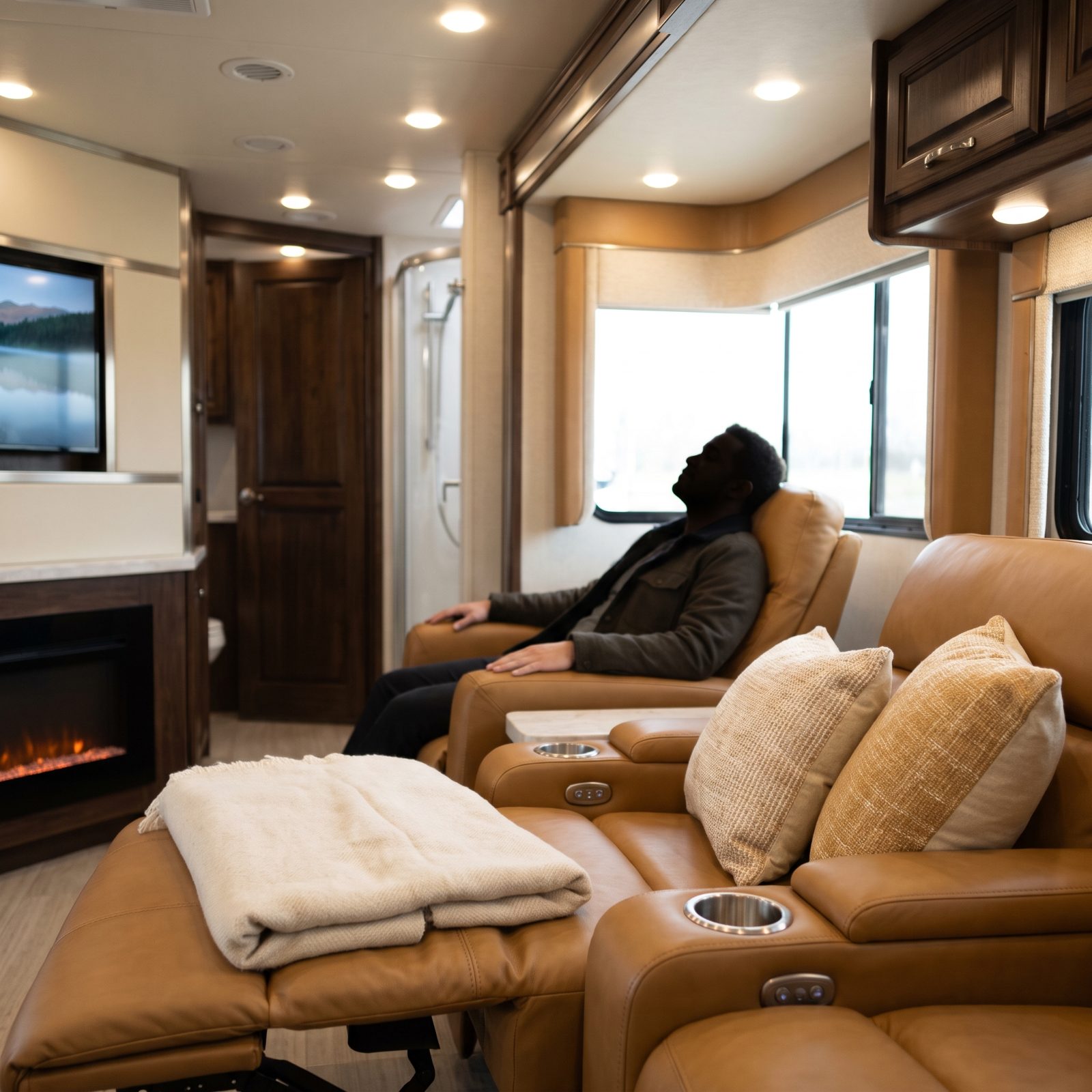
You lower yourself onto the leather recliner, feel it give in all the right places, and something clicks. You stop evaluating and start arranging. The remote goes here, the coffee goes there, movie nights happen right in this spot, and ten seconds in the coach is already furniture in a life you haven’t bought yet.
That’s the endowment effect. The odd little quirk where owning something, or even just imagining you own it, makes it worth more to you than it ever was on the lot. Salespeople know it cold. The recliner isn’t there to be seen — it’s there to be sat in.
Once your body has claimed the seat, the brain quietly files the rig under “mine,” and we fight a lot harder to keep what feels like ours than to go chasing something new. Suddenly the narrow hallway and the sad little shower feel like minor negotiating points instead of dealbreakers.
6. The Salesperson’s Compliment Makes the Oversized Coach Feel Right
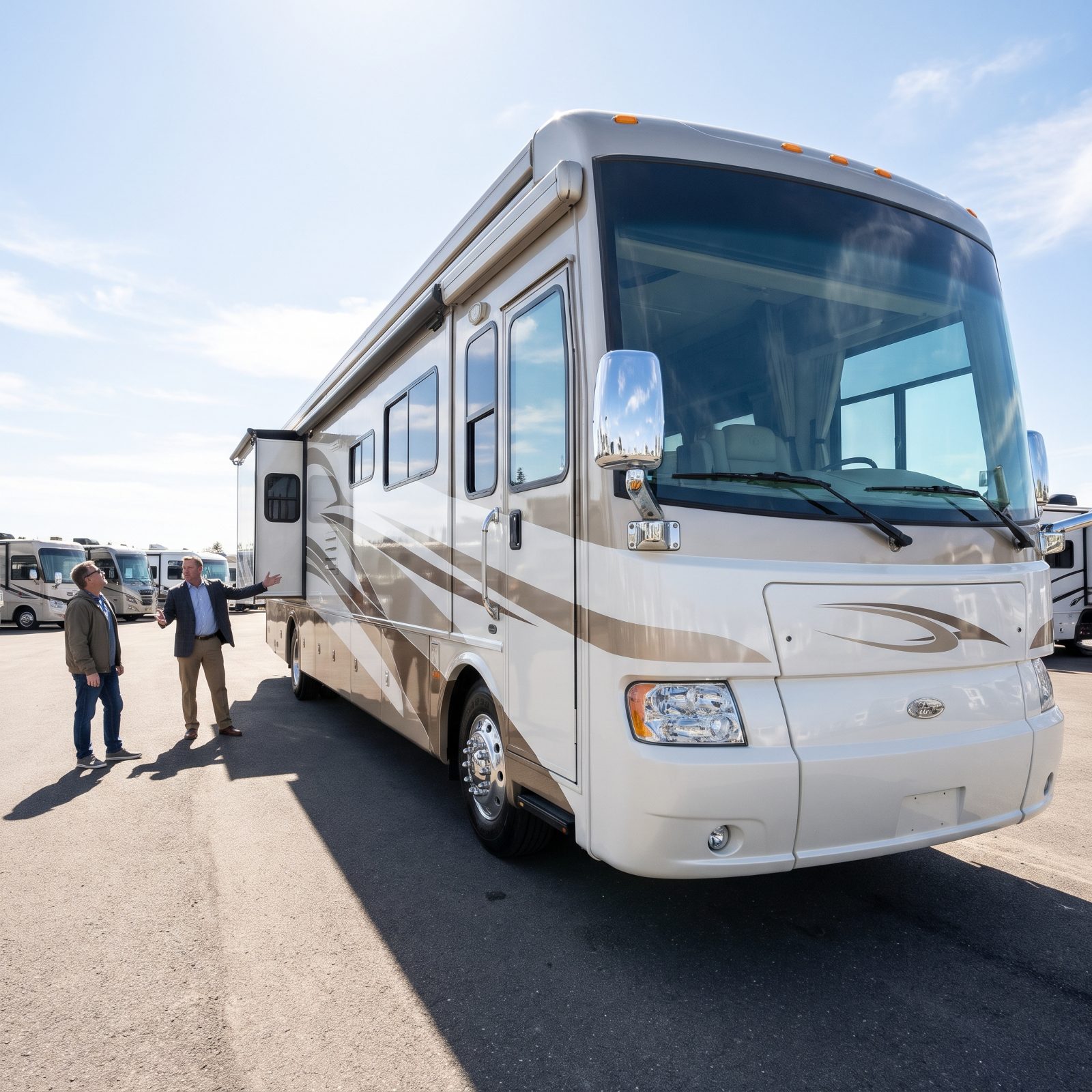
“You’ve got great taste. Most folks don’t appreciate a coach like this.” And just like that, the forty-three-footer you had no business considering feels like a decision that says something good about you.
That’s flattery doing what flattery does. We like people who like us, and we trust people we like, so a warm compliment lowers the guardrail right before the big ask. The oversized rig stops being a question about whether you can back it into a state park and becomes a verdict on the kind of person you are.
Good salespeople aren’t lying when they compliment you. They just know a buyer who feels seen stops counting the length in feet.
5. You Compare Every RV to the First Stunner
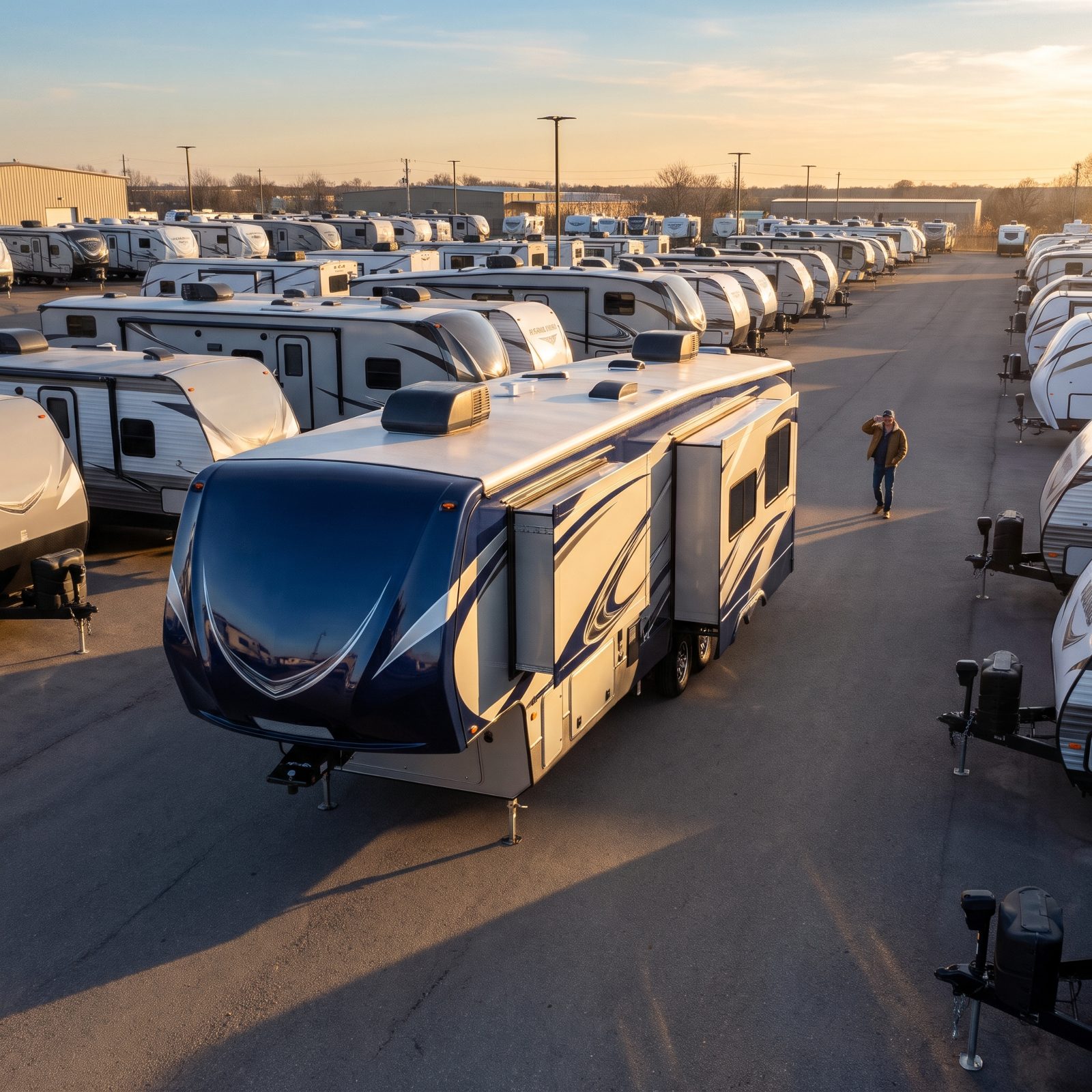
The first one took your breath away. Big windows, a kitchen island, that paint catching the light just so. Every rig since gets measured against it, and somehow none of them clear the bar.
Anchoring is why. That first strong impression drops a stake in the ground and your brain treats it as the reference point for everything that follows. Doesn’t matter that the second coach has a better bed, smarter storage, and a price that won’t keep you up at night — it committed the unforgivable crime of not being the first one.
The anchor is rarely the best choice. It’s just the earliest, and first impressions don’t come with inspection reports stapled to them. Walk the lot in a different order, or sleep on it before you shop, and that anchor loosens its grip faster than any spec sheet will manage.
4. The Deposit Makes Every Red Flag Look Fixable
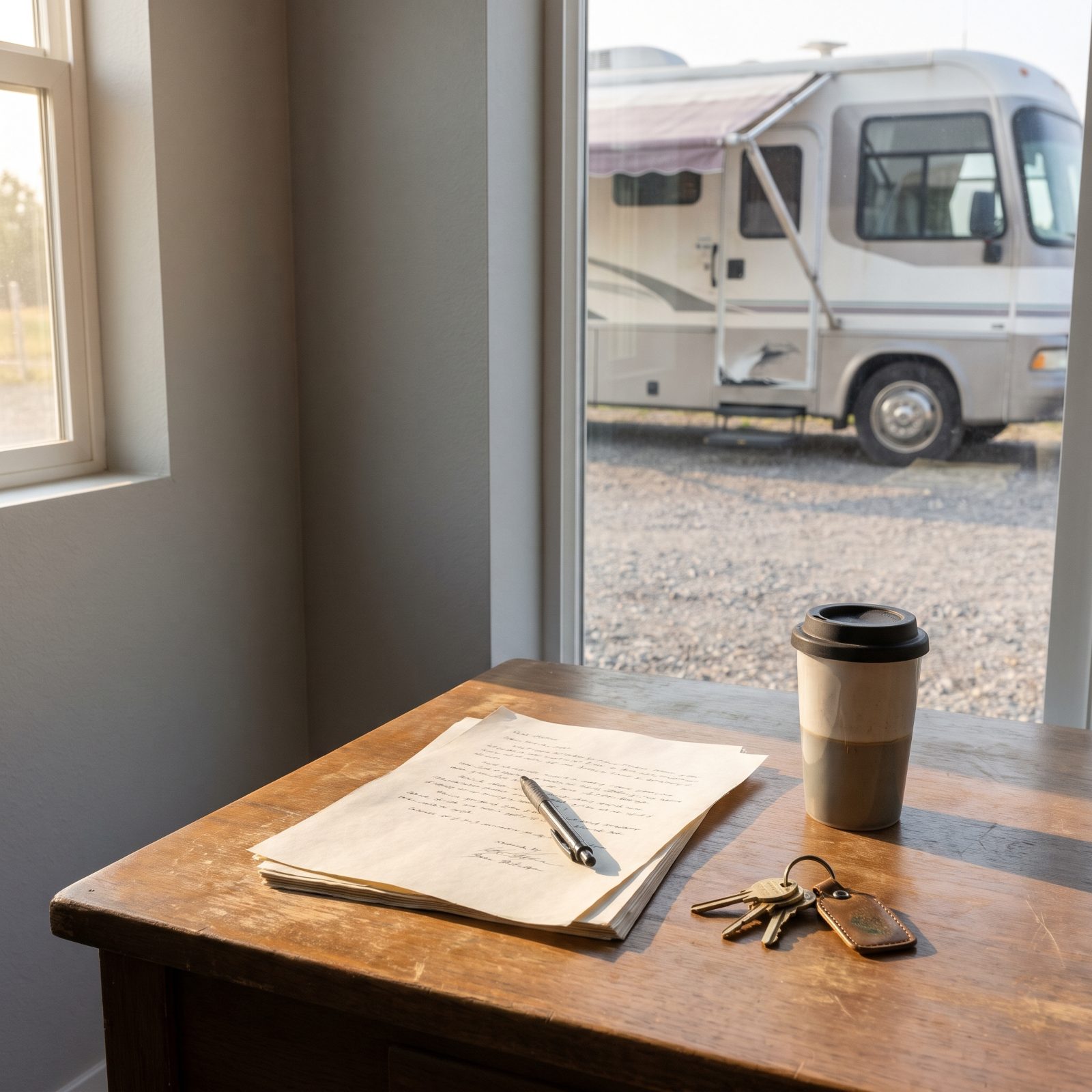
You put money down. Not the full price, just enough to hold it. And something shifts. That soft spot in the floor near the slide becomes “probably just the carpet.” The sticky awning becomes “an easy fix.” The flaws didn’t change — your relationship to them did.
Sunk-cost thinking is the engine. Once we’ve committed something — money, time, a little pride — we start defending the choice instead of questioning it. The deposit isn’t just a hold. It’s the first brick in a wall of justification, and every brick after it goes down a little easier.
Commitment escalation works the way bad renovations and worse marriages do. The deeper in you are, the more reasonable the next step looks, even when a clear-eyed stranger would turn around and walk.
3. You Assume Future You Will Happily Handle the Maintenance
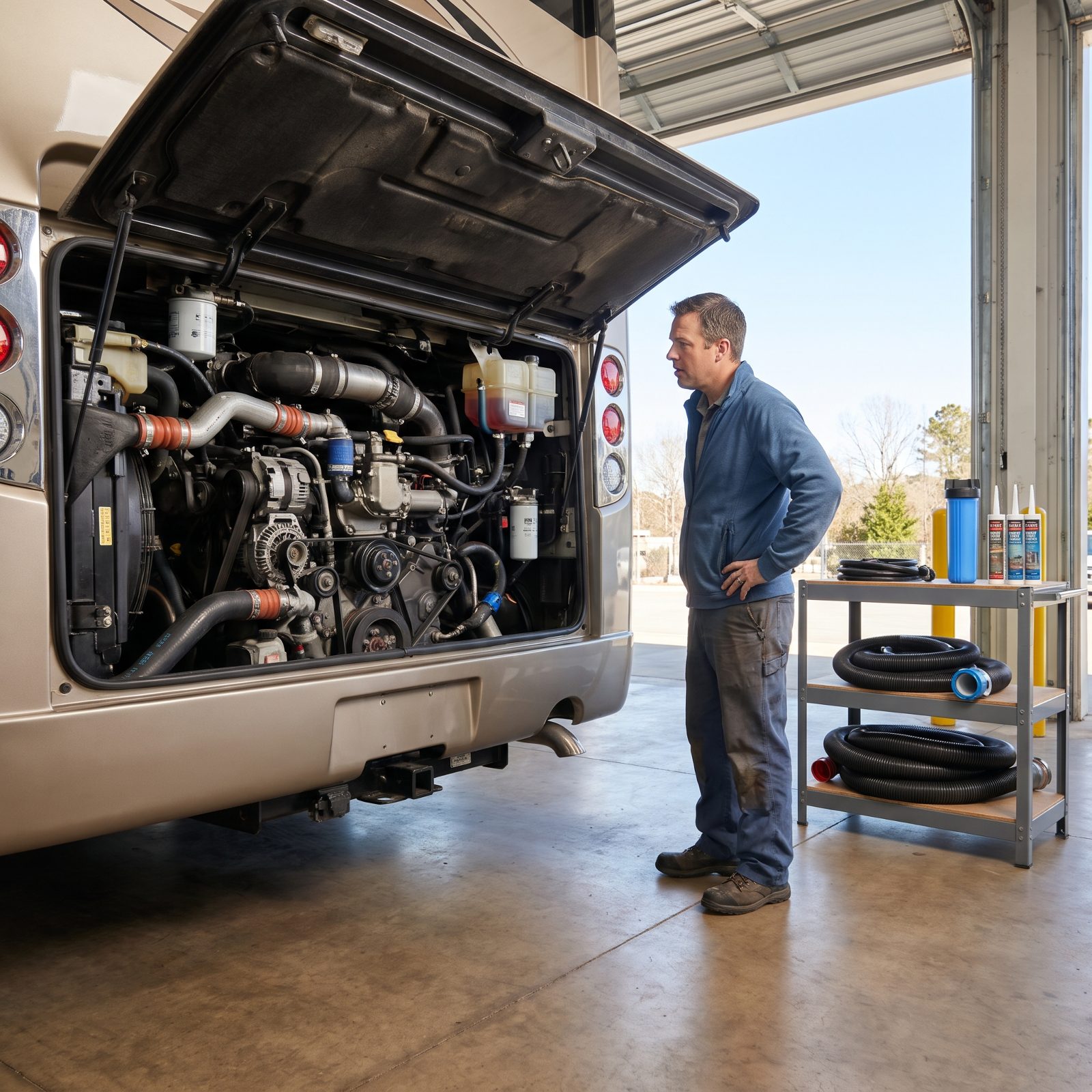
Standing on the lot, you’re a weekend warrior who’ll happily reseal the roof every spring, flush the water heater, keep a tidy maintenance log, and learn the diesel’s little quirks. Future You is competent, patient, and never once tired.
Future You is a fiction. We’re all wildly optimistic about the version of ourselves who shows up later — that’s the empathy gap. In the heat of wanting something, you simply cannot feel how little you’ll feel like crawling under a rig on a cold October morning.
Present You wants the coach. Future You has to grease the slides, chase a leak, and sit on hold with a mobile tech who can’t come till Thursday. The gap between those two people is where an awful lot of regret sets up camp.
2. You Skip the Roof Ladder Because the Leather Is Gorgeous
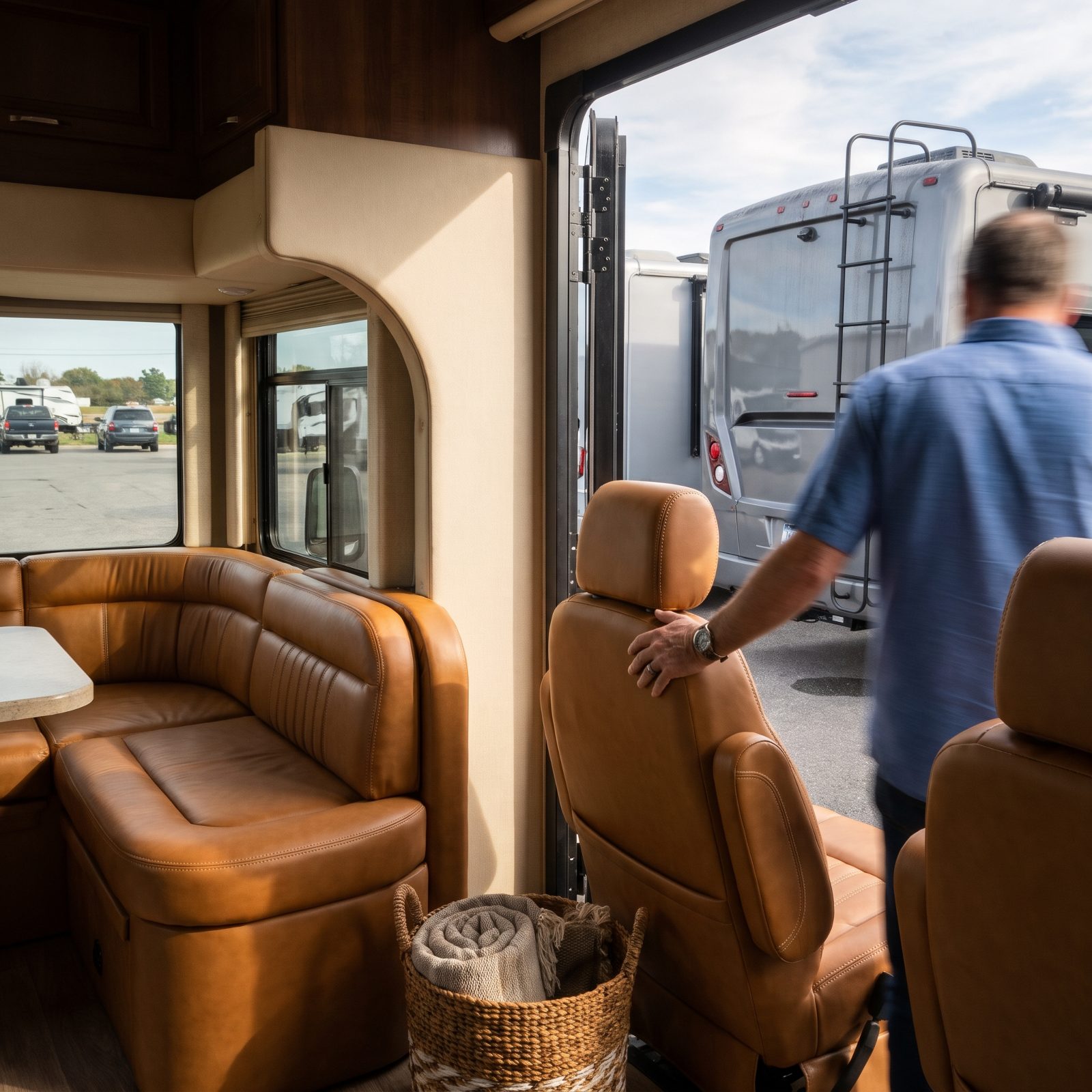
You run your hand over the tan leather captain’s chairs, sink into the dinette, and never once climb that ladder to look at the roof. The roof is where water gets in, where a bad seal quietly becomes a five-figure repair. But the leather is right here under your palm, and it feels incredible.
Attentional bias, plain and simple. We notice what’s vivid and pleasant and within reach, and we skip what’s dull, effortful, and up over our heads. The leather is sensory and immediate. The roof seams demand a ladder, a flashlight, and the stomach to go find bad news.
The most expensive problems on any RV are usually the ones you have to go hunting for. And that gorgeous interior is engineered precisely so you won’t bother.
1. Your Partner Hates the Dinette, Which Makes You Defend It
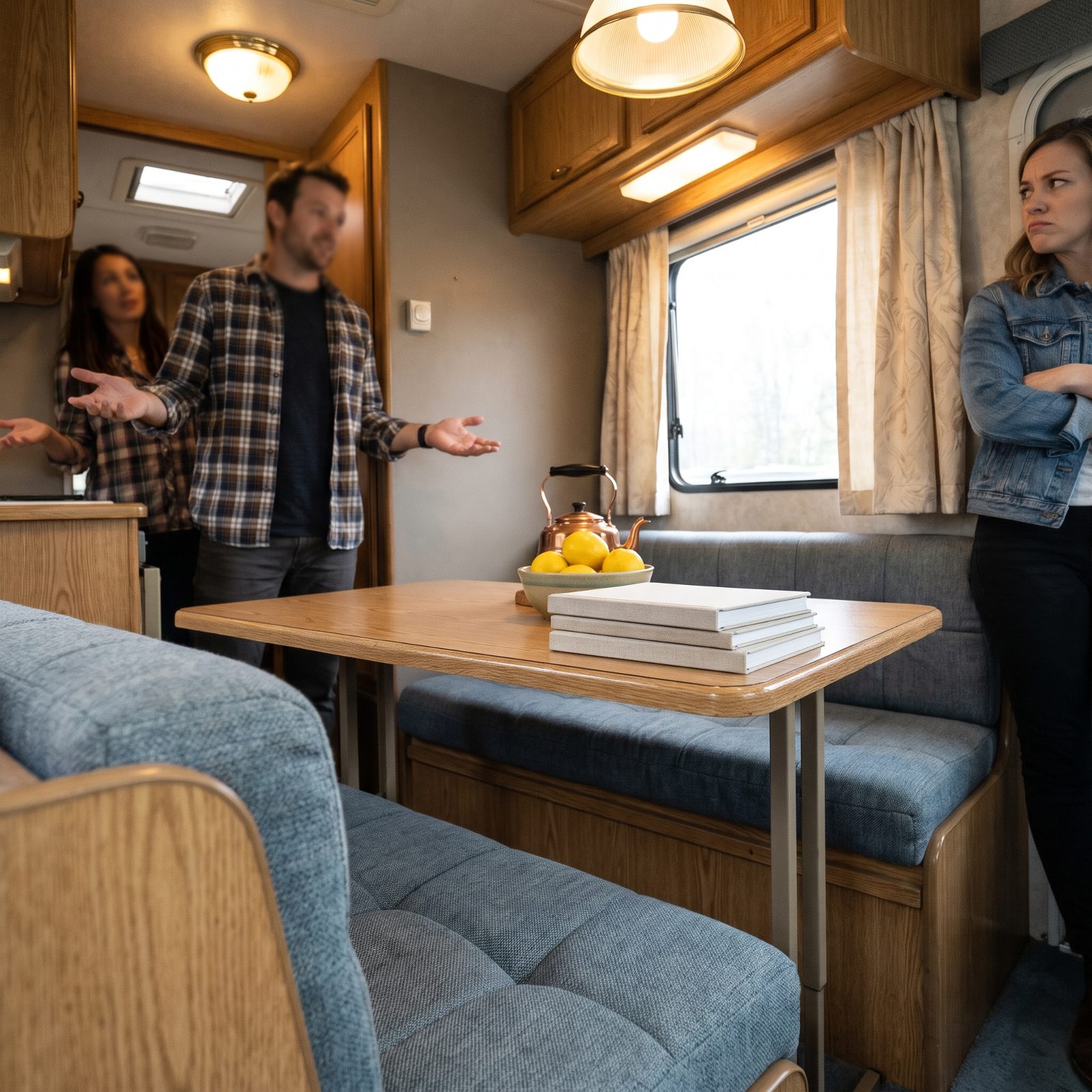
Your partner says the dinette’s too cramped, the bench is hard, and your knees knock under the table. And instead of agreeing — which, deep down, you do — you hear yourself building a case for it. Suddenly you’re a defense attorney for a booth you didn’t even love an hour ago.
Reactance is the culprit. The moment someone pushes against a choice we’re leaning toward, we dig in, because the push lands like a threat to our freedom to decide for ourselves. Opposition doesn’t make us reconsider. It makes us stubborn.
The irony stings. The other person might be dead right, your own gut might quietly nod along, and still the act of being challenged flips you into defense mode and welds you to a flaw you’d have caught in two seconds on your own. When you notice you’re arguing harder than you actually believe, that’s the tell. Walk away, grab a coffee, and ask yourself whether you’re defending the dinette or just defending your right to pick it.