
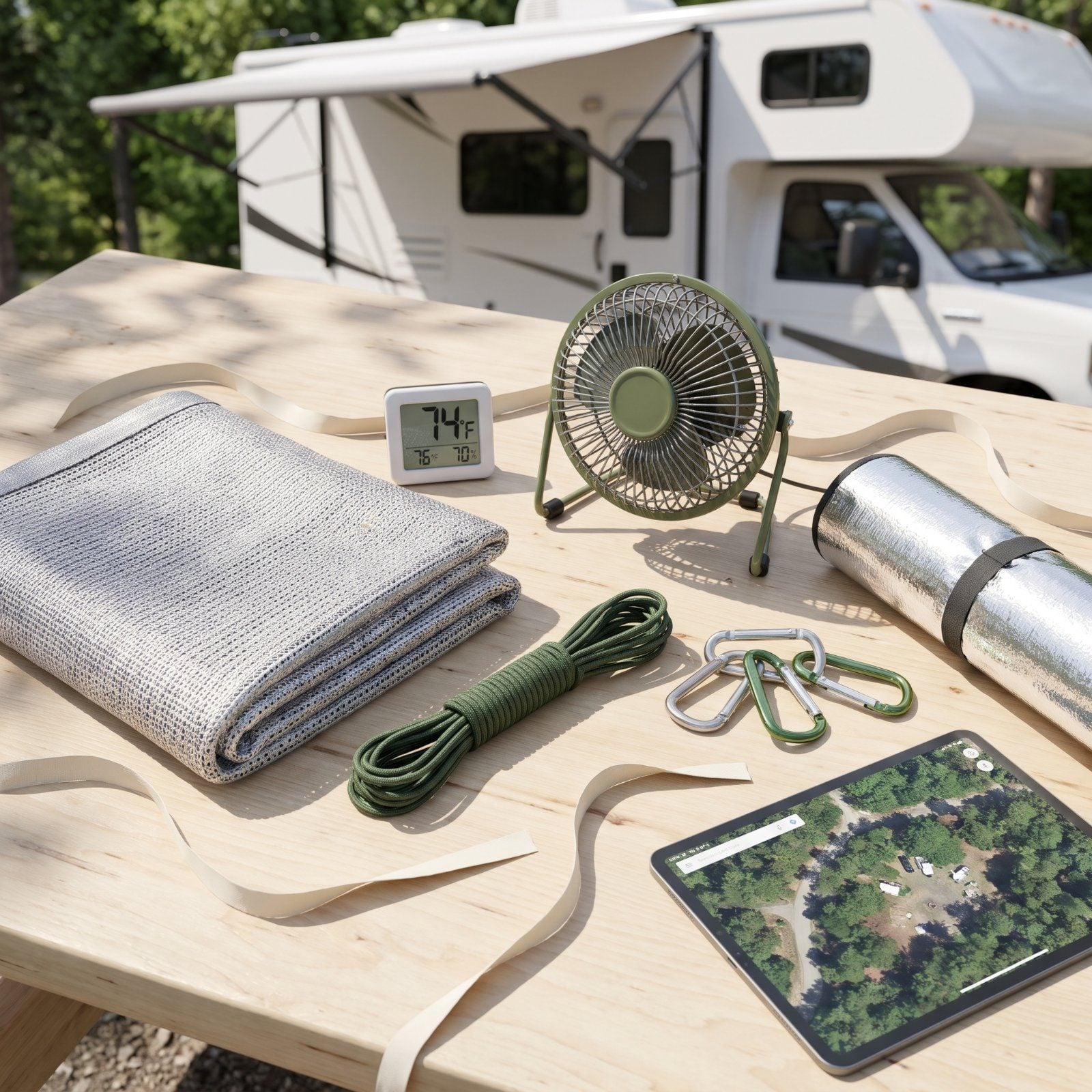
A 15,000-BTU rooftop unit pulling full amps in the Arizona afternoon is one of the loudest, most expensive sounds in RV life. It’s also usually unnecessary. The rig heats up because of decisions made before anyone cracks a window: where you parked, which way the nose points, what’s sitting on the pavement next to you. We’ve knocked rigs down by ten or fifteen degrees without touching the thermostat, just by reading the sun the way old sailors read wind. These tricks cost almost nothing and run on physics. The air conditioner stays off longer, the battery bank lasts, and you actually hear the campground instead of a compressor droning away.
Please note that some of the images in this article were created with the assistance of AI.
33. Use Satellite View to Scout Campsites With All-Day Shade
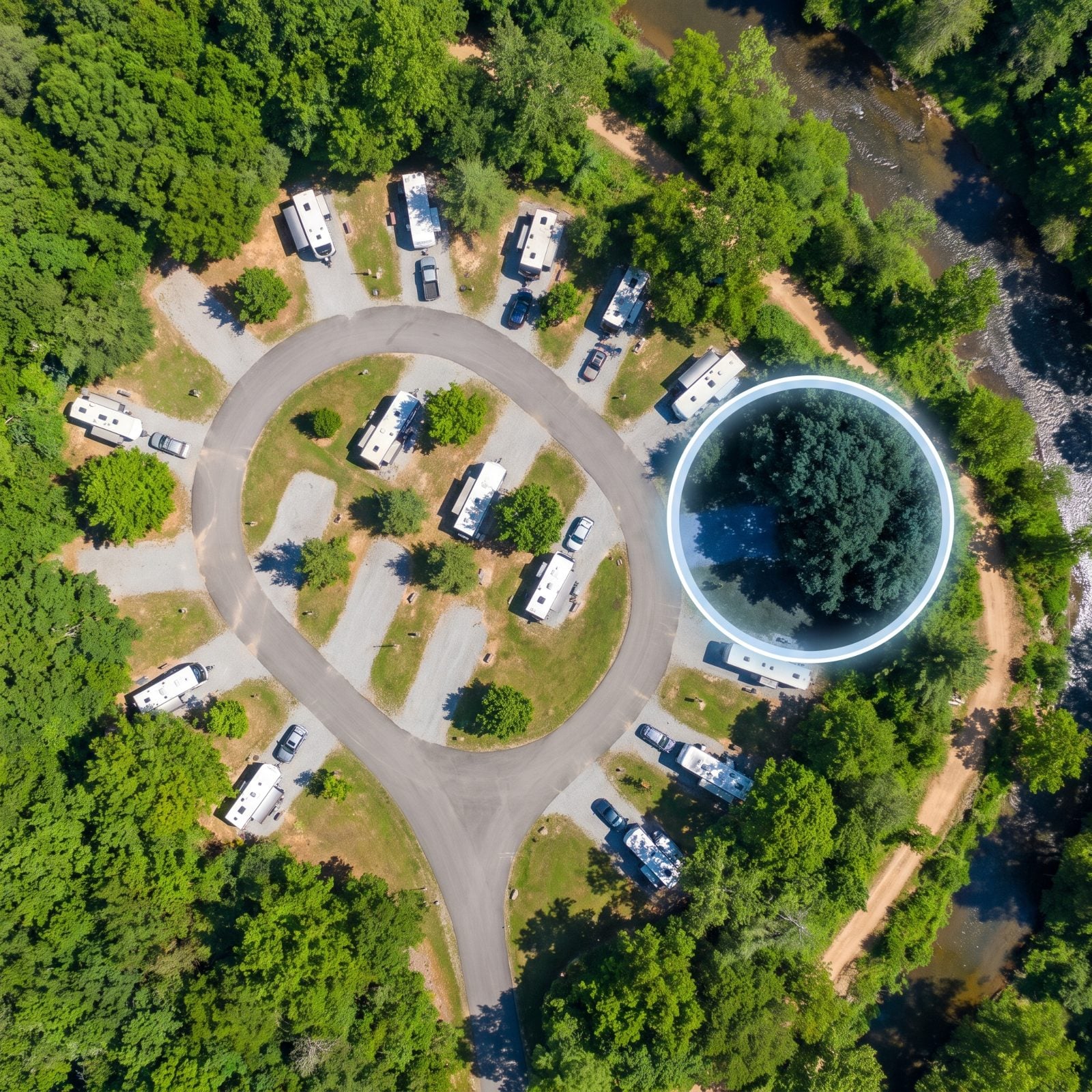
Campground maps lie about shade. They show you pad numbers and sewer hookups, never which sites bake. Pull up satellite view before you book and hunt for the dark green blobs sitting west and south of the pad, because that’s the shade you’ll actually have at 4 p.m. when it matters. A tree directly overhead gives you nothing after noon.
I booked a “shaded” site in Utah once that turned out to have one scrawny juniper on the north side. Useless. The afternoon sun came straight through. Now I zoom in, drop to street-level view if it exists, and read the shadow direction right off the image.
32. Park on Grass Instead of Heat-Radiating Asphalt
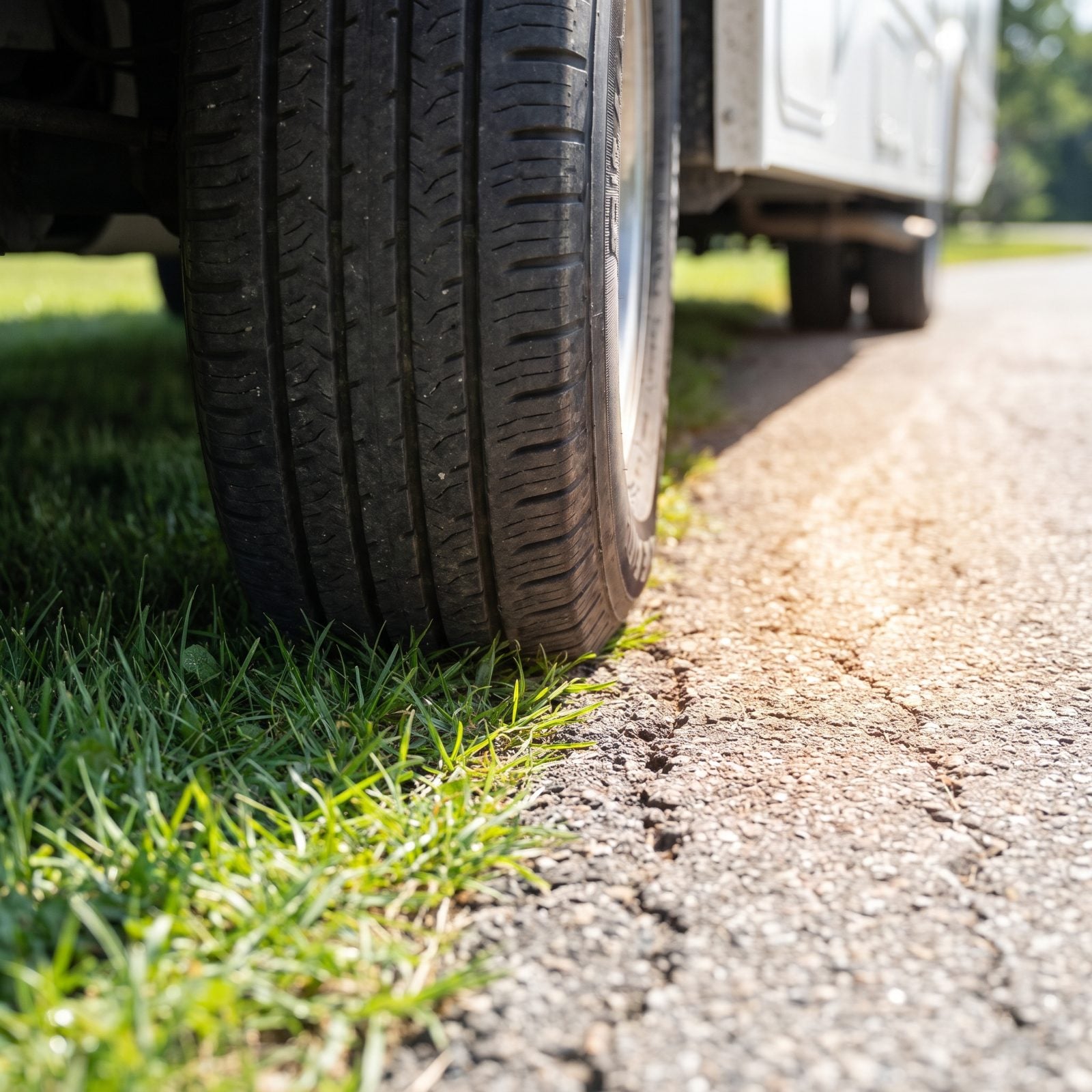
Asphalt is a battery for heat. It soaks up sun all day and radiates it back up into your floor long after sunset, which is why a rig on blacktop still feels warm at 10 p.m. while the one parked on grass has cooled off hours earlier.
Given the choice, take the grass pull-through. The difference under the belly can run twenty or thirty degrees on a hot afternoon. No grass? At least steer clear of the fresh-sealed black lots. Those are the worst offenders, and they stink too.
Speaking about how much heat pavement gives off after dark, a biology professor who studies urban heat says “It’s this inability to cool down at night that leads to some of the worst health effects”
31. Point the Rig’s Narrow End Toward the Afternoon Sun
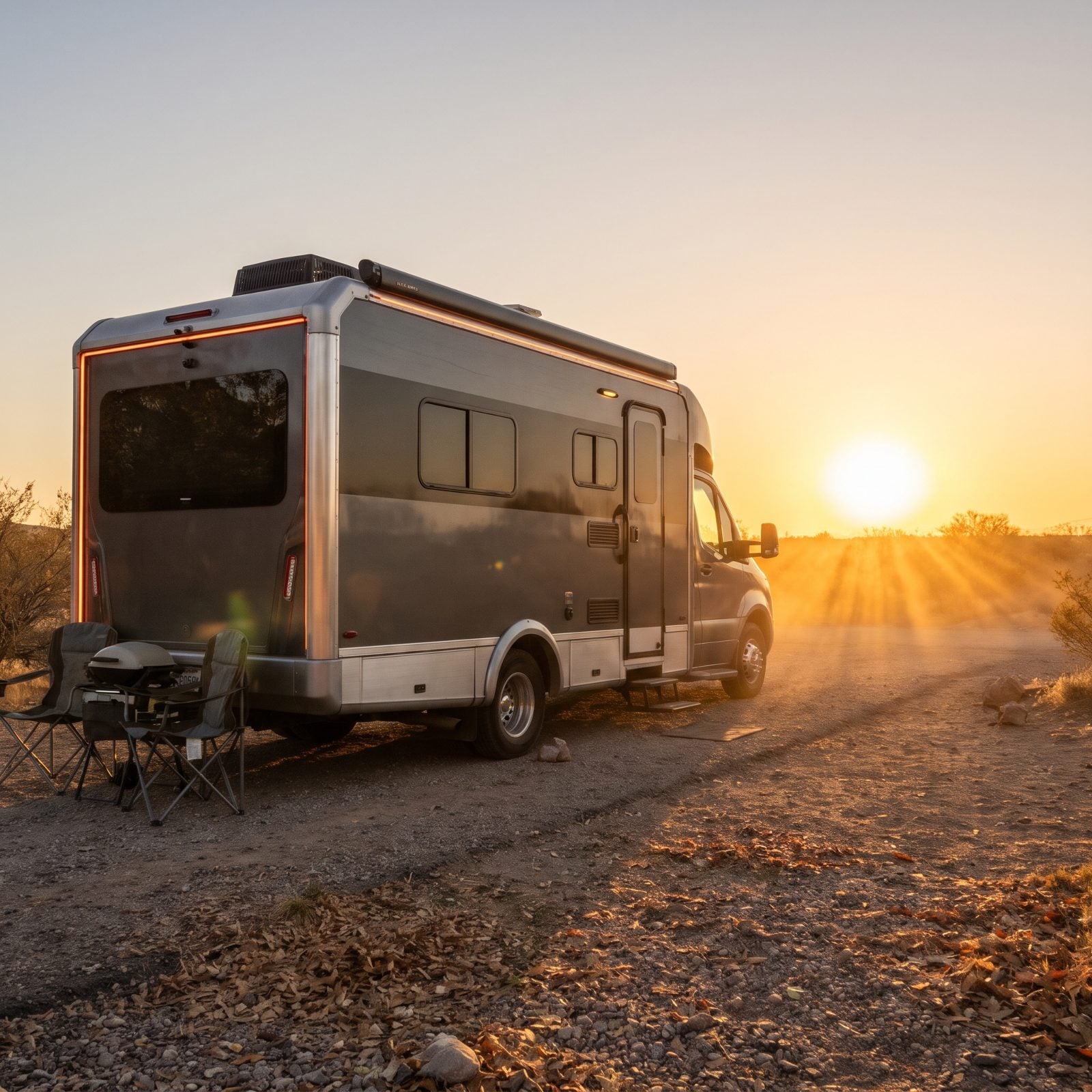
Your RV has a big side and a small side. The big side is a solar panel you never asked for. Every square foot of that long wall facing west in the afternoon is heat pouring straight into your living space.
So turn the nose. Point the narrowest end, usually the front, toward where the sun will be in late afternoon, and you cut the sunlit surface area dramatically while the long wall shades itself. A free thirty-second decision you make pulling in, and most people never think about it.
Explaining why they park nose-east, a longtime full-time RVing couple notes that “when the late afternoon sun hit the rear of our motorhome at the warmest time of the day, having our rig facing East kept the heat away from the living area, so it stayed cooler.”
30. Face Your Biggest Windows Into the Prevailing Breeze
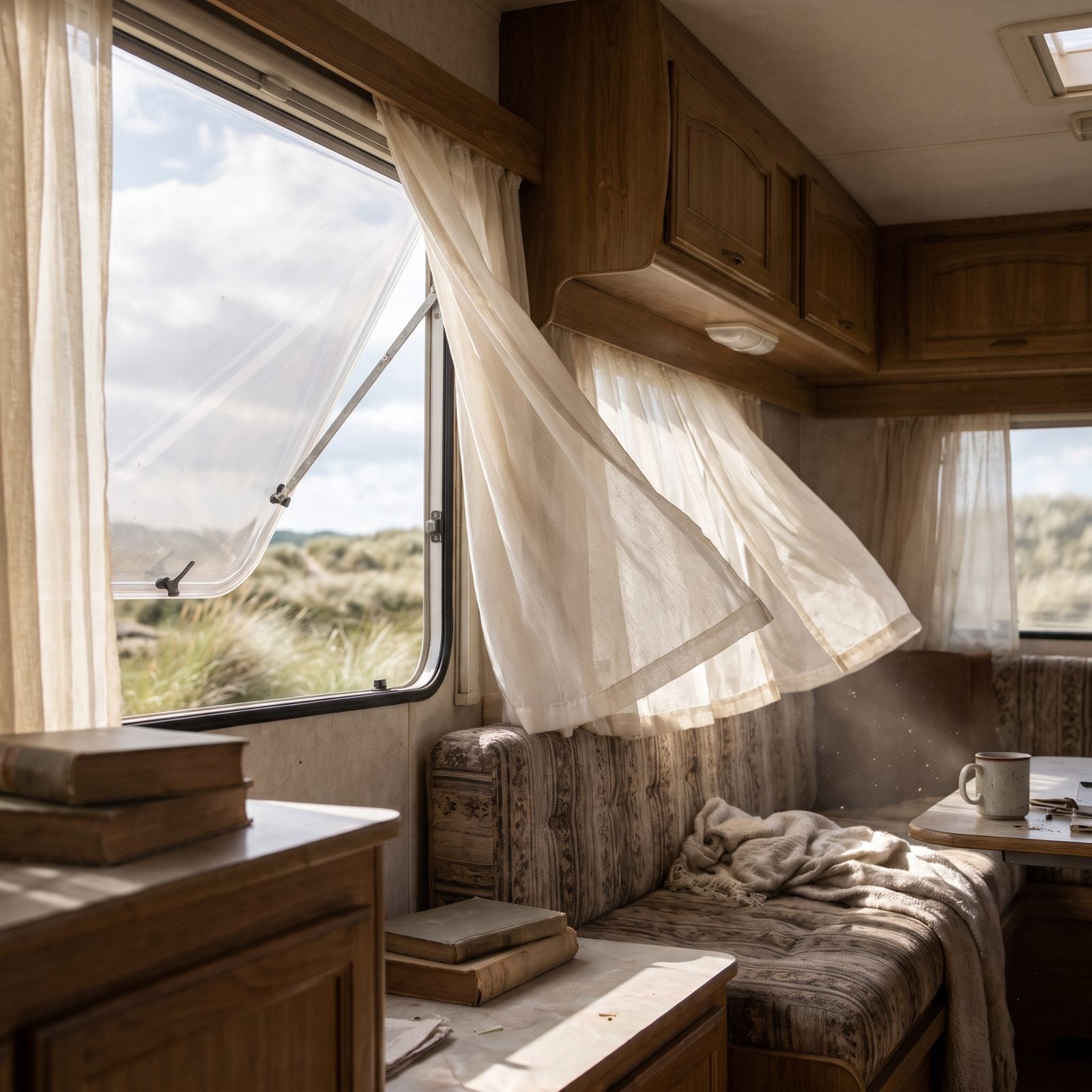
Cross-ventilation only works if the air has somewhere to come in and somewhere to leave. Point your largest opening windows into the prevailing breeze, open one on the opposite side, and the whole rig turns into a wind tunnel.
Here’s what people miss: match the opening sizes. A huge window on the windward side with a tiny crack downwind chokes the flow. Open the far side too. Then pop the roof vent with a fan drawing out and you’ll feel it instantly, hot air rises and leaves while cooler ground-level air gets pulled in behind it.
29. Park the Tow Vehicle as a Late-Day Heat Shield
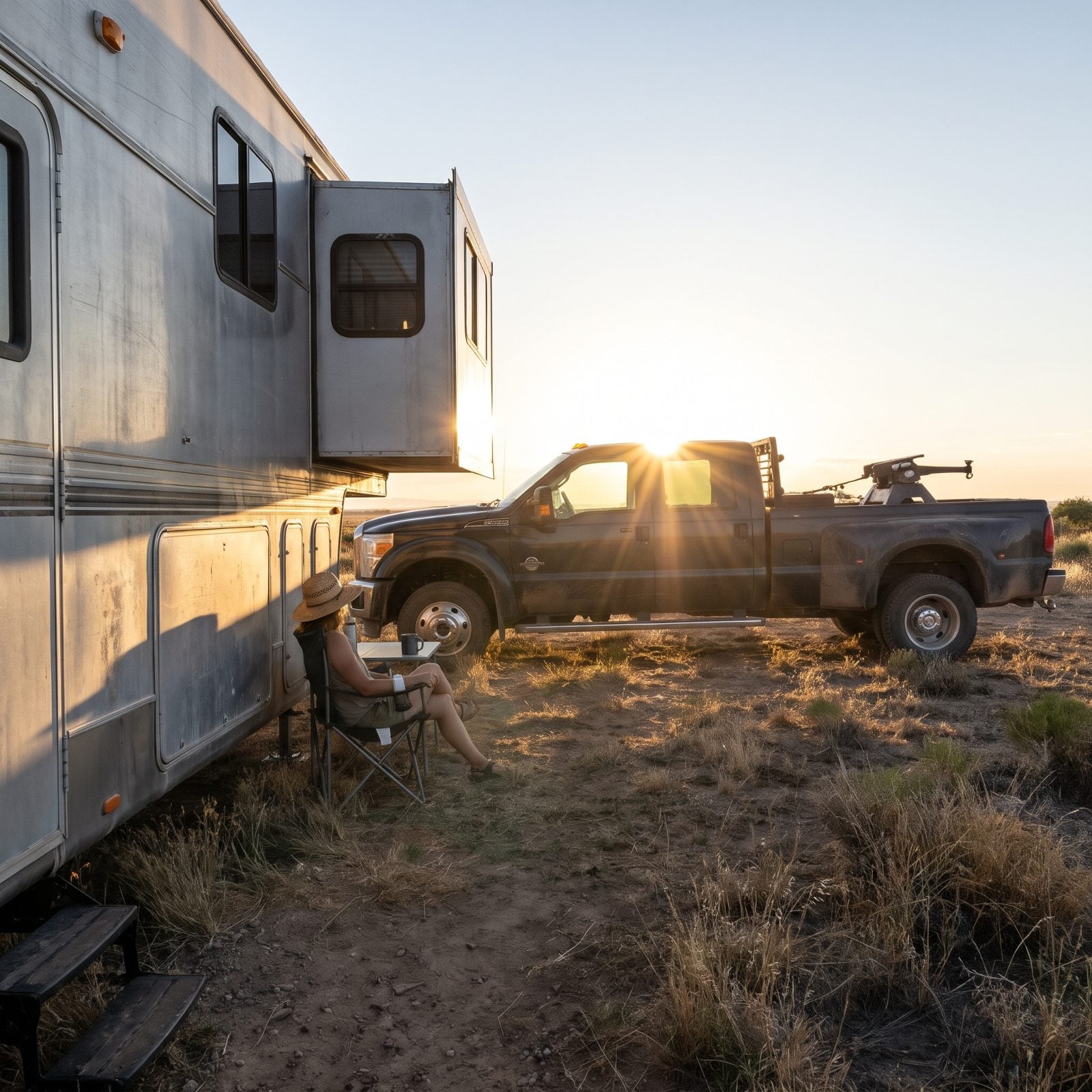
Your truck or toad is a 6,000-pound shade panel on wheels. Instead of leaving it parked out in the open, well away from the trailer, where its long late-day shadow just stretches across empty dirt and the trailer’s lower wall and windows sit in full sun, tuck it tight against the west side of the rig in late afternoon so it throws its shadow across your lower windows and wall.
Won’t shade the roof, obviously. But it blocks that low, raking sun that comes in sideways and cooks the interior through the glass. One short maneuver to reposition, and it’s shade you already own.
28. Suspend a Shade Sail Above the Roof With an Air Gap
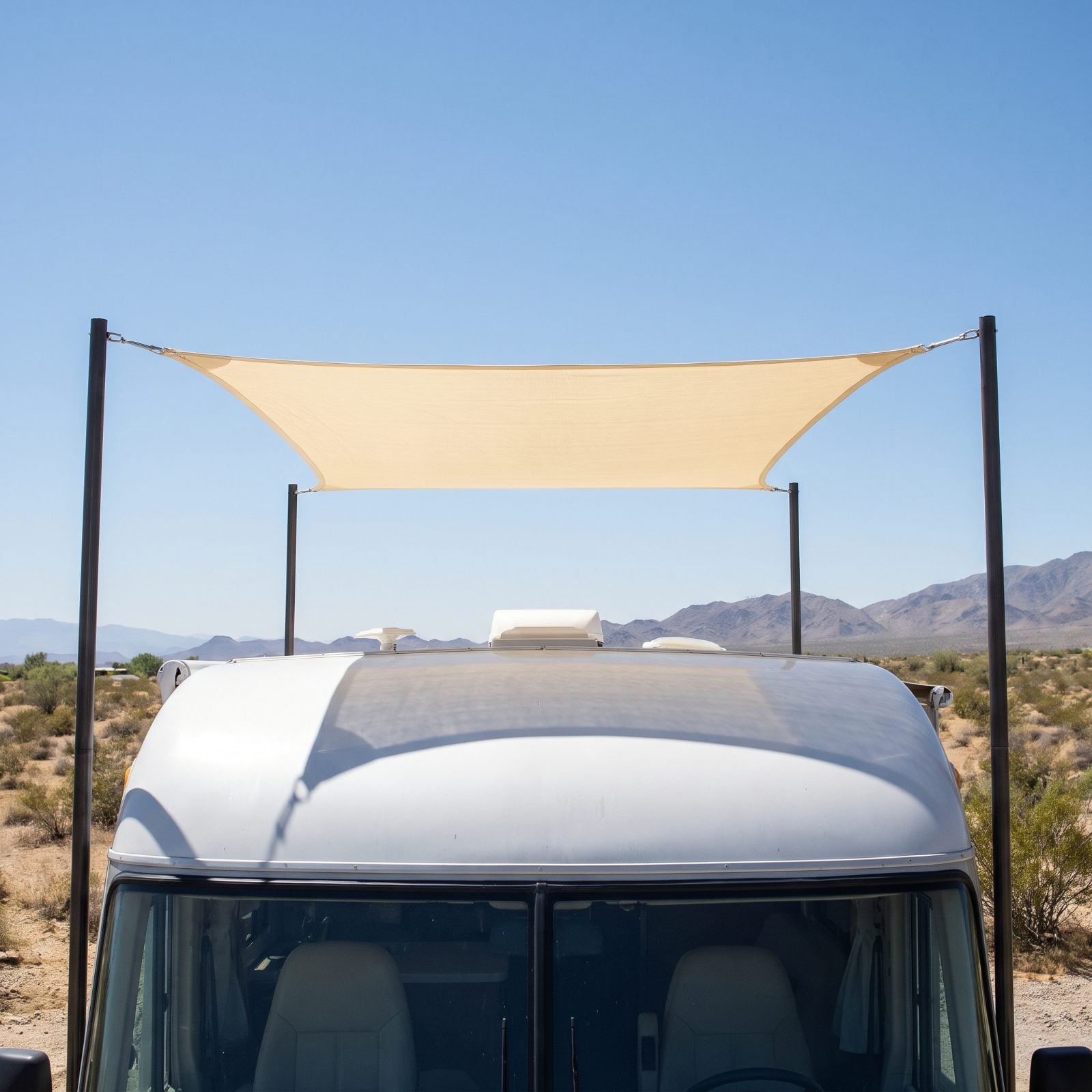
The roof takes the worst of it. Sun straight down, nothing to stop it, radiating heat into your ceiling all afternoon. A shade sail rigged above the roof stops that cold, but the detail everyone botches is the air gap.
Lay a tarp flat on the roof and it just becomes a hot second skin. Suspend the sail six inches to a couple feet up, on poles or guy lines, and the gap lets a breeze sweep the hot air out from underneath. Shade plus ventilation. Go light-colored or reflective. And rig it so wind can’t turn it into a sail in the nautical sense, because it will absolutely try.
27. Hang Aluminet Shade Cloth Along the Western Wall
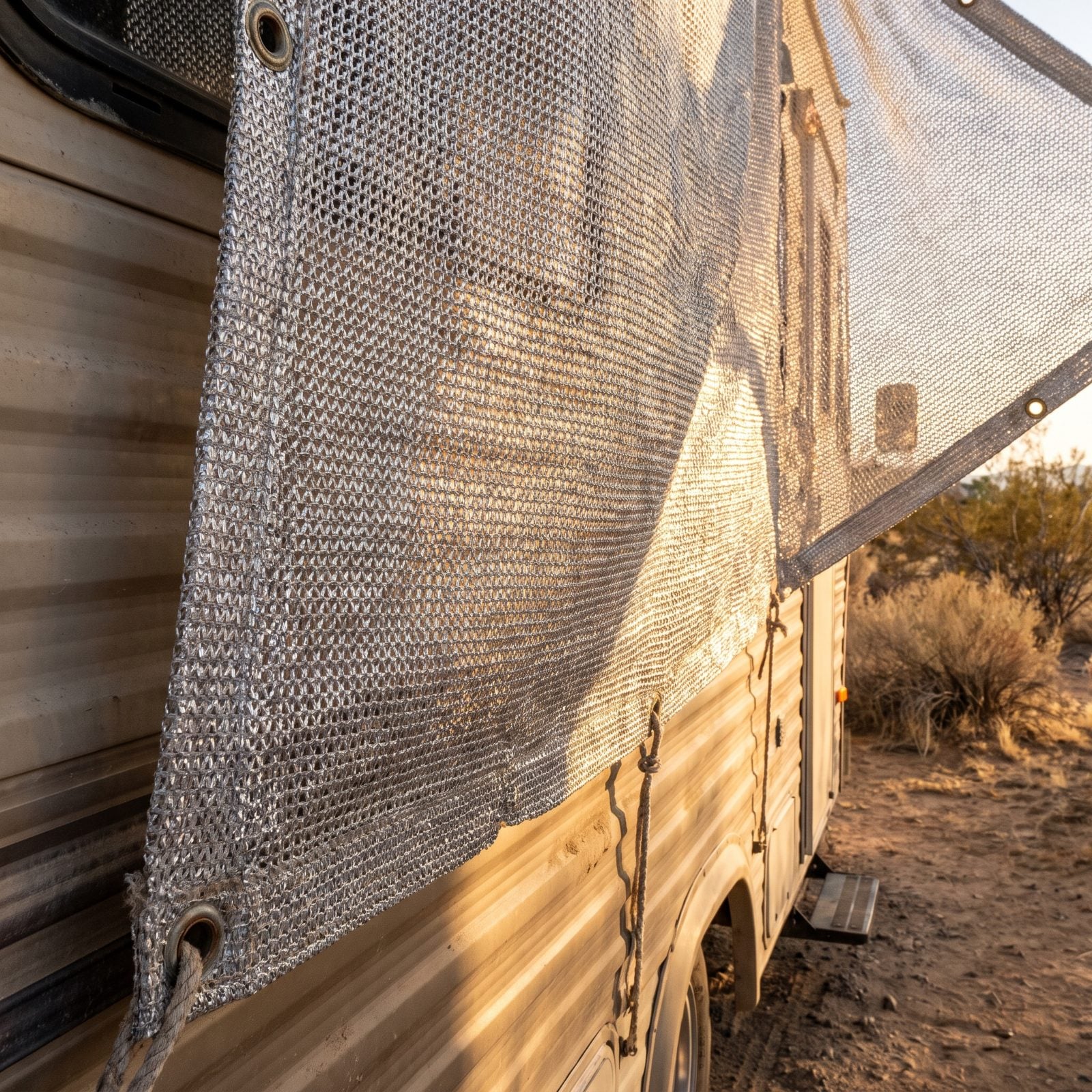
Aluminet is a knitted reflective shade cloth, originally greenhouse gear, and it’s the quiet hero of desert RVers. A solid tarp soaks up sun and gets hot; this reflective mesh bounces most of the radiant heat back and still breathes.
Hang it along the west wall, the side that gets hammered after noon, with a few inches of gap off the body so air can move behind it. You block the direct sun on your windows and wall while keeping some light and a view. A length of it costs a fraction of what you’d burn running the AC through a summer.
26. Pitch the Patio Awning Low Against the Slanting Sun
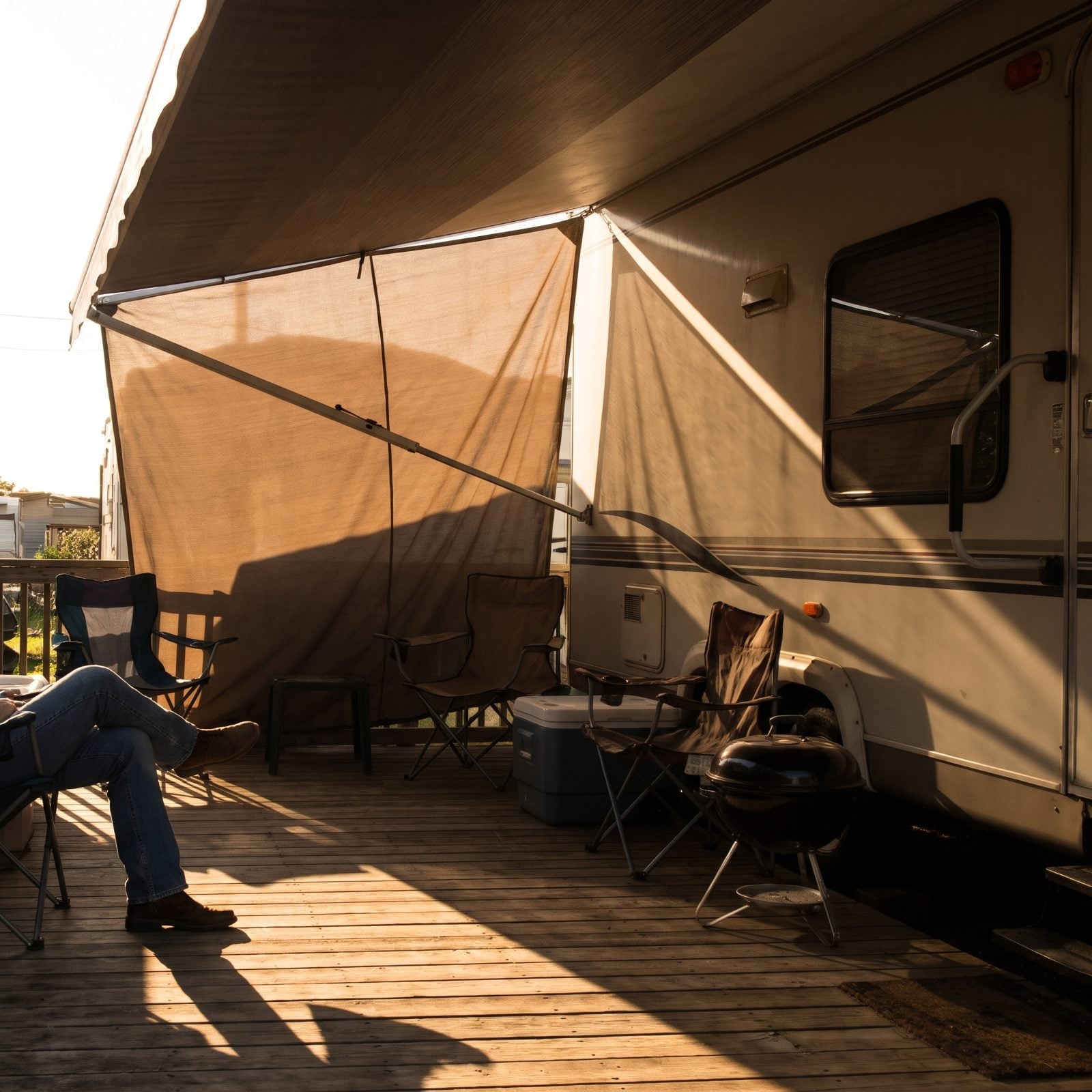
A flat, level awning does nothing when the sun drops low. By four or five o’clock the light comes in almost horizontal, sliding right under the awning and onto your windows.
Drop the front edge. Crank one or both arms down so the awning tilts steeply toward the low sun and works like a wall instead of a roof, the same trick an old porch awning pulls against morning glare. You lose a little standing room, you gain shade exactly where the heat’s getting in. Just lower it before any wind kicks up.
25. Cover the Windshield and Cab Glass From the Outside
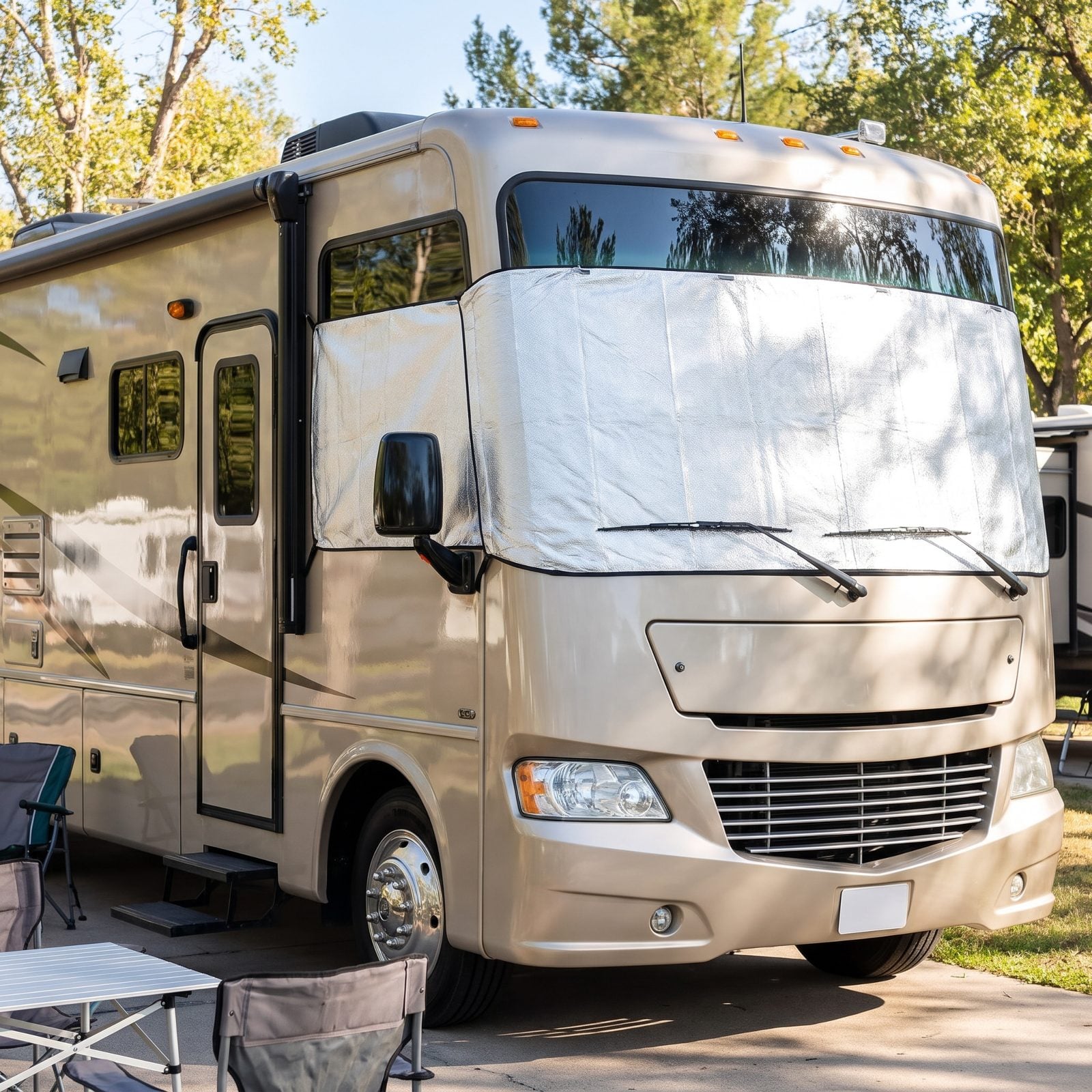
The cab of a motorhome is a glass greenhouse bolted to the front of your house. That huge windshield and the side glass pull in enormous heat, and that heat floods back into the living area.
The mistake is covering it from the inside. Interior shades kill the glare, sure, but the sun already passed through the glass and dumped its heat, now trapped between the window and the shade. Cover it from outside and you stop the heat before it ever gets in. A fitted reflective windshield cover with wing panels for the side windows handles the whole job, and in a front-cab rig it’s the single biggest difference you’ll feel.
24. Snap Solar Shade Mesh Over Your Sunniest Living-Area Window
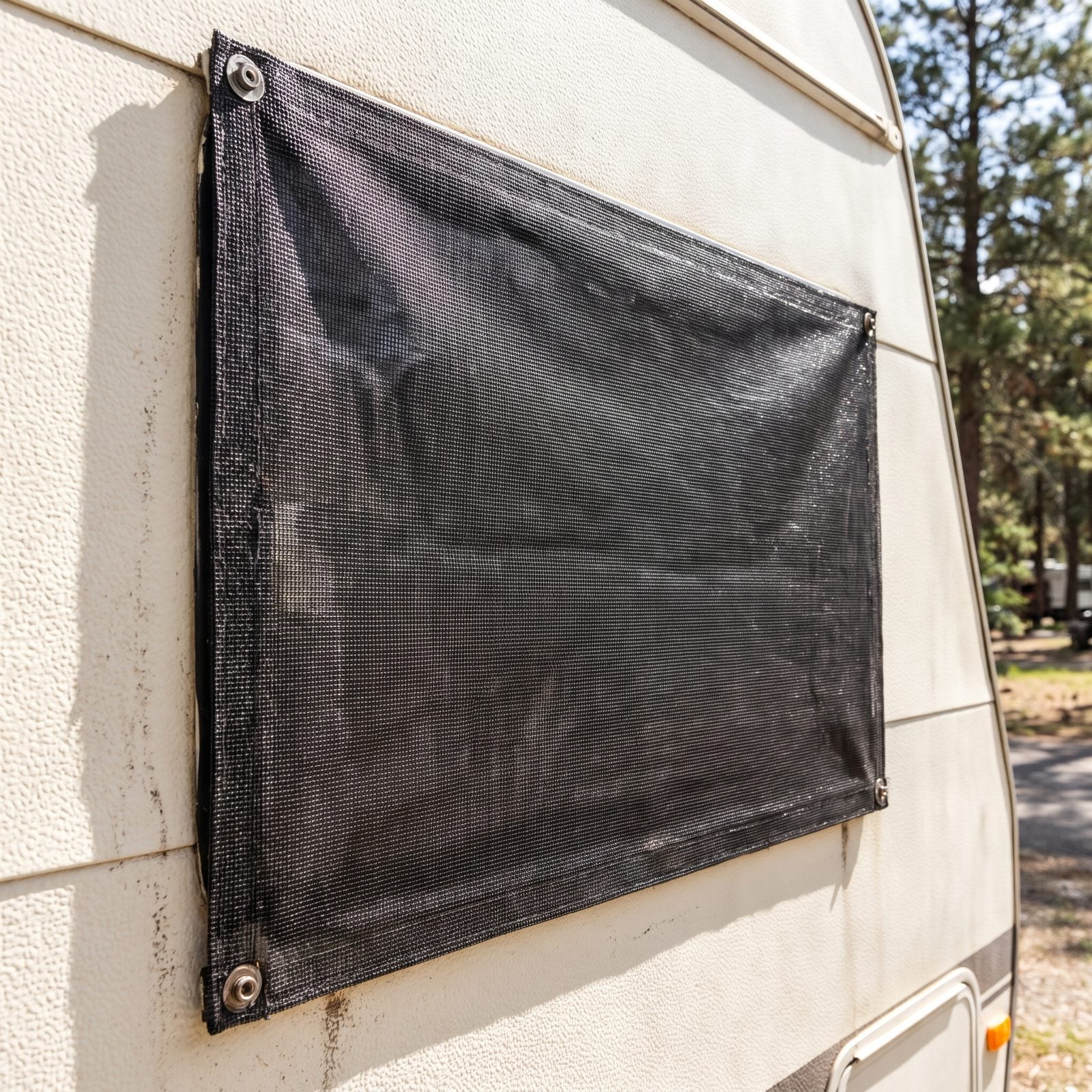
Exterior shade beats interior shade every time. Once sun hits the glass, that heat is already inside your box, so you want to stop it on the outside and win before it starts.
A panel of knitted solar shade cloth — the same stuff that goes over patio pergolas — blocks most of the sun while still letting you see out and feel a breeze. Run a line of snap fasteners around the edge of the mesh panel and you can pop it on in the morning and pull it off at dusk. Cheap, too. Maybe twenty bucks of mesh and a pack of snaps.
23. Wash the White Roof So It Actually Reflects Again
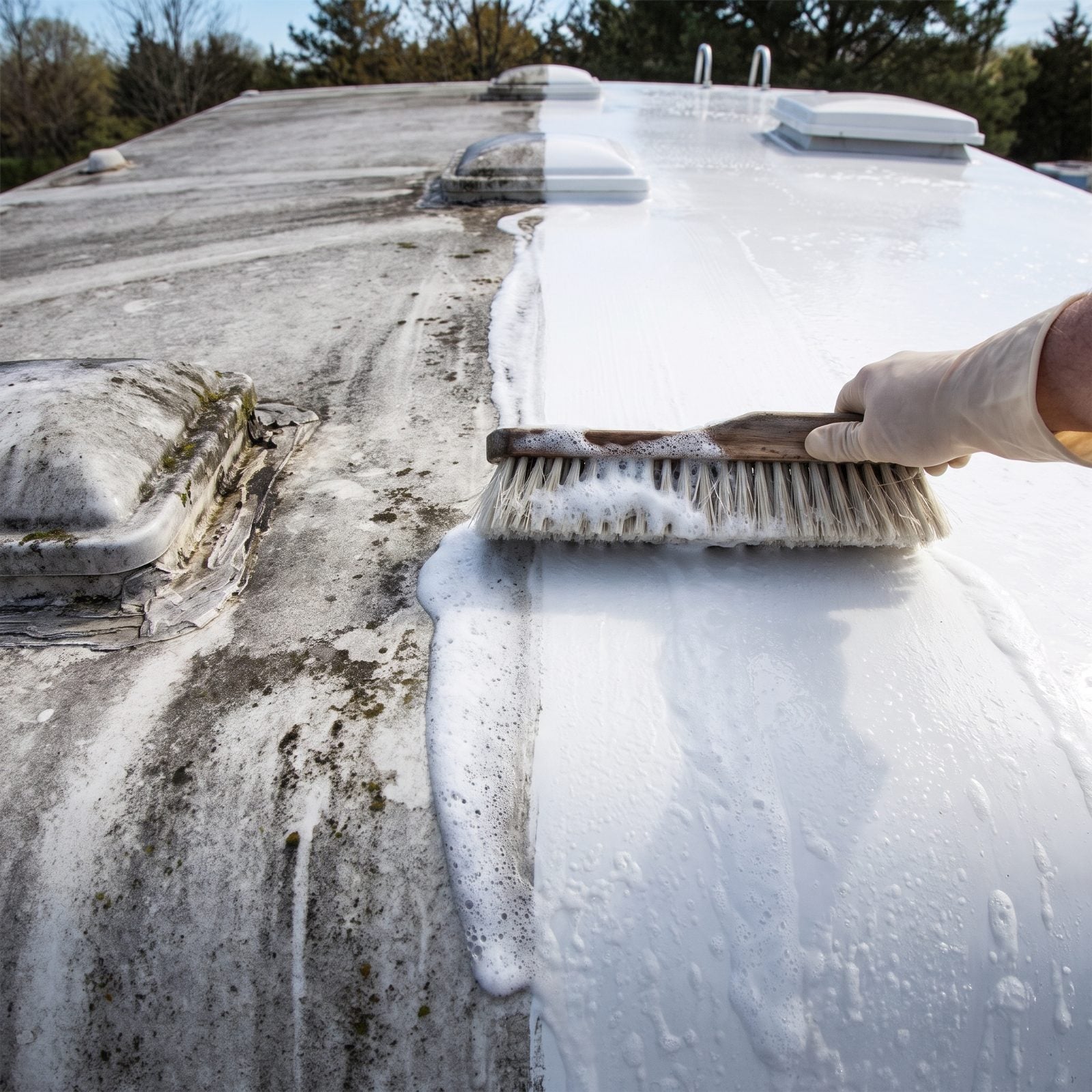
A dirty white roof isn’t white. It’s gray. And gray soaks up sun your bright-from-the-factory roof used to bounce away.
I ignored mine for two summers and wondered why the bedroom got hotter every year. Then I scrubbed off the chalky oxidation and the road grime, and the difference under my hand was real — a clean reflective roof runs cooler, which means the whole cabin starts the afternoon from a lower number.
22. Cut Reflectix Window Inserts and Leave a Protective Air Gap
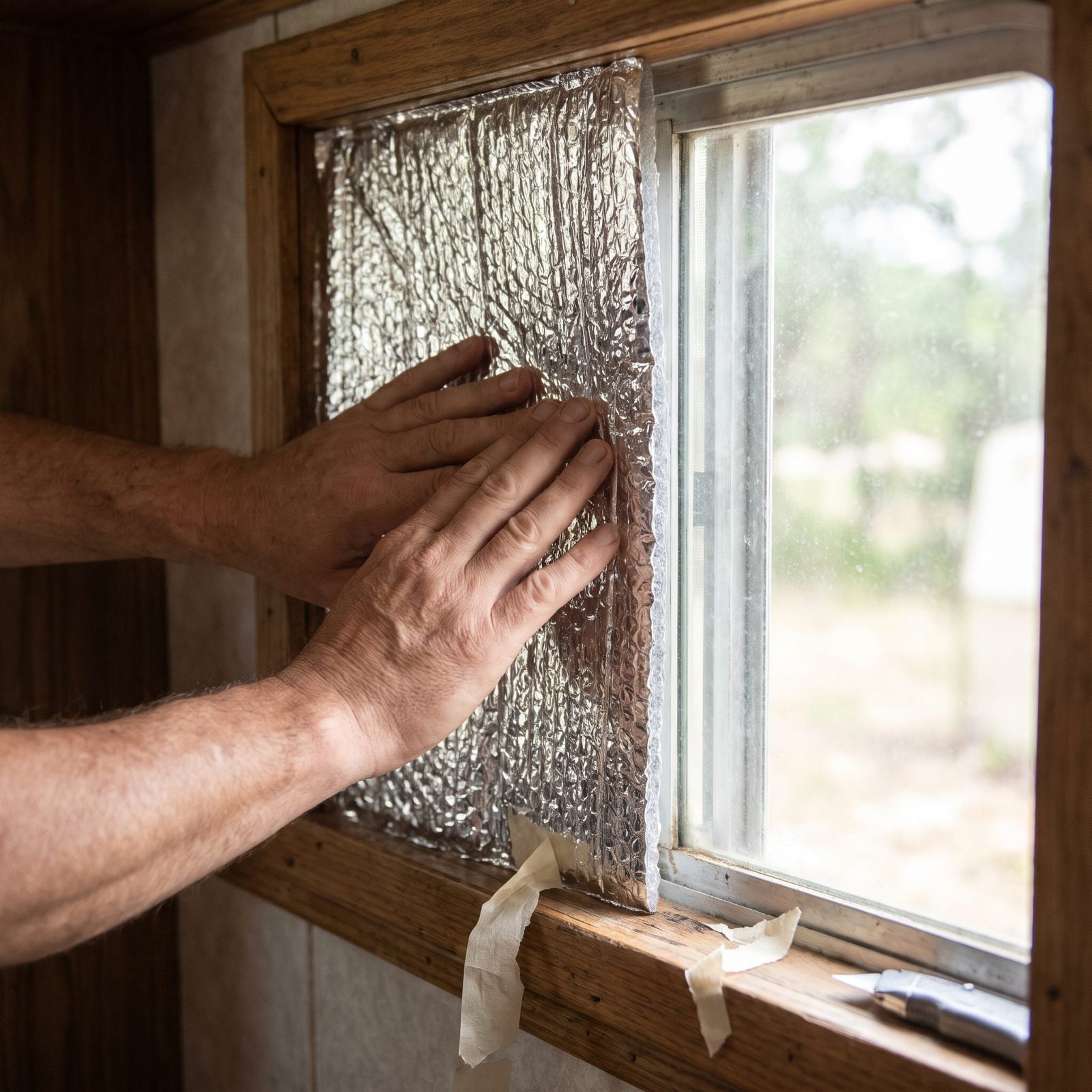
Reflectix is the crinkly silver foil insulation everyone stuffs in their windows, and most people do it slightly wrong.
Cut each panel to press-fit the window opening, foil side out to bounce sun. Now here’s the part nobody mentions until the glass cracks: leave a small air gap between the foil and the window. Reflectix pressed flat against hot glass can trap heat and stress a double-pane seal. That gap gives the heat somewhere to go, and it protects your windows.
A roll of the stuff runs maybe fifteen dollars and does the whole rig. Label each panel on the back so you’re not playing jigsaw at dawn.
21. Close the Insulated Blackout Curtains Before You Eat Breakfast
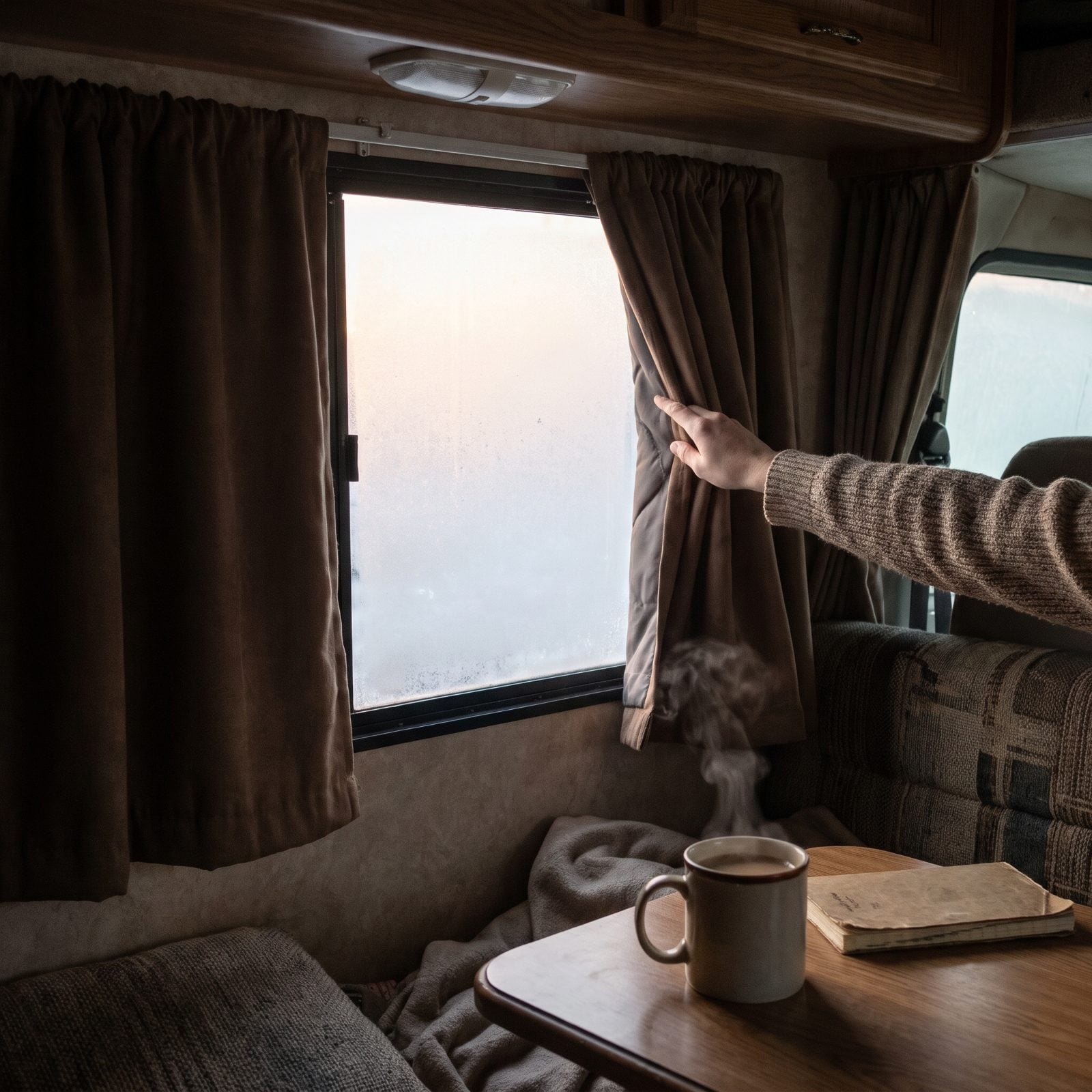
Timing matters more than the curtains themselves.
Wait until the cabin feels hot to close them and you’ve already lost. Close your insulated blackout panels on the sun-facing side first thing, while the air inside is still cool from the night. You’re trapping the cool, not blocking heat you already let in.
Heavy lined panels do far more than the thin factory day-shades. They’re a wall you can open when the sun moves. By mid-afternoon that shaded side of the rig stays livable without the compressor ever kicking on.
20. Hang a Magnetic Thermal Curtain Behind the Cab
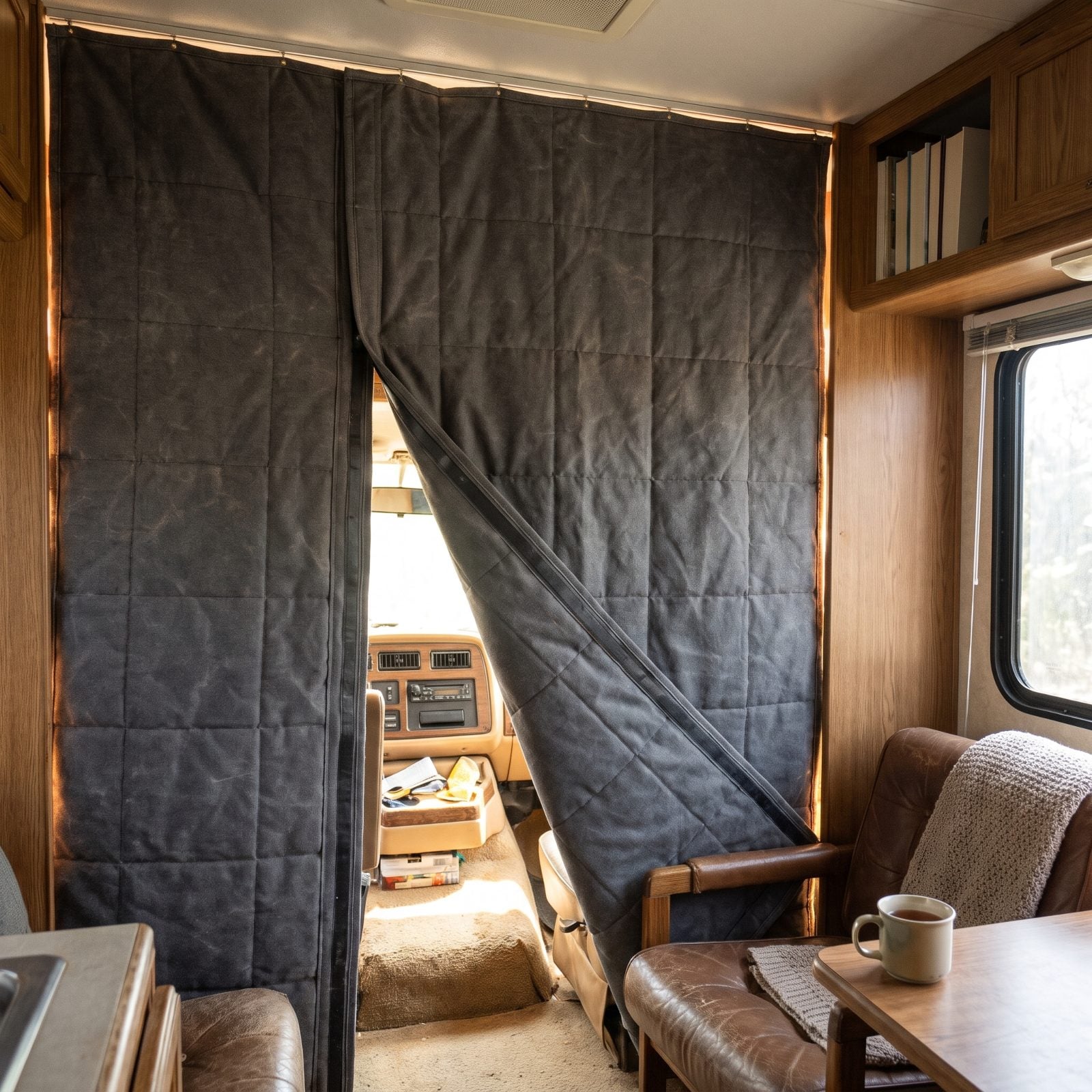
The cab is a greenhouse. That giant windshield and the two door windows pour sun straight into the front of the rig all day.
A quilted thermal curtain held up with magnets behind the front seats walls off that whole hot zone, so you stop cooling square footage you’re not even sitting in. Clips sliding along a rail across the top mean you can pull it aside in two seconds to drive or dig through the glovebox.
19. Plug the Roof Vents and Shower Skylight With Insulated Inserts
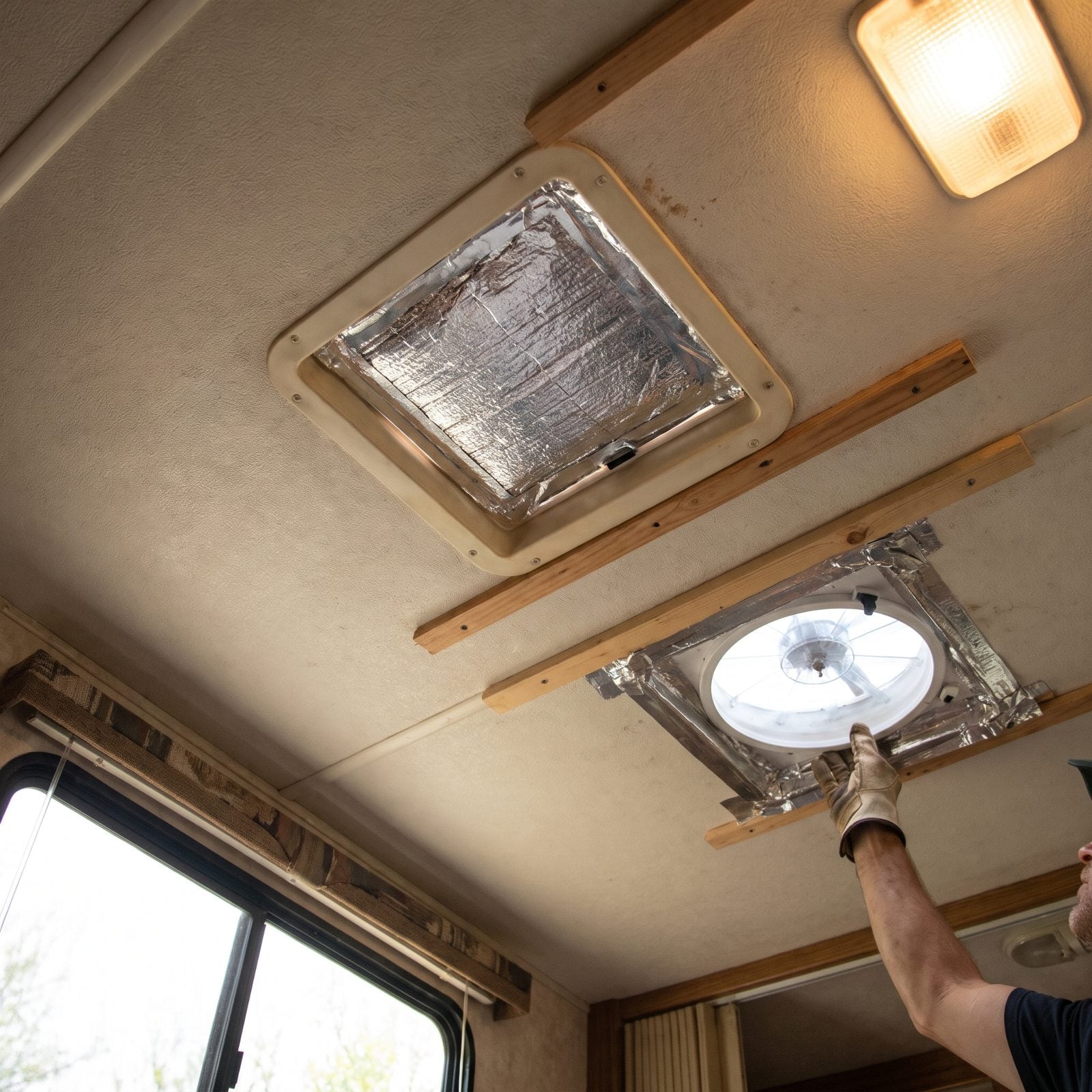
Clear vent domes and that shower skylight act like little magnifying glasses aimed at your ceiling.
Foil-faced foam inserts cut to fit each opening block the sun cold. The shower skylight is the worst offender — usually dead clear, sitting right over a small space that heats up fast. Pop the inserts in during the hottest stretch and pull them when you want the light or the airflow.
Foam board and a razor knife, under ten dollars, and you keep three or four hot spots sealed. Just don’t leave the vent one in when you actually need to run the fan.
18. Make a Removable Insulated Insert for the Entry Door Window
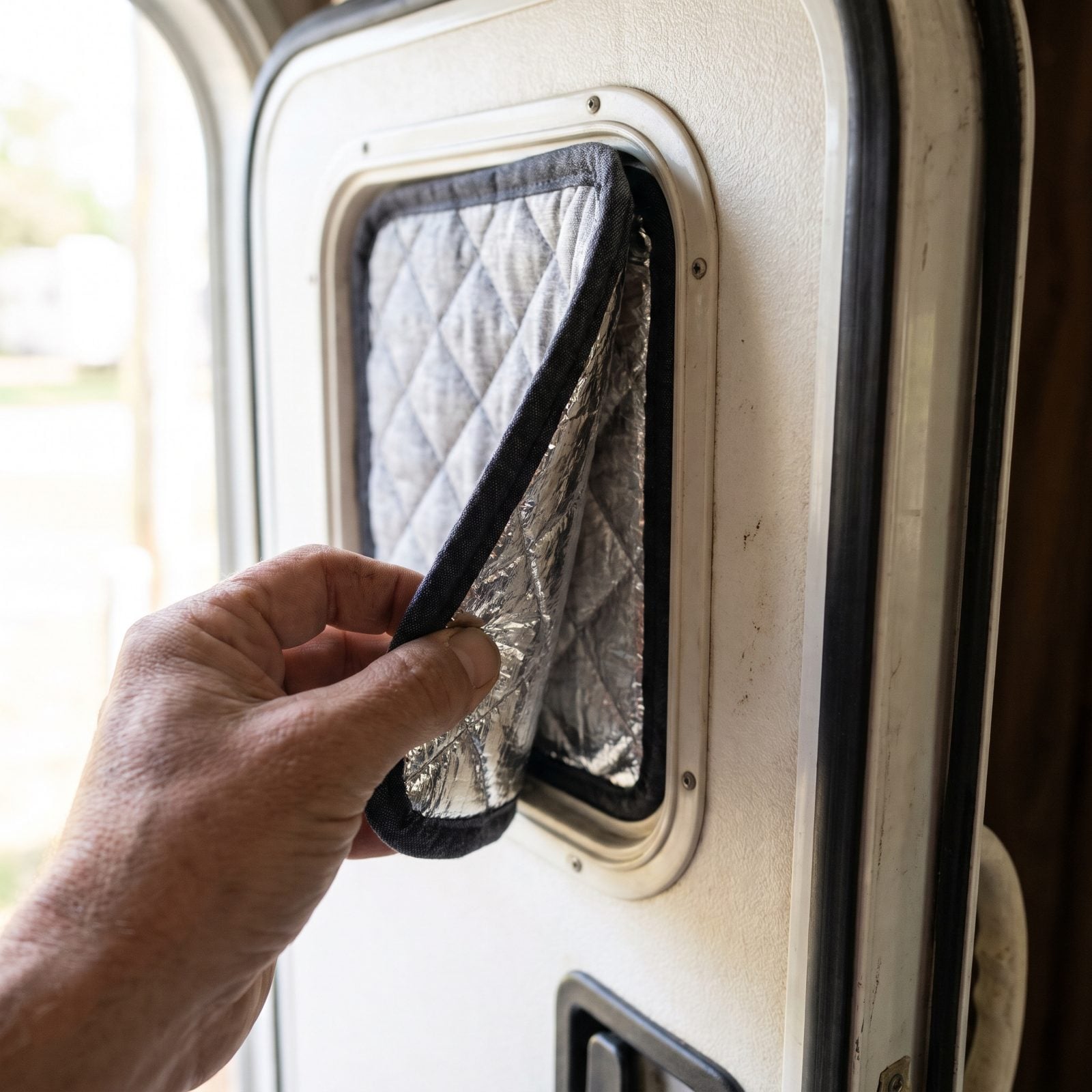
Everybody insulates the big windows and forgets the little one in the door.
It’s small, but it’s single-pane glass staring right at the sun on whichever side you parked, and it dumps heat all afternoon. Cut a snug foam insert, cover it in quilted fabric with a panel of reflective foil quilted in alongside, and press-fit it into the opening from the outside of the door. Pull it out when you leave so you can see who’s knocking.
Small gap, small fix. But a dozen small fixes are the difference between an AC that cycles and one that screams.
17. Replace Flattened Slide Seals That Leak Hot Air All Day
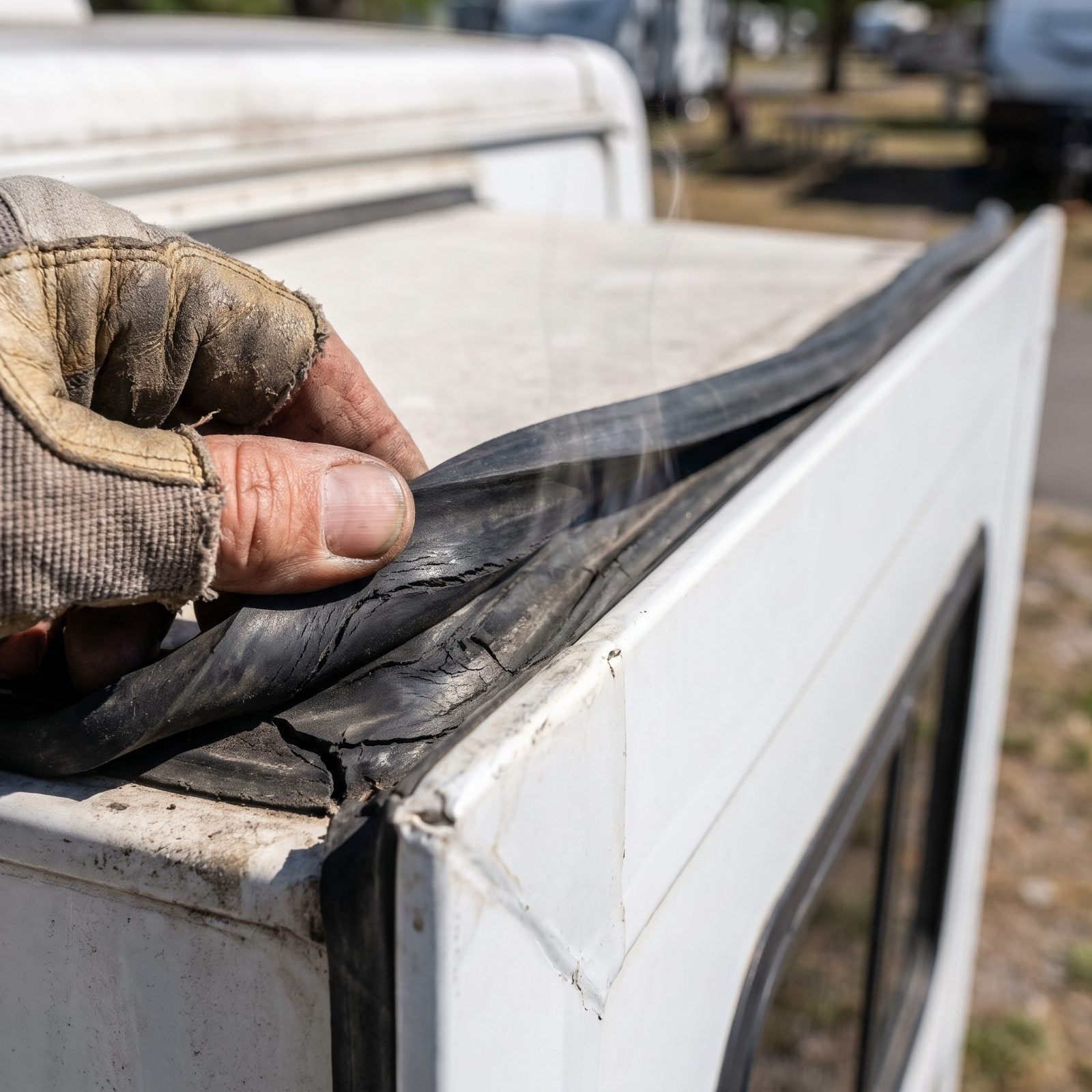
Run your hand along the top edge of your slide on a hot day. Feel warm air trickling in? Your bulb seals are shot.
Slide seals are rubber, and rubber flattens and cracks over the years. A gap the width of a pencil along a six-foot slide is a steady leak of hot outside air, and it works your AC the whole time. New seal material isn’t glamorous, but swapping it is one of the few fixes that pays you back in both summer and winter.
Listing the signs of a failing slide seal, an RV parts industry veteran warns “A failing bulb or wiper can let cold or hot air into the RV. You may notice a draft around the slide even when the weather is calm.”
16. Seal the Open Plumbing Penetrations Hiding Under Your Sinks
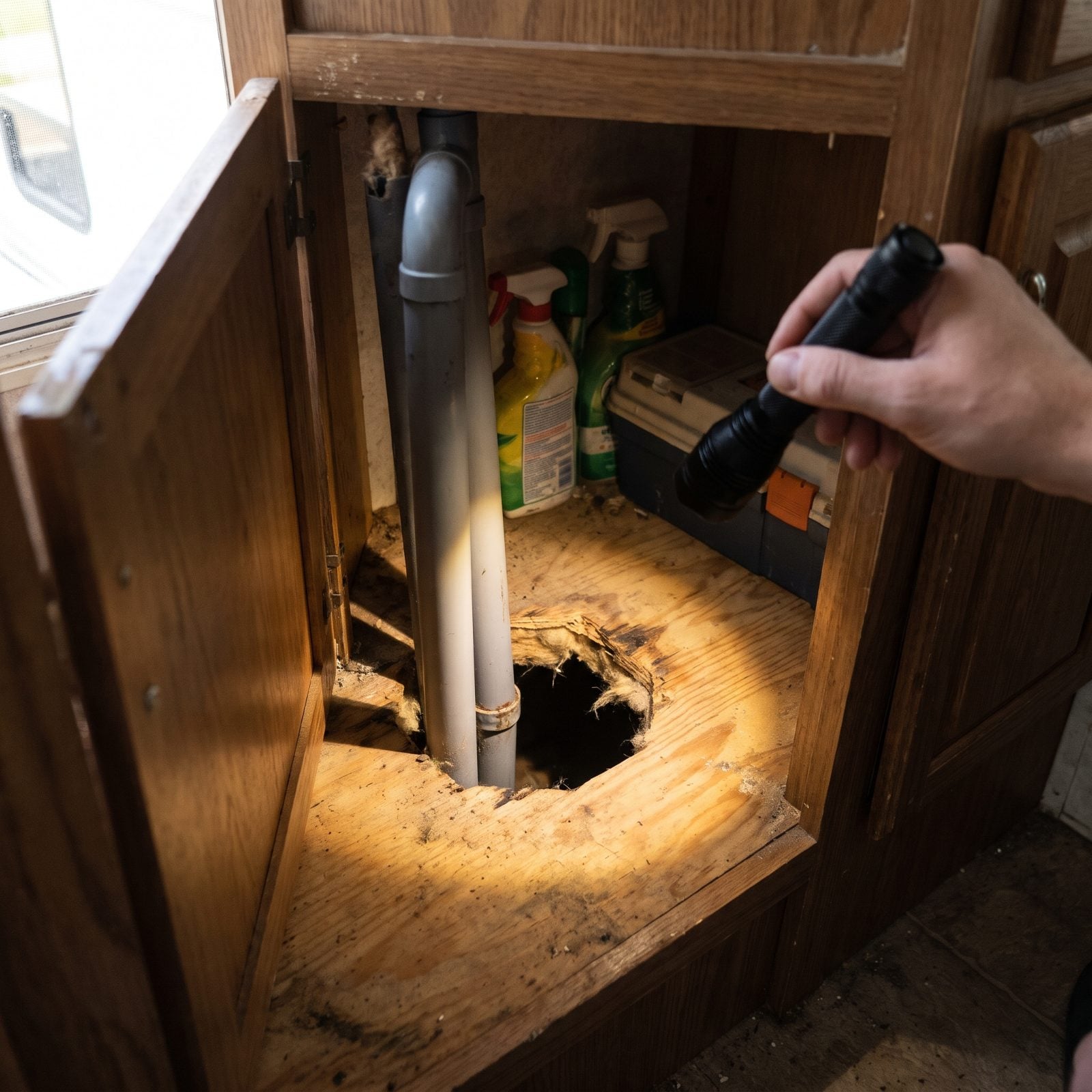
Open the cabinet under your kitchen sink and look where the pipes drop through the floor. There’s often a raw hole around them, straight down to the hot underbelly.
Those gaps breathe. Heat rises up through them in summer, cold does the same in winter, and bugs treat them like a front door. Pack them with expanding foam or a bit of sealant and you close a path you never knew was open.
Least glamorous item here and probably the most overlooked. Costs a few dollars, takes ten minutes, and you’ll find more of these holes than you expect once you start looking. Go check yours tonight.
15. Flush the Entire RV With Cool Night Air Before the Sun Comes Up
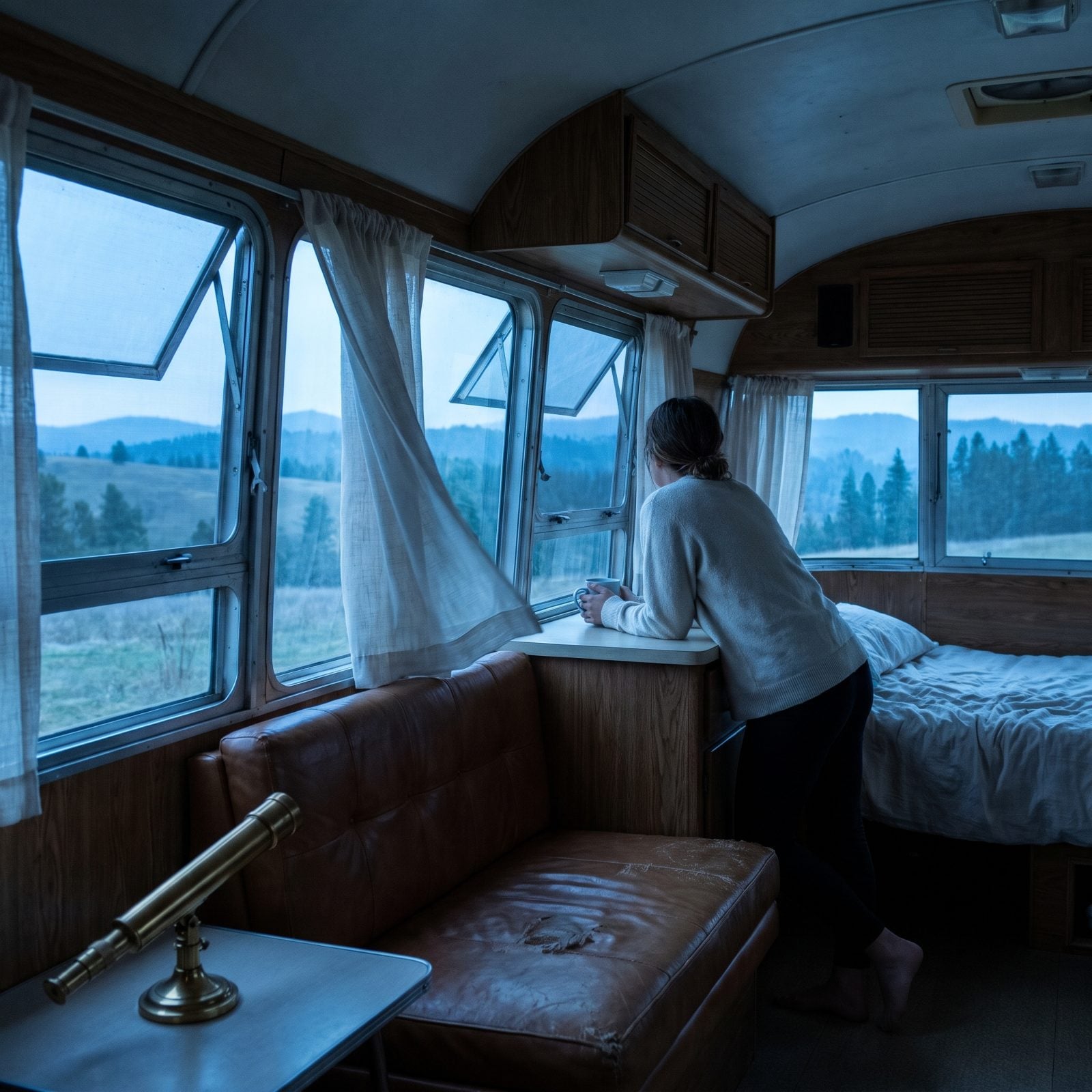
The coolest the inside of your rig will ever get for free is the hour before sunrise. Open what you can — even a single window panel propped wide, the door screen if you have one — and let the night air pour through until the walls and the countertops actually feel cold to the touch.
Here’s the part people miss. You’re not just cooling the air, you’re cooling the mass, and those surfaces hold the chill for hours, releasing it slowly once you seal up. Skip the flush and you start the day already warm, playing catch-up against the sun with nothing in reserve.
14. Open Only Two Opposing Windows to Build a Real Crossflow
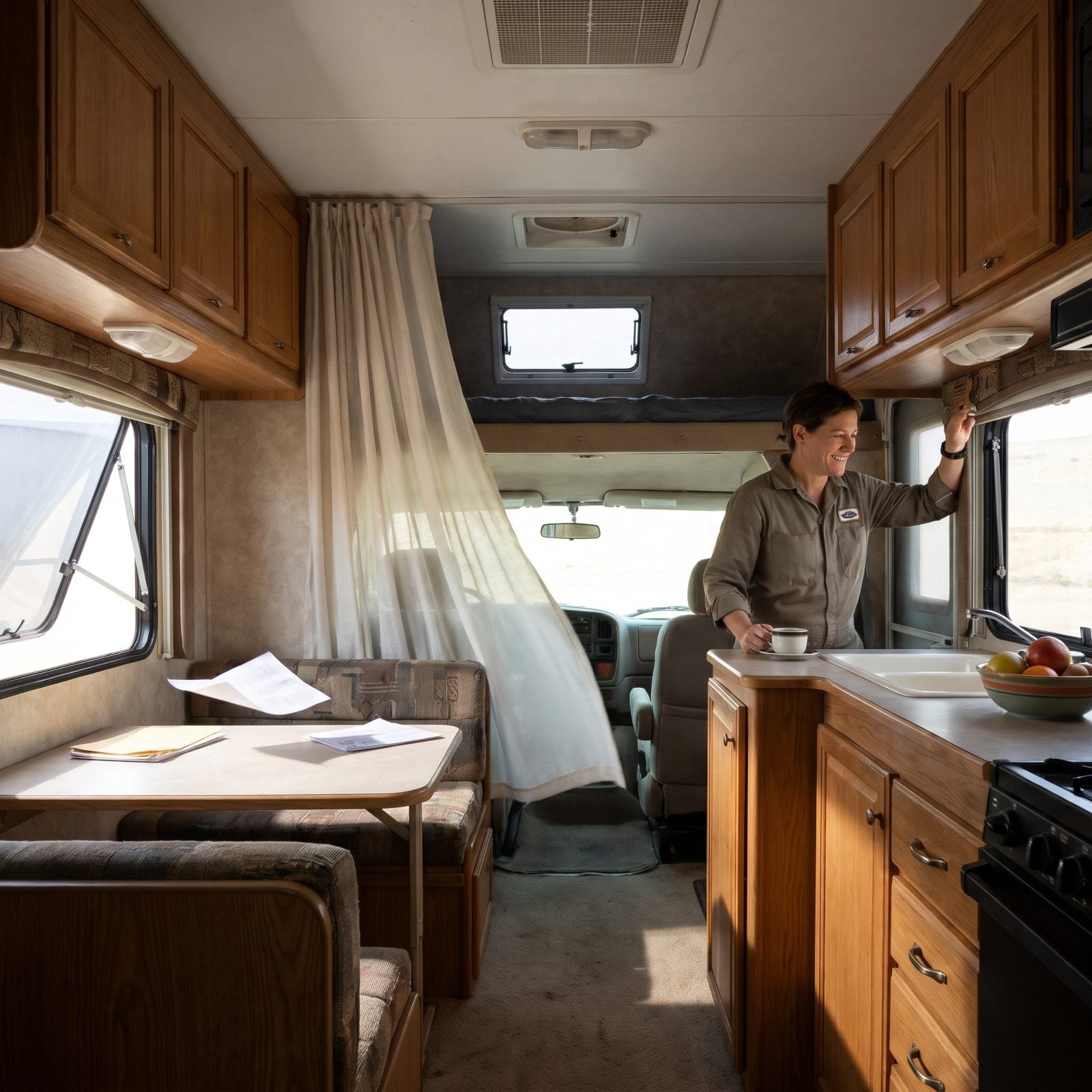
More open windows is not more airflow. It’s the opposite. Open six and the air dawdles, splitting into lazy currents that go nowhere.
Pick two directly across from each other and leave the rest shut. The air streams in through one and out the other straight down the aisle, so it moves with intent — a real draft you can feel on your arm instead of a vague breathiness. It feels backwards the first time. Close four windows to get more wind? Yep. The narrowed path speeds everything up, same as a thumb over a hose.
13. Tie Light Ribbons Near Every Opening to Read the Best Air Path
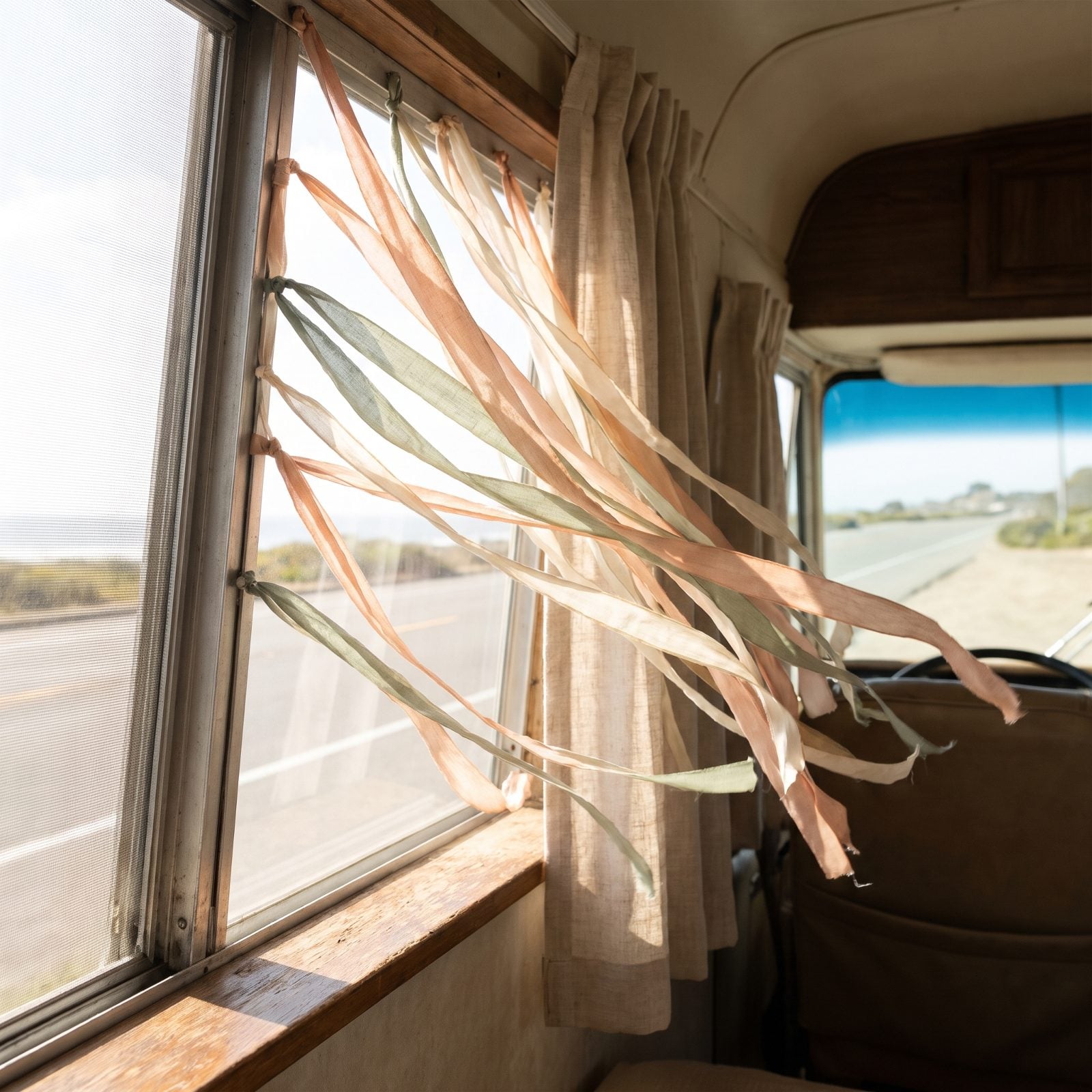
You can’t fix airflow you can’t see. Tie a few lengths of thin ribbon near your windows and vents, the lighter the better, and suddenly the whole invisible system shows itself.
A ribbon hanging dead means that opening is doing nothing, while one streaming flat marks your highway. You’ll find dead spots and surprise drafts you’d never have guessed, then reposition which windows you open based on what the ribbons actually do, not what you assume. Costs about a dollar of ribbon from the craft bin. I keep mine tied on permanently now. They look a little silly. I do not care.
12. Add Rain Covers So Your Roof Vents Can Stay Open Through a Storm
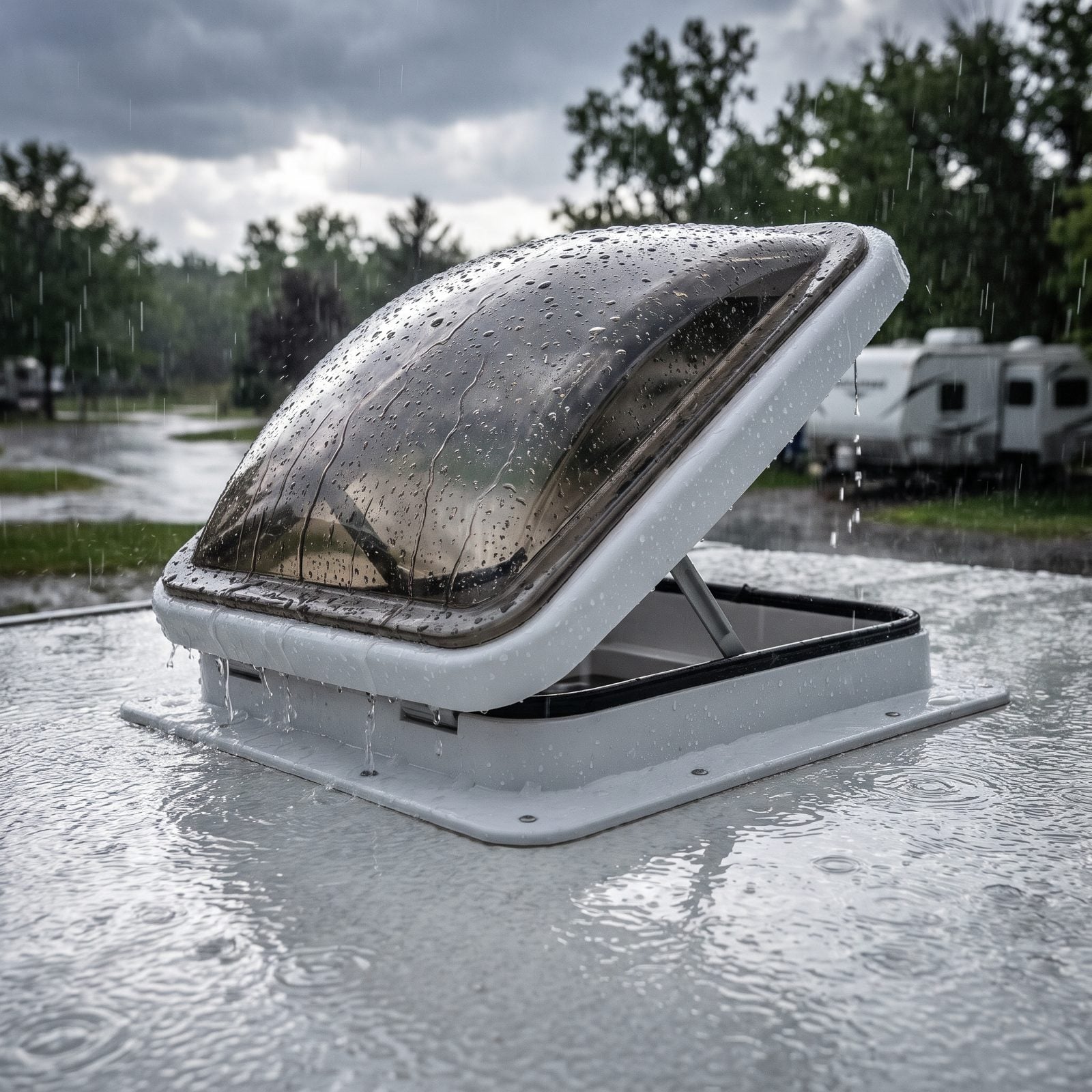
Summer storms are where ventilation plans die. The rain comes, you slam every vent shut, and within twenty minutes the rig is a sweatbox full of your own breath.
Prop an ordinary vent lid open in a downpour and the open side of the vent is left exposed, so rain falls straight in. A vent rain cover — the domed plastic kind that bolts over the vent — is what lets you leave it cracked straight through a storm. The air keeps moving, the rain stays out. And it’s one of the few mods that pays you back the very first wet, muggy afternoon you’d otherwise have spent sealed up and miserable.
11. Wash the Dust and Pollen Out of Your Window Screens
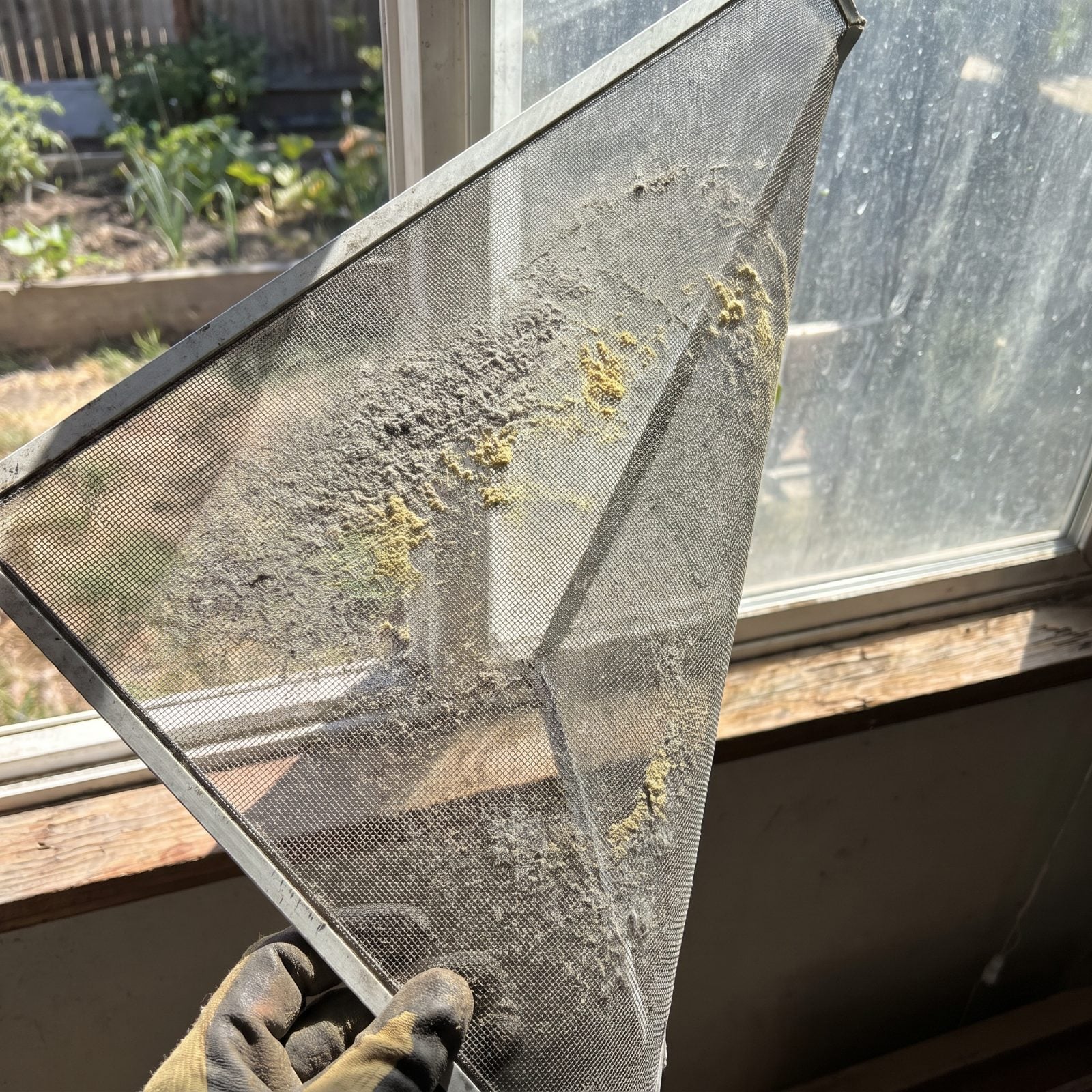
Hold a window screen up to the light sometime. The gray fuzz and yellow pollen packed into that mesh is choking half your airflow before it ever reaches you.
A clogged screen will strangle a breeze. Rinse the screens with a hose, or pull them and wipe both sides with a damp microfiber cloth, and the difference is immediate. Nobody tells you about this until your first dusty, dry-camping summer, when you realize the breeze outside is strong and the one inside is a ghost of it. The screen was the bottleneck the whole time.
10. Aim a Clip Fan Straight Down the RV’s Longest Hallway
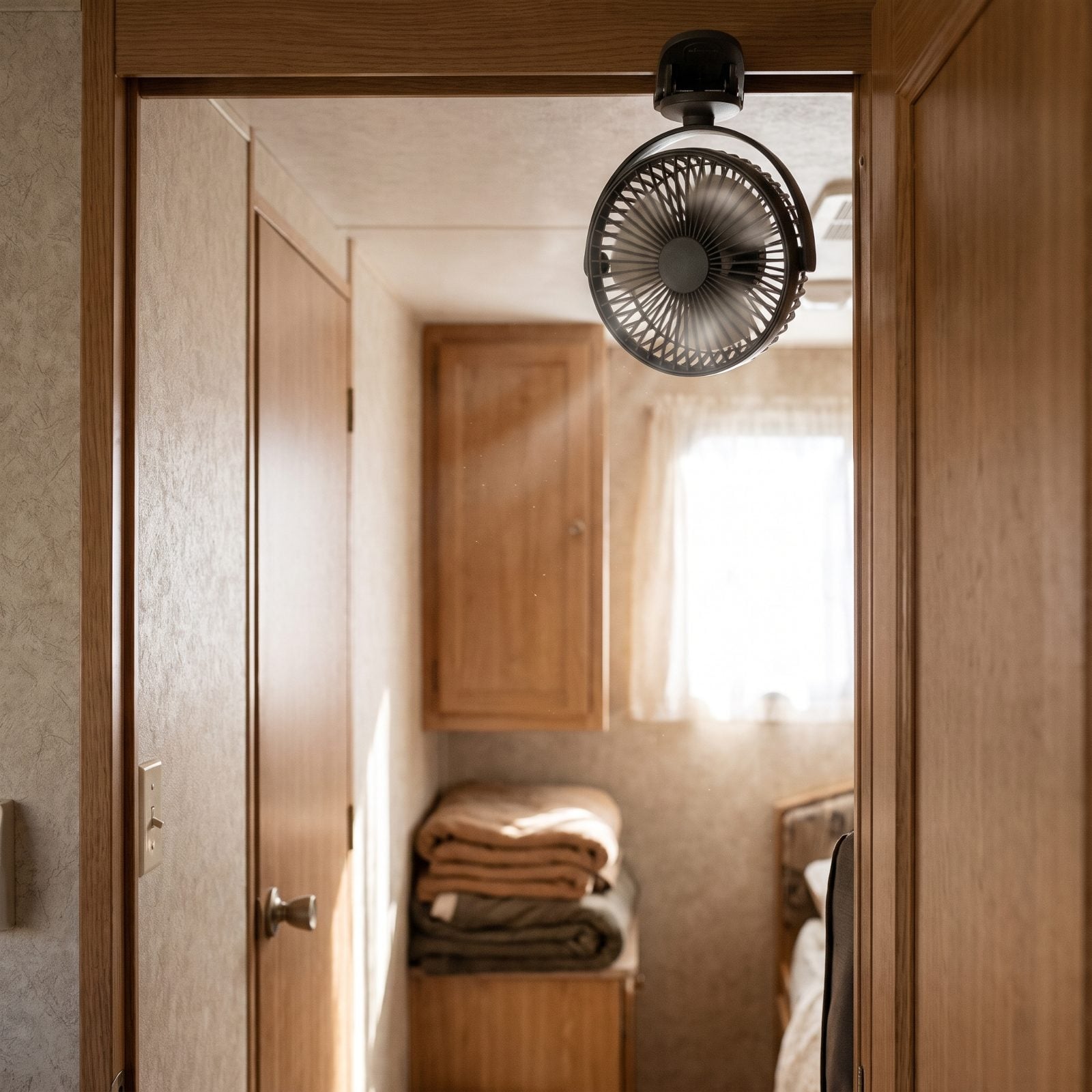
A clip fan pointed into a corner just stirs one little pocket of air. Point it down the rig’s longest axis and it becomes a pump for the whole cabin.
Clip it at one end of the main aisle, aim it toward the open window at the far end, and it drags a current the entire length of the trailer. A small USB clip fan barely touches your batteries — way less than the AC’s compressor — and it does the one thing a passive breeze can’t. It keeps moving on the dead-still afternoons when nothing outside is stirring at all.
9. Close the Bathroom Door and Let Its Fan Pull Air From One Shaded Window
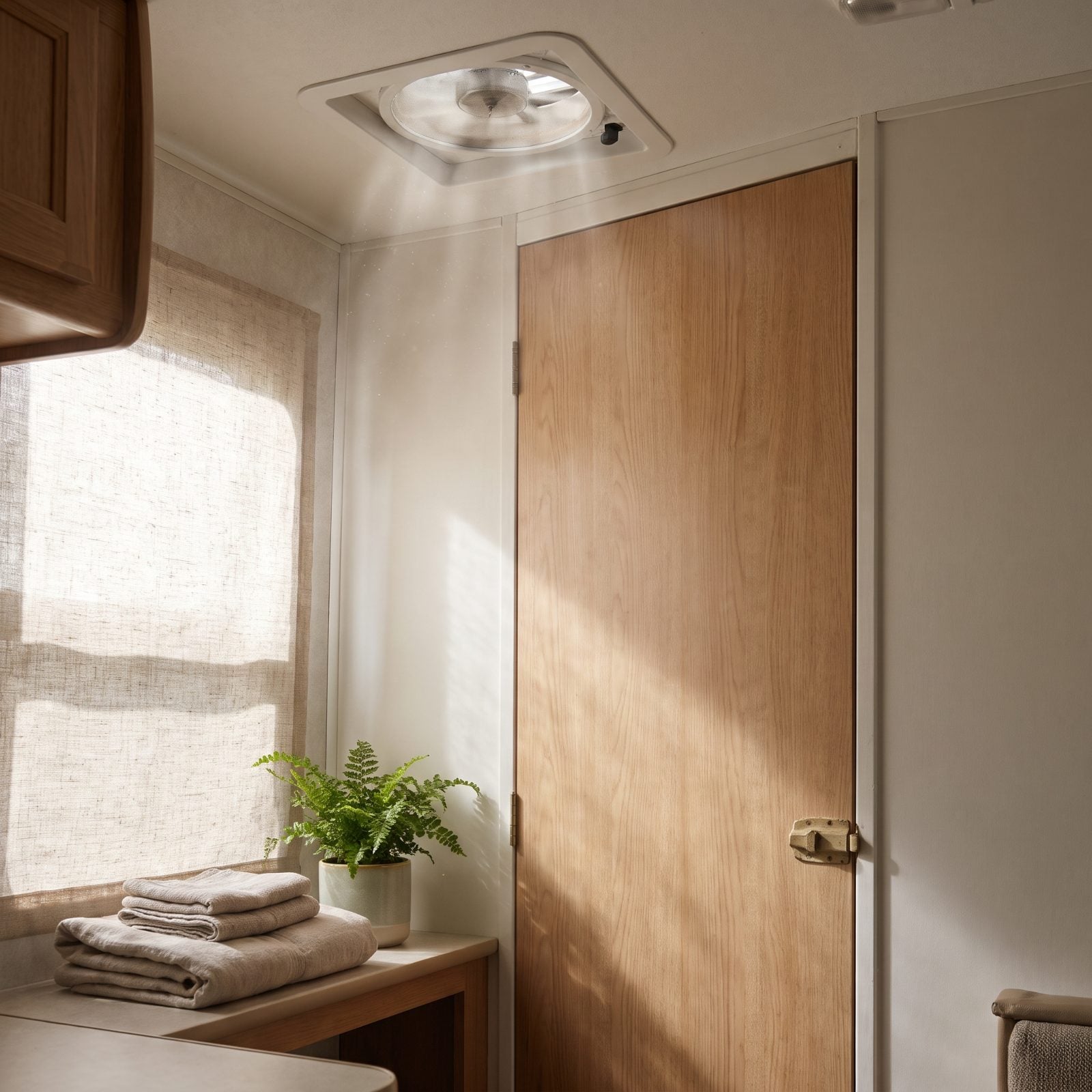
Shut the bathroom door and the ceiling vent fan inside it stops pulling from the whole rig and starts working one small room hard. Crack the shaded window in that same room and the fan pulls a focused stream of cool air through that single space.
It’s a move for the hottest part of the day. You give yourself one genuinely cooler room to retreat into, the fan concentrated on one compact corner instead of trying to move a whole trailer’s worth of air. Hanging out beside a shut bathroom door in August feels faintly ridiculous. It also works, and that’s the part that wins.
8. Run the Shower Vent Until Every Damp Surface Is Bone Dry
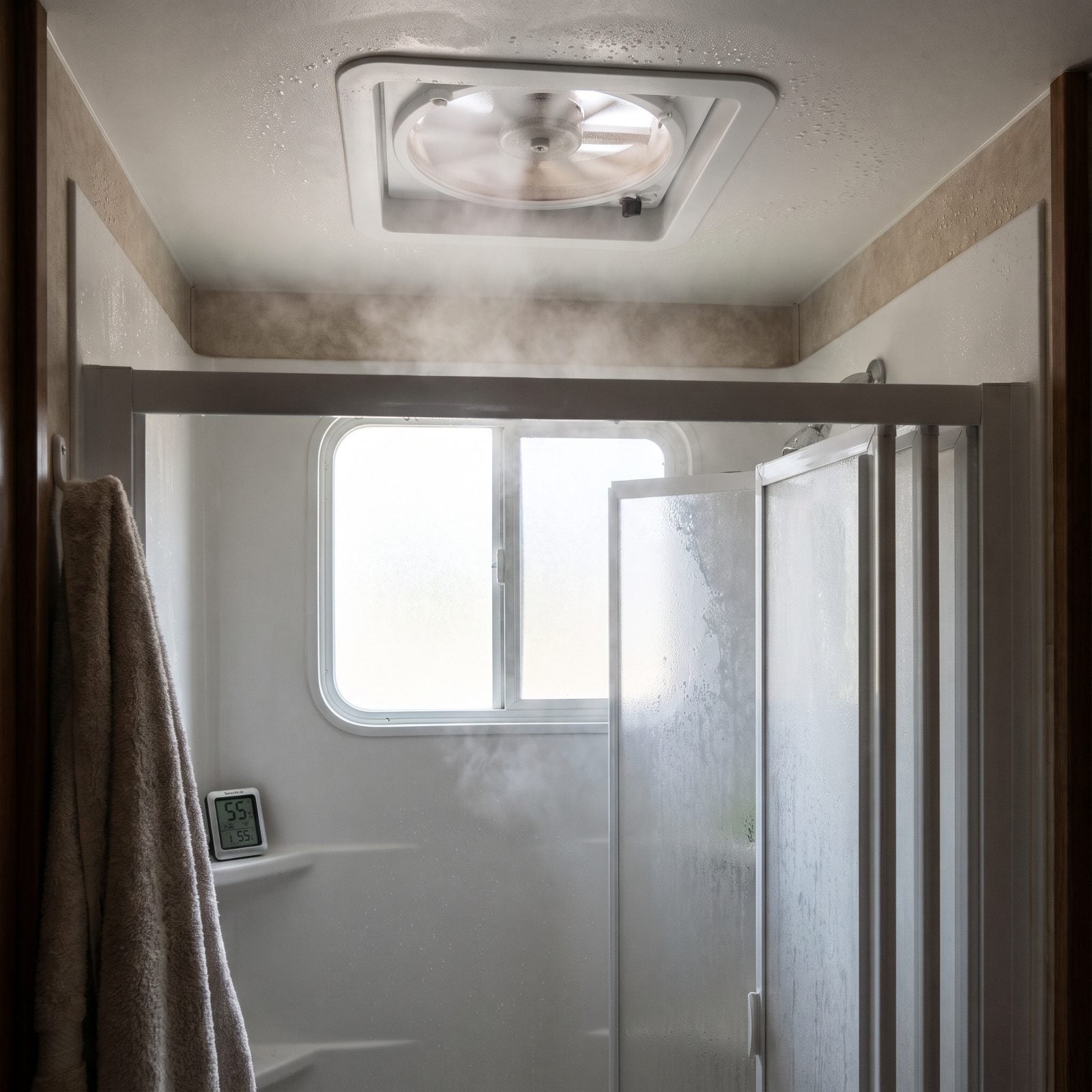
Damp air feels hotter than it is. It clings, it slows evaporation off your skin, and a wet shower stall quietly pumps humidity into the whole rig for hours after you’re done.
Leave the shower vent running until every surface is actually dry, not just until you step out. Pulling that moisture out before it migrates keeps the entire interior feeling cooler at the same temperature, because dry air lets your own sweat do its job. Cheapest comfort upgrade there is — a fan you already own, run ten minutes longer than you think you need to. Alright, go dry your shower.
7. Run the Range Hood Even for a Two-Minute Stovetop Reheat
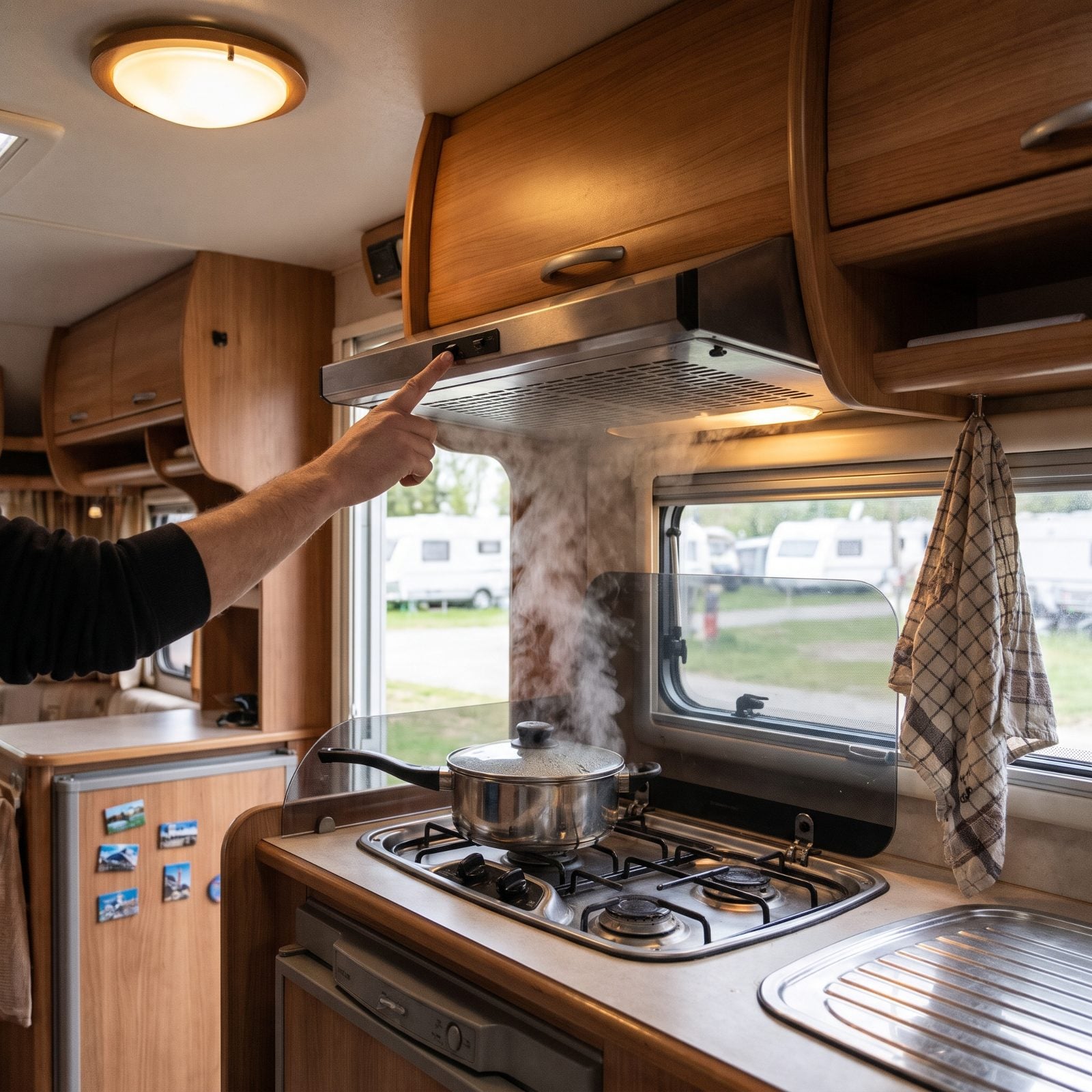
The range hood is the most ignored switch in the rig. Most of us flip it on only when something’s smoking — wrong instinct. Boiling water for two minutes releases a surprising load of warm, wet air, and that humidity is what makes the whole coach feel sticky an hour later.
Flip it the second a burner lights. It pulls the heat and the steam straight out before they settle into your cushions and curtains. Costs you a handful of watts, buys you a drier, cooler galley.
6. Open the Heat-Trapping Cabinets the Minute the Sun Drops
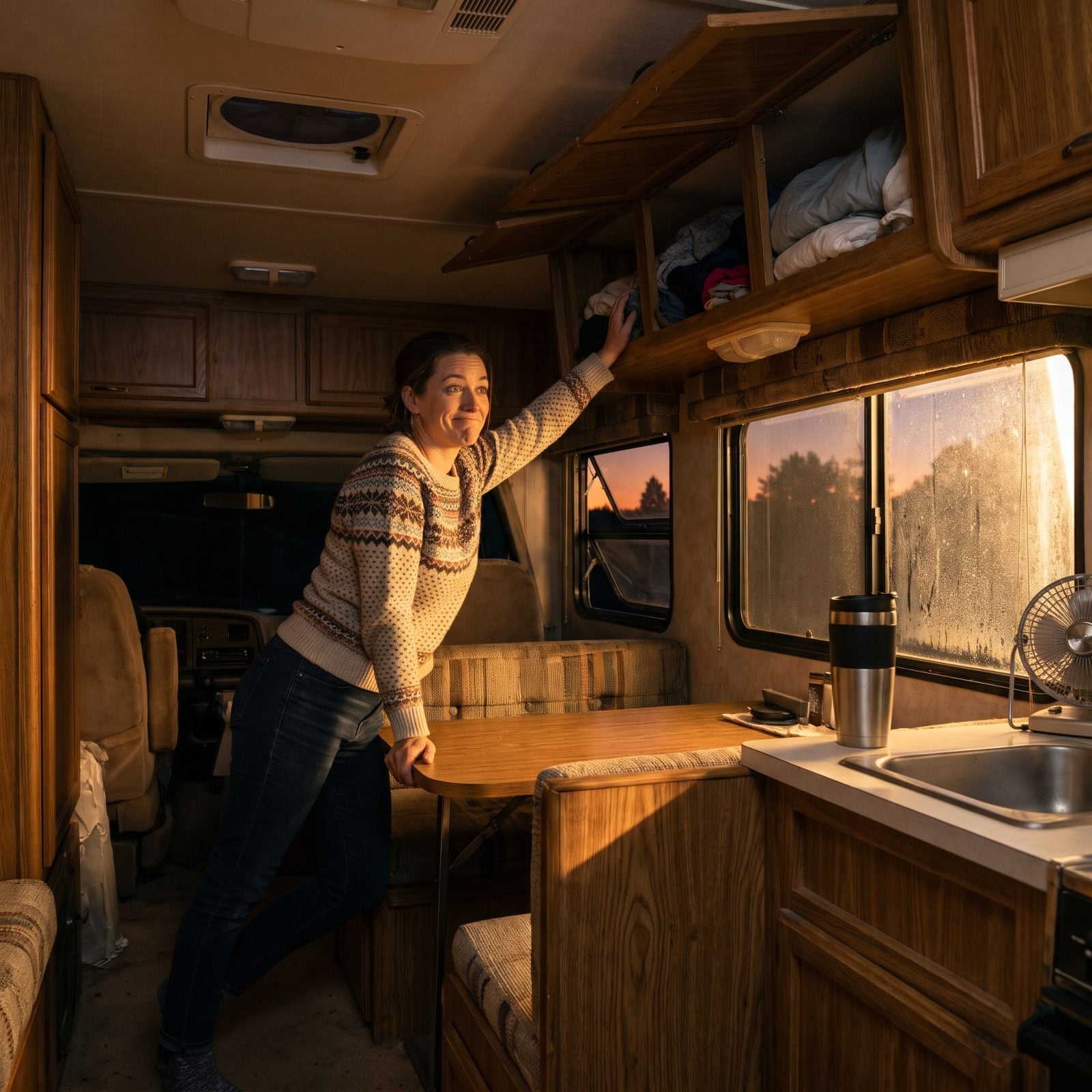
Closed cabinets are little heat lockers. All day they soak up warmth through the walls and hold it long after the air outside has started to cool.
Throw every door open once the sun’s behind the trees. Then settle in with a handheld fan for yourself and let the cooler evening air wash through those pockets. Sounds like nothing. It’s the difference between a rig that sheds its heat by bedtime and one that’s still radiating warmth at midnight like a parked car in a Walmart lot.
5. Batch-Cook the Whole Day’s Food in the Cool After Sunrise
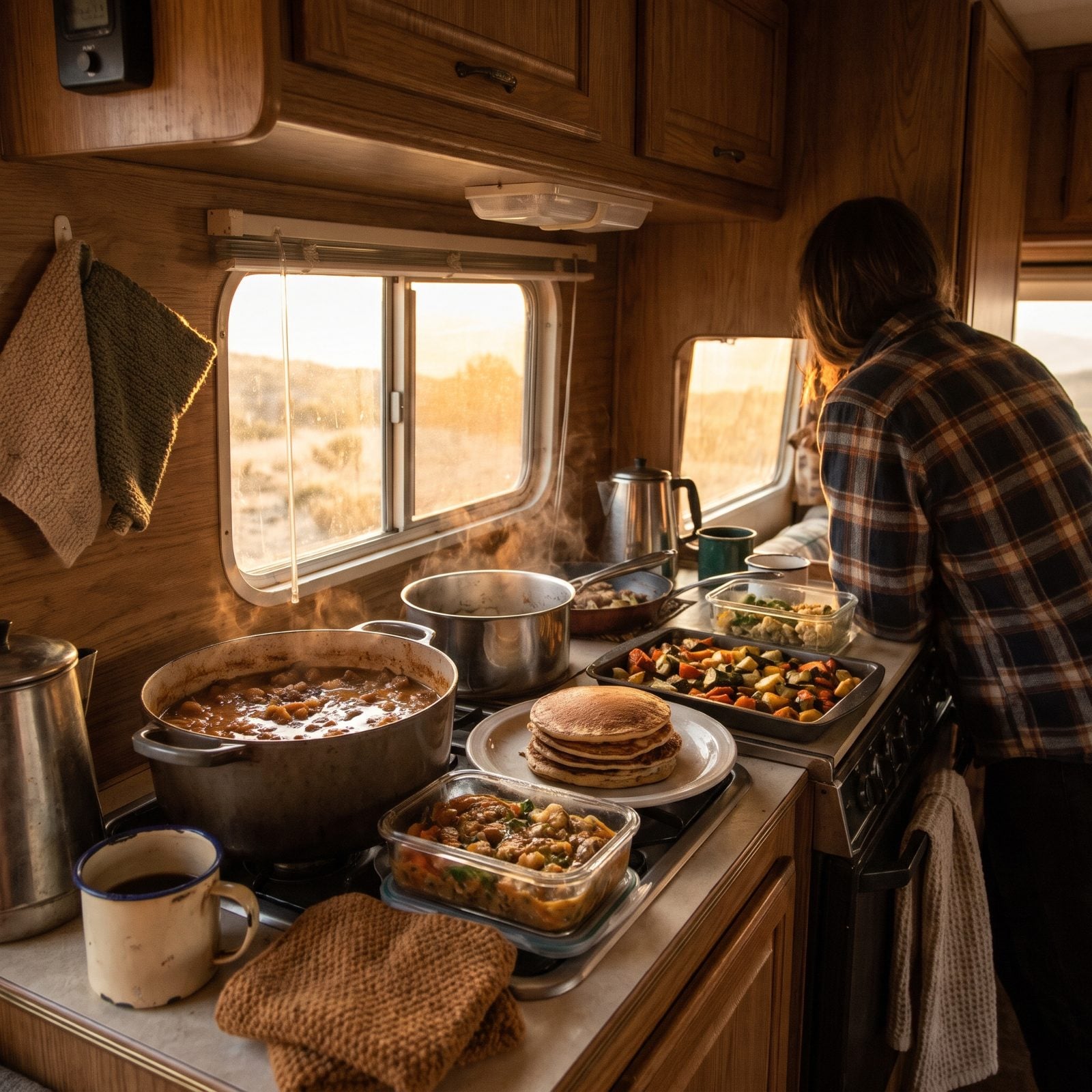
Cooking is a heat event. So stack all of it into the coolest hour you’ve got.
Right after sunrise, before the coach has warmed up, run the stove hard once — rice, eggs, roasted vegetables, a protein for lunch and dinner both. Fill your containers, shut it down early, and you’ve paid the heat tax for the whole day in a single session. By afternoon, when everyone else is firing up a burner in a hot box, you’re reheating a plate or eating cold with a dark stove.
4. Declare No-Cook Suppers on the Days the Thermometer Won’t Quit

On a scorching day there’s no honor in a hot meal. Skip the stove entirely.
A board of cheese, cured meat, crusty bread, tomatoes still warm from the market, a tin of sardines, cold fruit. Nobody leaves hungry and nothing adds a degree to the air. We treat it as a rule, not a fallback: if the forecast says brutal, supper is cold and that’s that. Less dish-washing too, which means less heat off the water heater.
3. Hang Towels and Laundry Outside Instead of Steaming Up the Inside
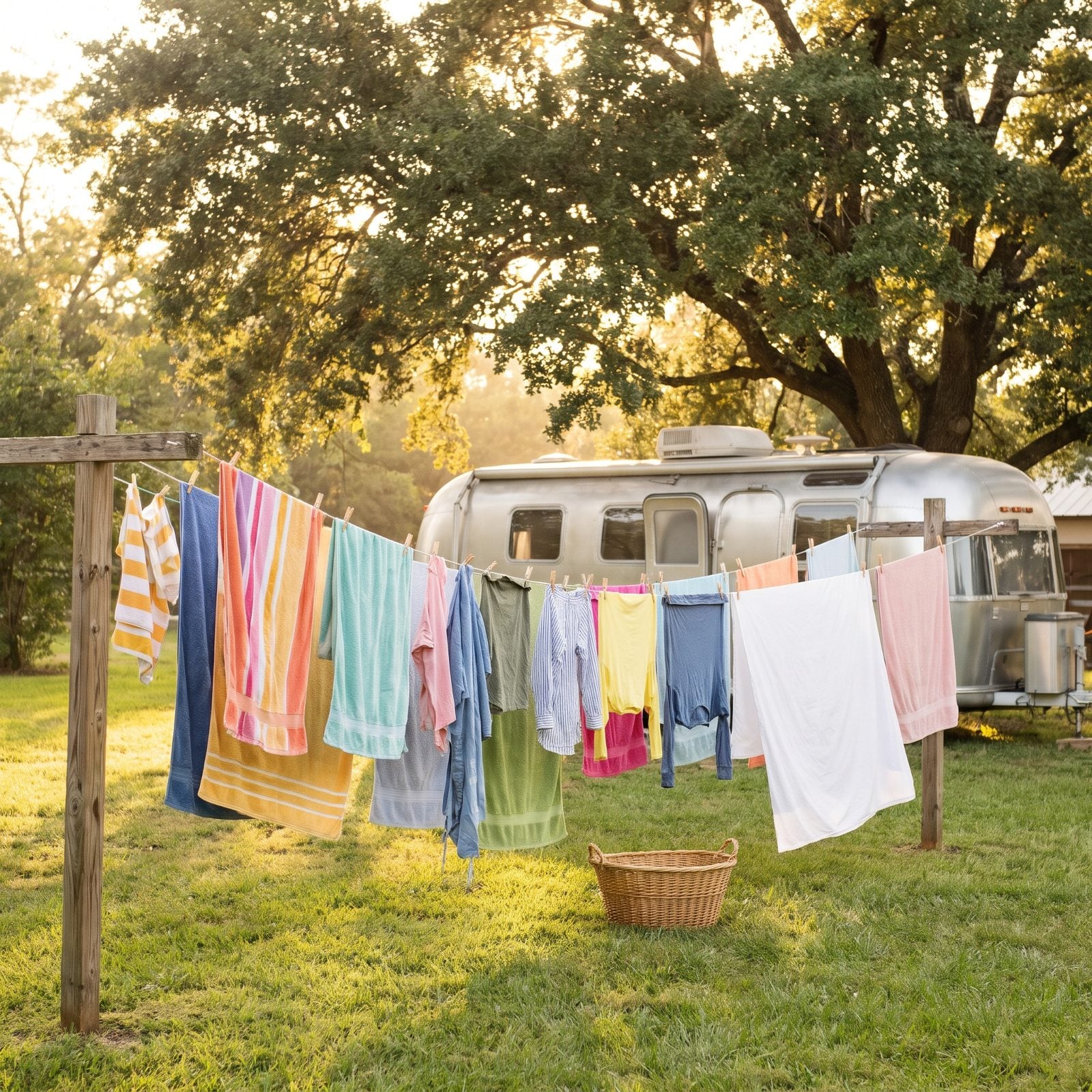
Every wet towel draped over a chair inside is a small humidifier you didn’t ask for. It evaporates into your air, and your AC then has to wring that moisture back out — slow, loud work.
Hang it outside. A cheap retractable line clips between the ladder and a tree, and towels dry in half the time in moving air anyway. Keep the damp out and the inside stays noticeably less clammy. I held off on the clothesline for a year because it looked fussy. Dead wrong, and I’ll say it plainly.
2. Take Your Hot Showers at the Campground Bathhouse
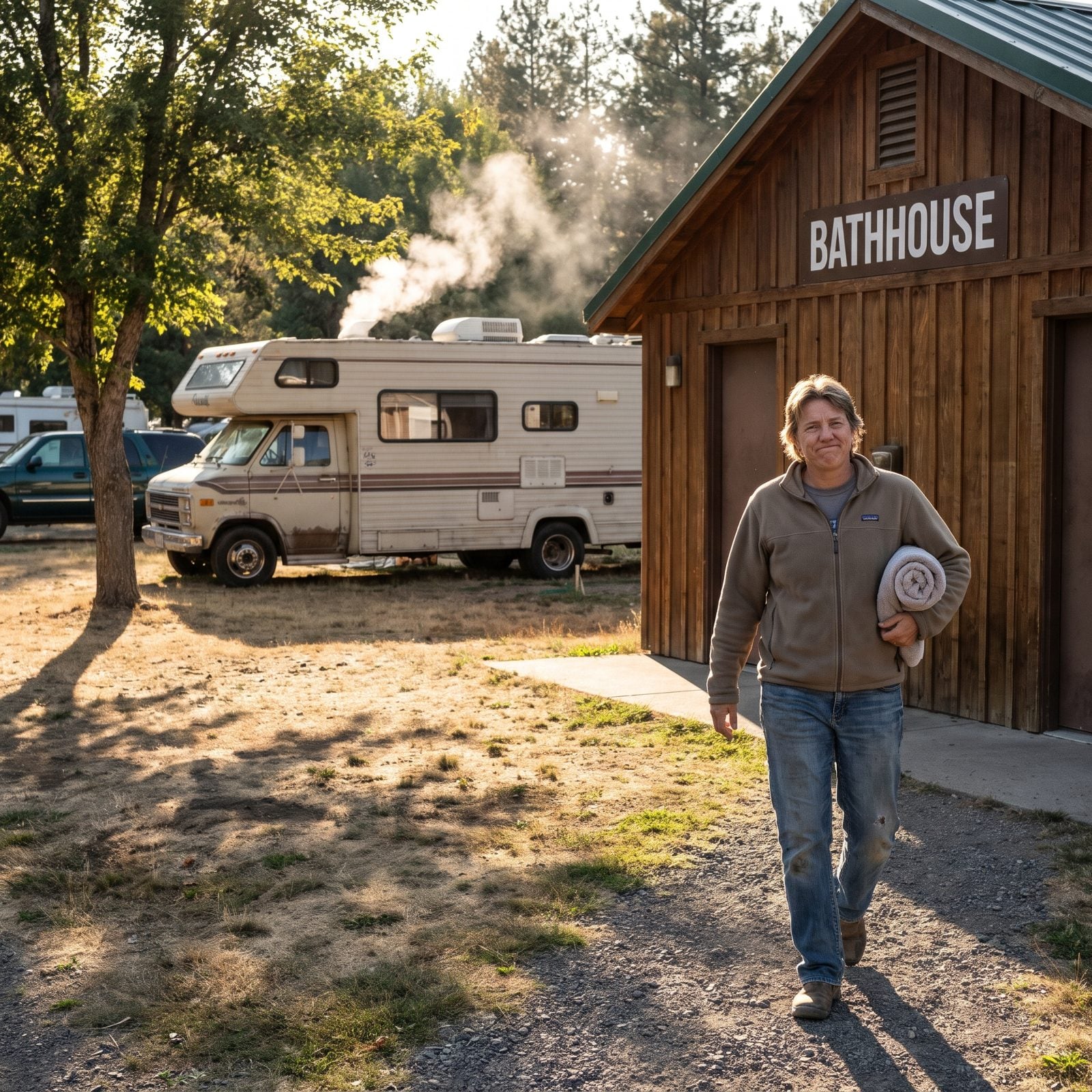
A hot shower inside a 20-foot trailer is a sauna with a drain. The water heater runs, steam fills the bathroom, moisture coats every surface, and the whole rig feels thick for an hour afterward.
Walk to the bathhouse instead. Someone else’s building absorbs all that heat and humidity, you get a bigger stall and endless hot water, and your coach stays cool and dry. You’re already paying for the facility in your site fee. Use it, and save your own tank, your own propane, and your own breathable air for the nights you’d rather not leave the rig.
1. Reach for an Evaporative Cooler Only Where the Air Is Truly Dry
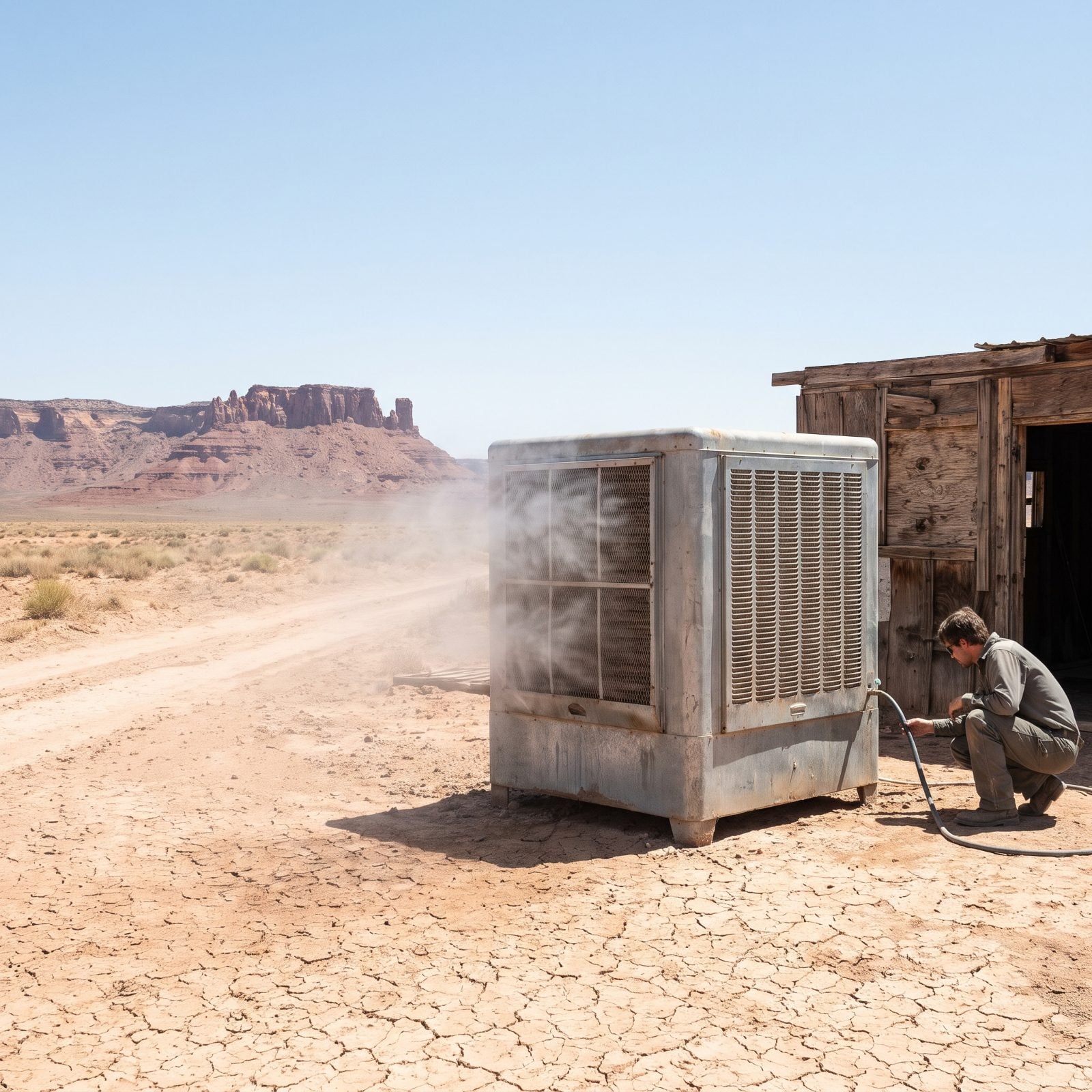
The swamp cooler is a desert tool and nothing else. It cools by evaporating water into the air, so the drier the air, the harder it drops the temperature. In Arizona in June it’s a quiet miracle that sips a fraction of the power an AC demands.
Park that same unit in Florida or a Gulf Coast August and it’s useless. You’ll just be blowing warm, wet air around and making everything stickier. Check the humidity first. Dry air, and it sings — muggy air, and you should leave it switched off.
Explaining that evaporation stops cooling once air is saturated, a certified master home inspector writes “Because of this, evaporative cooling cannot be used effectively in wet or humid climates.”