
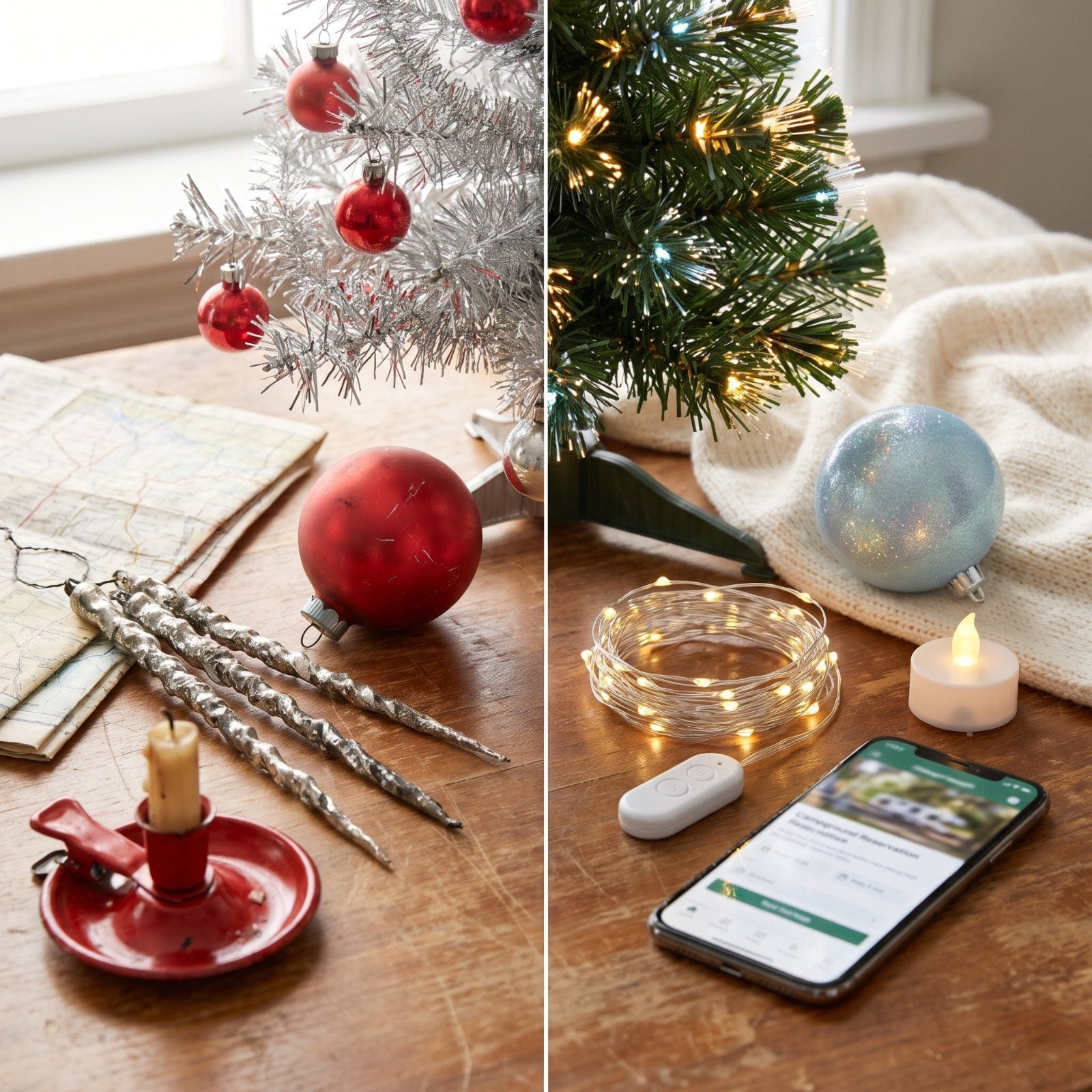
The smell hits first. Pine sap, hot metal off the C9 bulbs, and whatever was bubbling on the two-burner stove. A 1960s travel trailer at Christmas was a tin box stuffed with cheer and held together with masking tape and good intentions. We pulled that memory apart and set it against a trailer parked on the same campground loop today — same square footage, same holiday itch, wildly different stuff making it happen. Here’s what changed, side by side.
Please note that some of the images in this article were created with the assistance of AI.
41. Tinsel-Covered Aluminum Tree vs. Pre-Lit Pencil Tree
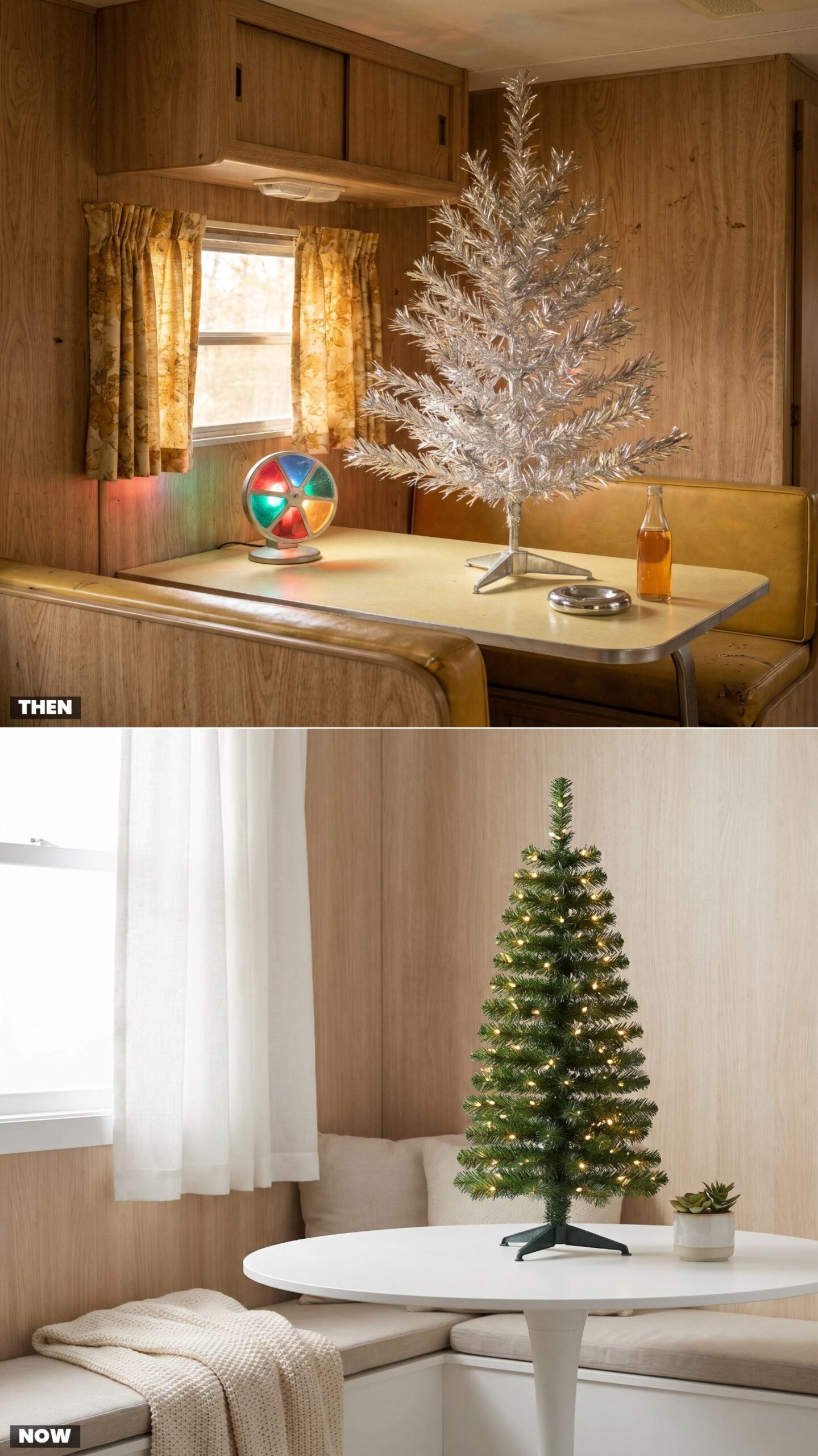
A 1960s aluminum tree had no lights, because lights plus foil equaled a fire you’d remember. So you aimed a rotating color wheel at it and watched the whole thing shift red to blue to green. Tinny, a little tacky, and absolutely glorious crammed into four feet of dinette space.
The modern pre-lit pencil tree solves all of that. Thirty inches wide at most, warm white LEDs baked right in. No floodlight, no fire risk, no wrestling foil branches into a cardboard trunk. You plug it in — that’s the whole ritual now.
Writing about the aluminum tree craze, a museum curator notes “It was completely safe unless you foolishly strung it with electric lights—potentially causing a fire hazard.”
40. Glass Ornament Box vs. Shatterproof Ornament Organizer
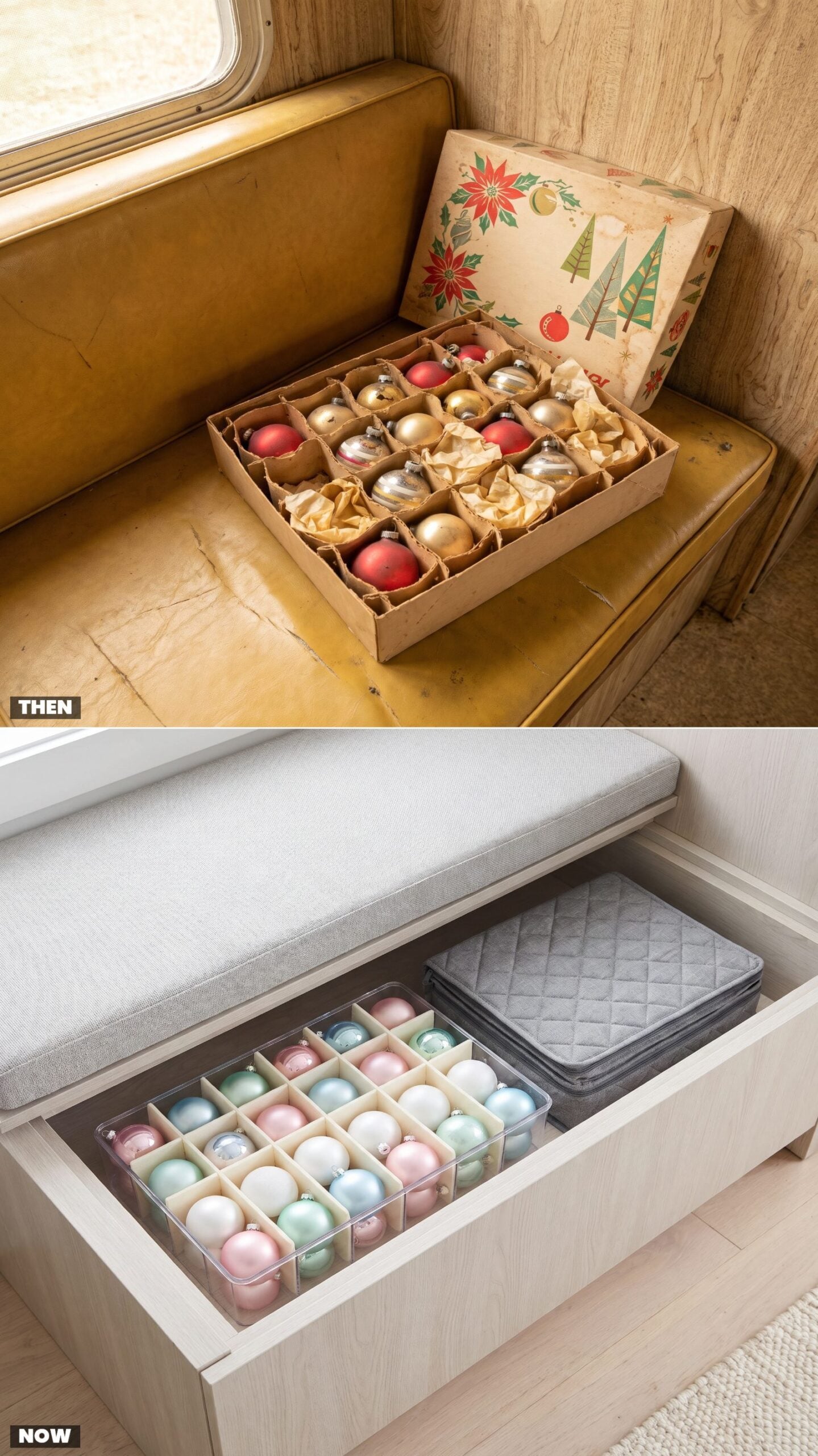
Open a 1960s ornament box and you held your breath. Thin blown glass sat in a honeycomb cardboard grid, wrapped in tissue, and every bump on a washboard road meant one more chip. Half the fun was finding out which ones survived the drive this year.
Shatterproof organizers killed the suspense. Adjustable foam dividers, a zip-up case, ornaments that bounce instead of break — stack it in the pass-through and forget it’s there. Something got safer. Something also got a little less dramatic in the trade.
39. C9 Bulbs vs. App-Controlled LED String Lights
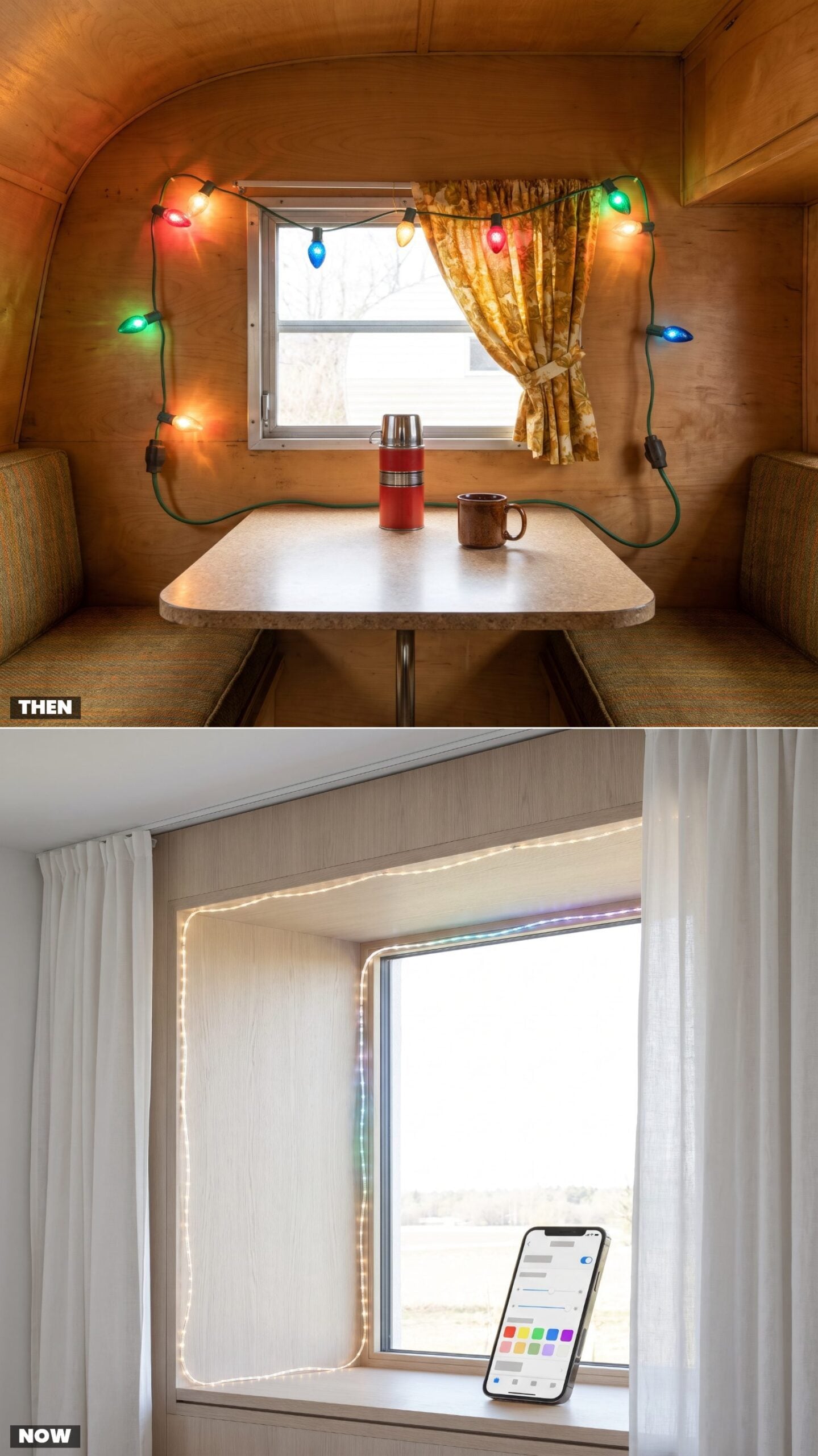
C9 bulbs ran hot. Really hot. Touch one after an hour and you’d yank your finger back. They drew real power, too, which mattered when your whole trailer ran off a single hookup and a prayer. But that warm, uneven glow through a frosted window at a December campsite was the entire mood, and nothing has quite replaced it.
Now you string pencil-thin LEDs and run them from your phone. Dim them, change the color, set a timer so they shut off at midnight. They sip electricity. The only heat you’ll feel comes from the furnace.
38. Metal Clip-On Candle Holders vs. Flameless LED Candles
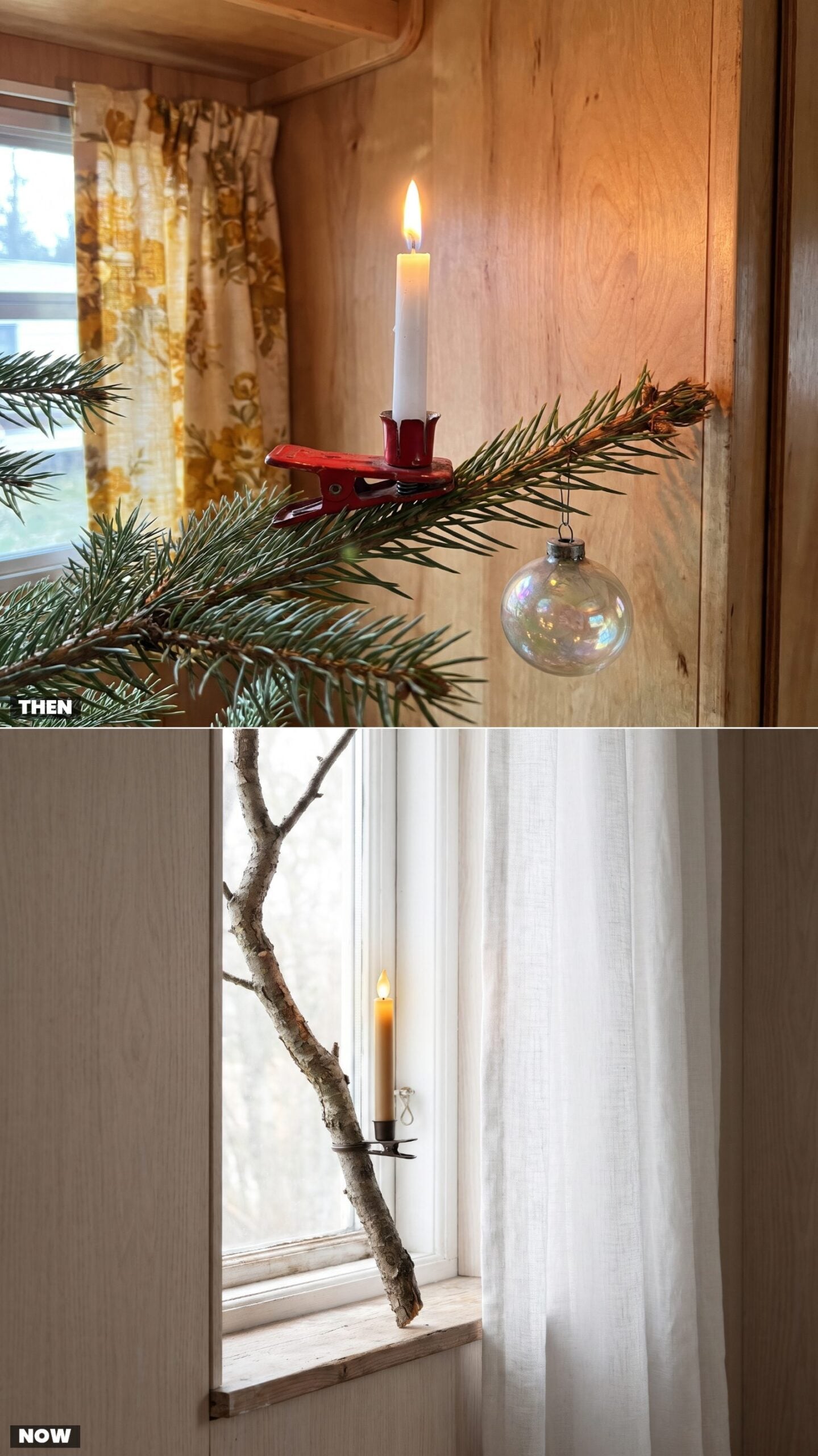
Clip a real lit candle onto a dry evergreen branch inside an aluminum box. Read that sentence again. People actually did this, and the fact that most trailers made it through the decade is a small miracle. The glow was lovely and the risk was very real.
Flameless LED tapers give you the same soft flicker without the part where you lie awake listening for a crackle. They clip on, run off a watch battery, and some even flutter like a real wick. Give me the fake flame over a real fire-extinguisher demonstration every single time.
Describing early tree candleholders, a museum associate curator explains “Candles that leaned, even slightly, dripped wax onto ornaments or the floor. They were also potential fire hazards.”
37. Lead-Tinsel Icicles vs. Reusable Metallic Tinsel Strands
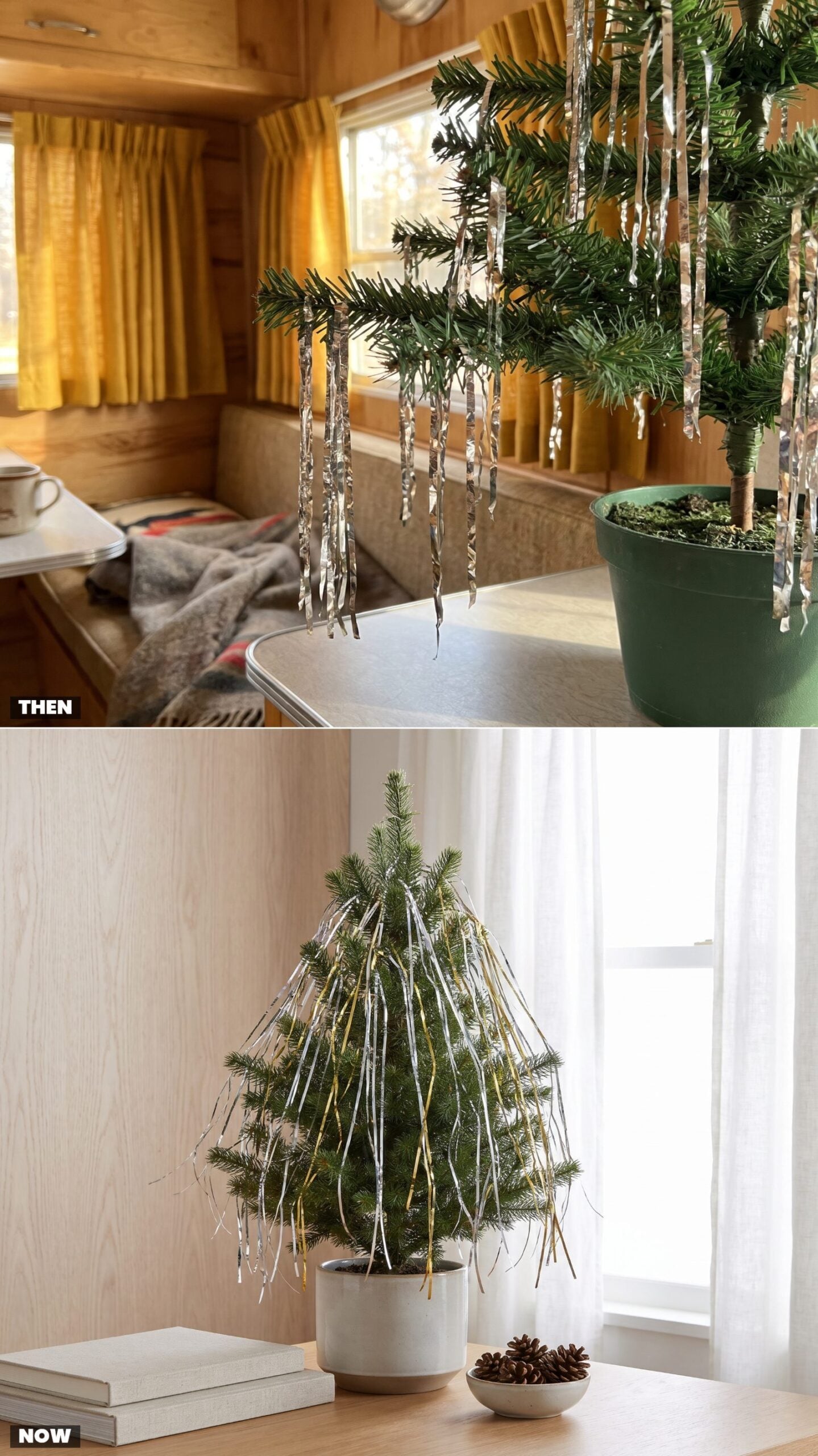
Old icicle tinsel was weighted with lead. That’s why it hung so perfectly straight, like tiny silver curtains, with no drift and no static cling. It draped like a dream and, as we now know, was not something you wanted a kid gnawing on.
The modern stuff is thin mylar — lighter, brighter, cheaper, and you can box it up and use it again next December. It won’t hang arrow-straight. It catches every little air current off the furnace vent and wobbles around. Harmless, though, and that counts for plenty.
36. Bottlebrush Village vs. Illuminated Miniature Campground
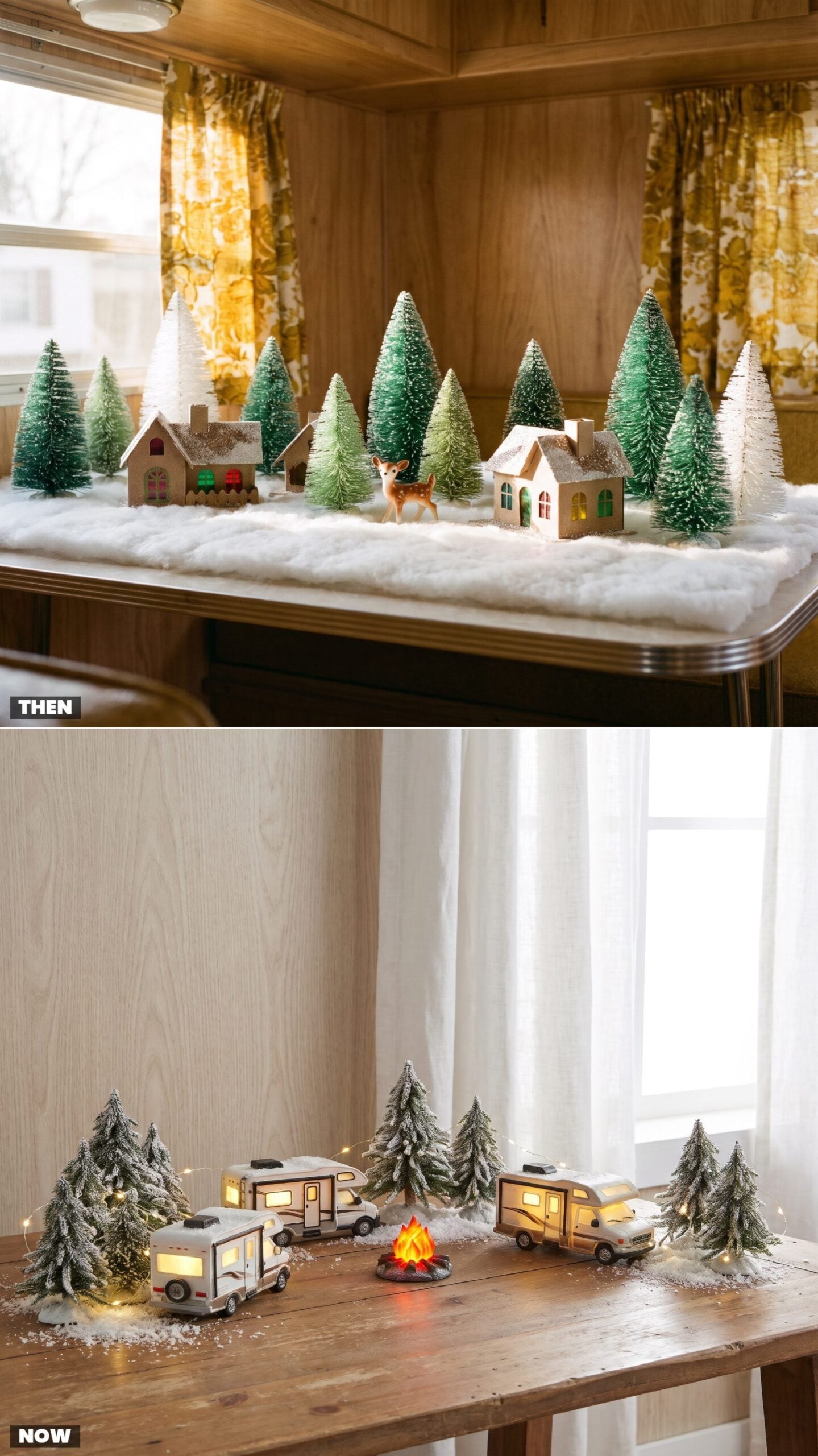
The bottlebrush village was the centerpiece, and it ate the whole table. Stiff dyed-green trees, little cardboard putz houses with mica-sparkle roofs, a bed of cotton snow you fluffed by hand. Cheap and fragile, and it meant Christmas had officially arrived in the trailer.
Today’s version leans into the camper’s own world. Tiny glowing RVs, a battery campfire that actually flickers, miniature frosted pines with LED string lights threaded through fake snow. Same footprint on the dinette. The little village just packed up and went camping, which feels about right.
35. Cardboard Fireplace vs. Electric Fireplace Insert
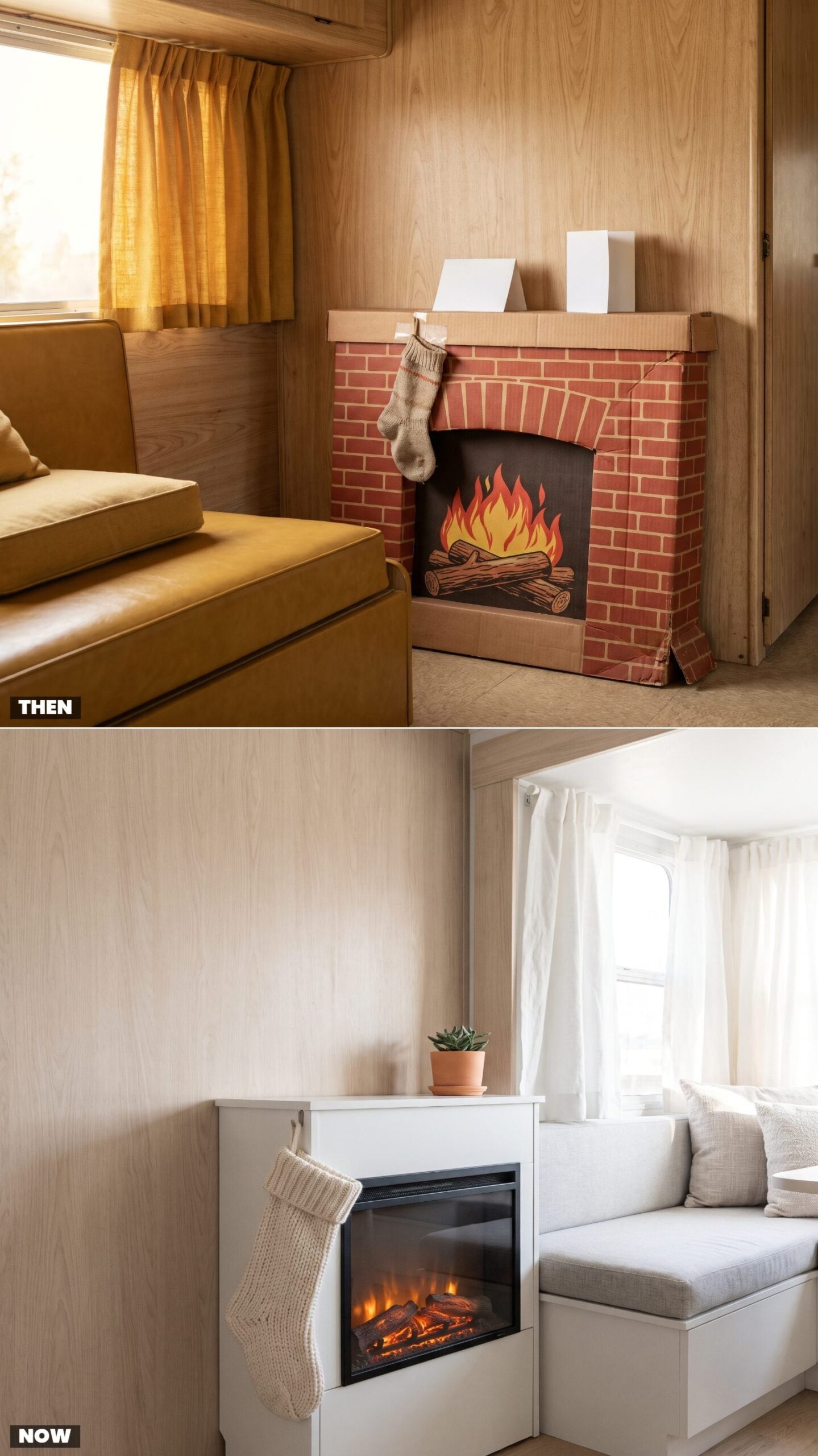
You couldn’t have an actual fireplace in a 1960s trailer, so families bought the next best thing: a flat cardboard one printed with brick and a cheerful painted fire. Fold it open, prop it against the wall, tape up the stockings. It fooled exactly nobody, and everybody loved it anyway.
The modern electric insert hands you the real flicker and genuine heat. It slides into a slim cabinet, runs on standard power, and throws actual warmth on a cold night at the campground. After sixty years, the illusion finally caught up with the wish.
The cardboard fireplace fooled nobody and warmed everybody. That’s a hard trick for a piece of printed corrugated board to pull off.
34. Fresh Pine Boughs vs. Fire-Retardant Faux Garland
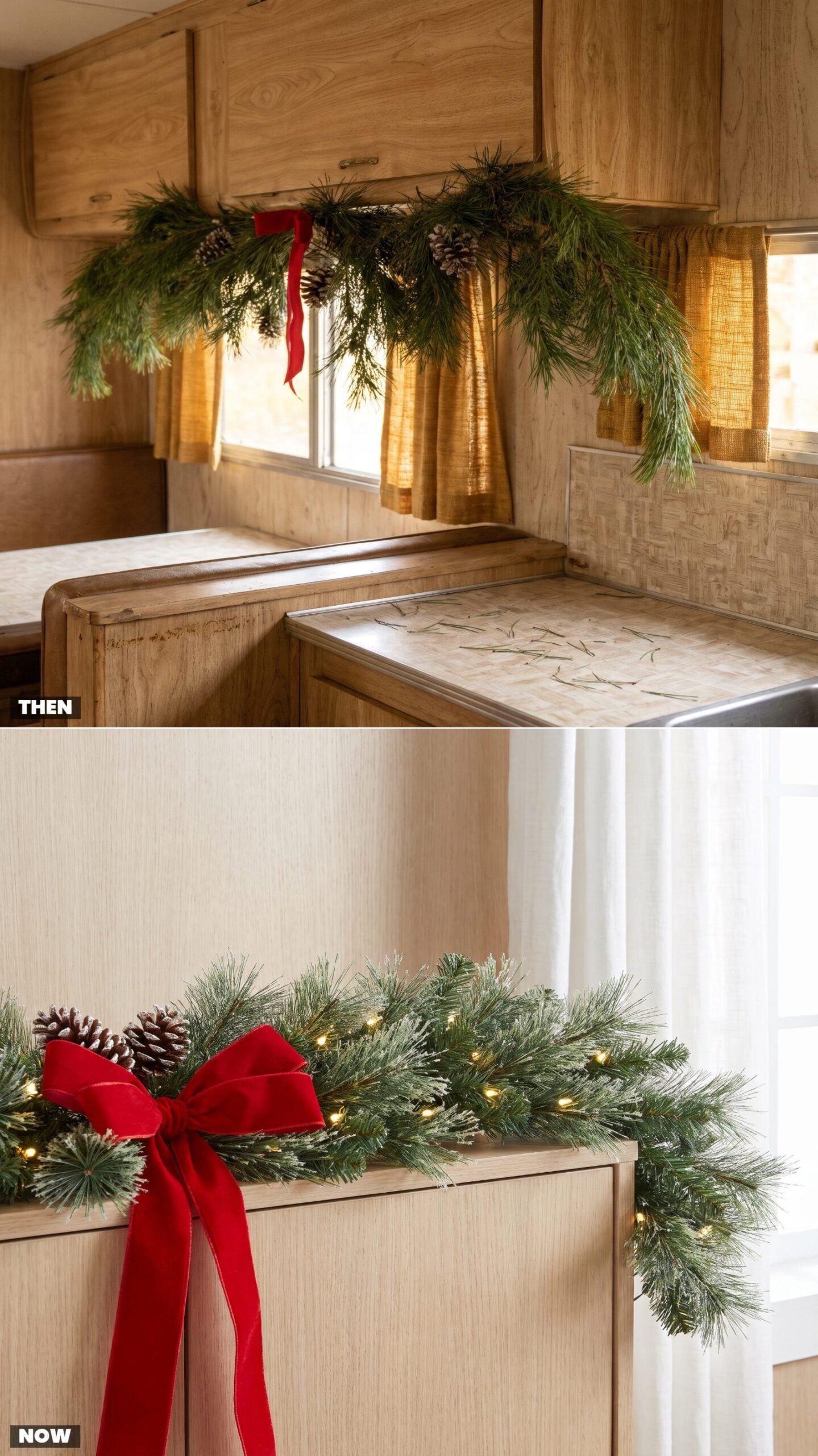
Somebody walked into the woods behind the campsite and cut a few pine boughs. Draped over the cabinet and tucked with a red ribbon, they filled the whole trailer with that sharp green smell. Three days later they were dropping needles into your coffee and shedding onto the floor — but for a while it was the best air freshener money couldn’t buy.
Faux garland stays put all season. It’s fire-retardant, which matters a lot in a small enclosed space, and some strands arrive with LEDs already woven in. You lose the smell. You gain never finding a dry needle in your sock come March.
33. Window Snow Spray vs. Reusable Static-Cling Snowflakes
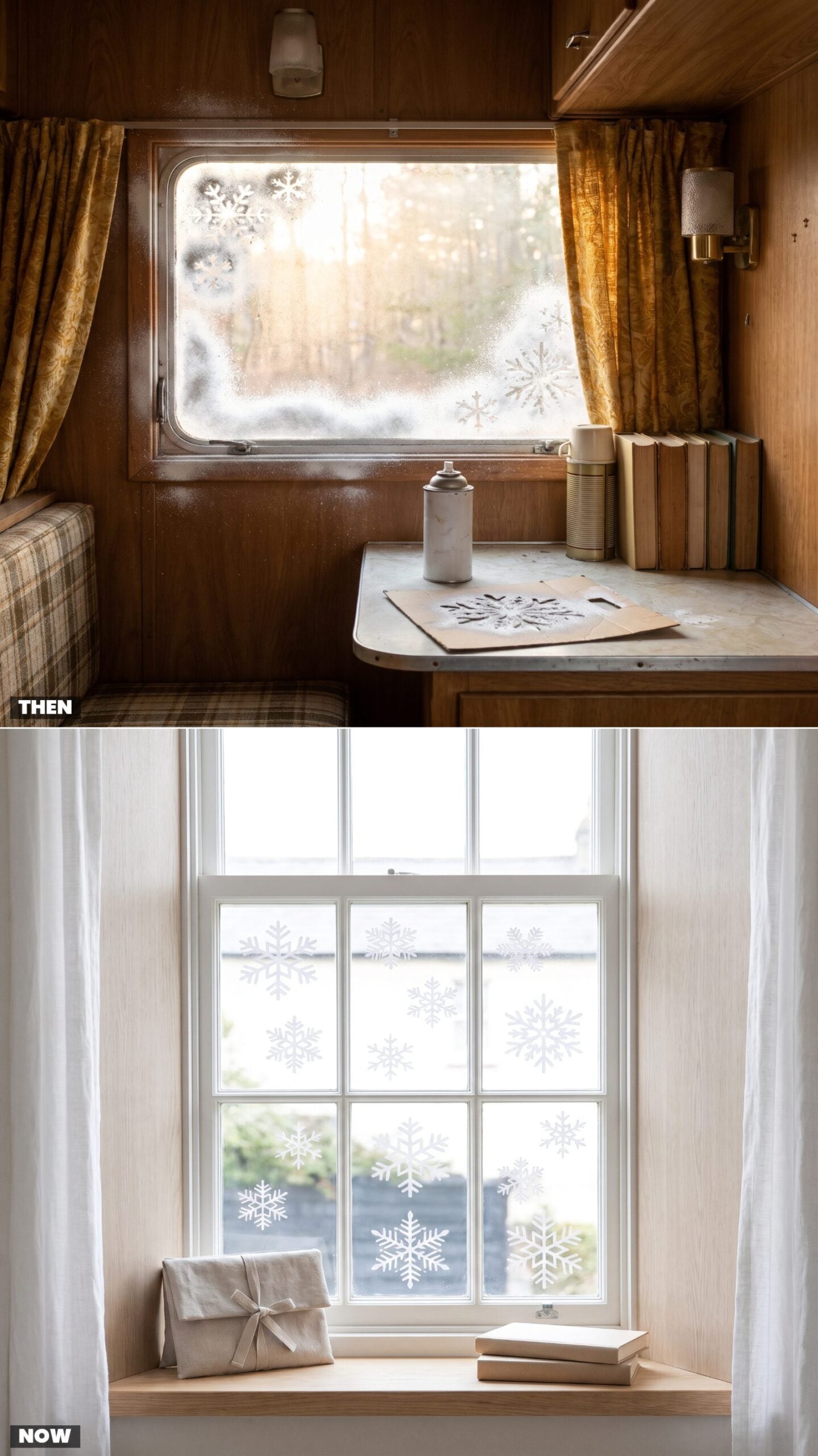
Aerosol snow spray and a paper stencil turned your trailer window into a frosted wonderland in about ninety seconds. Then it turned into a scraping project come January, when the flocking fused to the glass and fought you on the way off. Overspray on the curtains was practically a guarantee.
Static-cling snowflakes stick with nothing but static. No residue, no scraping, no ruined sill. Peel them off, slide them back into the sleeve, use them again next year. One of the rare swaps where the newer version costs less over time and saves you work every step of the way.
32. Christmas Cards Taped to the Wall vs. Clip-On Photo Display
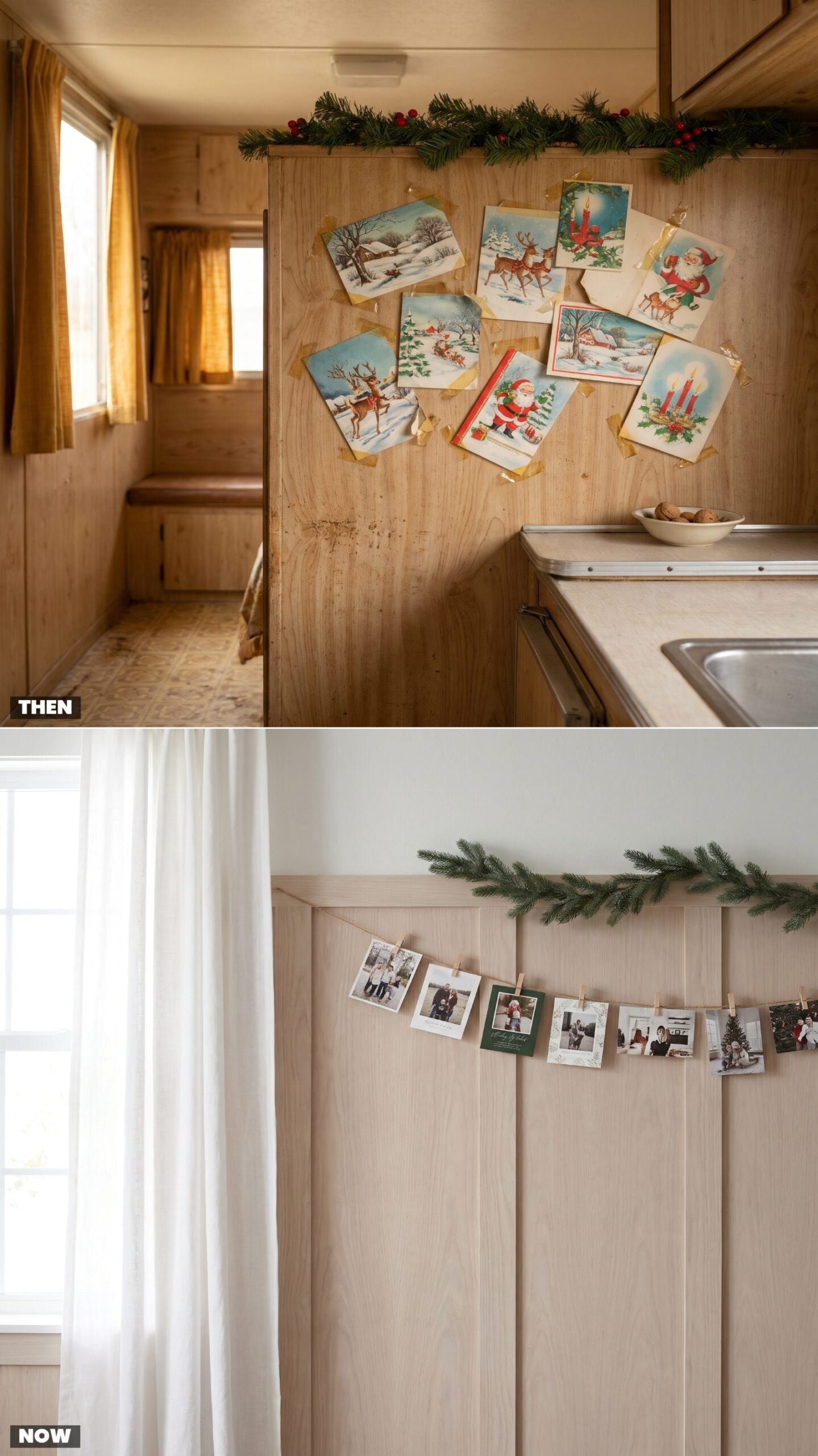
Every card that reached the campground got taped straight to the wall. By mid-December the paneling was a patchwork of robins, nativity scenes, and glittery Santas, held up with cellophane tape that left sticky yellow ghosts behind for months. It looked chaotic. It also looked like you were loved.
The clip-on display does the same job minus the residue. Stretch a wire or twine line, pin cards and photos along it with little wooden clips, slide them off when the season ends. No tape, no marks on the wall, and it moonlights as a photo line the rest of the year. Still the warmest wall in the trailer.
31. Ribbon-Wrapped Cabinet Doors vs. Removable Cabinet Decals
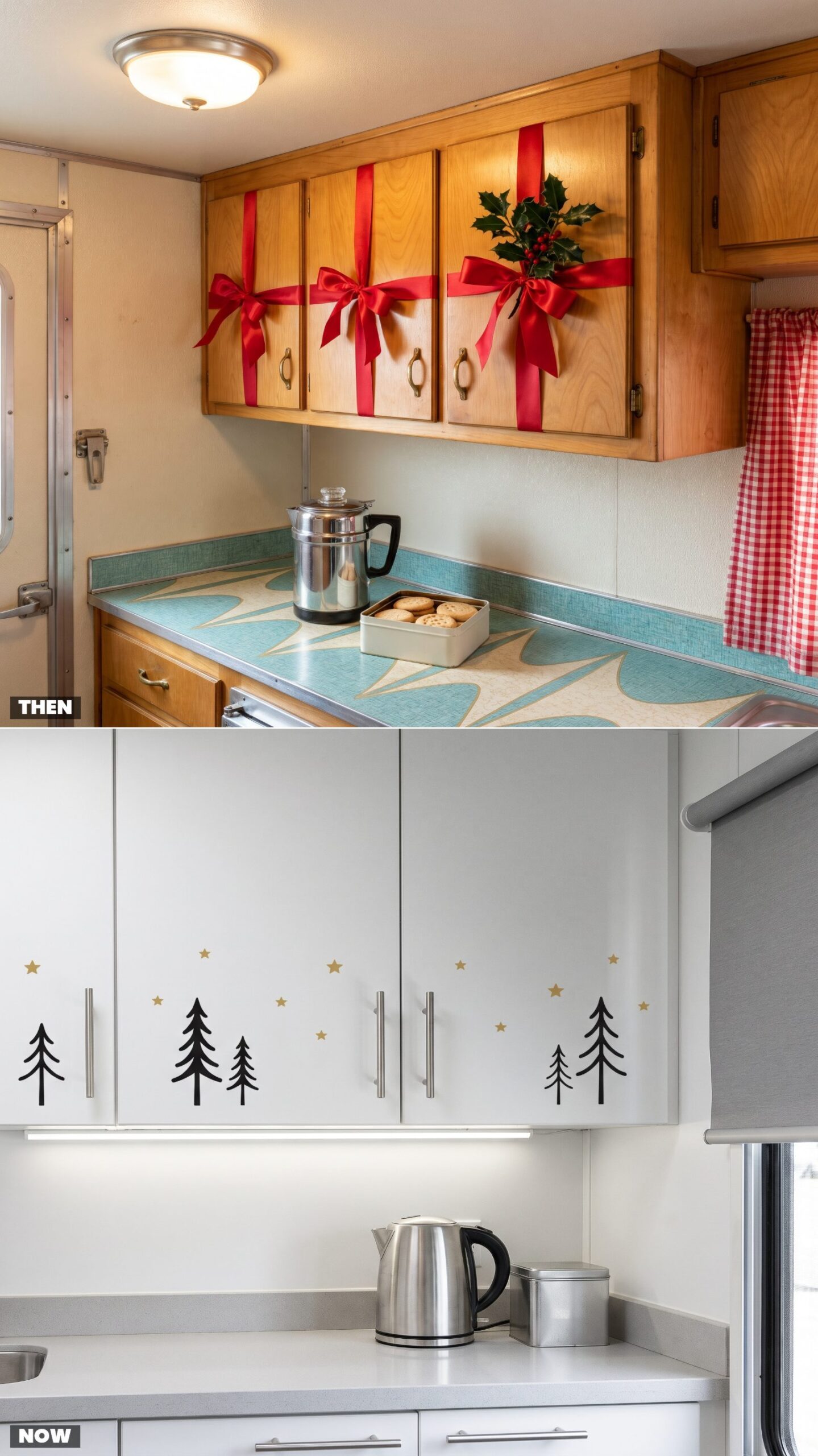
Back then, decorating meant whatever you already had in the sewing kit. Satin ribbon, a few bows tied too tight, a sprig of holly jammed under the knot so it wouldn’t slide off. By the time the trip ended there was a snowstorm of red thread all over the galley floor and a knob or two pulled loose, and nobody minded one bit. It looked handmade because it was.
Now the cabinet dresses itself in under a minute. Peel, stick, press flat, done. Come January you lift the decals off and they leave no residue on the slab doors — which, if you’ve ever scraped off sixty-year-old tape glue, feels close to a miracle.
30. Sequined Christmas Stockings vs. Monogrammed Knit Stockings
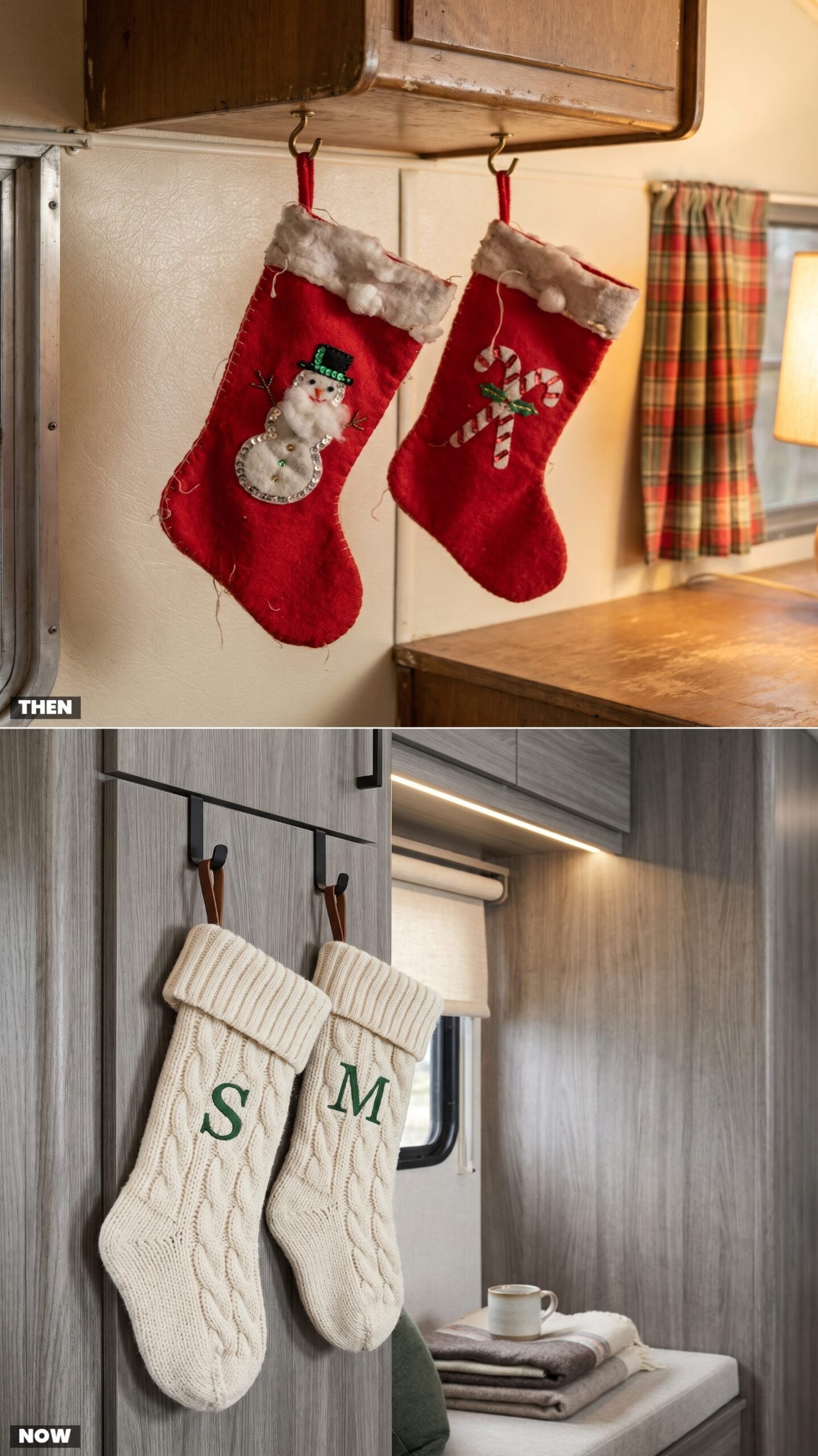
Sequins everywhere. That’s the honest memory — you’d find them in the carpet in July. The old stockings were a felt-and-bead project somebody spent several November evenings on at the dinette, squinting under a single lamp, and the result came out gloriously uneven, a snowman with one eye set higher than the other. Nobody cared, because it was yours.
Today the cream cable-knit stocking arrives looking like a catalog did your decorating for you. Add a monogram, hang it on a steel hook, done. I’ll admit I miss the lopsided snowman.
29. Brown Paper Parcels vs. Reusable Fabric Gift Bags
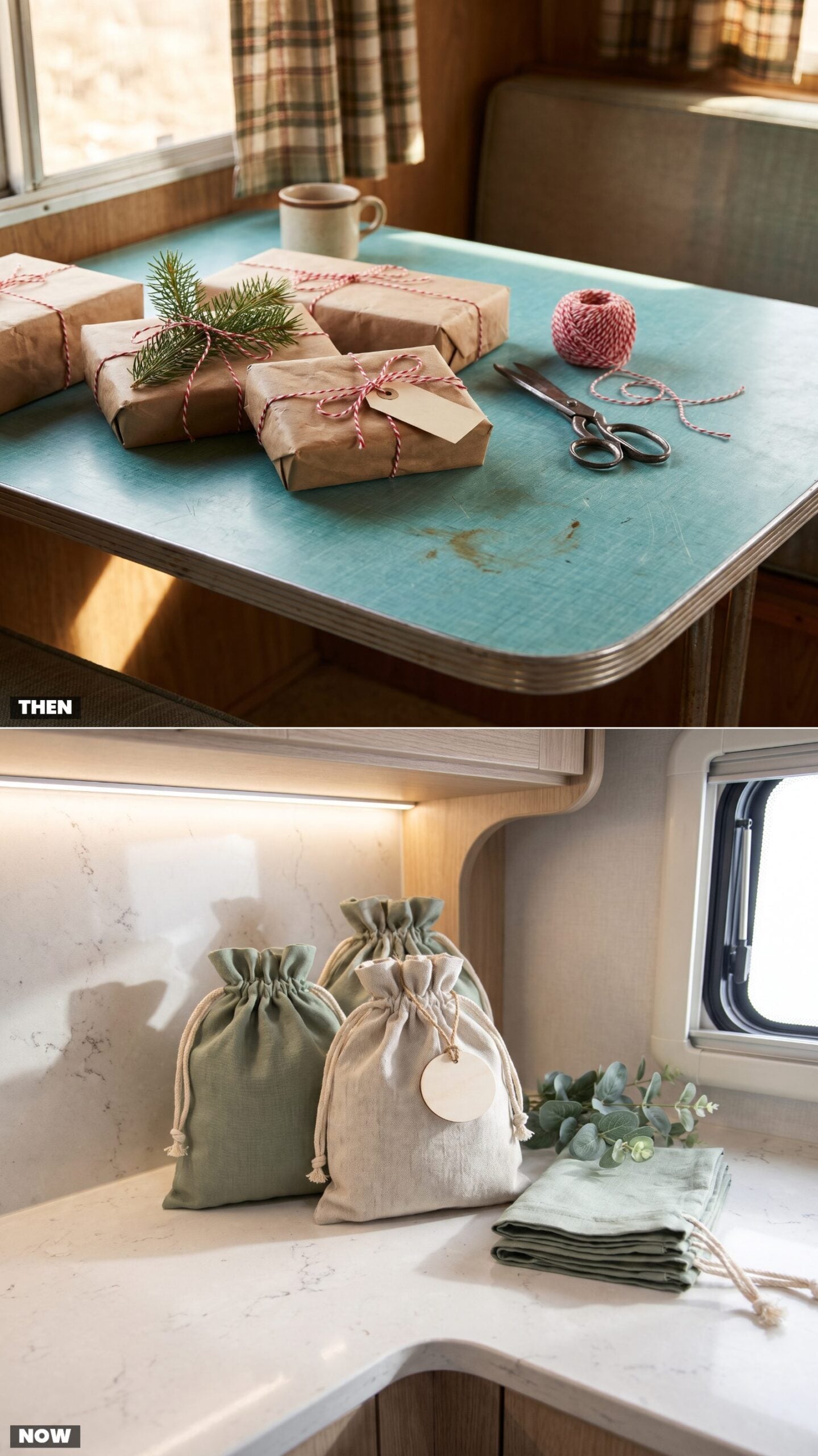
Brown paper, twine, a sprig of something green snapped off the tree outside the trailer — that was the whole kit. It worked because it had to, and it looked warm because the texture did the job no shiny foil ever manages.
The reusable fabric bag is the better idea we took sixty years to land on. Pull the drawstring, done, and it folds flat for next year instead of filling the little trailer trash can by noon.
28. Printed Department Store Catalog vs. Tablet Shopping List
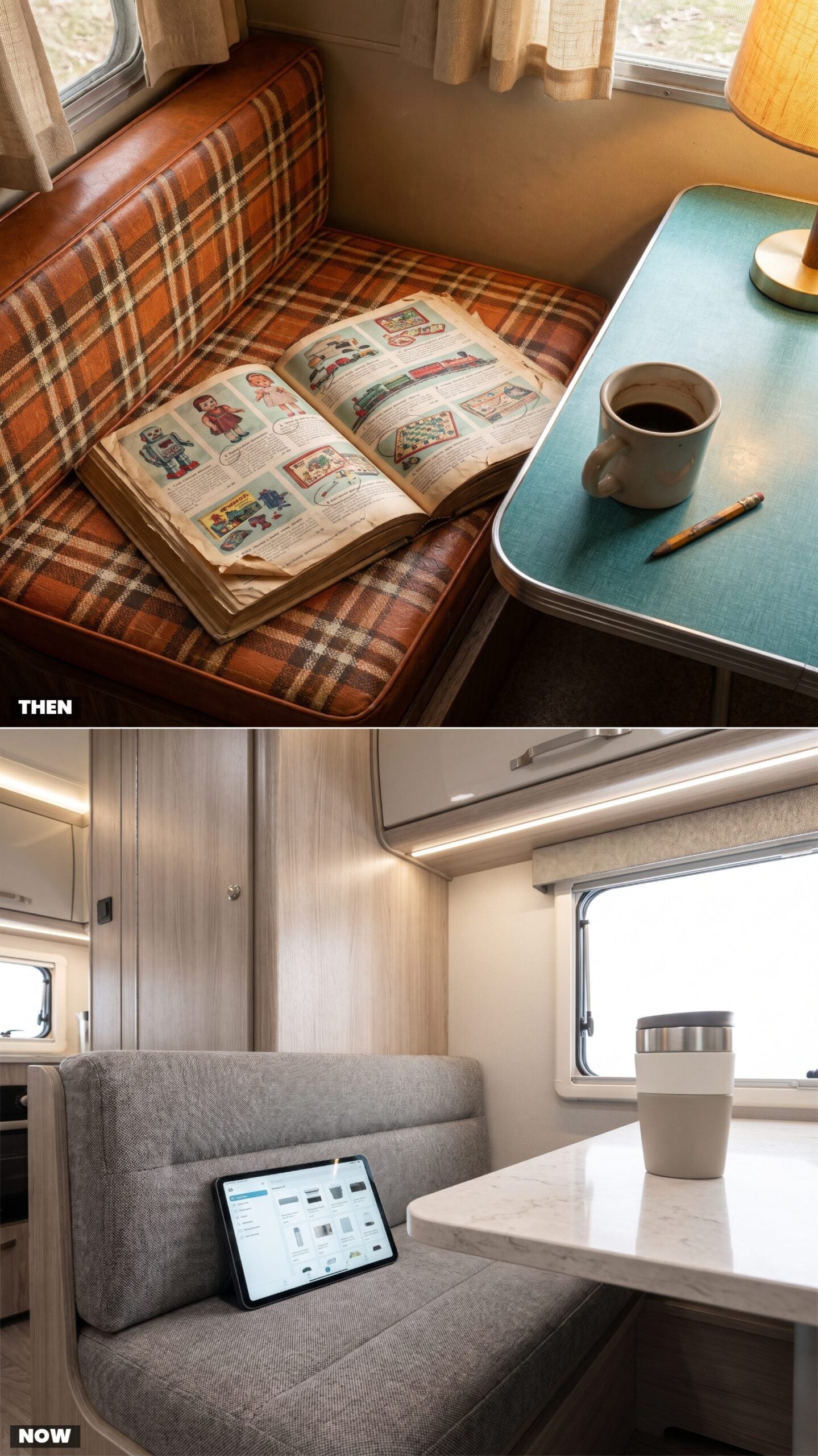
The catalog was the whole season in one object. It landed in the fall, got hauled into the trailer, and by December the toy pages had gone soft and grey from handling. You circled things with a pencil, then argued over which circle was wishful and which was serious. The thing weighed about as much as a brick, and nobody threw it out until February.
Now the list lives on a tablet you can refresh at any campground with half-decent signal. Lighter, searchable, won’t fall apart in your hands.
27. Model Train Around the Tree vs. Tabletop Magnetic Train Set
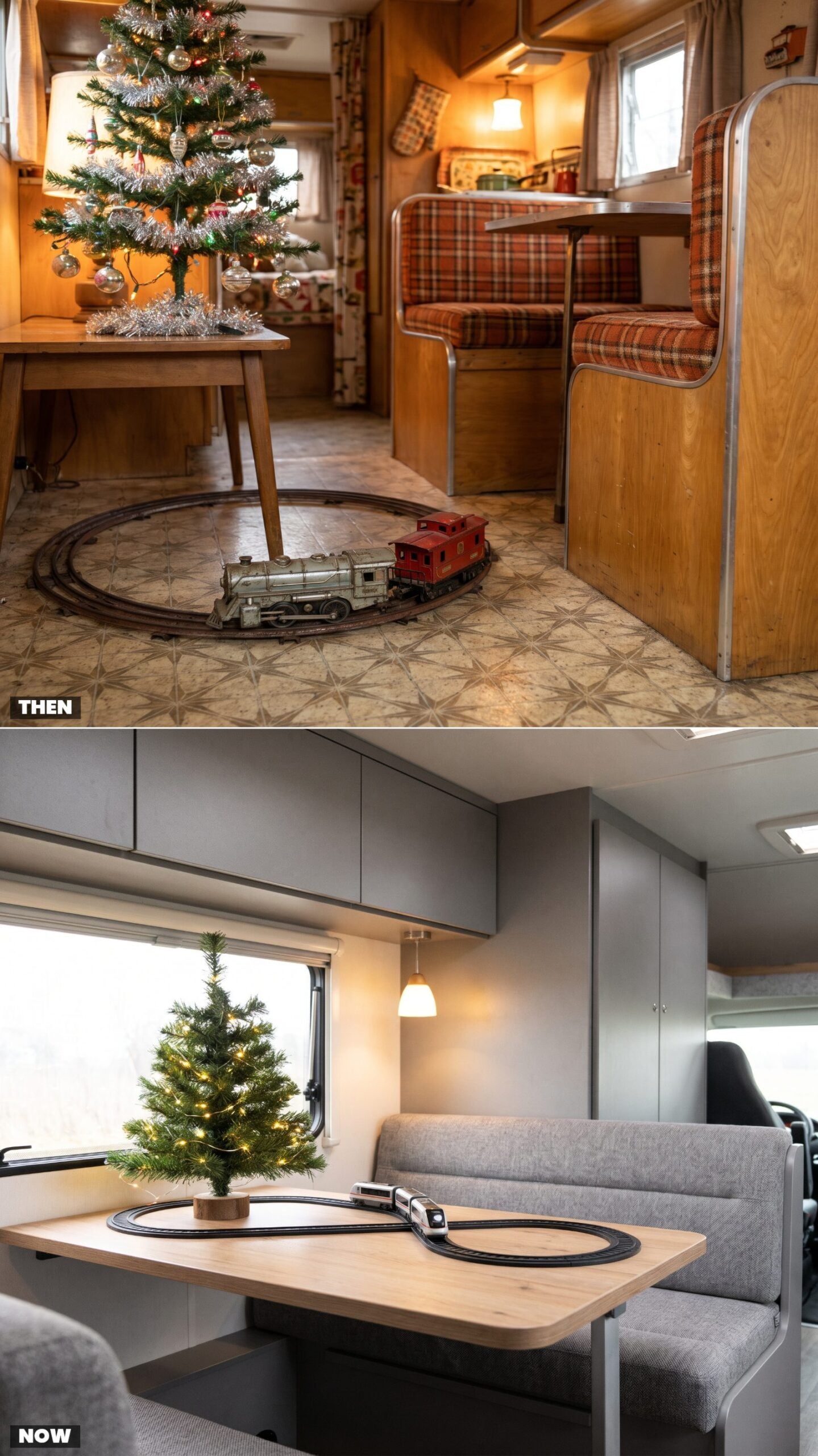
A train around the tree in a trailer is a logistics problem, and everyone back then just solved it anyway. The oval barely fit. Somebody always kicked the transformer cord and stopped the whole thing mid-lap, and the tin locomotive had real heft to it, plus a smell of warm metal when it ran too long.
The tabletop version makes peace with the square footage. It runs a tight figure-eight on a shelf, battery-powered, out from underfoot. Less charm, admittedly. More floor.
26. Portable Record Player vs. Bluetooth Speaker
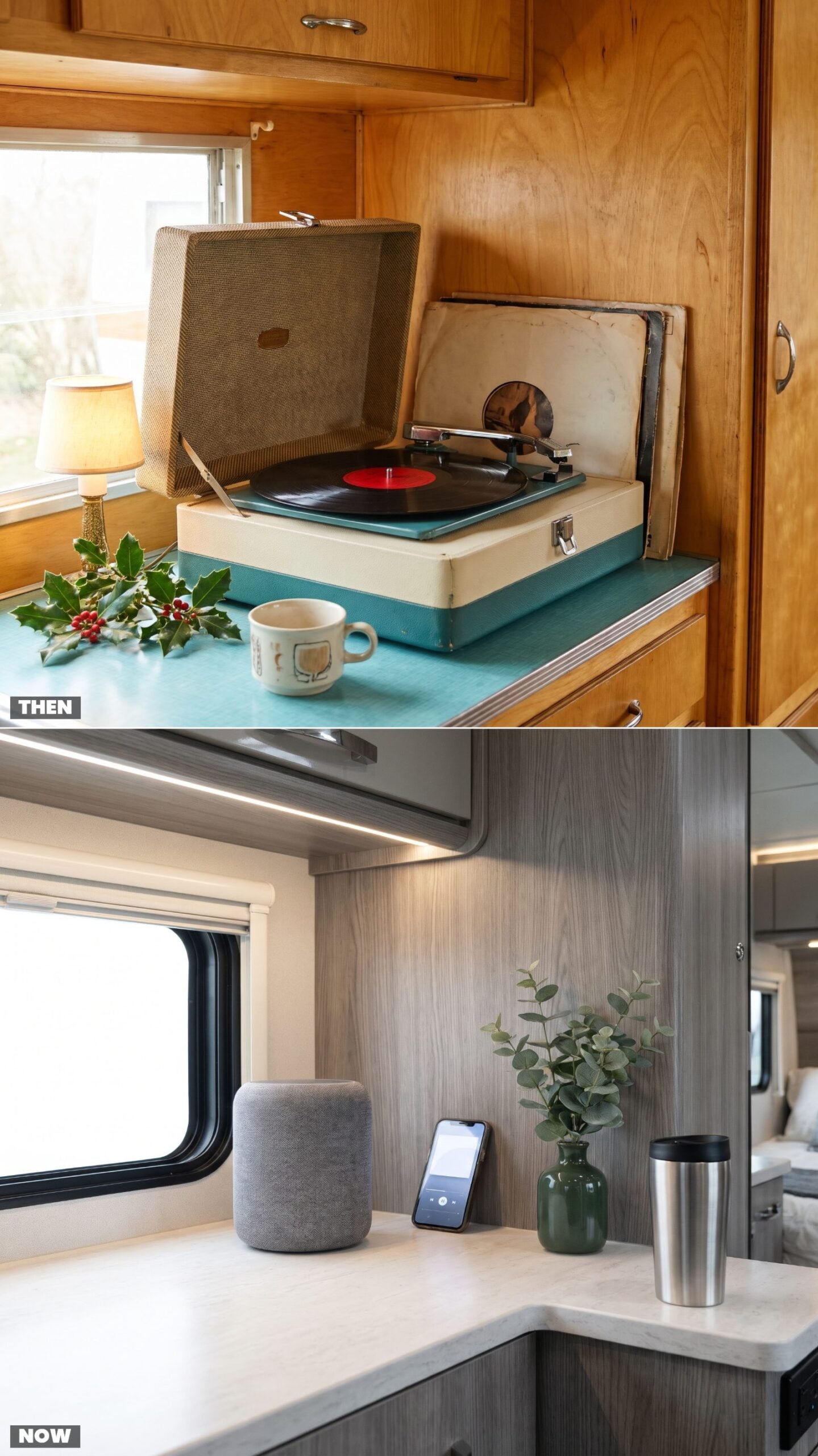
The portable record player was a whole production. You carried it in like a small suitcase, hunted down a level spot so the needle wouldn’t skip every time someone shifted in the booth, and flipped the record halfway through dinner. It filled the trailer with warm, slightly worn carol brass.
The portable Bluetooth speaker does it from your pocket. Thousands of songs, no skipping, no flipping, fits in a cup holder. The sound is cleaner — and somehow I trust the crackle more.
25. Black-and-White Television Special vs. Streaming on a Smart TV
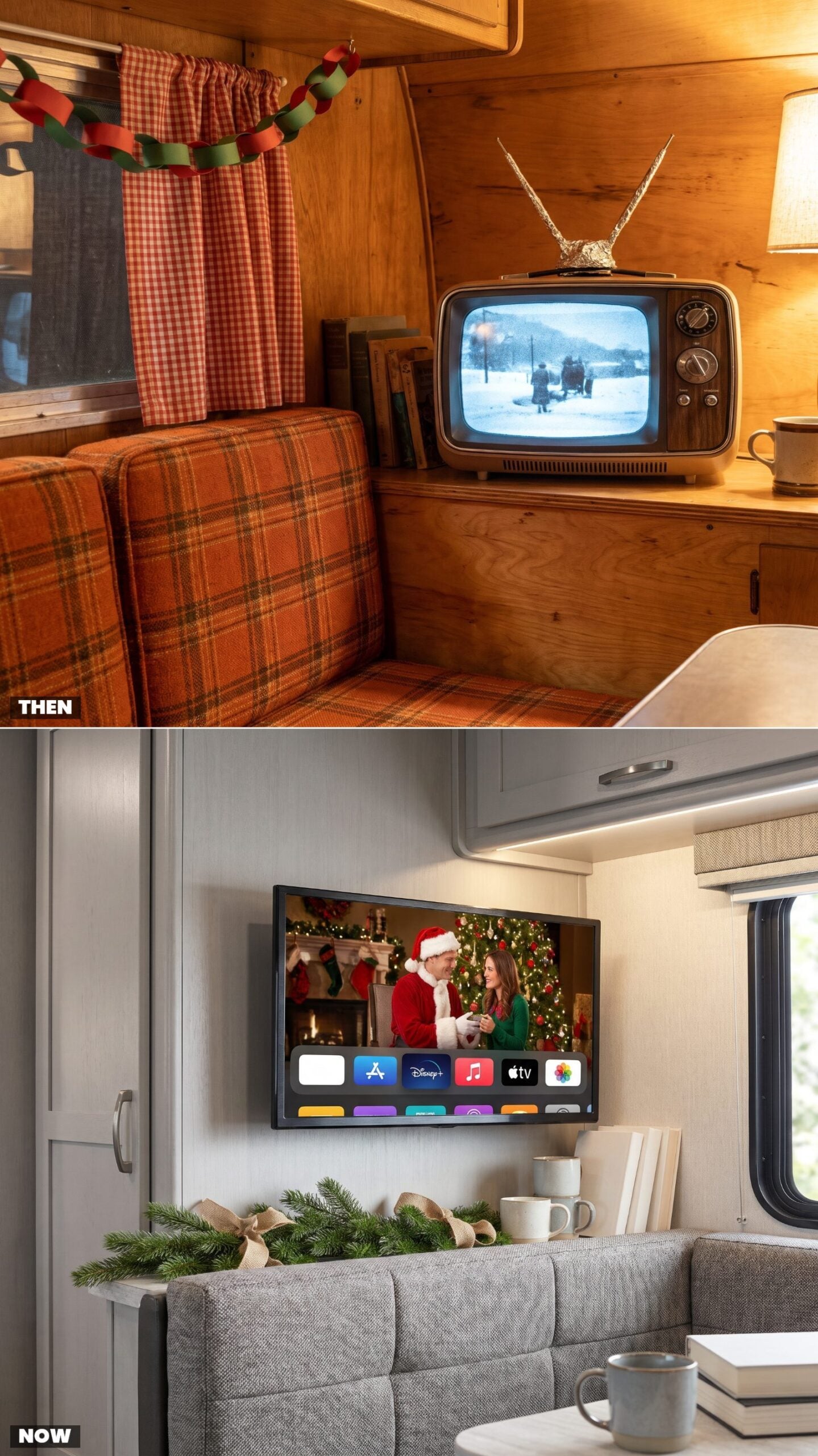
You got one shot. The special aired when it aired, and if the antenna was pointed wrong you watched Rudolph through a blizzard of static while somebody held the rabbit ears at an exact angle and wasn’t allowed to move a muscle. The whole trailer arranged itself around that little grey screen.
Now the smart TV streams whatever you want, whenever, in color sharp enough to count snowflakes, and you can pause it to refill the cocoa. Better in every measurable way. Still a little less of an event.
24. Flashcube Family Photo vs. Phone Camera Group Selfie
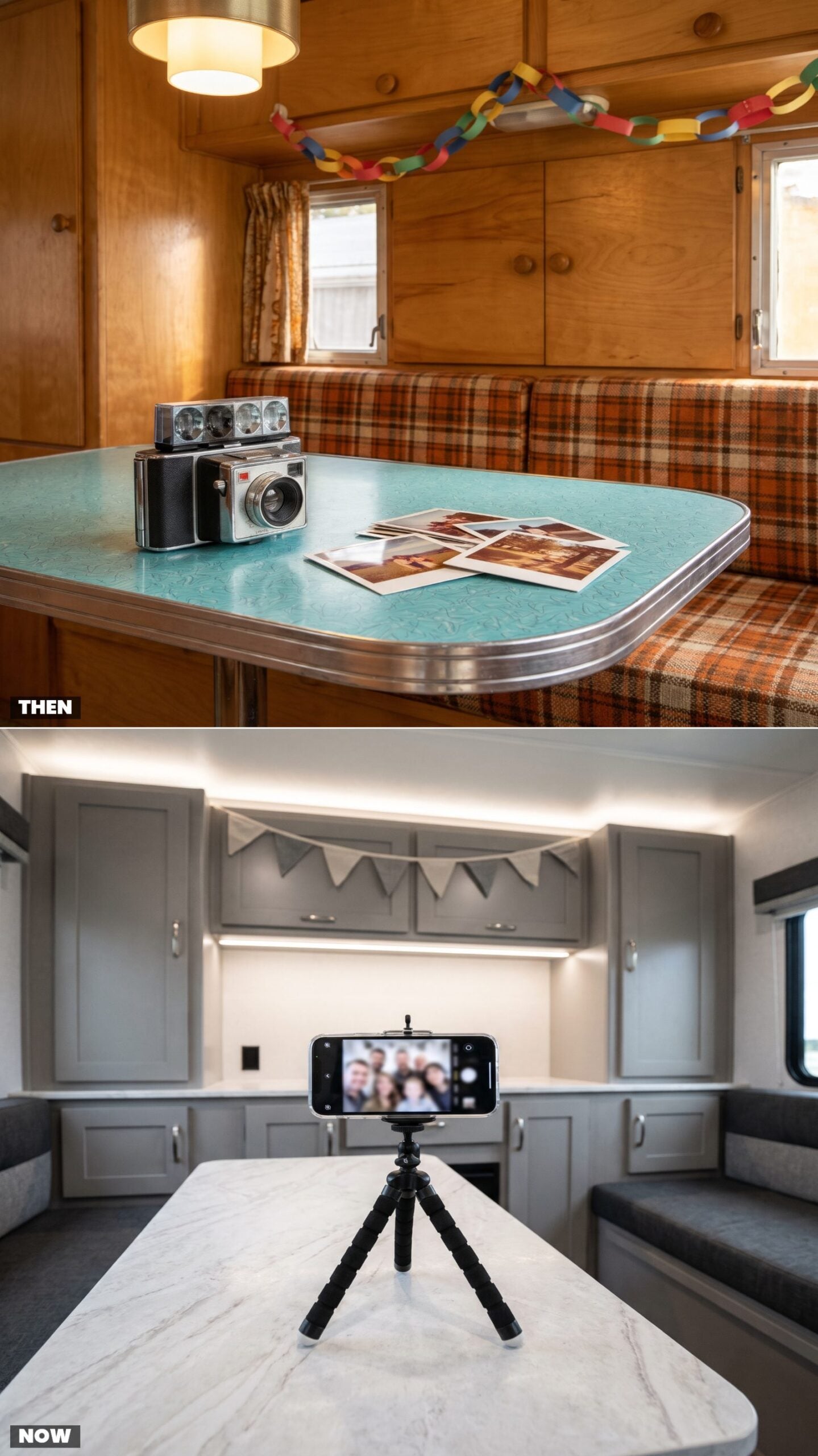
The flashcube gave you four shots before you snapped on a fresh one, so you made every frame count. Everybody squeezed into the dinette, somebody got cut off at the edge, and nobody knew how it turned out until the prints came back weeks later with that chemical smell and a white border.
Now the phone props itself on a little tripod, counts you down, and takes forty versions until everyone’s eyes are open. You see it instantly. You delete the duds.
23. Rotary Phone Holiday Call vs. Wi-Fi Video Chat
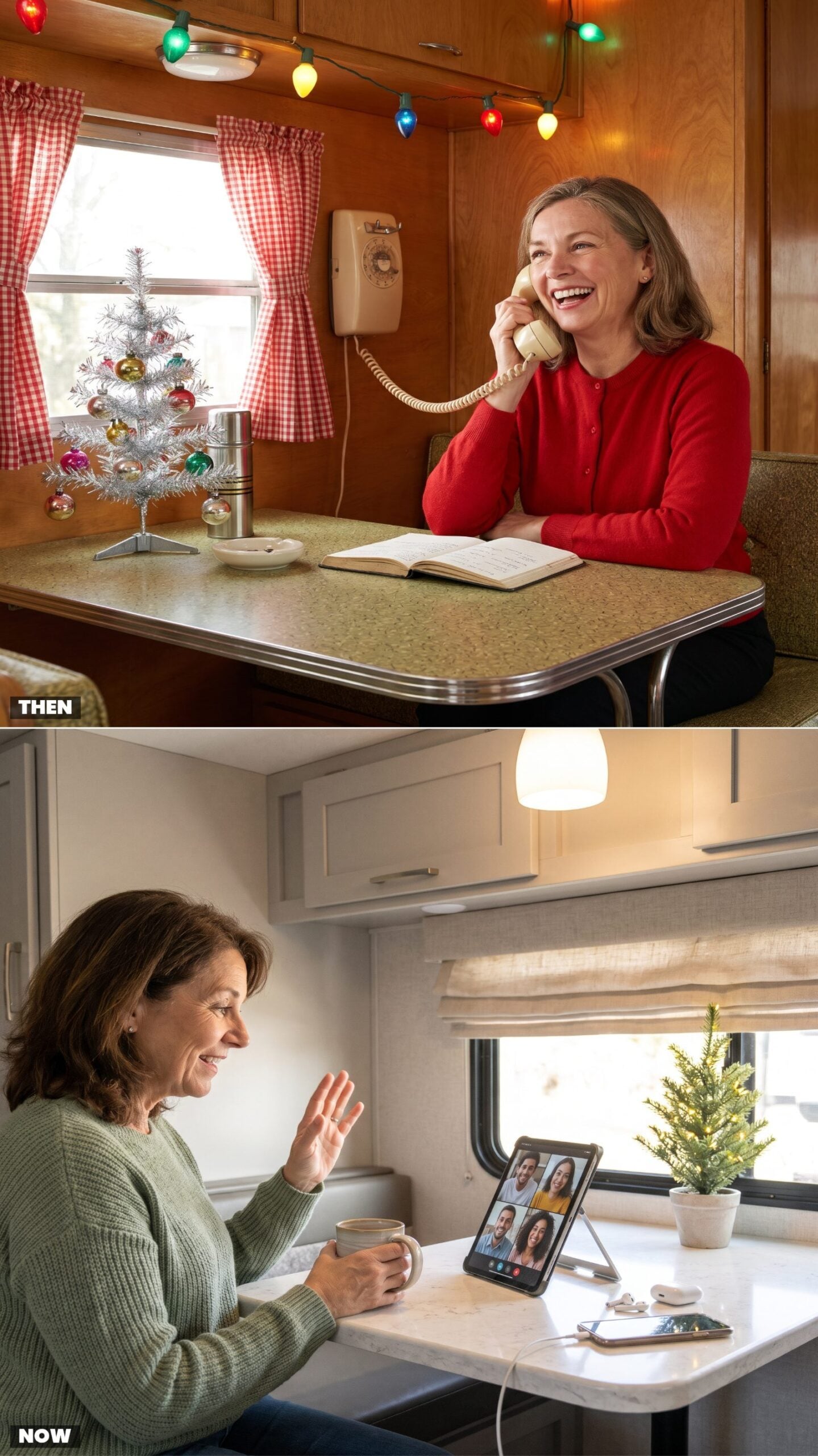
The 1960s version of a holiday call meant standing by the wall phone, cord stretched tight, shouting over a static line while the long-distance meter quietly ate your gift budget. You got voices and nothing else. The faces you had to picture yourself.
Now the whole family crowds a tablet screen from a campground three states over. You see the cousins, the dog photobombing, the burnt turkey held up for inspection, and the call costs nothing and runs as long as the Wi-Fi holds.
22. Enamel Percolator vs. Programmable Coffee Maker
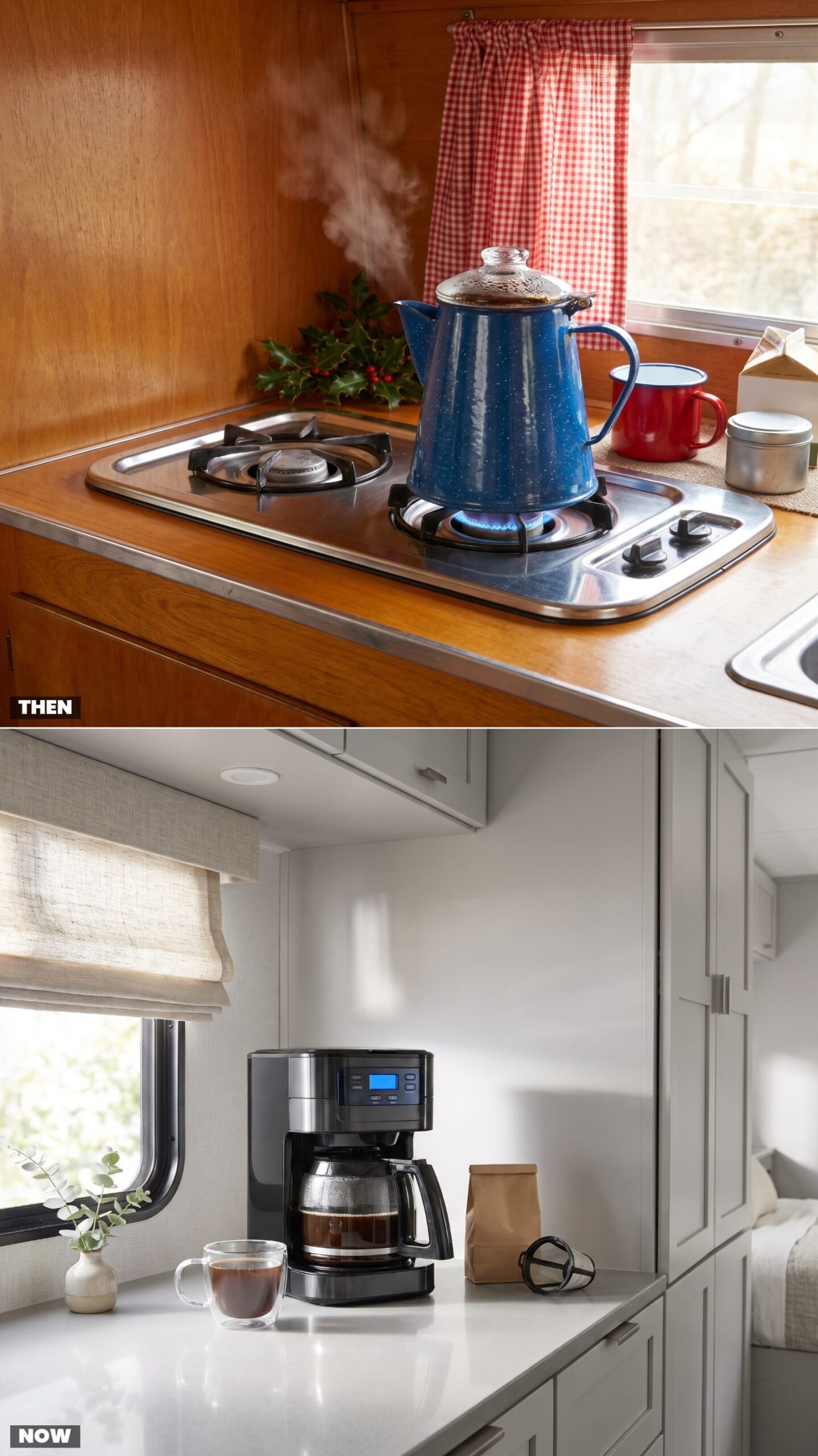
A percolator on the propane burner was a sound before it was a drink. That slow glub-glub through the glass knob told the whole trailer morning had arrived. You watched the coffee climb and darken and guessed when it was done by smell alone.
Today you set the timer the night before and wake to a full carafe already waiting — no burner to babysit, no scorched bottom, no guessing. Efficient. But you lose that little percolator percussion that used to pull everyone out of their bunks.
21. Stovetop Cocoa Pan vs. Single-Serve Hot Chocolate Station
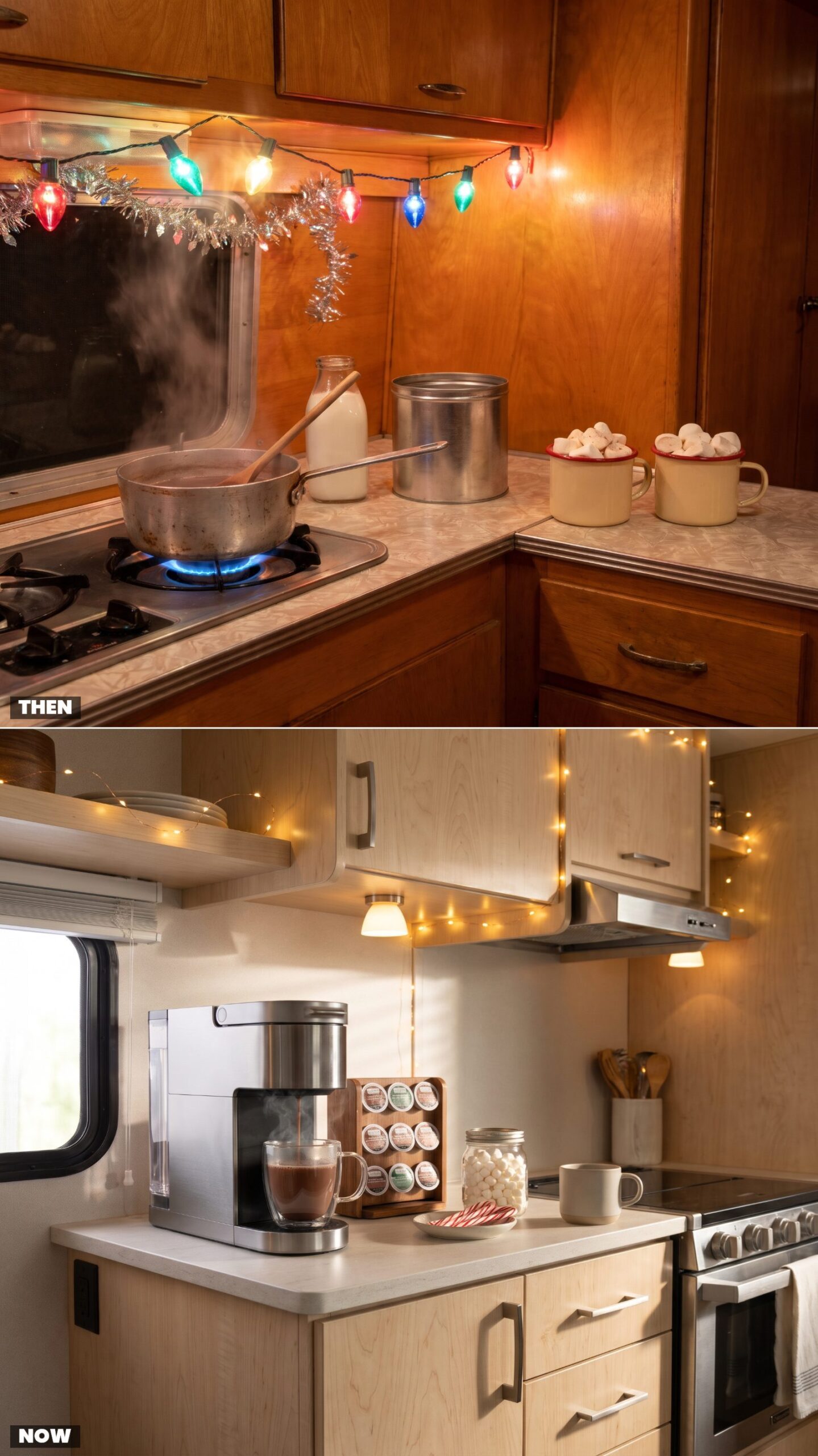
Cocoa used to take a saucepan, a wooden spoon, and your undivided attention. Turn your back and the milk climbed the sides and scorched. You stirred, you waited, you earned it — and the reward was two steaming mugs and that smell filling every corner of a thirteen-foot trailer.
The modern station asks for a pod and a button. Thirty seconds, done, no scorched pan to scrub in a tiny sink. Convenient, absolutely. I just miss the part where making it was half the fun.
20. Fruitcake Tin vs. Artisan Dessert Box
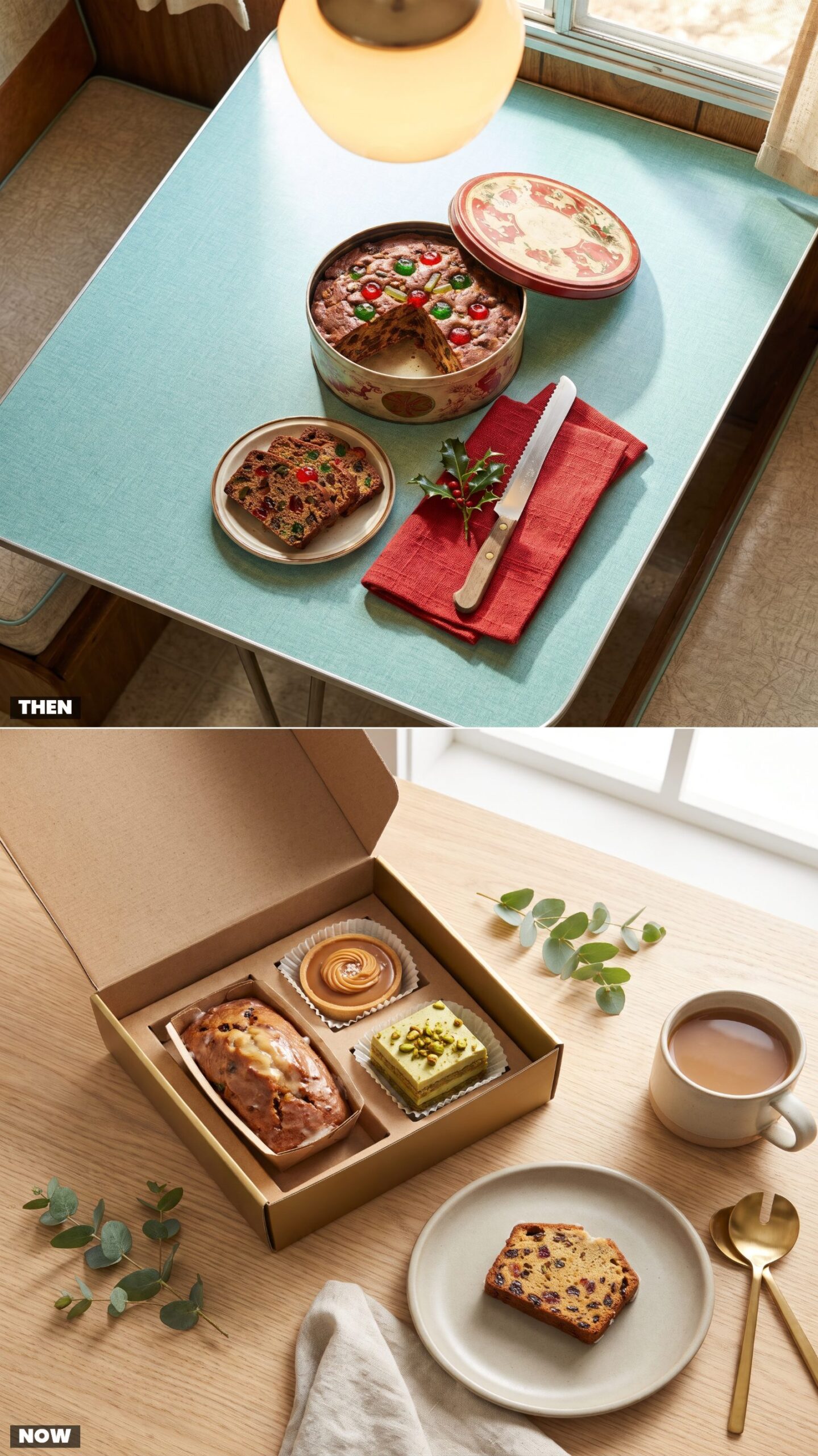
Every family had the fruitcake tin, and every family lied about liking it. Dense, boozy, heavy enough to use as a wheel chock, that dark brick of candied cherries and citron got re-gifted around campgrounds for weeks. Somebody’s aunt made it. Nobody admitted finishing it.
The modern swap is an artisan dessert box, each little cake nestled in its own cup — salted caramel here, pistachio there. Prettier, portioned, and it won’t outlive the trailer. Though I’ll say this for the fruitcake: it never crumbled on a bumpy mountain road.
19. Ribbon Candy Dish vs. Gourmet Chocolate Flight
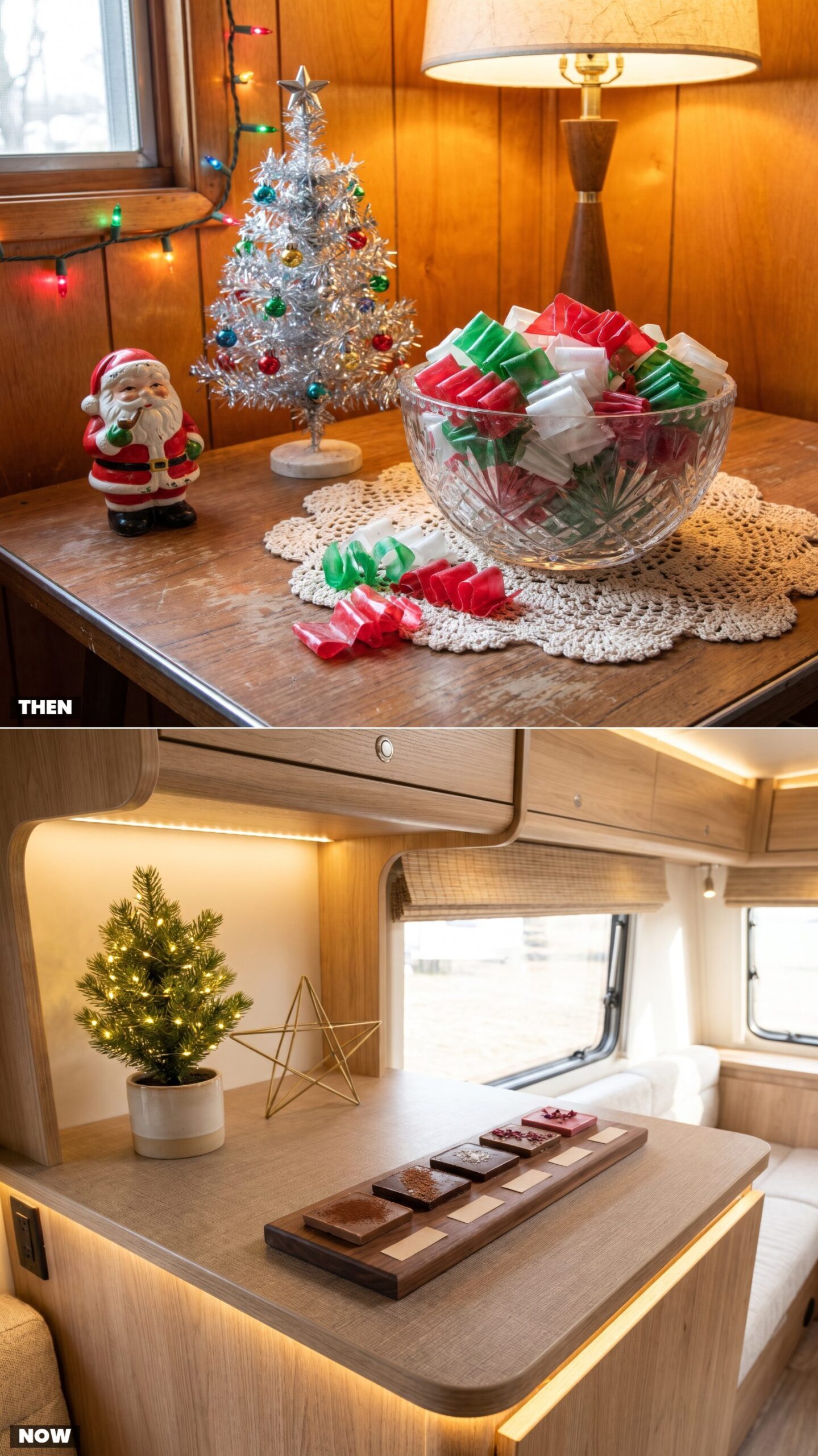
Ribbon candy was more decoration than dessert. Those delicate folds of red and green sat in a cut-glass dish catching the bulb light, and every kid learned the hard way that it shattered into razor shards the second you bit down. Gorgeous. Nearly inedible. Fully committed to the look.
Now it’s a chocolate flight on a little tasting board, single-origin squares lined up with labels telling you the cocoa percentage. You taste your way across instead of risking a chipped tooth. Progress, I suppose.
18. Mixed Nuts with a Nutcracker vs. Pre-Shelled Snack Board
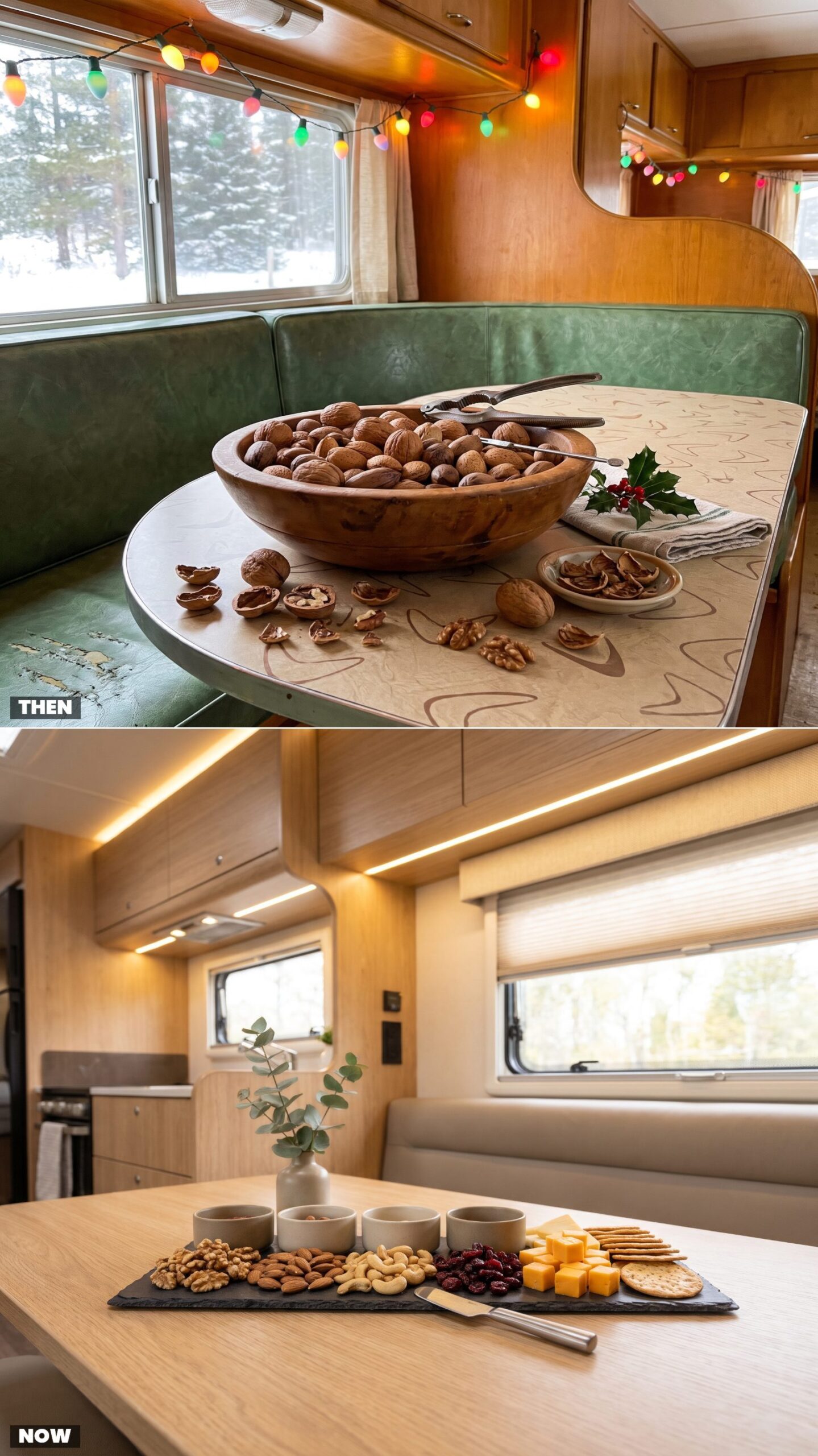
A bowl of whole nuts and a metal nutcracker was both snack and entertainment. You wrestled a walnut open, lost half of it to the floor of the trailer, and the men argued over whose turn it was with the only working pick. Shells ended up everywhere. Somebody always stepped on one barefoot.
The modern snack board arrives pre-shelled, sorted into tidy sections with cheese and dried cranberries, no tools required — zero cleanup, zero floor casualties. But you also lose the slow, fidgety ritual that kept everyone at the table a little longer.
17. Gingerbread Men from the Propane Oven vs. Air-Fryer Christmas Cookies
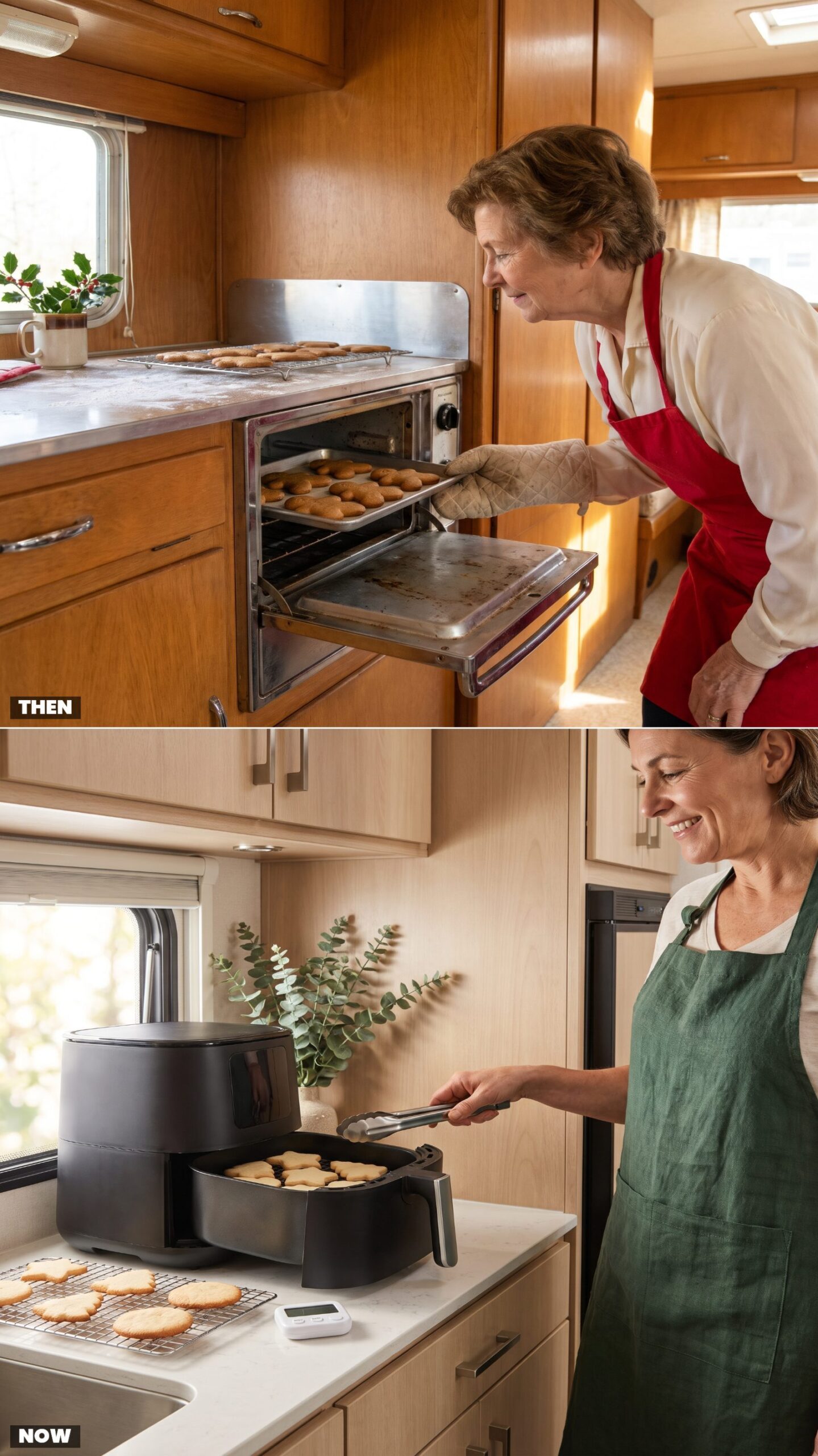
Baking in a 1960s propane trailer oven was a leap of faith. The thing had one knob, no reliable thermostat, and a hot spot in the back corner that cremated anything you forgot about. You rotated the sheet by instinct and prayed. Half the gingerbread men came out lopsided, and all of them tasted like Christmas anyway.
The air fryer today bakes a batch in a few minutes with an even, predictable heat and a digital timer that actually beeps. No hot corner. No guesswork. No pre-heating a tin box in a cramped galley.
16. Hand-Cranked Cookie Press vs. Cordless Decorating Pen
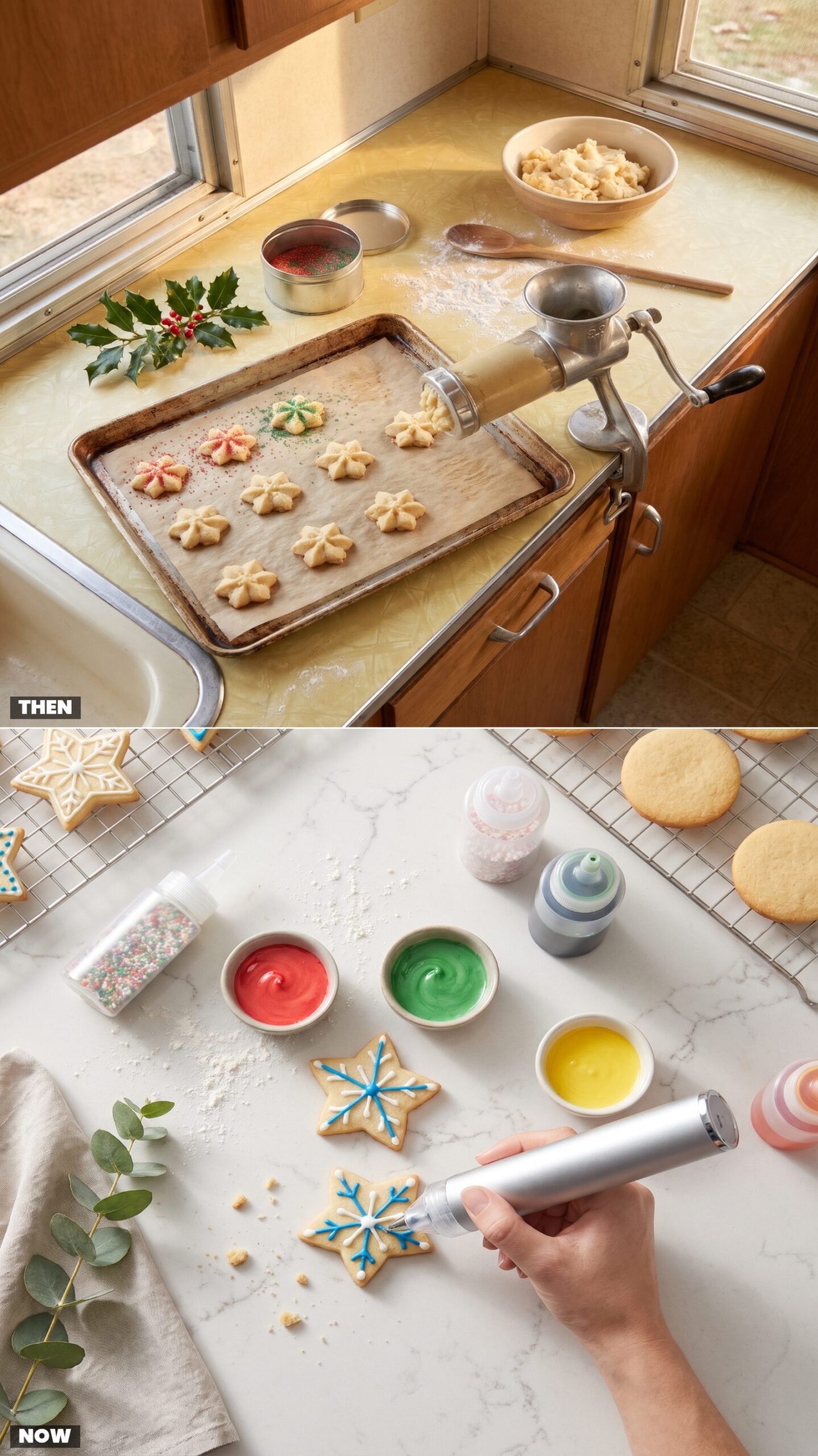
The cookie press was a workout and a gamble. You loaded the cold dough, cranked the handle, and hoped a star or a tree came out instead of a blob. When it jammed, which it always did, you banged it against the counter and woke the whole campground. The good ones you were quietly proud of.
A cordless decorating pen now does the fiddly work, piping clean lines of icing with a steady hand you never had. Precise, effortless, and honestly a little less of an achievement.
15. Gelatin Mold vs. Individual Holiday Parfaits
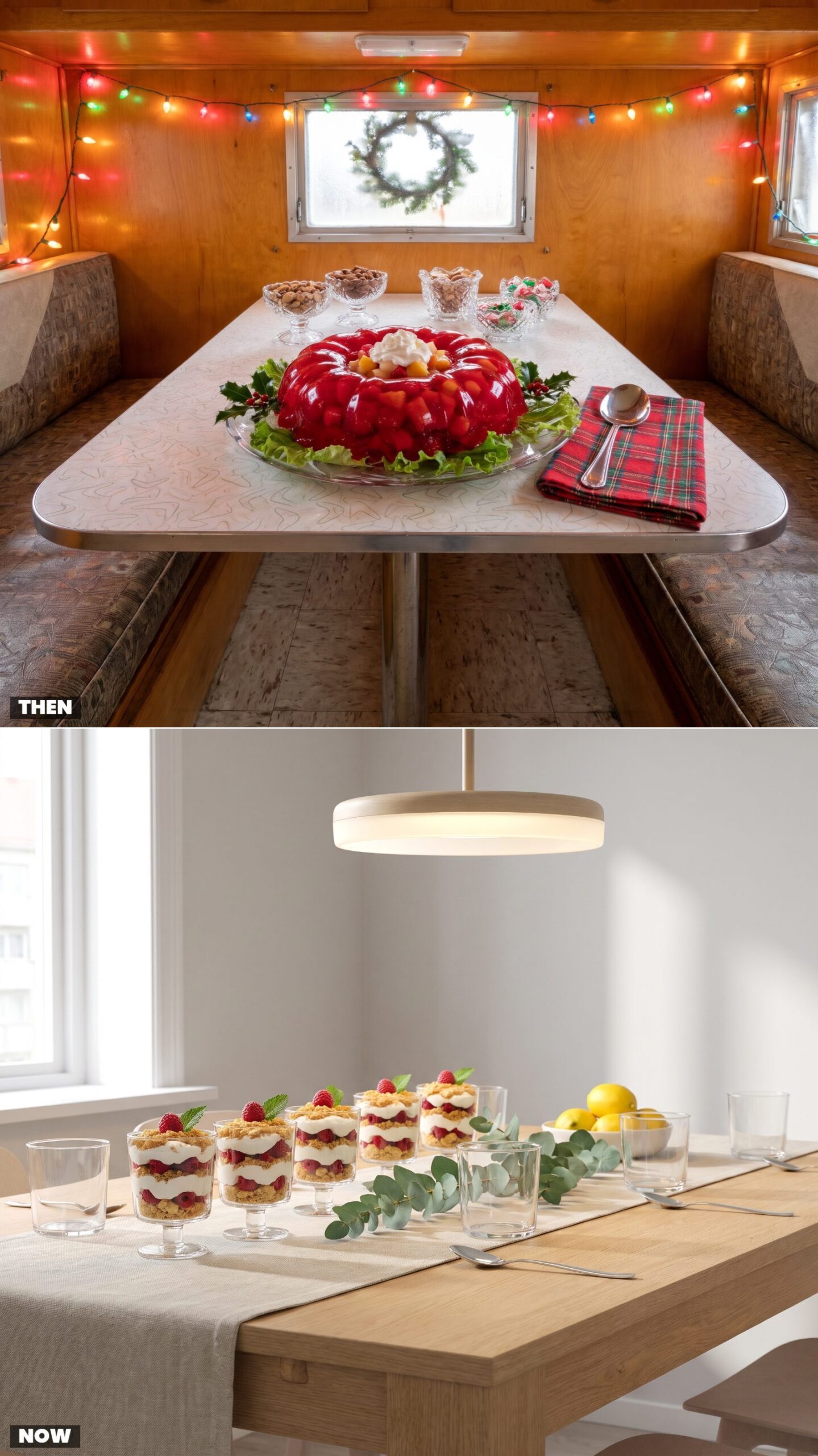
The gelatin mold was the centerpiece every 1960s trailer cook was weirdly proud of. A wobbling red ring with fruit suspended inside like insects in amber, often with something savory lurking that had no business being there. Unmolding it cleanly was the whole challenge, and when it held its shape, you’d done something.
Individual parfaits took over the job, layered in clear glasses so everyone sees the berries and cream — no communal mold to slice, no mystery ingredients, no pretending to enjoy the lettuce garnish.
14. TV Dinner Tray vs. Charcuterie Board
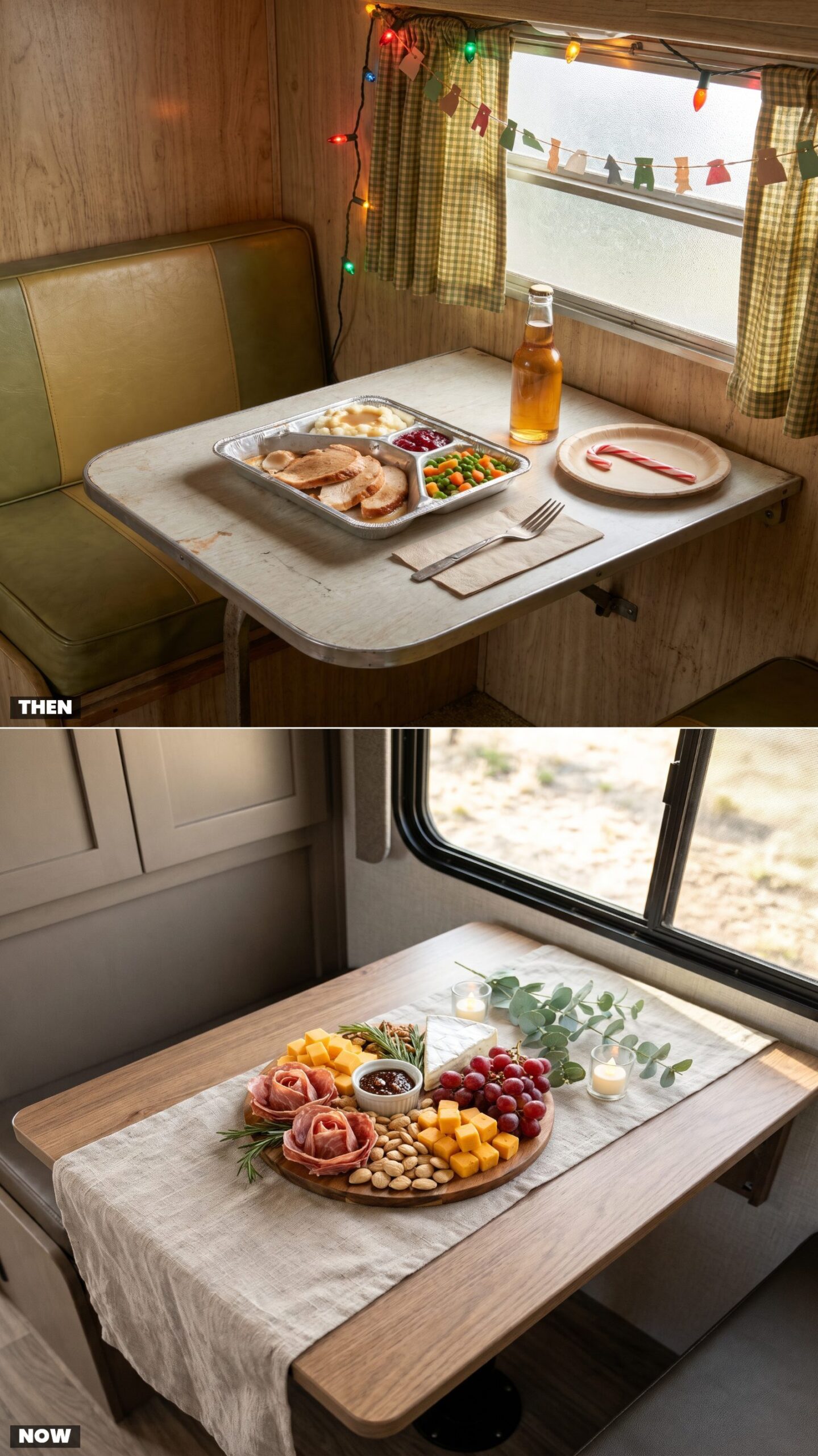
The aluminum TV dinner tray was the whole Christmas plate back then. Turkey in one square, mashed potatoes in another, a sad little cranberry well that doubled as dessert. You peeled back the foil, steam hit your face, and dinner was done in the trailer while the heater ticked.
Now that same dinette table holds a wood charcuterie board stacked with prosciutto, a brie wedge, fig jam, and warm-white LED tealights. No oven required. Honestly the old tray fed you faster, but nobody’s photographing a foil tray for the group chat.
13. Canned Ham vs. Spiral-Sliced Glazed Ham
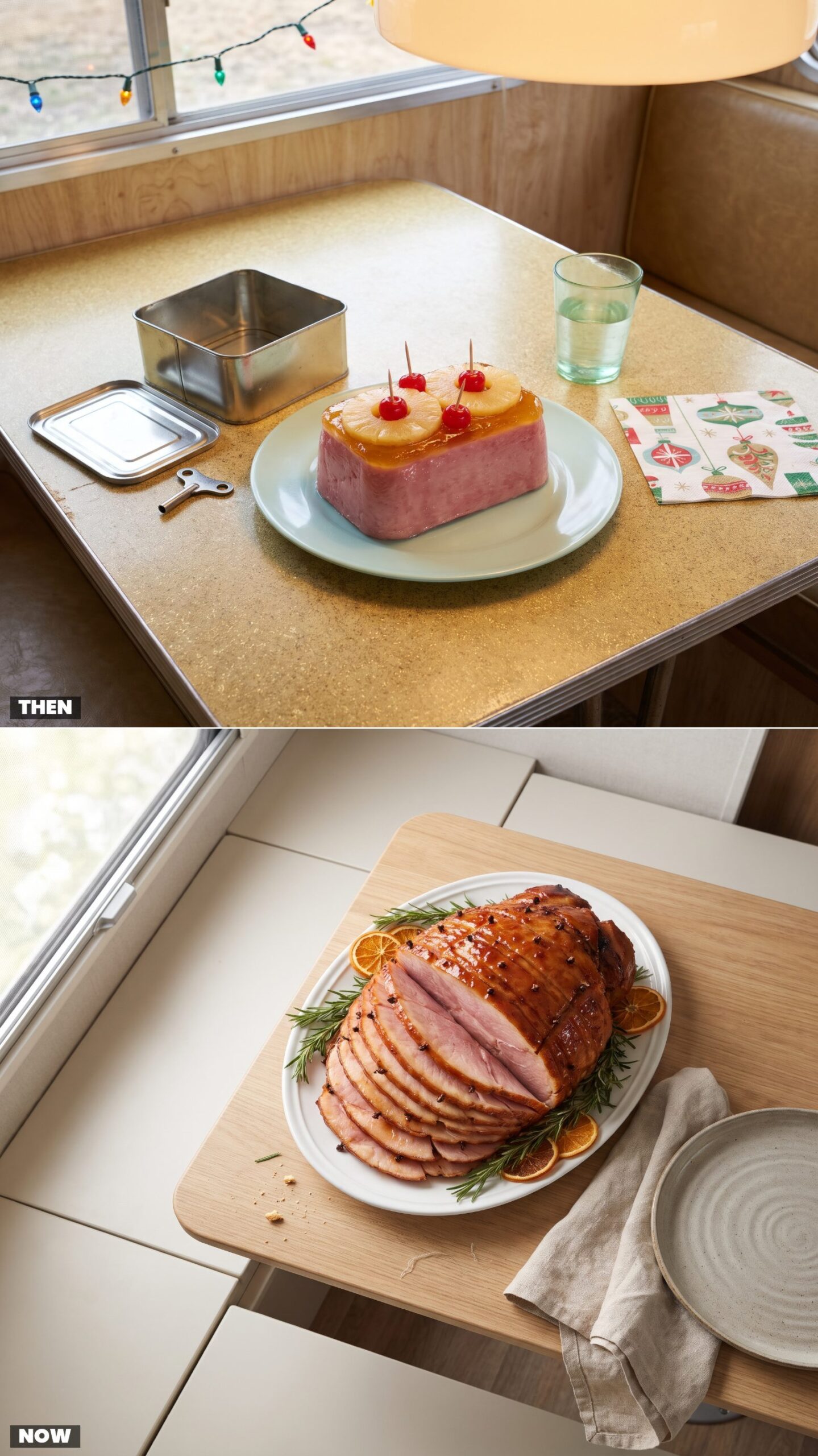
The canned ham came out of the tin holding a perfect rectangle, wobbling in its own amber gelatin, crowned with pineapple and a cherry speared on a toothpick. It kept for ages sealed in its tin, which made it a hero in a trailer with an icebox instead of a fridge. Low-fuss Christmas. There’s a reason it showed up on every campsite table in 1963.
The spiral-sliced glazed ham is a different animal entirely. Fanned slices, honey glaze caramelized under the broiler, cloves and rosemary carrying the presentation. It needs real cold storage, but modern RV fridges deliver that. Both feed a crowd. Only one came with a little metal key.
12. Condensed-Soup Casserole vs. Fresh Vegetable Gratin
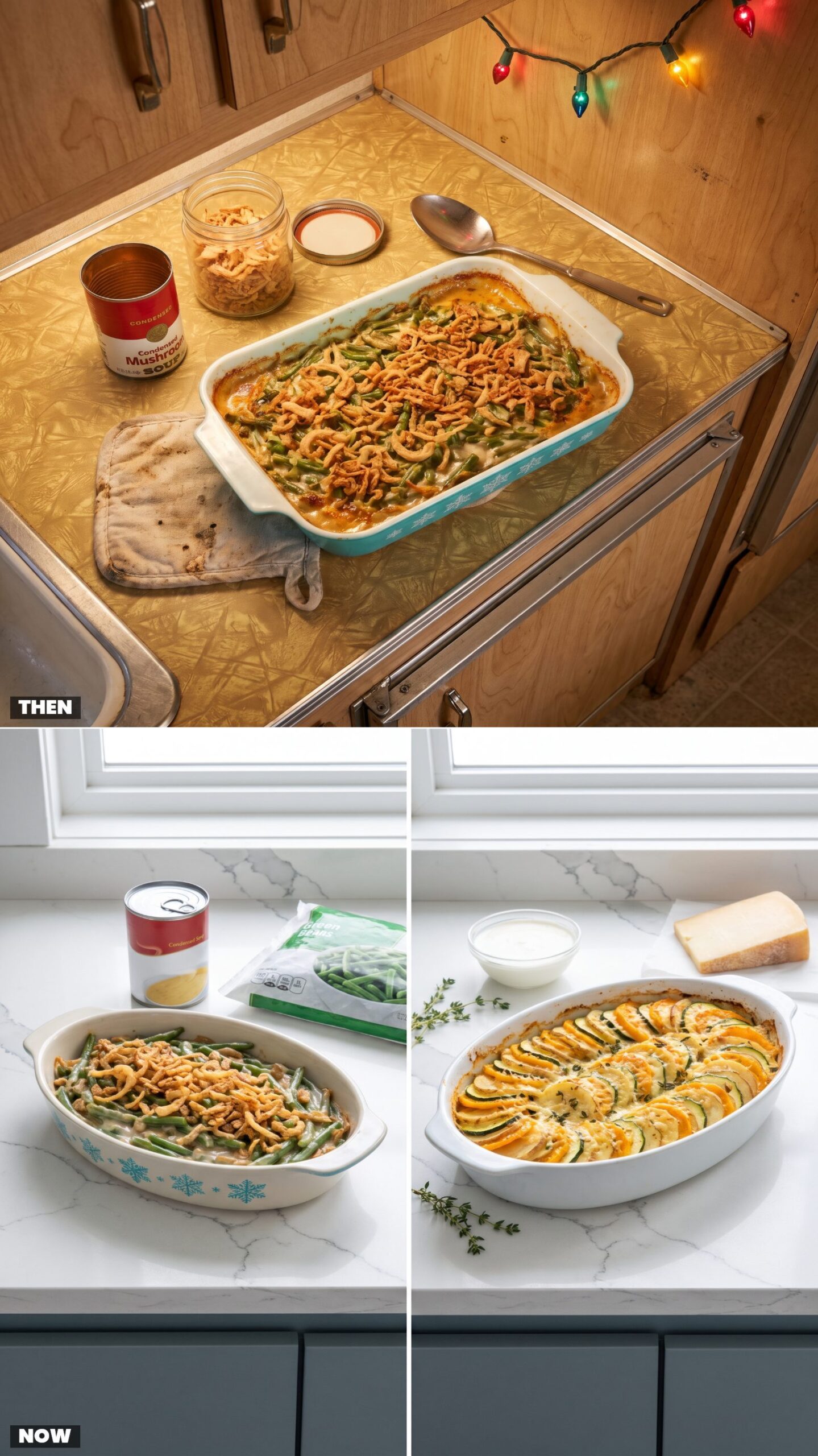
One can of condensed mushroom soup, a bag of green beans, a jar of fried onions. That was the recipe, and it fed every family in the campground loop. It worked in a trailer because the ingredients kept forever and the whole thing baked in one Pyrex dish. That turquoise snowflake pattern on the casserole dish is pure 1962.
The modern version layers fresh zucchini, potato and squash under a gruyere crust, thyme on top, cream instead of soup. More knife work, more fridge space, and a whole lot more photogenic. I’ll admit the old casserole still tastes like December to me. Nostalgia seasons things the gratin can’t touch.
11. Printed Vinyl Tablecloth vs. Stain-Resistant Table Runner
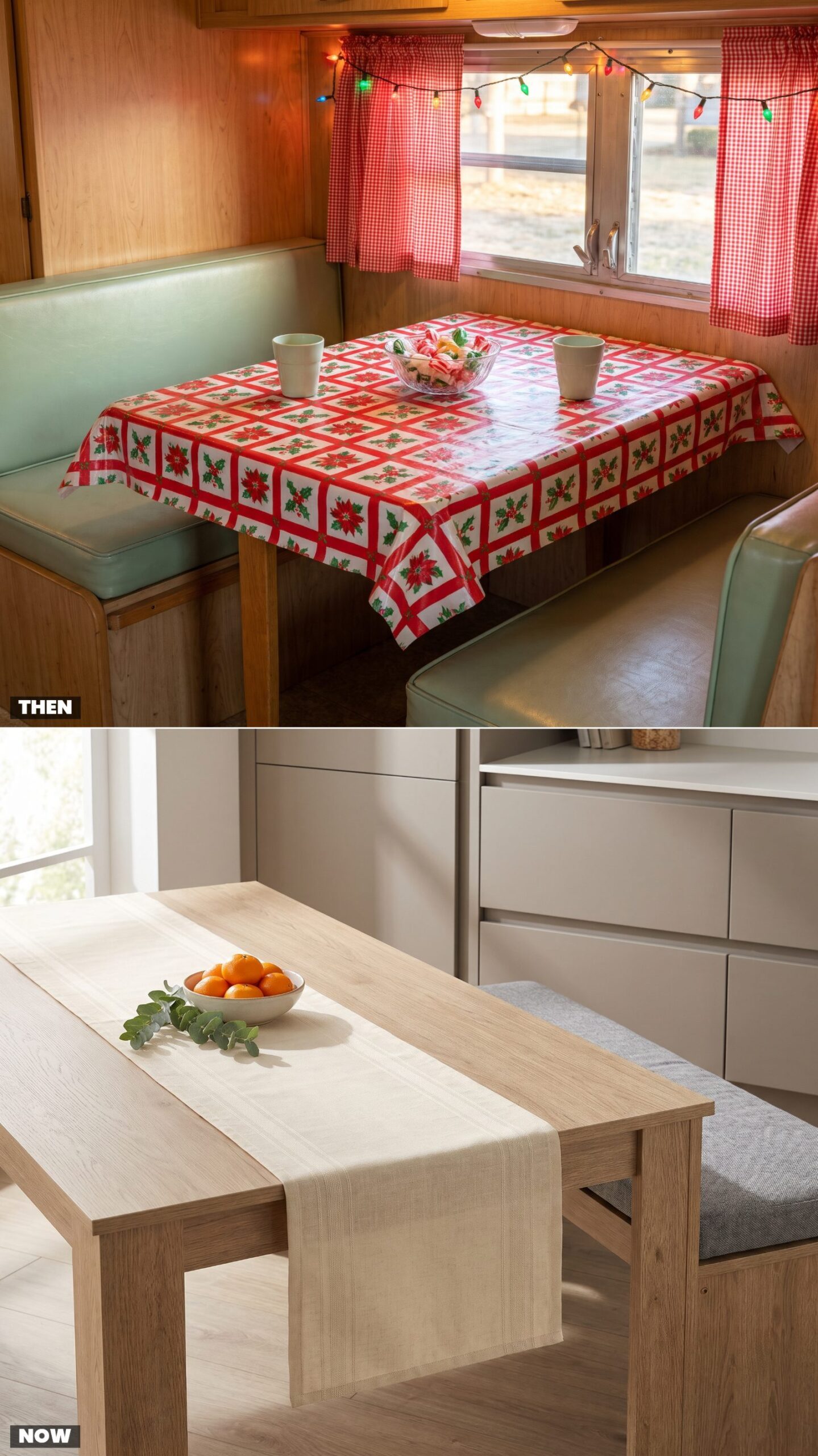
Red holly, white background, flannel backing, a surface you could wipe down with a dishrag. The printed vinyl tablecloth was indestructible and loud, and every trailer had one rolled up in a cabinet. It smelled faintly of plastic when you unfolded it. Gravy wiped right off, which mattered in a rig where laundry meant a laundromat two towns over.
Now the cream linen-look table runner runs a slim stripe down bare wood, stain-resistant but quiet about it. Photographs beautifully, still shrugs off spills. Something was lost when we stopped covering the whole table in holly. I don’t miss the plastic smell, though.
10. Accordion Paper Centerpiece vs. Low-Profile LED Centerpiece
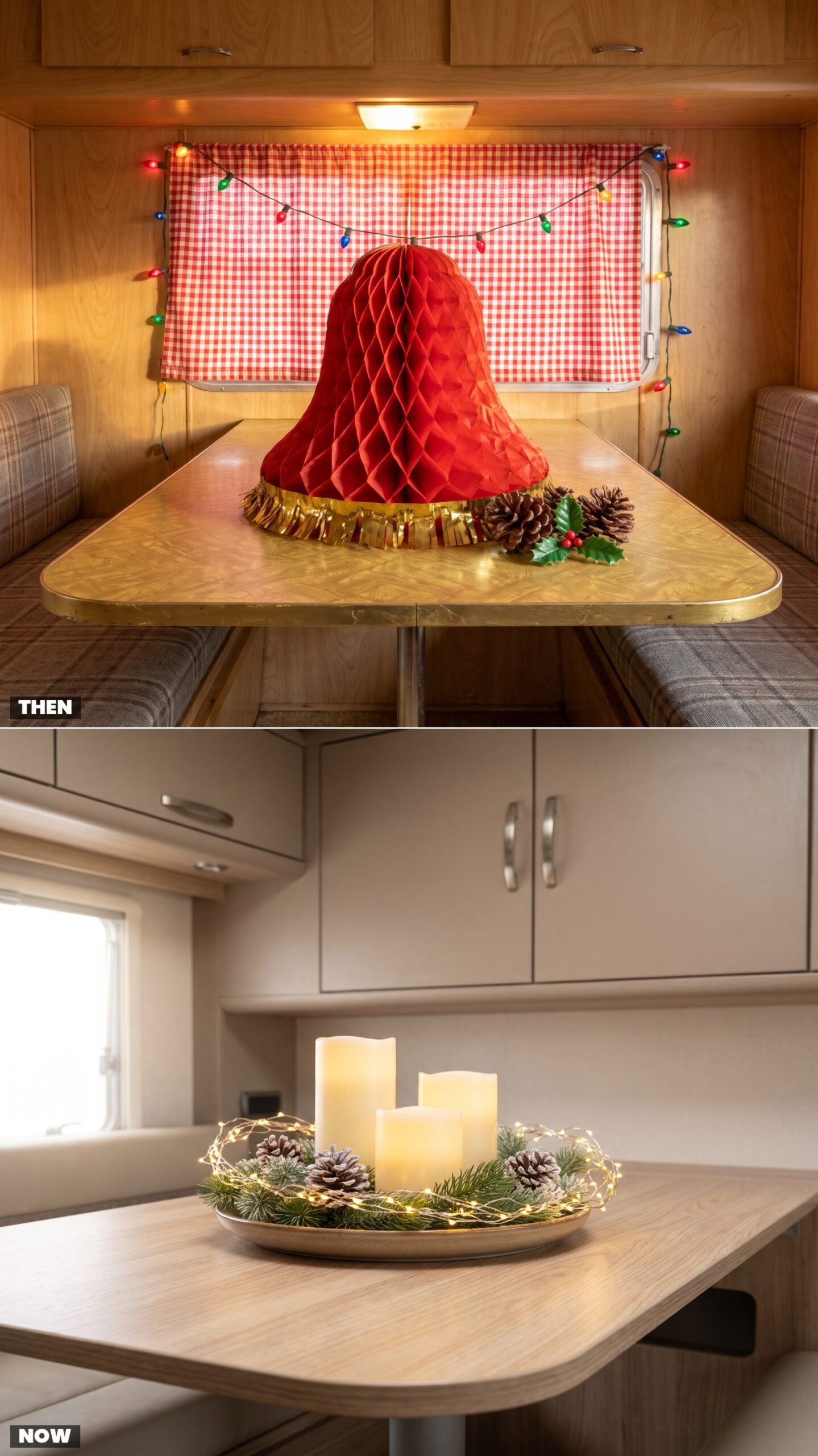
The honeycomb accordion centerpiece folded flat for storage and popped open into a tissue-paper bell when you unclipped it. Red, foil-fringed, a little crushed from last year. It cost almost nothing and took up zero space in a cabinet, which is exactly why campers loved it.
The modern take is a tray of flameless warm-white LED pillar candles tucked into faux greenery and frosted pinecones. Low profile, so it doesn’t block the view across the dinette, and battery-powered, so there’s no open flame in a tight space. Safer glow. But I’ll always have a soft spot for that paper bell that lived its whole life slightly dented.
9. Mismatched Folding Chairs vs. Upholstered Swivel Dinette Seats
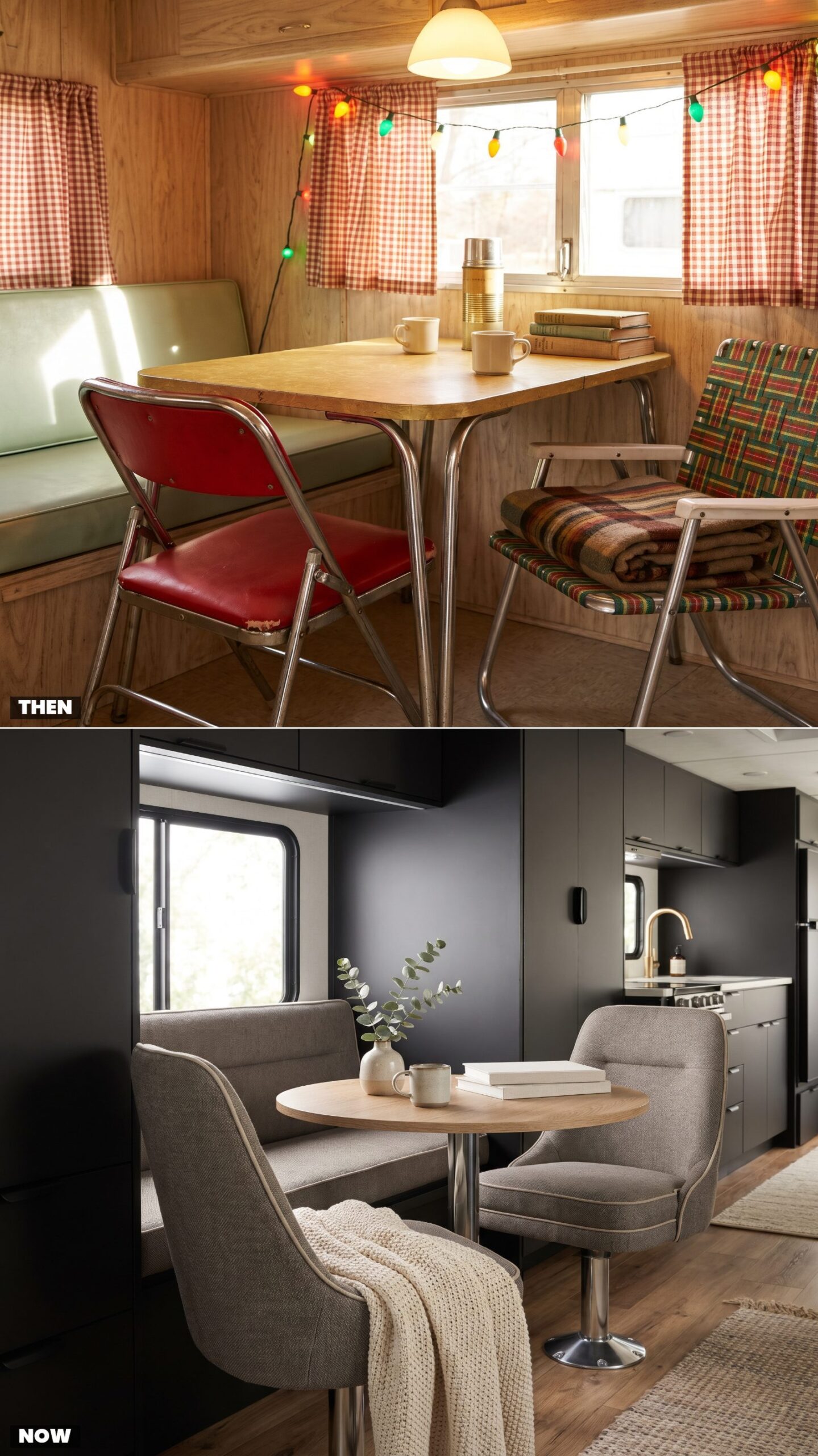
You brought what you had. One padded red vinyl folding chair, one bare chrome tube frame with plaid webbing that left a waffle print on the back of your legs. They folded flat against the wall, and nobody matched on purpose. That was the look, because the look didn’t exist yet. The chairs just had to fit through the door.
Modern rigs come with upholstered swivel dinette seats that spin to face the window or the TV, padded enough for a long meal. They match, they recline a little, they stay put when the trailer’s moving. Comfier, no question. Though nothing tested a friendship like fighting over the one chair with a cushion.
8. Propane Mantle Lamp vs. Rechargeable Lantern
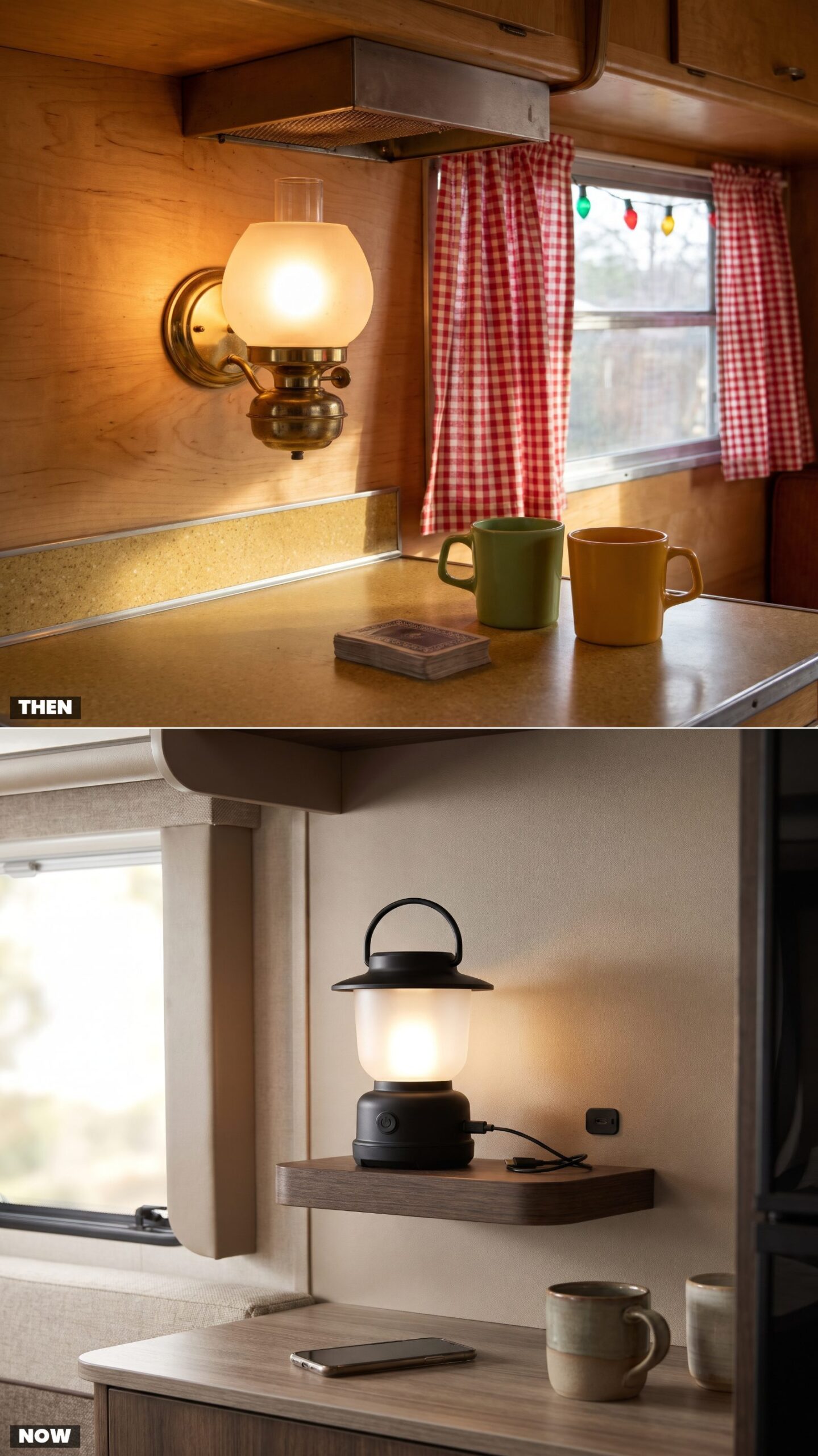
The propane mantle lamp hissed softly and threw a warm flame glow that no bulb has ever matched. You lit it with a match, watched the mantle flare and settle, and the whole trailer smelled faintly of propane and warm glass. It also heated the corner it hung in, which was a bonus in December and a hazard the rest of the year.
The rechargeable LED lantern dims on a dial, charges off USB-C, and won’t burn the place down if you nod off. No open flame, no fumes, no match. I’ll say it plainly: the LED is safer and the propane lamp was prettier. Both things are true.
7. Hot-Water Bottle vs. Heated Throw Blanket
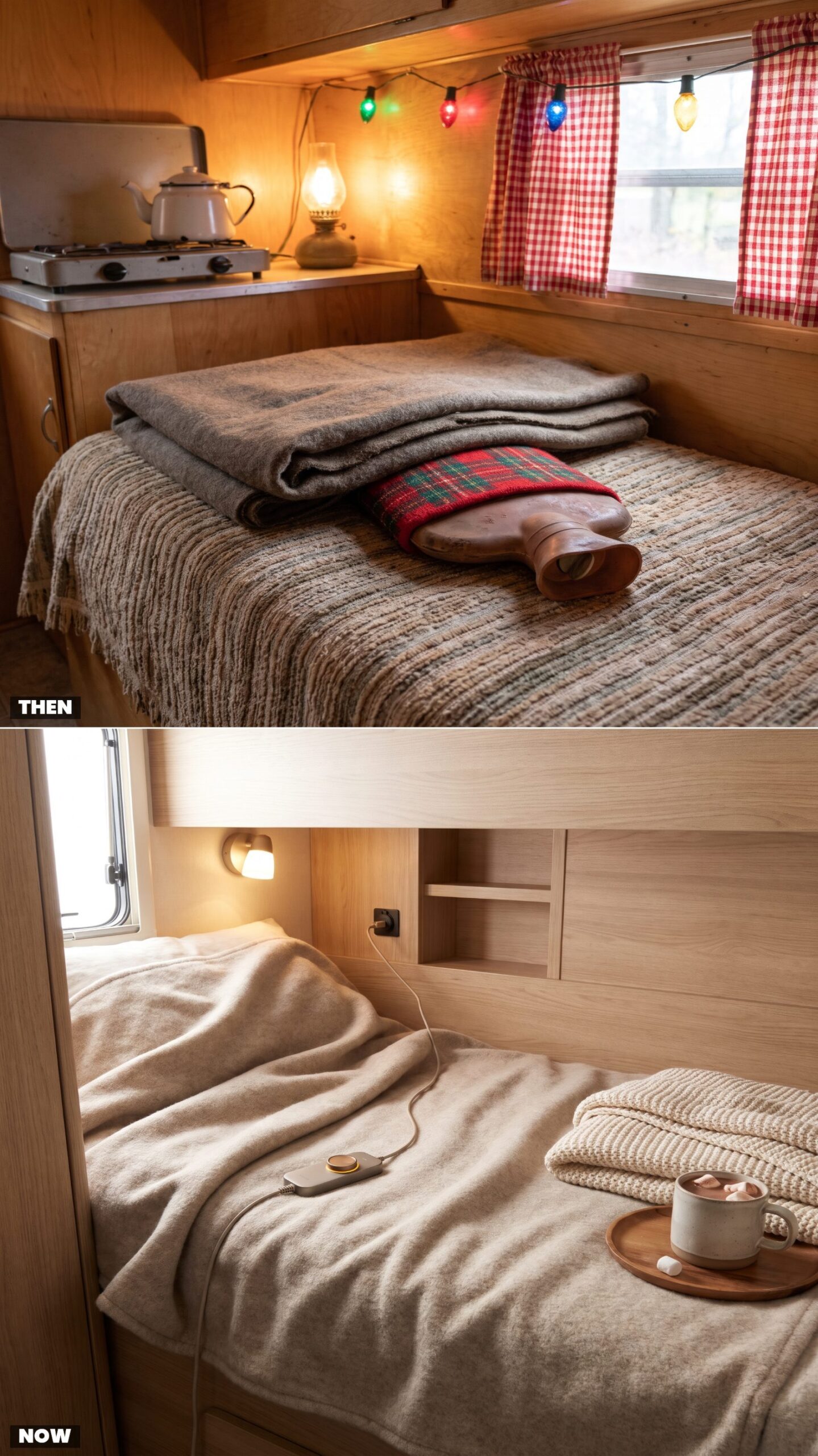
You boiled the kettle, filled the rubber bottle, screwed the stopper tight, and slid it under a wool blanket at the foot of the bunk before you climbed in. By midnight it was lukewarm, and by dawn it was a cold rubber brick against your shins. Still beat shivering. In an unheated trailer up in the mountains, that bottle was the difference between sleep and misery.
Now a heated throw blanket plugs into a 12-volt outlet, warms the whole bunk, and holds temperature on a dial all night. No kettle, no cold brick at 4 a.m. Warmer, steadier, and you never have to decide which freezing foot gets the bottle first.
6. The Oil-Burning Catalytic Heater vs. the Vented RV Furnace
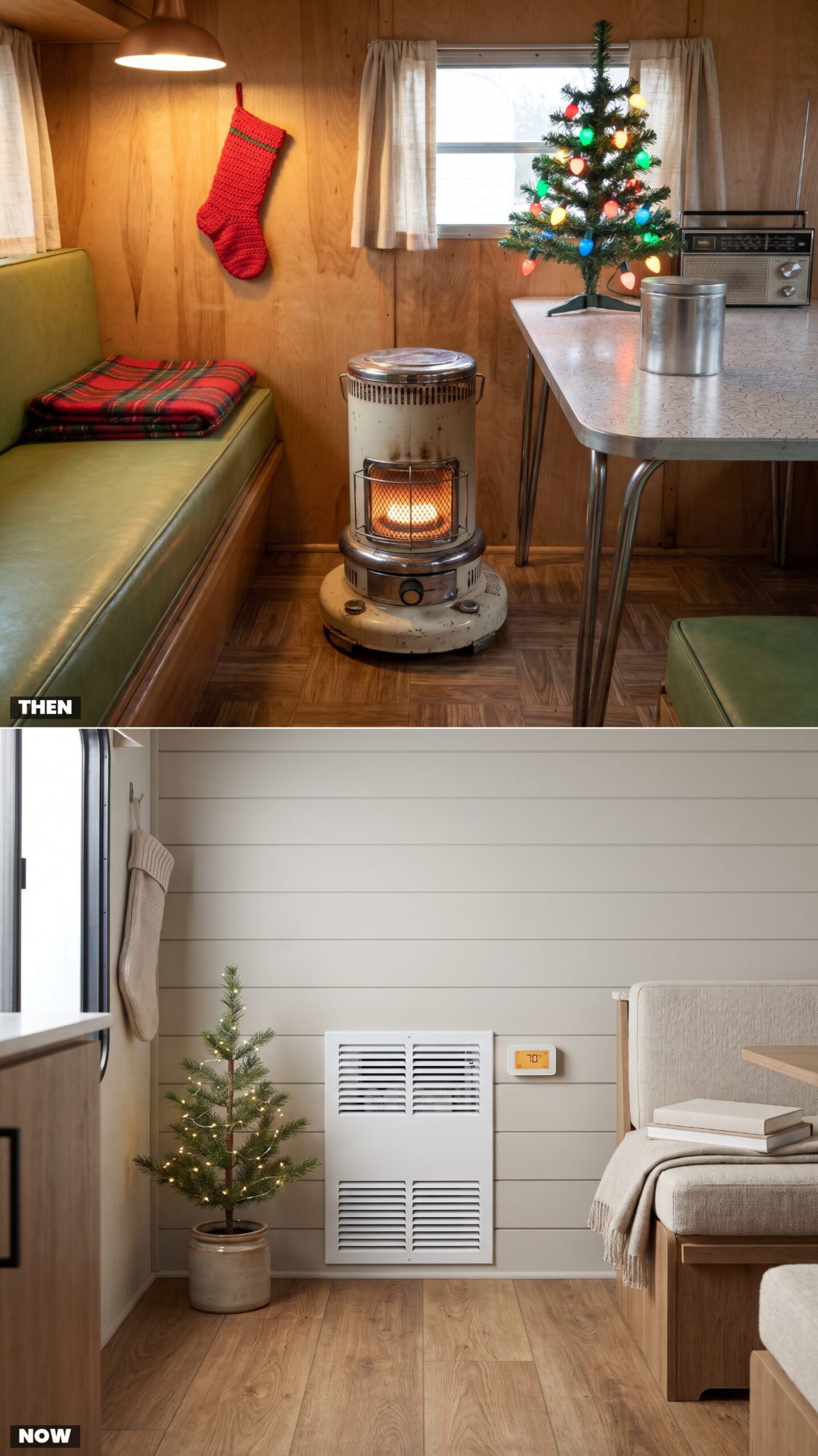
The old catalytic heater did one thing well and one thing poorly: it threw heat, and it threw off fumes you learned to crack a window for. Christmas morning in a 1960s trailer meant waking up, lighting the thing, and waiting ten minutes before your feet dared touch the floor. You trusted it the way you trusted a wood stove — with respect, and one eye open.
Today’s vented furnace sends combustion gases outside, runs off the thermostat, and kicks on while you’re still asleep. You wake up to a warm trailer instead of a cold one you have to earn.
On unvented heaters in campers, an RV repair guide author notes “Catalytic heater manufacturers suggest leaving a window open or providing another source of fresh air.”
5. Drafty Jalousie Windows vs. Sealed Dual-Pane Glass
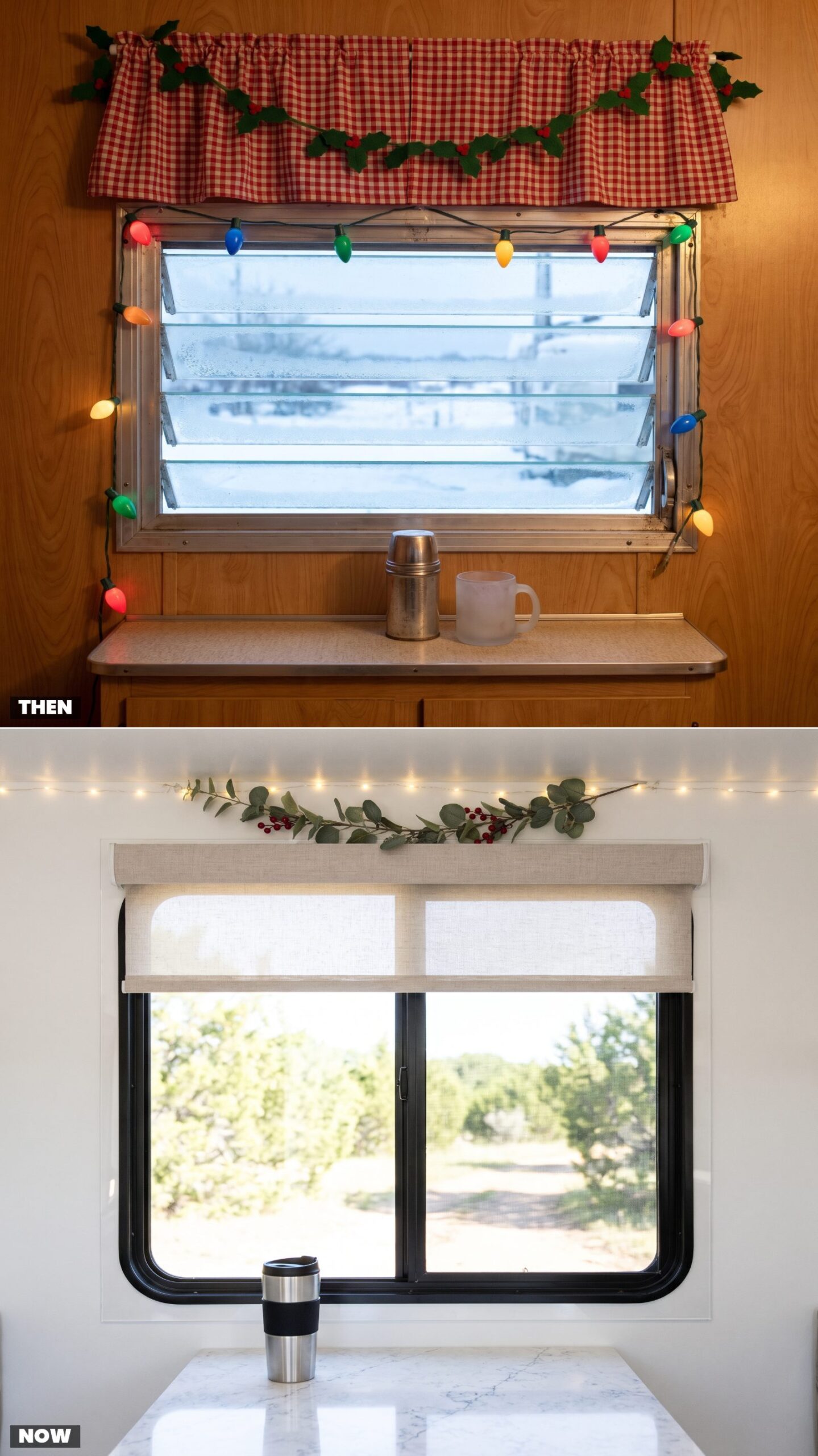
Jalousie windows were a warm-weather idea that somebody shipped north by mistake. Those stacked glass louvers cranked open for a breeze beautifully, and come December they whistled. Hold a candle near the frame and watch the flame lean. Families stuffed the gaps with dish towels and taped plastic over the worst of it, which worked about as well as you’d guess.
Dual-pane glass changed the whole feel of winter camping. Two sealed panes with air trapped between them cut the draft, kill most of the condensation, and quiet the road noise on top of it.
4. The Curtain Divider vs. the Sliding Privacy Door
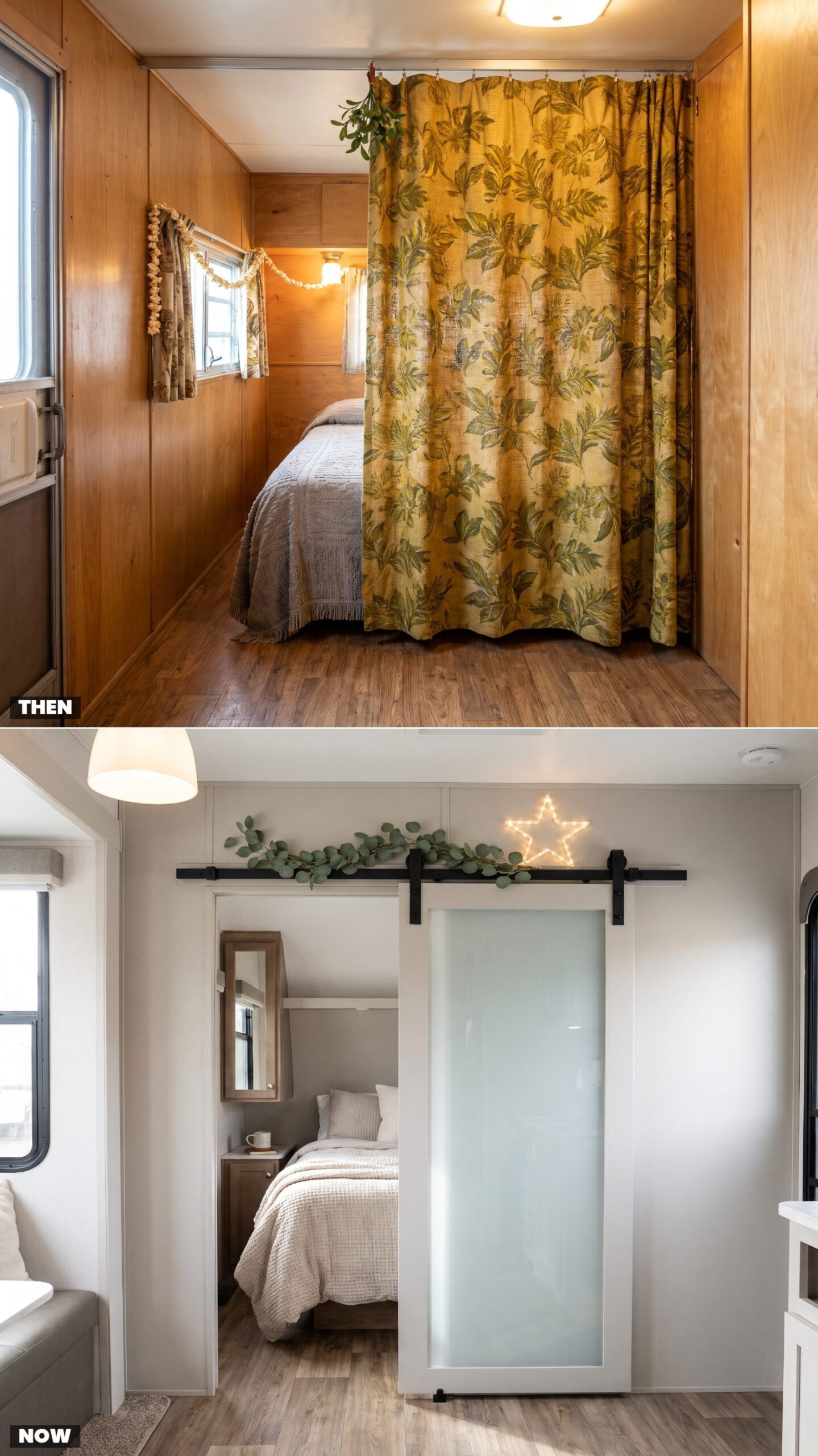
Privacy in a 1960s trailer was a piece of fabric and an agreement. You yanked the barkcloth curtain across the track, and that was the bedroom — it blocked sightlines and nothing else. You heard every snore, every page turn, every argument about who finished the eggnog. Christmas Eve with the kids pretending to sleep behind that curtain while gifts got arranged on the other side? A lot of people still carry that one.
The modern sliding door actually closes. Frosted glass on a quiet track gives you a real wall, light without the stare, and sound dampening the old curtain never pretended to offer.
3. The Foam Bench Bed vs. the Memory-Foam Mattress
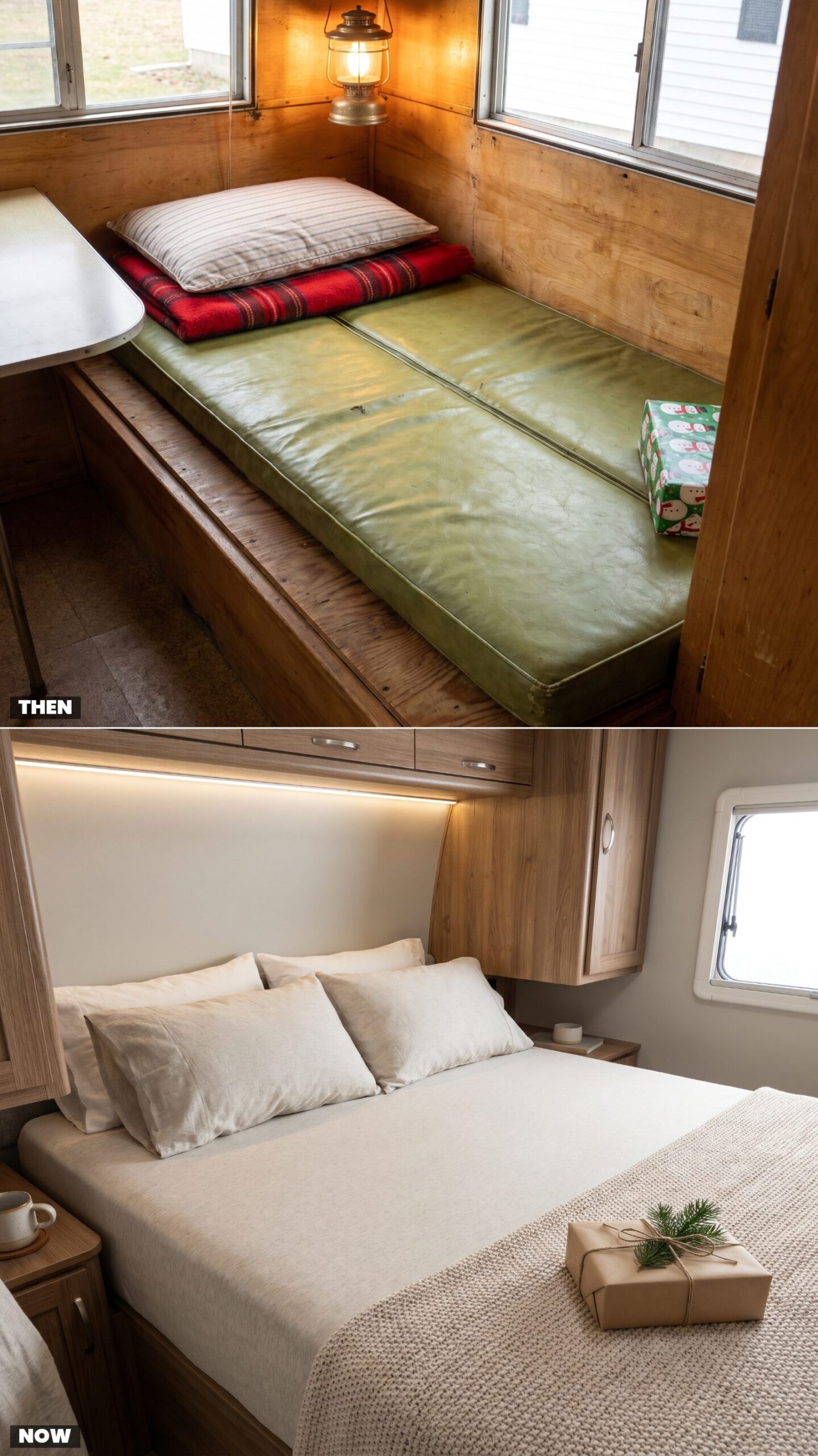
Two inches of foam over plywood. That was the bed, and your spine knew it by morning. The seam where the dinette cushions met landed right under your hip no matter which way you turned, so people slid a sheet of cardboard under the thin spots and called it a mattress topper. A Christmas night on that setup meant you were up before the coffee whether you wanted to be or not.
Memory foam is the single upgrade that changed how people sleep in trailers. Real support, no seam, no sag — and it folds back to a bench by day if you want it to.
2. The Broom and Dustpan vs. the Cordless Handheld Vacuum
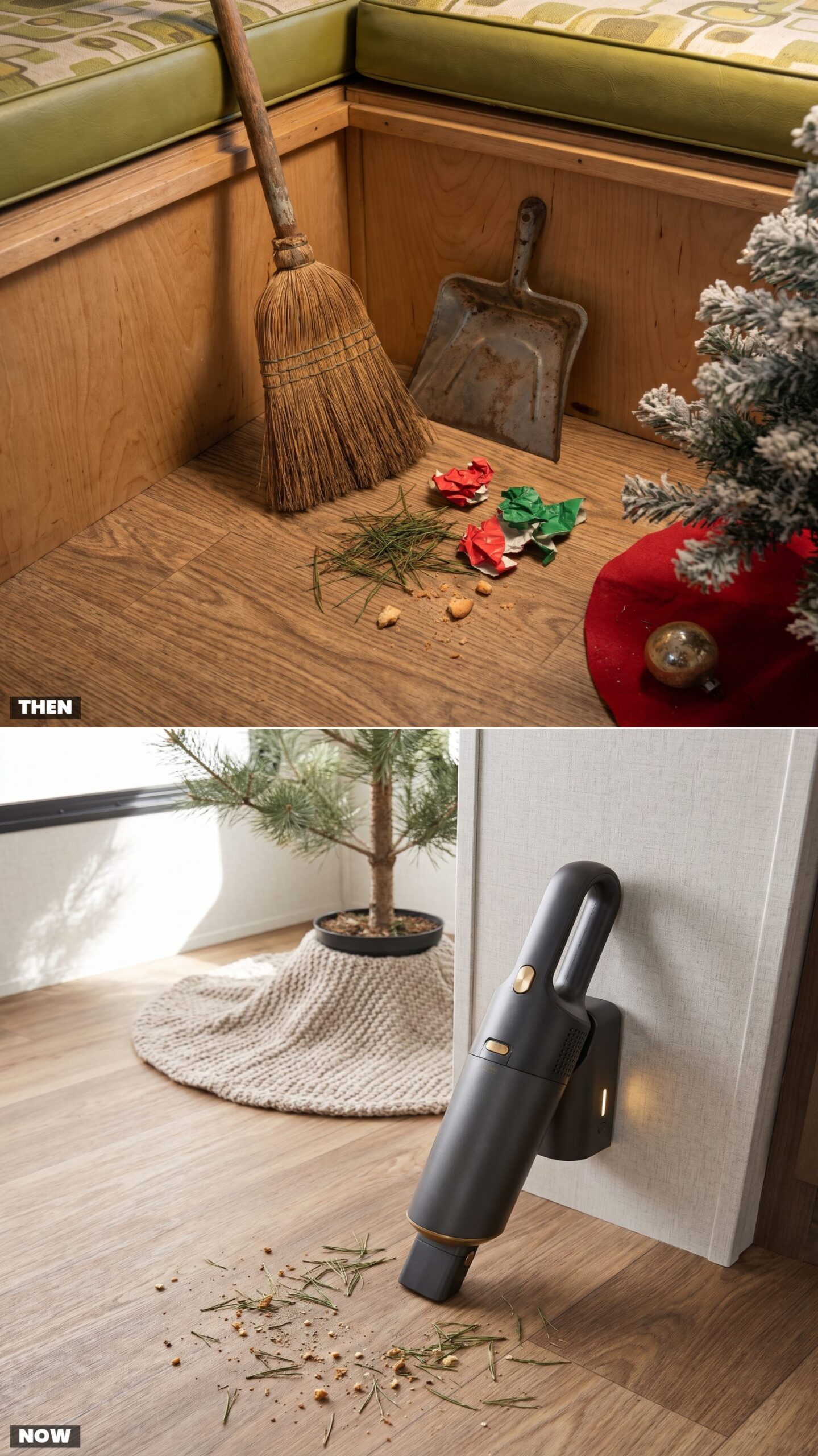
Every trailer had a stubby little broom wedged by the door, bristles bent from years of chasing crumbs across linoleum. Come Christmas morning, it earned its keep. Pine needles, ribbon scraps, cookie shrapnel — you swept the whole mess into a metal dustpan that never quite sealed to the floor, so you chased the same line of dust three times and gave up.
The cordless handheld lives on a wall dock now, charged and ready, and it actually picks the needles up instead of pushing them around.
1. The Metal Ashtray vs. the Air Purifier
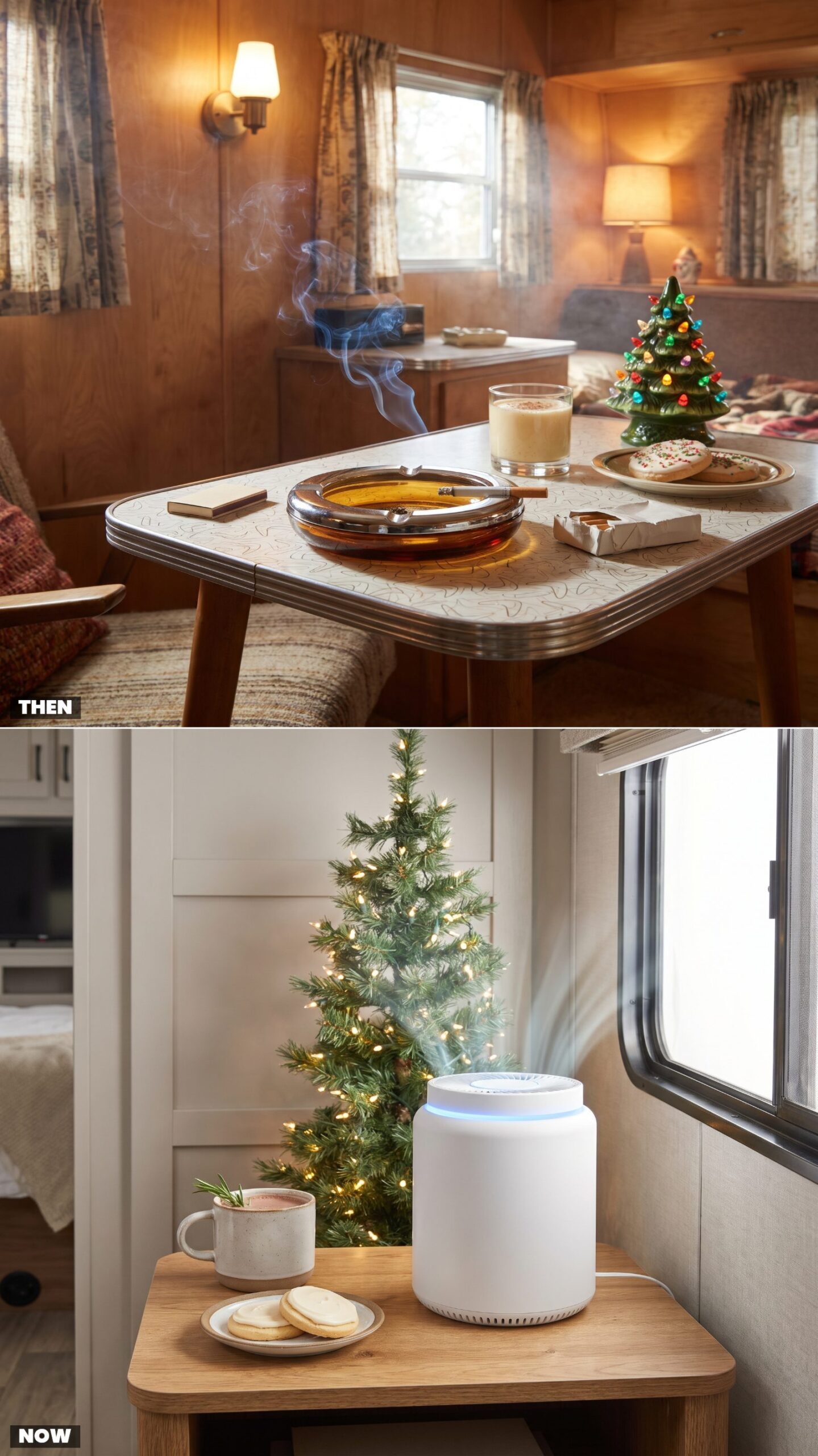
There was an ashtray in every trailer, usually bolted or glued down so it wouldn’t slide on the road. Heavy chrome, amber glass, always within arm’s reach of the dinette. Christmas Eve meant the whole family packed into a thirteen-foot box with the windows shut and a cigarette going, and those curtains held the smell for years. Nobody thought twice about it.
Now there’s a quiet little purifier humming in the corner, pulling dust, cooking smells, and campfire smoke out of the air. The glow is blue instead of orange, and the trailer smells like pine instead of a tavern.