

The best RV weekends aren’t the ones where you keep firing up the truck to chase down dinner. They’re the ones where you back into the site, level up, and don’t touch the keys again until Sunday. North Carolina has a whole run of small towns built for exactly that — brick main streets, breweries and diners inside a short stroll, a campground close enough that you can carry a cooler back by hand. Some are mountain towns with that cool Blue Ridge air. Others sit down by the sound, where the oaks lean right over the road. These are the places worth parking at and forgetting the truck exists.
Please note that some of the images in this article were created with the assistance of AI.
12. Bryson City: Deep Creek on One Side, the Railroad Depot on the Other
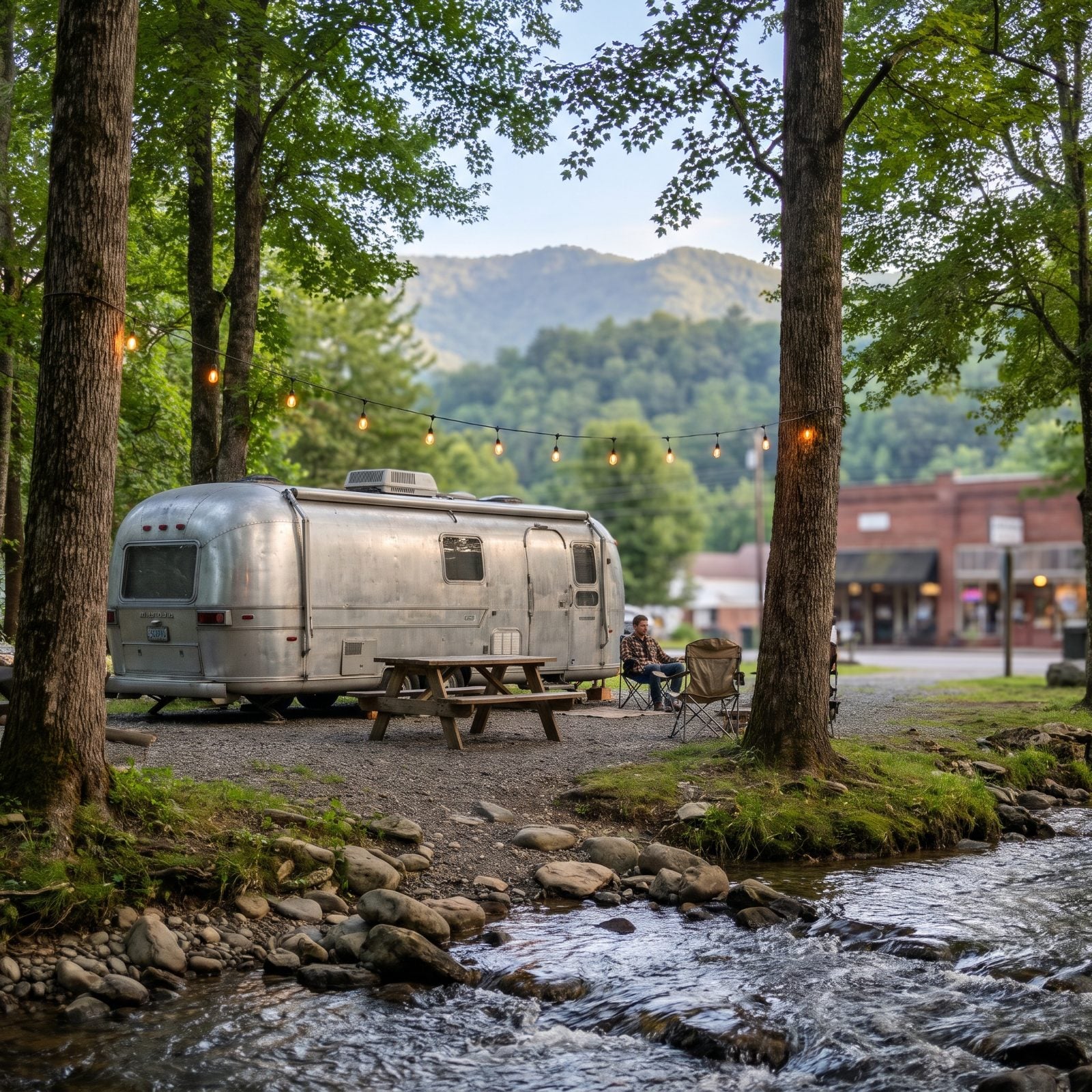
Big Bear’s RV Park sits on Deep Creek about a mile from downtown, open year-round, with pull-through sites, full hookups and 30/50 amp. Big rigs fit fine here, which is more than you can say for a lot of mountain parks. Walk the creek in the morning and you’ll be eating on Everett Street by lunch.
Want to be inside Great Smoky Mountains National Park instead? The NPS Deep Creek Campground is about three miles from town, reservations required on recreation.gov, and from May through October it fills fast. Downtown is also where you board the Great Smoky Mountains Railroad, which runs right out of the depot.
11. Franklin: Park It and Walk Straight Into the Gem Shops
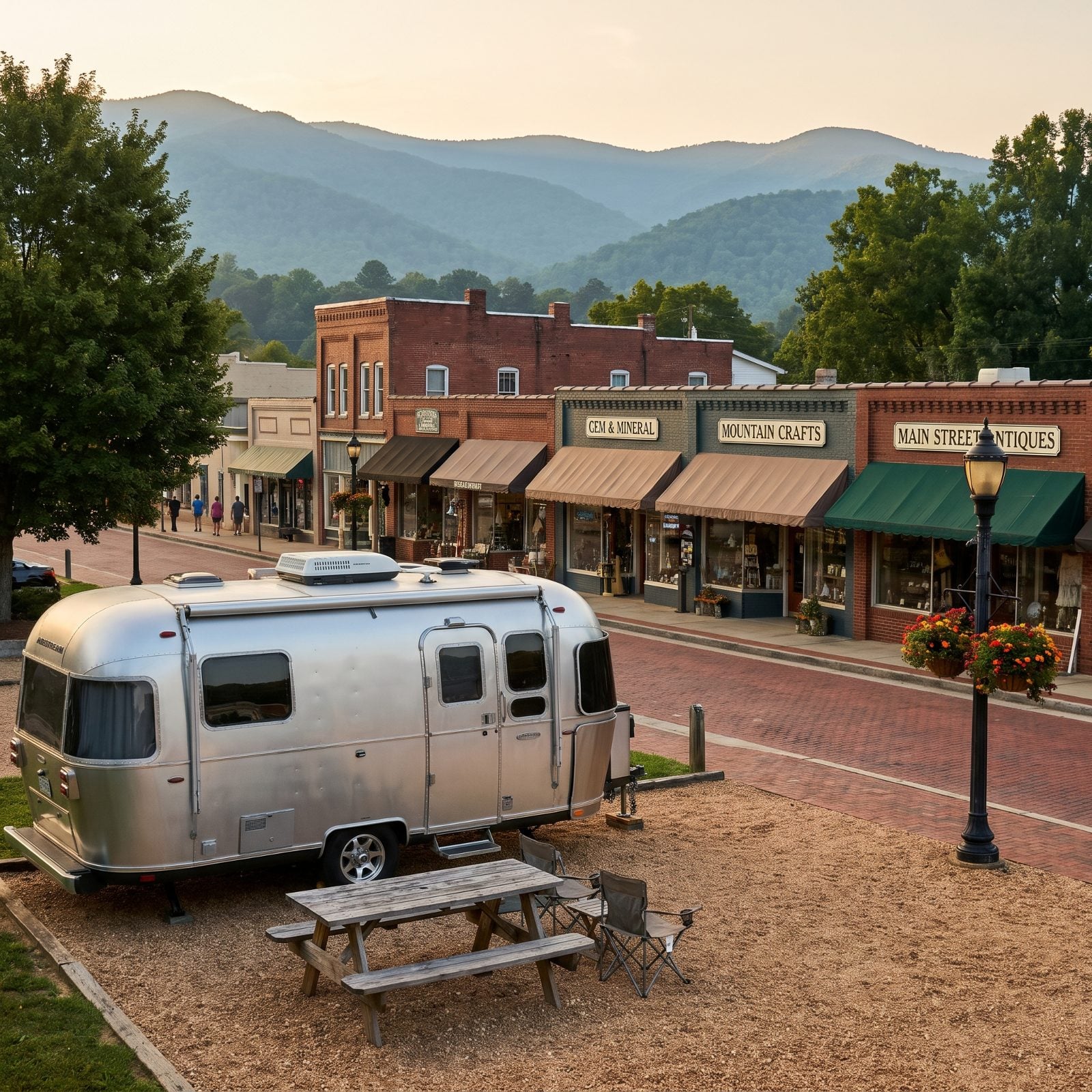
Downtown RV Park’s whole pitch is right there in the name: park and walk to everything in downtown Franklin. The catch is it’s small — only a handful of sites — so confirm the season, site size and policies before you count on it. The town itself sits high enough that summer nights cool off nicely.
The downtown strip is short and dense with gift shops, antique stores and restaurants, and Lazy Hiker Brewing is a quick walk from the park. Traveling off-season or with kids? High Country Haven RV Park is about ten minutes out and listed by the town’s tourism folks.
10. Brevard: Waterfalls by Day, a Walkable Little Downtown by Night
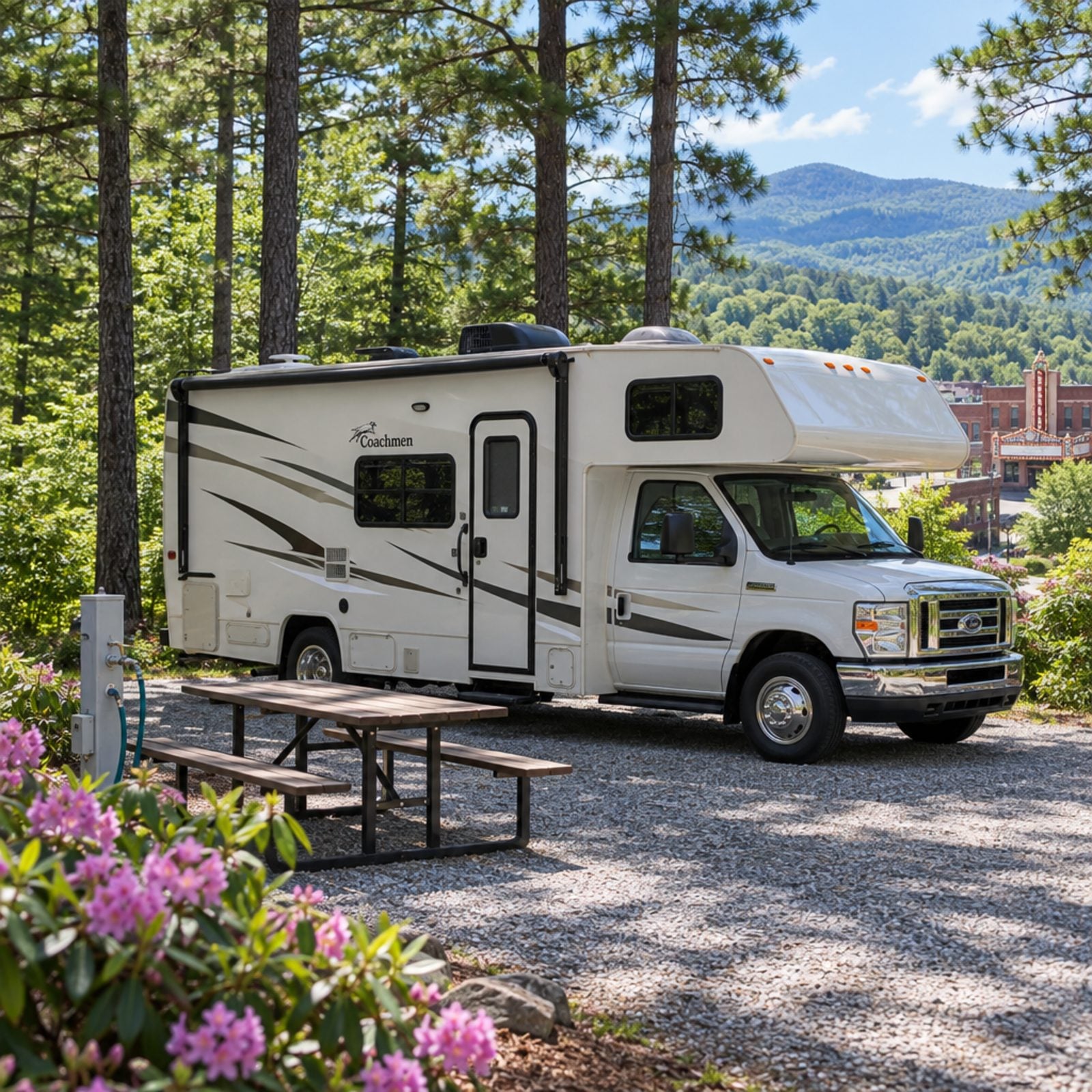
Brevard is the kind of town where the hard part is choosing which waterfall to see, and the easy part is where to park. Brevard RV Campground runs full-hookup sites with gravel pads that take big rigs, plus picnic tables, and it bills itself as the closest campground to downtown.
A few minutes out in Pisgah Forest, Ecusta RV Park spreads across 35 acres with creekside and mountainside full-hookup sites, handy to both Pisgah National Forest and DuPont State Forest.
9. Blowing Rock: Camp on the Parkway, Walk the Village
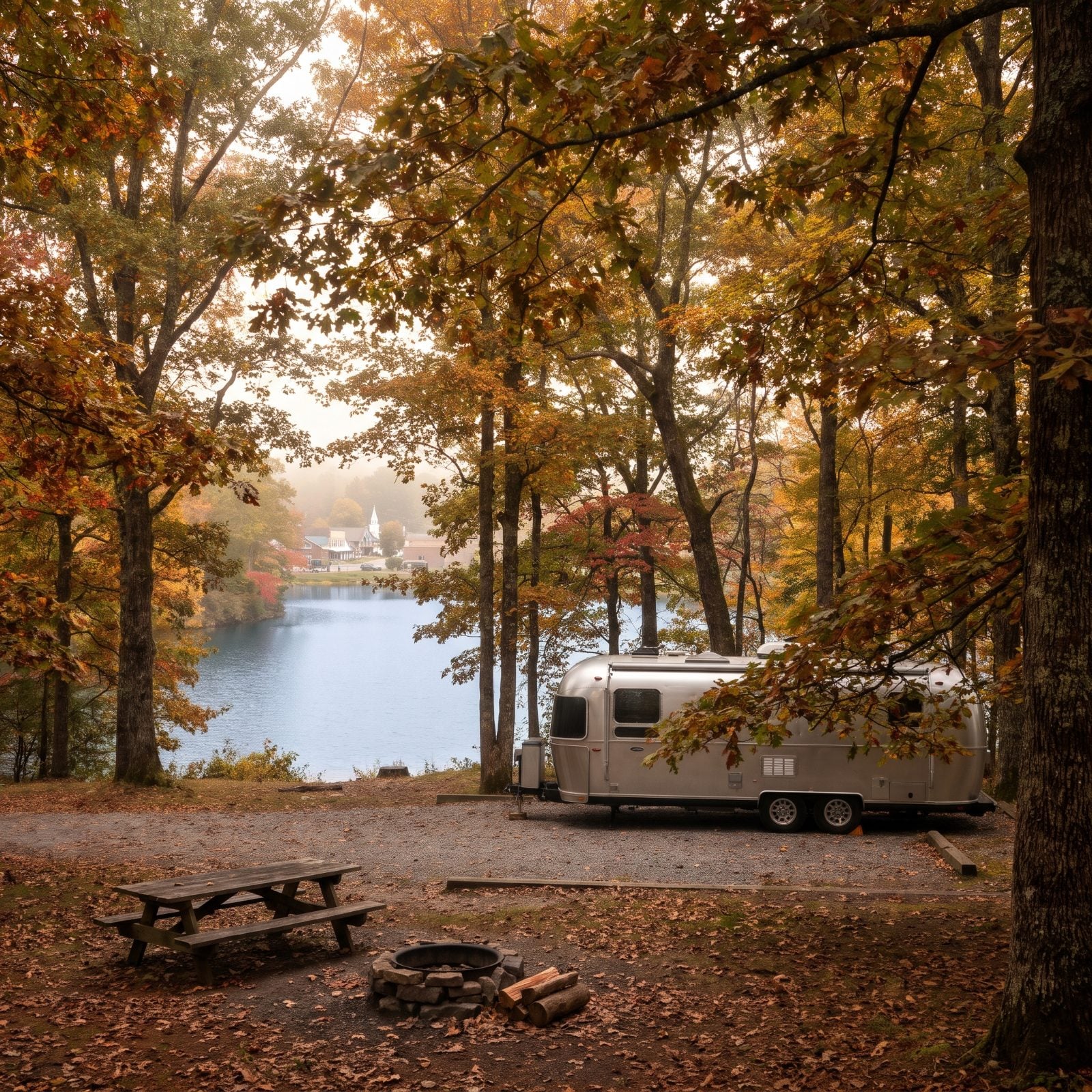
Julian Price Campground sits at Milepost 297 on the Blue Ridge Parkway, roughly five miles from Blowing Rock village. It’s a big one — well over a hundred tent sites, plenty of RV sites, and a handful that are wheelchair-accessible. You get flush toilets, a dump station, drinking water, and a season that runs roughly late May through October (in 2026 it’s reservations-only, with only Loop A open and the shower house closed).
The A-loop near Price Lake is the one everybody wants, and it books up months ahead. Here’s what nobody warns you about: some sites have low branches and narrow driveways that get white-knuckle in a big rig. Measure your height and scout the loop map first.
8. Mount Airy: The Real Mayberry, With a Campground to Match
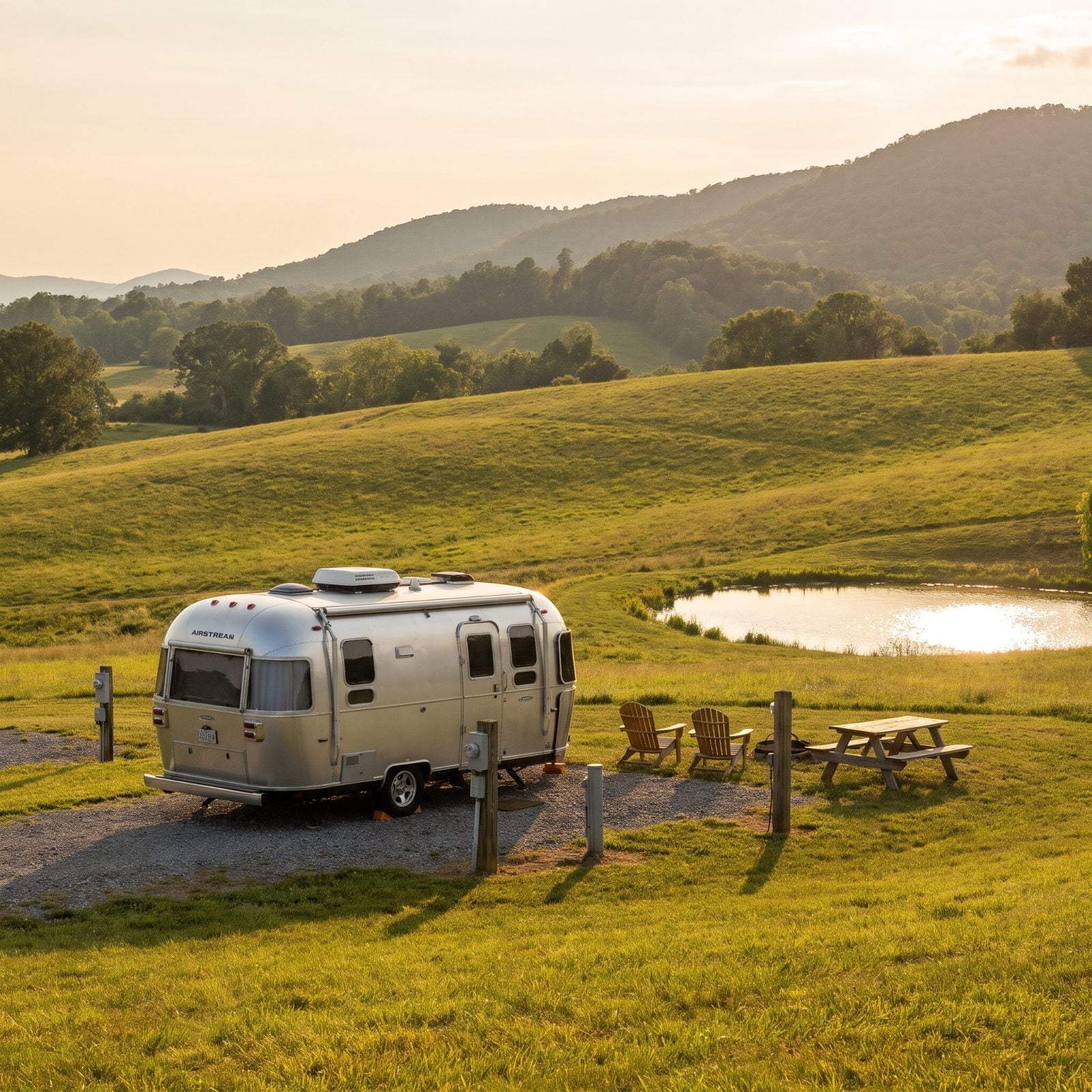
Andy Griffith grew up here, and the whole town leans into it hard. Mayberry Campground sits on a rolling hillside just outside Mount Airy and makes a solid base for working through the Andy Griffith Show history downtown. Sites are gravel and level, full hookups, and they’ll take long rigs.
There are a couple of catch-and-release fishing ponds on the property, plus memorabilia and history on the Bunker family — the famous conjoined twins who settled nearby.
7. Sylva and Dillsboro: Two Towns, One Creekside Base
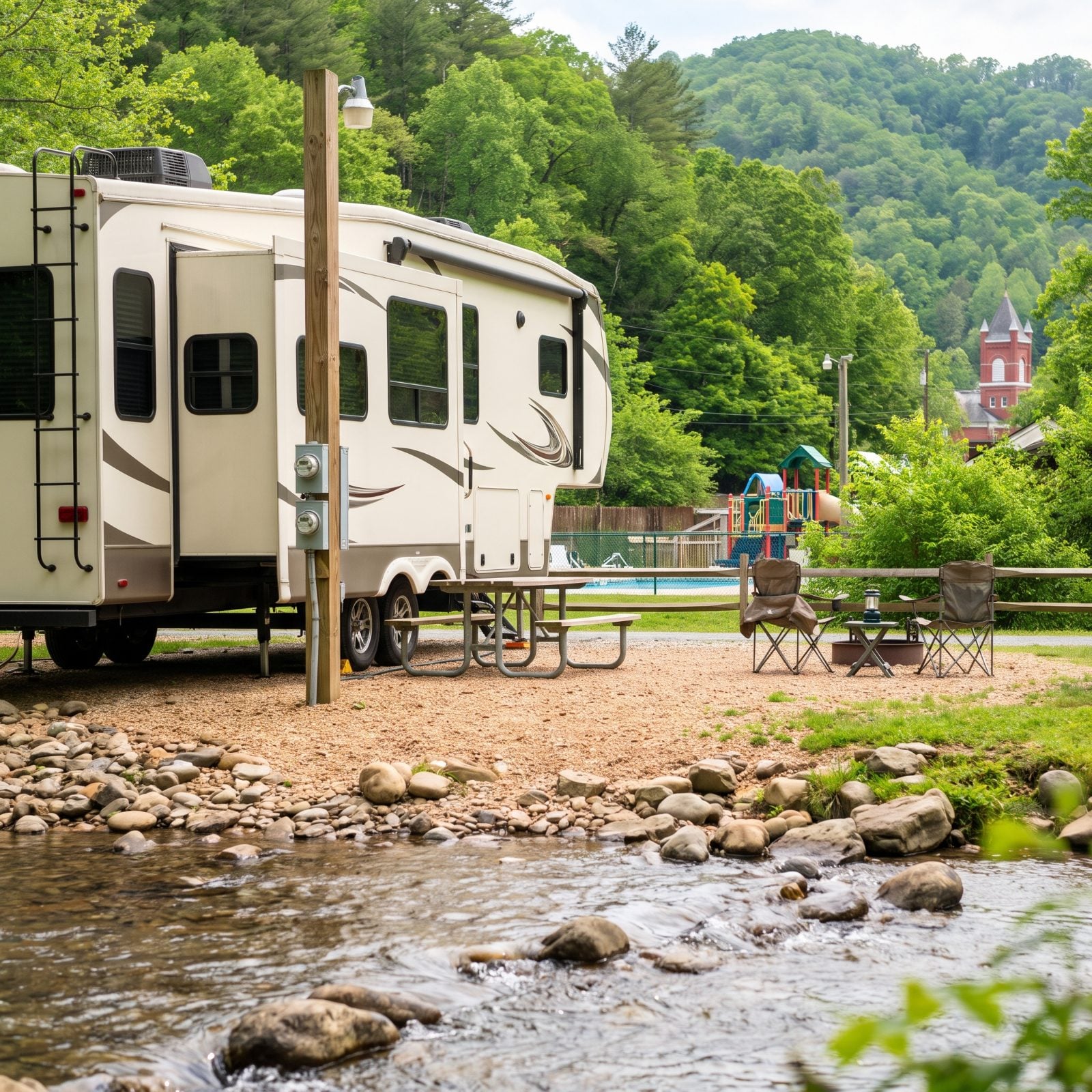
Sylva and Dillsboro sit close enough that you can treat them as one outing. Fort Tatham RV Resort, now renamed Sun Retreats Nantahala by Sun Outdoors, is about six miles from Dillsboro off US 441. AAA lists dozens of sites, nearly all full hookup, with 30/50 amp and a 60-foot max length. There’s a pool, a playground, laundry, Wi-Fi.
It’s seasonal, listed April through November. Sites are back-ins strung along a small creek, which is the good part. The less-good part? Some highway noise carries in, so a light sleeper should pick a site further back.
6. Waynesville: Creekside on Jonathan Creek, Open All Year
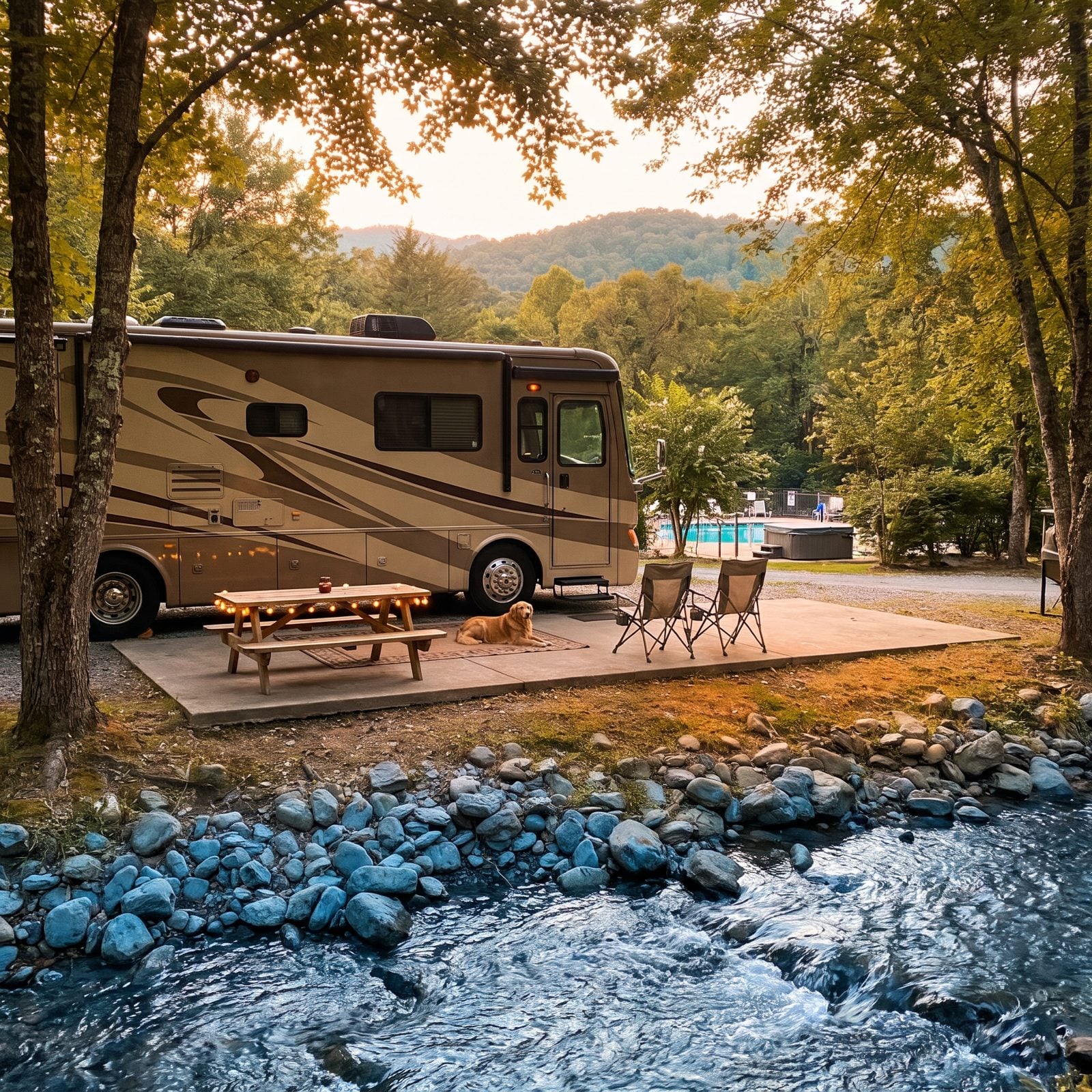
Waynesville earns its keep for the stay-put crowd. Pride RV Resort sits creekside on Jonathan Creek, open year-round, pet-friendly, with an outdoor pool, outdoor hot tub, game room, laundry and Wi-Fi. Some sites come with concrete patios and some don’t, and the creek handles the white-noise work at night.
Booked up? Visit Haywood also lists Lake Junaluska Campground and Winngray Family Campground in the Waynesville mix. The year-round part matters more than people think. Half the good mountain parks shut down by November, and this one doesn’t.
5. Hendersonville: One Main Street, Twenty Campgrounds to Choose From
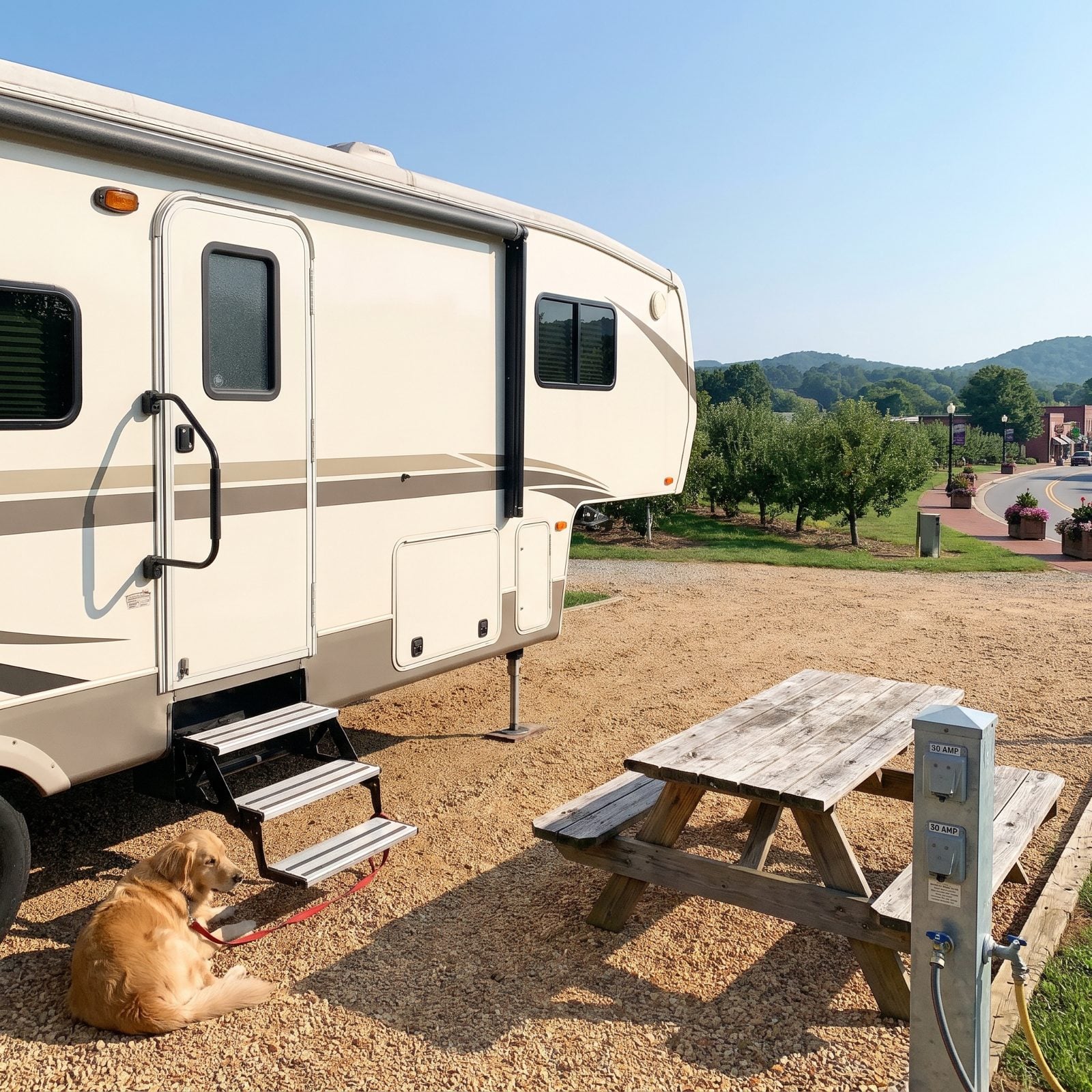
Hendersonville’s tourism office flat-out tells RVers to pick a campground and use it as a home base, then lists a long run of seasonal and year-round options to do it with. That’s a luxury most small towns can’t offer.
Lazy Boy Travel Trailer Park is open year-round, pet-friendly, with big-rig pull-through sites and full hookups. Red Gate RV Park & Camping takes rigs up to 45 feet and runs April through October. Town Mountain Travel Park and Jaymar Travel Park round out the usual shortlist.
4. Edenton: Roomy Sites, a Golf Course, and a Waterfront Town
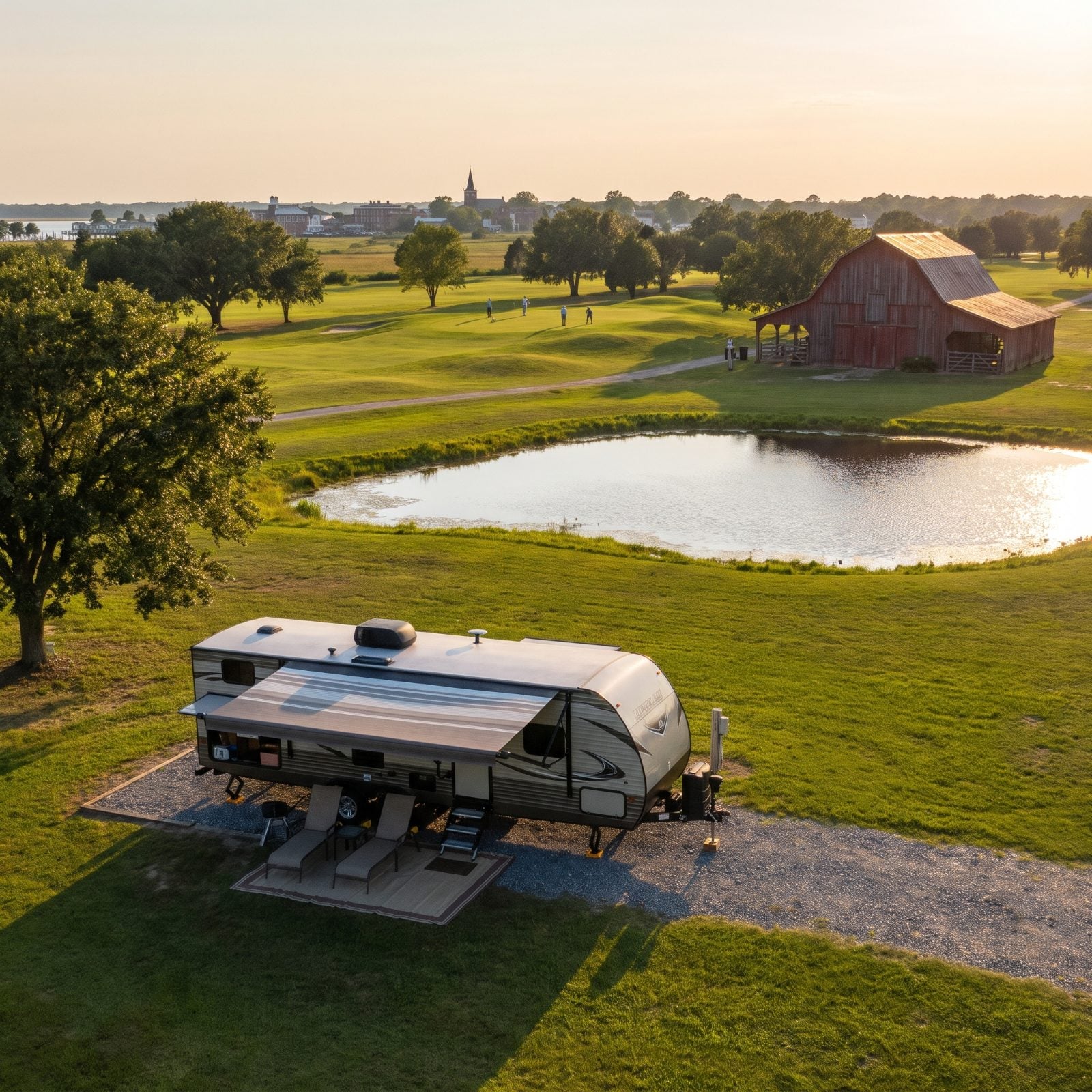
Edenton is the coastal one that doesn’t feel crowded. Rocky Hock Campground is about a ten-minute drive from downtown, and the town’s tourism office calls it one of the most popular places to stay around here.
What sets it apart is the elbow room. Sites are far roomier than the typical packed RV park, and the on-site extras pile up fast: a 9-hole golf course, a boat slip, water access, a fishing pond, and David’s New Red Barn, a live-music venue right on the grounds. Tee off, catch a band, then still get into town for shopping and events.
3. Washington: Little Washington and the New RV Loop at Goose Creek
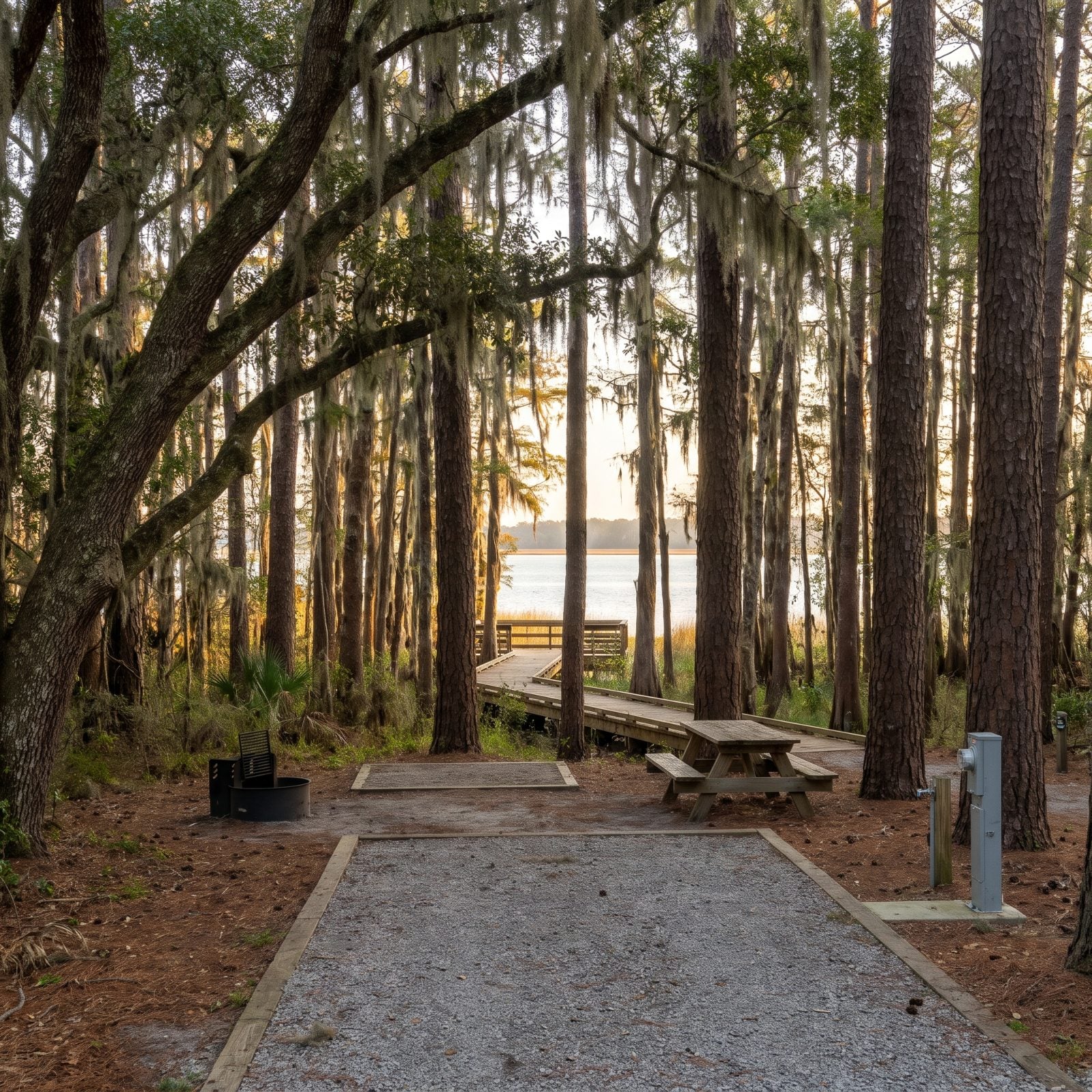
Everybody calls it Little Washington, or Original Washington, and there’s a reason it insists on “original.” Renamed in 1776 to honor George Washington, it was the first town in the country to carry his name, and it sits right on the north bank of the Pamlico River.
About twenty minutes out, Goose Creek State Park opened a new RV loop with full-hookup sites, each with a tent pad, a fire ring with grill, and a picnic table, plus a bathhouse at the loop entrance. Reserve through ncparks.gov or by calling 1-877-722-6762. The park gives you live-oak forest, cypress swamp, miles of trails, and a boardwalk out to the river.
2. Manteo: Park on Roanoke Island and Walk Into the First English Colony
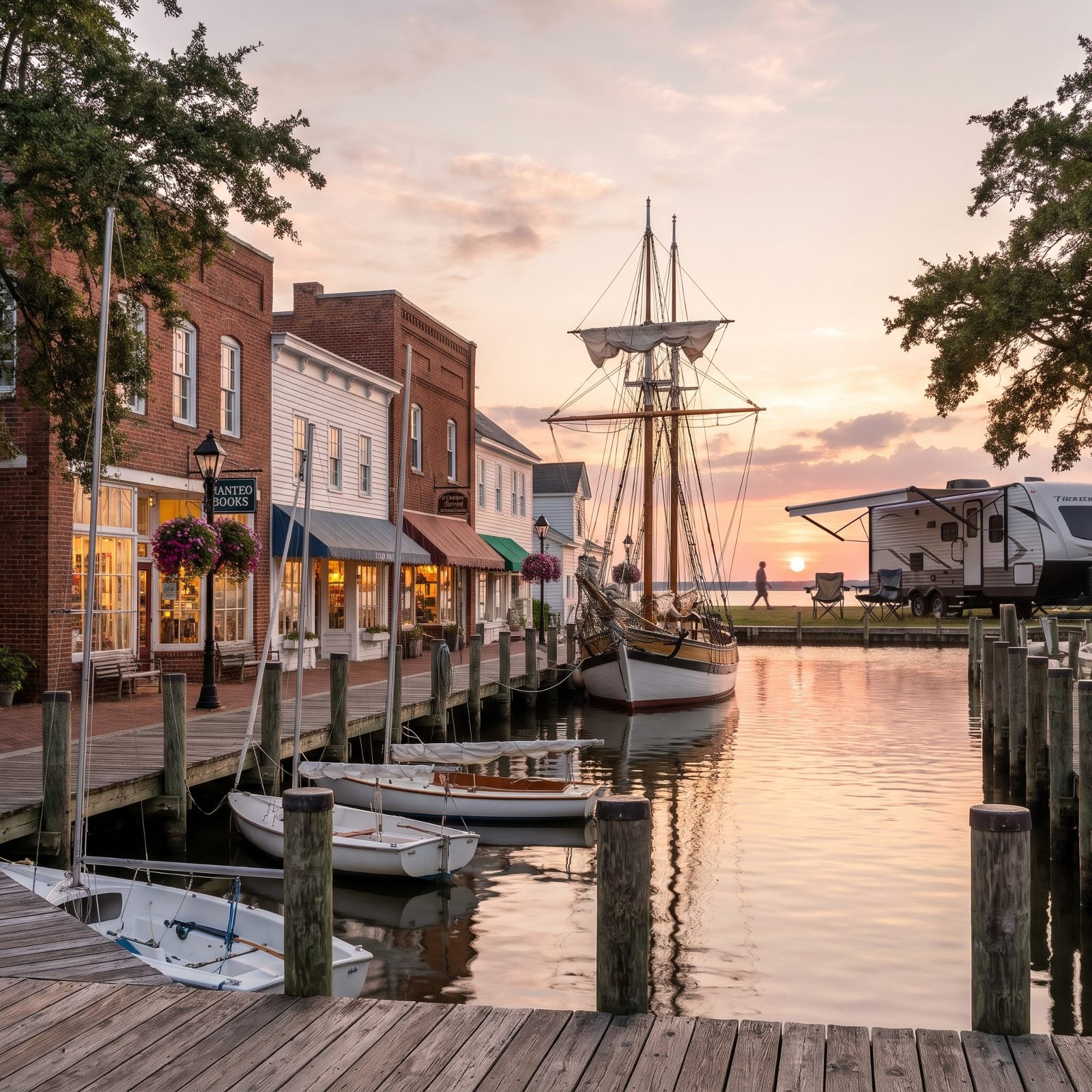
Roanoke Island hands you history and walkability in the same stop, which is rarer than it sounds. Beechland Campground sits just over a mile from downtown Manteo, and you get full RV hookups, internet, a full-service bathhouse, and a heated pool looking out over the sound. Nobody tells you about those sunset views over Croatan Sound until you’re already parked in a camp chair watching the water turn pink.
You’re a walk from the Bowsertown Boat Ramp, and a few minutes more puts you in the heart of what was America’s first English colony. Booked solid at Beechland? There’s another park over in nearby Wanchese, The Refuge on Roanoke Island.
1. Ocracoke Village: Camp a Bike Ride From the Harbor (Just Plan the Ferry First)
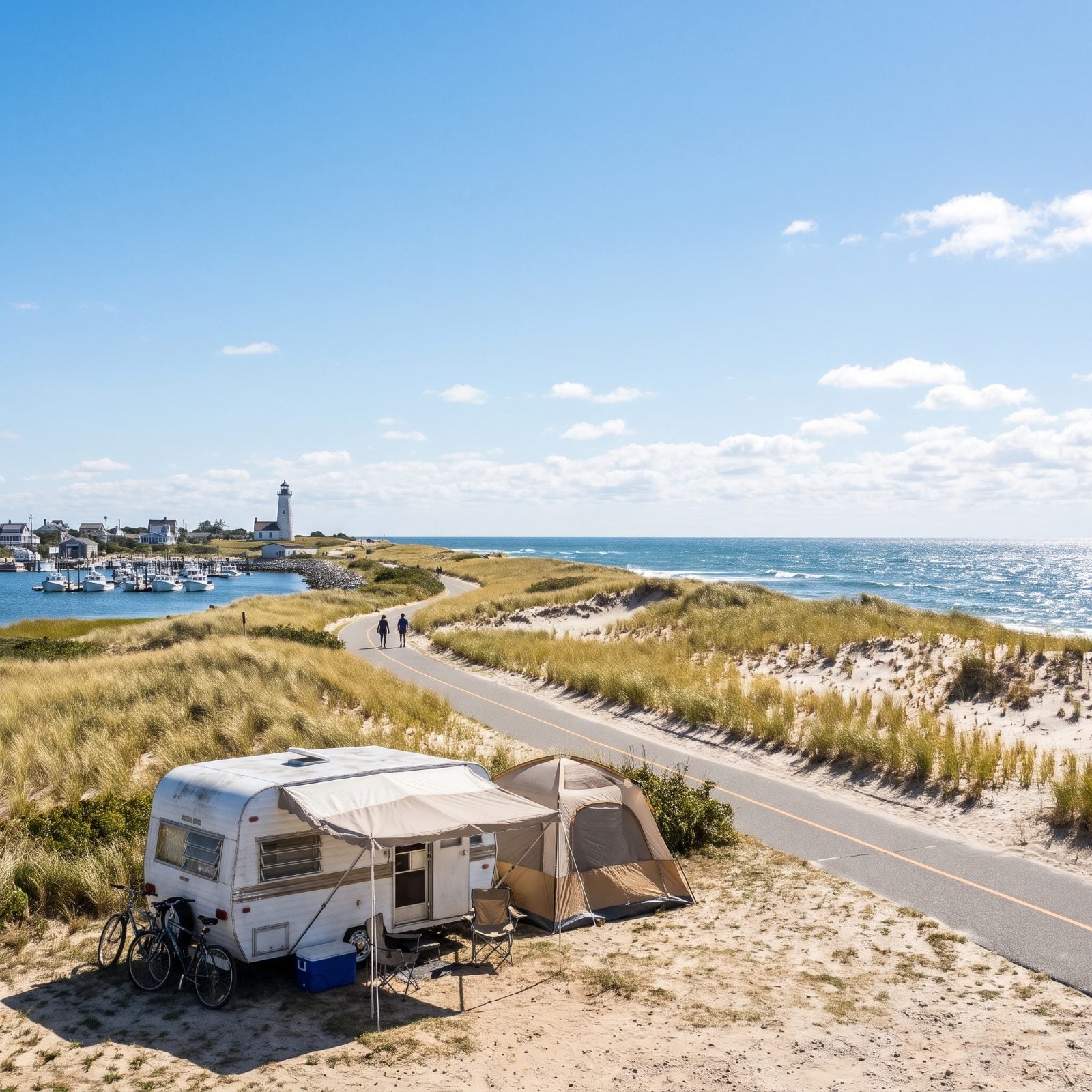
Ocracoke is the one that takes planning, and it’s worth every bit of it. You can only reach the island by ferry, so a trip here starts with a reservation and a schedule — not a spur-of-the-moment turn off the highway.
Once you’re across, the village is small and tight. Jerniman’s Campground sits at the edge of it, right next to the Ocracoke Variety Store and across from a cluster of restaurants, while Teeter’s is tucked inside the village with a renovated bathhouse and free Wi-Fi. Then there’s the National Park Service campground: oceanfront sites behind the dunes, about three miles out, and here’s the catch — no hookups, a dump station, flush toilets, cold showers, and almost no shade. A paved bike path runs the whole way into the village. Leave the rig parked and pedal in for dinner.