
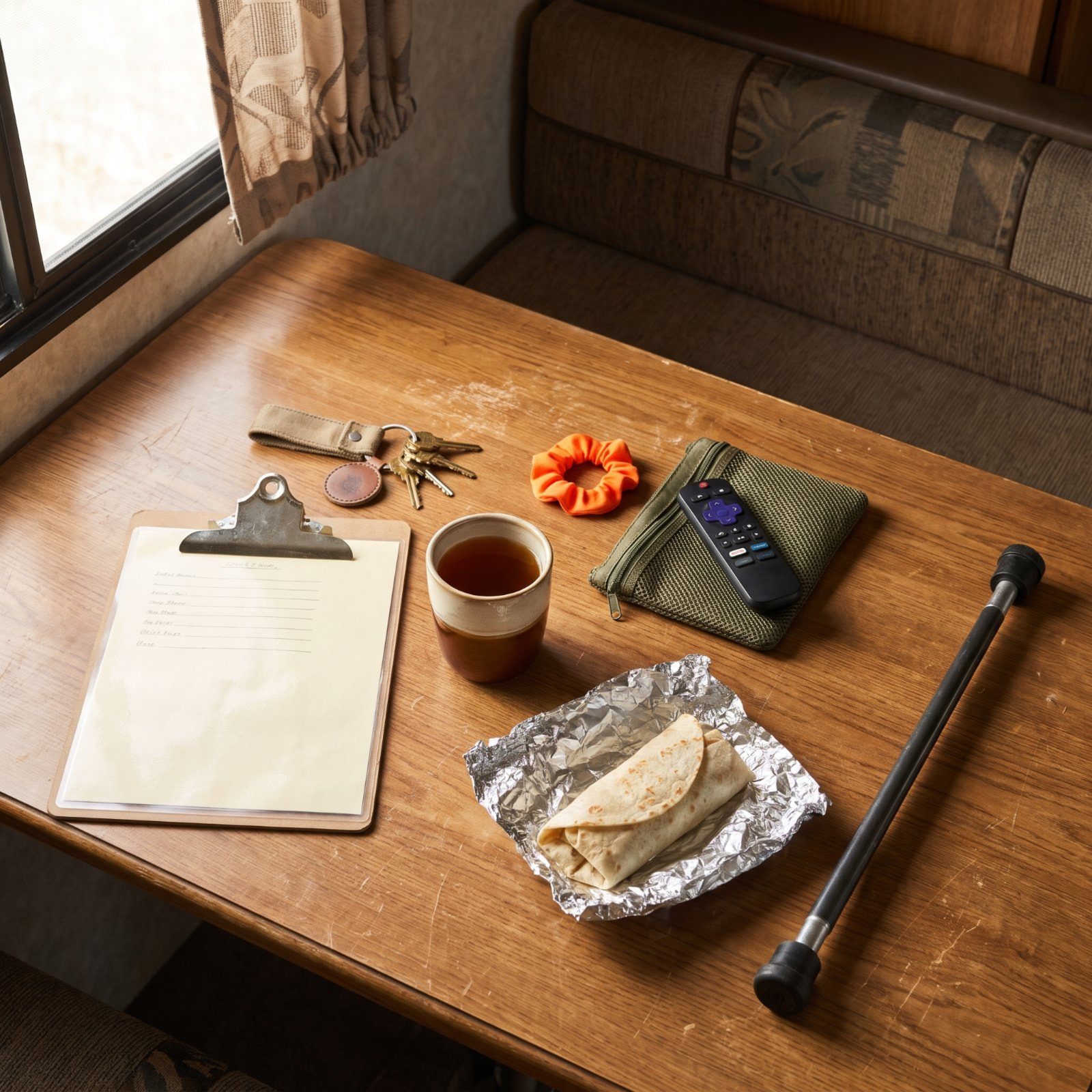
The worst RV mistakes happen in the first twenty minutes. Not on the highway, not at the dump station — in the parking spot, when you’re half-caffeinated and dead certain you remembered everything. We’ve pulled away with the step still down. We’ve driven off with a cabinet door swinging open behind us, heard the thud, and decided to find out later. No grand system fixes this. What fixes it is a handful of dumb little habits that take ten seconds each and save you a ruined morning. Here are the ones worth stealing before your next trip out.
Please note that some of the images in this article were created with the assistance of AI.
31. Set a Fake Departure Time 15 Minutes Early
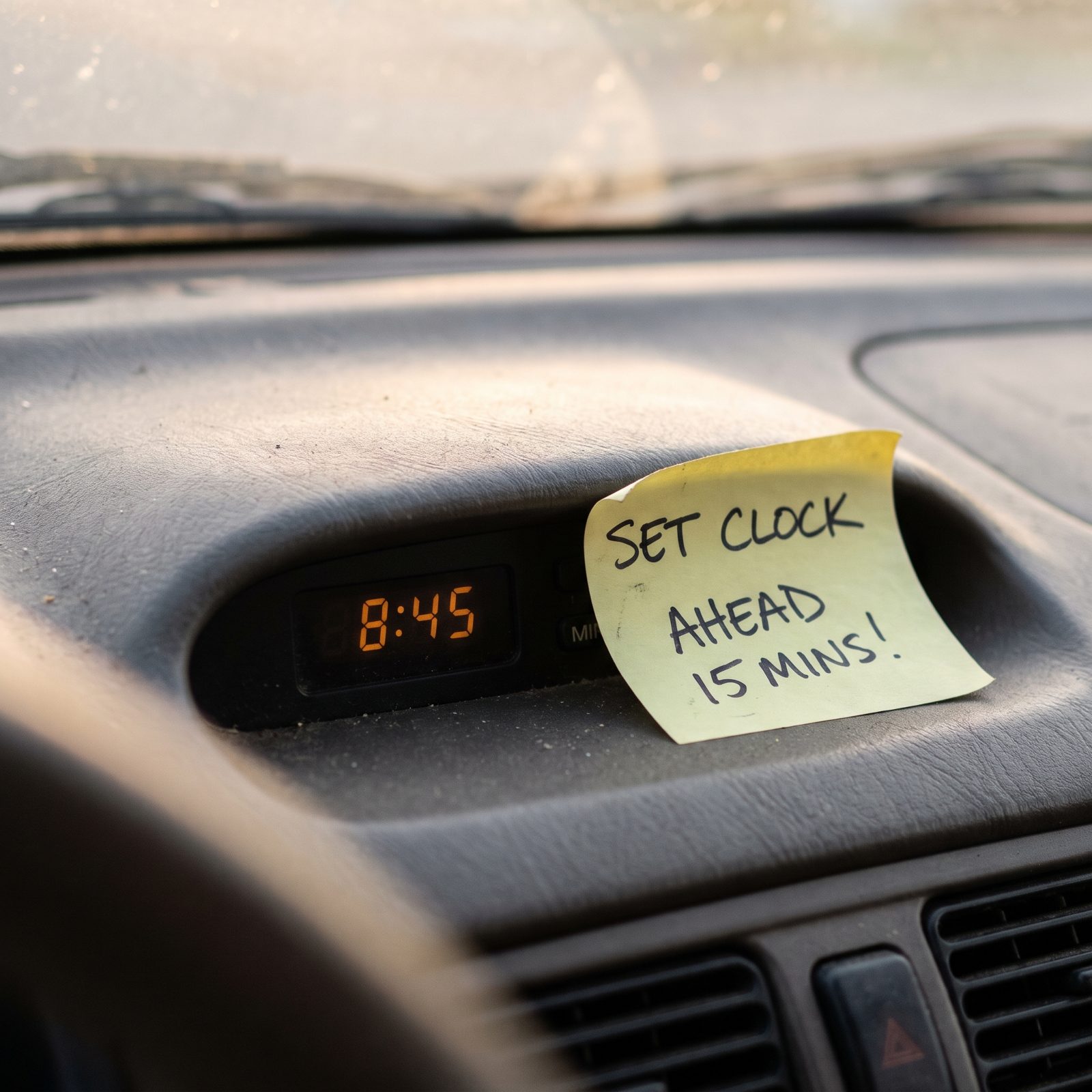
Tell yourself you leave at 8:45 when you actually mean 9:00. Then the inevitable happens — the gray tank wasn’t fully drained, the neighbor wants to chat — and you absorb the slip without the scramble.
The rushed departure is where the dumb errors live. Slow mornings don’t forget the chocks. Panicked ones do. Buy yourself the buffer and the whole send-off gets quieter.
30. Pack a Handheld Breakfast the Night Before
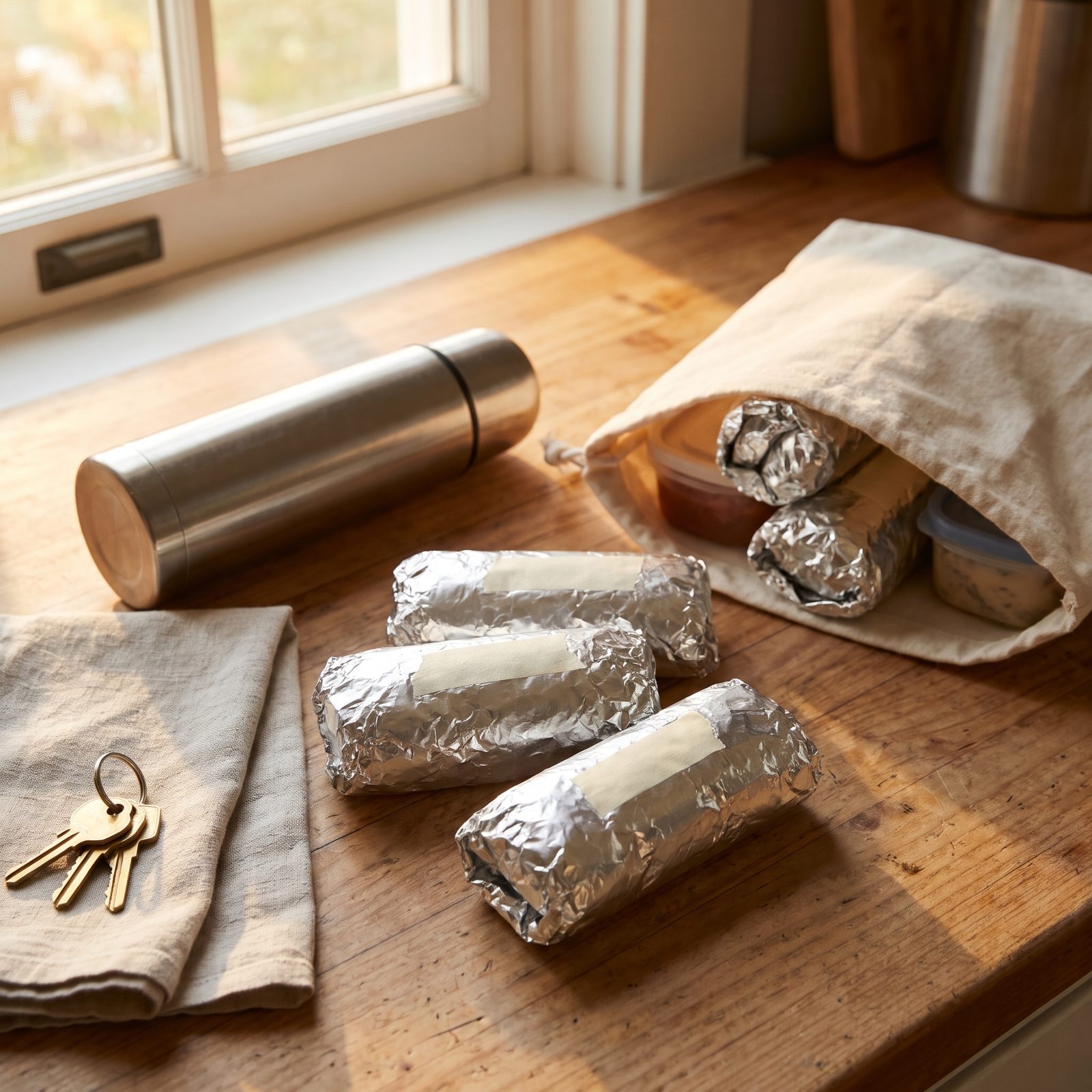
Cooking breakfast on departure morning is a trap. Now you’ve got a hot pan, grease, and a sink full of dishes to wrangle before you can roll. All of it slows you down and tempts you to leave the galley a mess, which means stuff flies on the first hard turn.
Make the burritos, the egg muffins, the overnight oats the night before. Wrap them, stash them somewhere you can reach without getting up. You eat at the first rest stop. The galley stays locked down and the morning stays simple.
29. Walk the Route From the Campsite to the Exit
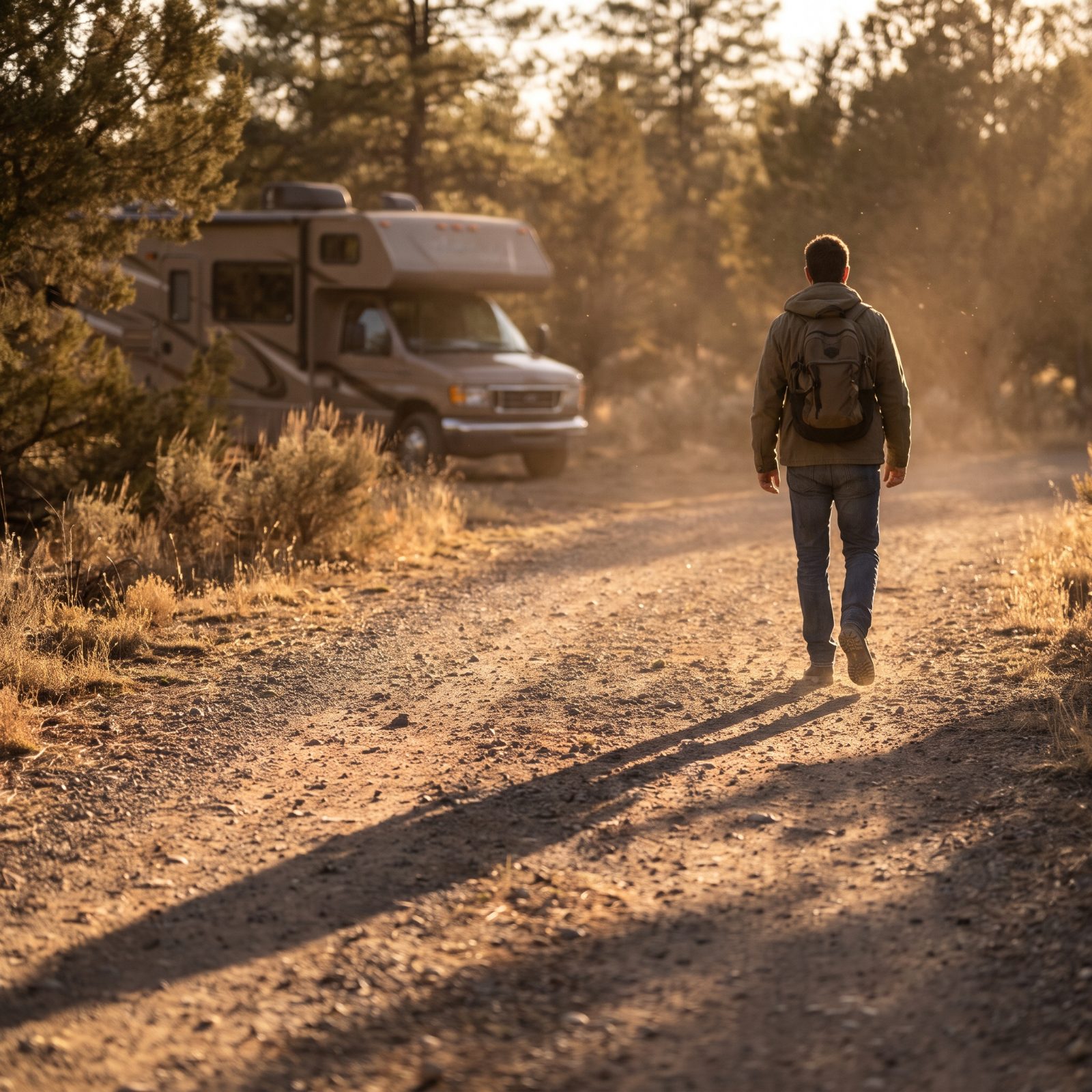
Before you ever turn the key, walk the path your rig will take to the campground exit. On foot. Low branches you ducked under on the way in will scalp an air conditioner, and that tidy little turn by the bathhouse looks a whole lot tighter when you’re picturing thirty feet of trailer swinging through it.
We learned this one by cracking a vent cover on an oak limb we’d strolled past four times without looking up. Two minutes on foot would’ve caught it. Look up, eyeball the corners, note where you’ll want the spotter.
28. Keep a Clearly Marked “Last Out” Tote by the Door
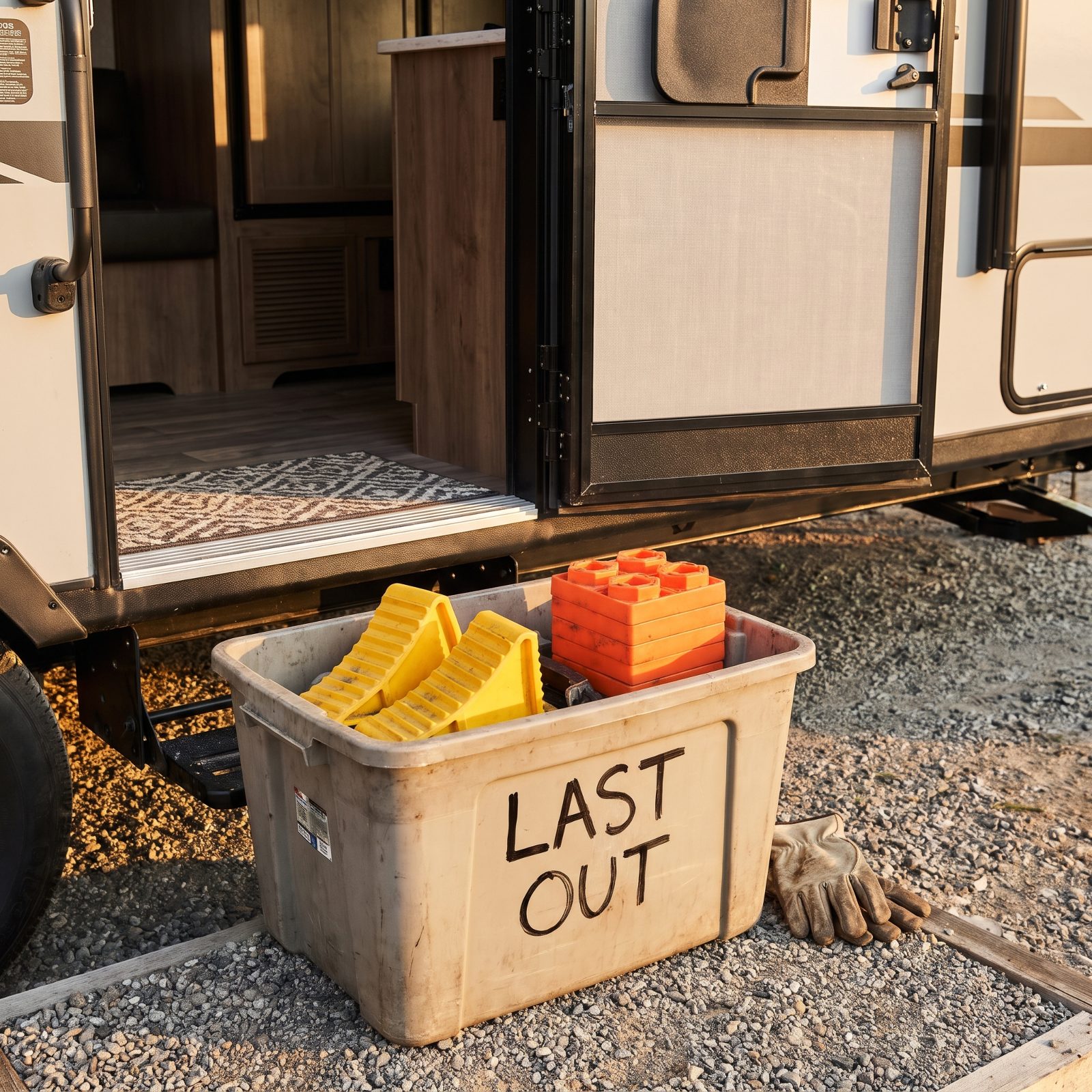
One tote. It holds the gear that can only go in after everything else is disconnected: the wheel chocks, the leveling blocks, the pressure regulator, the sewer gloves. When that tote is sitting full by the door, you know you’ve collected it all. When something’s missing from it, you’ve left a piece still clamped to the ground outside.
The magic is the visual check. A loaded tote is a green light. An empty spot where the tote belongs means you’re not done yet, no matter how finished you feel.
27. Sweep Stray Items Into a Laundry Basket
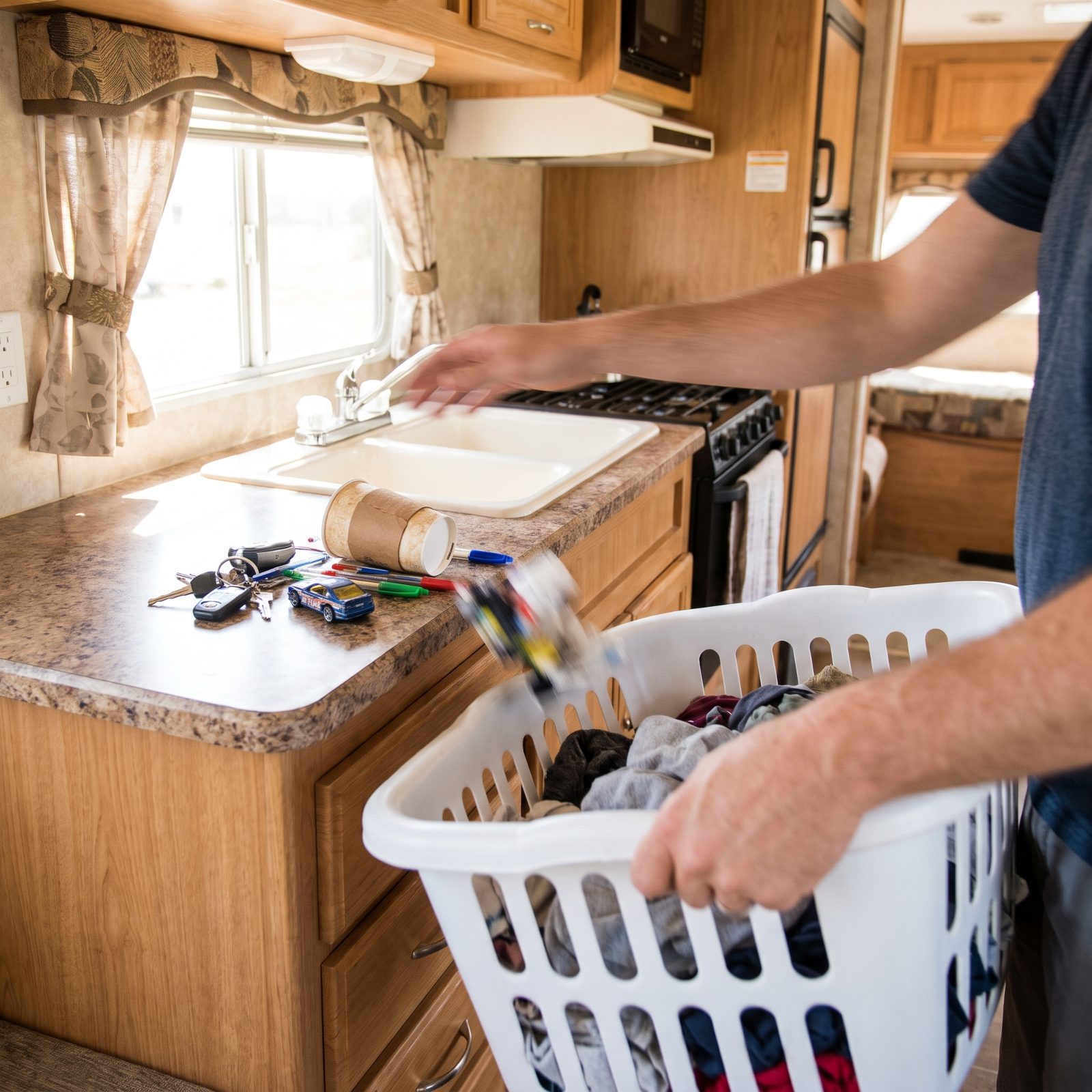
Thirty seconds before you drive, grab a laundry basket and sweep every loose thing off every surface into it — the phone, the book, the half-full water bottle, the reading glasses, that charger cord dangling off the counter.
Loose stuff turns into a projectile on the first panic stop. Instead of finding homes for ten items while the clock runs, dump them all in one basket and wedge it on the shower floor or a dinette seat. One container to secure instead of ten objects to chase. Tidy up properly when you arrive.
26. Zip Every Remote Control Into One Pouch

RVs breed remotes. The TV, the soundbar, the awning, the ceiling fan, the slide-out, maybe the furnace. They scatter into couch crevices, and the most reliable place to find any of them is “not where you left it.”
Corral the whole lot into one canvas zip pouch that lives in a single drawer. No more losing a quarter hour before a storm hunting for the awning remote while the wind picks up. I will die on the hill that a $4 pouch solves a problem no amount of willpower ever will.
25. Travel With Loose Produce in a Sink Colander
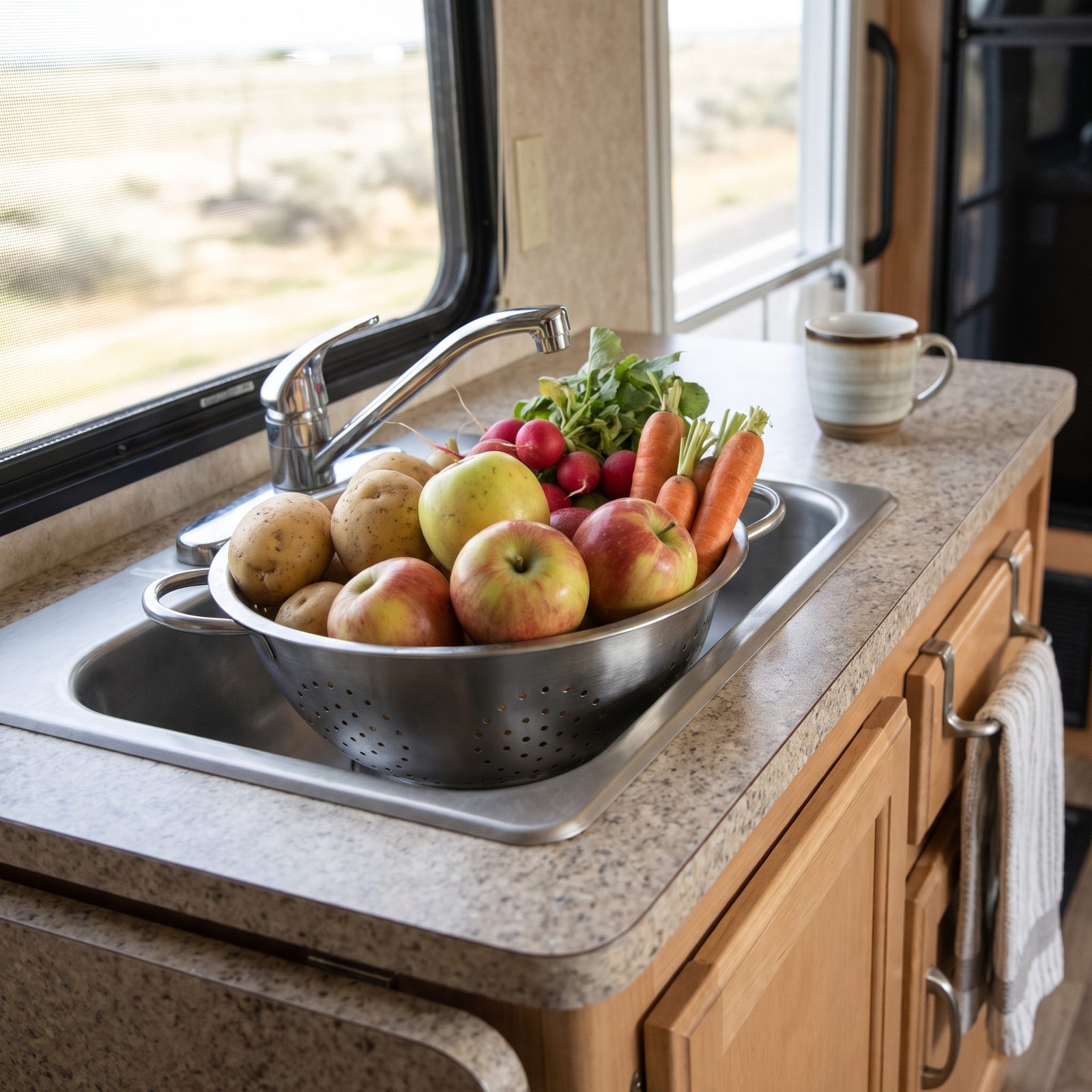
A bowl of fruit on the counter becomes a fruit avalanche the moment you hit a rough on-ramp. Apples under the pedals is not a joke you want to live.
Nest a colander down inside the galley sink and pile the loose produce in there instead. The sink’s got walls, so nothing rolls, and the colander lets air circulate so your tomatoes don’t sweat and soften. Drop the sink cover over the top for extra insurance. When you arrive, it lifts straight out onto the counter.
24. Secure the Shower Door With a Bright Hair Tie
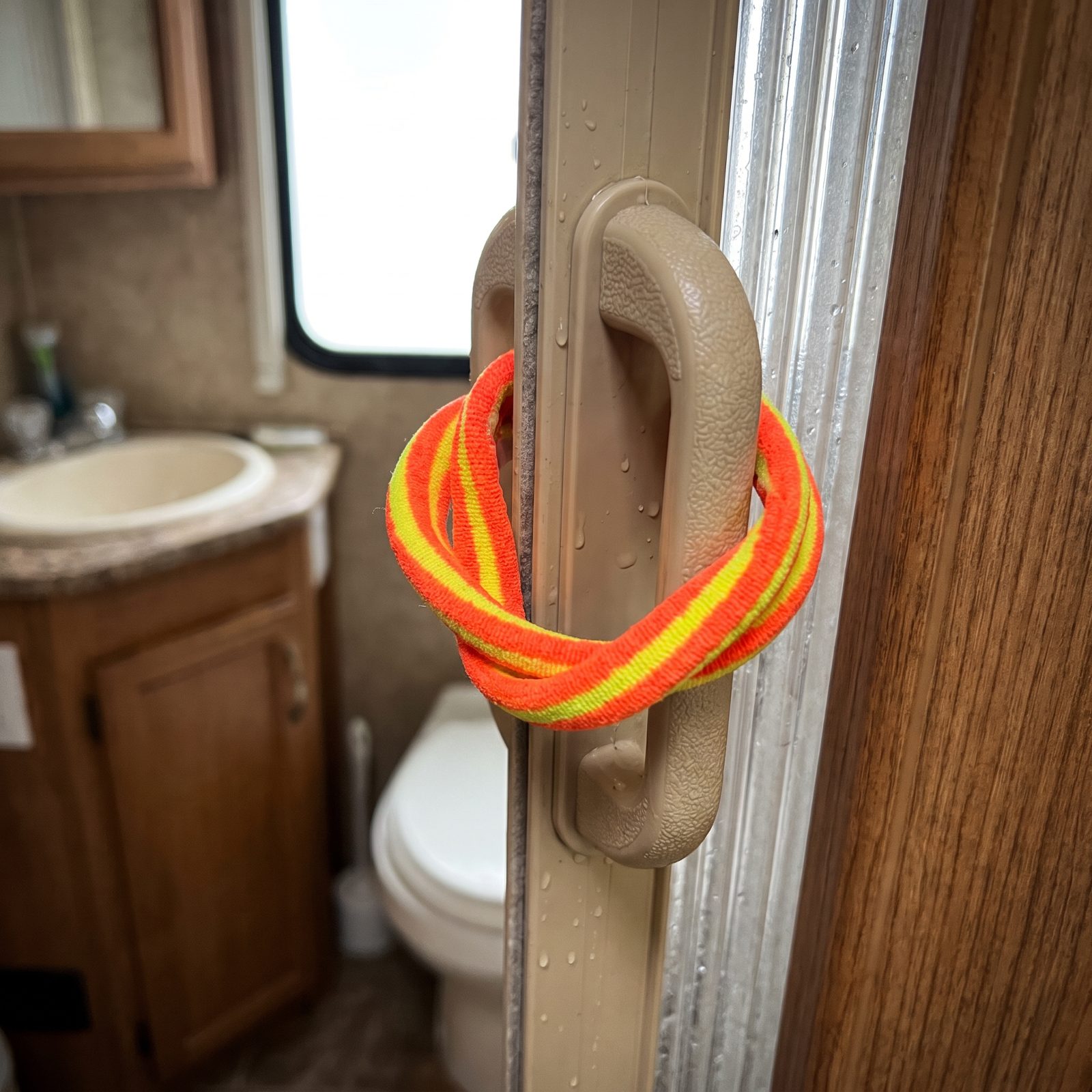
RV shower doors, especially the accordion kind, love to slide open and bang the whole drive. Loop a bright hair tie around both handles and the door stays shut and quiet.
The bright color is the point. Orange or lime jumps out against the white bathroom, so you actually notice it and remember to deal with the door at all. We keep a spare looped on the towel bar so there’s always one within reach. Cheapest latch you’ll ever own.
23. Place a Tension Bar Across the Refrigerator Shelves
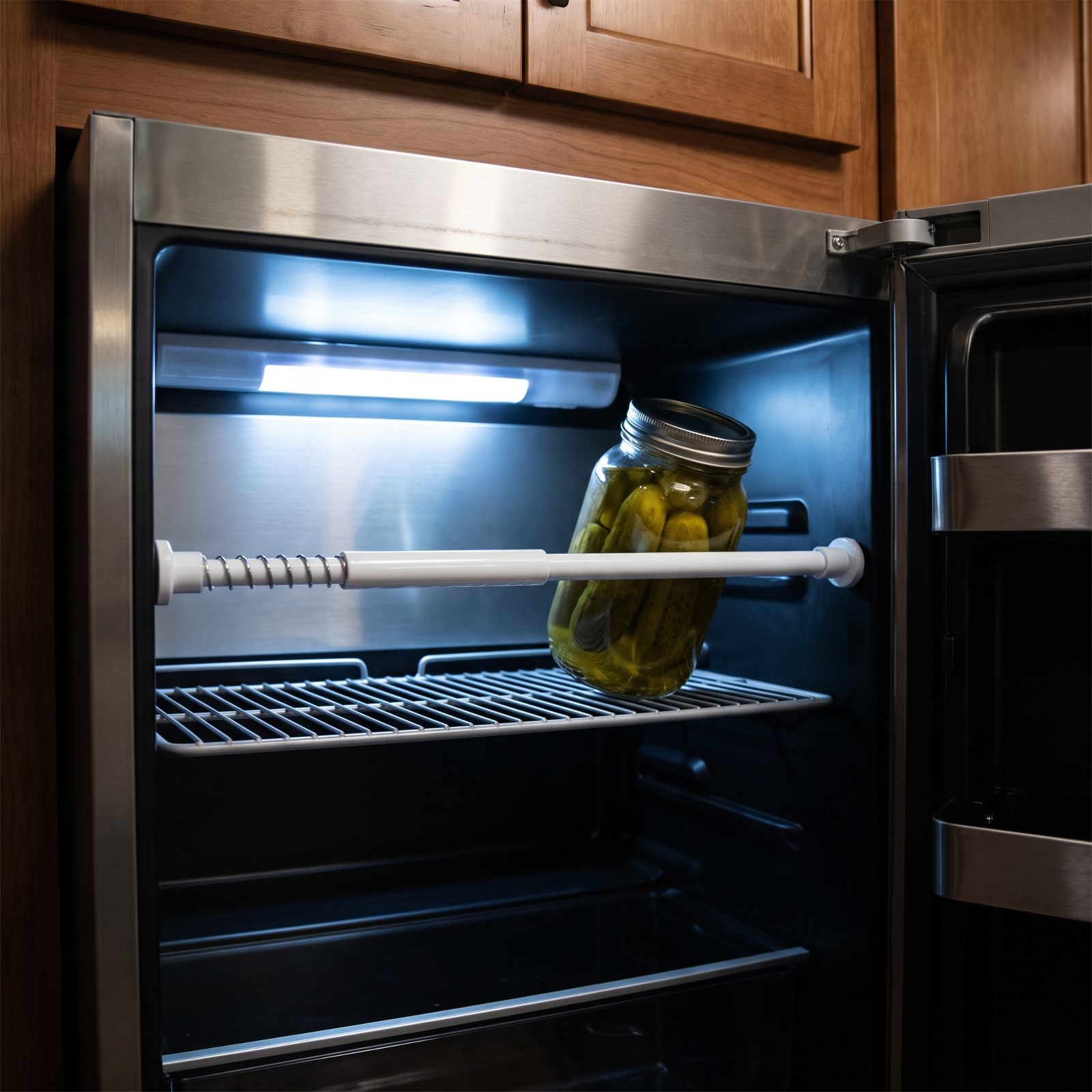
You open the fridge at the first rest stop and a jar of pickles commits suicide on the floor. Everyone’s done it once. The door swung the contents forward during the drive, and now you’re cleaning brine out of the door seal.
A spring tension rod — the kind sold for cabinets and windows — wedges across the front of the shelf, so anything that slides forward or tips over ends up leaning on the bar instead of falling out when you open the door. Cheap, reusable, pops in and out in a second. Run one across each shelf that holds tall or heavy items.
22. Clip a Bright Marker to the Roof-Vent Control

Open roof vents are the quietest wrecking crew in the RV world. You pull out from under a low gas station canopy or into a tree and snap — there goes the plastic lid. The fix costs almost nothing. Clip a strip of bright orange flagging tape or a little carabiner onto the vent crank whenever it’s open.
An open vent should be impossible to miss on your walk-through. Your eye catches the color before your brain remembers the vent. I killed a vent lid in year one because I trusted memory. Memory lost.
21. Count Cabinet Latches Aloud During the Walk-Through
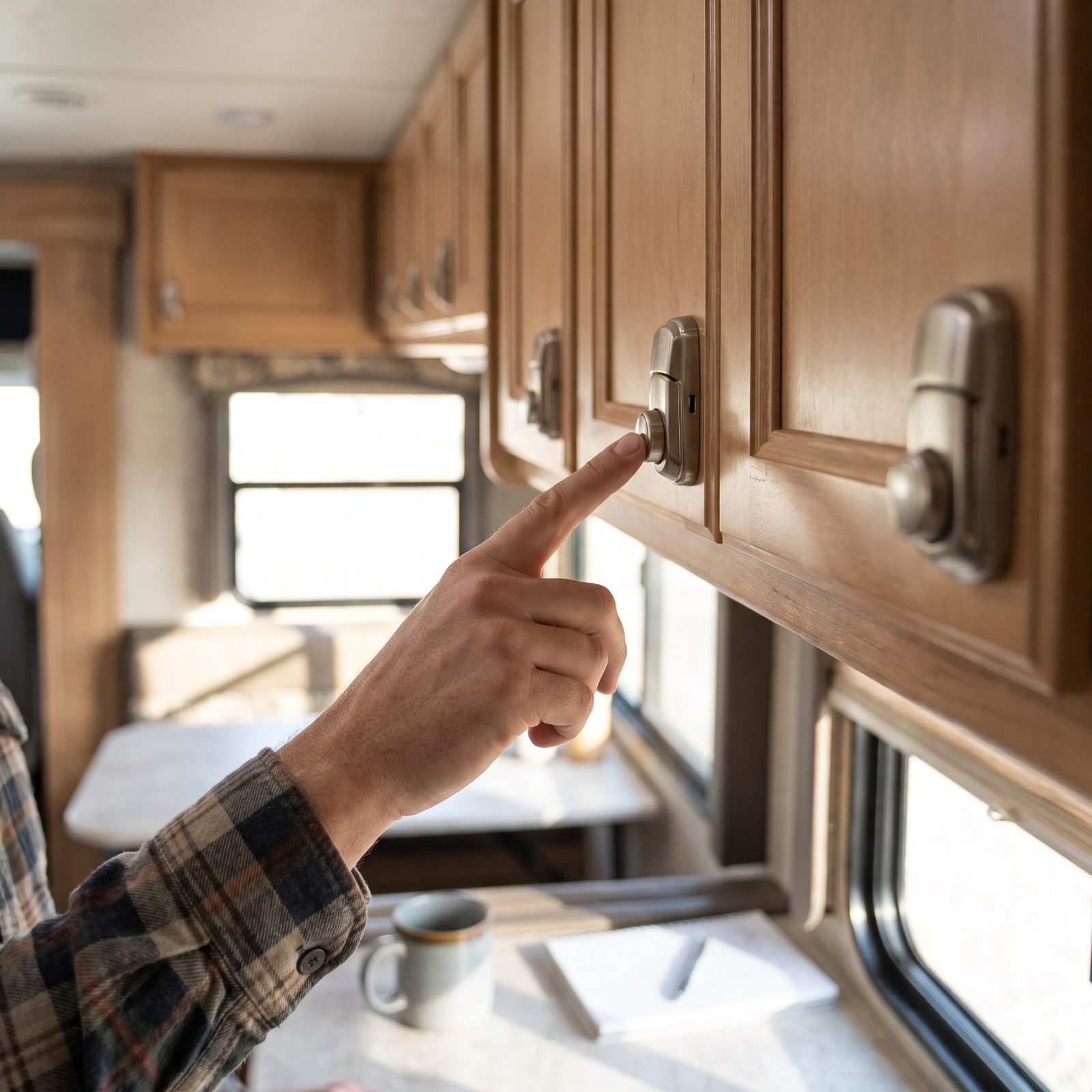
Silent checking fails. Your eyes slide right past a latch that looks closed but isn’t fully seated, and the first bump on the road sends a cabinet full of plates onto the floor.
Say the number out loud as you press each one. “One, two, three.” The voice forces your hand to actually touch every latch instead of your gaze doing a lazy sweep. It feels silly for about a week. Then it becomes the thing you’re glad you did when the person in the next site slams their door and nothing in your rig moves.
20. Keep One Person Outside Until the Rig Is Clear
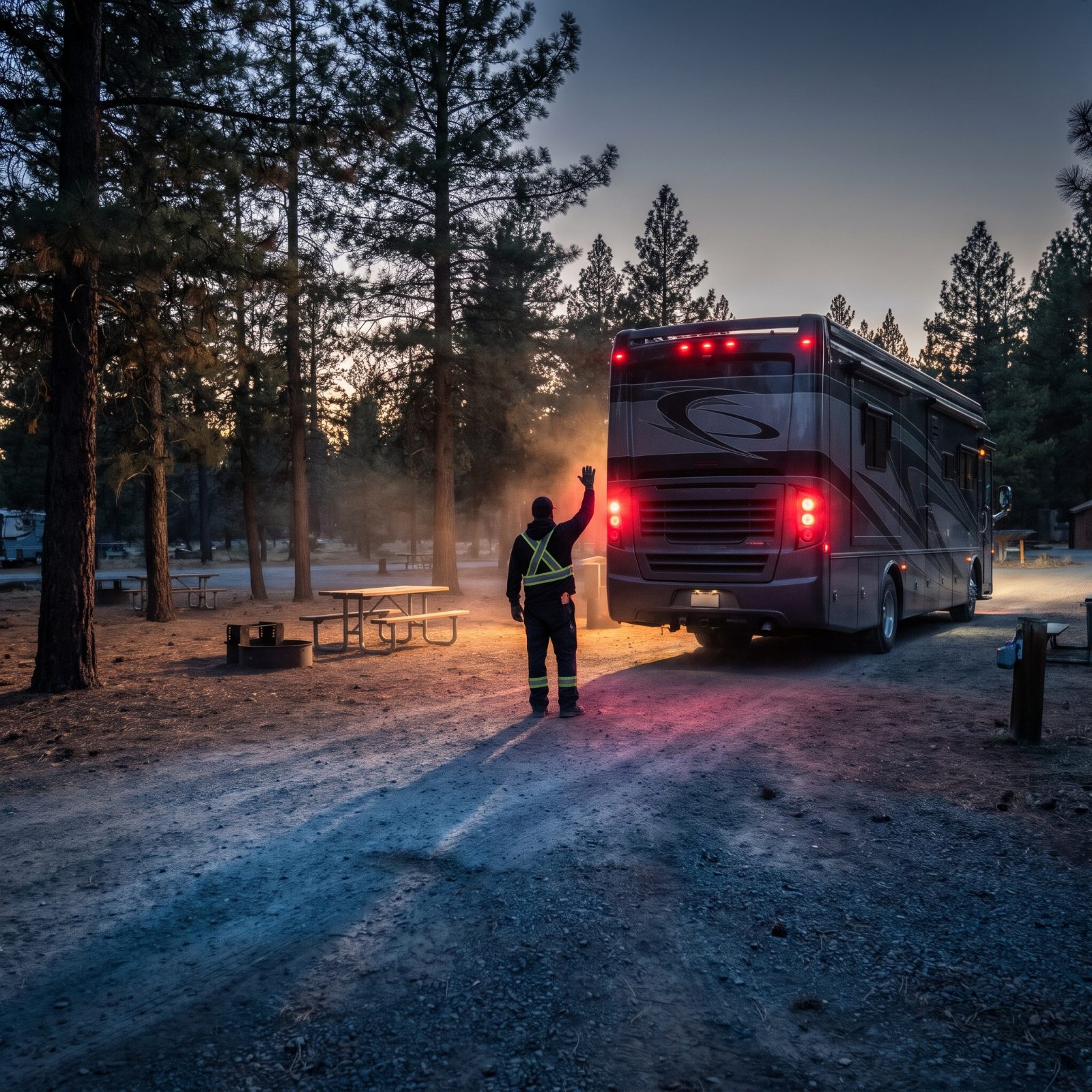
The driver can’t see the top of the rig, the back corner, or whether a leveling block is about to shoot out from under a tire. Somebody standing outside can.
Before the wheels turn, one person steps away from the rig and does a slow loop: roof, awning, antenna, stabilizers, chocks, cord, hose. The rig doesn’t move an inch until they give a clear thumbs-up. Call it ninety extra seconds at departure — ninety seconds that have saved more awnings than any gadget ever sold.
19. Use Walkie-Talkies Instead of Shouting While Backing
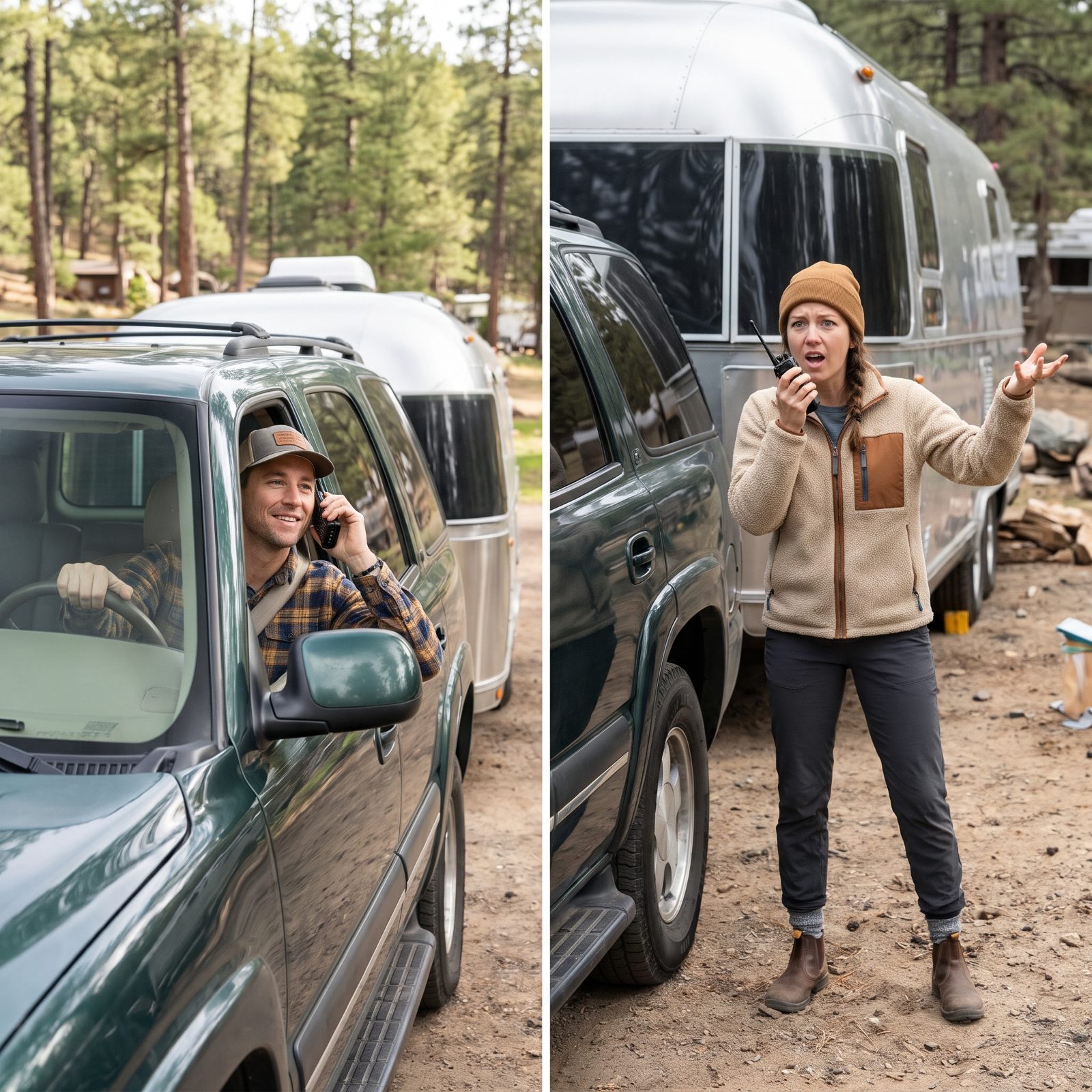
Shouting while backing is how arguments start and how fenders meet picnic tables. The driver can’t hear over the engine, the spotter can’t be seen in the mirror, and both people get louder and less useful by the second.
A cheap pair of walkie-talkies fixes most of it, as long as the spotter doesn’t just shout into the radio instead. Calm, specific directions land right in the driver’s ear: “Come back slow, two feet to the post, keep coming, stop.” Your neighbors stop watching the show. And honestly? The drive into the site is a lot more pleasant when nobody ends up hoarse.
In a guide to backing a travel trailer, an RVing couple writes that “The driver and spotter should be in constant communication throughout the entire back up process, whether that be through hand signals or verbal communication over walkie talkies.”
18. Mute Music Before Fueling, Backing, or Hitching
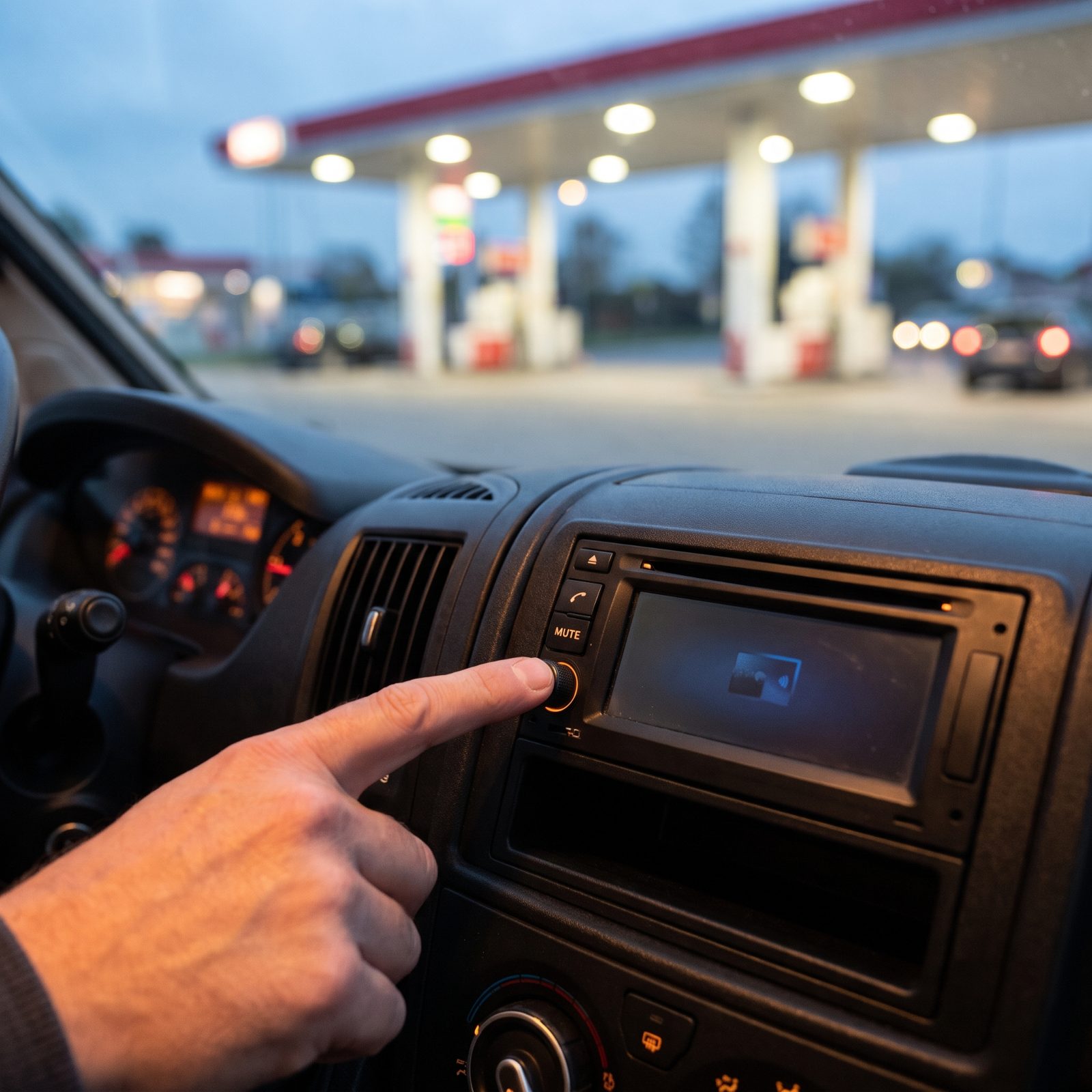
Noise eats attention. Fueling, backing, and hitching are the three moments where a small distraction becomes a big expense.
Make it a hard rule. Before any of them, kill the audio. Silence turns the cab into a place where you can hear the spotter, the fuel pump clicking off, the hitch coupler dropping into place. It’s a tiny reset that tells your brain this is the serious part now. One quiet minute beats a soundtrack and a dented bumper.
17. Hang a Bright Reminder for the Awning or Antenna
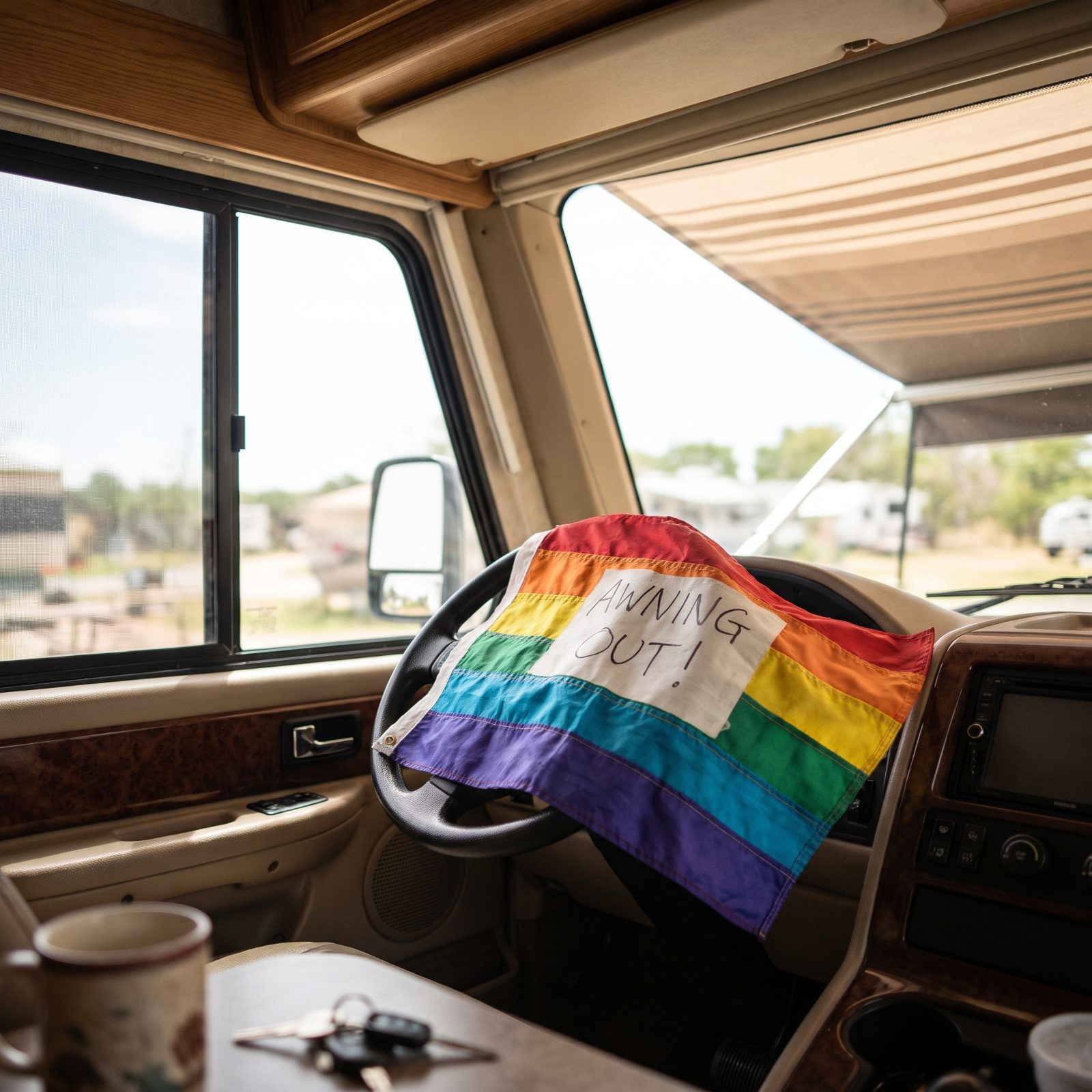
The awning and the TV antenna share a cruel trait. Once you’re settled in the driver’s seat, it’s easy to stop noticing either one, and both cost real money when you drive off with them out.
So give yourself a physical blocker — a bright rainbow-striped flag draped over the steering wheel with a hand-lettered “AWNING OUT!” note on it, or a loud tag clipped to the ignition, that you can only remove once the awning is rolled in and the antenna is down. You literally cannot start driving until you deal with it. It’s dumb, and it works, which is the best kind of habit.
16. Pull Forward and Inspect the Ground for Fresh Leaks
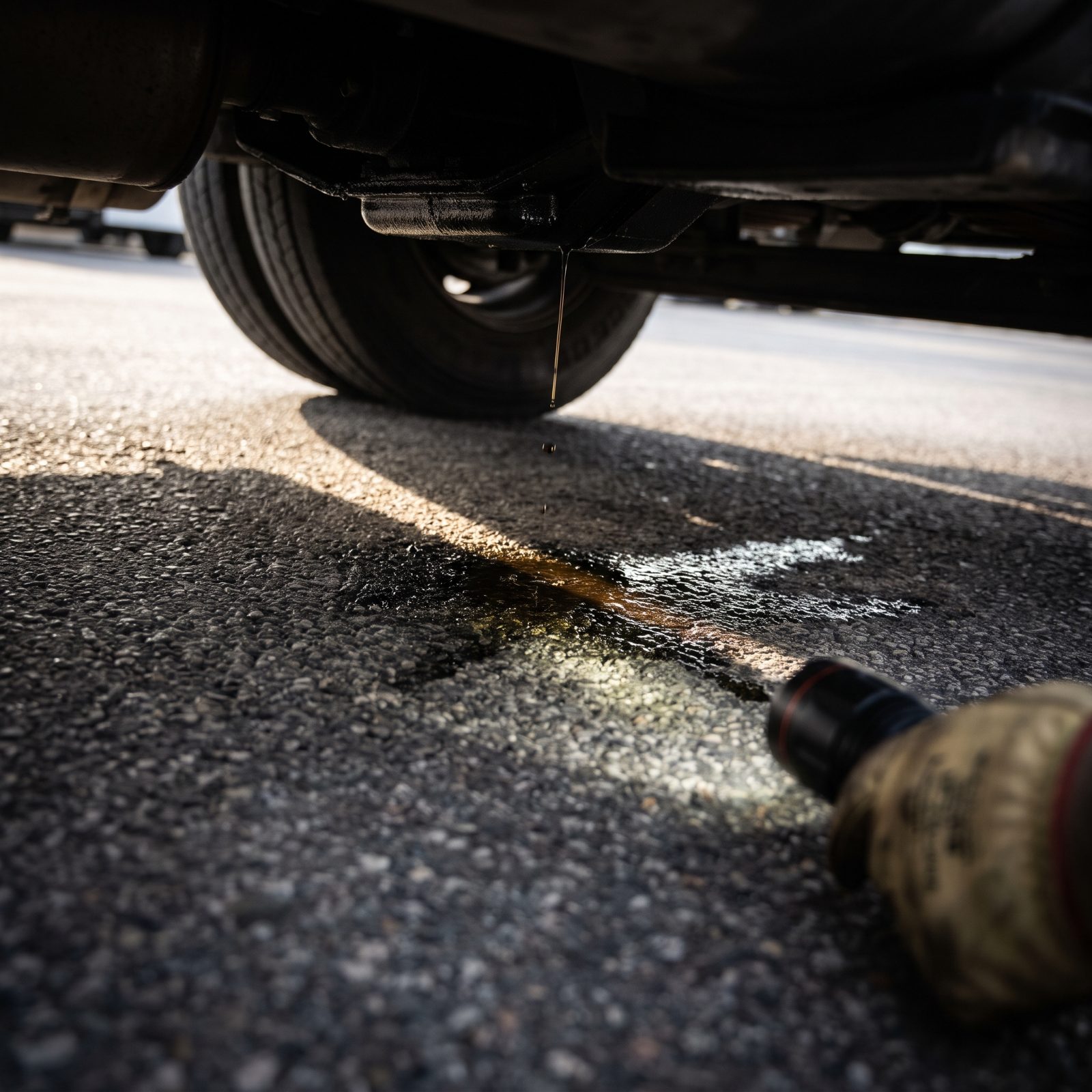
A fresh leak is loudest the moment after you move. Oil, coolant, transmission fluid, a dripping water heater — the stain on the pad tells you what your rig won’t say out loud.
Before you commit to the highway, pull forward a few feet and look back at where you were parked. Clean gravel means you’re probably fine. A dark spreading spot means find out why now, in a quiet campground, instead of an hour down the road at highway speed.
15. Stop 20 Feet Out for One Final Campsite Inspection
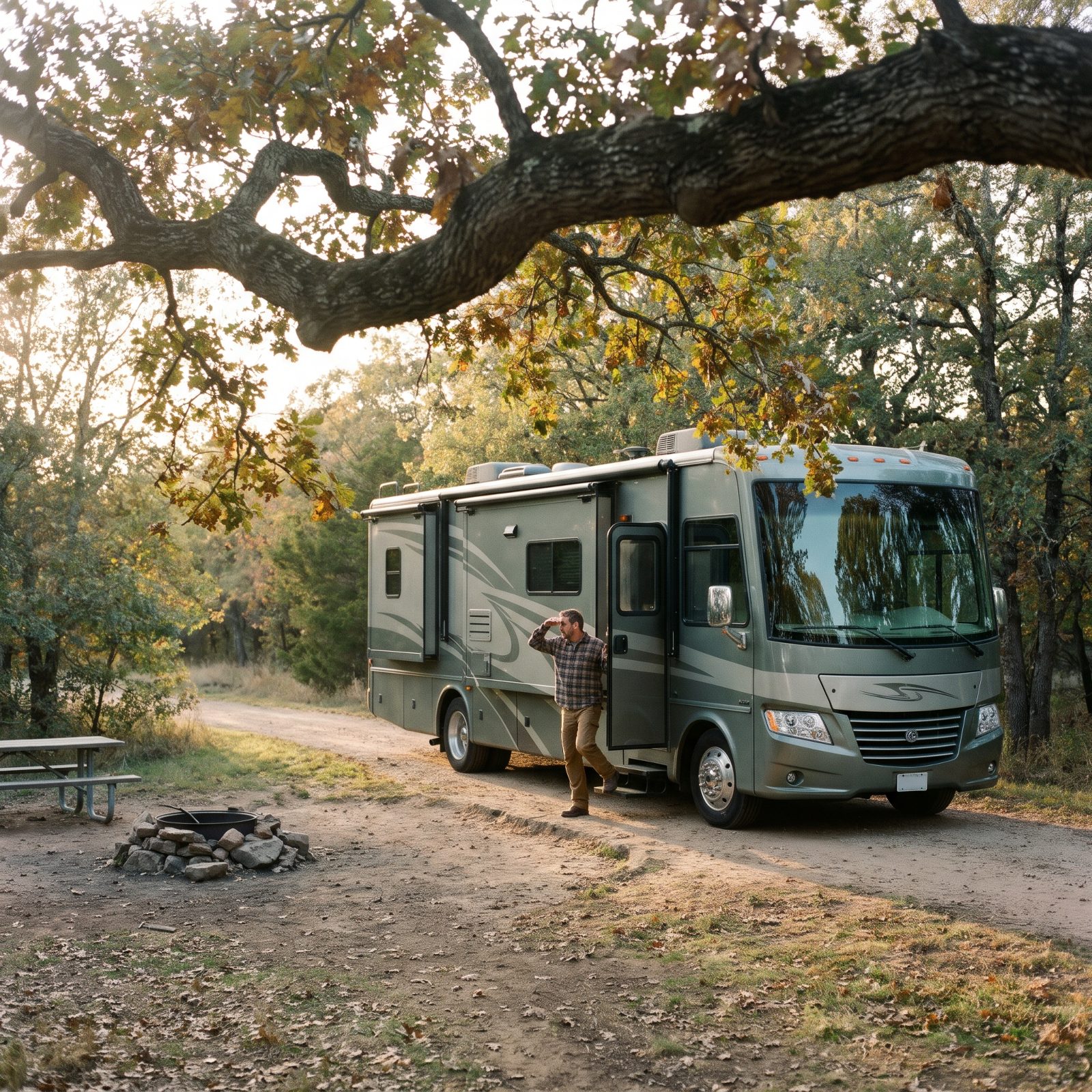
The last twenty feet into a site are where the cheap mistakes live. A low branch nobody looked up at. A soft muddy corner. A water spigot right where your slide wants to go. A fire ring parked in the backing path.
Stop short. Get out, walk the pad, look up and down, then back in with a plan instead of a surprise. Half a minute of walking the site beats twenty minutes of jockeying in and out because the first attempt put your door against a tree. You already drove all day. Finish it slow.
14. Enter the First Stop in the GPS Before You Start the Engine
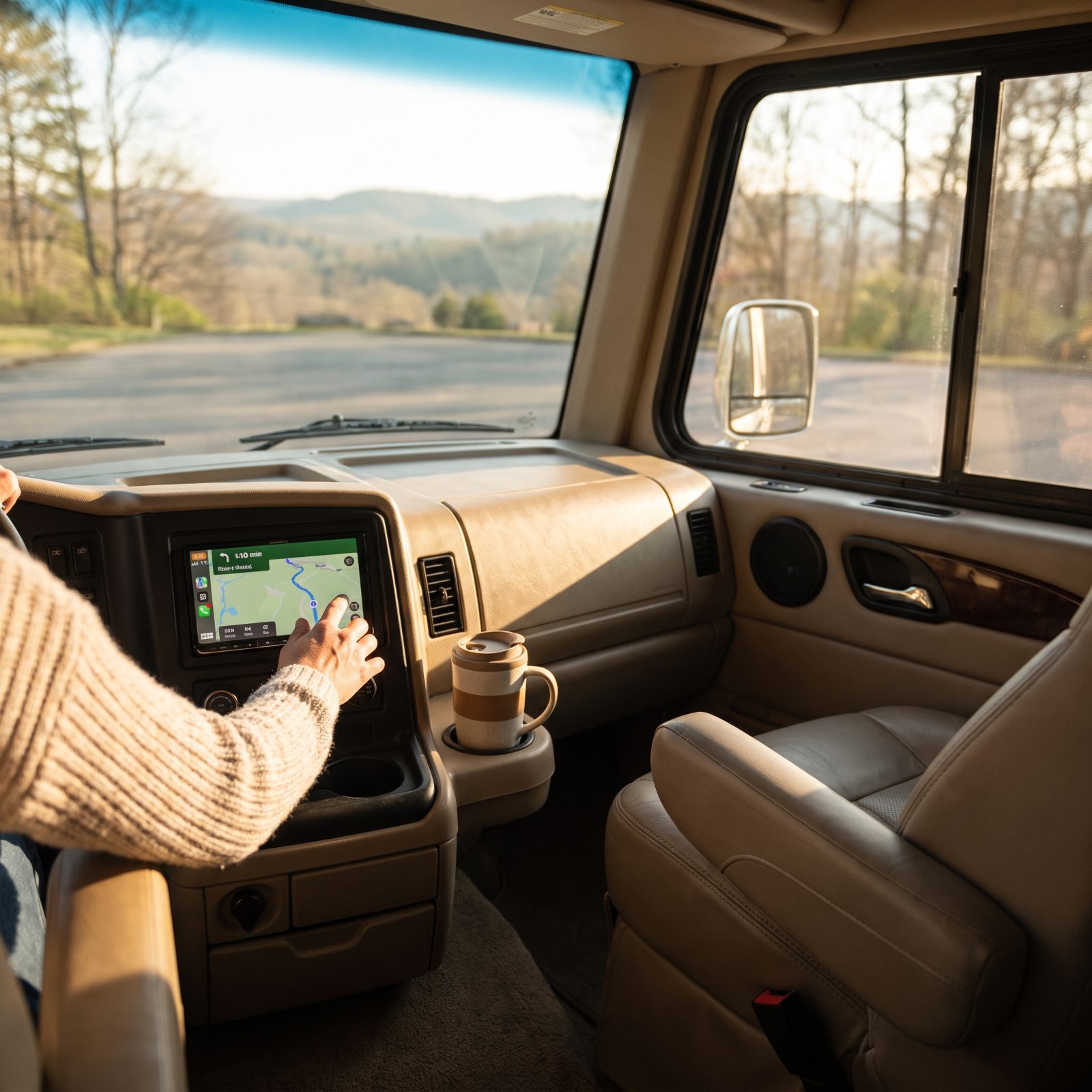
Punch in the first stop while you’re still parked and sipping coffee, not while rolling out of a tight campground loop with a line forming behind you. Fiddle with a touchscreen one-handed as you merge and you’ll miss the exit, then make three bad turns trying to recover.
I learned this the hard way in a crowded state park, typing an address while a ranger waved me forward. Set it cold. Confirm the route makes sense. Then move.
13. Screenshot the Route for Dead-Signal Stretches
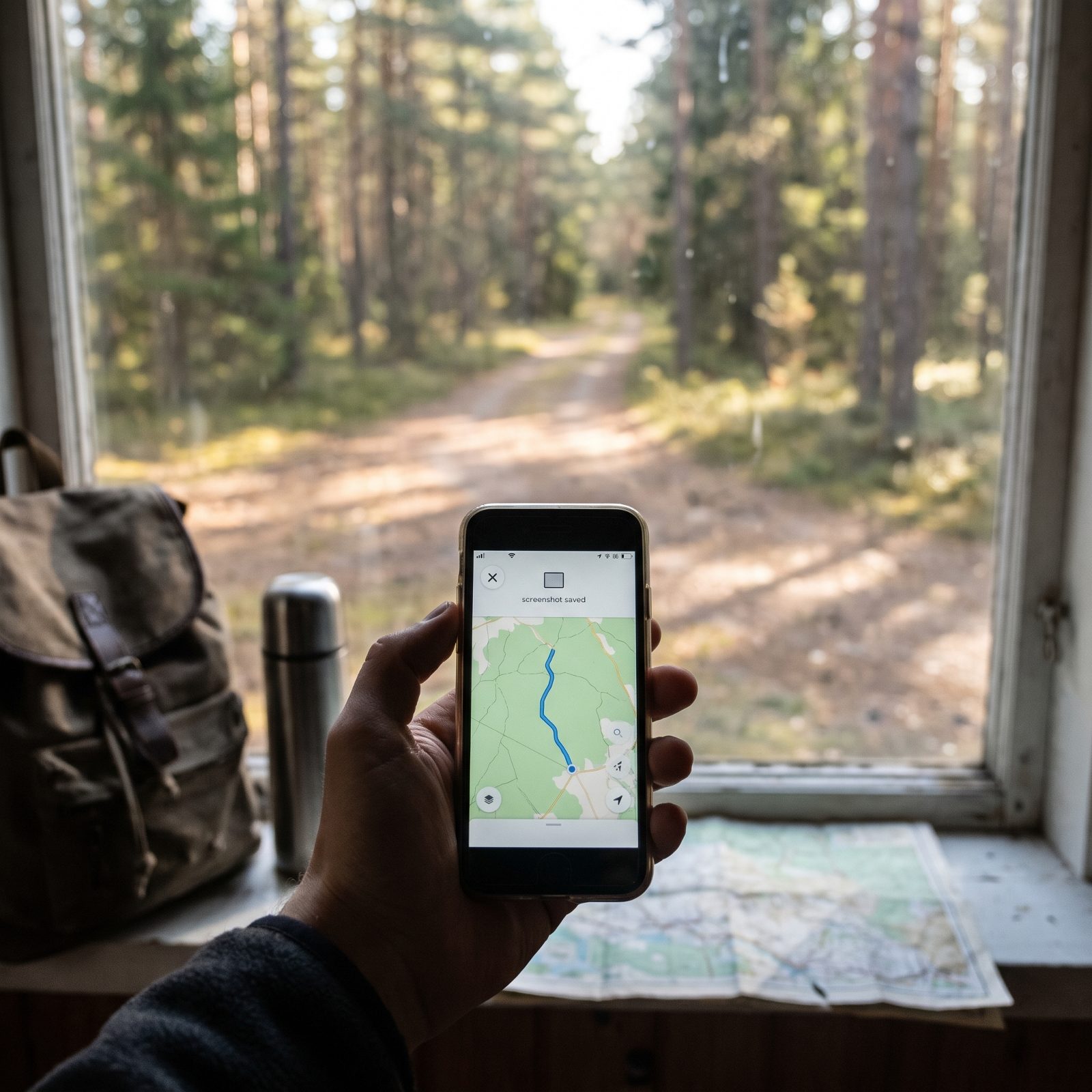
Cell signal drops out across a lot of the good country — national forest access roads, long stretches of the interior West, canyon highways. Your fancy routing app goes blank and so does your sense of where the turn is.
Before you leave range, screenshot the map at a couple of zoom levels. A saved image works with zero bars. It won’t reroute you, but it’ll stop you guessing at a fork with a loaded rig behind you.
12. Keep the Rig’s Dimensions Taped to the Sun Visor
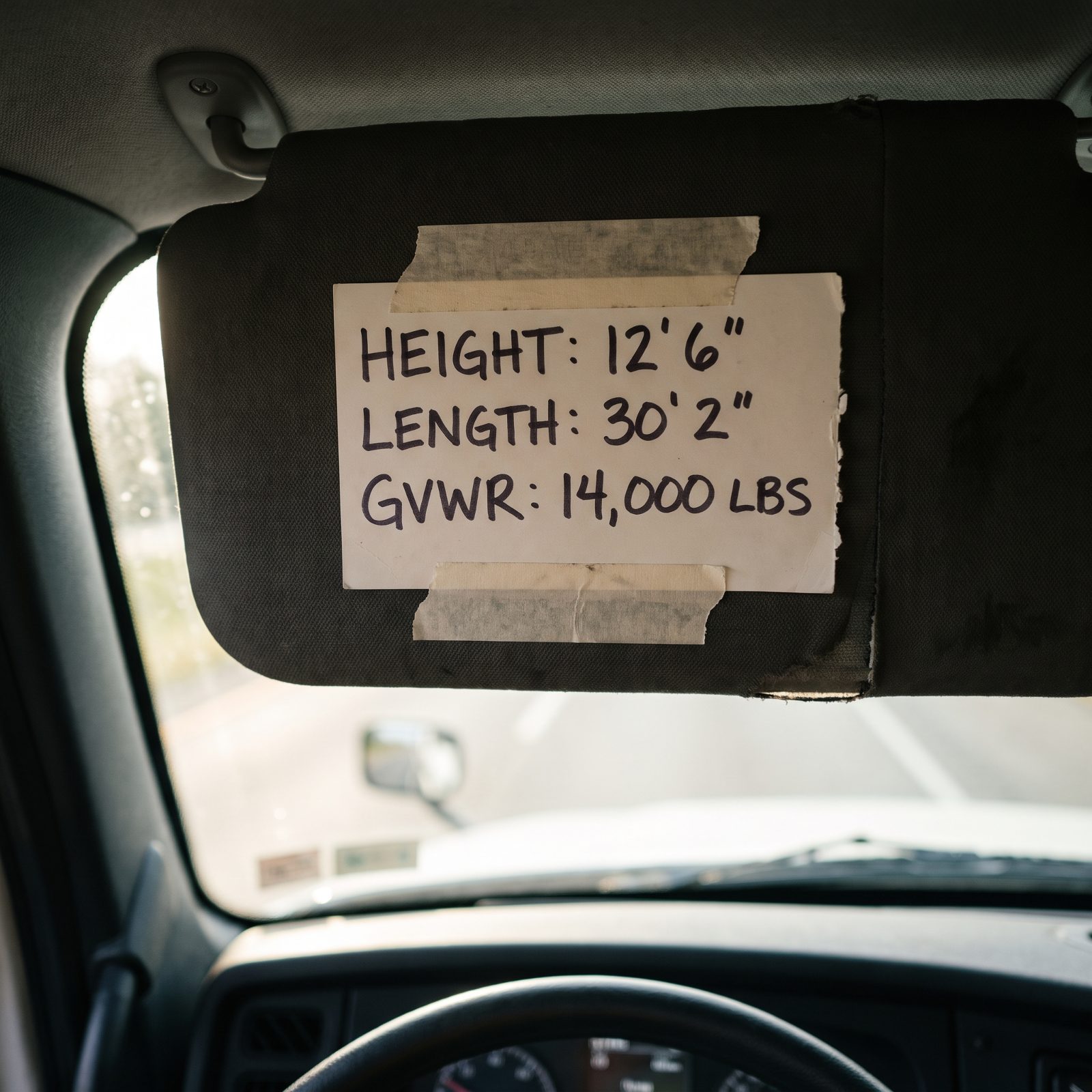
Your height in feet and inches, written on a card, right where your eyes already go. That’s the whole trick.
The moment you need it is the moment you can’t remember it. A low bridge posted at 11’8″, a drive-through overhang, a gas station canopy that looks fine until it isn’t — panic-math on a towed rig is a miserable place to be.
Write down height, total length, and GVWR. Tape it up. You’ll glance at it more than you’d expect, and once a trip it’ll save you from a very expensive scrape.
After a truck hit a low rail bridge in Queensland, a senior rail official warned: “We’re pleading with drivers of large vehicles, like trucks, caravans or loaded trailers, to plan their route, obey the road signs and signals and know their height.”
11. Preview Fuel-Station Entrances in Satellite View
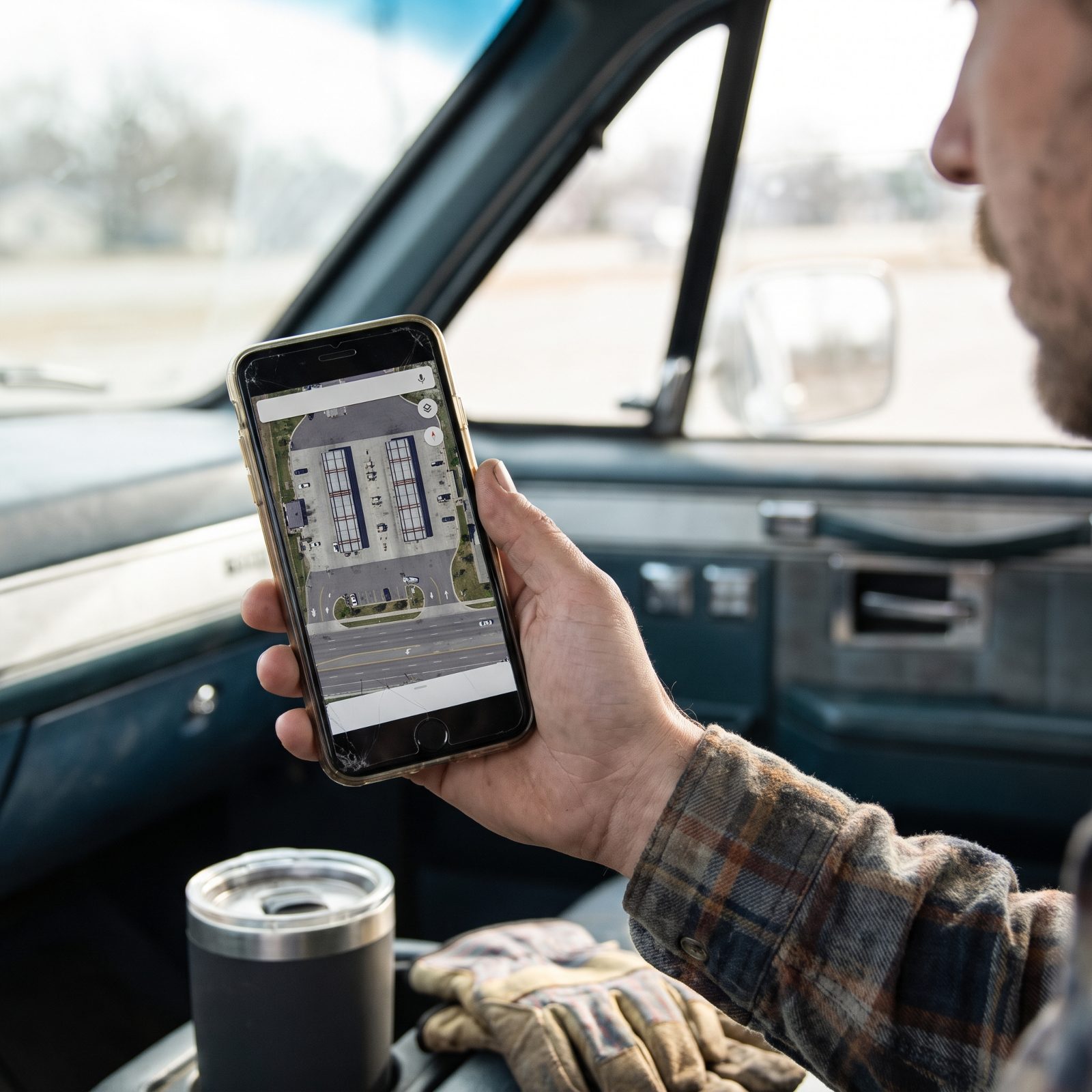
Not every station on the map can swallow a 34-foot motorhome. Tight pump islands, curb-hugging layouts, a canopy that forces a hard turn you can’t make without backing up. And backing a loaded rig through a busy lot is misery.
Pull up satellite view before you commit. Half a minute looking down from above tells you whether you can get in, work around the pumps, and get back out without a seventeen-point turn in front of an audience.
10. Check the Crosswind Forecast Before You Pull Out
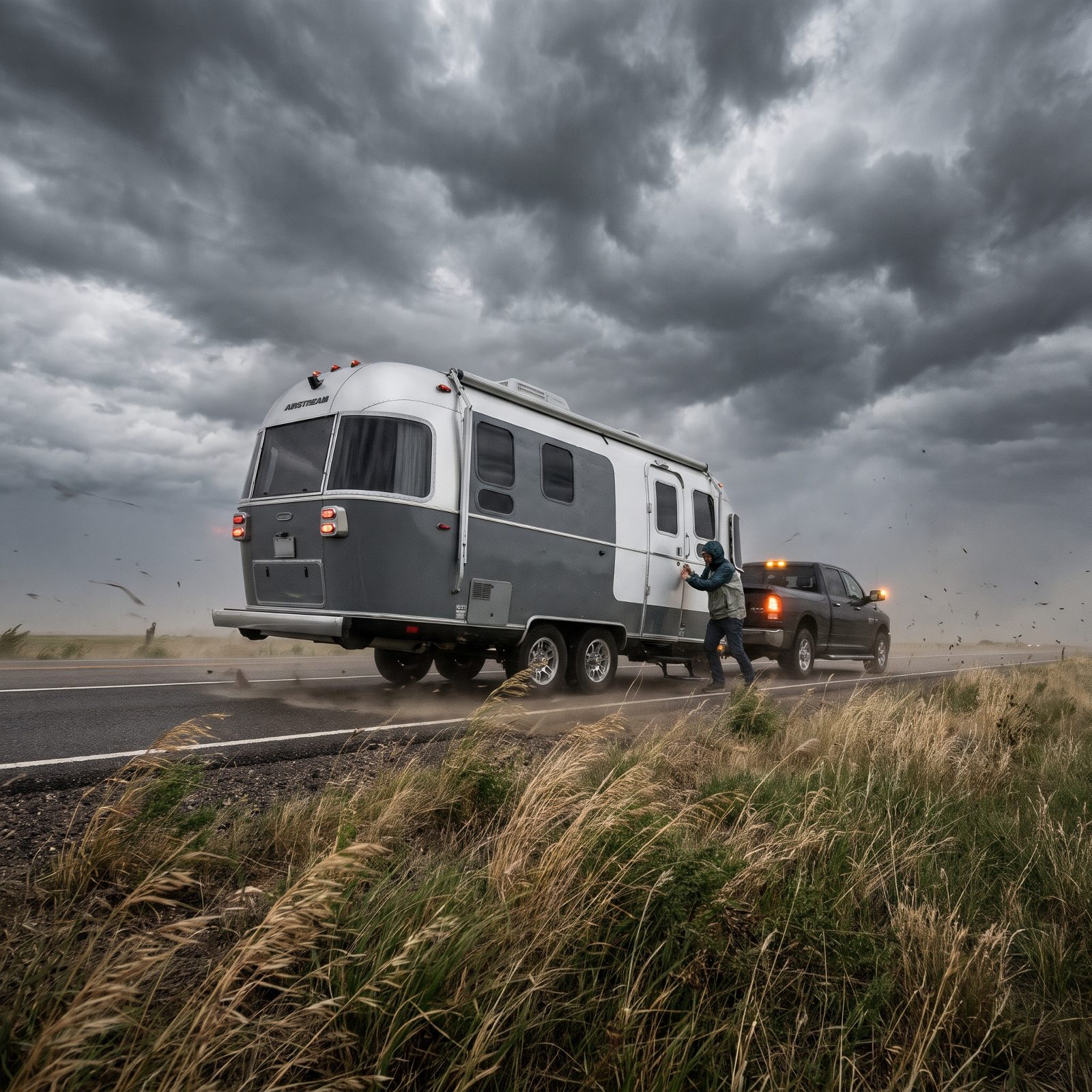
A tall box on wheels and a hard gust do not get along. Travel trailers get shoved around worst, and the high-profile stretches — open plains, bridges, mountain passes — are exactly where you least want a surprise.
Glance at the gust forecast, not just the average wind. Sustained 20 with gusts to 40 is a different day than a steady 20. Sometimes the smart move is to leave two hours later or wait one out. No deadline is worth white-knuckling a bridge in a gale.
Summing up how to tow in high wind, an RV industry veteran says to “check the forecast for gusts, not just average wind; treat any wind advisory as a reason to reconsider a travel day”
9. Treat Half a Tank as Your New Empty
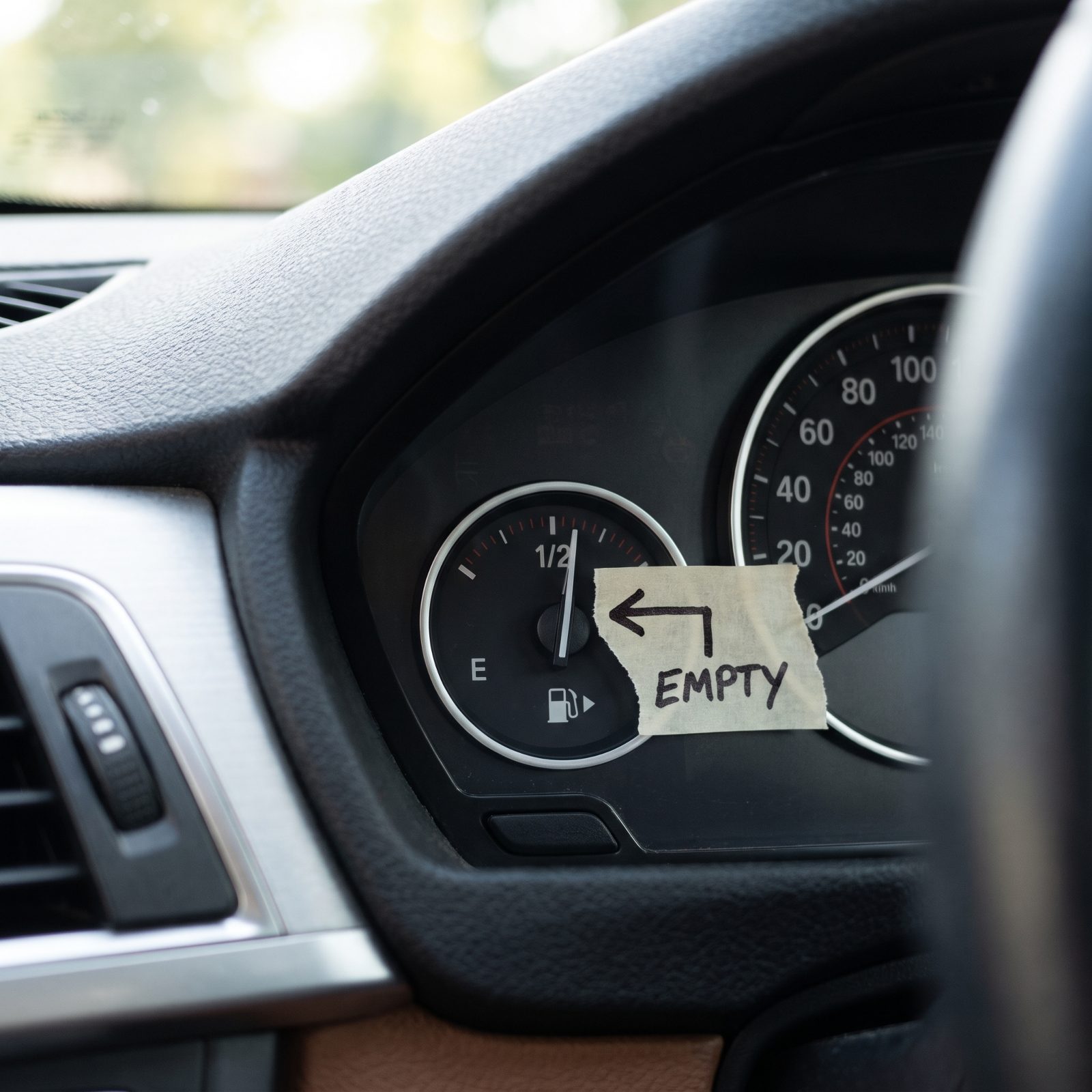
Out here the gaps between stations run long, and not every pump fits a big rig anyway. Coast down to an eighth of a tank and you’ll end up turned away from the one friendly-looking station, creeping toward the next with your jaw clenched.
Fill at half. You keep your options, skip the sketchy desperation stops, and on a diesel pusher you avoid stirring up whatever’s settled at the bottom of the tank. Calmer driving, fewer gambles.
8. Pick Fuel Stations With a Visible Second Exit
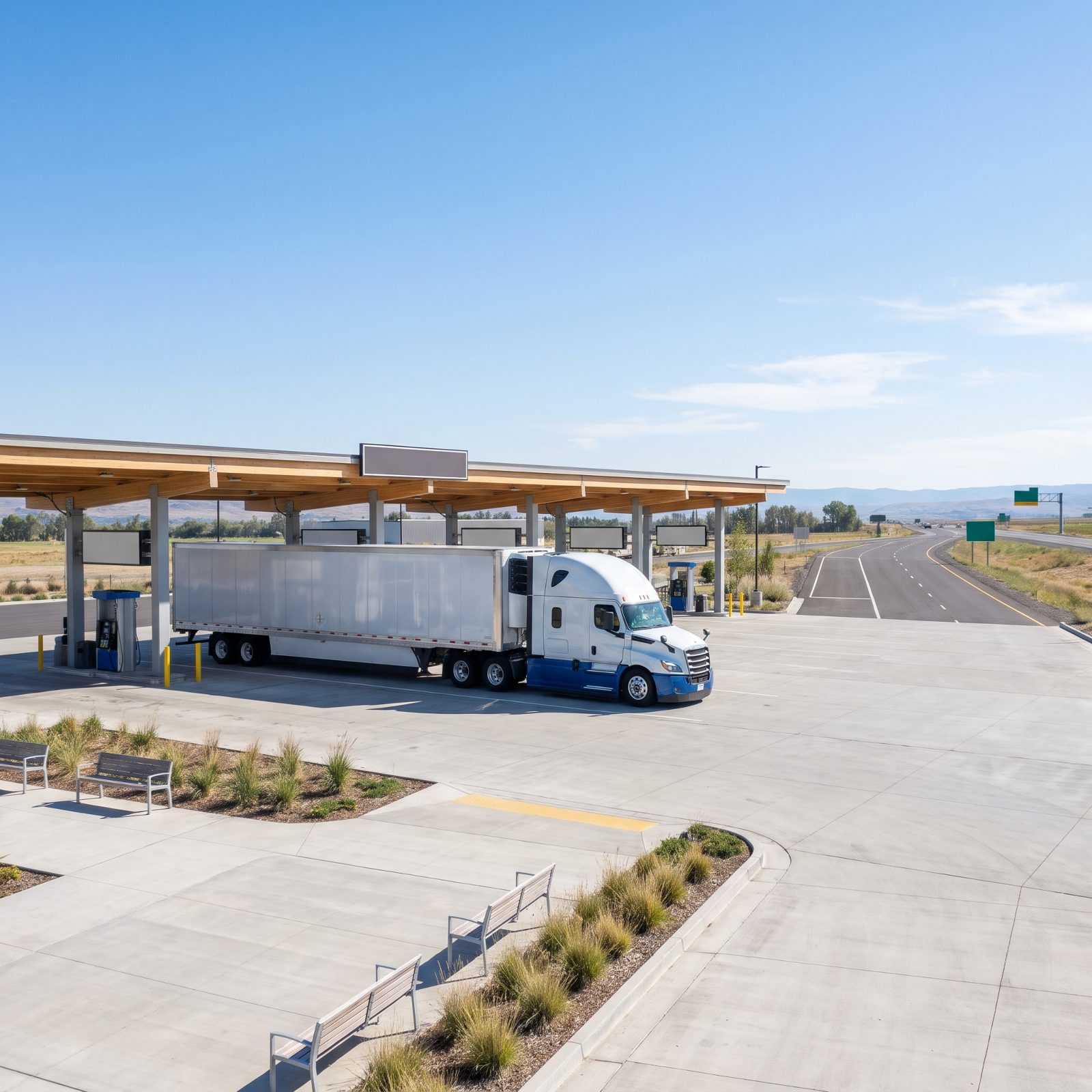
The best fuel stop lets you drive in one side and out the other without ever touching reverse. Truck stops are built for that. Little corner stations usually aren’t.
Can’t spot a second way out? Assume you’ll have to back a 50-foot combination through traffic to leave. That’s the gap between a two-minute top-off and a stressful ordeal with a stranger directing you by hand.
7. Confirm the Entry Step Retracted After Every Break
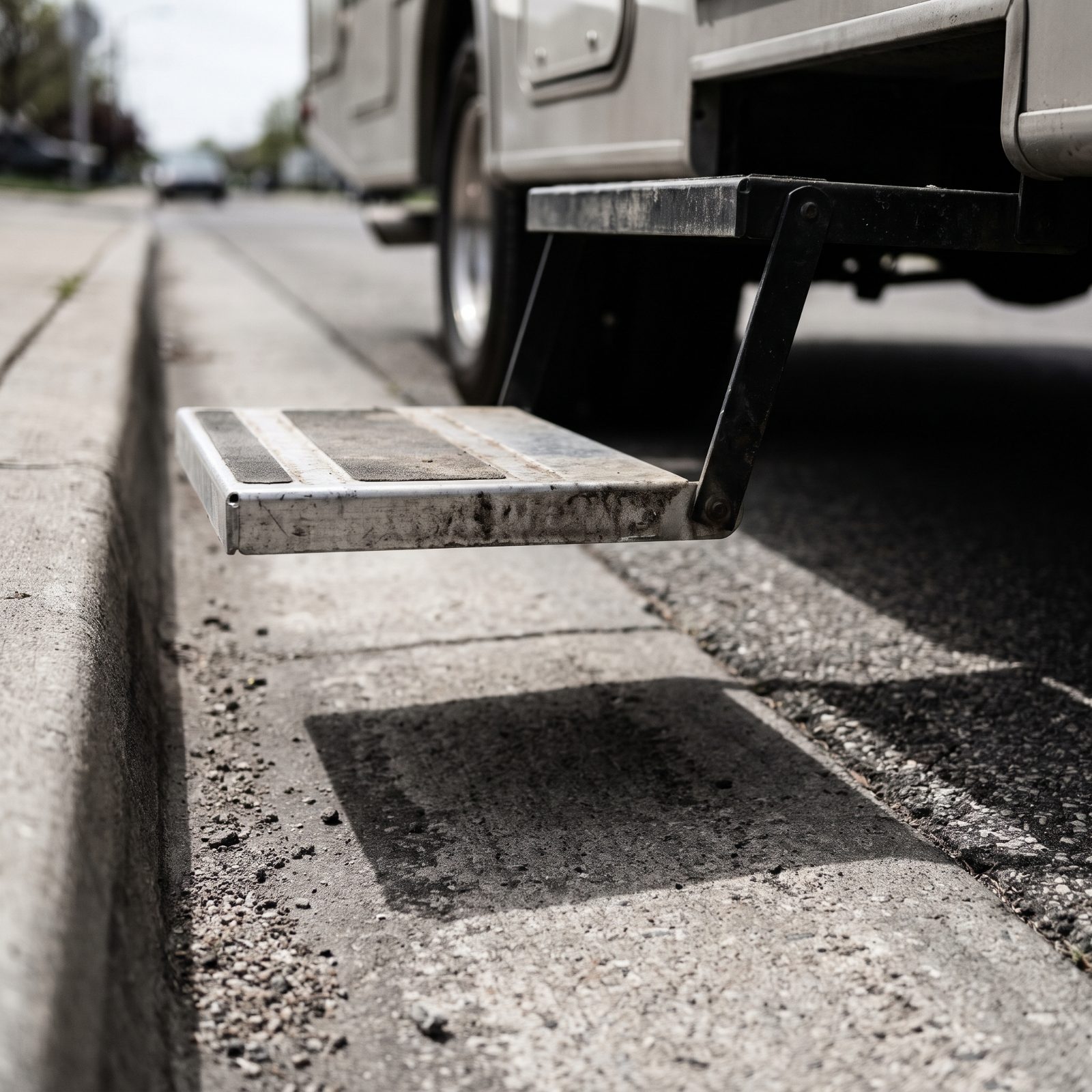
Power steps are a gift until one stays out. Drive off with the step extended and the first curb or signpost you clear rips it clean off, sometimes the door frame with it.
Make the step the last thing you look at before you move. Some rigs retract it automatically with the ignition, some don’t, and the automatic ones fail quietly. A two-second glance beats a repair bill and a door that won’t close right ever again.
6. Swap Drivers by the Clock, Not by Exhaustion
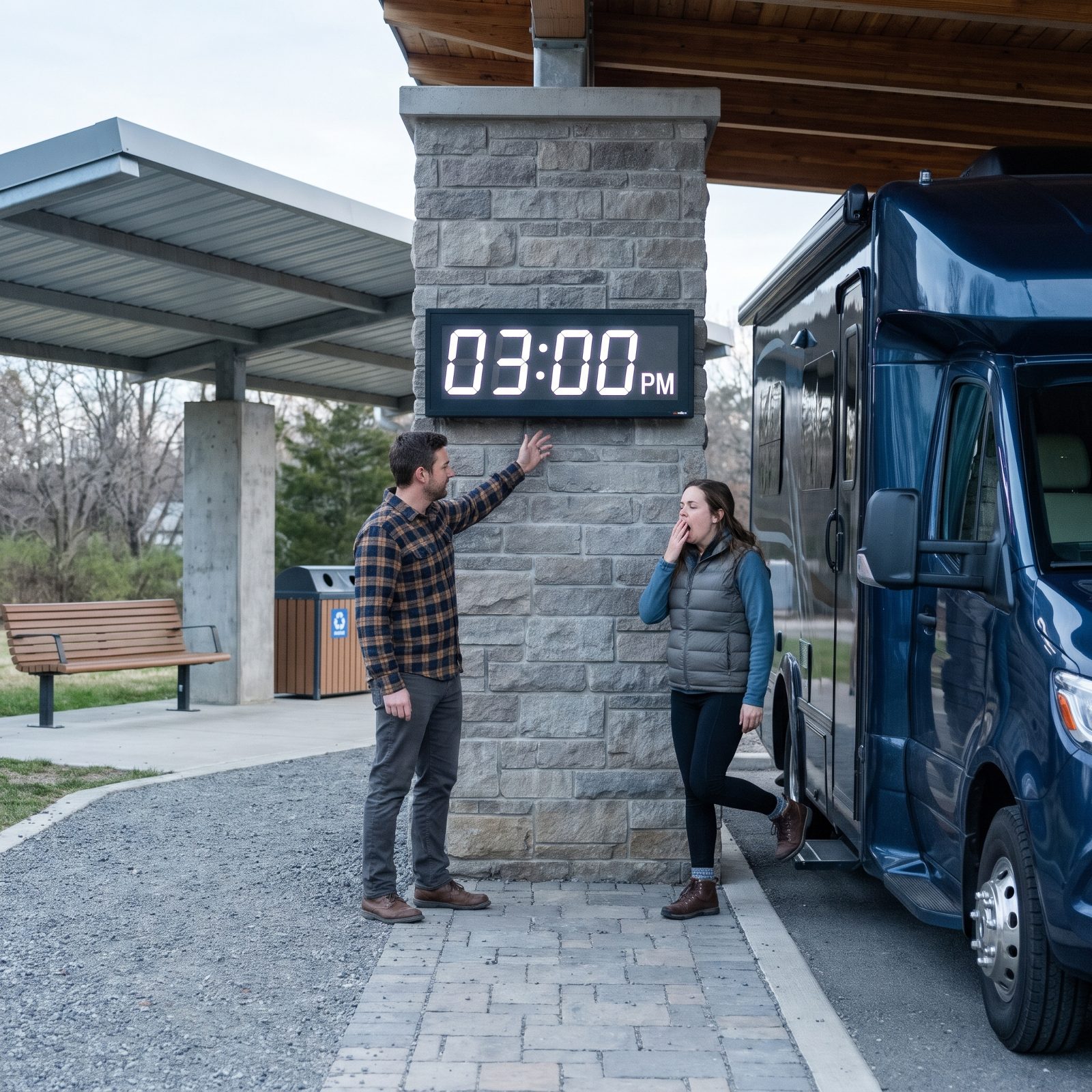
By the time you feel too tired to drive, you’ve already been driving tired for an hour. Fatigue lies about itself, and the driver always figures they’ve got another twenty miles.
So don’t wait for the feeling. Set a time — every two hours, or at every fuel stop — and swap on the clock whether anyone’s yawning yet. A loaded rig takes longer to stop and reacts slower to a mistake, so a drowsy second of drift costs more here than it would in a car.
5. Choose Lunch Stops With Pull-Through Parking
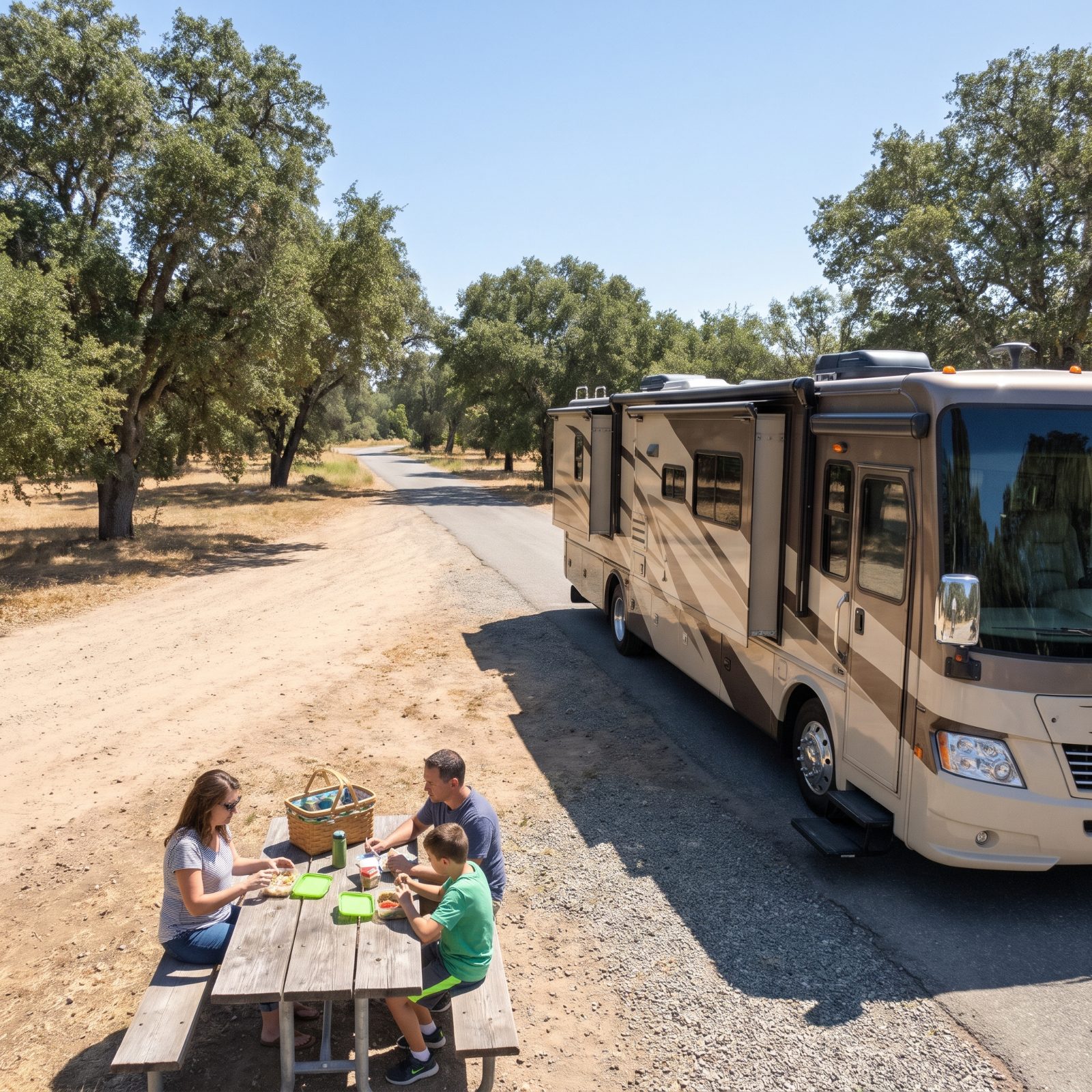
Backing a thirty-foot rig out of a packed fast-food lot while a line of hungry people watches is nobody’s idea of a break. And that’s exactly where the dings happen — when you’re tired and boxed in.
Pick stops you can drive straight through: rest areas, truck plazas, the back row of a big grocery lot. Anywhere you enter one way and leave the other without ever touching reverse.
Apps that flag RV-friendly stops help, sure, but your own eyes on a satellite view work just as well. Scan the lot before you commit to that exit.
4. Photograph the Rig’s Parking Location at Large Stops
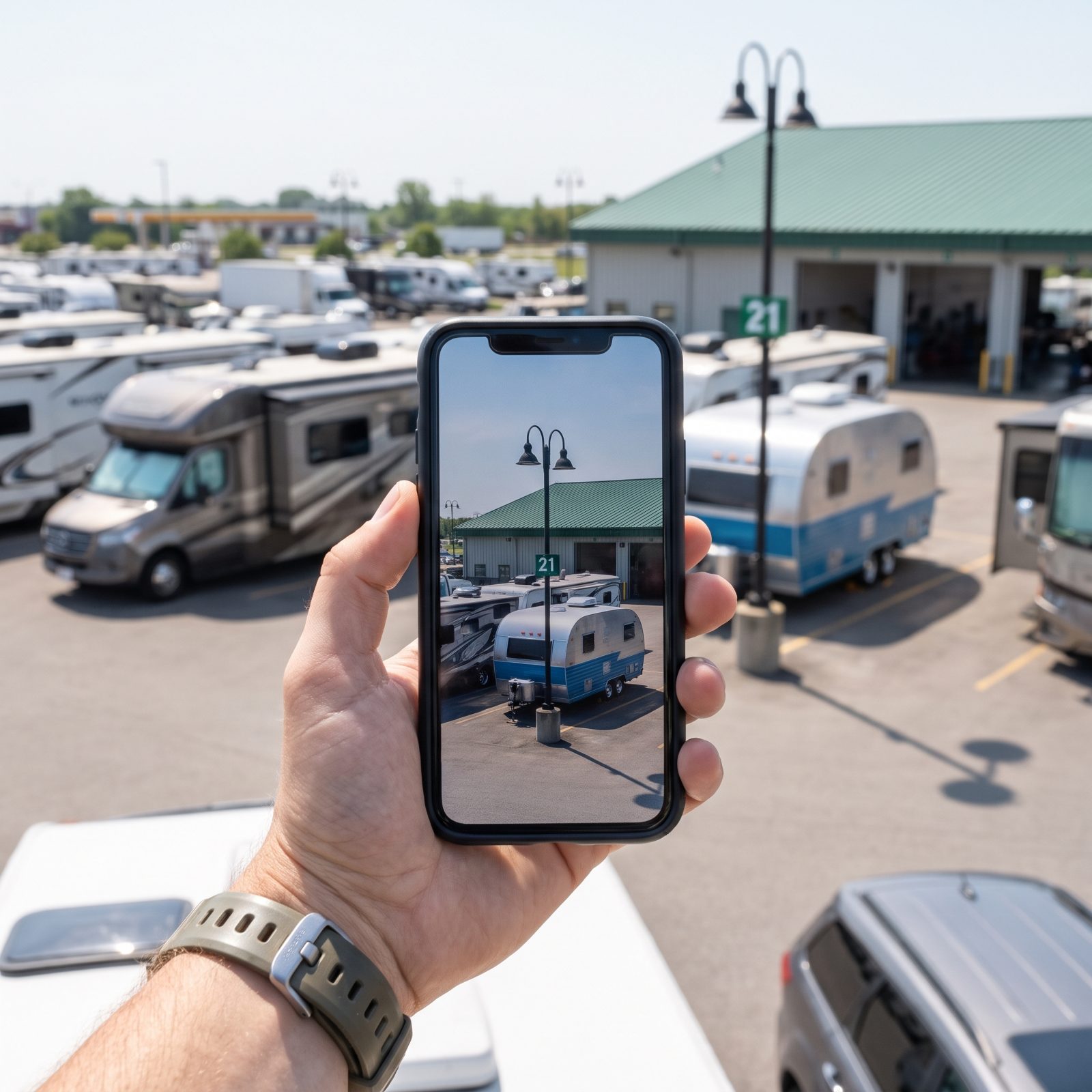
Big truck stops and travel centers swallow rigs whole. You walk inside, grab a coffee, come back out, and suddenly every white motorhome in the place looks exactly like yours.
Snap a photo before you walk away. Get the light pole number, the row, the building you parked near. Thirty seconds now saves ten minutes of wandering a sea of chrome later, especially after dark.
3. Put a Flashlight in a Pocket Before a Late Arrival
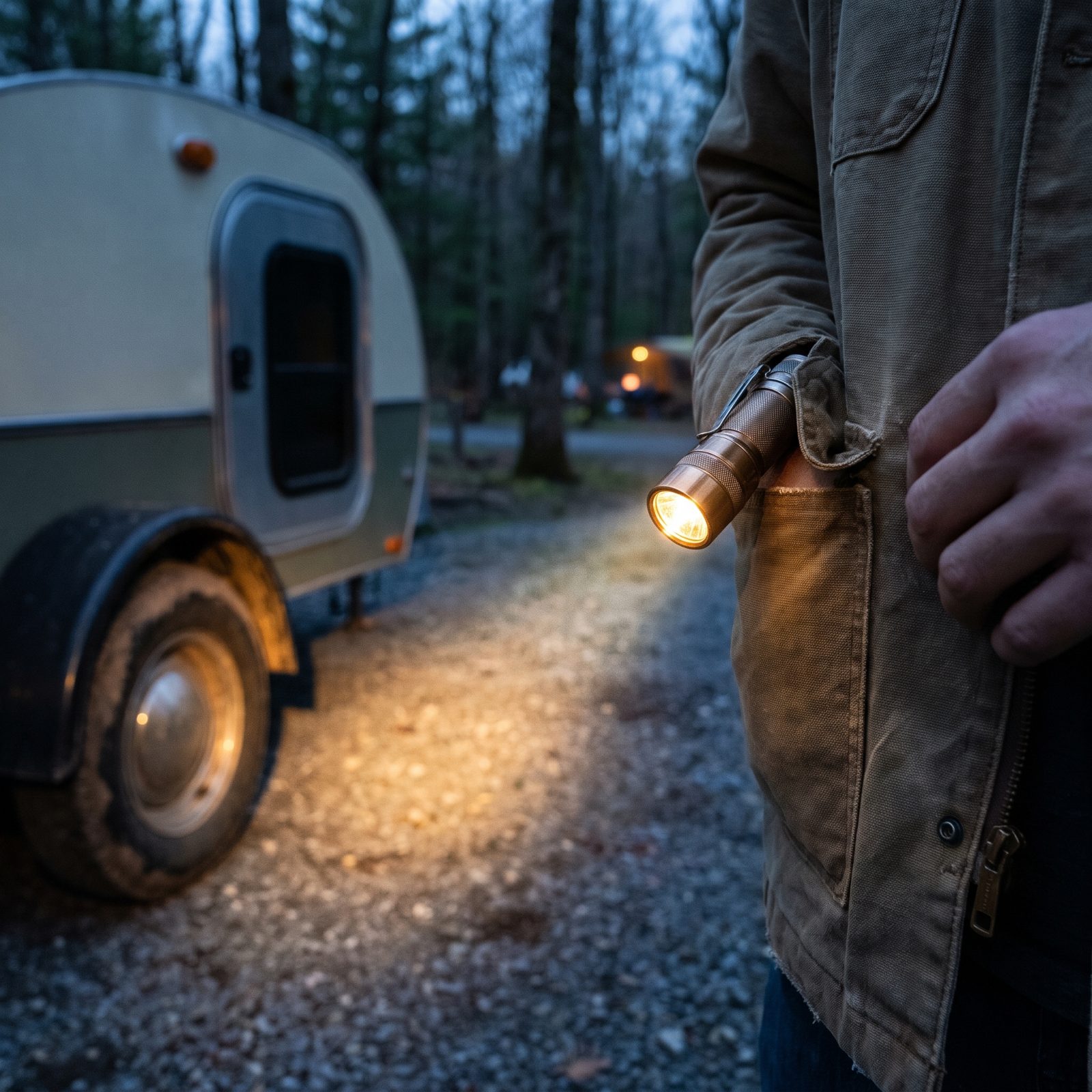
You roll into the campground an hour later than you meant to — which is every arrival, let’s be real — and the sun’s already dropping behind the trees. In a few minutes you’ll be hunting for the water spigot by phone screen while swatting at bugs.
Before you even open the door, a real flashlight goes in your pocket. Not your phone. An actual flashlight, so your hands stay free to find the pedestal, read the hookup, and check for low branches over the roof.
A headlamp beats all of it. Both hands working while you squint at a 30-amp outlet once the last light fades.
2. Position Leveling Blocks Before Unhitching
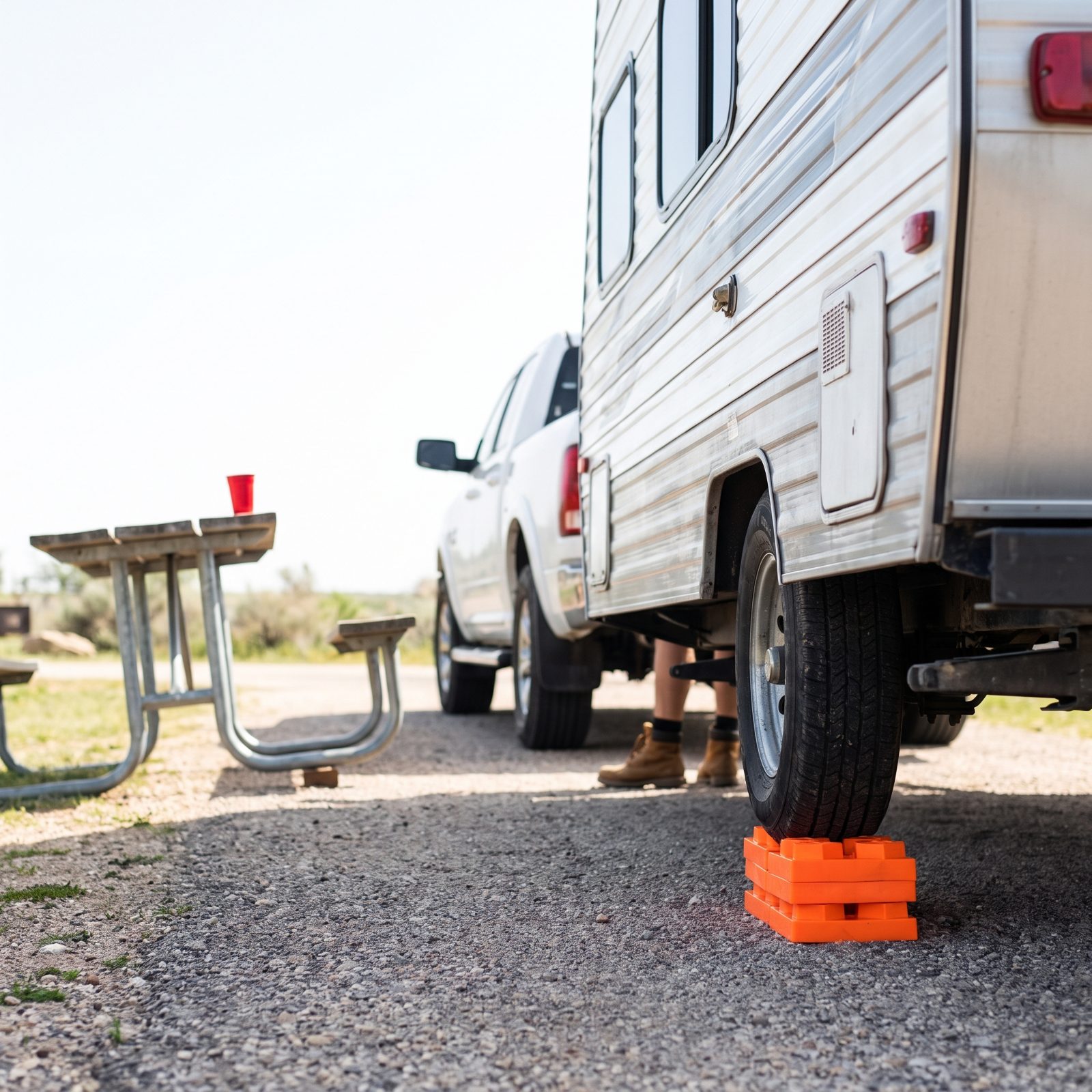
I got this backwards for years. Unhitch, settle in, then notice the whole rig is tilted and the fridge is grumbling about it. Now you’re re-hitching just to drive up onto blocks you should’ve laid out ten minutes ago.
Level side to side first, while you’re still attached and can pull forward. Blocks go under the low-side tires, you check the bubble, then drop the jacks, cut loose from the truck, and park it off to the side.
Do it in that order and you touch the trailer once. Done. Do it out of order and you’re hooking back up in the dark, cranky and starving.
Explaining what to do once the trailer is parked in its site, a longtime full-time RVer says “Now comes the work of leveling your RV, which starts BEFORE you unhitch.”
1. Keep a No-Cook Meal Ready for Arrival Night
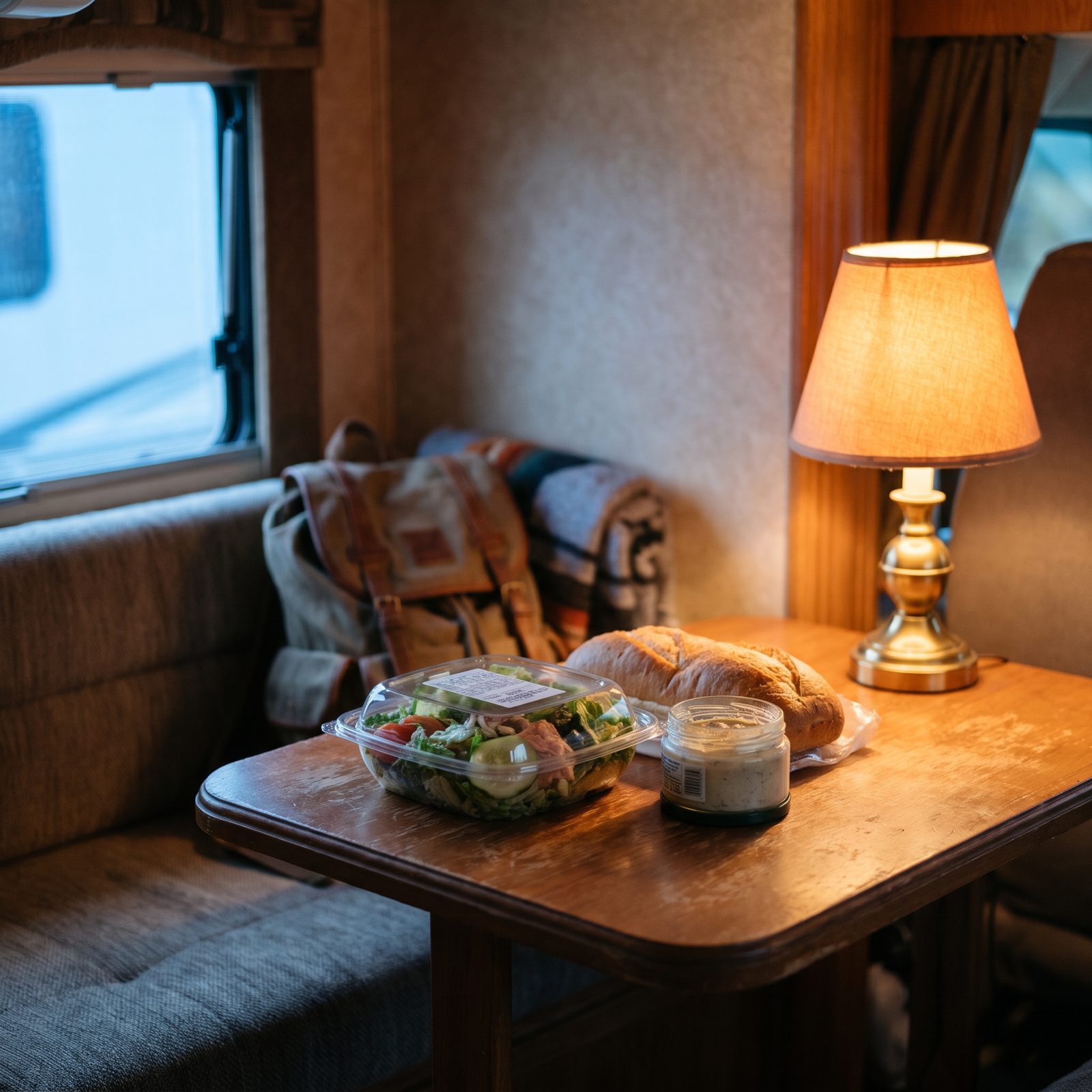
Arrival night is the worst possible night to cook. You’re drained, the galley is still packed, and digging out a pan to fire up the stove is the very last thing you want to do.
So plan around it. A meal that needs zero heat and zero effort — a board of cheese and crackers, a tin of good sardines, a bagged salad, sandwiches you built back at the last fuel stop. Anything that puts food in your hand within five minutes of parking.
Honestly? This one small habit does more for arrival-night mood than any gadget I own. The hot meals can wait for tomorrow.