
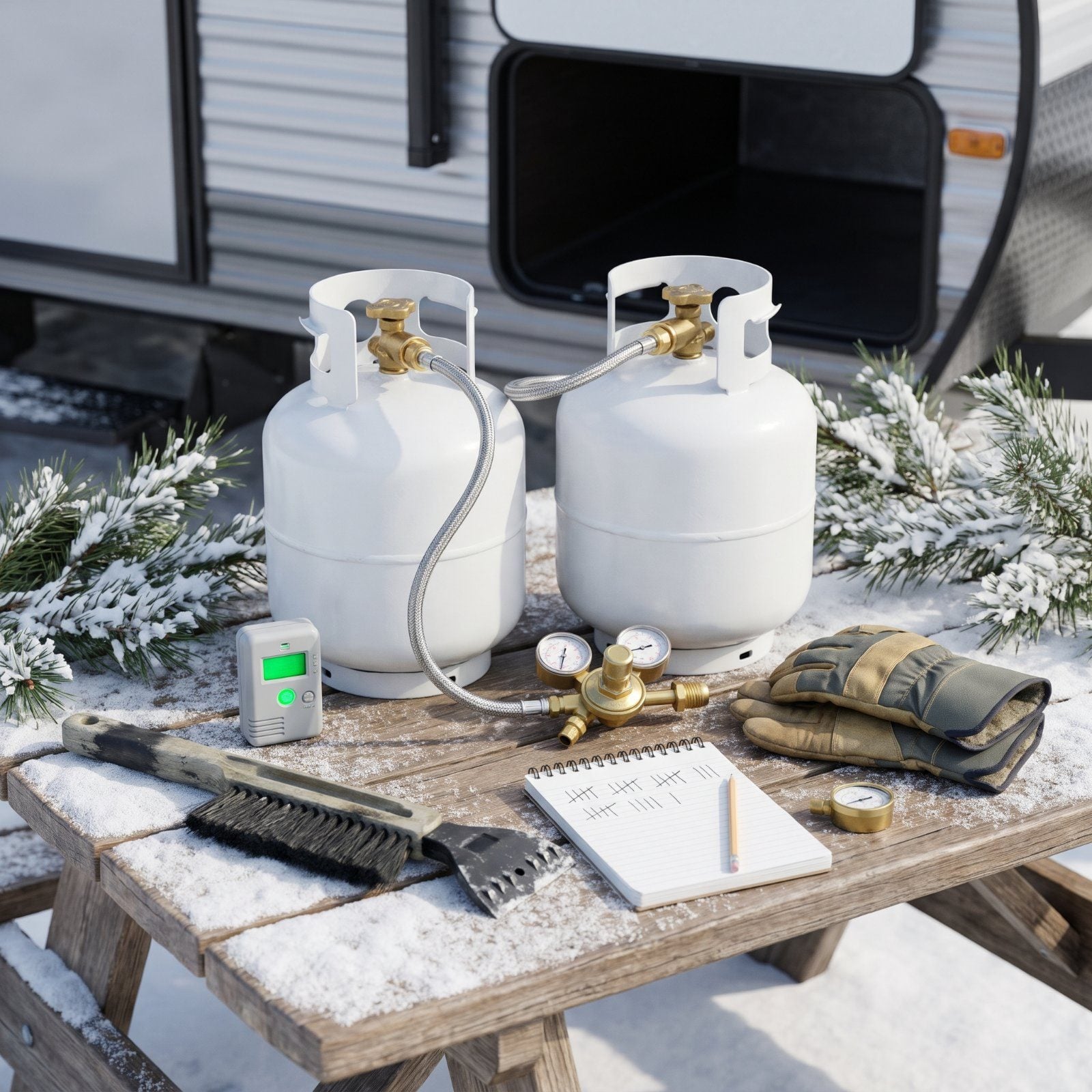
The furnace cuts out at 3 a.m. and the cold moves in fast. You lie there doing math on how long until the propane place opens, whether that reserve bottle is actually full, and why nobody told you snow could choke a furnace exhaust. Winter in a rig runs on propane, and propane does not forgive sloppiness. Run low and your pipes freeze. Skip a detector test and you’re gambling with carbon monoxide. The good news is that a handful of small habits, most done in under a minute, keep the heat on and the risk off. Here are the ones worth building into your week.
Please note that some of the images in this article were created with the assistance of AI.
37. Test the Propane and CO Detector Every Week and Honor Its Expiration Date
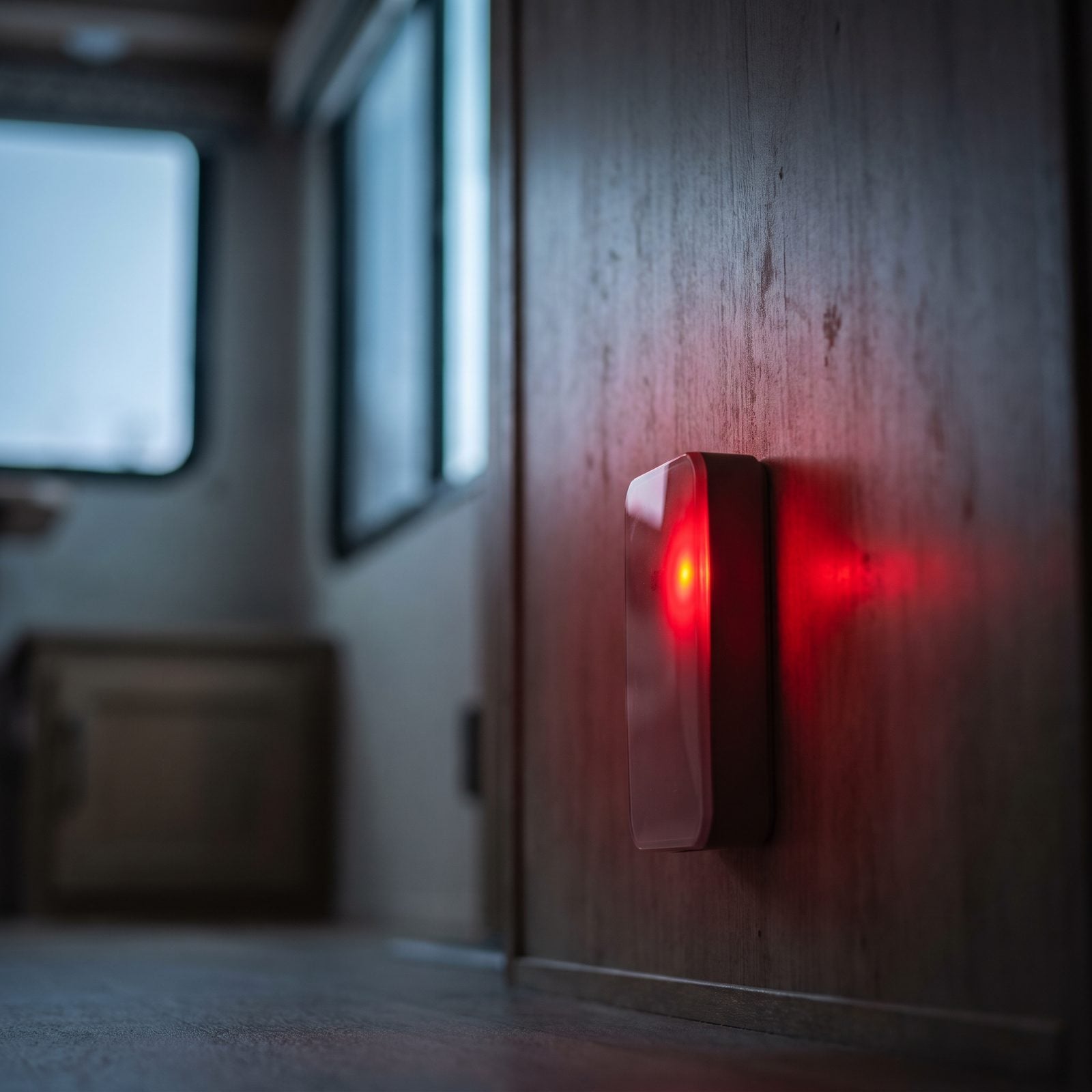
That little unit near the floor stands between you and a quiet, invisible problem. Propane settles low, carbon monoxide hides, and your nose can’t warn you while you’re asleep. Press the test button once a week until you hear the alarm scream. Ten seconds, done.
Here’s the part nobody mentions: these detectors expire. Most have a five to seven year lifespan, with a date stamped right into the housing, and after that the sensor drifts until a silent unit reads just like a working one. Replace it on schedule, not when it finally dies on you.
36. Clear Snow From the Furnace Exhaust Vent on the Rig’s Exterior
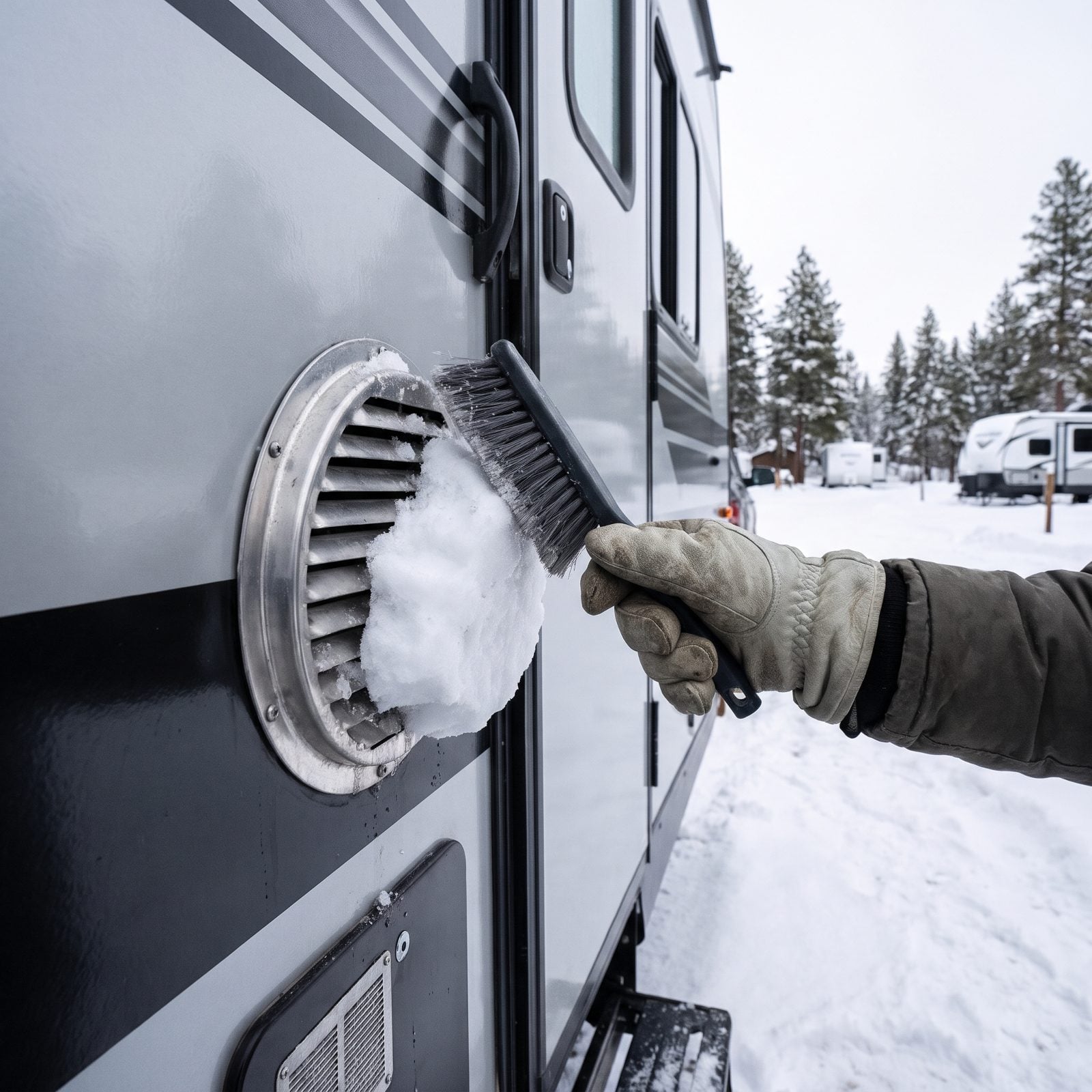
A furnace that can’t breathe out shuts down, and the stubborn ones keep trying while spilling exhaust where you don’t want it. Snow drifts against the sidewall overnight and buries that little louvered vent without you noticing a thing.
Walk the perimeter after every snowfall and after any windy night. Brush the vent clear, plus a few inches around it. Blowing snow packs harder than the stuff that falls straight down, so don’t trust a calm morning that followed a windy evening.
35. Top Off Every Tank Before a Winter Storm Lands
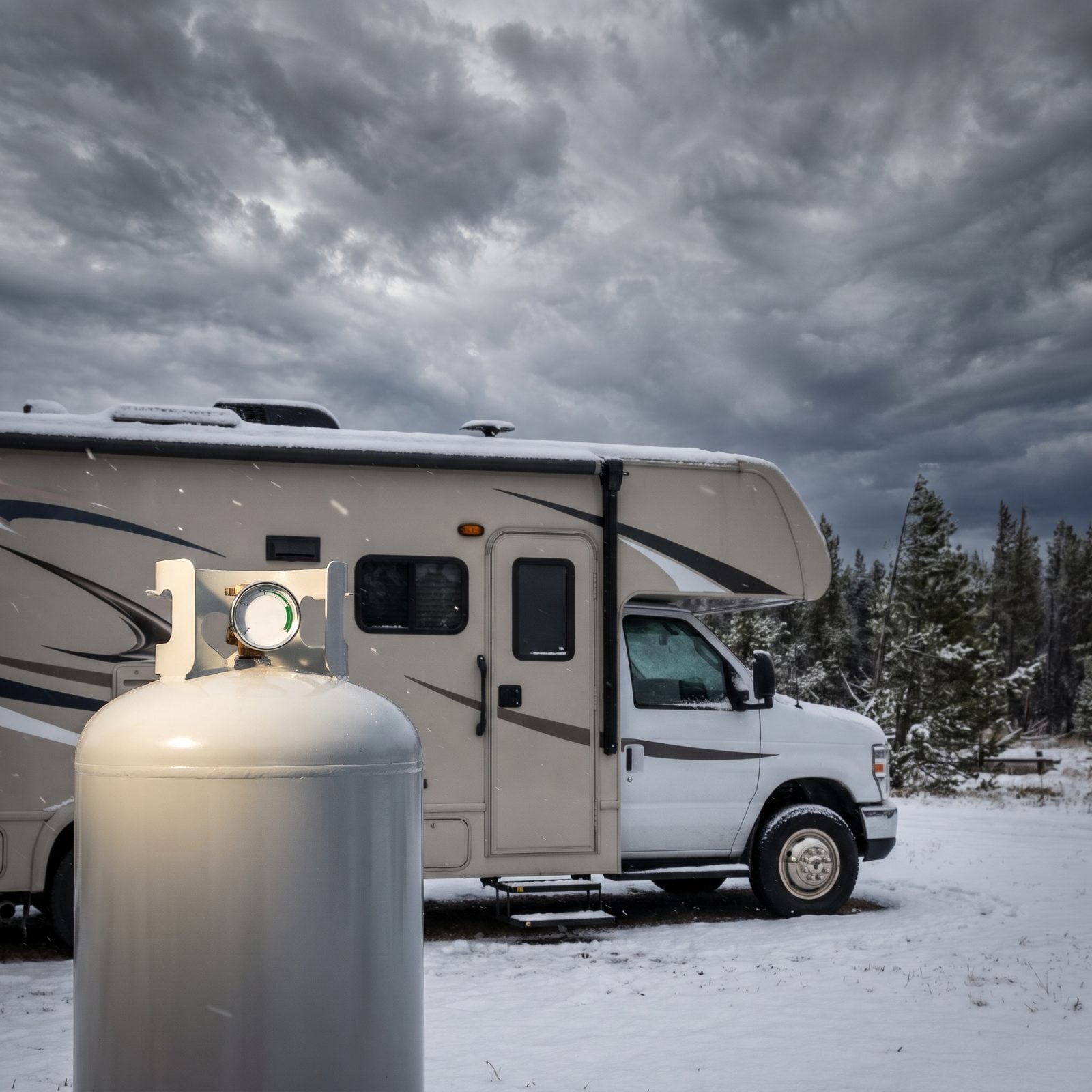
A full tank is cheap insurance against a miserable week. Propane demand spikes before a storm, suppliers run short, and roads close right when you need a refill most. The forecast is your early warning. Use it.
Fill when you see the storm coming, not when the gauge gets low. A tank topped off at the safe fill limit buys you days of heat while everyone else is stuck waiting on the plow and the delivery truck.
34. Log Daily Propane Use and Do the Simple Math on Days Left
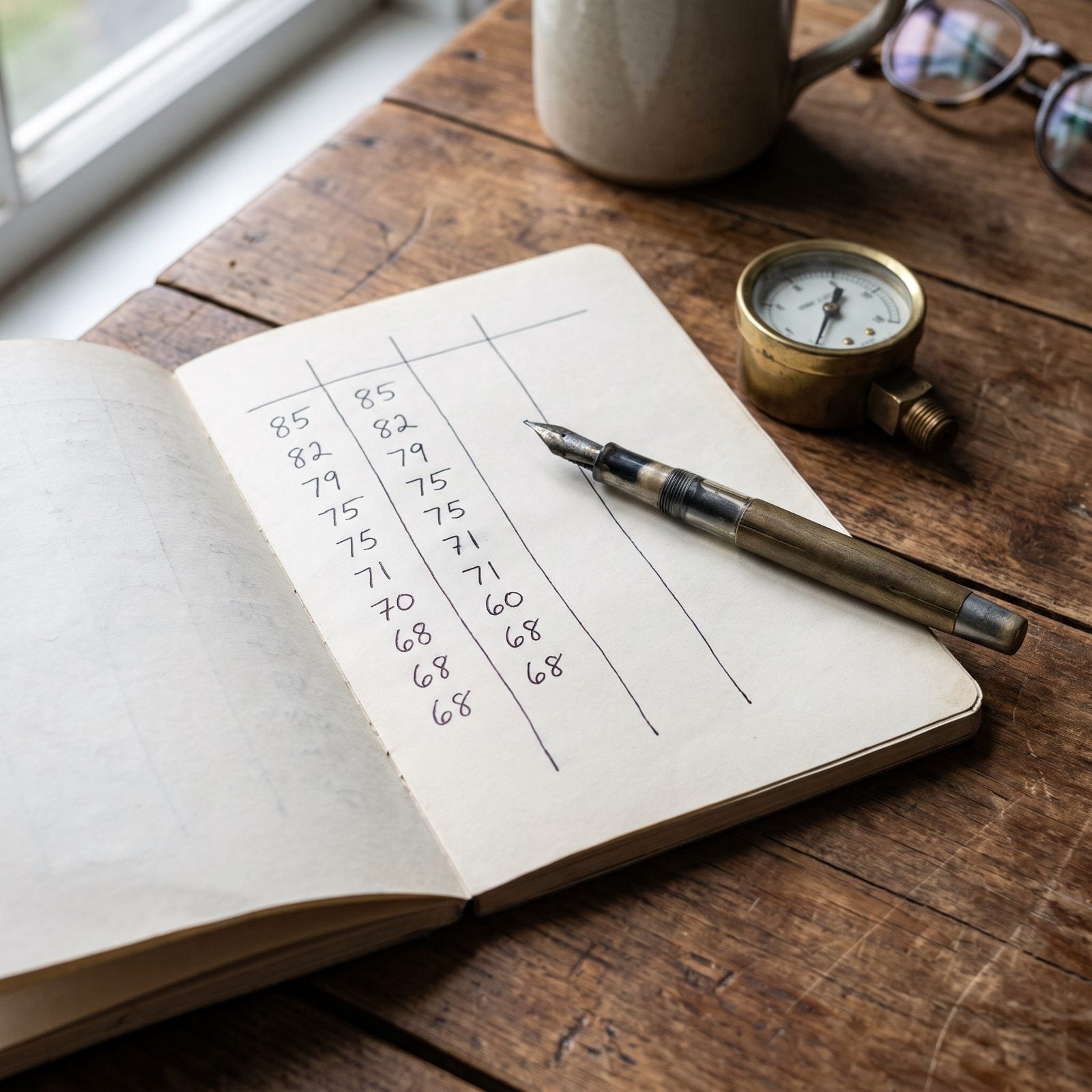
Guessing your propane burn in winter is how people end up cold at 3 a.m. Run the furnace hard and everything changes. A tank that lasted three weeks in October might last six days in a cold snap.
Keep it simple. Jot the gauge reading each morning and watch how much it drops. Two days of data tells you your daily burn, and dividing what’s left by that number gives you a real deadline instead of a hopeful guess.
A gauge tells you what you have. A log tells you how long it lasts.
33. Map Nearby Propane Suppliers and Confirm Their Winter Refill Hours
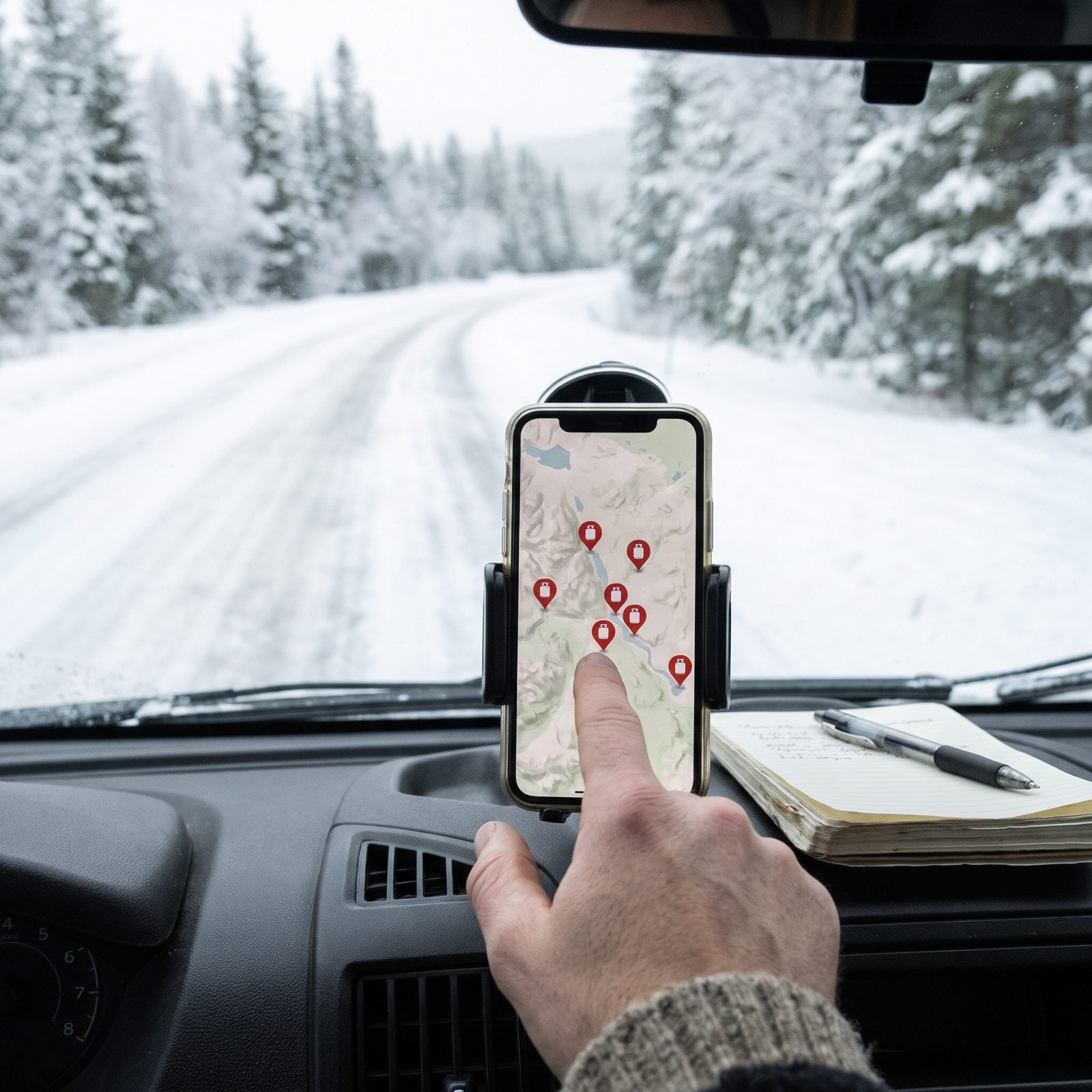
The place that filled your tank in summer might close at noon in January, or shut down entirely for the off-season. Winter hours are shorter, holidays close everything, and a single storm can knock a refill point offline for days.
Before you settle in anywhere cold, line up two or three suppliers. Call and confirm their actual winter hours, because the ones posted online are often last summer’s. Knowing a backup opens at 7 a.m. changes how you sleep.
32. Keep a Full Reserve Cylinder Stored Outside the Living Space
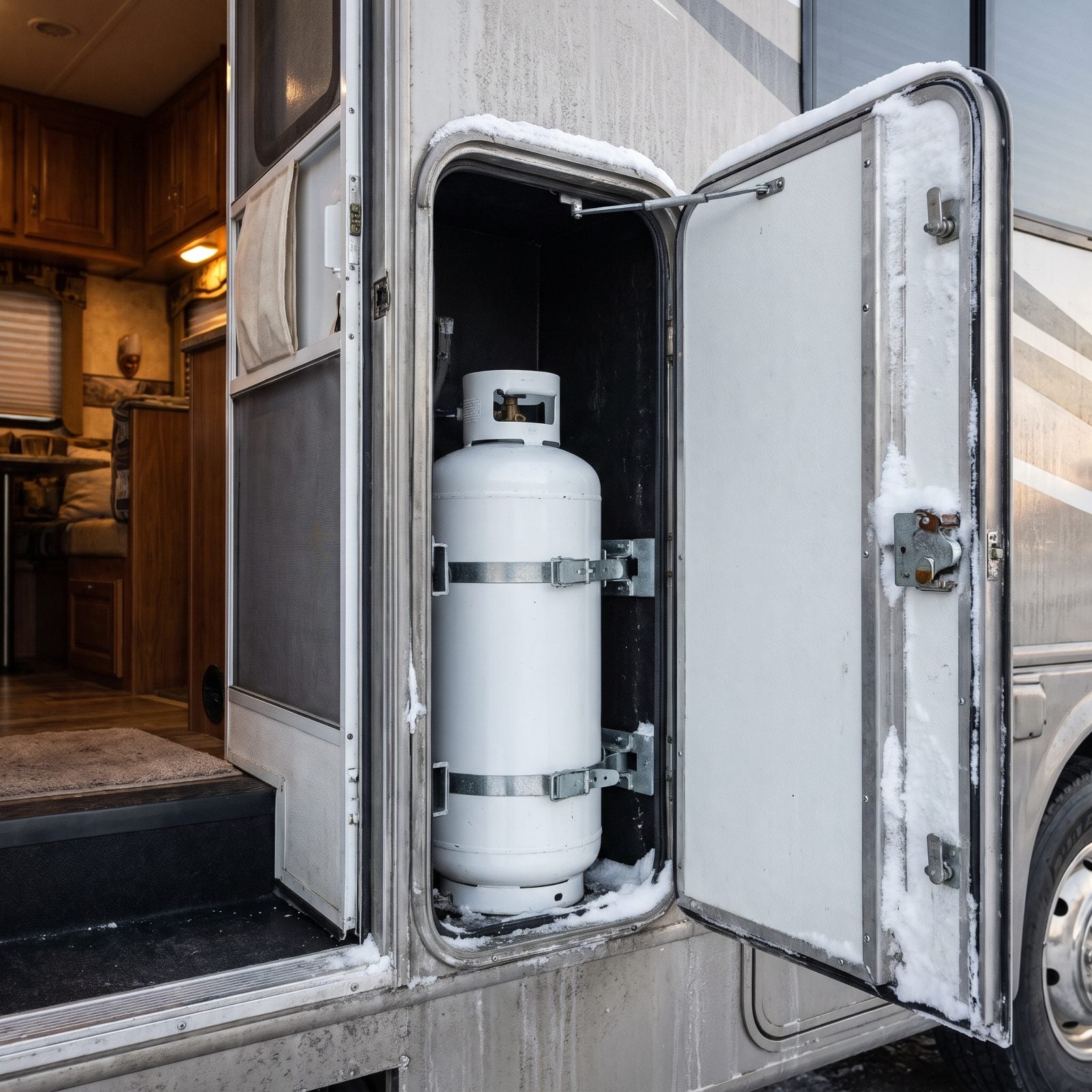
A spare bottle is only useful if it’s full and if it’s outside. Never store a propane cylinder inside the rig. A slow leak in an enclosed space is the kind of mistake that doesn’t give you a second chance.
Strap a full reserve to the bumper rack or an exterior compartment that vents. When your main runs dry at midnight you want a swap, not a crisis. And refill the reserve the day after you use it, not next week.
31. Glance at the Automatic Changeover Indicator Every Single Day
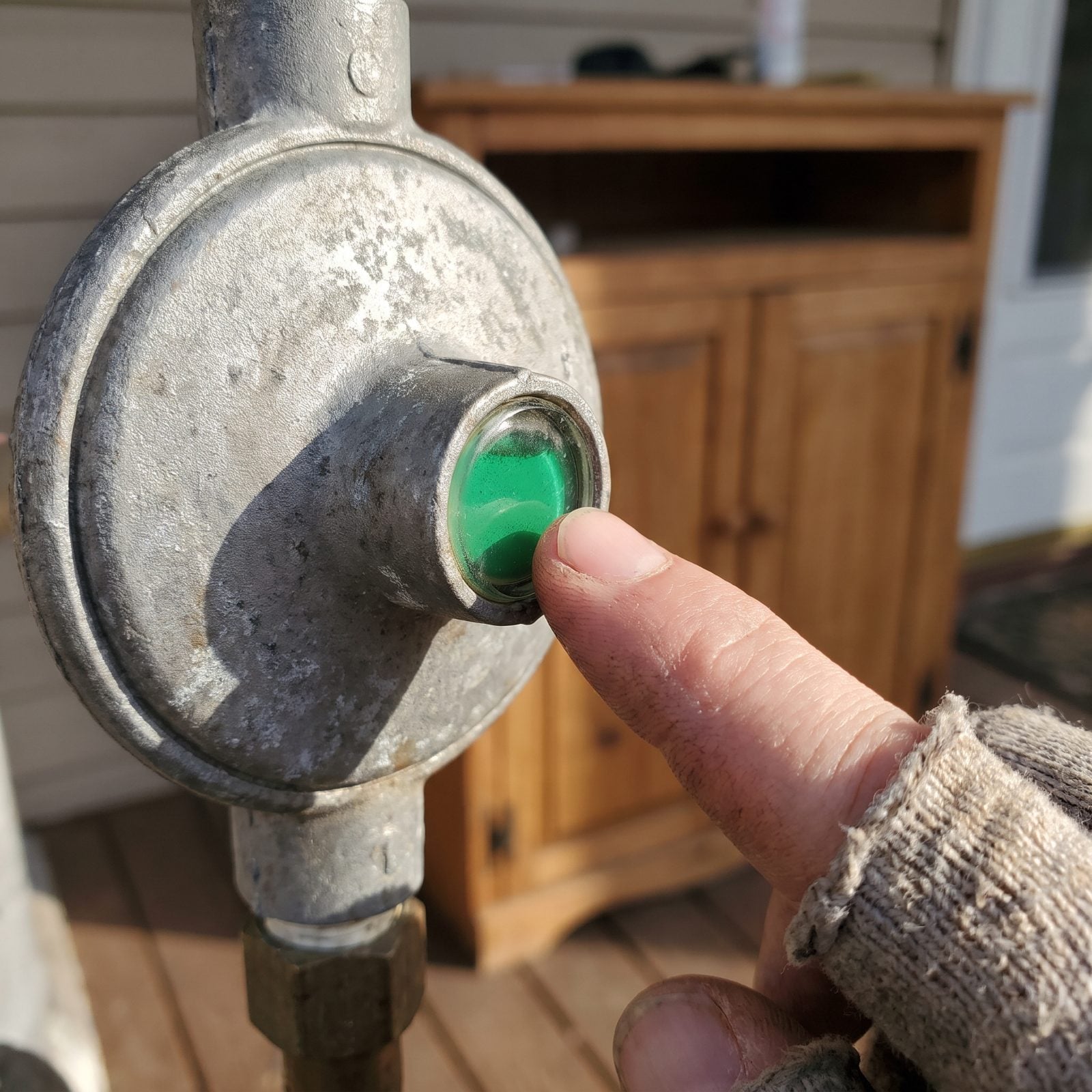
An automatic changeover regulator switches to your full tank when the first runs dry, quietly, without waking you. The catch? It does this so smoothly you might burn through both tanks before you notice.
That little indicator window flips from green to red when the first cylinder empties, so check it once a day. Red means one tank is gone and you’re running on your last. Refill before the second one leaves you cold too.
30. Check the Recertification Date Stamped on Every Portable Cylinder
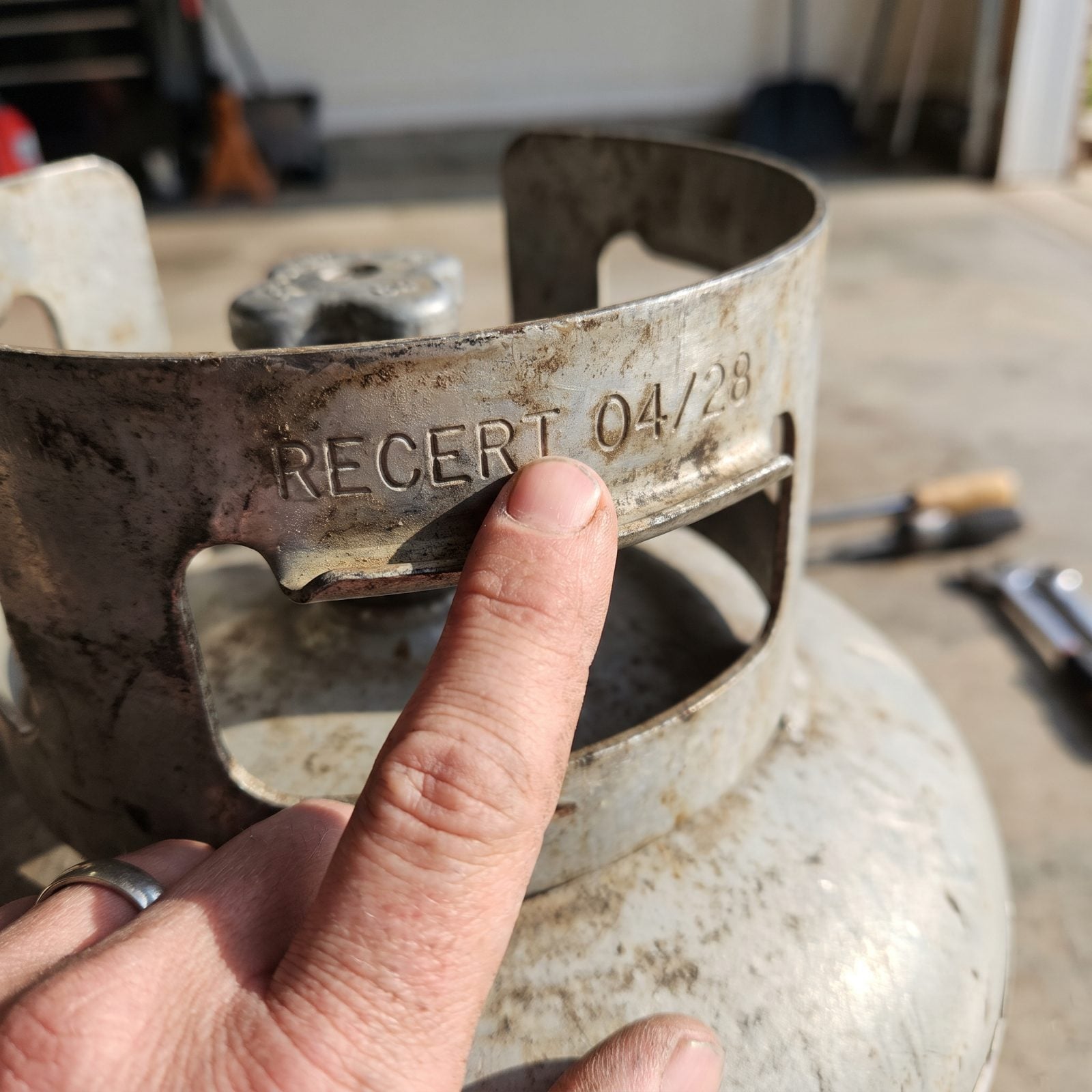
Every refillable propane cylinder has a date stamped into its collar, and a filling station can legally refuse an expired one. Nothing like learning that in a January parking lot with an empty tank and a long drive back.
New cylinders are good for twelve years from manufacture, then need recertification every five after that. Check the stamp on each bottle you own before the cold sets in. An expired tank is a brick until you get it re-inspected or swapped, and winter is the worst time to find that out.
29. Keep a Shoveled Path Clear to the Propane Compartment
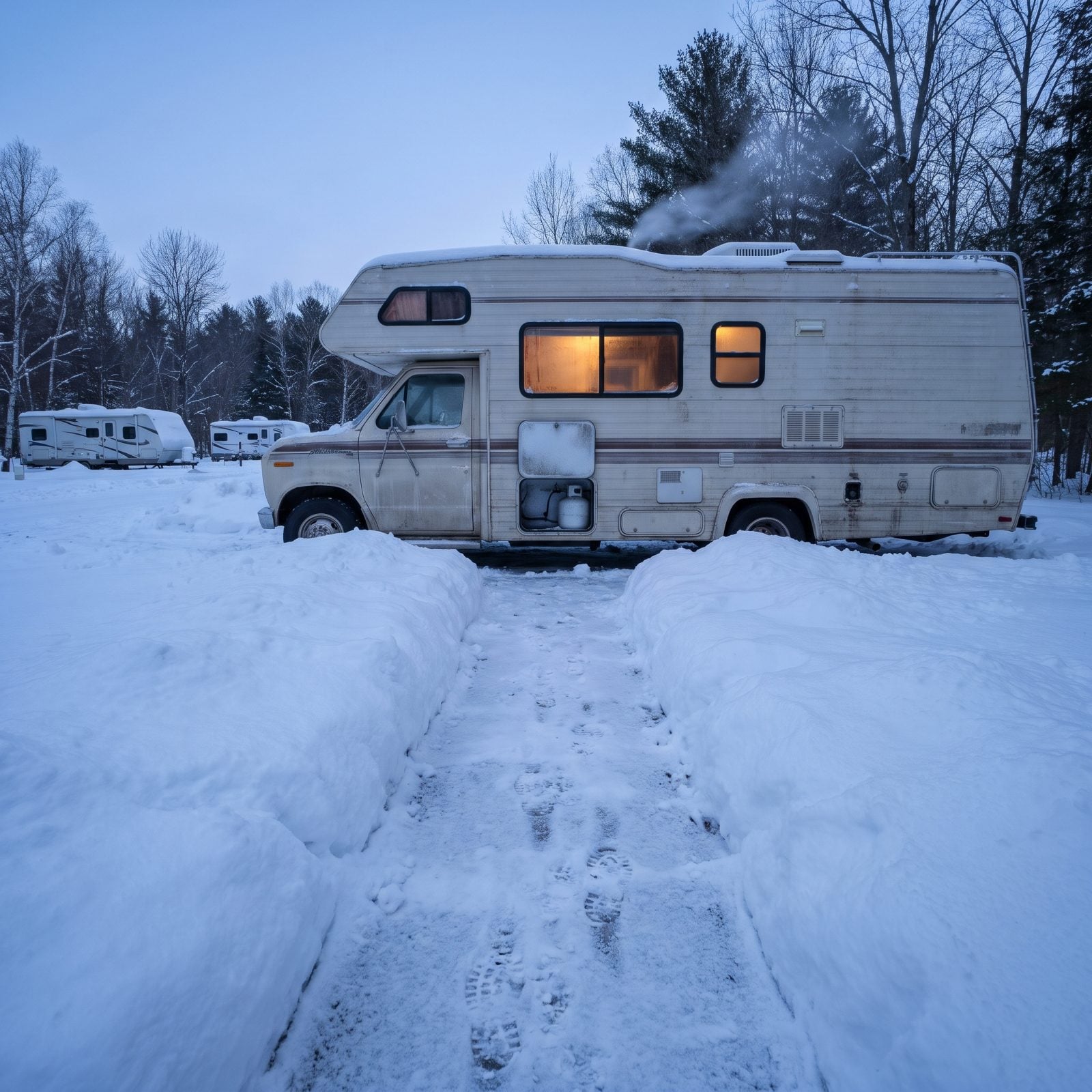
When the tank runs dry it’s usually dark, usually cold, and the snow is usually deeper than you think. Wading thigh-high to reach a frozen compartment latch while your breath fogs is nobody’s idea of a good night.
Shovel a path to the compartment after each snowfall and keep it clear. You want to open that door and work the valve with bare hands if you have to, not dig for ten minutes first. A clear path doubles as a clear exit if anything ever goes wrong.
28. Brush Snow and Ice Off the Regulator and Its Vent
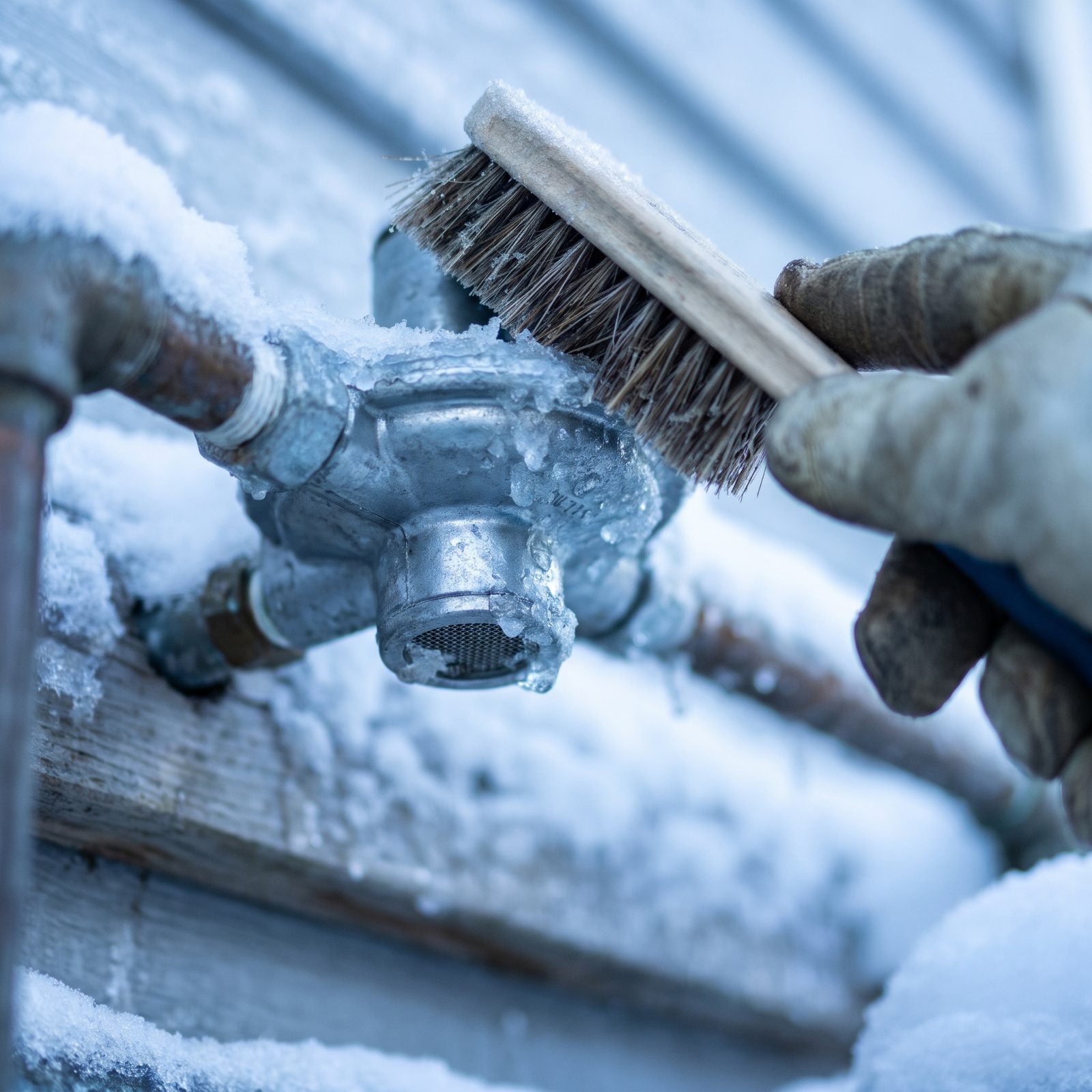
The regulator is the quiet workhorse that steps your tank pressure down to something the furnace and stove can use, and it has a small vent that absolutely cannot ice over. A frozen vent means erratic pressure, which means appliances that sputter or won’t light.
After snow or an ice storm, brush the regulator clean and make sure that little vent is clear. It usually points down for a reason. A wooden scrub brush with natural bristles and a light touch, thirty seconds. Freezing rain is the real enemy, since it glazes over the vent in a way powder never does.
As one longtime propane service provider puts it, “In practice we observe that when the vent is buried by snow, or the regulator is mounted too low and gets covered by accumulating snow or ice, the regulator may stop working properly or deliver erratic pressure.”
27. Point the Regulator Vent Straight Down
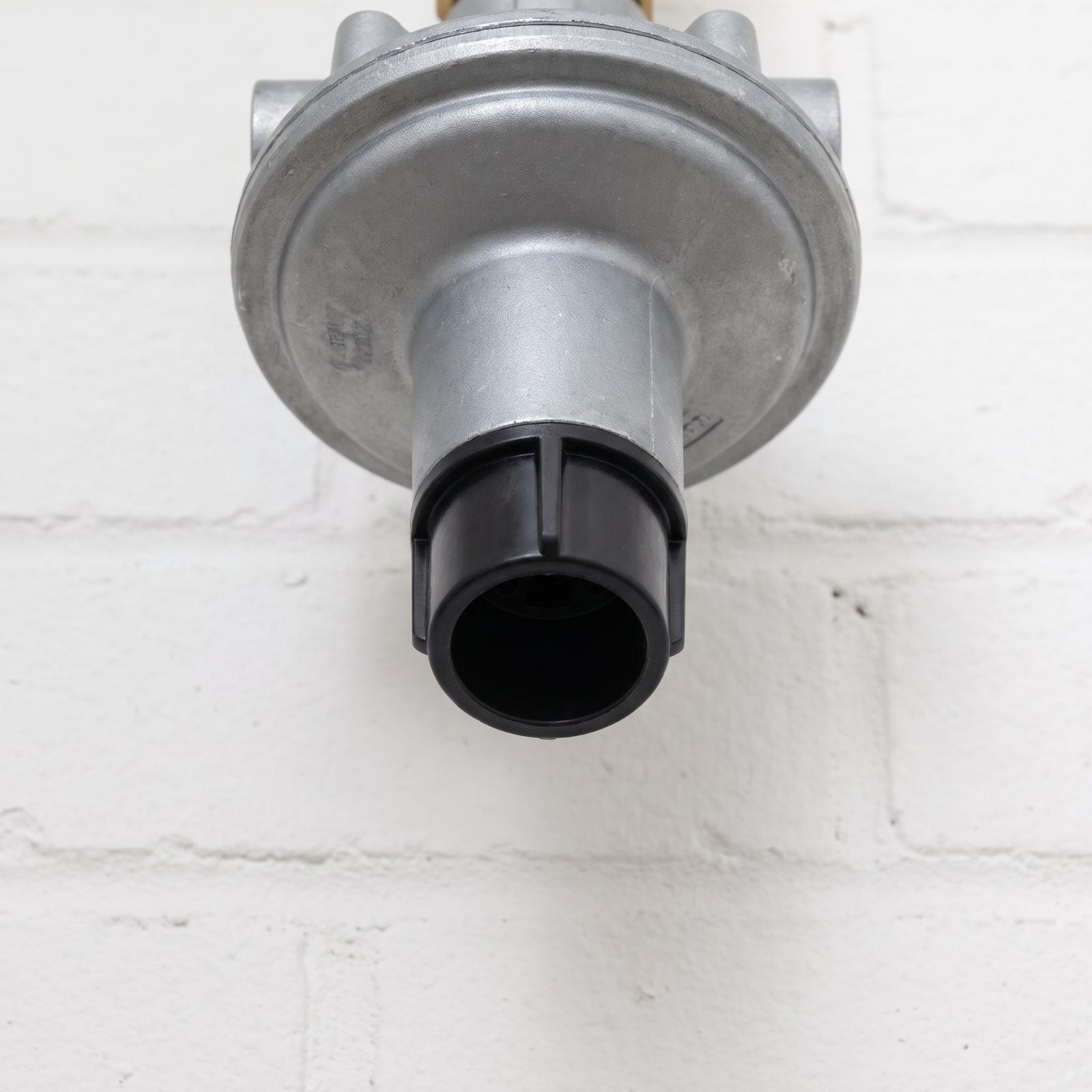
That little slotted cap on the underside of your regulator is not decoration. It lets the diaphragm breathe, and in winter it needs to drain. Point it sideways or up and snowmelt works its way in, freezes overnight, and your furnace sputters out at 3 a.m.
Vent down. Always. A replacement regulator runs cheap and takes ten minutes to swap, so there’s no excuse for one aimed the wrong way. I ignored this on an early trip and spent a cold morning blaming the furnace for a sin it didn’t commit. The furnace was fine.
One off-road trailer builder advises that an exposed propane regulator’s vent should point downward so gravity drains moisture away from its internal parts. (via one off-road trailer builder)
26. Keep the Propane Compartment Vents Open and Unblocked
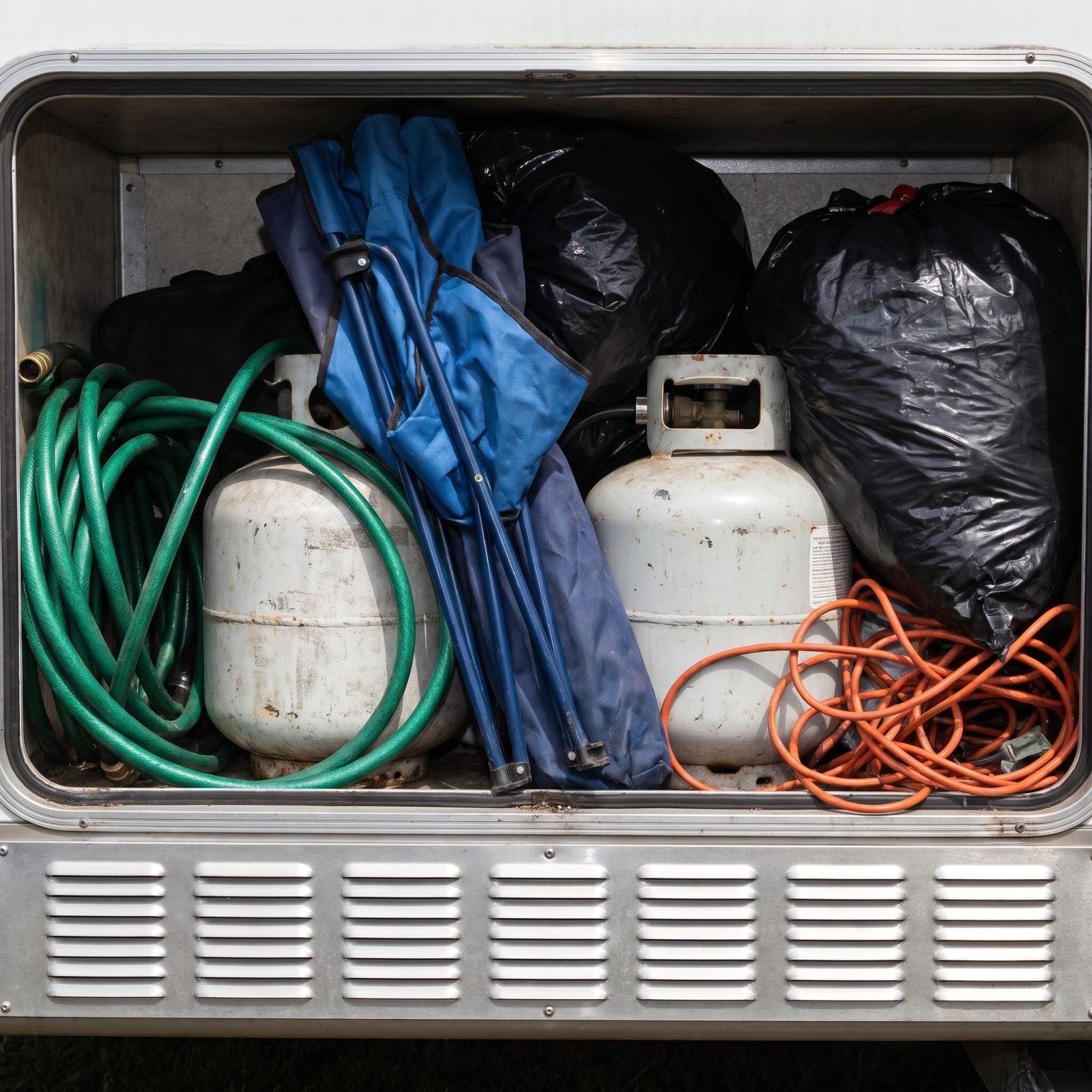
Propane is heavier than air, so any leak settles low and drifts out the compartment’s bottom vents. Pack that space with camp chairs, a bag of firewood, or a tarp bunched over the louvers and you’ve turned a safety feature into a trap.
Before every trip, run your hand along the top and bottom vents and clear them. In winter that means sweeping out snow and ice too. Thirty seconds. Nobody mentions it until the first time a detector goes off and they can’t figure out why.
25. Check Tanks for Rust, Dents and Valve Damage Before You Fill
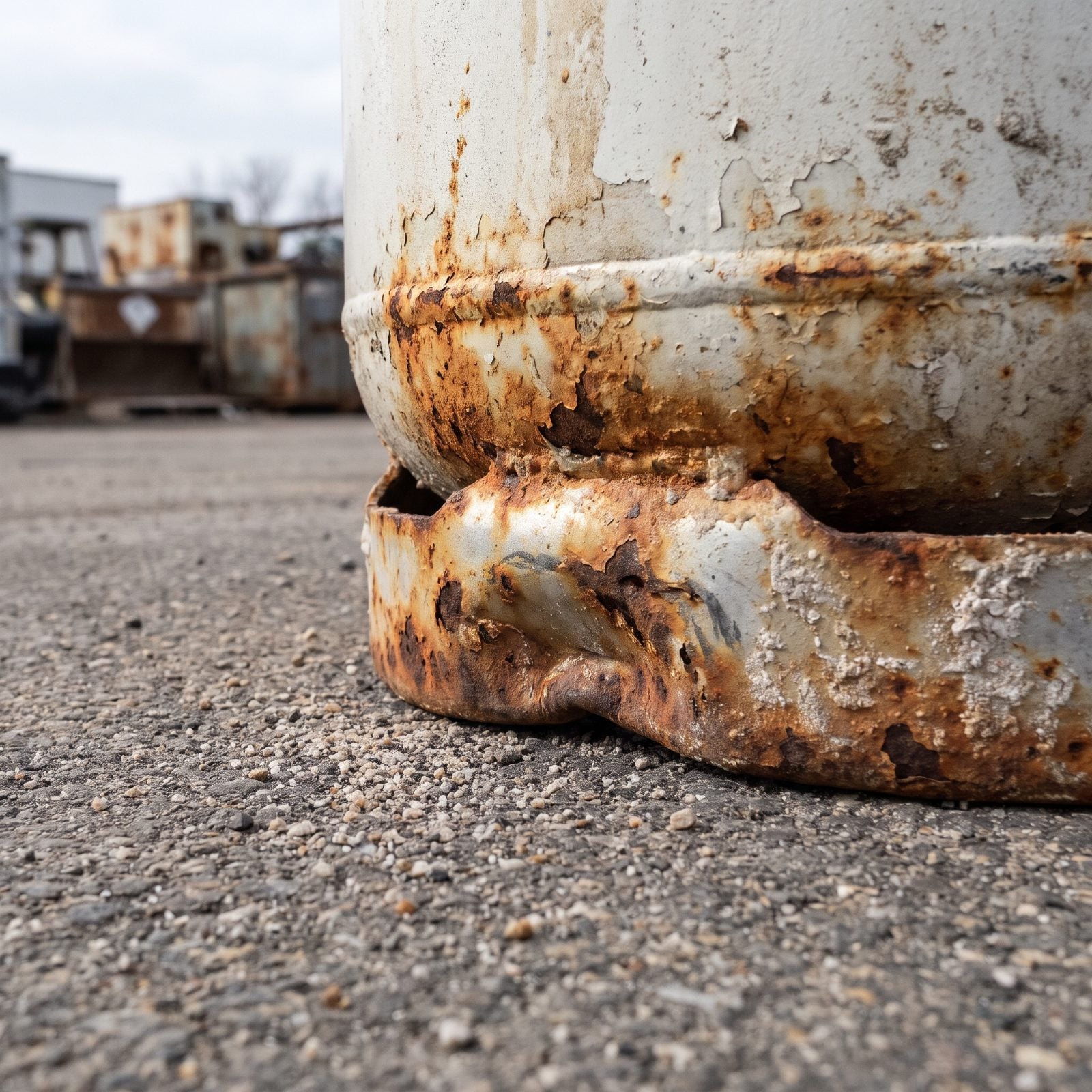
A cylinder is a pressure vessel, and winter is hard on steel. Road salt eats at the base ring, the open steel collar a tank stands on, like the flaking, salt-crusted one pictured here. A dent you didn’t notice can concentrate stress, and a ring that’s flaking and crusted white with salt tells you the thing has had a hard life.
Look before every refill. Surface rust is cosmetic, but flaking rust, deep dents, bulging, or any damage to the valve collar means retire it. Most refill stations won’t touch a tank past its certification date anyway. DOT cylinders need recertifying twelve years from the manufacture date, then every five years after. Read the collar stamp. If you can’t read it, that’s your answer.
24. Haul Cylinders Upright and Strapped Down, Never Loose on the Floor
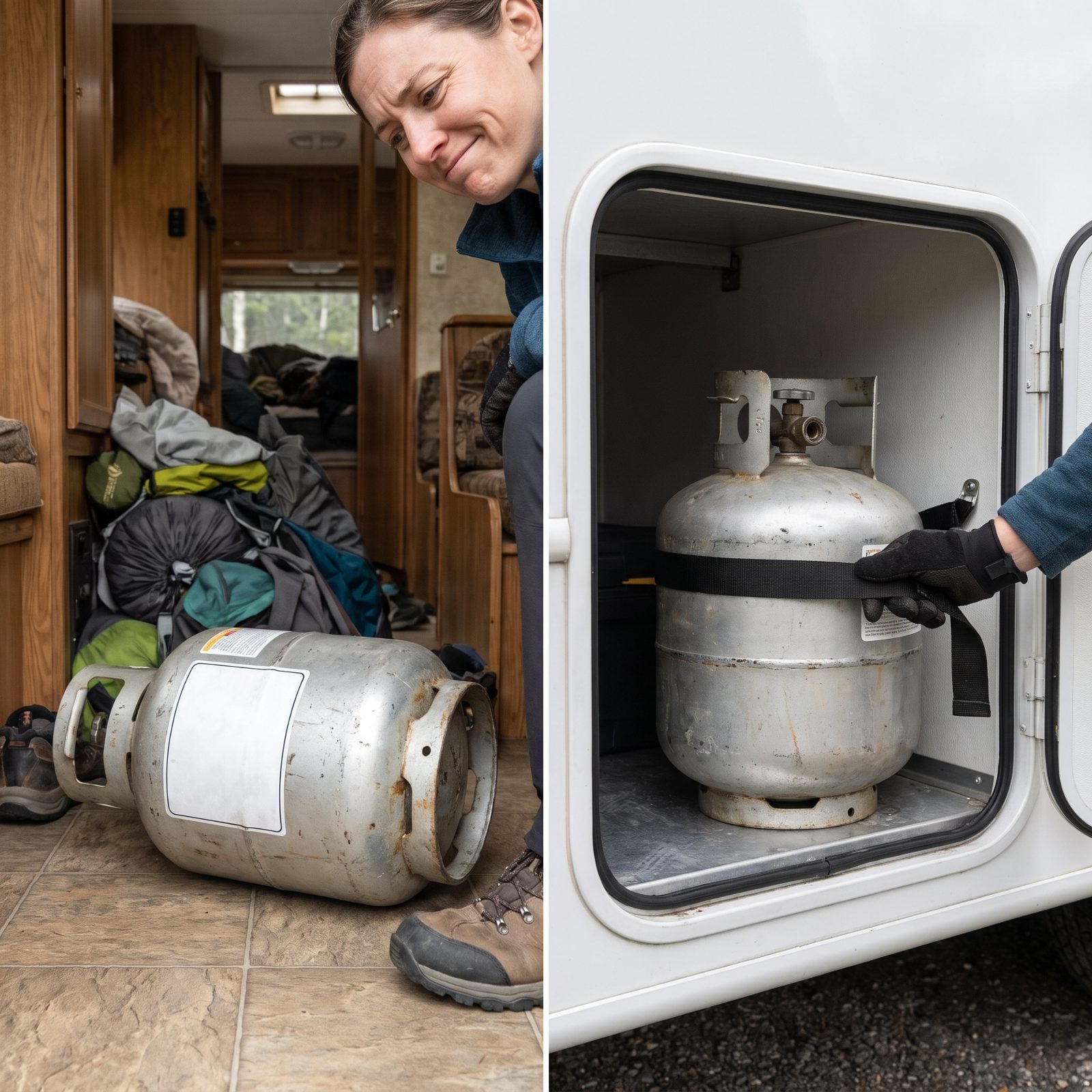
Lay a propane cylinder on its side and the liquid shifts against the pressure relief valve, which is built to vent vapor, not liquid. Now it can discharge liquid propane straight into an enclosed car. That’s a bad afternoon.
Upright, always. Strap it so it can’t tip or roll. A twenty-pound tank thrown around a trunk on a mountain curve is a wrecking ball with a valve on top. Hauling a fresh fill home? Crack a window and keep it short.
23. Thaw a Sluggish Cylinder With Patience, Not a Torch
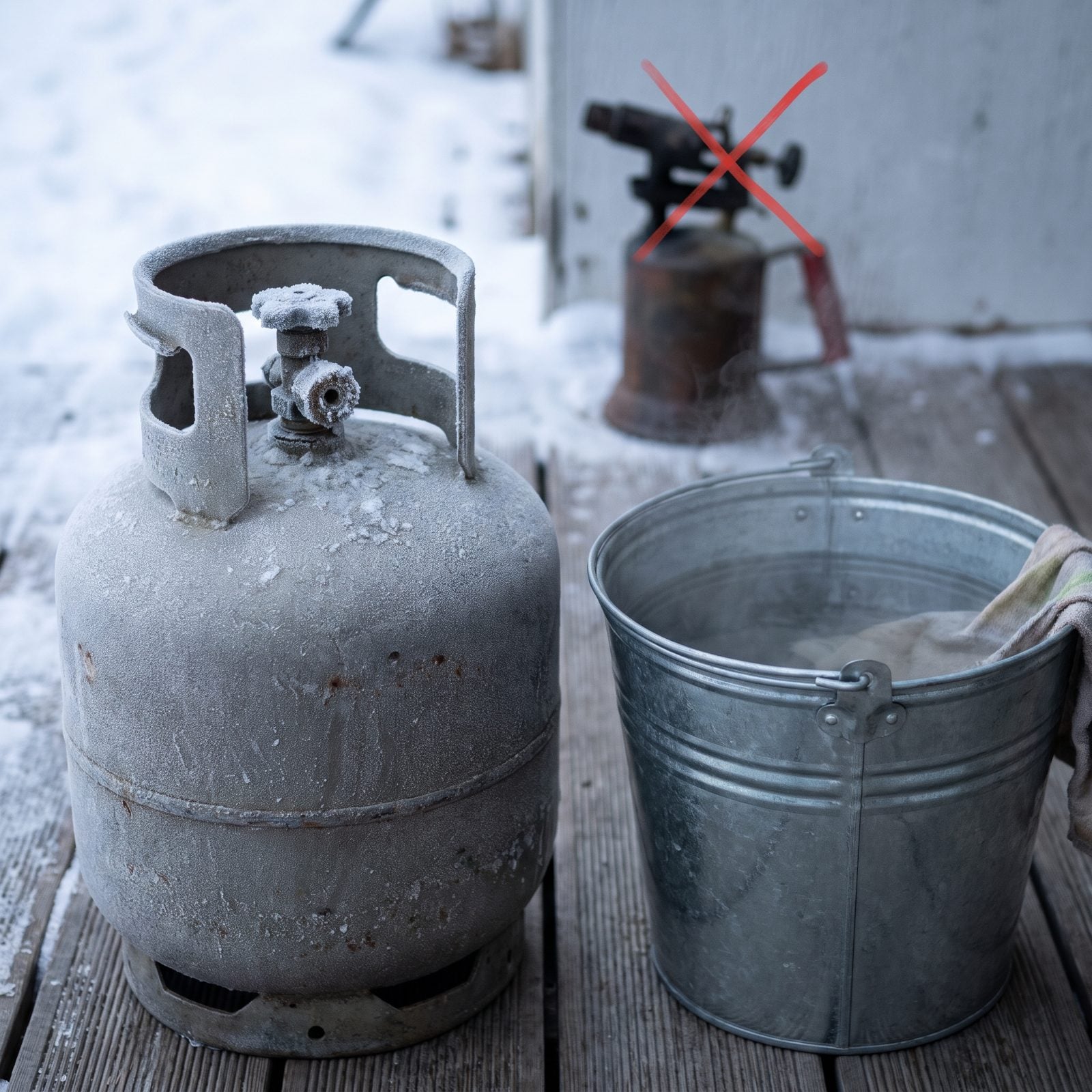
Cold weather drops cylinder pressure, and sometimes frost builds on the tank as propane vaporizes. The temptation is to speed things up with a heat gun or a torch. Don’t.
Direct heat on a pressurized vessel is how you get a relief valve dumping, or worse. Instead, stand the tank in a bucket of warm (not boiling) water, or drape it with a towel soaked in warm water, and let it come up to temperature gently. Move the tank into sunlight or just wait it out. In deep cold, a larger tank or a second cylinder solves the pressure problem for good. Rushing never does.
22. Shut the Cylinder Valve Before You Loosen a Single Fitting
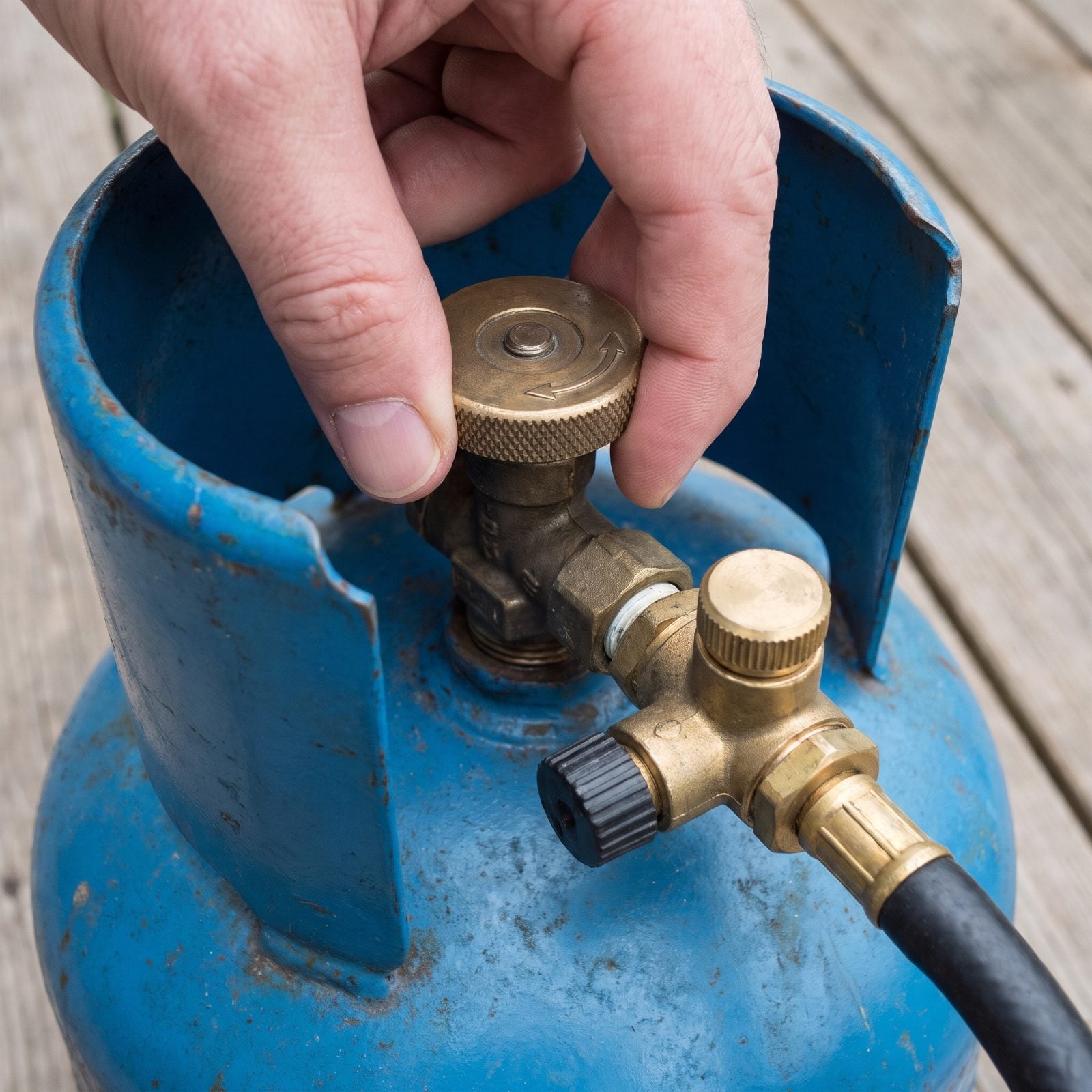
Simple sequence, routinely skipped: valve off first, then disconnect. Crack a fitting with the valve still open and you get a hiss of escaping gas, a cold burn on your fingers from the rapid expansion, and propane pooling around your feet.
Turn the handwheel fully clockwise. Give it a second for the line to settle, then break the connection. Every swap, every time. You want this to be muscle memory, because the one night you’re rushing in the dark is exactly when it matters.
21. Reset a Tripped Excess-Flow Valve the Right Way
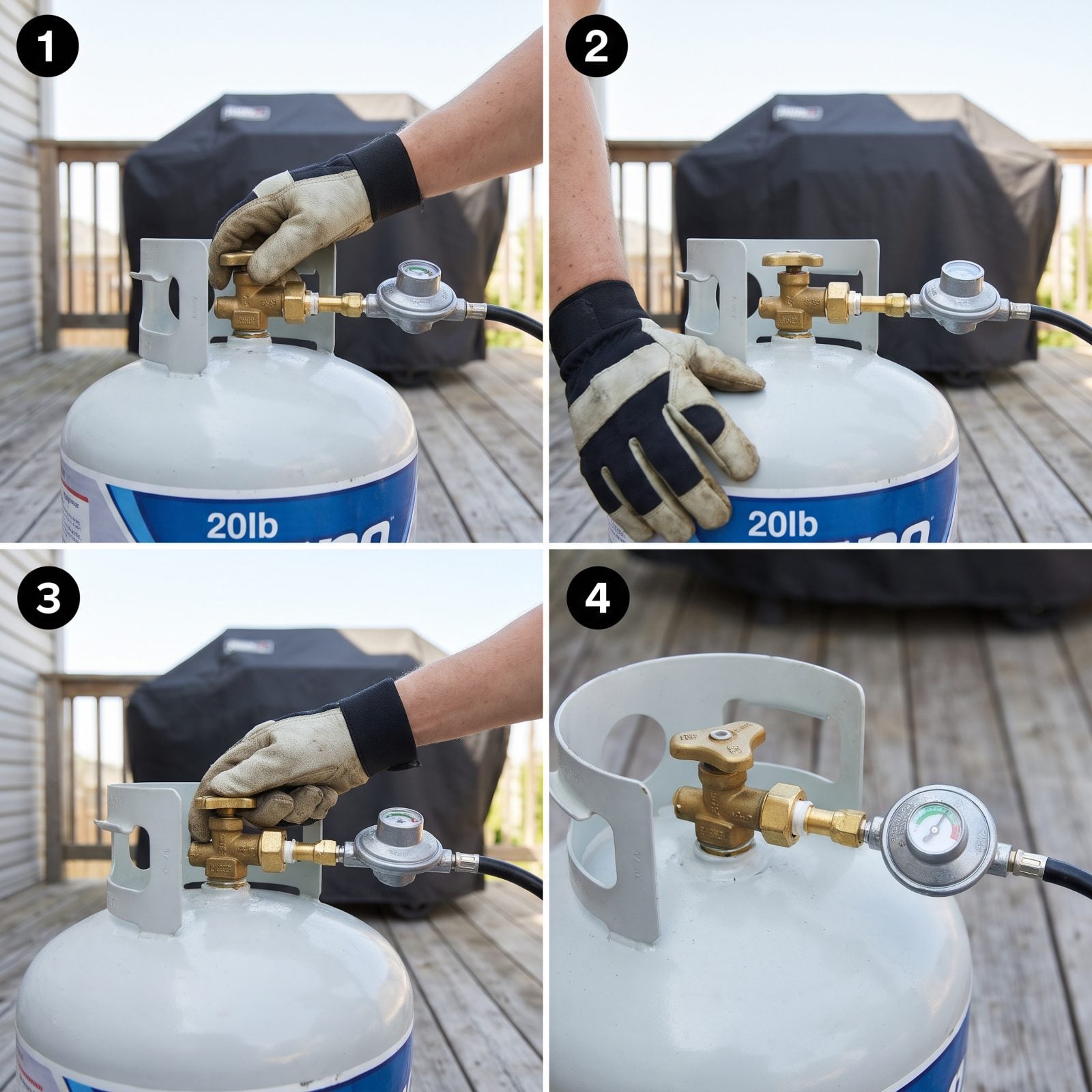
So you tripped the flow limiter. Here’s the fix, in order:
- Turn the cylinder valve fully off.
- Turn off every propane appliance inside: furnace, stove, water heater, fridge on gas.
- Wait a minute for the internal spring to reset to neutral.
- Open the cylinder valve slowly, that quarter-turn-and-pause move.
- Light your appliances one at a time, not all at once.
Skip the wait or open fast again and you’ll just re-trip it and ride the whole frustrated cycle a second time. The valve isn’t broken. It’s doing its one job.
20. Brush Soapy Water on Every Fitting After a Swap, Never a Lighter
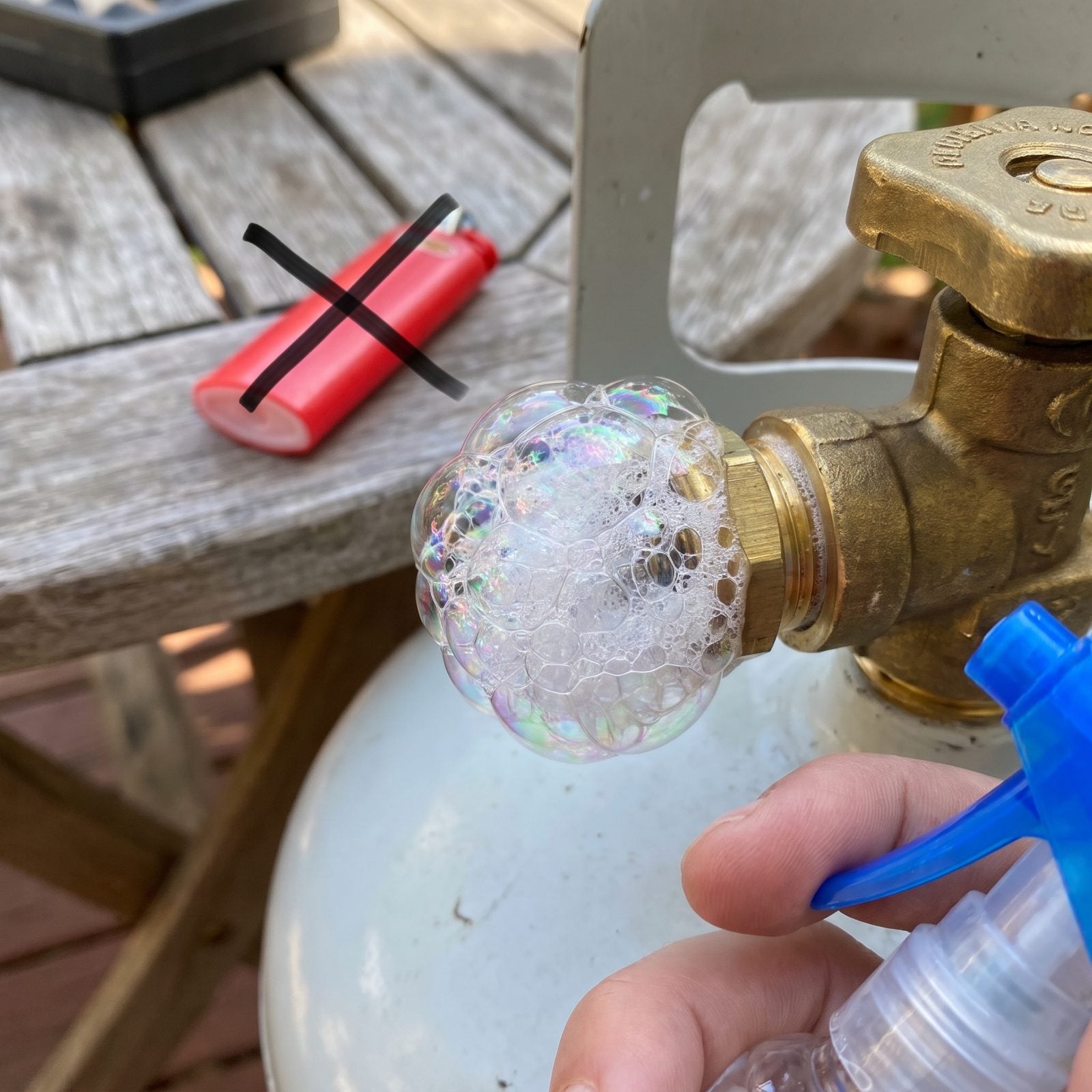
Every time you connect a tank, you test the joint. The test is dish soap and water in a spray bottle. Mist it on the fitting, open the valve slow, and watch. Bubbles growing means gas escaping, so tighten or reseat and test again.
I shouldn’t have to say the obvious one, but people do it anyway: never check for a propane leak with a flame. No lighter, no match, no “I’ll just listen for the hiss near the burner.” Soap is free, bubbles don’t lie, and your eyebrows stay where they are.
19. Smell Rotten Eggs? Get Out First, Troubleshoot Later
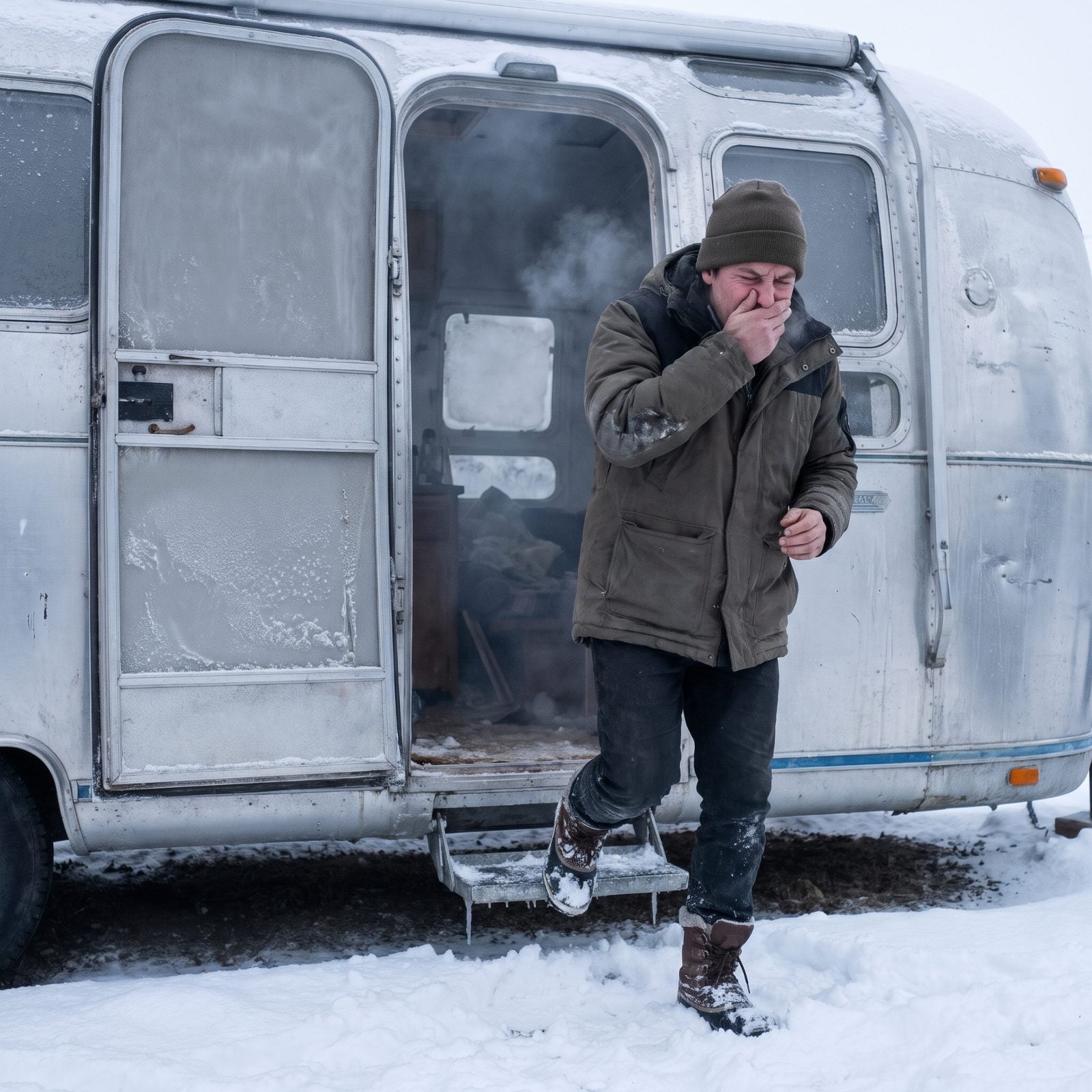
Propane has no natural smell. That rotten-egg, skunky odor is an additive called mercaptan, put there for exactly one reason: so you notice a leak before it finds a spark.
If you smell it strong, the order is not negotiable. Get everyone out. Don’t flip a light switch, don’t start a fan, don’t light the stove to “check” — any of those can be the spark that ends your morning. Once you’re outside in fresh air, shut the cylinder valve if you can reach it safely, then call for help.
Your propane detector is backup, not the first line. These units age out and quietly stop working, so replace yours on the schedule in its manual. A dead detector in winter, when you’re sealed up tight and running heat all night, is the exact scenario you don’t want to meet.
18. Shut Down Every Propane Appliance Before You Pull Into the Fuel Island
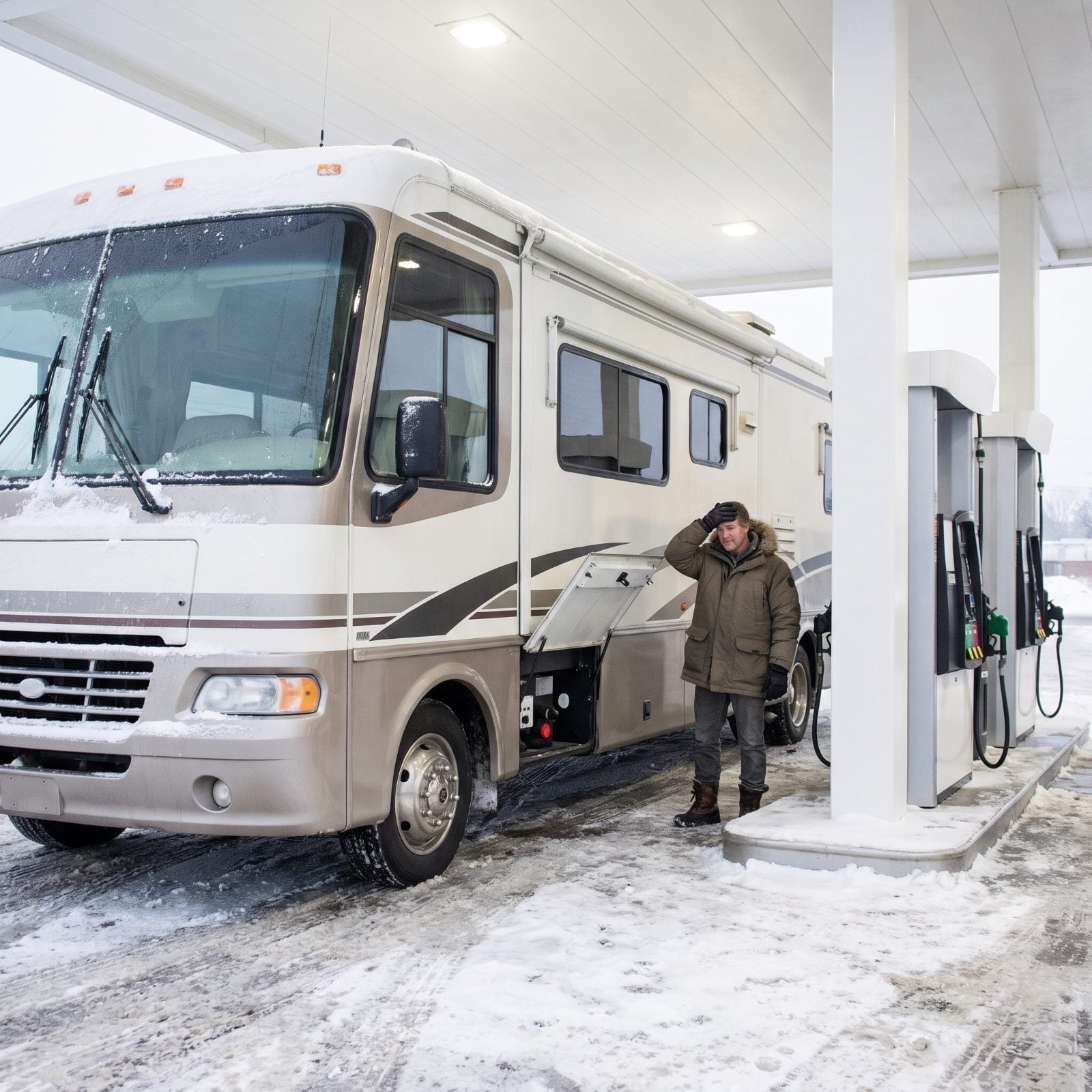
That pilot light in your fridge doesn’t know it’s parked next to a gas pump. You do.
Before you roll onto any fuel island, kill the furnace, the water heater, the fridge, the stove — anything running on propane with a flame or an igniter. An automatic ignition sparking near fuel vapor is exactly the kind of thing that ruins more than your day, and plenty of states require propane off at the pump regardless. Flip the switches, fuel up, flip them back when you’re clear. The fridge coasts cold for hours.
17. Book a Professional Propane Pressure Test Before the Cold Settles In
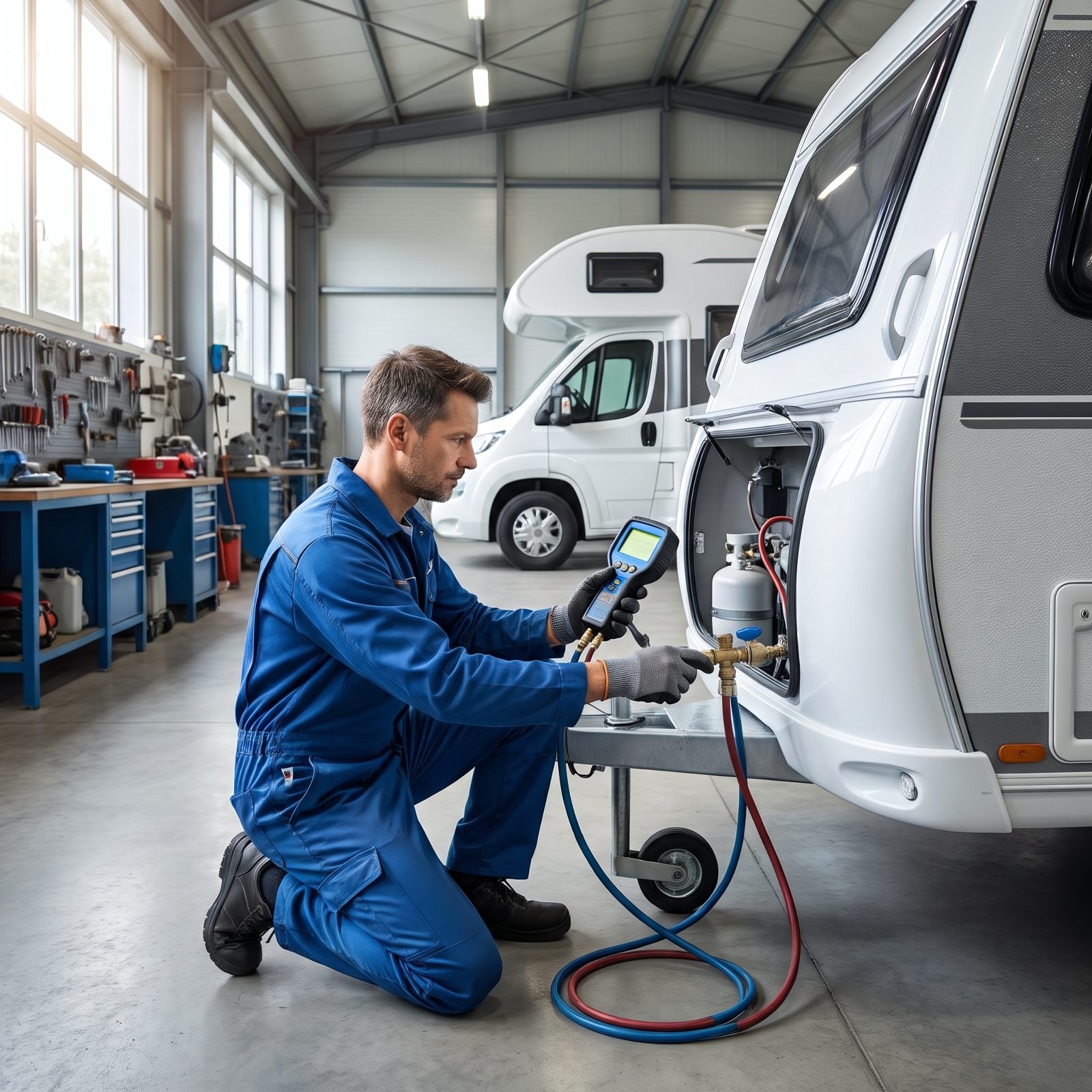
A pressure test is boring, costs maybe the price of a decent dinner out at most RV service shops, and it’s the cheapest insurance you’ll buy all year.
The tech hooks a manometer to your system and watches whether pressure holds. If it drops, you’ve got a leak somewhere you can’t smell yet. And winter is the worst possible time to find that out the hard way — furnace cycling nonstop, the whole family sealed up tight against the cold, and a slow bleed you never caught.
16. Inspect the Hoses and Retire Any That Feel Stiff, Split or Chafed
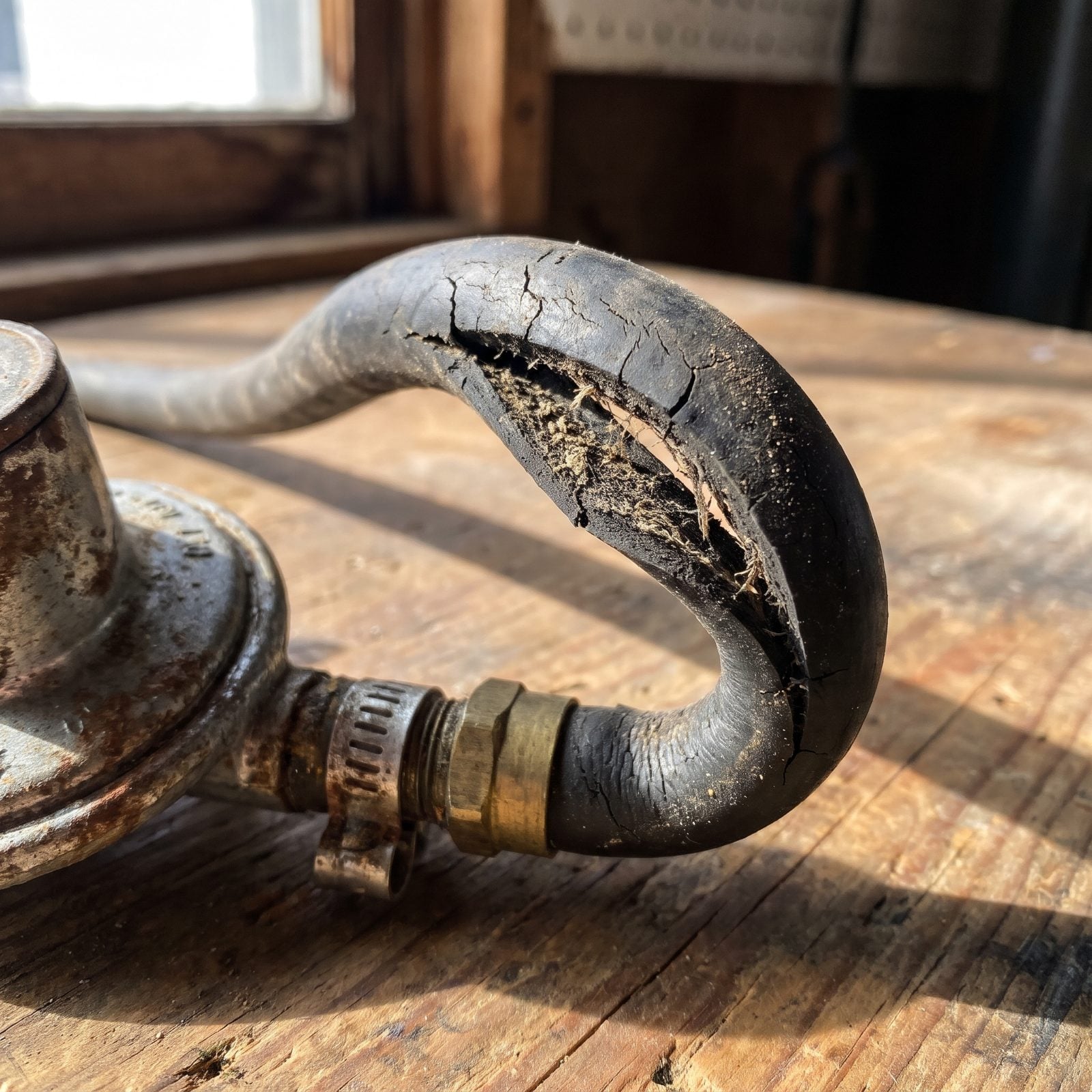
Rubber hates cold. A pigtail that flexed fine in July turns brittle at twenty degrees, and brittle is how a hairline crack becomes a problem.
Run your fingers down every hose. You’re feeling for stiffness, surface cracking, soft spongy spots, and anywhere the jacket has rubbed thin against a bracket. Cracked or hard? Replace it. Don’t nurse a bad hose through one more season just because it still technically works — braided stainless pigtails cost a little more and shrug off the cold far better than old rubber.
15. Use Only RV-Rated Fittings and Stop Stacking Adapters Together
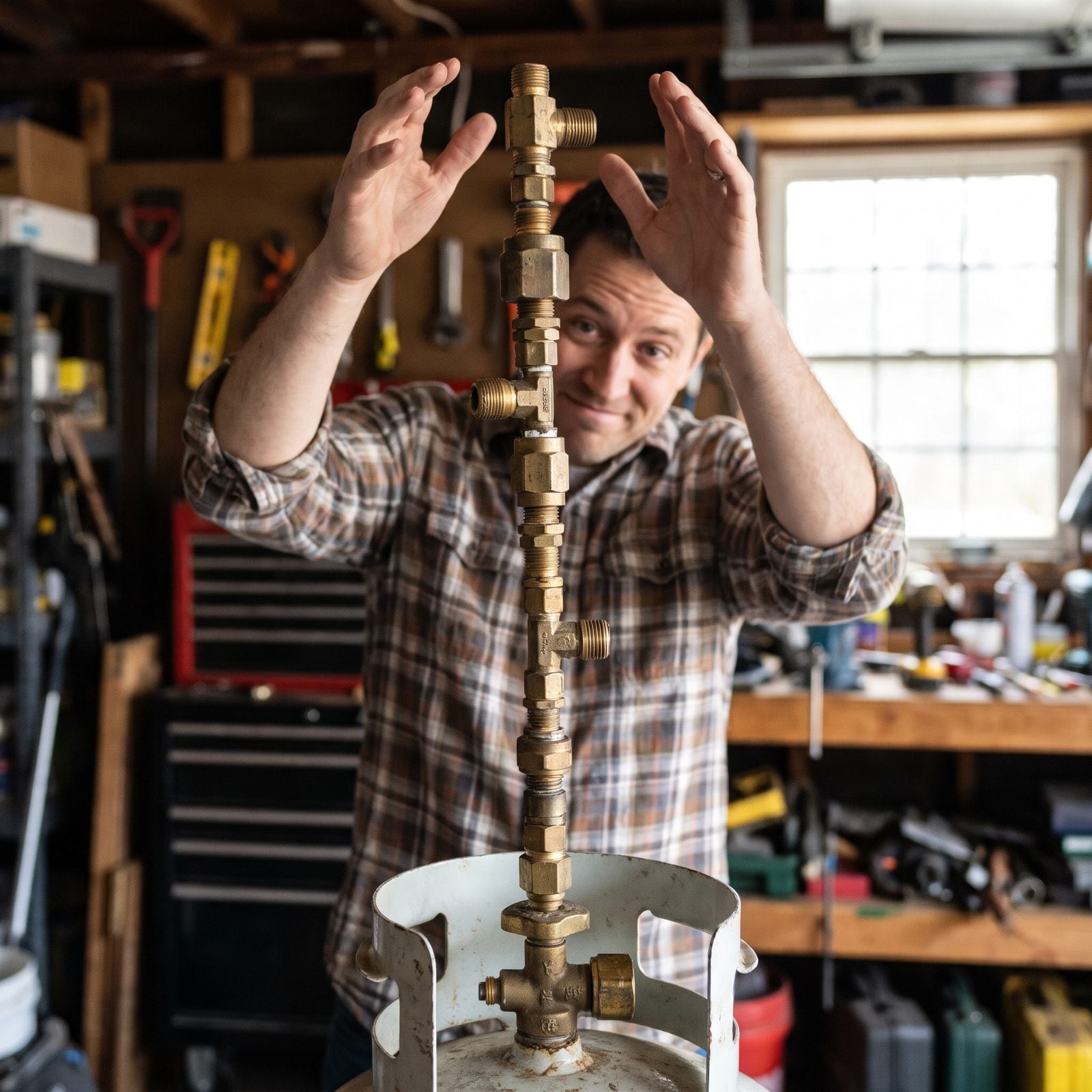
Every adapter you add is one more connection that can loosen. Three adapters stacked into a tower is three chances for a slow leak you’ll never notice until the detector screams.
Use fittings rated for propane and sized for your system the first time. One correct adapter, snug, done. If you’re building a little brass skyscraper to make two mismatched parts talk to each other, stop and buy the right single piece instead. I’ve watched people chase a leak for a week that turned out to be a stacked-adapter joint someone was weirdly proud of.
14. Keep a Charged Fire Extinguisher Within One Step of the Door
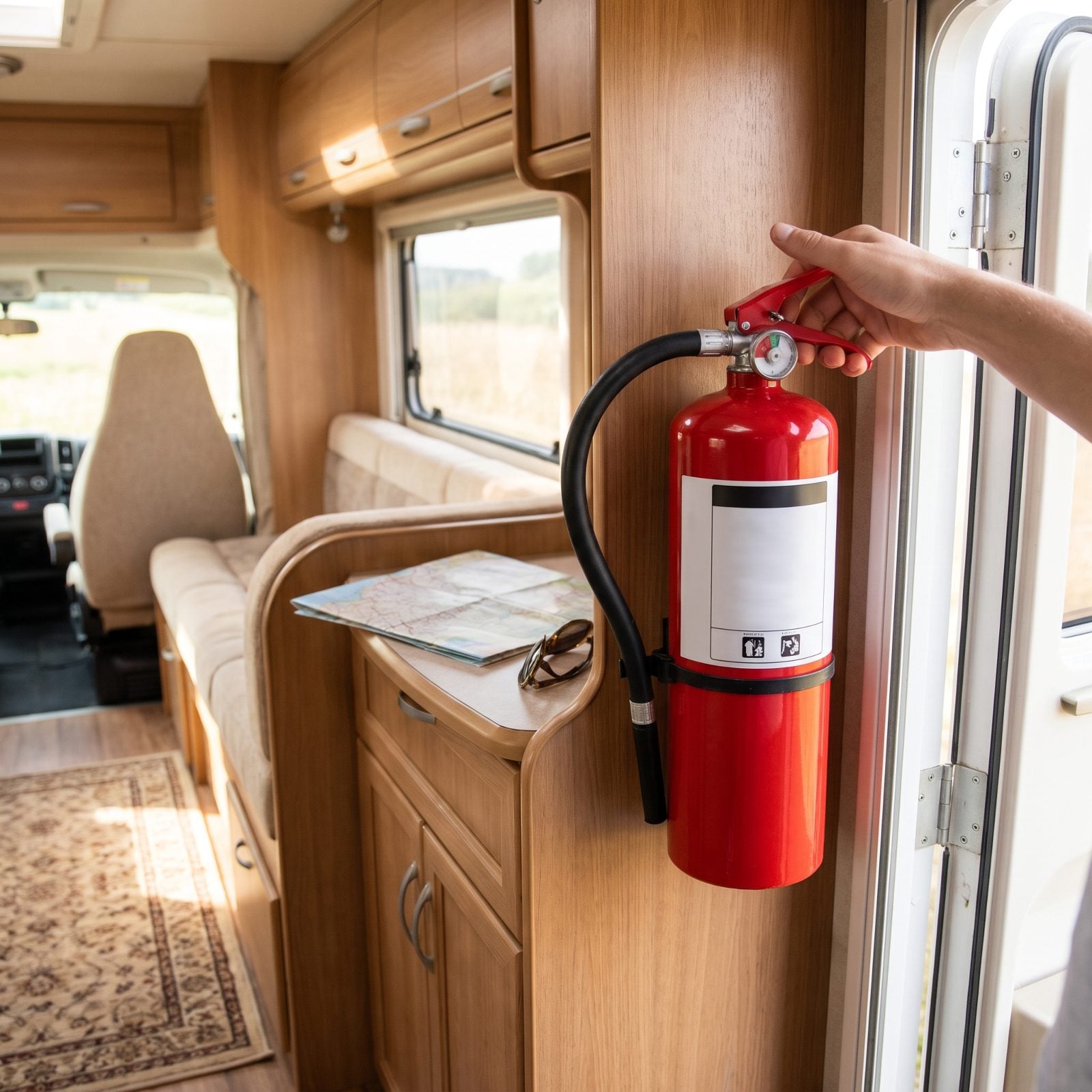
An extinguisher buried in a basement bay behind the camp chairs is a decoration, not a safety device.
Mount it by the exit, in a bracket, where you can grab it on your way out rather than walking toward the fire to reach it. Check that the gauge needle sits in the green. Give it a shake every few weeks so the powder doesn’t settle into a useless brick at the bottom. A dead extinguisher looks just like a live one — so check the gauge and the date on the tag.
13. Get the Furnace Serviced Before It Runs Nonstop for a Week
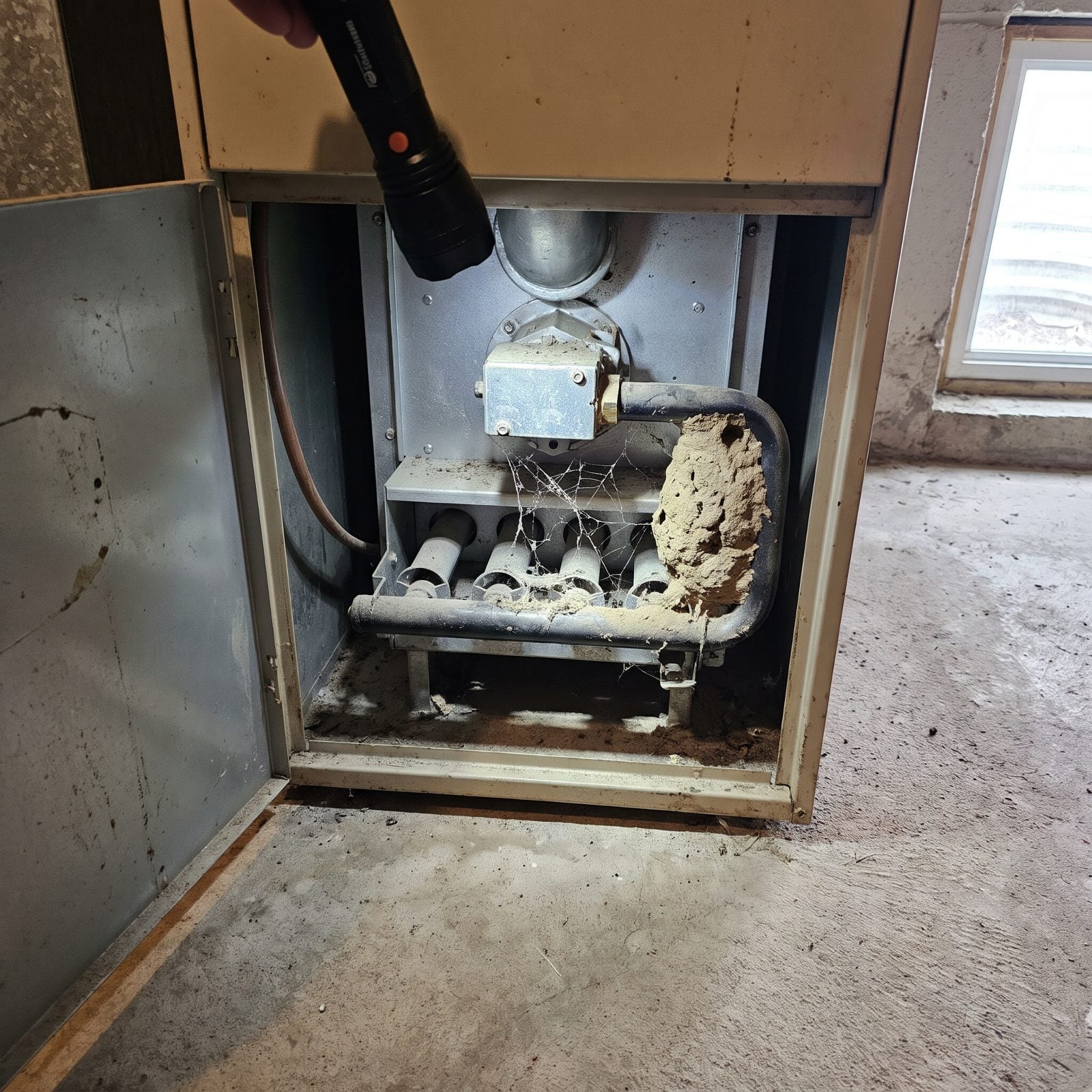
The basement furnace is the appliance you ask the most of in winter and think about the least.
Mud daubers and spiders love the burner compartment, dust clogs the blower, and a furnace that short-cycles all night burns fuel it shouldn’t while wearing itself out fast. A service clears the burner, checks the exhaust path, and confirms it’s lighting clean. Do it before sustained freezing arrives, not during. A furnace that quits at eleven at night when it’s single digits outside is a genuine emergency, not an inconvenience. Ask me how I learned that one.
12. Treat Soot Around the Furnace Vent as a Problem, Not a Smudge
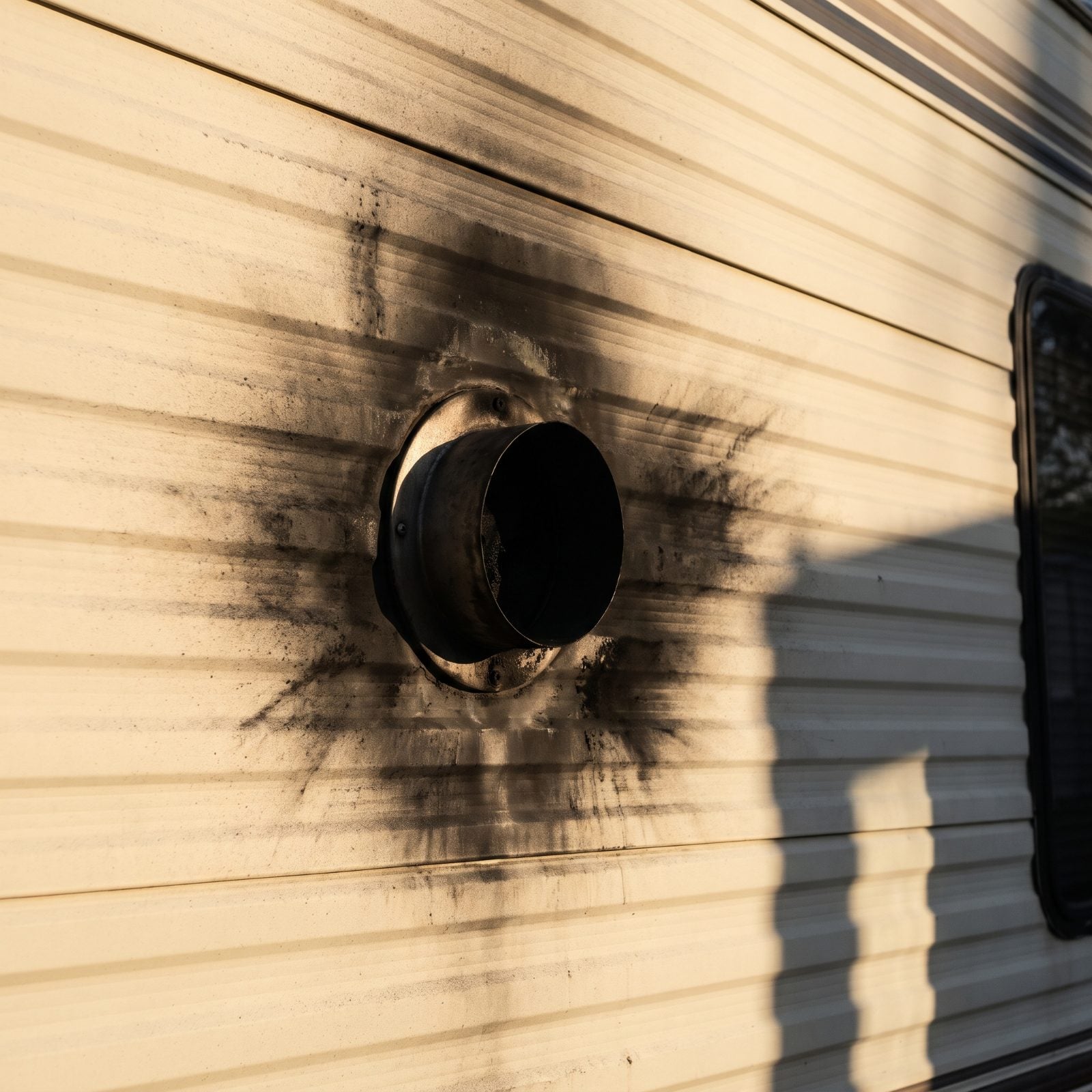
Black staining fanning out from your furnace vent is not cosmetic. It means the burner isn’t combusting cleanly, and incomplete combustion is the same process that produces carbon monoxide.
So don’t wipe it off and forget it. Soot is the furnace telling you something’s wrong — usually a blocked exhaust, bad gas pressure, or a burner that needs attention. Shut the furnace down and get it looked at before you run it another night. You can replace a sooty furnace. You can’t un-breathe a bad night’s worth of exhaust.
11. Hold a Steady Thermostat and Skip the Deep Overnight Setback
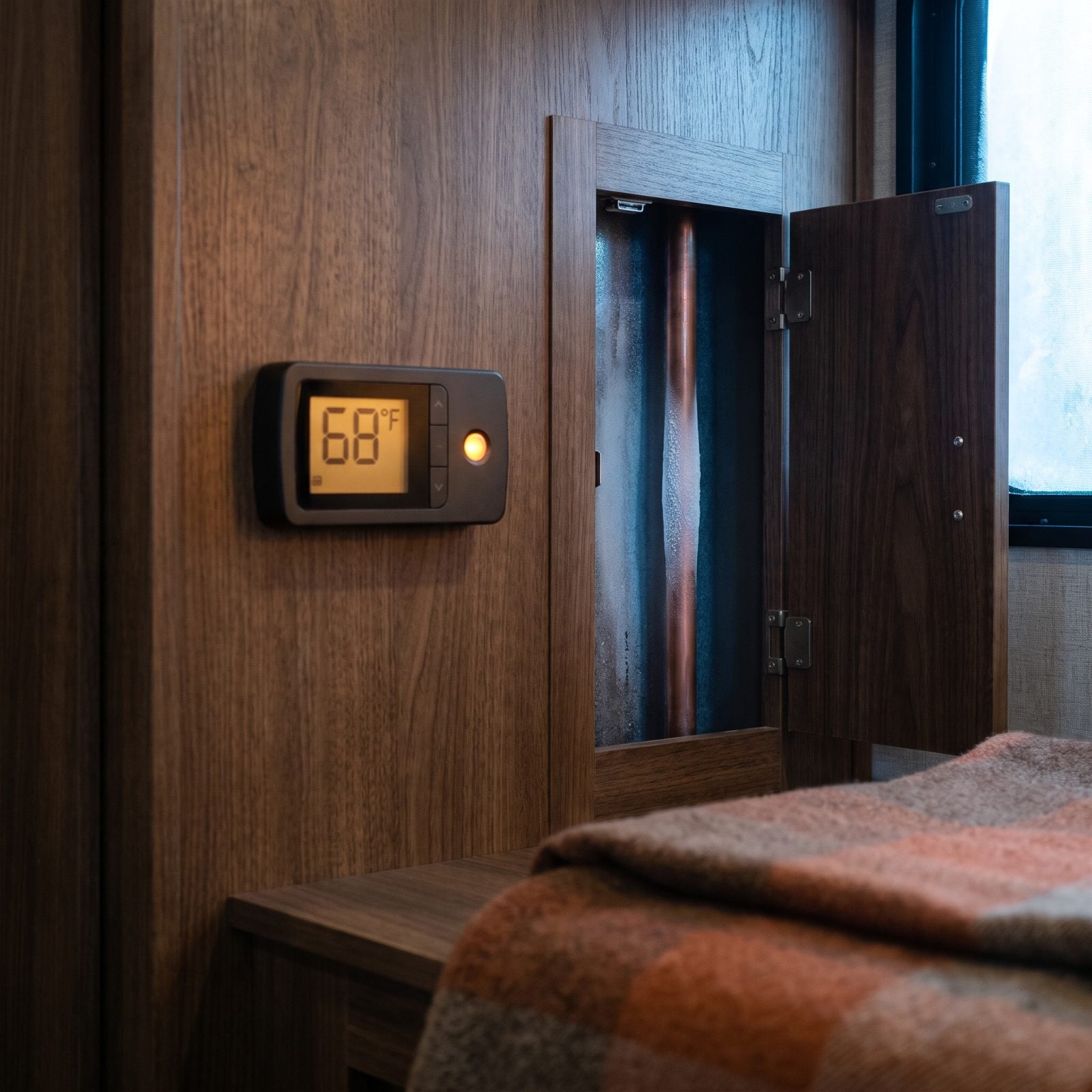
Dropping the thermostat to 50 overnight feels thrifty. In a stick house, fine. In an RV, that’s how your plumbing gets cold.
Here’s the catch nobody mentions: the furnace is usually what keeps heat in the basement bays where your water lines run. Let the cabin go frigid and those bays go colder still, and then your morning furnace has to drag everything back up — which eats into whatever propane you thought you were saving. Holding a steady 62 to 66 all night is the safer bet. Small setbacks are fine. Deep ones trade a little comfort for a real risk.
10. Set Up Remote Freeze Alerts Before You Leave the Rig
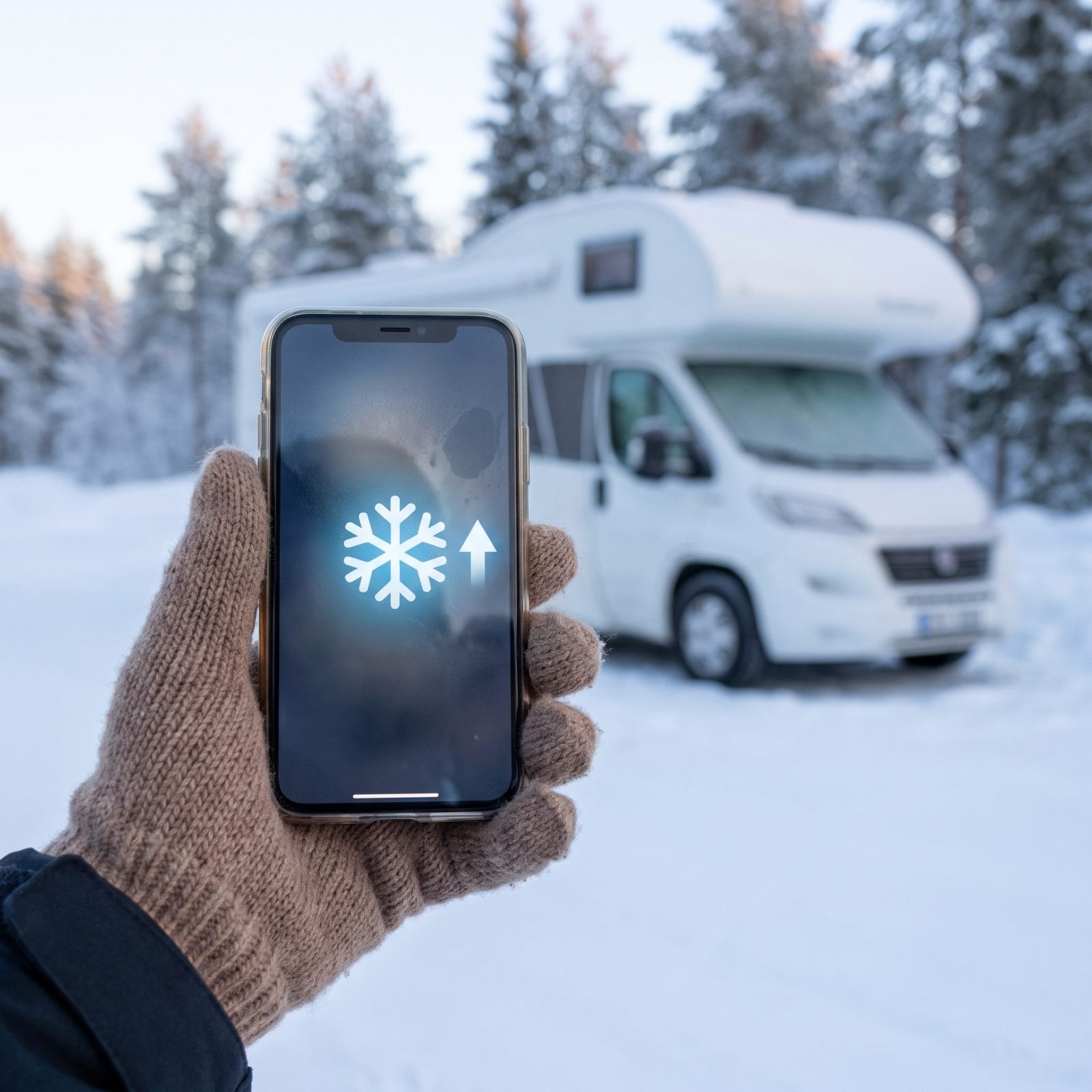
The split pipe always happens while you’re at the store. That’s not bad luck. It’s just when nobody’s watching the temperature.
A wireless sensor that pings your phone when the bay drops near freezing buys you the one thing that matters: time. Get the alert out on the trailhead, drive back, kick the furnace up, and you’ve saved yourself a repair bill and a dry weekend. The sensors run cheap and most pair with an app over wifi or cellular. Set the threshold a few degrees above freezing so the warning comes before the damage, not after.
9. Crack Open Sink Cabinets to Let Warm Air Reach the Pipes
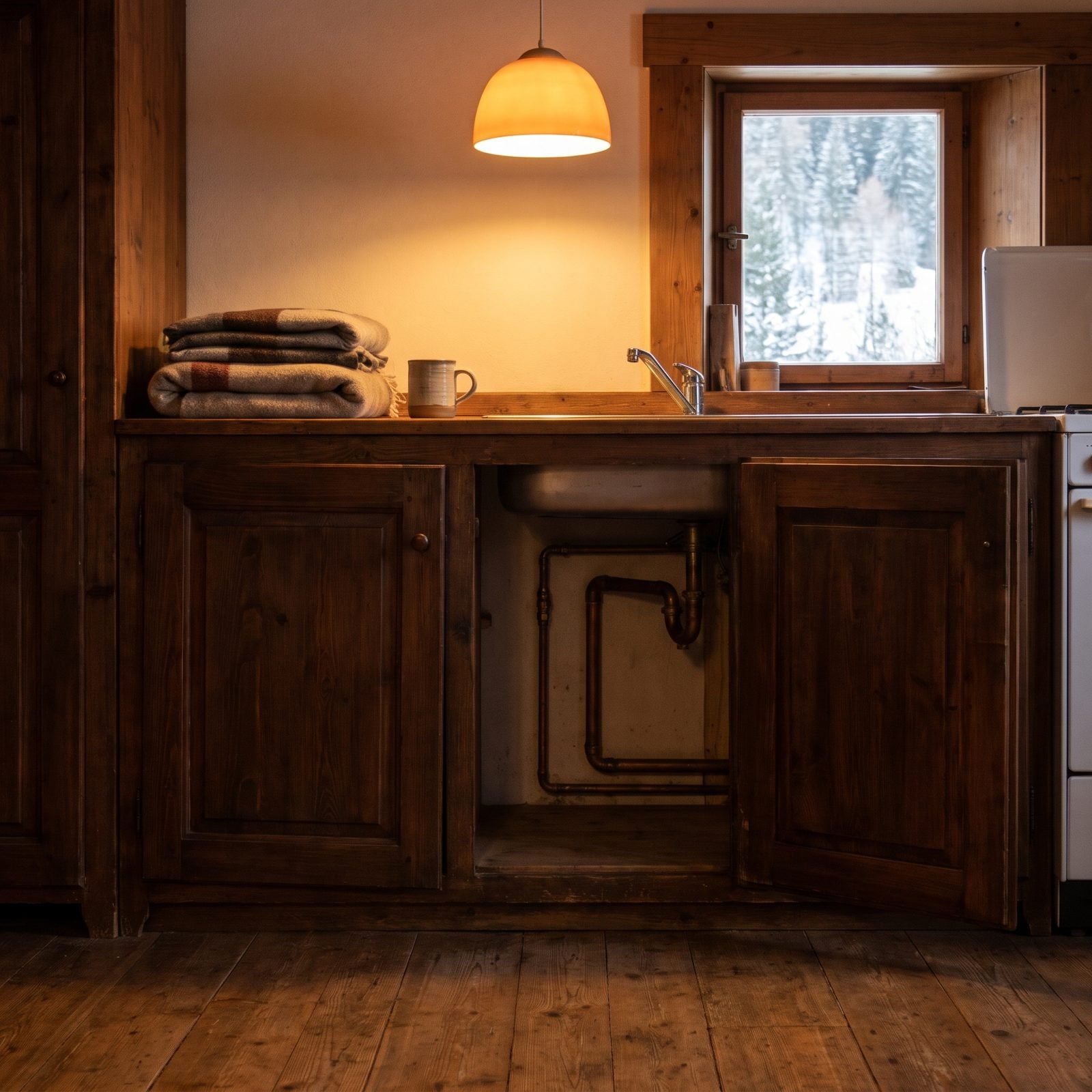
Cabinet doors are little insulated boxes, and the pipes behind them don’t get the benefit of your warm cabin unless you open the door. So on the coldest nights, swing open every under-sink cabinet before bed — galley, bathroom, anywhere a line runs behind a closed panel.
Free, thirty seconds, and one of the oldest tricks in cold-weather living for a reason. The warm air you’re already paying to make finally reaches the plumbing that needs it.
8. Skirt the Rig Without Sealing Off Appliance Vents
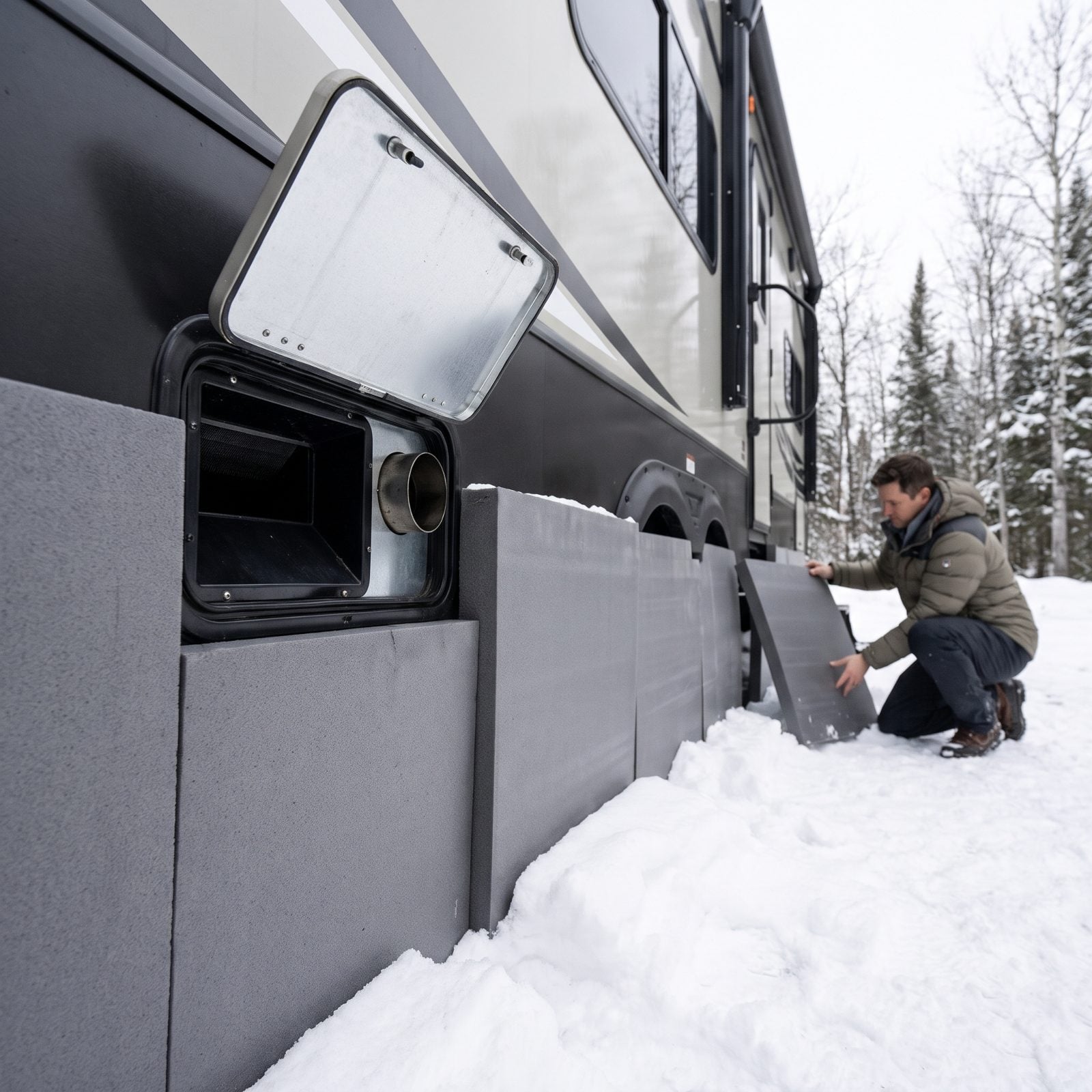
Skirting is the single biggest thing you can do to hold heat under the rig. It blocks the wind that would otherwise strip warmth from your basement all night. Foam board, vinyl, inflatable panels — people use all of it.
But here’s where folks get into trouble. Your furnace, water heater, and refrigerator all exhaust somewhere down low, and they need that air. Seal those openings behind skirting and you trap combustion gases exactly where you don’t want them.
7. Stop Drafts Without Blocking a Single Safety Vent
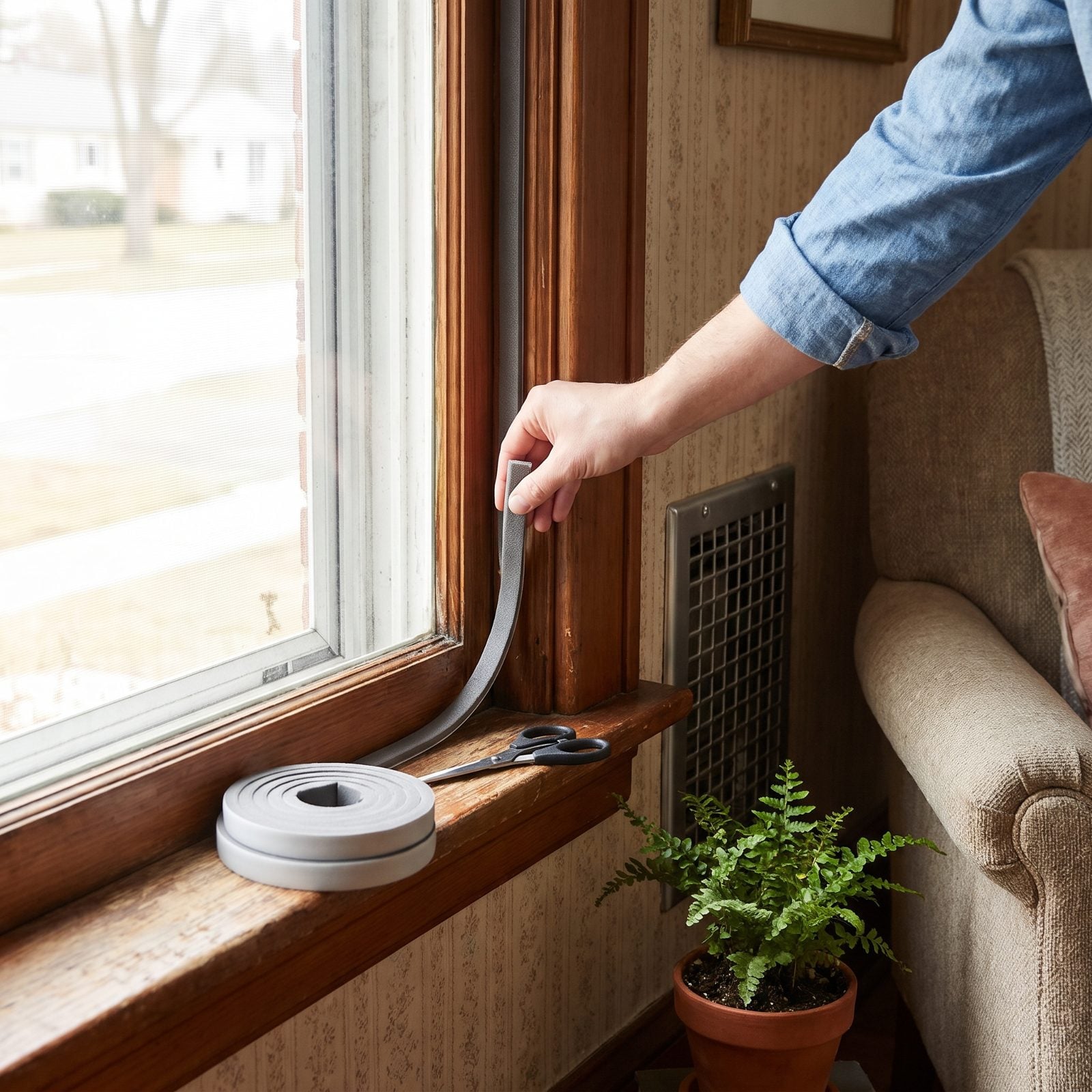
Chasing drafts in winter feels like whack-a-mole. Window edges, the slide seals, the entry door, that gap where the dinette meets the wall. Weatherstrip and draft blockers close most of it, and your furnace thanks you.
The mistake is getting enthusiastic and taping over things that need to breathe. Your propane detector, your range vents, and the low combustion-air openings your appliances rely on are not drafts. They’re there on purpose.
Seal the leaks. Leave the vents. There’s a real difference between cold air you don’t want and fresh air your appliances can’t run safely without.
6. Run the Range Hood or Crack a Vent Every Time You Cook
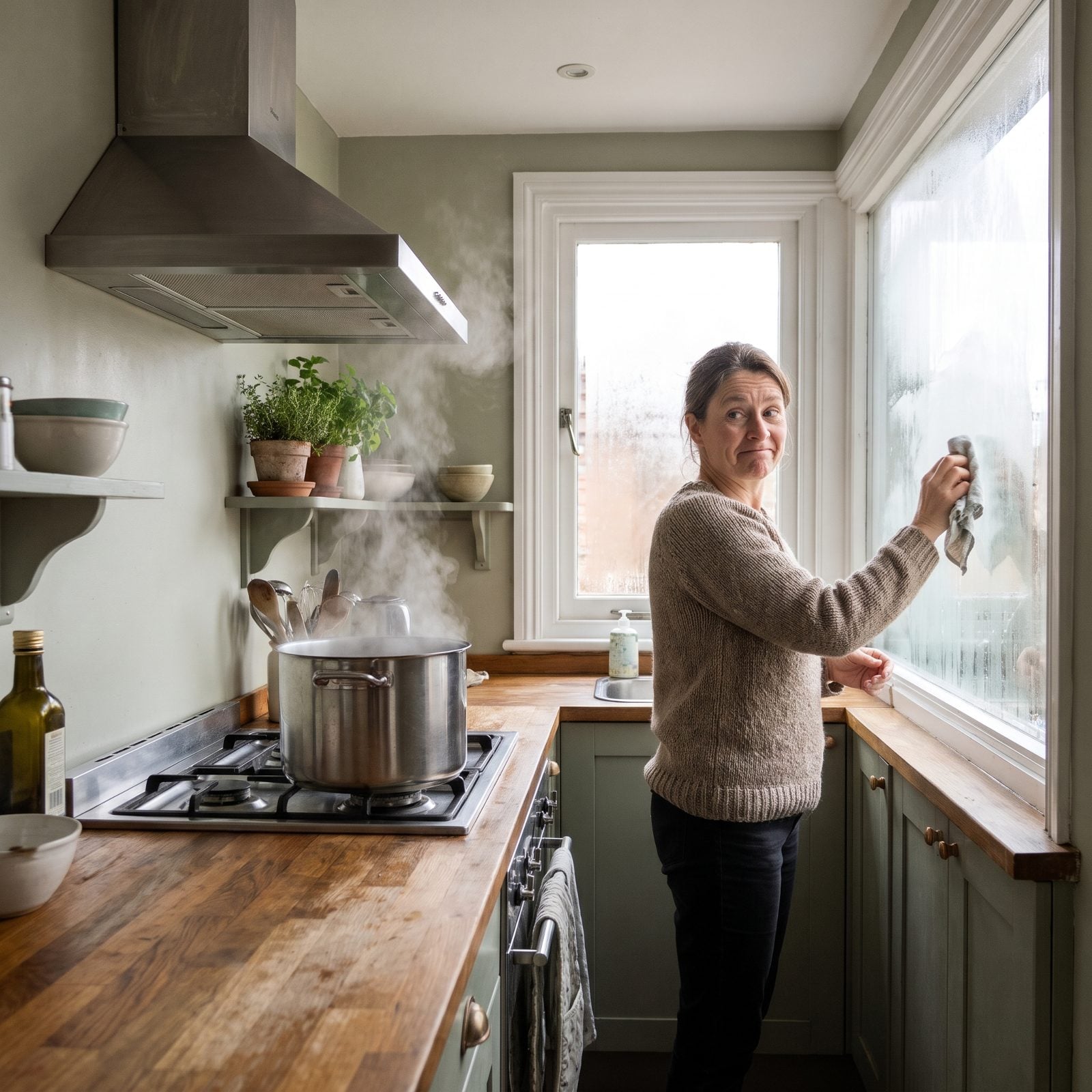
Propane cooking throws off two things you don’t want building up in a closed-up winter kitchen: moisture and combustion byproducts.
The moisture is the sneaky part. Every burner adds water vapor to the air, and in a tightly sealed, weatherstripped house that water has nowhere to go but your windows, your ceiling, and eventually behind your walls as condensation. Run the range hood or crack a window while you cook, even when it’s freezing out. A minute of cold draft beats a winter of damp corners and the mildew that follows.
5. Watch That Your Stove Flames Burn Mostly Blue
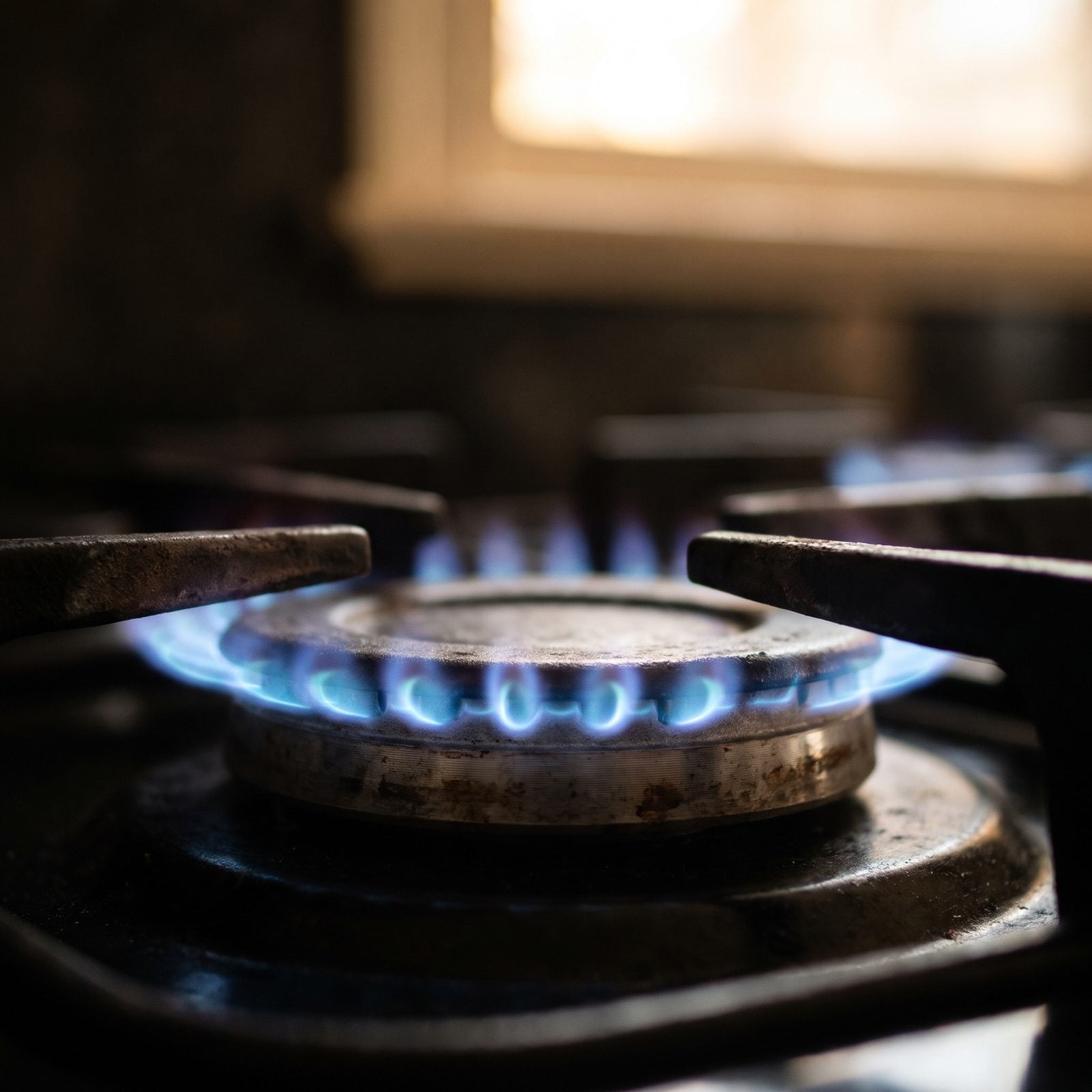
Flame color is a gauge you already own, and most people never read it. A healthy propane flame burns a clean, steady blue — that’s the fuel getting enough air and burning completely.
Yellow or orange tips, flickering, a lazy flame? Something’s off: too little air, a dirty burner, a spider web in the orifice. (Yes, really. They love those little tubes.) Incomplete burning wastes propane and produces more carbon monoxide, which is the last thing you want in a sealed winter cabin.
Glance at every burner when you light it. Blue is good. Anything else, clean the burner ports and the air shutter before you keep cooking on it. Cheapest safety check in the rig, and it takes one second. Go look at yours tonight.
4. Keep Towels, Sleeves and Curtains Away From Lit Burners
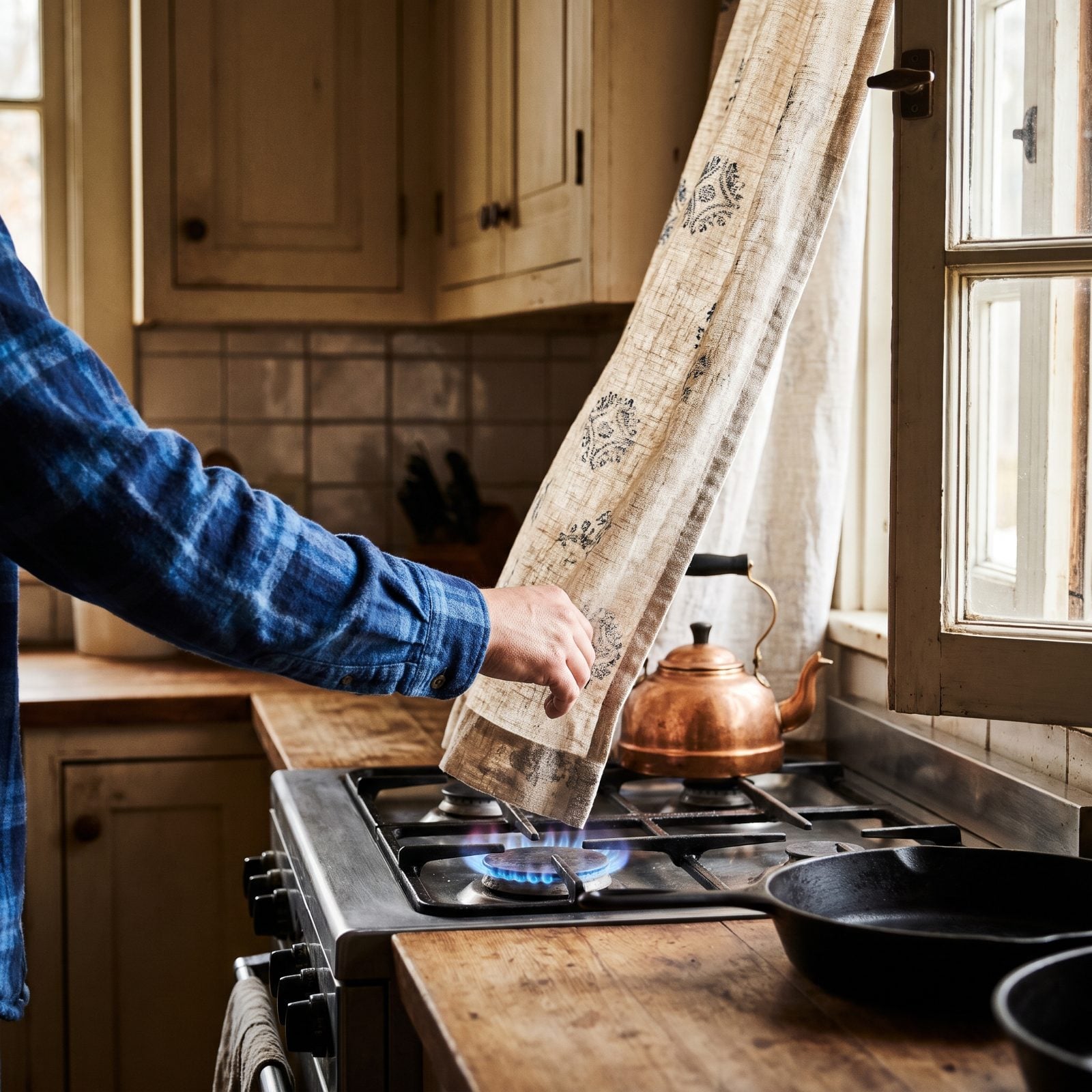
Winter cooking in a tiny galley means everything lives within arm’s reach, and that’s exactly the problem. A long sleeve crossing a lit burner to grab the salt. A curtain breathing in the draft from a cracked vent. A towel draped over the oven handle an inch too close to the flame.
Loose fabric near fire is the most common way galley blazes start, and they start fast. So tie your curtains back before you light anything, push your sleeves up, and hang towels on a hook across the aisle rather than on the rail beside the stove.
3. Use Only Indoor-Rated Propane Heaters Approved for RVs
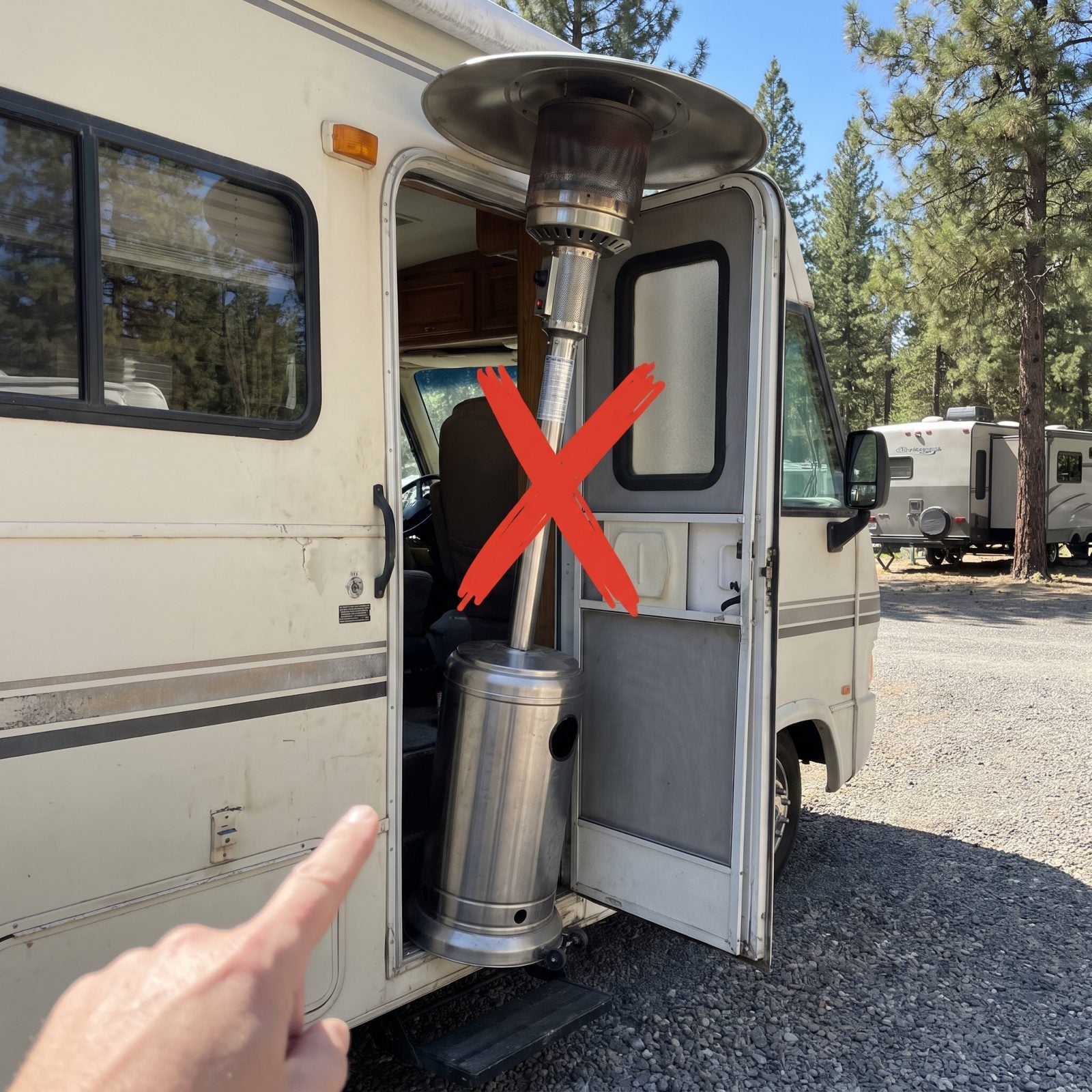
Not every heater that fits through your RV door belongs inside it. Patio heaters, construction salamanders, the tank-top burner from the garage — those are outdoor tools, and running them in a sealed rig is how people get carbon monoxide poisoning in their sleep.
What you want is a portable propane heater specifically labeled for indoor and recreational use. The real tell is a built-in oxygen-depletion sensor that cuts the unit off when oxygen drops, plus a tip-over switch. Read the box, not the Amazon headline.
2. Turn Portable Propane Heaters Off Before Sleeping
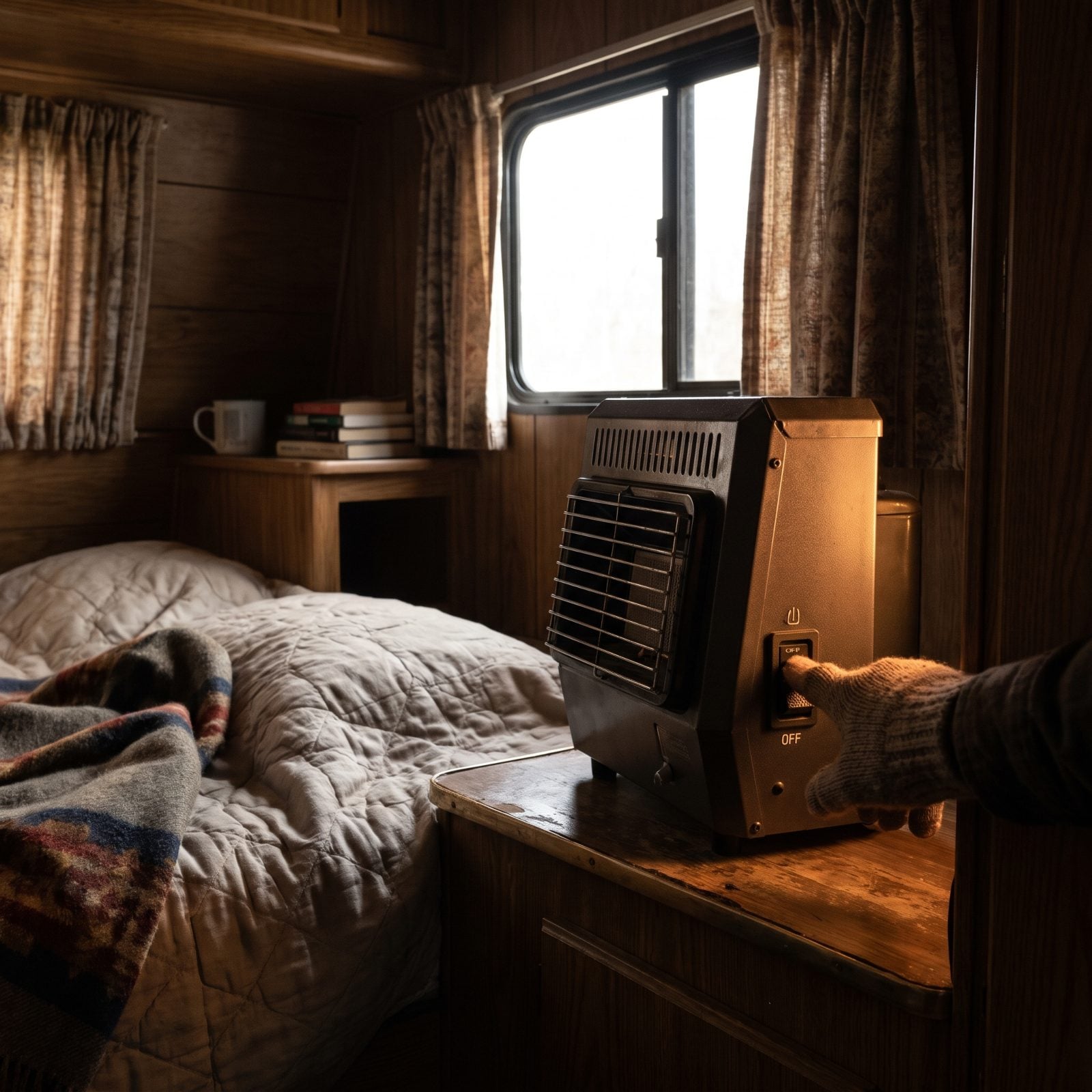
Here’s the one nobody wants to hear on a cold night. Portable propane heaters are for warming the space while you’re awake and the vents are cracked — not for running unattended for hours in a dark, closing-up cabin.
Shut it off and close the valve before bed. The trick is making the cold tolerable so the heater stops being necessary: a four-season sleeping bag, a wool blanket, a knit beanie pulled down over your ears. Your own body under a good quilt warms a sleeping nook better than most folks expect.
1. Cook With Pot Lids to Reduce Burner Time
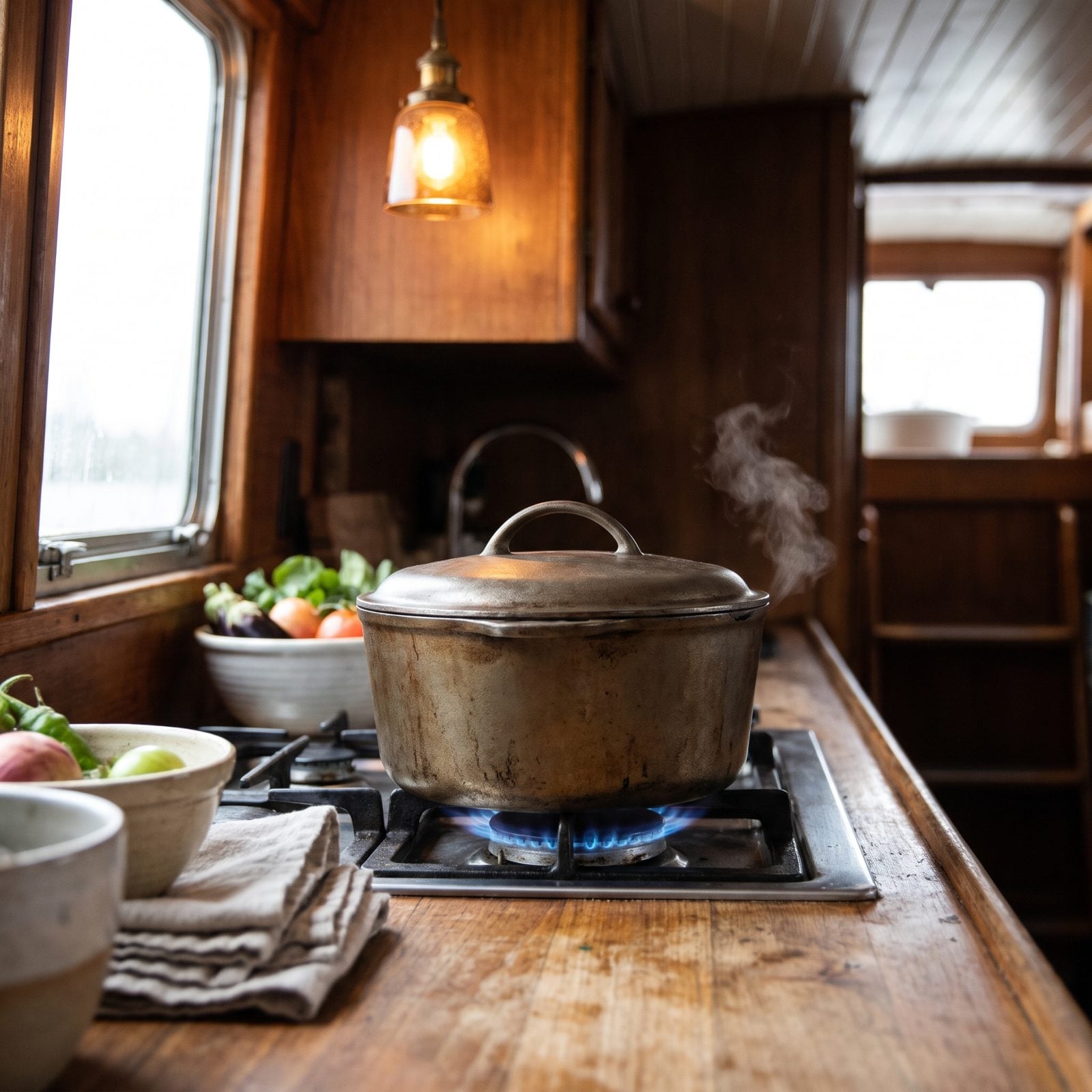
A lid is the cheapest fuel savings in your whole rig. Water under cover boils faster, holds a simmer at a lower flame, and stops dumping heat and steam into a cabin you’re fighting to keep dry.
Every minute the burner runs is propane out of a tank you’d rather not refill in a snowstorm. So cover the pot, drop the flame once it’s rolling, and lean on one-pot meals that finish on residual heat. Boil your pasta, kill the burner, and let it coast to done under the lid.