
Nobody teaches you dump station etiquette. You learn it the hard way, usually with four rigs behind you and a guy in a lawn chair watching your every move. Good news, though: almost every mistake at a public dump station comes down to a handful of fixable habits. Get the order right, respect the line, keep your hands clean, and you’re in and out fast. Here are the ones that cause the most grumbling, and what to do instead.
Please note that some of the images in this article were created with the assistance of AI.
35. Pulling Forward While Still Connected to the Drain
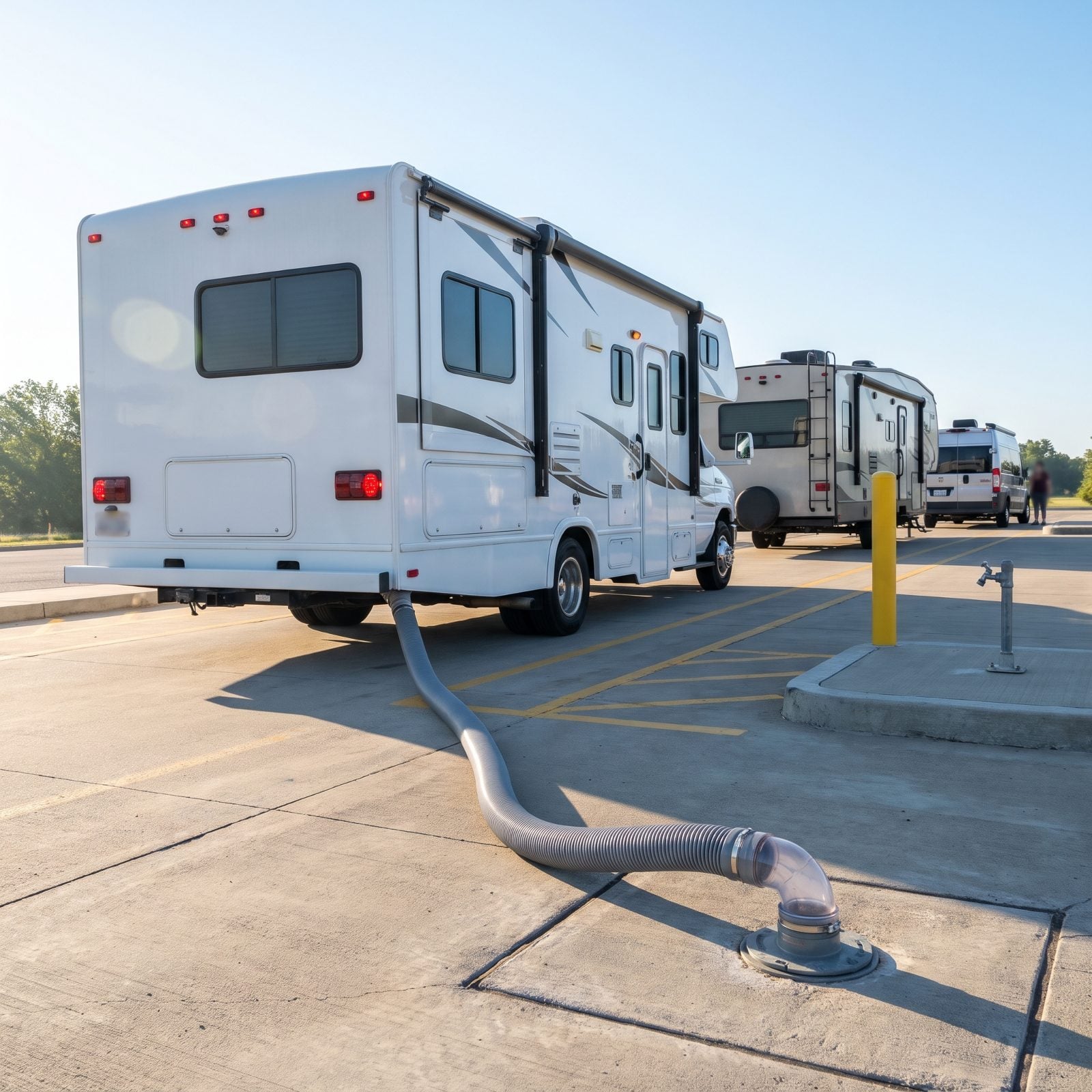
You disconnected the water hose, stowed the chocks, and rolled forward — except the sewer hose was still locked to the drain. Now you’ve torn a fitting, cracked an adapter, or dragged the whole hose across the pad in front of an audience. Fastest way there is to turn a two-minute job into a cleanup nobody wants to witness.
So build a walk-around habit. Before you touch the driver’s door, do one slow lap of the rig and check the drain connection, the dump valves, the water line, and the gray hose still sitting on the ground. Only then do you get behind the wheel. I’ve skipped that lap exactly once. Once was enough.
34. Cutting Into the Queue From the Wrong Entrance
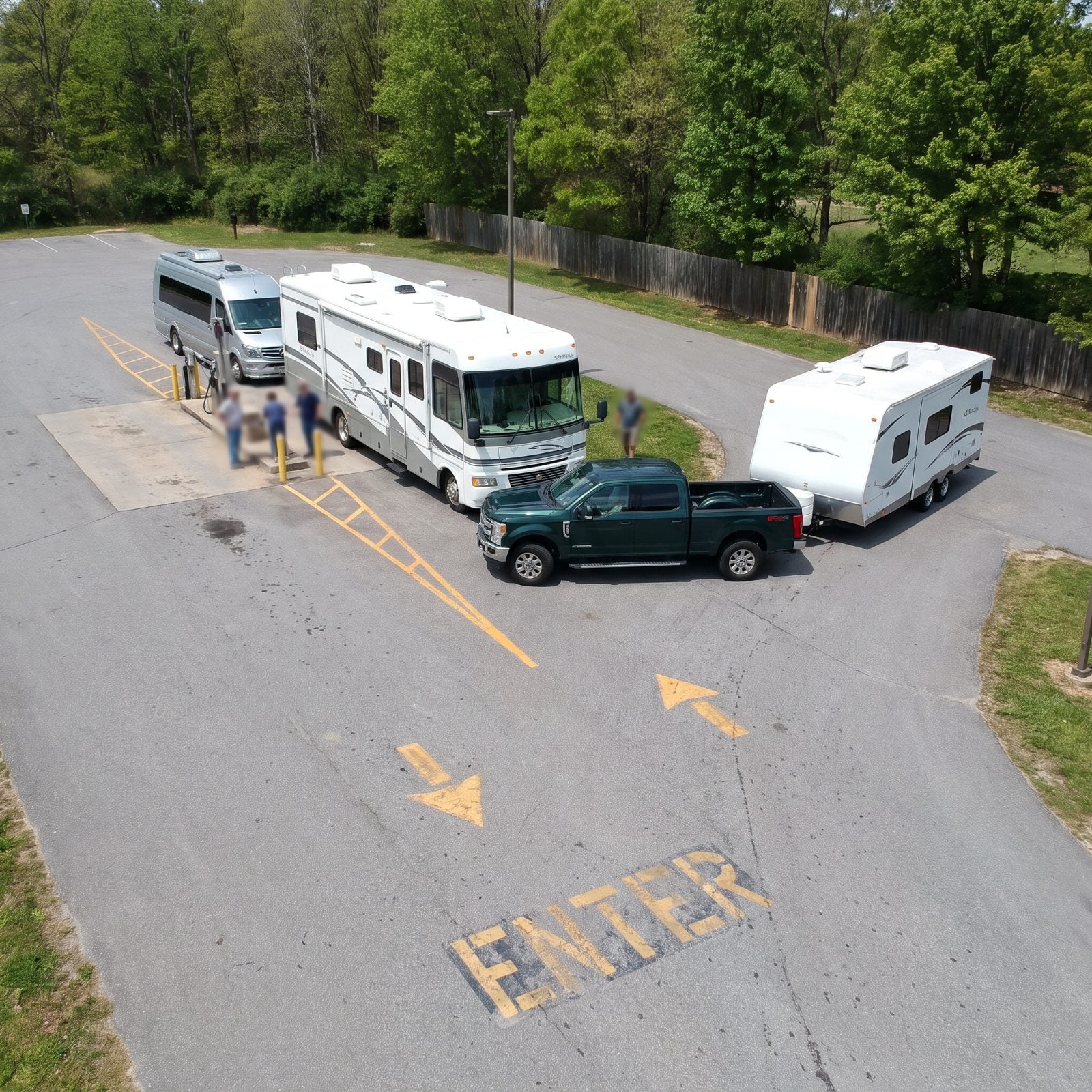
Every dump station has a flow. One way in, one way out, and a line that formed while you were still filling your coffee. Nose in from the exit side or the shoulder because it looks faster, and you’ve just forced somebody to back up a loaded fifth wheel. Now everybody’s annoyed.
Find the entrance before you commit. Look for the painted arrows, the worn tire tracks, or just the direction every other rig is facing, and if there’s a line, join the back of it. The dump station is one of the few places in RV life where impatience costs the whole group, not just you.
33. Blocking a Second Dump Lane With Your Tow Vehicle
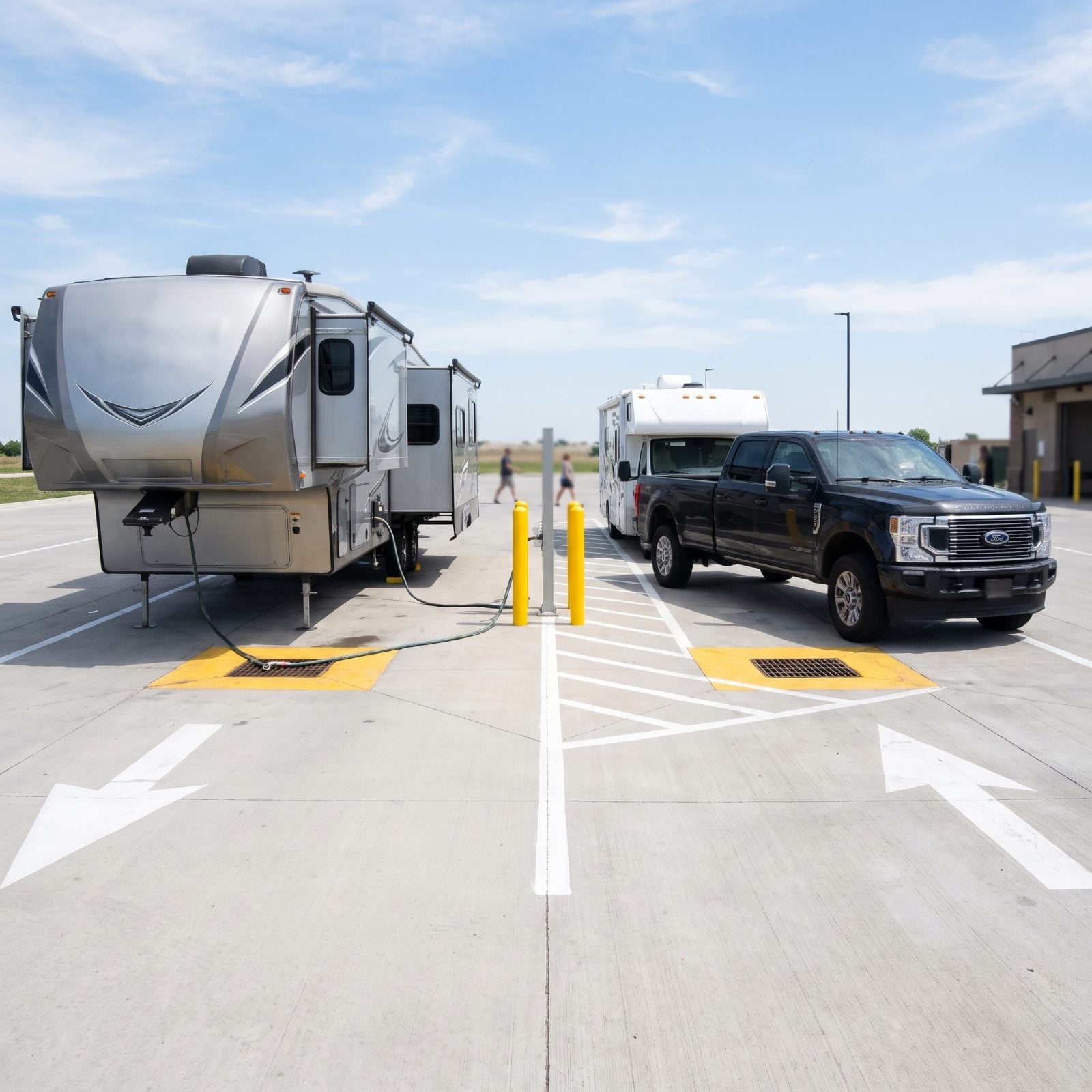
Some stations have two lanes so two rigs can dump at once. The trouble starts when someone parks their truck sideways across the open lane while they fiddle with their hose, and a perfectly good second bay sits useless.
If there are two lanes, keep your tow vehicle and everything else inside your own lane’s footprint. Pull straight, tuck the truck ahead of your trailer, leave the neighboring lane clear. Quick glance before you set up — could another rig fit beside you right now? If not, reposition. Two lanes moving beats one lane blocked, every time.
32. Waiting Until the Dump Bay to Unpack Everything
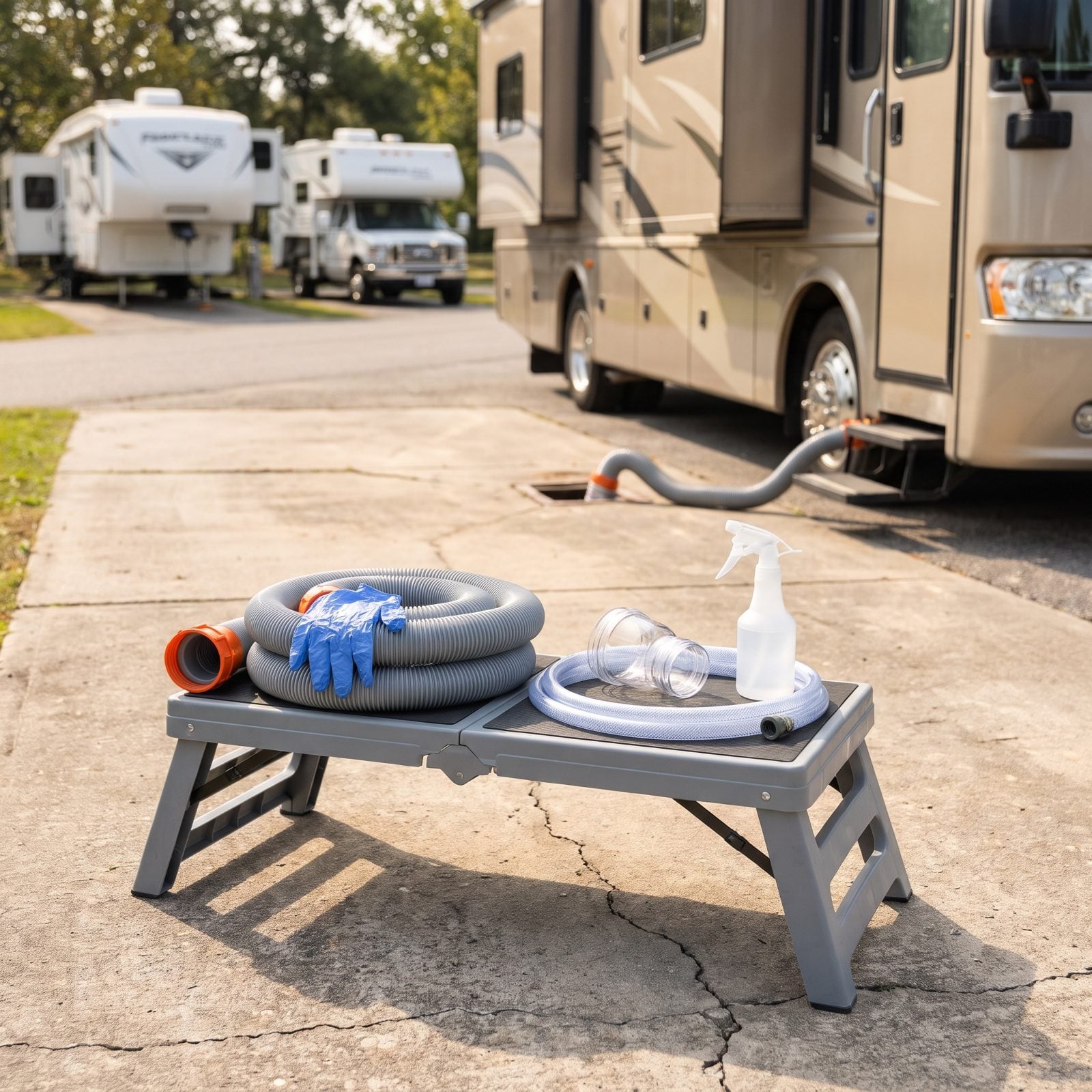
You roll up to the drain, then start opening bins, hunting for gloves, untangling the hose, and reading the instructions on the adapter like it’s your first day. The line grows. The clock runs.
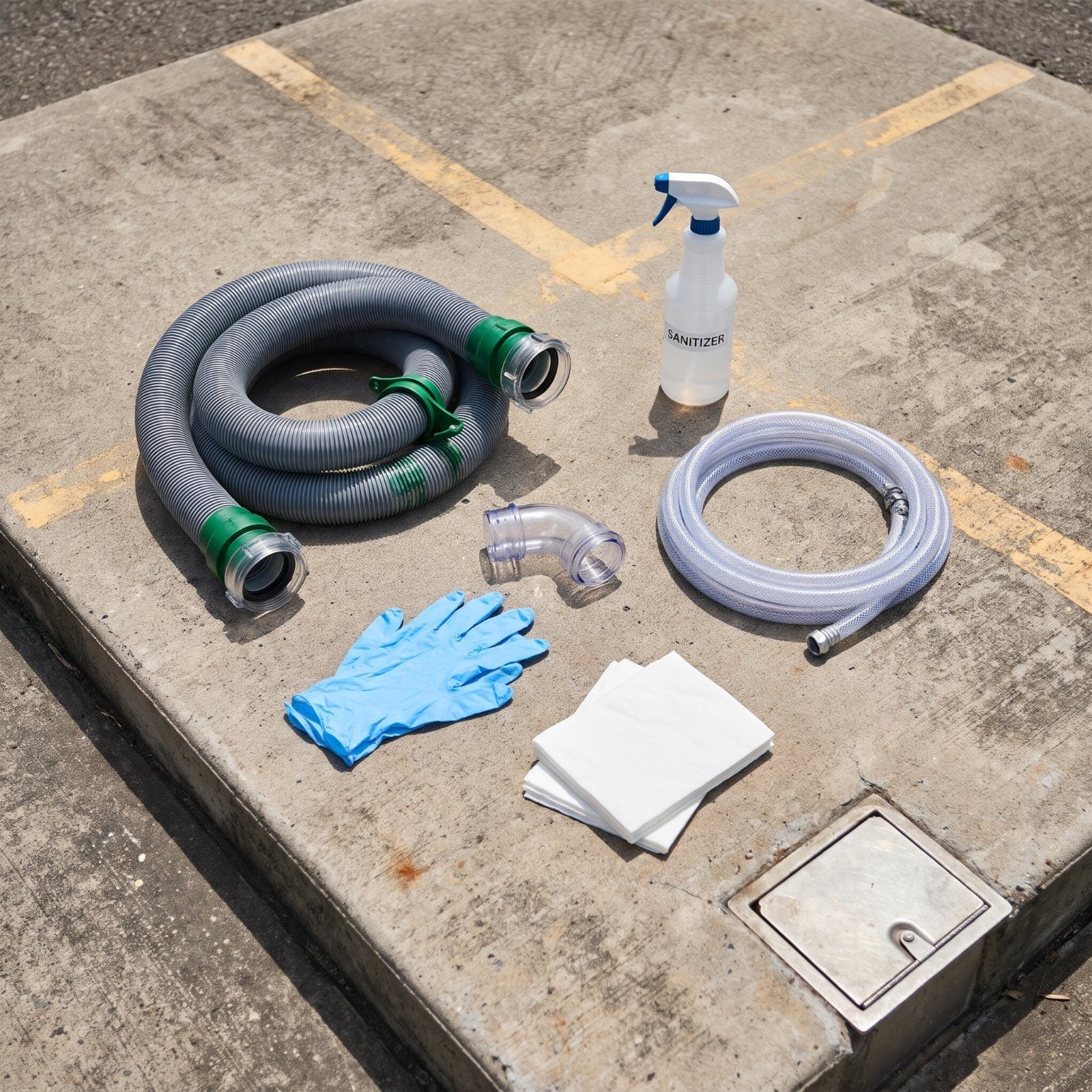
Stage your kit while you’re waiting, not at the bay. Have the hose, elbow, gloves, and rinse ready to grab in one bin, so when it’s your turn you pull in, connect, dump, rinse, and leave. The whole point of a system is that your hands already know the steps before your brain catches up.
31. Trusting a Cracked or Pinhole-Riddled Sewer Hose
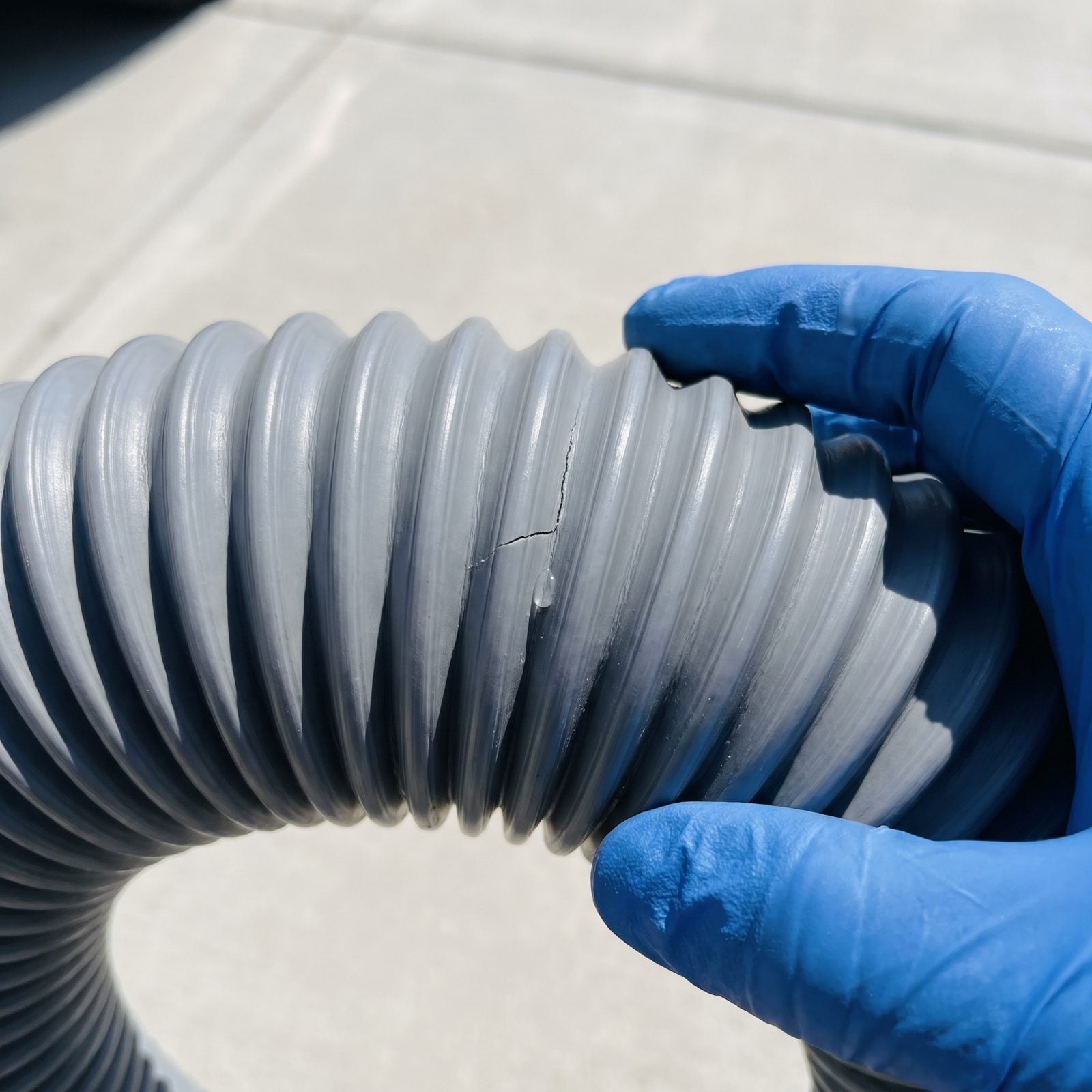
That hose has been coiled in the bumper tube for three seasons, baking in the sun and freezing at night. The accordion ribbing gets brittle, and one day it splits mid-dump. There’s no graceful recovery from that — only a cleanup and an apology to the folks waiting.
Inspect the hose in good light before each season, and give it a glance every time you connect. Hold it up, flex it gently, look for cracks, pinholes, and crushed sections. A quality hose like a RhinoFlex or Camco kit runs cheap and stows in its own case. Carry a backup. When in doubt, retire it. This is not the part to squeeze another year out of.
30. Dropping a Bare Hose End Into the Drain
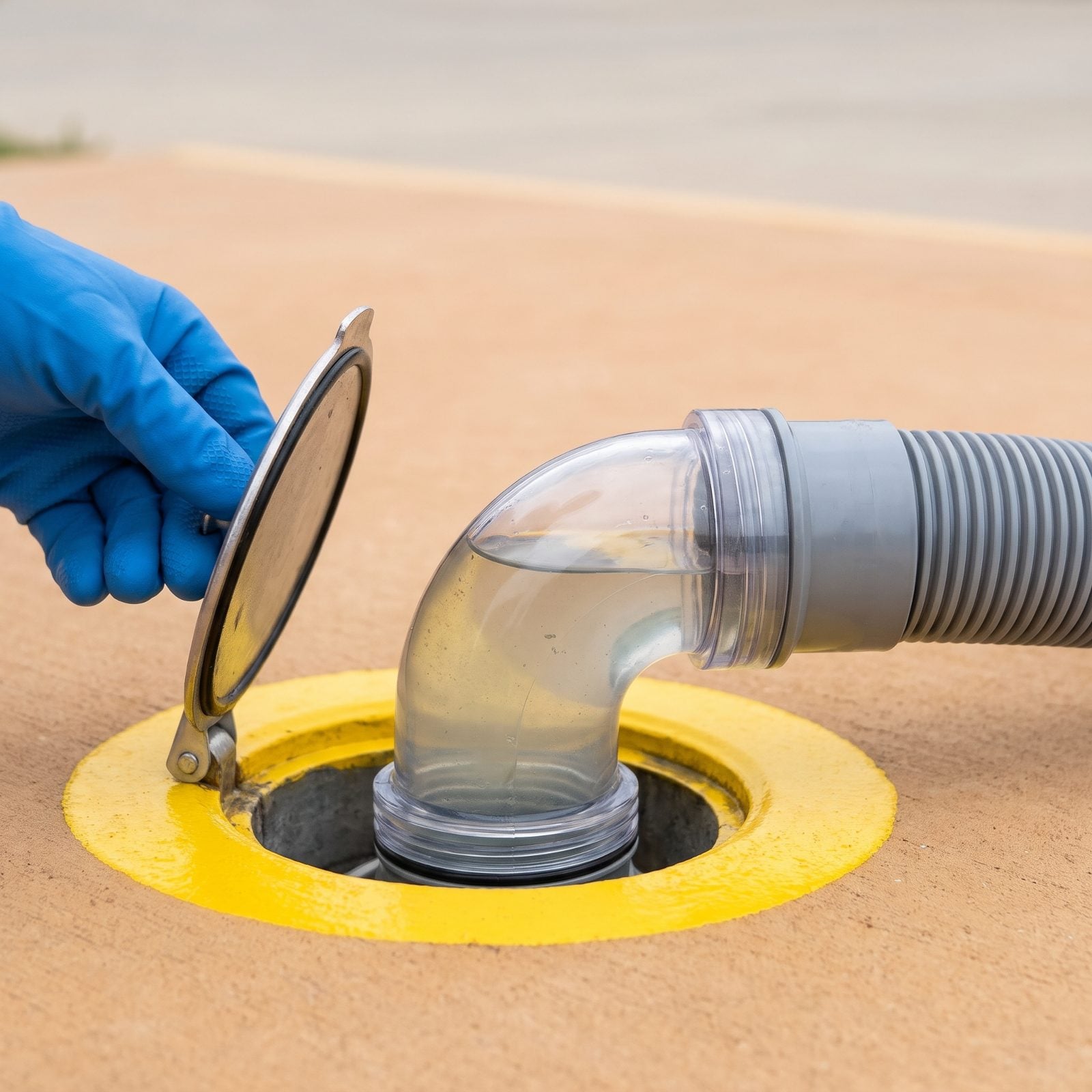
A bare hose end dropped into the drain jumps. The moment flow starts, pressure kicks the end up and out, and now there’s a mess spreading across a pad other people have to stand on.
Use a clear elbow adapter that seats into the drain and anchors the hose. That clear section earns its keep twice over — you can watch the water run clean, which tells you the tank is actually empty. Threaded fitting on the drain? Screw on the matching adapter. A loose hose is a gamble, and the whole line loses when it goes wrong.
29. Stretching the Sewer Hose Across a Vehicle Lane
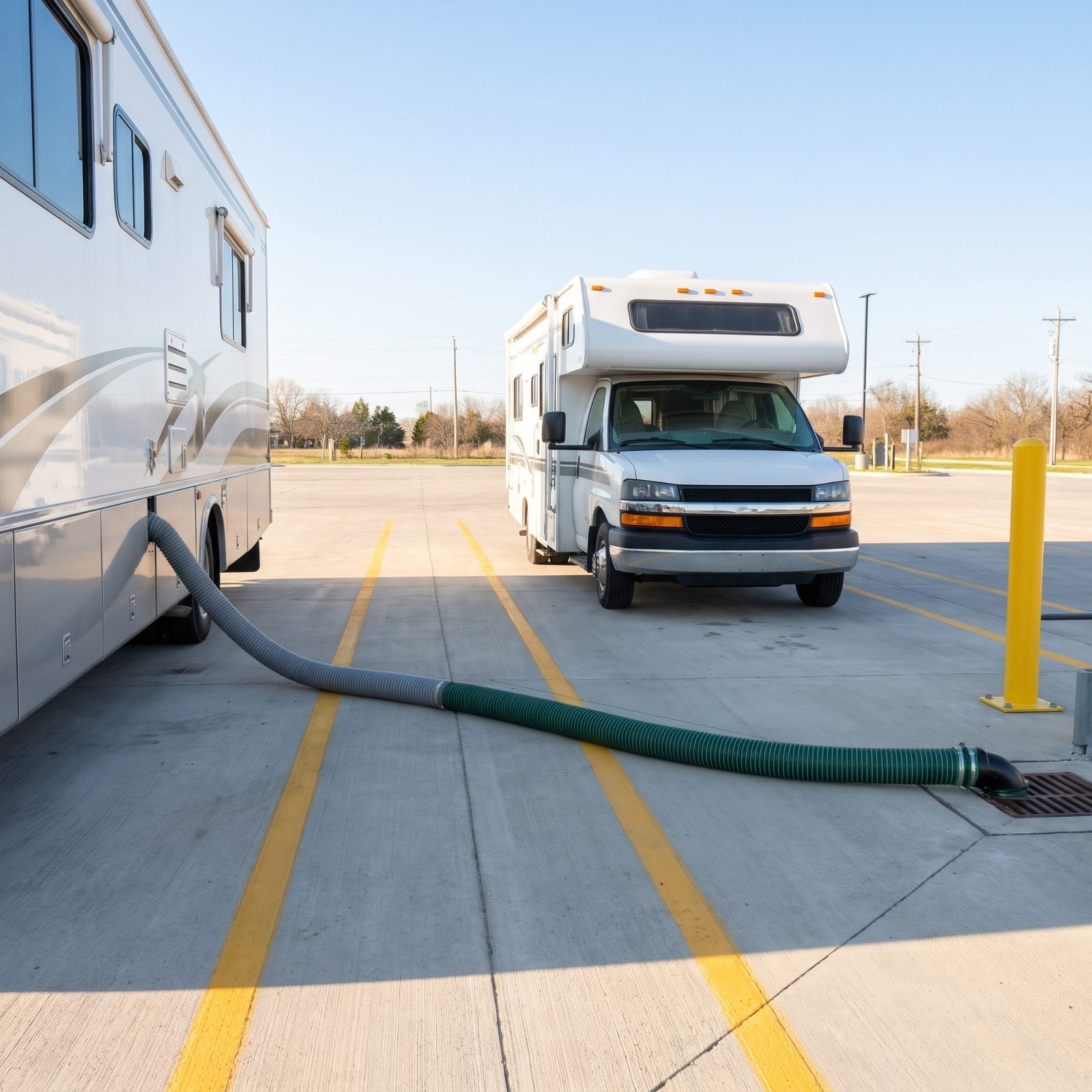
When the drain’s on the opposite side, the hose has to reach somehow. Run it straight across the lane and you’ve made a tripwire for walkers and a speed bump for the next rig, which either waits or runs it over.
Reposition the rig instead of the hose. Pull forward or back so your outlet sits on the same side as the drain. And if there’s genuinely no way around it, keep the hose short and flat, point it out to anyone waiting, and move fast. A hose across a lane is borrowed time. Everyone behind you pays the interest.
28. Handling Sewer Equipment With Bare Hands
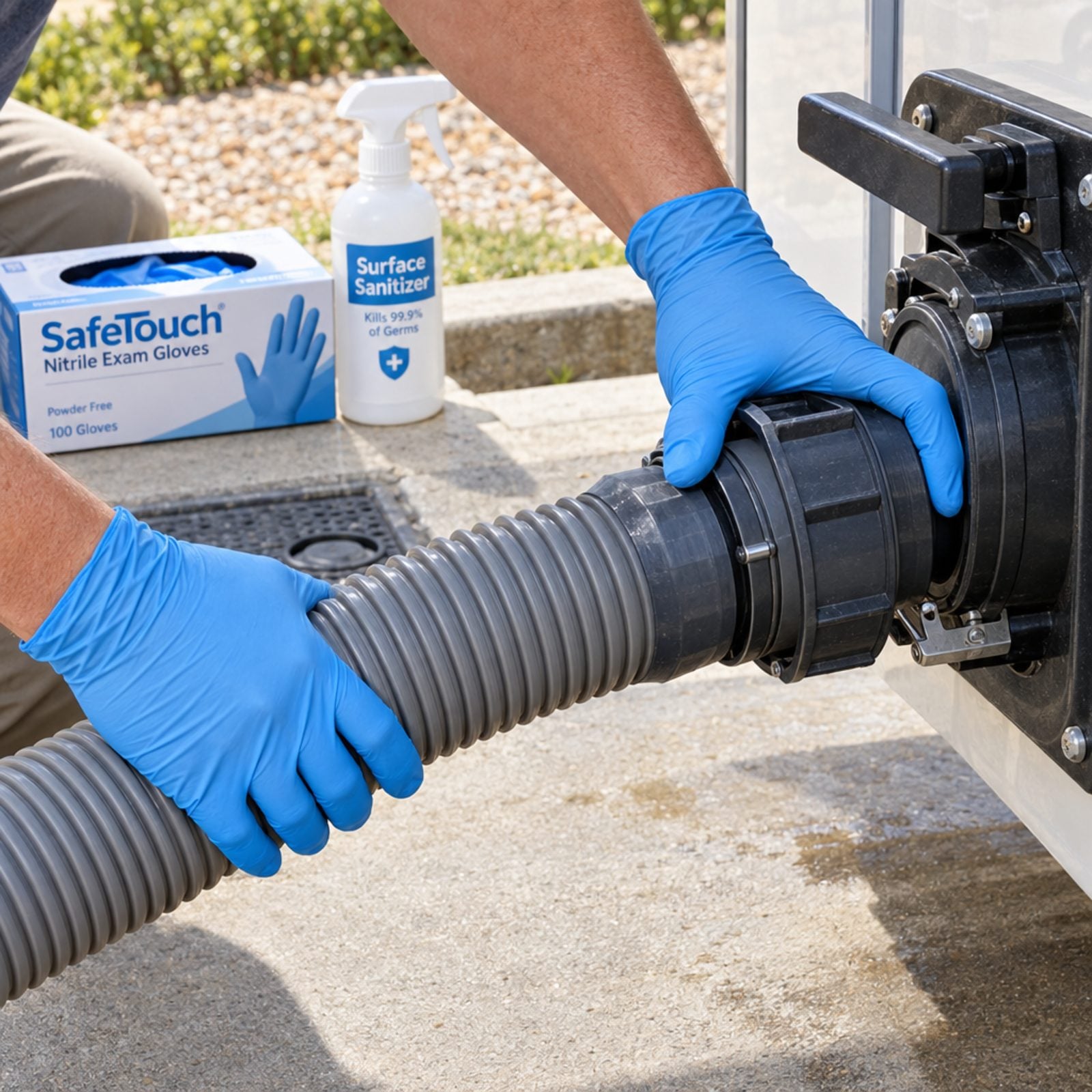
Bare hands on sewer gear is the one that makes seasoned RVers wince. The fittings, the hose end, the valve — all of it carries bacteria you can’t see and don’t want anywhere near your lunch.
Wear disposable gloves every time, no exceptions. Keep a box of blue nitrile gloves in your dump kit and pull a fresh pair for each visit, with a few extra tucked away in case one tears mid-job. It costs pennies, and it’s the difference between a clean routine and bringing something home with you. I clip a sanitizer bottle to the same bin so there’s never an excuse.
27. Touching Door Handles With Contaminated Gloves
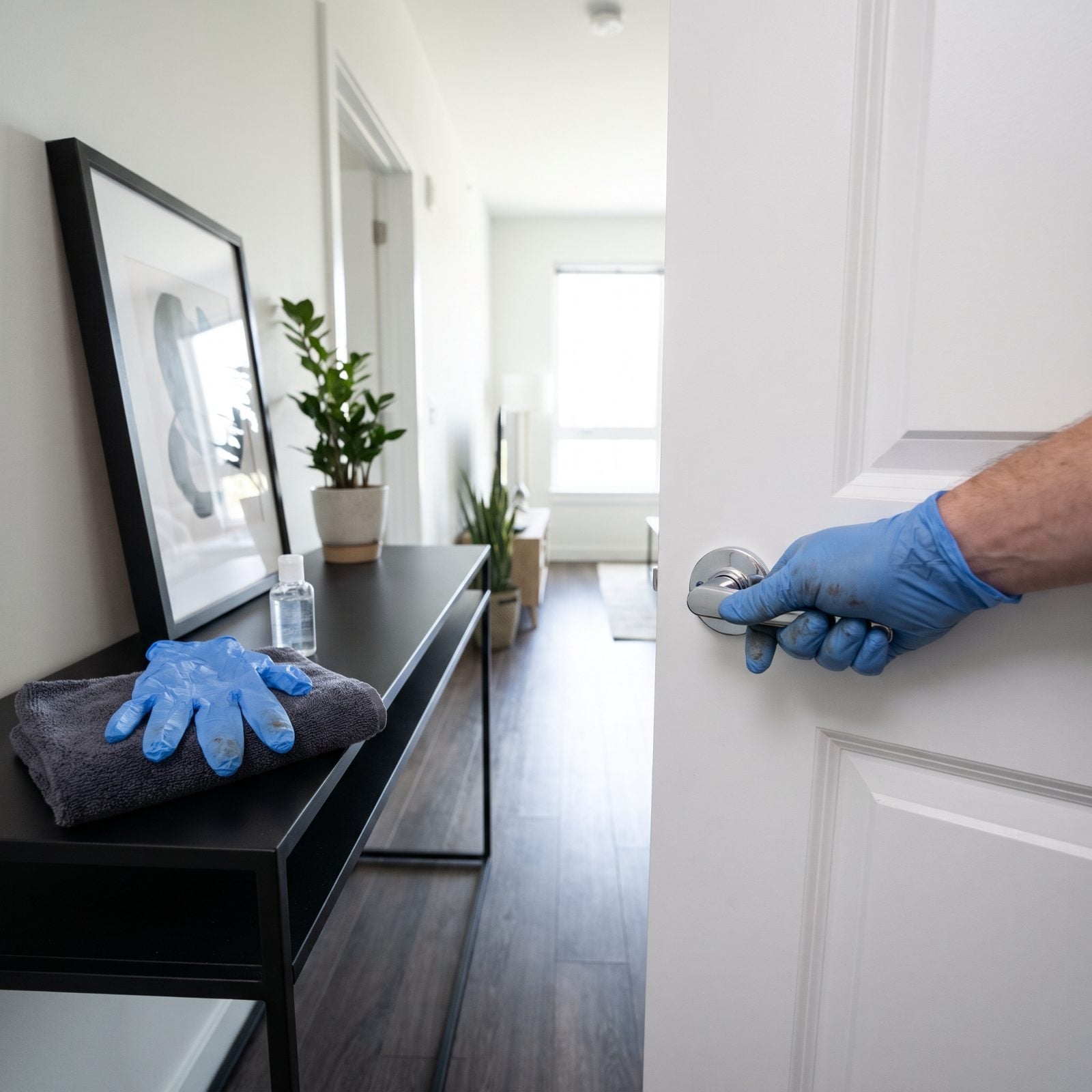
This is the mistake that follows you home. You finish the dirty job outside, grab the entry door handle with the same gloves, step inside, and grab the light switch, the fridge, the coffee pot. Now everything you touch has been through that mess with you.
Treat the end of the job as its own step. Peel the gloves off inside-out before you touch anything clean, drop them in a bag, then sanitize your hands. Keep a clean pair and the sanitizer by the door for handle duty if you have to go in and out first. The job isn’t done when the mess is cleared. It’s done when your hands are clean and nothing nasty has touched the inside of your home.
26. Emptying the Gray Tank Before the Black Tank
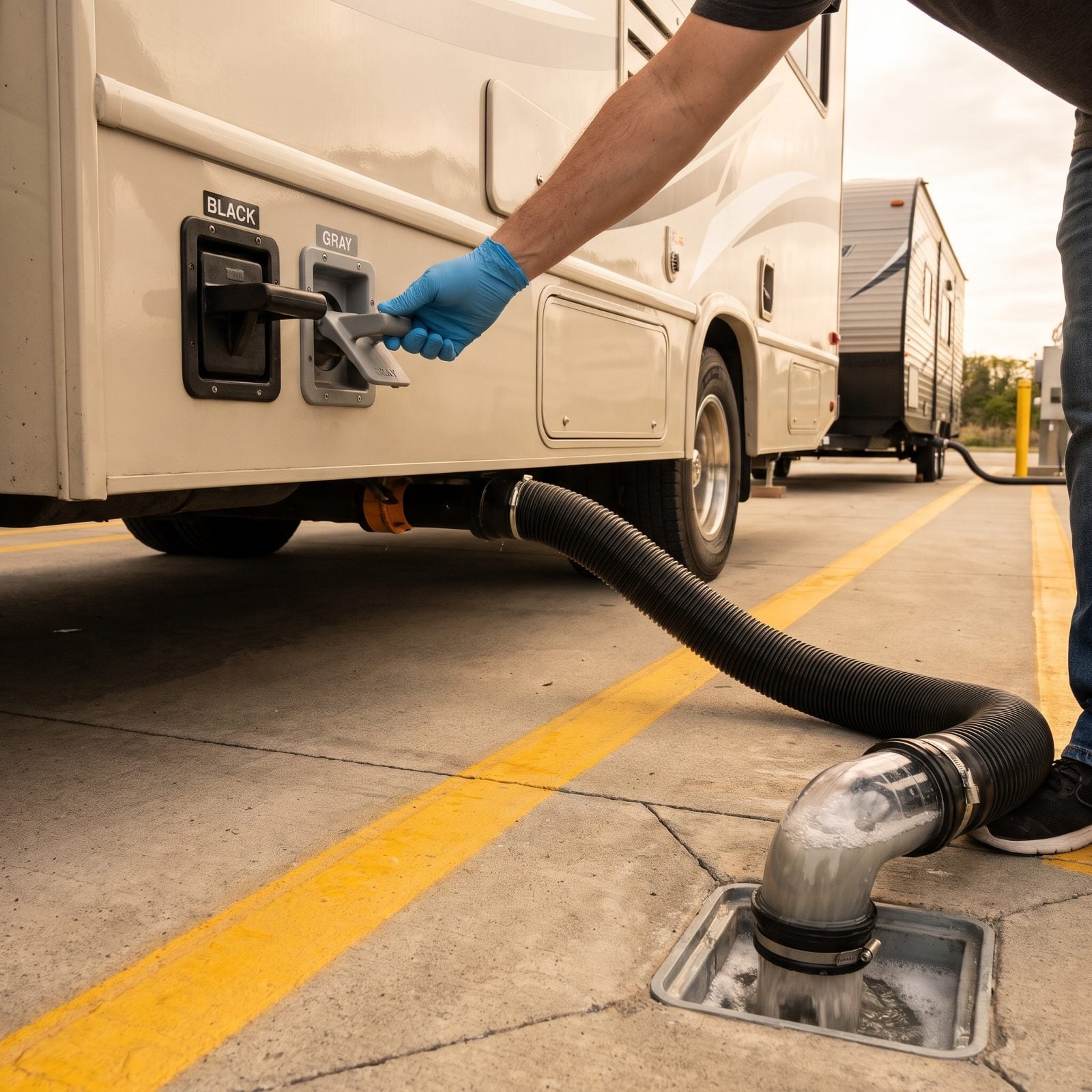
This is the one people get backwards most. Gray water from your sinks and shower is your rinse cycle. Dump it first and black second, and you finish with a hose full of the black tank’s leftovers and no clean water to push it through.
Flip the order. Black tank first, while it has the most force to clear the line, then open the gray and let all that soapy dishwater sluice the hose clean on its way out. You pull your hose off at the end and it’s basically rinsed for you.
25. Opening the Black and Gray Valves Together
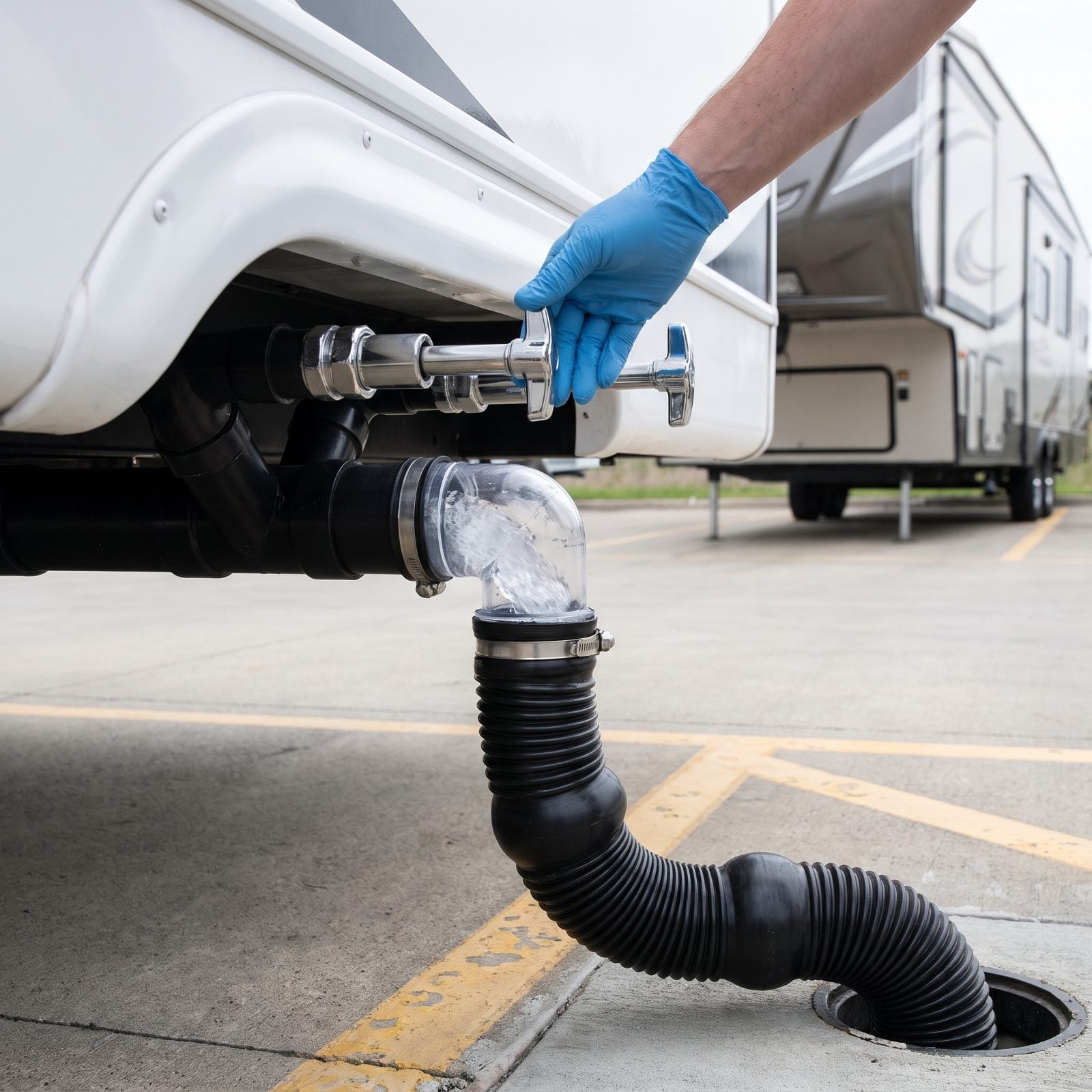
Pulling both valves at once feels efficient. It isn’t. Open gray and black together and the gray water takes the path of least resistance, bypassing the dirty line instead of flushing it. You lose the entire benefit of staging the dump.
One valve at a time. Black fully drains, you close it, then gray. The whole thing hinges on sequence, and opening them together throws that out the window.
24. Walking Away While the Black Tank Is Draining
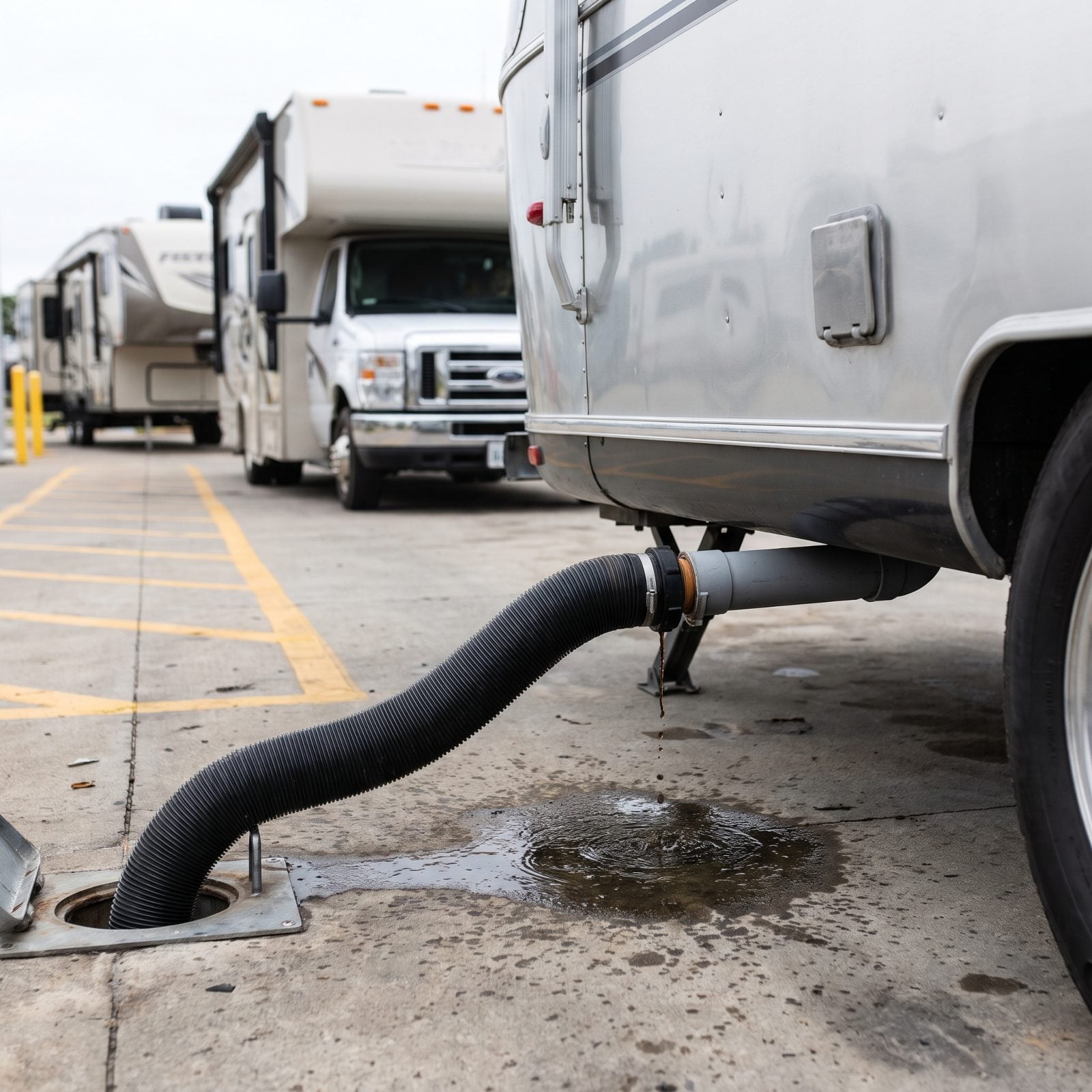
You connect everything, open the valve, and wander off to check tire pressure or grab a coffee. Then a fitting pops loose or the hose shifts, and there’s a slow leak nobody’s watching spreading across a shared pad.
Stay with your rig. Dumping takes a few minutes, not an afternoon. Keep a hand near the valve and an eye on every connection. A loose bayonet fitting under pressure doesn’t warn you. It just starts leaking.
23. Running the Tank Flush With the Black Valve Closed
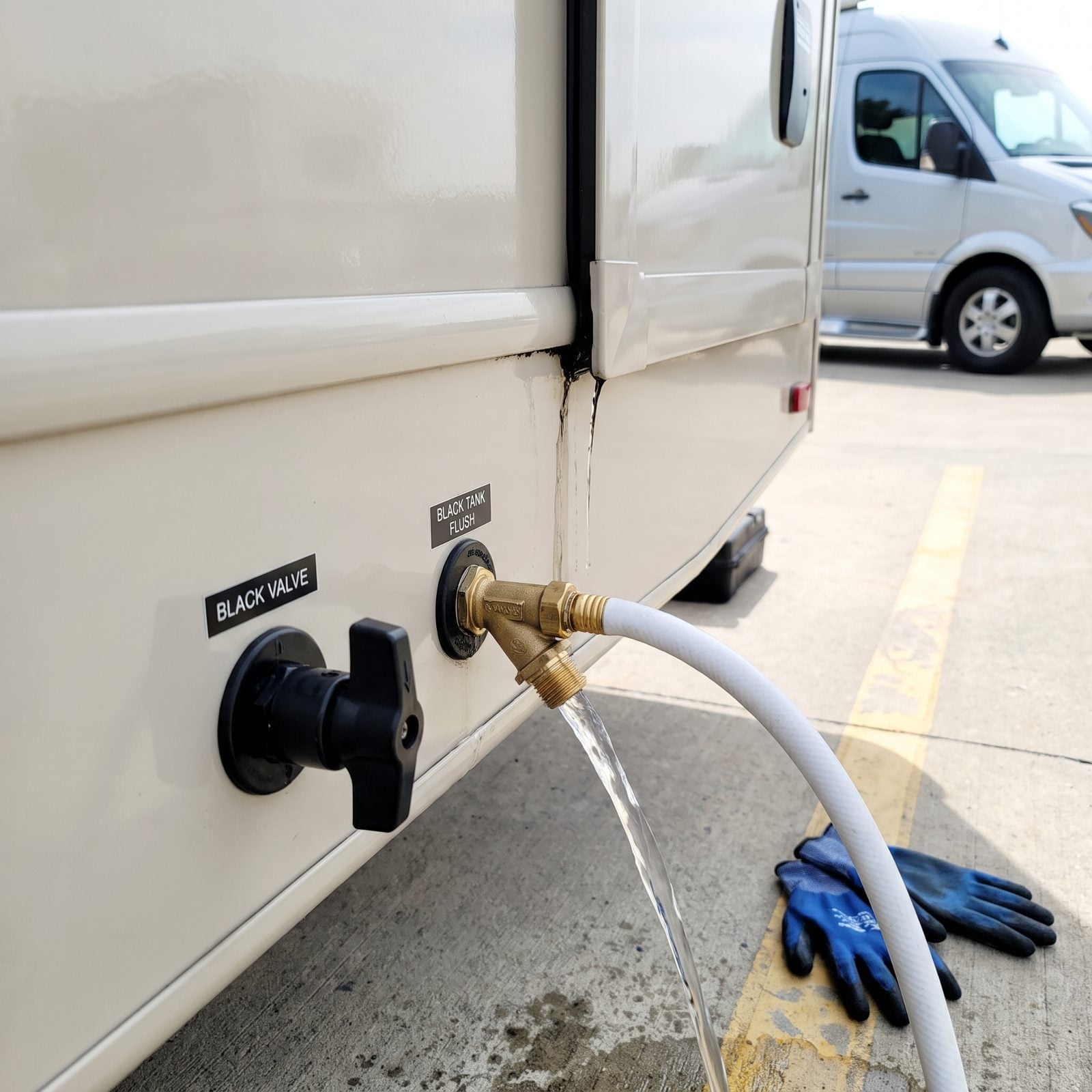
The built-in tank flush is one of the best features on a modern RV. It’s also the fastest way to overfill your black tank if you run it with the valve shut. Water goes in, nothing comes out, and pressure climbs until it finds the weakest seal, usually a vent or a gasket you’d rather not test.
Always flush with the black valve open, letting the rinse water drain out the same way the tank did. Run it in short bursts. Close the valve to let the tank fill a little, then open and drain. That fill-and-dump cycle does more than a steady trickle ever will.
22. Occupying the Bay With an Unnecessarily Long Flush
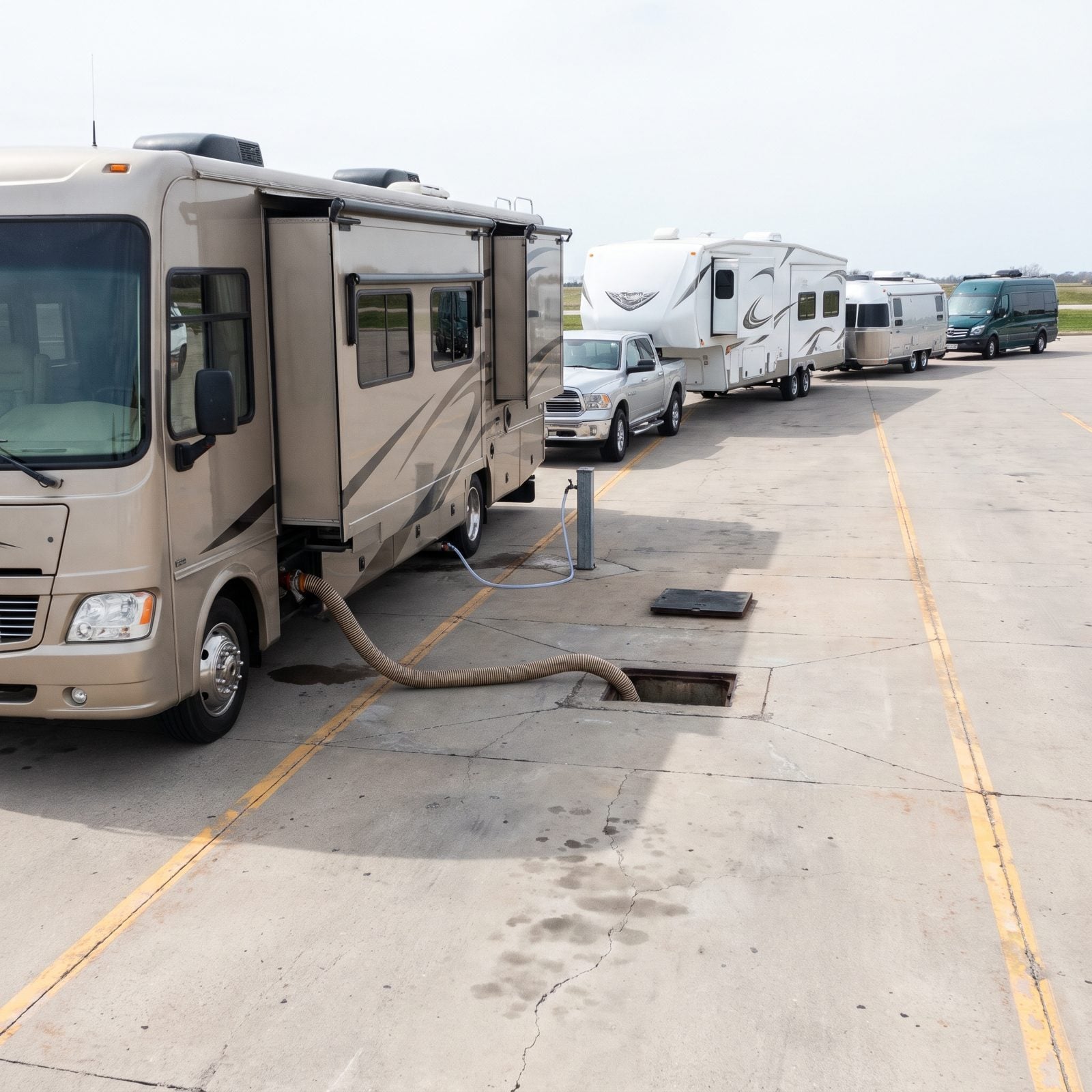
A thorough flush is good. A twenty-minute spa treatment for your black tank while three rigs wait behind you is not. The dump station is a shared resource, and the line forms fast on a Sunday checkout morning.
Save the deep clean for home or a slow weekday. At a busy station, run two or three quick flush cycles, confirm the water runs clear, and move on. Want a longer rinse? Pull forward out of the lane first.
21. Connecting Water to the Wrong RV Port
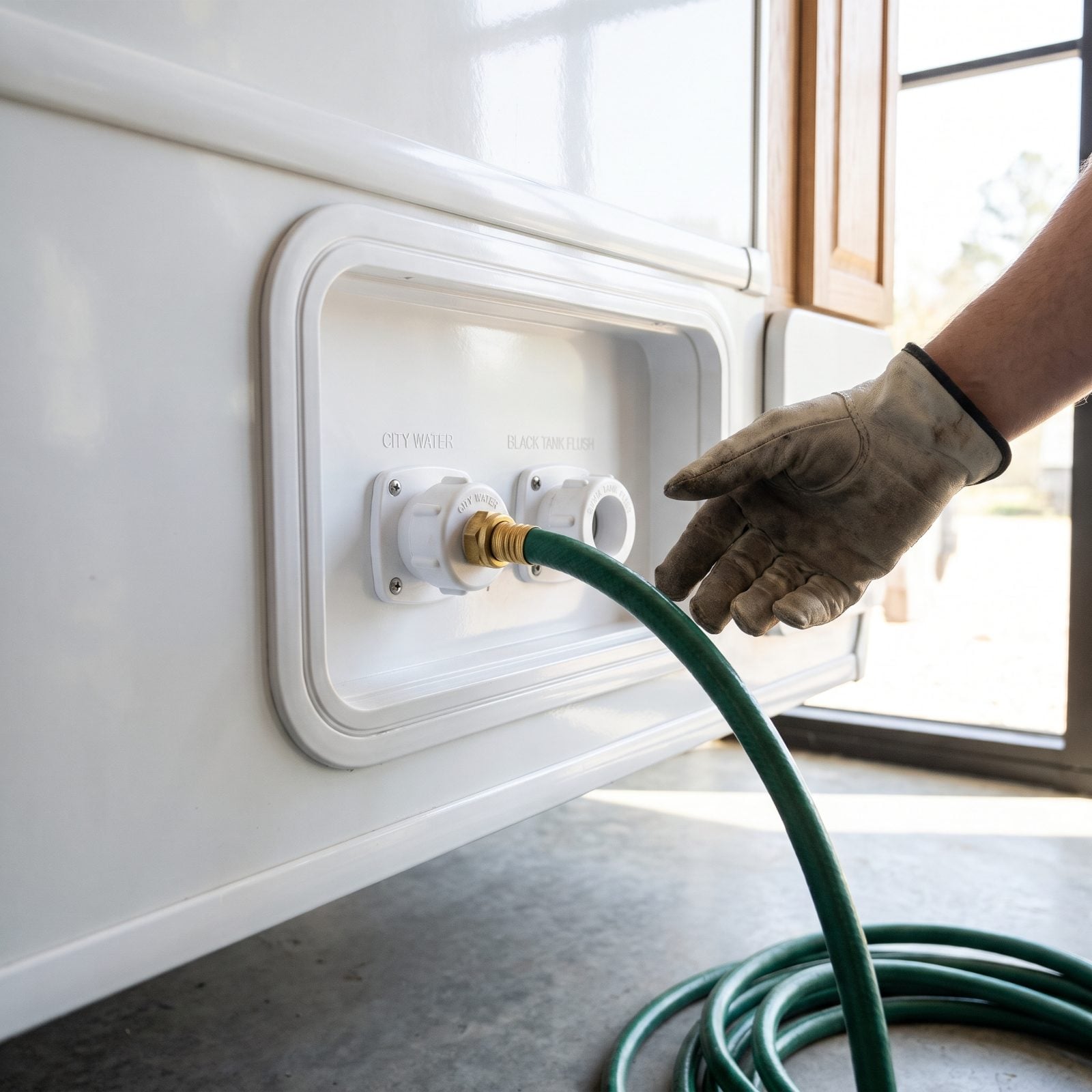
City water inlet and black tank flush port sit inches apart on a lot of rigs, and they look nearly identical. Hook your flush hose to the city water inlet by accident and you’re sending rinse pressure straight into your fresh-water plumbing. That’s a contamination headache you really don’t want.
Know your ports before you ever pull in, and mark them if you have to. The flush port feeds the black tank only. The city inlet feeds everything you drink and wash with. Mix them up and the fix is a long, nervous disinfection of your whole system.
20. Using the Potable-Water Spigot to Rinse Sewer Gear
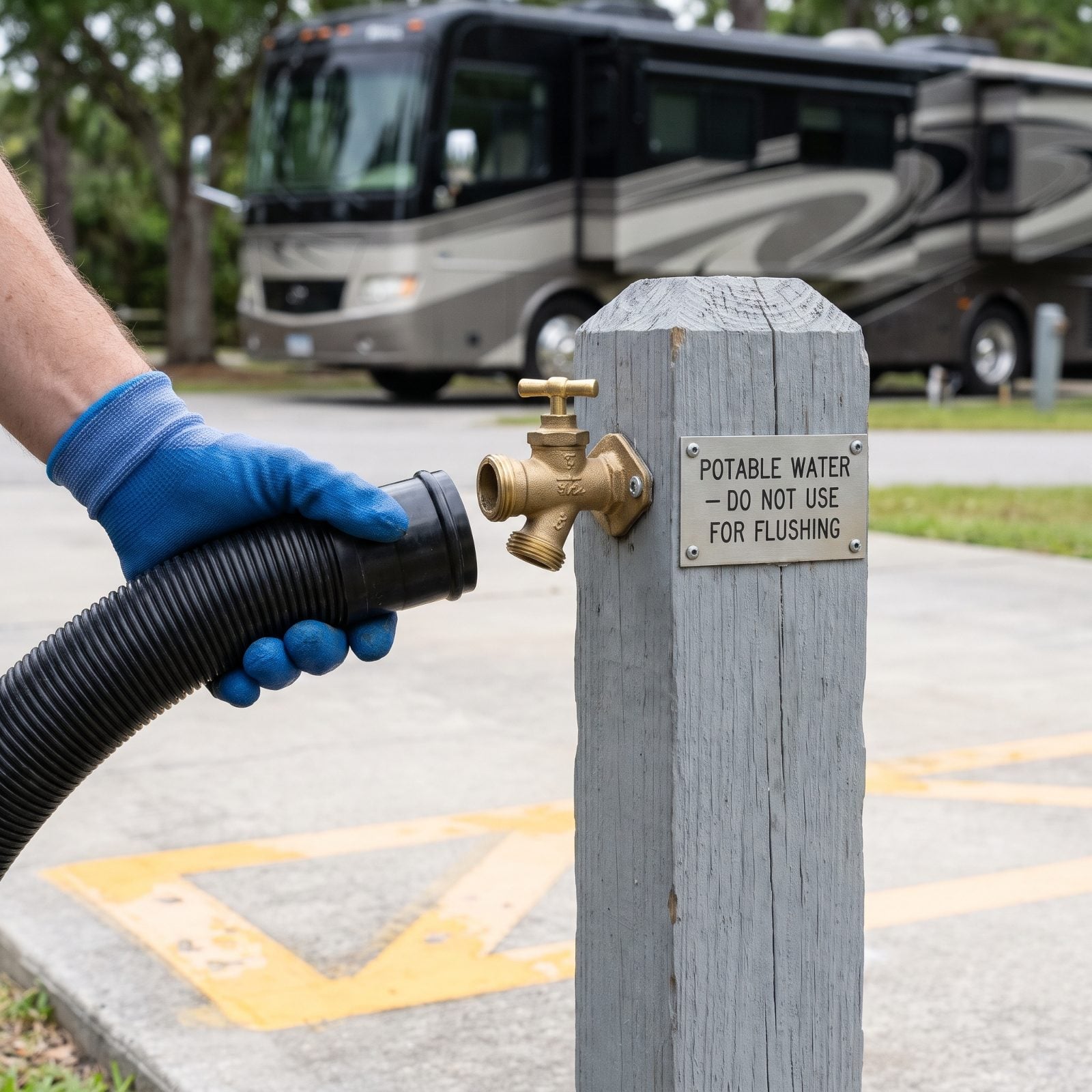
The potable spigot at a dump station is for clean water only. Somebody touches the sewer hose end right to it to rinse gear, and now every rig that fills up afterward is drinking off a contaminated tap.
Never let dirty equipment touch the drinking spigot. Need to rinse the hose? Use the non-potable rinse supply if there is one, or a dedicated jug. Keep the clean tap clean. The person behind you is trusting you did.
19. Opening Slides or Awnings in the Service Lane
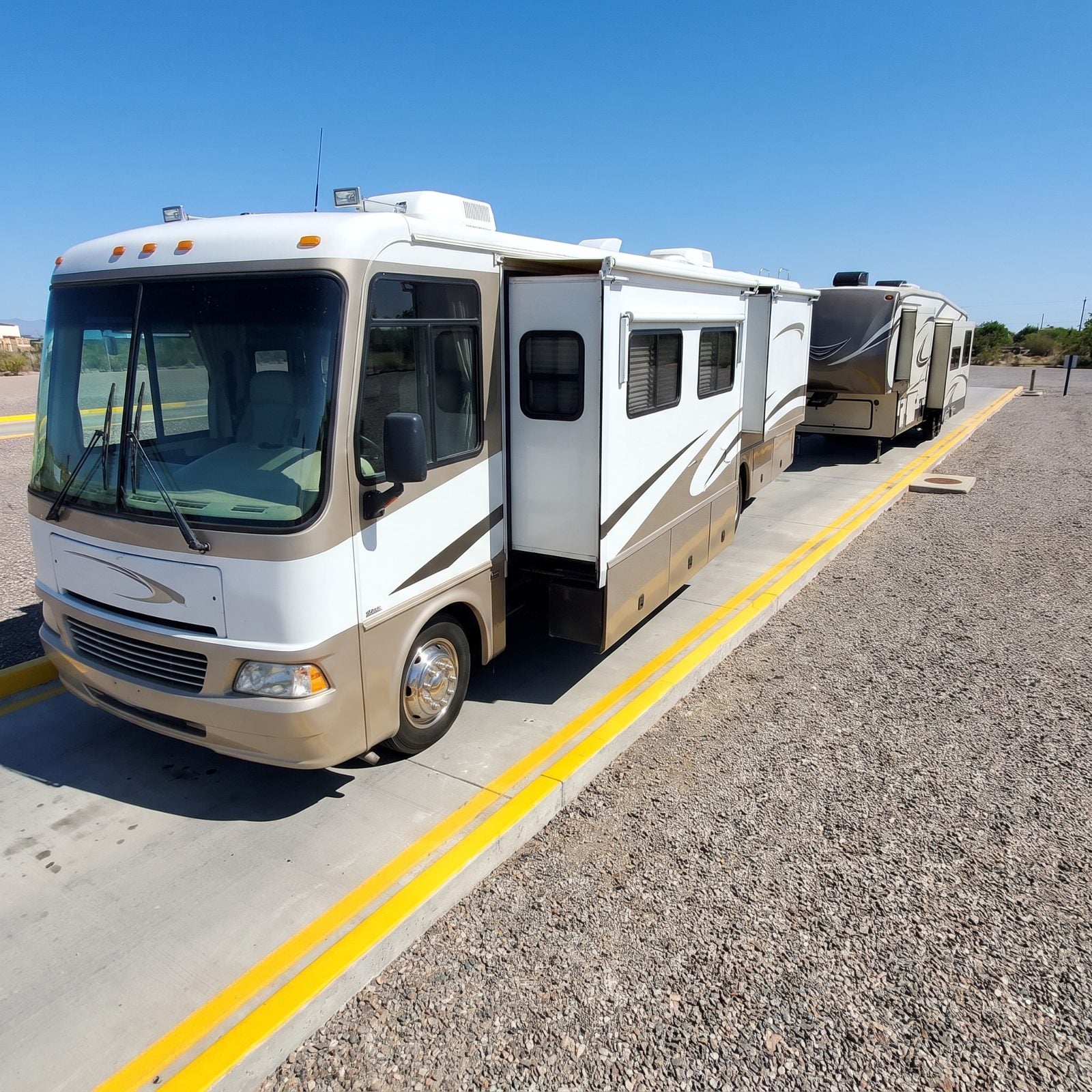
Popping a slide for easier basement access, or rolling out an awning for shade while you work, blocks the lane for everyone trying to get past. Dump lanes are tight by design, and nobody plans their turn-in around your extended slide.
Keep the rig buttoned up. Slides in, awning rolled, everything tucked. Do your organizing before you pull in or after you clear the lane. A dump station is a pit stop, not a campsite.
18. Disconnecting the RV End Before Clearing the Hose
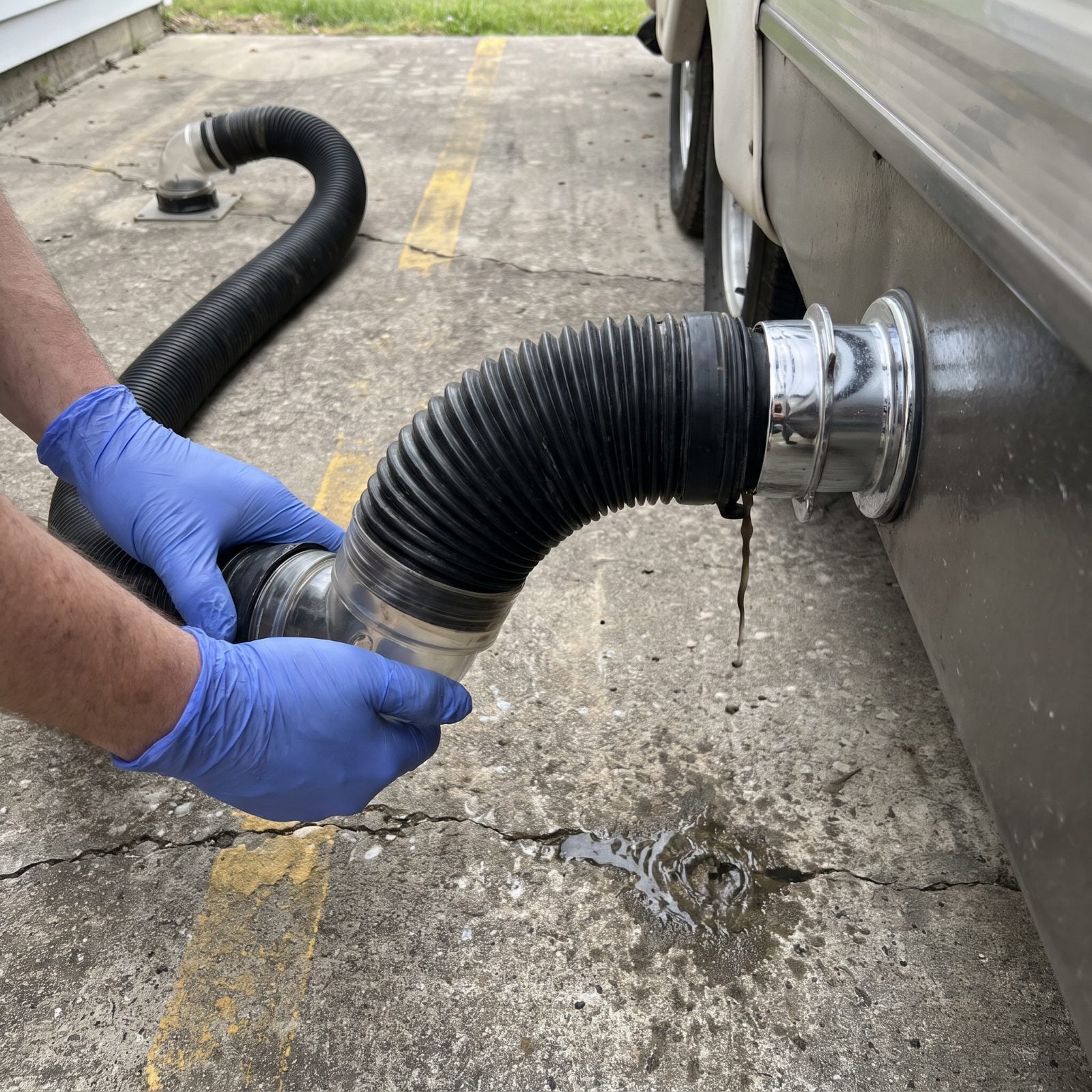
You close your valves, decide you’re done, and twist off the RV end first. Whatever’s still sitting in that hose pours out all over the pad and your gloves and sometimes your shoes. Classic rookie finish, and entirely avoidable.
Clear the hose before you touch a connection. Lift the RV end and walk the contents downhill into the inlet, letting gravity drain the whole length. Only when it’s empty do you disconnect, RV end first, then the inlet end. Rinse, cap, stow, done.
17. Forgetting to Close Both Waste Valves Before Disconnecting
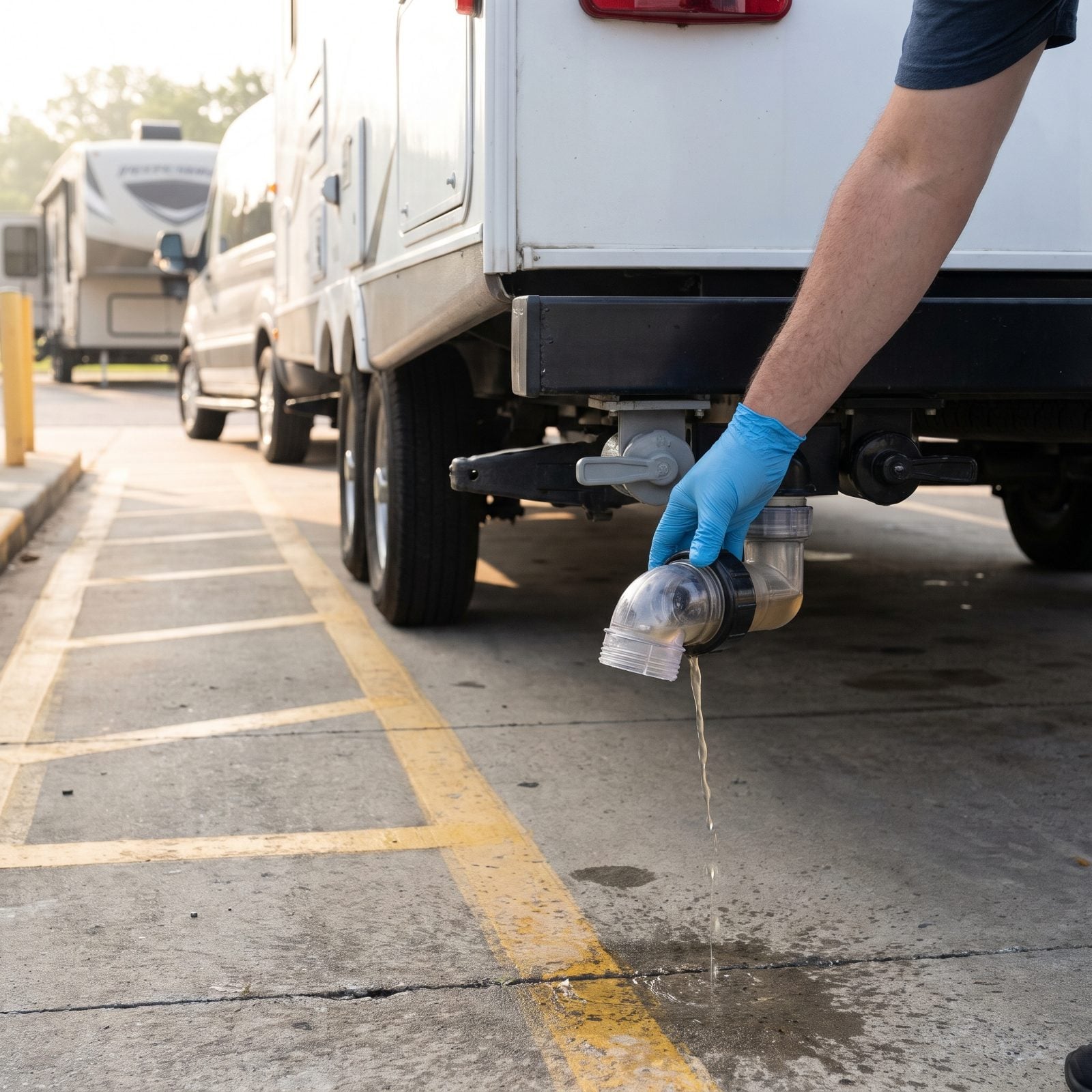
Pulling the hose with a valve still open is the rookie move nobody admits to. You tug the connection loose and the last cup of tank water sitting in the line comes out where it shouldn’t — onto the pavement, onto your gloves, onto the spot the next person has to kneel in.
Close the black valve first, then the gray, and count a slow ten so the line finishes draining before you break the connection at the RV end. I got this wrong early on and spent a good minute rinsing my own shoes at a spigot while three rigs watched. Learn it once and you never do it again.
16. Driving Away Without Replacing the RV Termination Cap
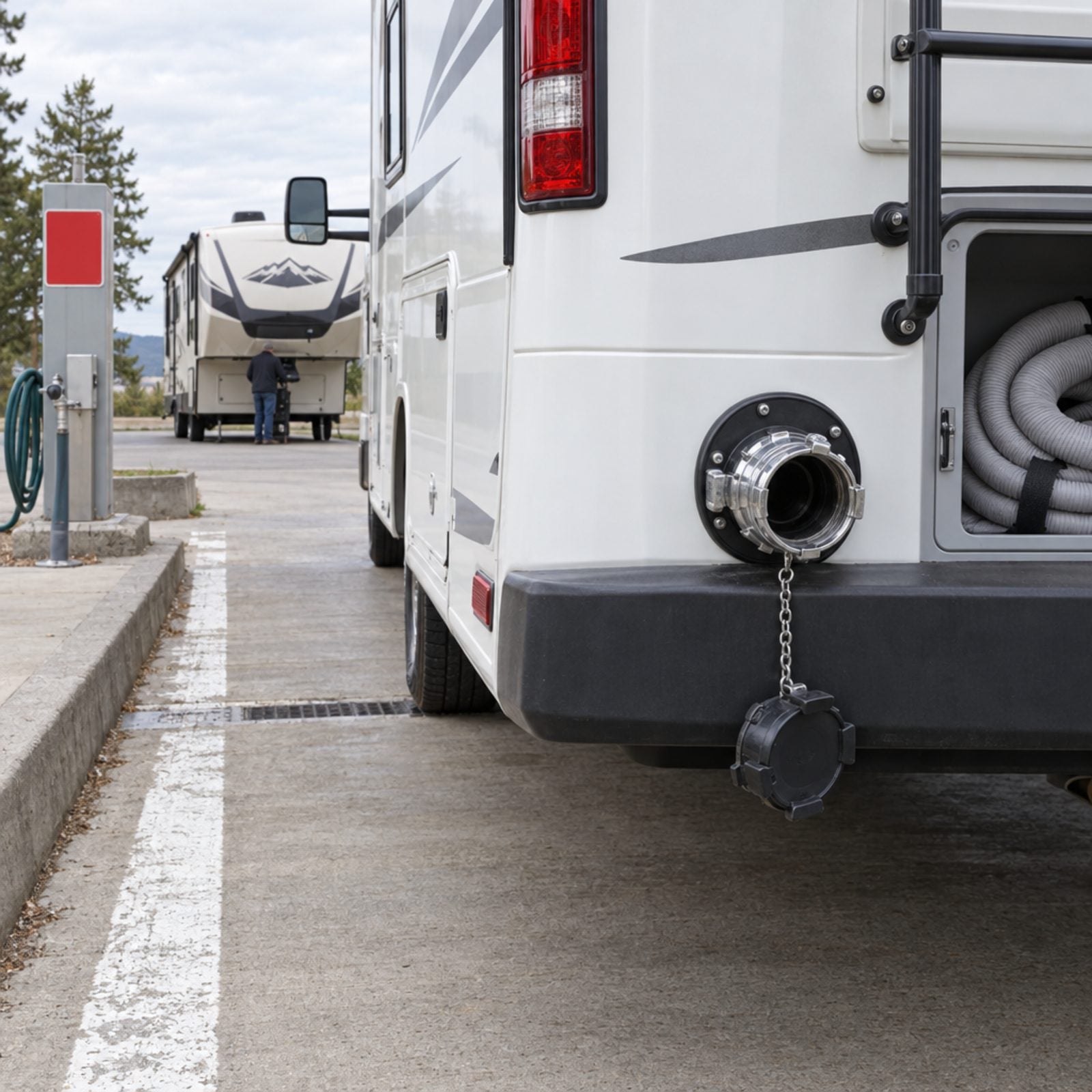
That cap on your termination outlet catches drips on the road. Leave it off and you broadcast a fine mist of whatever lingered in the fitting across your own bumper and the pavement behind you for miles.
Thread it back on before you release the brake. Every time. If yours cracked or went missing somewhere in Utah, a replacement threaded brass cap costs a few dollars at any RV counter — no excuse to run without one. Spring for a solid brass one with a hex base so it threads on snug, and the whole thing becomes a habit you cannot forget.
15. Leaving the Station’s Drain Cover Open
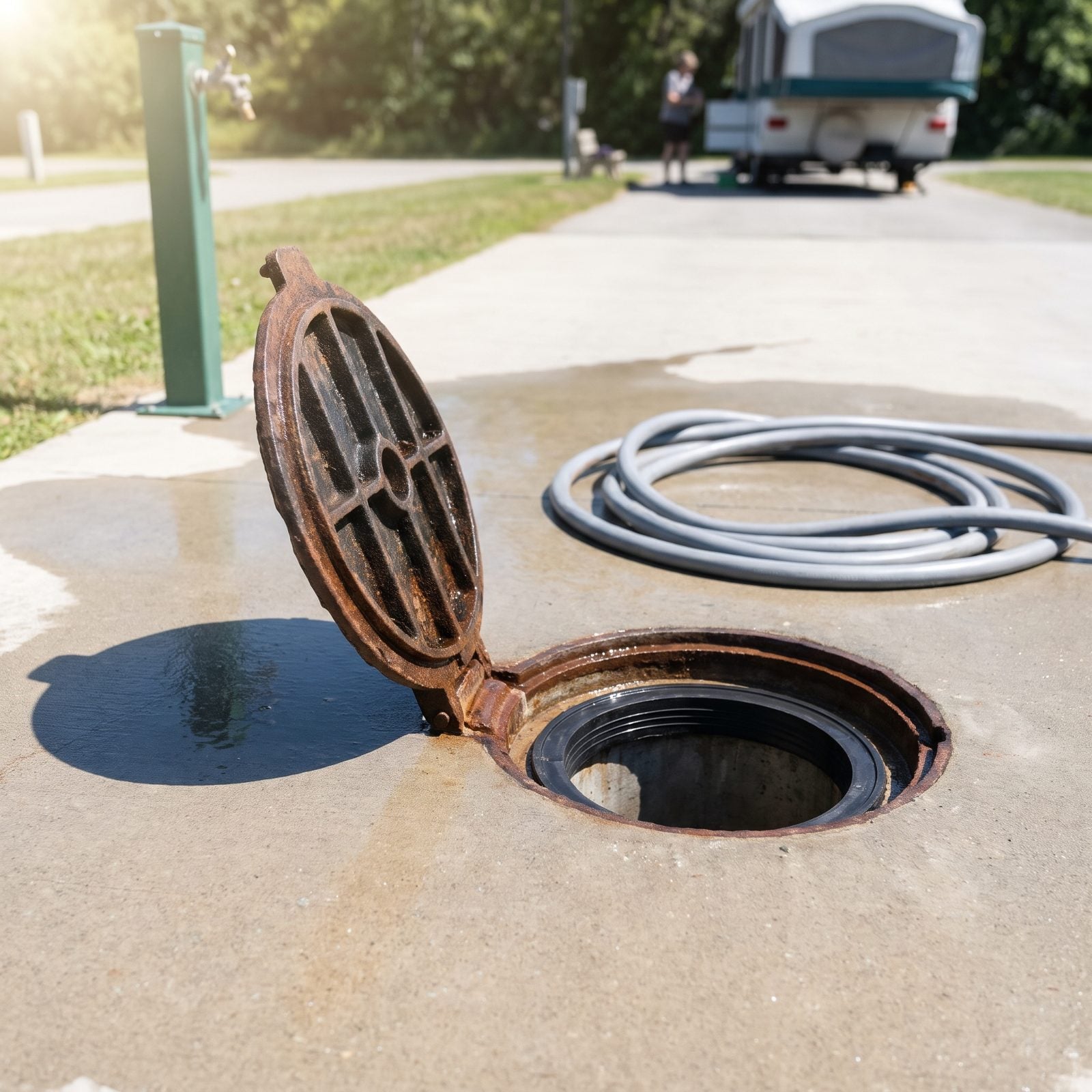
You finished, you packed up, and you left the ground inlet gaping open with the iron cover flipped back on its hinge. Small thing. Except now the next rig has to touch a dirty cover before they can even start, and odors drift straight up out of an open sewer into a spot where people are kneeling.
Flip it shut when you are done. That heavy lid exists to seal the smell and keep debris out of the line, so use it. Treat the station the way you want to find it and the folks behind you get a clean start instead of your leftovers.
14. Washing a Spill Toward a Storm Drain
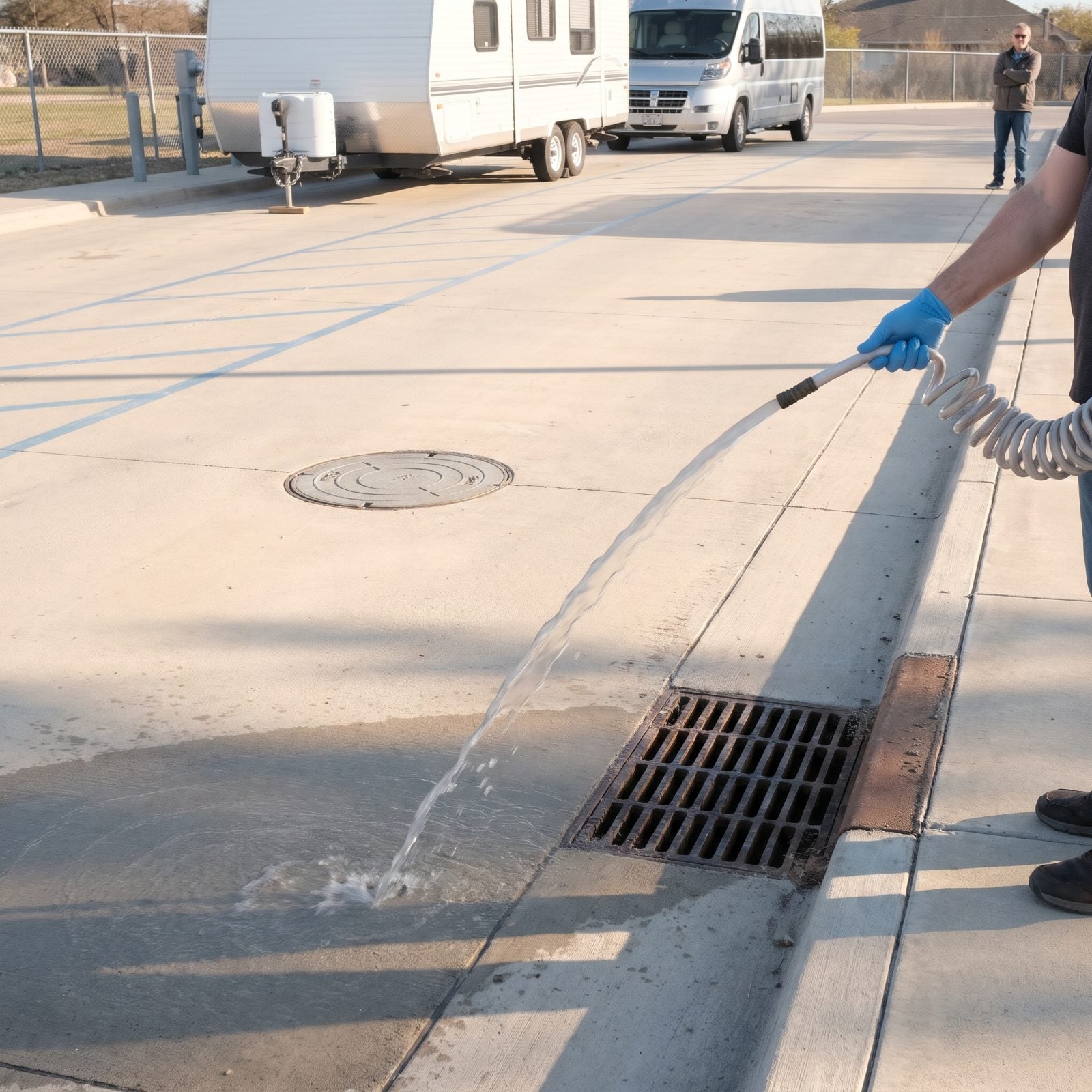
A little tank water hits the pad, so you grab the rinse hose and chase it toward the nearest grate. Problem is, the nearest grate is often a storm drain — and storm drains run straight to a creek or a lake with no treatment in between. There is nothing gray about this one. It is exactly how dump stations get shut down.
Push any spill toward the sanitary inlet, the covered hole you just dumped into, never the gutter grate. Keep a small jug of water and a cloth in your bay for quick cleanups so you are not flooding the whole apron to move a splash.
13. Using the Dump Station to Dispose of Motor Oil
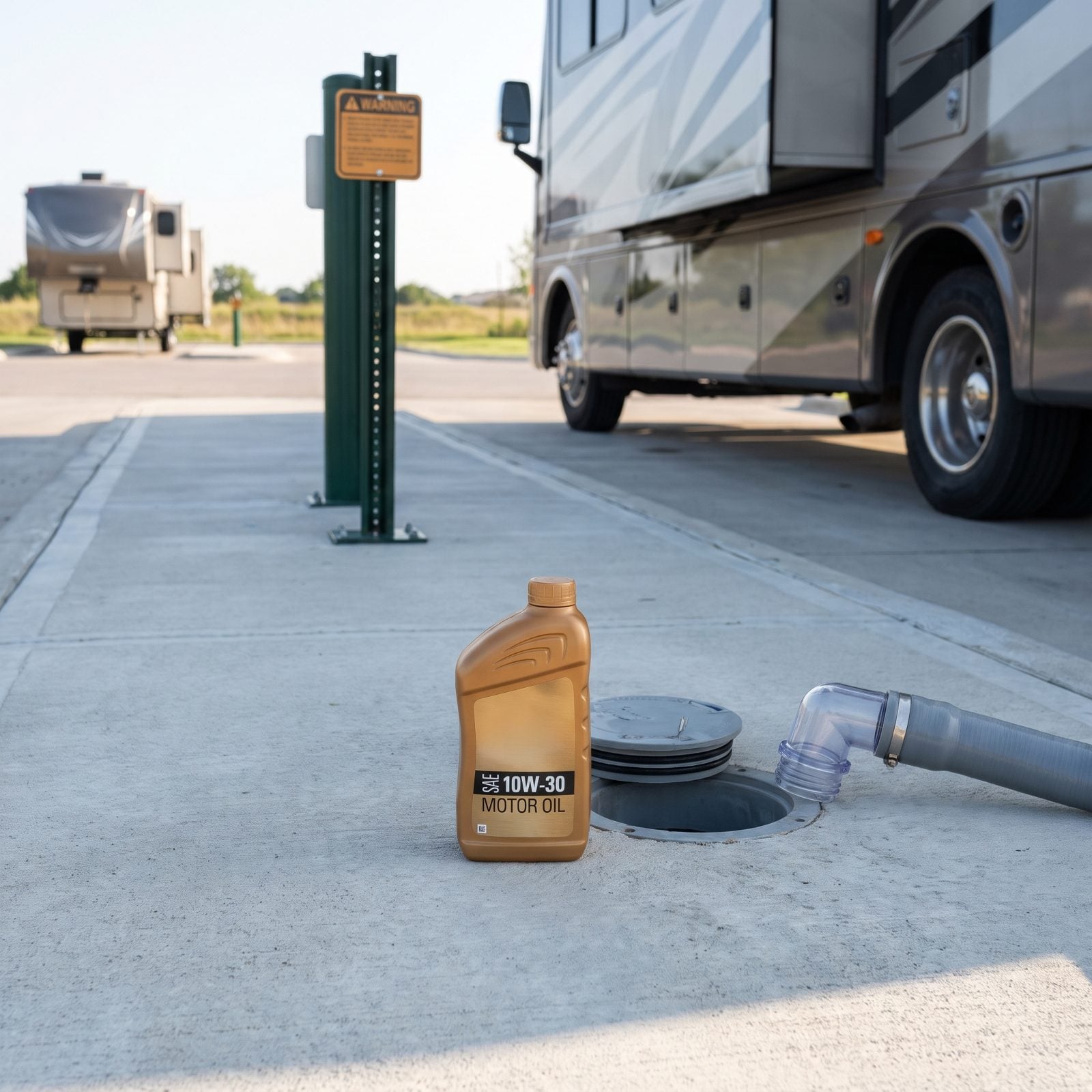
A dump station is for tank waste, full stop. Not used oil, not antifreeze, not transmission fluid, not whatever you drained in the campground loop that morning. Those chemicals wreck the municipal treatment system the station feeds, and a camera or a steep fine usually waits for anyone who tries it.
Motor oil goes back to an auto parts store, often free. Most national chains will take it at the counter without blinking. Keep your RV sanitation and your engine maintenance on two completely separate tracks and you will never get this one wrong.
12. Emptying a Cassette Toilet Without Opening Its Air Vent
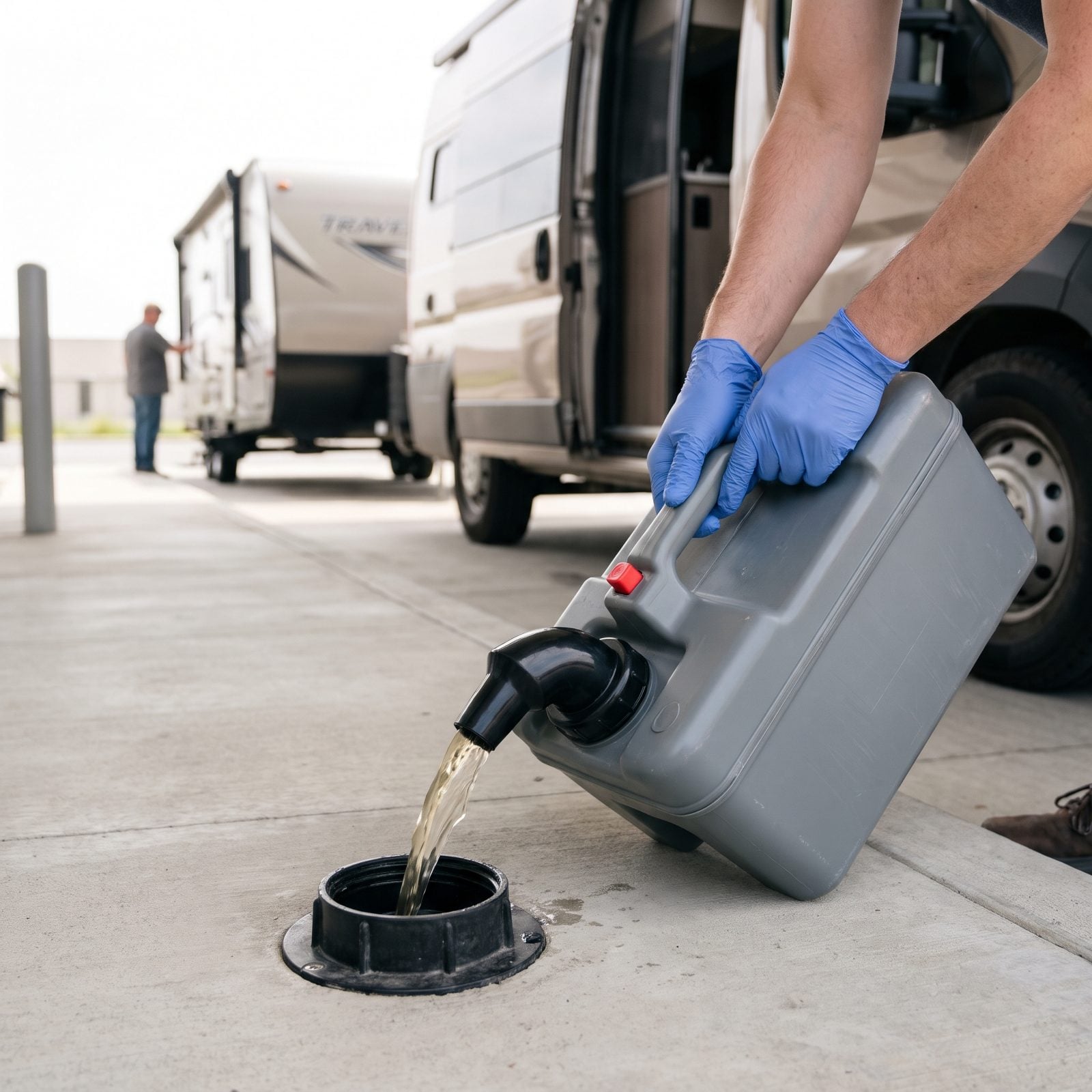
Tip a cassette tank with the vent button closed and you get the glug — that airless back-and-forth surge that splashes contents up and out of the spout right at you. Messy, avoidable, and the reason people step back when they see somebody wrestling with a cassette.
Point the spout down into the inlet, then press and hold the air vent button on the handle as you pour. Air in, waste out, smooth and steady, no backsplash. Thetford and Dometic cassettes both work this way. Read the handle, find the button, use it.
11. Parking a Portable Waste Tote Where It Blocks the Lane
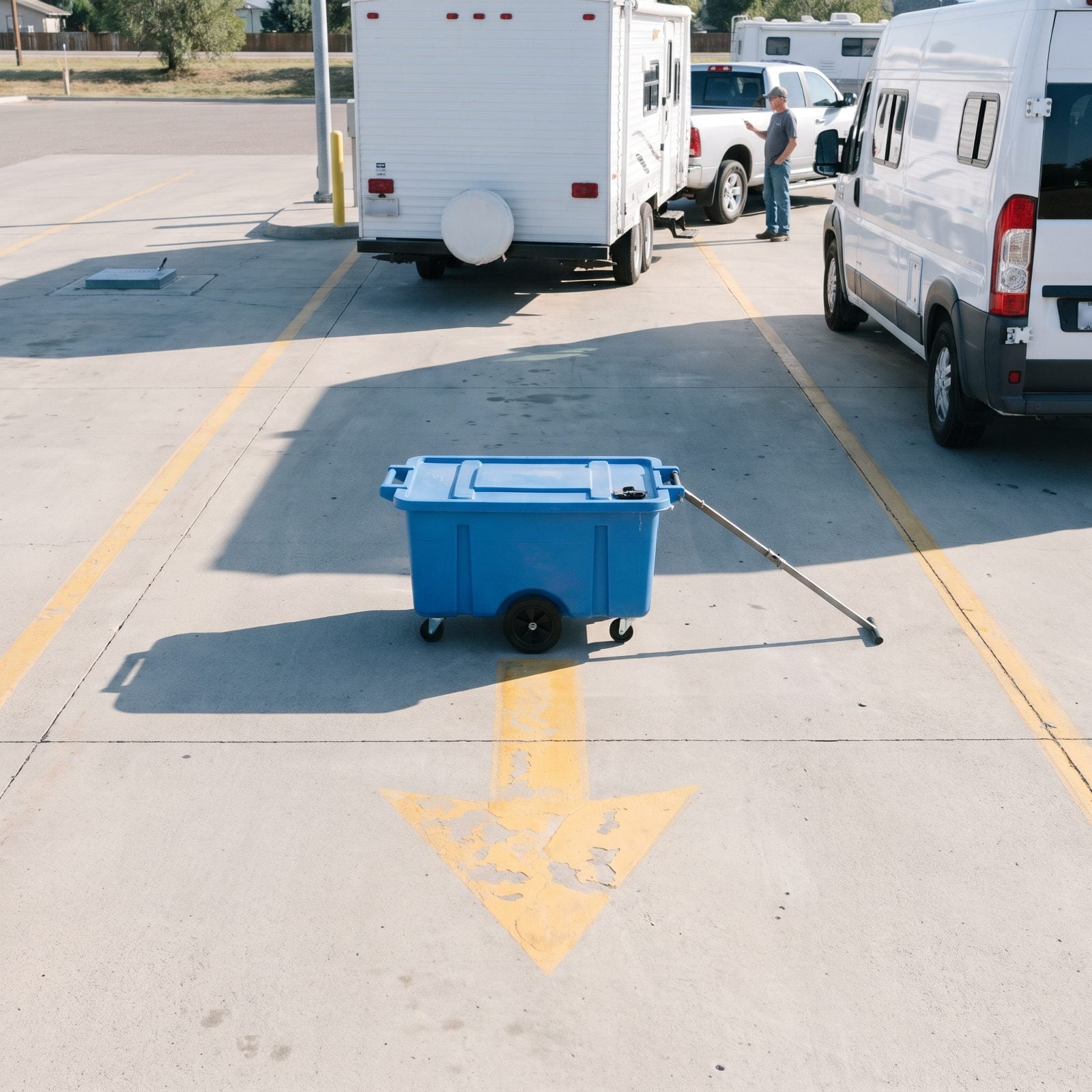
You roll your blue tote up to the inlet, start emptying, and leave it parked in the single travel lane while rigs stack up behind you. A tote job takes a few minutes. Block the whole station for those minutes and a quick stop becomes a traffic jam — and dump station lines fray tempers faster than almost anything in camping.
Walk the tote in from the side and keep it, and yourself, clear of the drive path. If the station is a single-lane pull-through, wait your turn in the queue instead of wheeling in on foot ahead of a rig that is trying to line up. Everybody here is in a hurry. Moving with that fact instead of against it is the whole etiquette.
10. Dragging a Leaking Waste Tote Across the Pavement
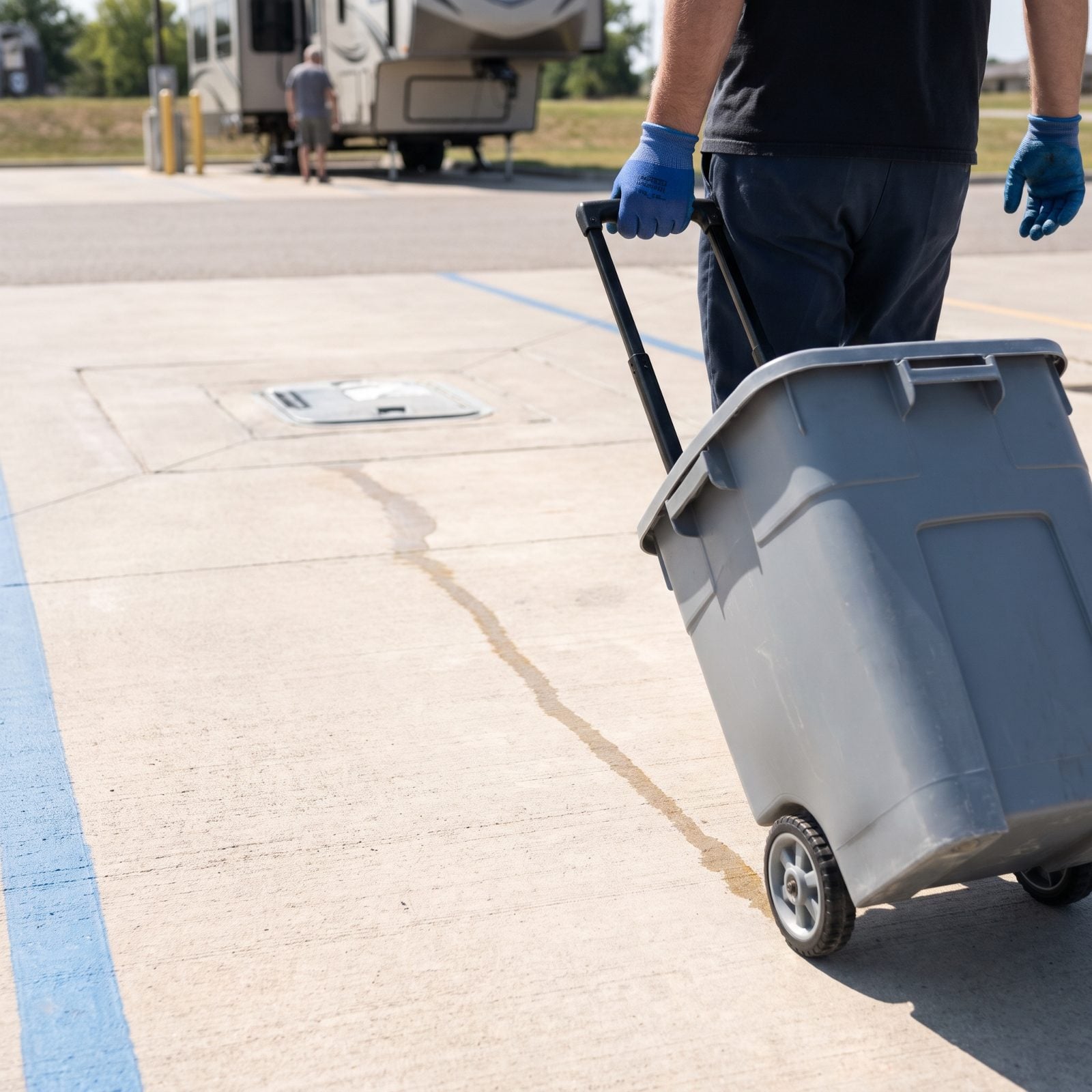
A wheeled bin with a loose lid or a cracked bottom leaves a trail behind its wheels the whole way across the pad, and the next person has no clue they are kneeling in it. The culprit is usually the hinged lid bouncing open as the bin jostles, or plastic gone brittle and cracked after a few summers baking in the sun.
Check the lid is shut tight before you move. Give the bin a gentle rock to make sure nothing weeps, and swap out a cracked bin the moment you spot it. A quart of leaked waste water smeared over twenty feet of concrete is the kind of thing that makes a campground rethink having a dump station at all.
9. Driving Over the Sewer Hose
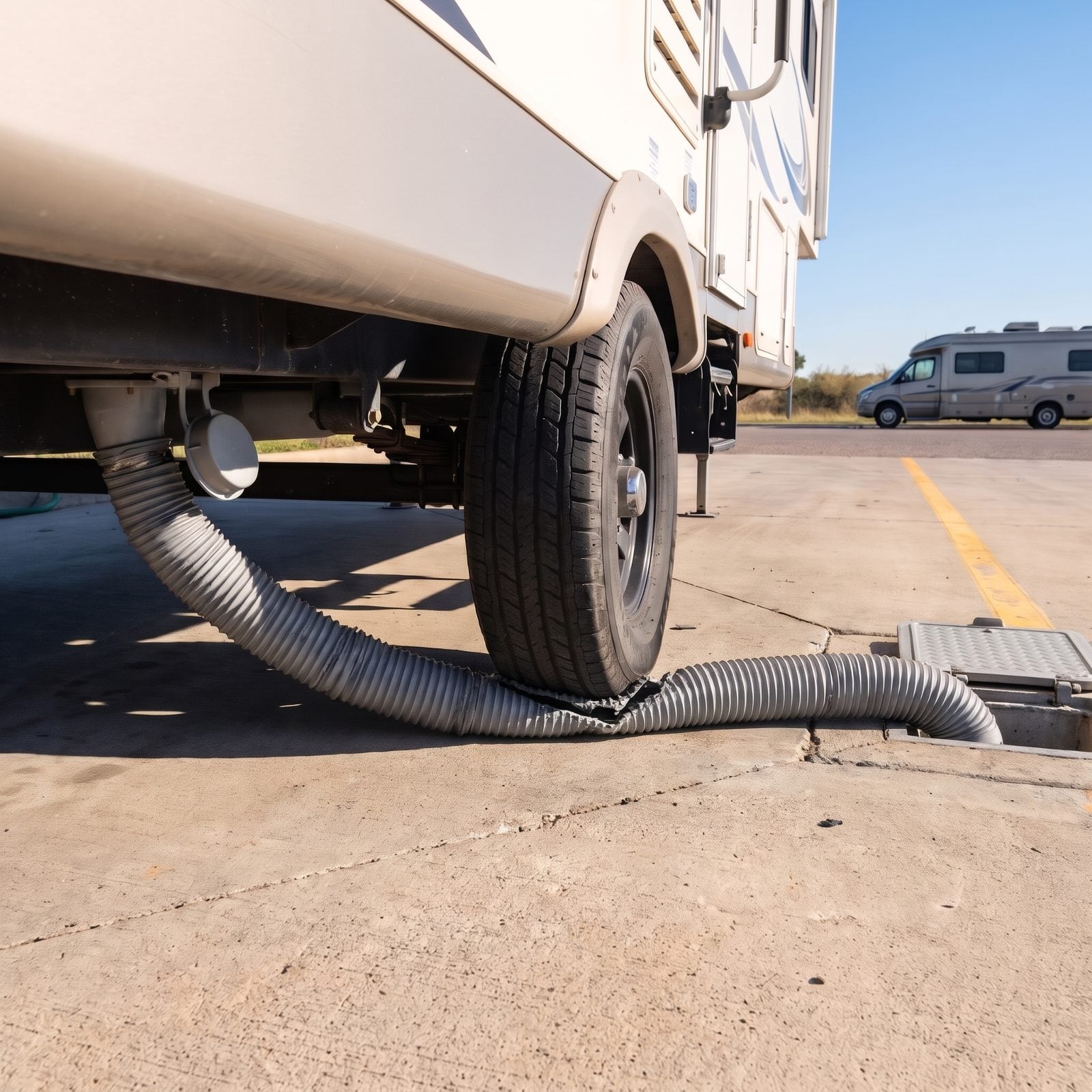
This costly mistake is also one of the easiest to make. You disconnect, you forget the hose is still lying across the drive, you pull forward, and a tire splits it open. Now you have a ruptured hose coated in tank residue, a mess on the pavement, and a run to the nearest store for a new one before you can dump again.
Stow the hose completely before you touch the gas. Rinse it, drain it, and get it back into its bumper tube or storage bay — not coiled loosely at your feet where it is easy to roll over. A decent hose runs twenty or thirty dollars. A good one lasts years, as long as you never park a wheel on it.
8. Leaving a Diesel Engine Idling Beside Everyone Else
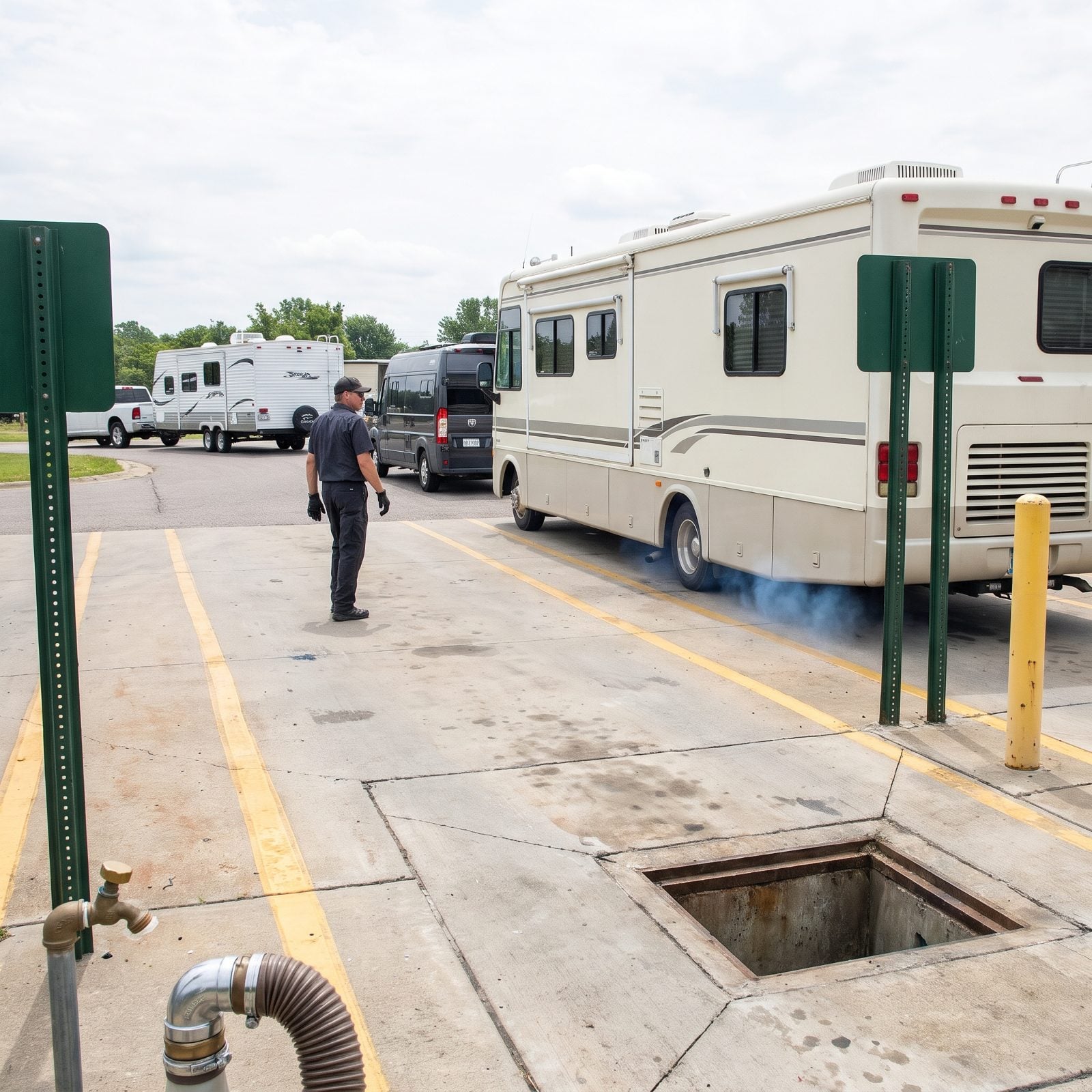
You pull into the bay, pop the sewer cap, and leave the big diesel chugging away the whole time you work. Feels harmless. It isn’t. A loaded dump station is a tight, enclosed slab of concrete where the people behind you stand in your exhaust while they drain their own tanks.
Diesel fumes at close range are no joke, and idling ten minutes to empty a tank burns fuel for nothing. So shut it down. The engine doesn’t need to run while the black tank drains, and your air compressor won’t suffer from a short break.
7. Smoking Near Sewer Gases and Propane-Equipped RVs
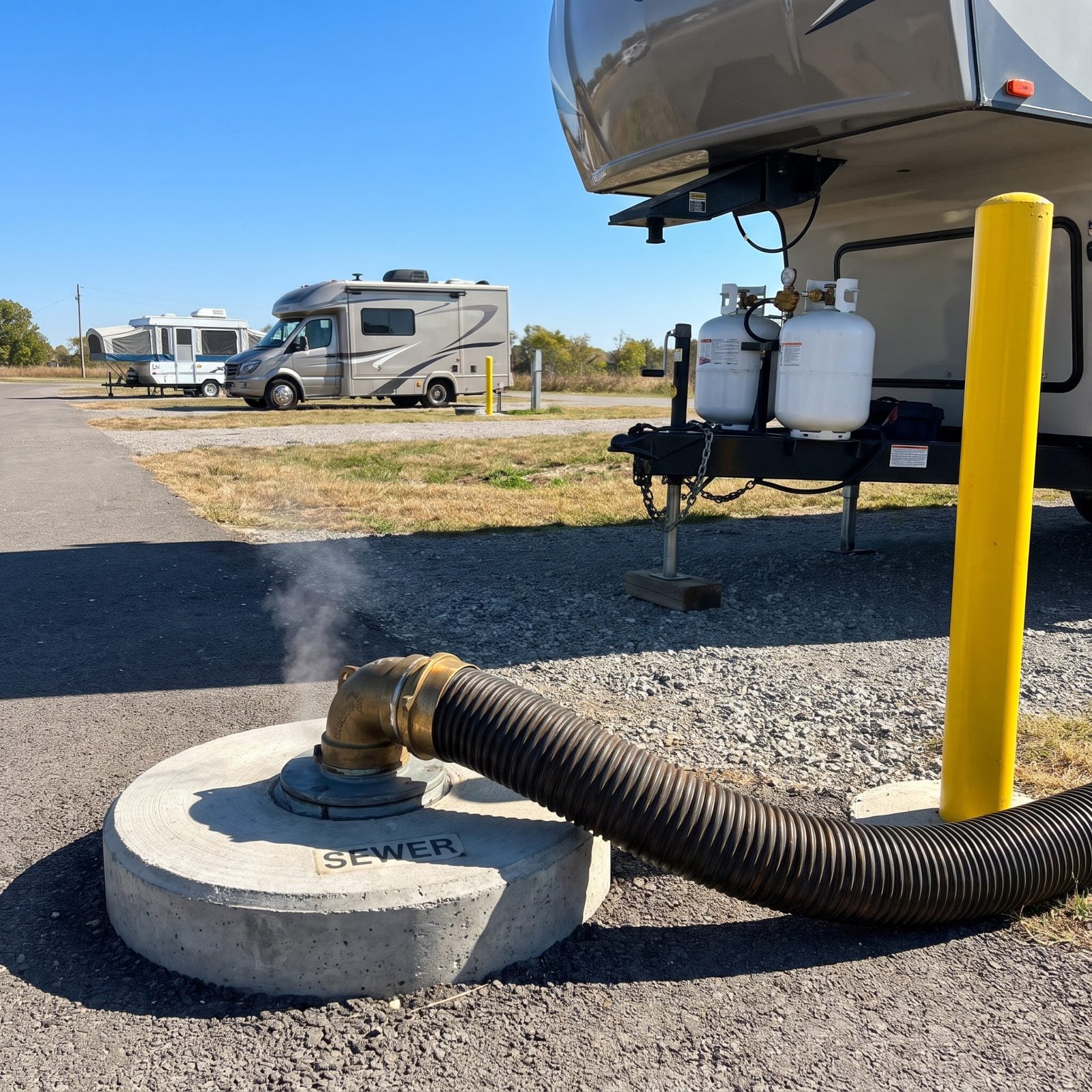
A cigarette while you wait for the black tank to glug its way empty seems like a quiet moment to yourself. Except you’re standing on a slab that vents methane and sewer gas, surrounded by rigs carrying propane cylinders with valves and regulators right there on the A-frame.
Methane burns. Propane connections leak sometimes, and a dump station is one of the few places where all those risks park next to each other. Snuff it out before you pull in, and keep lighters in your pocket until you’re back on the road. If the craving’s bad, walk well clear of the bays and the fuel lanes first. Two minutes. Everybody around you will appreciate it more than they’ll ever say.
6. Letting Children or Pets Wander Through the Dump Area
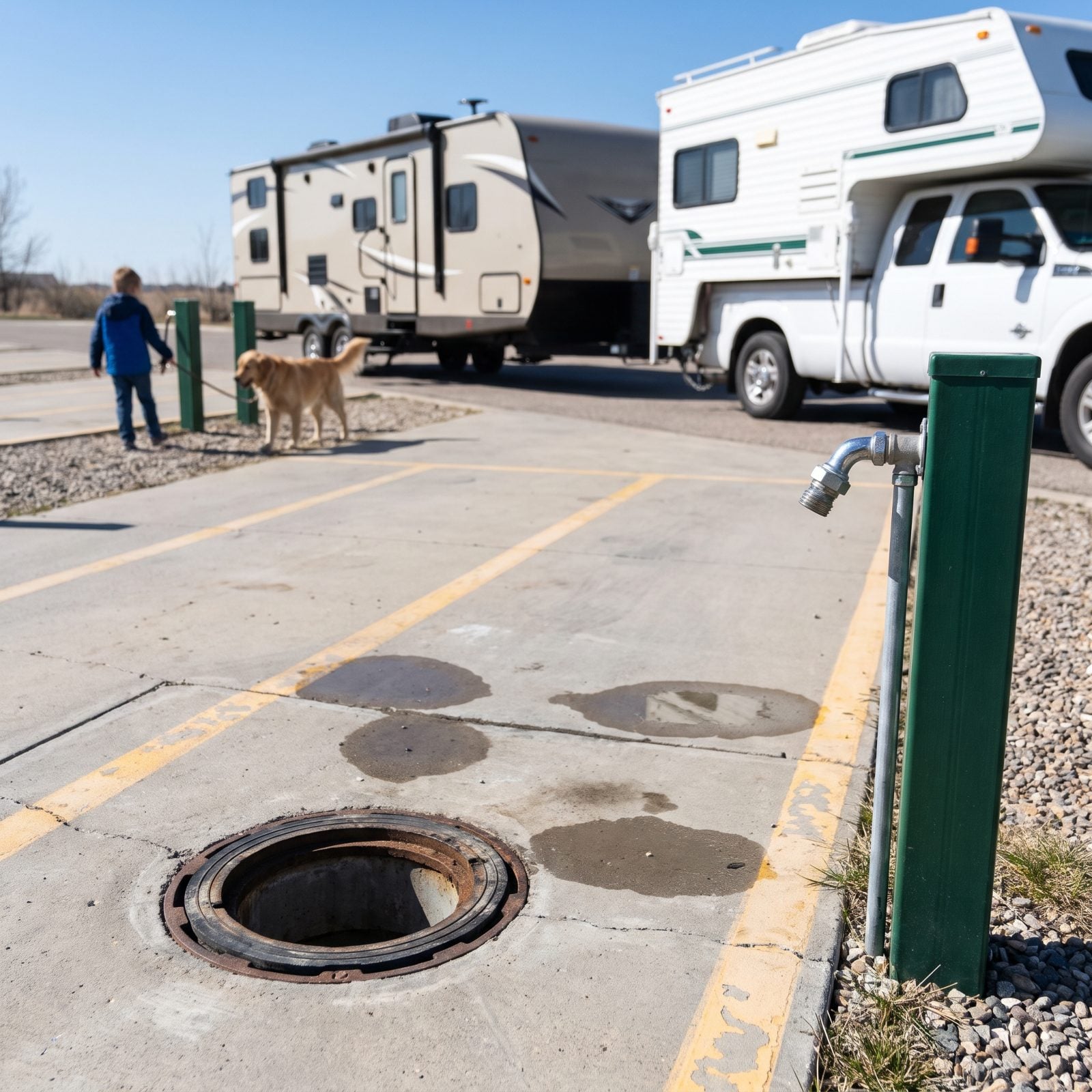
The kids are bored, the dog needs a stretch, so they roam while you handle the hose. Understandable after six hours in the rig. But the dump area is the one patch of a campground you want them nowhere near.
That concrete carries bacteria, spilled gray water, dropped fittings, and vehicles creeping in and out of tight lanes where drivers can’t always see low to the ground. Contamination risk and a backing-up risk, all in one spot.
Keep little ones and pets in the rig or well off on the grass, and let one adult handle the dump start to finish.
5. Standing in the Bay to Check Messages After Finishing
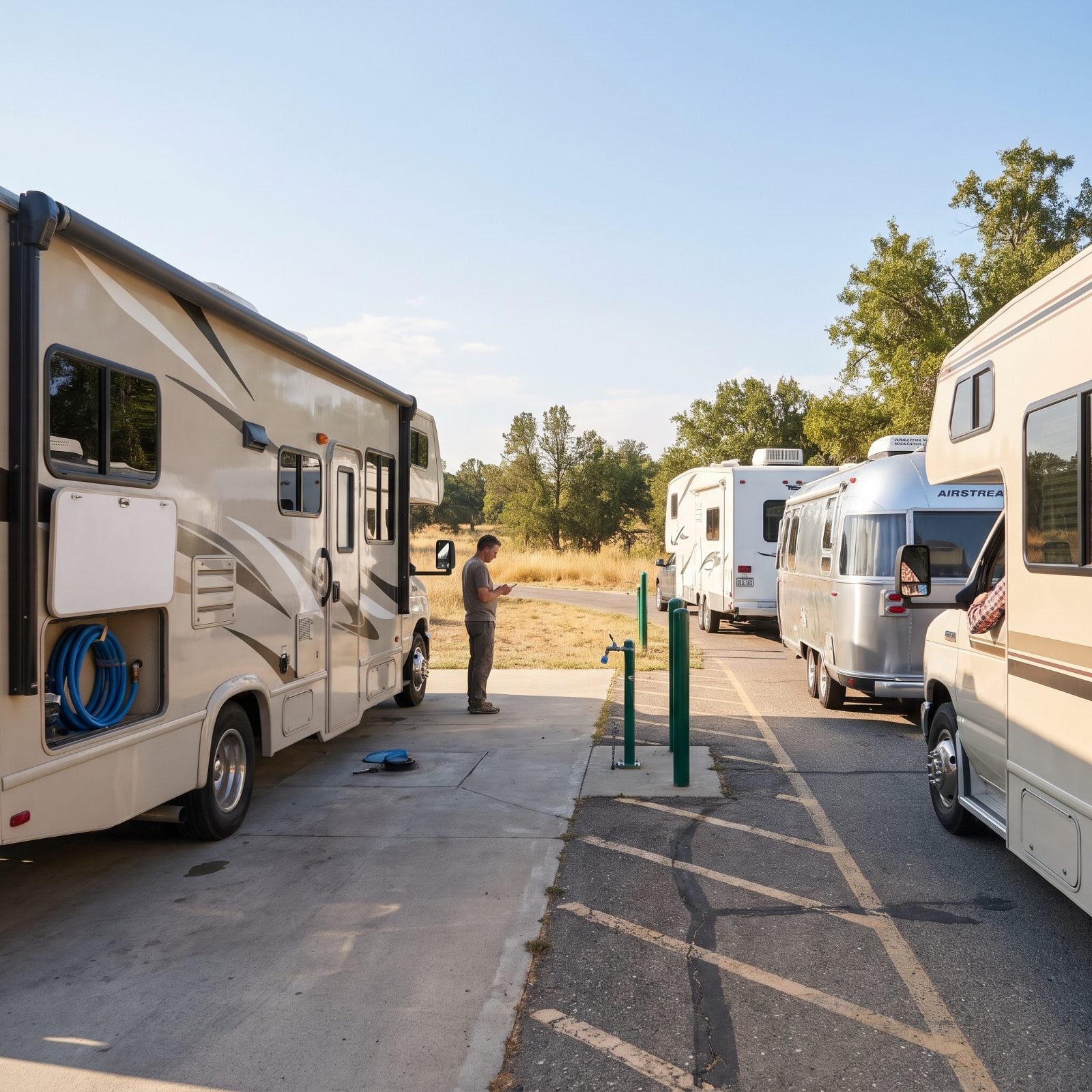
Tanks drained, hose stowed, and then you stay parked in the bay to reply to a text, check the weather, pull up the next campground’s directions. The work is done but the rig hasn’t moved. Meanwhile a line has formed behind you, and every one of those drivers is watching you sit there doing nothing visible.
A dump bay is a shared resource with a queue. Finishing the job isn’t the same as clearing the spot.
Pull forward to a parking area or a wide shoulder, then do all the phone business you want. The two minutes it takes to move saves the next three rigs real time. Easiest courtesy at the whole station.
4. Attempting Repairs While Other RVs Are Waiting
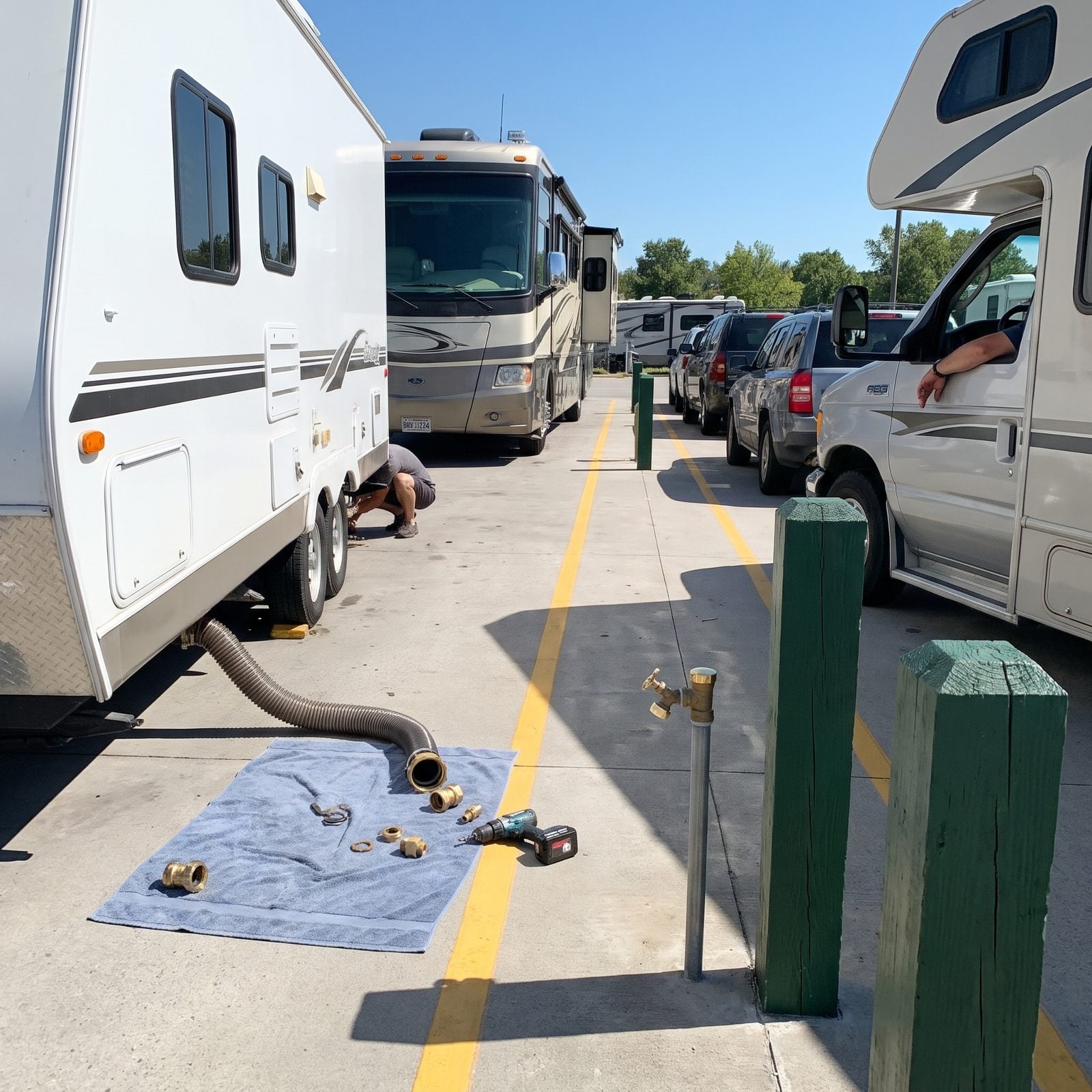
A cracked fitting or a stubborn valve is a terrible thing to discover with four rigs behind you. And yet the temptation is to fix it right there, tools out, drill spinning, while the line grows.
Here’s the problem. A dump bay is a transit point, not a workshop. Tying it up for a twenty-minute repair backs up the entire station and tempers everybody’s patience, yours included.
If something breaks mid-dump, close up as best you can, pull out of the bay, and finish the repair in a parking spot or back at your site. Carry a basic kit so you can do exactly that: spare caps, a few hose clamps, a universal sewer adapter, a roll of self-fusing silicone tape. Fix it off to the side where nobody’s waiting on you.
3. Filling the Freshwater Tank in the Dump Lane
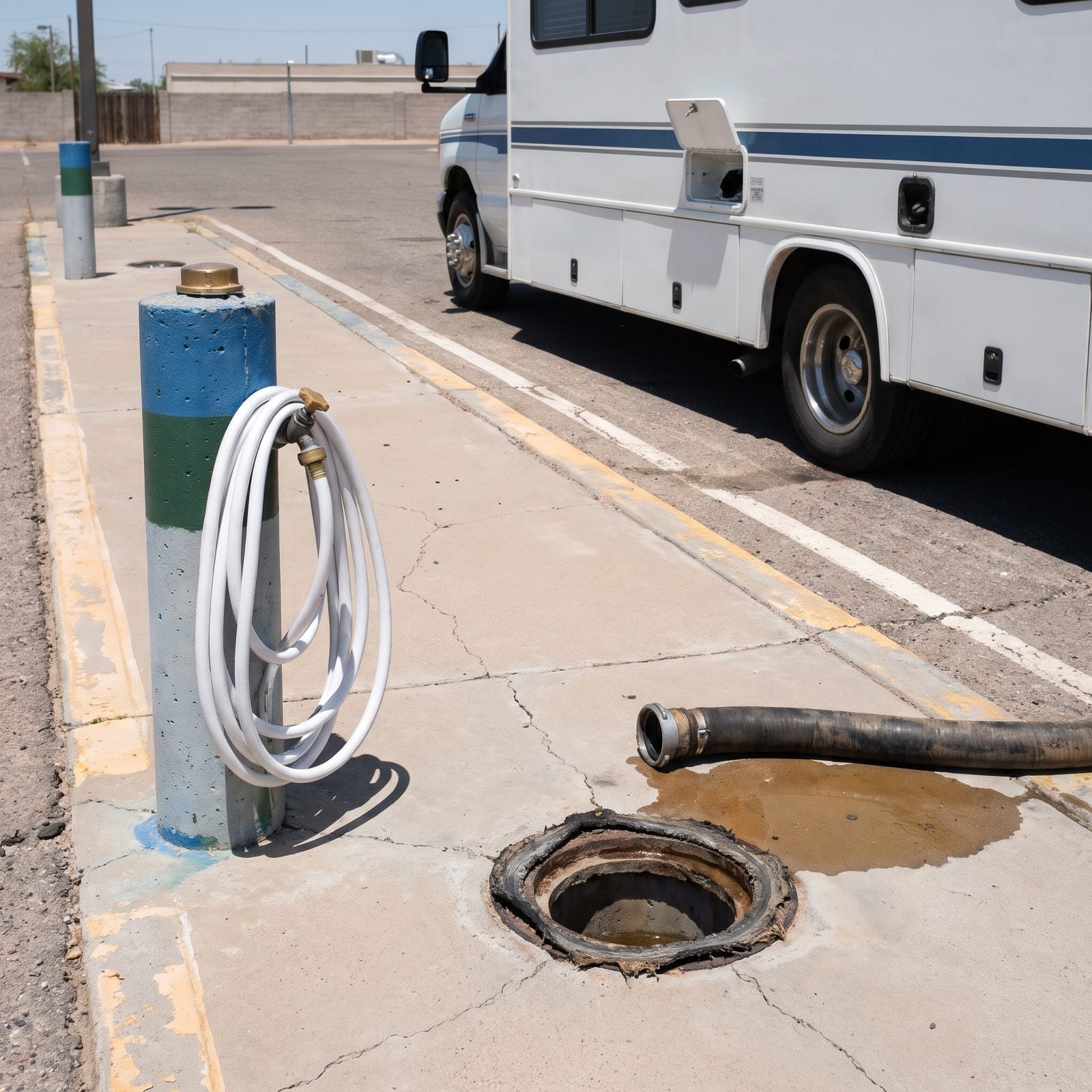
You’ve got the rig in the bay anyway, so why not top off the freshwater tank while you’re here? Two reasons, and they’re both good ones.
First, you’re holding the lane for an extra ten or fifteen minutes doing something that belongs at a dedicated fill station. Second, and this is the one that matters most, the potable spigot at a dump station sits dangerously close to the sewer area, and cross-contamination becomes a genuine risk the moment hoses or hands get mixed up.
Freshwater and black water should never meet, and the dump lane is where they get closest.
Keep a separate white drinking-water hose that never touches the sewer side, and fill your tank at a proper potable station away from the bays. Your gut will thank you later.
2. Washing the RV at the Dump Station
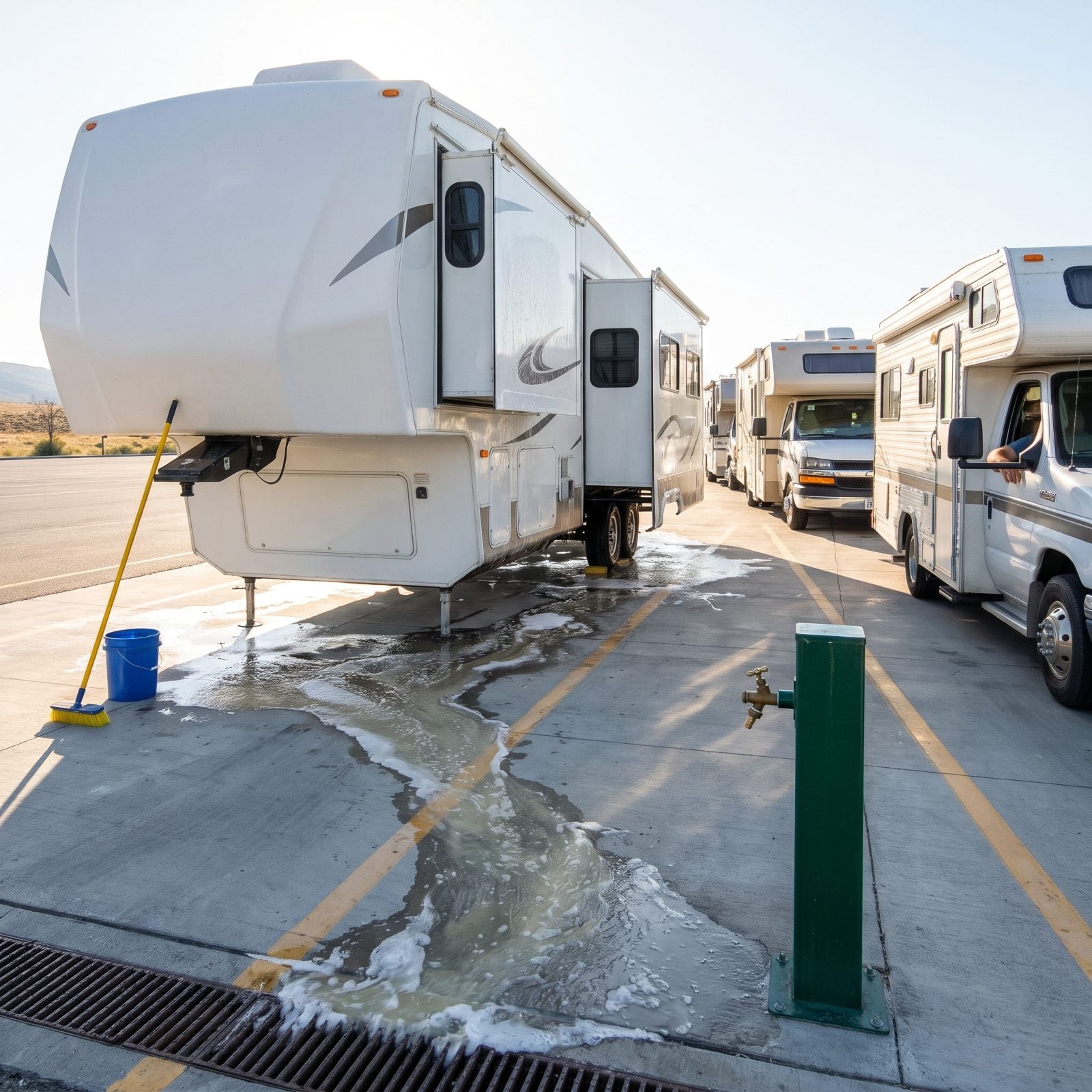
Bucket out, brush in hand, and suddenly the dump bay has become your personal wash bay while the whole front of the rig gets a scrub. It happens most often when the spigot’s right there and the road grime’s been bugging you for days.
Most stations ban it outright, and for sound reasons: soap and runoff go straight into a sanitary drain, the water’s often non-potable, and you’re hogging a spot other people need to actually dump.
Save the wash for a wash bay, your campsite, or a proper RV wash down the road.
1. Leaving Drips, Toilet Paper, or a Spill Behind
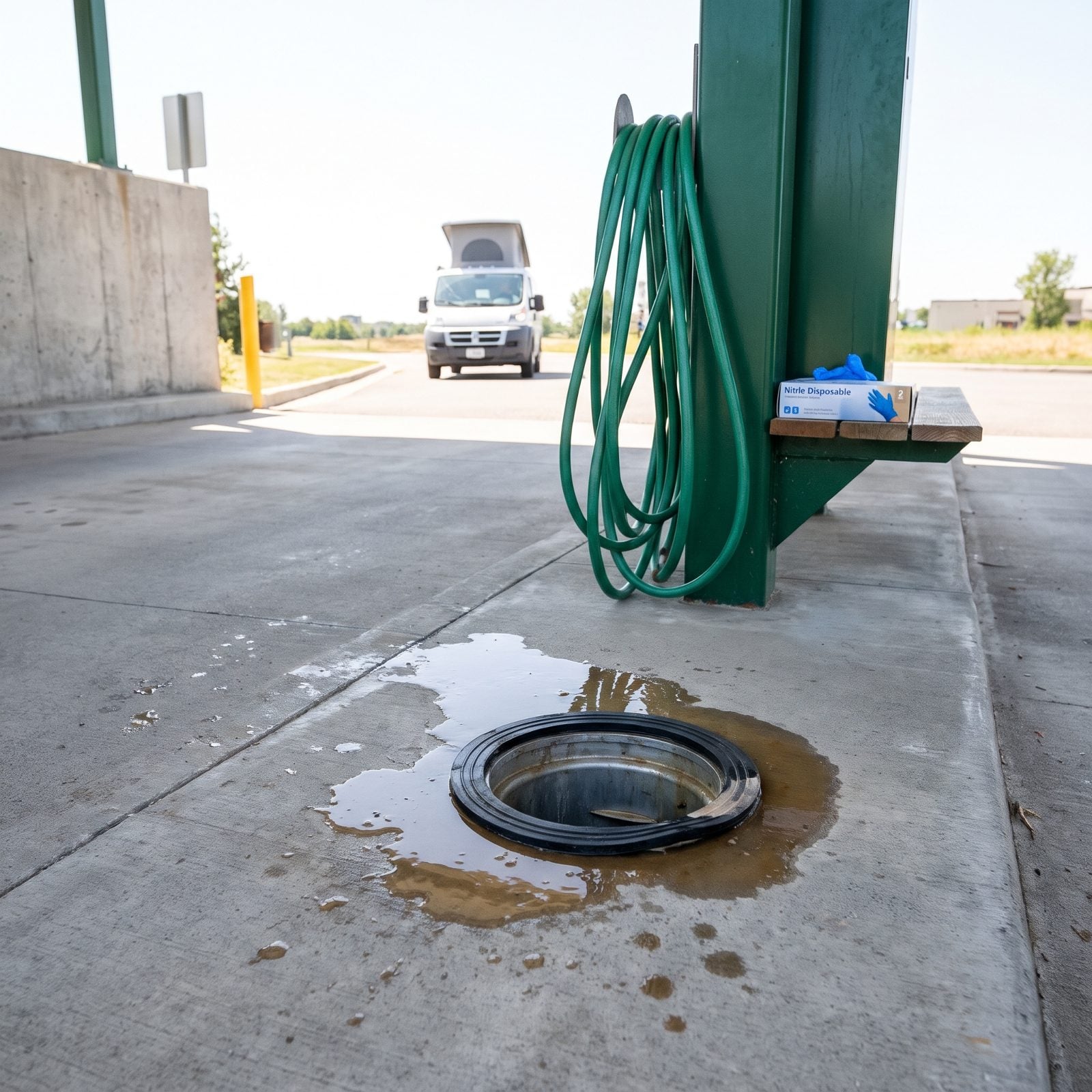
The last mistake is the one that colors every arrival after you. You finish up, pull out, and leave behind a few drips, a stray wad of toilet paper near the drain, or a small spill you figure will dry. The next person pulls in to that mess, and they have no idea it was an accident.
A clean handoff is the whole social contract of a dump station. Rinse the pad with the station hose, use the gloves and the sewer flush kit, and give the drain area a quick once-over before you leave.
Leave it cleaner than you found it. That’s the one rule that keeps the whole system working.