
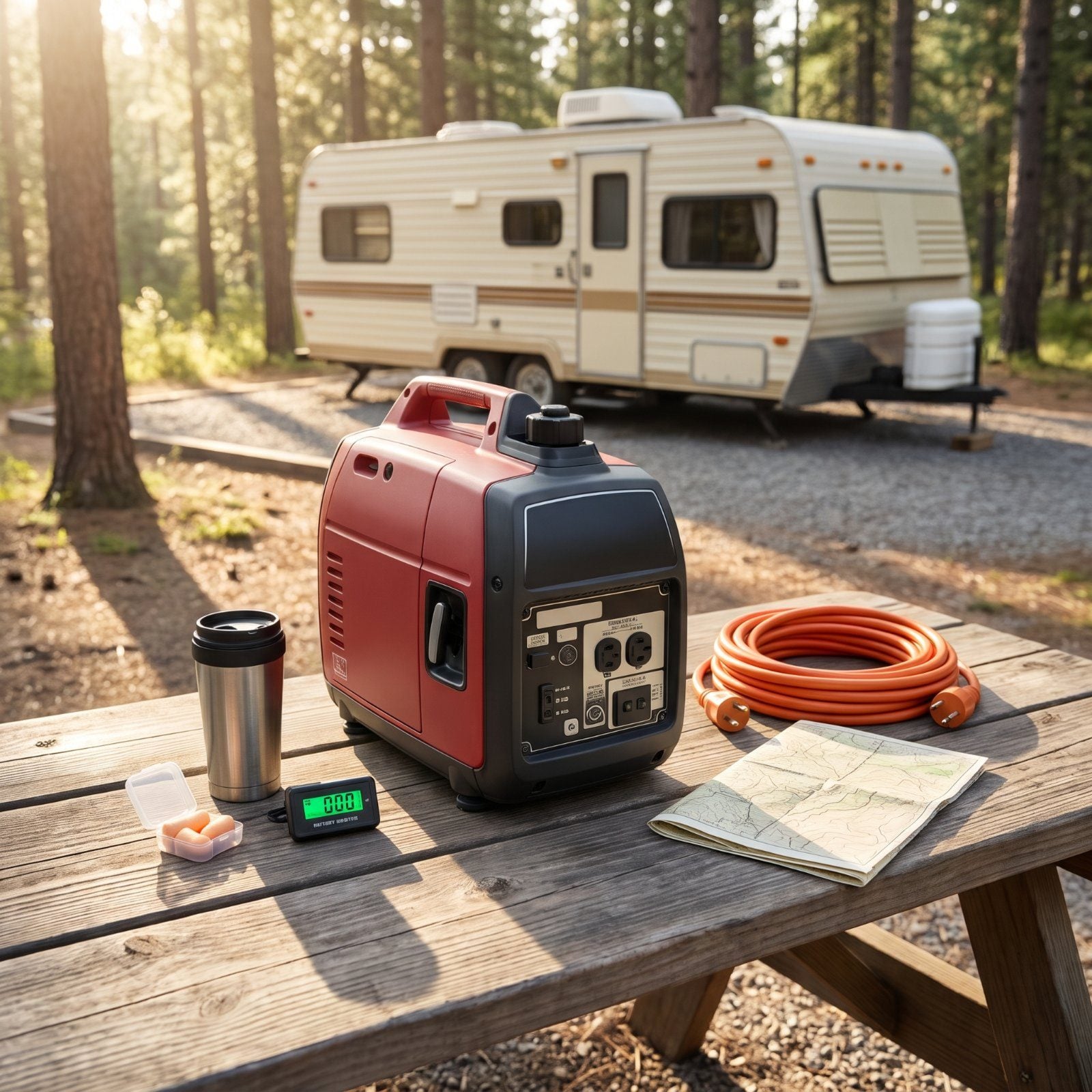
Nothing clears a quiet forest loop faster than a generator fired up at 9:45 p.m. You can feel the campground go still. Every neighbor within four sites is now awake, annoyed, and quietly plotting your social downfall.
Please note that some of the images in this article were created with the assistance of AI.
Most generator friction isn’t about bad people — it’s about small setup choices nobody told you mattered. Where you park it, when you run it, how it’s built. What follows are the usual suspects, and the fixes mostly cost you nothing but a little forethought.
48. Running the Generator During Posted Quiet Hours
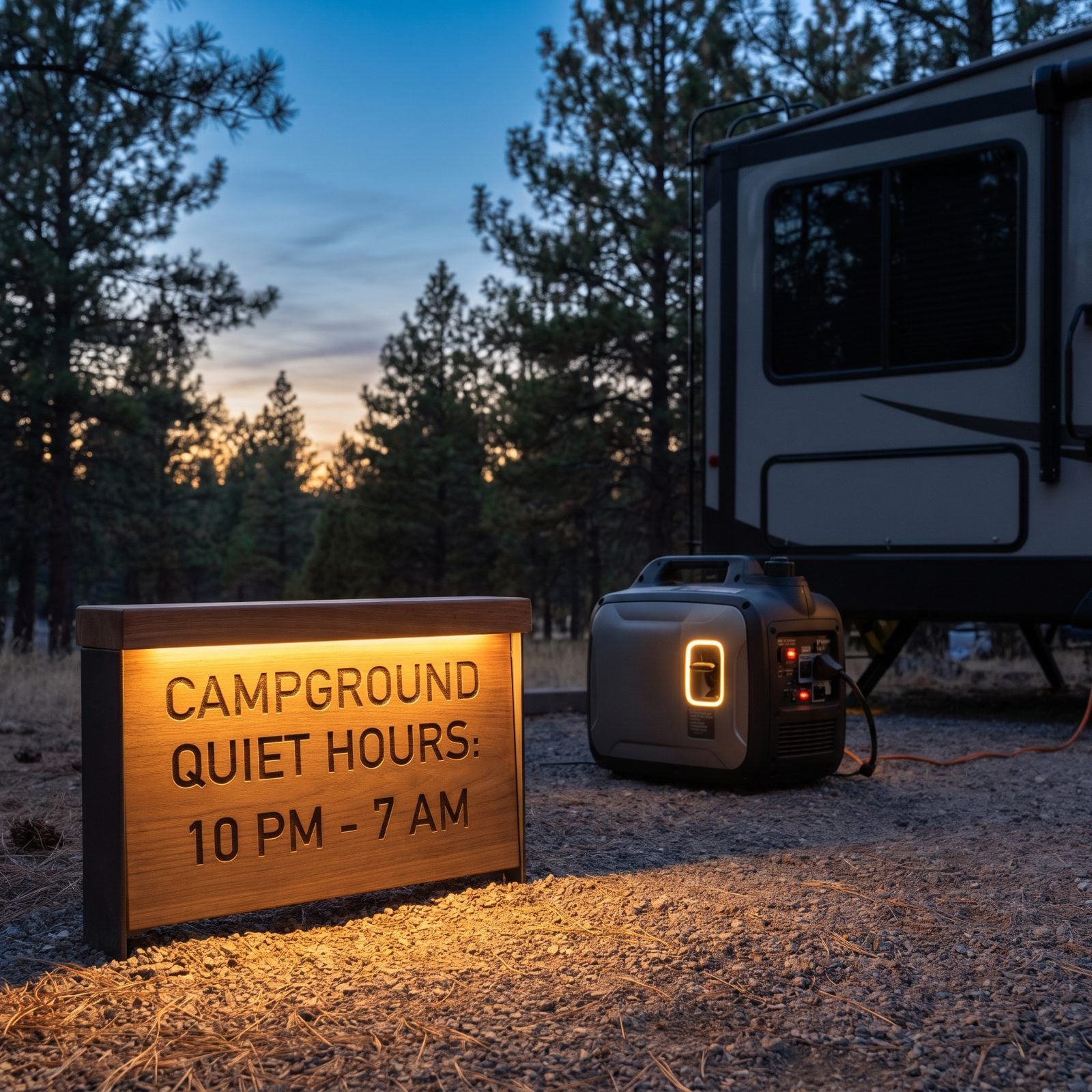
Most campgrounds post generator hours right on the board at the entrance. Something like 8 a.m. to 8 p.m., sometimes with a midday shutdown too. People skim past it on the way in and never think about it again.
Then they fire up at 9:30 because the AC feels nice. But sound carries differently at night. That same engine that blended into the daytime bustle is suddenly the only noise in the loop, and you’re not annoying one neighbor — you’re annoying the whole row.
Read the sign, set a phone alarm fifteen minutes before cutoff, and plan your big power draws for the afternoon. If you need overnight climate control, that’s what a good battery bank and a soft-start AC are for.
47. Choosing an Open-Frame Construction Generator
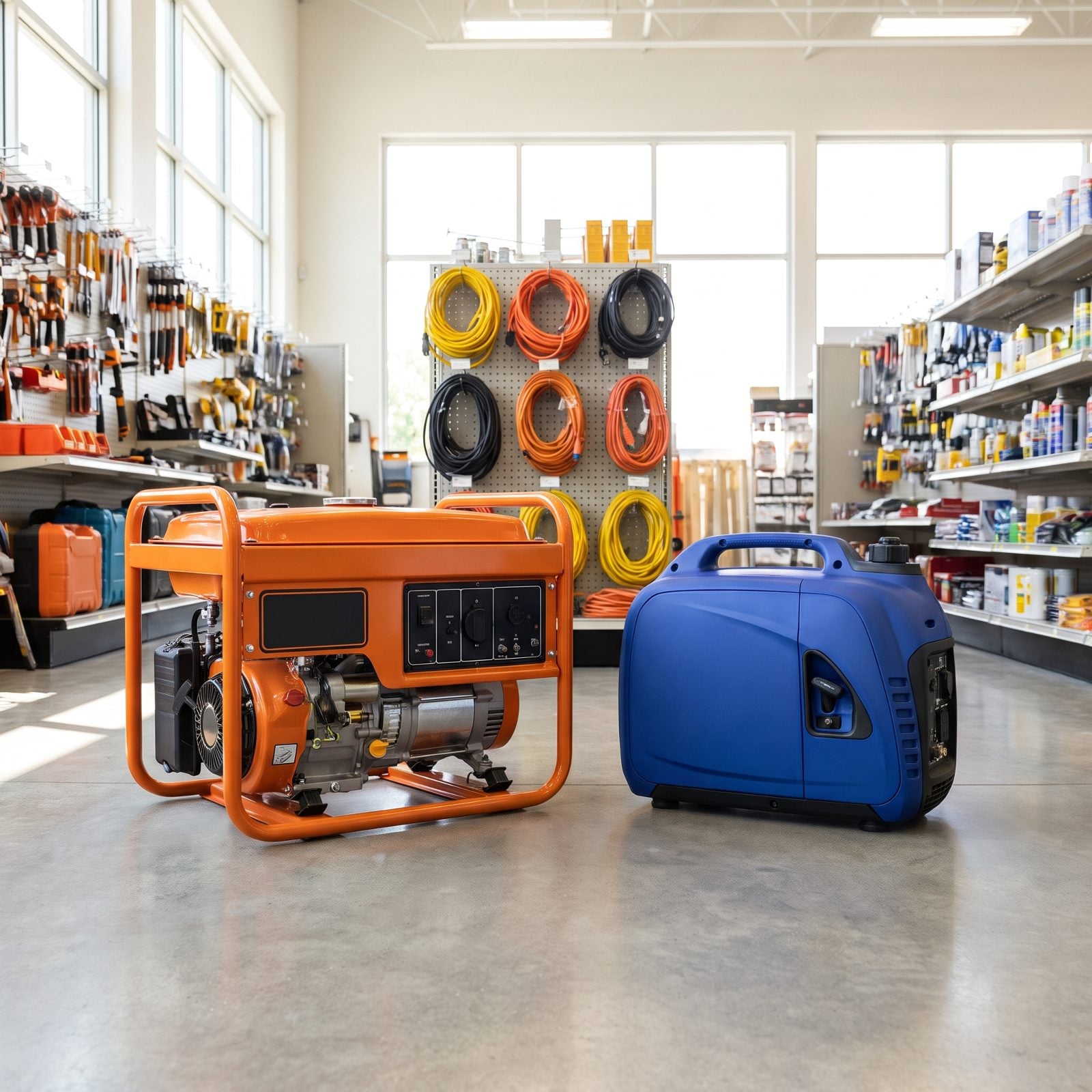
Not all generators are built to be neighborly. Those open-frame contractor units from the hardware store are loud on purpose — no enclosure, exposed engine, and a roar that sits right in the frequency range that drills into your skull. They’re made for job sites where everyone’s already wearing ear protection.
Drop one into a quiet state park loop and you become the thing people complain about at the ranger station.
For camping, you want a closed-case inverter generator. Honda EU2200i, Yamaha, Champion’s quieter models. They run around the mid-fifties on the decibel scale, roughly a normal conversation. Costs more up front, sure. But it pays you back in neighbors who actually wave hello.
46. Parking the Generator Beside the Neighbor’s Tent
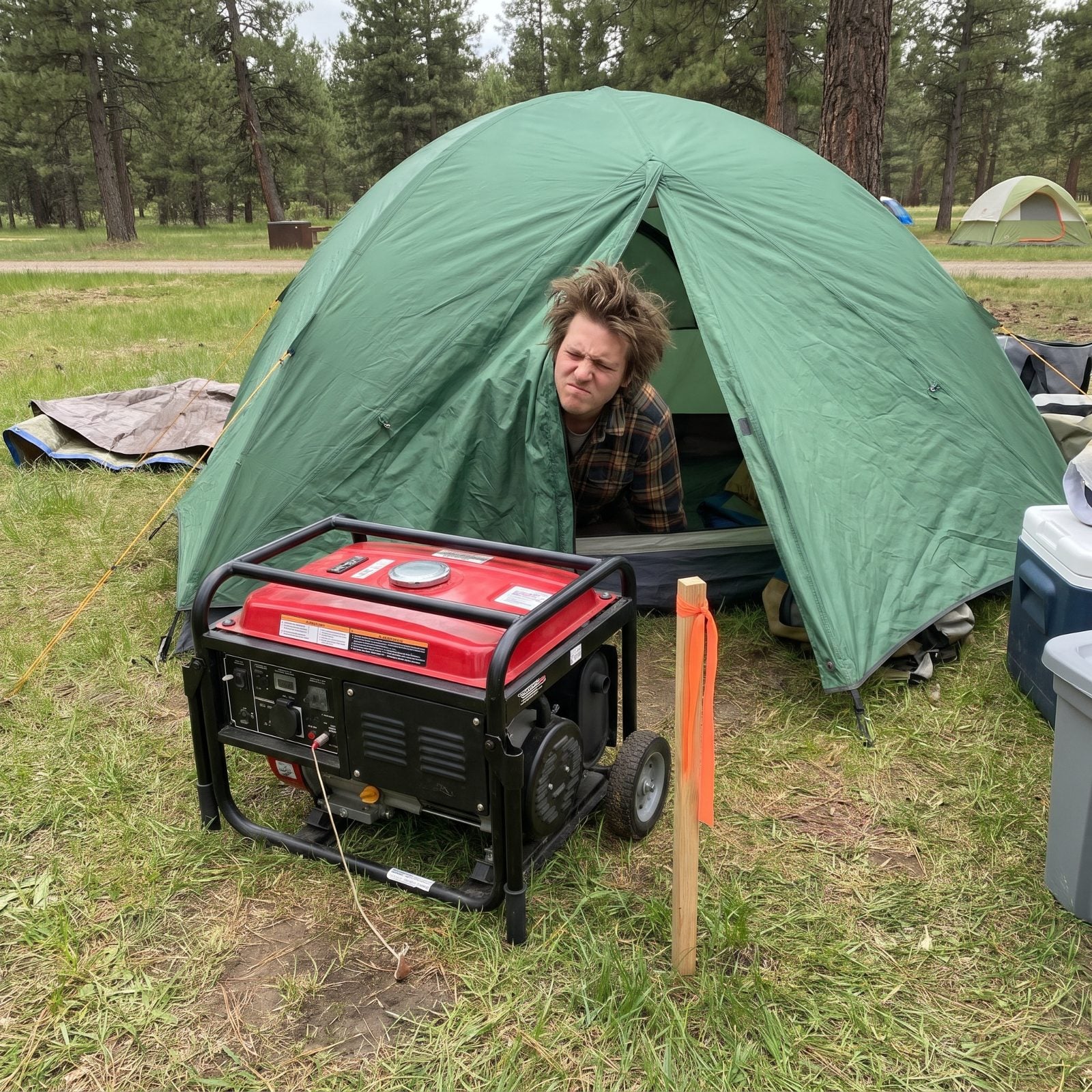
You’ve got a generous RV with power to spare and a tent neighbor right across the site line. The lazy move is to set the generator wherever the cord reaches, which somehow always ends up ten feet from their sleeping bag.
Tent campers have no insulation. No walls, no AC drowning out the drone — your generator is basically inside their bedroom. Point the exhaust their way and it gets worse, because fumes pool low to the ground.
So walk the perimeter before you set it down. Put the generator on the far side of your rig, pointed away from every neighbor, as far from any tent as your cord allows. A 25-foot extension cord costs about twenty bucks and buys you a lot of goodwill.
45. Running It Where Exhaust Enters Open RV Windows
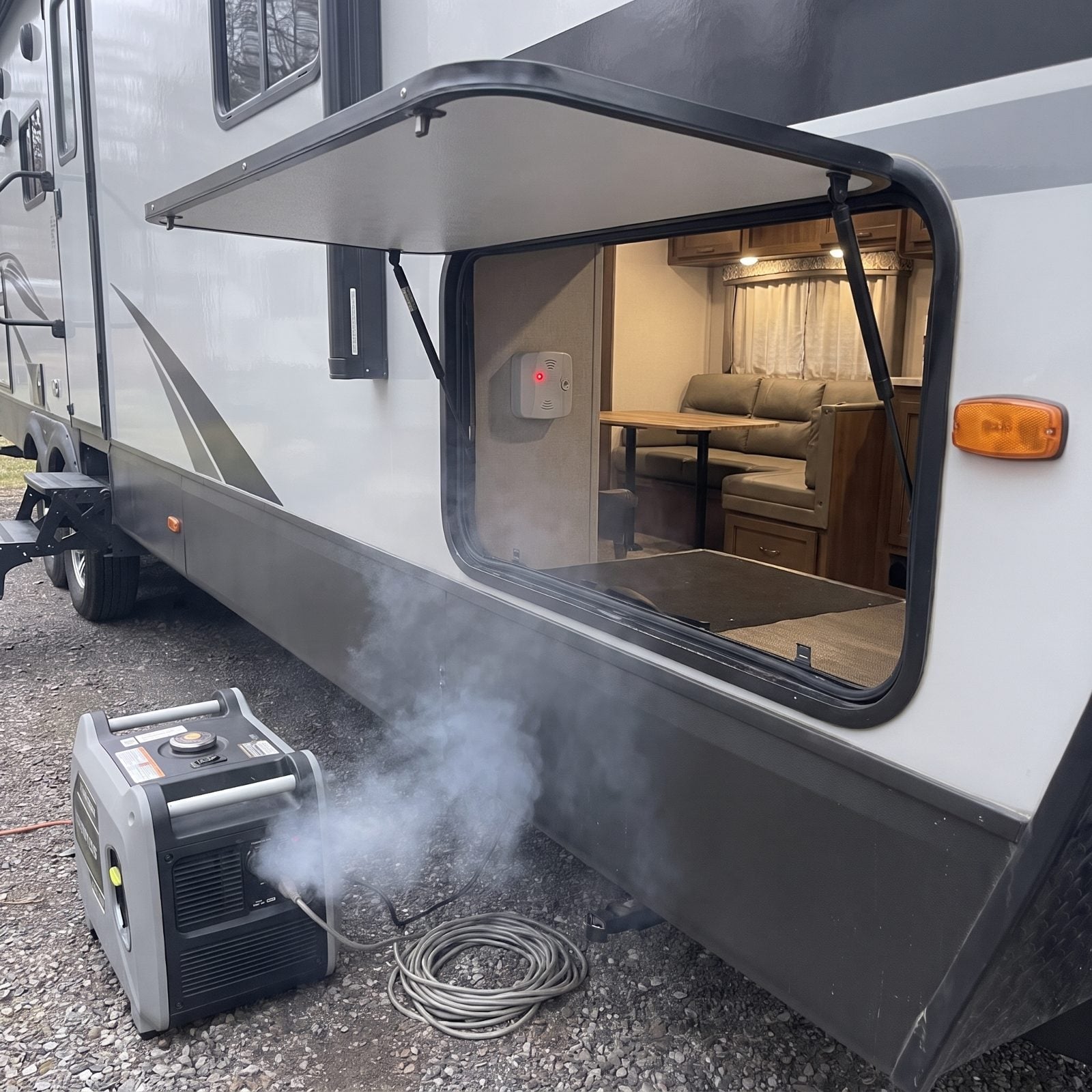
This one isn’t an etiquette problem. It’s a safety problem.
Generator exhaust is loaded with carbon monoxide, and you can’t count on seeing it — even when the exhaust shows up as a white cloud, the CO riding along in it has no smell and no color. Park the exhaust near an open window, a roof vent, or a slide-out seam, and that cloud of exhaust drifts right into your living space while you sleep. People have died this way, and they never felt a thing coming.
Keep the generator well away from the rig, exhaust pointed out into open air, never toward any opening. Close the windows on the generator side. And test your CO detector before every trip. That battery is the cheapest insurance you’ll ever buy.
44. Ignoring the Campground’s Generator-Free Loop
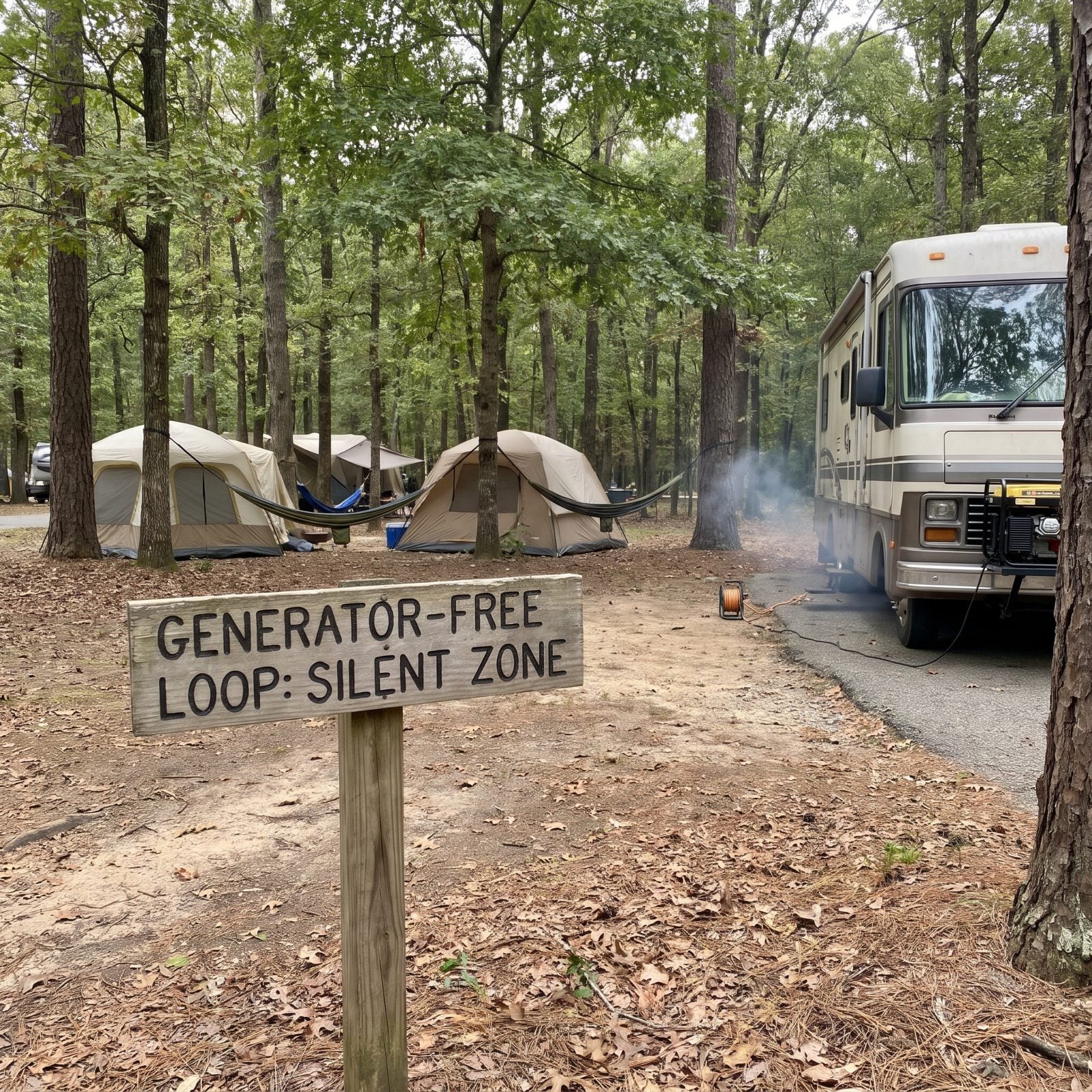
Plenty of campgrounds set aside a loop, or a whole section, that’s generator-free. Sometimes it overlaps with the tent and no-hookup sites. People who book these are paying specifically for silence, often with solar panels on the roof and a battery bank doing all the work.
Roll in and fire up a generator and you’ve broken the one promise that loop made to everyone in it.
Check the reservation details and the campground map before you book. If you rely on a generator, request a standard loop where they’re allowed. Ended up in a quiet section by accident? Go talk to the host. They’ll move you or point you somewhere you can run without becoming the story everyone tells at the next campfire.
43. Running It When Shore Power Is Available
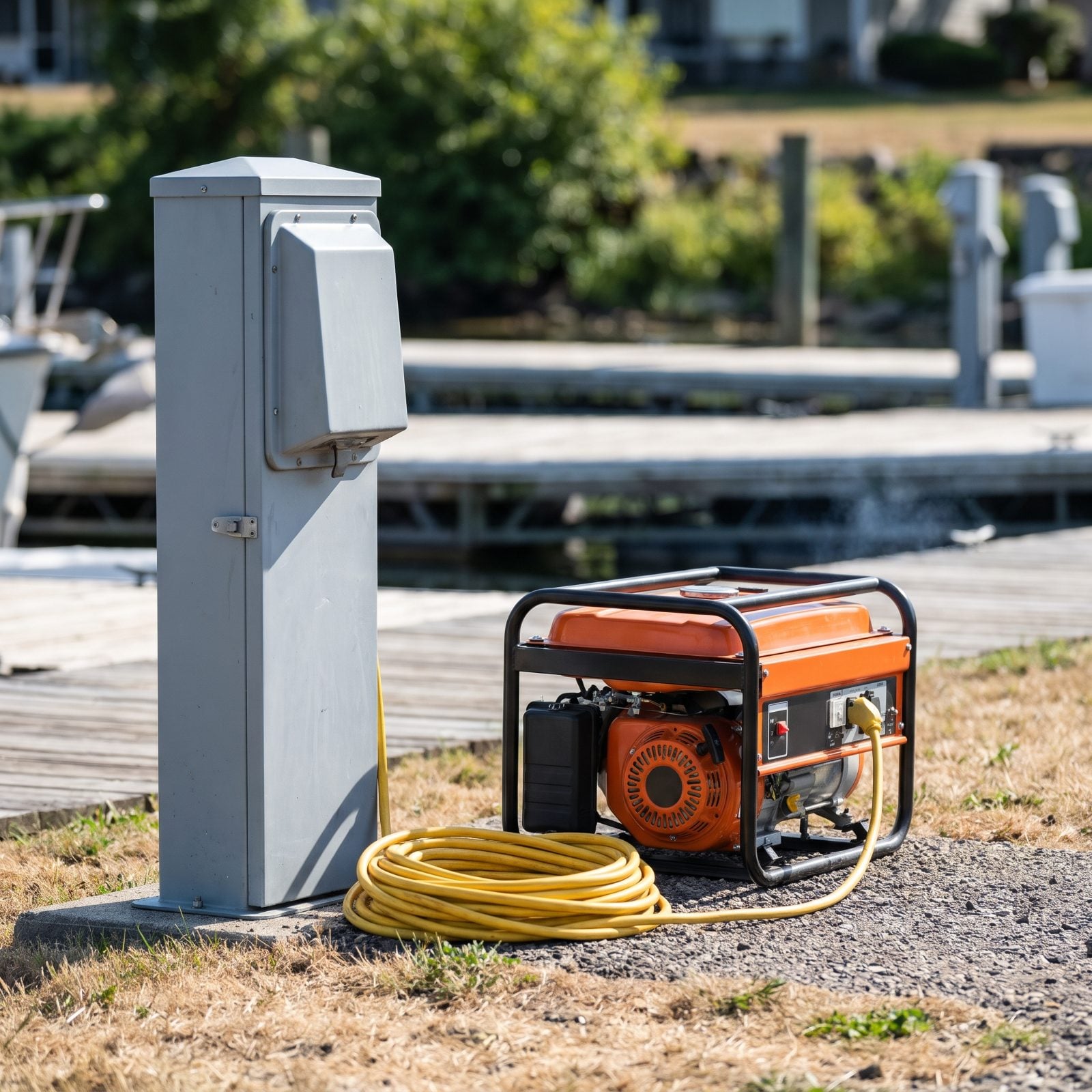
You paid for a full-hookup site. There’s a 30-amp pedestal three feet from your door. And yet the generator is running.
Usually it’s just habit. You got used to it on boondocking trips and never flipped the mental switch. But now you’re burning gas, piling on engine hours, and making noise for power that’s sitting right there — free and silent — in the pedestal.
Pull into a hookup site and plug in first, before leveling or anything else. A surge protector between your cord and the pedestal is smart insurance against bad park wiring. Save the generator for the places with no power at all, which is exactly where it earns its keep.
42. Running It While the Campsite Is Empty
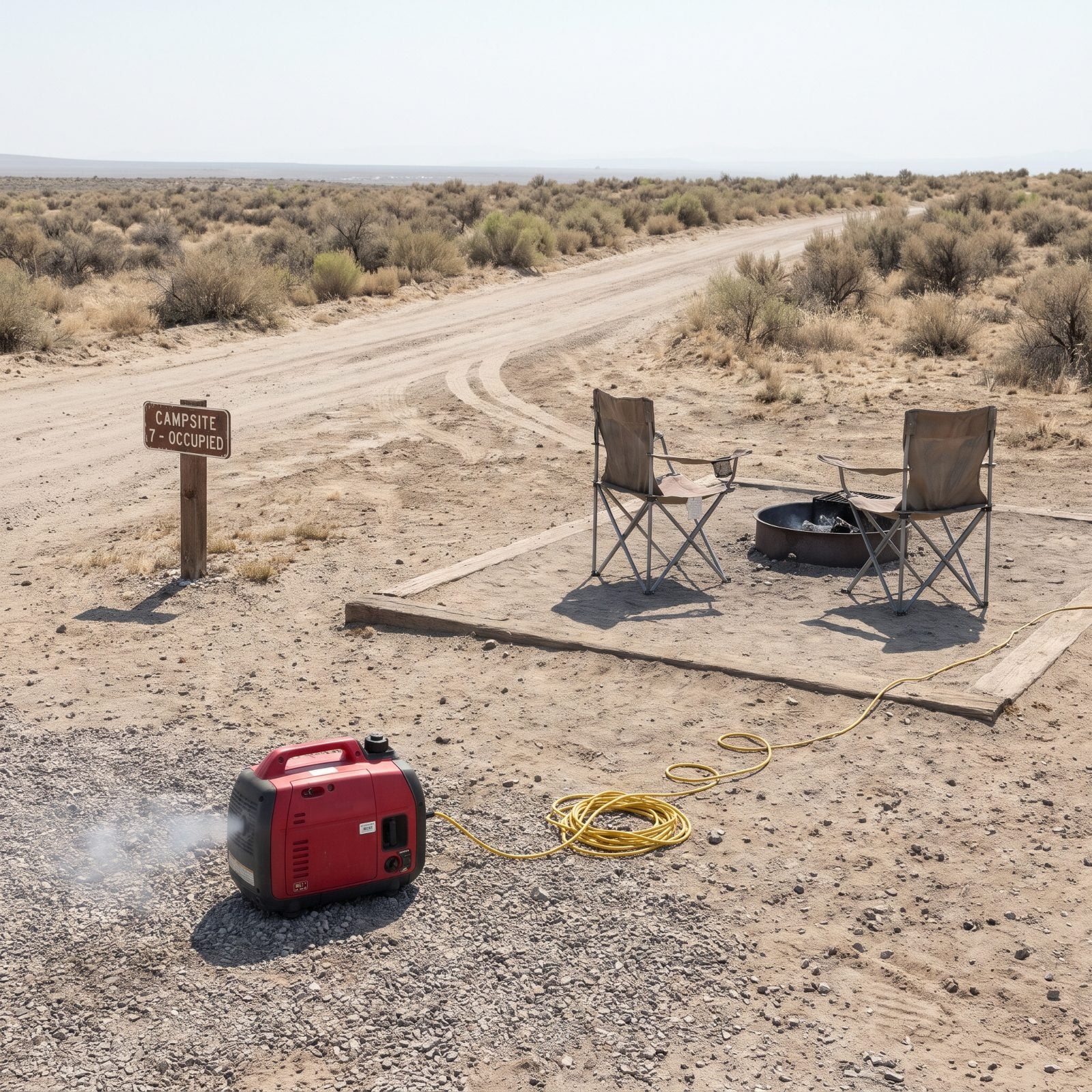
Here’s a quietly maddening one. The site owners drove off to the trailhead or into town, and the generator’s been running the whole time, humming to an empty campsite while their neighbors stew.
Leaving a generator unattended is a bad idea on its own. Fuel, heat, and carbon monoxide don’t take a lunch break. And doing it while you’re gone means nobody can even come ask you to turn it down.
If you need power while you’re out, solar and a battery bank do that job best. If you genuinely must run the generator, keep it short, run it before you leave, and shut it off when you go. Nobody should have to listen to your engine on your behalf.
41. Using It All Day Just to Charge Batteries
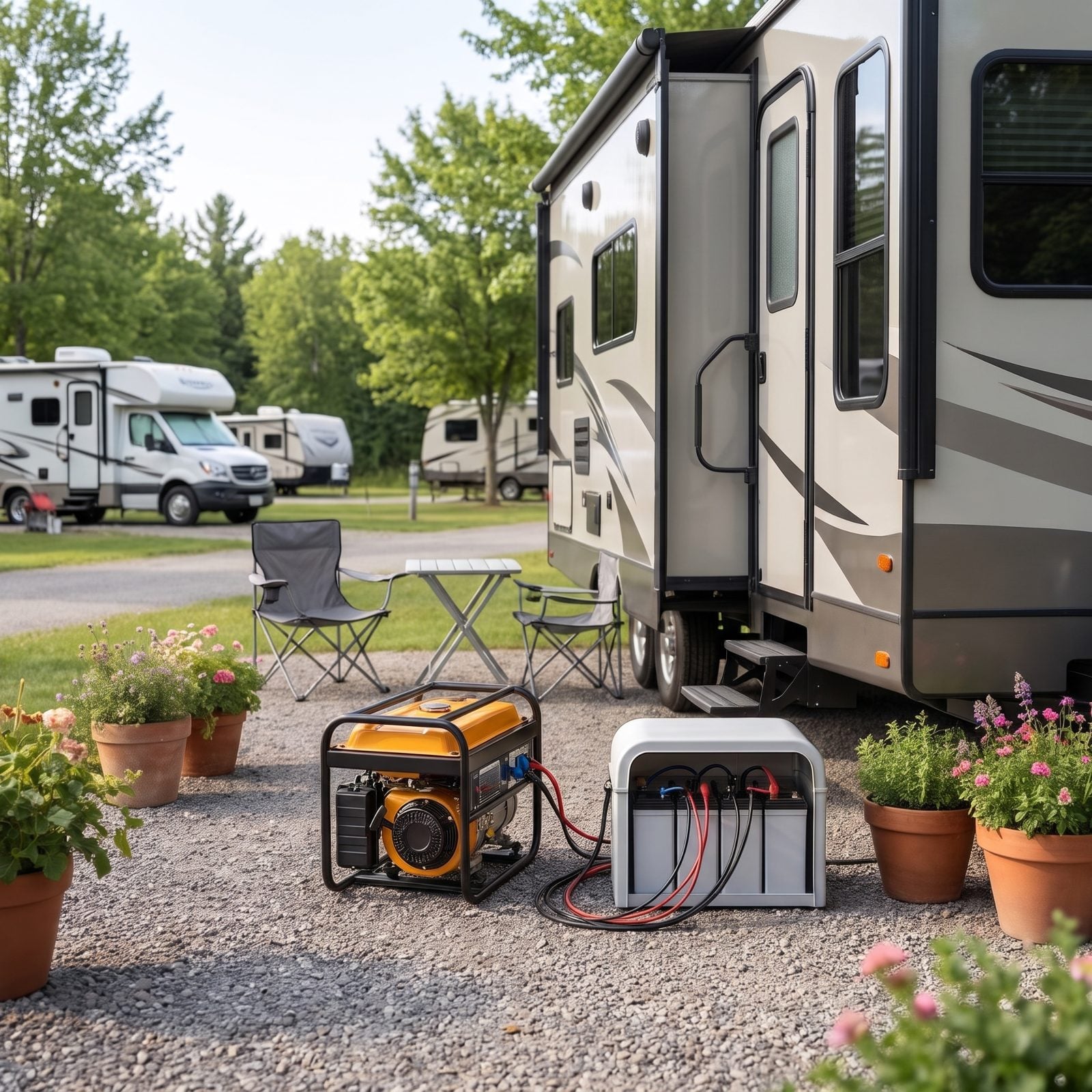
Lead-acid batteries charge slowly. That’s just physics. So people haul out the generator, park it beside the battery bank, and run it for hours trying to top off a depleted bank, and the generator spends most of that time loafing — burning fuel and making noise to deliver a trickle.
Worse, flooded lead-acid batteries hit a wall near the top of their range and crawl the rest of the way. You could idle a generator all afternoon and still not get full.
Two fixes. Add solar so the sun does the slow part for free. And if you charge a lot, a lithium battery bank accepts power far faster, so your generator runs an hour instead of five. Run it hard for a short burst to cover the fast charging window, then let it rest.
40. Powering One Small Device Instead of Using an Inverter
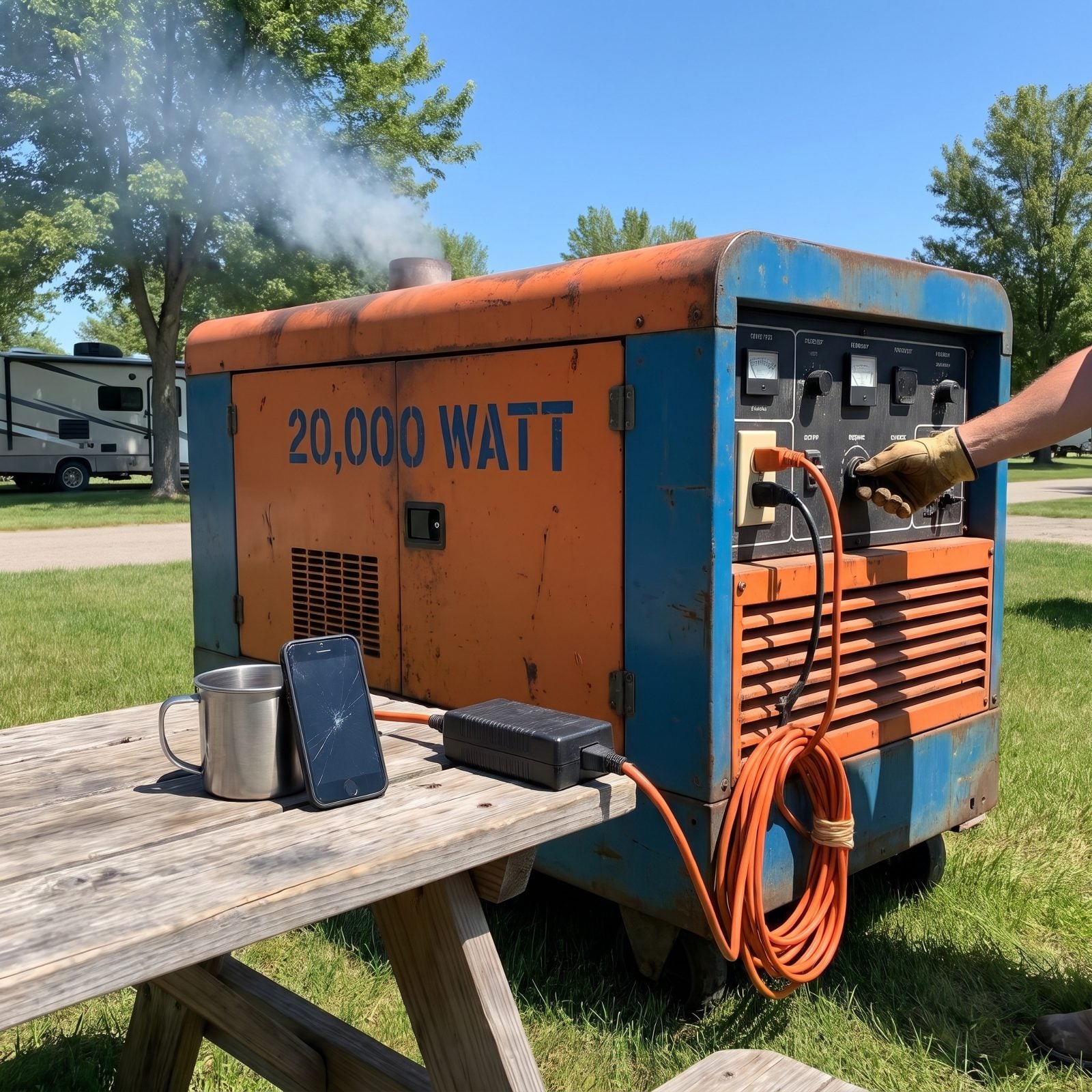
Firing up a whole generator to charge a phone or run a laptop is like starting the truck to use the cigarette lighter. The load is tiny. The machine is enormous. And your neighbors get the full engine drone for the sake of a few watts.
Most RVs already have, or can cheaply add, an inverter that turns your 12-volt battery into regular household AC. Silent, instant, no fuel.
A small 300-to-1000-watt inverter runs phones, laptops, a TV, a CPAP, and most small electronics straight off your house battery. Plug it in, flip the switch, and skip the generator entirely for anything small. Save the engine for the microwave and the air conditioner.
39. Disabling Eco Mode Without a Good Reason
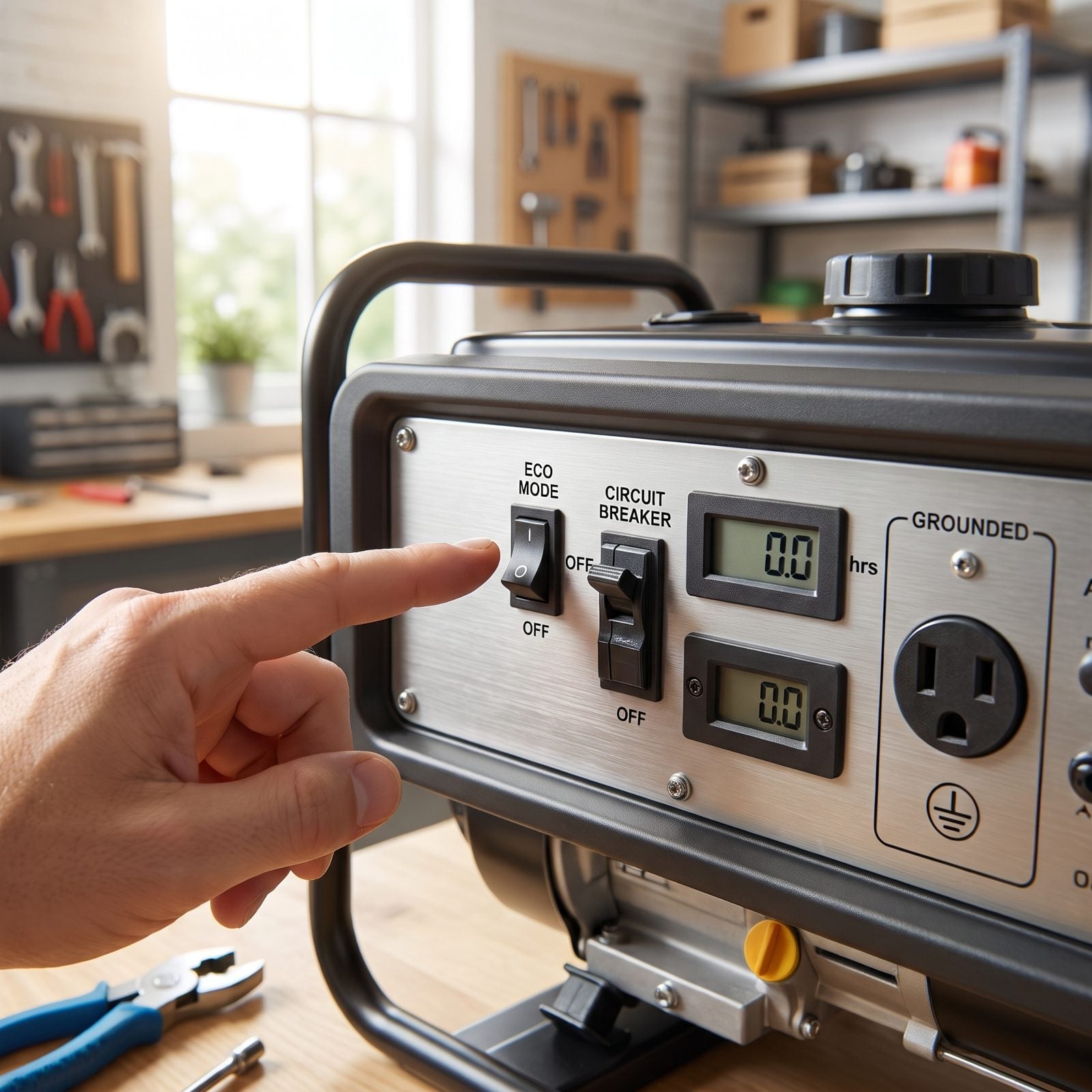
Inverter generators have an eco or economy switch that lets the engine throttle down to match the load. Less load, lower RPM, quieter, thriftier. It’s one of the best features these machines have — and people switch it off almost reflexively.
Run at full throttle all the time and you get a louder drone, more fuel burned, and faster wear, often for nothing, because your load was light the whole time.
Leave eco mode on as your default. The only time to turn it off is when you’re starting a heavy load like an air conditioner compressor, where the engine needs to be spun up and ready for the surge. Start the AC, let it settle, then flip eco back on. Quieter camp, longer tank, happier neighbors.
38. Letting the Generator Idle With Nothing Plugged In
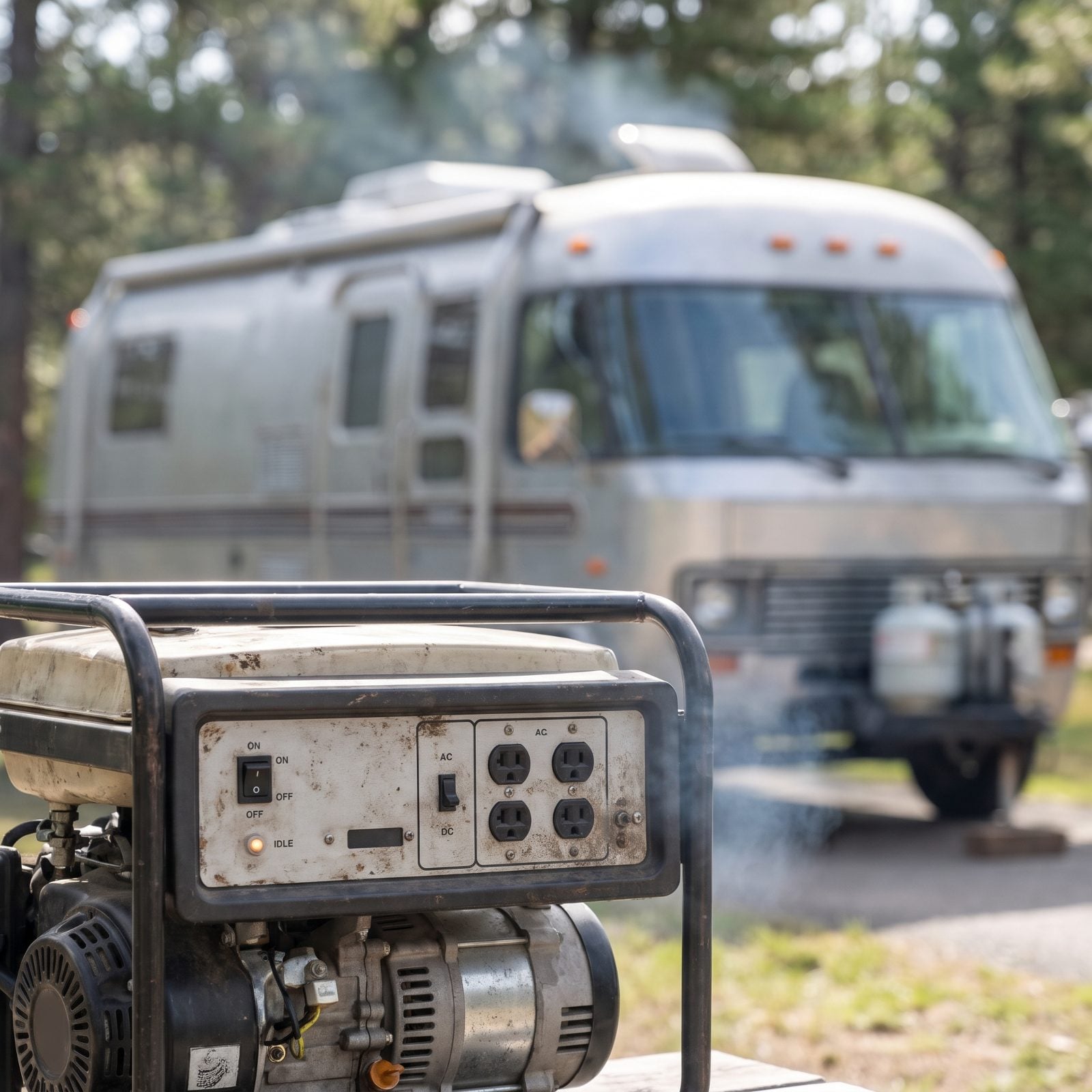
There it sits, humming away at a full site while nothing draws a single watt from it. The fridge is on propane, the laptop’s charged, and the generator’s just making noise and fumes for the pure joy of it.
Idling with no load wastes fuel and glazes the cylinder walls over time. Worst of all, it earns you dirty looks from everyone within earshot who can’t figure out what you’re powering. A generator with nothing to do is the loudest kind of silence.
Shut it off the second your batteries are topped and your jobs are done. If you only need an hour of charging, run it for that hour. Treat it like a tool you pick up and put down, not a campfire you leave crackling all afternoon.
37. Making an Undersized Generator Struggle and Surge
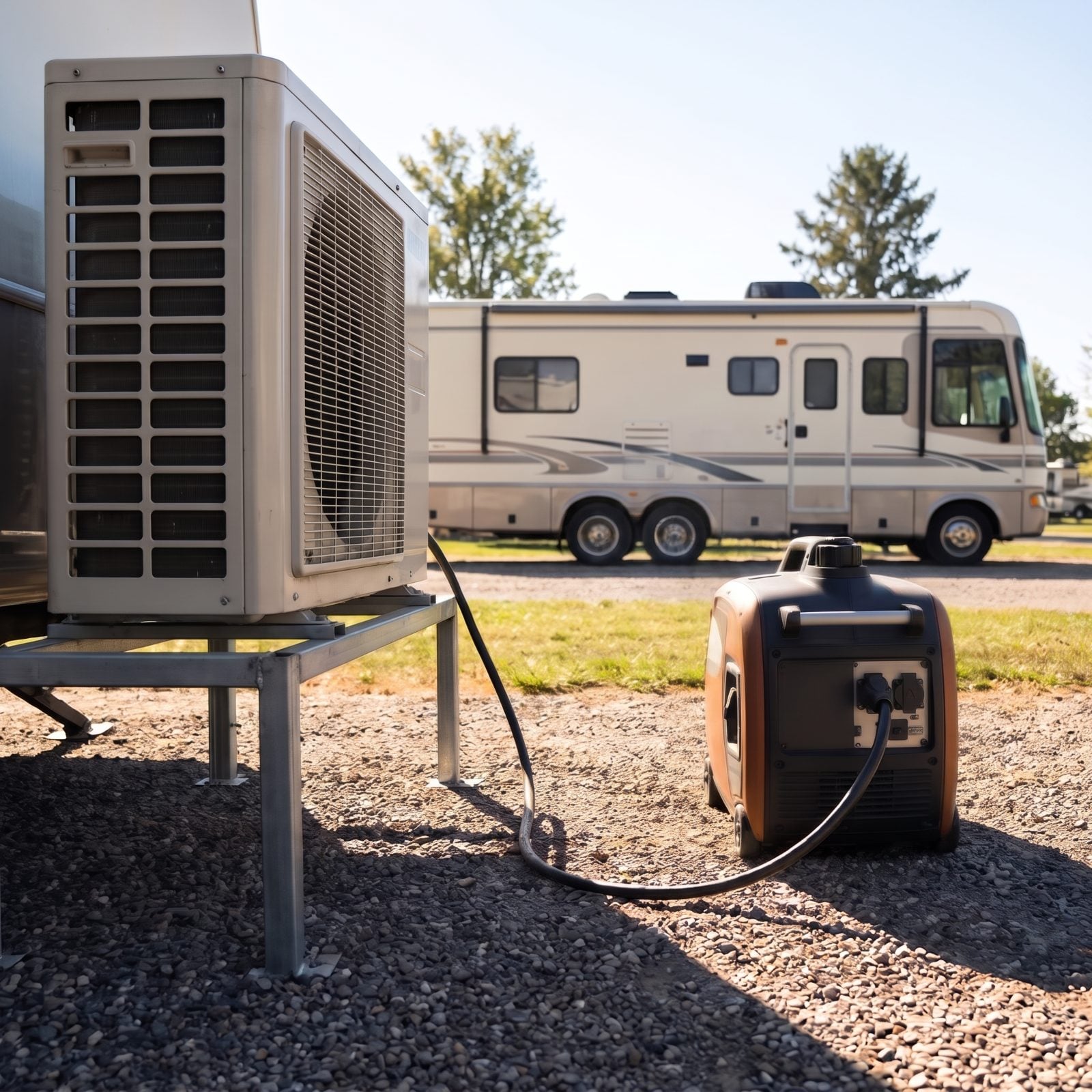
A small generator fighting a big load is a miserable thing to listen to. You hear it lug, catch, and surge as it hunts for power it doesn’t have, the engine note rising and falling like it’s gasping for air.
The noise is only the start. Chronic overloading cooks the windings and can trip you into shutdown at the worst moment, usually the minute the air conditioner compressor kicks on. An overworked generator dies young.
Match the machine to the job before you buy. Add up your real draw, give yourself headroom, size up. A unit humming along at roughly two-thirds of its capacity runs quieter, cooler, and longer than a smaller one pinned at the redline all day.
36. Flipping On Every Appliance at the Same Time
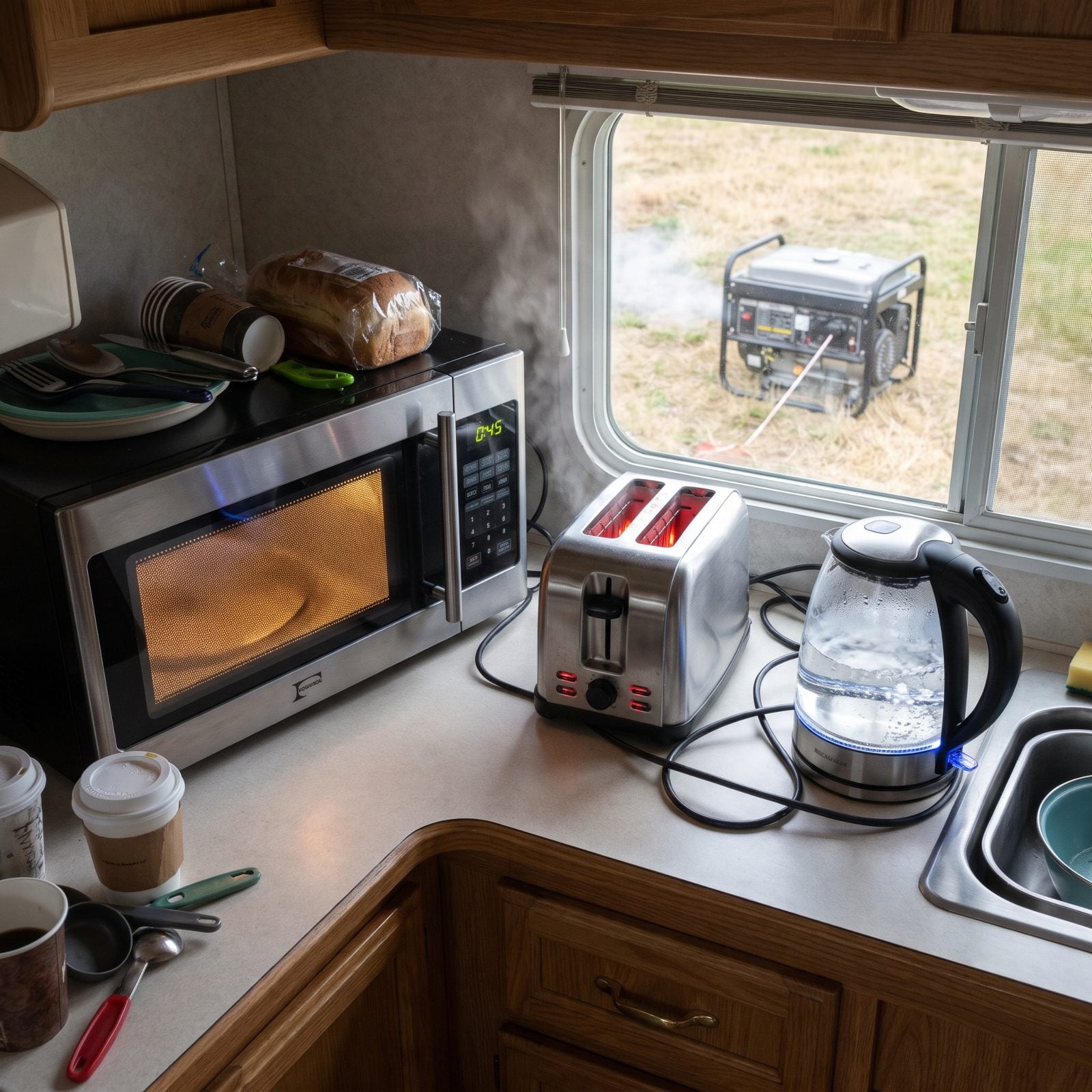
You come in from a cold morning, hit the microwave, the toaster, and the electric kettle in the same ten seconds, and the generator lurches like it got punched.
That simultaneous surge trips breakers and spikes noise. Every motor and heating element wants a jolt of startup current, and stacking them forces the generator to spike all at once instead of spreading the demand.
So stagger your loads. Start the air conditioner, let it settle, then run the microwave. Heat water, then make toast. It costs you ninety seconds and it keeps the engine purring at a steady note instead of roaring up and down like a two-stroke learning curve.
35. Short-Cycling a High-Draw Air Conditioner
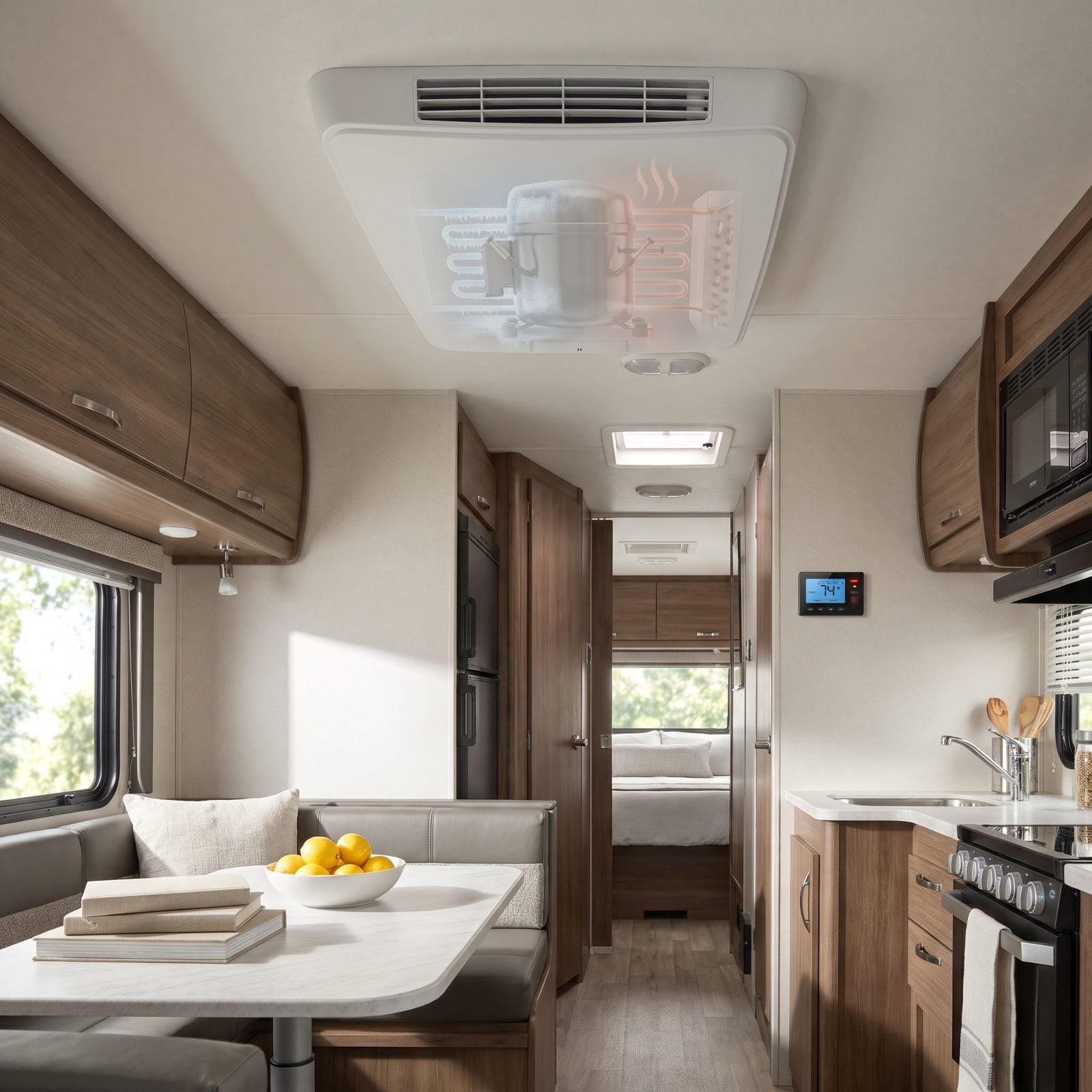
The heat creeps up, so you crank the AC, get cold, shut it off, warm up, crank it again. Each restart hits the compressor with a big inrush of current, and the generator strains hard every single time.
Short-cycling like this is brutal on both the compressor and the generator. Those repeated startup surges are exactly the kind of loud, lurching noise your neighbors notice, and it burns more fuel than just leaving the thing running.
Set the thermostat and let it hold. A steady compressor cycle draws far less than a dozen cold starts, and your generator settles into a consistent hum instead of a stop-start racket all afternoon.
34. Running Two Generators When One Would Do the Job
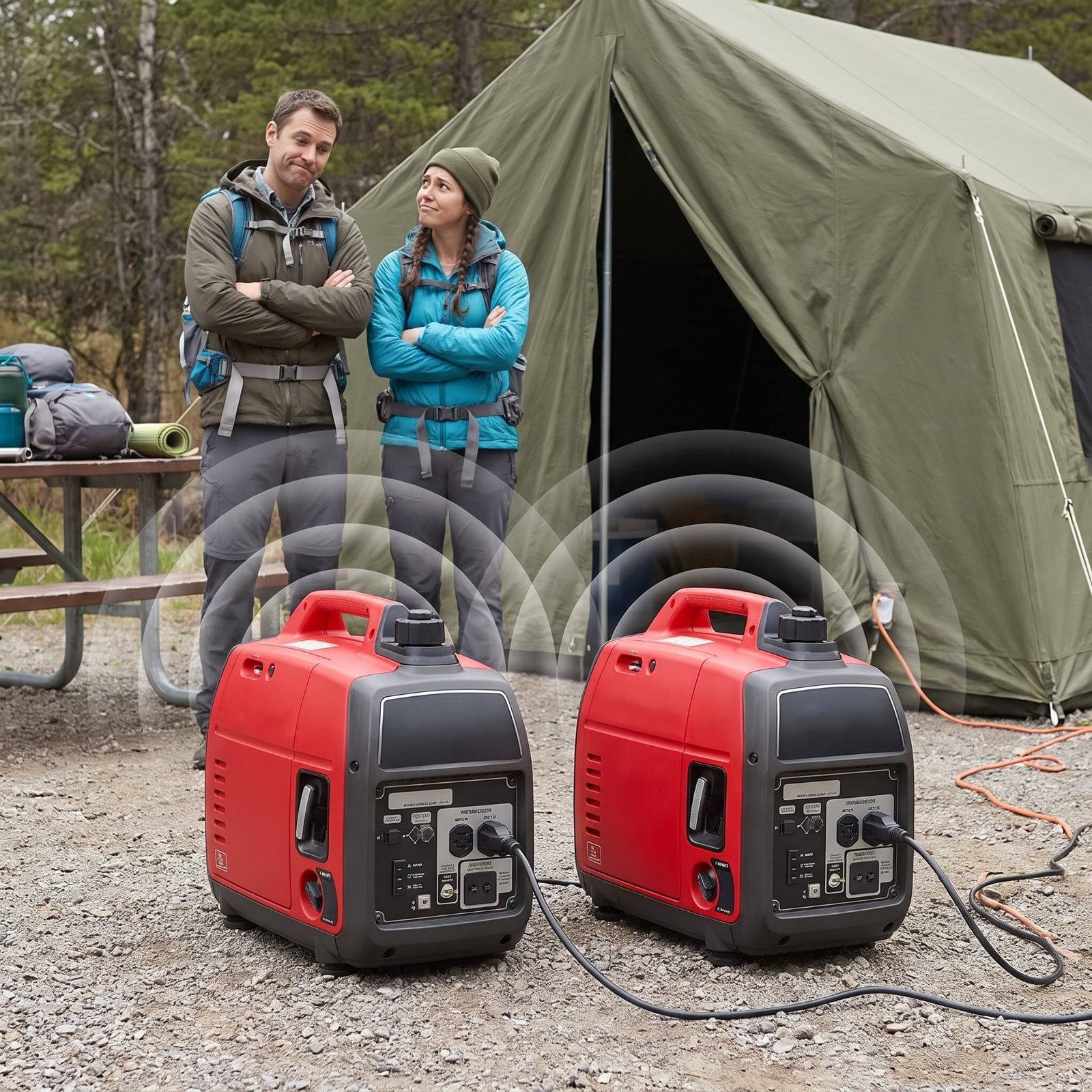
Two generators are twice the noise and twice the exhaust, and plenty of folks run both out of habit. You bought the parallel kit for the rare heavy-draw moment, then started firing up the pair every time out of reflex.
The problem is simple math. Two small engines idling throw off more combined decibels and more fumes than one adequately sized unit carrying the same load. Your campsite becomes a two-piston band nobody asked to hear.
Save the parallel setup for when you genuinely need the output, like running the AC and the microwave together. The rest of the time, one generator on a modest load is quieter, cleaner, and a lot easier on the campground peace.
33. Mounting It on a Hollow Truck Tailgate
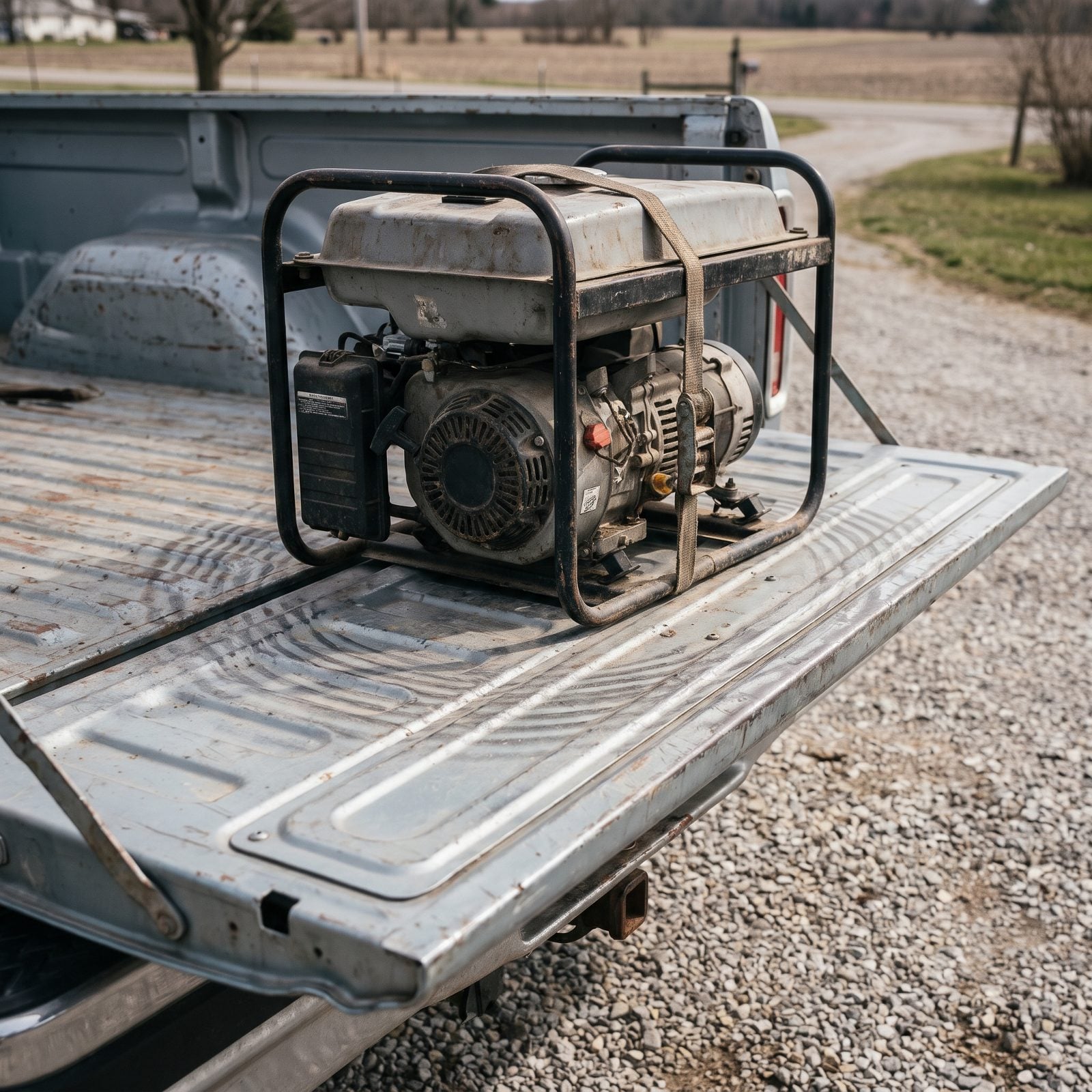
Setting the generator on a steel tailgate feels convenient. It’s at waist height, off the dirt, and easy to reach. It’s also a drum.
A hollow metal panel amplifies every bit of engine vibration, turning your tailgate into a sounding board that broadcasts a low, bone-rattling buzz across the whole loop. Over time that same shaking loosens hardware and wears down the generator’s feet.
Put it on the ground on a rubber anti-fatigue mat or a dense foam pad. A quarter-inch of rubber between the generator and anything metal absorbs the vibration before it can spread. I resisted this for a while because the tailgate was handy. The mat won. It always wins.
32. Running It Tucked Under an RV Slide-Out
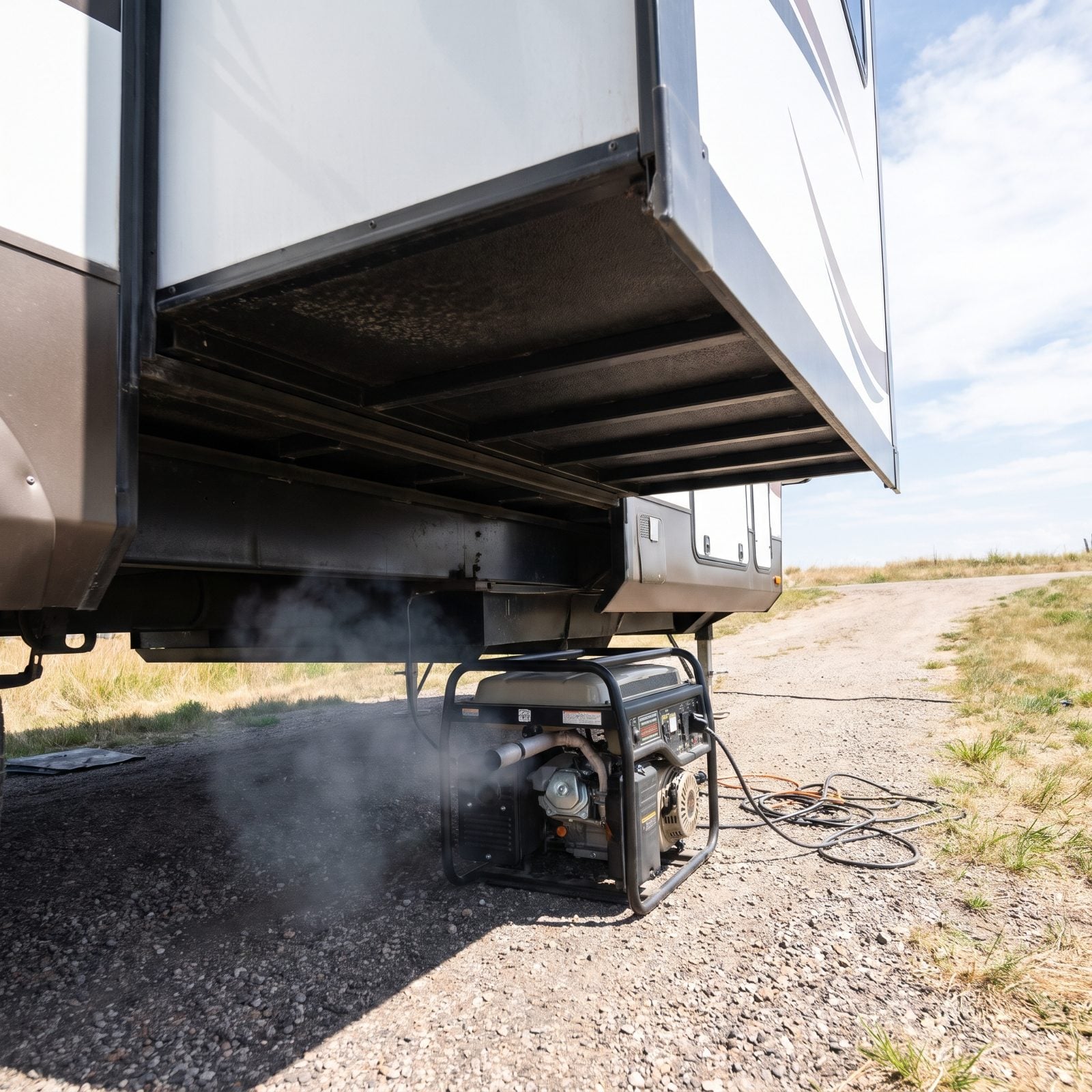
The slide-out throws nice shade and keeps the generator out of the rain, so under it goes. Bad idea.
That overhang traps exhaust and bounces engine noise straight down and back toward your own floor vents and windows. You’re funneling carbon monoxide and heat into the one spot you least want it, and the enclosed pocket makes the whole rig hum.
Keep the generator well clear of the slide, downwind and several feet out in the open with nothing overhead. Exhaust needs sky above it to disperse. A generator tucked into a covered nook is a safety problem first and a noise problem second, and both are reasons enough to pull it into daylight.
31. Operating It Inside an Echoing Storage Bay
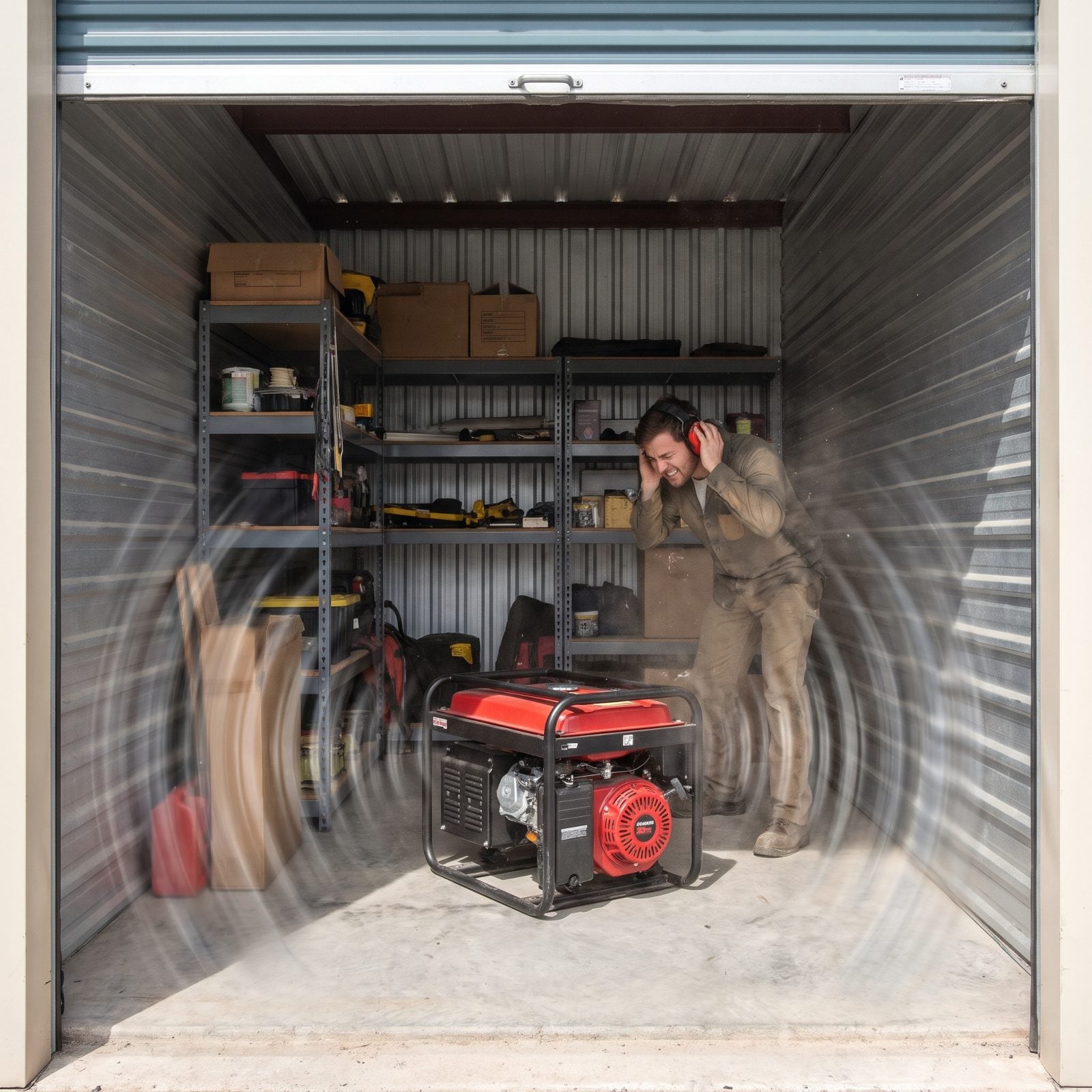
Firing up a portable unit inside a closed or half-closed storage bay to “keep it tidy” turns a hard-walled box into an echo chamber. Every sound wave bounces off the corrugated metal walls and comes back louder.
What you get is a boomier drone than running it out in the open, plus a serious fume and heat hazard in an enclosed metal unit with a roll-up door.
Portable generators belong outside, on open ground, full stop. Permanently installed generators are vented and engineered for their location; portables are not. If tidiness is the goal, buy a small folding stand and a storage case, and run the thing where the air can actually carry its noise and exhaust away.
30. Placing It Between Two RVs Like a Sound Canyon

Two parallel RV walls make a perfect acoustic corridor, and dropping a generator in the middle of it is the loudest possible choice. The sound ricochets wall to wall and gets funneled straight into both your neighbor’s windows and your own.
In a packed event campground this is how feuds start. Picture it: your neighbor six feet away trying to sleep with your exhaust pointed at their bedroom and the noise reflecting off their siding.
Position the generator at the far open end of your site, away from the gap, exhaust aimed at empty space rather than anyone’s rig. A few feet of relocation can cut the volume at your neighbor’s door dramatically. Good placement is the cheapest courtesy you can offer.
29. Rigging a Homemade Exhaust Extension That Rattles
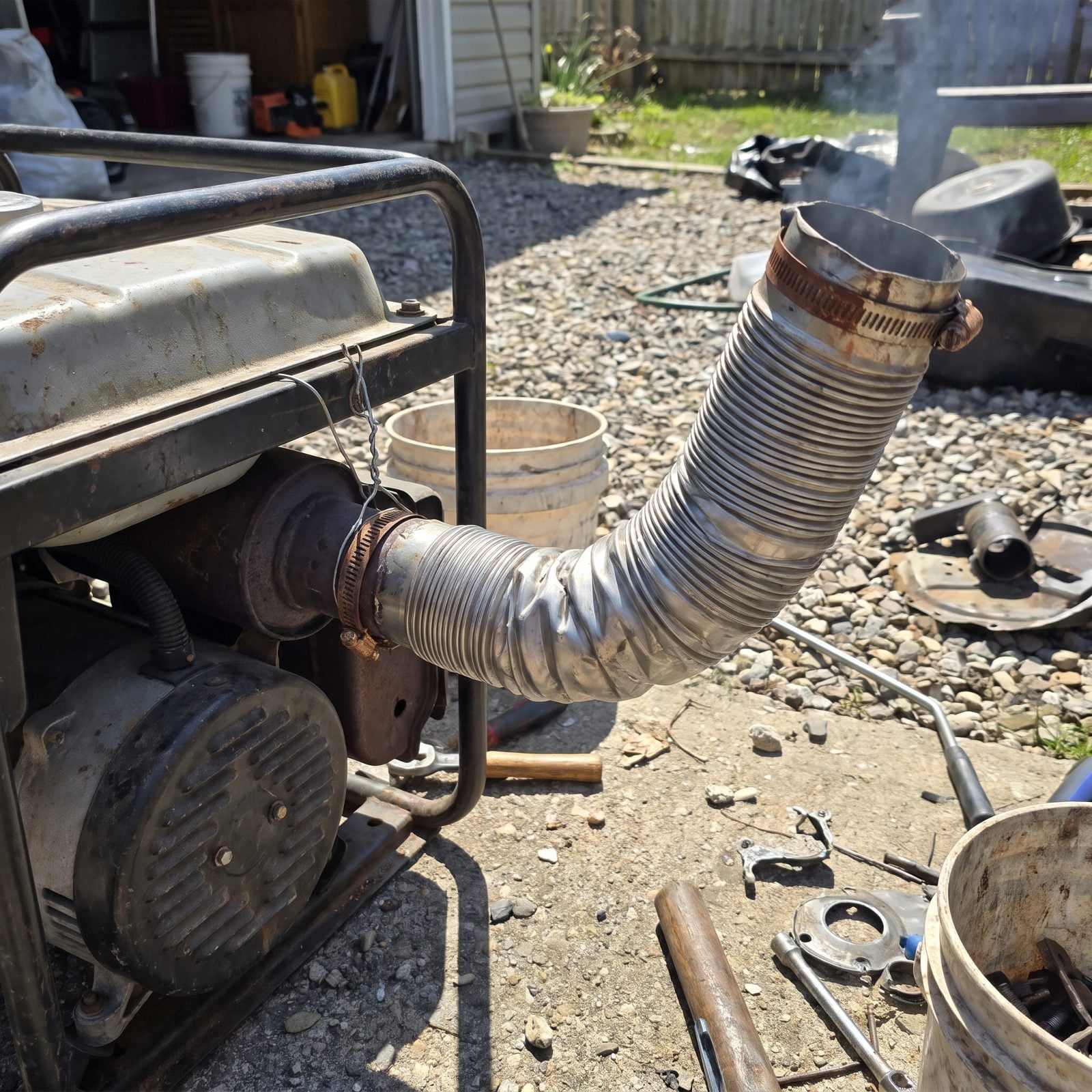
The homemade exhaust extension is a classic. A length of flex pipe, a hose clamp, and a plan to route the fumes “away from camp.” Then it starts buzzing like an angry hornet the moment the engine warms up.
A loose or ill-fitted extension vibrates against its mount, builds backpressure the engine was never designed for, and can crack welds or melt whatever you clamped it to. You’ve added noise and a failure point to solve a problem that placement handles for free.
Skip the contraption. Move the whole generator farther out and point the factory exhaust where you want the fumes to go. Want a real extension? Buy one made for your model with proper gaskets and a secure bracket. The engineered part doesn’t rattle, and that rattle was never worth the handyman pride.
28. Operating It With a Damaged or Missing Muffler
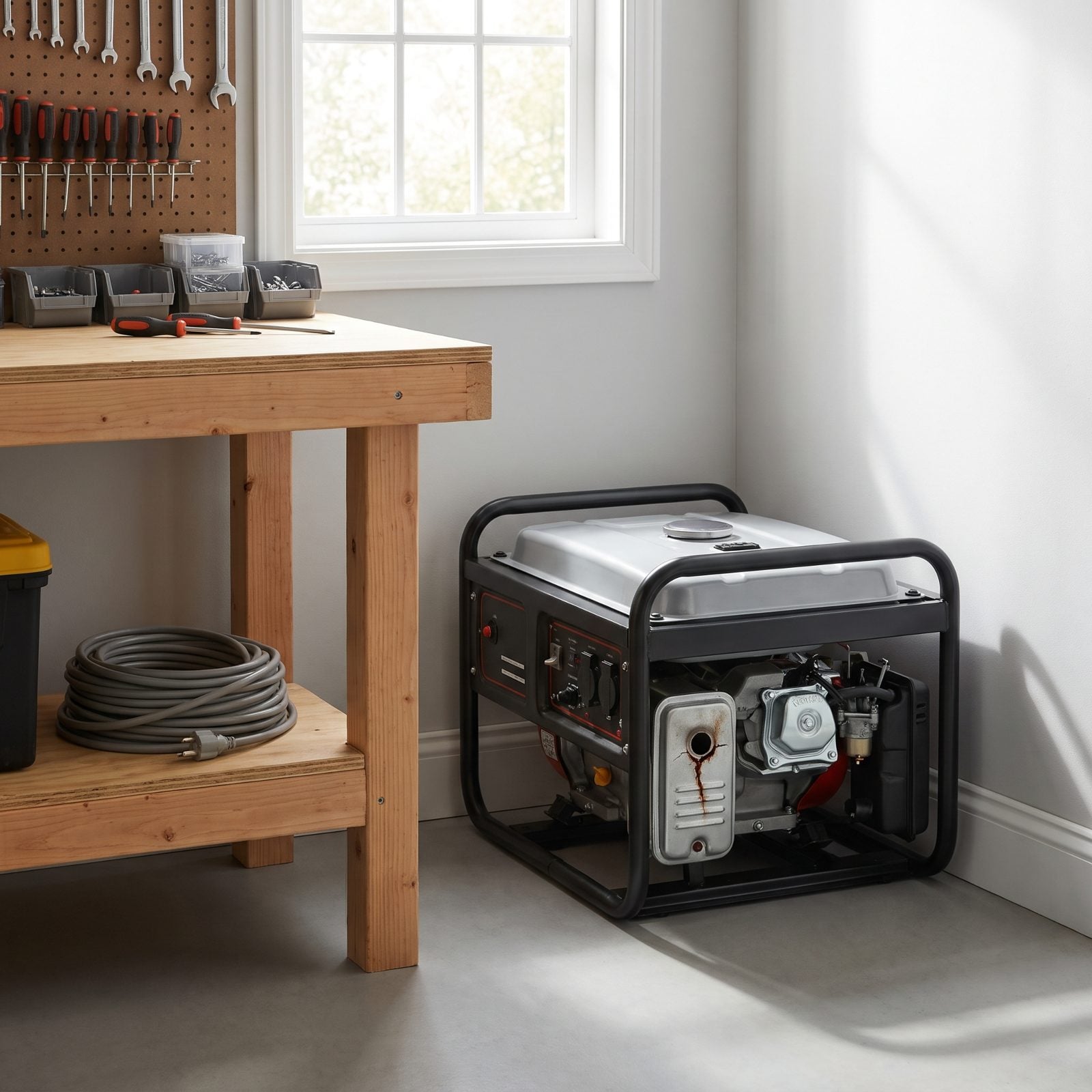
A good muffler is the difference between a hum and an argument three sites over. Crack it, rust it through, or bypass it entirely, and the generator stops whispering and starts barking. That raw exhaust note carries across a quiet campground like a lawnmower at dawn.
And it’s not just noise. A compromised muffler means hotter, dirtier exhaust and a unit that fails campground sound limits on the spot. I ignored a rust spot once and wondered why the neighbors stopped waving.
Inspect the muffler before every trip, and replace a rusted or dented one with the manufacturer’s part — not a wad of exhaust tape and hope. If yours runs loud even when healthy, a bolt-on exhaust silencer knocks several decibels off. Your neighbors will never know you’re running.
27. Ignoring a Clogged Spark Arrestor
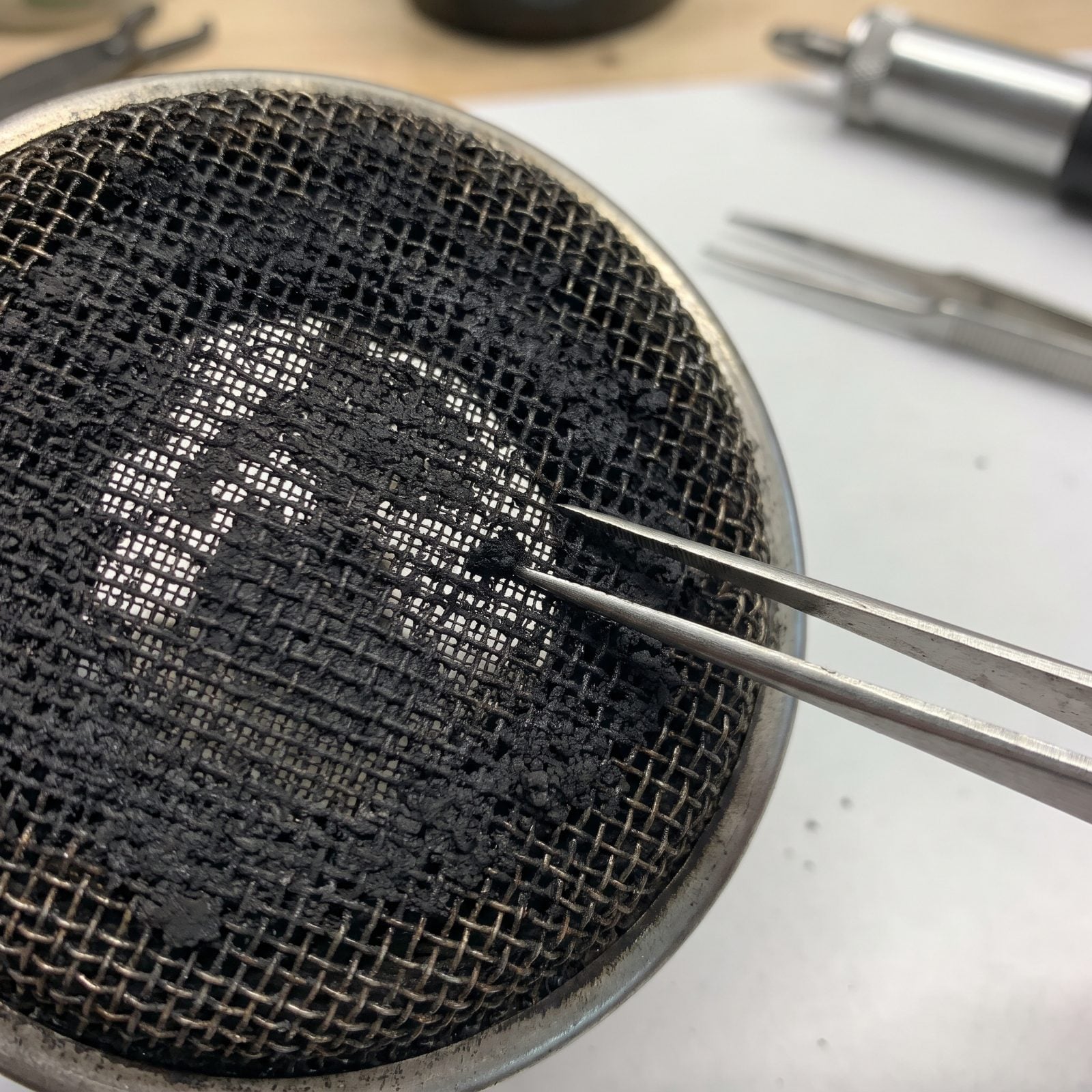
That small mesh screen in your generator’s muffler is the spark arrestor, and it does exactly what the name says. It catches hot carbon before it shoots out into dry brush and starts a fire.
Carbon builds on that screen over time. A clogged arrestor chokes airflow, which makes the engine run rougher, louder, and hotter — and on a lot of public lands, a blocked or missing arrestor makes your generator flat-out illegal to use. Fire crews don’t accept excuses during a burn ban.
Pull the screen once a season and brush off the clumped soot with a soft wire brush, or burn it clean with a small torch and let it cool. Ten minutes, start to finish. Replace it if the mesh is torn. Cheap insurance against a very expensive mistake.
26. Using Stale Fuel That Makes the Engine Hunt
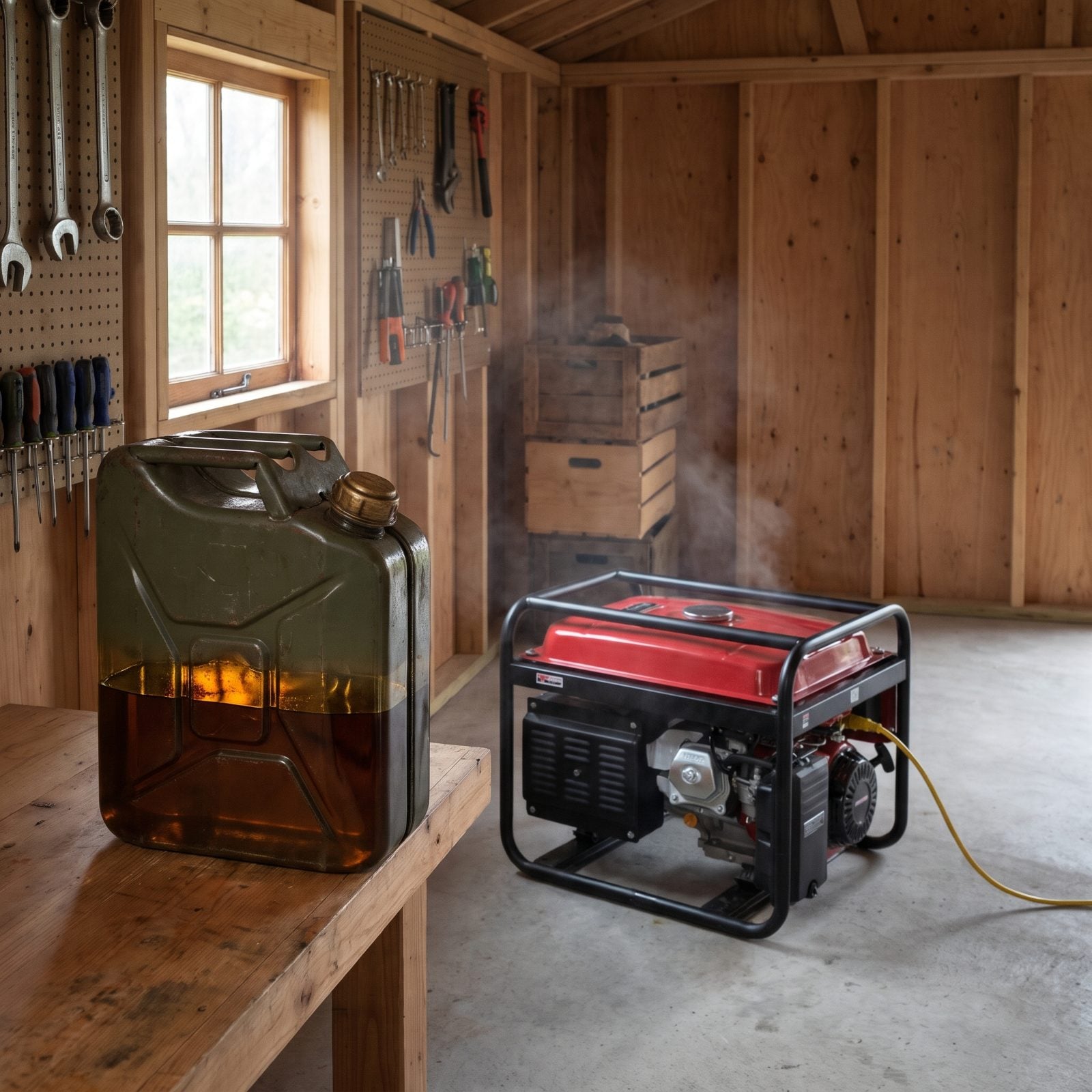
Gasoline goes bad. Leave it in the tank or a can over the winter and the light volatile parts evaporate, leaving a varnishy sludge that gums up the jets.
The giveaway is an engine that hunts — it revs up, drops, surges again, never settling into a steady idle. That up-and-down drone bothers neighbors more than a constant hum ever would, and it’s the generator telling you it’s starving for clean fuel.
Run the tank dry before storage, or add a stabilizer to every fill if the unit sits for weeks. Fuel older than thirty days without stabilizer belongs in the lawnmower. I learned this after a spring startup that sounded like a dying bagpipe.
25. Ignoring Low Oil and Rough Engine Noise

A generator low on oil develops a hard, knocking rattle that sounds nothing like its normal hum. That’s metal working against metal, and it’s the engine warning you something is about to let go.
Most portable units have a low-oil shutdown, but that sensor is a last resort, not a maintenance plan. By the time it trips, the damage is often already done — and all that rough running in the meantime grates on everyone within earshot.
Check the oil cold and level before every day of use. These small engines sip oil and hold barely more than half a quart, so a little loss matters fast. Keep a spare quart of the right weight in the bay and top it the moment the dipstick looks low.
24. Letting a Dirty Carburetor Cause Constant Surging
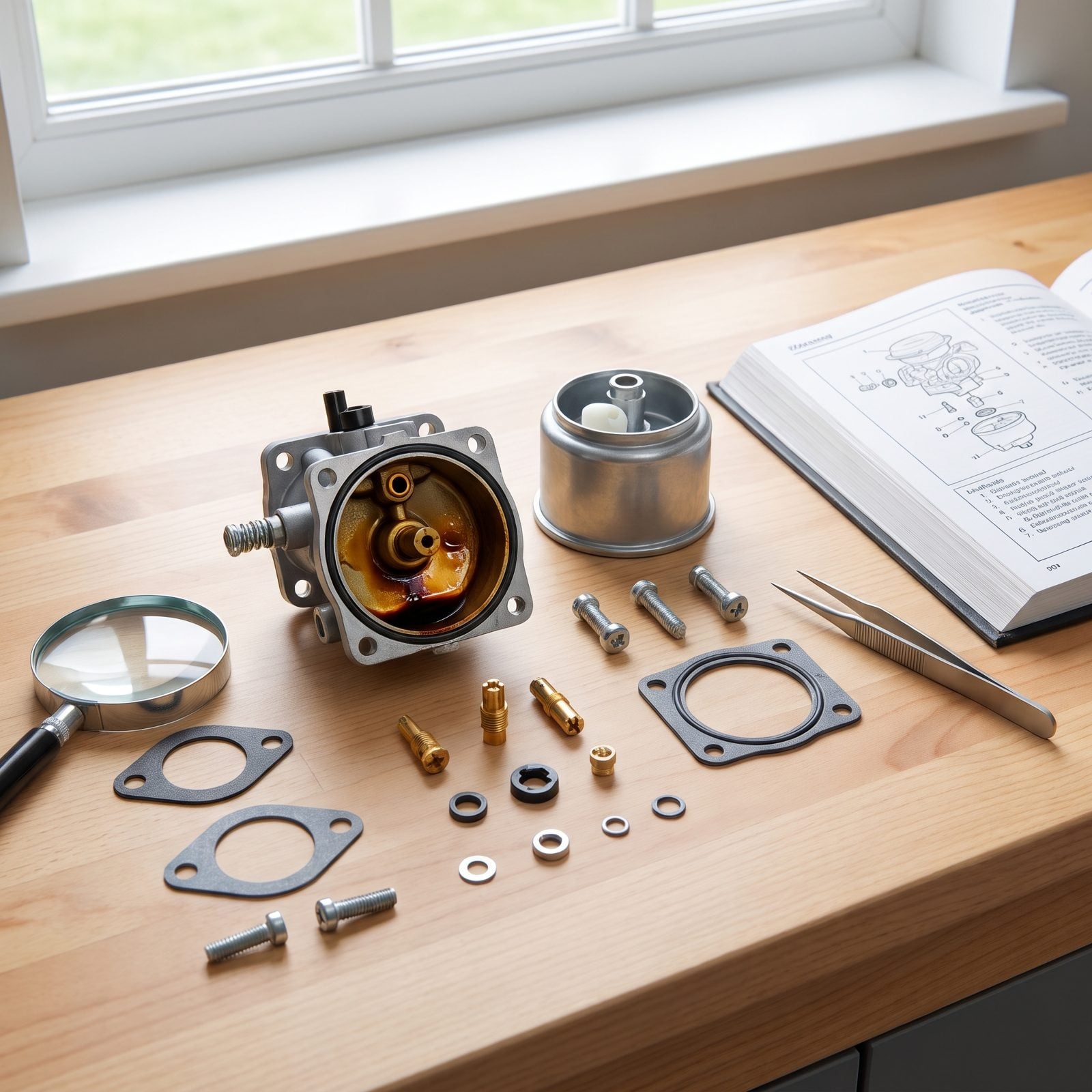
Surging is the cousin of fuel hunting, except it comes from gunk inside the carburetor rather than bad gas going in. Tiny passages clog with varnish, the engine can’t hold a steady throttle, and it rhythmically swells and fades.
That wah-wah-wah pulse is the kind of sound that drills straight into your neighbor’s afternoon nap. It also means the unit isn’t delivering clean power to your RV, which trips sensitive electronics.
A can of carburetor cleaner and ten minutes often fixes it. Pull the air filter, spray the carb throat and linkage, run the engine to clear the deposits. Stubborn cases call for draining and cleaning the float bowl. And if you dread the whole thing, a cheap rebuild kit costs less than one shop visit.
23. Running It With Loose Exterior Panels
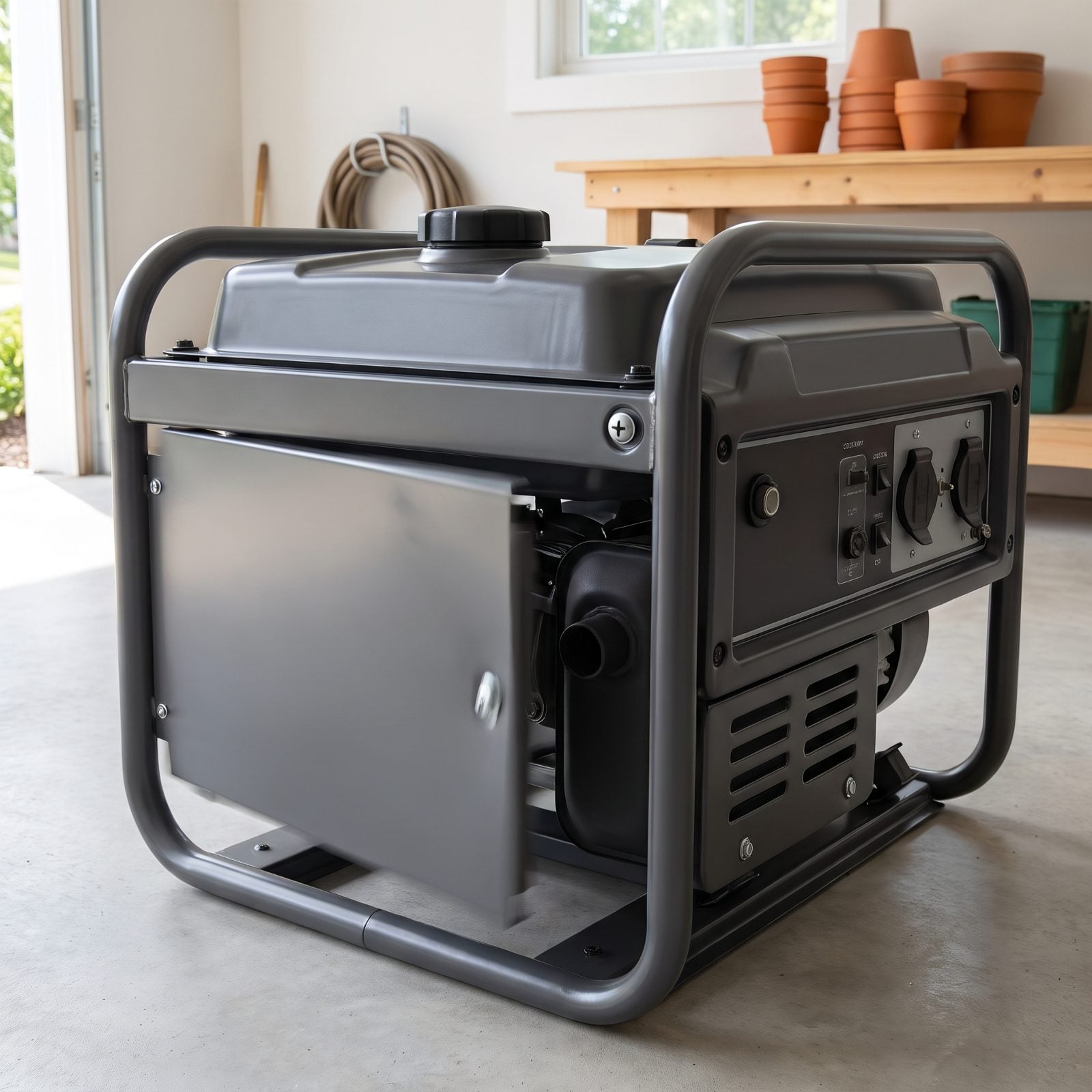
Every panel, vent cover, and access door on a generator is meant to sit tight. Let the fasteners back out from vibration and those panels start buzzing like a loose tin roof in a storm.
The buzz is maddening precisely because it’s intermittent — it comes and goes with engine speed, and nobody can tune it out or get used to it. Loose panels let more raw engine noise escape the housing, too.
Run your fingers over every fastener before a trip and snug anything loose. A dab of thread locker on panel screws keeps them from vibrating out between seasons. Those few minutes of tightening are often the whole fix for a generator you swore had gone bad.
22. Ignoring Worn or Missing Rubber Isolation Feet
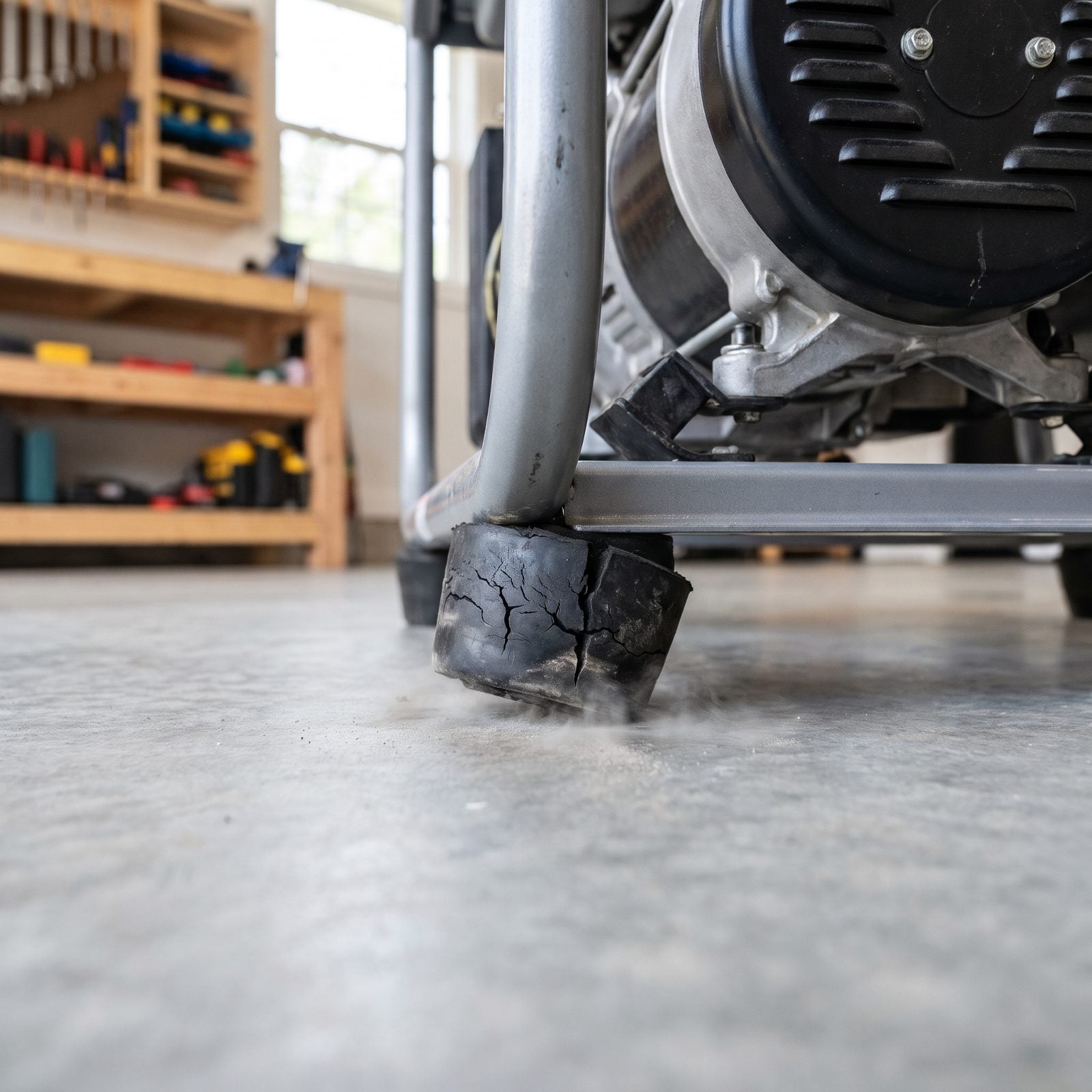
Those four rubber feet under the generator aren’t decoration. They soak up engine vibration before it transfers into whatever the unit is sitting on.
When a foot cracks, flattens, or goes missing, the frame passes vibration straight into the deck, the RV bay floor, or the concrete pad — and that surface turns into a sounding board. A perfectly healthy engine can suddenly buzz the whole camp.
Flip the generator over and inspect the feet. Replace any that are split or compressed. If yours lives in a storage bay, a rubber anti-vibration pad under the whole unit adds a second layer of isolation. The quietest generators I’ve camped next to weren’t expensive — they were just well isolated.
21. Allowing a Security Chain to Rattle Against the Frame
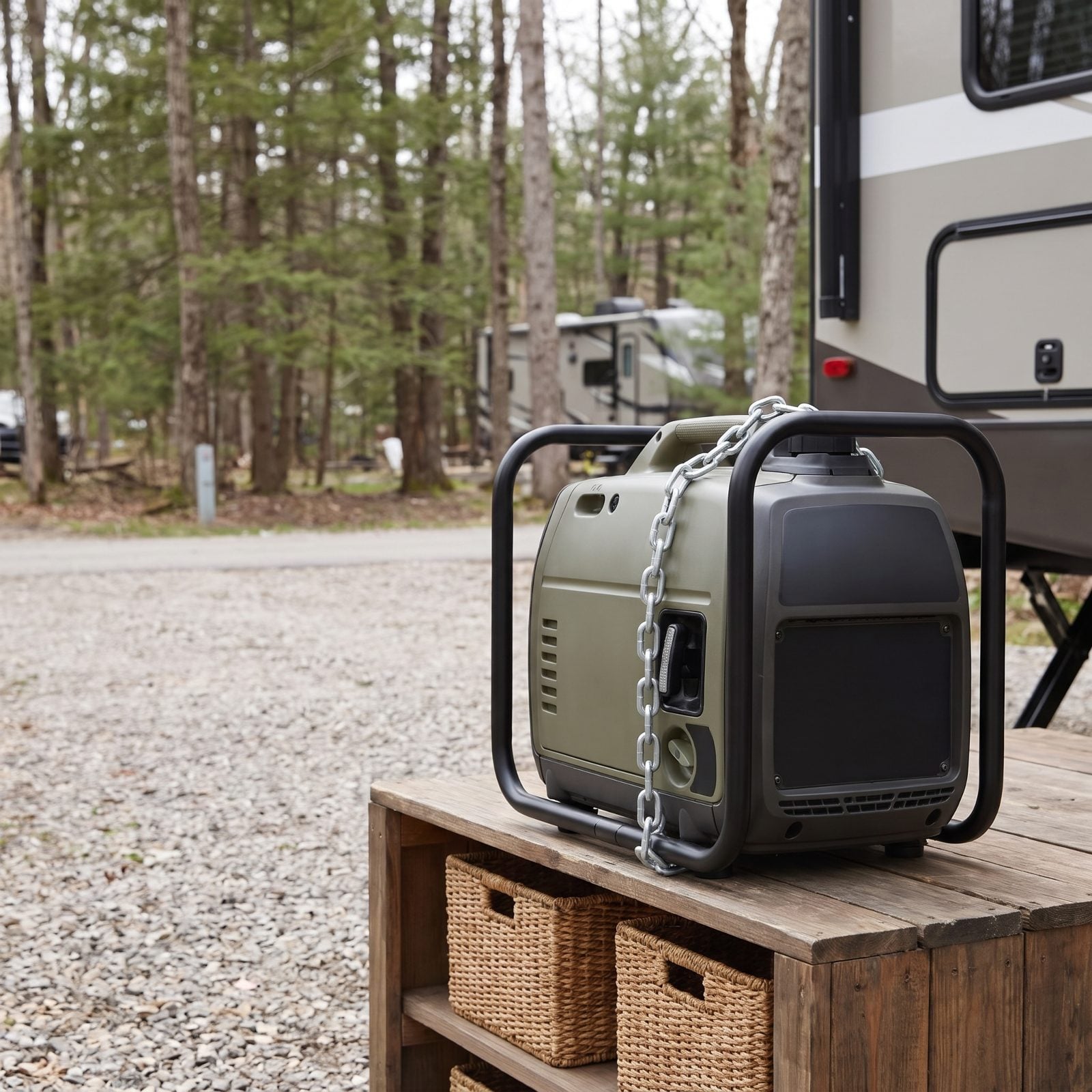
Plenty of owners run a security chain through their generator’s handle and frame, locked and anchored to something fixed, to stop it walking off overnight. The mistake is letting that chain hang loose against the metal frame.
A running engine vibrates constantly, and a chain touching the housing becomes a tambourine you can’t shut off. Tick-tick-tick-tick, all night — the kind of small sound that becomes the only thing anyone can hear in a quiet forest.
Wrap the contact point in foam pipe insulation, or route the chain so it never rests against the frame. A short bungee pulling the slack taut and away from the housing kills the rattle entirely. You keep your security and your silence both.
20. Setting It on an Unstable Stack of Boards
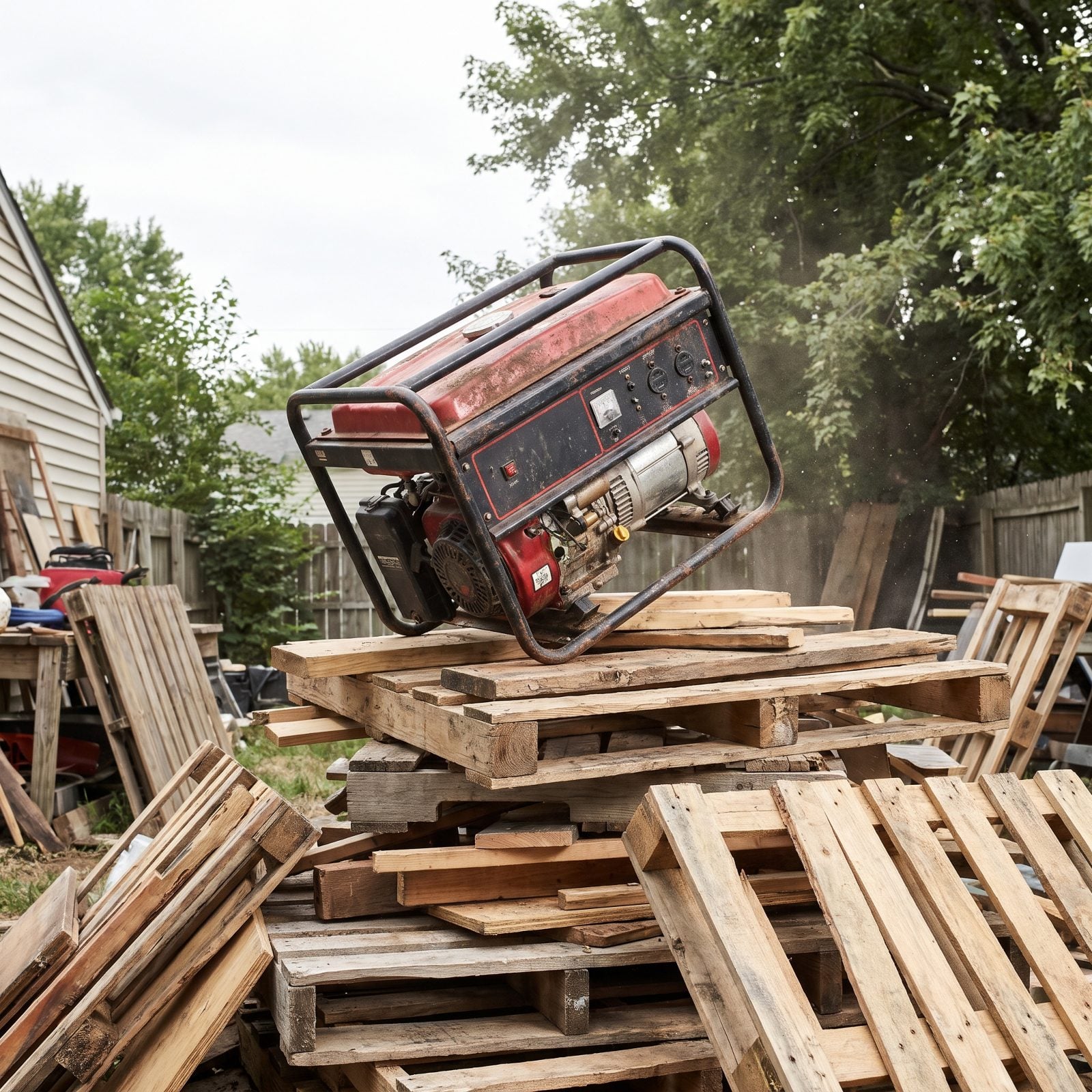
A generator wants a flat, solid, level surface. A wobbly stack of scrap boards gives it none of those.
Set a vibrating engine on something that rocks and two things happen. The vibration amplifies as the whole stack shifts and buzzes, and a tilt past a few degrees can starve the oil pump or trip the low-oil sensor mid-run. Worst case? The unit walks itself clean off the stack while you sleep.
So find level ground, or make it. Interlocking rubber leveling pads or a single flat paver give the generator a stable, damped base that won’t rock. A cheap bubble level tells you in two seconds whether you’re good. Steady ground runs quieter, and it’s kinder to the engine.
19. Building a Sound Screen That Reflects Noise Next Door
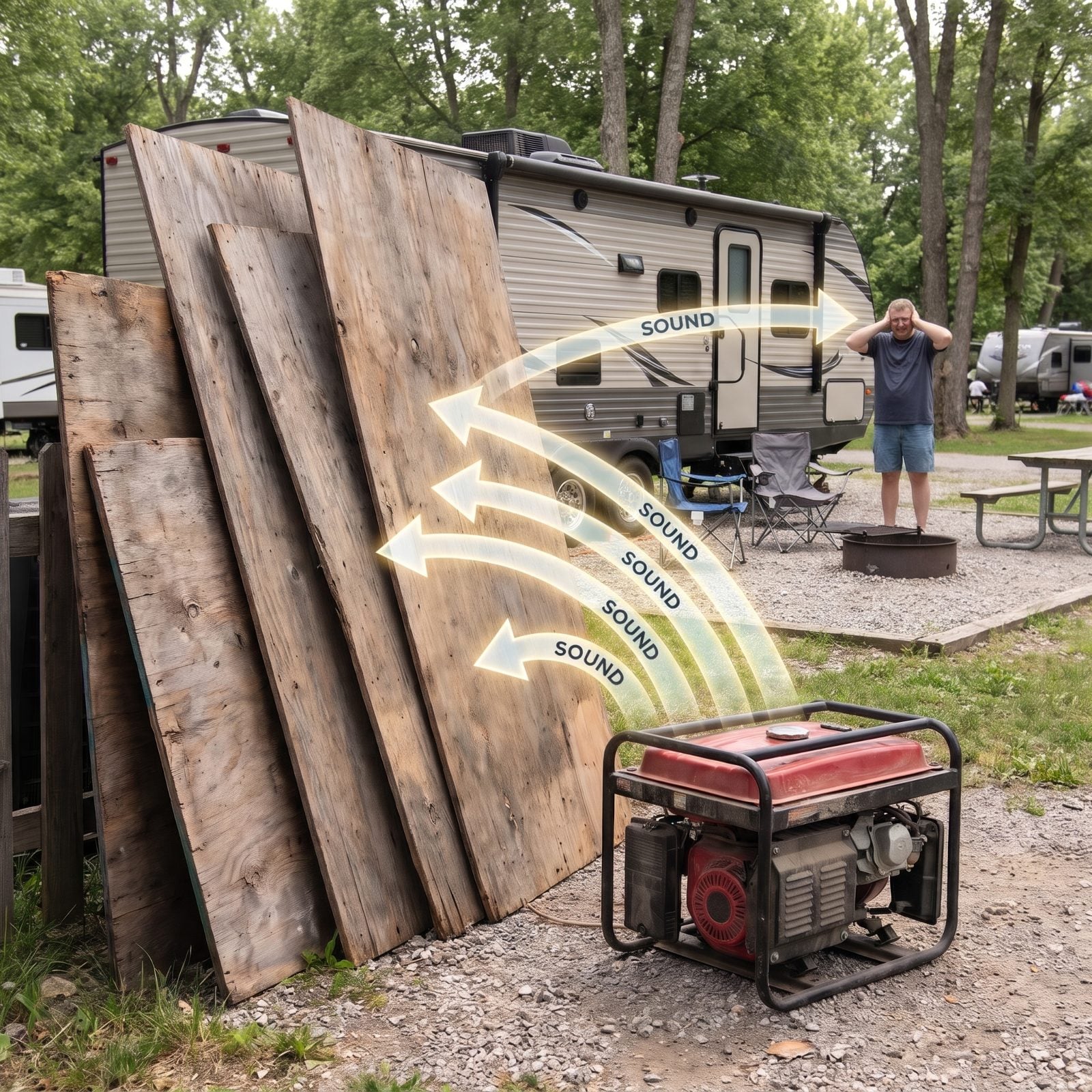
Someone always decides a sheet of plywood will fix the noise. They prop it up, the sound stops bothering their own ears, and they call it solved.
Except a hard flat panel doesn’t absorb sound — it bounces it. Angle that board the wrong way and you’ve built a reflector aiming every decibel straight at the camper next door. You’ve made their day worse to make yours better, which is exactly how campground feuds get started.
If you want to cut noise, absorb it instead of deflecting it. A box-style baffle lined with sound-absorbing material, or a commercial generator enclosure built for airflow, actually lowers the overall level. Better yet, move the unit farther from everyone and point the exhaust away from sites. Good placement beats any homemade wall.
18. Wrapping It in an Unsafe Enclosure That Traps Heat
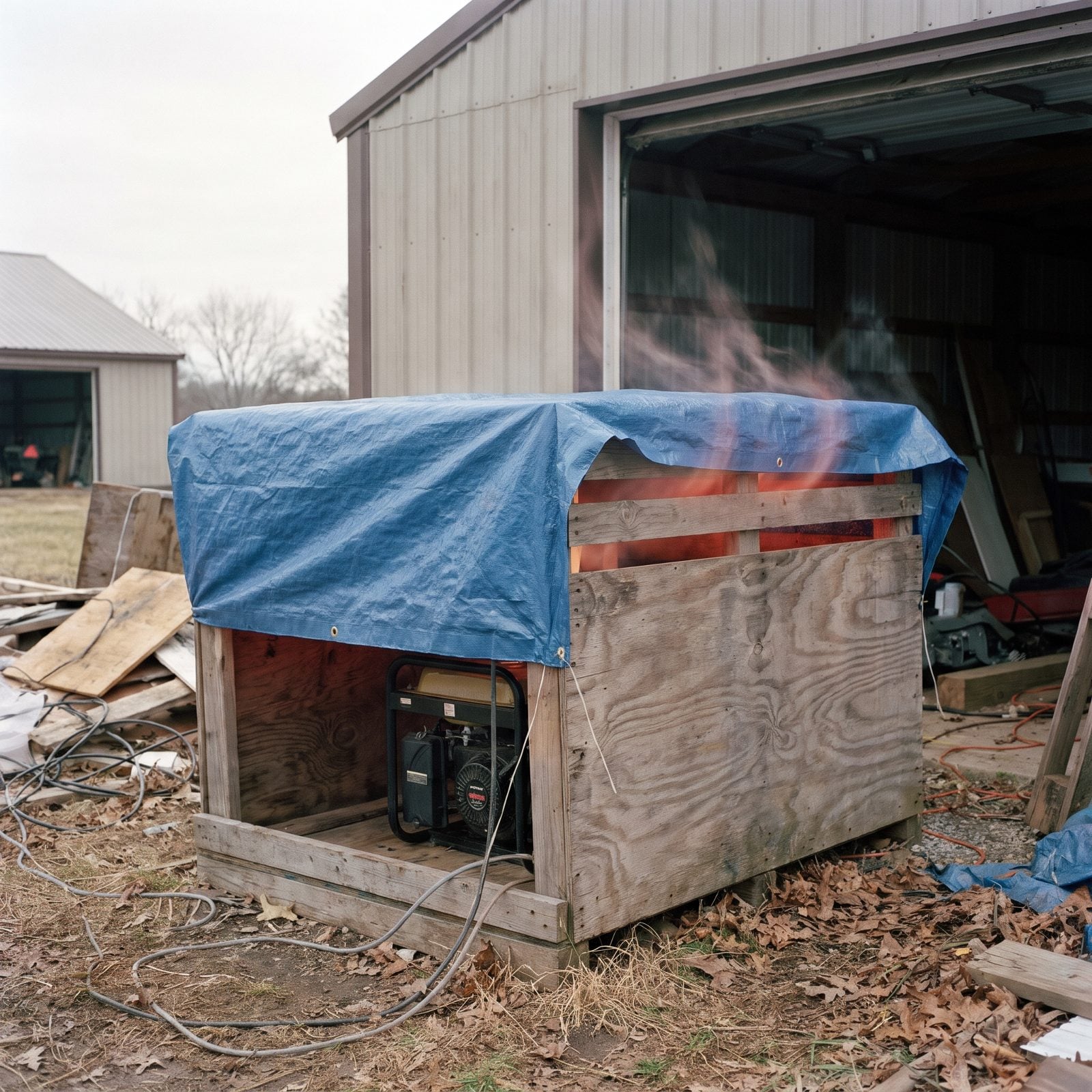
You’ve seen the setup. Someone boxes the generator in with plywood, a tarp, maybe a moving blanket, all in the name of quieting it down. Works for about twenty minutes. Then the unit is cooking itself.
Generators throw heat, and they need air moving across them to shed it. Trap that heat and you cook the windings, warp the plastic housing, and in the ugliest cases start a fire a few feet from your rig. Smothering the exhaust can push carbon monoxide somewhere you really don’t want it, too.
Want it quieter? Buy quiet. An inverter unit like a Honda or a Champion runs at a fraction of the racket. Give it clearance on all sides, keep the vents open to the sky, and never drape anything over a running engine.
17. Leaving the Compartment Door Open Toward Other Campers
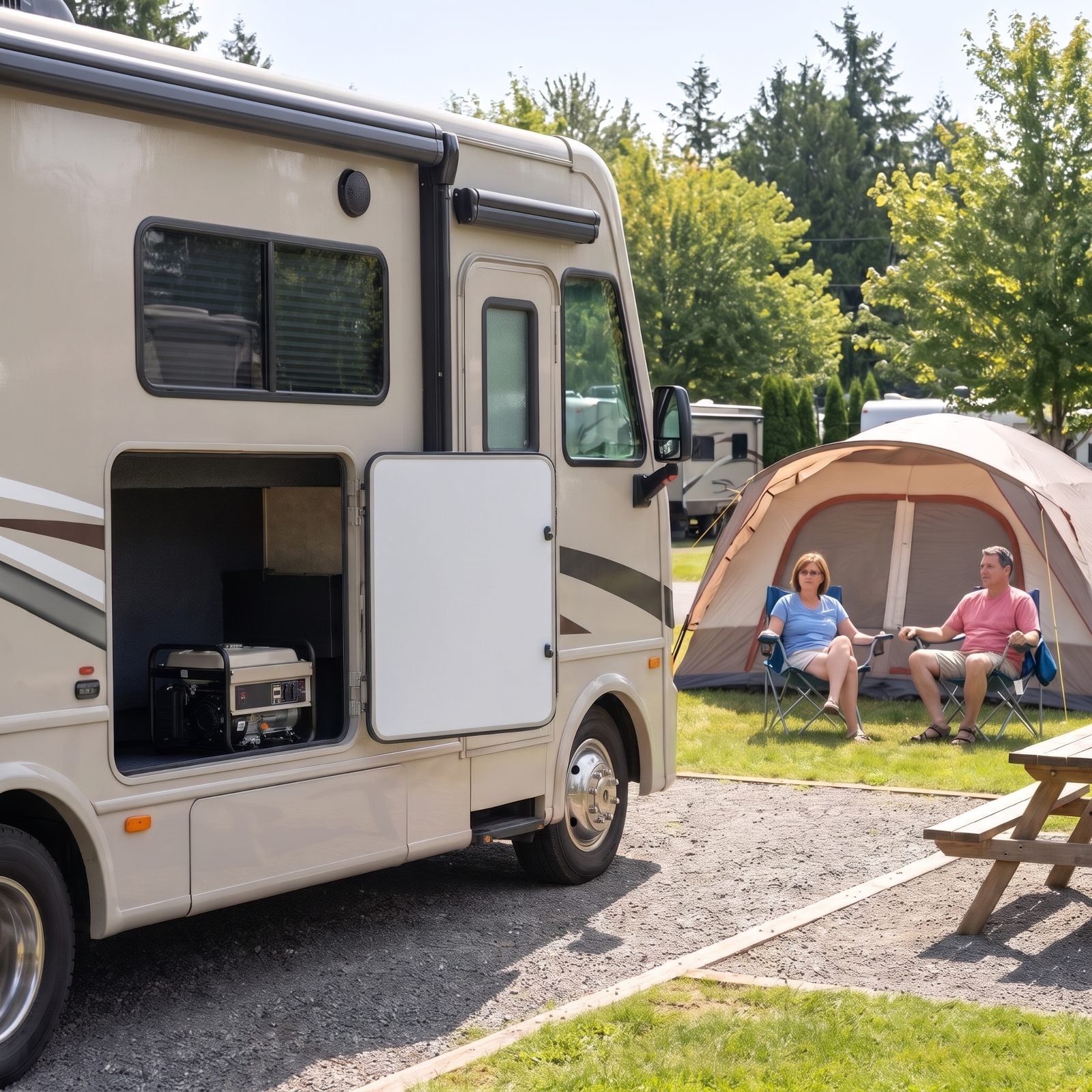
The compartment door is open, swung wide, and aimed straight at the folks next door like a speaker cabinet. Most people never notice which way it points.
That open door turns a tolerable hum into a direct blast of noise and exhaust, pointed right at someone’s tent while they’re trying to relax in their camp chairs. You’ve basically aimed your tailpipe at their patio.
Close the door if your unit allows it. If it has to stay open for cooling or access, angle the rig so the generator faces an empty road, a berm, or the woods instead of the neighbor’s picnic table. Thirty seconds of thought when you park saves you a tense conversation at dusk.
16. Testing the Generator Repeatedly After Setting Up Camp
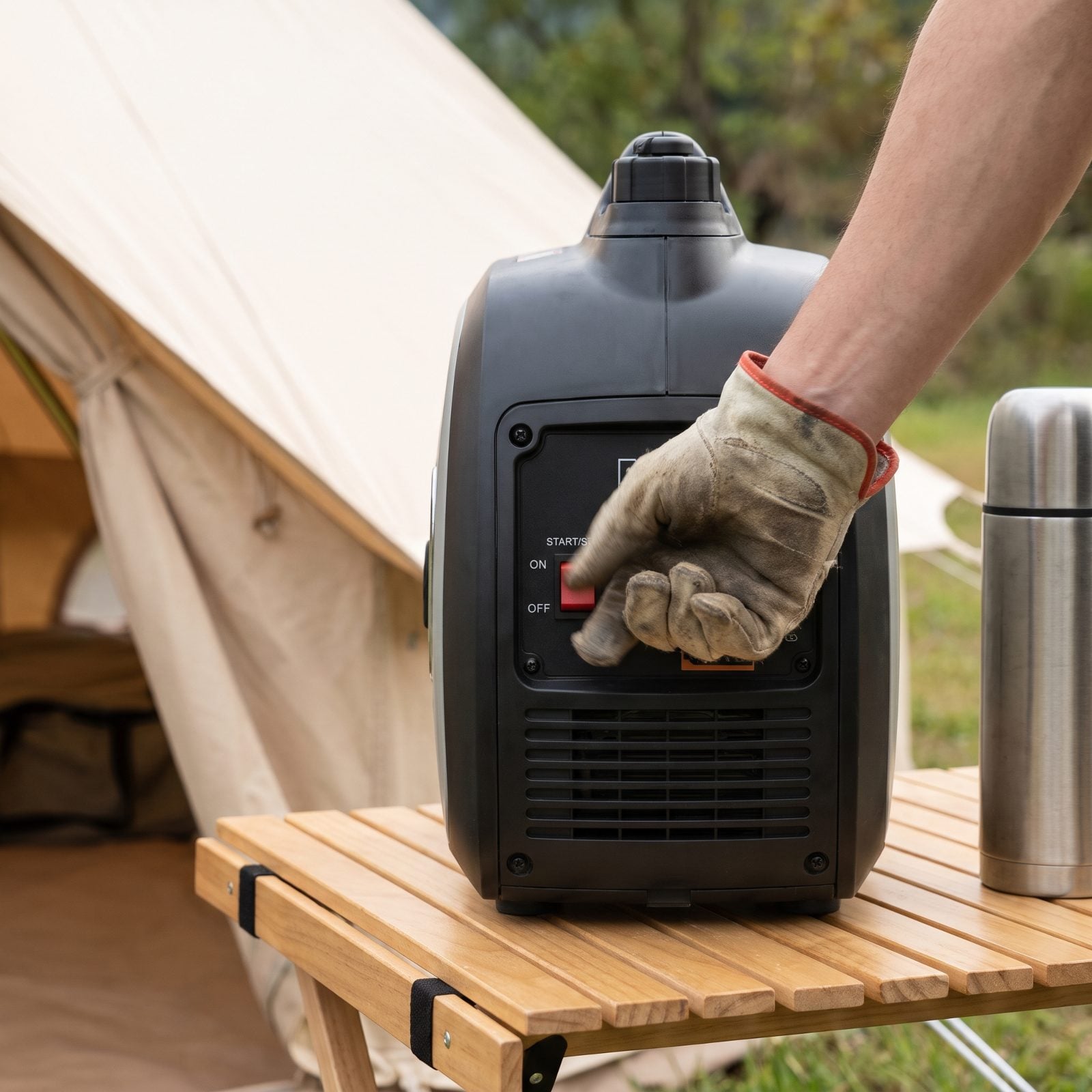
On, off, on again, off again. You get to the site, fire it up to check the AC, kill it, remember the microwave, fire it up again, kill it. Each start is a loud cold-engine bark, and your neighbors hear every single one.
A generator is loudest in the first few seconds of a cold start. Stringing six of those together across half an hour grates on people far worse than just running the thing once. Folks can tune out a steady hum. They can’t tune out a lawnmower that keeps getting yanked back to life.
So plan your checks. Start it once, run through everything you need, confirm the shore cord is seated, then shut it down. One clean start, one clean stop.
15. Performing a Long Maintenance Run During Dinner
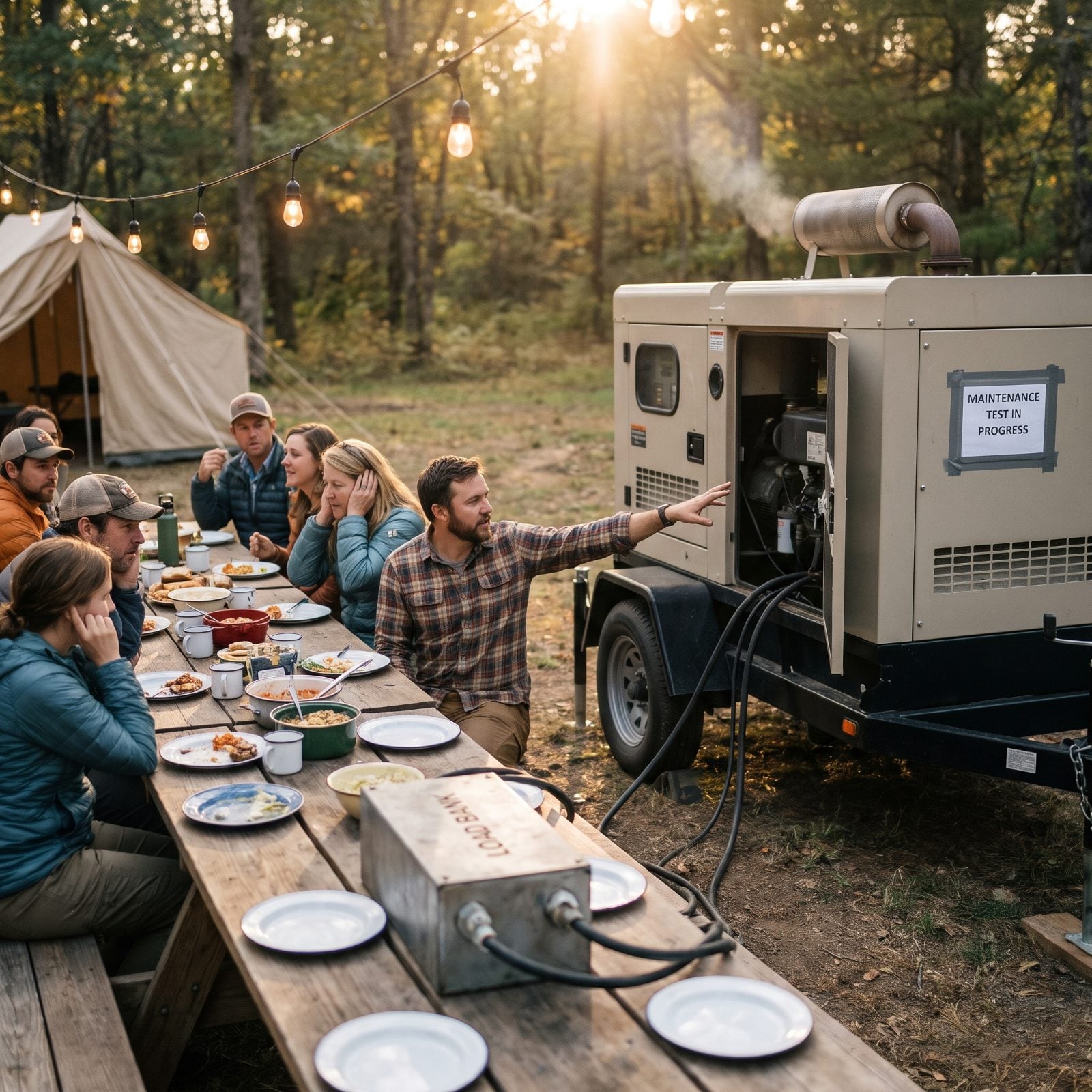
Manuals tell you to exercise a generator under load for a solid stretch, and that’s genuinely good advice. Running that hour-long maintenance cycle at six in the evening, right as the whole loop sits down to eat, is the mistake.
Dinner is the one window where campgrounds go quiet and social. Grills going, kids settling, somebody’s radio turned down low. Drop a steady engine drone into that, and congratulations — you’re the story everyone tells around the fire.
Run the cycle mid-morning or early afternoon, inside posted generator hours, when the loop is already up and moving around. Pick a weekday if you can swing it. Same workout for the engine, zero friction with the neighbors.
14. Troubleshooting a No-Start Engine With Endless Cranking
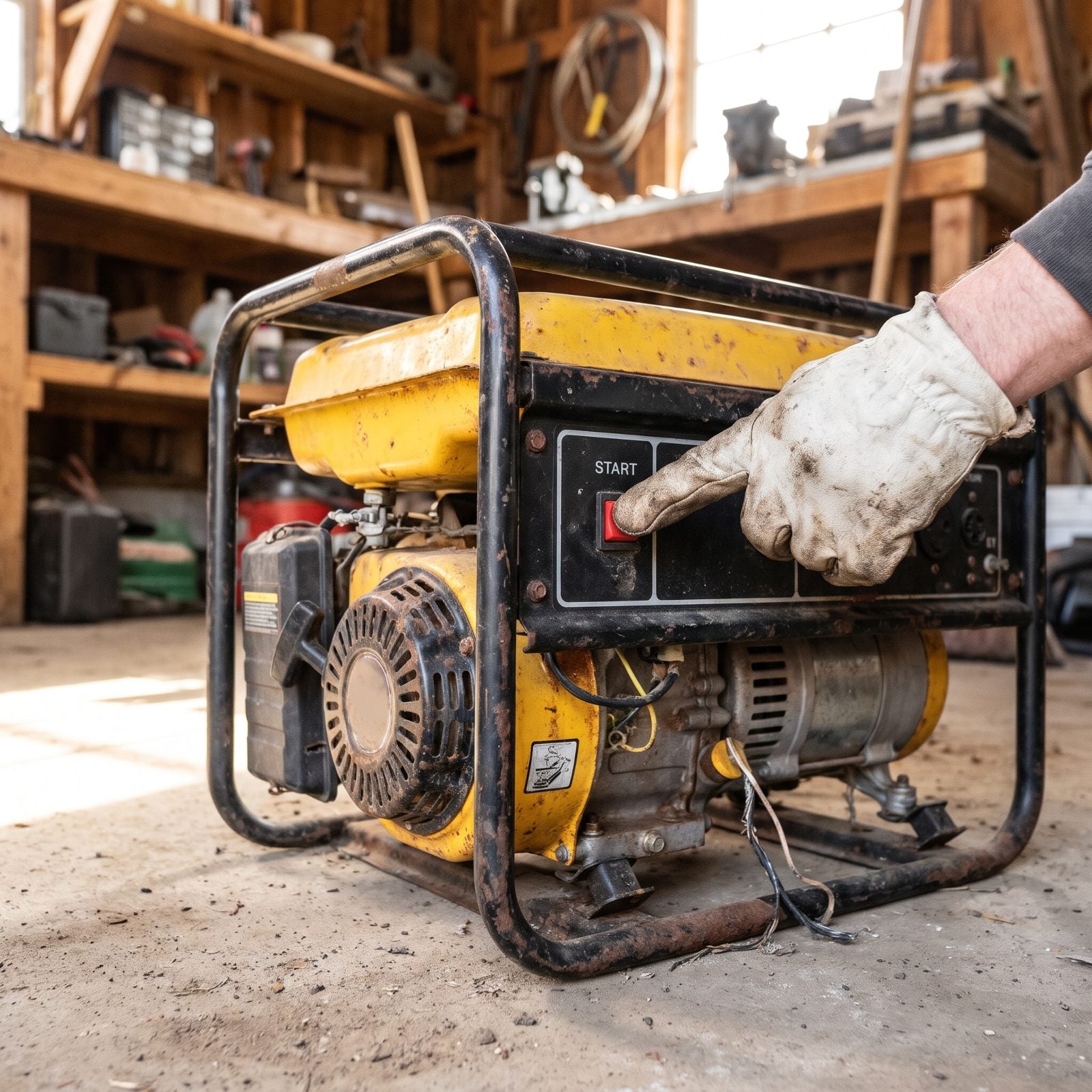
It won’t start, so you crank it. And crank it. And crank it, electric start whirring over and over while nothing catches, because surely the next try is the one.
Endless cranking floods the carburetor, drains the battery, and in a quiet campground it sounds like a car that won’t turn over at a funeral. It also rarely fixes a thing.
After three or four failed pulls or crank cycles, stop and actually look at it. Fuel valve open? Choke set right? Is the fuel fresh, or is it last season’s gas gumming up the carb? Oil level good, since a low-oil sensor kills the start outright? A two-minute checklist beats ten minutes of grinding away at a dead engine.
13. Revving the Engine to Diagnose a Problem
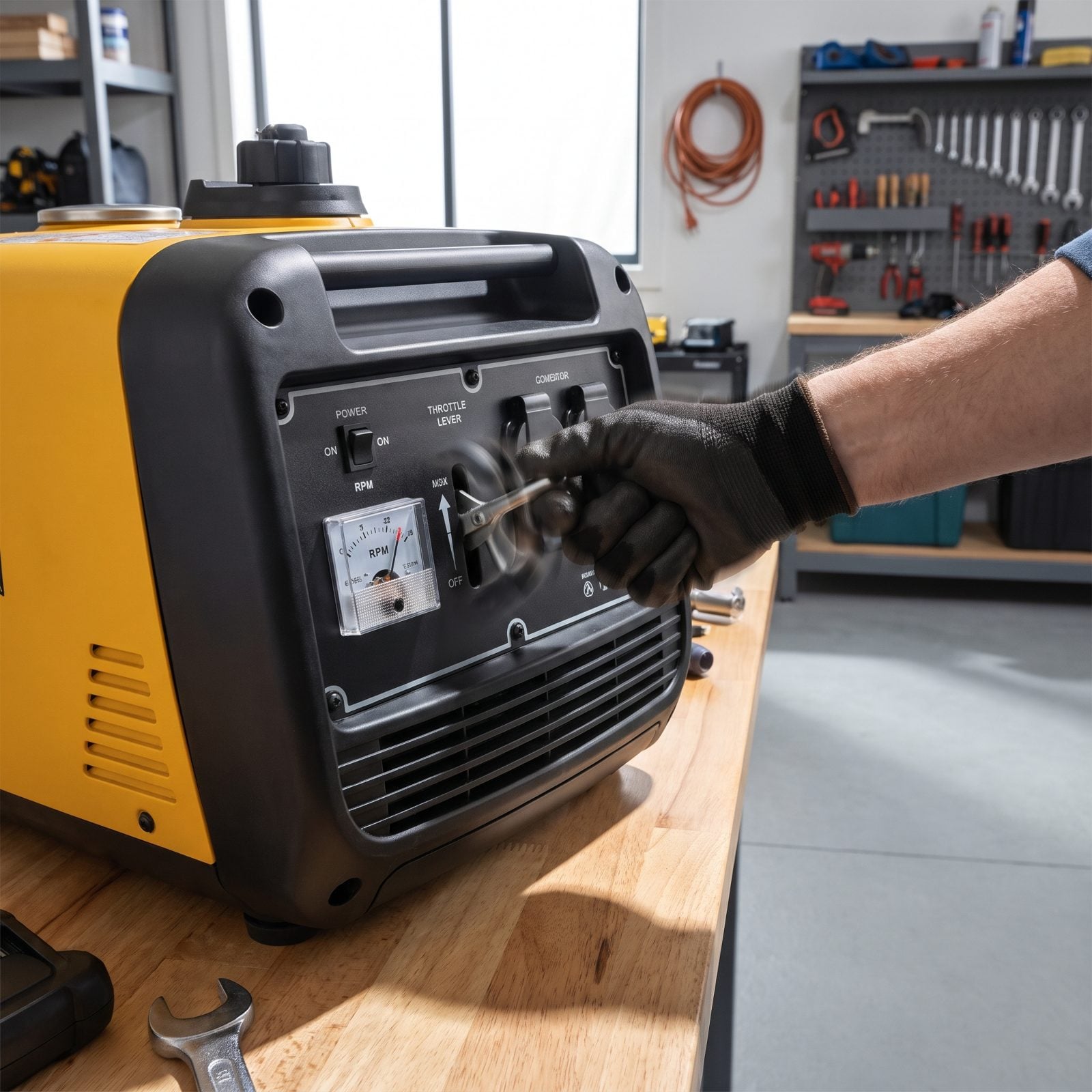
Something sounds off, so the instinct kicks in: goose the throttle and listen, blipping the engine up and down to figure out what’s wrong. Each rev sends a surge of noise rolling across the whole loop.
Here’s the trouble. Most RV generators run at a fixed governed speed anyway, so revving one tells you almost nothing useful. What it does do is rattle every neighbor within a hundred yards while you play mechanic.
Diagnose with your eyes and your nose, not the throttle. Listen at steady idle, check for a fuel smell, look for oil weeping, feel for a vibration pattern. Needs more than that? Shut it down and call a tech. Guessing at wide-open throttle just makes you unpopular and no wiser.
12. Starting It in the Middle of a Shared Campfire Gathering

The fire’s going, chairs pulled in close, somebody’s telling the story they always tell. That’s the exact moment somebody two sites over decides to top off the batteries and fires up the generator.
A campfire gathering lives on low talk and the pop of the fire. A running engine steamrolls all of it. Suddenly everyone’s leaning in, raising their voice, and the easy mood is just gone.
Charge before the fire, not during it. Top off the house batteries in the afternoon so your evening runs cordless. And if you truly need power after dark, a few watts off a solar setup or a quiet battery bank beats cranking the engine into the one part of the day everybody came for.
11. Using It During the Campground’s Afternoon Rest Period
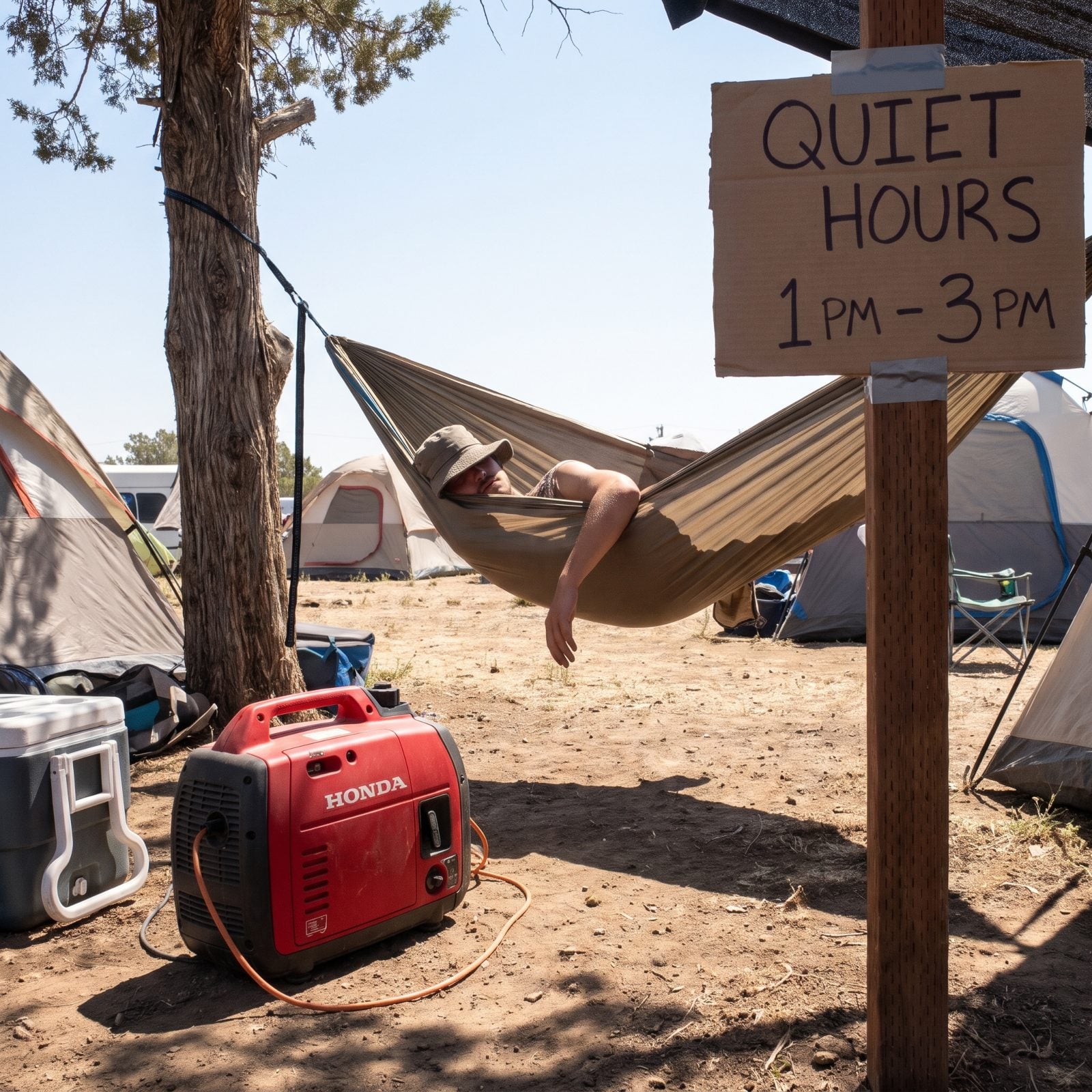
Plenty of campgrounds post a quiet hour or two in the afternoon, that heat-of-the-day stretch when half the loop is napping or reading in the shade. Run the generator straight through that window and you quietly become the problem guest.
These rest periods exist on purpose, and the hosts notice who honors them. Break it and you’re not just annoying one neighbor — you’re ignoring posted rules the office will back to the hilt.
Read the quiet-hours sign at check-in, including the daytime ones most people skip right past. Do your heavier power draws just outside those windows. If you genuinely need AC in a heatwave, ask the host first. More often than not they’ll point you to a workaround or make a reasonable exception.
10. Running It Beside a Playground or Family Activity Area
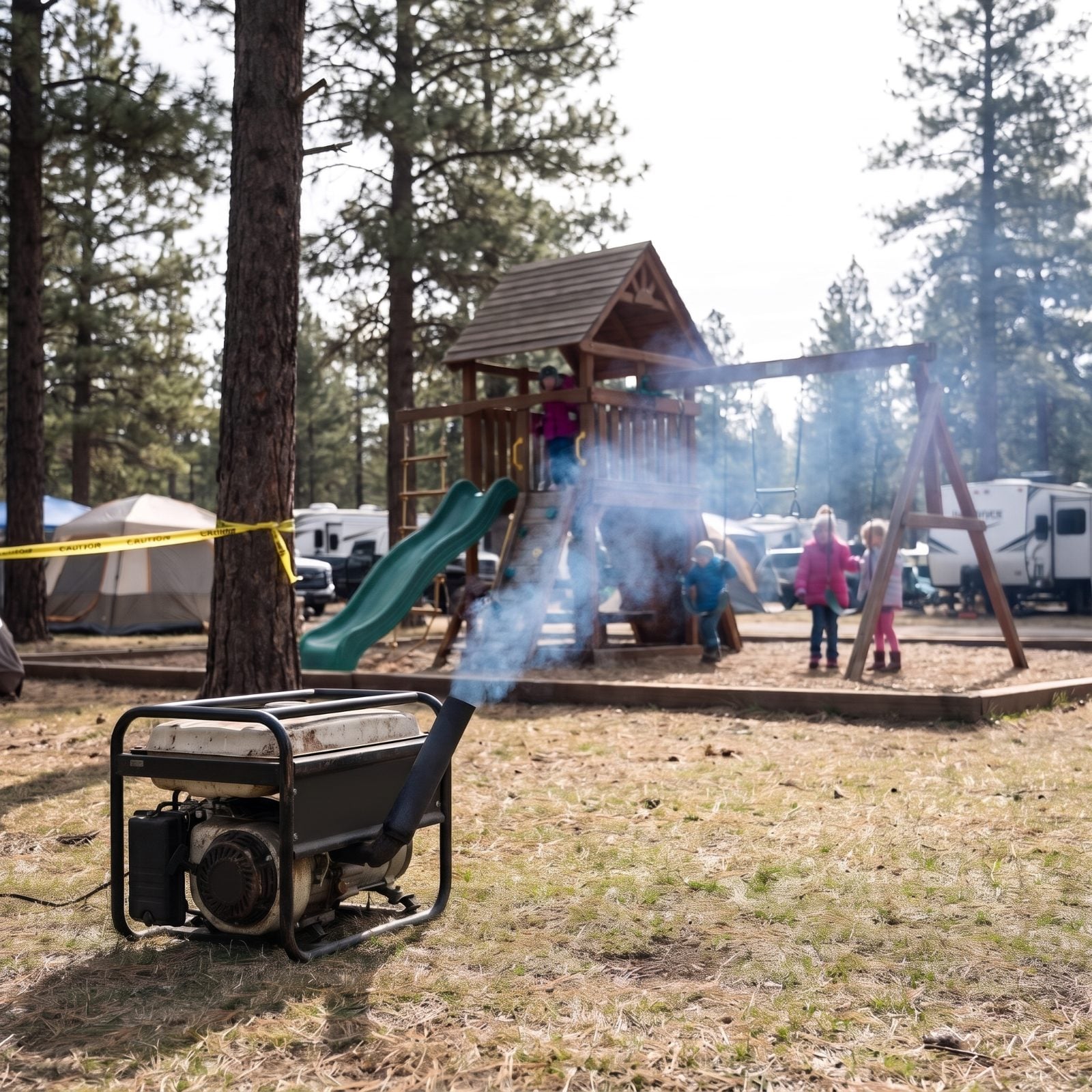
Your site happens to back onto the little playground, and the generator sits on that side with its exhaust pointed right at the swings. Nobody meant it. It just ended up facing where the kids are.
That’s where families gather for hours, and it’s the last place you want engine fumes and noise collecting. Carbon monoxide from a running generator doesn’t advertise itself, and a tall exhaust pipe angled toward a play area is a real hazard, not merely an annoyance.
Point the exhaust away from any gathering spot, playgrounds and shelters most of all. If your pad forces the generator toward the play area, run a longer cord and move the portable unit to the far side of your rig. Fumes should always drift toward open, empty ground.
9. Turning Up Music to Cover the Generator Noise
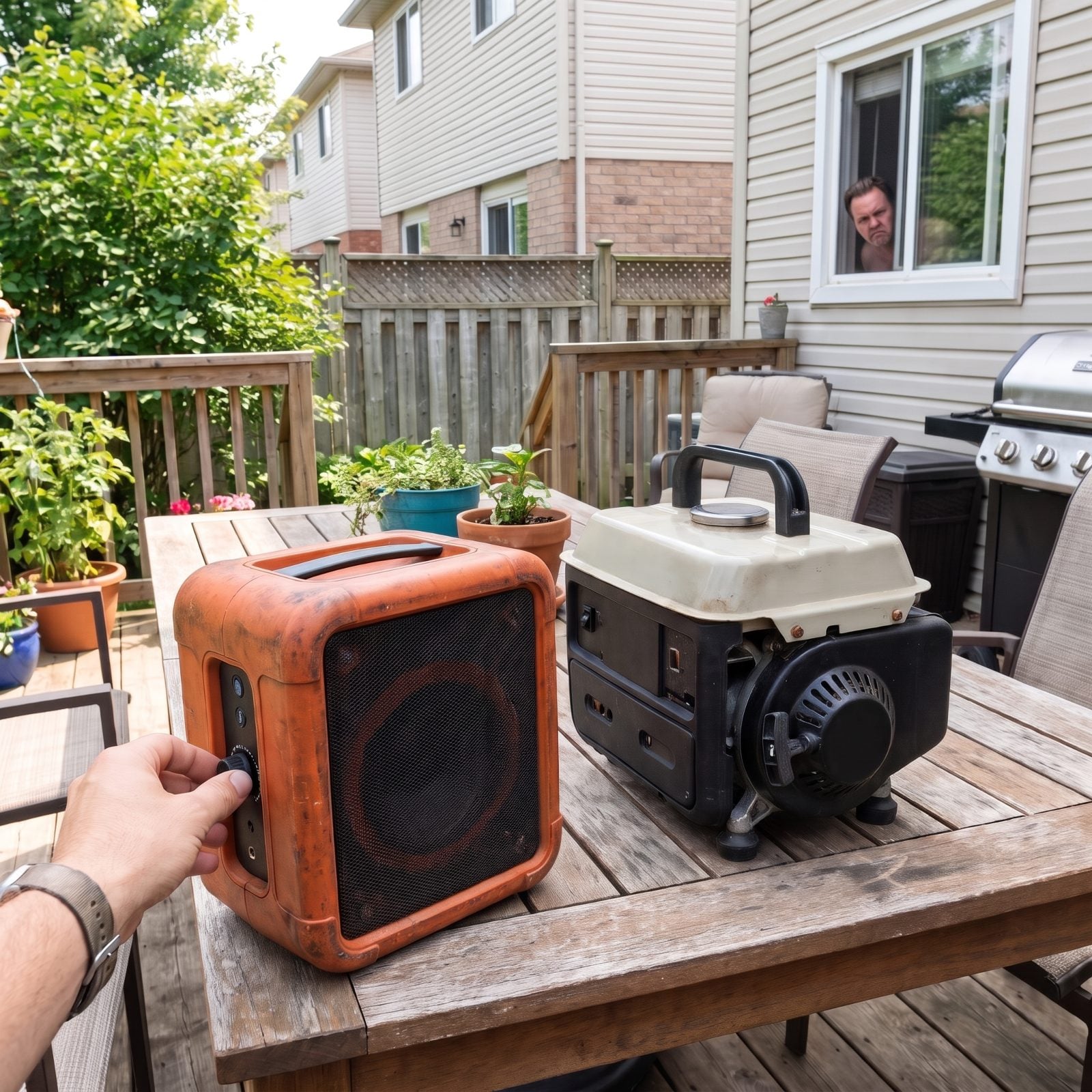
The generator’s loud, so the fix seems obvious: crank the Bluetooth speaker loud enough to drown it out. Now the whole loop gets engine drone and somebody’s playlist, stacked on top of each other.
You’ve doubled the problem. Two sources of noise don’t cancel out, they compound, and the neighbor glaring out his window is annoyed twice instead of once. Nobody wants your soundtrack layered over your motor.
Treat the noise at the source instead of papering over it. Move the generator farther from your sitting area, aim it away from the neighbors’ windows, or swap in a quieter inverter unit. Keep music at conversation level or lower and let the ordinary sounds of the campground come through. A peaceful site is half of why people camp in the first place.
8. Not Hashing Out Generator Hours Before You Share a Group Site
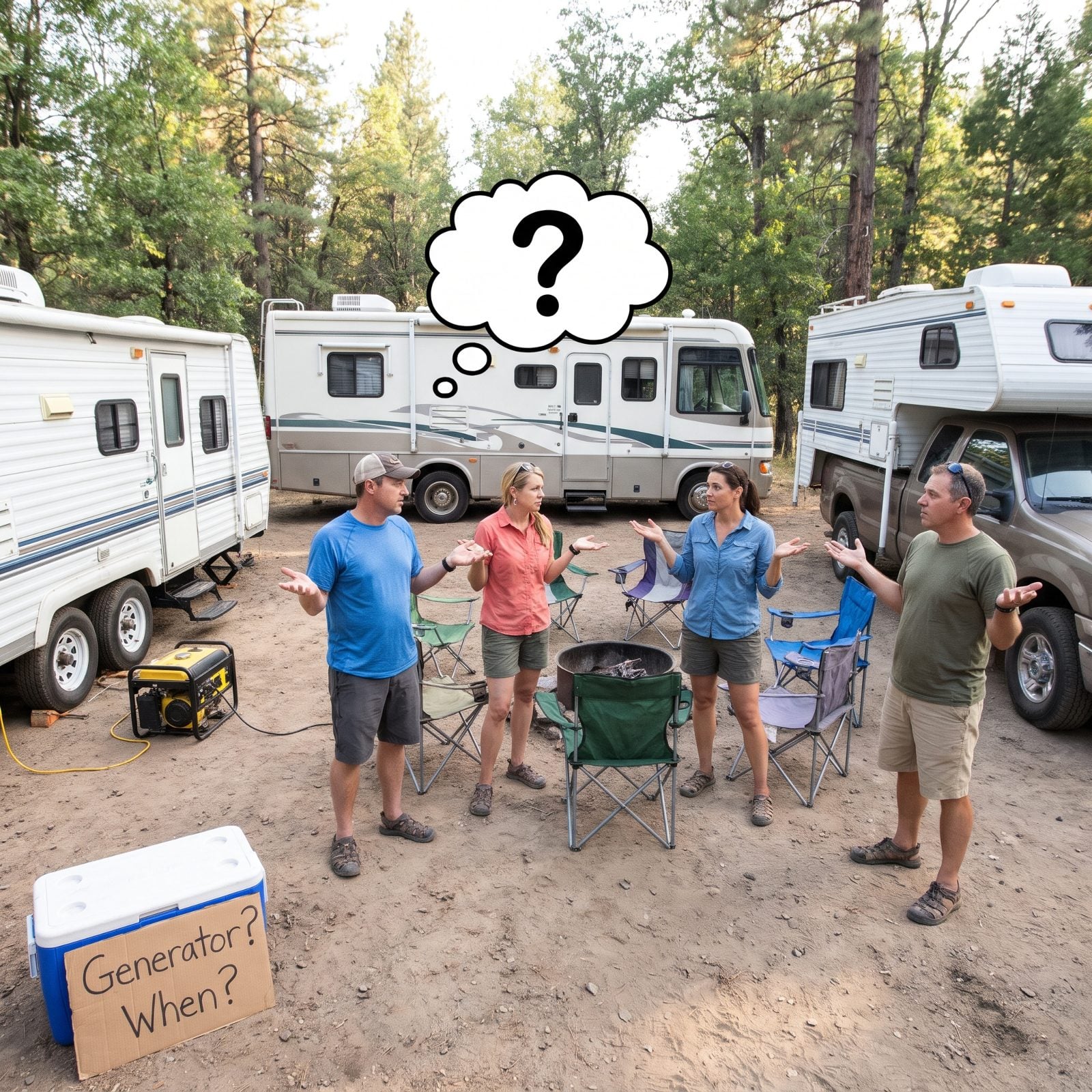
You roll into a group site with three rigs and everyone assumes someone else sorted out the generator schedule. Nobody did. By the second evening, one family’s running their unit clear through dinner while another is trying to put grandkids to bed thirty feet away.
The cost here isn’t really the noise. It’s the resentment. Shared sites live and die on goodwill, and a humming motor after 9pm is how that goodwill curdles fast.
So fix it the minute you arrive. Take five minutes, agree on morning and evening windows, name a hard quiet hour, and decide whose generator carries the AC load so you’re not running two at once. Write it on a napkin if you have to — a two-minute conversation saves two days of tension.
7. Booking a Packed Site When You Know You’ll Run It Hard
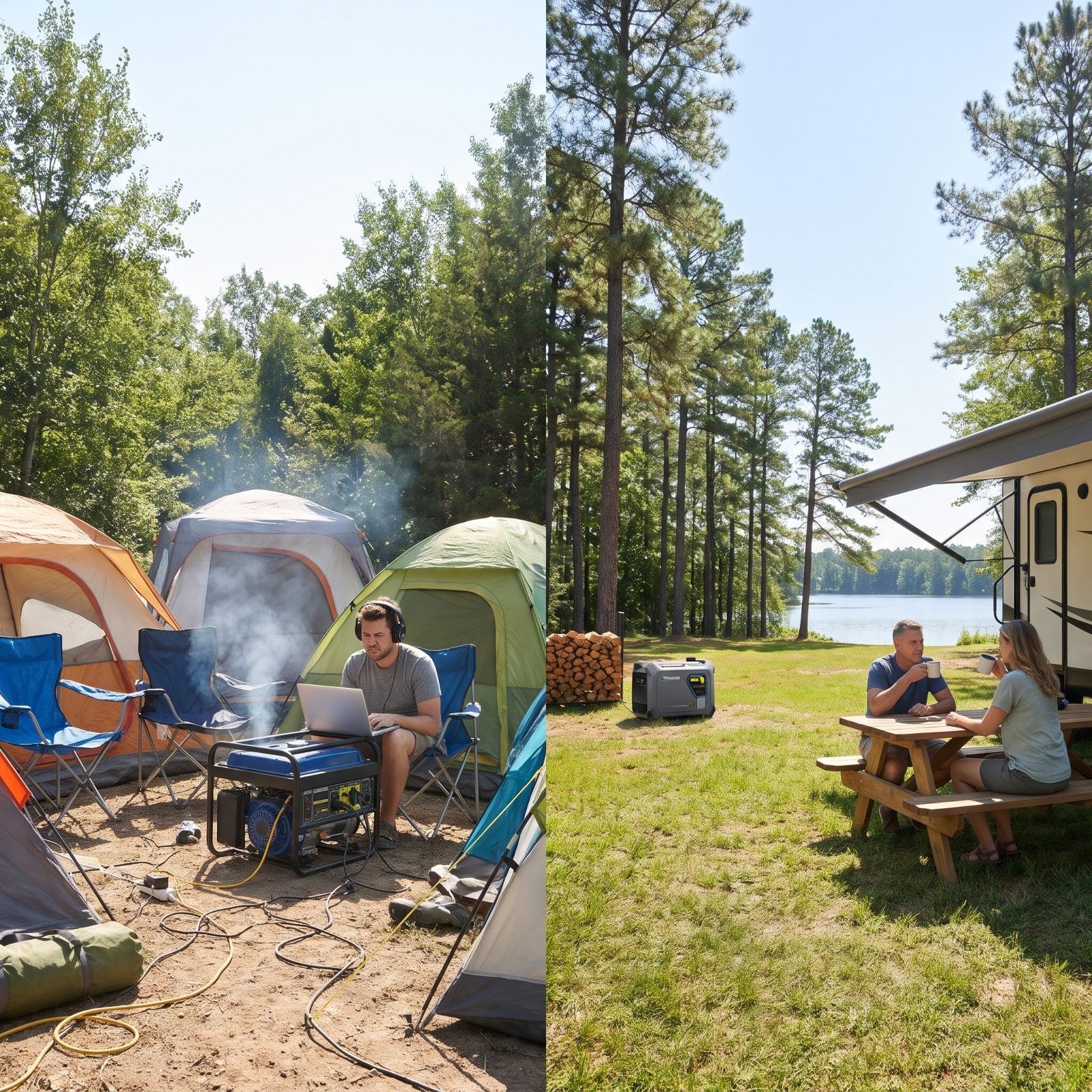
Some sites are built for generators. Many aren’t. If you know you’ll be running air conditioning for hours — maybe you travel with medical equipment, a reptile, or a spouse who flatly refuses to sweat — then a packed concrete pad park with ten feet between rigs is the wrong room for that act.
Match the spot to your draw. Look for hookups so you can skip the generator entirely, or book boondocking spots and dispersed forest sites with real elbow room. A back-row or end-cap site with an open side means your exhaust and drone head out toward the trees instead of into somebody’s open window.
6. Hitting Remote Start Without Knowing Who’s Standing By the Exhaust
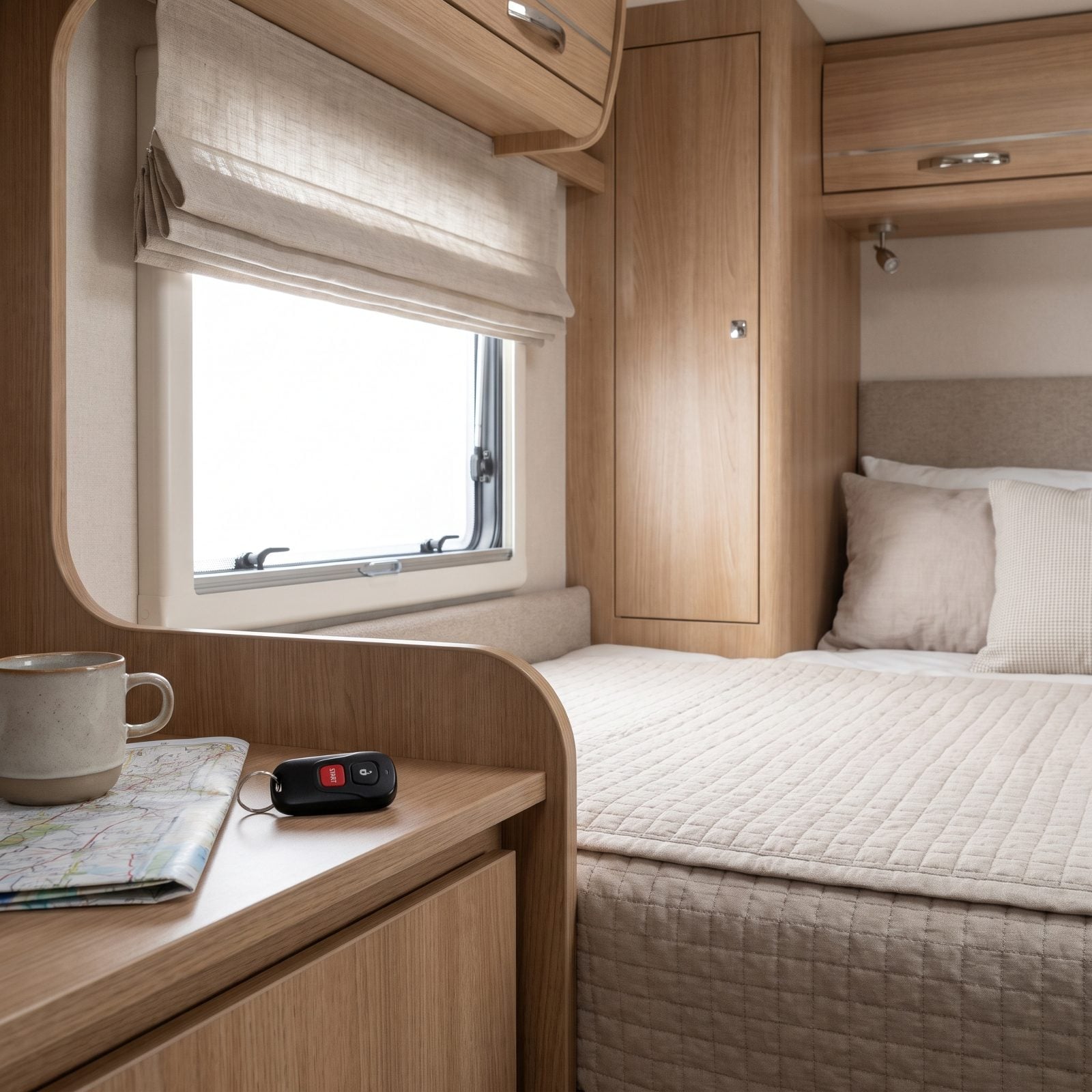
Remote start fobs are a genuine convenience. Thumb the button from bed, the AC kicks on, and you doze another twenty minutes. Trouble is, you can’t see where the exhaust points from under the covers.
Fire it up blind and you might kick carbon monoxide straight at a neighbor’s tent, your own kids playing by the rear bumper, or the retiree who parked his coffee chair beside your exhaust port without realizing what it was.
Build a quick habit. Before you press anything, step out and glance around the exhaust side — clear of people, clear of windows, clear of a neighbor’s awning. Then start it.
5. Letting an Auto-Start Battery System Fire It Up at 3am
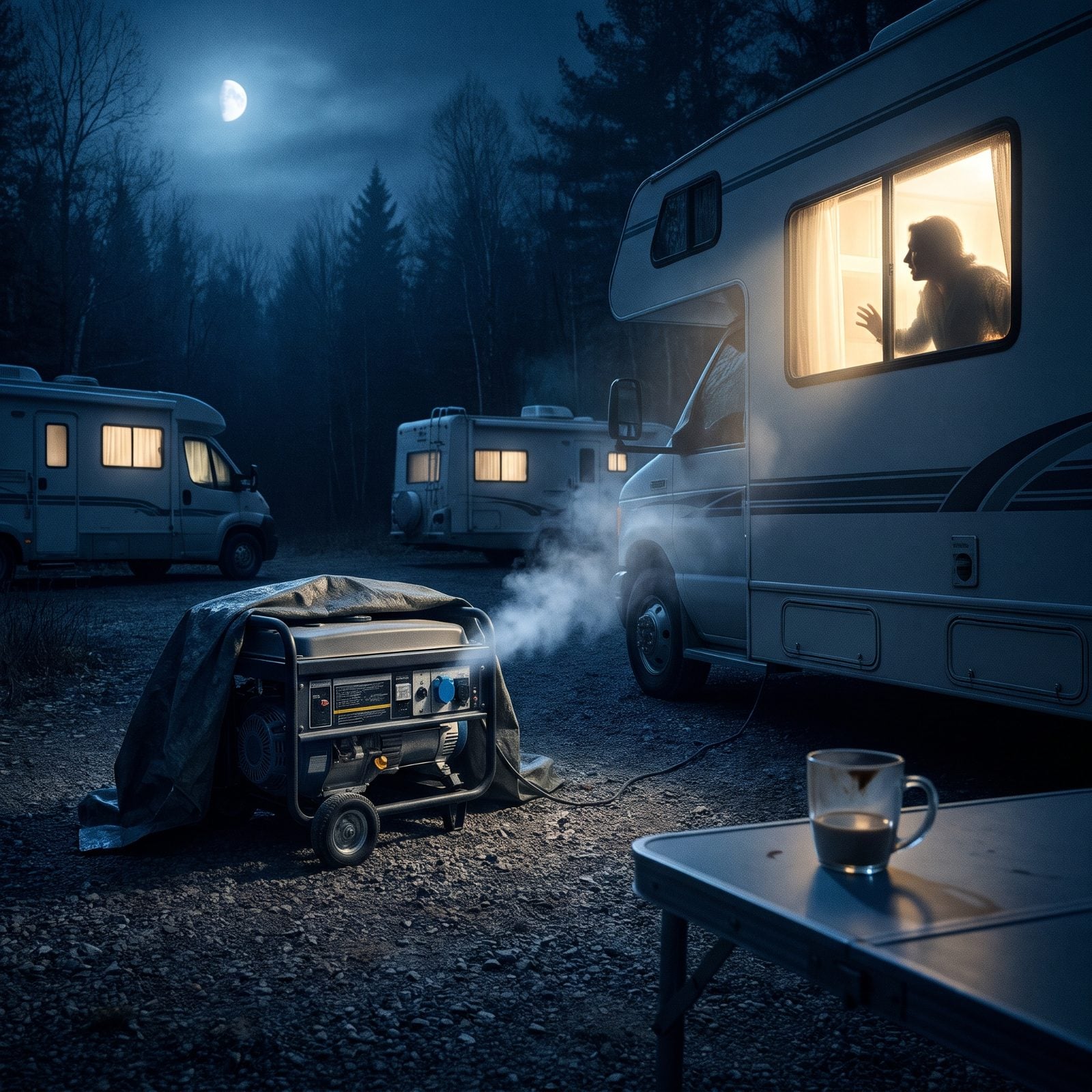
Here’s the sneaky one. Your auto-start generator — or energy management system — is set to kick on whenever the batteries dip below a threshold. You fall asleep in a silent pine forest. Then at 3am, the fridge and inverter have drained things enough, and the generator roars to life across a dead-quiet wooded campsite where sound carries through the trees for a quarter mile.
You slept through it. Your neighbor two rigs over did not.
Before you turn in, check those auto-start settings. Many systems let you set a nighttime lockout window so it simply won’t trigger between, say, 10pm and 7am. Set that window. And top off your batteries before bed with a little solar or a short pre-sleep run, so you’re not teetering on the threshold all night.
4. Sloshing Gasoline During a Refuel Right Beside the Next Site
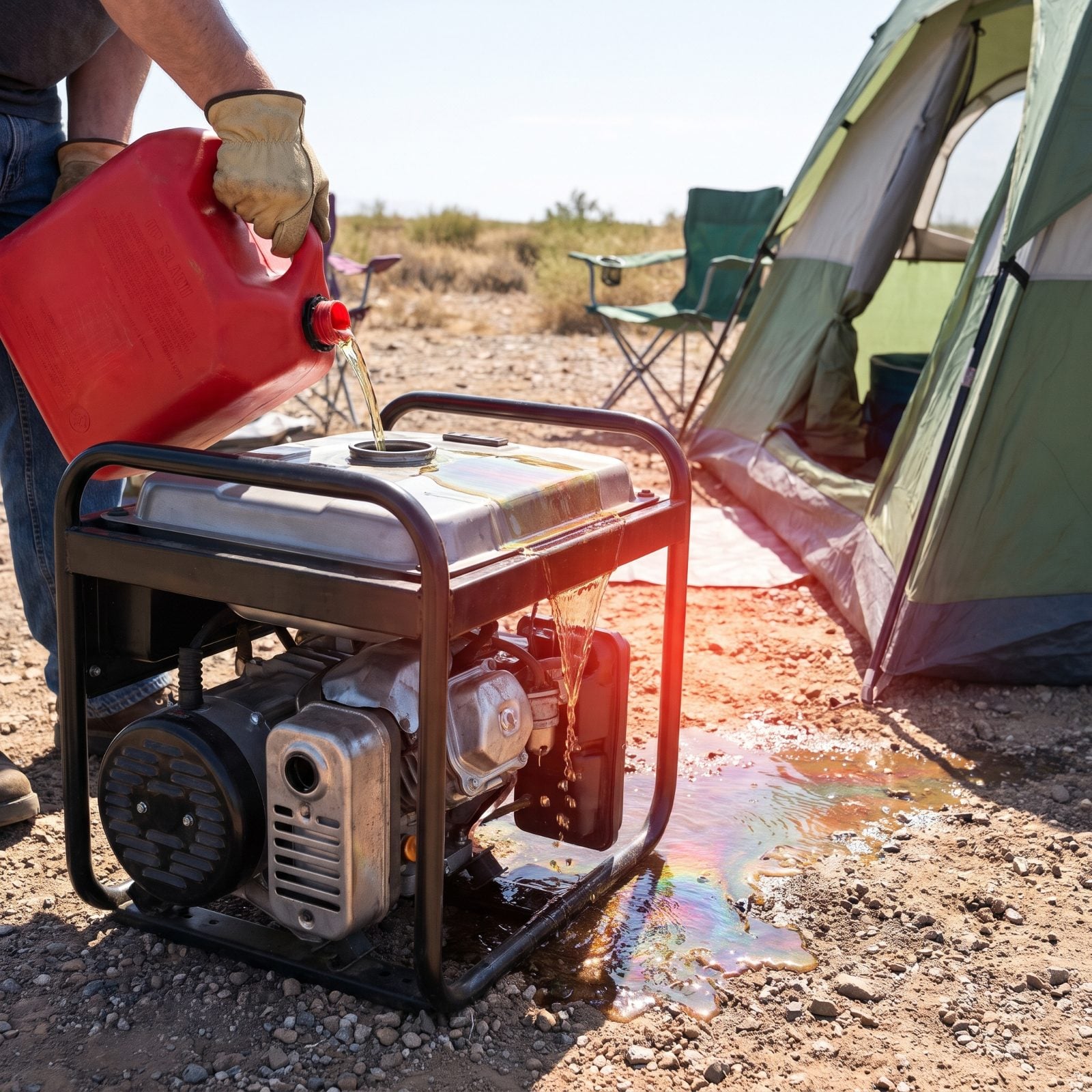
You top off a hot generator at the edge of your site, half-distracted, and gasoline floods over the tank, sheets off the frame and runs in a long stream across the dry dirt and pine needles toward the tent. The fumes rise into the breeze and drift straight toward the family eating lunch next door.
Spilled fuel isn’t just an etiquette problem. It’s a fire risk against a warm casing and a headache — literally — for anyone downwind.
Refuel with a plan. Let the unit cool first, move it to the center of your pad away from the property line, and use a no-spill gas can with an auto-stop spout. Keep a rag and a small bag of absorbent spill pads in your gear bin for the inevitable dribble.
3. Stashing Vented Fuel Cans Where the Fumes Wander Next Door

Older vented cans and cheap plastic jugs breathe. On a warm afternoon they off-gas quietly, and if you’ve tucked them against the boundary near a neighbor’s tent, that sweet-sharp gasoline smell becomes their whole evening.
Fumes pool in warm, still air, too, and they build up fast in an enclosed storage bay. That’s a genuine safety issue, not just an annoyance.
Switch to sealed, EPA-compliant cans with proper caps. Store them low, shaded, and as far from the shared edge as your site allows, and never seal them inside a hot pass-through compartment with no airflow. A little distance and a tight cap keeps the smell on your side of the line.
2. Leaving the Work Light Blazing All Night
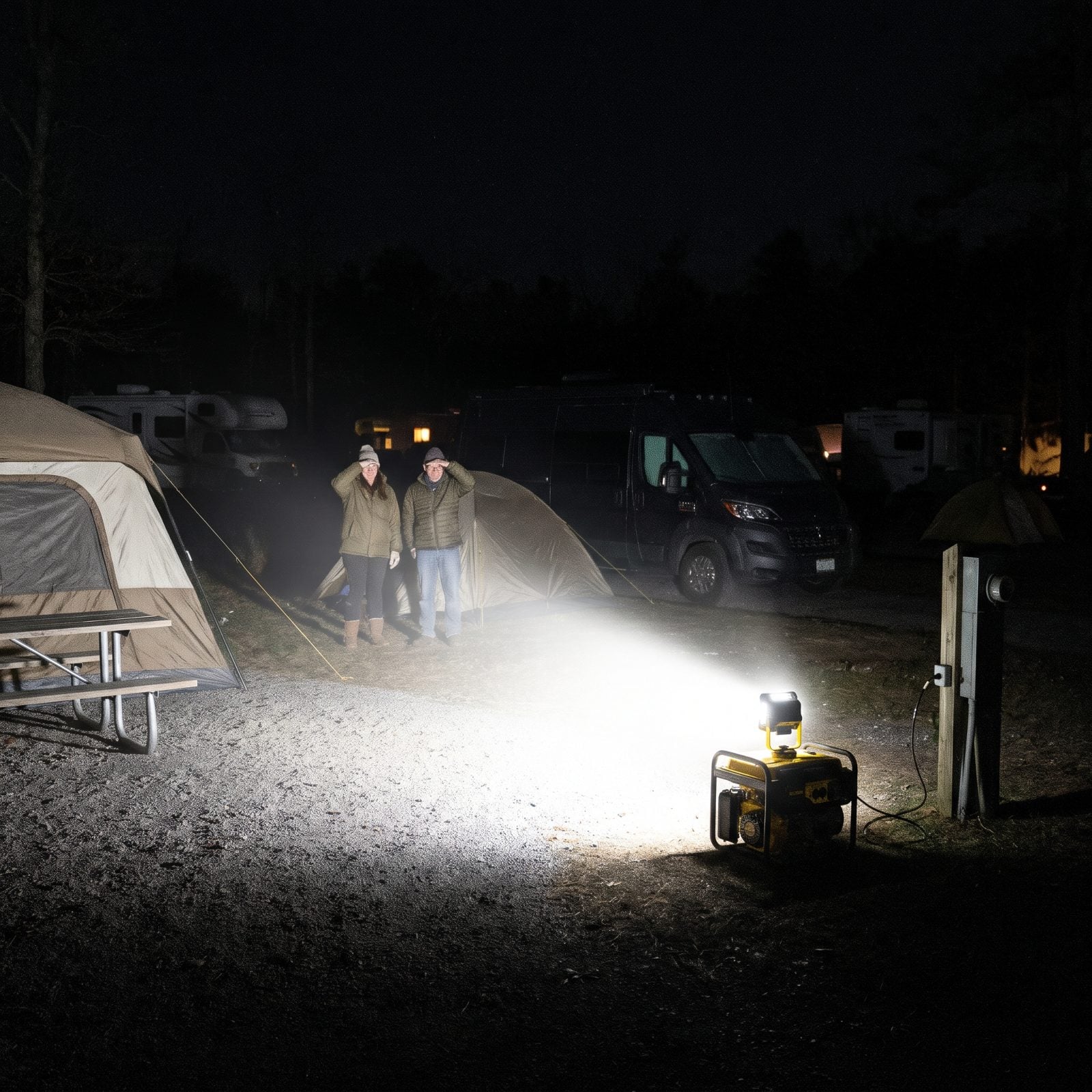
Plenty of portable units have a built-in work light meant for the thirty seconds you spend hunting for the pull cord in the dark. Leave it on all night and you’ve mounted a small floodlight on the property line.
In a dark-sky campground, one stray LED washes out the stars everyone drove hours to see. It also beams straight through a neighbor’s thin trailer curtains.
Flip it off once the generator’s running. Need light near the unit? Use a low, warm-toned amber camping lantern aimed down at your own feet instead.
1. Brushing Off a Neighbor Who Politely Asks You to Cut It Off
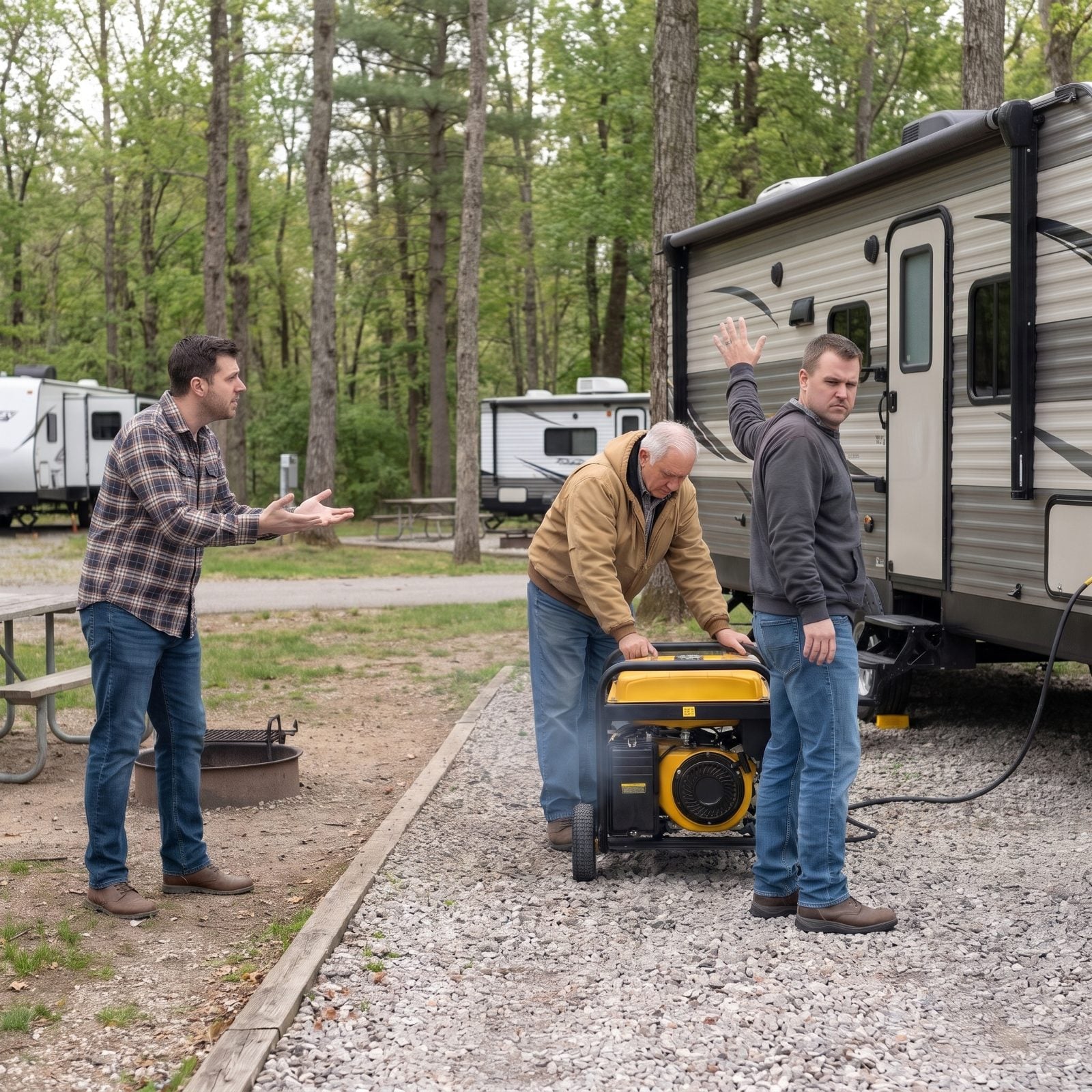
Someone walks over, friendly enough, and asks if you’d mind shutting off that brand-new generator for a while. The temptation is to point at the posted hours, note that it’s the middle of the day, and keep it running anyway. Technically you’re within your rights.
But being right and being a good neighbor are two different things. Dig in over fifteen minutes of runtime and you’ve bought yourself a weekend of cold shoulders — and, at a campground you’ll come back to, a reputation that follows you.
Hear them out. If you genuinely need the power, explain why, offer a time you’ll shut down, and ask what would help. A short conversation and a little flexibility usually ends it. The person who yields the small thing tends to win the long game.