
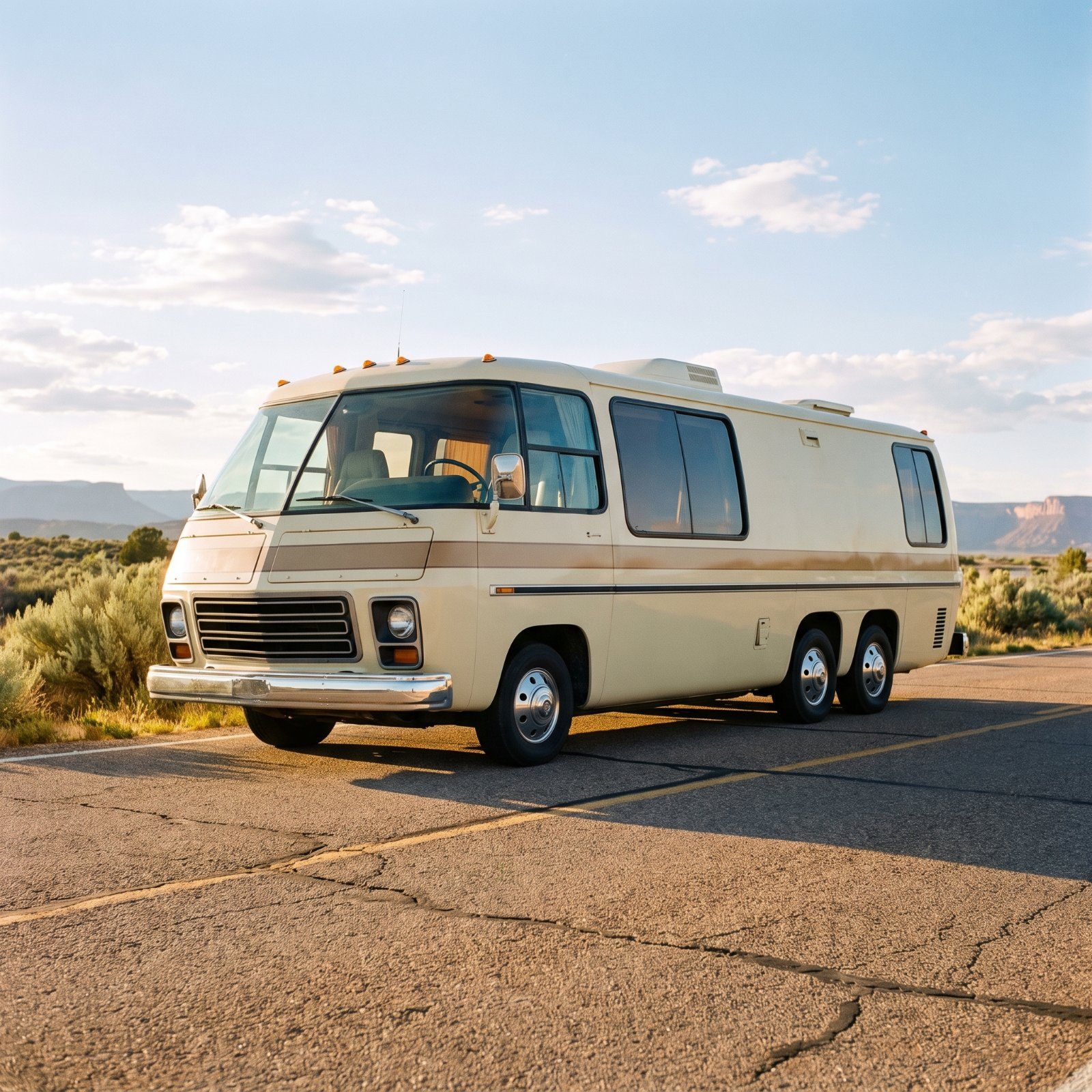
Nobody at General Motors needed to build a motorhome. That’s what makes the 1973 GMC so strange and so good. Instead of bolting a box onto a truck chassis like everyone else, they started from a blank sheet and asked a harder question: what if a motorhome drove like a car?
The answer was 26 feet of aerodynamic aluminum riding low to the ground, powered by the same running gear that moved the Toronado. Here’s what set it apart, and why collectors still chase these things down highways half a century later.
26. A Clean-Sheet Motorhome Engineered by General Motors Itself
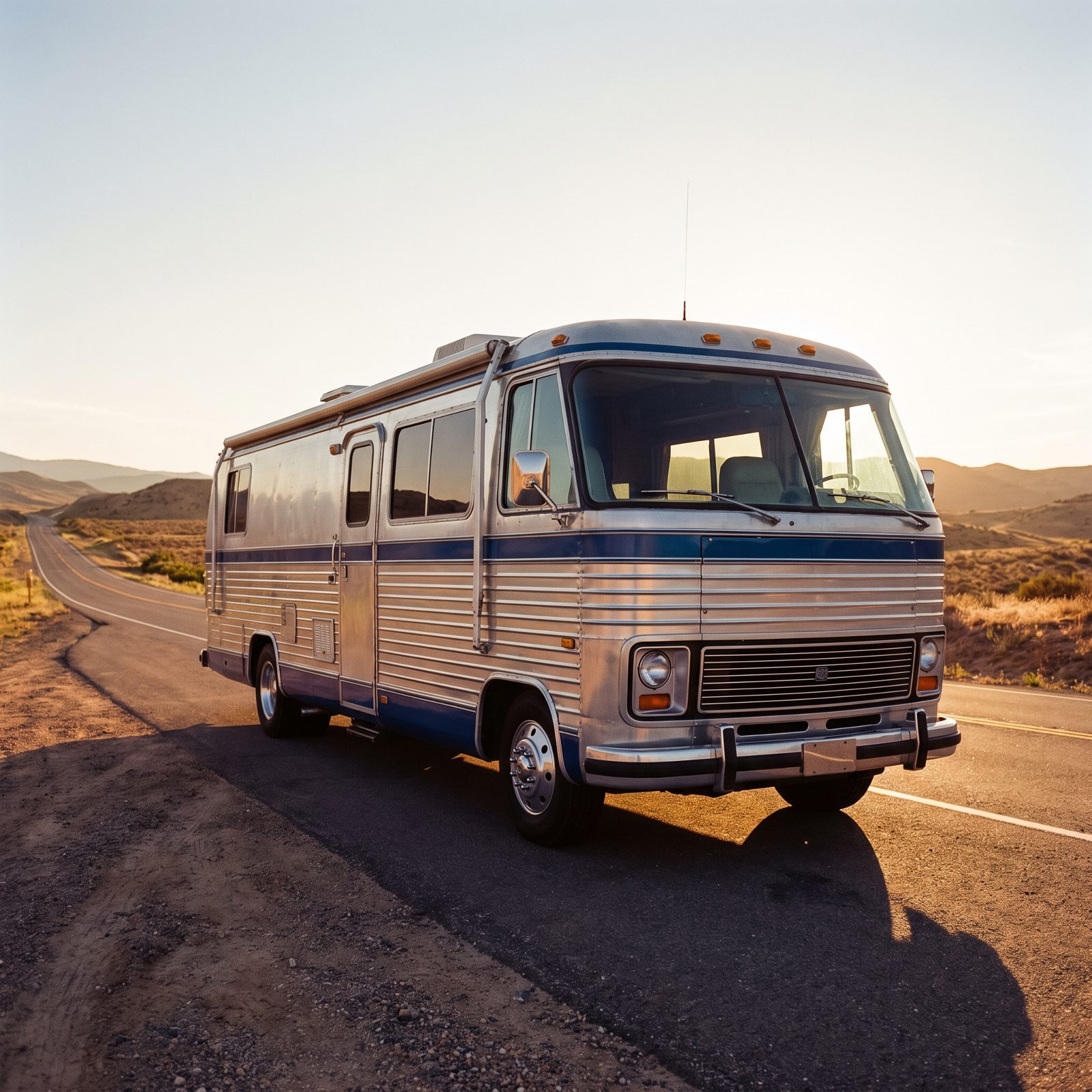
Every other motorhome in 1973 was a confession. Somebody took a truck frame, dropped a camper body on it, and called it done. The GMC refused to play along.
General Motors engineered this thing from nothing, like a car company that happened to be building a house. Body, drivetrain, suspension, stance — all of it designed together instead of assembled from borrowed parts, and you can feel it the moment you walk up to one. The proportions are right. Nothing looks stuck on.
Rarer than it sounds, that. Most RVs, then and now, are a compromise between what the chassis will allow and what the coachbuilder wants. The GMC never had that fight. One idea, start to finish.
25. Front-Wheel Drive Lifted Straight From the Oldsmobile Toronado
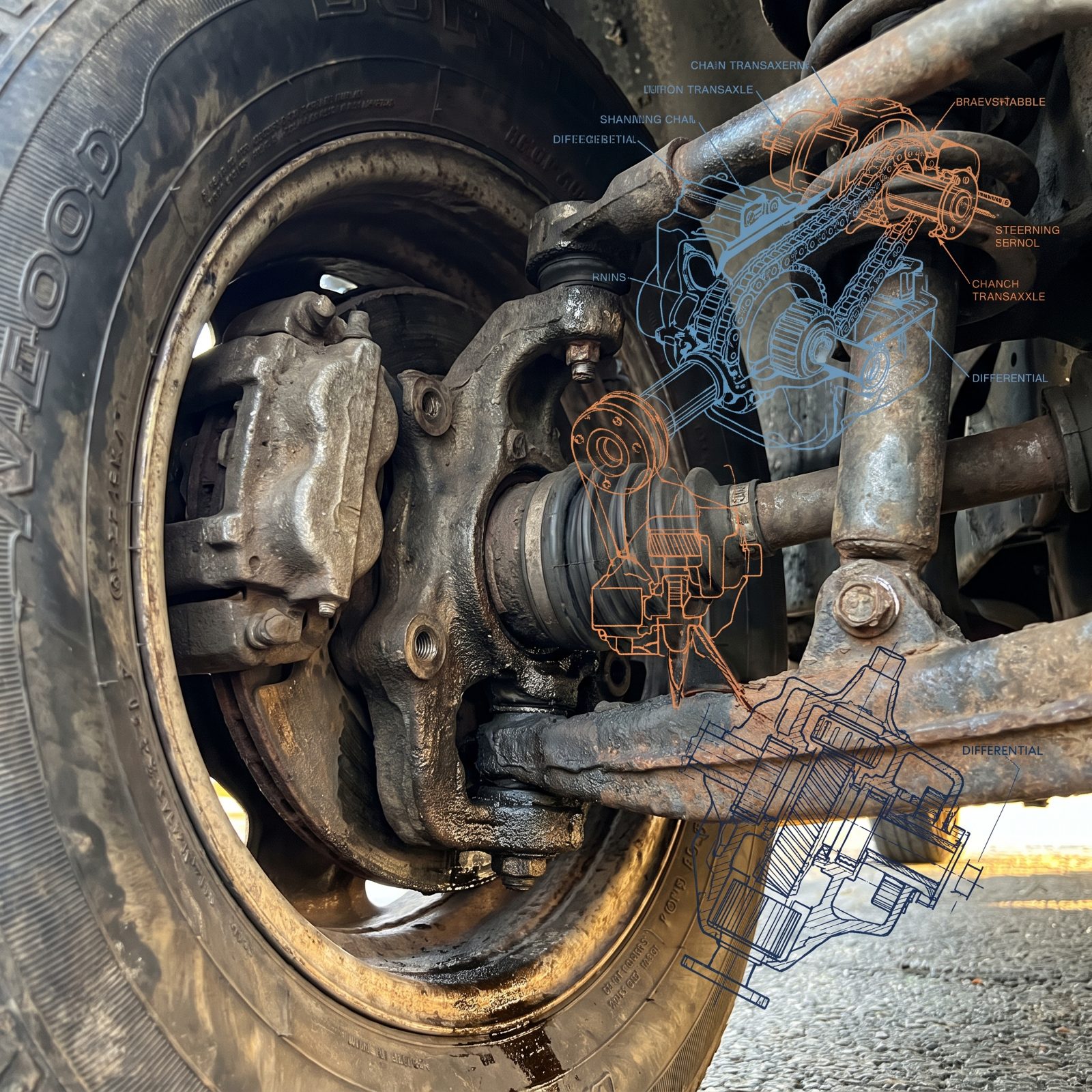
Here’s the trick that made everything else possible. The GMC drives its front wheels, not its rear ones, using the same clever packaging Oldsmobile developed for the Toronado.
Consider what that does. Engine, transmission, and drive wheels all live up front in a tidy cluster — no long shaft snaking down the middle, no rear differential eating floor space. The whole rear two-thirds of the motorhome is free to be living space, floor, and storage.
Borrowing proven car technology instead of inventing something fragile was the smart move. The Toronado front-drive system already had years of road miles behind it, and GM just scaled the thinking up to something the size of a hallway.
24. The 455-Cubic-Inch Oldsmobile V8 Doing the Heavy Lifting
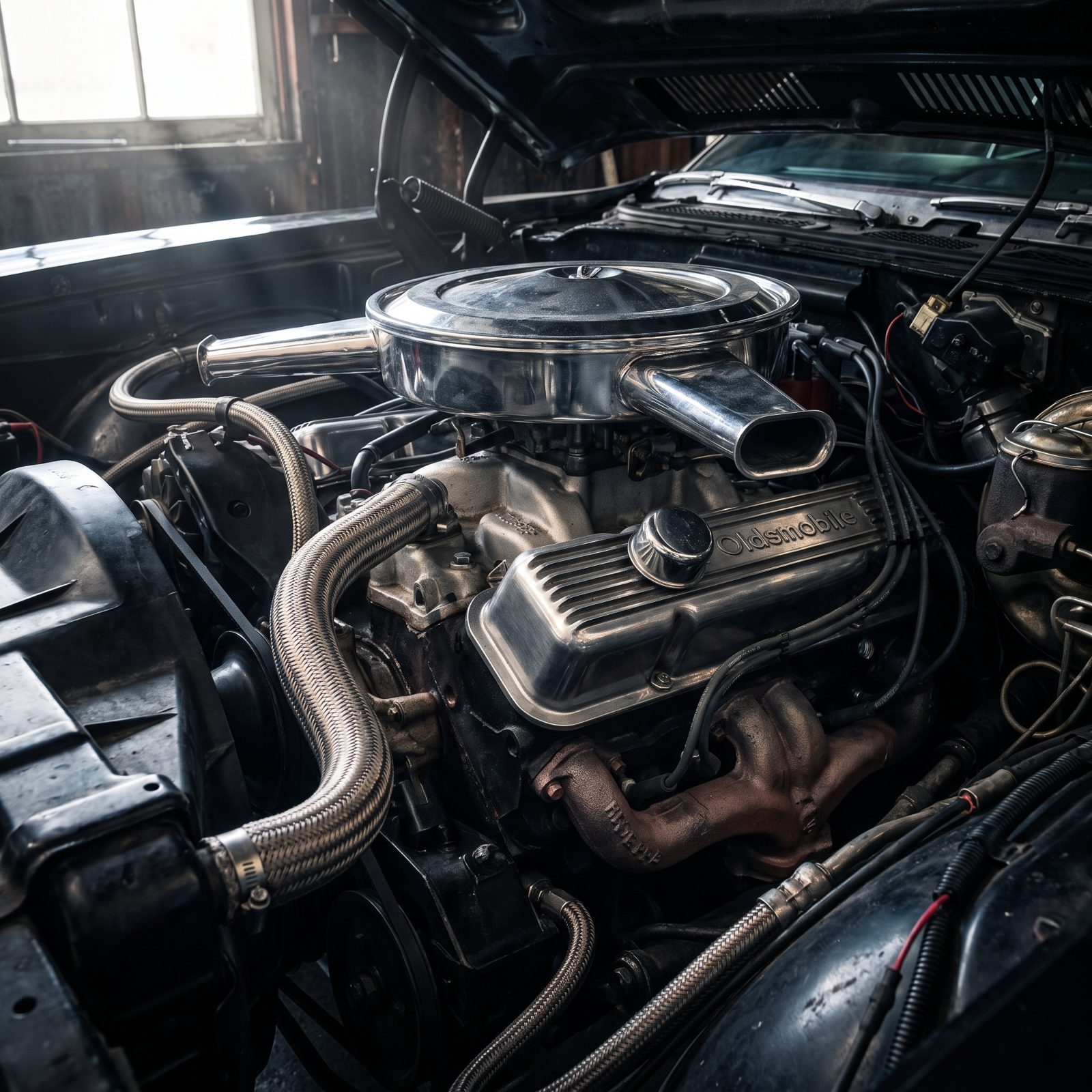
You don’t move 12,000 pounds of aluminum with a small engine. GMC reached for the Oldsmobile 455, a big-block V8 with the torque to haul this thing up a grade without drama and without screaming.
The 455 wasn’t exotic. It was a known quantity, the kind of engine Oldsmobile had been building and refining for years, and that mattered for a vehicle people planned to drive across the country and keep for a decade. You wanted parts you could find and a mechanic in any small town who’d seen one before.
It drinks fuel, no point pretending otherwise. But the low, slippery body gave it a fighting chance on the highway, and the torque curve suited a heavy vehicle far better than anything peaky and nervous would have.
23. A Turbo-Hydramatic Automatic That Shifts for Itself
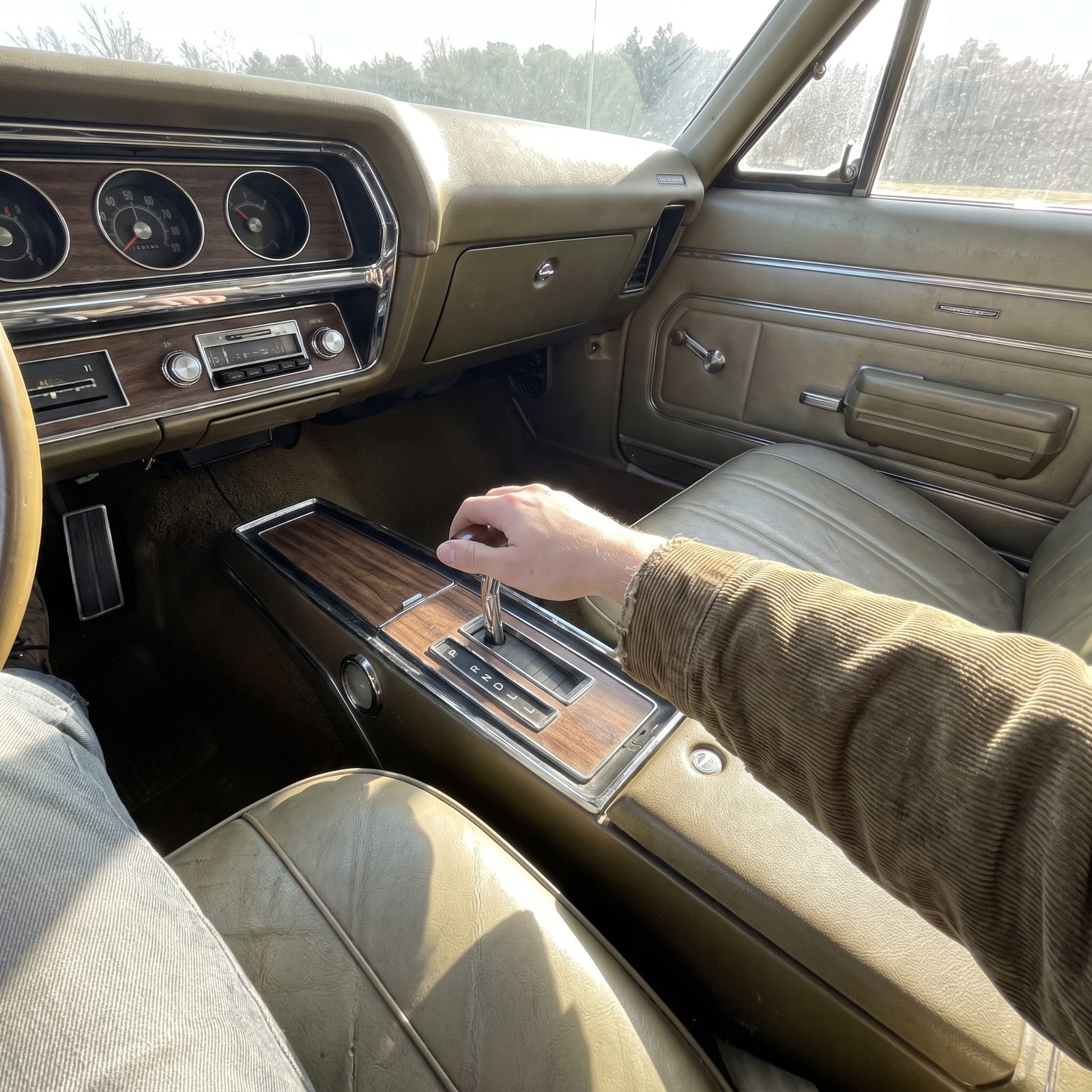
No clutch pedal, no stick to row through, no stalling at a gas station with a line forming behind you. The GMC used GM’s Turbo-Hydramatic automatic, and it turned a house-sized vehicle into something your spouse could actually drive without a lesson.
Easy to overlook now that automatics are everywhere. In 1973 it was a real argument for the GMC over a converted truck with a notchy manual. Put it in drive and go. On a long travel day, that ease is the difference between arriving relaxed and arriving wrung out.
22. No Long Driveshaft Tunneling Through the Middle
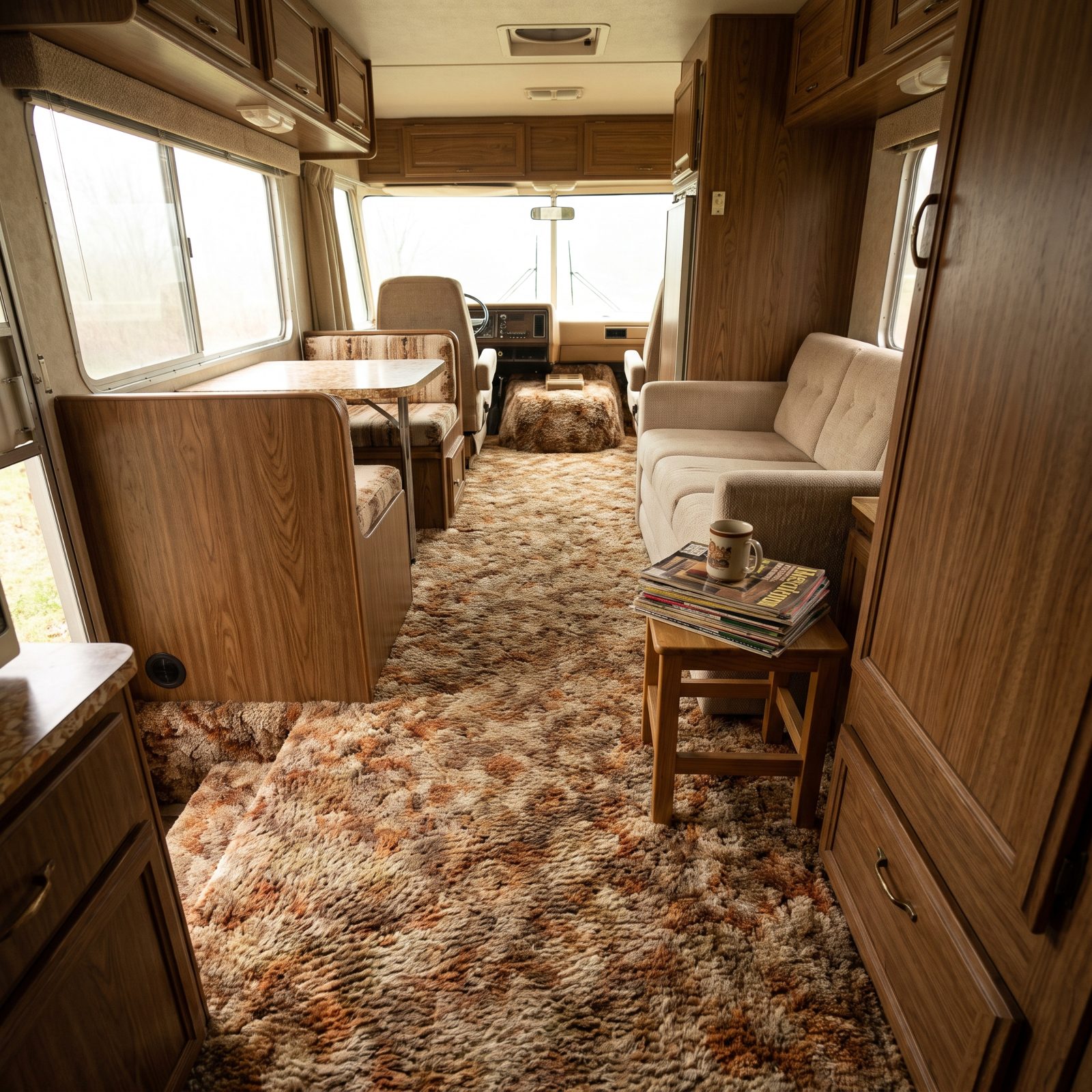
This is the quiet consequence of front-wheel drive, and it changes everything inside.
In a conventional rear-drive motorhome, a driveshaft runs the length of the vehicle to spin the back axle. That shaft needs a tunnel, a hump, clearance, protection — it raises the floor and complicates every inch of the layout above it.
The GMC has none of that. With the drive wheels up front, the long tube to the back simply doesn’t exist, so the rear of the vehicle sits over empty, usable space.
Engineers call this packaging. What it means for you is a floor that doesn’t fight you. No stepping over a hump to reach the back bed, no awkward raised platform in the middle of the living area — just open floor from the front seats to the rear.
21. A Low, Flat Floor You Don’t Have to Climb Into
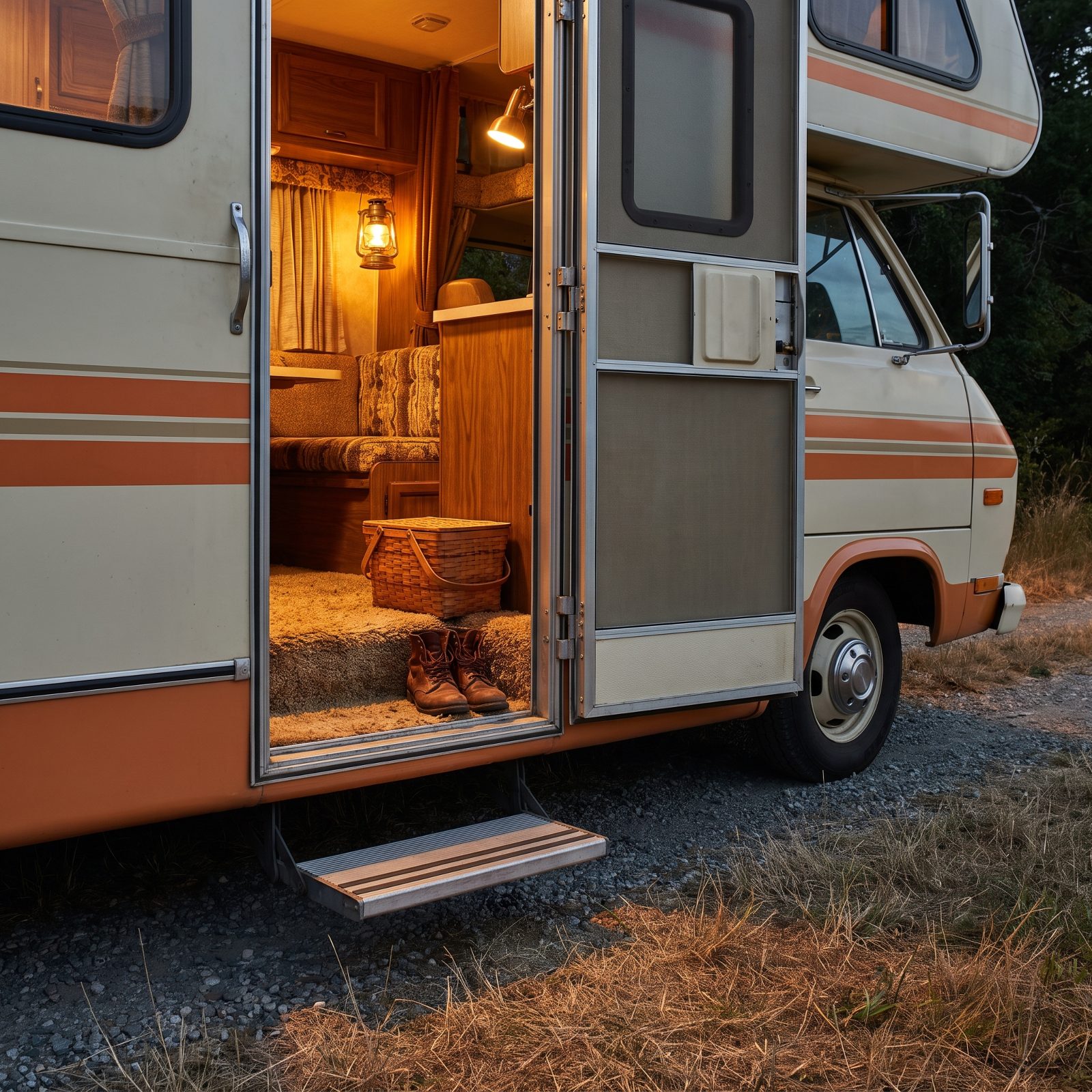
Step inside and your knees thank you immediately. The GMC floor sits low, and it sits flat, and after a few hours on the road you understand exactly why that matters.
No wheel wells punching up through the living space. No driveshaft hump dividing the room. No tall step up from the ground that turns a quick trip for a forgotten jacket into a project. The whole interior reads as one continuous, usable plane.
Walking around inside one of these, it feels less like a vehicle and more like a narrow apartment. That was the point. A floor you can actually live on, not one you constantly negotiate.
20. A Center of Gravity Low Enough to Change How It Drives
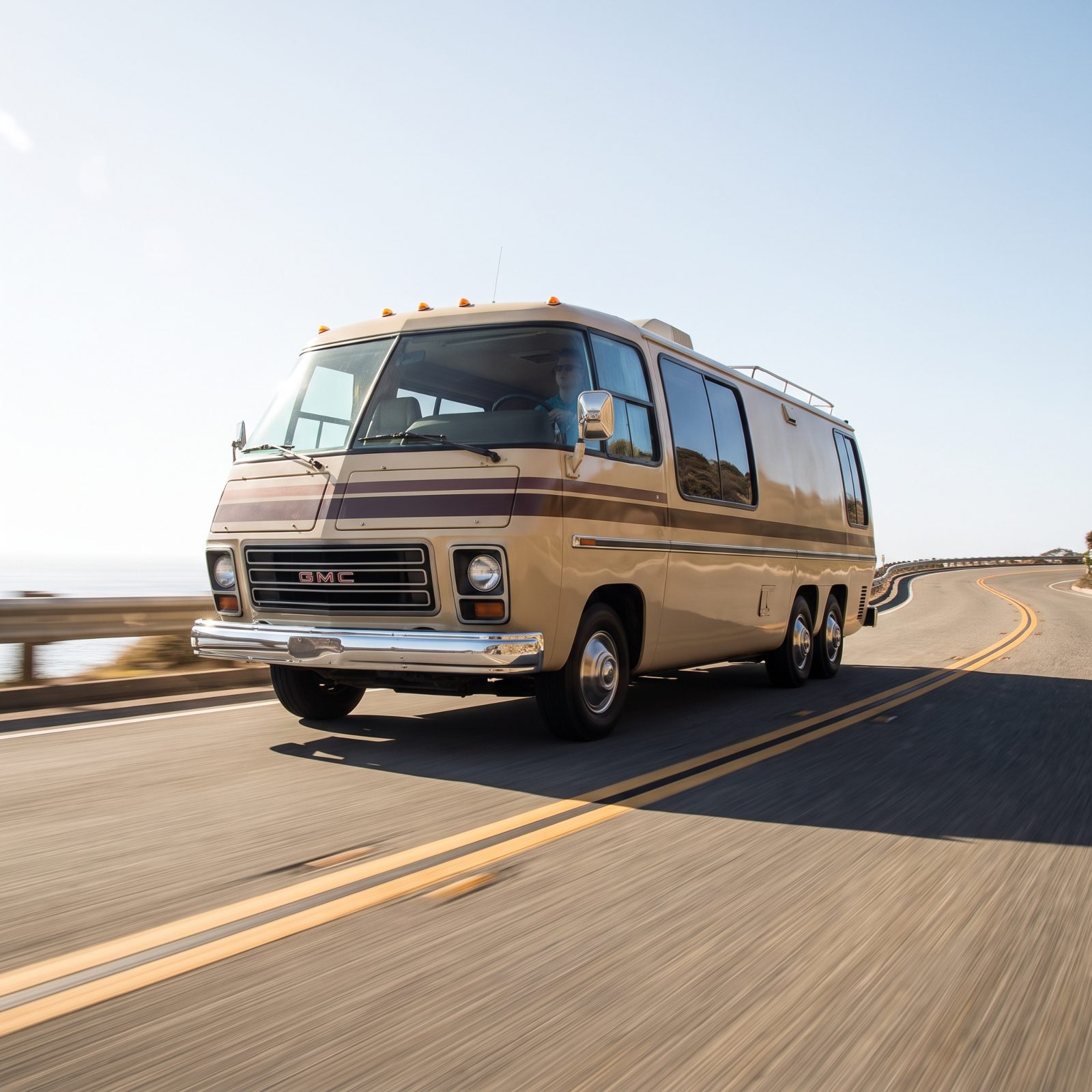
Most motorhomes sway like a ship. You know the feeling. A truck passes, a gust hits, and the whole box rocks on its springs while you white-knuckle the wheel.
The GMC fights far less of that. Its weight sits low, close to the road, instead of stacked up high in a tall box. That low center of gravity means less leaning in corners, less wallowing in crosswinds, and a general sense that the vehicle is planted rather than perched.
Drive one back to back with a conventional rig of the same era and the difference isn’t subtle. The GMC goes where you point it. Fifty years on, that composure is still the first thing owners mention.
19. Four Non-Driven Rear Wheels in a Tandem Layout
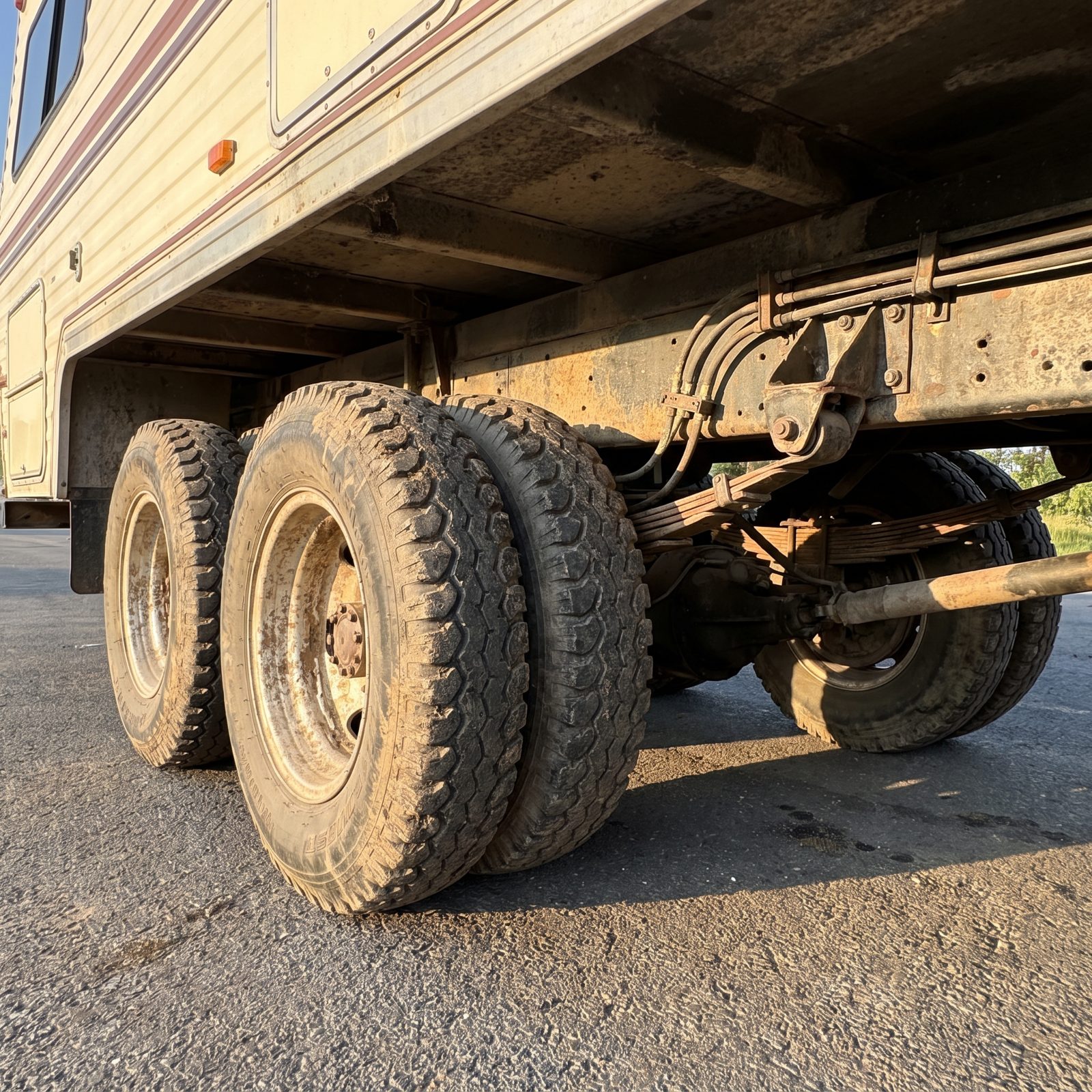
Look at the back of a GMC and you’ll notice something odd. Two wheels per side, four across the rear, and not one of them is driven.
Since the front wheels do all the pulling, the rear wheels exist purely to carry weight. Splitting that load across four tires instead of two spreads it out, keeps each tire happier, and gives the long rear overhang the support it needs without heavy, crude suspension.
There’s a practical bonus too. Blow a rear tire on the highway and the GMC barely notices — with three other wheels still carrying the corner, there’s no violent pull, no drama. You feel it, you pull over, you deal with it. On a vehicle you planned to drive thousands of miles from home, that’s real peace of mind.
18. Air-Spring Rear Suspension That Actually Cushions the Ride
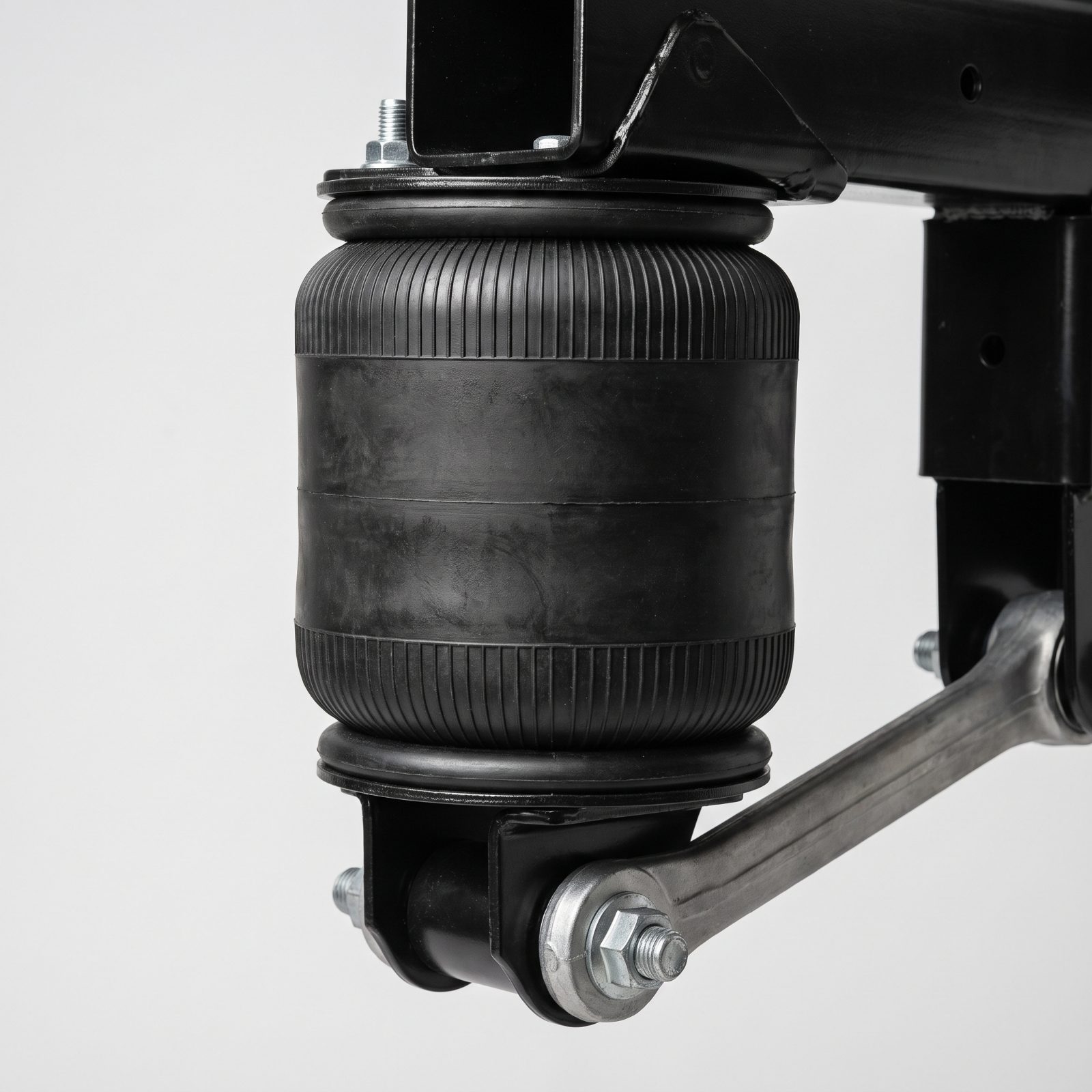
Steel leaf springs ride like a buckboard. GMC skipped them in back and used air springs instead, rubber bellows that hold the rear up on a cushion of compressed air.
Air gives you a softer, more forgiving ride than steel ever will. It soaks up expansion joints and frost heaves and all the small violence of American pavement before it reaches your coffee cup. Combined with the low body and front-wheel drive, it’s a big part of why these drive more like a large car than a house on wheels.
Air systems need attention, no lie. Bags age, lines crack, compressors wear. But when they’re sorted, the ride is the thing owners refuse to give up.
17. A Ride Height You Could Level Right at the Campsite
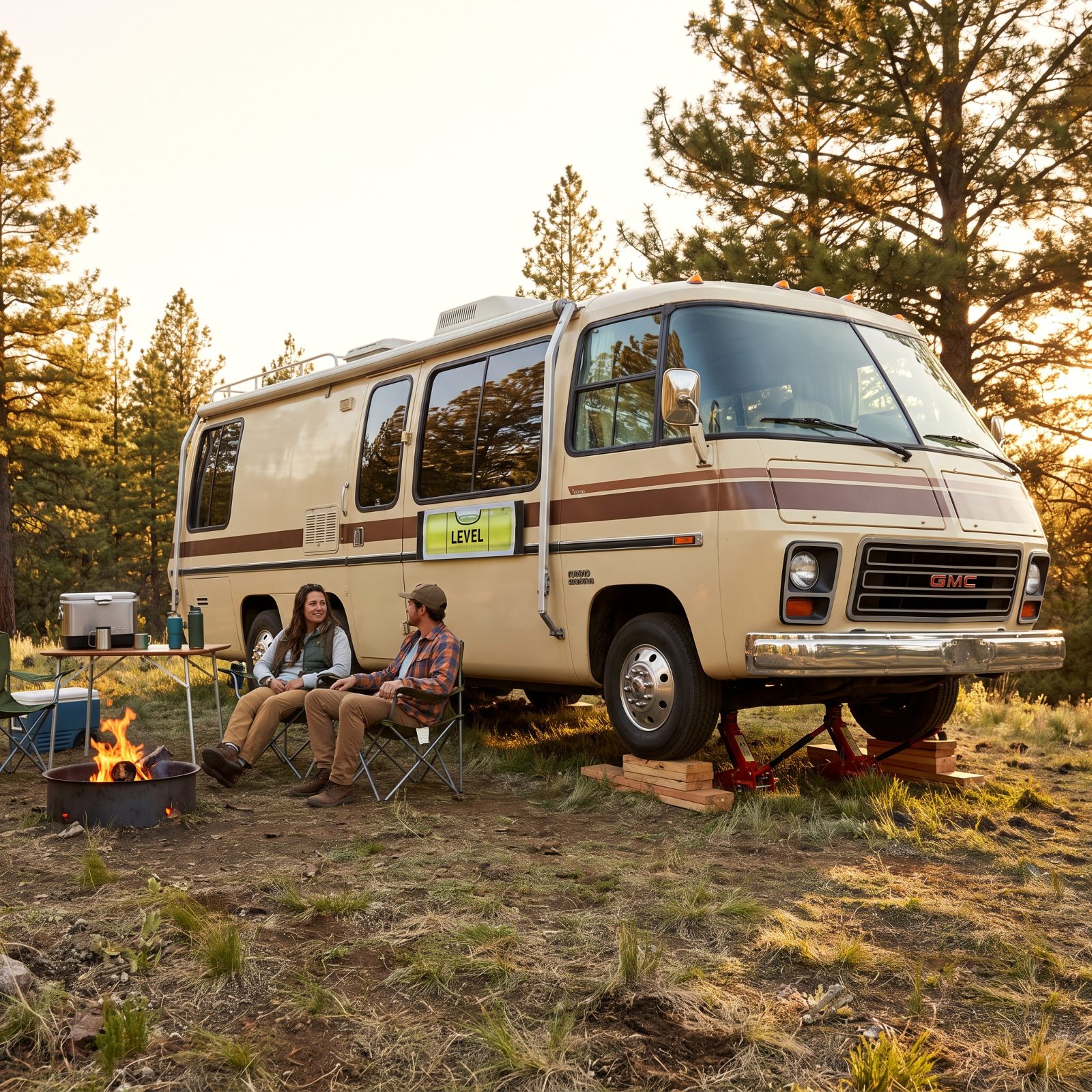
Here’s the detail that feels almost modern. Those rear air springs weren’t just for ride comfort. Add or release air to change the ride height, and you could level the coach right at camp.
Pull onto a sloped site, work the suspension, and bring the body level without stacking blocks of wood under the wheels and hoping for the best. Anyone who’s crawled around in the dirt with leveling ramps at dusk understands exactly what a gift that is.
It’s a small thing that reveals the whole philosophy of this vehicle. GM didn’t just want it to drive well. They wanted the arrival, the setup, the living, all of it, to be easier than what everyone else was offering. Fifty years later, nobody has built another motorhome quite like it, and that tells you they got something very right the first time.
16. Independent Front Suspension That Drove Like a Car, Not a Truck

Climb into a 1973 GMC and the first surprise comes in the first mile. No truck-like crash over expansion joints, no shudder through the wheel. The independent front suspension borrowed thinking from GM’s passenger cars, letting each front wheel react on its own instead of hammering the whole coach every time one tire found a pothole.
That alone separated it from the solid-axle boxes everyone else was building. The front wheels did the driving and the suspending, keeping the ride composed and the handling honest in a way nobody expected from something this big.
15. Power Steering That Shrank a 26-Foot Coach
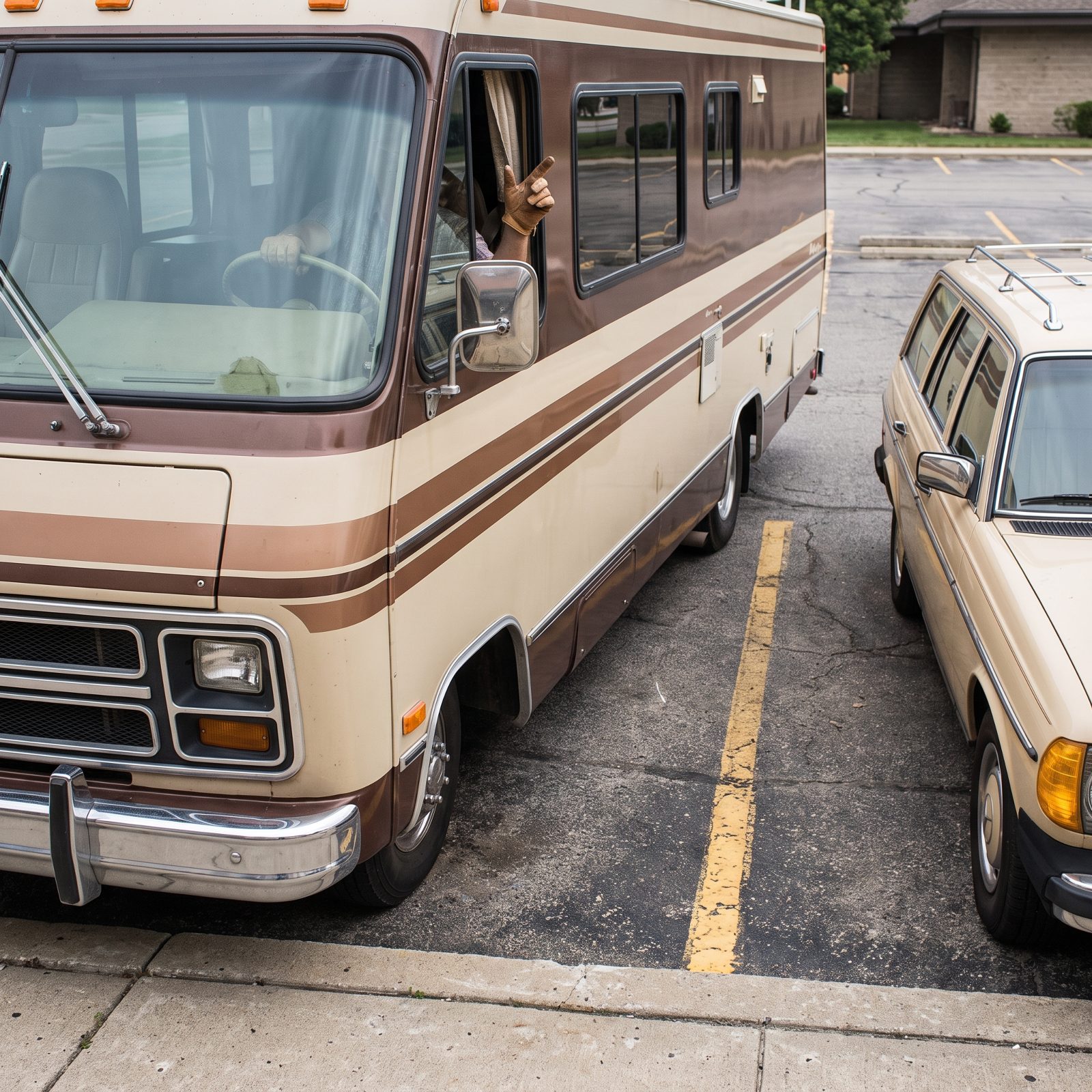
A 26-foot coach should fight you in a parking lot. This one didn’t. The power steering was geared and boosted so a single hand could swing it around a campground loop, and backing into a tight state-park slot stopped being a two-person shouting match.
Pair that assist with the low driving position and the car-like forward visibility, and the whole thing felt about one size smaller than the tape measure said. I’ve driven modern rigs that ask for more muscle than this did fifty years ago.
14. A Highway Ride So Smooth It Spoiled Everyone Who Drove It

You notice it most on a long interstate stretch late in the day. The coach settles into a rhythm, the tandem rear wheels spreading the load and soaking up the road, and the whole thing just tracks. Crosswinds that would send a conventional box darting into the next lane barely register.
For 1973 this was close to miraculous. A low center of gravity and the air-assisted rear suspension kept it flat and steady at speed, so a 400-mile day left you tired from driving rather than from wrestling a barn door.
13. A Steel Frame Built for the Coach, Not Borrowed From a Truck
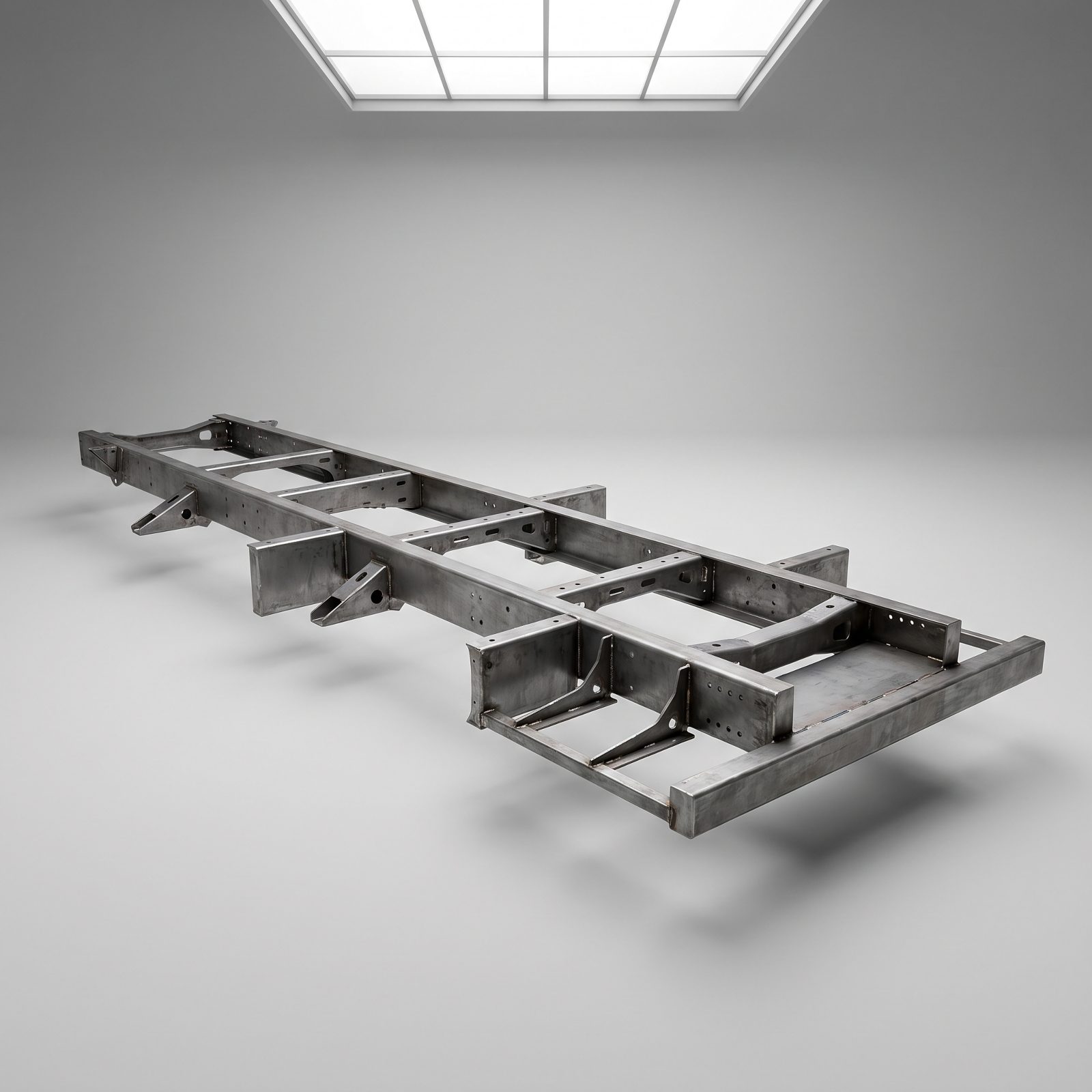
GMC didn’t drop a camper body onto an existing truck chassis and call it a day. The frame underneath was built specifically for this coach, with a low, flat central section that let the floor sit close to the ground.
That low floor is the quiet hero of the whole design. It’s why the ceiling feels generous without the roof towering over every overpass, and why the weight stayed planted. Build the frame around the vehicle and everything above it gets easier.
12. An Aluminum Body That Kept the Weight Honest
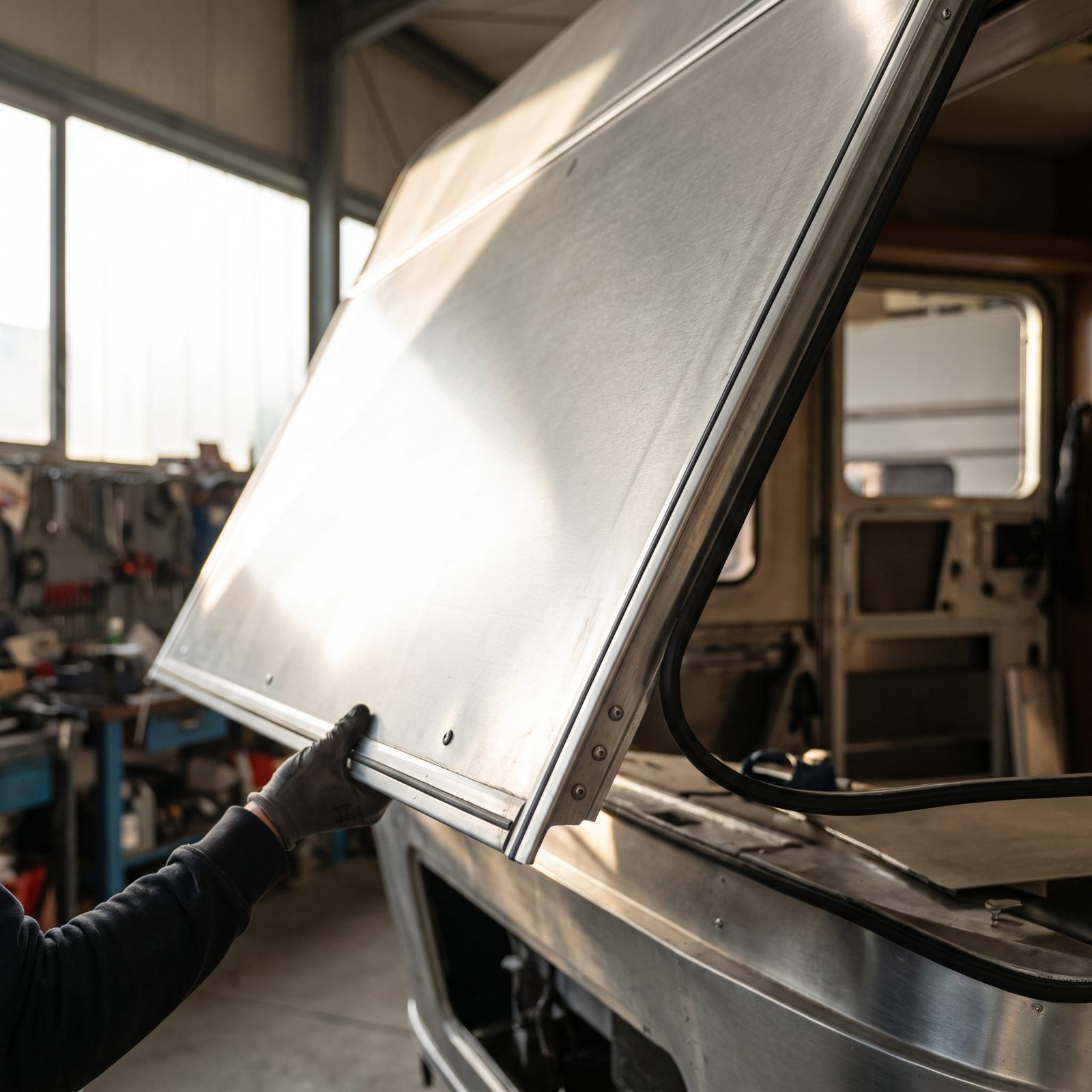
Pick up a panel of this thing and the strategy becomes obvious. Aluminum skin over the structure kept the coach lighter than it had any right to be, which the front-wheel-drive layout and the modest V8 both appreciated. Less heft meant better handling, better economy for its class, and a body that didn’t rot the way wood-framed campers of the era loved to do. Decades on, that aluminum is a big reason so many of these coaches are still out there earning restoration money.
11. Molded Fiberglass Caps That Rounded Off the Hard Corners
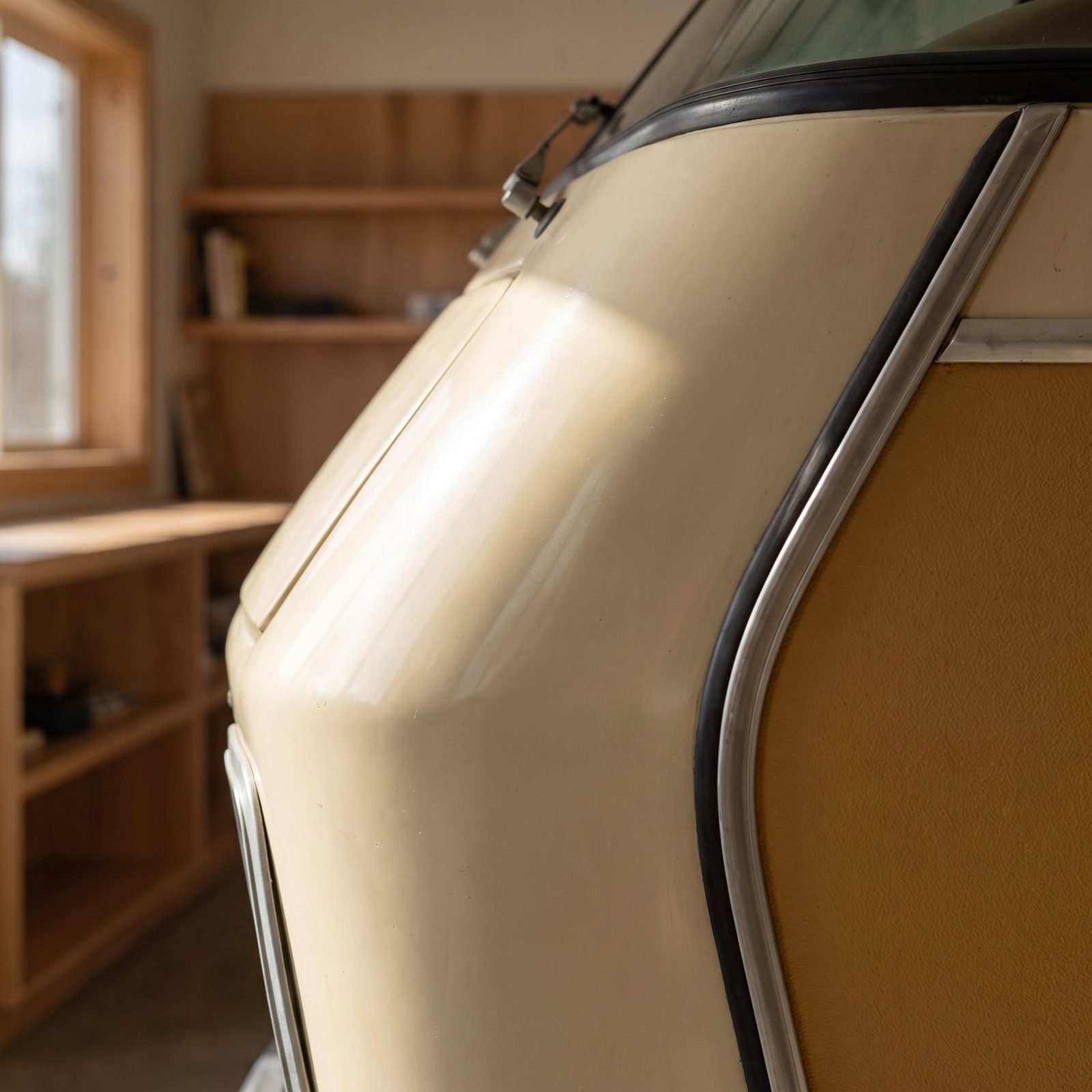
The front and rear caps weren’t stamped metal. They were molded fiberglass, which let GMC sculpt curves that sheet metal couldn’t easily make. That’s how the nose got its smooth shape and the tail its soft, finished round.
Fiberglass also shrugged off the minor dings and corrosion that plagued metal ends. The caps gave the coach its face, and that face still reads as modern at a time when the competition looked like garden sheds.
10. A Rounded Body That Quietly Insulted Every Box on Wheels
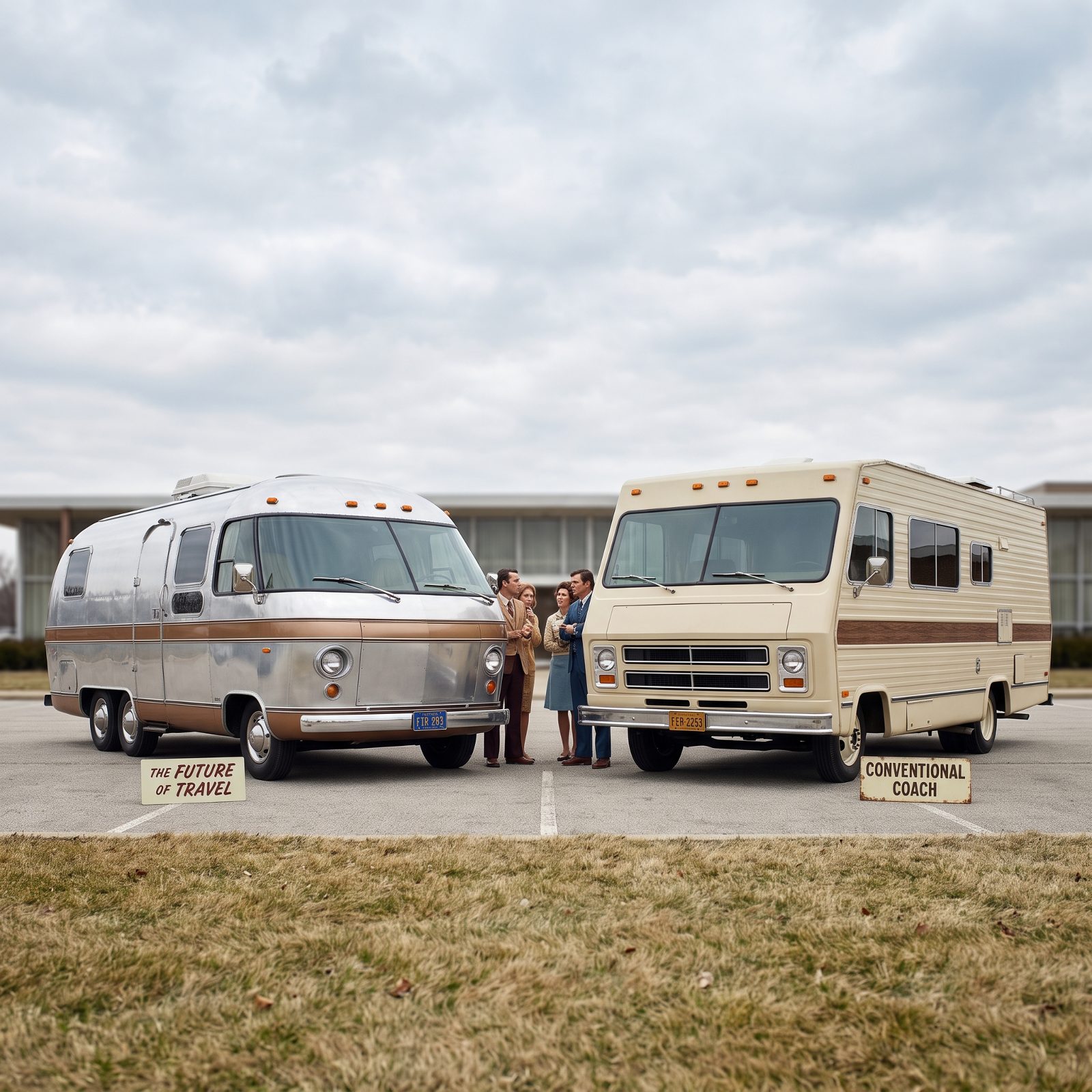
Line it up next to a 1973 competitor and the difference is almost funny. Everyone else was building a box and hoping paint would distract you. GMC built a shape.
The curves weren’t just vanity, either. They cut wind resistance, cut wind noise, and kept the coach calmer in a gust. Form and function pulling in the same direction, which is rarer than the brochures ever admitted.
It looked like it was moving even when it was parked at the dump station.
9. A Low, Wide Stance That Hugged the Road
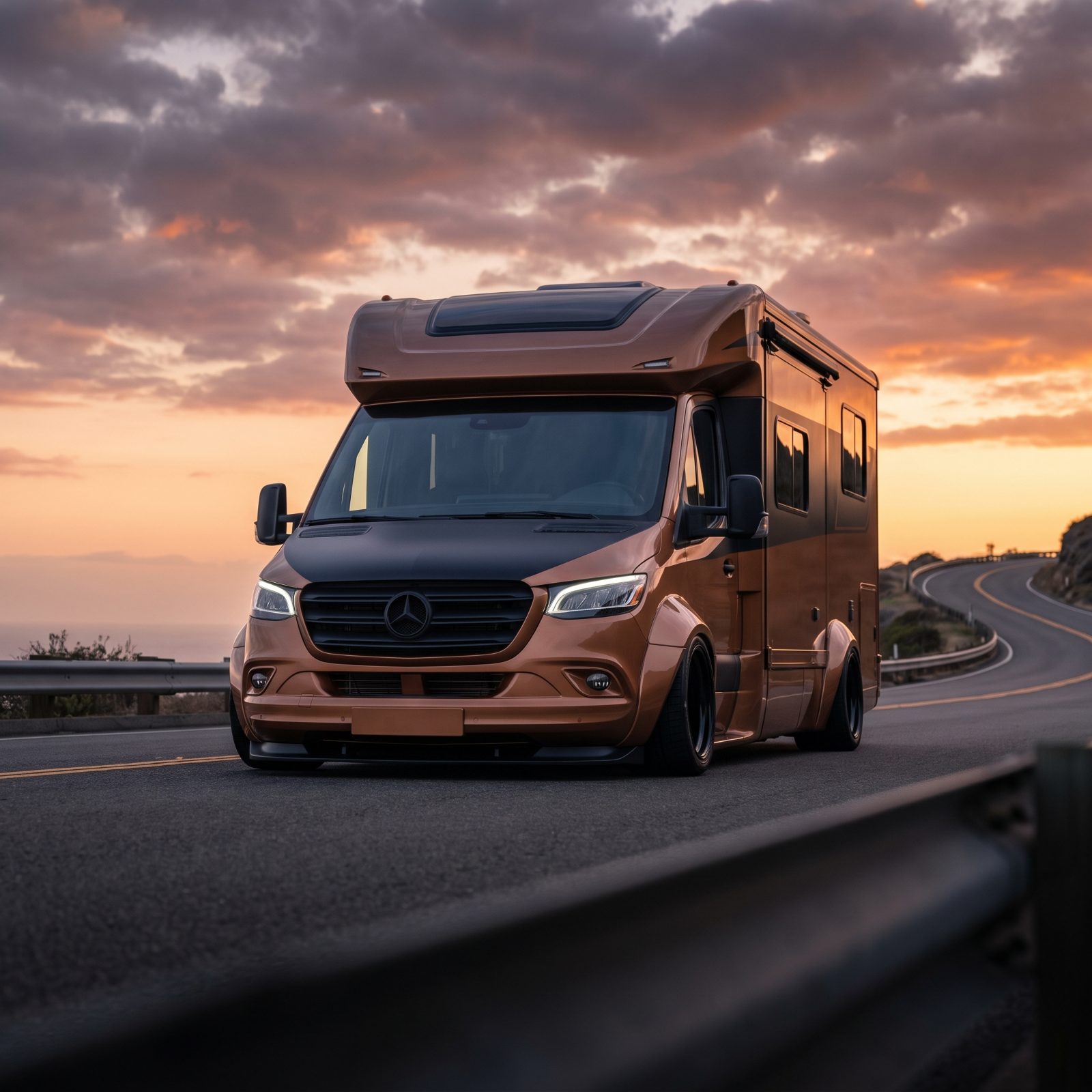
Most motorhomes of the era stood tall and narrow, which is exactly how you build something that wants to tip. The GMC went the other way entirely. Low roofline, wide track, weight slung close to the ground.
Physics rewarded the choice. That planted stance resisted body roll in corners and held the coach steady when a semi blew past. It’s half the reason the thing drove like a car, and the other half of why it still looks fast standing still.
8. The Wraparound Windshield That Put the Road in Your Lap
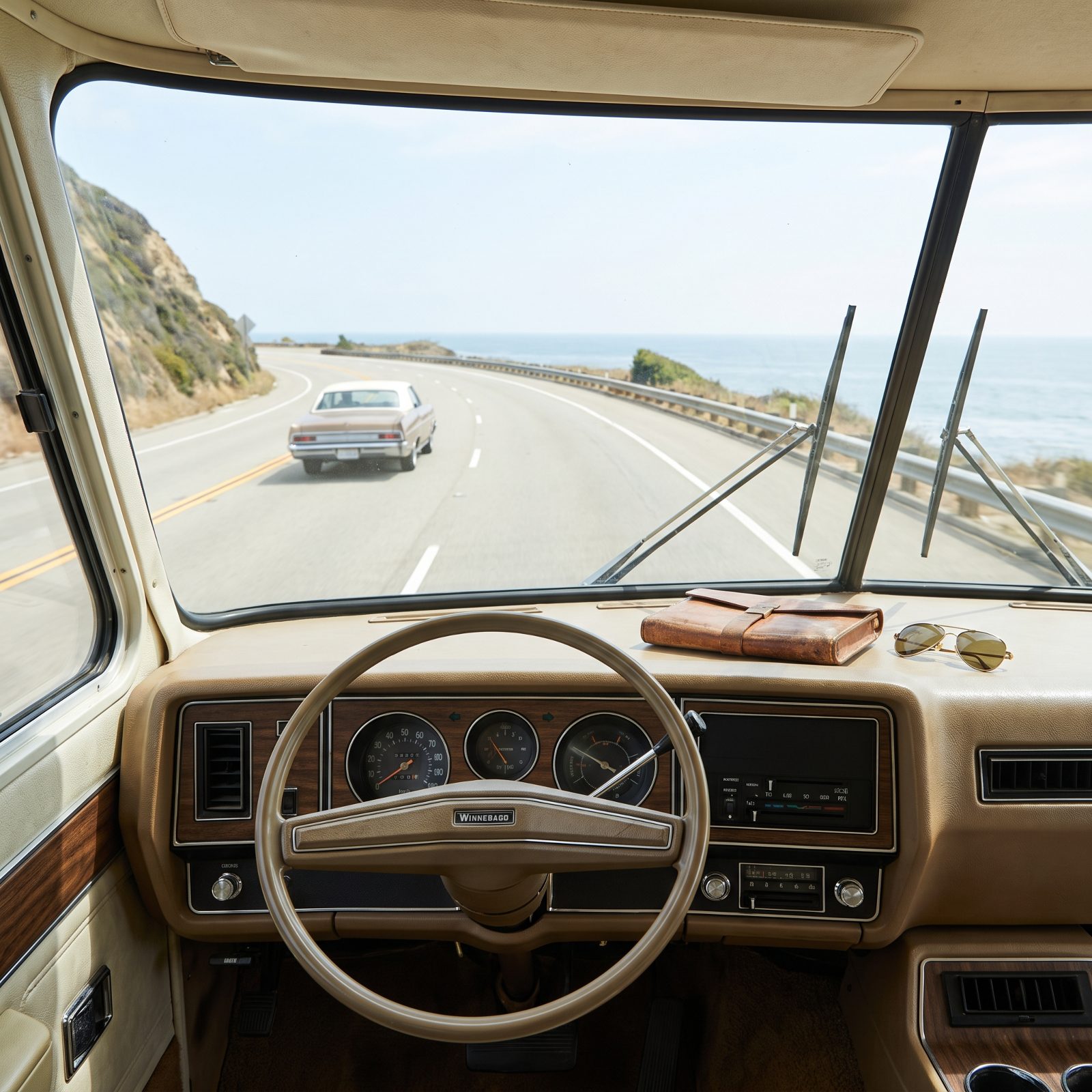
Sit in the driver’s seat and the world opens up. The windshield curved out past the pillars, handing you a view most cars of the day couldn’t match, never mind a motorhome.
And that glass did real work beyond the drama. You could see the corners of the coach, read the road at intersections, watch the scenery roll by like it was wrapping around you. Driving became part of the vacation instead of the chore you survived before parking.
7. The Slanted Line of Big Side Windows That Let the Daylight In
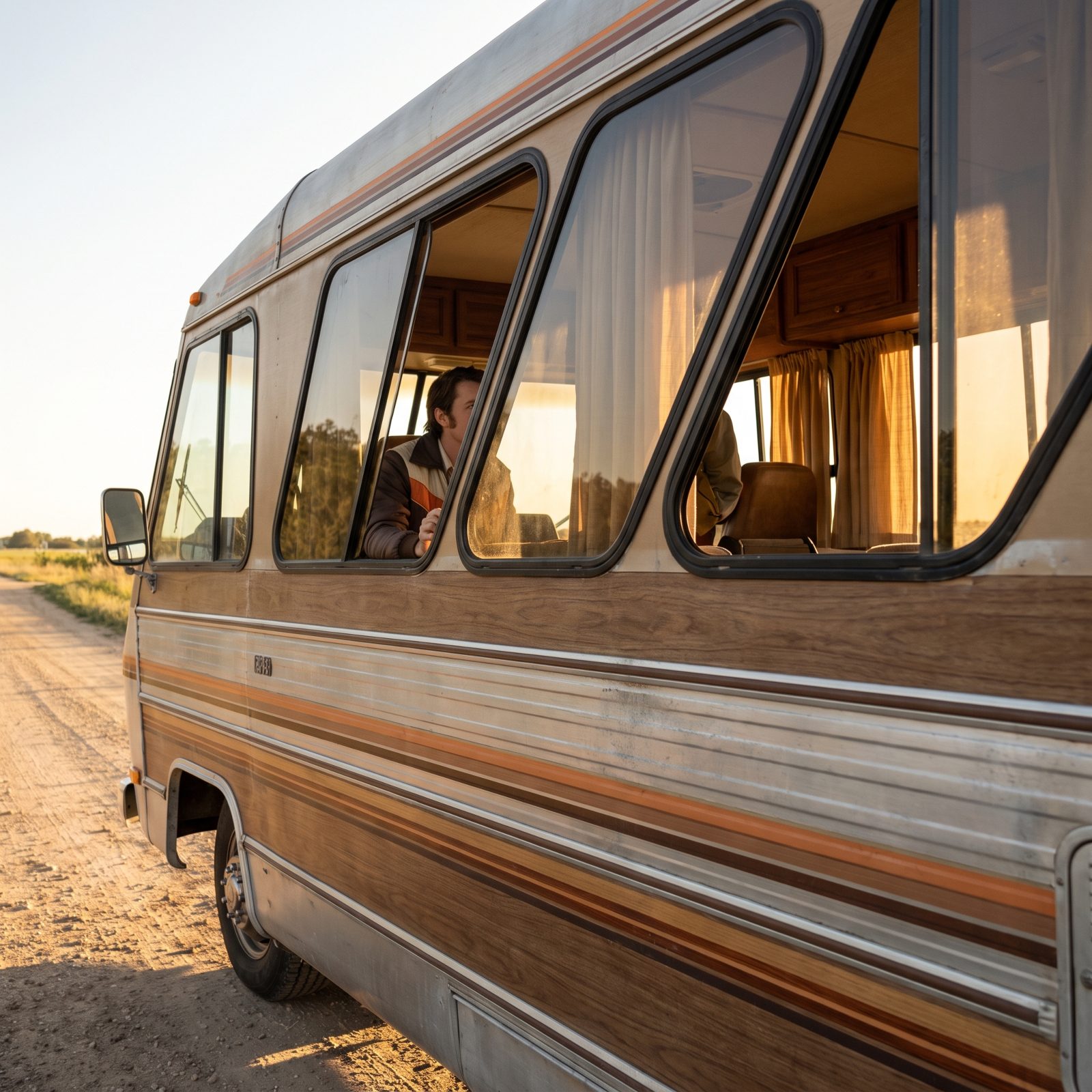
Walk around the side and your eye follows the windows, because they refuse to sit level. The glass marches along the flank in a gentle upward slant toward the front, a line that gave the coach motion even at rest.
Inside, those big windows meant the cabin never felt like a cave. Daylight poured across the living space. The view out was wide enough to make a parking-lot overnight feel like a little less of one — styling and livability signing the same name on the body side.
6. A Choice of 23- and 26-Foot Models
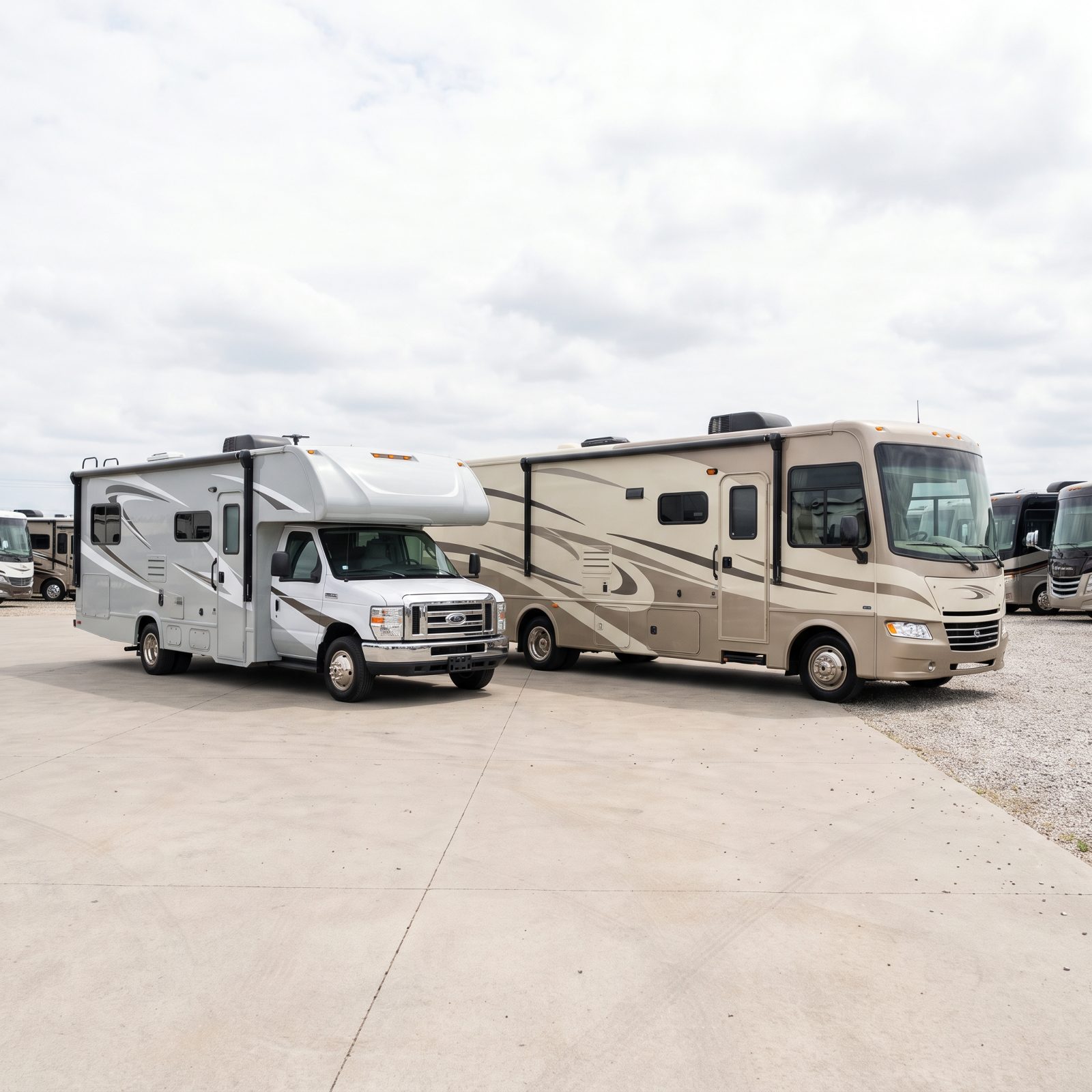
GMC gave you two lengths and expected you to actually think about it. The 23-footer tucked into tighter sites and threaded parking lots without the sweat, while the 26-footer bought you a real bedroom and more galley counter. Same drivetrain under both, so you weren’t trading away performance for size.
What’s smart here is the restraint. Two lengths, not twelve. GM figured most families wanted either the nimble one or the roomy one, and the gap between them covered just about everybody.
5. Several Factory-Designed Floor Plans
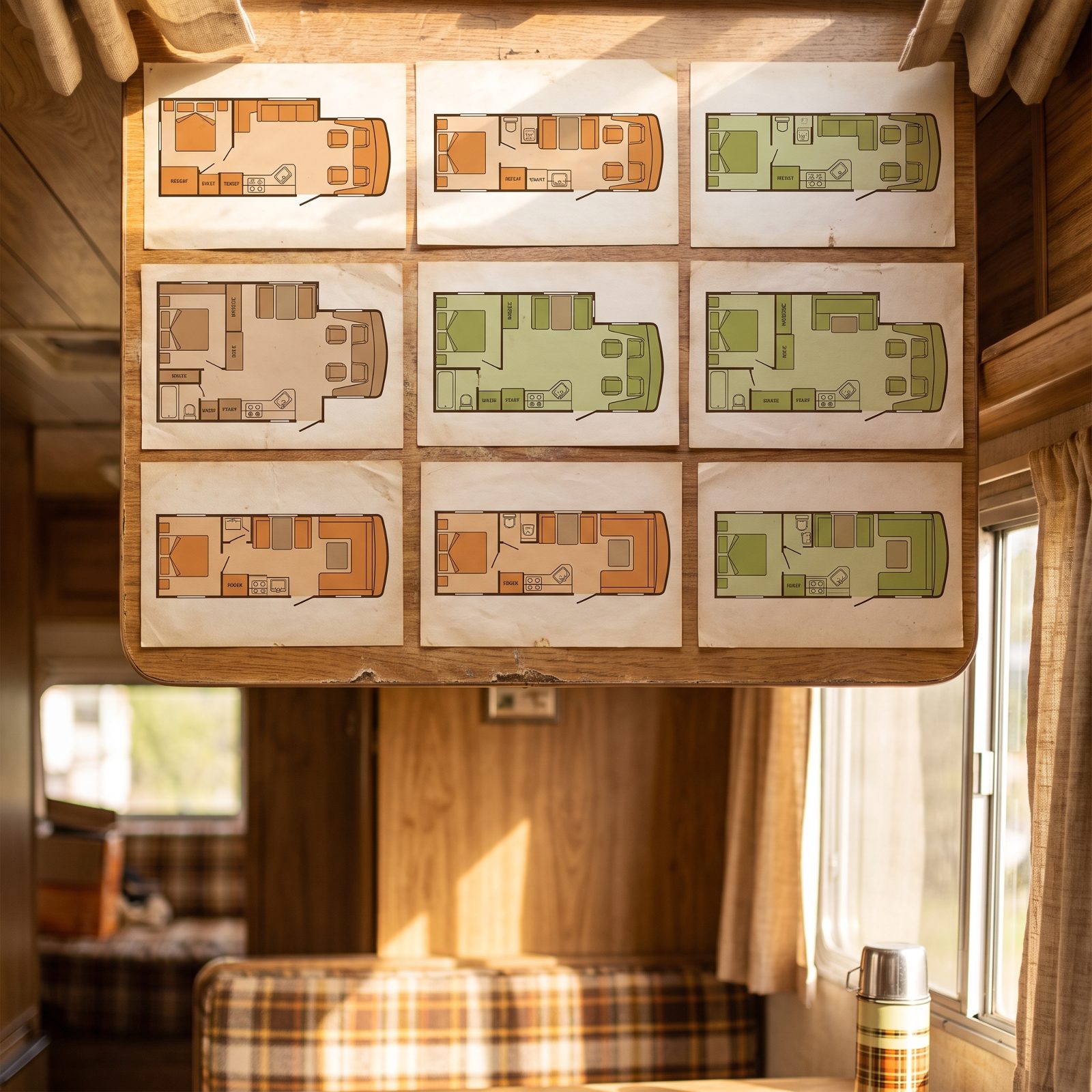
You didn’t custom-order chaos. GMC drew up a handful of floor plans and let you pick the one that matched how your family actually lived — the TransMode shell for the plans-happy, and finished coaches like the Glenbrook, Canyon Lands, and Painted Desert, each arranging galley, dinette, bath, and beds in a different logical order.
Some put the bath up front, some pushed it rear. Some gave you a side-aisle galley, others a rear kitchen. And because that front-wheel-drive packaging let them keep the floor flat and low, every plan felt roomier than the square footage had any right to suggest.
Honest take? The factory plans aged better than most of the home-brew conversions I’ve crawled through at rallies. GM’s draftsmen knew where the weight needed to sit.
4. A Front Lounge With a Panoramic Road View
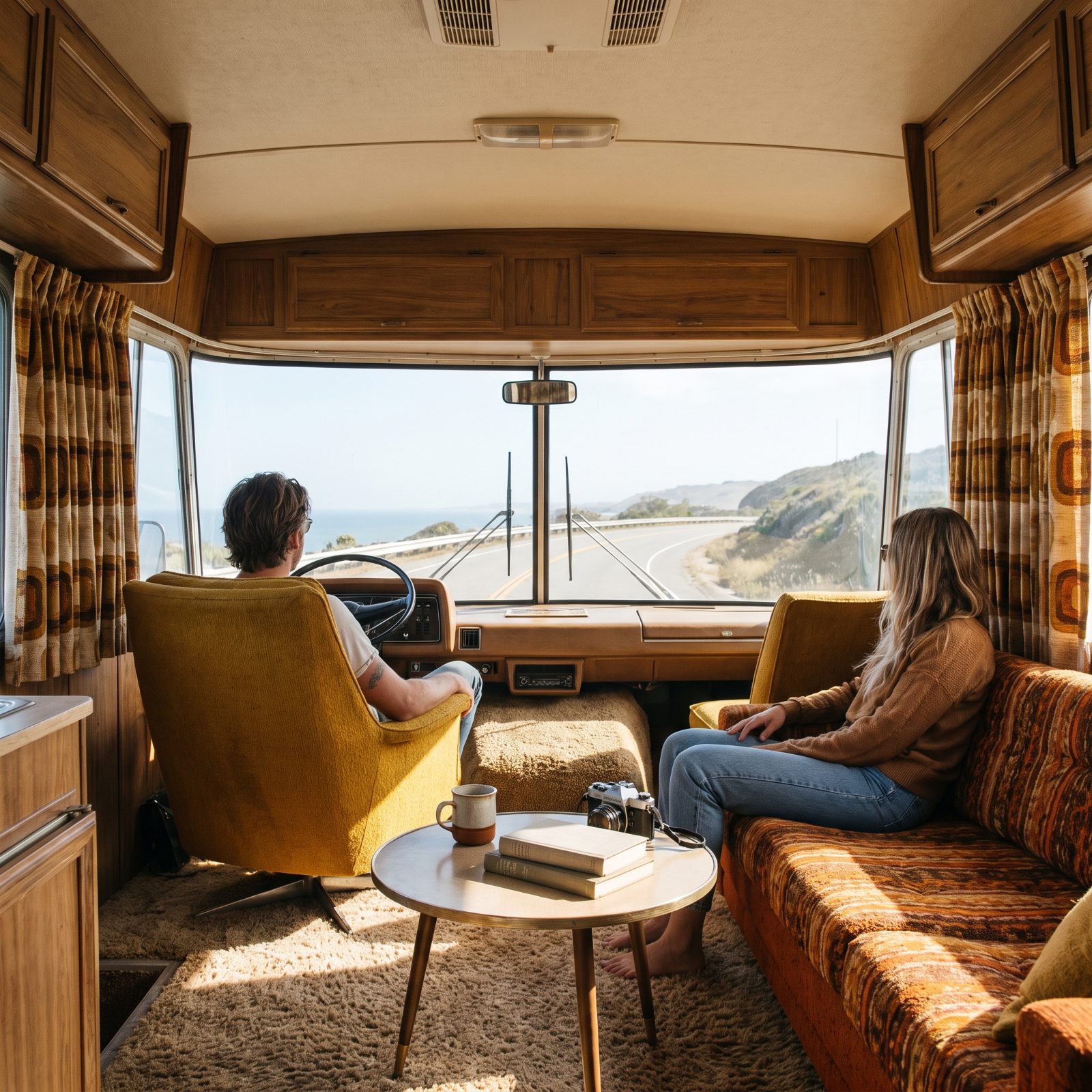
That windshield is the whole personality. The two-piece curved glass up front gave the driver and passenger a view that felt more aircraft than motorhome. Low cowl, big glass, chairs that swiveled to join the lounge when you parked.
Because the thing sat so low, you weren’t perched eight feet up peering over a hood — you were down in the scenery, watching the road unspool right in front of you. Pull into a site, spin the captain’s chairs around, and the cockpit became part of the living room.
3. Convertible Seating That Multiplied Sleeping Space
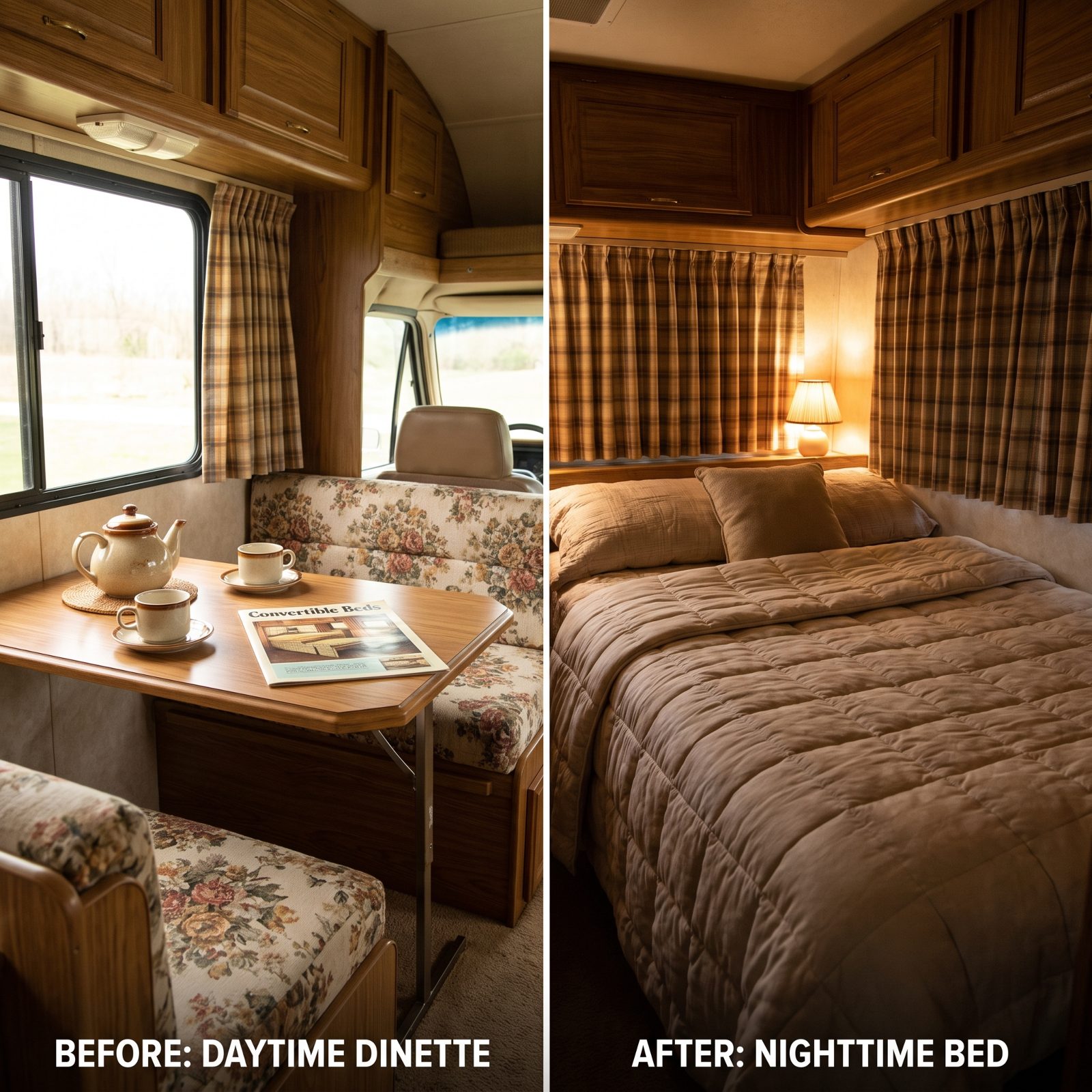
Every soft surface in the coach was secretly a bed. The dinette dropped and its cushions filled in to sleep two, the gaucho couch folded flat for two more, and the rear plan hid a proper bed — so a 26-footer could bunk a family of six without anyone stuck sleeping in the aisle.
I’ve converted more of these than I can count, and the engineering holds up. The cushions were cut to interlock, so you weren’t wedging a gap with a rolled towel at midnight. Daytime it’s a lounge. Lights out, it’s a dorm.
The quiet genius was durability. These were factory mechanisms — hinges and supports built to GM tolerances, not the flimsy folding frames that gave out on cheaper rigs by the third season.
2. Proven GM Components Backed by a Nationwide Dealer Network
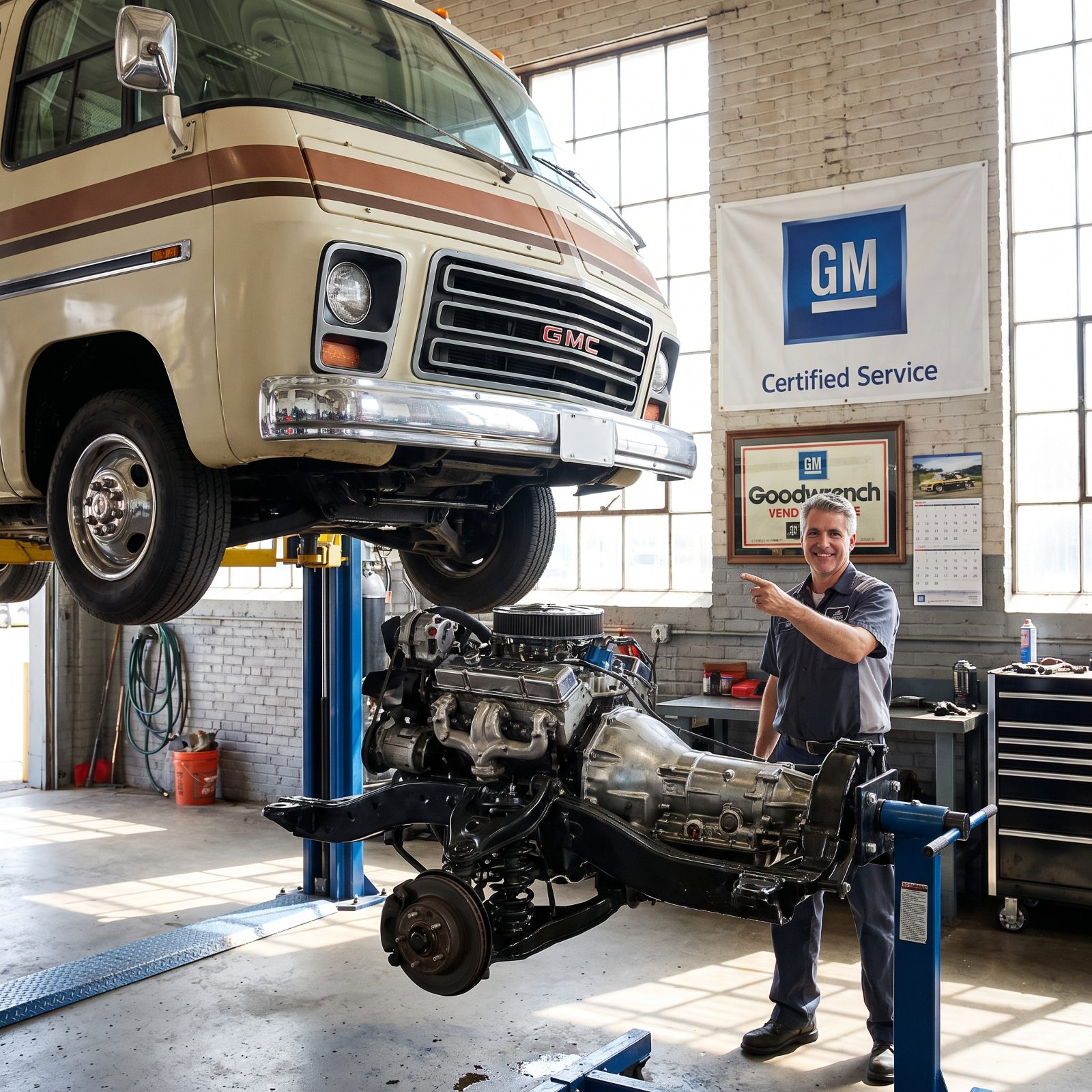
Lift the front and you found an Oldsmobile Toronado living in there. The 455 V8 and the Turbo-Hydramatic transaxle were pulled straight from GM’s front-wheel-drive car line — parts that were already sitting in dealer bins coast to coast.
That mattered enormously. Break down in a strange town in a one-off motorhome and you’re hunting for a specialist. Break down in a GMC and the Chevy dealer down the road stocked your water pump. The tandem rear ran on air suspension, giving a ride that genuinely surprised folks used to truck-based rigs bucking over every expansion joint.
Detroit didn’t invent new parts for this thing. It borrowed its best ones and put them where they’d never been before.
1. A Futuristic Shape That Still Looks Cohesive Decades Later
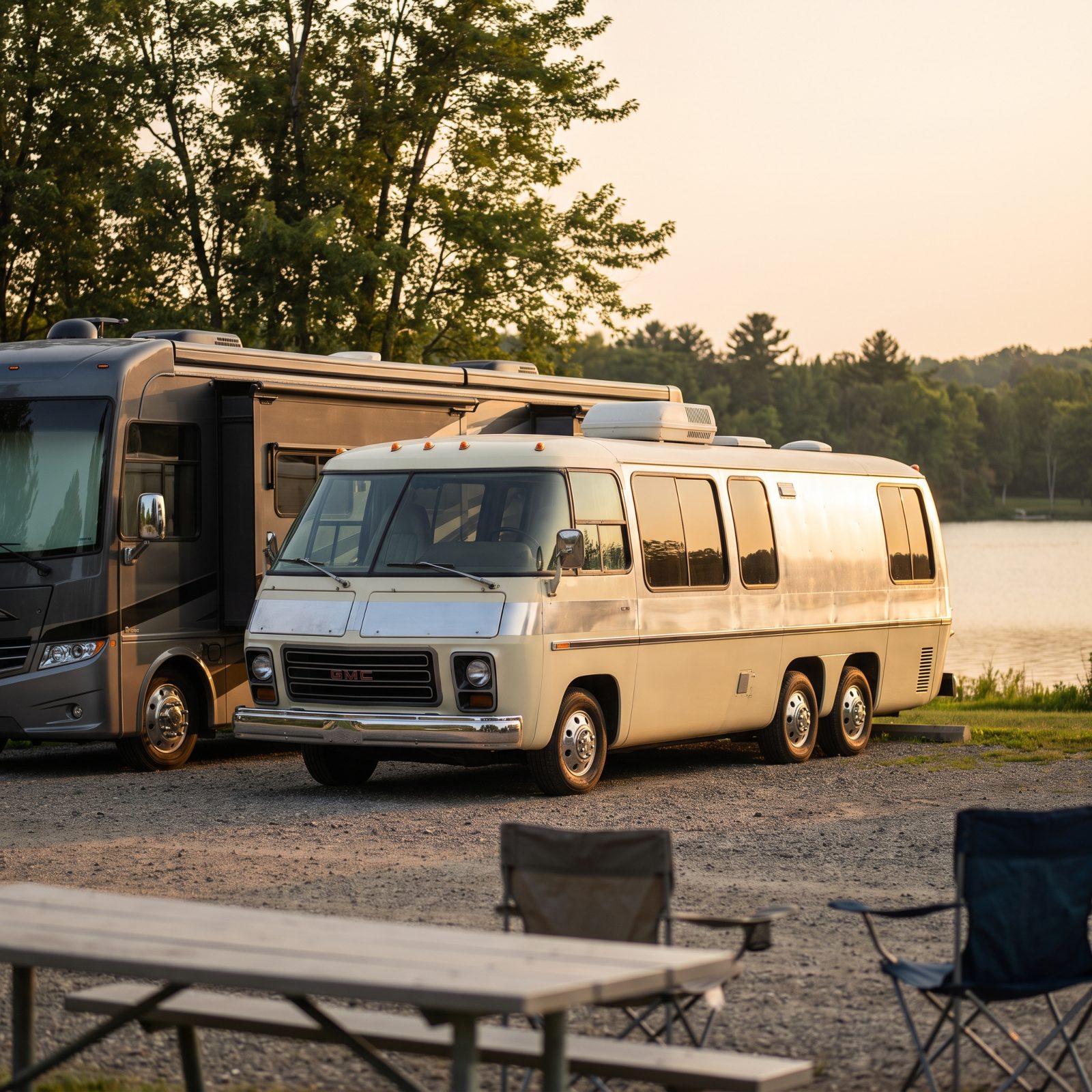
Park one next to a brand-new motorhome and the GMC doesn’t look dated. It looks resolved. The low roofline, the tapered tail, the uninterrupted side profile — all of it reads as one idea carried through instead of a box dropped on a frame.
Most RVs of the era were tall and slab-sided because that was cheap to build. GMC spent money on tooling to make compound curves out of aluminum and fiberglass, and that investment is why the shape still holds together.
I’ll say it flat: this is the best-looking motorhome Detroit ever built, and nobody’s topped it. The proportions were right the first time.